
Movie Review: The immigrant experience, rendered trite and titillating in “Alina”

alina

Sometimes, an indie film’s pedigree is far more interesting than the movie itself, and so it is with “Alina,” an inconsequential Russian immigrant lured into “personal escort” work by the support system she leans on upon arriving in New York.

It was written and directed by Ben Barenholtz, a seminal figure in the indie cinema  who branched out from running a New York art house theater to producing films such as “Miller’s Crossing,” “Requiem for a Dream” and “Georgia” for filmmakers such as the Coen Brothers, Darren Aronofsky and Ulu Grosbard.

He hit 80 before he decided “What I really want to do is direct,” and “Alina” is very much an old man’s movie — “edgy” in a 1970s way, with archetypal characters summoned up as distant, dated memories. Ethnic stereotypes give way to lurid slices of the night club sex trade, letting the picture veer into dirty old man’s movie territory.

The title character, played as an open book by Darya Ekamasova of TV’s “The Americans,” tells her mother she’s leaving for a trip to Cuba. Mom doesn’t know Alina’s plan is the leave the ashes of socialism behind altogether and make her way to New York.

She is to meet an old friend in the city, but first, she stops in a friendly looking eatery — The Russian Samovar. That’s where Maria (Olga N. Bogdanova) is the first countrywoman to offer her greetings — “Welcome to this crazy city!” — advice — “Come, we must speak ENGLISH!” — and help. She can hook her up as a waitress.

The old friend (Anna Vlads) is a “model,” and has the glamorous wardrobe befitting her claimed place in the world. But “model” is a loose term in these quarters. Alina has to be on her guard if she doesn’t want to live down to the stereotype — “All Russian girls are gold-diggers.”

But she isn’t on her guard, and things turn ugly quickly, with unscrupulous club-owners, proffered “energy” pills and “model” cocktail waitresses coaxing Alina into doing whatever it takes to get that dough-re-mi.

Barenholtz tries that old “Moscow on the Hudson” trick of making a New York that’s entirely comprised of immigrants. The Russians have their stereotypes to live down to. But there’s always an Italian family living up to its cliches to balance the scales in such movies.

It’s a short drama that lurches through assorted abrupt changes in tone, temperament and relationships.  Alina veers from overwhelmed and puzzled to outraged to smitten in 90 minutes as she tries to maintain her identity and finish her secret task.

No, she’s not a spy or a fake news peddler. The “mystery” isn’t that interesting.

Nor is the movie, with its over-familiar and limited view of the immigrant bubble Alina experiences, and her reactions to “crazy city” where Russian “girls” pan for gold in all the old familiar ways.

There would certainly have been a time that Barenholtz would have booked a movie like this, in English and Russian with English subtitles, in his NYC “indie” cinema. But it’s not to “Alina’s” credit that this time would have been about 1978, the last year this subject with this sort of treatment would  have felt original or “independent.”

1half-star

MPAA Rating: unrated, with explicit sexual situations, drug use

Cast: Darya Ekamasova, Olga N. Bogdanova, David Atrakchi,Grisha Reydler

Credits:Written and directed by Ben Barenholtz. A Super 80 release.

Running time: 1:29

Posted in Reviews, previews, profiles and movie news | Comments Off on Movie Review: The immigrant experience, rendered trite and titillating in “Alina”

Box Office: “It” shatters horror records, Sept. records — $117 million opening

boxoffice3Hurricanes Harvey and Irma didn’t dampen turnout for Stephen King’s “It,” which almost doubled pre-release projections to open with almost $117 million on its opening weekend.

No stars, a second adaptation of a book turned into a TV mini series in the early ’90s (Spike TV re-ran that this weekend), and it still made more in one weekend than the summer hit “Annabelle: Creation” has made in over a month of release.

Warner Brothers spent their money smartly, and it paid off.

Reese Witherspoon’s “Home Again” has managed about $9 million, not the epic bomb it seemed when Sat. AM dawned.

“Wind River” is now over $25 million, thanks to another Top Ten weekend.

“Hitman’s Bodyguard” is over $65 million.

Posted in Reviews, previews, profiles and movie news | Comments Off on Box Office: “It” shatters horror records, Sept. records — $117 million opening

Netflixable? “We’re No Animals” shows John Cusack at 50 — lots of “Black Baseball Cap” roles

animals

For a movie critic, stumbling across a “new to Netflix” release you haven’t seen or even heard of is an “Uh oh” moment — for the film’s stars.

“We’re No Animals,” the last and least title conjured up for an ad hoc Argentinian aggregation of stars, a script that insists it is “no script” and plenty of random observations about art, the Argentinian soul and Argentinian history, didn’t get an American release.

It’s not even listed on Rotten Tomatoes or Metacritic, as nobody bothered to review it (maybe at Cannes, but the reviews aren’t linked). At least IMDb has its credits. 

Because it was unreleaseable, an Argentinian attempt at making a Fellini film from the Argentinian director Alejandro Agresti, of “Valentin” and the somber Keanu/Bullock fantasy romance “The Lake House.”

He directs and also plays Patrick Pesto, an “artist” whose pitch has so intrigued a movie star’s agent (Al Pacino) that he’s burned through several cell phone calls convincing that star, Tony (John Cusack) to do the film. Tony, in turn is sold,  and his musician and writer friends (Paul Hipp, Kevin Morris) have joined him in Argentina for the filming.

But the pretentious, philosophical Pesto (Agresti, remember) has no script. He’s no filmmaker. “Do you think we even need cameras? To film this? Or can it just happen?”

He’s a painter, perhaps a poet, and a master BS artist — he allows that he’s seen Hollywood films — “Pillow (Talk) something or other. That ‘Best Years’ movie with the guy with no hands (“Best Years of Our Lives”).

And over the course of a long idyll with Pesto, Tony and his mates hit cafes and bars, sleep with women, make music.

Cusack’s Tony expresses dismay, surprise, enthusiasm and curiosity about this land where the natives declare “We cannot get over events that happened 35 years ago.”

People disappeared. Beautiful women they sit and talk with in an Argentinian restaurant in LA mention “My parents met in a concentration camp.”

“One more time?” is the only comeback Tony can manage for that. He has to go to this country, so Italian, so soulful, so Latin American — and experience this for himself and make a movie with a sort of broader poetic point about the land of the tango’s tortured psyche.

And as he does, Cusack wears an almost omnipresent black baseball cap. That’s been a trademark, a crutch, in a lot of awful films he’s taken simply for a check and a little travel — “Arsenal,” “Drive Hard” and others. You see the black baseball cap hiding the black dye job and receding hairline, you know Cusack’s taking a flier, present but not really present.

kinopoisk.ru

cus4

However daring the intent, the challenge of making a movie that’s not remotely a movie in homage to Fellini, with naked starlets impersonating the REAL Evita — Eva Peron — the ugly Latin sexism that pops up, here and there, the brutality of the past — “We’re No Animals” is — like its title, an apology, an attempt at self-justification and self-defense.

But Cusack, at 50, is a bad poker player who can’t help showing his hand, what he really thinks of this lark. He does it with that black baseball cap.

zero

Cast: John Cusack, Al Pacino, Alejandro Agresti, Paul Hipp, Kevin Morris.

Credits: Written and directed by Alejandro Agresti.

Running time: 1:30

Posted in Reviews, previews, profiles and movie news | Comments Off on Netflixable? “We’re No Animals” shows John Cusack at 50 — lots of “Black Baseball Cap” roles

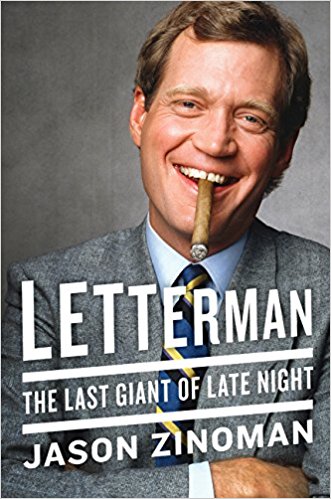
“The Last Giant of Late Night” charts Letterman’s rise and decade-long phone-it-in fall

letterbook

I had the same doubts about Jason Zinoman’s “The Last Giant of Late Night” Letterman biography that I had about his New York Timesman predecessor Bill Carter’s “The Late Shift.” That is that the book starts out with the same erroneous New York-centric take that Carter’s concluded with.

Carter’s book, later made into a TV movie, ended with Letterman leaving NBC after much melodrama, launching his show on CBS, and becoming King of Late Night. Carter implied that this would be the way it was going to be until Letterman, like Carson, took his leave from the public airwaves.

And as history shows, that didn’t last. Not at all. The audience wearied of Letterman’s brand of irony in months, not decades. He bungled the Oscars, Leno landed Hugh Grant post Divine Brown.

And Letterman, aside from occasionally crushing Conan O’Brien when NBC gave him “The Tonight Show,” was rarely relevant again — post 9-11, by default, post-heart attack, and later admitting on air that he was a serial philanderer subject to blackmail.

So “Last Giant of Late Night?” Not so much.

But I enjoyed Zinoman’s (comedy columnist for the Times) approach. He watched thousands of hours of Letterman’s shows. He talked with the man and a lot of his staff, including those he systematically froze-out (he hated the confrontation of firing somebody) over the decades.

He connects with signature memorable moments of the show, fixates on Letterman’s love of language and word play, weighs in on what others called Letterman’s chilliness, his Indiana xenophobia (he loved “funny sounding” foreign names, part of that word play, too much). Zinoman touches on the sarcasm that crossed into cruelty in interviews, the sneering Harvard frat boy writer’s room style of humor that mocked Larry “Bud” Melman (Calvert DeForest) and others.

He connects Letterman, “the broadcaster,” with Howard Stern, an old friend with whom he shared an irreverence for celebrities and a lust for leering at starlets.

Zinoman deconstructs a series of AM and PM shows that deconstructed themselves, and traces as well he can Letterman’s inspirations — from Robert Benchley onward.

He tries to debunk “the Oscar myth” (Letterman is the one who insisted he bombed, and was right — lots of TV critics failed to get that). He lays out the years of Letterman NBC slights, insults and simple person-to-person rudeness that cost him “The Tonight Show” job. Letterman, like Conan, likes to milk his version of that “done me wrong” story, which some fans still swallow whole.

And Zinoman captures the long, lazy fall — an out-of-touch curmudgeon who disconnected from the writing staff, refused to rehearse, refused to leave the desk for remotes, refused to put in any effort — for years and YEARS. “Irony is dead” may not have done Letterman in. Phoning it in did.

Letterman the Man comes off as a leaning tower of insecurities, quick to lash out at others, quicker to ignore any triumph and absorb every failure as a personal character flaw. Jack Paar’s “Tonight Show” experience is correctly brought up as the perfect parallel to Letterman’s psyche, petulance and attempted “bored with it all” style. He just lacked Parr’s sophistication and curiosity, as indeed every late night host who followed has.

It’s a good book, even if Harper Collins editors didn’t do Zinoman a lot of favors. Letterman was a middling stand-up, and the “comedy columnist” is out of his depth talking about broadcasting, which is how Letterman labeled himself — “broadcaster.” Letterman’s early days mid-day radio show is labeled “drive-time,” when it wasn’t, Zinoman confuses Boris Karloff with Bela Lugosi (Ed Wood’s muse in “Plan Nine from Outer Space”), asserts that pro-wrestling during the Andy Kaufman era was “covered like a real sport” (never ever happened) and hits you with one of these blunders every few pages.

He gives shorter shrift than he should to the ways Letterman copied and updated others’ TV “innovations,” the wacky on-the-street bits Steve Allen did are mentioned, the proto-surrealism of Ernie Kovacs that plainly inspired other running gags is missed.

Letterman repaying Tom Snyder, whose time slot he grabbed at NBC, with a “later” show is detailed. Craig Ferguson, the best “talker” of the lot, who replaced Snyder, is not.

But here’s Chris Elliott, son of a Big Letterman Influence, Bob Elliott of “Bob & Ray,” weaseling his way on the air, and there’s the office worker Meg Parsont, courted by phone on late night TV by a host who could come off creepy because plainly he was and is, when it comes to women — leering, clumsily flirting, subjecting starlets to decades of innuendo.

That over-arching thesis, “Last King,” is an easy over-reach, too. You may not like Leno, who is probably worthy of a thorough bio of this sort as well. Leno didn’t do his show from New York, was more plebeian and conservative and was hated by many a stand-up comic for his one-upsmanship. The Times sided with Letterman from the start. But Leno beat Letterman handily in audience appeal, innovated almost as much, and endured merciless criticism over “stealing” “The Tonight Show” from first Letterman, and then from Conan, neither of whom thrived in that hour of the night.

Colbert and Fallon are ably following in all their footsteps, innovating the format as much as Letterman or Leno or O’Brien ever did. That undercuts the “Last King” thesis, as well.

Letterman comes off as the worst near-stranger to have a beer with. Leno, in impressions formed outside of the book, always bulls through to a punch-line, even now on “Jay Leno’s Garage,” and would wear one out in person and turn annoying in short order. O’Brien just isn’t as clever as he’s always thought he was and has a tedium about him that makes him worth only small doses of your time.

All seem like insecure, guarded and selectively-revealing funnymen who only truly exist for that TV limelight.

Truthfully, the reclusive Johnny Carson was probably the “Last King of Late Night.” You still hear old stories about him, and his growing laziness, greed and arrogance (Needed for him to be able to deal with NBC, but not showing up and always lightening his workload?) is touched on, here. He wanted to anoint his successor, something Letterman had the good sense to avoid. There’s a last lesson Carson inadvertently taught them all, the true “Last King” leaving that as a legacy. The King doesn’t get to pick the next King.

But who’d read a book about him?

Posted in Reviews, previews, profiles and movie news | 2 Comments

Box Office: “It” smashes records, maybe it’ll clear $100 million on its opening weekend

box2Consider this. Horror movies typically have a box office ceiling, which the “Conjuring/Insidious” and more recently “Annabelle” folks have pushed against.

Consider too, that Stephen King’s brand is 40 years old and his track record with film adaptations has been spotty, if not downright cursed. Add to that the fact that “Dark Tower” bombed and “Mr. Mercedes” is on TV right now and he’s once again over-exposed.

Throw in two inanimate horrors named “Harvey” and “Irma,” which all but take two huge states off the box office table, suppressing turnout at the movies this weekend.

And damned if “It” isn’t blowing up records, left and right, on its opening days in theaters. Projections ranged from the $60s to the $80s. But Deadline.com says that thanks to huge Thursday night numbers, and an epic Friday, the clown-in-the-sewer thriller might hit $101 million for the weekend. A horror movie opening weekend record, a fall (not holiday) record, a record for R-rating thrillers, etc. 

I was sure the hurricanes were going to suppress turnout, but nope.

R-rated, horror, a remake of a TV miniseries and a tried and generally not true branded writer, and Hollywood is probably wishing this thing had opened last month. If might have saved a sinking summer. Reviews, if anything, helped that along. 

Reese Witherspoon entrusted her big screen comeback to reliable “women’s picture” queen Nancy Meyers’ daughter. Reviews were brutal, and the picture — with a lot of no-name love interests (and Michael Sheen and Candace Bergen) in support, SERIOUSLY unoriginal and unfunny Hollywood observations about Hollywood types — those “types” cast with an onslaught of boring, charisma-starved players, and damned if it isn’t sputtering out.

Not totally bombing, but $8-9 million? That’s a “Back to cable with you, Ms. W.” message. And for Hollywood, a reminder that nepotism is the mendacious mark of mediocrity. 


Posted in Reviews, previews, profiles and movie news | Comments Off on Box Office: “It” smashes records, maybe it’ll clear $100 million on its opening weekend

Box Office: Will Stephen King’s “It” kick off a killer fall for films?

it1Hollywood is famous for its short collective memory. But they have reason to want to forget last summer. In box office terms, it was chilling, a near disaster, a “What’s the future of this business?” level fall-off.  Historically bad, a break-the-movie-going habit warning that better, more varied pictures are a must.

So what can save them? A remake of a Stephen King mini-series. “It” has been expected to pull in over $60 million and pull Tinseltown’s bacon out of the fire.

And even though there’s a hurricane that will wipe out Florida’s receipts, starting Saturday (go tonight, kids!), Box Office Mojo is predicting an $85 million opening.

It is almost certain to set a new fall opening record. But that’s got to be too high, right? Florida and the Southeast are braced for a hurricane, a big chunk of Texas is closed for repairs. How can they hit $85?

They can’t, says the Box Office Guru. $62, says he. 

Reviews have been quite good for this “Stand by Me” with a sewer luring clown. Really, it’s no better or worse than most King horror fiction, derivative — obvious — but not bad counts as pretty good.  

And horror has proven to have a pretty firm ceiling. Not everybody wants to see a scary movie, not many want to see their clown nightmares on the big screen.

Reese Witherspoon needs a hit to keep her film career relevant. She make pull in $12 million worth of fans for “Home Again,” which is getting awful reviews — deservedly so. That’s what Box Office Mojo thinks the picture will do. Again, Florida and Texas are out of play, so lower bets are safer. Box Office Mojo figures $8.5 — maybe.

Posted in Reviews, previews, profiles and movie news | Comments Off on Box Office: Will Stephen King’s “It” kick off a killer fall for films?

Movie Review: “Home Again,” a comedy as banal as its title

home3

Take your typical Nancy Meyers wish-fulfillment romantic comedy — “Something’s Gotta Give” or “It’s Complicated,” say. Rub anything resembling an edge off, and rob it of any charismatic turns by stars such as Diane Keaton, Robert DeNiro (“The Intern”) or Meryl Streep.

And what you’d get is “Home Again,” a Reese Witherspoon turns-40 farce without laughs, a second-chance love, whiter-than-whitebread “Osca-winner gets her groove back” blend of “Entourage” and, oh, “The New Adventures of Old Christine.”

This Hallie Meyers-Shyer comedy – yes, she’s Nancy’s daughter with longtime husband and collaborator Charles Shyer (“Baby Boom,” “Father of the Bride”) — is so bad it brings to mind every withering put-down of Hollywood nepotism summed up by one lethal 1930s Variety headline about Louis B. Mayer putting the fellow who married his daughter in charge of MGM.

“The Son-in-Law Also Rises.”

Because everything about this newly-separated MILF coveted by three film school bros trying to break into Hollywood screams “old” and “insipid,” and hell, apple-falls-just-a-smidge-too-far from-the-tree.

Hallie has concocted a white Tyler Perry comedy of the post-Madea years, lovely monochromatic people, toned, made-up, coiffed and attired to the hilt for their high-end restaurants and tony picnics, vapid as all get out, but still capable of tiny stand-alone moments of profundity.

“At some point, I have to know better,” Witherspoon’s Alice Kinney, daughter of the late, great director John Kinney says — to herself, to the 27 year-old would-be director Harry (Pico Alexander) she’s bedded after inviting him and his wannabe an actor brother (Nat Wolff) and screenwriting partner George (Josh Stamberg) to move into the insanely-tasteful rambling Mission-revival house she inherited from her father.

Alice has two kids, a soon-to-be-ex-husband in the music business (Michael Sheen, giving fair value as always) and an ex-starlet mom (Candace Bergen).

Naturally, the children are smart-mouths of the sitcom variety, a Brooke Shields/Cara Delevigne-eyebrows tween just waiting for her first runway job and begging for “anti-depressants, just like every other kid my age” and an all-understanding New York sophisticated littler girl of six.

Grandma (Bergen) is over her “Lola In Between” stardom and the cheating husband who fathered Alice.

“I’m a big girl, now. And he’s dead. So I win.”

Alice? She’s weepy but plucky, pulling herself together, moving back home from NYC to start a design/decorating business for the insufferable rich (Lake Bell, inexplicably taking the name of famed stunt-woman Zoe Bell for her character).

But when Alice’s central casting clatch of ready-made “old friends” throw her a birthday dinner, she gets tipsy and succumbs to Harry’s charms — until he, unable to handle his liquor, throws up.

That leads to “when I was your age” cracks, and a lot of warm, matriarchal touches (she lets the three stay-over, and washes their clothes — “I was doing a load, anyway.”). That leads her mom to be flattered into inviting them to stay.

So Alice has a sitcommy house full of on-the-make lads trying to get a film made, (legions of colorless agents, producers to meet) but doubling as live-in babysitters, kid-taxi drivers, tech support, handymen and would-be lovers.

Until the not-quite-ex gets wind of this menage.

home1

Hallie Meyers Shyer’s writing gift is cooking up compliments for her blase supporting players to give her star.

“You have an ‘I’ve got this’ about you that’s pretty impressive.”

Her directing style is to hold shots –mostly TV comedy styled close-ups — entirely too long — giving every player, even those old enough to know better — the chance to add a second, third and fourth facial gesture to her or his reaction.

Witherspoon & Co. make this feel like a late night walk through 1970s Central Park. You can’t make any headway for all the mugging. Compare her work in this to cable’s “Big Little Lies,” and see the trap “I just want to be LOVED again” movie stars let themselves fall into.

It’s the dullest movie about Tinseltown in decades, an irritating film full of irritating performances and maddeningly stupid scenes about the meeting mania that any potential film goes through. Casting a dull kid named after an LA street — Pico Alexander — is as on-the-nose and over-familiar as every ad nauseam observation about her hometown and the privileged bubble Meyers Shyer grew up in.

The age-old Hollywood tradition of passing on one’s work and place in the film food chain to one’s offspring — buying Junior or Junior Miss a credit — can sometimes seem appropriate. Jason Reitman’s “Magic Surname” career started well, even if the death-spiral that followed makes one question its wisdom.

But something about this film, this “legacy” career, makes “Home Again” an apt statement in the current political climate, where the mendacious mediocrity of nepotism is laid bare by the international laughingstock who occupies — with his not-exactly-MENSA offspring — the Oval Office.

Witherspoon? At some point, she had to know better.

1half-star

MPAA Rating:PG-13 for some thematic and sexual material

Cast: Reese Witherspoon, Michael Sheen, Pico Alexander, Nat Wolff, Candace Bergen, Lake Bell.

Credits: Written and directed by Hallie Meyers Shyer. An Open Road release.

Running time: 1:35

Posted in Reviews, previews, profiles and movie news | 2 Comments

Movie Review: “Tulip Fever”

Tulip Fever Movie - Alicia Vikanter

To people in the know, financial “bubbles” must have long looked like hurricanes as we see them in the digital/satellite age. They’re slow-moving disasters waiting to happen giving plenty of warning that the End is Nigh, if you’re willing to heed it.

“Tulip Fever” uses the first and most famous such bubble, the Dutch mania for and speculation in tulips, then-seen as exotic, rare beauty brought in from the Far East, as the backdrop for a slow-moving romantic disaster that anybody who’s been to a period piece picture can see coming our way from the first act.

It’s an unwieldy, unsatisfying film that doesn’t live up to the high-minded allegory it aims to be. But that it isn’t an analog to the disaster that it depicts is a tribute to some clever bits of stage business, some good performances and spot-on period design and detail.

A couple of years back, Alicia Vikander experienced her own movie star bubble (for actors and writers, they’re called “a moment”) when no film seemed complete without her in it. Here, she is Sophia, an impoverished orphan who has been married off to a rich spice trader (Christoph Waltz) in 17th century Holland.

The Abbess who makes the marriage deal (Judi Dench) isn’t a villain. She’s looking out for Sophia and her orphaned siblings’ best interest. And even though Cornelis Sandvoort is played by that Oscar-winning mustache twirler Waltz, he’s not the heavy here either. He is indulgent of his young bride, a tad impatient for her to give him an heir, but no tyrant — just a tad gauche.

And as “The King of Peppercorns,” his spice specialty, he knows a fiasco when he sees one in the wildly speculative tulip market. Common people are gambling and getting rich. The market only goes up and up.

“It’s a madness!” He’s not wrong.

Madness might also describe Sophia’s swooning reaction to the scruffy young painter (Dane DeHaan) commissioned to paint the family portrait (with a tulip in the background). She. Must. Have. Him.

And Jan Van Loos, played by DeHaan at his DiCaprio Lite breathless best, must have her.

Our narrator, the Lady’s maid (Holliday Grainger, who has the sexy fleshier look famous for that period in painting), knows how this story plays out, and hints that tulip fever had a role in changing the lives and fortunes of all involved.

There’s a quack doctor (Tom Hollander, hilarious) who specializes in “female mysteries,” a drunkenly inept painter’s assistant (Zach Galifianakis), the fishmonger (Jack O’Connell) who loves Maria the maid (Grainger) and figures tulip speculation is the key to their future.

And we have the two folks who run this tulip trade — the Abbess, acting on behalf of the Pope (we’re told) and the mysterious Mr. Prater (David Harewood), who traffics in pure color tulips, and the exceptionally rare multi-colored varieties, “breakers,” the most valuable of which is named Admiral.

The great playwright Tom Stoppard had a hand in the script and touches of his wit show through, here and there. There’s no shortage of detail about the trade, the piety (and hypocrisy) of the Dutch when they were the richest nation on Earth. The structure of the tale is a tad too Shakespearean for its own good — coincidences, abrupt bursts of passion and commitment, mistaken identities.

It all comes together rather too neatly to be convincing or satisfying. The presence of Galafianakis gives away his function, and giving model-turned-movie-star Cara Delevigne a bit part as a pickpocket prostitute just reminds us what a kiss of death poor Dane DeHaan is in most movies. He and Delevigne co-starred in “Valerian,” the biggest flop of the summer.

We could be looking at what future generations will call “The Curse of Dane DeHaan.”

“Tulip Fever” isn’t on that scale, though one does wonder if the explicit sex scenes were desperate add-ons, late in the screenwriting process, and if the market has peaked and passed for the hollow-eyed DeHaan, and the delicate Ms. Vikander, so model-thin, so out-of-place in the world of Rubens, Rembrandt and better-fed girls in pearl earrings.

2stars1

MPAA Rating: R for sexual content and nudity

Cast: Alicia Vikander, Christoph Waltz, Dane DeHaan, Judi Dench, Holliday Grainger, Zach Galifianakis

Credits: Directed by Justin Chadwick, script by Deborah Moggach and Tom Stoppard. A Weinstein Co. release.

Running time: 1:47

Posted in Reviews, previews, profiles and movie news | 4 Comments

Another “Star Wars” director shown the door

Stormtrooper_Corps

Disney has become the movie studio equivalent of a baseball manager with “a quick hook,” ready to pull the trigger on changing pitchers the minute things start to go south.

They chased the animation vets in charge of the Han Solo feature film last summer, and now they’ve sent Colin Treverrow, the “Safety Not Guaranteed” wit who at least made the big budget trains run on time with “Jurassic World,” packing. CT was helming the “last” film in the current saga, “Episode IX,” due out in 2019. “Was” is the operative word here. He’s out.

He has a “Jurassic World” sequel in the pipeline, due out in 2018, and another film. And then his last film was the miscalculated flop “The Book of Henry.”

With so much money at stake — not so much the budget, but the potential earnings, which Disney is counting on well in advance — it’s no wonder they don’t brook any actions/arguments/decisions that threaten that. It’s not about the art, it’s about not letting somebody use the phrase “MY vision” about these films. Even J.J. Abrams was muzzled, constrained, in re-launching the franchise.

And if J.J. cannot get his way, who can?

Posted in Reviews, previews, profiles and movie news | Comments Off on Another “Star Wars” director shown the door

Movie Review: Warners Delivers the Creme de la Stephen King with “It”

It4

There’s a covered wooden bridge, a stony brook and a quarry where the kids can go swimming.

Historic buildings line the tree-shaded streets, where the traffic’s so light a child can ride his or her bike right down the road without worrying about being hit by a car.

But the adults are pedophiles, trigger-happy thugs and textbook cases of Munchausen by Proxy. The high school is overrun with monstrous mean girls, and gangs of knife-wielding psychopathic bullies.

Children keep disappearing. And in Stephen King’s nightmarish Derry, Maine, there’s one certain thing in life. A child can call for help, and no one will notice.

King’s “It” comes to the big screen as the most horrific vision of childhood since “Schindler’s List.” Forget the killer clown, Pennywise (Bill Skarsgard) who lures kids to their doom. There’s already enough going on in this scenic hellhole to make you wonder how anybody gets out of here alive.

That deep-seeded childhood terror — that there’s a threat, and no adult will listen to your warnings — drives “It,” an otherwise somewhat taxing tale of killer clowns, vivid, bloody visions and a small town with a sewer system to rival any NFL city in the US.

Because that’s where Pennywise the Dancing Clown lives, dragging children like innocent Georgie (Jackson Robert Scott) to his gruesome death in the film’s opening moments. His disappearance haunts his stuttering older brother, Bill (Jaeden Lieberher of “St. Vincent” and “The Book of Henry”).

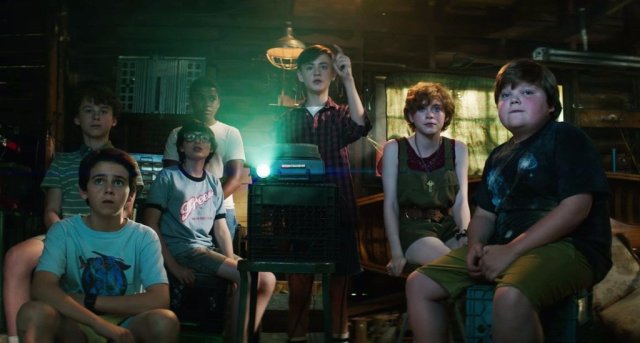
Bill eggs on his fellow “losers,” the most picked-upon 14 year-olds in town — mouthy Richie (Finn Wolfhard), asthmatic hypochondriac Eddie (Jack Dylan Grazer) and the timid rabbi’s son, Stanley (Wyatt Oleff) — into helping him search for his long-missing brother over summer vacation.

But it isn’t until portly “New Kid” and New Kid on the Block fan Ben (Jeremy Ray Taylor) shows up and shares his “research” into this town’s blood-stained history, and the harassed but mature redhead Beverly (Sophia Lillis) joins up, that it all comes together.

“I’m sorry. WHO invited Molly Ringwald?”

It’s 1988 and kids all over Derry are seeing satanically spectral paintings of flutists come to life, blood and bile pour out of sinks, haunted houses and haunted meat-lockers — all orchestrated by the balloon-toting clown.

The visions are grim, grisly and graphic, although actual hair-raising moments are rare — a chase here, a narrow escape there.

Director Andy Muschietti (“Mama”) keeps the violence lurid and shocking, interrupted by moments of often-profane gallow’s humor.

The film lays bare King’s tropes — a haunted house straight out of a theme park — and paint-by-numbers outline — a collection of “types” challenged by the sum of their fears (How “Nightmare on Elm Street” of him). The fat kid, the stutterer, the coward, the cute girl with the ugly reputation, the sassy, oversexed Jew, the black kid (Chosen Jacobs) learning to slaughter sheep, mullet-wearing punks in a Trans Am.

It’s “Goonies” meets “Stand By Me” with a killer clown after them all. If King was word-processing this today he’d have treated us to a gay boy and a trans girl, no doubt.

But his version of Hell, small-town Maine, has never been more vivid and terrifying. The first hour of the movie, dominated by kid-on-kid violence and ugly, inattentive adults, is jaw-dropping in its brutality.

“This summer’s gonna be a HURT train!”

it1

And if the acting’s a trifle uneven, the middle acts dull and the ending drawn-out, violent and almost nonsensical, the latest Skarsgard (another son of Stellan) to don makeup is a clown to overwhelm your nightmares, a red-nosed monster that may not be original (King rarely is), but plays as definitive — the last word on why those among us mortally afraid of the guys with the huge shoes, red wigs and greasepainted faces may have a point.

stars2

MPAA Rating: R for violence/horror, bloody images, and for language

Cast: Jaeden Lieberher, Sophia Lillis, Jeremy Ray Taylor, Chosen Jacobs, Jack Dylan Grazer, Wyatt Oleff, Finn Wolfhard, Bill Skarsgard

Credits: Directed by  Andy Muschietti, script by Chase Palmer, Cary Fukunaga and Gar Dauberman, based on the Stephen King novel.  A Warner Brothers release.

Running time: 2:15

Posted in Reviews, previews, profiles and movie news | 2 Comments