
You’ll see it. Brownie points to the first commenter who IDs where he turns up in his best movie in years.
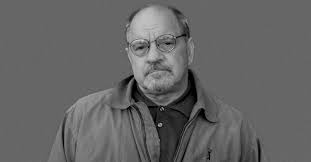
You’ll see it. Brownie points to the first commenter who IDs where he turns up in his best movie in years.
Well? Did you? It’s there, in the movie, a glimpse of a U.S. Supreme Court justice, star of “RBG” and played for comic effect.
As you’d expect.
OK, “cameo” is too specific a characterization. “Sight gag” is more exact.
Go ahead. Post a comment if you caught it. Who’s got the keenest eye for Easter Eggs? She’s in there, in “Deadpool 2.” Yessir, yes ma’am.

“Disobedience” is a finely-acted tenterhooks drama about religion, sexuality, tradition and isolation. It is a movie grounded in a rigid hierarchy and ritual, but with a cruel undercurrent of despair. But it takes flight on a trio of brittle, biting and heartbreaking performances by Rachel Weisz, Rachel McAdams and Alessandro Nivola.
There’s only one moral high ground from which to criticize any religion, and that’s to be free of any religion yourself.
This is where Ronit “Ronnie” Krushka (Weisz) plants her flag. She came from an insular religious community, was intimate with its mores, rituals, traditional dress and text.
It could be any community of the most faithful of the faithful, conservatives not just out to conserve, but to roll back the clock on the modern age — the Amish, Mormons, Protestant Fundamentalists or Muslim primitivists, though nobody dares make movies about Islam’s most primitive fringe.
In Ronnie’s case, it is the Torah-centric myopia of Orthodox Judaism which she escaped, and which she challenges still. She may have flown home to London from New York, may crave just enough acceptance from “the community” to be able to mourn her just-died father, a revered Rebbe who disowned her, long ago.
The only condolence she gets from the Orthodox she left behind is “May you live a long life.” Here, that greeting/blessing is a dismissal, a “Nobody wants you here, heretic.”
Ronnie fights this with modern, real-world sarcasm in the form of casual non-Orthodox pleasantries.
“Want a cigarette?”
What’s she think of their practices?
“Medieval.”
She can’t get a hug from her old friend Dovid (Alessandro Nivola), her rabbi/teacher/mentor father’s favorite pupil, because of the primitive sexism of the culture.
She can’t get a straight answer about the old man’s estate from her uncle (Allan Corduner) because she’s asking at shabbat (sabbath) dinner.
And she can’t get over the shock of realizing whom her old friend Dovid married. He tied the knot with Esti (McAdams). Having history with the both of them doesn’t make staying in their house before her father’s leveya (funeral) easy.
If you’ve seen the TV ads for “Disobedience,” you know that the movie’s efforts at hiding just who Ronnie has “real” history with are disingenuous. Weisz plays the unguarded intimacy she feels with Dovid as if she’ll never give away the game.
But she and Esti used to be a thing. It was a scandal. The Rav was mortified, and his obituaries say he died “childless.” Esti seems irked at Ronnie’s return. Should she stay in a hotel?
“Do what you want.”
And the congregation, which figures Dovid is the next spiritual leader of the community, is shaken. Is he the King of his Castle, or what?
 Sebastián Lelio’s film, based on the Naomi Alderman novel, challenges Orthodoxy for its rigidity, its myopia and its sexism. Weisz gives Ronnie a barely-restrained contempt for this crowd she once fled, but a contempt mixed with a need for acceptance — just enough to send off her unbending old man on his terms.
And she can’t even get that.
Nivolla (“American Hustle”) is far more subtle in depicting Dovid’s conflicts — a desire to do the decent thing, an awareness of what that constitutes in the modern world, but an overriding need for “honor” to be preserved.
McAdams gives the most startling performance. Esti is wounded, lost, a sell-out reconsidering what she surrendered. It is through her that we experience the film’s profound grasp of what it is like to love a certain way, to need acceptance and understanding from those closest to you, and how failing to get that could be so devastating.
The film which the grey, forlorn “Disobedience” compares most to is one seemingly unlike it in too many important ways. The Oscar nominated tale of sexual awakening “Call Me By Your Name” is sunny, coming-of-age tolerant and tentative, where “Disobedience” has the adult complexity of living with this life nature has foisted upon you.
“Tolerance” is one subtext the films share, as well as sex scenes which exist for some prurient shock value, and little else. There’s a tenderness in this unequal relationship, this time, even if the “How lesbians copulate” primer is just as much of a cheap come-on as “Name’s” sex-with-fruit infamy.
But the adult nature of the affair, long-ago remembered, makes “Disobedience” sit easier on the memory. Weisz’s fierce playing of Ronnie’s confrontations with men not used to being confronted by a woman are worth relishing, and McAdams’ soulful plea for a life without the lie, without the suffering of denying who she fundamentally is for the sake of a sect that is merely a 19th century reboot of Jewish practices long ago discounted, touch the very soul.
Lelio makes certain his stars get to play around with the comical implausibility that both women see in this “life,” were marriage “is “an institutional choice,” where genetics and the accident of birth are a life sentence to wearing wigs in public, sex on Friday nights and segregated worship services straight out of the dark ages.
But this trap is no laughing matter, one and all agree. It’s a world where getting the unbendable to bend, just a little bit, can be the difference between misery and happiness, life and no life at all. It’s no wonder this dogma breeds “Disobedience.” Western Civilization demands it.

MPAA Rating: R for some strong sexuality
Cast: Rachel Weisz, Rachel McAdams, Alessandro Nivola, Allan Corduner
Credits:Directed by Sebastián Lelio, script by Sebastián Lelio and Rebecca Lenkiewicz, based on the Naomi Alderman novel. A Bleecker St. release.
Running time:

Here I was, all primed to drip contempt all over the first disaster of the summer cinema season, when I made the mistake of staying through the credits of “Show Dogs.”
The mostly-fake outtakes from this talking critters kiddie comedy gave me new respect for what actors always say about working with dogs and kids.
Who knew that “dripping” would be the one thing Will Arnett would most dread dealing with in a tale of a police dog and FBI agent who go undercover at dog shows to track down animal thieves?
Clip after clip of Arnett dealing with drool on this, drool on that, and the source of the drool, a Rottweiler named Max. You have my utmost sympathy, sir.
But about the movie he and Natasha Lyonne co-star in — what a bowser.

There’s barely a single laugh in this thing, none from the humans, virtually none from the voices of the assorted dogs, pigeons, lion and panda who play police dogs, show dogs and the rowdy Vegas birds who want to help crack the case.
“Birds of a feather FIGHT CRIME together!”
Ludacris voices the Rottweiler who has nothing funny to say. Not even Stanley Tucci, as the prissy Belgian papillon who mentors the cop dog about show dog life is funny.
Only Shaquille O’Neal really had a chance. He voices a Puli, a dreadlocked champion show dog named Karma. Karma, at least, is quotably funny.
“You can’t push the river. It runs on its own.”
“I don’t think about the future. The present is its own present.”
That’s one zen master pooch.
It’s a lazy comedy in desperate need of joke-doctoring. You can’t just make dogs talk and expect it to be funny. We’ve all heard the butt-sniffing jokes. And referencing another cop-dog comedy is even lazier.
“Who’re you waiting for, Hooch?”
The good news for screenwriters Max Botkin and Marc Hyman is they got a screen credit out of this. The bad news is it was with this movie.

MPAA Rating:PG for suggestive and rude humor, language and some action.
Cast: Will Arnett, Natasha Lyonne, the voices of Ludacris, Alan Cumming, Shaquille O’Neal, Gabriel Iglesias and Stanley Tucci
Credits:Directed by Raja Gosnell, script by Max Botkin, Marc Hyman. An Open Road/Global Road release.
Running time: 1:32
“Deadpool 2” did $16-18 million business, setting a new record for an R-rated film’s “pre-opening” opening night — Thursday.
So maybe a $150 million weekend? That’s deadline.com’s speculation. Hard to guess that off marketing awareness data and Thursday night performance.
Box Office Mojo is hewing and hacking closer to the semi-official Fox projection ($130) and saying “$138 ought to do it.”

No, the market isn’t over-saturated with costumed super-hero movies. Not at all. Three in four months, all three on screens at the same time? Hasn’t hurt any of them. And Mr. Pool has earned reviews almost exactly on par with those pesky “Avengers.” I prefer “Deadpool” films to “Avengers” or “Black Panther,” “Ant-Man” or even the latest “Spider-Man,” but maybe that’s just me.
“Book Club” is slated to demonstrate how smart it is to counter-program against blockbusters. A “Golden Girls Read Fifty Shades of Grey” comedy starring screen legends named Fonda, Bergen, Keaton and Steenburgen, it has pre-sales pointing it towards a $20 million opening — “Big Fat Greek Wedding” territory. I still say it’s a “Mother’s Day” movie held back a week, but a hit’s a hit. Passable reviews (easy laughs, aimed at a less edge-seeking audience) won’t hurt it.
The talking-dogs live action comedy “Show Dogs” isn’t from Disney’s House of Chihuahua, but could hit $10 million, if parents are desperate enough.
And Pope Francis sends his message to theaters in Wim Wenders’ “Pope Francis: A Man of His Word,” in limited release and of general limited appeal. A decent-enough movie, it could have used a little more diversity of opinion, different voices. Is he as popular as “RBG?” We will see.
“Black Panther” has lost most of its screens and should exit the top ten. Finally. “Avengers” could earn another $30. Will “Overboard” hang onto audience share another weekend? “Life of the Party” should lose share to “Book Club.”
Aged, trigger happy and generic. Sci-fi violence and maybe one vintage Jackie stunt.
Where’s the charm, the wit, the warmth?
Gone with the wind.
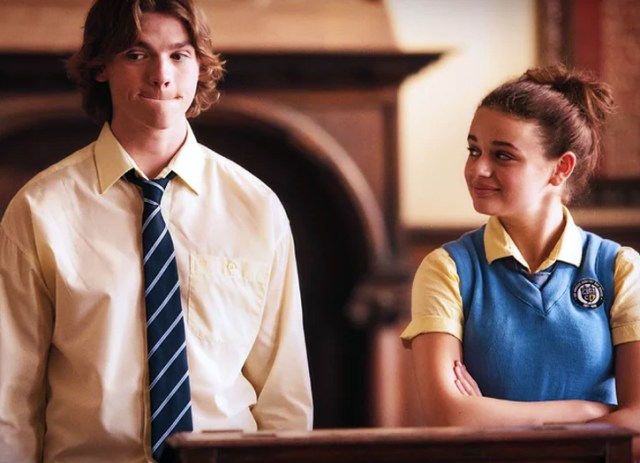
Shelly and Lee were born in the same hospital at the same time, affluent, dance-crazy California cuties who share so much.
No, not that. Shelly who prefers “Elle” (Joey King) lusts for Lee’s hunky, short-tempered jock older brother, Noah (Jacob Elordi). Noah’s just a little tactless.
“When did you get the boobs?”
“The Kissing Booth” is a flirty, semi-edgy teen rom-com built around that “moment when you suddenly go from invisible, to EVERYbody staring at you.” That “lady shape” thing changed last summer, and showing up for school in a skirt you’ve outgrown creates a stir.
“Dude touched my lady bump!”
The perky, pouty King, of “Independence Day 2” and “Wish I was Here,” clicks with Joel Courtney of “F*#% the Prom” as Lee and Elordi (of the most recent “Pirates of the Caribbean”).
But “The Kissing Booth,” based on a 15 year-old’s self-published online then New York published YA book, gives us 94 minutes of wondering which “classic” teen comedy they’ll steal from next, who she’ll end up with and how far things will…progress.
The Mean Girls at LA Country Day are stiletto wearing vixens called the OMG Girls — Olivia, Mia and Gwyneth.
“Oh my God, I would TOTALLY have babies with Noah…”
To get the tone of the picture, let’s zero in on Mia (Jessica Sutton), whom Lee openly crushes on. Here’s how he and Elle come up with the idea for a kissing booth at the school club fundraiser.
“The ONLY way you’d get to make out with her is if you PAID for it.”
Yeah, that’s a prostitution joke. But hey, kids these days…
“Oh my God, I think I TOUCHED it.”
Elle is like “the new girl” at school — thanks to her physical development. Noah is on the case, threatening every hunk (Joshua Daniel Eady) who approaches her.
“No boobs are worth a broken nose!”
OK. Maybe not. Though Elle makes her case for the defense. Meanwhile, she’s got to find volunteer “A list” hotties of both sexes to “work” the booth.
As “The Kissing Booth” is a “dead mom” rom-com, Molly Ringwald comes in as the “surrogate mom” advising Elle/Shelly on all matters of the heart and femininity. She gets two scenes, only one that counts. Very John Hughes in the ’80s attitude towards adults.
That’s OK. What surrounds those scenes already steals so much from “The Breakfast Club” and assorted Ringwald-era comedies, including covers of the same iconic songs heard of the soundtracks of those films, that this stumbling homage doesn’t need more.
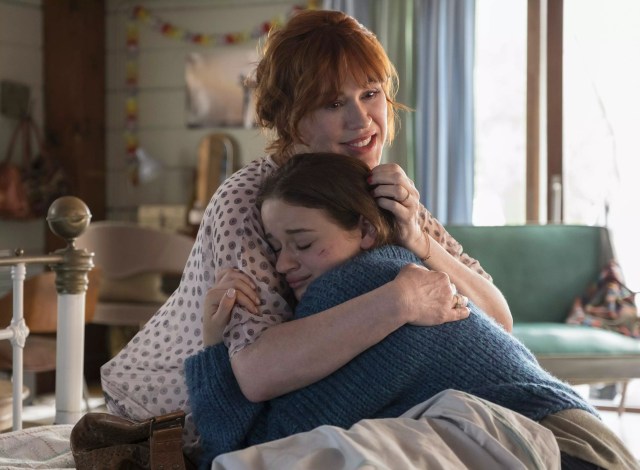
The formula is set, with all signs leading to “prom.” The high school “types” are amusingly recognizable, the banter is more quick than sharp — but quick compensates for sharp, much of the time.
It’s a world of no part-time jobs, expensive clothes, boozy teen costume parties and teen Lee getting a 1960s vintage Mustang to celebrate getting his driver’s license, Harvard-bound Noah riding a Shadow motorcycle, multi-story hillside houses with “Architectural Digest” pools you can dive into from the third floor.
Nice. Rich. But nice.
Young Ms. King looks her age (still a teen, and quite short) and more like a real high school girl than than the 20something models/actors who surround her. She’s still got a girl-next-door image when the film begins, and works Christina Ricci-hard at shedding that image before the closing credits.
Not sure playing a girl with exhibitionist tendencies and morning-after waking up in a strange bed is Every Child Actor Parent’s dream, sexist objectification and all that.
“Dress is gone, panties still on? I can work with that.”
Elle keeps stumbling into it, showing us what she’s got and reveling in the attention from the boys and the mean girls. But she still needs booth babes to do the kissing.
“Tickets and epic smooches are non-refundable!”
The kissing montage? It’s more PG-15 than “TV-14.” But there’s a cheerful wholesomeness to the whole “Get a room” approach to blindfolded hotties making out with classmates they can’t identify. A hint of same sex attraction may be only that — a hint. But it points to a more sexual second and third act.
The movie references the web publication turned YA book it is based on with Elle’s omnipresent voice-over narration and random inclusions of “Rules,” as in “Rule number 18, always be happy for your bestie’s success.” No rubbing naughty bits with your bestie’s brother is in there somewhere. Any friendship issues can be worked out with ice cream and an arcade Dance Dance Revolution-clone dance-off is another rule.
The big mack-off is an unintentionally amusing contortion owing to Ms. King’s aforementioned height shortage. Coming from the director of “Zombie Prom,” one would expect no less.
What follows is considerably less PG. And on the down low. The language, the tone, it all becomes somewhat less cute and more adult and testy and soapy.
If you’re looking for a cute/sweet teen comedy that isn’t a grow-up-too-fast exposure for your tweens, “Kissing Booth” isn’t it. But the arc of the story packs a lot of lust and relationship lessons that anybody older than 15 can relate to, and learn from.
It’s just that little about “The Kissing Booth” suggests that’s the audience it’s going for. And it’s way too unsophisticated, ham-fisted, derivative and random for anybody older than 14 to sit through.

MPAA Rating: TV-14, teen-drinking, violence, sexuality, profanity.
Cast: Joey King, Joel Courtney, Jacob Elordi, Molly Ringwald
Credits: Written and directed by Vincent Marcello, based on the Beth Reekles book. A Netflix release.
Running time: 1:34

The lurid Japanese underworld of tattooed gangsters is the setting of “Darc,” a culture-clash thriller of the “Black Rain” variety that could be a big — OK, modest — break for Tony Schiena of “Locked Down.”
He co-scripted and stars in this vengeance tale of a manga-loving/Kanji card-collecting Western boy raised in a Japanese brothel who saves his mother from a beating onto to bring down the Yakuza on them.
Years later, he gets out of prison, a pitiless bearded pistol-packing knife fighter granted “early release” thank to an Interpol operative (Armand Assante). Interpol wants something in return. We can guess what that is.
“You should do it for your mother...Justice.”
“Nobody…just WALKS into the Yakuza.”
Infiltrate, cozy up to boss Kageyama (Kippei Shîna). Take him down. Oh, and free Mr Interpol’s missing daughter.
Frequent flashbacks show us the ugly past Jake Walters — “People call me Darc.” — absorbed in Japan. But access can be attained, rescuing the punk son (Shô Ikushima) of the mob.
“What were you in for?”
“Which time?”
Next thing you know, he’s murdering bikers on behalf of the West Coast branch of Tattoo U. He’s a gaijin hanging and brawling and accepting gift hookers (Lisa Ito) from the Japanese mob in the Asian strip-and-sex clubs — in Vancouver.
Darc renews his acquaintance with perhaps the most racist culture on Earth (Japan) as they collect protection money from assorted Vancouver Asian businesses.
“F—–g Chinese!” the kid says. Repeatedly.
Wait, this isn’t set in Japan? You can’t make a yakuza movie in Vancouver. Neon and sushi and Japanese men in suits and swords and tattoos — it’ll have to do.
Decent fight choreography and good editing making the savage brawls and death-dealing visceral enough to pay off. There’s enough polish here — majestic crane shots, austere boardrooms, vivid clubs and an ocean of blood — to suggest this world of money, blood, violence and family — infiltrated by a guy the yakuza wouldn’t let get in the door.
Insights? Well, it’s comforting to know that those elaborate yakuza tattoos don’t die with their owners. Seeing one skinned from a dead gangster is something the eyes cannot “un-see.”
Dawn Oliveri is Ivy, his fetching, increasingly neighbor with a thing for beardos.
Schiena is sort of a blander Gerard Butler, in terms of screen presence. He’s OK in the fights, nothing more.
I’d make an argument that Assante’s cool, simmering and forgotten old guy machismo is ripe for rediscovery by the likes of Tarantino or Scorsese. But that’s for another, better film.

Truthfully, this was never exciting or even interesting enough to make me forget its cut-rate setting.
You can’t make a good yakuza thriller in Vancouver.

MPAA Rating: R, graphic violence, explicit sex, profanity
Cast: Tony Schiena, Armand Assante, Kippei Shîna
Credits:Directed by Julius R. Nasso, script by Tony Schiena and Dennis Venter . A Netflix release.
Running time: 1:37
Every so often, the Madonna of the Movies, Lars Von Trier, screeches for attention and we’re reminded that he’s still a thing, that there’s something still something rotten in the state of Denmark.
OK, I oversell. Pardon.
This sadistic serial killer riff on violence in art — subtle as ever, Lars — stars Matt Dillon, Uma Thurman and Riley Keough and looks like grim going.
What a clever idea for your no-budget (save for travel and stars) rom-com.
Pair up Keanu and Winona and make them not like each other in their patented patois.
This is pretty damned funny. Never heard of the studio, but this summer release looks to be worth tracking down.

 Movie Nation