
Movie Review: A righteous doctor practices his trade in “The Heart of Nuba”

nuba2

Not every deserving person can win the Nobel Peace Prize.

There are other, lesser forms of “laureate,” for instance the Aurora Prize for Awakening Humanity.

But even had Dr. Tom Catena not won that, it seems the least society can do to honor them and shine a light on their good deeds is produce a good documentary about them.

“The Heart of Nuba” is about Dr. Catena’s work as the medical director and only full-time physician in a hospital in the middle of that permanent hellhole of horrors, Sudan. In the Nuba Mountains, a million members of 50 or so African tribes live. And the dictator in charge of the country, a racist Arab named Omar al-Bashir, wants that land, “but not the people on it.”

Catena and Mother of Mercy Hospital are treating thousands of civilian casualties, smack in the middle of not just a war zone, but an ongoing genocide. A handful of foreigners and a growing staff of locals are defiantly doing their work, diving into foxholes during the frequent air raids, while the world frets more about what the Kardashians are wearing or So and So is tweeting.

Ingrid Revaug, who raises funds for the hospital while working on site, notes that “humanitarianism isn’t something you do at work, it’s a way of living your life.” She and Catena are the best representatives of such an ethos that you will ever run across.

They duck and cover at every Antonov An22 that rumbles overhead, a Soviet era cargo plane the Sudanese Muslim regime uses to drop barrel bombs on villages and the hospital compound itself. Dr. Catena wanders the ward, pointing at patients of all ages.

“Artillery shell, Antonov, Antonov, Antonov,” fingering the World Court-condemned culprit behind this primitive region’s woes. Catena takes it personally, because it is.

A local nurse, Sister Angelina Nyakuru, shakes her head. “They want  to kill Dr. Tom? Why?”

He wakes up before the dawn, prays his Rosary, and gets to work. He talks with patients in their native tongue, charms and cajoles them. And he takes photos of every civilian victim of the military, “evidence,” he says, for a war crimes trial to come, a reckoning for al-Bashir.

Catena mentors nurses, nurse’s aids, works with visiting doctors who risk their necks to come in and help. And six days a week, he is physician, surgeon, OB-GYN to legions of Nubans who come seeking his care, and who he travels to see on house calls.

It’s important to touch these people,” he says of the inhabitants of a village of lepers. “Every life has value. Every life holds the promise of hope.”

nuba4

Director Kenneth A. Carlson’s film starts with a grabber — the age-old routines of grinding grain and preparing food in a village of grass huts. Then, the shriek of fighter-bombers, the cries of children as every they flee to the bomb shelters dug beside every hut there.

From the brutal present of grim choices, bloody surgeries and near-despair over young lives so brutally cut short of circumscribed by grisly injuries, Carlson takes us into the back story of a man whose quotation opens the film, about “each and every one of us” being obligated to make the world a better place, a Tom Catena quote from when he was all of 18.

He was a New York state engineer-in-the-making from a large Catholic family when he turned his attention to medicine. He played football at Brown, joined the Navy and went to med school at Duke. But something in Catena drew him to missions work. After polishing his surgical skills in Kenya, he found his calling in perhaps the worst place on Earth, working himself sick at times, because there is so very much that needs to be done, that won’t be done if he doesn’t do it.

Carlson uses clips from the one news network covering this conflict zone, Al Jazeera, which to its credit condemns the dictator that the World Court finds such a monster. In the main, though, he keeps his camera on Dr. Tom and and small circle of people — proteges and colleagues — at Mother of Mercy. It’s a moving, inspiring choice.

Sure, an uplifting film like “The Heart of Nuba” plays like hagiography, but you’re hard-pressed to find complaints about this saintly, sometimes profane surgeon and healer. Unless you want to interview al-Bashir for your film.

So far as we know, Mother Teresa and Albert Schweitzer didn’t swear. But neither of them were All Ivy League nose guards for Brown U. That makes Catena a fascinating character to study, someone “The Heart of Nuba” more than does justice to.

3stars2

MPAA Rating: unrated, violence, graphic surgery scenes, mild profanity

Cast: Dr. Tom Catena, Sr. Angelina Nyakuru, Dr. Corry Chapman, H.E. Macram Max Gassis, Sr. Rocio Sanluz, Ratiba Ibrahim Kodi, Ingrid Revaug

Credits:Directed by Kenneth A. Carlson. An Abramorama- release.

Running time: 1:25


Posted in Reviews, previews, profiles and movie news | Comments Off on Movie Review: A righteous doctor practices his trade in “The Heart of Nuba”

Movie Review: Wes Anderson finds grim, moving whimsy on “Isle of Dogs”

dogs5

“Isle of Dogs” is the stuff of Wes Anderson’s nightmares.

Anderson’s made a Japanese epic as viewed through the twee lens in which he sees the world. A dark, daft vision of a culture that’s Turned its Back on Dog, it’s easily the most inspired, dazzling and original use of stop motion animation ever.

Is it for children? How about “Take that PG-13 rating seriously,” and read on before you decide.

A prologue tells of us ancient animus between a Japanese clan and dogs. In the near future, that Kobayashi clan sees its moment for revenge. An outbreak of dog flu and assorted illnesses cause Mayor Kobayashi of Megasaki to order all dogs dumped offshore, on Trash Island. There, they’re left to fend for themselves, eat garbage and die of neglect.

To set an example, the mayor nobly makes the guard dog he’s given to his ward, Atari, the first canine exiled to the “Isle of Dogs.”

dogs4

Months later, that boy (voiced by Koyu Rankin) shows up on the island, looking for “Spots,” his beloved guardian and pet. The pack of “scary indestructible alpha dogs” led by the reasonable Rex (Edward Norton) but held together by the tough street stray Chief (Bryan Cranston, perfect) debate helping him, despite the language barrier. The kid speaks generally untranslated Japanese. The dogs? English, of course.

“Are we eating him, or is this a ‘rescue?‘” Boss (Bill Murray) wants to know.

“Rescue” it is. Anderson, working from a story he cooked up with Roman Coppola, Jason Schwartzman and Japanese actor/DJ Kunichi Nomura, conjures up a grimly whimsical quest about doomed dogs. All of them look worn, injured and uncared for. And all of them devote themselves to a 12 year-old boy from a race that has forsaken them. They help him look for the one member of their canine community who still has a human who misses him.

As onetime showdog Nutmeg (Scarlett Johansson) reminds them, “He’s a 12 year-old boy. Dogs love those.”

Say the title, “Isle of Dogs,” three times fast — aloud. You get it.

The animation is a highly-textured, fanatically-detailed delight, a more exacting looking film than Anderson’s “Fantastic Mr. Fox.” Stitches on injuries, gruesomely explicit surgery, anatomically-perfect dog skeletons (not every dog could survive this), puppy and human puppet eyes that well up with tears, all provide a backdrop to Anderson’s deliciously deadpan dialogue, running gags and sight gags.

As in all of his films, he creates a family. Here, there are two, with one consisting of pro-dog teen resisters (led by “exchange student” Tracy–Greta Gerwig) back in Megasaki, trying to figure out why the dogs were exiled. Cameos by Ken Watanabe and Yoko Ono deepen the mystery.

The sense of place is every bit as vivid here as the fantasy pre-War Europe Anderson created for “Grand Budapest Hotel.” Anderson achieves this not just with large swatches of untranslated Japanese debate (easily deciphered by the visuals), but with thunderous taiko drums and drummers underscoring sumo wrestling, Noh theater interpretations of the back-story and current story, “Hello Kitty” visual puns and haiku, which many a character whips out to explain his or her actions and motivations in just three lines of just seventeen syllables.

“I turn my back…”

“On ManKind!”

“Frost on a window pane!”

It’s clever to the edge of brilliant, and damned funny, start to finish.

But for all the sentimental stuff about dogs, all the DIY delights of animation using cotton balls to simulate clouds of dust kicked up by a fight, or pulled apart to show thin strands simulating fog or vapors escaping from a test tube, is this complex, sometimes grisly and downbeat conspiracy dramedy for kids?

Yes, but only in the sense that “Fantastic Mr. Fox” was. When it comes to children’s stories, nobody was darker than Roald Dahl. But Roald Dahl never met Wes Anderson, a storyteller who found humor in European assassinations in “Grand Budapest” and in animal neglect and animal testing on his “Isle of Dogs.”

Just be glad he chose Japan as his setting, and not China. They eat dogs over there.

3half-star

MPAA Rating: PG-13 for thematic elements and some violent images

Cast: The voices of Edward Norton, Koyu Rankin, Bryan Cranston, Scarlett Johansson, Greta Gerwig, Kunichi Nomura, Jeff Goldblum, Ken Watanabe, Yoko Ono, Bill Murray, F. Murray Abraham with Courtney B. Vance as The Narrator

Credits:Written and directed by Wes Anderson. A Fox Searchlight release.

Running time: 1:41

Posted in Reviews, previews, profiles and movie news | Comments Off on Movie Review: Wes Anderson finds grim, moving whimsy on “Isle of Dogs”

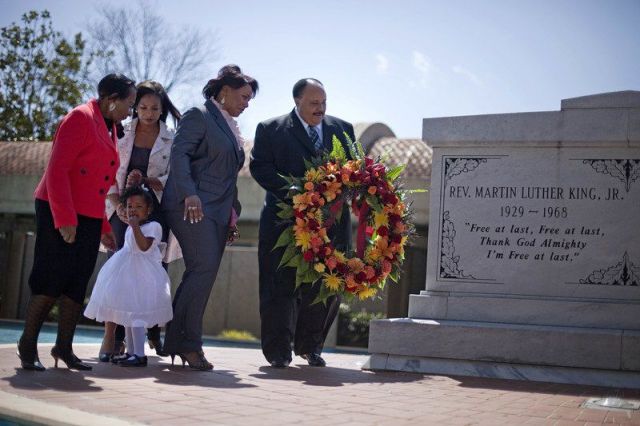
Movie Review: HBO’s “King in the Wilderness” remembers the last year of MLK’s life

king1.jpg

Martin Luther King, Jr. was often introduced, as he was in his final “I’ve been to the mountaintop” speech in Memphis the night before he died, as “a Moses for our times.”

He was eulogized at his funeral as a man “sent out as a Moses into the wilderness of this nation’s injustice.”

But the last year and a half of his life saw him in his own personal wilderness. He was a leader struggling to keep his 12 year-old movement relevant, straining to get divided America to embrace his more inclusive “Poor People’s Campaign,” arguing with the otherwise supportive President Johnson about the Vietnam War and hoping just to be heard in a country and a community that he felt was tuning him out.

“King in the Wilderness,” director Peter Kunhardt’s fine, moving documentary for HBO, remembers those troubled final days on the 50th anniversary of King’s murder. Kunhardt, known for directing films about Nixon and Gloria Steinem and for producing the Ben Bradlee “Newspaperman” film, assembles the faithful — King’s inner circle and surviving members of the Johnson White House — one last time to summon up 18 months of turmoil, frustration and fatigue.

In late 1966 King, the Atlanta “co-pastor” of his father’s Ebenezer Baptist Church, could look back as he said, “on a solid decade of progress in the South.” His non-violent strategy of marches, protests, boycotts and speeches had paid off  in sweeping Civil Rights and Voting Rights legislation, in a zeitgeist that had turned the tide of historical discrimination and injustice. But the Vietnam War was escalating, economic injustice and the futility of the inner cities was leading to summer riots.

The giddy high of 1963’s “I have a dream” had, “at many points” King told TV’s Sander Vanocur, “turned into a nightmare.”

“The nation had turned against him,” his closest aid, Andrew Young remembers.

His lawyer Clarence Jones calls this period “the most difficult time of his life.”

Kunhardt found shots of King playing pool with poor folks in Chicago, there to help the push for better housing and economic opportunity, a recording of him calmly haggling with LBJ over the phone over Vietnam, and close friends like the singer Harry Belafonte, Marian Wright Edelman and Xernona Clayton talk of an exhausted man who told them, “It  doesn’t matter how long you live, but how well you live.”

Much of that material is familiar, collected in other documentaries (PBS’s “Eyes on the Prize” series is the definitive filmed account of The Civil Rights Movement).

What’s new here is Young recalling King’s first college love, with a white woman who would never have earned the approval of King Sr., how even that pointed him towards his work on equality in America, of goofy pillow fights with his staff in the Lorraine Motel, in Memphis, the day before he was gunned down.

What we forget is the grace and dignity his widow, Coretta Scott King, displayed hours after his death, her touching visit with Jackie Kennedy the day of the funeral and a funeral caisson, a simple wooden wagon drawn by mules, surrounded by thousands. king3

Documentaries more than any other genre of film sink or swim due to their subject matter. In King and his last days, Kunhardt has found a rich subject, one that could only be illuminated by that shrinking few still around who remember the highs and lows, fifty years later. Kunhardt and HBO have made a film that’s not just rewarding and quite moving, but important oral and visual history, a movie worth watching even if you think you’ve read or seen all there is to know about this seminal figure in American history.

3half-star


MPAA Rating: unrated, riots

Cast: Andrew Young, Marian Wright Edelman, Xernona Clayton, Harry Belafonte, Rev. Jesse Jackson, Joseph Califano, Xerona Clayton, and (via archival footage) Coretta Scott King, Martin Luther King Jr.

Credits: Directed by Peter W. Kunhardt, script by Chris Chuang. An HBO release.

Running time: 1:51

Posted in Reviews, previews, profiles and movie news | Comments Off on Movie Review: HBO’s “King in the Wilderness” remembers the last year of MLK’s life

Preview, Don’t forget “The Zen Diaries of Garry Shandling” tonight on HBO

Judd Apatow, who regarded the late comic master Garry Shandling as a mentor, produced and directed this documentary — adding interviews with comics who knew Garry and worked with him (Sarah Silverman, Jim Carrey) to vintage Shandling stand-up, “The Larry Sanders Show” clips and that last, memorable “Comedians in Cars Getting Coffee” appearance.

The film focuses on the good and the bad of Garry, whose “You’re dead to me” behavior to those who crossed him was legendary, whose quick wit was hard to match.

Shandling looked deathly ill, but sitting in a 1979 Porsche 930 (Seinfeld’s personal brand), riffing on life, comedy, spirituality, the man delivered one of the great live (on tape) epitaphs in comedy history.

“Zen” premieres tonight on HBO.

Posted in Reviews, previews, profiles and movie news | Comments Off on Preview, Don’t forget “The Zen Diaries of Garry Shandling” tonight on HBO

Netflixable? David Cross makes “Hits” with a little help from his friends

hits1

“Fame” doesn’t mean what it used to.

And that’s just hard for a “talented, really pretty” small-town girl named Katelyn (Meredith Hagner) to accept. I mean, she’s already got her conversation with “Ellen” worked out, the “recording” she has set up with Kanye, the love she has for her boyfriend, Ryan Gosling.

Her ticket out of tiny, backward Liberty, New York is “The Voice.” But she can’t get the cash together to record a demo and get an audition. And every time she turns around, a “Teen Mom” is riding homemade sex videos or her tantrum-tossing Dad (Matt Walsh) is becoming a semi-accidental viral video sensation and stealing the fame that is rightfully hers.

Comic actor and stand-up David Cross wrote-and-directed “Hits,” a hit-or-miss “Call in favors” comic commentary on the viral age, small town provincialism and the delusions the culture is feeding us in an era when “talent” won’t get you anywhere, but “attention,” any kind, will.

Katelyn is absolutely convinced of her due. But Dad’s endless Liberty Town Council tirades have given him what she can’t buy — even when she furiously trades sex for recording studio time with a stoner creep (Jason Ritter, perfect) who makes records out of the non-soundproof living room of his dump of a row house.

If you’ve never been to a small town government meeting, you have little idea what you’re missing. Movies and TV, and even closed circuit TV recordings just don’t do them justice.  There is always a local crank, a self-appointed gadfly, and Dave Stuben (Walsh) fills that bill, when he isn’t working for Liberty’s local recycling center.

“That pain in the ass,” is how one and all describe him.

Snow removal, potholes or changes to the local restaurant menu set him off, burning up his three allotted minutes speaking time before the council in weekly tirades.

“TIME, Mr. Stuben,” Council President Casserta (Amy Carlson) always barks. When he detours into threats and profanities, he gets arrested. That gets the attention of Casserta’s son (Michael Cera), making his way as a craft-weed dope dealer in Greenpoint, Brooklyn.

That’s how the DIY home business activist and hipster doofus Donovan (James Adomian) sees the council videos of Stuben, edits them into a hit montage — comparing him to “Mr. Smith Goes to Washington,” and drawing a Hitler mustache onto Casserta in “A Dave that Will Live in History.”

“The town of Liberty, New York, has become Berlin under Hitler!”


Even the nerdy would-be rapper Cory “C-to-the-Y” (Jake Cherry) who lusts after Katelyn has gone viral, picking a rap fight at a high school beer bust, losing and having a video mocking him posted. And “blowing up.”

“Hits,” as you might have gathered, is a comically cluttered mess of a movie. Donovan rounds up his “Think Tank” acolytes (Derek Waters of “Drunk History” and Wyatt Cenac of “The Daily Show”) to take Dave’s “story” to the world — only to be pre-empted by every other viral video marketing/advocacy organization, including CNN.

Erinn Hayes plays Donovan’s baby-obsessed and frustrated wife. We also get tastes of Julia Stiles, Russ Tamblyn and David Koechner, playing a redneck’s redneck, all about guns and talking guns and bitching about city idiots — “Cidiots.”

“We got ourselves a real Rosa Parks, here!”

Amy Sedaris plays Katelyn’s jaded bar manager boss, the one who asks the tough but slow-to-be-answered question — “Does she have any talent?”

hits2


Walsh, a veteran character actor (“Veep”) makes the most of his rare leading man turn, wholly embodying the screamers among us who have deep, dark beliefs of the Alex Jones “Infowars” variety, bigotry that rural echo chambers tolerate and foster.

Random bits are hilarious — the competition between viral “push” organizations, all based in Brooklyn (“Greenpoint?” “Bushwick.”), the inane euphemisms hipsters use for simple works like “toilet,””coffee” etc.

But the problem with rounding up every comic friend you can think of to make a movie is that virtually none of them see their characters properly served. Everybody — everybody funny anyway — gets short shrift.

Still, Cross made this 2014 movie, “A true story…that hasn’t happened yet.” And looking at the America of 2018, one year into the reality star presidency, you’d have to call the man a prophet. “Hits” isn’t a great comedy, but given all that’s come after it, it’s worth a second look.

2stars1

MPAA Rating: unrated, sexual situations, smoking, profanity

Cast: Meredith Hagner, Matt Walsh, Amy Sedaris, Michael Cera, David Koechner, Julia Stiles, Derek Waters, Russ Tamblyn

Credits: Written and directed by David Cross. An Honora release.

Running time: 1:36

Posted in Reviews, previews, profiles and movie news | Comments Off on Netflixable? David Cross makes “Hits” with a little help from his friends

Movie Review: Arranged marriages with “A Suitable Girl” are more complicated than you think

suitable1

Two Indian-American filmmakers peel back the horrors of “arranged marriage” in their native culture in their incendiary new documentary, “A Suitable Girl.”

Not really.

Sarita Khurana and Smriti Mundhra probably glanced over their shoulders back at the divorce-happy USA, which they call home, and took a sober, sympathetic view of the nuts and bolts of this practice, which lingers in India long after most of the rest of the world abandoned it as “unromantic” and rights-restricting and backward.

One “Suitable Girl” might kvetch about “our idiotic traditions we keep following and following.” But she’s bought in and accepted it.

Amrita is her name, a happy go lucky Delhi 20something with an education, a job and a lovely life of “complete freedom.” Except when it comes to the chance meeting, courtship rituals and sexual gamesmanship that most of the West accepts as “normal” for finding a mate. She’s scheduled to be married to Keshev, and we follow her through that wedding and the suddenly confining life (“Every day I have to wear a saree!”) of being an Indian wife — cooking, caring for in-laws, etc.

It’s no wonder we see her weep (above) on her wedding day. Tears of happiness? Or the acknowledgement of what she’s giving up thanks to “traditions?”

Dipti is a plump 25 year-old from a lower middle class family who is trying everything to close a deal. She goes over the personal ads, filled with appeals for husbands and wives. Her mom notices a particular word turning up in all the men’s “Seeking a suitable girl” ads — “beautiful.”

“In your next ad, say you’re beautiful!”

“Why would I do that?”

“A Suitable Girl” is largely about Dipti’s struggle, a young woman increasingly desperate to marry, suffering from depression when hope seems lost. She tries Indian speed dating, which is very polite, quite formal, and a bit like a job fair where everybody’s particulars are barked out for all to hear.

“Twice-divorced, monthly income of,” as each potential groom is introduced.

Then there’s Ritu. With her deep, confident voice, MBA and a mother who is a matchmaker (Seema), you’d think she’d be the catch among catches.

But Seema (below) is at a loss. She consults a “face reader” psychic who dismisses potential pairings with just a glance at their photo on a phone. Seema, all organized and efficient, running a business where marriages are “deals” with “$500,000, USD” or even “$1 million (USD)” are offered for the right “beautiful” bride, cannot figure out who would want her smart, successful, independent and pretty daughter.

suitable2

The filmmakers give this entire process a serious, patiently immersive treatment (The film is a little slow.) that bottom-feeding American TV avoids with its sexed-up/hook-up competitions “The Bachelor” or “The Bachelorette.”

Their film was years in the making, but its “conclusion” seems premature. This whole “And they all lived…ever after” feels a bit off. We leave Amrita seemingly accepting the frustrations of her myopic new life and Ritu re-located to a far off land with her arranged-spouse.

Neither feels like we’ve seen the end of her story.

But “A Suitable Girl,” in English, Hindi and “Hinglish” with English subtitles, is still a fascinating look into a custom that the movies and TV have only touched on and mentioned with a raised eyebrow of mild dismissal. The phrase “A Suitable Girl” is so endemic to Indian culture — a famous novel of that title covers some of the same ground, the BBC has the male version of this, “A Suitable Boy” in production–  that you can’t even parse the sexism of the language.

Because maybe “they” are on to something. Because maybe a culture with an entire industry devoted to matchmaking, putting clients in front of vast numbers of potential mates isn’t as arbitrary as the random chance we in the West all romantically accept as the norm.

Leaving us on our own can lead to dating disasters, to “The Bachelor,” or worse. As if there’s anything worse.

2half-star6

MPAA Rating: unrated, adult themes

Cast: Dipti Admane,  Amrita Soni, Ritu Taparia, Seema Taparia

Credits:Directed by Sarita Khurana and Smriti Mundhra. An Amazon release.

Running time: 1:30

Posted in Reviews, previews, profiles and movie news | Comments Off on Movie Review: Arranged marriages with “A Suitable Girl” are more complicated than you think

Preview, “The Spy Who Dumped Me” pairs Mila, McKinnon in an August action spoof

Mila Kunis is the half of that Mila/Ashton couple that still has a big screen career.

Kate McKinnon? She’s the star, the glue who holds “Saturday Night Live” together.” Lots of shots at movies, this one is the first that makes her a co-star and expects her to help carry it.

Mila plays a woman whose beau (Justin Theroux) is apparently a spy. That gets the wrong sorts of folks interested in her and her BFF (McKinnon) as they flee across Europe.

Check out the “Americans don’t know how to drive a stick shift any more” scene. It’s a winner.

The movie? August release, lowered expectations because it’s a LATE summer comedy. But it could hit. Got to be better than Kate the Ghostbuster, right?


Posted in Reviews, previews, profiles and movie news | Comments Off on Preview, “The Spy Who Dumped Me” pairs Mila, McKinnon in an August action spoof

Box Office — The Movie Future is Chinese as “Pacific Rim: Uprising” earns $146 million…in China

china1As I said in my review of Universal’s “150 million worth of stupid,” it’s not really for the North American market.

Like Universal’s “Great Wall,” there’s a shift in the cultural locus of both “Pacific Rim” movies. Whoever the “name” stars are, the real performance/”hero” of the movie is “The Chinese Way” — efficient, cooperative, deferential to all knowing authority.


wall.jpg

And that’s reflected in the box office take. Rim” rimmed out in the U.S., earning only $26 million. But in China? An exchange-rate thrilling $146 million, and that’s where the movie — Chinese financed — will turn a big profit.

For me, it was odd to hear an unprompted Jackie Chan or John Woo play up the “It’s important to be friends” idea of dealing with China, unprompted, to emphasize China’s need for “order” over civil liberties, representative democracy and a government accountable to its people. They could see, years ago, the way Hollywood would approach luring China onto their bottom lines.

No more Chinese villains, no hints at corruption, waste, an Army that runs everything and makes illicit billions at home and abroad, no more “Red Corner.” Just pandering to the Pandas.

We first noticed this in the Chinese component of “2012,” in which the world experiences a cataclysm, but authoritarian China gets the job of secretly building smokey, diesel powered (No EPA? No problem!) arks to save chunks of the human race. The all-wise/all-knowing State anticipates the disaster, and has the resources and know how to come up with a plan.

“Pacific Rim: Uprising” cedes the power and influence over the aforementioned Rim to China. As in, “We’re pushing our borders well into the China Sea, right up to the shores of Taiwan, Japan and especially the Philippines, because we know best.”

So they run the show, and Hollywood, craving Chinese chump change, flatters the Chinese market by accepting that.

We are seeing this more and more in action films, “Mission: Impossible” this or that.

We’ve seen our last Chinese bond villains, even though, in global terms, their spreading money and collecting natural resources by “helping” Africa and “removing” big chunks of S. America back to the Motherland has the stench of colonization and power grabs.

Besides, Russians make the best villains because they’ve had a century of practice and know no other way.

But as the Not-Exactly-a-PEOPLE’S-Republic struts and gets more deference from the same corner of American business that fretted first about losing European markets to Hitler, second about the slavery and mass murder that promised, the Chinese should watch “Contact.”

Way back in ancient history — the ’90s — Hollywood got a collective sore back bending over and kissing Japanese feet. “Rising Sun,” “Black Rain,” and in the sci-fi hit “Contact,” it’s an all wise Japanese oligarch who saves the day with a “secret” transport for Jodie Foster to make contact with aliens.

The only thing that’s permanent in any of this is Hollywood’s pursuit of production cash, fresh markets to sell their ways as the U.S. audience steadily declines.

India? You’re next.

Posted in Reviews, previews, profiles and movie news | Comments Off on Box Office — The Movie Future is Chinese as “Pacific Rim: Uprising” earns $146 million…in China

Netflixable? Muslim Dutch girl “Layla M.” wonders, “To assimilate, or not assimilate?”

layla1

A Westernized Amsterdam teen struggles with her Muslim identity in “Layla M.,” the Dutch submission for Oscar contention in 2016.

It’s a movie that squares off the pressure to assimilate with the teenage need to rebel as Layla, vividly portrayed by Nora El Koussour, wears a burqa, backtalks her “keep your head down and fit in” parents, curses like an American teen and shouts Koranic quotes at those parents to explain her actions.

A nose-ringed Muslim friend confronts her, mid-prayer, at high school — “Take that potato sack off!” — earning a blunt Koranic condemnation and a “You’re dead to me” brush off.

Layla watches radicalizing videos online, befriends a punk would-be Imam (Hassan Akkouch), rages at injustices and flips out and gets arrested when a ban on Muslim assemblies ends a soccer match by police helicopter.

“We spit on your democracy!” she says, repeating what she’s heard online. “Perverts” she curses the cops.

Dad (Mohammed Azaay), a native Moroccan who runs a shop, has had enough. Her soccer-crazed brother (Bilal Wahib) resents getting caught up in her protests. She needs a way out.

That would be Abdel (Ilias Addab), her fellow radical, the one she has eyes for. Her nightly Facetime with him is where they flirt, where she flings Koranic verses at him about equality of the sexes, and her insistent proposals get through.

They marry, she flees her family and they’re down the rabbit hole of what the authorities have been assaulting their rights over — jihadist training, and from there, to the Middle East.

layla2

Co-writer/director Mijke de Jong takes pains to show the role pressure to fit in plays in radicalization. Layla digs her heels in and doubles down, the way many a Trump, Hillary or Bernie voter does. She journeys from “I Chose How I Dress” selfie-videos to taking to falling for the fantasy of an Islamic Planet. 

Abdel romanticizes and sentimentalizes his former homeland, playing down the violence and repression that gutted his family and ran them out. “Layla M.” shows a genuine romance, an idealistic young people on the road East, very much in love, talking politics, Islam and their contribution to the struggle.

Of course, the sobering reality on the ground in the Middle East — a rigid patriarchy, put-up-or-shut-up involvement with groups that behead Westerners, the works — ends all that. Addab lets us see the lights go out in Abdel, and how quickly he accepts his new dictactes on how a Muslim man treats his wife.

Layla tries to live her life as before, but comes to the realization that she’s not in Holland any more. Mouthy, cursing, independent women have a place in this closed community, and that place is silently sticking to work in the kitchen.

“Layla M.,” in subtitled Arabic, Dutch and English, isn’t particularly revealing in it exploration of this subject. “Paradise Now” covered some of the same ground a dozen years ago.

What is new is the female point of view, the chilling contrast between the life her parents uprooted their family to give her and the process of her radicalization. There’s no chicken-egg cause-and-effect to this, no “THEY started it” sense of instigation.

Every grievance, every slur and instance of harassment is remembered, police raids just compound her resolve. Cops asking a group of women they’ve rounded up to remove their face-coverings earns a “We’re not asking you to remove your pants!”

The film goes to some pains to show a broader community where people like Layla are the minority. But if “The Arab Spring” taught us anything, it was that teens are going to rebel, no matter what the culture. Understanding that has to be the first step in any hoped-for intervention to keeping the Laylas of the world in school and not thinking Jihadist thoughts.

3stars2

MPAA Rating: unrated, violence, profanity, sexual situations

Cast: Nora El Koussour, Ilias Addab, Hassan Akkouch, Mohammed Azaay

Credits:Directed by Mijke de Jong, script by Jan Eilander, Mijke de Jong. A Topkapi/Netflix release.

Running time: 1:38

Posted in Reviews, previews, profiles and movie news | Comments Off on Netflixable? Muslim Dutch girl “Layla M.” wonders, “To assimilate, or not assimilate?”

Movie Review: Elusive jazz great is chased by his fans in “Flock of Four”

flock

“Flock of Four” is a clumsily-titled but warm and likable amble through the 1950s LA jazz scene. Co-writer director Gregory Caruso conjures up a lightly amusing quest comedy that finds its edge in the subject of race, its warmth in the lost world of South Central and its novelty in a bunch of white Pasadena teenagers clinging to jazz when their peers, and most every black person they meet, is already talking about it in the past tense.

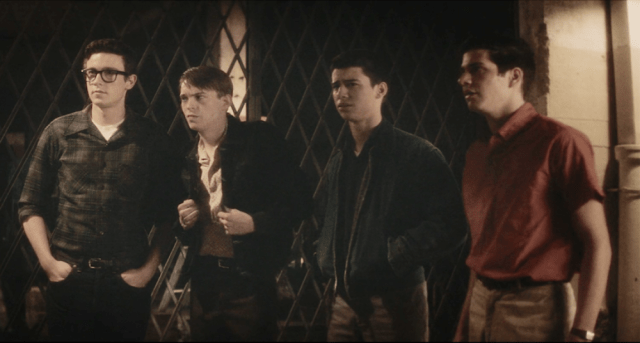
It’s 1959, and Joey Grover (Braeden Lemasters) has never given up the jazz his dad taught him at the piano. He’s the most talented guy in the little quartet that rehearses in his garage. Arch (Uriah Shelton) can never get his lungs around a winning sax solo, though the rhythm section, Bud (Isaac Jay) on bass and Louie (Dylan Riley Snyder) on drums, is solid.

Rock and roll is here to stay, but these guys are boats against the current, especially Joey. And a plug on the radio mentioning that legendary drummer Pope Davis is appearing that night at one of South Central’s last jazz clubs has Joey hellbent on dragging them all there to see The Pope “before it’s too late.”

Caruso treats us to scenes that have become pop culture tropes — the local diner, with its pop-hits-packed jukebox, the greasers — high school poseurs who all happen to be Italian American. It’s familiar, but try to remember the last time this “American Graffiti/Happy Days” cliche was trotted out in a feature film.

The lads dash off, even though South Central was scary to suburban kids, even back then. They go even though Joey’s older brother (Shane Harper) has forbidden it, and enlisted his girlfriend (Gatlin Kate James) and greaser Tony (Connor Paolo), who has a car, to track them down.

And the jazz quartet can’t be encouraged when the taxi dumps them off nowhere near where they want to be, and the first black kids they meet — Johnny Otis fans — laugh in their faces.

“These cats ain’t got any rhythm…OR blues.”

The night’s quest bounces from club to club, wending its way toward the famed Dunbar Hotel, historically the swankiest “colored” hotel in LA.

And we meet sibling jazz fans, friendly torch singer Ava (Coco Jones) and her testy, racially touchy brother Clifford (Nadji Jeter). Can they help? I mean, with Joey’s brother so determined to head them off?


flock2

“They’re trying to take us back to PASADENA!”

Clifford scowls, “Wow. That would be…so terrible.”

He’s the voice of Civil Rights era outrage, not all that happy to be helping out these guys who, 60 years later, would be assailed for “cultural appropriation.” He’s bent on exposing their unfitness to play the music.

You know how these stories play out. The kids end up on stage, tested. The racial tolerance of one and all is also tested, and some fail.

Inevitably, quests like this are let down when “the great man/woman” they’re seeking finally shows up. Either he’s a no show (“The Commitments”) or so poorly written and cast that one and all realize what a waste the quest has been.

Not here. Reg E. Cathey of “The Wire,” “House of Cards” and “St. Vincent,” a one-time jazz player, makes Pope Davis the weary, wary and grizzled survivor of jazz and racism in America that the movie absolutely needs him to be. His scenes bring weight to a movie that is otherwise light and inconsequential. Dude can even predict the future.

“Know what they’ll call the decade that killed jazz? The SIXTIES!”

Cathey’s little speech reminded me of something Michael Jai White noted when his cult blaxploitation spoof “Black Dynamite” came out. “Black people,” he opined, “when they’re over something, it’s DONE. Jazz, blues, blaxploitation movies.”

It’s these better-late-than-never suburbanites who “appropriate” the culture and keep it on life support.

“Flock of Four” never achieves the giddy highs of a “Diner” or the classics of this genre and period. But it varies the formula just enough to set up the finale. And then Cathey, maestro that he is, brings in on home with a killer solo.

2half-star6

MPAA Rating: unrated, racism, fisticuffs, mild profanity

Cast:Braeden Lemasters, Uriah Shelton, Coco Jones, Isaac Jay, Reg E. Cathey, Shane Harper

Credits:Directed by Gregory Caruso, script by Gregory Caruso, Michael Nader. An Abramorama release.

Running time: 1:20

Posted in Reviews, previews, profiles and movie news | Comments Off on Movie Review: Elusive jazz great is chased by his fans in “Flock of Four”