Movie Review: Keira Shines as “Colette,” West Dazzles as the Lout Who Made Her and Used Her

colette1.jpg

Best-selling novelist, scandal of the French stage and ahead-of-the-curve gender bending socialite, Sidonie-Gabrielle Colette was the toast of Belle Epoque France.

To a century of readers, in French and any other language you could think of, she was simply “Colette.”

She earns the Full Keira Knightley Period Piece treatment in “Colette,” a handsomely mounted film about the changing place of women in world culture as seen through the life of an icon who made that change come about.

Director Wash Westmoreland (“Still Alice”) brings us a stately stroll through the Paris salons at the end of the 19th century, the theater, opera, pantomimes and parties that screamed “decadence” as the pace of life accelerated with the age. And he takes us to the sylvan countryside, to Burgundy (Saint-Sauveur-en-Puisaye, Yonne) where smart Gabrielle (Gabrielle) is wooed and her parents flattered by the wealthy, charming and famous rogue, Henry Gauthier-Villars, known to the reading world of the day as “Willy.”

Willy (Dominic West) is a a city sophisticate, dismissing the latest opera (“La Tosca,” by Victorien Sardou) with a “bad theater is like dentistry” quip to her parents (Fiona Shaw, Robert Pugh).

Gabrielle is shy, withdrawn in his larger-than-life presence. But in private, there is lust and love. Here is a man who appreciates her wit, her sensibilities and the poetic turns of phrase she manages, even in her love letters.

“I can read you like the first line on an optician’s chart,” she quips, and he swoons.

Dowry (she has none) be damned, they marry and “Life is ours for the taking!” His “shallow and pretentious” society friends may dismiss her taste in comfortable, simpler fashions and joke about Willy’s “wild days” being behind him. But Gabrielle declares “the wild days have just begun.”

And so they have. Living well, they are constantly short of cash. Willy likes to pick up the dinner check, buy the house a round, gamble and it turns out, keep a mistress here and there.

This is almost more than his new bride can bear. But West makes Willy an infectiously fun and driven rogue. He’s a writer, actually more of a pseudonymous “entrepreneur,” pitching an idea, contracting out his stories and snarky book and theater reviews to lesser mortals, taking the credit as “Willy.”

He’s like a movie producer — “an idea man” — who leaves the detail, artistry and talent to others.

Gabrielle finds herself sucked into “the factory,” where Willy browbeats her into turning her charming tales of growing up into a novel. He cajoles and flatters her until she’s done, and then picks apart the work’s commercial failings.

But when the creditors and repossession men come to the door, he’s desperate enough to pitch “Claudine at School,” a light, carefully observed fictionalization of Gabrielle’s school days. It becomes a sensation, a veritable cottage industry, and Willy becomes the toast of Paris.

Maybe this is a “Women are from Venus/Men are from Mars” take on this “secret” arrangement which everyone of the day seemed to know about, but here this cruel credit-stealing seems more benign than it did in say, “Big Eyes.”

Credit that to West and the script, which make Willy’s devotion to his wife match his need/use for her. The times might very well dictate that “female authors don’t sell,” but this one does, under Willy’s name. His coaching and encouraging — “It’s the hand that holds the pen that writes history!” — and editing makes her who she becomes. It’s just that he never realized it was the editor who was supposed to be anonymous.

But as the years pass and the grind of cranking out more “Claudines” grates, Gabrielle morphs into simply Colette, a woman with her own identity, her own ambitions, her own ego and her own extra-marital carnal desires.

“It was the wife I found interesting.”

Willy may express tolerance, but ever the opportunist, he finds a way to inject himself into her lesbian affairs as well. It’s just a matter of time before Colette asserts herself, professionally, financially, artistically and sexually, and breaks through the patriarchy that lets men have all the fun, the money and the credit.

colette2.jpg

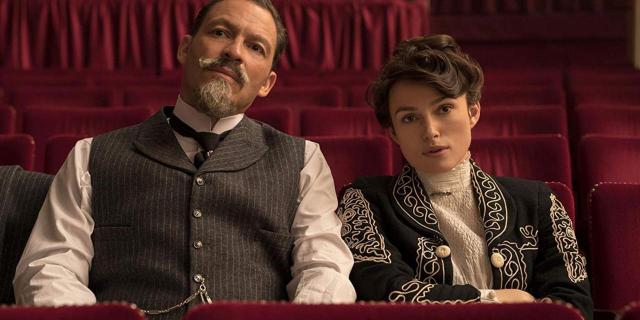
Knightley is her usual blend of spunk and serenity playing this woman who, with age and experience, starts to demand her due in life, love and the public eye. She has chemistry with the actresses playing Colette’s paramours (Eleanor Tomlinson, Denise Gough), but her scenes with West crackle with the whirlwind of life he and his character bring to them.

Yes, she could be headed down the carpet during awards season, but his is one of the great supporting performances of the year. She nobly holds center stage as the focus of the movie, but he makes it fun.

Westmoreland’s opulent production plays a bit like a “Hit the highlights” version of the life of the woman who wrote “Gigi” and was nominated for the Nobel Prize. It lopes along through Colette’s life, her emergence as an icon (via Claudine), her avante garde theater years, her growing comfort with her sexuality. As such it tends to drag and all these obvious efforts to show the changing times (electric lights are marveled over, “cinema rights” to the books are discussed) weigh the tale down.

But Knightley and West create spectacular friction in these roles, two people who loved, collaborated and rubbed each other the wrong way and the right way, and from that, a great artist was created, shaped and immortalized — with a little help from her lawyers.

3stars2

MPAA Rating: R for some sexuality/nudity

Cast: Keira Knightley, Dominic West, Eleanor Tomlinson, Fiona Shaw, Denise Gough,

Credits:Directed by Wash Westmoreland, script by Richard Glatzer, Wash Westermoreland, Rebecca Lenkiewicz. A Bleecker St.  release.

Running time: 1:51
Posted in Reviews, previews, profiles and movie news | Comments Off on Movie Review: Keira Shines as “Colette,” West Dazzles as the Lout Who Made Her and Used Her

Preview, Keira and Skarsgaard and a Nazi’s house requisitioned in “The Aftermath” of WWII

This April 2019 release has a hint of “Suite Francaise” about it — enemies, hurled together and connecting romantically.

“The Aftermath” marries Keira K to Jason Clarke, and throws the regal, high-born (Nazi sympathizer?) Alexander Skarsgaard into the mix to further complicate war torn 1946 Hamburg.

Posted in Reviews, previews, profiles and movie news | Comments Off on Preview, Keira and Skarsgaard and a Nazi’s house requisitioned in “The Aftermath” of WWII

Movie Review: “The Hate U Give”


hate2

More a good movie of its moment than a great film, “The Hate U Give” is a drama built on messaging and a hand full of terrific, emotionally-charged scenes.

It’s “The Black Lives Matter Movie” and more, a vivid if uneven and slackly-paced portrait of African American life and how American policing, too often, crashes into it.

And from its first moments, a scene in which a father (Russell Hornsby of “Fences”) gives his young children “The Talk,” about how a black person in America has to act when confronted by the police, the “keep your hands where we can see them” and “don’t act mad,” “Hate” reminds us it is a story with high stakes and today’s headlines immediacy.

Our heroine and narrator is Starr (Amandla Stenberg), a suburban Atlanta teen who lives in two worlds. At home, she’s part of an economically-segregated neighborhood, “Garden Heights,” where her ex-con dad (Hornsby) runs the local grocery, right next to the African American barbershop, the BBQ joint, a whole ecosystem of working class dreams hard against the drugs and other social ills of disadvantage.

Daddy has an activist bent, “Being black is an honor,” he reminds his kids. From childhood he drilled Black Panther politics into them, “Know your rights,” etc.

But during the day, Starr is the uniformed, braided put-together beauty in an overwhelmingly white private school. Her speech isn’t street, her manners, study habits and demeanor impeccable. The idea, she narrates, is “don’t give anyone a reason to call you ‘ghetto.'”

She has a white boyfriend (K.J. Apa) who she won’t let meet her parents, rich white girlfriends (Sabrina Carpenter, Megan Lawless) who pepper their talk with African American slang, which Starr never uses.

Weekend house parties in “the hood” can be rowdy and rough with her running mate Kenya (Dominique Fishback), the one who drags her away from Starr’s “Fresh Prince” re-runs.

“Oh girl, you’ve GOT to let the 90s perish!”

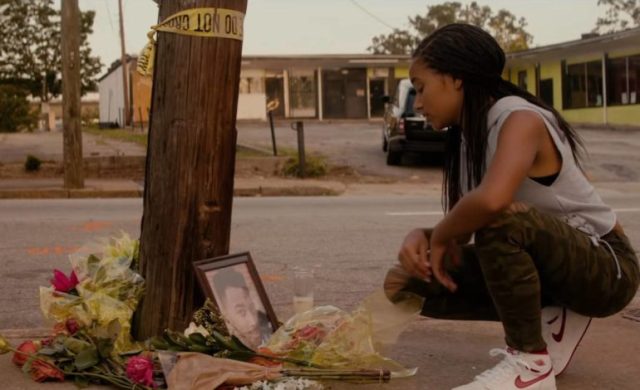
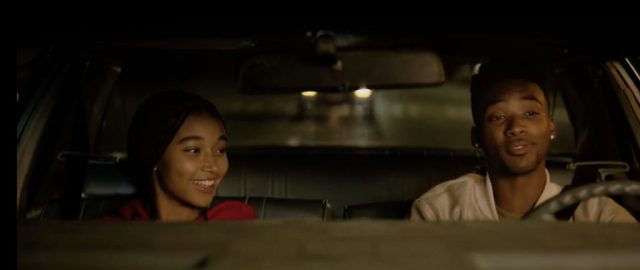
That’s where she runs into her childhood crush, Khalil (Algee Smith of “Detroit”), overdressed and over-sneakered. When gunshots interrupt their party re-connection, he drives her home. He plays Tupac on the car stereo and explains “THUG Life,” the late rapper’s acronym for being raised in injustice is “The Hate U Give,” which comes back around with confrontations and violence in adulthood.

They’ve shrugged off the brawl that ended the party entirely when Freemont’s Finest pulls them over. Starr’s training from “The Talk” kicks in, but Khalil is annoyed at this “driving while black” hassle. It’s dark. He back-talks. He shows off. He gets shot.

“The Hate U Give” becomes Starr’s journey through grief and timidity to activism.

hate1.jpg

“Hate U Give,” based on the Angie Thomas novel, is the most pointed, high-minded George Tillman Jr. drama since “Notorious,” a director/producer whose ensuing film and TV work has been lackluster (“Soul Food,” “Faster,” “The Longest Ride”) and disappointing, to say the least.

He’s most at home here in giving us a lived-in milieu, a soul food restaurant with “A Black Man Can” sticker slapped on the fuse box, a long-established drug dealer (Anthony Mackie, hard and cold) with “history” with Maverick, Starr’s dad, where mom (Regina Hall) is the sober-and-concerned rock who nurtures and sets the family’s direction. Hornsby is the stand-out in this cast as he brings power and pathos to his turn as a father who has experienced this world’s blows and wants his kids to brace for fending them off.

Tillman pitches “Hate U Give” as “important” and “epic” in its running time and supposed scope, but it feels more haphazard and leisurely than  that. Watch the equally ambitious but tighter and more challenging “Monsters and Men” or even “BlackKklansman” and the filmmaking sophistication gap is glaring. There’s little style to “Hate,” and voice-over narration is the crutch of middling screenwriters and directors who indulge them. Film is a visual medium. Show us, don’t show us and then TELL us.

Starr keeps a “Nevertheless, she persisted” sticker on her locker and gets to smirk at how much of “my culture” her hip hop happy classmates embrace until push comes to shove and “Blue Lives Matter” is the reflexive fall-back position of “privilege.” We appreciate the duality of the character even if the story arc and performance don’t give equal time to both halves of Starr.

Stenberg, seen most recently in the unfortunate “Where Hands Touch” and before that “The Darkest Minds,” is still at the “pretty and romantic” stage of her career. The is about as “ghetto” as Keira Knightley. But her turn here takes on weight as the film progresses. We can see the callow PYT of “Everything, Everything” get better, right before our eyes.

The odd lighter moment doesn’t dispel the sense that “The Hate U Give” is burdened with hopes, expectations and “importance.” But Tillman and Stenberg lift their games enough that this doesn’t cripple the film or rob it of several wrenching moments of recognition, grief and “When will this ever change?” regret.

2half-star6

MPAA Rating:PG-13 for mature thematic elements, some violent content, drug material and language

Cast: Amandla Stenberg, Regina Hall, Russell Hornsby, Common, Issa Ray, Anthony Mackie, Algee Smith, Sabrina Carpenter, K.J. Apa

Credits:Directed by George Tillman Jr., script by  Audrey Wells, based on the Angie Thomas novel. A 20th Century Fox release.

Running time: 2:13

Posted in Reviews, previews, profiles and movie news | Comments Off on Movie Review: “The Hate U Give”

Movie Review: “Halloween” reboot fails to match the original

hall2.jpeg

It pays homage to the classic slasher film it’s based on and gives us the finale we crave from the opening credits.

But the ballyhooed David Gordon Green/Danny McBride reboot of “Halloween,” while it manages the odd laugh, suffers from the soulless/frightless sequels, remakes and variations on a theme that rained down on us after John Carpenter essentially launched a genre 40 years ago.

It’s not about the creative killings — although that’s what these films devolved into, and what McBride, Green and co-writer Jeff Fradley seem most engrossed by. The occasional avert-your-eyes-at-the-gore moment is no substitute for suspense. And if we root for one character or another it’s basically because we’re sentimental, historically attached to them, not because of anything this brain trust conjured up.

Jamie Lee Curtis plays a re-imagined Laurie Strode, her life bent and twisted by what she went through back when disco was a thing and her hometown of Haddenfield was a killing ground for Michael Myers.

The British podcast producers (Rian Rhees, Jefferson Hall) who track her down to the fortified compound she’s made her home say they “believe there’s a lot to learn from your experience.”

She’s not hearing it. “There’s nothing to be learned” from “pure evil,” “the boogeyman.”

The unkillable Myers has spent decades in a mental lock-up, not speaking, growing older and fascinating the doctor who took over from Dr. Loomis 40 years before.

“He can speak,” Dr. Sartain (Turkish actor Haluk Bilginer) marvels, “he just chooses not to.”

Halloween is coming, there’s a bus transfer of this most dangerous patient, you know the drill. So does Laurie. She’s been praying the lunatic gets loose so she can finish her business with him. She’s been preparing for this day like Sarah Conner in the “Terminator” movies.

One wry observation from the new generation of teen stabbing fodder is how the world has changed since 1978. “A couple of people murdered” by a nut with a knife “is not that big a deal” post-Columbine.

Laurie’s psychoanalyst daughter (Judy Greer) is estranged from her mother thanks to the paranoid upbringing she endured. Granddaughter Allyson(Andi Matichak) still sees Granny, but wonders why she can’t “get over it.”

hall1

The formula requires the hulking killer in overalls and a mask to randomly slaughter adults, teens and children on his way to his date with Laurie. Pitless impalings, skull-squishing, lower-jaws yanked out and simple stabbings are all the now-60something Myers knows.

A cop (Will Patton) who hunted Myers back in the day is on the case. The doctor insists that Michael is “property of the state. He mustn’t be harmed.”

There are visual references to the original film — closets with louvered doors, a dollhouse of the original house Laurie holed up in, shots replicated all set to that classic, insistent pulsing score that Carpenter composed for his original film.

I like the idea of an homage, love that Jamie Leigh is back, grizzled and ready for action.

But where are the frights, where’s the tension that builds as the killer closes in on his prey? With these filmmakers involved, where are the gags? A little kid cursing is about all this crew can come up with.

For all these cumulative credibility that the “Pineapple Express” team bring to “Halloween,” this is only marginally better than the many sequels or the 2007 Rob Zombie re-boot.

We expect a treat, and they pretty much trick us out of it.

2stars1

MPAA Rating: R for horror violence and bloody images, language, brief drug use and nudity

Cast: Jamie Lee Curtis, Will Patton, Judy Greer, Andi MatichakHaluk Bilginer

Credits:Directed by David Gordon Green, script by David Gordon Green, Danny McBride, Jeff Fradley, based on characters from the John Carpenter film. A Universal/Miramax release.

Running time: 1:46

Posted in Reviews, previews, profiles and movie news | 2 Comments

Movie Review: Mrs. Maisel’s Brosnahan heralds “Change in the Air”

change1

A mysterious new neighbor throws assorted folks into a tepid tizzy in “Change in the Air,” an airless allegorical dramedy featuring a cadre of Hollywood’s well-experienced but under-employed, and the TV star of the moment.

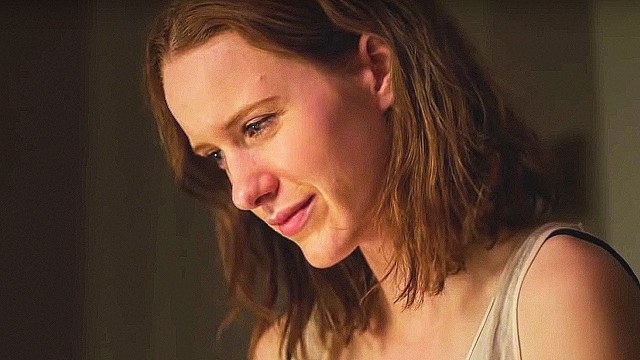
Her name is “Wren,” and as she’s played by Golden Globe and Emmy winning Rachel Brosnahan (“The Marvelous Mrs. Maisel”), we might rightly expect something more from the birdlike lady with the avian name.

Wren keeps to herself mostly, gets bags of mail each day and takes long walks with that mail to heaven knows where.

Most of her neighbors think nothing of her, but Joanne (Mary Beth Hurt,who broke out in “The World According to Garp”), the local busier-than-busy busybody, just has to know.

“Are you single? Let’s walk. I can tell you everything you need to know about this neighborhood…We older women don’t take to eccentricities. Unless they’re our own.

When she’s not monitoring elderly Mr. Lemke (veteran character actor M. Emmett Walsh), who attempts suicide by walking in front of a car in the film’s first scene, she pokes around Wren’s apartment and tries to follow her. She is NOT a “busybody,” she insists.

“I’m CARING.”

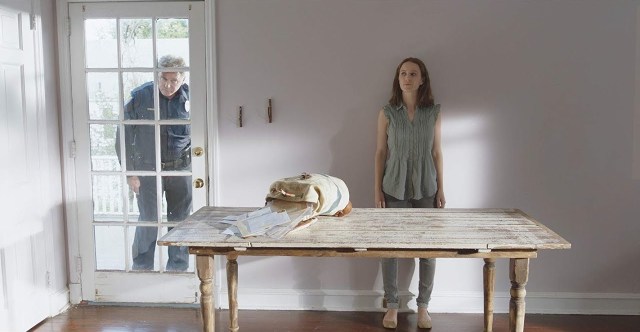
Mrs. Lemke (Oscar winner Olympia Dukakis) doesn’t know what to do with her despondent, ready-to-die husband. The lonely, aged police officer (Aidan Quinn of “Benny & Joon”) can’t figure this Wren out, can’t get a statement from her about the accident. After hours, he has one exhausted encounter for impersonal “company policy” after another.”

The music-minded mailman (Satya Bhabha) isn’t allowed to be curious about those mountains of letters. The voice teacher (Macy Gray) who rents Wren her garage apartment is too involved with her choir to care.

And Joanne’s ornithologist husband (Peter Gerety) is too wrapped up in the odd bird that suddenly turns up in his yard — a Bali Starling — to get off topic.

“Wrens. They’re highly adaptable…their scientific name literally means ‘cave dweller.'”

Joanne turns off QVC long enough to pester the new arrival with comically blunt questions, and stops work on her self-built casket to speculate on what she doesn’t know.

“I am pretty sure she’s a pen pal for prisoners. LOTS of prisoners. What else could it be? I think she thinks we’ll care.”

And all of this description and plot summary and characterization detail is what you put in a review of a movie that literally lies there, stiff as a corpse.

Hurt can’t make Joanne antic enough to be more than dully entertaining, Walsh doesn’t have a line of dialogue, the sparkling Dukakis long ago lost her fastball and Gerety (“Flight,””Charlie Wilson’s War”) and Quinn, old pros in their own right, can’t find anything interesting to play in this script.

change3.jpg

Brosnahan is pretty but absurdly uninteresting in a role that Roma Downey might have brought a bland but more beatific quality to, back in her TV prime. I’d say “Spoiler alert,” but you can’t spoil a picture as undercooked as this.

Director Dianne Dreyer and screenwriter Audra Gorman have worked in the business for years — producing, location-managing, etc. They have contacts and “how to get your film made” know-how.

What they lacked here was a plot, dialogue, characters or dramatic situations that were worth anybody’s time.

1half-star

MPAA Rating: PG for some thematic elements and brief language

Cast: Rachel Brosnahan, Olympia Dukakis, Aidan Quinn, Macy Gray,M. Emmett Walsh, Mary Beth Hurt, Seth Gilliam

Credits:Directed by Dianne Dreyer, script by Audra Gorman. A Screen Media release.

Running time: 1:34

Posted in Reviews, previews, profiles and movie news | Comments Off on Movie Review: Mrs. Maisel’s Brosnahan heralds “Change in the Air”

Documentary Review: A Yazidi woman carries her people’s hopes “On Her Shoulders”

shoulders2

It’s not easy being an icon.

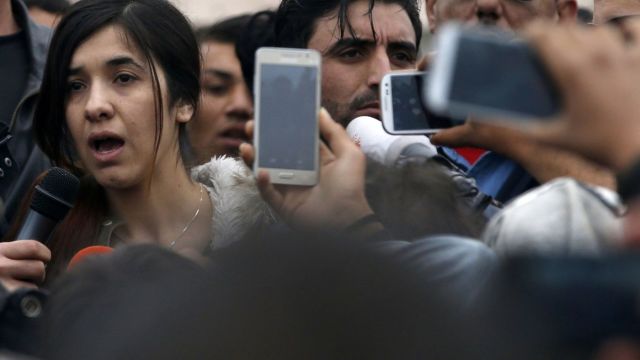
We can feel Nobel Peace Prize winner Nadia Murad wince as one of her fellow Yazidi introduces her at a Berlin rally as “our only hope.”

We see that look again when former International Court lawyer and friend Luis Moreno Ocampo hectors her with “You are the only one who can do it (find a long term solution for the Yazidis),” punctuating his pep talk about how that solution, helping the Yazidi keep the land a genocide forced them from in Iraq and Syria, is “YOUR job.”

And we feel her pain in a grueling, never-ending series of interviews with media people, coaxing, apologizing, sympathetic, but always ALWAYS pressing onward to get details of the slaughter of her village, her rape and enslavement by ISIS brigands.

Yes, even the seemingly sensitive yet persistent female CBC Radio talker who makes her cry. We never see her interrogator, just Nadia in tears.

“She wants the whole world to know what she can never forget,” a TV reporter declares. Because Nadia Murad cannot forget. The world won’t let her. There’s too much riding on that memory, her descriptions of it to the U.S. Congress, to the Canadian Parliament and the U.N. General Assembly.

It’s all “On Her Shoulders,” as the title of a fairly candid new documentary about Murad declares. She was 21 when she was raped, 23 when most of the movie was filmed and is only 25, now. And this is her life, “the only hope” for the surviving Yazidi, non-Muslim Middle Easterners largely scattered across Europe after ISIS set out to wipe them from the face of the Earth in 2014-15.

The film follows Murad through the media grind that is her life, intimate only with the leaders of YAZDA, a non-profit devoted to helping the Yazidis and putting their plight before the world.

She counts high-profile human rights lawyer, fashion plate and George Clooney spouse Amal Clooney among her fans and friends, people looking for legal recourse against the Islamic State monsters who set out to destroy her people simply because they exist in the otherwise almost-entirely Islamic Middle East.
“They should be held accountable,” Murad says when pressed, time and again, about what she wishes for her people and what she wants the world to do about the crimes against them.

“I never wanted to be a refugee,” she says, directly to the camera. She never wanted to be a leader and spokesperson for the 500,000 Yazidi who survived the genocide. She takes on this role, “not as a job, but as a request for help”

We see her mentor and and translator Murad Ismael, executive director of YAZDA coaching her, helping her polish her speeches and get them down to UN-dictated length, expressing through her the hope that “standing before them, this time they wouldn’t cover their ears.”

Speaking directly to the camera, she notes attempts at Western style psychotherapy to help her cope with the horrific trauma she faced. Therapy, she realized, wouldn’t help. Survivor’s guilt drives her to help her people, to speak out on behalf of other women who endured and still endure what she went through.

At every stop, it seems, there’s somebody fresh to coach her, lecture her on how important her role is, how big each moment/speech is for making her case for the Yazidi.

And when she’s speaking directly to the camera, she confesses that all she really wanted in her life was to open a hair salon in the Mount Sinjar region where she grew up, to help women and girls like her “feel special” in that small way.

I loved/hated the way director Alexandra Bombach turns the TV/radio coverage, the appearances before government bodies, into endless repetition of her horror. The most candid moments show her and her trailing camera crew goofed on by young Canadian women on a mall escalator, women not much younger than Nadia.

That isn’t her life, and she probably missed out on it altogether, even if we see snippets of her shopping.

She and her translators are subjected to a tour of the Canadian Parliament, complete with a photo op with the legislator who arranges it (unencouraged). They watch an Ottawa honor guard on parade and Nadia laments how Iraqi, Western and Syrian troops are engaged in a brutal struggle with the people who slaughtered her people.

“People here get to WATCH their soldiers,” she says, seemingly unconcerned that the film crew will translate her remarks later. She shops for presents for Yazidi refugees in a Greek camp, follows an endless series of TV reporter instructions for cover footage walking and talking with reporters who do not speak her language.

shoulders1

But “On Her Shoulders” also gets to the essence of Nadia. Her speeches (in English and Arabic with English subtitles) move audience after audience to tears. Legislators weep and embrace her and make promises.

And then that Ocampo shows up, remarks how helpless these activists are, working so hard with so little to show for it, and reminds Nadia of the OTHER thing she can never forget.

It’s up to you, “THIS is your job.”

3stars2
MPAA Rating: unrated, descriptions of rape and genocide

Cast: Nadia Murad, Murad Ismael, Amal Clooney Ki-Moon Ban

Credits:Directed by  Alexandria Bombach. An Oscilloscope release.

Running time: 1:35

Posted in Reviews, previews, profiles and movie news | Comments Off on Documentary Review: A Yazidi woman carries her people’s hopes “On Her Shoulders”

Preview, Two broken Irish couples, a temptation to cheat, Cillian Murphy stars in “The Delinquent Season”

Eva Birthistle and Catherine Walker are the wives, Andrew Scott is the other husband concerned in all this autumnal cheating.

Mark Rowe wrote and directed “The Delinquent Season.” He scripted “Boy A” and the Colin Farrell dramedy “Intermission.”

This one earns limited theatrical release and VOD treatment Nov. 9.

Posted in Reviews, previews, profiles and movie news | Comments Off on Preview, Two broken Irish couples, a temptation to cheat, Cillian Murphy stars in “The Delinquent Season”

Preview, “E.T.” or “Short Circuit” on a faith-based budget? “Mail Order Monster”

A bullied little girl, a dad about to remarry, a passion for sci-fi and naive enough to believe the ads you used to see in the backs of comic books?

Those are the ingredients of this “Dove Approved” family comedy. No release date yet, perhaps direct to VOD. But we’ll see. Every niche gets served at the smorgasbord of cinema these days.


Posted in Reviews, previews, profiles and movie news | Comments Off on Preview, “E.T.” or “Short Circuit” on a faith-based budget? “Mail Order Monster”

Movie Review — Brace yourselves for half the laughs and half the frights in “Goosebumps 2: Haunted Halloween”


goose1

Silly me.

From the advertising, I’d assumed Jack Black was AWOL from the “Goosebumps” sequel, and missing his ironic turn as kid’s horror novelist R.L. Stine meant that Columbia wasn’t putting a lot of effort into this sequel to the delightful surprise “Goosebumps” was.

Oh, he’s in “Goosebumps 2: Haunted Halloween.”  In last act, basically, too late to make much of a mark on a movie that has nice effects, Ken Jeong to provide supposedly grown up laughs, decent money spent on effects and some seriously dull child actors as leads.

Just like the trailers and TV commercials. So kudos to Sony/Columbia for truth in advertising.

In a different town, Wardenclyffe, New York, another “Stine story COMES to life,” also involving one of his most demonic and derivative creations — Slappy the “demonic” ventriloquist’s dummy.

Yes, Mr. Stine was a “Twilight Zone” fan, back in the day.

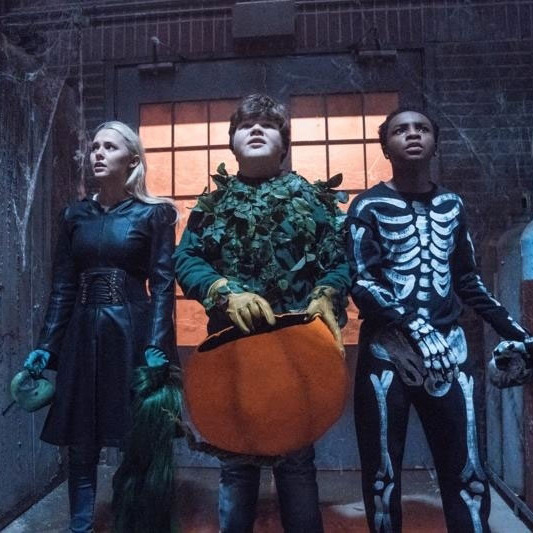
Sarah (Madison Iseman of TV’s “Still the King” and other series) is applying to colleges, younger brother Sonny (Jeremy Ray Taylor of “It”) is the bullied nerd in middle school and Sam (Caleel Harris of TV’s “Castle Rock”) is Sonny’s pal and business partner. The “Junk Bros” will haul away your trash for you.

That’s how they get the call to hit the long-abandoned Queen Anne style house down the street, clean it out. And that’s where they stumble across a hidden compartment with an ancient steamer trunk and an untitled book under lock and key inside.

“Who locks up a BOOK?”

Weird. Not as weird as “Slappy,” the dummy they also pick up.

Slappy comes with a card with an incantation written on the back. Next thing you know, he’s acting out, giving the bullies the business and settling scores with Sarah’s faithless boyfriend.

He just wants a “family,” he says. The kids employed to play these youngsters so under-react to this incredible, supernatural occurrence that you’d swear this happens every day in their families.

But not in Wardenclyffe, New York. Even though, if you remember your history, a certain Nicola Tesla once set up show for his experiments with radio and wireless transmission of electricity.


Events progress the way they do in these movies, abruptly. Slappy turns bad and the kids are hard pressed to keep his evil a secret when he sets out to make “Halloween come to life.”

Character actress Wendi McClendon-Covey adds laughs in her few scenes playing the siblings’ single mom, a nursing home nurse. Chris Parnell plays the pharmacist who flirts with her, a waste of a fine comic talent (he has nothing to play).

And Jeong is the single, childless neighbor a little too INTO Halloween, the sort of grownup still into R.L. Stine books.

“Classic ‘Goosebumps’ moment!”

The 2015 “Goosebumps” film had exactly the same story arc, with all manner of Stine mayhem erupting in the third act. The effects — digital witch costumes, Jack-o-Lanterns, mummies and Werewolves spinning to life — are every bit as good.

But the plot feels played and the stakes feel low. Black’s Stine doesn’t show up early enough to lend credence to the incredible, and perhaps show the kids on set how you react when the bully and his boys are nabbed and yanked into the heavens by witches.

The leading trio may have long careers ahead of them, but collectively, they add nothing to this never-really-scary horror movie for the Stine demographic (12-and-under). And they needed to, because Rob Lieber’s script required any spark the cast or once-promising director (Ari Sandel did “West Bank Story” way back when) could give it.

1half-star

MPAA Rating: PG, mild frights

Cast: Madison Iseman, Jeremy Ray Taylor, Caleel Harris, Wendi McClendon-Covey, Ken Jeong, Chris Parnell, Bryce Cass

Credits:Directed by Ari Sandel, script by Rob Lieber, based on the R.L. Stone books. A Columbia release.

Running time: 1:30

Posted in Reviews, previews, profiles and movie news | Comments Off on Movie Review — Brace yourselves for half the laughs and half the frights in “Goosebumps 2: Haunted Halloween”

Movie Review: Clunky “Kinky” lost its sexual nerve before the cameras rolled


kin2

Bad acting by pretty people, chilly sex scenes acted out in mail order S&M wear, laughable dialogue and money money everywhere. What is this, “Fifty Shades of Ebony?”

That’s exactly what “Kinky” is. Flip the gender of the “I like to experiment” partner, give the hapless guy the ineptly-acted “I’m scared, but I’m intrigued/turned on” part, and that’s what “Kinky” is, an unintentionally funny “Whip me, Daddy, whip me hard” sexual melodrama that sets back sexuality 20 years.

Writer-director Jean-Claude La Marre writes really bad dialogue — “This is my…somewhat shy brother,” inane business conference banter and sloppy, unseductive seduction talk. He couldn’t find any big name players to star in this softer-than-softcore tale of an L.A. surgeon (Dawn Richards, billed as “Dawn” in the credits to pretend this never happened) who never, ever breaks a sweat.

Dr. Joyce Carmichael hits the gym, comes out of the operating room and gets busy in the sack with the same exertion-free/emotion-free cool. She’s beautiful, and men hit on her, but as her fey shrink (director La Marre) and her girlfriends note, she’s not one “to give these boys some play.”

Then this comically assertive fund manager (Gary Dourdan) stalks up to the table where the ladies are planning one of their number’s wedding, interrupts, lists his credits and hints at his fortune, and introduces that “shy” brother/business partner (Robert Ri’chard).

Dr. Joyce is into the brother. Fantasizes about him. She’s still into him even after he floods her hospital with flowers, as pushy as his older sibling. Shy? Not really. It’s the lunch date on his boat that seals the deal, and gives  the movie its first starchy attempt at erotica.

kink1

La Marre, who got the not-much-better “Chocolate City” (an Ebony “Magic Mike”) on the screen, has more of an eye for a market opening than for casting and costuming and directing, more of an ear for “Who can I get for the soundtrack?” than dialogue.

Vivica A. Fox shows up and lends a little seasoned “Booty Call” spark as Joyce’s long-married, sexually frank sibling. She just reminds us how this might have gone with sharper performers demanding better scenes and dialogue.

The leads are every bit as bland as those pale “Fifty Shades” bores, the situations trite and everything that comes between them leaden, playing like filler.

Movies are usually chopped down to fit a running time. This one, with boat trips (a funny sexually suggestive moment with a fishing rod), shifting the gears on a plainly-automatic transmission Porsche and Dr. Joyce telling her tepid tales of sex or no sex to a shrink who seems more a gossipy girlfriend than board certified, is padded and padded some more to get it up to its running time.

It’s the filler, from the tepid opening church sermon about sexuality to too much leading up to the finale, that sticks in your mind in “Kinky.”

1star6

MPAA Rating:R for strong sexual content, and some language

Cast: Dawn Richard, Robert Ri’chard, Darrin Dewitt Henson, Jean-Claude La Marre, Vivica A. Fox

Credits:Directed by Jean-Claude La Marre. A NuLite/Patriot Pictures release.

Running time: 1:38

Posted in Reviews, previews, profiles and movie news | Comments Off on Movie Review: Clunky “Kinky” lost its sexual nerve before the cameras rolled