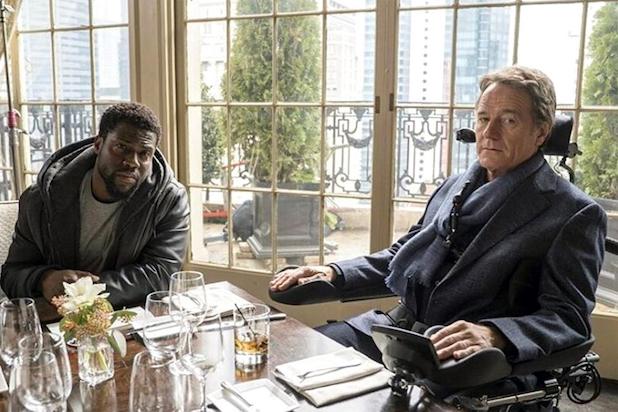
Movie Review: Kevin Hart surprises…just not that much — in “The Upside”

upside4.jpg

Comics who take the easy, broad gags are said to be reaching for low-hanging fruit.

Kevin Hart? He treats reachable, easy laughs like piñatas. He pounds the heck out of them.

“The Upside” gives Hart the chance to check his swing, just a smidge. He still pummels the laugh-lines and gets the most out of the comic bits. Comics are angry people, by definition.

But he surprises when he lets us see a sensitive side that his antic character comedies never do. The film is a manipulative drag, at times, entirely too obvious with the emotional tugs and try-too-hard laughs standing out more than they should. But Hart, Bryan Cranston, Nicole Kidman and others in the cast make it tolerable, more or less from start to finish.

It’s a remake of a not terribly ambitious but warm, bracing and accessible French comedy based on a true story, “The Intouchables.” Director Neil Burger (“The Illusionist”) leans heaviest on the sentimental elements of this story of a rich man rendered quadriplegic by an accident who hires a grumpy, unqualified and unempathetic ex-con as his caregiver.

The job description is “life auxiliary,” which the ex-con Dell (Hart) has never heard of.

“White people got a  name for everything!”

But he’s desperate to show his parole officer applications that demonstrate his job hunt, so he tags along to a penthouse interview with a score of other, more caring, more qualified and generally more insufferable applicants. Dell is bitter, estranged from his ex (Aja Naomi King, wonderfully bluff and blunt) and son. And he’s disconnected from society and the job market. All he wants is “proof” he’s job hunted.

Phillip (Cranston) is a grieving widower whose world has shrunk to whatever he can see from his bed or his mouth-controlled wheelchair. He suffers the attentions of his executive assistant (Kidman) only so long as she hears his demands that “DNR” get attached to every medical instruction.

That stands for “do not resuscitate,” for those who haven’t written their living will.

Phillip hires the rude, unqualified and unsentimental punk at least in part, we suspect, because surly Dell would let the him die. The way Dell flings “DNR your ass” around, we buy that.

Yvonne (Kidman) has to be bullsied into accepting the hire, and Dell has to be convinced to accept the offer. The designer bathrooms, expensive art on every wall, garage full of collectible cars and bookshelves full of first editions get his attention.

“I think your plantation is bananas,” he sneers, “but I ain’t  nobody’s servant.”

A big paycheck changes his mind. Along with the chance to drive the boss around in a Ferrari or Alfa Romeo, “running errands,” trying to win his son over and buy his way back into their lives by paying back child support in the process.
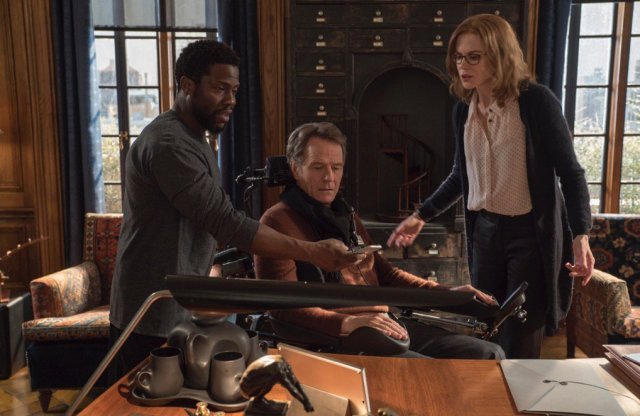
Untouchable-film.jpg

I’m always amazed when the well-heeled Hart can still summon up his inner “street” for a movie. The guy was a child actor, for Pete’s sake (“Freaks & Geeks”). The self-described “Little Man” does the chip on his shoulder thing well, and he makes Dell’s utter tactlessness with Phillip seem genuine and bracing.

“Don’t get up,” he says without thinking. A bet is secured the usual way, but without Phillip’s willing ascent. Not having the use of his limbs ensures that.

“You shook my hand!”

“You think THAT’s gonna hold up in COURT?”

It all gets to be a bit much, Dell’s wallowing in the lap of luxury (cars), Dell’s on-the-make efforts to hook Phillip up with a woman who will give him a reason to live — “How’bout Mrs. Botox, here? You’re perfect for each other. You can’t move your body, she can’t move her face.”

The story arc — the streetwise black man trying to bring a little Aretha into the rich writer’s life, giggling through the rich man’s operas until he starts to appreciate the vocal glories of Mozart’s “The Magic Flute” — is comfort-food familiar and predictable.

But Hart makes the laughs that the non-caregiver wrings from his first effort to replace a catheter fenuine and cringe-worthy. It’s no shock, given Hart’s recent run-ins with gay rights advocates, that he plays the “phobic” in “homo-phobic” in that scene with great comic conviction.

The upside of “The Upside” is that Hart’s fans will find just enough here to warrant the ticket price. But those on the fence about him thanks to his reaction to unearthed homophobic remarks he made and was slow in taking back won’t be as forgiving.

It’s a movie that swings too hard, tries too hard and sticks around too long to be an easy winner for the cinema’s hottest comic. But if you’re willing to see Hart try something new, with eager support from Cranston (Kidman is plainly slumming here), there are worse ways to spend two hours than watching Kevin Hart play a fellow who learns empathy and learns to love the opera.

2stars1

MPAA Rating:  PG-13 for suggestive content and drug use

Cast: Kevin Hart, Bryan Cranston, Nicole Kidman, Aja Naomi King, Juliana Margulies

Credits: Directed by Neil Burger, script by Jon Hartmere, based on the French film “The Intouchables.  An STX release.

Running time: 2:05



Posted in Reviews, previews, profiles and movie news | Comments Off on Movie Review: Kevin Hart surprises…just not that much — in “The Upside”

Preview, “Big” is over and done with — are you ready for “Little?”

The laughs may be low-hanging fruit — “What in the name of Black Jesus” and “We’ve got a BMW situation here; Black Mama Whuppin'” — but this African American “Big” twist has them.

Three or four, just in the trailer.

Regina Hall is the bitchy boss lady who gets cursed and turned “Little,” Issa Rae of TV’s “Insecure” brings the funny are her flunky who finally gets hers when the boss is within “spanking” distance.

Tina Gordon Chism of “Drumline” and “Peeples” and the big screen “ATL” wrote and directed this April 12 release.


Posted in Reviews, previews, profiles and movie news | Comments Off on Preview, “Big” is over and done with — are you ready for “Little?”

Next screening? “The Upside”

So Kevin Hart’s having a rather rough go of it. No, he isn’t hosting the Oscars. Yes, he did FINALLY get around to apologizing for one liners and old tweets of the Tracy Morgan “Kill my kid if he told me he was gay” variety.

But he’s got a semi-serious and sentimental movie, “The Upside,” coming out. And even though it’s screening a bit late here (reviews are already up from other markets), it looks good.

Bryan Cranston and Nicole Kidman co-star in this remake of the French film, based on a true story, “The Intouchables” (my review of the original film is here). 

Has “The Upside” really been sitting on the shelf for two years? 

Posted in Reviews, previews, profiles and movie news | 1 Comment

Documentary Review: French Filmmaker seeks to understand “Jihadists”

jihad3.jpeg

At one point in the French documentary “Jihadists,” a snippet of an ISIS recruiting video sends us hurtling down the highways and streets of Iraq, as the “fighters” inside randomly shoot-up cars full of people, pedestrians on the street, all as a dream catcher dangling from the rear view mirror of their SUV bounces hither and yon in bloody irony.

Coming near the end of this “their beliefs, prejudices, goals and practices, in their own words” film, one can be forgiven for throwing up your hands, asking “What can we do with such barbarians?” Aside, of course, from forcing some reduced in number 1.5 billion Muslims to bow to the radioactive cinders of what once was Mecca five times a day in prayer.

But that’s not what co-director Francois Margolis, who appears on camera several times in the film to explain himself and his movie, has in mind. The film, titled “Salafistes” in France and other countries which know what that Sunni movement represents, is Margolis and co-director Lemine Ould M. Salem’s attempt to “listen to what these people say. They are not crazy… They are not isolated…They have an ideology.”

He set out to find “the people who have decided to wage war on us…an important minority in Islam,” and talk to them where THEY were in control, in areas of Mali, Tunisia and Mauritania where Islamic jihadists run the show and Sharia Law is the only law that matters.

Tracking down Imams and Islamic police, militia leaders and rabid adherents in Africa via Facebook and Twitter, escaping the clutches of Boko Haram despite making an effort to include the Nigerian fanatics and electing not to go to ISIS territory “because we would have been killed,” Margolis and Salem got unfiltered versions of the beliefs that gave birth to the attacks on 9/11, on Britain and Spain and France’s “Charlie Hebdo” magazine.

They say what they really believe, really think and really plan to do “in safety,” Margolis says. And then the screen goes black with a quote Guy Debord — “Shame should be made even more shameful by making it public.” There’s nothing as damning as letting cranks explain themselves, giving their beliefs as they understand them.

As this or that leader of the various movements “Jihadists” visits and hears out declares “International opinion is of no concern to us,” the film’s “real” audience becomes clearer. They’re trying to reach Muslims “who do not think like this,” who are embarrassed to be tarred with the same brush that murderous extremists “who long for (an idyllic Islamic) past that probably never existed.” And they’re trying to show we Westerners why what we’ve been doing to combat this ideology hasn’t worked.

We ride around on a moped with AK-47-armed “Islamic Police” in Timbuktu, forcing women to put on their veils, cracking down on smoking and other vices they deem “not allowed by the Prophet.”

A man, his face covered by a hood, admits (in French and Arabic, with English subtitles) “I am here because of Bavaria.” A can of beer got him arrested.

An accused murderer is executed because the mother of his victim refused to forgive him, the judge shrugs. And we see lashes administered to this accused wrongdoer, or a hand lopped off (not on camera) of an accused thief.

A cleric named Hamada As-Shinqiti explains why a married male adulterer “will be stoned to death,” but a single man will only receive “100 lashes,” a lighter sentence which he then tries to explain “biologically.”

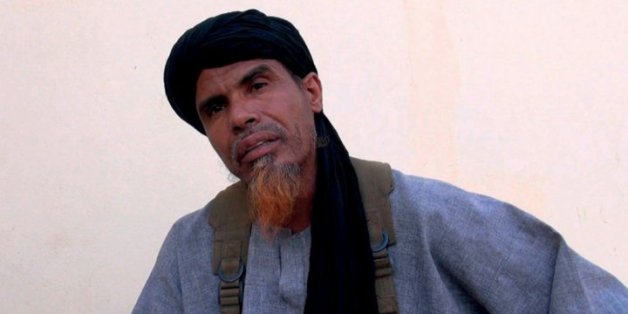
We hear from Omar Old Hamaha of  the Timbuktu group Ansar al-Sharia, a  55 year-old college-educated jihadist fluent in French and Arabic, remembering the “divine intervention” that made him a jihadist.

He takes a literal passage of the Prophet’s edicts and dyes his beard red “to contradict (Confound?) the Jews and the Christians.”

Hamaha marvels at the “paradise” he and his armed, ruthless comrades have created in “the minaret of Islam” (Timbuktu’s motto).

“Sin all over the world. Discos, debauchery, music everywhere. Now, there is no more beer drinking, even little girls in Gao wear veils.”

One articulate Salafiste mullah, fighter or Imam after another gives his interpretation of the Koran and the will of the The Prophet, explaining away the sexism, the patriarchy of the culture, the violence.

“Here, there were alcohol sellers,” a young tour guide notes. “We used to preach in the mosques, and then went out into the streets ” to spread the word. It wasn’t until “we took up arms” that they were able to impose their will on the nation.

“There’s no more sin now!”

“Jihadists” makes for a fascinatingif talking-head heavy indictment of a myopic ideology that claims “We just want to be left to ourselves” to do as they see fit “in our own lands.” Sharia Law, enforced by armed thugs and justified by narrow-minded, selective, context-twisting clerics, is what they want — Saudi Arabia without the trappings of wealth or feigned concern with what the West thinks about their Sharia State repression.

A young Muslim man sees this version of Islam as “a new religion. We follow it because what the force says is what you do.”

“There is no opposition” in these corners of the world, Margolis explains. Conformity and intolerance of criticism of The Prophet and his faith are enforced by the Men with Guns.

As we see accused homosexuals tossed from the roof of a Mosul, Iraq hotel (an ISIS video), watching stonings and canings and see propaganda videos of Westerners as they’re about to be murdered by ISIS, as various Africans Margolis and Salem interview ponder the idea of going to ISIS lands where at long last “the caliphate” has been reestablished, the viewer begins to grasp that this violently intolerant, nativist/quasi-nationalist conservatism merely puts the Jihad movement ahead of the global curve on “Making Arabia/Africa/Syria Great Again” timeline.

“What is my problem with democracy?” one educated young Imam laughs in a moment that abandons “shame” and zeroes in on mockery. It’s the secularism of voting rights, and the fear that “What if the people decide wine is allowed?”

We in the West may be enraged at the smug “America got what it deserved/’Charlie Hebdo got what it deserved” declarations. It’s hard to cling to the idealism of tolerance for others’ beliefs when those beliefs are slaughtering in the name of a religion they believe can never be criticized, questioned or ridiculed.

jihad1.jpg

There is virtually nothing in the line of contrary local or Islamic voices, criticizing or critiquing the value system and twisted “morality” of the jihadists. That’s mostly left to Margolis himself. That’s a shortcoming of this “in their own words” film.

And as Margolis discusses his reasons for making the film, the family he lost in the Holocaust, a vow of “never again,” any Muslim who’d care to dismiss his movie can say, “He’s a Jew,” followed by more invective of the type we’ve heard throughout “Jihadists.”

“We cannot have compassion as they are not innocent people, insulting The Prophet…They have only one destiny on Earth, to be hated.”

But as one dogmatic true believer declares “I only believe what can be proven!” and we remember how little of any supernaturalist religion can actually be “proven,” as one more young believer wishes for the chance to make the journey to join ISIS, as another Westerner appears on an ISIS video and blames the West for the state of bloodstained state of the Middle East, as yet one more young cleric spits out George W. Bush’s blundering use of “crusade” back at us with the cleric’s Muslim victimhood interpretation of the Crusades (which followed Islamic expansion by the sword across the Middle East), the viewer cannot help but embrace the point of “Jihadists.”

Getting Islam to shout down the murderous cranks in its ranks is far more likely to work against such movements than all the bombs and bullets and bloodshed that’s been tried thus far.

3stars2

MPAA Rating: unrated

Credits: Directed by Francois Margolis, Lemine Ould M. Salem. A Cinema Libre release.


Running time: 1:12

Posted in Reviews, previews, profiles and movie news | Comments Off on Documentary Review: French Filmmaker seeks to understand “Jihadists”

Movie Review: “The Untold Story”

untold1.jpg

Sometimes, it’s fun to dive into a film by dissecting its credits to figure out how it, out of all the screenplays flooding into the indie cinema marketplace, got made.

The first thing that jumps out in reading the credits of “The Untold Story” are the surnames.

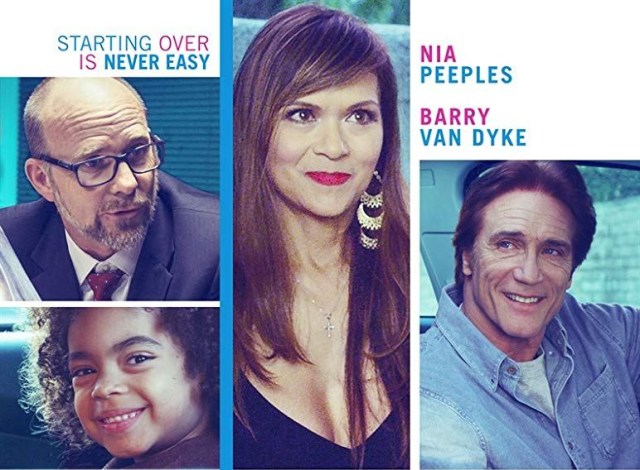
It’s a light, stumbling romance that stars veteran character actor Barry Van Dyke, with people like Jason Connery, Ellen Travolta, Omar Gooding and Jordan Ladd in the supporting cast.

For the life of me, I cannot recall a film that had so many offspring and siblings of film and TV stars in its cast. Dick Van Dyke’s son, Sean Connery’s son, John Travolta’s sister, Cuba Gooding’s brother and screen legend Alan Ladd’s granddaughter — it’s like a whole season of “Murder She Wrote.”

But kudos to co-writer/director Shane Stanley for figuring out you can get your movie financed and filmed like that. And as it’s a Hollywood story — aged actor, trying to get back in the cutthroat business that turned its back on him — who knows Hollywood better than those who grew up in it?

Yet “Untold” is a tedious tale whose editing shows signs of the struggle to give those cast in it their “fair share” of screen time — pointless montages of the mundane details of life (not mundane to rich Hollywood folk), scenes that carry on past their (tepid) payoff.

That’s a common failing of movies where you’ve got a lot of “names” to keep happy and not a lot of cash to offer them. And pacing? That’s the Achilles heel of modern movie making. It’s not the flaccid recycled scripts, it’s the lack of ruthless editors who can hack 104 minutes into a faster, tighter 70 minutes that comes closer to working.

We meet Edward Forester (Van Dyke), a veteran of some 40 films, Broadway and a popular TV cop series “The Six” as he’s downsizing and watching his life shrink, right before his eyes. He still has the Jaguar he earned when the money was rolling in, but now it’s parked in front of an under-sized dump of an apartment out in The Valley.

He had “a tabloid incident” or two that made him less employable. The bigger reason his agent (Connery) is dumping him? He’s 64.

Edward reaches out to colleagues (Ladd) and employees he mistakenly regards as “friends.” They’re no help, and most of them don’t have his good manners.

But this young would-be writer/director (ex-child star Miko Hughes) has a script he wants him to do. It makes Edward laugh out loud. If only he can get the role, get the financing, get this “comeback” project under way. If only he can find Jeremy (Hughes), who drops out of sight when their first shot at financing the film falls through.

People still call Edward (nice dye job) “handsome,” and women from “the business” are still interested in him sexually. But he’s got this feisty Latina neighbor (Nia Peeples, who broke out on TV’s “Fame” in the ’80s, and was on “Walker: Texas Ranger,” for years). They “meet cute.” She’s getting dressed in front of an open window and cusses him out for looking.

She’s broke, works as a car touch-up painter and detailer and there’s a little boy of four in her care who doesn’t speak. So she’s quite short tempered with the man she keeps deriding as “Abuelo” (grandpa) and “viejo” (old man).

As in, get your moving truck out of the way, “ToDAY viejo!” Plainly, they’re destined to be together.

So yes, the plot has a few standard elements and the characters have the promise of “color.” And your cast is experienced at filming quickly (lots of TV work) and making the most of any script.

What could mess it up? Because scene by pointless or painfully overlong scene, Shane Stanley (also born into the business, he’s the son of co-writer, actor and sometime director Lee Stanley) does.

Start with the endless banalities the movie opens with. There’s the moving-in montage, the housekeeping montage, the grocery-shopping, cookware-buying, noisy neighbors keeping you awake, and drippy faucet and “I’ve never done my own laundry,” and a scene in yet another movie that is shocked SHOCKED by how ill-mannered cell-phone addicts are on dates, and then having our hero finally recognized by the cable guy.

“Wait, you’re Edward Forester!”

A solid 20 minutes of that begin the film and almost nothing happens in them to make it worth watching. Catarina (Peeples) is speaking for us all when she barks at her new neighbor.

“Come on, abuelo!

It takes forever to get around to Edward’s last hope — the script for “The Best Medicine” — to show up and give the picture a hint of forward momentum.

Yes, the details that come out of meeting with an accountant, finding out how little income even a successful actor can expect from residuals from past work ($25K per year), how your peers can be seriously put-out if you ask them for career help, are modestly interesting.

Medical suggestions, “little blue pill” hook-ups and the like? Everybody shares those.

“Oxy…it’s magical. Takes away all kinds of pain!”

“The Untold Story” feels threadbare, a comedy creaking along on a walker. It’s not the cast that’s “old,” it’s the screenplay’s paucity of new ideas, new observations about life, fresh gags or situations that seem “ready for the home.”

A movie where “Times and people have been known to change” is its byword loses itself instead on pointless minutia — scenes and characters (Catarina’s workplace, for starters) that clutter rather than advance the script, caricatures that are the least funny examples of “the funny agent,” the “kvetching accountant,” the “Latin spitfire” in memory.

Peeples, playing a woman who knows her own age (pushing 60) and yet still calls her neighbor “old man,” gives fair value and sets off a couple of sparks. Aside from her, a cameo by the late Dan Haggerty (“Grizzly Adams”) may be the sweetest moment in the picture. It arrives, too little and entirely too late to save “The Untold Story.”

I’m all for actors getting work into their AARP years, but you’ve got to give them a story much more worth telling than this one, which should have remained “untold.”

1star6

MPAA Rating: unrated, with profanity, suggestions of drug abuse

Cast: Barry Van Dyke, Nia Peeples, Miko Hughes, Jason Connery, Dan Haggerty

Credits: Directed by Shane Stanley, script by Lee Stanley and Shane Stanley. An Ammo Content release.

Running time: 1:44

Posted in Reviews, previews, profiles and movie news | Comments Off on Movie Review: “The Untold Story”

Movie Review: “The 6th Friend” has survivor’s guilt, but will it save her?

friend5

At a cabin in the mountains, six old friends get together to talk about the old times and drink a lot of shots as they do.

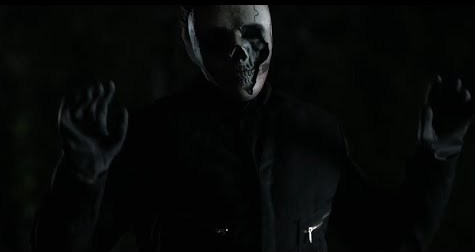
But there’s a nut in a mask. With a knife. And a hammer. And a noose. And a machete. And gasoline. And a grudge.

“The 6th Friend” is a slow — VERY slow — “pick them off, one by one” thriller with an attempt at a feminist twist.

THIS time the victimized women are empowered. THIS time women wrote the nut-with-a-knife story. THIS time a woman directs it.

But this make-work project for some under-utilized LA actresses lacks the characters, dialogue and plotting to come off. Sure, there are mildly-inventive ways for offing the various characters. It’s just that by the time the picture gets down to business, it lacks the nerve to go all in.

In slasher pictures, there’s no mincing around the arterial spray.

And with that many characters, taking your sweet time, rarely getting a hint of urgency in the proceedings for those who have survived the latest attack, never getting the proper shock and slack-jawed terror out of your actresses, the fatal filmmaking failings pile up.

“The 6th Friend” begins with a party that gets out of hand. Joey, Melissa, Sahara, Heather, Becca and Katie are well into their tequila shots and “Wooooooooos” when a dealer shows up to add a little acid to the proceedings.

That dealer, Tyler (David Villada) has tattoos and a scowl that make Joey (Jamie Bernadette, who co-wrote the script) paranoid, even without acid. The fact that he likes to party with a skull mask doubles the fear factor.

Something happens, there’s a lot of blood and the cops question everybody.

Five years later, Joey is still haunted by that night. But actress and BFF Melissa (Chantelle Albers) “kidnaps” her for a weekend getaway. Turns out, it’s a reunion. The others, women who are more or less “moving on” with their lives, want Joey to get with the program and get over it, too.

Joey freaks out a bit. And as the alcohol pours and the wild rumpus never quite starts, an ugly fact comes out. Virtually all of them have “seen” Tyler lately — in the mask, watching them. And that just cannot be.

As the flashbacks tip us as to what happened, the women share their fears and contribute little slivers of back-story to “that night,” even as their situation — out there, in the woods, with someone, someTHING, stalking them — worsens and suspense rises.

Only it doesn’t.

Veteran TV Lifetime/Hallmark director (” A Dogwalker’s Christmas Tale”) Letia Clouston, who co-wrote the script, has no real feel for horror, what builds suspense or delivers thrills. Co-writer Bernadette concentrated on the “write myself a star vehicle” aspects without getting a handle on the genre or the form either.

It’s a horror tale with under-digested digs at reality TV, the broad definition of “celebrity” and the sorts of people who crave it, grafted on.

When loud and boisterous “H-Bomb” Heather (veteran character actress Dominique Swain) is leading them all on a half-running escape from “Camp Rape My Face” to the vehicles parked outside — “Let’s take my car. It’s more expensive!” — the funny line dies of loneliness.

Sahara (New Zealander Tania Nolan) is the lone character to achieve gasping, wide-eyed terror.

When Becca (Monique Rosario) turns out to be gay, she simply must be a lesbian badass cliche.

And those are the players who register.

Hiding “what happened” from the viewer is a futile gesture, as we figure it out quite quickly. And any supernatural suggestion of the nature of the menace is left to wither as well.

Long before the dawdling-between-murder-attempt scenes, this movie wastes half its screen time with chatter that inadequately suggests “bonding” (discussing license to call someone “bitches,” a tedious “Good night” shout-a-thon from bedroom to bedroom).

Still, the opening tequila and acid blast works and a couple of the struggles with the masked killer are heart-pounding. Joey hurls herself into saving others, holding up a friend being hung even as the killer is dousing them both with gasoline. She won’t run away and leave her to die.

Oddly, the masked murderer keeps giving her time to do this.

friend1

I’ve never considered horror my genre, but I see a lot of it and a few decades of reviewing have shown me what works and how. “The 6th Friend” — even the title is half-baked — has some cool effects (the LSD scenes, the bloody makeup) and a promising set-up — #MeToo moment that went wrong, went too far, with a piper who must be paid.

But with pretty much everybody involved more interested in the flippant elements of the story, there’s nobody to provide the fear and nobody adequately responding to it. It’s a horror picture that can’t quite find the laughs it is going for and never, for more than a moment or two, provides frights.

1star6

MPAA Rating: unrated, bloody violence

Cast: Jamie Bernadette, Chantelle Albers, Dominique Swain, Jessica Morris, Tania Nola, Monique Rosario

Credits: Directed by Letia Clouston, script by Jamie Bernadette and Letia Cloutston. An Asylum release.

Running time: 1:25

Posted in Reviews, previews, profiles and movie news | Comments Off on Movie Review: “The 6th Friend” has survivor’s guilt, but will it save her?

Movie Review: Fraternity life leads to frat boy torture in “Pledge”

pledge2

How did Groucho warn us?

“I don’t want to belong to any club that would accept me as one of its members.”

He wasn’t talking about fraternities, but he could have been. Those are words to live by.

And when every frat on campus is ignoring, dismissing or rebuffing you — “This is a closed rush party, man….You guys are WEIRD.” — well, maybe you ought to be suspicious.

The hot coed (Erica Boozer) who purrs, “If you’re not doing anything, you should come by” and jotting an address on your palm?

Maybe it’s just a prank. Maybe it’s worse. And when the remote “social club” house (“We’re not a fraternity!”) is led by preppy punks with Brett Kavanaugh eyes, be afraid. Be very afraid.

“Pledge” is a bloody, nervy and lean thriller about “hazing” taken to its logical extreme. If you’re OK with torturing somebody so that the “shared experience” will “bond” you to your “brothers,” maybe there’s a little sociopath in you, Pledge.

Justin, Ethan and David (Zachery Byrd, Phillip Andre Botello and screenwriter Zack Weiner) are three “Big Bang Theory” nerds blundering their way through bacchanals and “Day Drink” rush week parties at their new college, when opportunity knocks.

The “party” at the remote unnamed not-a-frat-house has nubile coeds, drugs, endless “shots” three leaders of that club with the aforementioned Kavanaugh-eyes.

Ricky (Cameron Cowperthwaite) charms them, but cannot hide his edge.

Bret (Jesse Pimentel) doesn’t even try to hide the scary. And Max (Aaron Dalla Villa)? The psychopath vibe is strong with this one.

But desperate. always-tries-too-hard David, his two new pals and two other pledges accept the invitation to return.

“Thank you, sir. Bless your heart.”

“Your future is going to be so f—–g bright, you’re going to have to wear sunglasses to look in the mirror!”

There is no skepticism, barely a flinch among the five would-be “members.” They submit to a 48 hour hazing in which “you will be tested physically, mentally, emotionally.”

And that’s when the horror starts. The hazers name David “president,” and then force him to make his first executive decision —  “Do we brand you, or everybody else?”

Zack Weiner’s simple, formulaic script works by staying right on the cusp of reality. Branding still goes on, almost certainly not as savagely as this. Fraternities degrade women, as a matter of course, and demean and dehumanize pledges as indoctrination.

And the go-along-with-it lemmings who join put up with it.

“We’re gonna brand you for all the right REASONS!”

These guys — Max in particular — are sadists, probably racists (Ethan gets a “How’bout you, Spike Lee?” query when it’s his turn).

And the pledges — compliant, young and shocked, just take it. Five freshmen and not one of them asks to see the members’ brands?

The branding is just the start to the torture.

“We’re looking for your breaking point, gentlemen. Because GREAT men don’t have one.”

pledge1.jpg

By the time some of the guys realize they’re in over their heads, it’s too late.

The performances have a nice whimper until you’ve had enough quality, with Weiner writing himself the biggest character arc and Dalla Villa of TV’s “Duels” standing out as a short guy even the biggest pledge (Byrd) would fear.

Weiner and director Daniel Robbins (“Uncaged”) move “Pledge” along so briskly that the viewer, like the trapped pledges, have little time to consider their options and plot their escape. They are five facing off with three. Granted, the three are pretty violent and the freshmen are understandably cowed, but resisting and maybe not running away UPSTAIRS should enter into their thinking, at some point.

There’s a blunt efficiency to the escalating violence, and an eyes-averting cringe-worthiness to some of the torture.

If you like thrillers that don’t waste your time and have a natural mistrust of any “fraternity” that would want you as a member, “Pledge” is right up your alley.

2half-star6

MPAA Rating: unrated, violence

Cast:  Zachery Byrd, Phillip Andre Botello, Aaron Dalla Villa, Zack Weiner, Erica Boozer, Cameron Cowperthwaite

Credits: Directed by Daniel Robbins, script by Zack Weiner.  An IFC Midnight release.

Running time: 1:18

Posted in Reviews, previews, profiles and movie news | Comments Off on Movie Review: Fraternity life leads to frat boy torture in “Pledge”

GOLDEN GLOBES 2019: The High Water Mark for “Green Book” and “Bohemian Rhapsody,” or are they now the Oscar favorites?

globe.jpgThe 76th Golden Globes are in the books, for what they’re worth. And they’ve honored this year’s “Driving Miss Daisy” “Can’t we all just get along?” movie about race, they prefer Queen to Bradley Cooper’s country and western and they’ve not allowed themselves to succumb to Gaga fever.

“Green Book” came away the big winner, in my opinion, with a best picture (comedy or musical) award, acting and screenwriting honors.

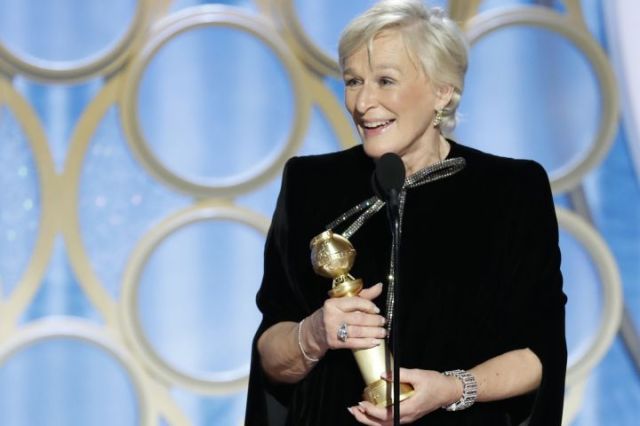
closeWill Glenn Close FINALLY get an Oscar after rolling up the Golden Globe for best actress in “The Wife?” Call her the favorite. For now. She beat Lady Gaga, so much respect for that. Not a hater (“DOWN goes GAGA!”), but Gaga isn’t in the same league with anybody else nominated for that award this year. Or most years. Not even as good as Bette Midler in “The Rose,” the best analog to her performance.
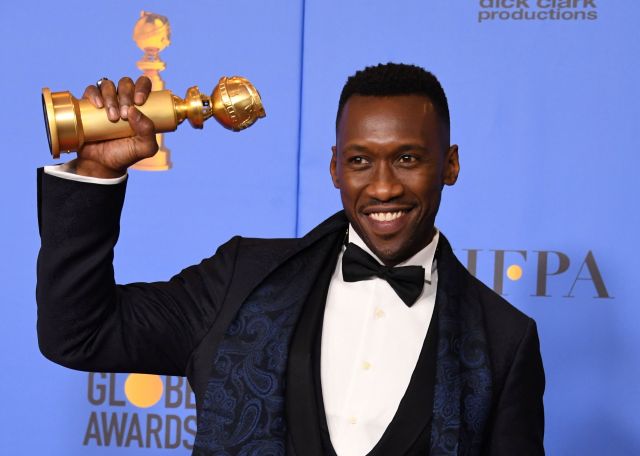
Regina King won best supporting actress for “If Beale Street Could Talk,” and Mahershala Ali took home the Globe for best supporting actor for “Green Book.”

aliAnd the Oscar fight could very well boil down to Ali (a best supporting actor winner for “Green Book,” but he could turn up as a lead) vs. Christian Bale, a winner in the “comedy” category for “Vice.” Rami Malek gets into the mix with a win for his Freddie Mercury turn in “Bohemian Rhapsody,” which also won the best picture/musical or comedy honors. Those three seem like certain Oscar nominees, though I fervently hope Willem Dafoe (“At Eternity’s Gate”) and Robert Redford (“The Old Man and the Gun”) have sentimental nominations coming their way from the Academy.
I guess slapping “A Star is Born” into the drama category didn’t exactly pay dividends for Bradley Cooper and Warners. Sure, they want their picture taken seriously and Oscar-campaigned as such. But you have to figure a LOT of wind has left those sails after last night.

Lady Gaga’s Oscar may be inevitable. Her Globe certainly seemed to be. And IT DID NOT HAPPEN. But we’ll see.

Olivia Colman of “The Favourite” was a delight, but in no way a lead performance. She won best actress in a comedy for that film, in SUPPORT of Oscar winning leads Rachel Weisz and Emma Stone.

There’s been a lot of kvetching and hand-wringing among the Internet chattering classes about which films “should” be getting all the attention this year, and which ones the older, less discerning Golden Globes voters went for.

Some years, three of any four people off the street could predict the Oscars as well as “the experts.” Predicting them has become a lesser science. But these self-appointed (Aren’t we all?) experts are taking shots in the dark some years, and this year may be one of those. The shrill complaining has been deafening and all over Twitter.

The more aged the film writer/Awards prognosticator, the happier he was. 

The Academy Awards have traditionally been regarded as “middlebrow,” endorsing “big” films, “important” films and “prestige pictures” as well as — on occasion — the very best films of a given year. Not always. The Globes? “Middlebrow” is their middle name. Oscars are handed out by richer folks with a bigger stake in the prizes, and supposedly higher minded than mere critics’ groups or whatever the Globes’ membership looks like in a given year. The Oscars are about art, or listening to what others have told them “art” is.

No, “Black Panther” isn’t a contender (lowbrow generic comic book blockbuster, emphasis on “generic”). I don’t care what the PGA says. Yes, “Green Book” is “safe” and comfort food for white audiences. “Bohemian” is a lot less ambitious than “A Star is Born,” but more fun, etc. No, panning Lady Gaga’s acting doesn’t make you a hater, dismissive of her social/political/fashion stances (OK, the latter? Sure. This ain’t the MTV Video Music Awards, dear.).

But really, we’re doing most of our arguing about 2.5/3 star movies. The stand-out films of this year are “The Favourite,” “Ben is Back,” “First Man,” “Leave no Trace,” “First Reformed” and “If Beale Street Could Talk.

“BlackKklansman” and “The Mule” and “Mary Poppins Returns” and “The Wife” and “Mary Queen of Scots” and “Can You Ever Forgive Me” and “Boy Erased” and “Bohemian” and “Vice” and “A Star is Born” and “Roma” are all flawed but worthwhile (more or less) contenders.  We could be talking about “At Eternity’s Gate” or “The Old Man and the Gun” or “Widows” or what have you — a lot of decent but not dazzling movies this year, virtually nothing that we’ll look back on with awe in two years’ time.

Hell, they gave the Oscar for best picture last year to “The Shape of Water,” which became a cultural punchline the moment it happened. So no, the “best picture,” the one that will stand the test of time, isn’t likely to be honored by the Academy. Indie Spirit Awards? Sure.

But if the Oscars follow the Globes, movies we’ll watch again on HBO or streaming, etc. have an actual shot.

Alfonso Cuaron won the Golden Globe for best director. Will that “Roma” win repeat at the Oscars? Quite possibly. As “Best directors direct best pictures,” we’ll have to watch the DGA Awards to see if he’s a lock. “Roma” won best foreign language film at the Globes, which it could very well take at the Academy Awards. A film with no nominatable actors is not likely to win best picture, so expectations for that one should drop (The SAG Award nominations doused that flame weeks ago). Or should.

I think “Roma” is the most over-rated movie of the year. Well, after “Spider-Verse.”

“Roma” may have peaked here, but even though I was underwhelmed by that one, Cuaron may have best director  inevitability. I have said before and will repeat here, the moment the Academy gives a middling Netflix streaming “epic” the Best Picture Oscar, the game is up for them.

I get the sense that “A Star is Born” overplayed its hand — expecting best picture and best director Globes (no sweat), maybe even best actor/actress prizes. The Globes shot that picture’s Oscar chances in the foot.

“Green Book” got one of the Farrelly brothers a piece of the best screenplay prize, and that’s not likely to repeat itself at the Academy Awards.

“Spider-Man: Into the Spider-Verse” won best animated film. Will the Academy go that route, when “Isle of Dogs” was easily the best animated film of last year? It’s not coincidence that “Spider-Man” is the last animated release of 2019 and the Globes’ voters — known for “whatever just crossed my field of view” opinionating — picked that.

“First Man” collected best score, while “Shallow” from “A Star is Born” won best song.

The Golden Globes and Oscars have achieved near parity, thanks to shrinking Oscar TV audiences and the Ricky Gervais/Tina and Amy boosted Hollywood Foreign Press Association show. The “Oscar bounce” at the box office is still worth more than the Globes one, though.

The Globes, standing so far apart from the Emmys and infamous for honoring “the new” in terms of TV, and the “usual suspects,” probably enjoy just as much prestige on the TV side as the “official” inside-the-business Emmy Awards, as an honor and as a telecast. They’re still the minor leagues in terms of film acting/directing honors, but with the future of media blurring film/TV/streaming etc., the Globes are better set for the future than the aging, fading hidebound Academy Awards.

For years, much of Oscar’s juggling of announcements, broadening of categories, etc. has been aimed at blunting the under-credentialed “Hollywood foreign press” that covers entertainment from stealing the various Hollywood guilds’ voting/award-giving and TV audience attracting power and prestige.

So take Sunday night’s results with a grain of salt, and a round of applause. The Globes stand alone, and while “Green Book” and “Bohemian” and others earned their share of Awards Season glory, I do wonder if “Mary Poppins Returns,” “A Star is Born,” “Isle of Dogs,” “If Beale Street Could Talk” or “Leave No Trace” (an Indie Spirit winner?) have Oscar nominations and even Oscar wins headed their way.

Nicole Kidman’s buzzed about “Destroyer” performance is peaking too late for the Globes. Not for the Oscars. But if we don’t see nominations for her, for “Ben is Back” or “Boy Erased” or “Beale Street” et al, you’ll be able to pass that off as inept marketing/campaigning by the studios that got their hands on the films.

The smart play this Monday AM is for studios to grab more screens for “Green Book,” which has disappeared from theaters, this coming Friday. I have tried to take the girlfriend to that one for a couple of weeks, and no luck. It’s all but disappeared from the first run marketplace.

And “Bohemian Rhapsody” could pass “A Star is Born” at the US box office if there’s any Golden Globes Bounce. Barely $10 million separates them, and the more fun film won last night.

In ANY event, a less “predictable” Oscars would make a watchable Oscars (the Globes were littered with “upsets,” according to some who had already signed over the pink slip to “Star is Born”).

Voting for the Oscar nominations gets underway MONDAY, and the Globes can’t help but influence that winnowing of “the field” into the nominees balloting by the Academy. Publicity and attention should change the playing field.

After a week of voting, the Oscar nominations will be announced Jan. 22, so we’ll see how the Main Event plays out now that the early primaries are out of the way.

Posted in Reviews, previews, profiles and movie news | Comments Off on GOLDEN GLOBES 2019: The High Water Mark for “Green Book” and “Bohemian Rhapsody,” or are they now the Oscar favorites?

Movie Review: “Perfectos Desconocidos” (Perfect Strangers)

perf1

“Perfect Strangers,” or “Perfectos Desconocidos,” is a Mexican remake of an Italian dinner party gone wrong dramedy of the same title.

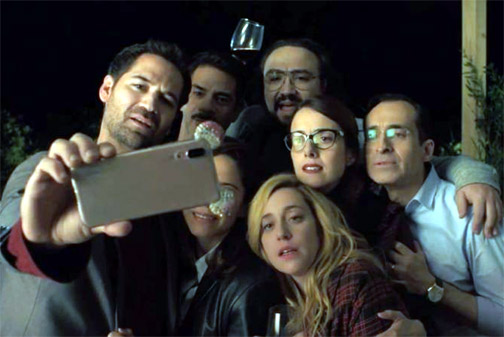
There was also a 2017 Argentine version of this chatty, lightly corrosive riff on “Who’s Afraid of Virginia Woolf?” with a cell phone era twist. Seven old friends, enjoying wine and good company, take a dare on how many of each other’s “secrets” they know, and park their cell phones in the middle of the dinner table. Every call, text message or email they must share with the entire party.

“What kind of game is this?” the host, Antonio (Bruno Bichir of “Sicario II”) pleads.

“A FUN one!” his brittle wife Eva (Cecilia Suárez of “The Air I Breathe”) snaps. “Like Russian Roulette!”

Antonio is doing the cooking for this holiday season lunar eclipse get together. Eva’s a judgmental psychotherapist whose insults are borne by their friends. Because as the wags always say, “A friend is someone who sees through you and still enjoys the show.”

Eva is at war with their 16 year-old, sexually curious daughter Nina, who always turns to Dad when the chips are down.

Flora and Ernesto (Mariana Treviño and Miguel Rodarte) are on even frostier terms. He’s secretly texting his paramour in the toilet, and not so secretly forgetting to wash his hands afterwards. She drinks on the sly, and gets a text message that has her removing her panties and leaving them at home.

Mario and Ana (Manuel Garcia-Rulfo, Ana Claudia Talancón) are newlyweds who cannot keep their hands, tongues and other appendages off one another.

And they all arrive before Pepe (Franky Martin), gossiping shamelessly about who he’ll bring to the party. He’s a soccer coach with a Mini Cooper and a “wealthy hobo” fashion sense.

Every character is introduced to the soapy thrum of a melodramatic string section. Something dark is coming, or perhaps something dark and funny.

The banter, leaning entirely on the 2016 Italian film’s original script, is lively, sexy and tetchy. Cracks about Pepe’s ex, nicknamed “Shrillary,” rhymes (in Spanish, with English subtitles) relating how women must dress for parties — “Girls in red are great in bed, Girls in blue…” “Don’t get DISGUSTING!” — how men are like PCs (“unreliable,” cheap, etc.) and women are “Macs — fast, intelligent, elegant,” and “they cost a fortune and are only compatible among themselves” give “Perfect” a bit of a bounce to it.

Then the phones come out, the “death of privacy” is bemoaned and Eva offers how a phone is now “the black box of our lives. It’s all on there…Many couples would IMPLODE” if they swapped theirs.

Thus the game the shrewish shrink proposes. And as the wine flows and the lasagna is served, let that game begin. Pranks ensue, terrible misunderstandings, blame cast about.

“Maybe it was AUTO-correct!”

As unexpected quotes from hotels and nursing homes roll in, jewelry purchases are revealed (a trite convention of cheating movies), a character tries to avoid having his paramour’s nightly naughty pic exposed and job hunts or expanding an Uber franchise is broadcast via speaker phone, dinner guests try to get their stories straight, to explain away strangers whom they’ve given the license to speak on intimate terms with them.

The moon turns blood red and people get their backs up, even the sober ones.

perf8.jpg

It’s a very theatrical set-up, which is why it’s a pity Edward Albee didn’t live long enough to re-think “Virginia Woolf” with a cell-phone gimmick to it. The conversations range from teasing and pleading to corrosive accusations and drunken lies covering up earlier lives.

The merits of psychotherapy are hashed out — “Why tell a stranger your problems? That’s what friends are for!” All as we’re watching intimate friends who ALL have secrets face having those bared for the party.

There are funny moments, mostly verbal (tricky if you don’t speak Spanish, as the film has white subtitles which wash out on lots of white backdrops).  There are bitter turns.

And we’re treated to a genuinely touching, absurdly-intimate parent-child conversation relished by all over the speaker phone, a heroic moment of sanity swamped in a sea of cheating, double-dealing and “big” revelations.

It’s more tame than daring, at least that’s how “Perfect Strangers” plays north of the border. And the resolution is abrupt and unsatisfying.

But the actors are uniformly superb, with Suárez and Bichir standing out. The sophistication of the characters, the mania for keeping secrets that maybe aren’t worth the effort and the sharp and sharply funny words (and sharp elbows) explain why these “Perfectos Desconocidos” stay connected and stay friends through all the loss of privacy and exposure that letting others study their “black boxes” allows.

They still enjoy the show.

2half-star6

MPAA Rating: unrated, alcohol abuse, sexual conversations, mild violence

Cast: Cecilia Suárez, Bruno Bichir, Ana Claudia Talancón, Manuel Garcia-Rulfo, Franky Martín, Mariana Treviño

Credits: Manolo Caro, script by  Filippo Bologna and Paolo Costella, based on their Italian film, “Perfect Strangers.”   A Pantelion release.

Running time: 1:44

Posted in Reviews, previews, profiles and movie news | Comments Off on Movie Review: “Perfectos Desconocidos” (Perfect Strangers)

Movie Review: The romantic despair of “If Beale Street Could Talk”

beale1

“If Beale Street Could Talk” is a movie that aches.

There’s a romantic ache to the love affair at its heart, coupled with the pained despair of struggling against a racist system that has broken or bent generations that have run afoul of it.

Equal parts playful and sweet, dark and bitter, it froths over with with poetic theatricality of novelist, social critic and gay black man of the 1960s James Baldwin.

It’s the second legitimate Oscar contender from writer-director Barry Jenkins. This is his period-piece social commentary-as-romantic-melodrama follow-up to “Moonlight.” “Beale Street” illustrates the difference between a work of cultural significance in a cultural moment — “Black Panther,” for example — and a movie of cultural consequence.

“Beale Street” is one of the best films of 2018.

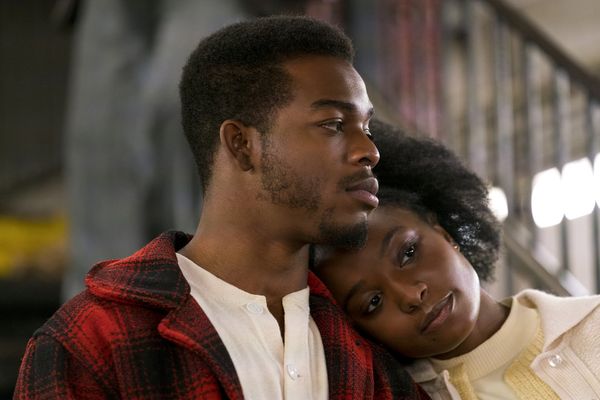
It’s the story of Tish and Fonnie (Kiki Layne and Stephan James) friends since childhood, growing up along Banks Street in Manhattan’s West Village. They grew up to know, trust and now — as she is 19 and he is 22 — love each other. They’re getting married.

But prison bars separate them as Tish brings Fonny (Alfonzo) this biggest news of their lives. She’s pregnant.

Flashbacks show us their gentle, gradual courtship and the fateful chain of events that have him railroaded into jail, a broke artisan and artist “forced to pay for proving” his innocence despite having both an alibi and geographic disconnection from the crime and the obvious prejudice of a cop with a grudge and a story full of holes.

And scenes set in the late ’60s present encompass Tish passing on the news to her parents, and to Fonny’s, and their struggles to free him from the maw of a system that even in James Baldwin’s time was ancient and established and geared towards mass incarceration of the black underclasses.

There’s not a lot of narrative drive to Jenkins’ film — just lovely, often languorous scenes reveling in Baldwin’s vibe and scored with Baldwin’s words.

The best of these are the warm moment when Tish, her sister (Teyonah Parris) and her mother (the formidable Regina King) break the news to her father. Joseph (Colman Domingo) has an easy, light manner which we’re sure will be tested by this pregnancy.

“Unbow your head, sisters!”

But Hennessy cognac, Mom’s charm and his utter devotion to his daughter upend expectations. When he tells Fonny’s father (Michael Beach), “You and me? We’bout to go out and get drunk,” their shared delight will bring you to tears.

But the warmth of that get together is gutted by Fonny’s gloved church-going mother (Aunjanue Ellis), who clears her throat with “I always knew you’d be the destruction of my son,” with her daughters chiming in with blame, judgement and invocations of Jesus.

Fonny’s already in jail, remember, facing “the death that awaited the children of our age.” He may “love me too much,” Tish narrates, hinting at the chain of events that bring him to the attention of the wrong, bad cop. But his mother’s brittle fury and everyone else’s reaction to it puncture the romance even if she fails to totally deflate it.

Jenkins leans heavily on voice-over narration as a crutch, but having Baldwin’s words — an opening title explains his and his characters’ connection to “Beale Street,” and just what that represents to the story’s unfortunate timelessness, that was going to be hard to resist.

He parks his camera in tight close-ups, giving star treatment to a generally little known cast (King and Beach are joined by Dave Franco, as a sympathetic Jewish landlord). Newcomer Layne in particular lets us see the burdens and hurt that Tish must cover with reassurances of love and devotion in what should be the happiest days of her life.

James, who played Jesse Owens in “Race” and John Lewis in “Selma,” plays the tender romantic side of Fonny and his embittered, hopeless imprisoned state with great feeling and skill.

Jenkins treats the story and writing with a reverence that weighs on the picture and contributes to its sometimes tedious pacing. Omnipresent narration adds to the gravitas of the piece, but also tends to slow it down. Some of the language feels anachronistic, and some situations — symptoms of pregnancy — have a naivete that remind us that there were blind spots in the great Baldwin’s life experience.

But “If Beale Street Could Talk” washes over you even as it is getting under your skin. And Jenkins has made it into a movie that is a period piece that too easily seems modern, as timely as this week’s #BlackLivesMatter moment. For all the resilience Baldwin and Jenkins show us here, it is the poet Langston Hughes’ line about “a dream deferred” that comes most easily to mind.

Fifty years, and lives young and old are still battered and shortened by the same conditions Baldwin saw in his lifetime, prompting him to move to Europe the moment he could. Fortunately for posterity, he could still hear his father’s Beale Street talking to him and to the ages.

3half-star

MPAA Rating: R for language and some sexual content

Cast: Kiki Layne, Stephan James, Regina King, Colman Domingo, Teyonah Parris, Michael Beach, Aunjanue Ellis, Dave Franco

Credits: Written and directed by Barry Jenkins, based on the James Baldwin book. An Annapurna release.

Running time: 1:59

Posted in Reviews, previews, profiles and movie news | Comments Off on Movie Review: The romantic despair of “If Beale Street Could Talk”