The cast is far far FAR more impressive than the team of directors who bring this romantic travelogue to the screen.
Oscar winner Helen Mirren, Diego Luna, Keira Knightley, Mickey Rourke, Hayden Panettiere, Jenna Dewan, Luke Wilson and Jim Sturgess are in it.
As is “Glee” veteran Dianna Agron. Who is also the first credited director.
But Til Schweigher and Peter Chelsom and “Berlin Nights” helmer Gabriela Tscherniak are also behind cameras for segments on the omnibus romance in the striking city formula that these movies hew to.
“Berlin, I Love You” tells ten stories in the city and doesn’t appear to have a US release date. Yet. They’d better hurry. “Shanghai, I Love You” (Romance in the Repressive People’s Republic? OK.) is in the pipeline to come out next.
Yeah, the Mickey Rourke sequence looks…icky.
Posted inReviews, previews, profiles and movie news|Comments Off on Preview, “Berlin, I Love You” gives the German capital the “New York, I Love You” and “Paris, j’taime
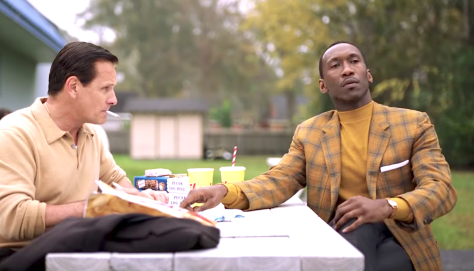
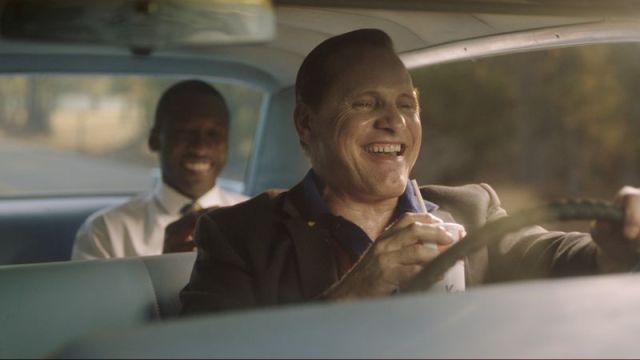
Truthfully, this should be enough for a movie I view as cinematic comfort food, a “Driving Miss Daisy” for our racially (and sexually) roiled times. That’s all “Green Book” is.
I saw it a second time last week and zeroed in on its problematic moments — the “fried chicken scenes.” They grate, yes they do. But Mahershala Ali is even more impressive on second viewing, an utterly convincing piano virtuouso living a life of aloof isolation because that’s what it takes for him to get the dignity his talent, education and gentility deserve.
White America doesn’t give him that, Black America doesn’t. Not really.
The movie does something that none of the other talked-up nominees manage — it makes you feel something. “Feel good” is both an emotional response and a “We CAN find a way to get along” response. Knock it if you want, but feeling something is what movies are supposed to manage.
“Beale Street” and “Star is Born” are more ambitious, and “The Favourite.” So was “First Man,” but nobody is talking about that one. “Can You Ever Forgive Me,” is a better picture, “Leave No Trace” will have to settle for an Indie Spirit Award or two.
None of them make you “feel” something the way “Green Book” does — at the juke joint, in the jail cell, at Christmas dinner — two men changing their view of each other and the world, in tiny increments.
“Green Book” wins a Golden Globe? Now a PGA award? Probably enough for this picture. Considering the steady drumbeat of “We’re NOT giving this to ‘A Star is Born'” that is starting to drown out one significant competitor’s Gaga-loving backers, I’d hope Farelly & Co. would be happy with the accolades in hand.
The PGA also honors TV, and that is what sets apart the Oscars from the PGA, SAG, Globes, the BFCA, etc — “We’re about honoring FILMs,” features and shorts and docs, pictures that tell a story in one sitting. If you’re going to keep the honor and the prestige of the Oscars and movies separate from “other media,” “Green Book” may be the safest Best Picture to vote for.
“Spider-Man: Into the Spider-Verse” won best animated feature, and seems more regrettably “inevitable” than ever. Pity.
But all other things matter little. Oscar nominations come Tuesday, and “Green Book” goes back into 1000 theaters Friday.
Perhaps not the movie you’d expect from a top billed supported player in a blockbuster/Oscar contender like “A Star is Born.”
But the ol’cowpoke who narrated the Dude’s tale in “The Big Lebowski?” Yup.
A gonzo midnight action pic/tall tale that would be right at home at South by Southwest, this could go either way. But “The Man Who Killed Hitler and then Bigfoot” smells like a hoot.
It’s still a big money maker for Universal and could give Bruce Willis — the member of the cast with the most reduced casting circumstances (B-movies), a little bounce..
Samuel L. James McAvoy and Sarah Paulson will benefit too. As will the director. Even though the movie sucks and really, he’s been miss or hit since he returned from the dead. “Split” and “Devil” were OK, everything else? Not.
Fox helped Funnation animation get “Dragon Ball Super: Broly” into more theaters for a longer run than any previous “Dragon Ball” anime picture. They’ve turned up as Fathom Events one or two nighters, here and there before. Opening it on 500 screens (wide-ish) has paid off. Big Wed-Fri, fading off this weekend. From Wed. through Monday night, it is projected to pull in $18-19 million — about one million tickets sold.
“Replicas” disappears from the top ten, “On the Basis of Sex” is still in the top ten, and Clint Eastwood’s “The Mule” has dropped out.
Your safest money as a prospective movie production investor? Put it in a sentimental picture about dogs. “A Dog’s Way Home” is holding audience and is out earning everything out there, in relation to budget. A $10 million+ four day weekend. It may stick around long enough to hit $40 (at $24 by midnight Monday).
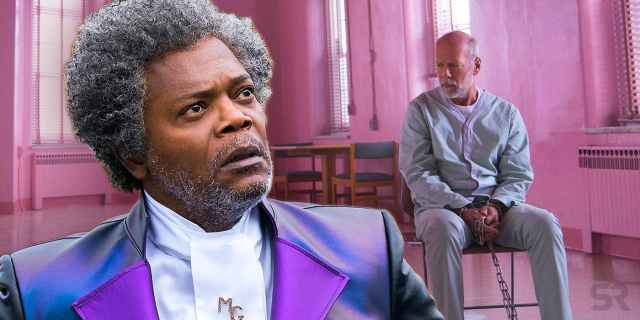
A big Thursday night and Friday for Universal’s complete-the-“trilogy” thriller “Glass,” which connects the “Unbreakable” characters and universe to “Split” in a way critics found…dull. Hey, it wasn’t just me. Oh no.
“Aquaman” will add another $11 to its $300 million+ totals.
But the midweek opening on an indefinite number of screens for “Dragon Ball Super: Broly” are bringing in the devotees of that long-established anime (TV quality) franchise. A big Wed. and Thursday suggest it could hit $16 million (since Wed.) by midnight Monday.
“Into the Spider-Verse” is about to become Sony Animation’s biggest hit, clearing $160.
Will Oscar nominations boost other top ten films like “Mary Poppins Returns” or “On the Basis of Sex?” We’ll know Tuesday AM.
Generations of film buffs got their start on Laurel & Hardy comedies — classic short films from the silent and early sound era that laid bare the basic principles of great comedy.
So any sentimental film appreciation of the cinema’s first great comic duo warrants a soft touch from reviewers. Fortunately, “Stan & Ollie” is long on charm, with a few chuckles, some wide grins of recognition and absolutely delightful musical numbers.
Because otherwise, this “farewell tour” biography is downbeat and wistful, if not a downright melancholy “comedy.”
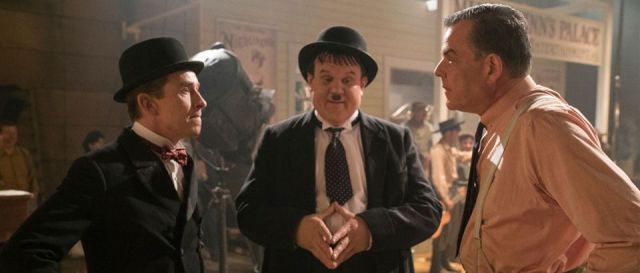
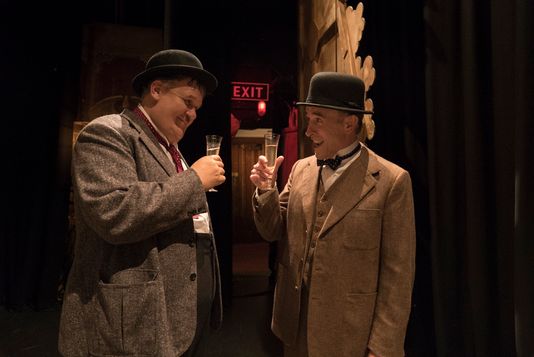
Steve Coogan and John C. Reilly are unlikely but entertaining castmates in the title roles. The brilliant mimic Coogan gets the English music hall comic Laurel’s mousy pitch, wide-eyed innocence and dopey double-takes just right.
Add a few pounds of padding to the singing-dancing Reilly and he’s spot-on as Hardy, the plump Georgian foil and long-suffering sight-gag sidekick to Laurel.
Their duet of the Laurel & Hardy top 40 hit “On the Trail of the Lonesome Pine,” is an absolute delight and the highlight of the film and shows how well this pairing pays off.
Director Jon S. Baird (“Filth,” “Vinyl”), working with a Jeff Pope screenplay, shows us the duo at their 1937 peak, with Laurel urging Hardy to leave penny-pinching producer Hal Roach (Danny Huston, just nasty enough) and set off on their own.
Their stardom has rendered them womanizers, prompting “morals clause” threats from Roach. Hardy’s burning through his pay gambling. Laurel drinks and keeps losing marriages thanks to his skirt-chasing and workaholic ways.
“I’m never getting married again. I’m just going to find a woman I don’t like, and buy her a house.”
Laurel is the brains of the outfit, reworking gags, instructing the director and writing writing writing, always digging around for material. In the film’s long-take opening walk through the busy studio backlot, Ollie is Mr. Roll-with-the-Punches. Stan is angling for fresh laughs.
“What are all these Romans doing here?”
“Dunno. Maybe there’s a sale at the Forum!”
“You’ve got a million of them, don’t you?”
But that was the year their long association with Roach was broken, with one man’s contract expiring before the other’s. Cut to 16 years later and they’re at the end of the line, in Britain, hoping to get a “Robin Hood” comedy onto the screen, touring music halls for a cut-rate operator (Rufus Jones, funny).
Stan’s the one making the movie arrangements, and it’s a battle. Ollie is obliviously content to re-enact their Greatest Hits — patomimed pratfalls and witty exchanges from their films — to the mostly-empty theaters of Glasgow, Newcastle, Swansea and Carlyle.
With their latest wives away, Stan can drink, Ollie can gamble and salt his food and generally wreck his health (both men smoked like chimneys).
They have no trouble with regaining the timing and tried and true comedy crutches they leaned on for decades.
“How about I just punch you right in the nose? Haven’t done that in a long time.”
“Can I poke you in the eye?”
“You could wring my neck.”
“I’d rather poke you in the eye.”
But there are old grudges and new desperation hanging over this tour. Money is tight, Ollie still gambles and they need to turn things around before their wives — Shirley Henderson plays Ollie’s ex-script supervisor spouse Lucille, Nina Arianda (“Midnight in Paris”) is Stan’s imperious, snobby Russian dancer “better half” — arrive.
Those who recognize them get a bit of a routine — a desk clerk is treated to thumping luggage and a wrestling match over the desk bell — or a “You’re still around” joke.
“Well, rigor mortis hasn’t set in QUITE yet.”
Reilly and Coogan master the gestures, the stage timing and physicality of the act — a lifelong contest featuring exasperation vs. befuddlement.
And they endlessly insult one another whenever someone meets them alone, not as a “double act.”
Mr. Hardy’s not here?
“Oh no, he’s got himself a new job — making the holes in Swiss cheeses.”
Mr. Laurel’s not with you?
“Oh no. He’s got himself a new job, mending broken biscuits.”
Coogan treats us to a charming pantomime of Stan trying to win over a stubborn and dim receptionist who has no idea who he is. And the musically-inclined Reilly warmly delivers Ollie’s delightful ukelele rendition of “Shine on Harvest Moon.”
That said, “Stan & Ollie” treads too lightly on the conflicts and never quite delivers that big belly laugh that their silent comedies managed. Perhaps a few flashbacks showing the stars as Stan and Ollie in that classic short with a tumbling piano, or playing checkers.
Staging that would have forced director Baird to painstakingly recreate a sketch that worked — and mimic how it was shot and cut. Laurel & Hardy’s films are clinics in how to write, shoot and edit comedy, and Baird — who renders this in soft, almost maudlin strokes — could stand a little schooling in that regard.
MPAA Rating: PG for some language, and for smoking
Cast: John C. Reilly, Steven Coogan, Shirley Henderson, Nina Arianda, Danny Huston
Credits: Directed by Jon S. Baird script by Jeff Pope. A Sony Pictures Classics release.
The casting’s a tad unconventional — Steve Coogan and John C. Reilly as Laurel & Hardy?
But OK. Reilly the great dons the padding and Coogan loses a little weight and takes on the light, thin voice of Stan.
The setting — a farewell tour for the legendary and at this time estranged silent comics, with Ollie in failing health and Stan having moved on from their partnership.
Maybe it didn’t live up to the Oscar bait potential Sony Pictures Classics saw in it. I’ve still been dying to see this. “Stan & Ollie” rolls out wide Jan. 25.
Let us descend then, a stranger in a strange land checking in on the anime wonder that is “Dragon Ball Super: Broly.”
I am not a devotee, so I must approach this, the 20th anime film based on “Dragon Ball,” following multiple manga (Japanese comic books, often translated into English, where they sell quite well) iterations and more than one TV series that preceded the movies, as a non cult-member looking to be converted.
But that’s a fair approach, as movies, even those pandering to a very narrow audience, still have to stand alone.
I didn’t find this latest variation on the “Broly” semi-sympathetic villain origin story hard to follow. But what confronts you when talking about movies like “Dragon Ball Super: Broly” is the gap between what hardcore fans expect and thus want from this, and what anybody who loves the medium of film and has an appreciation of narratives told with anime might reasonably expect it to deliver.
That gap’s a chasm with “Broly,” probably the widest release “Dragon Ball” cartoon (in the US), and judging from the two thirds full midday matinee showing I saw, certain to do passable box office no matter what critics might say. And there’s not much to say in its favor.
If, like me, you are a stranger in this corner of the culture, I offer this fine five and a half minute nerdsplanation/crash course from IGN linked below. Wikipedia’s a little help, too.
As a character shouts (Lots of shouting here. The film is, after all, Japanese — with English dubbing.) at one point, “What in the name of the MULTIVERSE is going on?”
The “dragon balls” are magical talismans, briefly releasing a dragon able to grant the owner any wish.
That makes them the sort of thing a universal megalomaniac named Frieza, son of King Cold, might want. He has enslaved much of the universe via his minions, Saiya warriors.
Frieza, a shrimpy mincing pedant (Think “Niles” on the TV show “Frasier”) loves four things — dragon balls, harnessing more power for himself, watching other folks fight and showing off his superior intelligence and vocabulary amongst his inferiors.
“Tell me ONE thing. What’s REPUGNANT mean?”
The film begins with a prologue getting the audience up to speed on that back story, the transfer of power and covetousness from Cold to Frieza, of the intergalactic infancy of Broly, dragged by his father to a planetoid where he can be safe from infanticide and perhaps grow up to become “The Super,” this tale’s version of a Messiah or “Chosen One.”
Frieza is hellbent on turning Saiya against Saiya, and the grown-up Broly can help him stir up the testy Prince Vegeta, the doofus wiseacre Goku and others.
If you drop into any of the online forums or even Youtube samples of “Dragon Ball” tales and comments on them, you get the idea that fans come to this densely charactered/thinly-scripted “multiverse” mainly for the fights.
And the tropes.
“Dragon Ball Super” is both an origin story and a sort of re-boot. Broly has been in earlier tales, but as much as the other characters reference their “history,” his part in it has been excised to hit the never-ending story’s reset button.
The fights are animated in such a way as to be a series of dazzling, colorful pop art action poses — punches thrown that hurl this character through a whole range of mountains or cause that one to plow up an entire glacier. The freeze-frame analogy works because in this corner of anime, the pronounced jerky movement of a Hayao Miyazaki “Spirited Away” or “The Wind Rises” is exaggerated. It’s under-animated.
Visually the stills are fine, but the animation is made-for-TV-pre-HD era quality — junky, cheap, with sparkle and light added, here and there.
The characters are nonsenical, with endless variations of fantasy board, card or video game “new powers.” Nobody ever dies (at least not in this branch of the story).
Women and girls are all but invisible, here. And you think the West is patriarchical.
The jokes consist of drolleries by Frieza (again, Niles of “Frasier”) and little double-takes, familiar characters breaking from the narrow confines of their historical place within this universe. There’s a smidge of edge to the language — mild profanity — a hint of homophobia (mincing stereotypes) and a literal demonstration of that word “homo” and “phobia,” as two characters must engage in an effeminate dance to achieve “fusion” and fight the bad guy. It repulses them. But they do it.
Seeing this without being a veteran member of its devoted audience is like dropping in on any “Never Ending Story” and trying to catch up, or stepping into a cinema in a foreign country and watching the local product without a firm grasp of the language.
Fortunately, for all the detail — characters blurt out reams of exposition and backstory — there’s virtually no “story” here at all. So I started concentrating on this sea of young males (Maybe 1% of the audience was female — the ladies all have day jobs?), mostly white, were getting out of it. Obsession with anything — Scrabble, Rubik’s Cube, orchids (and orchid thieves) and “My Little Pony” can be fascinating to observe and dissect.
The whole pop culture subgenre here — supernaturalism, epic flying “fights,” unkillable heroes, struggles for universal domination with your fists and energy bolts flying out of them, has the whiff of “junk culture” about it. It plays as part of that genre — Marvel movies that are all about the CGI “fights,” “Transformers/Power Rangers/Pacific Rim” piffle.
“Dragon Ball” doesn’t pre-date American comics, but connect it to its Chinese origin novel as inspiration as it feels like the Ur Text of this sort of epic brawls across the cosmos fantasy.
Every now and then, one of those movies takes a stab at being “about something.” Not here. It’s instantly forgettable to anyone who isn’t a fanatic lost in the minutia of their corner of junk culture.
But if it’s what the fans want, take comfort in the fact that at least they’re not “Bronies.”
MPAA Rating: PG for prolonged frenetic sequences of action and violence, and for language
Voice Cast: Vic Mignogna, Sean Schemmel, Erica Lindbeck, Christopher Sabat
Credits: Directed by Tatsuya Nagamine, screenplay by Akira Toriyam. A Funimation/20th Century Fox release.




 Movie Nation