Movie Review: Here’s a future so dire only “Division 19” can save us

division

“Division 19” is science fiction more to be appreciated than enjoyed.

It’s a reasonably smart, somewhat timely riff on Current Conditions rendered in a dry, slow action satire, a picture lacking a charismatic lead or much in the line of entertainment value.

In 2039, the online faces of the Resistance are mocking us for eating and staring at our cell phones, “stuffing your faces while the world burns.” The hectoring hoodie-wearing spokesman declares that “We’re gonna bring down your house and watch it burn.”

Twenty years in the future, “Anonymity is a crime,” and being “off the grid” and “unregistered” means you could officially disappear — and not just in the digital sense.

Hovering drone gunships keep watch over the cities, CCTV cameras are pretty much every where and small drones can track and trace anybody Central Control chooses to watch.

The Nanny State has taken on Nazi State totalitarianism. A drone barks through  its speaker, “Smoking is not permitted in the street…you have ten seconds” to put out your smoke and move along.

But the power here isn’t so much in elected or anointed authority. It’s in corporations, especially Panopticon Interactive. They have created the most addictive streaming reality TV of the day, tracking a prison inmate 24/7, like an incarcerated “Truman Show.”

And their public face, Nielsen (Alison Doody of “Indiana Jones and the Last Crusade”) is dreaming bigger. In a nation where the incarceration rate long exceeded the crime rate, corporations have control of the prisons and have found fresh ways to monetize them.

That’s why Nielsen has turned Hardin Jones (Jamie Draven) into a star. He’s the unwilling, unwitting, brawling spokesmodel for product placement in prison togs. He has no idea he’s being watched.

“He’s had more drugs pumped into him than Central America,” Nielsen crows. “Crime’s down. Consumerism’s up. What’s not to like?”

Her bigger idea? “New Town,” a planned community where convicts interact with one another and the general public, watched (on your streaming device) as they “earn their way back into society.” Or don’t. By committing crimes, acts of violence on their neighbors? Maybe.

“People died building the pyramids,” she sniffs. “The price of progress!”

division2-e1552326750714.jpeg

The Resistance, calling itself “Division 19,” has figured out how to live “off grid.” They remove the chips that allow Central Control to track you down. They change their appearance, and holing up in Greater Detroit (still mostly ruins in 2039), they can hide until their next hack, on the Federal Reserve, on Panopticon’s live-streaming Hardin’s life.

That’s when they can blurt out their manifesto and make demands. Hardin’s brother Nash (Will Rothhaar) is in their ranks, Barca (Toby Hemingway) is their spokesman.

When Barca makes demands, it’s enough to make you nod your head and then head over to Wikipedia. He hides his face in a stocking cap, points his finger and says Division 19 wants a far-reaching anti-corruption trial, reaching back several administrations to pinpoint where America went wrong. And they want a re-introduction of the Glass Steagall Act that protected the economy and the public from the greed, carelessness and depradations of bankers and Wall Street investment firms, up until it was eroded and removed prior to the Great Recession of 2008.

That’s on the money political commentary, writer-director S.A. Halewood. And you parked it right in in the middle of an exceptionally low-budget indie film.

Division 19 helps Hardin escape. The COO of Centrol Control, the would-be “president” of us all, is Premier Lyndon (Linus Roache, terrific). He’s as cynical as the latest polls allow, determined that Hardin be caught and order be restored. But Panopticon sees better ratings, more product-tie-ins and more viewer involvement (“Seen this man? Turn him in for CREDITS.”) in chasing him on his dash through the underground to the Underground.

The pursuits are reasonably well-handled, montages of aerial footage, black and white drone interior clips, fights and chases. There’s blood, and that action picture stand-by, self-surgery.

Lyndon has been sentenced to be served by a class of hipster tech nerds and trend “influencer” trackers, who appreciate the “sophisticated hive mind”  pitch of Division 19’s subversives — they include tax reforms in addition to their push against Big Banking and Wall Street.

When the youngsters start to lecture him on the predictable path this liberty and taxation insurrection is taking, he notes that what they’re talking about “The Laffer Curve.”

“How’d you KNOW that?” the childish hipsters want to know.

“Because when I was your age, YOU were being BORN.”

There are a lot of dystopian ideas crammed into this tiny movie — human organ sales, the ways privatized prisons are incentivized to both get everybody incarcerated and misuse the inmates.

“Convicts are for fighting!”

Poor neighborhoods reflect the globalization of poverty imposed by a winner-take-all economy. Detroit’s roughest corner? Favela Town.

Hardin learns the hard way that getting off the grid while you’re on the run in a cashless economy is a great way to starve. He applied for Food Stamps/

“Can you fight?” the social worker wants to know. Food Stamps are “not for you. That’s for real people. Ex-cons are for entertainment.”

The idea here is that zonked-out Hardin takes up the cause as the drugs wear off as he’s on the run. Might he become “The brain dead Messiah” he needs to be?

Well…

Casting and coherence are two serious shortcomings of “Division 19.” Other names were attached to this project at one time, and the importance of charismatic leads is sharply underlined here. Only Roache,  a veteran character actor with “Priest,” “The Wings of the Dove” and “Hart’s War” as resume highlights, brings anything like the spark this picture needs to come off. Another character player, Clarke Peters (of “The Wire” and “Three Billboards outside Ebbing, Missouri”) so dazzles in a single scene or two that you wish they’d built the entire movie around these two.

But no. The leads, whatever their ability to handle fight choreography, are bland in the extreme, uninteresting to the point where the picture wilts at their mere appearance.

The Panopticon boast about their “adopt a convict” streaming show, “Drama’s never been so real,” was never going to be the tagline for “Division 19.” The plot is top heavy with ideas, and the only three witty lines in the thing I’ve quoted above.

But as great scripts attract great talent, you can see the conundrum the financial backers and the writer-director found themselves in — a script, cast and movie trapped in the second division.

1half-star

MPAA Rating: unrated, violence, sex

Cast:Will Rothhaar, Jamie Draven, Alison Doody, Linus Roache, Lotte Verbeek, Clarke Peters

Credits: Written and directed by S.A. Halewood. An Uncork’d release.

Running time: 1:33
 

Posted in Reviews, previews, profiles and movie news | Comments Off on Movie Review: Here’s a future so dire only “Division 19” can save us

Preview: “Good Boys” are bad enough to be Red Banded. Funny, too

It’s a sixth grade “Superbad” rolling out just as the little darlings are back in school. Which they’ll have to sneak out of to sneak INTO an R-rated — dirty, drug content etc — comedy.

Totally appropriate that Seth Rogen introduces this Aug. 16 release’s red band trailer for “Good Boys.”

Put your headphones on, as this is NSFW and not something you want to be listening to in a public library, for instance.


Posted in Reviews, previews, profiles and movie news | Comments Off on Preview: “Good Boys” are bad enough to be Red Banded. Funny, too

Movie Review: “Sobibor” remembers an Extermination Camp where the Exterminated Fought Back

sobibor2

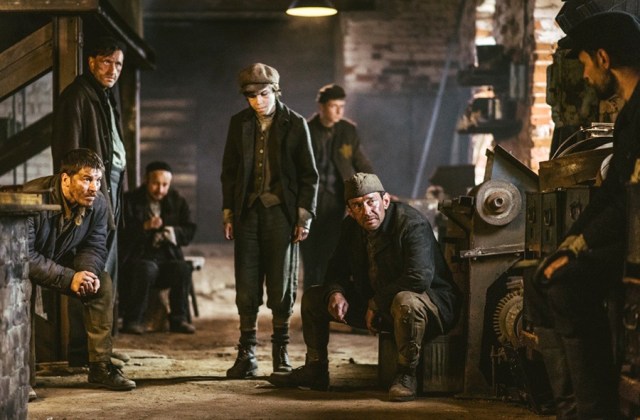
They disembarked their trains — some of them, the foreigners — well-heeled, serenaded by a string quartet, assured their luggage would arrive later — “Everything will be safe.”

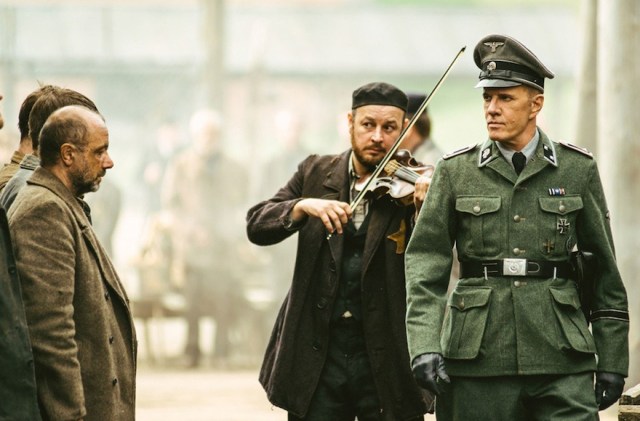
German officers in their crisp, grey uniforms, smiled beneath the red swastika banners and only deigned to hide their contempt once the train and its better off passengers arrived.

Jewish clerks, luggage handlers and translators hustled everyone to and fro as a public address system crackled out “Welcome to Sobibor, your new home!” announcements, a place where they would “work diligently and live in dignity.

Of course, the kapos — the clerks doing the lying for the Germans — knew the truth. So did any local and most Poles sent to Sobibor. Nobody here gets out alive.

Just enough people knew the truth and lived long enough to do something about it to ensure Sobibor’s place in Holocaust history, the death camp that gave birth to the largest uprising by Jewish concentration camp detainees of World War II.

Actor and director Konstantin Khabenskiy of the “Night Watch” movies brings us a Russian-backed film of that uprising and mass escape, conventional in its telling but still delivering a visceral, heart-pounding finish.

Khabenskiy also headlines “Sobibor,” starring as Alexander “Sasha” Pechersky, a Soviet soldier transferred there after a failed escape attempt in Minsk. He arrives in Poland with little more than contempt for his fellow inmates, praying “cowards” awaiting death “like livestock led to slaughter.”

But don’t be so hasty, survivor Leo (Dainius Kazlauskas) cautions. “We’re trying to survive to get our revenge,” he says (in subtitled Russian. The Polish, Hebrew and German in the film is also subtitled). They have been organizing. They just lost their leader, a veteran of the Dutch Navy. They might follow a soldier like him. If he can prove he’s Jewish.

“We need a Moses!”

sobibor4.jpeg

Striking new arrival Selma (Mariya Kozhevnikova) is warned to “take whatever work you can get” by camp veteran Chaim (Fabian Kociecki), which she does.

Others — scores of them — we see herded nude into a “shower,” an officious guard totaling their number on a ledger, locking the door and turning on a valve that opens up the exhaust gas from a huge engine that Sobibor used to murder 250,000 people or more.

Young apprentice jeweler Shlomo (Ivan Zlobin) reassures his little sister and family that he’ll be all right, but that they’ll be safer together. He doesn’t know.

We also meet the jeweler Jakob (Joshua Rubin), assured “We are immortal” by a fellow jeweler on arrival, relieved that means he has “work” and can look after his wife, horrified when he comes across his dead wife’s wedding band among the loot the Nazis have taken from prisoners before directing them to “the showers.”

Perhaps Khabenskiy and his trio of screenwriters didn’t need to treat us to a “Holocaust 101” refresher course. We’ve seen nude women packed into a room, gassed to death. We know about the gruesome architecture of mass murder, the ghoulish practice of pulling gold fillings from the dead bodies, the officious and contagious efficiency and sadism of ordinary Germans (passed on to collaborators in many countries they occupied).

But as the world lurches towards new versions of fascist totalitarianism, with bigotry and anti-Semitism blinking into the cold light of day, a little reminder of what human beings are capable of doing to each other is always a good thing.

The Nazis are the usual cadre of psychopaths, drunks, bullies and martinets. Christopher Lambert plays the haunted, deranged camp commandant, Karl Frenzel. Wolfgang Cerny, Mindaugas Papinigis, Maximilian Dirr and Philippe Reinhardt, playing his subordinates, have the sicker and showier roles. Lambert’s German is dubbed, here.

Khabenskiy loses himself in characters like Sasha’s would-be love interest (Felice Jankell), the adorable kid (Kacper Olszewski) whose eager-to-please/desperate-to-survive obsequiousness will come in handy later, and traffics too readily in the tropes of Holocaust movies. The orgy of violence staged by the guards and officers (who knew the camp was slated to be closed ahead of the advancing Russians) is so excessive only Caligula could appreciate it.

But his “Night Watch/Day Watch” years with director Timur Bekmambetov taught him to make the most of the night scenes, giving the extermination camp a haunting beauty and menace — guard towers and the occasional fence post sitting in pools of light.

He expertly sets up the planning scenes, capturing the impromptu haste with which those plans had to be implemented and the leap each conspirator had to make, from resigned victim to cold-blooded killer, for this to come off.

And he stages the revolt, its chaos rendered more sensible by judicious use of slow-motion, with fury and brio.

There was a fine TV movie, “Escape from Sobibor,” on this subject in the ’80s, and all this “Sobibor” (opening March 29) has on that Alan Arkin and Rutger Hauer film is the graphic violence, heightened sense of horror and odd moment of poetry Khabenskiy brings to the story.

Still, it’s a sturdy enough story that it can withstand a little dilly-dallying, and the visceral finale is as heart-pounding as we need this story — when the lambs rose up against their slaughterers — to be.

2half-star6

MPAA Rating: unrated, violence, nudity

Cast: Konstantin Khabenskiy, Christopher Lambert, Mariya Kozhevnikov, Michalina Olszanska, Maximillian Dirr

Credits:Directed by Konstantin Khabenskiy, script by Anna Chernakova, Michael Edelstein and Ilya Vasiliev. A Samuel Goldwyn release.

Running time: 1:50


Posted in Reviews, previews, profiles and movie news | Comments Off on Movie Review: “Sobibor” remembers an Extermination Camp where the Exterminated Fought Back

Movie Review: Cusack dons the Black Hat in gritty Western “Never Grow Old”

oldA

Here’s another gritty, pitiless Western carved out of archetypes and that favorite horse opera trope — the good man who eschews violence forced to take up a gun by armed thugs invading paradise.

Countless Westerns have been built on that framework, from “Firecreek” and “The Man Who Shot Liberty Valance” to “The Outlaw Josey Wales.”

What sets “Never Grow Old” apart is its intimacy, canny casting and novel setting. It’s not every day that Ireland, with its lowering grey skies and wintry pallor, fill in for 1849 Oregon, which is where the remote “California Trail” town of Garlow is supposed to be.

That’s where Patrick Tate (Emile Hirsch) scrapes out a living. He’s an Irish immigrant, the local undertaker and town carpenter, struggling to feed his French wife (Déborah François, fierce) and two kids, with one more on the way.

Business hasn’t been good since the fire and brimstone Preacher Pike (Danny Webb) and his “temperance league” shut down the saloon and emptied out the whorehouse.

He may declare this “a holy town…a true Christian town” from the pulpit, but the money that was coming in through that saloon and brothel is missed. And without armed, drunken men getting into fights over women, cards or manners, Patrick’s hard-pressed to make ends meet.

“This isn’t the same town that we stopped in,” he gripes.

He’s a sensitive soul raising sweet children, all of them mourning the death of their plow horse, Patrick because it means “we go hungry.”

That’s when his “luck” changes. Armed brutes show up, looking for a missing member of their gang. They are the quintessential “men with guns,” ruthless bullies who get their way over the weak. Dutch Albert (John Cusack) wants to know where Billy Crabtree lives. And mere directions won’t do. He demands Patrick’s use as a guide, in the middle of a rainy night.

“Son, don’t make me ask you again.”

Events quickly unfold that demonstrate how serious these men are, and how helpless the town is, useless sheriff (Tim Ahern) and all. A saloon not serving alcohol? A “hotel” with no cook or available prostitutes? Dutch Albert, the brutish mute Dum Dum (Sam Louwyck) and “Italian, I think” Sicily (Camille Pistone) set about remaking the town in their own image — violent, above the law, drunk and corrupt.

And as they do, Patrick’s business booms. Burials aren’t free, you know. Whatever his wife thinks of his blood money and guilt by association with Dutch Albert, Patrick reluctantly goes along with it, corrupted by the corruption and murder he tolerates and profits from.

Cusack’s Dutch Albert is his most charismatic role in years, yet another black hat perpetually pulled down over his dark puffy eyes.

He’s smooth, if not exactly subtle at sewing the separation the once-Catholic Patrick feels towards his preacher and fellow townsfolk — “They don’t like the Irish much, do they?” He coos over Patrick’s “honest man’s work” hands, nicknames him “Saint Patrick” even as he drags him into Hell, or at least underground (a cave) to help him cover up his not-quite-finished murders.

“He’s here to bury you, Bill. No need to thank me. I know you’d do the same for me.”

Hirsch does well by Patrick’s story arc, a man who realizes he’s trapped in a morality tale, a parable about greed and “every man for himself” libertarianism, who endures the insults and indignities for a few pieces of silver, until the hoodlums go too far — repeatedly — and finally settle on his family as their next prey.

A favorite gripe of “The Golden Age of the Western” was how most of what Hollywood churned out during this era of the iconic American film genre looked the same.

Settings often used the same studio-owned ranches near Los Angeles, or productions would decamp for wilderness and National Parks land which shared the same waterless dust and sagebrush terrain — striking, but leaving the viewer thinking “Who could farm/raise cattle or do anything with nothing but sand and tumbleweeds to rely on?”

“Never Grow Old” — a terrible title, by the way — resembles “The Claim” in how striking and unusual its setting is. It’s disorienting, if not unheard of, seeing Westerners mostly clad in black under grey skies, contending with mud instead of dust.

Irish writer-director Ivan Kavanagh uses that arresting setting and his stars well, staging some of the violence off camera but never letting us forget the consequences of it by having Patrick pluck the bodies from the scenes of crimes — which he is helping cover up — and then prepare the torn and bloodied corpses for their entombment in wooden boxes he hammers out.

Kavanagh’s second coup was in giving this too-familiar tale just the right star power, with the criminally under-used Hirsch shining as our anti-hero and Cusack, settling into the playing-the-heavy part of his career with as much wit as he can muster.

We’re long removed from the Western’s gilded age. But grimy, bloody lower-budget fare like “Hostiles,””The Kid” and “Never Grow Old” remind us that there’s value in remembering the genre and what it says about our country’s history of violence, even if we have to shoot the film in Ireland to make it look new and fresh.

2half-star6

MPAA Rating: R for strong bloody violence, language, some sexual content and brief drug use

Cast: Emile Hirsch, John Cusack, Déborah François, Danny Webb.

Credits:Written and directed by Ivan Kavanagh. A Saban Films release.

Running time: 1:40

Posted in Reviews, previews, profiles and movie news | Comments Off on Movie Review: Cusack dons the Black Hat in gritty Western “Never Grow Old”

Documentary Review: Stop what you’re doing and go see “Apollo 11”

apollo12

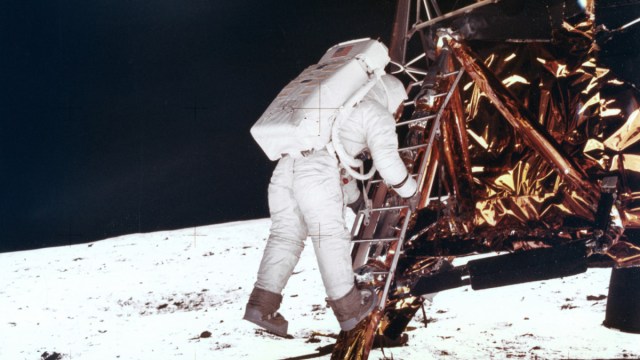
The idea is to hit you with the scale, to impress us with the magnitude of what was attempted and what was accomplished.

So “Apollo 11” begins with a closeup of NASA’s gigantic crawler, the tracked vehicle — then new — that hauled a fully assembled 325-foot Saturn 5/Apollo rocket from the enormous Vehicular Assembly Building to Launch Pad 39A.

Only a building “so big it has its own weather” could piece together what was then the most complex machine in human history. Only a tractor that could bear the weight of a city block could move that enormous space ship down the long, flat path to the launchpad that would send men to the moon.

Breathtaking and definitive, “Apollo 11” avoids voice-over narration or overly-explaining anything about America’s date with destiny in July of 1969. If we aren’t old enough to remember it, we’re supposed to know it. It’s in our DNA.

What this documentary does is give us huge images and stunning detail, digging deep into restored footage from NASA’s massive archive of color film stock and grainy videotape to show us just how big a deal this was and remains.

Control rooms jammed with row upon row of launch control, mission control technicians — scientists, men and women in white shirts and ties, white Boeing, McDonnell Douglas, Rockwell or NASA lab coats, “computers” and “monitors” with matching headsets.

This was analog’s finest hour, human beings, “calculators” or as “Hidden Figures” reminded us, “computers,” staring at cathode ray tube monitors with headsets adorned by stick-on label maker name tags.

An army of mostly-men in more lab coats, wearing helmets or hairnets, taking a break from working in the Clean Rooms assembling future Apollo missions to see their handywork lift off into the heavens.

And in tiny Titusville, Florida, a sea of humanity — tens of thousands of spectators in Panama hats and cats-eye sunglasses, Johnny Carson in one of those plaid sports coats — all waiting to see history be made.

“Apollo 11” blows this over-familiar story — a narrative without narration — back up to the larger-than-life size it deserves. We may hear space buff TV anchor Walter Cronkite pontificate about “the hopes and burdens” carried by the the three astronauts at the finish line of the army many thousands of technicians, engineers, scientists and bolt-tighteners got them to — “for all mankind.”

But it’s as superfluous as command module pilot Michael Collins’ observation via radio of “the enormity of this event.”

Filmmaker Todd Douglas Miller (“Dinosaur 13”) makes speech unnecessary. We can see it. And when the Saturn V’s engines fire, we can feel it.

It’s a thrilling film, using only the shortest montage to skip through the backgrounds of the men who undertook the mission, limiting Matt Morton’s swooping, pulse-pounding score to several scenes, not all of them.

There’s so much implied in this footage — the American sense of purpose and pluck channeled into Ridley Scott’s “The Martian,” the rarest breed of men, the ones Tom Wolfe immortalized with the phrase “The Right Stuff,” a more homogeneous America (at least as far the “history” we were taught and on TV, shown back then), and a country that grasped the importance, purpose and urgency of science.

Sputnik did that to us, Kennedy trumpeted it from the mountaintops, Johnson and Nixon and TV news reinforced it.

NASA staffers catch glimpses of Vietnam on the cafeteria TV, mutter about having to compete with Ted Kennedy’s Chappaquiddick debacle with Mary Jo Kopechne for the top spot on the evening news.

But in that capsule, buttoned down pros go about their business, always professional.

That’s where the rare moments of humor spin out of this 93 minute odyssey. NASA’s mission communicators did everything out in the open, back in an era when we knew the difference between ourselves and the Russians. Every glitch was mentioned and dealt with.

And when we’re told of the heart rates of the three Apollo astronauts as they experienced liftoff, you have to chuckle. The coolest customer of them all, the one least excited by all this excitement — was Buzz Aldrin, Steve McQueen in a space suit.

Fussing with Michael Collins about the monitors not delivering data from the bottom of his rib cage only invited a little deadpan.

“I promise to let you know if I stop breathing.”

apollo11.jpeg

As familiar as this story is, I was amazed at the simple graphics (countdowns, mission maps), the skilled interplay of images “up there” with chatter and images of those doing the chattering, conferring and celebrating in Florida and Houston, all of which allowed Miller to give this real edge-of-your-seat excitement and tension.

People old enough to remember Apollo will recollect the famous NASA acronyms, “TLI, trans lunar injection,” and the like.

And generations raised on special effects space odysseys will marvel at the tactile, intestines-ratting blast of engines, bolt-separation explosions and the like, stuff that real people with the Right Stuff actually did with little more than a legion of women and men with slide rules as their mathematical guides.

As I write this, I am in view of the VAB — the Vehicular Assembly Building — and the launch pads where Boeing, Space-X and Blue Origin and others deliver exciting but pale imitation launches into space to this day.

There are monuments, museums and parks to the space program in general and Apollo in particular, all over this corner of Florida. It’s woven into the fabric and the lore of Florida’s “Space Coast.”

When I first moved my sailboat here in the early 2000s, the diesel mechanic everyone trusted their engines to was a bespectacled, bookish eccentric named Kapus. Why did we use him? In a previous life, he kept the diesels on the crawler running.

I was thinking of him and the thousands like him as “Apollo 11” unfolded. And as Miller’s film rolls out scores upon scores of NASA names in its closing credits, one last exclamation point on the enormity of the enterprise, I realized Miller would have had it no other way.

4star4

MPAA Rating: G

Cast: Neil Armstrong, Buzz Aldrin, Michael Collins, Gene Krantz, Clifford Charlesworth, thousands of others

Credits:Directed by Todd Douglas Miller. A Neon release.

Running time: 1:33

Posted in Reviews, previews, profiles and movie news | 2 Comments

Next Screening? Western “Never Grow Old” puts John Cusack in another Black Hat

Emile Hirsch stars as an Irish undertaker in this Gold Rush Era Western, a man confronted by Men With Guns, thugs, led by John Cusack.

A good heavy role for John C.? Let’s hope so. He’s a scary dude in the right role. And best of all, he doesn’t have to break his “Wear a black hat all the way through the movie” streak.


Posted in Reviews, previews, profiles and movie news | Comments Off on Next Screening? Western “Never Grow Old” puts John Cusack in another Black Hat

BOX OFFICE: “Captain Marvel” is a marvel — $160 million opening

box1A huge Thursday night preview and epic Friday have set the table for”Captain Marvel” to own this weekend, all of March and most of the box office pie in what has been a lackluster start to 2019 in terms of ticket sales.


A $160 million opening, Deadline.com says as of Sat. AM.

It’s gotten good enough reviews, is on a boatload of screens — 3000 in 3D — and looks to suck all the oxygen out of the multiplex until the end of the month, anyway.

“How to Train Your Dragon 3” is a distant second, still earning in the $teens, “Madea” is dying off to the tune of a 60% or so falloff, not quite a “Tyler Perry Picture Plummet” (65-70% second weekend), but suggesting that yes, it’s time to kiss her goodbye.

“Green Book” crossed the $200 million global box office mark this week, and this weekend is still well within the top ten.

Neon’s “Apollo 11” doc (I am seeing that today) is just outside of the top ten.

We’ll check these numbers later today with those officially reported to Box Office Mojo but it looks as if the pushback against — What was it? Disney’s PC touches on comic book and “Star Wars” movies? — fell on deaf ears. Curious to see if there’s the sort of female and teen girl turnout on Ms. Marvel that there was for “Wonder Woman.”

Posted in Reviews, previews, profiles and movie news | Comments Off on BOX OFFICE: “Captain Marvel” is a marvel — $160 million opening

Movie Review: Members are dismembered in “The Cannibal Club”

cann1

The pundits — not the conservative ones, mind you — often joke about the war that the wealthy are waging on the rest of us. And there’s plenty of evidence of that.

In America, they might confine their predations to tax “reform” and a revolution-inciting inequity in the justice system. But what about the Third World? Would they kill and eat us?

That’s the premise of “The Cannibal Club,” a bloody and bloody slow Brazilian satire about that nation’s sequestered, insulated very rich, fair-skinned folk who have all the money and all the power already. Why wouldn’t they start eating  “squeegee punk” poor, the “delinquents” and “scum?”

Classic film fans can think of this slasher pic as “Swept Away” meets “Eating Raoul,” heavy-handed, wallowing in sex and slayings by the bored and depraved ruling classes. The wallowing is substituted for pacing in Guto Parente’s film.

Otavio and Gilda (Tavinho Teixeira, Ana Luiza Rios) love their beachside villa, their seaside pool. They want to keep it, which is why they have a bodyguard as well as a maid and caretaker/pool-boy.

When boss Otavio entrusts the latest caretaker with the run of the place while he runs to town, that means its playtime for Gilda. It’s just that she likes her sexual dalliances to climax with Otavio taking an ax to her paramour in mid-coitus.

Otavio gets his rocks off overhearing her frolics, and on the ax-whacking he gets to administer.

Those rare cuts of meat served every meal have don’t grow on trees, you know.

They’re a part of a whole “club” of super-rich killers in and around Forteleza, donning evening wear for midnight rites which involve watching and videotaping chained sex slaves going at it, butchered by an executioner hiding in the shadows awaiting their finish.

They gather for parties, brag about their travels — “I like First World countries so much better than Third World ones. Clean.”

“Tell me about it. It’s so depressing to come back.”

They self-righteously bloviate about “family, faith and work,” and hiss at the less fortunate.

“They should all die.”

But then a secret that this crowd regards as even darker than “We lure and kill working class Brazilians for sport” gets out, one involving Borges, Otavio’s powerful boss (Pedro Domingues). Somebody from their ranks is going to be killed.

“We’re not MURDERERS!” Otavio declares, in Portuguese with English subtitles and utterly without irony. The poor pawns they kill and consume? They don’t count.

cann2

Parente lets his sex scenes — including masturbation — go on and on. He has the camera linger over the newly ax-chopped or throat-slashed, has his “club” members stand around, nude, covered in blood as if this rite is their right.

A close-up of a rotting dog corpse is thrown in for metaphoric shock effect.

And Gilda goes to the toilet in front of us, and DOESN’T WASH HER HANDS. Savages.

There’s a funnier, more biting movie in this premise, this cast and their treatment of it. But Parente never lets his picture get up a head of steam, never lets it take off.

Suspense? Surprise? He doesn’t handle those elements with a deft hand, either.

Gore alone is not enough to recommend any movie, much less one with a bit of gruesome promise to it. Perhaps Rob Zombie will attempt a Hollywood remake and find pace that will make the dark humor play and give this politically potent premise its proper payoff.

1half-star

MPAA Rating: graphic violence, explicit sex

Cast: Tavinho Teixeira, Ana Luiza Rios, Pedro Domingues, Ze María

Credits: Written and directed by Guto Parente. An Uncork’d release.

Running time: 1:20


Posted in Reviews, previews, profiles and movie news | Comments Off on Movie Review: Members are dismembered in “The Cannibal Club”

BOX OFFICE: How High can “Captain Marvel” Fly?

marvel5

Marvel Studios’ “Captain Marvel” may be another somewhat generic superhero pic, forgettable in spite of its Oscar winning leading lady. Or it could be this year’s “Black Panther” or “Wonder Woman,” although lacking the novelty of those films’ — it’s not the “first” female-fronted superhero franchise — probably not.

But it’s already out-performed “Panther” in its first test — Thursday night’s opening. A 118% improvement over BP, says Deadline.com. Maybe as high as $24 million.

That, combined with the fact that it’s opening on over 3000 3D screens alone (well over 4,000 overall) should make this an instant blockbuster — $100-120 million opening.

Its reviews are not the grade-on-the-curve gushers that “Panther” and “Woman” earned, breaking gender or race barriers in the genre, at least as far as critics are concerned. Metacritic’s aggregate rating is just above lukewarm —  we all liked it, as Rottentomatoes confirms (almost all of us, 82% or so). Just not all that much.

I am guessing $120 million.


Posted in Reviews, previews, profiles and movie news | Comments Off on BOX OFFICE: How High can “Captain Marvel” Fly?

Documentary Review: Girls pedal across the “Graveyard of Empires” in “Afghan Cycles”

afghan1

The bicycle is one of the most liberating inventions in the history of humanity. Its not just the exhilarating thrill of the ride, the exercise and sensation of speed that makes it addicting. Lives are changed and worldviews expanded simply by virtue of the freedom it affords, especially the young, who use this simplest form of personal transportation to experience places beyond their immediate experience, out of the reach of family control.

That has to be what freaks the mullahs of Afghanistan out about girls riding bikes. “We don’t like it,” men will say. Even in the most modest clothing, wrapped in scarves and long pants, the conservatives of this embattled, backwards country still call the act “shameful” and the girls daring to ride “infidels.”

“Afghan Cycle” is about ongoing efforts by the mostly-city girls in their country to drag it into the modern day, striking a tiny blow for gender equality as they ride in packs through city streets and on suburban highways, part of a national girl’s cycling team.

The girls in the film — Frozan and Zahra, Nahid and Mosama and others — enthuse about the “feeling of joy…I don’t want to get off” that cycling gives them.

They have been featured in TV news reports in the West, “training in secret,” “athletes who “risk our lives” when they train.

As Afghanistan struggles to put its Medieval “Taliban” years behind it, with city dwellers noting that women have “regained the right to work, travel and take part in sports,” you’d think Sarah Menzies’ documentary would be an upbeat celebration of teens striking a blow for freedom in a part of the world that leaves a lot to be desired when it comes to women’s rights.

But as they ride in uniforms of headscarves, matching long-sleeve jerseys and gym pants, they talk of “death threats” and “fighting the stubborn taboo” that so many men outside of Afghanistan’s few cities cling to. The movie isn’t the “feel good” story you’d hope it might be.

Frozan, the daughter of a dedicated cyclist who grew up before Afghanistan’s communist takeover and Soviet occupation and thus learned to ride, tries to balance the rituals and mores of her culture with her yearning to do the simplest things, forbidden by mullahs and their hold over the fundamentalists there.

“I don’t have the freedom to go outside and ride any time I like, or to go outside at all,” she complains (in Pashtun, with English subtitles).  “I want that for the future.”

“Security” is the team’s biggest concern. “The Jihadists put a stop to women’s rights…Girls who want to ride have a lot of enemies.”

The fundamentalist dogma there decrees that “Girls should not do sports, not have educations.” The riders are lectured (we’re told, not shown), hassled by passing drivers, jeered for ruining their “future” (reproductively) by riding and risking injury.

“This is not (your) right,” an Imam says on camera.

And yet, they persist. Masoma was the first in her family to ride a bicycle, and she and her sister Zahra are supported in their pioneering efforts by their father.

“We are role models for other girls, showing them they can live free.”

Menzies probably set out to show just that, and ran up against the same headwinds facing female cyclists in Afghanistan. Her film has little dramatic arc to it, and little uplift. It plays as flatly as the desert valleys the girls pedal through. A filmmaking tip — when your settling is as sunwashed and sand colored as this, white subtitling is a terrible choice. White words over white backgrounds, people wearing white shawls and jackets, is like putting no subtitles at all in the film.

The girls don’t come off as future Olympians, riding their mix of road bikes, city bikes, mountain bikes and hybrids over flat desert highways and down dusty trails. That’s not the goal of most, though some harbor dreams of professional careers.

Younger rider Nahid lost a brother to a suicide bomb attack, and as the team rides past the home of what used to be two ancient, gigantic statues of Buddha — which the redneck culture-fearing Taliban blew up in 2001, we’re reminded of just how monumental the change they want to effect change.

Coach Abdul Sadiq Sadiqi remembers first trying to get this team going in the 1980s — pre-Taliban. It’s proven nearly impossible.

One young present day Jihadist wonders why they don’t “machine gun them all” and a seemingly reasonable mullah explains to the filmmaker that “girls are “precious gems,” that “Eyes are absorbent of all badness” and that he will not tolerate uncovering the girlish parts of their bodies of riding in groups.

His fear, their fear, is palpable. Let girls ride in groups and you can’t harass them as easily. Let them ride bikes, and next thing you know, “Islam will be weakened.”

afghan2

But as we see them mount up on their Giants and other global brand bikes, check out the smiles from younger girls they pedal by, the viewer can take comfort that the tide of history is against the oppressors, that girls craving freedom might flee their homeland to find it now, gone with their Schwins.

Someday, though, given time and TV and exposure to a world much wider than the daily calls to prayer, change will come.

2half-star6

MPAA Rating: unrated

Credits: Sarah Menzies. A Let Media release.

Running time: 1:28

Posted in Reviews, previews, profiles and movie news | Comments Off on Documentary Review: Girls pedal across the “Graveyard of Empires” in “Afghan Cycles”