Davey Tennant & Co. set the Awards Show Bar “500 Miles” High

Well, this is delightful. And kilted. Kudos to Kendrick and Colman for helping David Tennant, Helen Mirren and Brian Cox kick it up a notch at this year’s BAFTAs.

Posted in Reviews, previews, profiles and movie news | Comments Off on Davey Tennant & Co. set the Awards Show Bar “500 Miles” High

Classic Film Review: A late life James Earl Jones gem is restored — “The Annihilation of Fish”

One of the first accomplishments of the then newly-created National Film Registry was to rescue the work of Black indie filmmaker Charles Burnett.

The Registry was Created by the Library of Congress in 1988 and set up to “preserve” as “”culturally, historically or aesthetically significant films.” Burnett’s “Killer of Sheep” was among the first 25 movies deemed endangered and worthy of recognition and preservation. That film stood out in that initital list because it was only ten years old, a little-seen indie film before “indie” was a thing, and was destined to vanish if no attention was called to it and its merits weren’t acknowledged.

Burnett’s still making films and remains almost as obscure as ever. But his small output over the decades has its gems, “To Sleep With Anger” among them.

“The Annihilation of Fish” is the only comedy he’s tried, a serio-comic character study in eccentricity. This slight but sweet 1999 film, a late career highlight of James Earl Jones, Lynn Redgrave and Margot Kidder, all of whom have since died, is the UCLA-trained Burnett’s How to Make an Indie Film primer to the generations of filmmakers that follow him.

Get a script with wildly colorful older characters, roles with range and good dialogue that shows they have something to say. Pitch it to under-employed older actors with names still big enough that they will get the movie financed. That approach got “Annihilation” financed and filmed, although few got a chance to see it when it was finished.

Kino Lorber has restored this film festival darling of the last millenium and given it a limited re-release in cinemas before streaming it so that it might finally find an audience. “Slight” it may be, but it’s well worth a look.

Jones plays Fish, a Jamaican-American retiree who is a handful for any landlord. He’s a sad widower who lacks purpose, he feels. So he “wrassles” a demon almost on a daily basis, creating a ruckus as he shouts and tumbles about on the floor before temporarily vanquishing it by tossing it through a window.

Redgrave is Poinsettia, a San Francisco screwball whose great love is Giocamo Puccini. She swoons in his presence and drowns out performers of his operas as she sings along. She’s tried to marry him, but even in San Francisco, the “groom” must be “corporeal” and not an Italian composer who died in 1924.

These two delusional flakes are destined to connect at the boarding house of a Pasadena fellow traveler. Mrs. Muldroone (Kidder) is a widow obsessed with the spelling of her last name, and with a “weed” her late husband hated but which she cultivates in her immaculately kept garden.

Her “no peculiar habits” question to her prospective tenants isn’t serious. She has a few of her own.

Poinsettia drinks and often passes out in the hallway when she does. Fish gallantly takes her in, and after complaints at the effrontery of that, also noting the “weirdo’s” habit of wrestling with a literal demon, Poinsettia flowers in his presence.

“My loneliness has made me crazy,” she confesses to a card-playing companion who understands and sympathizes with her mania.

“Anybody can see the difference between ‘dead and gone’ and ‘dead and come back,'” he says of her passion for Puccini.

As for himself, Fish might never get over his “wrasslin.” But his daily mantra, delivered in a soft Jamaican patois, may change.

“At your age, why ain’t you dead?”

Lovely Pasadena makes a grand setting for this “Annihilation.” But there’s not much more to this than three lost souls finding comfort in one another, and three accomplished actors — two of them onetime Oscar nominees — sinking their teeth into juicy, colorful eccentrics.

Jones, who experienced a late career revival thanks to theatrical successes and films such as “Field of Dreams,” “A Family Thing” and other roles in the ’80s and ’90s, is in grand form.

Redgrave, decades removed from her “Georgy Girl” breakthrough, similarly had a last hurrah in her as this film and the Oscar nominated “Gods & Monsters” came out the same year.

And Kidder, summoned back from the obscurity that worsened her lifelong mental health issues, was at her best one more time in a film that went unseen when it was new.

Sentiment may be the rest reason to see “The Annihilation of Fish.” But three great performers committing to their parts will always be a pleasure, and the fact that each was beloved by generations makes this dramedy an easy sell for most film buffs.

Rating: R, some sexual content

Cast: James Earl Jones, Lynn Redgrave and Margot Kidder.

Credits: Directed by Charles Burnett, scripted by Anthony C. Winkler. A Kino Lorber re-release.

Running time: 1:48

Posted in Reviews, previews, profiles and movie news | Tagged , , , , , , | Comments Off on Classic Film Review: A late life James Earl Jones gem is restored — “The Annihilation of Fish”

Movie Preview: Pedro Pascal in an Action Comedy Anthology — “Freaky Tales”

Ben Mendelson, Normani and Jay Ellis also star in this collection of dark and darkly-funny crime stories set in ’87 Oakland.

Tom Hanks plays a video store owner in this April 4 Lionsgate release.

Posted in Reviews, previews, profiles and movie news | Comments Off on Movie Preview: Pedro Pascal in an Action Comedy Anthology — “Freaky Tales”

Movie (Documentary?) Preview: “Cheech & Chong’s Last Movie”

This looks sweet, a couple of old stoners mending fences and having the last laugh.

It smokes out April 25 (April 30 “previews”), and is basically self-distributed. So maybe it’ll be in a theater near you. Man.

Posted in Reviews, previews, profiles and movie news | Comments Off on Movie (Documentary?) Preview: “Cheech & Chong’s Last Movie”

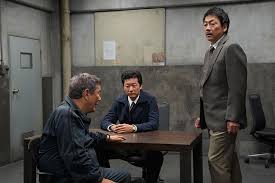
Movie Review: A Master Mocks Yakuza Hit-Man Movies — “Broken Rage”

Leave it to Beat Takeshi to ridicule the cinematic elephantiasis that has even the Great Scorsese pushing the limits of how long a night out at the movies should last. And that Brady Corbet “Brutalist” guy? Three and a half hours? Who is he kidding?

And trust the often goofy Takeshi Kitano (his real name) to take down a whole genre of Japanese cinema that made him rich and famous — yakuza hitman stories — and do it in 67 minutes, including credits.

With “Broken Rage,” even the title’s a joke, as the director of “Outrage,” and “Outrage Coda” takes a shot at deconstructing the yakuza killer narrative in a self-aware, fourth-wall-breaking farce. He tells us a tidy, dumb geezer-gun-for-hire story, and then spends the second half of the movie lampooning the conventions, set-pieces, character “types” and ways the time-tested-plans of an elderly trigger man can and should go wrong.

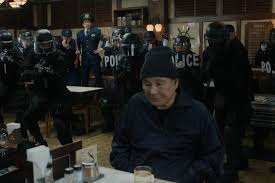
The guy “they call Mouse” (Kitano) is a pot-bellied, bowlegged 70something lump who dresses all in black, picks up his assignments in an envelope left by a mysterious “M” at his regular dining spot, the Cafe Lake.

The proprietor (Takashi Nishina) always asks him who “M” is, and the cagey Mouse always answers “I have no idea.”

As you’d expect, thanks to 1467 hitman movies that preceded it, that envelope contains a photo and the routine of the intended mob victim.

So the wily Mouse dons his black jacket, pants and shades and walks right into a club to shoot up a table packed with young punks. He switches coats, adds a cap and pedals off into the night as the oldest delivery boy in Tokyo. Another guy, with bodyguards with him, must be surveiled at the gym and trapped when he strips to just his tattoo’d birthday suit for a dip outside the sauna.

Careful as he might seem, the Mouse is grabbed by the cops, ID’d in a lineup and beaten until he agrees to go undercover to entrap drug smuggling mobsters. How’ll he join the gang?

Simple. The old man will visit a bar a mob leader (Hakuryû) frequents and “handle himself” in a fight an undercover cop picks with him. Just like that, with not so much as a “check him out,” he’s a mob bodyguard, showing off his killer instincts to his new crew while baiting them into a trap.

Kitano skips over a vast collection of conventions and cliches of such movies, skipping past “wiring” Mouse up, etc., to pretty much wrap that tale up in half an hour.

The “joke” to the first half of “Broken Rage” is Beat Takeshi as a past retirement age “hard” man in the Liam, Bruce, Sly, Mel and Denzel mold. Yeah, he’s too old to be that quick, punch that hard and see danger in a dark parking garage at night whilst wearing sunglasses. It’s funny that we let our action heroes “sell” this lie well into their ’70s.

The second half of the film treats us to a counter-narrative where Mouse goes through the same hit-list and same routine, with one disastrous result after another. Even the cafe chairs collapse under him while he’s picking up his envelopes.

The entire deadpan affair is more reasonably amusing than hilarious, but the pauses in the action, with the screen going to black and “users” of this Amazon streaming movie commenting their complants– “That’s it?” “That’s not a movie” and “On this budget, this is what you get” — are laugh out loud funny.

Yes, movies are getting too long as they’re tailored for a home viewing audience used to binge watching streaming series. Yes, every filmmaker is pitching those streamers, or being lured by Amazon, Hulu or Netflix money.

Takeshi gets it. And when he got that Jeff Bezos money to deliver one of his patented serio-comic thrillers, guess who’s actually the butt of his jokes?

Rating: 16+, violence, drug content, nudity

Cast: Beat Takeshi, Hakuryû, Tadanobu Asano. Nao Ômori, Takayuki Asai and Takashi Nishina

Credits: Scripted and directed by Takeshi Kitano, aka “Beat” Takeshi. An MGM/Amazon Prime release.

Running time: 1:07

Posted in Reviews, previews, profiles and movie news | Tagged , , , , | Comments Off on Movie Review: A Master Mocks Yakuza Hit-Man Movies — “Broken Rage”

Classic Film Review: Hemmings and Redgrave, The Yardbirds and 1960s London — Antonioni’s “Blow-Up” (1966)

A young photographer is shaken to his core when he finally sees the beyond the Mod London surface gloss he so ably captures in “Blow-Up,” a vivid snapshot of a moment in time and a patient, chilling thriller about a murder and a generation unready to face such realities.

Michelangelo Antonioni (“The Passenger,” “Zabriskie Point”), adapting a Julio Cortázar short story, depicts a prelapsarian ’60s of “free love,” easy money, mod fashion, drugs, sex and rock’n roll.

And after slowly and deliberately setting all this up by following the life of rich, greedy, womanizing photographer Thomas — greedy for women (“models”), fame from his arresting images, money and real estate — Antonioni shocks our anti-hero. Thomas realizes, as he blows up a photograph of a couple’s assignation in a park, that he’s captured a murder or attempted murder with his SLR camera. It hits him square in the face that he lacks the ethical, moral and intellectual grounding to handle this awful truth.

He has no idea what the right thing to do is and no sense of responsibility to do it.

David Hemmings had his greatest film role in Thomas, an arrogant bully of a fashion photographer who callously preys on his subjects, and on too-eager wannabes who flock to his studio door. He’s even sleeping with his artist neighbor and pal’s girlfriend (Sarah Miles).

Thomas takes art shots in his spare time, because he wants it all — big paydays for photographing women in sexy poses, fame and “respect” as an artist published in a picture book.

He tools around a London of colorful street-protests carried out by a comical, carefree flash-mob in mime makeup in his new Rolls Royce Silver Cloud convertible — always with the top down, no matter how grey the day. Thomas parks it away from the factory where he’s posing as a worker just to get candid shots of London labor. And he abuses the flashy ride, because it’s come easily to him.

He’s even dabbling in real estate. He has his eye on an undervalued antiques shop in an about-to-gentrify neighborhood.

“Already there are queers and poodles in the area,” he crows to his business manager. This place is about to explode.

That goes for London as well. British youth born during and just after the war are celebrating their newfound affluence and influence. Thomas is cruising among them — clubbing where The Yardbirds (Jeff Beck, Jimmy Page, et al, pre Page’s Led Zeppelin) are playing, throwing away clothes he’s worn once or twice.

But hunting for other candid shots in a London park has Thomas spying on two lovers — a younger woman (Vanessa Redgrave) with an older man. She freaks out when she sees who he’s snapping.

“This is a public place. People have a right to be LEFT in PEACE!”

Not to Thomas. But as she goes to great extremes to procure those pictures, he prints the pictures and starts to notice background detail. Is that…a shooter in the bushes just to the right of them?

Antonioni doesn’t turn this into a detective story with Thomas as amateur sleuth. Our shallow anti-hero crows to his business manager what he’s snapped, that he’s “saved” the intended victim’s life. But Thomas takes no responsibility for showing what he has to the cops, even after it’s obvious that the worst has happened and the criminals are covering up their crime.

The amorality of all that hangs over “the scene” that Thomas still sees, but is no longer swept up in.

The plot of Antonioni’s film was so clever that Brian De Palma paid homage to it with his ’80s thriller “Blow Out.”

The time and place — mod, fashion-mad 1960s “Swinging London” — were so perfectly captured that Mike Myers made comic hay out of it for a string of “Austin Powers” farces.

Hemmings never again reached the level of fame “Blow-Up” promised. He’d enjoy a long career in support of bigger stars with “Crossed Swords,” “Islands in the Stream,” “Gangs of New York” and “Gladiator” among the jewels on his resume.

Redgrave and Miles would have bigger post-“Blow-Up” careers.

Seen today, one appreciates the patience of films from a more self-consciously artsy era, the slow boil Antonioni goes for in setting up his generational moment of judgement.

Modern viewers will raise an eyebrow and grimace at the sexism, ageism and homophobia glimpsed here.The fashions are peak “mid century mod” and kind of timeless when they aren’t hideous.

“Blow-Up” was made for the HDTV/high-resolution DVD/video era. I first saw it at a university film society projected on grainy 16mm. Much of the effect Antonioni was going for, forcing the viewer to only slowly “see” what Thomas’s trained eye eventually discerns in the background of those simple snaps taken in a park, has been lost to home viewers of this classic for generations.

But now this metaphor for a generation about to come of age can be appreciated for what it was, in all its Metrocolor glory. “Blow-Up was a film with something to say whose message resonates even today, over half a century removed from Swining London.

Rating: TV-MA, sexual situations, pot use

Cast: David Hemmings, Vanessa Redgrave, Sarah Miles, John Castle, Peter Bowles and The Yardbirds.

Credits: Directed by Michelangelo Antonioni, scripted by Michelangelo Antonioni, Tonino Guerra and (English dialogue) Edward Bond, based on a short story by Julio Cortázar. An MGM/Warner Bros. release on Tubi, other streamers

Running time: 1:52

Posted in Reviews, previews, profiles and movie news | Tagged , , , , , , | Comments Off on Classic Film Review: Hemmings and Redgrave, The Yardbirds and 1960s London — Antonioni’s “Blow-Up” (1966)

Movie Review: An Oscar-nominated animated “Incredible Journey” from Latvia — “Flow”

“Flow” is a futuristic Franco-Latvian fantasy, an animated sci-fi version of Disney’s classic animal odyssey, “The Incredible Journey.”

Gints Zilbalodis’ film, an Oscar nominee as Best Animated Feature and as Best International Feature, is a dialogue-free travelogue that follows a cat through a post-apocalyptic landscape.

Setting aside, it’s a light, somewhat melodramatic adaptation of the joke that cats “don’t need us” and merely tolerate human. A coal-dust-colored cat faces perils and only survives them through the aid of a capybara, a stork, a Labrador Retriever and to a lesser degree, a ring-tailed lemur.

Humanity appears to have vanished. But buildings still stand, structures crumble and become overgrown and the cat still makes her home in a Latvian dacha, surrounded by feline statuary including two works in progress by the sculptor who used to live there — an unfinished carving on a desk and a towering Mount Pussmore monument that still has scaffolding around it.

The cat is feeding itself, but it runs afoul of a pack of dogs by stealing the fish they’ve been catching. Only the yellow Lab seems indifferent to this afront.

The dogs must be evaded when they give chase. And when they flee past the cat, a vast herd of deer are the next peril to dodge.

But that’s nothing compared to the flood that follows. The narrative has a touch of Antediluvian End Times about it as the cat sees its sylvan, verdant world buried under water. Climbing the highest landmark close to hand (paw) seems ironic — it’s the giant cat statue — and pointless.

Still, the dogs find a rowboat and float off in it, heedless of where it takes them. That passing dhow with the tattered sail that seems to be sailing itself? That’s better than drowning. And it’s not exactly sailing itself. A capybara is on board and may have an idea of what a tiller does.

The cat and the capybara re-encounter the dog, and a stork and even a vain, mirror-obsessed ring-tailed lemur as they drift through former forests and mountains, spy prehistoric whales and pass through what might have been Venice, Florence or many of the Great Cities of Europe.

The story and message are “cat video” simple — put the kitty in peril, sometimes comically learning to cope with “cooperation” and a water world where if you want to eat, you’d better be willing and able to adapt — to swim under water and fish. The animation is lovely, if perhaps a tad Pixar 2.0 in texture, color palette, complexity and “realism.”

“Flow” would be a worthy contender for Best Animated Feature most years. It might be better than a new “Wallace & Gromit” film or “Inside Out 2.” But only cat fanciers will be voting for this simple, picturesque odyssey over the smarter, warmer and wittier “The Wild Robot.”

Rating: PG, peril, thematic elements.

Credits: Directed by Gints Zilbalodis, scripted by Matiss Kaza and Gints Zilbalodis. A Janus Films release.

Running time: 1:25

Posted in Reviews, previews, profiles and movie news | Tagged , , , , | Comments Off on Movie Review: An Oscar-nominated animated “Incredible Journey” from Latvia — “Flow”

Movie Review: Home Invaders show up with an Agenda — “Everyone Is Going to Die”

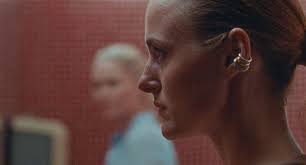
“Everyone is Going to Die” is a generic home invasion thriller that clumsily struggles with the #MeToo “message” grafted onto it.

It opens with the usual “Funny Games/’The ‘Strangers’ franchise” franchise attack, serves up hints that this assault isn’t as “random” as it seems, lapses into ludicrous theatricality and then leans harder into inept self-awareness of the “I’m the director” giving “Don’t break the fourth wall” notes to her captive cast.

Things get rough before things get ugly — seriously ugly — in the latter acts of this British thriller written and directed by producer turned director Craig Tuohy.

Award winning builder/developer/architect Daniel (Brad Moore) is living large in a remote, designer mansion, enjoying a little S&M single life after splitting from his wife. He has a big deal about to go down.

But for this weekend, he’s back-burnering work and chasing away the bondage playmate (Tamsin Dean) because his teen daughter Imogen (Gledisa Arthur) is coming over for her birthday.

They don’t have five solid minutes to themselves to talk about how little he’s prepared for her birthday and how much trouble’s two-fisted Imogen is getting into at school.

“There’s someone in the garden.” Daniel isn’t finished shouting threats at this masked intruder when another has made her way into the house. Her “present” for Imogen? A shotgun in a box, ready for brandishing.

The women are armed with their faces hidden by DIY theatre masks. Jaime Winstone plays “Comedy,” and her fury and her ego and vanity means she will quickly doff hers. Silent “Tragedy” (Chiara D’Anna) is the other half of a couple Daniel quickly labels “man-hating lesbians.”

But are they? They know about his business, his “deal.” They know better than to steal his car. They have an idea he may have a safe. And if not, they’ve arranged where they want his accounts transferred.

As the violence and threat level ebbs and flows and the upper hand shifts hands, talkaholic Comedy gives away the larger point they expect this assault to achieve — lessons from “the theatre of life.”

“What we do is organize days you never will forget!”

Their aim? Daniel is to be broken and humiliated in front of his daughter.

“Otherwise, what’s the point?”

The dialogue is closer to a monologue as Ray Winstone’s daughter chatters away with insults and threats delivered behind the barrel of her character’s gun.

“What have you got to lose? Aside from your daughter’s face?”

The bursts of violence never quite plant their feet in reality, and for such a short, compact, single-set thriller, the pace just drags.

Tying this all together with “Oh, that explains it” twists never quite comes off. And once you’ve been told “Everyone is Going to Die,” anything less is a bit of a letdown.

Rating: R, disturbing violent content, sexual assault, profanity, and sexual content/nudity.

Cast: Jaime Winstone, Brad Moore, Chiara D’Anna, Gledisa Arthur, Tamsin Dean and Richard Cotton.

Credits: Scripted and directed by Craig Touhy. A Saban Films release.

Running time: 1:22

Posted in Reviews, previews, profiles and movie news | Tagged , , , , | Comments Off on Movie Review: Home Invaders show up with an Agenda — “Everyone Is Going to Die”

Movie Preview: High End Horror ensues, because He’s Going to “Bring Her Back”

The director Philippou brothers behind “The Babadook” and “Talk to Me” landed Sally Hawkins for the lead in this chiller.

A24 has it, and that’s almost all we need to know, right?

May 30.

Posted in Reviews, previews, profiles and movie news | Comments Off on Movie Preview: High End Horror ensues, because He’s Going to “Bring Her Back”

Movie Review: Teachers Accuse, Debate and Judge a Mother and her Son named “Armand”

Something that happened at school is debated and “measures” are weighed and furiously argued and even experienced through interpretive dance in the challenging but slow feature filmmaking debut of Halfdan Ullmann Tøndel, the grandson of the great actress Liv Ullmann.

“Armand” thus immediately invites interpretation and appreciation as a sort of extension of Grandma Ullmann’s work as the muse of the Swedish master Ingmar Bergman. Quiet, deliberately pacing from emotionally repressed to potentially explosive, Norway’s official submission for the Best International Feature Oscar can be a frustrating and obscure essay on Scandivanian emotions and cinematic symbolism.

“Armand” didn’t make the Oscar cut, but Tøndel did earn a Director’s Guild nomination. And the film stands out as a fine example of a so-called “Cannes” film — obscure, novel and a beneficiary of the groupthink that sets in at film festivals and on festival juries.

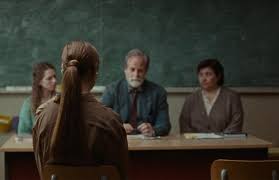
Renate Reinsve of “The Worst Person in the World” plays Elisabeth, a parent urgently summoned to a parent-teacher conference at school.

The whispers among the faculty and staff are that “It’s Armand, again,” suggesting a problem child. Elisabeth has to be dealt with gingerly, as “she’s a public figure” (an actress). And her son’s young teacher, Sunna (Thea Lambrechts Vaulen) assures her principal (Øystein Røger) that she’ll approach this “diplomatically,” maintaining her quiet and “sober” composure.

And she assures Elisabeth accordingly, that this is no big deal, nothing urgent, nothing to worry about. She lies.

Elisabeth’s six year-old son did something to another boy in school. He used language beyond the knowledge of most six year-olds. And what he did was serious and sexual enough to suggest “measures,” child welfare and even police involvement.

We don’t meet Armand until much later. We never meet his alleged victim. And we don’t really know what happened, just what other teachers heard from the boys. We just puzzle over Norwegian protocols on such matters and how clumsy, clueless and out-of-their-depth almost everybody in this school is to deal with this — especially the older principal.

“We have to be tolerant of anything now,” he grouses.

What we learn — from the “meetings” between parent and the young teacher (Alone?!), then parent and a couple of teachers and eventually parent with teachers and the principal — is that Elisabeth went to school here. So did Armand’s father. So did a couple of the teachers regarded as witnesses, the first to hear of the incident from the victim and wonder about his bruises.

Most of them have known each other all their lives. There are relationships and relatives and grievances that extend beyond this shocking alleged assault, and they either “explain” it as a judgment on Elisabeth’s parenting situation, or undercut it due to old grievances.

Writer-director Tøndel’s approach is to tease this out and let it all unfold ever-so-slowly. Scene after scene drags, even when something dramatic is happening. Elisabeth cracks up, at one point, launching into a laughing jag that goes on an on.

And that’s before she imagines herself persecuted and touched and poked at in an interpretative dance take on her dilemma.

One staffer has stress-nosebleeds. Are they a “tell” about how out of her depth she is? Others have “complications” that point to motive.

“Armand” is entirely too grudging in letting slip the information that the viewer needs to form judgments and opinions that might later be undercut. A tale told under a cloud with unreliable witnesses, it’s a slow and soft spoken drama that too breaks the chilling spell Tøndel is trying to cast.

Rating: R, profanity and sexual content

Cast: Renate Reinsve, Ellen Dorrit Petersen, Endre Hellestveit, Vera Veljovic-Jovanovic, Thea Lambrechts Vaulen and Øystein Røger

Credits: Scripted and directed by Halfdan Ullmann Tøndel. An IFC release.

Running time: 1:57

Posted in Reviews, previews, profiles and movie news | Tagged , , , , , , | Comments Off on Movie Review: Teachers Accuse, Debate and Judge a Mother and her Son named “Armand”