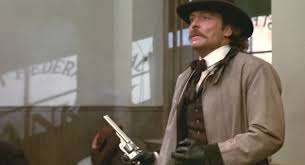
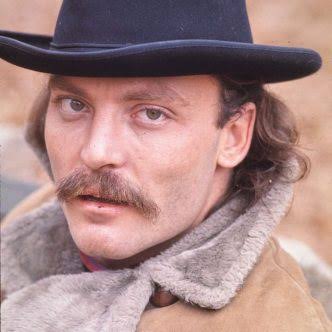
The Long Ride of Stacy Keach –1941-2026

The first time I read the name “Stacy Keach” was in the first issue of “American Film” magazine, which I started subscribing to in college.

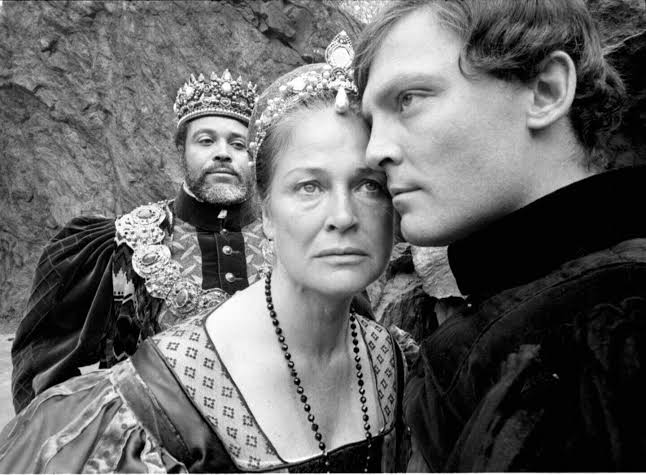
Keach had done films and TV, and I think “The Long Riders” was just about to come out. And what I remember from that early profile was the declaration that Keach had been “The Great American ‘Hamlet.'”

That’s quite a label for a guy who was showing up in Cheech and Chong movies at the time.

But some years later, I got to interview him when a play, “Flowers and Photos,” was undergoing its out of town polish and tryout in Winston-Salem, N.C. It was about the love affair between the great artists Georgia O’Keeffe, the painter, and the famed art photographer Alfred Stieglitz. He co-starred with Margot Kidder and both made stunning stage impressions in a play that was otherwise forgettable.

A Drama Desk and Helen Hayes Award winner, Keach never strayed far from his theatrical roots, taking on Richard Nixon in the touring company of “Frost/Nixon,” working in shows from Jon Robin Baitz, touring with “Barnum,” playing “Richard III” and Willy Loman in “Death of a Salesman,” racking up scores of stage credits.

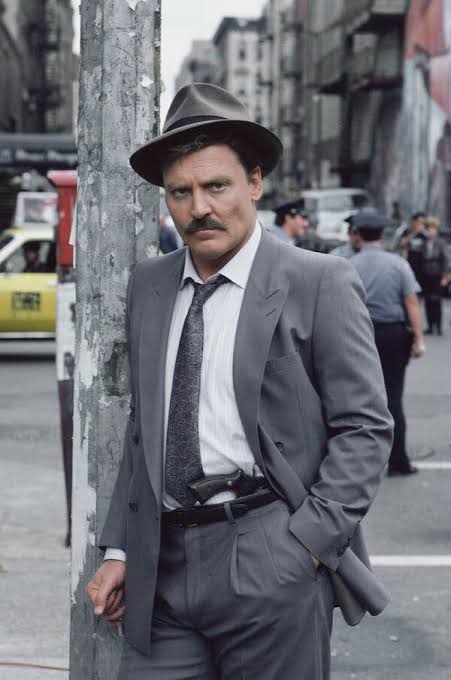
A memorably brooding presence on stage and screen and as a voice over narrator and animated voice actor, with that Mike Hammer growl of a voice, Keach died yesterday at the ripe old age of 85.

Keach didn’t shy away from comedy, tackling recurring roles on TV’s “Titus” and “Two and a Half Men” that were always sure to land a laugh. His TV commercials for couches were a comic delight on “30Roc.” And then there was this.

His resume is littered with weird choices, and seeing him in those Cheech and Chong films was a tell. Keach did time in the UK for smuggling cocaine, and had his druggy years which created an appetite for inferior work to pay for the nose candy and what not.

But social media (Blue Sky mostly) is afire this AM with fan pitches for “The Squeeze,” “Roadgames” and the like, obscure titles from an impressive body of work.

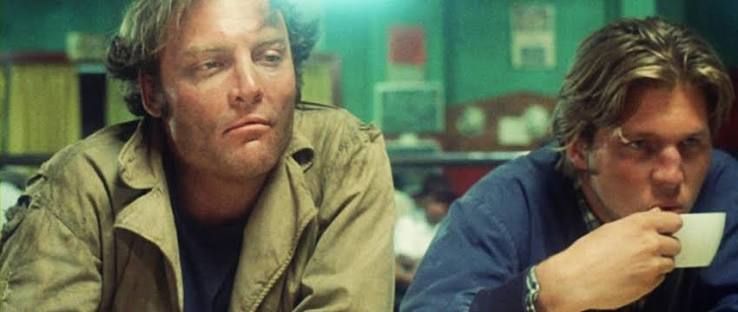
He was amazing as a washed-up pug of a boxer in John Huston’s classic “Fat City,” paired with Jeff Bridges and also memorable for featuring Nicolas Colasanto (“Coach” on “Cheers”) as their trainer. He’d been the hilariously nasty albino outlaw “Bad Bob” in Huston’s “The Life and Times of Judge Roy Bean.” The man’s range was unmatched.

My favorite film of his was the Western he and his brother James Keach nursed to life, cast with the Carradine, Quaid and Guest brothers and got action auteur Walter Hill to direct. “The Long Riders” was the greatest Western in an era where they’d gone completely out of style.

I grabbed the last chance I had to interview Keach when Alexander Payne’s forlorn masterpiece “Nebraska” was flirting with awards season glory some years back. June Squibb had a late-life breakout performance in that one. Bruce Dern had his best shot at an Oscar, but Keach made a memorable, venomous and equally aged foil and tormentor to the tale’s demented, creaky “hero.”

He even sang in a karaoke moment. “In the Ghetto” never sounded more…ironic.

Some years ago, I tracked down Keach’s “Hamlet” director to snag a quote or two about another memorable American “Hamlet” he’d seen. Gerald Freedman directed Kevin Kline in other productions, and rightly considered his “Hamlet” — for The Public Theatre and PBS — magnificent. But when pressed, Freedman couldn’t separate the two versions of the Dane, Keach and Kline.

But there’s no doubt about this, Keach was vulnerable when the role called for it, a great tough guy on the big screen and the small one, a man’s man and an actor’s actor who looked at home on a horse or in a fedora, the best TV “Hemingway” and definitive “Mike Hammer” was one of the great ones. Rest in peace.

Posted in Reviews, previews, profiles and movie news | Tagged , , , , | Leave a comment

Movie Review: “Jimmy” Stewart survives The World War that Remade Him as an Actor

Filmgoers of a certain age are honor bound to tear-up more than once watching “Jimmy,” the earnest, sentimental and nostalgic new movie about Jimmy Stewart. The film almost earns those tears, but to be honest, what we’re responding to is the man the movie is about, not this malnourished biopic.

Stewart was one of the most beloved figures of Golden Age Hollywood, revered by audiences who aged with him during his four and a half decades of stardom, respected for the man he was off camera as well as on screen.

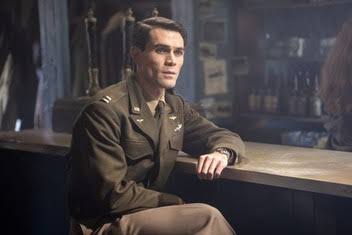
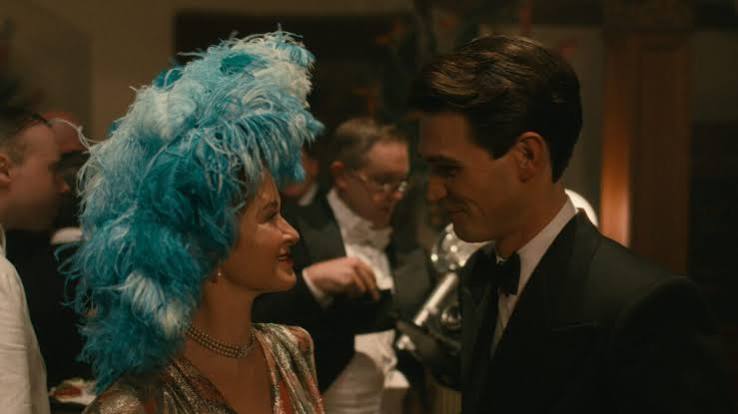
The movie, flatly directed by Aaron Burns and somewhat colorlessly scripted by Justin Strawhand, whose other significant credit was their poorly-received feature debut, “Birthright Outlaw,” benefits from a fine turn by long and cadaverously lean KJ Apa. A relative unknown, he becomes a decent facsimile of the “Indiana farmboy” turned movie star, someone whose values wouldn’t let him Ronald Reagan/John Wayne his way out of military service during World War II.

“Jimmy” captures the star at his Oscar-winning peak, an American Everyman at home in romances, satires (“Mr. Smith Goes to Washington”) and especially comedies like “Destry Rides Again” and “The Philadelphia Story,” which earned him that Oscar in Feb. of 1941. We see him pursued by gossip columnist Hedda Hopper (Sara Drew) and proposing to his “Vivacious Lady” co-star Ginger Rogers (Gemma Donovan) when he gets his draft notice.

She giggles at the thought, and at the idea of Stewart serving in uniform.

Unlike many stars, Stewart was determined to “do his bit,” in the parlance of the day. The film shows us the machinations of MGM’s Louis B. Mayer, played as a wheeler-dealer and not the sentimental weeper of legend (especially in contract negotiations) by Jason Alexander, to get Stewart a deferment so that he could contribute to the war effort at home, and to MGM’s bottom line.

“You are a god, and gods don’t fly airplanes.”

Rob Riggle plays an Army Air Force officer who also tries to talk Stewart into doing his bit at home, because losing him in combat would gut American morale.

And veteran screen heavy Neal McDonough, experiencing a career renaissance in faith-based or faith-prominent films like this one, plays Stewart’s Spanish-American War and WWI veteran father, who seems to reverse psychology his skinny, sensitive son into going with “You’re just not cut out for it.”

But avid aviator Stewart will not be denied, and soon he’s trained and piloting his B24 Liberator bomber to an airfield in England as the Allied bombing offensive against Nazi Germany’s “Fortress Europe” gears up.

The pre-war fame and combat service are framed within the efforts of the populist immigrant filmmaker Frank Capra (Max Casella, giving Capra a pugnacious edge) to talk post-war Stewart into re-starting his career with a “movie that will be timeless,” one that audiences will watch “100 years from now, after we’re dead and gone.”

That movie was the 1946 box office flop “It’s a Wonderful Life,” a picture that aged into quintessential Americana, a holiday favorite to this very day.

So the thesis here is that the trauma of war scarred and ennobled Stewart, gave him gravitas that his “happy go lucky” earlier years lacked.

That’s a solid formula to hang your picture on — with a fictionalized overseas romance (Kara Killmer), the terror of (CGI assisted) bombing missions over Germany, and the shock of loss when friends and comrades are shot out of the sky. Stewart’s so emotional on the “Wonderful Life” set that veteran character actor Lionel Barrymore (Christopher McDonald, outstanding) is moved to give the broken veteran a pep tal.

But it’s too bad that there’s precious little that’s “happy go lucky” in those early Hollywood scenes. Alexander’s dry-not-droll take on Mayer sets the disappointing tone. While the film isn’t utterly humorless, it comes close. And that doesn’t jibe with our memories of Stewart at all.

I had the pleasure of interviewing Mr. Stewart as he was being honored at a film festival near the beginning of my career and after the end of his. He came off as advertised, folksy, walking and talking Americana.

Apa gets the timbre of the voice close to perfect, and gets a good handle on the exquisite timing that never left Stewart to the end of his days. For decades, no self-respecting comic or mimic could make a living without having a killer Jimmy Stewart in his repertoire. Dana Carvey was probably the last and certainly one of the best.

But the twinkle that Stewart wore in Hollywood, on “The Tonight Show,” in person in interviews and even on occasion overseas serving his country, is missing.

Stewart’s ethos in the film, that “I just wanna be able to look at myself in the mirror and see a ‘good man’ looking back at me” is so old fashioned it may have died with him and the rest of The Greatest Generation.

Stewart’s of a bygone era, and judging by the audience I saw “Jimmy” with, the generations that connected with his blend of talent, wit and righteousness by example are all but gone. What he has to say to Gen’s X through Z and Alpha, even in “It’s a Wonderful Life,” is anybody’s guess.

And that’s what we weep for in those moments “Jimmy” reaches for and grabs tears, the loss of innocence, the dangers and grim responsibilities of combat, the nobility of such figures in our culture.

That’s probably why we’ll never get an all-star, big budget version of Stewart’s “Wonderful Life” and the war that informed it. Malnourished polish aside, “Jimmy” underwhelms, more often than not. But James Stewart never did.

Rating: PG-13, combat violence

Cast: KJ Apa, Kara Killmer, Max Casella, Rob Riggle, Christopher McDonald, Sara Drew, Neal McDonough and Jason Alexander

Credits: Directed by Aaron Burns, scripted by Justin Strawhand. A Fathom Entertainment release.

Running time: 2:00

Posted in Reviews, previews, profiles and movie news | Tagged , , , , , , | Leave a comment

Netflixable? “Misty Green,” but Still Black in Chris Rock’s Hollywood

A one-time Emmy winning star struggles with personal demons, family matters and career suicide as she searches for her “comeback” in “Misty Green,” a glossy peek at the underbelly of Hollywood.

If anybody knows the gossip and dirt and is willing to “spill the tea” on Tinseltown, it’s Chris Rock, who wrote, directed and co-stars in this. From the cruel callousness of auditions to racism and family trauma to mental illness, misplaced “has-been” egotism to “yachting,” “Misty” touches a lot of the bases about the downside to chasing dreams in Lalalaland.

If you’re a fan of perhaps the greatest comic of his generation, you can’t help but be thrilled he got the chance to make his glossy soap opera. He called in favors, made “discoveries” and gave it a cast worthy of boutique, awards-bait distributor A24.

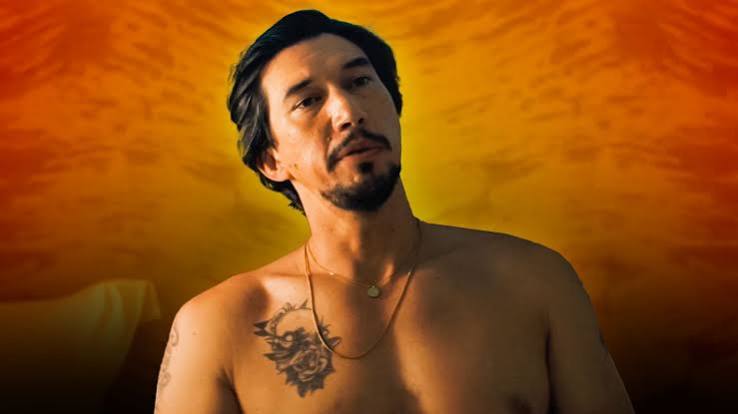
Anna Kendrick, Daniel Kaluuya, Adam Driver, Topher Grace, Alexandra Shipp, Tracie Thoms, Anthony Anderson and even Busta Rhymes and Ice-T show up in support of “Slow Horses” breakout Rosalind Eleazar’s star turn in the title role.

But this movie about a trainwreck grasping at a comeback hits the wall with a midpoint car wreck. And whatever it had going for it in the introductory acts is washed away as what becomes a wish fulfillment fantasy drowns in melodramatic cliches.

Misty (Eleazar) used to be big. But her hit show, which “my dad/mom loved/never-missed” was ages ago, in Hollywood years. She may give a look and arch an eyebrow to anybody needing a “Do you KNOW who I AM?” But as her actress-pal (Kendrick) reminds her and her agent (Grace) makes clear, she spent a lot of time making enemies in Hollywood.

If you’re a Black actress who can’t take a meeting with Shonda Rhimes, even if you’re the one holding the grudge, there aren’t a lot of doors left open to you in that town.

There’s a “Dreamgirls” remake in the offing, but casting director Rhonda (Tracie Thoms) has “history” with our pushing-40 starlet. So does the director (Rock). Even a still-well-known, still-beautiful TV star reduced to singing in the lounge at The Roosevelt can’t get “in the room” with that sort of baggage.

“Not a ‘nepo baby,'” Misty gripes. “Not even a ‘Brit’ (actually Eleazar is a Brit).” What’s she got going for her?

Well, there’s her temper, for starters. “Incidents” on and off sets give a gal a reputation. “Impulse control” covers a lot of sexual and pharmaceutical ground, in her case. Her agent begs her “Don’t go out tonight” because of an audition she has the next day. Maybe that’s just a suggestion.

We meet her sleeping in underwear that could pass muster in an S&M primer. And there’s that actor “friend” (Driver) who is her casual hook-up, provided he’s got drugs and she’s down for a threesome.

She’s still a “f—–g star.” Just ask her.

“I just wish people would treat me like one!”

As she’s been living in one paramour’s beachside condo, only to have the man’s furious and widowed wife give her one week (“You used to be on ‘The Red Eye!'”) to move out, Misty has a clock ticking down. With her brother (Kaluuya) fresh out of jail and “on my meds,” her bestie facing a crisis and her own appetites, “star” hauteur and temper, can Misty land a gig that won’t solve most of her problems?

Continue reading →
Posted in Reviews, previews, profiles and movie news | Tagged | Leave a comment

Movie Review: Macy, Dorff and Haddish co-star with Jack’s Grandson, “The Deputy”

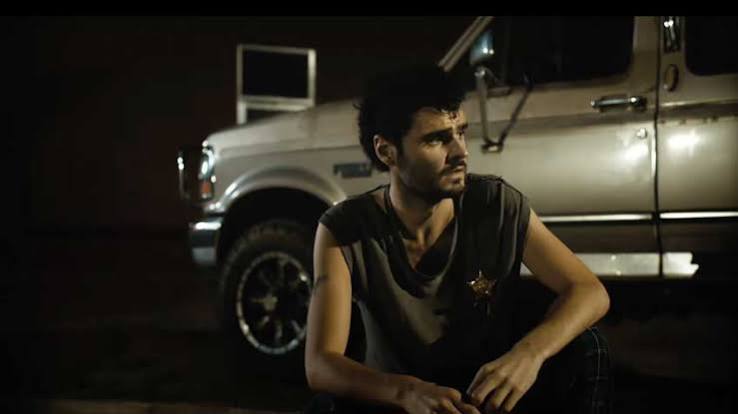
Duke Nicholson, Jack Nicholson’s grandson, isn’t much of an actor. And “The Deputy,” the seedy, bloody thriller he stars in, never rises out of the B-movie miasma it was born in.

But for a bad movie, I have to say it’s kind of fun. And Nicholson, cast as a slovenly, lazy lout who is slow off the mark, a part-time “deputy” caught up in a border country mess, isn’t awful at playing the last guy to get a clue.

The plot is simple. The stakes rise, grimly, incrementally and predictably. And we know that Deputy Toby, summoned to work in his tattered sleep tank-top and pajama bottoms, cannot be as slow as he seems. Then again…

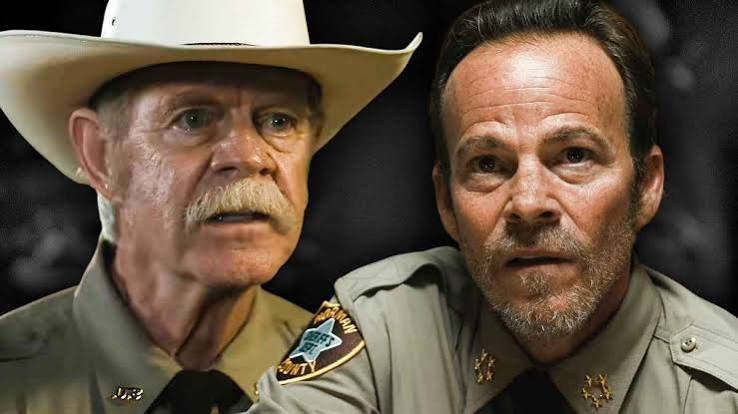
His bottom-of-the-social-ladder life in smalltown TexaMexiZona consists of a single-wide that dates from the Kennedy Administration, a high-mileage waitress baby mama (Billie Lourd, Carrie Fisher’s daughter) and a part-time job that comes with a badge and a gun and an assurance that he’ll get all the s—t work the sheriff (William H. Macy) and two other deputies (Stephen Dorff and Tiffany Haddish) won’t do.

Toby’s called in to watch a body in the town bar’s parking lot. Somebody got himself shot, somebody with an Old West family of vengeful siblings. “Mexicans did it,” or somebody else. Anyways, the sheriff’s got to go inform the family way out in the county. His chief deputy (Dorff) takes his sweet time clocking in. The coroner’s not exactly readily available.

So there’s nothing for it but for the slob in his PJs and a badge to sit around waiting to be relieved, for the body to be removed and the crime scene cleared. Fine. So long as Toby A) doesn’t run out of smokes or B) doesn’t get bored and slip off for a little something with someone on the side (Devon Ross).

Menacing Latinos in a yellow mustang are rumbling about. The brutish rednecks of the murdered man’s family are on the prowl.

Toby’s girlfriend’s begging him to flee to Houston with her. And slower-than-slow Toby is slow to pick up on how little urgency his uniformed superiors bring to this case, even after he loses the body.

Cinematographer and music video director Matt Sukkar and the producers pulled in solid B-list talent to surround our not-wholly-miscast leading man. Slow and predictable as the picture turns out to be, it’s easy to see what they saw in the material — a lean, topical B-movie thriller with atmosphere, thugs and yokels and sexpots and a rube trying to survive one long, bad night on a job he’s never been any damn good at.

You lost the body?

“I thought you guys were messin’ with me,” Toby confesses to Deputy Billy (Dorff).

Maybe they were. Maybe somebody else grabbed it. Maybe somebody or somebodies Toby would never suspect knows something about it.

And we’re just invested enough in this bloody B-movie to see who did what and how, and if our hapless “Deputy” is up to the challenge of just surviving another night on the job in BFE, America.

Rating: R, graphic violence, sex, nudity, smoking, profanity

Cast: Duke Nicholson, William H. Macy, Billie Lourd, Devon Russ, Stephen Dorff, Alyssa Villa and Tiffany Haddish.

Credits: Directed by Matt Sukkar, scripted by Carlo Bernard and Victor Gischler. A Well Go USA release.

Running time: 1:38

Posted in Reviews, previews, profiles and movie news | Tagged , , , | Leave a comment

Netflixable? Crooked Cops, Accomplices and Cutesy Screenwriter are on a “Collision Course”

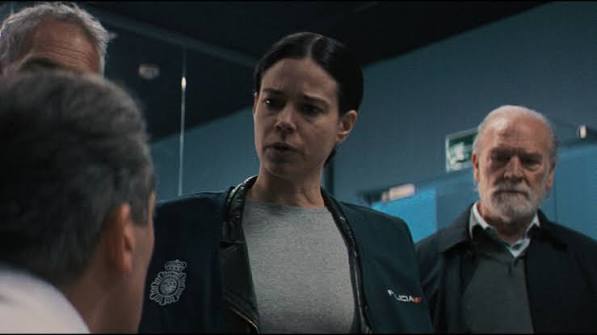
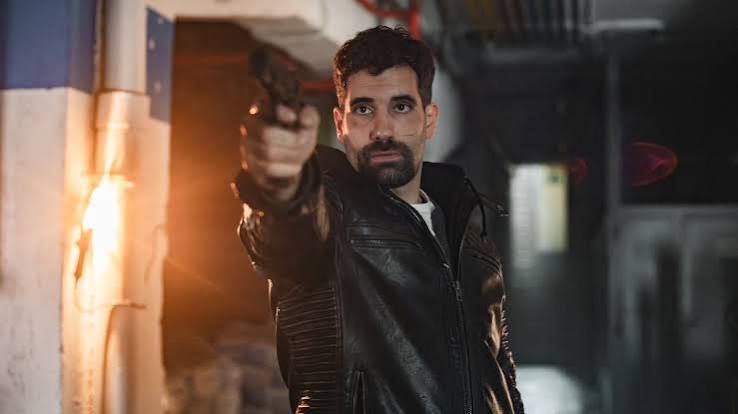
Remember “The ‘Raiders of the Lost Ark’ Paradox” that was bandied about some years back? It posited that the film was fine, save for the fact that nothing Indiana Jones did truly altered the outcome of the story.

I was thinking of that in the latter acts of the new Spanish Netflix thriller “Collision Course.” It’s a too-too gimmicky heist-goes-wrong tale that invites “What was the point of all that?” as the Big Gimmick is repeated and repeated and repeated.

And I also recalled sitting in on a new film school’s first day “directing” class for a story I was reporting. One of the would-be-Scorseses rehearsed his actors through a scene, then announced that they would switch characters and play other parts in this next rehearsal.

The professor stopped the show and gave one and all a lecture on such “cute” “exercises” in scripts or in pre-production rehearsals. He didn’t mince words. They’re stupid…Don’t waste the class’s time or “in the real world,” the producers’ time, he barked. “Are you going to waste the AUDIENCE’s time, too,” he wanted to know?

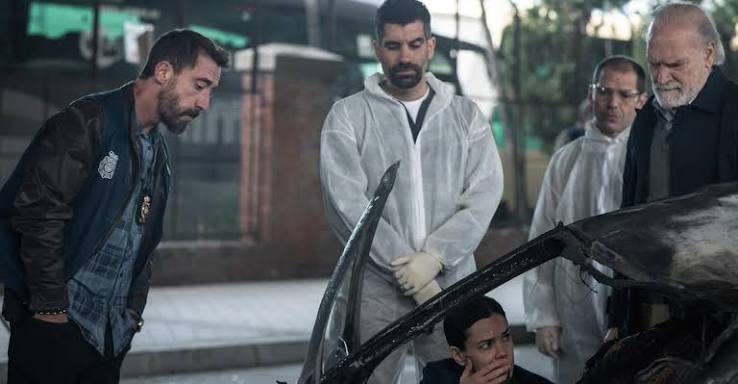
“Collision Course,” set during one of the many Spanish banking crises (2012-2013) of recent decades, shows us four dirty cops pulling a bank job that goes wrong. We see the panic, confusion and mistrust that sets in during the getaway, which is interrupted by a crash that kills one of the gang members.

The movie is about the perps trying to cover up their crime from their fellow cops — who are going to identify the body of their dead comrade any minute now — and figure out what went wrong and who double-crossed whom in terms of “the take” from the masked armed robbery.

But screenwriter Ramón Campos and director and co-writer Daniel Sánchez Arévalo thought it would be “cute” to show a different member of the gang — cop Ernesto (Luis Zahera), detective Carla (Laia Costa), forensics crime scene specialist Tomás (Tomar Novas) or retired cop Pedro (Karra Elejalde) — killed as a way of showing us the same crime and accident and investigation, but with different outcomes.

The only reason for this is to make a too-obvious point about never betting against the most obvious villain, in crime thrillers or in life. But that’s just weak, a tepid excuse for stretching out and bending a proven formula that loses all its urgency and suspense thanks to the gimmick.

There was nobody in Campos or Arévalo’s schooling or pre-production meetings to remind them “This is stupid. Are you going to waste the audience’s time?”

The caper is brutally staged. The car wreck — a vivid rollover with glass and noise and slo-mo violence — is repeated with each iteration of this or that character’s changing story arc, dulling the impact and shock of the crash.

We can’t invest in any performance or any character’s efforts to avoid discovery by the dogged old detective (Lluís Homar) assigned the case, thanks to the filmmakers’ decision to get too cute.

And every plot wrinkle, including the finale’s, is undercut by this collection of “Which reality are we supposedly seeing here?”

All to delay the “Money is the root of all evil” message at the heart of this tangled, tricky mess of a movie ruined by a first-year-screenwriter’s “own goal” blunder in pre-production.

Rating: TV-MA, violence

Cast: Laia Costa, Karra Elejalde, Luis Zahera, Tomar Novas, Álvaro Cervantes and Lluís Homar

Credits: Directed by Daniel Sánchez Arévalo, scripted by Ramón Campos and Daniel Sánchez Arévalo. A Netflix release.

Running time: 1:46

Posted in Reviews, previews, profiles and movie news | Tagged , , , | Leave a comment

BOX OFFICE: “Godzilla Minus Zero” devours all, including the latest “Cat in the Hat”

The umpteenth version of “Godzilla” shows there’s still teeth in the old Japanese Beast from 20,000 fathoms, as “Godzilla Minus Zero” stomps in with a $31.6 million opening weekend.

It’s in Japanese, of course. “Oh no, there goes Tokyo” and all. So that makes this the new holder of the best foreign language film opening weekend record, deadline.com notes.

As this is a sequel to “Godzilla Minus One,” we’re talking fresh (ish) “franchise” here, and not just a horror icon that dates back to the 1950s and brought back every few years, in Japanese or Hollywood form.

But taken another way, a character, situations and franchise that has been beaten to death (“Godzilla vs. Kong: A New Empire,” etc. etc. etc.) only is managing to sell around two-two-and-a-half million tickets in a nation of 350 million. Not exactly moving the cultural needle, is it?

That’s still better than the latest Bill Hader-voiced “Cat in the Hat.” That cleared $20.5 million, chickenfeed for an animated major studio kids film. How many damned “Cats in the Hat” do the kids need?

With ORIGINAL movies like “Obsession” and “You Can See Everything” surprising and taking over the moviegoing conversation, who cares how “good” any of these worn-out remakes are?

“Godzilla the Latest” is earning decent reviews. “Cat in the Hat?” Not so much.

The new musical “Drummer Boy” is pulled in $9.3 million. Not terrible, considering it’s not a franchise or a proven brand, with the biggest names being Ioan Gruffudd, Melora Hardin and Iain Glenn. I was one of the few to get around to reviewing it, and it’s not great. But it is ambitious and original.

In fourth place is the docu-drama “You Can See Everything,” which has dominated the film corner of the pop culture conversation since early October. It’s smarter and not the same old recycled popcorn, and it collected another $8.86  million.

A mythic thriller from India, “Ramayana: Rise of a Legend” (aka “Ramayana: Part One”) is on track to clear $8 6 million and land in fifth place. Mixed reviews greeted that one on this side of the world.

Martin McDonaugh’s latest, “Wild Horse Nine,” which might be the last good shot John Malkovich has at an Oscar, is on enough screens to clear $6, good enough for eighth place. That’s one title I’m actually excited to see.


“Wildwood” (7 million) took sixth. “Clayface” ($6.675) landed in seventh.

“Wicker” ($3.35) held onto ninth place.  And “Street Fighter” ($2.15) enjoys one last weekend in the to ten.

“Resident Evil” and “Other Mommy” headline the five titles exiting the top ten.

The low budget Jimmy Stewart biopic “Jimmy” earned $2 million, just outside of the top ten.

Posted in Reviews, previews, profiles and movie news | Leave a comment

Movie Review: Brother fights Brother, “Drummer Boy” vs. Singing Redcoat, in the American Revolution

The American Revolution marches to new songs in “Drummer Boy,” an ambitious and handsomely mounted musical from the studio that brought us “Sound of Freedom” and “Young Washington.”

The Aussie ex-pat filmmaking Smallbone siblings — Joel David and Ben — who teamed up for the studio’s “Homestead,” overreach in this ahistorical attempt to graft a 1941 Christmas carol onto an 18th century story. But the failings of what was probably a dubious faith-based enterprise from the start (Richard L. Ramsey of “Unsung Hero” scripted it) don’t truly overwhelm it until its clumsy, drawn-out finale.

Up until then it’s perfectly watchable, if a bit of an eye-roller.

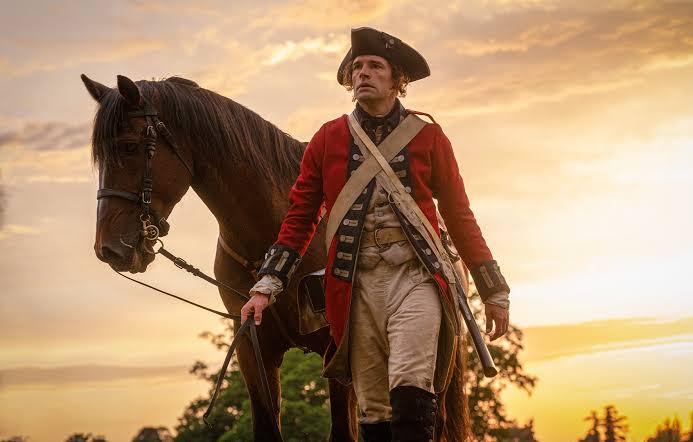
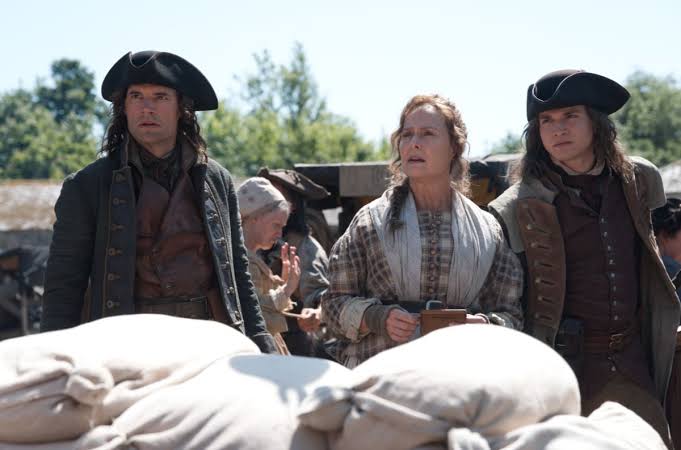
We meet two brothers, Jeremiah and Benjamin, and their parents (Ioan Gruffudd and Melora Hardin) as they cross the Atlantic during the French and Indian War. A duel with a French warship kills their soldier-father and cripples drum-happy young brother Benjamin.

Years later, Jeremiah (Joel David Smallbone) and leg-braced Benjamin (Lucas Leach) keep the family fed with their flour-milling business as the first shots are fired in Boston, Lexington and Concord. The American Revolution is pitting neighbor against neighbor. Soon that’ll turn to brother against brother.

Jeremiah joins the “lobsterback” British army in a regiment led by the aloof lord (Charles Eston) who came to America on the same ship as their family. He’ll keep the family in good standing with Tory customers, and maybe win the attentions of Lord Balfour’s fetching daughter Elizabeth (Beth Easdown). Or so he figures.

Ben’s all about the revolution and the “freedom” their father talked about, but never really experienced. His redcoat brother sees him as a “turncoat.” As Ben’s less able to march, shoot, stab and charge with his bum leg, he will have to do his part for the cause via his mad drumming skills.

The script pits brother vs. brother — unknowingly, most of the time — in fictionalized versions of various battles of the Revolution. It sets up a love triangle involving Jeremiah, whose letters to Elizabeth go unanswered, until her slave servant Emmaline (India Brown), who has been in love with him since he taught her to read on their passage to America, takes up the pen — posing as Elizabeth.

And through it all, battles and camp scenes, thwarted romance, dreams of freedom from bondage and family trials, folks break into song. It is a musical, after all.

“Are we children, playing” at war? Or “are we Abel? Are we Cain?”

Soldiers from both sides sing “God is with us,” and every character laments or embraces this idea of fighting for “a place where we can truly be free.”

The script is sophisticated enough to have enslaved and “free” characters comment on the irony of slaveholder Thomas Jefferson writing “all men are created equal,” and that interracial romance could be dreamed long before it became practical. Or legal.

So yes, this faith-based film is wrapped in Biblical platitudes and Christian expressions of liberty and freedom. That’s as “woke” as it sounds, and as it should be.

The songs aren’t bad, just forgettably anthemic, with big Christian pop arrangements, with “If you could see what I can see, maybe you’d believe what we believe” sentiments.

But Smallbone, Brown, Leach and Easdown have decent chops. It’s a pleasant surprise to hear how big-voiced Hardin, best known as Michael Scott’s most out-of-his-league “girlfriend” on “The Office,” can be.

And veteran character actor Iain Glenn, as the world-weary Scots-born commander of the American corps Ben joins, knows his way around a tune as well.

The predictably corny climax and anti-climaxes that follow may let down the side. But if you can fault the Smallbones for their slippery grasp of American history, you can’t fault a studio that is trying its hand at most every genre — animation, dramas, thrillers and musicals — taking a swing and missing.

Rating: PG-13, violence

Cast: Joel David Smallbone, Lucas Leach, India Brown, Melora Hardin, Ioan Gruffudd, Beth Easdown, Charles Eston and Iain Glenn

Credits: Directed by Ben Smallbone and Joel David Smallbone, scripted by Richard L. Ramsey. An Angel Studios release.

Running time: 2:09

Posted in Reviews, previews, profiles and movie news | Leave a comment

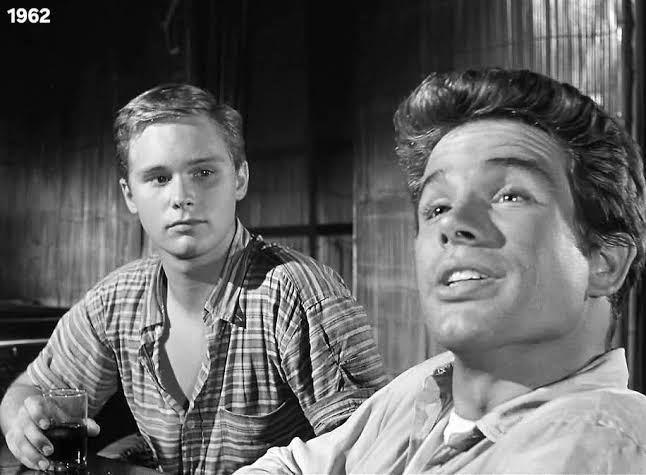
Classic Film Review: Beatty the Lady Killer, “All Fall Down” (1962)

World War II inspired Italian cinema to reinvent itself through Neo-Realism.

The sharp decline of The British Empire after the war caused playwrights and filmmakers to plunge into “Kitchen Sink” dramas with working class grit and adult themes.

The French found even more grit and sex and brio via the youth movie movement that became “Nouvelle Vague,” the French New Wave.

But while Hollywood sobered up for a bit after the war as the public finally lost its taste for musicals, the studio system went to war with TV by diving into widescreen spectacle and embracing the too-taboo-for-TV subjects of sex, depravity, alcoholism, family dysfunction and mental illness.

The late ’50s and early ’60s had their share of Westerns and war movies. But “serious” films from the mainstream studios grappled with disaffected youth and juvenile delinquency, race and sex sex, sex.

It was grand time to adapt Tennessee Williams plays and William Faulkner novels. And that’s where “All Fall Down” (1962) came into the picture, a John Frankenheimer melodrama based on a critically-acclaimed novel by James Leo Herlihy, scripted by the Pulitzer Prize-winning playwright William Inge.

“All Fall Down” is an all-star hand-wringer about a too-handsome-to-ignore wayward son (Warren Beatty), the family that created-“indulged” him and which he avoids, and the younger sibling, played by Brandon de Wilde, who idolizes him.

In cinematic shorthand, it’s “Hud” (1963) without horses, “Psycho” without the shower. It’s just not nearly as good.

The film begins with cliches and great promise and winds down until it ends with another cliche, this one almost comically indefensible. But the cast and the sordid “Peyton Place” undercurrent, Belle Epoch Americana with the soiled sheets pulled back, makes it worth a look.

Aspiring writer teen Clinton (de Wilde) gets off a bus in the Florida Keys, coincidentally a favorite haunt of Tennessee Williams at the time. He’s come there to be with his older brother, to buy into a fishing boat the sibling mentioned in a letter or phone call. But asking around this sordid, slowly-rotting world of fishermen, sailors on leave, strip joints, tourists and hookers about brother Berry-Berry earns rebuffs and “nothing to brag about” warnings.

Berry-Berry is in jail. Clint learns that from the prostitute his brother beat-up to land himself in the clink.

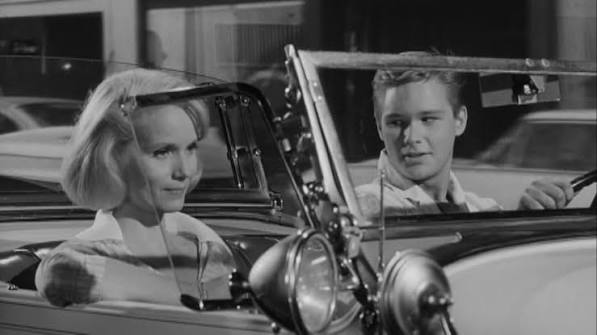
Coincidentally, the $200 Clint brought with him is exactly the bail Florida law enforcement decides will spring Berry-Berry, who barely thanks the kid before he’s attracted the attention of an older woman who invites him to join her for a yachting cruise to the Bahamas.

Berry-Berry is a head-turner, and the women who don’t salivate on first sight at him are the ones who merely gawk and flirt and invite him places.

Next thing we know, the black and white melodrama’s abandoned its most colorful setting — Marathon Key and the old Seven Mile Bridge are among the locations fleshing out “Key Bonita” (Key West) — as Clint is sent back home to Cleveland.

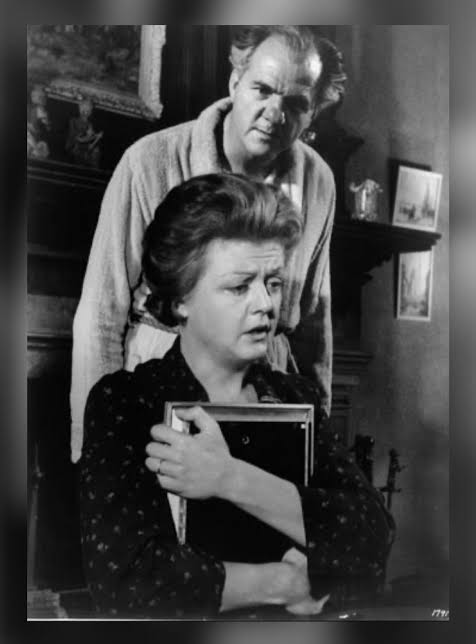
The sons were encouraged by their old leftish agitator turned realtor dad (Karl Malden) to call them by their first names. Father Ralph’s a gregarious drunk. Mother Annabel (Angela Lansbury) dotes on both and smothers them with her mothering, a favorite filmed “social ill” of the era.

They talk longingly of the prodigal son, who we see drift from job to job, woman to woman, Florida to Kentucky to his old Ohio home as the idolizing younger brother ditches school and scribbles scribbles scribbles in notebooks.

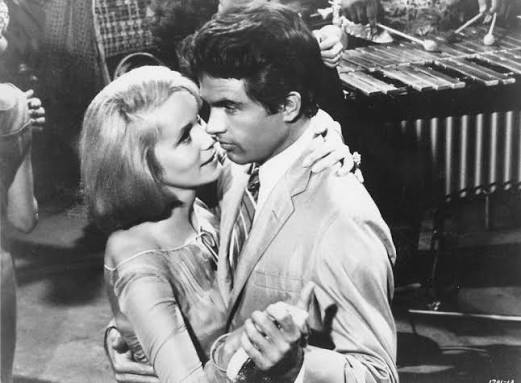
And then the daughter. Echo (Eva Marie Saint), of mother’s dearest friend, a pretty and pretty unconventional 30something “spinster,” comes to visit and modern viewers start the mental countdown to where this tawdry tale is sure to be going.

Continue reading →
Posted in Reviews, previews, profiles and movie news | Tagged , , , , , , , , | Leave a comment

Documentary Review: “Oscar shoo-in,” “Generational Masterpiece,” “You Can See Everything?”

I trust that there is no financial or ethical penalty for having little urge to rush out and see a mini-series length docu-drama/”documentary” on Elizabeth Holmes, the Theranos huckster and Millennial villain du jour.

The “You Can See Everything” hype around the “performances,” mystery and investigative “storytelling” in this Nathan Fielder/Lance Oppenheim binge-in-one-sitting movie almost matches the hoopla the media ginned-up with Holmes, who dolled-up nicely and made a great magazine cover going up, promoting her “most important invention ever” blood-test gadget, and coming down as her whole house of fraud collapsed around her.

Her case has been litigated. Her personality — unnerving, unblinking eyes, “change the world” or “get that money” ambition and rep as a smart cookie who refuses to apologize for over-selling her “visionary” aspirations — has been been dissected, condemned and sent-up in an Emmy winning Hulu series starring Amanda Seyfried, “The Drop-Out.”

Barring some Martha Stewart “singling out a woman for punishment” story angle, what exactly is the point?

But this Nathan Fielder, Lance Oppenheim film, with Fielder (the series “Nathan For You” and “The Rehearsal” were his) as on-camera interrogator, accuser, close friend and confidante, pokes around the edges of the nature of “truth” and “fact.” Competing agendas of storyteller and subject come into play, and we start to wonder who is pulling whose leg here?

Who do we believe, the adjudicated liar and fraud, or the side-eyeing, confidence-violating all access to “everything” in Holmes and partner Billy Evans’ lives filmmaker? Fielder, an Andrew Garfield/Dermot Mulroney-ish camera presence who listens, hears and tries and tries to trip up his subject, isn’t automatically trustworthy. But he knows that Holmes and Evans picked him to speak to, after a years-long media blackout, for a reason.

Is it because he’s done serio-comic films on “business scams?” Or is it the fact that he’s plainly out of his depth (and knows it) about the “science” of what Holmes claimed and still clings to as her goal even as her company burned through fortunes failing to achieve it?

In a documentary which tracks the last free (pre-prison) 2023 month of Holmes’ life, the nature of filmed “truth” is rehashed as we ponder the impact of a camera and crew on the many supposedly “intimate” conversations between subjects and interrogator. Pulling back to reveal that crew, seeing boom microphones in shots exposes (not for the first time) the lie that every “fly on the wall” documentary lives by.

At least Fielder and Oppenheim have fun with that. Check out the edits of where Fielder’s eyes go when he’s stuck watching “good looking guy” Evans takes a shower. Of course he looked!

Evans is the principal villain in this story of villainy on a huge financial scale. He wasn’t the older-man “partner” that a very young Stanford dropout Holmes hooked-up with to found and build Theranos into a multi-billion-dollar “save the world” company that accomplished nothing of the sort. Evans is the rich (ish) control her/control-the-message “partner” who sought her out AFTER infamy, and who “fell in love” with Holmes without realizing “who she was.”

Fielder speaks for all of us viewers when he probes and picks at that lie and several other holes in Evans’ and Holmes’ stories.

“What’s your definition of a lie,” he asks out of exasperation of this woman who is either “sincere” or “the most manipulative person who ever lived?”

Filmgoers and journalists can appreciate Fielder’s dogged efforts to get to some sort of objective “truth” about who or what Holmes and Evans are and put that in a documentary. A New York Times story quote that suggested Holmes admitted to playing “a character I made up” for the public, investors and the media proves hard to track down, even though Evans insists they have their own tapes that prove it’s a lie and the Times has had myriad credibility problems in recent years.

And then, halfway in, “You Can See Everything” introduces a wild card, bringing in the Emmy-winning star of that “hurtful” caricatured portrayal of Holmes,Seyfried, to ponder and analyze and leap to new conclusions about the “real” Holmes and pitch in to help Fielder get around some limitations of interviewing his now-incarcerated subject.

Should the actress feel guilty for the imprisoned mother of two’s plight? Or does “It’s just TV” excuse the limits of her own search for “truth?”

The film is fascinating for the clues Fielder and Oppenheim let us overhear or experience as they seek “answers” about who Holmes is and “how she operates.” A damning aside uttered by her businessman father detonates like a bomb, and the exhausted despair in her mothers’ unguarded eyes speaks volumes.

We see Evans working tirelessly and with increasing irritation and bravado in focusing the “message” the couple is trying to send. But where is that infamous “first partner” during the Theranos implosion, Sunny Balwi? His presence is sorely missed, especially since Evans and Holmes are seen cooking up a pitch for a new “AI” oriented version of the failed “cloud” backed gadget that landed her in prison.

There is no credited “screenwriter.” There probably should be, seeing as how some of what Fielder reports is reconstructed from remembered conversations and a lot of things (trying to get the truth out of The New York Times) that happen off camera, and Seyfried is “performing” this material.

Fielder and Oppenheim (“Primetime”) have caught grief for crossing ethical lines in their manipulations and pursuit of their non-journalistic “truth.”

I wasn’t surprised enough by anything shown here to buy into any “generational masterpiece” hype surrounding “You Can See Everything.” But perhaps that has more to do with one’s “generation.” Yes, the curtains are pulled back on such documentaries and on feature film or TV series “interpretations” of real life people reduced to “characters” for our entertainment. Others have covered that ground before.

Hell, there’s a 36 year-old episode of “Columbo” that dealt with exposing “instant” blood analysis fraud.

The snippets of “The Drop-Out” mini-series sampled here whet the appetite for watching or revisiting that, just as a need for glib closure on something “You Can See Everything” tries to posit as an ongoing “mystery.”

Because there’s no getting around the fact that as a motion picture, “You Can See Everything” is a bit of a slog. It’ll play better as a streaming experience you can pause and even rewind for clarity, than as a seamless story told in 174 minute documentary form.

Thank heavens Seyfried shows up, even if we never quite figure out if she’s playing herself, Fielder’s scripted sounding board or just an actress showing how to make a dull, doe-eyed fraud a riveting screen villain.

Rating: R, full frontal nudity, profanity

Cast: Elizabeth Holmes, Nathan Fielder, Billy Evans and Amanda Seyfried

Credits: Directed by Nathan and Lance Oppenheim. An A24 release.

Running time: 2:54

Posted in Reviews, previews, profiles and movie news | Leave a comment

Movie Review: Beware What Lies in Wait in “Wildwood”

A grab bag of themes and tropes of fantasy fiction are brought into play in the wildly ambitious “Wildwood,” the latest stop-motion animated marvel from Laika Studios, the folks who gave us “Coraline” and “ParaNorman.”

It’s another tale of a tween girl facing what her parents warned her about and all they didn’t tell her, of loss and acceptance of that loss and learning when to take responsibility for something awful, and when one gets to blame your parents.

Yes, it’s a bit like “Coraline,” with world-building and themes that rival “The Chronicles of Narnia,” “Lord of the Rings” and “The Owls of Ga’hoole.” It opens with a suicide, plunges into hostage taking and murder and boils over into sprawling and bloody combat pitting the enslaved or marginalized against the powerful and pitiless.

So, a children’s movie? Kind of, but with all that’s wrestled into this somewhat cluttered jumble, it plays more coherently to an older animation/anime fan.

Pru (voiced by Peyton Elizabeth Lee) has grown up with the cautionary fairy tales her hippy parents (Maya Erskine and Jake Johnson) tell her baby brother about the unknowns terrors of “The Impassable Wilderness” that borders their corner of Oregon.

She figures she’s outgrown that nonsense, their granola diet and Dad’s passion for knitting and mom’s love of craft fairs. Thus one more warning about not going “outside” when she tasked with babysitting toddler Mac is ignored.

But her heedless hurdle through Portland on her bike, towing the tyke in her no-safety-features-red-wagon, doesn’t just run her into fantasy gaming nerd Curtis (Jacob Tremblay), who’s still into stuff she’s “outgrown.” It puts the baby in peril. A crowd of crows snatch him from a playground.

“Murder of crows,” the nerd corrects her as they dash off in pursuit, unable or unwilling to get adult help. When the crows disappear into the woods, Pru drags Curtis in with her. And that’s when things get really weird. The talking, bickering, armed and uniformed coyotes are their first clue.

Pru’s kid brother has been kidnapped on purpose. And she and Curtis have plunged into an ivy-overgrown combat zone, with mystics and peasant “bandit” barbarians and “Avian” allies in owl and eagle form, an oppressive, Kafkaesque totalitarian state and a rogue Dowager Governess Alexandra (Carey Mulligan) pulling strings, making mayhem and arming for war.

Laika mainstay Travis Knight — he directed “ParaNorman,” “Kubo and the Two Strings” and “Missing Link” — presides over a stop-motion fantasy-adventure decorated with sweeping CGI augmented settings and effects. So as tactile as the animated characters and settings sometimes are, it looks more like “Flushed Away” (by Aardman) than “Coraline.”

His voice cast is so immersed in their characters than you can only pick out the most distinct — Awkwafina and Charlie Day do supporting characters, Angela Bassett is a regal eagle “general” — stand out. Oscar winner Mahershala Ali, Jemaine Clement, Richard E. Grant and even Tom Waits are harder to ID.

That’s not really an issue here. But what is has to be the general “grab bag” clutter of the story, the various agendas of this “principality,” species or neighborhood and the murky messaging not really corrected by closing act proclamations of “what this was all about.”

The occasional droll character and odd bit of banter — “Why DID you bring me here?” “Altruism.” — doesn’t fend off the boredom that sets in for the later acts.

Laika was launched on “Coraline” and the talents of the great animator Henry Sellick (“The Nightmare Before Christmas”). Knight’s “ParaNorman” is still his best film, with “Wildwood” closer to his comedy “Missing Link” in its labored storytelling, if not its epic ambition.

At least the Oregon-based artists of the studio were able to tell a tale set closer to home, among the magical forests, artisans and unreconstructed hippies of Portlandia.

Rating: PG-13, suicide, combat violence, profanity

Cast: The voices of Peyton Elizabeth Lee, Carey Mulligan, Awkwafina, Jacob Tremblay, Richard E. Grant, Tantoo Cardinal, Jake Johnson, Maya Erskine, Amandla Stenberg, Tom Waits, Charlie Day, Len Cariou, Jemaine Clement, Mahershala Ali and Angela Bassett,

Credits: Directed by Travis Knight, scripted by Chris Butler, based on the novel written by Colin Meloy and illustrated by Carson Ellis. A Laika production released by Fathom Entertainment.

Running time: 2:10

Posted in Reviews, previews, profiles and movie news | Tagged , , , , | Leave a comment