

The main draw of a genre film is the promise of cinematic comfort food.
A faintly Byzantine plot, some solid action beats delivered by genre veterans in front of and behind the camera and a few pithy turns of phrase and film fans can get up feeling sated and satisfied — if unchallenged and unsurprised — when the closing credits roll.
“Canary Black” is an almost wholly unsatisfying thriller that seemingly had enough necessary ingredients to comprise a full meal.
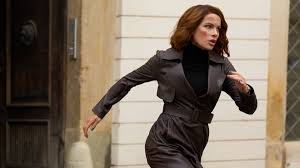
“Underworld” veteran Kate Beckinsale has decades of being a willowy beauty who can still make fight choreography work, however implausible.
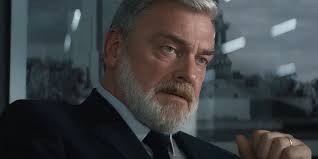
The late Ray Stevenson (“Kill the Irishman,” the “Thor” movies) finished off his career of heavies and sometimes heroic heavies with this Euro-thriller, set largely in France but shot in Croatia and Slovenia.
And director Pierre Morel is a genre veteran whose “District B19 introduced “parkour” to action cinema, and whose “Taken” launched Liam Neeson’s third act career in the genre.
But this movie, a pointless, static scramble for a stolen “file” with global peace/survival of Western civilization implications, is unsatisfying on almost every level.
“Canary Black,” a titular pun on a comic book vixen (Black Canary), reminds us that Morel has has no luck reinventing/reviving the careers of anyone not named Neeson. “Peppermint” didn’t re-launch Jennifer Garner’s return to action. “The Gunman” didn’t give Oscar winner Sean Penn a new path to box office relevence.
Stevenson has precious little “action” to carry here, and Beckinsale may be a well preserved, fit and fetching 50something. But the size of the brutes she beats and bowls over here just call attention to the improbality of it all, the necessary stunt doubling and the hair that’s never out of place, always sexily draped over one eye.
Beckinsale plays a recently married (Rupert Friend plays the spouse) CIA assassin blackmailed into stealing this file by the usual all-knowing, all-powerful mostly unseen menace played by Goran Kostic.
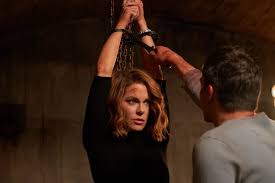
She will be compromised, robbed, with her husband kidnapped and her safe house sacked. The agency will consider her a traitor and the blackmailer will not make her task any easier, planting a landmine in one location she’s sure to track down.
Why, exactly? It makes a cool “How’s she get out of THIS?” moment, but makes no sense.
Her boss (Stevenson) will need to believe her story and keep his trigger-happy minions at arm’s length. SUV chases through the darkened Old World streets creates mayhem. And of course there’s an always-vaping handy hacker/gadget guru (Romina Tonkovic) to call on for help, “one last time.”
Stevenson gets a single, chewy line. “Cold war, digital war. Only the ass—es change.”
Beckinsale’s American spy wife-with-a-secret-life gets to brush off her unknowing Brit husband’s pleas for a puppy or two.
“I can’t be trusted to keep something alive.”
And we dash from monumental villainous penthouse complexes to CIA cover-businesses with the clean, pristine Architectural Digest touch of having the entire operation housed in glass cubicle offices.
Even that’s generic in the extreme.
The plot’s cut and pasted from a hundred other films, and while the budget allowed for a few “names” and a little charisma in the supporting cast, Morel, Beckinsale & Co. ignored Hitchcock’s genre epigram at their own peril.
“Good villains make good thrillers.”
Without conceiving, writing and charismatically casting that part, this iffy proposition was never going to work.

Rating: R, violence
Cast: Kate Beckinsale, Rupert Friend, Goran Kostic, Jay Hutchins, Romina Tonkovic and Ray Stevenson.
Credits: Directed by Pierre Moral, scripted by Matthew Kennedy. An MGM release on Amazon Prime.
Running time: 1:43



