
It’s got to be the most unusual of dilemmas, facing your twilight years as one of the most beloved figures in American pop culture.
James Earl Jones, a giant of the American theatre, Black theatre and screens big and small, carried that mantle with grace and pride for decades. The Grand Old Man of every medium he dabbled in died today at his home in Dutchess County, New York. Jones was 93.
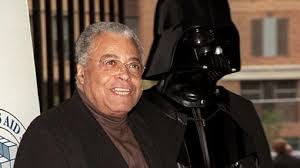
“Star Wars” made him an icon, and even led to a hilarious turn or two sending up his “Darth Vader” voice and image on “The Simpsons” and “The Big Bang Theory” and the like.
But in a long career that collected nearly 200 screen credits — he made his film debut in Kubrick’s “Dr. Strangelove, or How I learned to Stop Worrying and Love the Bomb (1964)” — Jones made it a point never to to act above the material, unless the material demanded it.
He played the first Black president (“The Man,” 1972) and embodied the bitter, racially discriminated-against boxing champion Jack Johnson in an Oscar-nominated turn in “The Great White Hope.”(1970)
His autobiography, “Voices and Silences,” is a read of rare frankness and vulnerability for a celebrity autobiography, something he generously attributed to his co-writer, Peggy Niven, when I interviewed him about the book some years back.
Jones was the first person I ever heard use the word “racialist” for someone a little too quick to play “the race card.” He used it about the great poet Maya Angelou when they worked on a play together — Jean Genet’s “The Blacks” — in about 1960 in his autobiography. And he tossed it out there again the first time I interviewed him, about “Field of Dreams” but talking up a particularly memorable role in a couple of episodes of “L.A Law.”
Jones was the son of African American theatre royalty, Robert Earl Jones. Dad leaving him with relatives may have contributed to his son’s lifelong stutter, something James Earl rarely let out on stage or the screen. But one reason James Earl had no patience for “racialists” was his awareness of his own struggle to conquer that stutter and father’s shadow to become one of the great performers and voices of his age — narrating everything under the sun, making Darth Vader his own even though he never came closer to the masked and caped villain than a recording booth.
I had the pleasure of interviewing several times over the years, with the first being memorable for how prickly he was. We were talking up his avuncular turn in “Field of Dreams,” but he was on set for “L.A. Law,” and staying in “racialist” character, he explained, laughing, years later. “The guy was a prick,” and that probably spilled over to that phone chat. It was rough going, in a “I don’t suffer fool journalists gladly” sense.
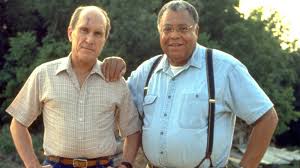
He was warmth-personified talking about “Sounds and Silences,” and the marvelous pairing with Robert Duvall titled “A Family Thing,” a simple dramedy that laid bare the absurdity of racism even in a pre Ancestry.com America. “We’re all EVERY different race,” he laughed in that sonorous roar of his.
Who wouldn’t want to be related to James Earl Jones?
His modesty, in spite of all he’d accomplished and experienced, was overwhelming. “Star Wars” or not, he was still “a thousand-aire” not a “millionaire,” he joked. He took on comedies (“Three Fugitives”) and authority figures (“The Hunt for Red October”) and classics of the American theater (including plays by August Wilson), a working actor first and last.
And as I noted, in recalling his glorious turn in 1987’s “Matewan,” he wasn’t above putting himself and his name on an indie film about the Mingo County War and early 1920s coal mining and getting that masterpiece made.
Race was a subtext of many of his most iconic performances, from “The Bingo Long Traveling All-Stars and Motor Kings” to “The Great White Hope.”
But he was a grand villain (“Conan the Barbarian”) and a fitting choice for a king (“Coming to America,” “The Lion King”). And he took every unexpected hit (“Sandlot,” “Star Wars”) with the same equanimity that he regarded his many prestige projects.
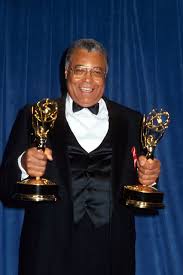
He was an Emmy, ACE and other award winner and collector of lifetime achievement awards.
He will be missed, and I dare say it won’t just be fans like me who mourn his passing. You got a taste of how beloved a presence he’s been back in 2011 when he deservedly collected an honorary Oscar, live from the London theater where he was co-starring with Vanessa Redgrave in “Driving Miss Daisy.”
Rest in peace, Mister Jones. Well done.



