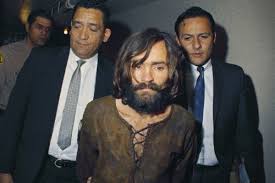

Netflixable? Master Documentarian Errol Morris takes on Manson’s Motives and MO — “Chaos: The Manson Murders”

Over fifty years after the Charles Manson/Tate-LaBianca murders, the “Helter Skelter” slaughter continues to entice and challenge the American psyche.

With all the books, all the films and TV miniseries about it, with even Quentin Tarantino weighing in with a wish fulfillment fantasy riff on the crimes committed “Once Upon a Time…in Hollywood,” it would seem impossible to find a fresh angle on the subject.

But America’s greatest documentarian, Errol Morris, got Netflix money to find one, and he did — “Motive.”

What if the narrative we’ve been fed, that cult leader Manson was obsessed with starting a race war and found legions of compliant 1960s hippies to buy in to his mad obsession with triggering that and join his “family,” was just spin? What if it was just what the “government wanted you to believe,” perhaps motivated by a coverup? Or a Hollywood prosecutor’s angle to help sell a book?

“Chaos: The Manson Murders” wades into possible CIA CHAOS operation connections and MK-ULTRA” experiments, FBI COINTELPRO motives, probing the role LSD was suspected of playing in “mind control” and Charles Manson’s post-prison, pre-murders metamorphisis into a guru.

It taps into the “establishment” paranoias of the time, the “Manchurian Candidate” thinking, a mysterious CIA Dr. “Jolly” with ties to — wait for it — The Kennedy Assassination.

The film is anchored around interviews with journalist/researcher Tom O’Neill as it is largely based on O’Neill’s book, “Chaos: Charles Manson, the CIA and the Secret History of the Sixties.”

“I know that what we were told,” O’Neill says with certainty, “ISN’T what happened.”

As Morris interrogates O’Neill, samples archival interviews (by the likes of Diane Sawyer, Tom Snyder and Geraldo Rivera) with Manson and others convicted of the murders, we start to wonder, as Morris himself must have, if O’Neill has a point.

We hear from a surviving prosecutor, Stephen Kay, who sounds quite reasonable in remaking the state’s case — that the Beatles were prophets in Manson’s mind, that he preached “Helter Skelter” chaos creation to his “family” at the Spahn Movie Ranch where they were holed up, that his racial paranoia drove his thinking and was absorbed by his minions, who painted “Pig” and “Helter Skelter” on the walls and doors of the crime scenes of their murder spree to make “it look like the Black Panthers” did it.

But hearing that the case’s lead prosecutor, Vincent Bugliosi, had his co-writer Curt Gentry in the courtroom, taking notes for the planned book, “Helter Skelter: The True Story of the Manson Murders,” which they knew they could sell the movie rights to, gives us doubts.

When Morris interviews murderous Family member Bobby Beausoleil by phone in prison, he lends a second voice to debunking the Bugliosi “narrative” this story has been sold by for over 50 years.

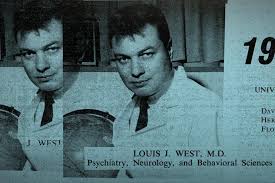
The Bugliosi bashing is joined by some odd connections between Manson, his San Francisco parole officer and a supposed CIA-experiment-linked “clinic” there during the ’67 “Summer of Love.”

O’Neill has lots of documentation underscoring his CIA theories, but throws a lot of such coincidences and connections against the wall. And while Morris occasionally catches him equivocating, backing down from The Big Conspiracy, we watch and wonder if the great documentarian has wholly bought in. Is there genuine “pushback” coming?

Is that moment where O’Neill, interviewed in an easy chair sitting in a pool of light, glimpses his dog passing behind him a comment on his “Will this dog hunt?” credibility?

Details pile up as we wait for some shoe to drop — the number of blunders in the murders and their planning by Manson & Co., and by the cops, who didn’t tie three separate blood-writing-on-the-wall killings in the same short period of time together.

We hear Manson’s music, a brooding folk crooner who sounds creepily like the “lost” and found singer Rodriguez, and piece together some (but not all) of the connections he made with the music industry in LA.

And as Morris asks more and more pointed questions off camera and we catch snippets of the classic film “The Manchurian Candidate,” we, like Morris, consider all our options.

Do we believe the now-dead, got-rich-on-the-case Bugliosi and his team? Do we think the FBI and CIA manipulated/trained/turned-loose Manson, or that they contorted the case to fit their “discredit the left/anti-war movement” agenda?

Or do we believe the guy who’s still in prison for murder, who unravels what has been pitched as “random” wanton slaughter as a series of mistaken addresses, misplaced grudges and crimes to cover up other crimes?

How important was “the music” in all of this?

Morris, the master interrogator, keeps his powder dry to let the assorted spokesfolks make their cases, only occasionally allowing the filmmaker’s incredulity into his finished film.

We’re meant to make our own judgement as to who makes the best case. As for me, let’s just say I left this film waiting for Bobby Beausoleil’s book on the subject.

Only Errol Morris could make a murderer in prison come off more credible than pretty much anybody else in a true crime documentary.

Rating: TV-MA, violence

Cast: Tom O’Neill, Charles Manson, Stephen Kay, Vincent Bugliosi, Bobby Beausoleil, Tex Watson, Bernard Crowe, Gregg Jakobson and Errol Morris

Credits: Directed by Errol Morris, based on the book by Tom O’Neill and Dan Piepenbring. A Netflix release.

Running time: 1:39

Posted in Reviews, previews, profiles and movie news | Tagged , , , , , , | Comments Off on Netflixable? Master Documentarian Errol Morris takes on Manson’s Motives and MO — “Chaos: The Manson Murders”

Movie Review: A boy’s “Camera” captures an Elegy to Age and a Dying Fishing Town

“Camera” is an indie ode to taking photographs on celluloid wrapped around a poignant coming of age story set in a fishing town that’s going down — emptying out and dying of old age.

It’s right in the wheelhouse of director Jay Silverman, whose “Saving Paradise” has similar sentimental themes and a setting about to lose its pencil factory. Filmed in scenic Morro Bay, and patient to the point of “slow,” “Camera” is lifted by the grace notes only seriously seasoned actors can add to your independent film.

Beau Bridges twinkles into the sunset and Bruce Davison rages rages “against the dying of the light” as two elders in tiny, shrinking Jasper’s Cove.

That’s where young Oscar (Miguel Gabriel) and his widowed mom (Jessica Parker Kennedy) have settled, a pretty spot with zero prospects — she waits on tables at the diner — and just enough kids for silent Oscar to face relentless bullying.

He walks around the village, silently observing, often through the waist level (“look down”) viewfinder of his classic Mamiya large format twin lens reflex camera. It’s broken, but he can still pretend it works.

Wandering into Eric’s fix-it shop brings the introverted child under the influence of widowed owner Eric (Bridges), a tinkerer with a bit of an edge, but a soft spot for kid who draws pictures of photos that he can’t capture with his busted camera. Eric learns, through Oscar’s limited collection of communication cards, the boy’s name. And he lends him a functioning Mamiya, with a roll of large format film in it, to go out and take real photos with.

“Great photographers think before they click,” he advises.

The scenes where the boy the locals have labeled “odd” “sees” the town — and occasionally photographs people who don’t want to be snapped — are pretty close to magical.

Oscar picks up on the weariness and despair — especially among the dying-out fishermen. They’re rude to Oscar’s waitress mom, pinning their hopes on elder statesman Frank Flynn (Davison) and his efforts to land a fishing cannery for a fishery and dining palette that probably have no need for it.

Frank’s in conflict with his pub-owning son, Dermot (Scott Partridge), who is leading efforts to lure a resort hotel to this gorgeous spot.

Manny (Jorge-Luis Pallo) is caught between the two, a last generation fisherman ready to give up and find something else to do.

As Oscar relishes learning from his grandfatherly new friend, his hustler uncle (Scotty Tovar) rolls in, another source of conflict in a village with no shortage of unhappy inhabitants. Tested by this, bullied and obsessed by this camera, Oscar can’t hope to grow up happy unless something changes.

“You can’t live your whole life behind a lens,” Eric advises.

Silverman, working from a just-edgy-enough-script by Jamie Murphy and Joseph Gamache, drifts from Oscar’s point of view to that of sentimental Eric and embittered Frank. The character arcs don’t have anyone taking a particularly long journey of the heart. And melodramatic “miracles” are for other, Hallmark Channel-bound versions of this tale.

It’s a slight story engagingly told, with through-the-viewfinder moments that take us back to the days when everyone wasn’t a photographer and the world wasn’t a sea of cell phone images, few of them as composed and well-considered as those captured here.

And Bridges and Davison preside over this elegy with intimate, subtle and affecting performances that lift the entire undertaking to the edge of poetry.

Rating: 16+, violence, drugs, profanity

Cast: Beau Bridges, Miguel Gabriel, Jessica Parker Kennedy, Jorge-Luis Pallo, Scotty Tovar, Ross Partridge and Bruce Davison.

Credits: Directed by Jay Silverman, scripted by Jamie Murphy and Joseph Gamache. A VMI Releasing film on Amazon Prime.

Running time: 1:52

Posted in Reviews, previews, profiles and movie news | Comments Off on Movie Review: A boy’s “Camera” captures an Elegy to Age and a Dying Fishing Town

Movie Preview: Bertolucci, Brando (Matt Dillon) and “Being Maria” Schneider make “Last Tango in Paris”

A notorious ’70s film got a lot more notorious in recent years as its co-star — the then young and new to film Maria Schneider, spoke of the ugliness and on camera abuse that went into making it.

Anamaria Vartolomei (“Happening”) has the title role, with Jessica Palud behind the camera and Matt Dillon playing Brando at his ugliest.

Guiseppe Maggio of “Out of My League” plays filmmaker Bernardo Bertolucci.

Kino Lorber has this biopic slated for Mar. 21 release.

Posted in Reviews, previews, profiles and movie news | Comments Off on Movie Preview: Bertolucci, Brando (Matt Dillon) and “Being Maria” Schneider make “Last Tango in Paris”

Movie Review: Kurdish Immigrant in Norway gets a Visit from “My Uncle Jens”

Akam is a young teacher who instructs kids from many cultures in the finer points of reading and writing in Norwegian, but who rarely gives a thought to his own Kurdish heritage. Until that night his the doorbell of his Oslo flat rings, and an uncle from the Old Country — Iran — stands outside in the rain until he lets him in “My Uncle Jens” a lightly charming, semi-serious Norwegian comedy about family, immigration and an immigrant’s guilt over the world they no longer know and those they left behind in it.

Uncle Khdr (Hamza Agooshi) is mysterious about his unannounced arrival. Teacher Akam (Peiman Azizpour) checks with his mother, who lives in Bergen, and she sounds downright insulted that the Iranian brother-in-law just showed up without letting anybody know he was coming.

And that name? “Too hard” for Norwegians to pronounce. He’ll go by “Uncle Jens” just to fit in.

But as he asserts his right to hospitality — “It’s our culture!” (in Kurdish and/or Norwegian with subtitles) — Uncle Jens starts to intimidate Akam, and make him wonder what the cagey, pushy and 60ish “stranger” is up to.

Writer/director Brwa Vahabpour’s debut feature touches on classic fish-out-of-water immigrant comedy tropes. Uncle Jens has a DVD, and his way of haggling with the locals to get a good price on a player preys on those famous Scandivanian manners. He stubbornly guilts a “yellow haired” guy into accepting a much lower price, and Akam is appalled.

Norwegian tolerance is tested further as Akam shares this three bedroom flat with Stian (Magnus B. Bjørlo Lysbakken) and yoga-obsessed Pernille (Theresa Frostad Eggesbø), who are young enough to bend over backwards about “How long is he staying?” and other inconveniences “Jens” presents to their routine and practices.

“Cultural differences” is all it takes to make them back down at every fresh violation of their roommate agreement.

Challenged by all he doesn’t know about his culture and heritage, dragged into meals at an Iranian restaurant, where politics and duty to his fellow countrymen — Kurdish or not — is hotly debated, Akam comes to resent Khdr and suspect him of getting into the country by means that could get him into undeserved trouble.

He questions an immigration services official (Sarah Francesca Brænne), allegedly for a “short story I’m writing,” learning about protocols, penalties and the like. But she’s a cute redhead and he finds himself drifting off task. “Love” could get in the way of his duty to family or her duty to her job.

Vahabpour’s picture has a hint of “cultural differences” about it in other ways. It unfolds slowly, almost leadenly in the middle acts. He takes little pains to explain/remind the viewer who the Kurds are and the role of the Peshmerga in Iranian life.

But his film stoically wrestles with how easily or uneasily “they” fit into Norwegian life and in the conflict between those who “got out” and came to this icy but welcoming country, and what might be faced by those left behind. And Vahabpour finds just enough fun in the culture clash and in Scandinavians’ struggle to reconcile their tolerant liberalism to “cultural traditions” that have nothing to do with skiing and Lutefisk for Christmas.

Rating: Unrated

Cast: Peiman Azizpour, Hamza Agooshi, Sarah Francesca Brænne, Theresa Frostad Eggesbø and Magnus B. Bjørlo Lysbakken

Credits: Scripted and directed by Brwa Vahabpour. A True Content/Tangaj production reviewed at SXSW.

Running time: 1:38

Posted in Reviews, previews, profiles and movie news | Tagged , , , , , , , | Comments Off on Movie Review: Kurdish Immigrant in Norway gets a Visit from “My Uncle Jens”

Movie Review: Chinese Mob Lawyer insists “I Did It My Way”

“I Did It My Way” is a Hong Kong cops-vs-Dark Web/Drug Trade thriller that unfolds like a tragic opera, one set to the strains of Frank Sinatra’s third biggest hit.

The action, emotions and sentimental turns in the plot are heightened, but never come close to being as over-the-top as they needed to be to come off. It’s a melodrama with cops threatening gangsters — mid SHOOT OUT, mind you — with “You’ve got 15 minutes to surrender!”

Fifteen minutes? That’s awfully generous.

A mobster screams about all he’s lost and cries in fury about why the cops and their families should be spared the same heartache.

Nobody bothers to tell him, “Because you’re a drug supplier and ruthless thug who’s tortured and executed cops, rivals and anyone in your gang who could tie you to crimes, and scores of drug users have died thanks to you.”

Cinematographer turned director Jason Kwan, who helmed the “Chasing the Dragon” thrillers, does little to lift his stock with this slick-looking/dumb sounding B-movie. But the suspense plays, I’ll give him that.

Veteran producer and star Andy Lau (“Internal Affairs,””House of Flying Daggers”) plays the heavy, a Hong Kong lawyer named George Lam who always gets the bad guys out of jail and always keeps the “Boss” beyond the reach of the cops.

Eddie Peng (“The Rescue”) plays the intrepid People’s Republican cop on the case, heading a cyber crimes task force who’s trying to protect China from the perils of Silk Road and the unchecked flood of Colombian drugs about to be unleashed by The Dark Web.

And Ka-Tung Lam of “Ip Man” and “Limbo” is the mob’s top lieutenant, trusted by Lawyer Lam, and a “mole” the cops have inside this vast criminal enterprise.

Suspense here is provided by “Will they find out who our family man/undercover cop is?”

The film’s poorly-handled “ticking clock” comes down to scenes of the gang’s hackers and Dark Web business facilitators staying one step ahead of the over-matched cyber-police trying to prevent a flood of cocaine and “Super Molly” from pouring into China.

The mob’s code, expressed by a lieutenant who’d rather die that talk, is “Glory to those who put honor over profit. Shame to those who put profit over honor.”

The cops? They debate their “sense of purpose” when they’re not letting Lam and others off, even though they have them in custody after bloody shootouts where policemen have died.

No, they didn’t catch them “red handed” and online, which is much more serious. Apparently.

“I Did It My Way” has one fine martial arts throwdown which stands out among the utterly generic shootouts, which are numerous.

The characters are thinly sketched in, even if the leads manage something approaching two dimensional.

The film reeks of sexism, never moreso than when the mob lawyer deigns to hide his much younger pregnant bride’s (Yase Liu) eyes as bullets and mayhem rain down on them. Hey, she knew what she was marrying into. And she’s been hiding her pregnant smoking from you, chief, in case you didn’t know.

Here, that’s what amounts to a minor sin. Because when everybody on every side (Let’s not forget the Westerners supplying this trade, Colombians among them) is doing it “their” way, there really isn’t any room for judgement, negotiation or any sort of moral high ground.

Rating: unrated, graphic violence, torture, profanity

Cast: Andy Lau, Ka-Tung Lam, Yase Liu, Philip Keung, Hedwig Tam, Simon Yam and Eddie Peng.

Credits: Directed by Jason Kwan, scripted by Juan Huang and Phoebe Zhao. A Well Go USA release.

Running time: 1:55

Posted in Reviews, previews, profiles and movie news | Tagged , , , , , , , | Comments Off on Movie Review: Chinese Mob Lawyer insists “I Did It My Way”

Movie Preview: The Revolution against the Plutocrats will be…a Sadie Sink musical? “O’Dessa”

Sink has the title role, a poor girl trapped in a dystopia run by Plutonovich (Murray Bartlett) with only her songs to fight the fascism.

Regina Hall, Kelvin Harrison Jr. and Mark Boone, Jr. also star in this one, which Searchlight is dropping on Hulu (March 20) rather than in theaters.

Pity. Still hope to see it.

Posted in Reviews, previews, profiles and movie news | Comments Off on Movie Preview: The Revolution against the Plutocrats will be…a Sadie Sink musical? “O’Dessa”

Series Preview: A David Oyelowo period piece comedy — “Government Cheese”

An inventor, family man, ex-con and career B&E specialist and all around hustler.

Doesn’t exactly fit how we’ve generally seen David Oyelowo (“Selma,””The Book of Clarence”) on screen, big or small.

Simone Missick co-stars. Yeah, I barely recognized Bokeem Woodbine in this amusing trailer to a series that takes its title from a Reagan Administration “give away,” but seems to be set earlier. Peak NASA earlier.

April 16, this comes to Apple TV+.

Posted in Reviews, previews, profiles and movie news | Comments Off on Series Preview: A David Oyelowo period piece comedy — “Government Cheese”

Classic Film Review: Not all Hackman “classics” are created equal — “The Domino Principle” (1977)

Some vintage cinema you begin watching with the idea that you’re to see a “classic” featuring an Oscar winner, a famed producer/director and a handful of legends of the big and small screen. And some of those movies remind you that the legal definition of a “classic” car in any state is any vehicle that’s over twenty-five years old.

That’s it. It’s just the age, not the quality, that denotes “classic.”

The passing of screen legend Gene Hackman just before this year’s Academy Awards ceremony added poignancy to that event’s annual “In Memoriam,” and sent a lot of cinephiles out beating the streaming service bushes for titles he starred in that we’d missed.

Hackman made a lot of servicable thrillers and dramas over the decades, and a couple of decent comedies. And, as those of us who check in on “Company Business,” “Split Decisions,” the later “Superman” films, “Lucky Lady,” “The Chamber” or “Welcome to Mooseport” can attest, he took on a lot of work that paid well, but which was never going to come off.

Crusading producer-director Stanley Kramer was the conscience of Hollywood for much of his career, touching on race (“The Defiant Ones,””Guess Who’s Coming to Dinner?”), American nativism and backwardness of the anti-science variety (“Inherit the Wind”) and the dangers of nuclear war (“On the Beach”).

It’s safe to say that by the time Kramer produced and directed “The Domino Principle,” he’d lost his fastball and maybe his changeup. A deathly dull post-Watergate “Big Conspiracy” thriller about how “they” find and control assassins and manipulate regional and world events through murder, it’s “Winter Kills” without the satiric laughs, “The Conversation” without suspense.

And Hackman, playing Tucker, aVietnam vet/sharpshooter in prison for murder, is at something less than his best in a creaky, corny, old fashioned riff on the paranoia that was rampant in the cinema of the ’70s.

Tucker apparently killed his wife’s ex and is facing 15 more years in prison for it, locked up with a veteran con (Mickey Rooney), trying to “read” his nervous warden (Ken Swofford) when he’s told he must take a “little talk” with this fellow “who might be able to help you.”

Tucker is wary of the suited Tagge (Richard Widmark), who is full of questions about his crime, his service, etc., and not forthcoming with many answers to Tucker’s queries. By the time he’s chatting with Tagge’s subordinate (Edward Albert), Tucker’s a tad testy.

“They,” as his cellmate refers to such men, offer to get Tucker out. What they “want” in return is something he can’t get out of them.

They do get him out, reunite him with his wife (Candice Bergen) and set them up under new identities in Central America. And then “they” come calling again. And this general (Eli Wallach) who works with them is all business.

The film’s most chilling scene comes when Tucker, throwing his leverage weight around one last time, tries to get out of whatever “deal” they have in mind. He’s dropped at a police station, only to have an LTD barrel past him with the muffled screams of his wife, her terrified face staring at him through the rear window as it shoots off into the night.

But “chilling” moments are few and far between, and that signature scene comes over an hour into this 100 minute thriller. From the get-go, Kramer gets it wrong.

The film opens with a creakily old-fashioned news photo/footage montage narrated by a stentorian voice who references Franz Kafka and conspiracies and asks “Who’s BEHIND them?” Kramer is hell-bent on throwing subtlety to the wind for this sermon on how “the world” really works.

“You’re a pair of hands” to wrap around a rifle, Rooney’s Spiventa warns. “They OWN you.”

Everything about the film feels studio system antiquated — from the canned sound effects to the looped dialogue of conversations filmed at a slight distance to theatricality of the performances.

Rooney’s presence parks the picture in an earlier epoch, but the actors alone cannot give it the grit and nervous energy of the great cinema of the ’70s.

The third act action features some pretty serious stunts and explosions, but Kramer dawdled away more than an hour to launch into the thrills, and by that time the viewer’s already called a code on this corpse.

Hackman did action pictures into his ’60s, and almost all of them were better than this. Curiously, he worked with the almost-as-tall-as-him Bergen three times, on “The Hunting Party,” “Bite the Bullet” and this one. Those are among Hackman’s worst reviewed outings.

Even the title of this adaptation of an Adam Kennedy novel seems ill-considered. It’s a clumsy variation of Cold War era “domino theory.”

“The bigger the stink, the more there is to cover up,” Widmark’s Tagge explains, rationalizing assassinations for those who want them to happen. “And the man who worries the most is the man who gave the original order. If he panics, the dominoes start to fall.”

If you want to see Big Conspiracies rendered in broader, more entertaining strokes, watch “Winter Kills.” And if you want to see the late great Gene Hackman in a prime part, pick another movie — almost any other movie — instead of “The Domino Principle,” which is one of his worst.

Rating: R, violence, profanity

Cast: Gene Hackman, Candice Bergen, Richard Widmark, Edward Albert, Eli Wallach and Mickey Rooney.

Credits: Directed by Stanley Kramer, scripted by Adam Kennedy, based on his novel. An AVCO Embassy release on Tubi, other streamers.

Running time: 1:40

Posted in Reviews, previews, profiles and movie news | Tagged , , , , , , , | Comments Off on Classic Film Review: Not all Hackman “classics” are created equal — “The Domino Principle” (1977)

Movie Preview: “A Nice Indian Boy” just wants to meet another “Nice Indian Boy”

Mindy Kaling produced this April 4 (Wayfarer) release about a gay Indian doctor who meets his dreamboat — a white man adopted by Indian parents.

This is a culture clash comedy STUFFED with POSSIBILITIES — Indian diaspora attitudes towards homosexuality, gay marriage, “cultural appropriation” issues with the new beau, the works.

Karan Soni and Jonathan Groff star in what looks to be a sweetheart of a rom-com.

Posted in Reviews, previews, profiles and movie news | Comments Off on Movie Preview: “A Nice Indian Boy” just wants to meet another “Nice Indian Boy”

Movie Preview: The Inner Life and Trials of a mild-mannered Librarian — “Darkest Miriam”

Britt Lower stars in this account of the loneliness of a profession which entails a lot more than just books.

Any public librarian in any town or city of any size deals with the cranky, loud elderly, unruly youth, the crazy, the homeless and the homeless and crazy.

What happens when a librarian finds love, just as she’s facing threats from some nut she deals with on her job?

Oddball Charlie Kaufman (“Adaptation,””I’m Thinking of Ending Things”) thought it was worth producing.

Posted in Reviews, previews, profiles and movie news | Comments Off on Movie Preview: The Inner Life and Trials of a mild-mannered Librarian — “Darkest Miriam”