Movie Review: Never buy a house from this Joker, “The Intruder”

intruder2.jpeg

Two truths quickly emerge from “The Intruder,” a thriller about buying a house from the wrong guy.

First, director Deon Taylor (“Traffik”) and editor Melissa Kent should be first chair at the symphony orchestra of their choosing. They play the audience like a fiddle, hurling close-ups, jarringly loud sound effects and scare-by-DEAFENING music at us when they want us to jump.

The finale is a beautifully shot, in-your-face/cage-fight-to-the-death, visceral and heart-pumping.

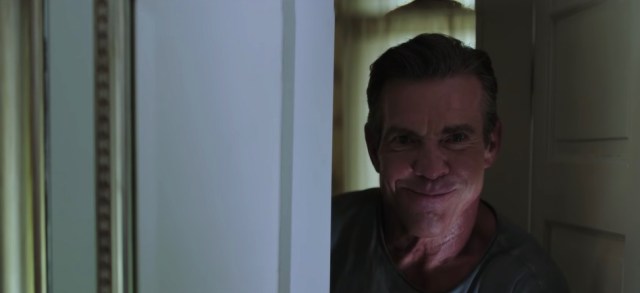
And the second truth is that Hollywood REALLY missed the boat by not giving Dennis Quaid a shot at playing The Joker. He’s had the demonic grin all along. He just had to apply it to the right demon.

Put those two together and you have the makings of an entirely too manipulative, too obvious couple-in-jeopardy thriller, and a fun “bad” movie.

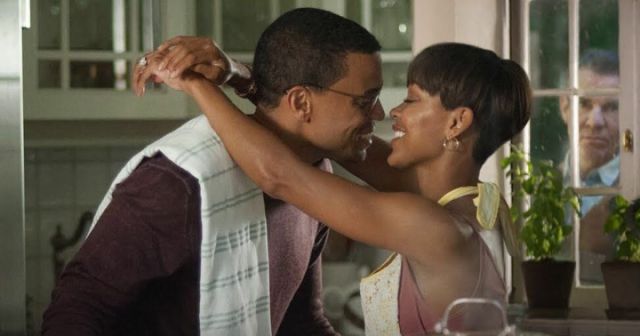
There is no doubt that his Charlie Peck is “not right” when young couple Anna (Meagan Good) and Scott (Micheal Ealy) get him to show his gorgeous, remote 1905 Napa Valley villa tucked into verdant acreage. They’re ready to leave their San Francisco penthouse for the country, and all they need is $3 million+ to buy the house that Anna falls in love with on first sight.

Scott? He was as shocked as we are that they meet Charlie (Quaid), the Master of Foxglove — beware of houses with names — as he shoots a deer, right in front of them.

“POW!”

Charlie, the “Bambi killer,” has an off-putting laugh, a grin that can change into a scowl in a flash and an uneasy vibe about him. Scott sees all the guns, catches a hint of racial tactlessness, notices the way the man dotes on his wife and identifies a threat.

Here’s a manly man of the country who loves this house, his guns, doing stuff with his hands and the woods. Scott’s in advertising. Yeah, he’s intimidated.

The script may set us up for a “She won’t see him the same way…at first” scenario familiar to such thrillers. Quaid ensures that she has to be blind not to pick up the signals, the lip-smacking malice that oozes out of Charlie as they start to redecorate “my house.”
intruder1.jpeg

Security cameras require drilling holes “in MY house,” and totally unnecessary.

“What is necessary is that I protect my way wife, Charlie.”

“Want to protect her? Get a gun!”

The performances mesh nicely, though Good (the “Think Like a Man” and “Anchor Man” movies) has little more to play than big, naive smiles for Charlie, and sex appeal. Ealy (“Sleeper Cell,” “For Colored Girls”) has a nice offhanded sarcasm about house buying, wife-pleasing, etc.

And Quaid is worth every cent they paid him to go Full Joker on these Frisco Buppies.

The paranoia rises with every time Charlie, supposedly “moving to Florida” to be with his daughter, drops in. The nerves fray every time he pops into the frame, unexpected, often accompanied by a LOUD music cue from Geoff Zanelli’s strident score.

That’s not totally fair. I mean, there might have been music and sound effects that I missed, because the more impressionable members of the audience I saw this with were shrieking in alarm at every string the fiddlers in charge played.

The very hallmarks of a “fun bad movie.”

2stars1

MPAA Rating: PG-13 for violence, terror, some sexuality, language and thematic elements

Cast: Meagan Good, Michael Ealy, Dennis Quaid

Credits:Directed by Deon Taylor, script by David Loughery . A Sony Screen Gems release.

Running time: 1:42

Posted in Reviews, previews, profiles and movie news | Comments Off on Movie Review: Never buy a house from this Joker, “The Intruder”

Documentary Review: In nature, “The Serengeti Rules” don’t just apply to Africa

serengeti2.jpeg

We take The Big Idea for granted these days, the way we do a lot of big ideas.

This notion that the balance of nature is thrown off when biodiversity is upset is widely accepted, but had to start somewhere. And it came to life with one college professor, wondering at the interconnection between predators and healthy ecosystems, watching a planet where such eco-systems had been altered and seemed to be crashing.

Writer Sean Carroll’s “The Serengeti Rules” is about that professor and the generation of 1960s scientists, his “dynasty” of researchers, who adapted and tested his “keystone species” theory in the far corners of the world.

Nicolas Brown’s film based on that book is a striking nature travelogue that breaks down the theory, recreates the test cases that first supported it and profiles the University of Washington professor, Bob Paine, and four influential researchers Carroll found who “went out into the world and followed their passions,” and grabbed hold of Paine’s “kick it and see” experiment.

That’s how Mary Power describes Paine’s idea of altering an eco-sytem, in the laboratory sense, to see see how things work by ‘changing nature.'”

Paine came up with the idea of a way to “test the importance of predators” globally by looking at tide pools with starfish.” If the “apex predator” of a tiny system disappears, the tidal pool or a prairie stream, an Aleutian Island, a part of a Venezuelan national park or the African Serengeti, everything changes, and usually for the worst. In a tidal pool, you can easily remove the starfish and observe what goes haywire when that happens.

Using actors in recreations, Brown shows how Power, drawn to studying the ecology of rivers and ponds in childhood, sees the role large mouth bass play in creating green, healthy algae-filled pools in an Oklahoma stream. They eat the minnows who would otherwise turn such pools barren.

Jim Estes became a Paine devotee as he undertook the study of sea otters on Amchitka Island, with no expertise in them or even the branch of science that encapsulates them. He noticed that the one island on Alaska’s Aleutians chain that had no otters left also had no large stands of kelp, the undersea “forests” that are a vital part of a diverse and healthy system in that part of the ocean.

No sea otters means there’s nothing to eat the urchins which devour the kelp.

John Terborgh, a lifelong “bird man” sees the desolation in parts of Venezuela caused when all the jaguars and eagles are gone. Species that eat leaf cutter ants are harmed, and the soaring ant populations in turn defoliate the place.

Tony Sinclair is the fellow who’s spent decades on the Serengeti, trying to figure out why Wildebeest populations were swelling, competing with buffalo, only to “level out” at a healthy, sustainable population for reasons the film reveals.

Often their areas of expertise did not line up with the work the various ecologists ended up doing. But observing, testing and studying are gifts they all shared as they grew in understanding this new idea, that predators at the top of the food chain “drive the system from the top down,” which Carroll notes was “a whole new way of looking at nature.”

The personal stories give the picture a sentimental side. Paine was interviewed just before his death in 2016. Power recalled her life changing, as a tween, when her myopia — she hadn’t yet gotten her first pair of glasses — disappeared when she got her first mask and snorkel and discovered the world in a pristine New Brunswick pond.

Terborgh remembers a trek to see a Bachman’s Warbler “a mythical bird” even in his in youth, and starting to wonder then at all the natural world going “under the bulldozer” and “about to disappear from the Earth.”

Sinclair, a Brit, is shown climbing aboard a zebra-disguised propeller plane to aid in a wildlife count as he wondered (back then), “Can a bird man study buffalo?”

Carroll’s hook, that these researchers who got their start in the “follow your bliss” 1960s, were more open to dabbling outside their specialties, more open to new ways of looking at nature and thus pioneers, is in here.

But what sticks with you are the beautiful shots of kelp forests and otters, ponds seen from the bottom up, Africa and South America both threatened and, when “corrected,” healed. That’s the upbeat message that Carroll identifies in the opening moments of the film.

And then there’s Paine’s mantra, worth repeating even though it’s been a part of our thinking about nature, ecology and the need for biodiversity.

“Predators DO matter”

3stars2

MPAA Rating: unrated

Cast: Tony Sinclair, Mary Power, John Terbough, Jim Estes, Bob Paine, Greg Kriek, Ashlyn Jade Lopez, Samantha Nugent, Johnathan Newport, Mathieson McCrae, Jaime Excell

Credits: Written and directed by Nicolas Brown. An Abramorama release.

Running tie: 1:24

Posted in Reviews, previews, profiles and movie news | Comments Off on Documentary Review: In nature, “The Serengeti Rules” don’t just apply to Africa

A new “Right Stuff?” For TV, with Leo producing, filming in Florida

right1.jpeg

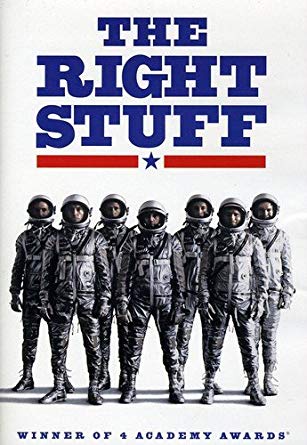
One of the great films of the ’80s, perhaps the greatest, is now coming to the small screen in series form.

Leonardo DiCaprio and folks with “Game of Thrones” credits are taking another shot at Tom Wolfe’s epic account of the prehistory and then early days of the U.S. space program.

The film version of “The Right Stuff” covered two major fields of play, the Edwards Air Force Base and Kennedy Space Center accounts of test pilots like Chuck Yeager (Edwards) and Co., and the Mercury Seven astronauts who rendered those guys obsolete with their own version of “The Right Stuff.”

The book allows for a lot more of that era to be covered than just the film’s focus on the personification of “The Right Stuff,” cool under pressure Yeager (played by Sam Shepard).

The Space Race, the sleepy ’50s displaced by the go go/can-do ’60s.

Unlike George Clooney’s remake of “Catch-22,” the TV version of “The Right Stuff” will be competing with a classic film, one of the greats of the genre, a career-maker for the likes of Ed Harris and Dennis Quaid. Mike Nichols’ “Catch-22” was a bust, ambitious and well cast, but not beloved the way Phil Kaufman’s space race epic was.


Posted in Reviews, previews, profiles and movie news | Comments Off on A new “Right Stuff?” For TV, with Leo producing, filming in Florida

Tabloids go after Daniel Craig with “trouble on the James Bond set” stories

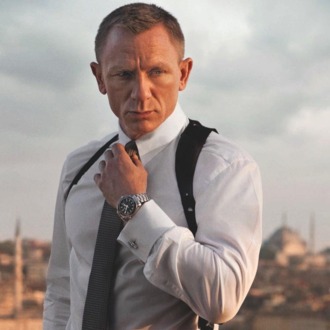
craig.jpgNot sure how much credence to lend to the stories in The Sun and The New York Post (linked below) about what a “pain in the arse” Daniel Craig is being about having to do one last James Bond film, when he assured us years ago that he was done after “Spectre.”
The stories remind one of the Craig bashing that emerged when he first took on the role, that he “cannot drive a stick shift” and the like (A “blonde” James Bond?) that came out during the filming of “Casino Royale.”

A lot of it was crap, then. One suspects some of it is crap now.

He is supposedly getting $66 million to do one last film, “Bond 25.”

After Danny Boyle’s script was abandoned and he left the project, they have no finished script and Cary Fukunaga directing. He did “Sin Nombre” and “Beasts of No Nation,” and got a screenwriter credit for adapting Steven King’s “It.”

No, he’s no Danny Boyle. Yet.

Craig supposedly has his own chef and personal physio therapist on the shoot (three weeks in Jamaica, Ian Fleming’s old stomping grounds, then on to London and elsewhere). These are all Travolta level demands perhaps made by a guy who was hoping Ms. Broccoli would finally give up and let him go. She did not.

Of course, every Bond actor gets hurt, so that last line item isn’t unreasonable. Even the Bonds who relied heavily on stunt men broke this or twisted that.

They’re shooting scenes in Jamaica with Jeffrey Wright, back as CIA agent Felix Letter. “Bond Girls” have been profiled.

But thanks to all the negative press, the bar has been lowered for expectations for the April 2020 untitled “Licensed Renewed” take on a retired agent brought back in. Smells like “On Her Majesty’s Secret Service” to me. In every way.

And truthfully, even that Bond wasn’t bad.


Posted in Reviews, previews, profiles and movie news | Comments Off on Tabloids go after Daniel Craig with “trouble on the James Bond set” stories

Preview: Daisy Ridley is Hamlet’s “Ophelia”

Let’s see if the woman they hung the “Star Wars” universe on has the goods for a new take on Hamlet’s sad, misused lover.

George MacKay is Hamlet, Prince of Denmark, in this, with Tom Felton as Laertes.

“Ophelia” also stars Naomi Watts as Queen Gertrude, Clive Owen as King Claudius and opens June 28 (and comes to VOD the same day, NOT a good sign for Daisy Ridley).

Posted in Reviews, previews, profiles and movie news | Comments Off on Preview: Daisy Ridley is Hamlet’s “Ophelia”

Next Screening? “The Intruder”

Dennis Quaid as the creepy old guy who never quite “moves on” after selling his house to Meegan Good and Michael Ealy.

Looks sinister enough. “The Intruder,” directed by Deon Taylor (“Traffik,” “Meet the Blacks”) opens Friday.

Posted in Reviews, previews, profiles and movie news | Comments Off on Next Screening? “The Intruder”

Movie Review: Beware the nasty nun of “The Convent”

convent1.jpg

Let’s not bury the glories of “The Convent” deep in the review, lost in the credits.

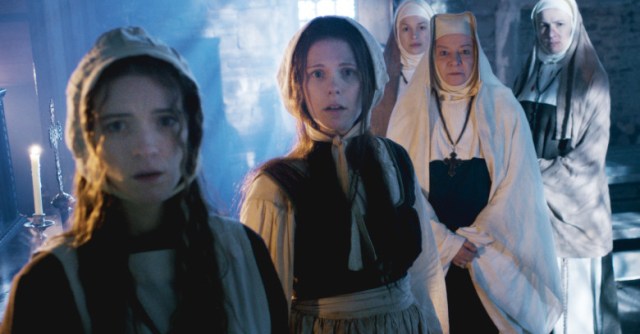
Production designers Maria Dagher, Tony Noble and Julian Luxton should take a bow for this beautifully conceived period piece ghost story.

And let’s not leave out art director Hattie Gent, whose color schemes bring the drab, superstitious and bloody 16th century of Britain to life, or cinematographer Neil Oseman, who paints this world in pools of darkness pierced by smoky-spooky beams of filtered sun or unfiltered moonlight.

The story may be horror-movie simple — novitiate nuns stuck in a “cursed” convent, hounded and slaughtered by…well, something. Or someone. Someones?

But makeup and prosthetic designer turned co-writer/director Paul Hyett‘s ghoulish stroll through the nasty nunnery is lifted by its detail, its grim in-your-face intimacy and very good performances.

No, legendary Canadian character actor Michael Ironside may not even attempt a British accent in his lone scene, a cameo as “The Magistrate” when sentences our heroine, “another necromancer,” to be “lashed to the stake and put to the blaze.” Everybody else picks up the slack.

And he manages the one thing his character must possess — loathsome cruelty.

Persephone, she is called. Named for the “Queen of the Underworld,” she (Hannah Arterton, yes the younger sister of Gemma Arterton) is to be burned as a witch, only to be “saved” by an outspoken, no-nonsense nun.

” I provide purpose to the fallen,” Sister Margaret (Katie Sheridan) of The Sisters of the Eucharist declares. “A penitent soul holds more value than kindling for a fire.”

Persephone and her “HEATHEN name, one that has no place here,” move in. But there’s something seriously off about this place. And not just the creepy Margaret or monstrous Mother Superior (Claire Higgins), the gloomy lighting that penetrates its cells, chapel and kitchen, day and night.

The infirmary is insanely busy. A fever? The villager Ellis (Freddy Carter), who pines for Catherine (Emily Tucker) is asking a lot of questions. All he gets is a warning from the scary Sister Margaret.

“A greater infection than their faith draws close!”

Hyett and cinematographer keep the camera even closer; tight shots for interiors, capturing the fright in close-ups and medium shots, even tighter shots outdoors (limiting how much 1659 production you have to “design” and decorate.

The dialogue has the tone of incantations — “Praise be! We have been blessed with a new soul!” “I have found only doubt between these walls!” “Must you find Perdition so…tempting?”

Yes, “There is a wretchedness here. Something lurks between these walls.” Persephone may be just the one, the “new soul” to figure out what it is.

convent2.jpeg

I can’t say it was all that scary, and that’s a major shortcoming for a horror movie.

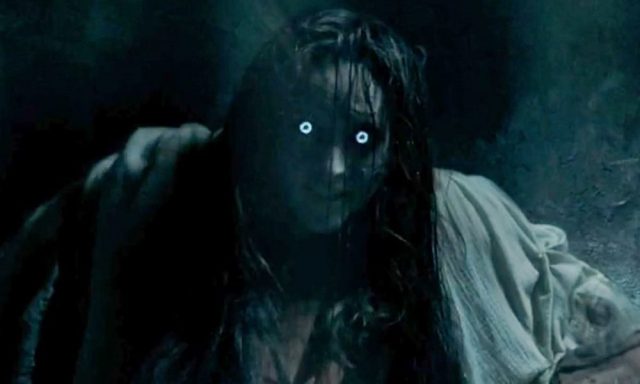
But that’s not all we drop in on these fright-fests for, is it? The effects — fiery/blurry nightmares, gathering blackness that suggests “an entity,” gore and blood and knives that draw such blood — are as good as a dimly-lit picture like this needs them to be.

And the eyes, the EYES!

Like most movies of this genre, you find yourself wishing it was better, more horrific or more despairing, maybe with a message of some sort, ANY sort.

We really only get to know Persephone, and can only fear for the other characters by type-casting — winsome, cute and cosseted young English roses, caught up in “a higher calling,” fated to be bloodied, doomed unless Persephone can figure out a way to save them.

Still, this cast gives fair value and the production team is punching WAY above its budget. Not bad.

2stars1

MPAA Rating: unrated, graphic violence, blood and gore

Cast: Hannah Arterton, Katie Sheridan, Rosie Day, Clare Higgins, Dilan Gwyn, Ania Marson and Michael Ironside

Credits:Directed by Paul Hyett, script by Conel Plamer and Paul Hyett. A Vertical Entertainment release.

Running time: 1:21

Posted in Reviews, previews, profiles and movie news | Comments Off on Movie Review: Beware the nasty nun of “The Convent”

Preview: “For the Birds” depicts a lady who really loves our feathered friends

Chickens, ducks, maybe our heroine Kathy loves her birds too much and can’t see the problems that have come from filling her life with feathered friends .

A lot of us can watch this trailer and think “I’ve seen this movie.” It might have been about the scores of Americans, mostly disabled, who feel the need to keep big, dangerous cats — tigers and lions — in their care.

Then there was “The Pig Lady of Bunnel” (Florida), whose life and mission and legal battles were captured in “When Pigs Fly.”

“For the Birds” opens June 14.

Posted in Reviews, previews, profiles and movie news | Comments Off on Preview: “For the Birds” depicts a lady who really loves our feathered friends

Documentary Review “Hesburgh” remembers a religious shaker and mover of the ’60s

hes.jpeg

It’s a disservice to refer to the documentary, “Hesburgh,” about the longtime president of the University of Notre Dame and American Catholic hero Theodore Hesburgh as a “hagiography.” But when a filmmaker cannot find anybody to say a bad thing about the man he’s profiling, the natural tendency is to wonder “Did he try?”

Patrick Creadon’s film still captures a complicated figure, a “liberal” only by the Catholic Church’s standards of the day, an “activist” in an almost forgotten forgotten use of the word, who hobnobbed with the rich and powerful and worked — always from the inside — for social justice, peace and progress from the Eisenhower 1950s to the Reagan Era ’80s.

Hesburgh died in 2015, had retired from Notre Dame in 1987 and his peak years in the public eye were half a century ago. Calling him “forgotten” outside of Catholic and Notre Dame circles isn’t entirely unfair. But few public figures carried the weight of his imprint on history more lightly and who was a role model not just for his ideals, but for how he embodied them.

They don’t make them like Father Ted Hesburgh any more. In a time when any news story that begins with “Catholic priest” brings an almost reflexive cringe, here was a “philosopher,” educator, visionary and priest who said Mass almost every day of his life and who represented a brand of tolerance that was rare “back then,” and is even rarer today.

Creadon (“I.O.U.S.A.” and “All Work All Play” were his) uses archival footage, old TV interviews, an early “60 Minutes” profile and the like, as well as interviews with colleagues, former students, relatives and contemporaries to paint an overwhelmingly flattering picture of a man who seemed to be in the thick of most of the great debates of America from the 1950s into the ’80s.

An actor (Maurice LaMarche) reads Hesburgh’s words from his memoirs, telling us he’d wanted to be a priest since age six, that the Church ordered him to pursue a Phd instead of becoming a military chaplain during World War II, a priest and academic groomed to take over the presidency of the University of Notre Dame in his late 30s.

We see how Father Ted asserted the school’s independence from the Vatican, fighting to make Notre Dame famous for something more than “Touchdown Jesus.” He cast off the free speech restrictions of the Catholic Church to build a great university.

He had to be an educator, an administrator and a fundraiser at Notre Dame. That put him in the company of big names in oil, the CEOs of airlines and Coca-Cola. And that, in turn, put him on the radar of the Eisenhower Administration, which appointed him to the first President’s Commission on Civil Rights back in 1957.

Much of the film is about the efforts of that commission — mostly older white men with an African American labor attorney member as well — to visit, investigate and when necessary subpoena officials in the Deep South (Judge and later Governor George Wallace among them) and elsewhere to find out why America was becoming, as Hesburgh noted at the time, “two societies, one white and the other black.”

Eisenhower had to intervene, at times, to get the Commission (which had African Americans on its staff) accommodations in places like Montgomery, Alabama. Even the commanding at the local military base refused to welcome them.

A telling TV moment? We see Hesburgh quietly challenging the racist Montgomery County, Alabama sheriff with “Has there ever been, in history, a good society built on fear?”

It’s sobering to see this GOP presidential commission digging into issues like segregation and voter suppression, and know which political party has been striving to bring back those days in the states of the former Confederacy today.

It still startles, 60 years later, seeing someone articulate “the problem” as bluntly as Hesburgh did, noting the “thousand times a day” a person of color dealt with discrimination in 1950s America, and how laughable the counter-arguments sounded to him.

“It’s like holding a man underwater and asking, ‘Why don’t you SWIM?'”

He was on stage with Rev. Martin Luther King Jr., deeply involved in the pursuit of nuclear disarmament (also dating from the Eisenhower years), a glad-hander who enjoyed cigars and bourbon with those he was trying to bring together at peace conferences or Civil Rights Commission meetings.

As Vatican envoy to nuclear disarmament talks in 1957, he started to see the avocation life was adding to his priesthood vocation — that of  “a mediator.”

The Latin word for “priest” is “bridge builder,” the former religion editor at Newsweek remarks. That was Hesburgh.

hesb

Creadon presents all this in a brisk, lively film, with lots of topical music underscoring the archival footage, and interviews with everyone from former students who became journalists or members of Congress to Ted Koppel and former Senator Alan Simpson.

The director only hints at the self-described “imperfect” side of Hesburgh, a man who like the Protestant Billy Graham was entirely too cozy with great power, — calling in favors from his old friend, Pope Paul VI, Jimmy Carter and others, living modestly enough on campus but recipient of many a “gift,” and more often ensconced in limos or jets on his way here or there, generally put up in fine hotels.

The film’s real “negatives” are reserved for the Vatican, which tried repeatedly to reign in Notre Dame and censor who the campus invited to speak or teach there, for JFK who “slow-walked” the recommendations of the Civil Rights Commission (Eisenhower didn’t even slow-walk them), for LBJ who “blackmailed” members of Congress to push through the landmark Civil Rights legislation of his presidency, and Richard Nixon, who is heard on tape sniping about Hesburgh (who turned on Nixon and the War in Vietnam, eventually).

But the portrait that emerges hasn’t been rendered inaccurate by history, and the film corrects the crime that such a noble public figure should be forgotten, especially in a time when “noble public figure” is almost an oxymoron.

3stars2

MPAA Rating: unrated

Cast: Theodore Hesburgh,  Nancy Pelosi, Tim Roemer, Ted Koppel

Credits: Patrick Creadon. Written by Nick Andert, Jerry Barca, William Neal. An O’Malley/Creadon release.

Running time: 1:46

Posted in Reviews, previews, profiles and movie news | Comments Off on Documentary Review “Hesburgh” remembers a religious shaker and mover of the ’60s

Movie Review: “Clara” looks for the answers to life’s BIGGEST questions

clara1.jpeg

Scientists are always so much more magnetic and articulate, have much more of a flare for the dramatic, in the movies.

But when they finally confirm there’s life, even intelligent life, elsewhere in the universe, you have to hope their spokesperson has a sense of occasion and finds the words that seem to come easily to actors performing as scientists in a screenplay written with drama in mind.

“Clara” is a movie with more than a few drama queens — and kings — in its scientists. It’s a science fiction love story ostensibly about a young astronomer so lost in the cosmos that he “can’t see the life happening right in front of” his eyes.

The love story falls a little short, but the scientific sense of “the moment” is often spot-on in this mixed-bag of a debut from Canadian writer-director Akash Sherman.

In a world on the brink, seemingly, of discovering life on other worlds, suggested by the film’s satellite launch prologue, Dr. Isaac Bruno (Patrick J. Adams) is consumed with being The Guy. As in, the person who finds proof first.

He is lost in the probabilities, seemingly broken-hearted and impatient that it hasn’t happened before now. He can’t even get through the college course he teaches or do the subservient work of assisting a lead scientist on another project without wandering off subject and into the search for planets that might support alien life.

What others things could be more important to humanity than answering the question. ‘Are we alone?'”

It gets him put on administrative leave. He’s barely got the time to be bitter about it. He’s that wrapped up in this hunt.

He advertises for an assistant, and is in the act of puffing up his chest to dismiss her out of hand, when she pulls a little saleswomanship to play the pity card.

He’s seen Clara (Troian Bellisario) painting the helix/black hole mural at the entrance to the space sciences building where he teaches. She has no real tech or science qualifications for the job. But “this is Eva,” she says, introducing her collie. “Could we get her a drink of water?”

Even Isaac can’t resist a cute dog. And once in the door, Clara’s more spiritual, more about “feeling” her “connection” to the universe, which is “too beautiful to just be random,” disarms him. Just a little.

“You can’t prove something based on a feeling.”

So even though they don’t see eye-to-eye about much, with her all moony about love and romantic connection and him “chemicals in the brain…serotonin,” they get to work and get to know each other.

Adams, of TV’s “Suits,” manages the distracted impatience hiding a big hurt that is Isaac’s MO with skill if not a lot of charisma.

Bellasario, of TV’s “Pretty Little Liars,” has more of that built into her character, a woman who collects unusual stones from all the strange and exotic places she’s been, a life lived on-the-fly — rootless.

As her past comes out, he picks up on the things she’s avoided because they were “not the right version of my life.” Isaac’s Big Secret is more predicable, but more slowly revealed.

There’s a lot of him turning his eyes away from the skies long enough to learn the right way to pronounce her name — “CLAH-ra.”

For her, there’s a steep learning curve.

“So, is that a planet there?”

“No.”

The “cute” moments romances typically serve up are few and far between, but there’s one electric one when they sneak into the computer lab where they can dial up a telescope after hours. Clara’s charms may be obvious, but her language skills when dealing with a Chilean astronomer reluctant to give up telescope time isn’t.

Novice writer-director Sherman seems hellbent on making the anti-“Big Bang Theory,” never doing much with the romance or the dog, always turning back to “The Fermi Paradox,” “The Drake Equation” that  “life should be common in our galaxy.”

The script seems most fascinated by the fact that there’s a new space telescope — TESS (Transiting Exoplanet Survey Satellite) — that makes the hunt for new planets easier. And the urgency everybody here seems to feel about this hunt is the impending launch of the space telescope that could “prove” intelligent life exists on some of those planets, the James Webb Space Telescope.

All of that is just as fascinating to me (I once interviewed SETI’s founder, Frank Drake, of “The Drake Equation.”) as it apparently is to Sherman.

But man, losing the love story — tossing it aside? That’s a fatal mistake, here. Bellasario is the most interesting character, the connection between the man of science and the woman of empathy (They both love Bob Dylan, at least.) may be a cliche, but it gives the picture heart and soul.

And without serving that promising part of the story more equally, without giving your most sympathetic actress her fair share of the story, the picture’s third act payoffs don’t pay off.

2stars1

MPAA Rating: unrated

Cast: Troian Bellasario, Patrick J. Adams, Will Bowes, Jennifer Dale, Ennis Esmer

Credits: Written and directed by Akash Sherman.  A Screen Media/Serendipity release.

Running time: 1:45

Posted in Reviews, previews, profiles and movie news | Comments Off on Movie Review: “Clara” looks for the answers to life’s BIGGEST questions