Movie Review: “A Violent Separation”

vio3

There isn’t a whole lot to “A Violent Separation,” a B-movie that reaches for “thriller” and never quite shakes “melodrama” in the process.

But it has tension and mild suspense built into its bones, and a topicality that you wonder if co-directors Michael and Kevin Goetz or screenwriter Michael Arkoff wholly appreciated.

It’s predicated on a set of anecdotal evidence truisms that a lot of us carry around with us. The first is that rural America’s gun culture consists of a lot of careless people, something that every weekend’s “accidental shooting” count bears out. And the second is that if anybody knows what it takes to get away with something, it’s a cop.

Ray and Norman Young (Ben Robson and Brenton Thwaites) are rural Missouri siblings who remain close despite the fact that one’s a cop and the other has more than his share of scrapes with the law on his record.

Ray’s a drinker, a brawler and a womanizer, which Abbey Campbell (Claire Holt) has to shrug off, if she harbors any thoughts of permanent attachment. She had a child with another man, so Ray figures “cheating begets cheating” and all’s fair in honky tonk romances.

Norman’s a boyish sheriff’s deputy who can never quite get around to sparking Abbey’s sister Frances (Alycia Debnam-Carey). She makes a joke about his handcuffs, and he’s too clueless to catch on. It’s like that.

The sisters and Abbey’s son live with their sickly dad (Gerald McRaney), keeping him going through his emphysema.

Like Ray, they have no visible means of support.

Then, after a night of drinking and boot-scooting at the Whisperin’ Pig Roadhouse, Abbey distracts Ray from the barmaid he’s been carrying on with (an Eastwood daughter, Francesca) and the bar fight he’s just gotten into over insults aimed at Abbey.

“I want you to teach me to shoot!”

That’s how “the accident” happens. That’s how “the cover-up” begins.

Norman’s boss, the sheriff (the great Ted Levine of “Monk” and “Silence of the Lambs”) isn’t the sort you can easily pull one over on. But Norman, knowing what he knows, does.

He’s at the sheriff’s elbow as the “timeline” is established, Frances and her Dad answer questions and things point just enough towards Ray that the sheriff feels the need to ask his deputy, “You OK with this?” Eventually, even the sheriff figures out “You’re too close and this don’t look right.”

And as the trail goes cold, the seasons change and the words of “Old Bob” (Cotton Yancey) shift the narrative’s gears.

“Sometimes you just gotta let time do its thing.”

The Goetzes make good use of the Louisiana-subbing-for-Missouri locations, the “Miller’s Crossing” pines without the overcast and Coen Brothers guiding sensibility to help them.

The dialogue can be chicken fried or hard boiled, but it’s generally of the predictable “I f—-d up, f—-d up bad!” variety.


There’s not a lot of urgency here, little sense that the walls are closing in on the brothers even as the clues start to point their way and you know and I know and they suspect that the sheriff must know, Frances might know and her old man sure as hell knows.

But “A Violent Separation” almost sustains itself with the understated performances, especially by Robson (TV’s “Animal Kingdom”), Debnam-Carey (“Fear the Walking Dead”), Holt (“Pretty Little Liars”) and Levine, the rare American in this mostly Aussie and British cast.

And there are some nice moments of routine but skilled parallel constructions — the first interrogation begins and we see cut-aways of the tracking dogs, who figure this thing out before anybody else does; one brother engages in a little carnal escape, and the other likewise manages the same.

You get what the filmmakers were going for, even if they can’t quite bring themselves to trimming this down to the leaner, less cluttered neo noir it wants to be.

1half-star

MPAA Rating: unrated, graphic violence, explicit sex, alcohol abuse, profanity.

Cast: Brenton Thwaites, Ben Robson, Alycia Debnam-Carey, Ted Levine, Gerald McRaney and Francesca Eastwood

Credits: Directed by Kevin Goetz and Michael Goetz, script by Michael Arkof   A Screen Media release.

Running time: 1:48

Posted in Reviews, previews, profiles and movie news | 2 Comments

Next Screening? “The Sun is Also a Star”

This one-day romance, with an anti-“wall” American melting pot subtext, opens Friday.

Looks sweet. Or bittersweet. Depending on how it breaks.

“The Sun is Also a Star” opens Thursday night.

Posted in Reviews, previews, profiles and movie news | Comments Off on Next Screening? “The Sun is Also a Star”

Movie Review: Fiennes remembers the glory that was Nureyev in “The White Crow”

crow1.jpeg

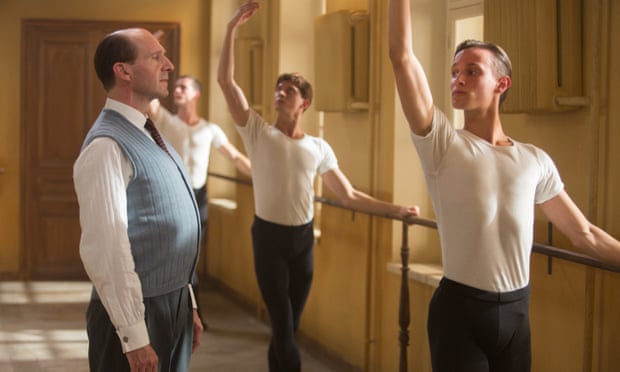
“The White Crow” is director Ralph Fiennes and screenwriter David Hare‘s stately and stolid screen biography of the great Soviet ballet dancer Rudolph Nureyev, zeroing in on events that led to his defection to the West in 1961.

It captures the graceful athleticism of this groundbreaking star of the modern ballet, and his personality — defiant, narcissistic, resentful and downright rude, an egomaniac who used that ego as his shield against Soviet repression and Russian classism.

The great ones always figure the sun rises and sets on their glory, and that’s the Nureyev (played by Ukrainian dancer Oleg Ivenko) we see here — mercurial, impulsive, inclined to answer a question with as much arrogance as he could muster, even in his earliest years as a professional.

“Did you dance tonight?”

“If I had danced, you would remember.”

Hare, who adapted “The Hours” and “The Reader” for the big screen, builds a conventional movie narrative out of this life, framing it with scenes in Paris in May of 1961, when the dancer was star of the Kirov Ballet and on his first trip to the West — the first trip of any Soviet dance company to the West since the end of WWII and the beginning of the Cold War.

Flashbacks, filmed in washed-out grey, black and white, show the hard times Nureyev grew up under, the grungy train where his mother gave birth, the pedantic martinets of Soviet era ballet schools. And in these scenes, some of them shown out of order, we see the artist emerge from “the system,” fighting it — complaining when none complain, defying where none defy.

As a teen starting his professional training late, he had no time for ordinary teachers. He insists on Pushkin (Fiennes, in a quiet and beautifully economical performance). And he gets him.

We meet Pushkin at his 1961 interrogation by the KGB, which wants to know what he knew and when he knew it.

“This is an attack on the Soviet Union!” they thunder.

“He had an explosion of character…he knows nothing of politics. It is about dance.”

In the fictive present, “Rudi” soaks up everything he can of Paris, taking up with a French dancer (Raphaël Personnaz), seeing the city with a well-connected Chilean woman (Adèle Exarchopoulos), leaning on her one minute, insulting her the next — as is his due.

He bristles at every KGB “minder” restraint on his movements as he waits for the Louvre to open, just so he can gaze up “The Raft of the Medusa,” the famous painting about an early 19th century shipwreck that turned survivors against each other in a dog-eat-dog battle for life.

A metaphor, you think? How Nureyev saw life in the USSR?

Ivenko looks a bit like Nureyev, lacking the beautiful angularity of his sharp features. He’s a fine approximation of “Rudi” in the dance as well, if not quite managing the star’s legendary leaps, the “hang time” that even Michael Jordan would have found hard to match.

“Belaya vorona,” we’re told, is an old Russian expression — “white crow,” as in the perpetual outsider. That was Nureyev, a homosexual in the state where the Socialist Man was no such thing.

We see the trauma of a childhood where his soldier-father finally shows up, years after his birth, and decides to toughen him up by leaving him in the snowy woods.

We only get a scene or two of his sexual tastes, about as many as we get of him being seduced by Pushkin’s savior/micro-managing wife (Chulpan Khamatova).

Ivenko is best in extreme closeups, Rudi waiting for his moment on stage — wholly realizing the stakes, craving the fame that might let him escape the drab, washed-out colors of Russia and his past, confident that such success — maybe even his coming defection (Planned? Or an impulse?) — is inevitable, fated.

“It’s not going to take long…until everyone knows who I am!”

How’re you going to keep’em down on the farms of the Union of Soviet Socialist Republics when they’ve seen the lights of Gay Paree?

crow2.jpeg

He stared down The State, which wanted to put him in his place, found his own means of improving his art (a colleague secretly filmed performances so he could see the errors in his line) and learned English (the film is in Russian, French and English, with English subtitles). Who knows? That might come in handy some day.

“The White Crow” has problems with pacing, and Fiennes, three films into his directing career, steps all over his films climax as if he can’t tell that’s what he’s doing.

But he gets good performances out of one and all, stages and shoots the dance sequences well enough and gives a nice grace note to the whole proceedings with his own performance — sentimental, dignified but without the “twinkle” that a lesser actor would have over-reached for.

And he reminds us of the natural, default mode of Czarist turned Soviet turned Putinesque Russia — a boot heel grinding down on freedom, bullying and control at every turn. It’s helpful for movie audiences to remember that, how much courage it took people like Nureyev to find a way out and to take it.

We remember even if the current colluding, cozying up to Russia “leader of the Free World” does not.

Nureyev certainly never forgot.

3stars2

MPAA Rating: R for some sexuality, graphic nudity, and language.

Cast: Oleg Ivenko, Ralph Fiennes, Adèle Exarchopoulos, Raphaël Personnaz, Calypso Valois

Credits: Directed by Ralph Fiennes, script by David Hare, based on the Julie Kavanagh biography of Rudolph Nuryev. A Sony Pictures Classics release.

Running time: 2:07

Posted in Reviews, previews, profiles and movie news | 2 Comments

Ask John Cusack anything about ‘Say Anything’ in Fort Lauderdale

This is an interesting tour, and I guess Cusack is of an age when it is appropriate. Show one of your best films, do a q & a afterwards, a victory lap for a beloved actor interacting with his fans. https://amp.local10.com/entertainment/movies/ask-john-cusack-anything-about-say-anything-in-fort-lauderdale

Posted in Reviews, previews, profiles and movie news | Comments Off on Ask John Cusack anything about ‘Say Anything’ in Fort Lauderdale

Werner Herzog to Receive Lifetime Honor From European Film Academy

He should be collecting these on a weekly basis. https://www.hollywoodreporter.com/news/werner-herzog-receive-lifetime-honor-european-film-academy-1209983

Posted in Reviews, previews, profiles and movie news | Comments Off on Werner Herzog to Receive Lifetime Honor From European Film Academy

Preview: There’s no escaping “Clownado!”

Weirdest trailer I have posted this year, and may it remain the weirdest all the way through Dec. 31.

C’mon. Who’s afraid of clowns?

Posted in Reviews, previews, profiles and movie news | Comments Off on Preview: There’s no escaping “Clownado!”

BOX OFFICE: “Avengers” edge “Pikachu” $63 to $58

Three non infantile-blockbusters opened in addition to the two moneymakers.

“The Hustle” made out the best of that trio, “Poms” lured a million or so seniors, “Tolkien” stayed buried in Middle Earth.

$13.5 for “Hustle,” under $6 for “Poms” and even less for “Tolkien.”

“Intruder” is now at $21, “Long Shot” is closing in on $20. “UglyDolls” is still a bomb.

https://www.boxofficemojo.com/weekend/chart/

Posted in Reviews, previews, profiles and movie news | Comments Off on BOX OFFICE: “Avengers” edge “Pikachu” $63 to $58

Documentary Review: More Moe Berg is served up in “The Spy Behind Home Plate”

Baseball Players Traveling to Japan for Exhibition Game

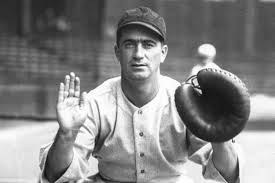
Did you see the game but not great big screen biography, “The Catcher was a Spy,” starring Paul Rudd as the mysterious baseball player turned pre-CIA agent Moe Berg last year?

Well, here’s another chance — one among MANY — to learn about Berg, who has been the subject of documentaries long and short, on ESPN and elsewhere.

“The Spy Behind Home Plate” is a non-fiction documentary treatment that provides mountains of context, to the extent it gets sidetracked. It lacks a narrator and thus unfolds in a blizzard of testimonials, historians, relatives, baseball colleagues and others who are passed off as experts on Berg.

There are too many of them, and several come off as people who were fed portions of the story to tell. Yes, baseball’s Bud Selig and Jerry Reinsdorf — executives, with Selig a former commissioner — have certainly heard Berg’s story, and maybe connected to it as they are, like Berg, Jewish. But “experts?” The film is cluttered with people whose authority on the subject lacks the weight of Nicholas Dawidoff, who appears here and wrote the biography in which “The Catcher was a Spy” was based on.

Director Aviva Kempner has made a career in historical films about Jews in American pop culture such as “The Life and Times of Hank Greenberg,” about the most famous Jewish ballplayer of his era, and “Yoo-Hoo, Mrs. Goldberg,” about an almost-forgotten ethnic star of early American television.

Here, she pushes out a film with seemingly more authority than “Catcher was a Spy,” but that lacks the clarity of a narrator, and needed one. And truthfully, she doesn’t fill in much more of the “mystery” than the Paul Rudd film did.

We hear “He loved being a mystery…he would disappear after games,” that Berg, who played for several teams in an indifferent big league career that lasted 15 years, was “a loner” who loved to travel and longed to “experience the world.”

If you’ve ever heard anything about Morris Berg, you’ll know he had degrees from Princeton and Columbia Law, that he was “the brainiest guy in baseball,” that he was a surprising quiz show star of the 1930s, that he “spoke seven languages, and couldn’t hit in any of’em.” “Spy Behind the Plate” does an excellent job of underscoring Berg’s real value as a ballplayer — great defense behind the plate, excellent at handling pitchers.

I didn’t know he started out as a shortstop, or that the Brooklyn Robins (Dodgers) wanted Berg, straight out of college, because he was Jewish and he’d be a draw in Brooklyn’s large Jewish community.

We get a picture of the family he grew up in, his self-made immigrant/pharmacist father who pushed all his children into prestigious professions, but whose son Morris balked at that and took up America’s passtime.

None of the Berg siblings married. Telling? The movie only mentions it.

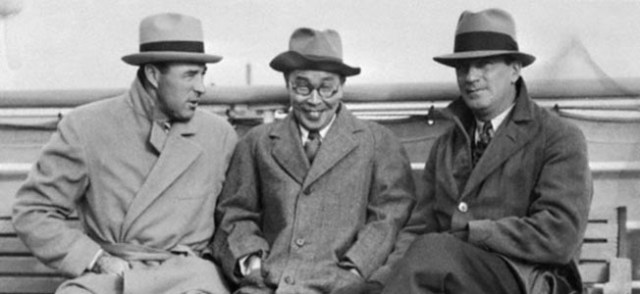
Kempner’s best sequence is that recalling Berg’s first alleged brush with espionage, a 1934 All Star team exhibition trip through militarized World War II Japan (Remember, Japan had already invaded Manchuria).

Somehow, the great-glove/can’t field Berg ended up on that team with Babe Ruth (whom he got on great with). For some reason, Berg collected a letter from the U.S. Secretary of State to cover his activities on the tour through the secretive country.

Kempner uses still photos and actual 16mm footage Berg took while there to show how he was going places (in native Japanese garb) and filming things our future adversaries strictly forbade.

By the time his ball playing career was over, World War II was going and the O.S.S., the future C.I.A., had use for the guy who sent the government his 1934 footage after Dec. 7, 1941. It was supposedly shown to the Doolittle Raid pilots and crew.

“The Spy Behind the Plate” is an impatient film with an abrupt beginning and a generally hurried parade of interview subjects, as if Kempner was anxious to get this out the door before “The Catcher was a Spy” came out, or was irritated when she couldn’t.

With all the people who knew him, were related to him or who interviewed him (sports columnists and others), the portrait that emerges doesn’t really get at what drove Berg.

The intimate material and truly revealing anecdotes are rare.

moe1.jpeg

So Kempner serves up frequent and lengthy sidebars — about William Donovan’s formation of the Office of Strategic Services (O.S.S.), Marlene Dietrich’s recruitment to the O.S.S., about the A-bomb “Manhattan Project,” the spy career of James Bond creator Ian Fleming, for Pete’s sake.

It’s as if she expects her viewers to know Berg’s story (with good reason) and felt compelled to go beyond that to build him up.

The knowledge that he was awarded the Medal of Freedom makes that burnishing unnecessary.

I liked hearing the clips of Berg on the quiz show “Information Please,” seeing the footage from Japan (he went twice, in 1932 and ’34), learning that Berg was pals with Babe Ruth.

And I have enjoyed Kempner’s earlier films.

But “The Spy Behind the Plate” feels played, stuffed with filler, overrun with experts of varying merit, and doesn’t break enough new ground to warrant the effort.

2half-star6

MPAA Rating: unrated

Credits: Directed by Aviva Kempner. A Ciesla Foundation release.

Running time: 1:41

Posted in Reviews, previews, profiles and movie news | Comments Off on Documentary Review: More Moe Berg is served up in “The Spy Behind Home Plate”

Bond 25 returns 007 to his birthplace, Jamaica


This past couple of weeks’ press events and production stills of Daniel Craig getting back into the James Bond saddle for location shots have gotten me thinking about the long history of the franchise and why the 25th film in it, quite rightly, kicks off in the place where 007 was born — on Ian Fleming’s typewriter.

I’ve gone down the Youtube rabbit hole, digging through the archives of DVD features docs and BBC productions to look into Ian Fleming’s career, his building of his seasonal getaway, Goldeneye, and the choice of “Dr. No” as the first book in the James Bond series to be filmed when it wasn’t the first novel on the character which Fleming wrote and published.

This “Making of ‘Dr. No'” doc seemed like a good place to start. It reminds us of the blind luck of casting Sean Connery in the role (“David Niven” was one of Fleming’s suggestions, and Cary Grant was floated about. The producers wanted Roger Moore, who had that Grant and Niven lightness about him, but he was tied up with TV at the time.)


Then there’s this delicious BBC doc hosted by Joanna Lumley, one-time Bond Girl and always Absolutely Fabulous.

She has a lot of fun digging through Fleming’s past, taking us to the Whitehall Office where he got his first taste of spying during WWII, visiting Goldeneye, chatting up experts. It was filmed and shown just before “Quantum of Solace” was released.

All these details Fleming, pre-product placement, put into the books — some of which made it into the films. Bond’s favorite gin, like Fleming’s? “Booth’s High & Dry” (no longer bottled, alas. I checked.) His choice of lighters, suits, shirts, watches, etc., all poured into the package both by Fleming and by the team that pulled together “Dr. No.”

It probably doesn’t matter than the great Danny Boyle quit the new film because the producers didn’t buy into the “new direction” and “interesting take” he had on Bond. Well, maybe it does.

And it certainly matters than Daniel Craig treated the last film, “Spectre,” as his curtain call and apparently only reluctantly came back into the series “one last time” — resulting in endless “diva on the set” stories.

It’s not a good thing that they started without a polished script, and that the whole affair is being pieced together almost on the fly.

bondboatBut starting in Jamaica, parking the “retired” Bond there — living happily, sailing as much as the wind permits — to open the new film? That’s perfect, and should get all involved back into the 007 swing. It inspired Fleming to conjure him up and Jamaica could inspire Craig & Co. to embrace that “licensed to kill” vibe one more time.

 

Posted in Reviews, previews, profiles and movie news | Comments Off on Bond 25 returns 007 to his birthplace, Jamaica

Movie Theater Traumatizes Children by Accidentally Playing ‘La Llorona’ Instead of ‘Detective Pikachu’

https://www.indiewire.com/2019/05/movie-theater-plays-la-llorona-detective-pikachu-1202139835/amp/

Posted in Reviews, previews, profiles and movie news | Comments Off on Movie Theater Traumatizes Children by Accidentally Playing ‘La Llorona’ Instead of ‘Detective Pikachu’