Classic Film Review: How is “The Age of Innocence” (1993) aging?

Revisiting “The Age of Innocence” for the first time in many years doesn’t erase first impressions of the film. But it does make you marvel at the many times Martin Scorsese chose to tackle ambitious projects far removed from the American Master’s comfort zone.

Back in 1993, much was made of the movie maker who seemed married to the mob taking on a passions-never-allowed-to-boil Edith Wharton romance, a 19th century period piece of baroque wealth in an emerging New York.

But he’s been breaking out of his pigeon hole all along, as the great ones inevitably do. “Hugo,” “The Aviator,” “Kundun,” “Silence,” “The Last Temptation of Christ, and “Boxcar Bertha” — Scorsese has always reached beyond the cinema he’s known for.

He’s not shied away from “period” even in stories and milieus more in his wheelhouse, either — “Raging Bull,” “Gangs of New York,” “Shutter Island.”

“Innocence” came out in the middle on the ongoing Jane Austen mania, and suffered by comparison. It’s dry and not the least bit witty. The cutting, gossipy dialogue is cruel, not clever. The confessions of passion PBS soap operatic.

“I just want us to be together!”

“I can’t be your wife, Newland! Is it your idea that I should live with you as your mistress?”

That’s Wharton’s take on America’s emerging aristocracy of wealth — bluff, blunt to the point of inelegant.

But the exposition and gossip-heavy exchanges felt dated then and more so now, with characters repeating the phrase that’s just been uttered to them in mock movie melodrama quaintness. Scorsese’s weakest scripts — “Gangs of New York,” “Silence” and “Innocence” — were co-written by his longtime collaborator, critic-turned-screenwriter Jay Cocks.

The 1870s to @1910 story concerns the interlocking circles of high-born attorney Newland Archer (Daniel Day-Lewis) and his beloved, May Welland (Winona Ryder), and how those are interrupted when a beautiful but woebegone relation of the Wellands, Countess Ellen Olenska (Michelle Pfeiffer), returns home from an unhappy marriage to lesser European nobility.

She’s heading for a divorce, and Newland — engaged and eventually married to the dull but charming May — is overcome by the spark, smile, vulnerability and sexual heat of the smouldering Countess.

Ryder, 22 when “Innocence” came out, seemed miscast way back when. But the remove of several decades let you see the inner resources and grit of a character whose surface is studied dullness.

“What are you reading?”

“Oh, it’s a book about Japan.”

“Why?”

As if she can’t think of a reason anyone would be curious about the world beyond their reach.

Ryder was an “old” 20something, one of the greatest actresses of her generation. A bit out of place, here, but not as bothersome.

I was more taken aback by how the great Daniel Day-Lewis comes off, starchy and “proper” which is very much in character, but fey and unmanly. The robber baron classes flattered themselves on their American masculinity (back then, anyway), and he seems off — Dr. Zhivago soft.

The supporting cast has a couple of highlights — Norman Lloyd and Miriam Margolyes were heralded at the time of release. But too many smaller roles were forgettably cast, with few of the caliber of Michael Gough, Richard E. Grant, Mary Beth Hurt (a single scene) or Geraldine Chaplin brought on board, and even that illustrious quartet was left with little to do other than don evening wear, light cigars and decorate the immaculately recreated sets.

Eagle-eyed viewers will spot future Oscar nominee June Squibb (“About Schmidt,” “Nebraska”) as a maid.

The nouveau riche gaucherie is more subtle than you’d like — a J.M.W. Turner reproduction hanging here, a quartet of suited-servants carrying Granny (Margolyes) in a sedan chair there.

Still, Scorsese magnificently captures the provocative allure of removing a lady’s glove before kissing her hand, even if Day-Lewis takes that “sex scene” to an amusingly voracious pitch.

It’s good to remember how marvelous Pfeiffer could be in a period piece and why she attained her status as the sexy dramatic lead of her day.

Some regard “The Age of Innocence” as essential American cinema or essential Scorsese. I don’t. It’s arid when it should have a hint of “droll,” theatrical and stagey when we’re meant to believe these people “live” in this world.

Scorsese never lets us forget he’s an outsider looking in, tiptoeing through the material as if he’s afraid of bumping the porcelain off the lacquered “oriental” end tables and pedestals.

stars2

MPAA Rating: PG, for thematic elements and mild profanity.

Cast: Daniel Day-Lewis, Michelle Pfeiffer, Winona Ryder, Geraldine Chaplin, Richard E. Grant, Stuart Wilson, Mary Beth Hurt, Norman Lloyd and Miriam Margolyes.

Credits: Directed by Martin Scorsese, script by Jay Cocks and Martin Scorsese. A Columbia release.

Running time: 2:19

Posted in Reviews, previews, profiles and movie news | Comments Off on Classic Film Review: How is “The Age of Innocence” (1993) aging?

Bingeworthy? “Never Have I Ever” figured Mindy Kaling had a high school sitcom in her

You’d expect Mindy Kaling’s take on a teens-on-the-make sitcom to be edgy — kids and teachers lobbing profanity back and forth across the net, an Indian-American teen daring to call her mother a “bitch” in mid-tantrum, a 15 year-old brazenly propositioning the hottest guy in school.

And you’d expect it to be more diverse than your typical sitcom. Her (and “Mindy Project” co-creator Lang Fisher) version of Sherman Oaks, California is almost WASP free. It’s a sea of Asian and Hispanic kids, African American authority figures (a principal, a shrink) with a Jewish nemesis and a too-woke-for-words Jewish teacher for good measure.

Today’s history project, “What if Anne Frank had a cell phone?”

With Kaling involved, if you thought it would be funnier than “Never Have I Ever” turns out to be, you wouldn’t be alone. The dollops of “sweet” and rare laughs are especially hard to come by in the first few episodes.

As one character is in the process of coming to terms with her sexuality, the phrase “It gets better” comes to mind. But not much. Not enough.

It’s about 15 year-old Devi (Maitreyi Ramakrishnan), who is set up to be “the smart Asian kid” but one with a terrible temper. If only we saw more of it.

Devi’s got a reason to be cranky. She lost her dad at last year’s spring orchestra concert (she plays the harp), lost her own ability to walk for a couple of months after that, perhaps due to the shock.

And, curse of curses in teen rom-com life, she’s still a virgin.

Starting the new term, she’s no longer “FDR” (wheelchair bound) and she declares “Sophomore year is going to be OUR year” to drama dork pal Eleanor (Ramona Young) and tech-nerd Fabiola (Lee Rodriguez). Ever seen a high school rom-com that DIDN’T use that line?

Devi takes a lot of chewing-out from her dermatologist mom (Poorna Jagannathan), copes with the too-gorgeous college cousin Kamala finishing up her Phd and living with them (Richa Moorjani), and occasionally sees her dead dad, and not just in flashbacks.

At school, she renews her war with smart jerk/rival Ben (Jaren Lewison, amusingly annoying) and crushes on the school dreamboat, the hopelessly cut Paxton Hall-Yoshiba (Darren Barnet). After school is when she sometimes sees her shrink (Niecy Nash).

And narrating her story, for reasons the series gets into, is tantrum-tossing tennis great John McEnroe. Little bursts of profanity don’t change the “Wonder Years” cloying nature of the voice-over. Devi has her moments of temper, which Mr. Mac-Obvious labels, “THAT’s how we hotheads boil over.”

It makes little chronological sense that anybody in that house would have ever been into John McEnroe, whose tennis career wound down in the early ’90s. Her family might have come to America in 2001, with Devi born a few years later. But her dad doesn’t look 60 or even 50, so how’s that McEnroe connection work?

Mac is there when Devi’s full-court-press on Paxton bears fruit in “Never Have I Ever…had sex with Paxton Hall-Yoshida.” That’s how the episodes are titled.

“Well, this was certainly not the walk of shame she was hoping for.”

The jokes are of the “Is that a skirt, or a headband?” “You look like an Asian Kardashian!” variety — tired, horny teenager takes. Those comparing “Never” to the John Hughes classics of the ’80s are missing the mark by several years. This is closer to “American Pie” — some cuteness, a lot of (lite) crude, a little heart here and there — always heavy on the hormones.

All Devi wants to be is a “normal teenager.”

“Normal teenagers wind up in prison, or worse — working at Jersey Mike’s!”

Hilarious.

Cousin Kamala’s story includes efforts to arrange a marriage back in India while hiding a boyfriend in the States (“Big Bang Theory” much?), and there are story lines about a “spirit animal” Devi thinks is her dad and the awakening sexual preferences in one of her friends.

The casting is, frankly, bland. Brag about the talent hunt and seeing thousands of faces if you want, but when your lead is charisma-starved and prone to rushing her lines, that sets the tone for the rest of the cast. She looks her age, which gives an underage jolt to her assertive bursts of brazenness.

The supporting players can’t be so interesting, natural or funny that they show her up, so her BFFs, toy boy and even rival collectively whisper “Not a breakout star in the lot.”

Even Niecy Nash is less interesting than normal, unable to summon up any dudgeon when Devi declares to her shrink that “I’m ready to BONE.”

“If you were ready to bone, you would use the phrase ‘ready to bone.'”

As I say, the show starts to find its sentimental footing by episodes three and four. But there’s little traction with this writing and this cast. Compare “Never Have I Ever” to the sparkling and sometimes raunchy teen comedy movies Netflix makes, “The Kissing Booth,” “To All the Boys I’ve Loved” before, to or other Netflix sitcoms. This falls closer to the formulaic “One Day at a Time” reboot than “Unbreakable Kimmy Schmidt.”

Even the target audience could catch on that this isn’t destination streaming. It’s filler with a hint of spice to it — five hours worth.

Whatever the thin charms of the characters or glories of putting characters on the screen that a lot of different American kids can see and say, “Hey, she/he looks like me,” you’d have to be a pretty undiscriminating kid to not wish “looks like me” was a lot funnier.

2stars1

MPAA Rating: TV-14, teen drinking, sex talk, profanity

Cast: Maitreyi Ramakrishnan, Darren Barnet, Lee Rodriguez, Richa Moorjani, Poorna Jagannathan, Ramona Young, Jaren Lewison, and the voice of John McEnroe.

Credits: Created by Lang Fisher and Mindy Kaling.  A Netflix original series.

Running time:  10 episodes @ :30 each.

Posted in Reviews, previews, profiles and movie news | 5 Comments

Documentary Review: Remembering The Last Poets, Black writers not “Scared of Revolution”


“Scared of Revolution” takes us back to the pre-history of hip-hop, to The Last Poets, young African American slam poets (before that was a thing) who got up on stage, accompanied by a conga player or an ensemble, and spoke their truth.

It’s a profile of Umar Bin Hassan, Akron native, Baltimorean now — who came to fame alongside Abiodun Oyewole, Sulaiman El-Hadi and others in the New York of the late ’60s and early ’70s.They released a seminal, self-titled LP — just poets in performance with a drummer — that became a hit and influenced Gil-Scott Heron (“The Revolution Will Not Be Televised”) and the rap and hip hop that were born at the end of the ’70s, having their works sampled on the records of Biggie Smalls and others.lastThe film takes its title from the most famous poem by Hassan (born Jerome Huling in 1948), a biting and hilarious piece titled “N—–s are Scared of Revolution.”“N—–s are scared of revolution

But n—–s shouldn’t be scared of revolution
Because revolution is nothing but change
And all n—–s do is change”
Daniel Krikke’s intimate portrait captures Hassan on stage, follows him around Baltimore and takes a ride with him west to Akron, Ohio, where he has family but where little remains of the “Little Harlem” where he learned to rhyme as a shoeshine in the 1950s.Fellow Last Poets, musical Bill Laswell, Hassan’s mother, sister, daughters and grandchildren make appearances and make the case for his place as a grandfather of hip hop, his “astonishing and enduring influence.”The arc of the group’s fame is discussed, how their motives were “to be the purest (idealized) revolutionary poets,” and how “their politics became show business.”The pitfalls of celebrity present themselves — a crack addiction that made him a lousy father to the children he had with different women. He was the son of a violent drunk of a father, but he says he performs to this day “to keep my father’s presence alive.”And if you’re looking for that redemptive story arc that the best stories about addiction lean on, we see the doting grandfather this absentee father turned into.What the film lacks is actual faces and voices from hip hop testifying to his influence, snippets of the songs that sampled his poetry.But Krikke isn’t stingy about Hassan’s poetry, giving the poet plenty of time to perform his work (he’s seen writing new pieces as well).It’s a warm portrait, warts and all, if not as critical and definitive as one might like.3stars2 MPAA Rating: unrated, profanity

Cast: Umar Bin Hassan, Bill Laswell, Aziza Hassan, Bobby Jean Culler, Abiodun Oyewole, Bill Adler
Credits: Written and directed by Daniel Krikke. A Film Movent release.

Running time: 1:17

Posted in Reviews, previews, profiles and movie news | Comments Off on Documentary Review: Remembering The Last Poets, Black writers not “Scared of Revolution”

Netflixable? “It’s for Your Own Good (Es por tu Bien)” asks the Spanish question, Does Father know best?

good2

There are two ways and two ways only that the rom-com “It’s for Your Own Good (Es por tu Bien)” can turn out, given the set-up.

It’s about three brothers-in-law, concerned at what they see are poor choices their three daughters are making in who they fall in love with. They resolve to bust these trainwreck relationships up before lives are ruined.

Will they succeed in finding ingenious ways to bust up inappropriate–possibly self-destructive — couplings, and win their daughters’ lasting affection and appreciation for “saving” them?

Or will they fail, see the error in their ways, realize the daughters — teen to 20somethings — have to make their own decisions and perhaps come to see their new loves in a new light?

You know which one’s the more politically-correct and “woke” route. It would take real guts to choose the first path, which seems too old-fashioned for any movie similarly plotted to use as a resolution.

But it’s to the filmmakers’ credit that they at least make the range of fatherly concerns interesting, reasonable and (somewhat) rational. And it’s to the stars’ credit that they make these guys’ angst just a little amusing.

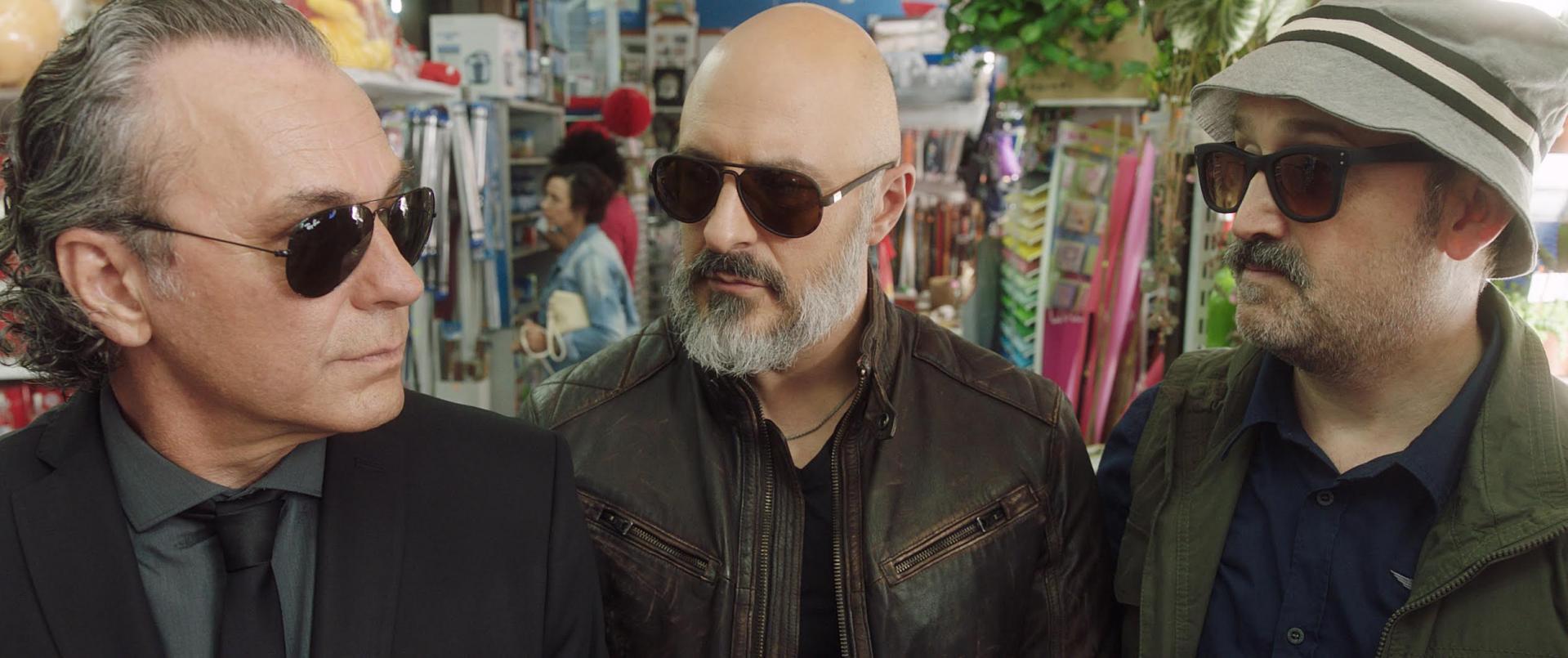
Arturo (Jose Coronado of “The Man with a Thousand Faces”) is a wealthy attorney whose daughter Valentina (Silvia Alonso) leaves the Dad-approved attorney she was going to marry at the altar to take up with an old flame, the leftist/activist/idealist Alex (Miki Esparbé).

“If we don;’t do something,” he fumes in between drinks and binge-eating…everything, “in two days our daughter’s going to be playing the flute in front of the mall!”

Jesus or “Chus” (Javier Cámara of “Living is Easy with Eyes Closed”) dotes on daughter Marta (Georgina Amorós), a star student and promising cellist who has picked this conservatory-admissions interview moment to take up with a pot-smoking, scooter-driving dead-end punk (Miguel Bernardeau), a “NEET” (No employment, education or training) in Spanish parlance.

“You’re going to wind up in a Turkish prison knife-fighting over a scrap of bread!” he pleads, in Spanish with English subtitles.

Hot-tempered construction foreman Hipolito or “Pilo” (Roberto Álamo of “The Skin I Live In”) isn’t close enough to his baker/barrista daughter (Andrea Ros) to know that she’s taken up with a famous painter (Luis Mottola), one who happens to have been a school classmate of Pilo’s. He’s twice her age, in other words. They connected after she posed nude for him, it’s suggested. He finds this out at her coffeeshop, standing in line next to the old classmate who brags about the “younger bon bon” he’s dating.

“You PERVERT! She’s my DAUGHTER!”

The three sisters these brothers-in-law are married to seem resigned to this situation, or at least fine with it. But they’re the ones who joke about “breaking them up.” The guys are the ones who run with the idea.

The script having pre-ordained where this will end weighs on the generally uninventive ways the guys come up with to engineer the break-up. Pilo keeps punching people, Arturo keeps gorging — eating anything in sight — and trying to buy his way out of “his” dilemma, and Chus seems hapless in the face of a boy who is tougher than him, who travels with a Rottweiler who has a sweet tooth.

The starting-point of the “inappropriate” mates makes you root for the fathers to run off uncompromising control-freak idealist Alex, bad-news-and-headed-for-jail Dani or #MeToo creeper/artist Ernesto. The gutsy play for the screenwriters would have been to make at least one dad “right” in all this.

The players make what they can of this material, and the pace picks up enough in the third act to give us a little something for our trouble. On the whole, though, “It’s for Your Own Good” isn’t for anybody’s own good. When you limit yourself to just two possible outcomes, the lack of suspense kills the comic promise of the premise.

1half-star

MPAA Rating: TV-MA, violence, drug content, sexual content

Cast: Javier Cámara, Jose Coronado, Roberto Álamo

Credits: Directed by Carlos Therón, script by Manuel Burque, Josep Gatell. A Qexito release on Netflix

Running time: 1:33

Posted in Reviews, previews, profiles and movie news | Comments Off on Netflixable? “It’s for Your Own Good (Es por tu Bien)” asks the Spanish question, Does Father know best?

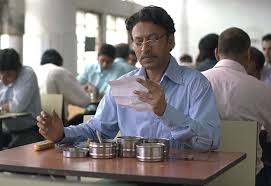
Rent “The Lunchbox: and remember Irrfan Khan, 1967-2020

irfan

Do yourself a favor, if you’re stuck at home and craving something to watch.

Netflix of Amazon Prime “The Lunchbox,” the best Western showcase for the soulful Indian actor Irrfan Khan.

He died this week. He was just 53.

His most popular movies in the West were “Jurassic World,” where he played a too-soft villain, and “Life of Pi.” He made a chilling heavy in “Slumdog Millionaire.” But his was his quiet, introspective presence in films such as “The Namesake,” where he was better and the material was better than the finished film, and “The Lunchbox,” that sticks with me.

He had a cancer diagnosis a couple of years back, but a colon infection was what took his life.

His final film, “Angrezi Medium,” just opened in India.

But if you want to see him at his best, rent“The Lunchbox.”Subtle, understated and romantic, it’s the “Brief Encounter” of our time.

lunch

Posted in Reviews, previews, profiles and movie news | Comments Off on Rent “The Lunchbox: and remember Irrfan Khan, 1967-2020

AMC not playing Universal movies?

Universal may have shown a little too much glee in bragging about how well they did by streaming the middling “Trolls World Tour” thanks to cinemas being closed thanks to COVID19.

AMC Theatres has threatened that it will no longer play Universal films in the wake of comments made by about the on-demand success of #TrollsWorldTour.

Universal us walking back their day and date VOD/theatrical enthusiasm. But the damage is done.

https://t.co/p7eh3mjI4G https://twitter.com/THR/status/1255276157509013504?s=20

Posted in Reviews, previews, profiles and movie news | Comments Off on AMC not playing Universal movies?

Movie Review: Zombies on the Rez, “Blood Quantum”

blood1

Scream it into the void, even though no one will hear.

Email the board rooms, the film school deans, even though none will reply.

“ENOUGH with the zombie movies!”

Even if you set your zombie apocalypse on an Indian reservation in Quebec, EVEN if you open the film with an old man (Stonehorse Lone Goeman) gutting salmon by the riverside, salmon that won’t stay gutted, is there anything anybody can do with this genre that we haven’t seen before?

In the case of “Blood Quantum”not the catchiest title, BTW — but really in the case of any zombie picture, the answer to that one big proviso remains an emphatic “NO.”

Writer-director Jeff Barnaby sets his film near where he grew up, among the Listuguj Migmaq “First Nation” people of Canada. He’s talking up, in press interviews, the politics and grievances that led to him setting this trip to “zombieland” there, and in 1981, when he remembers the racial divide, the ongoing “townie/rez” conflict, as particularly fraught.

But while its Canadian grey-gloom and slang are a little different, with a little Native language speculation of “the old ways” variety, suggesting the environmental causes of the calamity adding novelty, it’s a drag, man.

And I will watch most any movie set on Native land. Fascinating subculture, an environment rich with dramatic and (as W.P. Kinsella’s stories show) comic possibilities.

This slow-footed and otherwise-generic Native American spin on staggering down “Zed” Lane never takes on much in the line of urgency. It only finds any humor in the morbid situation befalling the Red Crow survivors of the global zombie pandemic briefly, and in the third act.

It’s going to take more than that to make me care, and I dare say I’m not alone.

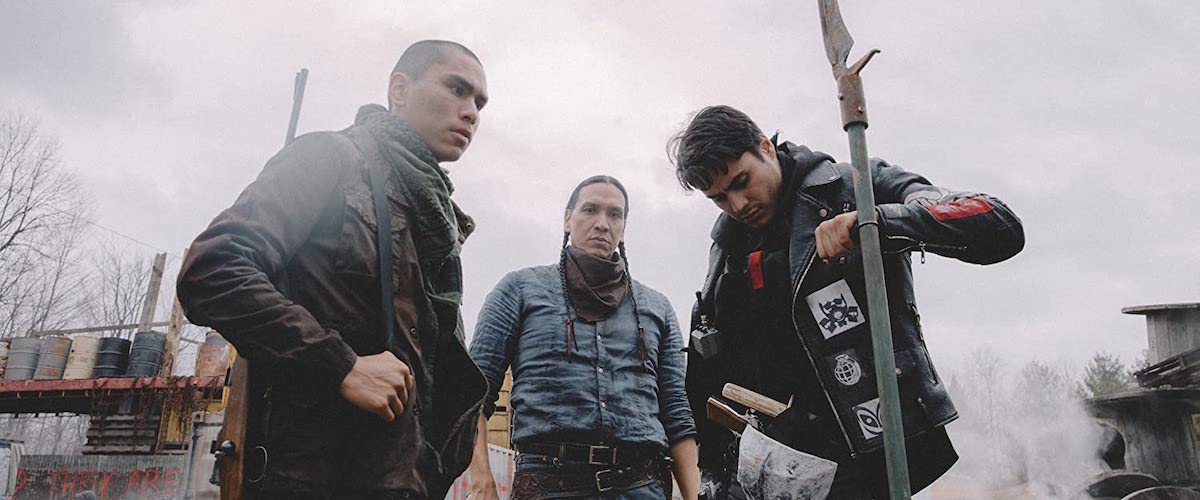
Police Chief Traylor (Michael Greyeyes) is having a bad day. He’s already shown up to shoot his ex’s dying dog. He gets the call that his old man (Goeman) has something to show him, and sees with his own eyes “Those salmon are GUTTED” and they’re still flopping around, looking for something to bite.

Bailing his two sons, Joseph (Forrest Goodluck) and “Lysol” (Kiowa Gordon) runs them all afoul of a guy coughing up blood, and looking for a bite in the drunk tank.

One more radio call and the Chief is ready to repeat the line he used to his dad, the one that should have been his guiding light all day long.

“What the f— is going on here!?”

The outbreak is coming from the river, or maybe from the “townie” side of it, where the white people live. Traylor barely has time to get his boys, his son Joseph’s pregnant girlfriend (Olivia Scriven), his dad and his ex wife (Elle-Máijá Tailfeathers) safe.

“Six months later,” welcome to the New Normal, and say goodbye to anything compelling or urgent in the story. We’re treated to a leisurely stroll through the compound where the tribe is holding out, to the bridge they’re “barricaded (with a zombie-chewing snowplow) and to the tensions rising within their little band after half a year of hell.

Lysol is all about “Ain’t nobody immune here but us,” and keeping newcomers out. The wider Rez isn’t shown, but the gimmick is the Red Crow alone are immune. But Charlie, the still-pregnant white girlfriend, keeps finding “rescues.”

If they were bitten before they got there, they and we know what’s coming. A clean cleansing kill, loved ones be damned.

“You’re not gonna wanna see ‘her’ come back,” is the only warning about this process anybody ever gets.

The most pointed political criticism is in the first half of the film, ambulances “from town” that never show up and the like. The title isn’t explained, which is a pointless clue to a “mystery” that’s never a mystery, and a cheat. But on screen, mistrust of “the whites” is ingrained and understandable.

“They haven’t seen a brown person since their grandparents OWNED one!”

Well, “great-great grandparents,” anyway. Stay in school, kids.

Barnaby — he directed “Rhymes for Young Ghouls” — peppers the dialogue with asides about “RC time (Red Crow “slowness,” like CPT),” and how to deal with “Zedcicles” (z for zombie). Name two zombie movies of the past 30 years that haven’t had at least one biker “zed-cicle” wearing a German Army helmet in them.

The effects, the gory makeup and what-not, are first rate, and the means of dispatching zombies creative, but just once or twice. And there’s maybe one moment of pathos, even if the film blunders any “save that baby” urgency.

“Blood Quantum” was headed for AMC Cinemas, but the non-zombie pandemic means AMC is “presenting” this one via streaming on Shudder.com tonight. It’s not worth going out to see, but if you can’t get enough of the Living Dead/Walking Dead, you don’t have to.

1half-star

MPAA Rating: unrated, graphic violence, alcohol abuse, profanity

Cast: Michael Greyeyes, Elle-Máijá Tailfeathers, Forrest Goodluck, Kiowa Gordon, Olivia Scriven, Stonehorse Lone Goeman

Credits: Written and directed A Shudder release.

Running time: 1:37

Posted in Reviews, previews, profiles and movie news | Comments Off on Movie Review: Zombies on the Rez, “Blood Quantum”

Netflixable? Survivalism’s last stand hinges on “The Reliant”

reliant

“The Reliant” probably played better in 2019, when it came out (VOD) than it does today on Netflix.

Why? It’s a trigger-happy faith-based survivalist thriller. A couple of weekends of pot-bellied, camo-wearing AK-47 brandishing rubes with “I need a haircut” signs in public kind of did for ultra-conservative survivalism what “Let them drink disinfectant” did to the “Stable Genius” — removed all credibility and any room for doubt that they’re entitled to any.

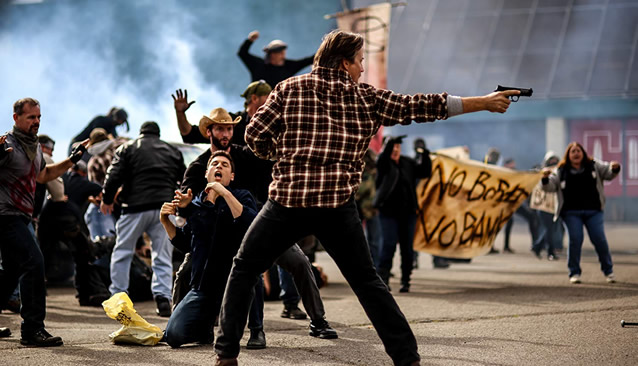
This is a nutty fable about civil breakdown, a family whose surgeon dad (Kevin Sorbo) has made them live by the Boy Scout Motto (“Be prepared”) and what happens to all those kids when dad is the first one gunned-down as the bikers turn rioters and all hell breaks loose.

A lot of debating is what happens. Because as they take arms and try to TCB, one (adult) child keeps preaching, “Thou shalt not kill” is in the Bible, no matter what the Russian-financed NRA wants you to believe.

The doctor (Sorbo) takes care of a little girl in his ER after her drunk-driving redneck daddy (Brian Bosworth) almost kills her.

Cut to some time later and riots are all over the TV, the doc’s family now includes that little girl, and guess who biker-daddy comes looking for when law and order breaks down?

Dad and oldest son Jimmy (Blake Burt) barely have time to load up at the gun shop before the mobs break in.

“Gun shop as last bastion of democracy” is entirely too subtle for this script. Let’s cast C-movie loon Eric Roberts as the owner, fighting to Make America Gun-Crazy Again.

It’s “bug out” time at home, but Dad has no sooner told the wife (Julia Denton), five kids and daughter Sophie’s fiance (Josh Murray) that “We are prepared for this” and “my priority is to keep you all SAFE” when he takes one from a sniper rifle.

Damn. And he was just rushing back in to empty out the gun safe!

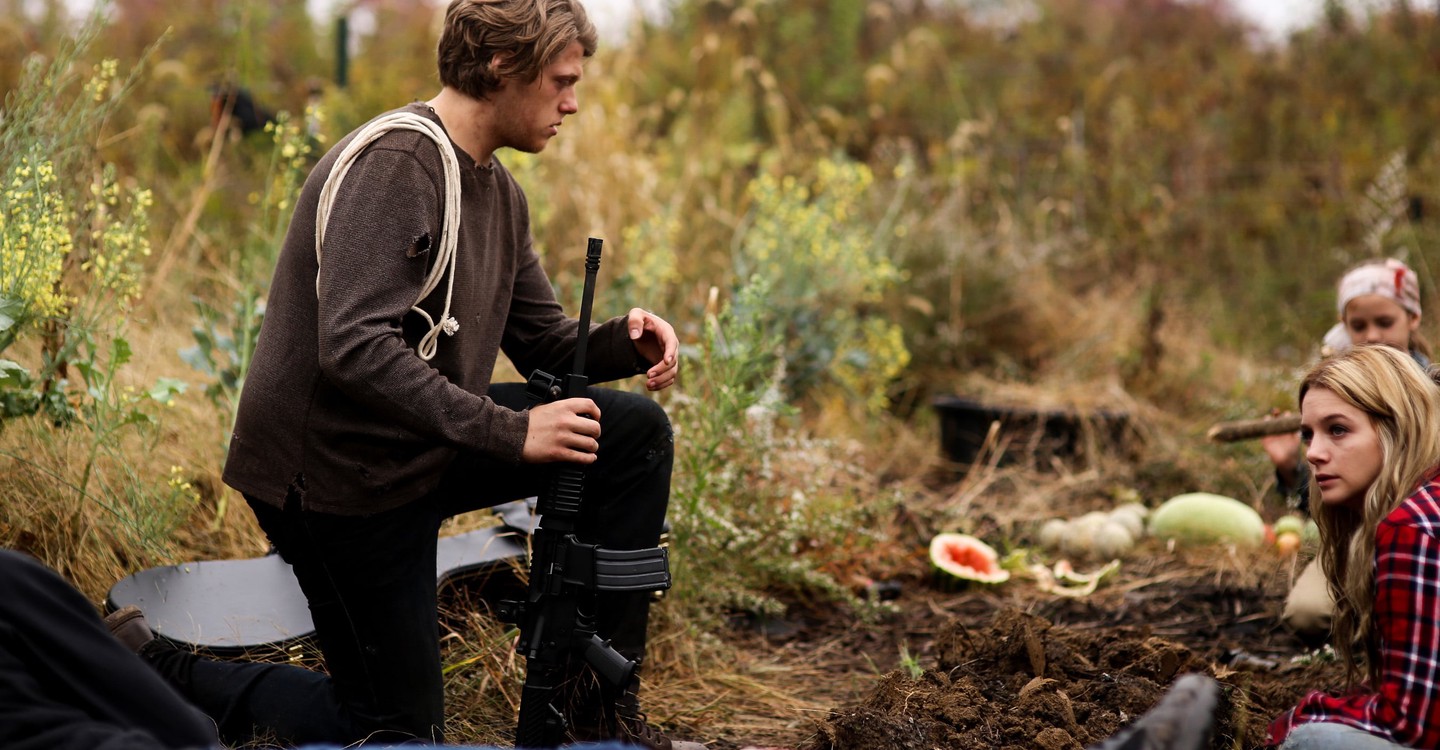
Parentless, the story degenerates to low-grade camping (nearby, in case Mom returns) and living off the strife-torn land, with endless debates between just-got-my-first-gun Jimmy, 21, and Sophie (Mollee Gray of “A Night to Regret”), a “turn the other cheek” Christian pacifist.

Jimmy wants to go back and get those gun-safe guns. “We have to DEFEND ourselves!”

Sophie’s all “We don’t have WATER, Jimmy!” She doesn’t say “DUH” out loud. But look in her eyes. She’s thinking it.

Sophie’s faith is going to be tested, and she’s OK with a bow and arrow, just not guns. Not right away.

“I have a hard time praying prayers that don’t come to be.”

Join the club.

“Trust in GOD!”

“They’re just WORDS,” Jimmy shouts, all testostonery thanks to his firearm. “You can’t eat them! You can’t load them in a gun and SHOOT somebody with them!”

reliant3

That’s right, Jimmy.

The situations are so arch and artificial as to make commenting on the acting (not empathetic) pointless.

Suffice it to say that faith-based filmmaker Paul Munger (“Princess Cut” and “Unbridled”) is a bit out of his comfort zone with “The Reliant.” You can’t blame him for wanting to cash in on that whole Christian “white nationalism” survivalism thing that’s sweeping his corner of the film audience these days.

Actually you can. All the stories he could have set out to tell, any one of which would have landed his three “names” for his cast (Sorbo, Roberts and Bosworth will take any gig these days), and he tries his hand at something that was going to be hateful, violent and toxic, even had it worked.

He’s put his name on a hateful piece of garbage only designed to engender one reaction — make your heart hurt.

star

MPAA Rating: PG-13 for sequences of violence, and thematic material involving guns

Cast: Kevin Sorbo, Mollee Gray, Blake Burt, Brian Bosworth, Josh Murray, Julie Denton and Eric Roberts.

Credits: script by J.P. Johnston. A Studio City release.

Running time:

Posted in Reviews, previews, profiles and movie news | 3 Comments

Movie Review: “Sword of God” used to be called “The Mute (Krew Boga)” is Epic, by any title

mute1

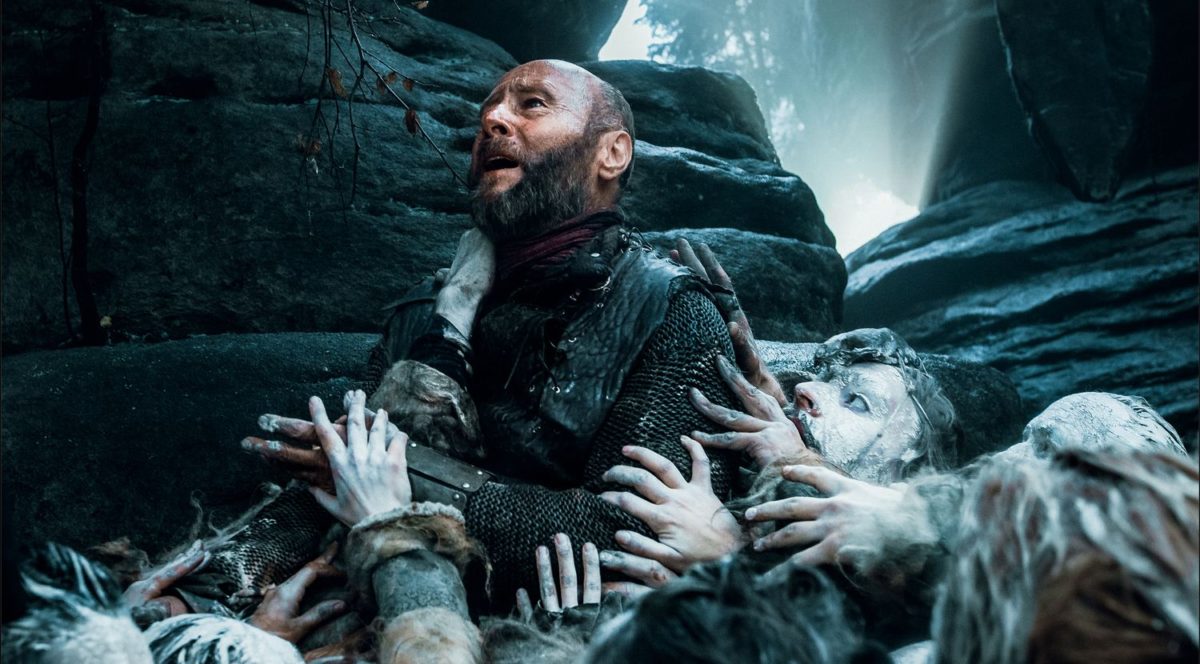
In the Dark Ages, every day must have been a horror movie, every breath a taste of the Apocalypse.

Looking back, the only ways to survive the pestilence, lawlessness, hardship and privation had to be myopia — only thinking about that next meal — and faith, with a narrow perspective all its own.

Polish filmmaker Bartosz Konopka keeps his camera tight on the people, primitive settings, rituals and strife of “Sword of God,” shown in Poland as “Krew Boga (The Mute).” This is a world of primal struggle, fur, unworked wood, blood and mud. And Konopka baptizes the viewer in it and delivers something wholly credible and holy horrific, a grim tale of survival and “civilization” from an era when the two weren’t necessarily compatible.

It’s“Black Robe” set on the Baltic Sea, where we’re tumbled into a small boat with only two survivors staggering ashore on a remote island.

The warrior priest (Krzysztof Pieczynski) has his sword, his crucifix and his mission. Convert the locals before his king arrives, so that he has “a Christian prince” capable of “human speech” (Polish) to parlay with.

Without that, summary slaughter is his brand of diplomacy.

The other man (Karol Bernacki) has a crucifix as well. But he’s more dubious about the mission, especially after they’re confronted with the locals — chalk-faced pagans in fur, with queer rituals and rites, bows, arrows and clubs for weapons and speech that is but gibberish to the visiting Poles.

The gibberish sounds Germanic, a sly Polish joke slipped in about their historic tormentors.

“Blessed are those who believe without understanding,” the priest intones (in Polish, with English subtitles). We experience these “savages” the way those two men do. Their words are not translated, their motives questionable.

Perhaps the fact that the first shot they take at the priest is caught in his wooden cross, and not just chest, impresses them. There has to be a reason they don’t dispatch these two the same way they did in the priests who came before.

“Apparently, your god did not bless them,” the pagan chief (Jacek Koman), who speaks Polish, cracks. He was shipwrecked here and knows the world that produced this sword-wielding man of the cloth. The priest’s threats of “doom” (the king) on its way don’t sway him.

“My people will tire of you.”

The priest is insistent, short-tempered and hell-bent on getting a church built and converts in it before his master, the king, arrives. The priest’s companion has more compassion and understanding, even after he is seized and his mouth is sewn shut.

The script allows for confrontations and debates, conversions, bonfires and heretic burnings. But much of the dialogue is interior monologue, prayers of confession and questioning.

“Should I not hate those who hate you, oh Lord?”

“Sword of God” is a minimalist tale, without a lot of story and only a few shocking instances of violence that don’t require translation or deciphering. This is “First Contact” as it played out in many primitive places over the course of many centuries.

The pagans aren’t explained any more than their speech is translated. The priest has only his faith, his instincts and his sword to rely upon.

The locals might grouse and menace, but history tells us the men with steel blades always had the advantage, with or without a crucifix.

3stars2

MPAA Rating: Unrated, graphic violence

Hi: Krzysztof Pieczynski, Karol Bernacki, Wiktoria Gorodecka and Jacek Koman.

Credits: Directed by Bartosz Konopka , script by Bartosz Konopka, Przemyslaw Nowakowski and Anna Wydra A Film Movement release.

Running time: 1:43

Posted in Reviews, previews, profiles and movie news | Comments Off on Movie Review: “Sword of God” used to be called “The Mute (Krew Boga)” is Epic, by any title

Movie Review: Put on your headphones, hear conversations from the past via “Soundwave”

All you need to make science fiction cinema is some conventional gadget, dressed up and re-purposed as your “device,” a good gimmick for what that device delivers and some villains who crave that device for nefarious purposes.

No. You don’t need to remake “Dune.” Again.

“Soundwave” deserves points for being sci-fi on a budget, at least in that regard joining such indie sci-fi fare as “Primer,” the more famous “Safety Not Guaranteed” and “Cypher.”

The gimmick here is “He’s invented a way to listen to the past,” so there’s something of that Dennis Quaid film,  “Frequency,” in it. And the gadget is some sort of repackaged oscilloscope, with a showy pair of headphones (No, Dr. Dre, there’s no listening to the past via “Beats”).

But the movie is kind of a shrug, really. There’s little pace, allowing the peril our hero faces to evaporate. The low-tech solution to showing how our young inventor/hero “hears” past conversations, blurry freeze-frames, sometimes taking up more screen time than the eye has the patience to sit through, is novel the first time we see it, annoying ever after.

And the the bloodless turn by the lead actor, Hunter Doohan (TV’s “Truth be Told” and “Your Honor”) lowers the stakes every minute he’s on the screen. I hate to pick on performers, but there was enough tension, action and “love interest” heart in this script for us to expect something to come of it all.

Nothing much does.

Ben is a tech whiz working for a failing radio repair shop, a kid picking up cash on the side whenever he’s summoned to a crime scene. His gadget can tell him, and through him the police, whodunit. Det. Macy (Vincent Nappo) is impressed, figures they should go into business together.

Actually, he knows a guy. But “John” (Paul Tassone) is so instantly villainous he should be twirling a mustache. The “game changer” might have John, or Frank or whatever name he’s going under, impressed. But he’s quick with the threats, the digs at Ben’s late father.

“If I didn’t know any better, I’d say you have something you don’t want anyone to hear,” is how Ben sizes up the heavy.

He’s constantly testing, always listening in — to break-ups and meal-orders, arguments and flirtations. He needs a little data about the time and geography of the chat, but he’s tinkering with the gadget, and not just using it to solve crimes.

He overhears a 911 call that sends him in pursuit of a pretty convenience store cashier (Katie Owlsey, who did writer-director Dylan K. Narang’s earlier film, “All I Need”). Covering for how he keeps her from getting too close to the edge of that roof is the best lying he’s ever had to do.

Ben is on the lam from the bad guys, and people he’s close to are getting killed. Naturally, he crashes at the suicidal woman’s place.

The “device” as plot device would work better if Narang had come up with more interesting things for Ben to overhear. The idea of trying to “hear” and learn about dead parents, which Ben presents as his impetus and which Katie yearns to try out?

Played.

The picture would have managed more suspense, just by putting this story on its feet and on the run. There’s a chase at the opening of the film, but the rest of it lacks urgency.

The film has atmosphere, gloom and a little tech-menace about it. But Doohan gives us little sense of fearing for his fate, and Owsley doesn’t raise the stakes, either.

The whole affair just fades, like a soundwave (contrary to the film’s “science”), growing fainter until that point where it decays altogether.

So congrats for making this on a shoestring, but even movies that cost nothing have to be about something, or about more than this.

1half-star

MPAA Rating: unrated, violence, blood

Cast: Hunter Doohan, Katie Owsley, Paul Tassone, Mike Beaver, Vince Nappo

Credits: Written and directed by Dylan K. Narang. A 1091 release.

Running time: 1:36

Posted in Reviews, previews, profiles and movie news | Comments Off on Movie Review: Put on your headphones, hear conversations from the past via “Soundwave”