Remember AOL, AOL chat rooms and the naughtiness that could be unleashed there in the early days of the Internet?
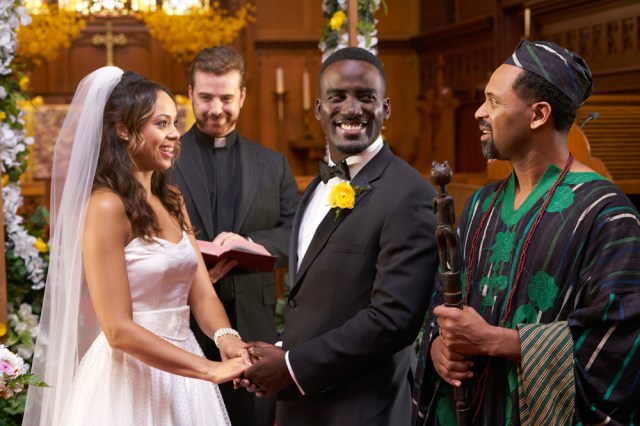
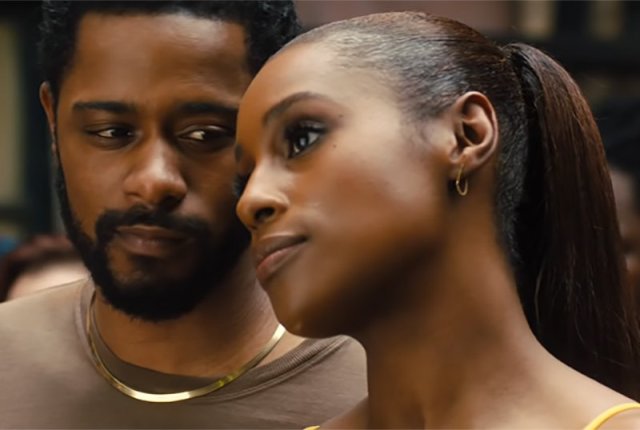
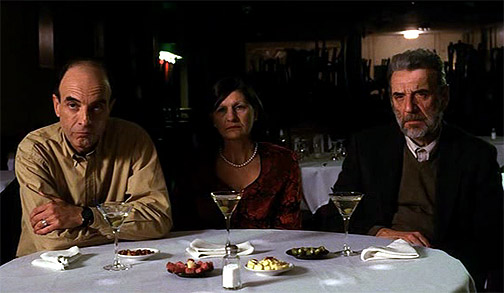
That’s what this comedy’s about. A Catholic girl getting online and in over her head.
Remember AOL, AOL chat rooms and the naughtiness that could be unleashed there in the early days of the Internet?
That’s what this comedy’s about. A Catholic girl getting online and in over her head.
“Laughter in Paradise” is a British version of that “to inherit my money, here are the wacky conditions you must meet” story, the one born in the play “Seven Chances,” which Buster Keaton turned into one of the great silent film comedies, but recycled scores of times over the decades, most famously with the various versions of “Brewster’s Millions.”
Four relatives of “the greatest practical joker of his day” (Hugh Griffith) are told, at the reading of his will, that they stand to inherit his fortune. Each has one month to live out some appalling version of her or his life to qualify.
Fay Compton (of the first sound version of “Nicholas Nickleby,” and Orson Welles’ “Othello) is Agnes Russell, a cruel spinster who takes out her bitterness on every servant within reach. Upon learning of her uncle’s death, she hisses “You can take a fortnight’s notice!” to the latest maid she’s about to fire.
Meek Herbert Russell (George Cole of “The Belles of St. Trinian’s”), pushed around at the bank where he works, never destined to “get the girl,” is charged with going to a toy store, buying a toy pistol and robbing his bullying boss with it.
Simon Russell (Guy Middleton, of course) is the cad of the lot, a gambler who has “gone through life at the expense of other’s hearts and pockets.” He gets the news of his relative’s passing with a “When’s the celebration…sorry, FUNERAL?”
He has to court and marry someone he has yet to meet within a month.f
Then there’s the cream of the crop, Captain Deniston Russell (Alastair Sim, of “St. Trinian’s” and “A Christmas Carol” immortality). We meet him as he dictates, under one of his many noms de plume, a “penny dreadful,” a sordid crime tale, to his adoring secretary (Eleanor Summerfield).
“All rather disgusting,” he sighs with that Alastair Sim sigh after a particularly lurid passage. “But they seem to like ‘The American Touch.'”
He’s engaged to be married “in a fortnight” (classic British comedies are filled with fortnights) to the judge’s daughter and uniformed officer Elizabeth (Joyce Grenfell, also in “Belles of St. Trinian’s”).
But he needs to get himself arrested and jailed for a month “for a genuine crime.”
As they all have to take a “solemn oath” not to say what they’re up to, this could get awfully dicey.
Sim pretty much steals the picture as a writer of crime fiction who literally cannot get himself arrested. He starts by doing “research,” popping by his local precinct, telling the desk sergeant (after many insults from the lower ranks) “I’m most ANXIOUS to go to prison, and I was wondering if you had anything in mind?”
You know, to put him there? Pickpocket and shoplifter, car thief and smash and grab are pitched, especially after the sergeant realizes who he is.
Sim wrings every laugh out of silent pantomiming tossing a brick through a jeweler’s window, pocketing goods at a department store and acquiring “burglar’s tools” which will help him break into this house or that car.
Cole finds some funny moments in making his meek bank clerk follow through on his “prank.”
Compton’s laughs come from the petty humiliations of a life “in service” to a cranky old man (John Laurie).
Middleton’s best running gag is his ogling women, and utterly ignoring the eye-popping cigarette girl at his favorite nightclub, a winsome young slip of a woman who seems interested. Ladies and gentlemen, “Introducing Audrey Hepburn.”
It isn’t the most briskly-directed affair, but it has laughs and those showcase Sim moments going for it.
Eagle-eyed and eared viewers of a certain age will recognize character actor Sebastian Cabot at a poker game. He is most famous for American TV’s “Family Affair.”
“Laughter” (1951) is freshly back in Bluray circulation as part of a Film Movement boxed set of the Best of Alastair Sim (“School of Laughter”), a quartet of films that includes the classics “Belles of St. Trinian’s,”“School for Scoundrels”and “Hue and Cry.”“Laughter in Paradise” may be the weakest sister of the four, but it’s funny, and Sims is at his very best in it.
The set is a real treasure trove of British film comedy history.
And that cigarette gamine? She’d take over the movies within a couple of years.

MPAA Rating: Approved
Cast: Alastair Sim, Fay Compton, Guy Middleton, Beatrice Campbell, Joyce Grenfell, George Cole, Hugh Griffith, John Laurie and Audrey Hepburn
Credits: Directed by Mario Zampi, script by Michael Pertwee and Jack Davies. A Film Movement release.
Running time: 1:37

Taut, tense and nerve-wracking, “Into the Night” is a European riff on the “End of Days” disaster movie formula that plays by the rules and rarely disappoints.
Running on wit, grit, bigotry and the national stereotypes that have riven the continent for centuries, and driven by a pulse-pounding electronic score by Photek that maintains its sense of urgency even when the script and the cast slack off, here are six episodes at around 40 minutes each that don’t waste your time.
A nightmare scenario? The plane is hijacked straight out of Brussels by an Italian (Stefano Cassetti) in a NATO uniform ranting about “sunlight means DEATH!”
The handful of people trapped on board, including a stewardess, a co-pilot, a ground crew member and a mechanic, aren’t going to Moscow. Oh no. They must flee west. WEST. Racing against the always-rising sun.
As those dozen or so on board pick up bits and pieces of confirmation that something is going on “down there,” their obstacles are made clear. Fuel, injuries, repairs, “supplies” — it’s “one problem at a time” the co-pilot (Laurent Capelluto) and his passenger fill-in assistant, downcast chopper pilot Sylvie (Pauline Etienne) reassure each other, and then the passengers, none of whom is really reassured.
As Ines, (Alba Gaïa Bellugi), the multi-lingual, mouthy young Italian “influencer” bitches onto her dormant Intagram account, “I’m gonna DIE in Scotland surrounded by Belgians!”
In French, of course, with English subtitles.
The schisms open early. Mistrust is, well, practically genetic.
The Belgian religious crank (Jan Bijvoet) mistrusts every “Muslim” on board, the Turk (Mehmet Kurtulus) in a suit knows a slur when he hears one — “Dirty Turk, gotcha.” There’s a Russian mother (Regina Bikkinina) desperate to take her little boy “home” for surgery, an Afro-Belgian home healthcare worker (Babetida Sadjo) caring for an elderly Russian, and not to be trifled with.

Who will emerge as heroes? Who will be the villains? And how much screen time will we waste while the climate researcher German (Vincent Londez) tries to explain what’s happening with his “science?”
Not a lot, and that’s a good thing about this series, where all six episodes are titled after a character and begin with a prologue. As formula dictates, everybody here has “a secret,” a troubling character flaw, a hole in her or his past to make us question motives even as they show us inner resources when the chips are down.
“Into the Night” dodges the trap of sci-fi disaster tales like “Snowpiercer.” There’s no real time for “factions” to form, for anybody to truly size up who they can trust. The timespan in Jason Georg’se (he wrote several “Scandal” episodes) adaptation of the novel “The Old Axolotl” is just a week or so.
The ticking-clock that underscores many a thriller is only evident in the landing-refueling stops this Belgian airliner has to make. Gas is always a worry, as is what they’ll find when they land to get it. It’s a different race against the clock every touchdown.
The in-flight debates, “one problem at a time” solving, etc., are slower. But as we get to know the cast, this flagging pace is less of an issue than it might have been.
If there’s a flaw to it, I’d say not letting it maintain the compactness that head-down/work-the-next-problem storytelling demands. Yeah, it’s open-ended.
But there’s mordant humor, most present in the early episodes, that carries the day. The co-pilot clinging to “sorry for the inconvenience” corporate messaging too long, his troubled fill-in co-pilot Sylvie’s admission that “I drank a bottle of vodka” before boarding, and the Black woman as truth-teller, sizing up every quarrel on board with a quip.
“Just a buncha white men whining that they can’t control things…for once!”

MPAA Rating: TV-MA, violence, sex, profanity
Cast: Pauline Etienne, Laurent Capelluto, Stefano Cassetti, Mehmet Kurtulus, Babetida Sadjo, Regina Bikkinina, Jan Bijvoet, Alba Gaïa Bellugi, Ksawery Szlenkier, Nabil Mallat and Vincent Londez
Credits: Created by Jason George, based on the novel “The Old Axolotl” by Jacek Dukaj. A Netflix release.
Running time: 6 episodes, 37-40 minutes each
It opens in late May, and as a charter member of the Rob vs Steve on a road trip fan club, I’m quarantining this farce a bit early.
What will they be driving?
“Stan Laurel” (whom Coogan just played) and Tom Hardy!
Cackling already.
Horror, humor, well mordant humor.
That was Shirley Jackson.
This right here is what we call “on-the-nose” casting. Moss conquers all, scares herself and everybody else half to death.
June 5.

“Theeb” is a Bedouin parable set against the backdrop of “Lawrence of Arabia.”
I mean that literally. It was filmed in the Wadi Rum of Jordan, covering the same geography and topography that David Lean’s masterpiece captured on film. There’s an English soldier with a World War I mission in Ottoman Arabia, with Bedouins guiding him, by camel, across the sands and through the canyons, from well to well.
The first twist in this 2016 Oscar nominee (Best Foreign Language Film) is that the story is entirely from a Bedouin point of view. And the second is that it’s a story seen through a boy of about 12’s eyes.
“Theeb” (Jacir Eid Al-Hwietat) takes his name from the word for “wolf.” But when we meet him, he’s just a child learning the desert ways from his older brother Hussein (Hussein Salameh Al-Sweilhiyeen), how to get water for the animals, how to aim a rifle, and when “guests” arrive at their group (all men) encampment, how to slaughter a goat for the meal.
Lessons his father passed down have been related under the opening credits. “In questions of brotherhood, never refuse a guest.” Oh, and by the way? Beware of trusting “wolves.”
The “guests” are an English Army officer (Jack Fox, son of James Fox of Lean’s “A Passage to India”) and his translator (Marji Audeh).
They need a local guide to get them through the desert to the soldier’s regiment. Theeb is supposed to stay behind. He doesn’t.
The boy is endlessly fascinated by the Englishman’s gear, including this mysterious locked wooden box. The language barrier is almost as great as the cultural one, as the Englishman is hellbent on completing his mission, and that mission’s deadly danger is laid out for them in very English vs. Turks, Turks vs. Bedouin and Bedouin preying on Bedouin ways.
Hussein just wants to drop the guy off and get home. The kid, named “Wolf” or not, has no business being out here.
The grim “adventure” of it all begins, and bullets fly and blood flows. Theeb is going to have to grow up fast if he’s to walk or ride away from this World War come home to his piece of desert.
A stranger in black (Hassan Mutlag Al-Maraiyeh) figures into that odyssey, eventually.

Filmmakers Naji Abu Nowar takes care with his compositions, recreating in the digital video era images that Lean had to get on celluloid, often by waiting on the perfect light.
I was struck by the geological detail of the canyon walls, the colors of the mountainsides and vast expanses below them.
He doesn’t replicate that shimmering desert mirage effect that made you sweaty and thirsty, just from watching “Lawrence of Arabia.” But the story beats — terrorism, treachery, trains and Turks — are the same.
The action — shootouts and waiting out the shootouts — is solid and professionally staged and filmed.
But for all its beauty, the stark simplicity of this folk tale with firearms mean it offers few real surprises. “Theeb” is good enough to make one anxious to see the next film by Nowar, even though six years have passed since he made this one. Perhaps he’s realized you can’t go to the “Lawrence” well more than once.
![]()
MPAA Rating: unrated, violence
Cast: Jacir Eid Al-Hwietat, Hussein Salameh Al-Sweilhiyeen, Hassan Mutlag Al-Maraiyeh, Jack Fox
Credits: Directed by Naji Abu Nowar, script by Naji Abu Nowar and Bassel Ghandour. A Film Movement release, now on Film Movement, Tubi and Amazon Prime.
Running time: 1:40

“The Lift Boy” is a simple and somewhat simple-minded and archaic tale of a “spoiled” young Mumbai man who learns to appreciate the value of menial work and the rippling power of kindness — “good karma” — by taking over his father’s job, operating an elevator in a low-rise high-rise.
Raju (Moin Khan) is speaking for the audience for this dramedy when he asks, “Why do people need a lift wallah (boy) anyway?”
Even in India, such buggy-whip mender/switchboard operator automated-out-of-existence jobs are all but extinct.
But Raju has much to learn, and not just in school, where he’s failed the drafting portion of his engineering exam four times. His long-suffering dad, Krishna (Saagar Kale) frets over how “spoiled” he is. Raju’s sunglasses, attempted mustache and general contempt for the working poor — like Dad — even extends to his father.
Because when Dad has a heart attack, Raju’s muttered complaint (in English, sometimes in Hindu with English subtitles) is “Today is not my lucky day. Nothing is going right for me.”
It’s all about him. But with Dad’s uniformed job at the Galaxy Apartments as the “the only thing that puts food in our bellies and clothes on our back,” Mom (Santosh Mohite) sends him out the door, bright and early, to “fill in.”
He’s still late, dismissive in that “How hard can it be?” way, and gets under the skin of the building’s owner, Mrs. D’Souza (costume designer turned actress Nyla Masood).
“Open the doors with a smile,” she says. “No small talk” with the residents. “Keep an eye out for any suspicious people” and “No pets in the lift.”
These are all trite but promising directions the script could take us in — wacky tenants, rich snob tenants, rule breakers and even house-breakers.
But first-time writer-director Jonathan Augustin limits this story to Raju’s journey, and a narrow one it is. The rich lady who is pushing her teen daughter, “Princess” (Aneesha Shah) gets his attention — not for the mother’s class-conscious contempt, but for the daughter’s flirtations.
Raju is rude and dismissive of pretty much everybody else, in the building or at home. Like his profane and portly pal Shawn (Damian D’Souza), Raju is too good for “leftovers,” too good for the job, too good to chat with a maid who lakes the elevator to work every AM. He is, he insists, “an engineer.”
Only he isn’t. Not yet. And as it’s not where his heart’s desire lies, it might never be.
In India, kids like him — the children of the aspirational working poor, “have two career options — doctor or engineer,” he tells Mrs. D’Souza.
And as we’ve seen his reaction to that first dissection in biology class, engineer it is.
Raju’s journey is from selfishness to kindness, from arrogant pride to humility, from resignation to his fate to pursuing his first, best destiny. The only novelty in that is the setting, and that’s only novel to foreigners, who will see this as the head-bobbingestIndian film ever, and little more.
There are only a couple of surprises served up during this tried-and-true film path. The jokes aren’t worthy of the label “jokes.”
The sweet moments lack much of an emotional kick. And while Khan makes an amiable slacker who needs to knuckle-down, there isn’t enough story or action here to justify this limp tale’s 108 minute running time.
It’s too long by half.
![]()
MPAA Rating: TV-MA, profanity
Cast: Moin Khan, Nyla Masood, Saagar Kale, Aneesha Shah, Damian D’Souza
Credits: Written and directed by Jonathan Augustin. A Caroline Pictures/Netflix release.
Running time: 1:48

As an entertainment journalist, I’ve been to a lot of book signings over the years — decades. And for all the excitement that gets fans worked up to meet their idol — novelist, film memoirist or whoever — I’ve never seen one cry.
There was a lot of crying wherever former First Lady Michelle Obama went promoting her autobiography “Becoming.” Thrilled tears of joy and that word her husband’s political career beat senseless, “hope” just flowed from people, seemingly relieved just to be in the presence of someone who represents so much to so many people, across the country and around the world.
That’s the big take-away from “Becoming,” a smart, empathetic, funny and officially sanctioned portrait of Michelle O., skimming the surface of her life during her 2018 tour promoting the book, and inspiring millions to start the process of making America decent again.
The Obamas Netflix production company filmed it, a movie of backstage moments and conversations with family and a couple of intimate associates, but mostly on-stage at huge venues, fielding softball questions from friendly interviewers such as Gayle King, Oprah, Colbert, Conan and Reese Witherspoon.
The reasons she has become such a beloved figure pop out from the film, starting with her refreshing frankness in talking about the divided America we live in, which still managed to put the Obamas in the White House.
“We ourselves were a provocation.”
There’s the pressure of the position, being the first representatives of a racial minority to reach their position, the pressure of expectations, the constant awareness of the spotlight and the “relentlessly personal attacks” that come, given the slightest excuse by the right wing smear machine.
“You have to get it right 100 percent of the time.”
Sleeveless? The HORROR! Worse than a War on Christmas!
The film remembers the First Lady’s fondness for dancing and laughing, and her ongoing outreach, the connections she made and continues to make with school children and college kids. There are meetings with small college groups, high school overachievers, even on an Indian reservation, captured during the tour.
The most political she gets is speaking of how “a lot of our folks (Black voters) didn’t vote” in 2016, and in the off-year elections which were pretty much the undoing of the Obama presidency. His election was followed by two years tied-up on Obamacare, and six years of being pushed around by a viciously partisan Congress led by Mitch McConnell.
If you don’t think we got where we are today thanks to the consequences of that, the professorial remove Obama maintained (partly by necessity, thanks to the understandable reluctance to be “the scary Black man”), unlike Bill Clinton’s learning to fight back, you’re following the wrong Twitterers.
Young Michelle Robinson’s “story” includes being told “You’re not Princeton material” by a high school principal, a roommate who moved out of her dorm room in college because “her mother was horrified that I was Black,” her idolizing of older brother Craig and still being able to pick out Vince Guaraldi’s “Linus & Lucy” at the family piano. She talks of her most recent ancestor to be in bondage, of her late father’s love of jazz and of the potential lost when this relative or that one failed to have the opportunities in a deeply racist culture to achieve all they might have.
Her deepest insights are the recognition that as far as college is concerned, “there are all KINDs of ‘affirmative action…legacy (students admitted because their parents attended the school), athletics AND poor kids.”

The most entertaining comments come in her discussion of being courted by her law firm underling, Barack “Barry” Obama, who asked her out (they were the only two Black Harvard Law grads in the place) only to get a “Dude, that would be sooo tacky.”
He’d been late for work his first day, getting an eyeroll and “trifling Black man” label from her for that. But the mechanics of the marriage are revealed when she says “I didn’t want to be just an appendage to HIS dreams.”
Candid thoughts about her Secret Service detail, an attempt to slip her daughters outside the White House to experience a little of the Marriage Equality celebration, listening to her morning jam on the way to the day’s work (prayer circles with her mostly-female support staff/team), are balanced with remembering the America that wasn’t on board with all of that, the Charleston church shooting and the like.
Mostly, “Becoming” is a collection of “feels,” hugs and tears with fans, students and family, and big promotional moments that director Nadia Hallgren wisely never allows to come off as a “victory lap.” Entering stadiums to the gushing introductions of the likes of Oprah, played in by Alicia Keys’ anthem “This Girl is on Fire,” could easily have led this unapologetic hagiography to that.
If you want more revealing material than that, read the book, or wait for a biography that isn’t introduced by Reese and written (or directed) by Oprah.
![]()
MPAA Rating: PG for some thematic elements and brief language
Cast: Michelle Obama, Phoebe Robinson, Craig Robinson, Stephen Colbert, Oprah Winfrey, many others
Credits: Directed by Nadia Hallgren. A Netflix release, a Higher Ground production.
Running time: 1:29

They’ve got a lady crook — they think — tied up. And two English lads have been given their orders. One, who looks to be about 13, fumbles pulling out his pocket knife to comply.
“You ‘eard what he said. ‘Make ‘er TALK!”
The other – he can’t be more than ten — blanches.
“Couldn’t we just…tickle her?”
The “mystery” is only half-solved, and the real mayhem is yet to come. But with “Hue and Cry,” the very first “Ealing Comedy,” by London’s Ealing Studios, the die was cast from the opening credits, which are hand-painted onto the ruins of just-blitzed London.
Some of the most beloved and timeless comedies in screen history would wear that label, a couple of the very best — “The Lavender Hill Mob” and “The Titfield Thunderbolt” — by the “Hue and Cry” team of writer T.E.B. Clarke and director Charles Crichton He finished his career directing a modern classic, “A Fish Called Wanda.”
But here’s how it all stared, in postwar “Broke if not Broken Britain” in 1947, with a tale of boys who get the idea that their favorite comic is sending messages, in code, to London’s underworld to arrange this week’s burglary.
It’s a bouncing, energetic farce using real bombed-out buildings and London street scenes, and a sea of little kids teaming up to foil villains. It starts swell, bounces through the middle acts and finishes with a flourish, a classic that, dated-or-not, still delivers laughs almost 75 years after it was made.
Joe Kirby (Harry Fowler) is the teen in tatty tie and vest who uncovers the “code.” He’s too old to admit he loves comics, “what a load’a tripe!” But “The Trump,” set among mobsters, thieves, cutthroats and pathological liars (go figure) has him hooked.
And he can’t help but notice the real street names and addresses that turn up in “The Trump” every week, among other coincidences.
He starts to enlist the other lads — billed “The Blood and Thunder Boys” in the credits — in his “theory.” The police inspector (Jack Lambert) may not want to hear it.
“Look, sonny, I really think you ought to lay off those ‘shockers.'”
Joe won’t hear of it. He even tracks down the taxidermy-crazed fussbudget (Alastair Sim) who writes the comic to prove his theory.
What follows is “The Goonies” of its day, an Anglicized “Hardy Boys” where the boys are legion and include plucky, two-fisted Clarry (Joan Dowling).
Brawls, melees, kids swarming cops and thugs alike like ants defending the colony, bees swarming to save the hive.
The fresh restoration of “Hue and Cry,” with its simple, immaculate construction, artful shadows, vivid depiction of late ’40s London and jaunty, roiling action, is part of a new Alastair Sim boxed set from Film Movement, which takes another Sim film — “School of Laughter” — as its title.
Sim, who would go on to play the most memorable Ebeneezer Scrooge of them all in “A Christmas Carol,” is deliciously owlish here, his eyes bugging out of these deep, dark sockets, the words a florid whirl of plummy posh locutions.
“They’ve purloined my code! What a jape, eh?” “Oh, how I loathe adventurous-minded boys!”
Fowler and some of the of the other kids went on to storied careers. You’d have to be a frame-by-frame obsessive to see the future “Manuel” of John Cleese’s “Fawlty Towers,” Andrew Sachs, as one of the kiddie extras.
It plainly took some of its inspiration from America’s “Our Gang/Little Rascals,” but “Hue and Cry” lifts any ruckus previously kids’ action movies ventured to a whole new level.
Fisticuffs, a vigorous shaking that would get your adult co-star prison time in this day and age, and all those “Beasts of the Southern Wild/Wendy” settings, with their busted bricks and exposed rebar.
Never get away with that today. Nor should you try. Here’s a classic that stands alone, a London landmark with laughs that takes us back to a more rough and tumble time, and does it with a style that would be admired and copied for generations to come.
![]()
Cast: Alastair Sim, Harry Fowler, Joan Dowling, Jack Warner, Stanley Escane, Douglas Barr, Valerie White, Ian Dawson and Jack Lambert.
Credits: Directed by Michael Crichton, script by T.E.B. Clarke. An Ealing Studios/Film Movement release.
Running time:

There’s something ever-so-French about the idea of a fractured couple debating “what might have been” with a former lover. So grown up!
And widening that argument to include every lover the philandering member of the couple has had? Her mother? Grandmother?
Hashing out the past, and bedding, the 25 year-old version of her husband? Interrupted by the French love balladeer Charles Aznavour?
That’s as French as it gets. That could only happen “On a Magical Night.”
Christophe Honoré, who did the romantic musical “Beloved,” rejoins his muse Chiara Mastroianni for this romantic fantasy/sex farce, a tale that is by turns surreal and ultra-real, giddy and wistful, melancholy and just plain goofy.
We meet Maria (Mastroianni) when she unabashedly stumbles out of the closet. Her student/lover (Harrison Arevalo) is billing and cooing with his girlfriend, trying to get her out the door after she interrupted Maria and Asdrubal Electorat in flagrante delicto.
She’s naked, dressing and babbling on about how inane the two of them are as a couple (to their faces), that she should know better than “dating my students.” But hey — she teaches law, and his name is ELECTORAT. How could she not jump at that chance?
50ish Maria ogles younger men all the way though Paris on her walk home. She takes a cover-my-tracks shower and drones on about her day, the law, blah blah blah. But husband Richard (Benjamin Biolay), who misses the first clues, finally opens her beeping phone and finds the incriminating texts.
He isn’t so much put-out as deflated, and her “It’s nothing to get excited about” and “We’ve been like siblings (not husband and wife) for YEARS” dismissals doesn’t help.
As he holes up in another room with just a “We need to think it over” (in French with English subtitles), she decides “I want to be alone.”
She throws a few things in a bag, slips out and checks into a hotel — right across the street from their flat. It’s in “Room 212” (the title of this when it came out in France) that the weirdness goes down.
Spying on Richard through the window, she wonders what went wrong. And that’s when 25 year-old Richard (Vincent Lacoste) drops in and the REAL debate begins.
He is, she declares, “My perfect husband.” How many years have we been married, then? “Over 20.” “Twenty-five” is the correct answer. And if he was “perfect,” why’d she cheat? And how often?
Doors open and “Room 212” expands into some “Inception” nightmare, as Maria drops a name or two — her side-pieces. And then her mother shows up and drops dozens more.
The guys — all young — start dropping in. Or checking out.
There’s time to have sex with the younger version of Richard, and plenty of time to consider how life might have been better for him had he stayed with his first love and turned down Maria’s proposal, way back when.
He used to go on about “Irène.” Ok, let’s get HER into “Room 212.” And hell’s bells, she turns out to have been young YOUNG Richard’s piano teacher (Camille Cottin), the one who “made him the man he is” — cultured and bookish and musical — only to lose him to Maria.
While both women indulge in a taste for younger man-skin, Irène crossed lines that only a French comedy would deem nothing to raise an eyebrow about. She taught the boy piano and romance in her home, starting when he was 14, taking his lessons half naked at the keyboard.
Irène would love to have Richard back, and would REALLY love to have had the lives she thought they’d have together — children included. Maria isn’t into kids.
A child turns up when Irène crosses the street and tries to restart her affair (as she was then) with now-50ish Richard.
And then Maria’s “Will” shows up, “the one that guides you.” That would be the beloved crooner Aznavour, dapperly played here in a leopard-skin smoking jacket by Stéphane Roger.
“I am not Pinocchio’s cricket,” he waffles. But “He’s your husband, and you prefer him at 25, not 50.”

Syruppy ballads, often in English, waft up on the soundtrack as Richard philosophizes “Love is always but a memory” to Irène and Maria tries to rationalize her way out of her faithlessness. The film takes its title from a Barry Manilow tune that makes an appearance here.
“Wounds” and “blows” are remembered and weighed, a wise observation of how we break down our breakups in our mind. Set this on a snowy winter’s night to fortify that mood.
And then deal with the chaos of having every lover (at the age they were then) confront you over why you didn’t say you were married, why you keep bedding students and why you forgot this one or that one who complains “I tend to get lost in threesomes.”
A toddler is picked up and becomes an obvious plastic doll, doors slam and Aznavour tries to facilitate without judging (not really).
It sounds giddier than it is, but there’s a lot of fun mixed in with the somber assessments of a failed relationship. In the end, it’s too much to juggle or do justice to, and “On a Magical Night” is never quite “could this be the magic at last.”
Then again, maybe you have to be a certain age to get what Honoré’s message is and appreciate the little profundities mixed with the sight gags and jokes. Maybe I am.
![]()
MPAA Rating: unrated, a moment of violence, sex, nudity
Cast: Chiara Mastroianni, Benjamin Biolay, Camille Cottin , Vincent Lacoste, Harrison Arevalo, Stéphane Roger and Carole Bouquet
Credits: Written and directed by Christophe Honoré. A Strand release.
Running time: 1:26