Movie Review: Temple and Pegg are at their best searching for “Lost Transmissions”


lost6

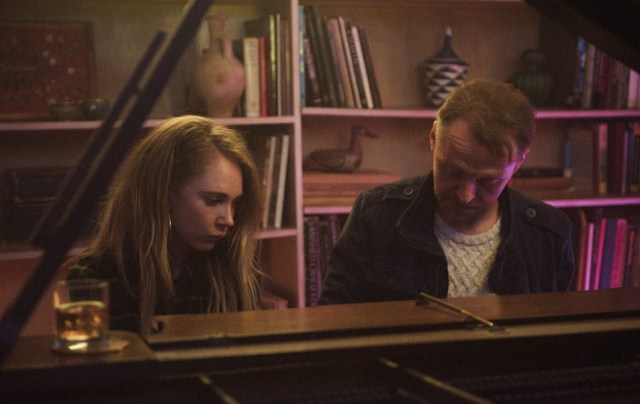
Juno Temple delivers a dazzling turn as an aspiring singer/songwriter struggling to protect and look out for the schizophrenic producer who “discovered” her in “Lost Transmissions.”

As Hannah, she turns manic with fear over what could become of Theo (Simon Pegg), a Brit trapped in his head and lost in America’s byzantine health care system and bizarre mental health Catch-22s. Hannah’s mania spins out of her intimate knowledge of Theo’s predicament. She’s among the medicated mentally ill herself. She understands what he’s going through and what he’s up against.

And like Theo, she is off her meds.

Katharine O’Brien’s “inspired by a true story” debut feature begins with a musical connection that cements a friendship and partnership, and then sets up its fundamental dilemma with just a line, delivered by one of Theo’s circle of friends.

“Don’t let him take you down the rabbit hole with him, Hannah.”

Theo is the life of parties within that circle. A successful record producer who used to belong to a band himself, he lures shy Hannah into a duet with him at the piano. He flirts with talk of initiating her into “a secret society.” He tempts the cubicle-drone Hannah with a trip to his recording studio, filled with instruments, some of which used to belong to legendary producer Phil Spector and Chaka Khan.

In a flash, he’s turned a song or two of hers, “written when I was a kid,” into dreamy synth-pop. In another flash, she’s set up to write tunes for a bleached dance pop bombshell (Alexandra Daddario) based on just that demo.

And then she makes the mistake of giving Theo a lift. He’s antic, and absorbed with the station between stations on her radio. “If you listen really carefully, you can hear the transmissions!”

He’s lost his car — literally misplaced it. He’s twitchy, jumpy and “off.”
“Are you ON something?” No. He’s “OFF” something.

Unlike Hannah, who “keeps everything level” with meds, Theo fears it muffles his brilliance and mutes his gifts.

He shouts “Listen, listen LISTEN” to her over the radio. A call to his friends earns a “Oh God, not AGAIN.” And in spite of all that, Hannah takes responsibility for her mentor and is even tempted to try life without medication as a jolt for her “inspiration.”


O’Brien gives Pegg scenes to show Theo’s laser focus at the mixing board as he works his mixing magic with a band. Theo is stone-faced and in-the-zone. But we can feel what’s coming. We’ve seen the hair-trigger temper, heard the unfiltered “truth” he can blurt out, giving away the crazy.

Temple, a screen veteran (“Atonement,” “Black Mass,” “Wonder Wheel”) who too-rarely lands a lead, is heartbreaking when Hannah is frantically trying to keep Theo out of harm’s way — involuntarily institutionalized for “observation,” confronting police, acting-out on a drive to the mental hospital.

She’s funny when Hannah drops her meds and starts acting out — Theo style — in her “sellout” scenes with Daddario, who is spot on as the gorgeous, nail-biting egomaniac who needs Hannah’s talent to pretend she has some of her own.

Pegg is the very picture of schizophrenia — funny and charming, here and there, lucid when he can get it together to lie to a doctor, bug-eyed and furious when Theo’s independence is threatened and his view that “time” is being controlled…by somebody — isn’t taken seriously.

O’Brien even gives us a homeless “prophet” tirade to show how common this temporal mania is among the mentally ill. Theo wears watches all over his arms and ankles.

O’Brien and her players take a common creative community belief — that “maybe the insanity makes (unusual) neuro-connections in his brain” that renders the brilliantly unbalanced brilliant — and have made a superficial but grimly realistic and thoroughly engrossing movie gloss of that theory.

And Temple has reminded us that she’s better than all those bit parts as tarts, “broads” and the like, a leading lady of formidable empathy and range. Hell, she even sings.

3stars2

MPAA rating: unrated, drug abuse, profanity, violence.

Cast: Juno Temple, Simon Pegg, Alexandra Daddario

Credits: Written and directed by Katharine O’Brien. A Gravitas Ventures release.

Running time: 1:45


Posted in Reviews, previews, profiles and movie news | Comments Off on Movie Review: Temple and Pegg are at their best searching for “Lost Transmissions”

Documentary Review — “Mossville: When Great Trees Fall” captures environmental racism at its deadliest

The image is stark and iconic — a lone house, fenced, construction site devastation all around it — a single man resisting the march of  “progress.”

But there’s no vast supply of balloons to lift Stacey Ryan’s trailer “Up” and away from this Louisiana industrial Hell. And his hold-out status, surrounded by 14 petrochemical plants in one of the most polluted places in America has us fearing for his health and his life more than the tiny, ruined town of Mossville, which he represents.

“Mossville: When Great Trees Fall” is an infuriating film that captures “environmental racism” at its most obvious, a film shot at a little known but infamous ground zero example in the American South.

Stacey Ryan, a mechanic and lifelong resident of Mossville, is our tour guide and main historian for a town “founded by free slaves” after the Civil War devastated — you could say “targeted” — by a power structure and industries who decide that “not in my backyard” doesn’t apply to working class places populated by mostly powerless Black people.

The few hold outs  there, when we meet them, are religious people who remember a “safe” place village, founded by seven families, covered in fruit trees.

They thrived by not being noticed, not living on land the powers that be coveted. But they were invisible, unable to stop the vast processing concerns that Louisiana allowed to buy their way in and make the place unlivable for those who remained.

Ryan shows filmmaker Alexander Glustrom old TV interview footage of his parents, his mother protesting that “The color of my skin doesn’t make a dog — a guinea pig!” But that’s how firms like Axiall and those that preceded and followed it treated them.

Fires and explosions, “shelter in place” accidents, leaks into the water supply, dioxin in the blood. Mossville residents started dying of cancer.

Here’s footage of then-Louisiana Governor Bobby Jindal singing the praises of a South African biochemical and energy concern, SASOL, moving in — thanks to state incentives.

Glustrom then takes us to Secundo, the company’s Apartheid era plant built next to Zamdela Township, “the biggest source of carbon dioxide on the planet.” South African activists speak of companies like SASOL treating poor people as “disposable others,” the ones governments and companies decide “can live in the pollution.”

Because nobody with money or influence would stand for it.

An environmental lawyer laments the uphill battle the few survivors in Mossville are fighting, and the film’s third act lets us see how all this is winding up. Big Petrochemical’s predations and pollution won’t stop at Mossville. More affluent towns are within the reach of wind and water runoff from there.

No wonder nobody talks about Bobby Jindal any more.

“Mossville: When Great Trees Fall” is earning limited release before airing on PBS later this year.

3stars2

MPAA Rating: unrated.

Cast: Stacey Ryan, Erica Jackson, Van Jackson

Credits: Directed by Alexander Glustrom. A Fire River Films release.

Running time: 1:15


Posted in Reviews, previews, profiles and movie news | Comments Off on Documentary Review — “Mossville: When Great Trees Fall” captures environmental racism at its deadliest

Movie Review: When “I Still Believe” isn’t enough

ISB_D04_03001.NEF

An inspirational Christian music romance runs into the limitations common to the faith-based genre in “I Still Believe,” a bland tear-jerker that lacks the drama or commitment to wholly come off.

This true story of singer-songwriter Jeremy Camp’s “love of my life” ill-fated romance has warmth and moments of charm. It’s more “I Can Only Imagine” than “God’s Not Dead,” a concerted effort at presenting a positive message without anger or political victimhood. All that’s missing are the basics of good drama — conflict — and commitment and chemistry from its stars.

K.J. Apa from TV’s “Riverdale” plays young Camp, an Indiana lad who is smitten on sight when he spies pretty Melissa (Britt Robertson of TV’s “Girlboss” and “For the People”) at a concert when he arrives at Calvary Chapel Bible College in California.

How we get to that “meet cute” — which isn’t “cute” — sets the tone for the movie. It’s 1999 and Jeremy has to calm his special needs brother (Reuben Dodd) who is distraught at his leaving home. His struggling pastor dad (Gary Sinise) keeps a pizza joint delivery sign on top of the family’s ’80s AMC Eagle station wagon, but the parents (Shania Twain plays his mom) have managed to buy the kid a new guitar before he heads off.

That’s Jeremy’s ambition, “making it.” His “struggle” to achieve that consists of talking his way backstage at a concert The Kry are giving on campus, asking for advice from songwriter Jean-Luc (Nathan Parsons), and becoming a roadie for the night.

That gives him instant entre to a musical sounding board, songwriting feedback, recording studio and…fame.

And it’s in between delivering guitars (“guitar tec:”) to Jean-Luc in mid-show that he spies the prettiest girl on campus, beaming in rapture at the music The Kry perform. As Jean-Luc says, “I write love songs to God.” With maybe a girl in mind as he does, he jokes.

Here’s where the conflict is dodged. Hunky Jean-Luc’s “girl in mind” is Melissa. This being a Bible college and Melissa being chaste, that makes for a slow attempted-wooing. And even though Jeremy doesn’t know that attraction when he flirts, he keeps after Melissa after he learns that news, continuing to take Jean-Luc’s advice and help as he goes after his girl. Cold.

The filmmaking Erwin Brothers (“I Can Only Imagine,” “Moms’ Night Out”) make little of this potential friction. The conflict is snuffed out with nary a spark or raised voice.

Seriously?

There’s no struggle for the hero “make it” either.

That leaves the only spark in the movie the tepid romance between the leads, and the only conflict in the movie the cancer that hits Melissa shortly after their almost-cute “date/NOT a date” dating life debate has been settled.

believe2

Kapa does his own singing in “I Still Believe,” a big plus as he covers both Camp’s songs and others from the Christian pop canon, such as a beach campfire rendition of “Find Me in the River.”

His acting is a bit soap-opera-ish — constantly running his fingers through his hair in anguish, flirtation or whatever. He and Robertson have an onscreen attraction that is wholly dictated by the script and never believable. It’s more a “non-repulsion” than attraction.

Robertson’s commitment to the part doesn’t include ever, for one second, looking the least bit sick. A bandana covers the scalp she chose not to shave for the part, and fools no one. Still, she is credible as a true believer, sharing her passion for the cosmos in a planetarium scene – “God is so infinitely vast…and he knows MY NAME!”

The message here is soft-peddled, with only “Hasten the day” — Jean-Luc’s devotional motto, an ethos of “hastening Jesus’ return” — and debates of what Melissa meeting Jeremy and later developing cancer means for “our destiny.”

Jeremy is smooth. He works God into his come-on.

“God wants us to run for it, not away from it!”

The title tune has a potent message — maintaining faith when “proof” it pays off isn’t there — and a dull arrangement. The picture itself runs on past its climax, moist-eyed but never quite wrenching, no matter how long this is dragged out.

As with the Erwins’ “I Can Only Imagine,” there’s something to be said for a faith-based film that is soft-hearted and apolitical. But “I Still Believe” the Erwin Brothers aren’t growing as filmmakers, and won’t until they learn how to generate conflict, which is what it takes to create good drama.

2stars1

MPAA Rating: PG for thematic material

Cast: K. J. Apa, Britt Robertson, Nathan Parsons, Shania Twain and Gary Sinise

Credits: Directed by Andrew Erwin and Jon Erwin, script by Jon Erwin and Jon Gunn. A Lionsgate release.

Running time:1:55

Posted in Reviews, previews, profiles and movie news | 9 Comments

Next screening? “The Hunt”

With studios scrambling to move their promising product off the shelves and into later post-Corona virus release dates, one does wonder if Universal isn’t happy just to get “The Hunt,” delayed by its satiric bloody, “liberal gun nut” satire message, off its books.

A hit would be nice, a bomb just a shrug considering the circumstances.

But wetnall curious, right?

Posted in Reviews, previews, profiles and movie news | Comments Off on Next screening? “The Hunt”

Movie Preview: Bruce Dern is the artist, Lena Olin is “The Artist’s Wife”

This offers two great ones a tour de force. Dern has been dazzlingninbhis

Posted in Reviews, previews, profiles and movie news | Comments Off on Movie Preview: Bruce Dern is the artist, Lena Olin is “The Artist’s Wife”

Documentary Review: “Human Nature” tackles the “Brave New World” of genetic editing

human1

Just a couple of days ago the evolutionary biologist and religion-debunking gadfly Richard Dawkins, whom I follow on Twitter, tweeted the hopeful thought that some British personage making a statement the world was taking seriously heralded “the return of the expert to the national conversation.”

To which one can only snort, “Hear HEAR.”

As the “#panDUMBic” erupts in an America and a planet weakened by anti-science know-nothingism and a sort of “Revenge of the Nitwits” — Centers for Disease Control defunded; politicians callously ignoring the human cost of a pandemic by fretting only about “the markets;” cronies, myopic religious fanatics, hacks and blinkered industry insiders in charge when the Corona comes calling — it’s a relief to catch a lively and engrossing genetics documentary filled with experts, highly educated people who give many sides of a serious scientific issue without the shouting shallowness of cable TV weighing in with all they don’t know.

“Human Nature” is a history of the rapidly evolving world of genetic science and the promise and potential horrors of “genetic editing.”

Archival footage frames Adam Bolt’s film and peppers its many interviews, shifts in subject area and points of view. And a speech at Cal Tech in 1966 by biologist Robert Sinsheimer, decades before he advocated for a Human Genome (decoding) Project, welcoming his “fellow prophets” with a few thoughts about “the potential for disaster” in misuse of the growing knowledge of DNA and how to manipulate it, kicks off the film.

We meet a smart and thoughtful tween named David Sanchez as he undergoes blood transfusions for his sickle cell anemia. His will be a disease dangled in front of the viewer as “Human Nature” unfolds, the sort of coming-soon breakthrough that will be treatable in the “Brave New World” of gene editing.

The greatest scientists in the field discuss the process of decoding, the discovery of CRISPR (clustered regularly interspaced short palindromic repeats) explained by the Spanish scientist (Francisco Mojica) who was one of the first to recognize this key to the code, and key to future genetic editing.

Jill Banfield and David Baltimore and many others go over potential breakthroughs and pitfalls with the dispassion of academics. Fyodor Urnov speaks of being “at the foot of a very tall mountain,” for which “we may not even have the right climbing gear” to ascend.

Grinning eager beavers at eGenesis, a “garage” start-up founded by Luhan Yang, enthuse at the “Let’s see what we can do” possibilities of gene editing for profit because “there’s a revolution going on.”

And there’s Mike Wallace, interviewing science fiction author and philosopher Aldous Huxley in the late 1950s, a writer whose “Brave New World” provides a chapter heading for the film to begin talking about the potential “horror” of this post-in vitro fertilization, genetic editing “engineering human heredity” future.

Yes, “Designer babies” are discussed, with some academics suggesting codes of ethics for what should be allowed and some for-profit private sector backed folks pooh-poohing concerns, which they are wont to do.

“Eugenics” got a bad name, some say, even as others are quick to remember how it was hijacked by the Nazis (propaganda film footage bears this out) and applied to mental patients in Virginia for much of the 20th century.

The lighter touches in “Human Nature,” which lists Dan Rather as a producer, come from scientists who are all “Big Bang Theory” extras at heart — referencing sci fi books and movies to make their points. Will we accept a positive vision of how this hurtle towards the future turns out (“Star Trek”) or a dystopic one (“Blade Runner”)?

Several scientists remark on the speed with which this “revolution” is unfolding with concern and hope that ethics and codes of conduct will be formed within their community before China — where twins had their genomes edited “as an experiment” in 2018 — or some other entity makes Huxley’s prediction of genetic “horrors” comes true.

Then there is the grandfatherly face and voice of lawyer and bio-ethicist Hank Greely is here to put all this plant-editing/livestock altering in perspective, as reassuring as any expert in a field and a film stuffed with them.

“We have been messing with nature ever since we came down from the trees.”

3half-star

MPAA Rating: unrated

Cast: Jennifer Doudna , David Baltimore, Jill Banfield, Alta Charo, Fyodor Urnov, Rodolphe Barrangou, George Church, Luhan Yang, Francisco Mojica and Hank Greely.

Credits: Directed by Adam Bolt, script by Adam Bolt, Regina Sobel. A Greenwich Entertainment release.

Running time: 1:34

Posted in Reviews, previews, profiles and movie news | Comments Off on Documentary Review: “Human Nature” tackles the “Brave New World” of genetic editing

Movie Review: Transactions get messy when “Human Capital” is involved

human1

In film and fiction, the phrase “narrative thread” is commonly used to describe the way pieces of the plot are woven together. “Human Capital” is a smart, well-cast drama that lets us see its threads as they bend back and forth on the loom, its mystery unraveling as they do.

It’s about affluence and “gambling” in the markets, snobbery and the myriad mental strains that hammer teenagers, even those rich enough to attend a private school.

That’s the connecting thread in Oren Moverman’s screenplay, based on a Stephen Amidon novel previously adapted into an Italian film back in 2013. Rich parents of students at suburban New York’s exclusive Buchman Academy gather for a fund-raising dinner. A waiter at the restaurant serving that dinner is hit, on his bicycle, on his way home. The script returns us to that dinner several times, via the characters and the threads of their story.

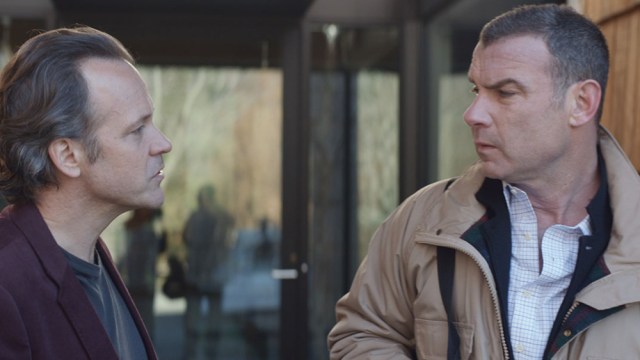
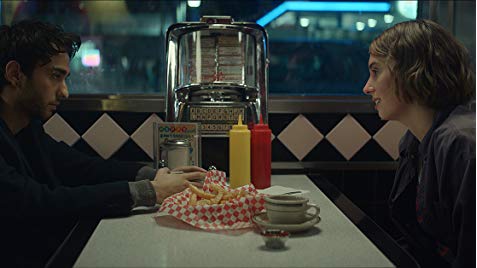
Liev Schreiber is Drew Hagel, a gauche real estate agent with a rebellious daughter (Maya Hawke) at that school and at that dinner. Drew is the sort that blurts his whole story — or too much of it — when he meets the mother (Marisa Tomei) of the boy daughter Shannon is dating.

No, Shannon’s mother doesn’t live here. “I remarried…much younger woman. Kind of a ‘trophy’ thing.”

Carrie (Tomei) gets out of that conversation in a hurry. But what Drew really wants to do is meet her husband, the high-flying and mysterious Quint (Peter Sarsgaard), who runs a hedge fund.

“We move invisible money through invisible markets at invisible speeds guided by invisible hands with invisible oversight,” Quint purrs.

Want to invest? Sure!

That entanglement has legal and moral implications, as well as financial ones. Drew used to have a gambling problem. Maybe he’s moved on from that to SEC filing shortcuts. But he’s still got a whiff of “desperate hustler” about him. Ronnie, the “trophy” wife (Betty Gabriel) may be put off by the glib arrogance of “this crowd,” especially Quint’s vulpine lawyer/board member (Aasif Mandvi, turning up the “vile”). But Drew NEEDS this.

The daughter and her boyfriend (Fred Hechinger), Ronnie’s profession and one client in particular (Alex Wolff) and Carrie’s marriage to Quint, her past and her big dream all are unwound in threads of the story that work their way back to that banquet, that accident and its potential repercussions.

capital3

In a business that rarely has room for more that one or two top flight “name” screenwriters, Moverman’s work stands apart, even when he’s adapting a novel. He made his mark by writing and directing the moving drama of soldiers on Casualty Notification duty, “The Messenger.” Scripts like “Rampart,” “Love & Mercy” and “The Dinner” show his gift for plot, beautifully-crafted scenes and zinging dialogue.

An argument between Carrie and Quint is filled with verbal darts that draw blood.

“Why don’t you put the ‘street girl’ back in the wine bottle!”

“Better start looking for your next wife!”

“Oh, I’m on it!”

Few actors working today carry the sinister, snooty menace Sarsgaard can convey when he’s a mind to. Tomei gets a moment or two of fury and fear, Schreiber is convincingly low-class and desperate and young Hawke (“Stranger Things”), the daughter of Uma Thurman and Ethan Hawke, makes Shannon dazzlingly sullen, spoiled and impulsive.

There are missteps, threads that seems to clash with everything that’s woven around them. But Moverman and director Marc Meyers (“My Friend Dahmer”) keep that loom weaving, their story moving forward and their movie about the sometimes discounted value of “Human Capital” perfectly engrossing, from start to finish.

3stars2

MPAA Rating: TV-14, adult situations, alcohol abuse, profanity, violence

Cast: Liev Schreiber, Marisa Tomei, Peter Sarsgaard, Betty Gabriel, Maya Hawke, Aasif Mandi and Alex Wolff.

Credits: Directed by Marc Meyers, script by Oren Moverman based on a Stephen Amidon novel. A Vertical release.

Running time: 1:38

Posted in Reviews, previews, profiles and movie news | Comments Off on Movie Review: Transactions get messy when “Human Capital” is involved

Next screening? Faith based “I Still Believe” KJ Apa, Britt Robertson, Shania Twain

KJ Apa, Britt Robertson and Shania Twain star in this Just in Time for Easter Christian music romance, built around the song.

Looks Insipid, in that Nicholas Sparks way. But that just lowers the bar. Could be good.

Hope I don’t get the Covid19 thing from sitting in a theater. https://youtu.be/7Za7-Q8YURM

Posted in Reviews, previews, profiles and movie news | Comments Off on Next screening? Faith based “I Still Believe” KJ Apa, Britt Robertson, Shania Twain

Documentary Review: When hope is lost, call “The Dog Doc”

“The Dog Doc” is a documentary portrait of a Cornell-trained New York veterinarian who pioneered the use of homeopathy, acupuncture, “vitamin C therapy” and other groundbreaking treatments to “hopeless cases” in the animal kingdom.

It’s a feel-good film of wags and tears, hugs and worry as concerned pet owners from across the country come to his Smith Ridge clinic when all hope is lost.

“Her other vet was about to put her down, today,” or words to that effect pop up a lot in this film about an “integrative” veterinary practice.

“If we work on his health and not the disease…support the patient’s immune system” by understanding “the biological effects of good food, homeopathy” along with, if necessary, more conventional cutting edge treatments such as cryosurgery,” Dr. Marty Goldstein is certain he can save many a “helpless” case, improve the quality of a pet’s life and/or extend that life.

“This is NOT ‘snake oil,'” he declares. Because he’s heard that before. We do not hear from a single soul questioning his theories and practices, just his wife reading a mean blog post and a former Doubting Thomas in his profession, now a convert.

Filmmaker Cindy Meehl follows Goldstein and other doctors and vet techs at his practice as they deal with cancers, autoimmune reactions to vaccines, kidney failure and other life-threatening crises facing the pets brought there as a last resort.

“It’s very rare that we cannot offer some sort of hope,” one doctor tells a desperate pet owner. And we see anecdotal proof of that aplenty. We see treatment, often including vitamin C, operations and a radical change to a “carnivore’s diet” — meat, not corn-based dog or cat food — deliver “before” and “after” results that are often remarkable.

Other patients test the staff’s resources and skills to the fullest. Not everybody wags their way out of there.

“The Dog Doc” is a just a tad more emotional and specialized than your average TV veterinary practice program. There’s a little evangelism here, too.

Goldstein is invited to speak and share what he’s learned at his alma mater. And while Dr. Marty is “NOT anti-vaccine,” the sloppy traditions of pet vaccination — “one dose fits all,” and “annual vaccines” and the like —  are making animals sicker, he insists. TEST to see if they still have immunity rather than injecting them every year for every pet malady.

But it’s weird seeing this pleasant little sermon on veterinary homeopathy during an incompetently-managed human pandemic, with tens of millions of Americans facing illness, many of them without health insurance.

No, you don’t see a particularly diverse client base at Smith Ridge. Nobody really flinches at this $1200 treatment, or those follow-up visit costs. One woman’s got her recovering dog on a “Boston Market (rotisserie) chicken” diet. He eats one or more a day, she grins — at $11.49 per chicken.

So aside from the fact that the medicine is not challenged, if there’s a more unironic depiction of “white privilege” on film, I’m hard-pressed to name it.

Nobody on Earth loves dogs more than me, but “The Dog Doc” is too credulous and tone deaf to affluence to give a pass.

2stars1

MPAA Rating: unrated, surgical scenes, profanity

Cast: Marty Goldstein, Randie Shane, Jaqueline Ruskin, Jennifer Lenarz-Salcedo staff and patients and pet owners at the Smith Ridge Veterinary Clinic

Credits: Directed by Cindy Meehl. A FilmRise release.

Running time: 1:36

Posted in Reviews, previews, profiles and movie news | Comments Off on Documentary Review: When hope is lost, call “The Dog Doc”

Streamable? In Old Vietnam, consider the lot of “The Third Wife”

third1

“The Third Wife” is a Vietnamese period piece of “Raise the Red Lantern” variety.

First-time feature writer-director Ash Mayfair creates a lush, intimate character study in cultural mores centered on a 14 year-old girl, May, who steps into adulthood through an arranged marriage into a wealthy family.

It’s a rural life May (Nguyen Phuong Tra My), “The Third Wife” of Master Hung (Long Le Vu), settles into. The clothes may be silk, and there is comfort and plenty on this farm, run by servants and hired hands. But in this blinkered world, life, death, sex and competition to produce an heir are ripe ingredients for melodrama.

Not that Mayfair ever lapses into that. May is taken is as a “sister” to Ha (Nu Yên-Khê Tran ) and Xuan (Maya) in Hung’s house. But they treat her as more of a daughter, too young to know the ways of the world without them explaining things to her.

She has more in common with the older wives’ young daughters, whose hair she combs and whom she helps look after.

Mistress Xuan, Auntie Lao (Nhu Quynh Nguyen) whispers, “is not the real lady of the house” because she hasn’t given her husband a son.

The older wife Ha has. Son (Nguyen Thanh Tam) may be of marrying age, but is high strung and caught up in love-lust with somebody else under their own roof.

We eavesdrop on May’s seduction by her gentle-enough (all things considered) husband, hear her “fake it until you experience it” sexual pleasure lecture from her “sisters” and watch her spy on the other sex going on in the house, in the woods outside.

Her pregnancy becomes a form of prayerful competition with Xuan.

It’s in its everyday life detail, “The Third Wife” most closely resembles the great Chinese period pieces that plainly inspired it. Chickens are butchered and cooked, laundry is hung out and a dying animal’s pain is eased — mostly by servants — as the generally pampered wives teach May to “let a servant do it.”

But those servant/wife lines blur in May’s mind, and ours, when we see women’s value and lack of rights in determining their own future. What to do about an attraction to someone not her husband? Does that have a future?

Some are going to be instantly repelled by the idea of a 14 year-old married off to a polygamous older man. The film’s sexuality is mainly delivered as “instruction” for what unworldly May observes and is told.

“In the end,” the old patriarch philosophizes, “what are we but shadows in the dust of Buddha?”

It’s a different time, simpler and yet harder — something reinforced by the fate of girls even younger than May facing a similar fate.

“The Third Wife” lacks the Technicolor saturated hues of the great Zhang Yimou Chinese period pieces it imitates — “Ju Dou,” Red Sorghum” and “To Live” among them. It lacks the emotional, dramatic punch of those stories as well.

Mayfair presents us with a more passive pastoral drama, meticulously-detailed and lovely, but lacking the payoff, conflict and fireworks that would make it something extraordinary.

The fact that she’s already made another version of this same tale in black and white (“Between Shadow and Soul”) as a follow-up to “The Third Wife” suggests she realizes she pulled some of her punches, this time around.

3stars2

MPAA Rating: R for sexual content

Cast: Nguyen Phuong Tra My, Maya, Nu Yên-Khê Tran, Nguyen Thanh Tam and Long Le Vu

Credits: Written and directed by Ash Mayfair.  A Film Movement release.

Running time: 1:36

Posted in Reviews, previews, profiles and movie news | Comments Off on Streamable? In Old Vietnam, consider the lot of “The Third Wife”