Movie Preview: Dwayne Johnson wears prosthetics as UFC’s “The Smashing Machine”

I know it’s an A24 release rolling out Oct. 3, on the cusp of “awards season.” But how does Emily Blunt agree to co-star — again — with Dwayne “The Human Hemorhoid” Johnson without Disney money?

An early UFC history bio pic of Mark Kerr, using the same title as a 22 year old documentary about Kerr.

Posted in Reviews, previews, profiles and movie news | Comments Off on Movie Preview: Dwayne Johnson wears prosthetics as UFC’s “The Smashing Machine”

Netflixable? A mad bomber plots a “Bullet Train Explosion”

A 1975 Japanese thriller titled “Bullet Train,” about a high-speed passenger train with a bomb on board, one that will explode if the train slows beyond a triggered speed, inspired the bomb-on-a-bus thriller “Speed,” its sequel and lots of imitators.

It was a the biggest Japanese disaster pic of its era, excluding movies starring a giant monster from beneath the atom-bomb-tested sea. So of course it inspired a sequel. It just took 50 years to get around to doing it.

“Bullet Train Explosion” references the original film’s “incident” as it hurls a cast of cast of dozens if not hundreds and modern CGI effects at that still-somewhat-plausible scenario- – a murderous bomber holds both the train and the entire country hostage as the sleek, streamlined locomotive and passenger cars hurtle towards their doom.

There are suspenseful stretches and vigorous “work the problem” exercises blended into ludicrous twists and the odd dash of Bugs Bunny Physics in this self-serious thriller built on classic disaster movie bones.

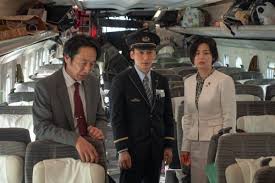
We meet the vast array of characters — uniformed personnel of the Hayabusa 60 that sets out from remote Aomori to Tokyo, technicians of the railroad’s control center, the suits at Tokyo HQ, and select passengers from the 300+ souls riding the rails this fateful day.

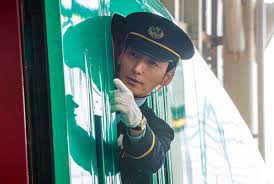
Tyuyoshi Kusanagi of “Doomsday: The Sinking of Japan” stars as white-gloved conductor Takaichi, whose attention to detail and crisp salutes aren’t sinking in fast enough with his subordinate, Fujii (Hanata Hosoda).

“This is is a serious job, you know,” he scolds in subtitled Japanese, or dubbed into English.

The train’s driver is a just-as-meticulous young woman, Mastumoto (Non) who sits in the cockpit alone, reciting her various safety and start-up protocols aloud as they set off.

A huge high school field trip, a scandalized politician (Machiko Ono), an “unemployed rich man” influencer (Jun Kaname) and a sketchy guy with a bulky bag and wearing a respiratory mask are among the paying passengers.

The train gets under way. The bomber phones HQ with threats and a demand — 100 billion yen (702 million in dollars, a figure tariff-shrinking by the hour). How serious is this bomber? A freight train is blown up with an identical bomb to get the point.

As the people in charge scramble to respond, politics interferes and the passengers are abruptly made aware of their plight. Some panic, cast blame and insult the “Sugar Mama” politoc. And one takes matters into his own hands. The ransomer wants “all of Japan” to pitch on this? Fine. Let’s set up a Go Fund Me page. All those kids on “Insta” spread the word.

Meanwhile, an audacious “rescue plan” is cooked up at HQ. How do you defuse a bomb you haven’t located on a fast moving train? What might plan B be?

One of the cute touches here is somewhat jarring if this is the way these trains, which have been around since the early ’60s, are operated. Officials communicaste with land lines with flashing red lights, a situation room features models and ancient and simple what-train-is-where display board and wind-up stopwatches are used to time speeds and operations suggest that the world’s onetime digital electronics leader is still running its rail network in an analog world.

“Tradition?” No money for upgrades? Union rules? It is to laugh. And perhaps that’s meant to be a joke, as the film itself is so old fashioned as to be creaky.

The picture’s turn towards “Give me a break” nonsense roars in with the third act. Before that, we’re treated to a few too many scenes of cool-headed professionals performing their professional duty professionally.

But the odd moving moment, acknowledgement of “duty” and comically absurd throw-down over what decision should be made and by whom enlivens the proceedings, even if it doesn’t come close to overwhelming the intentional or unintentional silliness of stiff actors playing all this so very seriously.

Rating: TV-14, violence, blood

Cast: Tsuyoshi Kusanagi, Non, Machiko Ono, Daisuke Kuroda,
Jun Kaname, many others

Credits: Directed by Shinji Hiruchi, scripted by Kazuhiro Nakagawa and Norichika Ôba. A Netflix release.

Running time: 2:14

Posted in Reviews, previews, profiles and movie news | Tagged , , , , , | Comments Off on Netflixable? A mad bomber plots a “Bullet Train Explosion”

Documentary Review: “Tom Dustin: Portrait of a Comedian” pre-rehab

So a 50ish alcoholic manic depressive comic moves to Key West to run a comedy club.

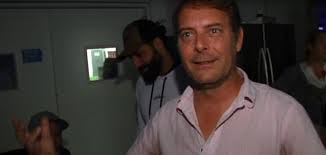
Sounds like a movie, right? Well, it did to Joe List. And as he’s one of the hot comics of his generation, he got a film crew together and went to cruise ship era Key West for a weekend — not terribly long before Key West troubador Jimmy Buffett died —  a sort of bacchanale/interview and let’s-do-some-sets-together with his career-long friend Tom Dustin.

“Tom Dustin: Portrait of a Comedian” sets up as another version of Jerry Seinfeld’s documentary “Comedian,” a depiction of the life, the ups and downs of the work, as seen via one guy who “made it” and one who never will.

Generously taken, it’s a filmed effort by List to immortalize a colleague who, as Dustin himself notes, will be “forgotten” without a Netflix, HBO or whoever stand-up special to capture his persona and his act on film. More generously, it could be that List figures his talks-about-his-issues-on-camera friend is not long for this world.

Aged, touristy and booze-and-drugs-soaked Key West was built on benders, and from the looks of things, Dustin’s been on one the whole time he’s been there.

But that’s observed rather than hammered home in a shapeless documentary that is filled with anecdotes that List wants to call “stories” as he’d originally thought to title the film “Tom Dustin: Storyteller.”

Let. Me. Guess.

With a Key West friend and fellow comic noting that “Tom has about 80 stories, and he tells them ALL every day,” and so very many of List’s stories about Tom and Tom’s stories about himself involving drunken escapades that barely merit the “escapades” label — Dustin wetting himself , etc. — and almost all of them are punctuated with or prefaced by a desperate “I FELL off my chair” or “I almost DIED laughing,” List looked at this footage in the editing process and realized it wasn’t funny.

Non-comics use “I like to have DIED” lines to insist what they observed/went-through was hilarious because they don’t have the chops to make it amusing as a bit.

Mercifully 15 minutes shorter than its festival-run length, “Portrait of a Comedian” uses clips of podcast and radio station interviews and snippets of old sets to flesh out the early years of these two Boston lads’ meeting and staying pals as one started up the ladder of success and another took on a grinding gig of appearing at all of America’s Funnybones comedy clubs, barely making ends meet and drinking up his thin profits as he did.

We hear about Tom’s childhood — son of a hustling, huxter used car salesman dad — hear of his “Open Mike Night” success and why he gave up when he bombed on his second outing, only to come back to stand-up after 9-11.

The two comics reference the documentary “When Stand Up Stood Out,” a similarly shapeless 2003 all-star film that captured Boston’s place in the stand-up explosion of a previous era. But they’d have been much better served watching “Comedian,” with its more coherent STRUCTURE, and more intimate observations of the life, the work and its pitfalls.

The grind of the hours, the drugs and impersonal one night stands, it’s all self-destructive and that’s a striking contrast to the jocularity on stage. Stand up’s long been about the damaged-and- angry-about-it struggling to get by, to “make it” and finally get rich and “happy.”

Richard Lewis wasn’t the first or the last stand up to use performance as “therapy,” and that notion has become a “Curb Your Enthusiasm/Marvelous Mrs. Maisel” cliche.

But the proliferation of streaming services just moved stand-up specials from HBO to Netflix. It didn’t really add new big payday venues. Just Comedy Central. And “pilot deals” for sitcoms — the finish line for a previous generation of comics– have all but dried up.

“Comedy Central never rang me up,” Dustin shrugs. And podcasts are for Marc Maron and the already-famous. So here Dustin is, making his mark in a town where a lot of the foot traffic gets back on a ship and leaves by dusk, before comedy clubs open.

Dustin performs laugh-out-loud funny bits, starting a “story” on stage by telling you he’s not going to cross this or that line, but admitting he’s just crossed that line so he’ll just cross several others. But the interviews, filled with tipsy, inside-joke laughter, ring comically hollow. The anecdotes and riffing between the two pals aren’t all that.

Key West and all of its denizens look day-after-a-bender old here, and Dustin notes the whole place is like “a cruise ship that ran aground.” Bingo.

But he’s making a go of Comedy Key West, emceeing and performing, “bringing my (comedian) friends down” for shows, packing the house. Dustin figures he’s found his destiny and seems happy with it. Perhaps. And perhaps constant drinking helps.

A chance ride-by — Jimmy Buffett on a bike — earns a tasteless suggestion that they “keep” that in the movie and chase Key West’s most famous popularizer down “because he won’t be around for long.” They even plug the now-deceased Buffett in the closing credits. But the idiots from BAHS-ton spell it “Buffet.”

Because that’s on brand in this half-assed, unfocused “appreciation” of a pal who probably needs to watch this sober at least once to see how “happy” he says he is and how wrung-out he looks. This isn’t an appreciation. It’s an intervention that lost its nerve.

Rating: unrated, lots of profanity, smoking and alcohol abuse

Cast: Tom Dustin, Joe List

Credits: Directed by Joe List. A Matson Films release.

Running time: 1:36

Posted in Reviews, previews, profiles and movie news | Tagged , , , , , , , , | Comments Off on Documentary Review: “Tom Dustin: Portrait of a Comedian” pre-rehab

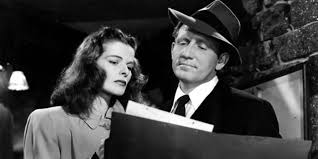
Classic Film Review: It’s 2026 — Are we ready for What Cukor, Hepburn ,Tracy and Donald Ogden Stewart warned us about Fascism? “Keeper of the Flame” (1942)

Big speeches rife with “the F-word”– “fascism” — pack the third act of “Keeper of the Flame,” a mid-WWII MGM thriller that was a tad too anti-fascist for fat cat studio chief Louis B. Mayer. Those speeches also burden a film whose third act is perfunctory and clumsy when much of what’s preceded it crackles with wit, intrigue and a civics lesson that doesn’t play like a lecture.

The second ever Tracy/Hepburn picture bombed at the box office, earned indifferent reviews and an even worse “review” from Mayer. He stormed out of the premiere.

But Oscar winner Donald Ogden Stewart (“The Philadelphia Story,” “An Affair to Remember”) considered this his best screenplay. Working from a just-published I.A.R. Wiley novel, Stewart squeezed “The Front Page” in, with “Meet John Doe” messaging and “Citizen Kane” flourishes (Welles’ masterpiece premiered one year before “Flame”).

And director George Cukor — who, like Hepburn, was cool on the project — produced a soundstage-set marvel that has aged better than anyone would have dreamed back then.

Viewed, listened to and quoted today, “Keeper of the Flame” plays like an undelivered indictment, damning and cautionary, and a movie that speaks to America’s present moment every bit as loudly as it did back in 1942-43.

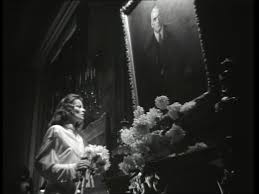
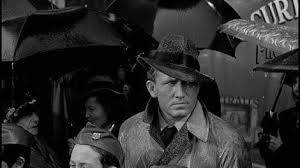
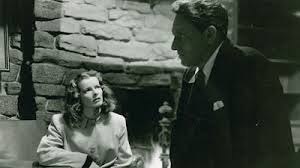
It’s a tale of a heroic, charismatic and cultish public figure, a sort of Charles Lindbergh with Sergeant York’s combat credentials. Robert Forrest dies in a car crash. Spencer Tracy is the veteran correspondant who worked the Nazi Germany beat who now wants to write “The Robert Forrest Story” “so that people will still hear his voice.” Katharine Hepburn is the Great Man’s widow who isn’t so sure that’s a good thing.

Forrest was almost nominated to run for president, a man who inspired nationwide “Forward America” “Americanism” clubs, including the uniformed Robert Forrest Boys Army for America out to displace the Boy Scouts. He died driving off a bridge on his large private estate, because he moved in monied, influential circles.

All the red flags — or baseball cap — warning signs are there. All the celebrated Steve O’Malley has to do is get close enough to the widow to discover “the truth.”

“It’s a pity how easily people are fooled.”

The wisdom of cabbies, country doctors and skeptical fellow reporters is embraced and celebrated.

“Some people don’t fully appreciate the importance of newspapermen as public servants.”

Ah, but to his peers and competitors, O’Malley might not be the ink-stained savior he’s built up to be.

“Oh, he’s a journalist, not a newspaperman!”

A “Kane” styled montage covers the car wreck and press coverage of the unseen/unheard Forrest, ending with O’Malley’s arrival in the press scrum covering this famous figure’s funeral.

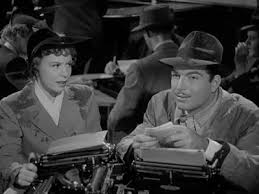
Audrey Christie plays an old crush, also on the story, cracking wise about all “Joshua (O’Malley) has to do is blow his horn” and the widow Forrest’s “walls of Jericho” (her silence) will come tumbling down. Stephen McNally plays an even more recognizable “type,” Freddie — the against-the-grain reporter who doesn’t “do” hero worship and is the wiser for it.

O’Malley finds a weeping child (young Dwayne Hickman, decades before “The Many Loves of Dobie Gillis”) who blames himself for his idol’s demise. He runs into an unpleasant, ne’er do well relative (Forrest Tucker), a worshipful hotel clerk (Donald Meek), an embittered employee (Howard Da Silva), a doubting doctor (Frank Craven) and a droll and chatty cabbie named Orion Peabody (Percy Kilbride).

“There’s always good and evil, up against each other,” Orion opines. “A man’s gotta take sides, sooner or later.”

Whatever the embarassment of riches in the supporting cast, we aren’t allowed much time away from our leads, with a reporter turned fan turned would-be suitor who wants to “protect” the widow, because he doesn’t see how she and Forrest’s fanboy private secretary (Richard Whorf) are whispering about manipulating him and burning Forrest’s papers as fast as they can round up some matches.

Tracy is the stoic he needs O’Malley to be, and Hepburn the smart cookie who skips between staying one step ahead of the snooping reporter, and one step behind him.

The plot never wholly unravels, but the logical lapses trigger abrupt turns of the third act, and invite long speeches about great wealth’s ties to fascism and conspiracies to “stir up all the little hatreds of the whole nation against each other” and the use of social/ethnic/racial division to end democracy.

Whatever the merits of the novel, Stewart’s script is topical and shockingly timeless, with lovely turns of phrase and flashes of the sort of wit that decorated the comedies and comic thrillers of the era.

“Did it hurt much?”

“Did it hurt when?”

“Did it hurt much when Hitler kicked you out of Germany?”

Christie has “the Hepburn role” of the flirty reporter who banters with Tracy’s rival writer O’Malley, although a few of the Kate/Spencer exchanges have a nice flash.

The soundstage-bound settings and effects impress in monochrome in ways that a color production would have spoiled. This feels and plays black and white, not “noir” but grimly serious and downbeat.

Even if the story had followed that first act of steady build-up to a fine, furious finale instead of the third act action feeling so shoehorned in, there’s little doubt that Mayer, later a Hollywood Blacklist backer, would have still hated it.

But watching this film over eighty years later, one does wonder if the message of “Keeper of the Flame” was taken as seriously, even back then, as it should be today.

Rating: TV-PG

Cast: Spencer Tracy, Katharine Hepburn, Richard Whorf, Howard Da Silva, Dwayne Hickman and Forrest Tucker.

Credits: Directed by George Cukor, scripted by Donald Ogden Stewart, based on a novel by I.A.R. Wiley. An MGM release on Tubi, other streamers.

Running time: 1:40

Posted in Reviews, previews, profiles and movie news | Tagged , , , , , , , , | 1 Comment

Classic Film Review: It’s 2025 — Are we ready for What Cukor, Hepburn ,Tracy and Donald Ogden Stewart warned us about Fascism? “Keeper of the Flame” (1942)

Big speeches rife with “the F-word”– “fascism” — pack the third act of “Keeper of the Flame,” a mid-WWII MGM thriller that was a tad too anti-fascist for fat cat studio chief Louis B. Mayer. Those speeches also burden a film whose third act is perfunctory and clumsy when much of what’s preceded it crackles with wit, intrigue and a civics lesson that doesn’t play like a lecture.

The second ever Tracy/Hepburn picture bombed at the box office, earned indifferent reviews and an even worse “review” from Mayer. He stormed out of the premiere.

But Oscar winner Donald Ogden Stewart (“The Philadelphia Story,” “An Affair to Remember”) considered this his best screenplay. Working from a just-published I.A.R. Wiley novel, Stewart squeezed “The Front Page” in, with “Meet John Doe” messaging and “Citizen Kane” flourishes (Welles’ masterpiece premiered one year before “Flame”).

And director George Cukor — who, like Hepburn, was cool on the project — produced a soundstage-set marvel that has aged better than anyone would have dreamed back then.

Viewed, listened to and quoted today, “Keeper of the Flame” plays like an undelivered indictment, damning and cautionary, and a movie that speaks to America’s present moment every bit as loudly as it did back in 1942-43.

It’s a tale of a heroic, charismatic and cultish public figure, a sort of Charles Lindbergh with Sergeant York’s combat credentials. Robert Forrest dies in a car crash. Spencer Tracy is the veteran correspondant who worked the Nazi Germany beat who now wants to write “The Robert Forrest Story” “so that people will still hear his voice.” Katharine Hepburn is the Great Man’s widow who isn’t so sure that’s a good thing.

Forrest was almost nominated to run for president, a man who inspired nationwide “Forward America” “Americanism” clubs, including the uniformed Robert Forrest Boys Army for America out to displace the Boy Scouts. He died driving off a bridge on his large private estate, because he moved in monied, influential circles.

All the red flags — or baseball cap — warning signs are there. All the celebrated Steve O’Malley has to do is get close enough to the widow to discover “the truth.”

“It’s a pity how easily people are fooled.”

The wisdom of cabbies, country doctors and skeptical fellow reporters is embraced and celebrated.

“Some people don’t fully appreciate the importance of newspapermen as public servants.”

Ah, but to his peers and competitors, O’Malley might not be the ink-stained savior he’s built up to be.

“Oh, he’s a journalist, not a newspaperman!”

A “Kane” styled montage covers the car wreck and press coverage of the unseen/unheard Forrest, ending with O’Malley’s arrival in the press scrum covering this famous figure’s funeral.

Audrey Christie plays an old crush, also on the story, cracking wise about all “Joshua (O’Malley) has to do is blow his horn” and the widow Forrest’s “walls of Jericho” (her silence) will come tumbling down. Stephen McNally plays an even more recognizable “type,” Freddie — the against-the-grain reporter who doesn’t “do” hero worship and is the wiser for it.

O’Malley finds a weeping child (young Dwayne Hickman, decades before “The Many Loves of Dobie Gillis”) who blames himself for his idol’s demise. He runs into an unpleasant, ne’er do well relative (Forrest Tucker), a worshipful hotel clerk (Donald Meek), an embittered employee (Howard Da Silva), a doubting doctor (Frank Craven) and a droll and chatty cabbie named Orion Peabody (Percy Kilbride).

“There’s always good and evil, up against each other,” Orion opines. “A man’s gotta take sides, sooner or later.”

Whatever the embarassment of riches in the supporting cast, we aren’t allowed much time away from our leads, with a reporter turned fan turned would-be suitor who wants to “protect” the widow, because he doesn’t see how she and Forrest’s fanboy private secretary (Richard Whorf) are whispering about manipulating him and burning Forrest’s papers as fast as they can round up some matches.

Tracy is the stoic he needs O’Malley to be, and Hepburn the smart cookie who skips between staying one step ahead of the snooping reporter, and one step behind him.

The plot never wholly unravels, but the logical lapses trigger abrupt turns of the third act, and invite long speeches about great wealth’s ties to fascism and conspiracies to “stir up all the little hatreds of the whole nation against each other” and the use of social/ethnic/racial division to end democracy.

Whatever the merits of the novel, Stewart’s script is topical and shockingly timeless, with lovely turns of phrase and flashes of the sort of wit that decorated the comedies and comic thrillers of the era.

“Did it hurt much?”

“Did it hurt when?”

“Did it hurt much when Hitler kicked you out of Germany?”

Christie has “the Hepburn role” of the flirty reporter who banters with Tracy’s rival writer O’Malley, although a few of the Kate/Spencer exchanges have a nice flash.

The soundstage-bound settings and effects impress in monochrome in ways that a color production would have spoiled. This feels and plays black and white, not “noir” but grimly serious and downbeat.

Even if the story had followed that first act of steady build-up to a fine, furious finale instead of the third act action feeling so shoehorned in, there’s little doubt that Mayer, later a Hollywood Blacklist backer, would have still hated it.

But watching this film over eighty years later, one does wonder if the message of “Keeper of the Flame” was taken as seriously, even back then, as it should be today.

Rating: TV-PG

Cast: Spencer Tracy, Katharine Hepburn, Richard Whorf, Howard Da Silva, Dwayne Hickman and Forrest Tucker.

Credits: Directed by George Cukor, scripted by Donald Ogden Stewart, based on a novel by I.A.R. Wiley. An MGM release on Tubi, other streamers.

Running time: 1:40
Posted in Reviews, previews, profiles and movie news | Tagged , , , , , , , , | 1 Comment

Movie Preview: Kevin Spacey returns from the Wilderness — or Doesn’t — “1780”

Southern fried accent in Revolutionary War Pennsylvania?

That totally tracks. Doesn’t look like much,  but we’ll see, if this isn’t canceled pre release.

Posted in Reviews, previews, profiles and movie news | Comments Off on Movie Preview: Kevin Spacey returns from the Wilderness — or Doesn’t — “1780”

Movie Preview: Blair Witch Myth Marketing Lives! “Weapons”

This August release is mainly interesting because of the way the “Maybrook Missing” children, who (in the film) dashed out of their homes and into the night at 2:17 pm, is being shallow faked into “reality.”

It’s an August 8 horror film, when late hits are rare, but this Josh Brolin/Julia Garner vehicle has buzz and is opening early enough in the month that we know they’re not dumping jt.

And  “This really happened” fake hype gets fans’ attention.

Posted in Reviews, previews, profiles and movie news | Comments Off on Movie Preview: Blair Witch Myth Marketing Lives! “Weapons”

Movie Review: Melodrama polished to a fine sheen, “Bonjour Tristesse”

The serene overheated-via-slow-simmer melodrama “Bonjour Tristesse” leaves its 1950s origins behind in a shimmering new screen adaptation by first-time writer/director Durga Chew-Bose.

Based on the most famous work of French college girl novelist Françoise Sagan, this tale of privilege, petulant manipulation, sex and “sadness,” which is all our guilty, spoiled narrator can summon up, “Tristesse” gives Chloë Sevigny her best role in years. And it shows off the sunny, summery south of France (Cassis, on the Western edge of the Riviera) in all its glory.

This immaculately lit and shot (by Maximilian Pittner) and gorgeously designed (by François-Renaud Labarthe, who did “Clouds of Sils Maria”) and costumed (Miyako Bellizzi) potboiler does justice to Sagan’s “ultimate beach novel” source, even if it never escapes that label.

“Hello Sadness,” as the title translates, has been filmed a few times before, most famously with Jean Seberg, Deborah Kerr and David Niven in the late “Peyton Place” 1950s. Here, Lily McInerny plays the gamine transitioning into cranky coquette Cecile, a petite young teen summering on the coast with her wealthy, indulgent dad (Claes Bang of “The Square”).

Widowed dad has taken up with a vivacious dancer, Elsa (Nailia Harzoune), and Cecile is having a summer romance with the just-as-stylishly thin local Cyril (Aliocha Schneider). But father-and-daughter are the truly committed “couple.” Her mother died a dozen years before, and her father gives Cecile all the attention — they even play solitaire together — and all the latitude any spoiled teenager could want.

They share cigarettes and wine, because, hey, France.

Cecile’s fascination with dad’s free spirited dancer is disturbed when an old friend of both her parents, the Paris fashion designer Anne (Sevigny) comes to stay with them.

Anne is always perfectly put together. Reserved, sophisticated and droll, she’s a blast from father Raymond’s shared past with his late wife.

“We were all obsessed with each other,” Anne tells Cecile about their youth. As the source novel was scandalous for its sex, we can infer from that what we want.

And in any event, it isn’t long before dear old dad is “obsessed” all over again. And the feeling is mutual.

Cecile decides to break Anne and father Raymond up. And in logic that only ever appears in the movies (and their source novels), Cyril and even Elsa join in that conspiracy.

First-time writer-director Durga Chew-Bose fixates on the arid interests of the idle (not so idle in talented Anne’s case) rich. This Canadian co-production resembles many an upper class/elite French tale in the omnipresence of books, with no TV sets in sight, and in the airless vapidity of the conversations of the pretentiously carefree.

“What do you think about when you try not to think about things?” at least sounds profound.

Bang leans into his handsome dash, with leisure costumes that would flatter anyone, and the character’s self-absorbtion, making Raymond’s abrupt has-his-choice-among women tumble for Anne believable.

McInerny hides any hint of teen rebellion, a child most comfortable among adults thanks to her indulgent Dad, but seriously smitten by the willowy, more experienced Cyril. We get lots of closeups of her Hathaway-meets-Hepburn throwback beauty. As performance, we need to sense more of the wheels turning in Cecile’s “I want things my way” head as she attempts to reset her father’s romantic attentions. The film’s leisurely pace allowed room for that, had Chew-Bose chosen to highlight it.

Sevigny, photographed with care as Anne dresses (her own designs), touches up her perfect lipstick and secures the meticulously tight bun in her hair with a pricy silver hairpin, is a portrait in professionally acquired privilege. Of course she drives a Saab convertible. What else would do?

In this and so many other ways, writer-director Chew-Bose gets the externals right. But every immaculately dressed set, every perfectly composed shot, traps her adaptation in its genre and its staid 1950s origins. This melodrama has a Douglas Sirk sheen with Riviera settings. But as we learned in “Far from Heaven,” even Sirk needs to be updated for the scandal of it all to sting.

There’s nothing “scandalous” about the sex and the shifts in affection, and the intended “shock” of the melodramatically inevitable consequences to all of this manipulation isn’t shocking in the least.

Only the underreaction of the many rich, guilty parties — conspirators and the easily manipulated — really hits you. A resigned sigh of “Hello, sadness” is all the consequence-free can manage by way of regret, remorse or apology.

Rating: R, sex, smoking

Cast: Lily McInerny, Claes Bang, Nailia Harzoune, Aliocha Schneider and Chloë Sevigny

Credits: Scripted by and directed by
Durga Chew-Bose, based on a novel by Françoise Sagan. A Greenwich Entertainment release.

Running time: 1:50

Posted in Reviews, previews, profiles and movie news | Comments Off on Movie Review: Melodrama polished to a fine sheen, “Bonjour Tristesse”

Series Preview: Julianne Moore has Milly Alcock, but not sister Meghann Fahy, as one of her “Sirens”

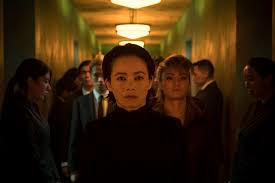
A huge estate on a posh island, lots of “followers” who live at the beck and call of a mysterious beauty only her closest associates call “Kiki,” a sister in search of a sibling who “wasn’t there” for their father’s slide into dementia.

Kinky, cultish, with Kevin Bacon as the “Kiki” husband, with Fahy fresh off of “Drop” and “House of the Dragon” alumna Alcock (George R.R. Martin is every Brit/Aussie/New Zealand actor’s best friend) Alcock, and Glen Howerton and Josh Segarra heading teh supporting cast, this series looks “good life–but at what cost” alluring and drops on Netflix May 22.

Posted in Reviews, previews, profiles and movie news | Comments Off on Series Preview: Julianne Moore has Milly Alcock, but not sister Meghann Fahy, as one of her “Sirens”

Netflixable? Cry “Havoc,” and let’s slip Tom Hardy another ammo clip

Netflix writing a big fat check to the filmmaker who gave us the gonzo Indonesian action franchise “The Raid” was a smart move.

But even fans of the over-the-top mayhem that is writer-director Gareth Evans’ trademark may be moved to mutter, “Damn, how many rounds does that shotgun/pistol/assault rifle HOLD?” in “Havoc.”

Stylized, lurid, with a “Streets of Fire/Sin City” look and vibe, “Havoc” is a guns-blazing “Free Fire” style shoot-em-up where the action’s so fierce it’s a wonder anybody has time to think about reloading, including the script supervisor, the person on set in charge of continuity, the one voice who might say “Hey, shouldn’t Tom Hardy ‘reload’ after all that?”

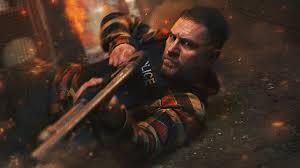
“Havoc” is what Hardy’s character Walker wreaks in a furious display of dirty cop on dirty cop violence, all of it triggered by killing the wrong Chinese Triad gang family heir (Jeremy Ang Jones).

The guys blamed for that just pulled off a tractor trailer hijacking, dumping their washing machine cargo onto cop cars in a furious chase through an unnamed, grimy and grey, neon-spattered city. The leader of that pack (Justin Cornwell) just might be the son of the city’s next mayor.

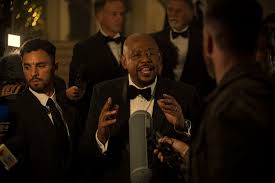
That candidate (Oscar winner Forest Whitaker) just got an investigation “fixed,” and now he’s ready to “fix” the city. Fat chance of that, as he’s corrupt to his core, with corrupt cops — specifically Walker — at his beck and call.

“Dirty Money” Walker is sent to find the son and his girlfriend/accomplice (Quelin Sepulveda) before the Dragon Lady of the Tsui Triad (Yann Yann Yeo, fierce) does. Not that he’s happy about that.

“Your son s–t the bed so bad it’s gonna take a magic WAND to clean this up!”

Other dirty cops, led by Vince (Timothy Olyphant) are also in on the hunt.

The disheveled, slovenly homicide detective Walker, saddled with a do-gooder “uniform” (Jessie Mae Li) as Ms. “We’re not partners, awright?,” struggling to get a pawn shop-purchased gift for his six-year-old daughter this Christmas Eve, has to investigate, torture and shoot his way through legions of mostly-Chinese hoodlums, with a few murderous cops tossed in, to “save” the son and/or stop a gang war.

The British-born writer-director Evans pins us to our seats with that reckless/heedless opening car/truck chase and shootout, and rarely takes his foot off the gas. That’s his style.

The threats are pithy, and terminal.

“I flew halfway across the world to identify my child,” Ms. Tsui growls on the phone to candidate Lawrence. “Now I’m coming for yours.”

“Havoc” is a movie bathed in corruption, with even the uncorrupted aware of what’s going on and tolerating the dirty cops, dirty politicians and dirty money. This is the ultimate dystopia, one brought on when the rule of law is abandoned. It’s anarchy created by oligarchy.

Not all of it makes sense, and a lot of what happens hews too closely to formula. Why do cops always have an old “cabin by the lake” that their old man left them? So they can have a proper setting for the climactic shoot-out.

But the fights — featuring fists, feet, swords and knives and guns — are breathtaking.

And Hardy’s a stoic, steely presence at the center of it all, a tough guy among tough guys, dirtied and bloodied, but moral in that sort of John Woo killer’s code. He makes buying-in easy as we follow a bloody, unsentimental off-the-books “investigation” through confrontation after confrontation on our way to an epic conclusion.

It’s amazing how much “Havoc” you can create when almost nobody pauses to reload.

Rating: TV-MA, bloody violence from start to finish, gunplay, profanity

Cast: Tom Hardy, Jessie Mae Li,
Quelin Sepulveda, Justin Cornwell, Yann Yann Yeo, Timothy Olyphant and Forest Whitaker

Credits: Scripted and directed by Gareth Evans. A Netflix release.

Running time: 1:47

Posted in Reviews, previews, profiles and movie news | Tagged , , , , , , , , | Comments Off on Netflixable? Cry “Havoc,” and let’s slip Tom Hardy another ammo clip