
The co-directors are the star of “Holy Spider” and the direct of “Skin.”
And their star is most famous for the most recent incarnation of “The L Word.”
In theaters June 13.
The co-directors are the star of “Holy Spider” and the direct of “Skin.”
And their star is most famous for the most recent incarnation of “The L Word.”
In theaters June 13.
Laila Lockhart Kraner is Gabby, in case you didn’t know. Gloria Estefan plays her San Fran granny.
Wiig going full Cruella? I could totally see that. Sept. 26
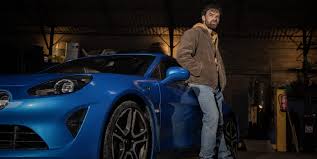
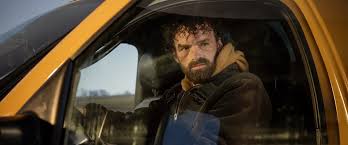


The “Lost Bullet” cops and smugglers franchise, France’s answer to “The Fast and the Furious” films, goes out with fireworks — literally — with “Last Bullet,” a furious and somewhat futile attempt to wrap up all the complications and traffic pileups of the first two films of this trilogy.
It’s hard to keep all the compromised cops, dirty cops, love interests, villains and intrepid survivors of “The Brigade” that set out to crack a Spain-to-France “Go Fast” bikes smuggling ring straight. So in the name of all that’s holy, don’t skip the “summary” Netflix offers as a teaser to this big budget/big effects/big stunts finale.
The first film had an “Oh hell YEAH” attitude — all stunts and chases and fights and action. The second film set out to top the first, furthering the story of an undercover operation gone awry. Piling on plot and killing off characters didn’t do it any favors, but DAMN those chases/that action.
For “Last Bullet,” director and co-writer Guillaume Pierret delivers some of the most expensive and spectacular stunts in recent French film history, which occur in three epic chases involving cars, motorcycles, a helicopter,a semi, assorted Renaults, Peugeots and Mercedes, an armed towtruck and a Brabus customized armor-plated G-wagon.
But the best sequence starts with a three-way throw-down on a Montpellier transit tram.
Our crooked cop-turned-cop killer on the lam Areski (Nicolas Duvauchelle) opens the picture with a couple of hair-raising escapes from assassination in the forests of Germany. Give this guy a motorbike and he’s as good as gone. Give him a chance in a fight and you’re as good as dead.
He flees back to France with ill-gotten cash.
Crooked narcotics bureau honcho Resz (Gérard Lanvin) swaps the captured Alvaro (Diego Martín) for the thief coerced into being a mole inside the smugglers’ gang Lino (Alban Lenoir), who has been imprisoned in Spain.
He lets Lino go? Go figure. This sort of thing happens a lot in this sequel.
Resz keeps his battle scarred dirty cop/fixer Yuri (Quentin D’Hainaut) around to tidy up messes involving Lino, Areski and that bag Areski has with him.
That’s what puts Lino, Areski and Yuri together on that tram. Their throw-down is a fight for the ages, with each using the other two in tag team configuration, or as a weapon hurled against each other.
And that’s before the first big chase, with Areski fleeing on a violently-acquired cop motorcycle and Lino in hot pursuit in a souped-up Alpine through the streets and parks of Monpellier.
Lino gets that Alpine from car customizing whiz Sarah (Julie Tedesco), who ends up providing his lady cop crush Julie (Stéfi Celma) with that G-wagon and himself with an armed-and-dangerous tow truck for the Big Finish.
It takes a bit to recall who is connected to whom, which cops are worth rooting for and which are diabolical.
Some plot points are action cliches — the too-compliant “car” supplier, booby-traps, stashes of cash and the sniveling minion (Charles Morillon) who helps Resz keeps his various criminal plans together.
All the clumsy plot contrivances and laugh-out-loud “No they DIDN’T” crashes and blasts collide in ways that sometimes cancel each other out. It’s more a (somewhat) satisfying “finale” than a logical one. Literally every time bad guys leave others to “finish the job” on this or that character, we know this or that character will amazingly survive it.
But this action climax, silly and over-the-top as it is, is more real stunts and real crashes than your average CGI boosted “Fast/Furious” film. if you’re into the genre and haven’t seen these “Bullets,” by all means do. Just watch them in order because otherwise, “Balle perdue 3” will have you scratching your head between whoops and hollers.

Rating: TV-MA, lots of violence, smoking, profanity
Cast: Alban Lenoir, Stéfi Celma, Nicolas Duvauchelle, Pascale Arbillot, Quentin D’Hainaut, Anne Serra and Gérard Lanvin
Credits: Directed by Guillaume Pierret, scripted by Caryl Ferey and Guillaume Pierret. A Netflix release.
Running time: 1:52
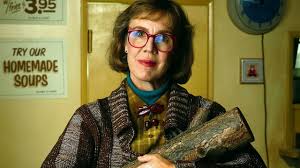

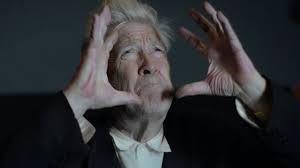
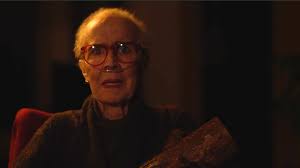
Here it is, in documentary form, the Greatest “Show Must Go On” Story Ever Told.
Richard Green’s “I Know Catherine, The Log Lady” is a moving appreciation of the long life of a working actress, a woman rendered immortal by her quirkiest role, thanks to the fanatical fans of David Lynch and “Twin Peaks.”
But playwright Robert Schenkkan credits Catherine E. Coulson with inspiring his Pulitzer Prize winning epic play “The Kentucky Cycle.” For years, she was a mainstay of the Oregon Shakespeare Festival, which is where they met..
Coulson spent much of her Hollywood career in demand behind the camera as the rare female focus puller/union camera assistant, with the likes of Nicholas Meyer praising her work on his “Star Trek: The Wrath of Khan.”
And Lynch, who gave her that obituary-headlining role, remembers Coulson’s pivotal place in his life and career. He “discovered” her and others in the cast of actors from the San Francisco troupe “The Circus,” several of whom spent years with him making his debut feature, “Eraserhead,” with Lynch lauding Coulson’s in front of and behind the camera efforts in making the eccentric Lynch the film icon he came to be.
“Twin Peaks” fans will love this documentary for the deep dive into creating that singular character and her place in that show’s mythos. After the show and later “Fire Walk With Me” movie wrapped in the ’90s, Coulson was the fan convention attendee who kept the “Peaks” flame alive through the show’s 2017 revival for Showtime.
But after two acts of friends, neighbors and co-stars like Kyle MacLachlan, Michael Horse and Kimmy Robertson sing Coulson’s praises as the series’ version of “The Oracle of Delphi,” Green focuses on something he teases in film’s opening moments.
Coulson was diagnosed with stage four breast cancer just before the last iteration of “Peaks” went before cameras. She made that her life’s last goal — reuniting with her friend, collaborator and fellow transcendental meditation devotee Lynch to “finish” that saga’s story was her reason for staying alive.
A legion of friends, health care givers, actors and even a helpful journalist and accomodating mortuary representative made that their cause, as well.
There are unpleasant reminders of personal tragedies and assorted unhappy relationships, including an abusive marriage to “Eraserhead” star Jack Nance mixed in with the wide array of “everybody loved her” declarations by co-workers, friends and one ex-husband devoted to her.
But it is the film’s depiction of a gutsy trouper determined to get that last performance in that makes this “Log Lady” appreciation sing.
Lynch talks up the transcendental meditation that they had in common, reflects on death and plays his part in making her dying wish come true. And the viewer hears the death watch stories of those closest to Coulson, wondering how on Earth that final appearance was ever going to come off.
As the cliche goes, this film is both sad and life-affirming in its depiction of end-of-life concerns.
What makes it special is the amusing life-spirit who came to embody “Lynchian” with her inscrutable presence, the way she passed along the cryptic wisdom of her pronouncements — “I do not introduce the log,” which she cradled so inscrutably, and her appreciation of all that her longtime friend David Lynch knew, loved and taught her about “Ponderosa Pine.”

Rating: unrated
Cast: Catherline E. Coulson, David Lynch, Kyle MacLachlan, Timothy Near, Miriam Laube, Michael Horse, William Haugse, Mindy Alper, Deborah Satterfield, Kimmy Robertson, Armando Duran,
Robert Schenkkan, Nicholas Meyer and Mark Frost.
Credits: Directed by Richard Green.
Running time: 1:49
,

Australian cinema hadn’t made much of a mark internationally before The Australian New Wave hit in the mid ’70s through the very early ’80s.
In a flash, Australian history, culture, character and mores were broadcast to the big wide world through such classic films as “Walkabout,” “The Last Wave,” “Picnic at Hanging Rock,” “My Brilliant Career,” “Mad Max,” “Gallipoli” and “Breaker Morant.”
Stars such as Mel Gibson, Judy Davis, Bryan Brown, Nicole Kidman and Sam Neill rode that wave to Hollywood. And directors burst through, as filmmakers from Peter Weir and Fred Schepisi to Gillian Armstrong and Bruce Beresford became mainstream stars behind the camera, making hits and even blockbusters in Hollywood.
But such filmmakers’ piercing and often askance view of their own culture, via their early films, is what cineastes still gravite towards.
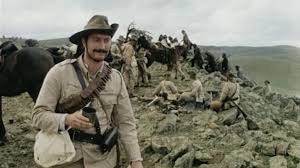
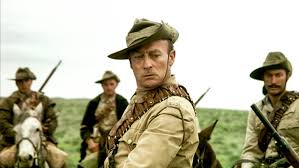
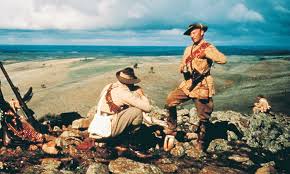
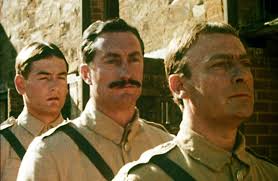
“Breaker Morant” (1980) was Beresford’s big break, a combat film about the largely forgotten “first modern guerilla war,” the Boer War, and a courtroom drama about how such “irregular forces” wars render their combatants capable of inhuman crimes.
“Breaker Morant” was taken as a Vietnam allegory in the U.S. and elsewhere, and as a rallying cry for Australian sovereignty and against English classism and disdain for all things Oz, thanks to a “kangaroo court” court-martial that condemned Australian soldiers serving in South Africa condemned for, as they insisted, “following orders.”
The film, which stretches history to its breaking point in some cases and finds deeper truth in others, looks at how the expediencies of war and the nature of tit-for-tat guerilla conflicts dehumanizes even the humane. But it’s been embraced for something else that’s nakedly obvious to any viewer — nascent Australian nationalism, and Australian victimhood at the hands of the prejudiced empire that sent their “worst” to a country that started life as a penal colony
So Beresford saying “I always get amazed when people say to me that this is a film about poor Australians who were framed by the Brits” seems as patronizing as “Driving Miss Daisy,” which he also directed.
Watching “Breaker Morant” nearly half a century after its release it seems obvious that Beresford and the play and thinly-researched historical novel the film is based on sanitize and heroize a fairly unsavory title character. The immigrant turned horse “breaker,” pathological liar about his background, check-kiting, debt-dodging coward — according to some accounts — was British and insisted on being labeled as such, if that’s any consolation to Australian nationalists who see him as a symbolic hero.
The film is still brilliantly realized on all counts — a period piece of dazzling detail and grimly realized “irregular” combat and summary executions, with terrific, career-making performances by Edward Woodward (TV’s original “Equalizer”), Bryan Brown (“F/X,” “The Thorn Birds”) and Jack Thompson (“Midnight in the Garden of Good and Evil,””The Great Gatsby”).
Woodward has the title role, that of a gruff older lieutenant with a poetic bent. We even see and hear him singing in a flashback that takes him back to his last visit to England.
The narrative is a flashback framed within the trial thrown together by British command in the “dirty war” against the Boers. Three lieutenants, played by Woodward, Brown and Lewis Fitz-Gerald, are accused of shooting prisoners and murdering a German Lutheran missionary. The actual case involved six officers and a wider-ranging set of charges, and the trial’s proceedings were covered up for years after it took place.
Thompson plays the inexperienced Australian solicitor ordered to defend the accused, Major Thomas. He proves up to the challenge, if not able to get around a court-martial triumvirate ordained to convict and shoot these men as quickly as possible as a sop to a possible peace settlement, and as a message to Australians still clinging to their rough and unruly image.
Woodward’s performance allows for moments of fury and florid poetry, and the occasional court outburst in and out of testimony.
“It is customary in a war to kill as many of the enemy as possible,” Morant acidly sneers at his officer class inquisitors.
Not actually a professional soldier, certainly not a career one, Morant (not his real name) is still astute enough to see this as “a new kind of war…We were out on the veldt, fighting the Boer the way he fought us. I’ll tell you what rule we applied, sir. We applied Rule 3-0-3!”
That’s the name and caliber of the British 303 rifle they fought with and used in their firing squads in a “no prisoners” campaign that the accused insist was not just officially sanctioned, but ordered from on high.
It’s no wonder this film was spun as a Vietnam War allegory in the States, with its “whatever works” against a slippery enemy ethics, impulsive reprisals and echoes of My Lai.
The Australian-as-South-African locations recreate the treeless emptiness of a country torn by a war mostly caused by British imperialism, in the person of immigrants pouring in for the gold, cheap land and diamonds and expecting to vote the Dutch and disenfranchised native Africans out of power and say in the region’s future, immigrants backed by invading British armies.
The action is limited, but realistic — even the fictional attack on their garrison that has our three imprisoned soldiers released to fight and save the day, a feature of many a Western.
But what stands out about “Breaker Morant” 45 years after its release is its Australian outrage, the sense that the effete Brits were and are still putting down Oz as a land of brawling, beer-drinking brutes, which cuts at the very core of that hard -and-that-makes-hard-men heritage that’s become a national brand.
And whatever Beresford still says that his breakthrough film is about, that message is but one of several this masterful and sweeping cinematic story sent and continues to send, even as scholars in the intervening years fill in the last blanks of demythologizing the man and that dirty war’s dirty court-martial that was his undoing.

Rating: TV-PG, combat violence, sexual situations, profanity
Cast: Edward Woodward, Bryan Brown, Lewis Fitz-Gerald, John Waters, Vincent Ball, Terence Donovan, Alan Cassell and Jack Thompson.
Credits: Directed by Bruce Beresford, scripted by Jonathan Hardy, David Stevens and Bruce Beresford, based on a play by Kenneth G. Ross and an historical novel by Kit Denton. A New World release on HDNet TV, Amazon, other streamers
Running time: 1:47
Another “true story” exorcism tale, this one co-starring Ashley Greene, Abigail Cowen and Patricia Heaton of “Everybody Loves Raymond.”
No. Seriously. June 6.


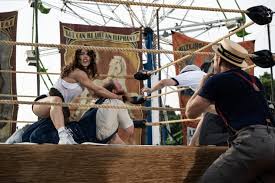
“Queen of the Ring” is a two-fisted crowd-pleasing biopic of pioneering “lady wrestler” Mildred Burke, the “Kansas Cyclone” who rose from dropping men to the mat at county fairs and carnivals to become the first Million Dollar Female Athlete as she transformed wrestling from a male-only sport.
The film lets Emily Bett Rickards graduate from TV superhero supporting roles (“Arrow,” “The Flash”) to leading lady in a star turn that shows her credible in the clenches, a perfectly believable 1930s-50s “kick ass,” an era where women didn’t kick much of anything.
This generally historical “true story” by Ash Avildsen, the son of “Rocky” director John G. Avildsen, may frustrate as often as it delights. But the movie is in the same league as “A League of Their Own” in celebrating women breaking through in a male sport known more for its cartoonish heroes (“faces”) and villains (“heels”) and their scripted “stories” played out in the ring.
These pioneers didn’t just force states to accept women competing in such bouts. They integrated another corner of American sport Black female performances as they became a great draw in during and after World War II.
Mildred Bliss (Rickards) is a frustrated waitress and short-order cook at her mother’s (Cara Buono of “Stranger Things”) Kansas diner, a single mom with dreams of bigger things. She’s become a wrestling fan, and as fading “face” turned “heel” Billy Wolfe (Josh Lucas) is a regular at local fairs and at her diner, she begs him to train her and make her a star.
“Too small,” he huffs. Female wrestling is illegal in much of the country. “Fixed” or not, wrestling is a physically demanding, injurious grind, and “life under the lights” isn’t easy money or easy living.
Even if “controversy creates cash,” there’s only so far one can go as a carnival sideshow attraction. But Billy watches her pin one of the skinnier wrestlers under his tutelage and takes her on. The Kansas Cyclone is soon dropping and pummeling men her weight and larger at fairs all over the South and Midwest.
Billy finds himself smitten, and not just with their burgeoning success. It’s a shame he’s an opportunistic, abusive womanizer. Mildred, never taking her eyes off the prize, maintains the partnership, takes the abuse and even marries the guy once they’ve built something big and getting bigger.
She knows community property law.
Avildsen the Younger immerses in the domestic messiness of all this, in between eager new recruits (Francesca Eastwood, Kaily Farmer, Marie Avgeropoulos) joining up, inspired by “Milli’s” bravado, fame and lifestyle. A “business” marriage to an in-and-out-of-the-ring “heel” isn’t all its cracked up to be, with him bullying her and his son and assistant promoter (Tyler Posey) falling in love with the leading lady of wrestling.
That’s where the film frustrates. Mildred endures abuse, and we’re told more than once how she’s not “allowed” to do what she’s doing in much of the country. We see no signs of her being repressed and denied the chance to perform via sexism. No cops show up to “stop the show.” This denies us seeing another obstacle for her for overcome and another reason to root for her.
Avildsen co-wrote the script, which goes out of its way to fudge or just avoid the issue of “time.” Years go by, characters age, a World War erupts mid-story (and is never mentioned) and we aside from anachronistic music and the passing model years of cars — some in colorized archival footage — we only have a firm grasp of one date — the 1954 title defense bout that turned into a “shoot” — off-script, no holds barred, aka a “real” fight — that frames the story.
Meanwhile, every new woman to approach Billy must be sized-up and shown in her own training montage. Events in the ring don’t always match the historical record as the movie meanders through these events and the era that spawned them.
And bringing in “Gorgeous George” Raymond (Adam Demos, miscast), while historically defensible — he and Mildred were contemporaries and pals — feels shoehorned in and mishandled.
Walton Goggins, cast as early wrestling “tycoon” Jack Pfefer, is a waste of the most colorful member of this ensemble.
But Rickards is quite good — muscular enough to be convincing in the lifts and drops, sexy enough to sell the sex appeal of this corner of wrestling. And Lucas is often at his best as a heel — comical or otherwise.
Whatever its sluggish pace and stumbling grasp of time, “Queen of the Ring” still manages to be a fine vehicle for making a case for women’s equality in a period piece that more than gives this sport and that period in time its due.

Rating: PG-13, domestic abuse, violence, profanity
Cast: Emily Bett Rickards, Josh Lucas, Tyler Posey, Kailey Farmer, Francesca Eastwood, Adam Demos, Marie Avgeropoulos and Walton Goggins
Credits: Directed by Ash Avildsen, scripted by Alton Ramsay and Ash Avildsen, based on the Mildred Burke biography by Jeff Leen. A Sumerian release.
Running time: 2:20
A hardass music mogul faces an old school, off the books ransom/shakedown.
Jeffrey Wright, Ilfenesh Hadera and A$AP Rocky also star in Spike’s latest.
August 22, from Apple/A24




“Hunt the Wicked” is a dopey, cheesy cop-teams-with-a-robber shoot’em-up, punch’em-down, kick’em-where it hurts thriller from China.
A serious read on it has to note its tale of official corruption, with a mayor secretly running a narcotics empire under the noses of the citizens who elected him with the cops who work for him turning a blind eye.
It features a laughably theatrical version of police work — with in-the-dark cops emptying the over-production-designed office for assault convoys on the merest of hunches, with such onslaughts often turning into ambushes.
The characters are arch archetypes to a one — intrepid “hero” police captain (Miao Xie), the trusted and noble lieutenant (Jing Gu) who crushes on him, the violent thief (Andy On) masterminding a take-down of this drug empire and his deadly and fetching “honey” (Hong Shuang), a sniper, always two steps ahead of the police.
The polluted water of the fictional Wusili City is a subtext here, as we see heroes and villains diving into the brownest effluent imaginable and the lying mayor (Andrew Lin Hoy) even drinking it to brag about how he cleaned the river/bay up.
He vomits afterwards, and makes the aide who suggested the stunt pay for his stupidity.
But taking all this new designer drug, whose kinky chemistry professor inventor (Anson Leung) is nabbed and worse in the opening scene, smuggling drugs in cakes of ice (meant to be fish) and supervillain meeting with his peers via a Bond villain lair Zoom call seriously is an exercise in futility.
The fights are what fans will show up for, and they’re decent if not remotely genre redefining.
But there’s another subtext here that’s pretty easy to pick up on, and that might be unintentional, which makes it all the more entertaining.
These two foes really get in each other’s faces. I mean CLOSE up. Once they’ve established that they aren’t going to kill each other, their clenches take on a homoerotic quality.
The rogueish robber Wei Yun-zhou is always asking Capt. Huang to dinner. “Why don’t you eat with me?” in Mandarin Chinese with English subtitles. As we’ve seen the workaholic captain repeatedly refuse food from his adoring lieutenant, it’s notable that yes he will have a bite, thank you very much.
When Wei Yun-zhou later has him tied up, he slices off a bit of sushi that has the cop eat off his knife blade. Wicked sexy.
That suggests an interesting direction that this dull, formulaic and contrived thriller might have taken, the road from foes to bros to “We have so much in common” and “You have a taste for fine food” and picking out wedding china. Not that they call it that in China.

Rating: unrated, violence
Cast: Andy On, Miao Xie, Jing Gu, Hong Shuang, Andew Lin Hoy
Credits: Directed by Suiqinag Huo, scripted by
Ma Lao. A Well Go USA/HI-YAH! release.
Running time: 1:43
“Trinity” is the name of the town in this Western, and a word revered in Spaghetti Western circles thanks to the “They Call Me Trinity” films starring Terrence Hill in the early ’70s.
Native American actress Q’orianka Kilcher (“A New World”), David Arquette of the “Scream” franchise, Tim Daly (TV’s “Wings”), Paris Brosnan — son of Pierce — and Ethan Peck — grandson of Grgeory– are also in the cast.
This one rolls out June 13.

 Movie Nation