“Train to Busan,” the best zombie movie in years, hurled us into a human-caused Korean pandemic and taught us to never ever get too attached to any would-be survivor for long.
It had gut-punching pathos blended in with the endless assaults by the zombie horde, not all of whom could be gunned down, video game shoot-em-up fashion.
Sang-ho Yeon’s sequel, “Peninsula,” is a zombie movie riff on “The Road Warrior” with bits of “Escape from New York” splashed on top. It’s a more conventional, more predictable and more wearing thriller that relies entirely too much on late night CGI car and truck chases through a sea of Walking Dead flooding the ruined streets of post-apocalyptic Seoul.
There’s pathos. Some deaths still surprise us. But this film, featuring a few scenes in English, with a scattering of American and Chinese characters, plays as “You liked that? We’ll give you more” pandering.
Dong-Won Gang plays the “hero,” a Korean Army captain we meet as he’s taking the back roads, trying to get his sister and her family out “the last boat” off the Korean peninsula.
The only one Jung Seok saves, aside from himself, is his brother-in-law Chul-min (Do-Yoon Kim). Both men are haunted by this, and the other horror they’ve seen.
Four years later, the pandemic has destroyed Korea, but remained confined there. An audience watching that in 2020 will find that funny. I did.
Jung Seok and Chul-min are stateless refugees in Hong Kong, relying on the HK underworld to survive. They’re picked for a dangerous mission. Four people will be put ashore at Incheon to finish some cash and gold looting the gang had set up, but which zombies foiled.
Once they’re ashore, the four quickly become two. Because zombies aren’t the only bipeds out to kill them or at least foil their plans.
Kids in an SUV rescue Jung Seok. Chul-min? He’s taken, with the cash truck, by members of Unit 631, a commando force abandoned there. Left on their own, they’ve gone rogue and gone mad. “Wild Dog Hunts” the crazed Sgt. Hwang (Min-Jae Kim) call their search for other survivors. They turn their captives into live sport in a sort of Thunderdome Meet 60 Seconds in Heaven.
Survive two minutes, and you live to eat uncooked Ramen another day.
As a third party, Captain Seo (Kyo-hwan Koo) has his hands on the cash and their sat-phone, getting everybody out, with the cash, is going to be dicey.
Can Jung Seok count on a widow (Jung-hyun Lee), her two little girls (Re Lee, Ye-Won Lee) and their crazed grandfather (Hae-hyo Kwon) in a pinch?
“Peninsula” is basically a digital effects dumbing-down of “Train to Busan.”
Snippets of a cheesy American TV interview bring us “up to date” on the Peninsula and its history (“Reunification” is mentioned). Yank-splaining?
The new “rules” for coping with this version of “Zombieland” are repeated for those not paying close attention the first time.
“Don’t forget, the zombies are blind at night, but sensitive to SOUND.”
Right right, we got it — in Korean, Chinese and English, with English subtitles.
The endless digital truck chases are more wearying than impressive, and as to the plot, there are twists at the end but pretty much only at the end. Even the dialogue feels recycled from many other sci-fi thrillers.
“Get in if you want to live!”
Yes, I’d still rather watch this than “The Walking Dead,” but that’s mainly because this packs a lot of mayhem into 110 minutes, and then has the good sense to END.
“The Fantastiks” hung around American life for decades, lingering like The Ringling Brothers, Barnum & Bailey Circus. You knew it was there, and it seemed it always has been and always would be — even if you never got around to seeing it yourself.
The longest running musical ever, it inhabited its corner of Off-Broadway from 1960-2002, with the odd revival here and there, attempts at getting it a foothold abroad. And its simplicity, adorability and durability made it a favorite of regional and community theaters far and wide.
I know I’ve seen it once or twice on the stage. And I never ceased to be amazed by the actors and singers who got their start in it and affectionately brought it up. Jerry Orbach finally shows America he was a singer, and not a cop, all along with Disney’s “Beauty and the Beast.” Yeah, he told me. It’s not like anybody outside of New York caught him on “42nd Street,” or saw him originate the colorful El Gallo in “Fantastiks” way back in 1960.
Glenn Close and Robert Goulet, Elliott Gould and John Davidson (actor, game show host and Broadway vet, touring with an “Oklahoma!” revival at the time) all mentioned it with love in interviews.
Broadway legend Joel Grey and former New Kid on the Block Joe McIntyre lamented the film’s fate in interviews in the late ’90s — Grey because the 1995 film looked like his last chance at a big screen musical, McIntyre because his movie career was stillborn, waiting for the movie to finally come out in 2000.
But here it, as most everybody missed it in theaters, ignored it on cable or failed to bother tracking down the DVD, the last movie in director Michael Ritchie’s uneven but star-kissed (“Bad News Bears,” “Fletch,” “Golden Child,” “Smile”) career.
And we talk about the show’s history and think of it as we watch because, whatever charms the movie captures in the leap from stage to screen are thin. All its mashed-up stage genres and conventions — commedia del arte, American musical theater, whiffs of this and that — was always going to seem quaint on camera. Ritchie’s sturdy, pedestrian direction and the hit-and-miss casting doom it.
Not that it doesn’t trick us into thinking, “This just might work” early on.
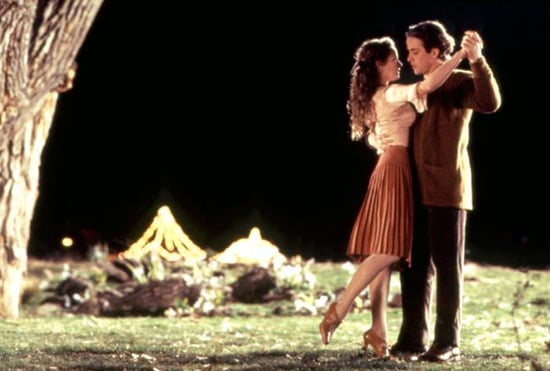
There’s a sparkling love duet sung in front of a silent film, one of the many entertainments The Congress of the World’s Strangest People and Attractions” offers when it stops in a small town in the 1920 Midwest.
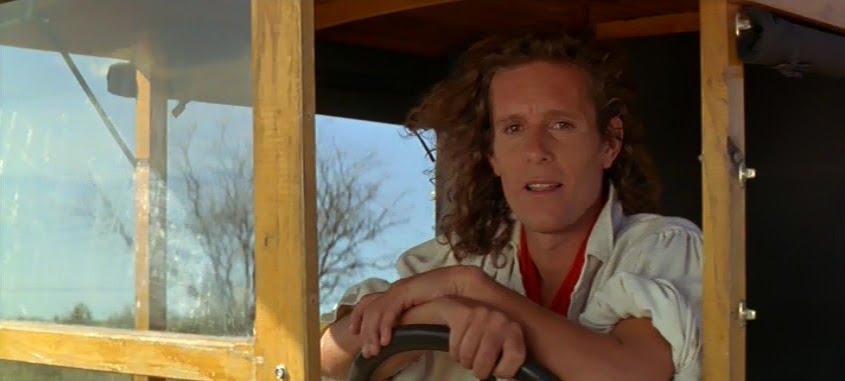
The film’s El Gallo, hustler, con-man, rake and master of ceremonies (Jonathan Morris) never had a break-out film career. But he channels just enough Kevin Kline swagger to delight.
“There is a curious paradox that no one can explain: who understands the secrets of the reaping of the grain? Who understands why spring is born out of winter’s laboring pain, or why we all must die a bit before we grow again?”
Those grand old hoofers Grey, Barnard Hughes (“Doc Hollywood”) and Brad Sullivan (“Slap Shot”) give it their all.
The romantic leads are cute enough, with Jean Louisa Kelly (as Luisa) having a fine voice, and McIntyre never less than an adequate one.
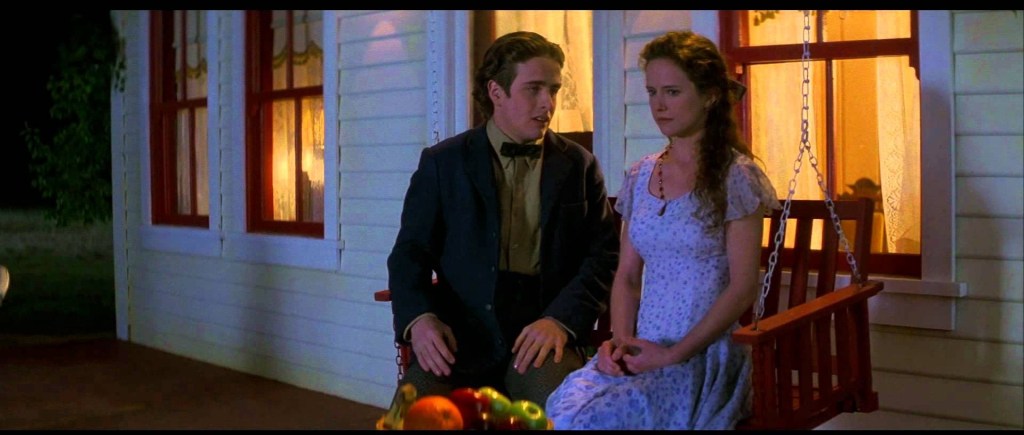
But the movie, bathed in period piece Americana and a goofy plot about two “feuding” fathers (Grey and Sullivan) staging that feud to lure their kids (Kelly and McIntyre) into falling in love, a scheme assisted (at a price) by El Gallo and the Congress players, just lies there.
A few passably forgettable songs and one enduring classic (“Try to Remember”) later, it’s over and fans of the play puzzle over “What just didn’t happen here?”
My first thought was that Ritchie, a set-the-camera-up-and-let-the-actors-do-it filmmaker, was just wrong for this decades-delayed project. Somebody with a more fanciful take, a Julie Taymor/Terry Gilliam of some sort, would have razzle-dazzled it up, or at least given us more of that early “magic” of a traveling tent show.
Hughes, teamed with the silent magician-comic Teller, serves up a little of that “Old Actor” Shakespearean excess, and Morris cuts loose in the few scenes where that’s called for.
Grey and Sullivan vamp through their frenemies duet, but most of their scenes play flat. The intimate musical’s energy and heart is lost when it is “opened up” and exposed to the elements.
That seems to be the crux of the problem. You can’t open up something this delicate, dainty and dated for the screen. The reasons it took so very long to become a movie and such a malnourished one at that was that generations of film folk with adaptation expertise recognized “The Fantastiks” as slight, a gossamer musical that would die outside the theater. No amount of cash can compensate for that, although a more charismatic cast might have helped.
It is what it has long seemed on the stage, “quaint.” And quaint doesn’t translate to the screen.
MPAA Rating: PG for some bawdy carnival humor
Cast: Jean Louisa Kelly, Joe McIntyre, Jonathan Morris, Teller, Brad Sullivan, Barnard Hughes and Joel Grey
Credits: Directed by Michael Ritchie, script by Tom Jones and Harvey Schmidt, adapted from their stage musical. An MGM release on Amazon, Tubi etc.
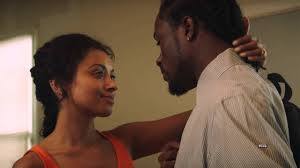
“Lingua Franca” is a subtle and sensual story of two very different people struggling with secrets, trying to find common ground or even a common language to talk about what’s happening to them and between them.
Filipina-American writer-director Isabel Sandoval (“Apparition,” not the horror film) didn’t just find the perfect title for this New York story. She’s written and starred in a story ripped straight from the zeitgeist, about people soldiering through problems, looking for solutions and connections, seeking love and keeping secrets. And if it’s not wholly satisfying, at least their story human in its, and their, shortcomings.
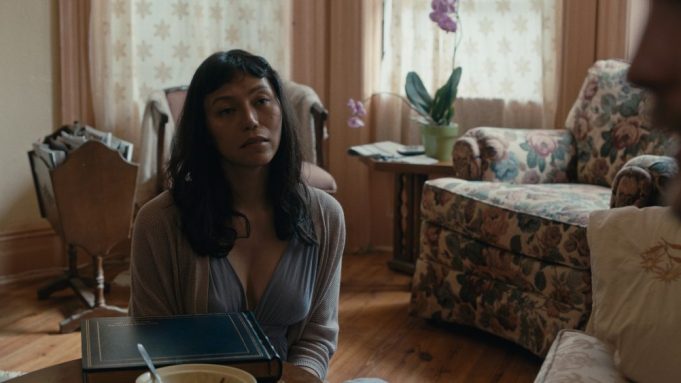
Olivia (Sandoval) is an in-home caregiver to an elderly Russian-American (Lynn Cohen) in Brighton Beach. Olga is having forgetful spells and difficult moments, but Olivia, an Filipina immigrant whose visa has expired, treats her with calm and compassion.
Olivia supports family back home, but has to spend a big chunk of her money saving to pay off Matthew. The only permanent solution to her dilemma, which she is bombarded with in constant “Trump/immigrants/ICE” news updates, is marriage, like others in her plight. Matthew has agreed to marry her for her Green Card. Until he changes his mind.
That’s just the moment Olga’s grandson Alex (Eamon Farren) comes back to town. He’s been working on “a farm” somewhere in the Midwest. His uncle hooks him up with a job at an abattoir, a slaughterhouse/meat wholesaler. He reconnects with the family and with old friends. But his reluctance to drink suggests he wants to avoid old habits.
He moves in to grandma’s house with the idea that he’s going to take up some of the slack there.
Alex and Olivia move from him learning Olga’s routine — “The schedule is there to help you, not control you” — to something closer. He takes an interest in her culture as he helps her run errands to the Ditmas Park Filipino neighborhood. He asks about her language — Tagalog.
But as they connect, each keeps things from the other. They share intimacy and find their “lingua franca.” It’s what they don’t say that’s going to be an obstacle.
Sandoval goes for a subtle, words-unspoken thing here that is only obvious when she punches a point home with the obvious. Olivia doesn’t want just a paid-off marriage of convenience. She wants love, romance and sex.
Putting “Lady Chatterly’s Lover” on her dresser gets that across. But heck, let’s whip out the vibrator to underscore that point.
The chemistry in the relationship isn’t perfect. She talks a lot more than him, and her big problem dominates that conversation. There’s a disparity between their secrets, at least in conventional terms. Each is the stuff of “deal breakers,” but one is downright mundane and the other as current as the cultural dustup over pronouns.
Sandoval is an understated actress, and the director in her lets the simple framing of Olivia alone in a crowded, bustling and sometimes dangerous city get across her isolation and her brave stoicism.
Farren, of “Winchester” and the “Twin Peaks” revival, doesn’t give us much in the way of Alex’s attraction, confusion, neediness and anger. The fact that the guy is stuck working at a slaughterhouse, and accepts that, tells us that he’s bottling up something — a lot of somethings.
I didn’t wholly buy into them or “him” in “Lingua Franca.” There’s too much left out for that sale to be made.
But Sandoval has made a film with cultural currency and the rich texture of a New York setting for a story as immediate as today’s headlines, and just as sad.
MPAA Rating: unrated, sex, nudity, alcohol abuse
Cast: Isabel Sandoval, Eamon Farren, Lynn Cohen and Ivory Aquino
Credits: Written and directed by Isabel Sandoval. An Array release.
This Sept. 18 release looks like a genuine contender, just from its cast — Oscar winners, past and future, a touching topic.
Posted inReviews, previews, profiles and movie news|Comments Off on Movie Preview: Mom Sarandon is dying, and Winslet, Mia W., Rainn Wilson and Sam Neill have to let the “Blackbird” fly
One moment of dialogue in “Cut Throat City,” the latest thriller from the rapper-turned-director RZA pops out as “improvised” or “added by the director on the set.”
It’s a mockery of that “over the top Tarantino s—,” with the punchline being that QT uses the N-word entirely too much.
As much as one is inclined to agree with that assessment, hearing it in a dawdling four-friends-pull-a-heist picture by RZA, billed here as “The RZA,” is hilarious. “Game knows game,” as the saying goes. And whatever perfectly passable action sequences The RZA (“Love Beats Rhymes”) puts over here, it’s the poseur about him that puts him on Tarantino’s level.
Dude’s got to be the most pretentious movie maker making movies today. Proof? Look at how he got two hours out of what should have and certainly could have been a lean, tight 75 minute thriller.
“Cut Throat City” was scripted by Paul Cuschieri, and it has all these sermons, history lessons and life lectures tucked into it, florid turns of phrase that are catnip to “name” actors.
Who gets to make these speeches? Isaiah Washington, playing an erudite undertaker, intoning about his “respectable business” in between elaborate puffs of cigarette smoke.
Ethan Hawke shows up an a settled, monied (ex cop) politician inclined to explain the way things are in His New Orleans. Then his character, in turn, is schooled in an anecdote about the famous pirate Jean LaFitte.
T.I., as gang leader Cousin, gets the “Do y’all know ‘Katrina’ means ‘purification?'” hurricane history lesson, explaining the real estate implications of the emptying out of The Ninth Ward — “accelerated gentrification,” he calls it.
And Terrence Howard as The Saint, boss of bosses, talks about his Old New Orleans family history, and launches into a sermon about these young men in front of him, “born out of wedlock,” statistically unlikely to “graduate high school.”
Only Wesley Snipes, as the estranged father of aspiring graphic novel artist Blink (Shameik Moore of “Dope”), gets away without sounding like a screenwriter’s wet dream windbag.
“You got trouble boy?”
Snipes always was of the Clint Eastwood school — show it, don’t talk us to death about it.
Blink, Andre (Denzel Whitaker), Miracle (Demetrius Shipp Jr.) and Junior (Keann Johnson) are lifelong pals who survived Katrina only to be stuck in a gutted city with no chance of getting by without FEMA help. And FEMA? It doesn’t want to hear about the black, working poor Ninth Ward.
That’s how they come up with the idea of knocking over one of the city’s casinos. That’s how they get permission and help from Cousin.
And the heist? It’s a mess. Somebody dies, something about the police response reeks. The stolen chips and cash figures that turn up in the media are grossly exaggerated. Cousin doesn’t want to hear about the guy who died. He’s Mr. “Where’s my MF’ing money?”
Blink’s wife (Kat Graham) sums Cousin up, and right to his face.
“We’re knee-deep in gasoline, you’re killing people over matches.”
“Cut Throat City,” which takes its name from a comic Blink wants to publish, unfolds by the numbers and unravels in all the expected ways, complete with obligatory strip club scenes.
There is zero urgency to the “get away,” even less to the threats that pile up after that first heist. Because you know they’ll have to pull another just to cover for the first.
And every so often, as the cop (Eiza González) works her way through the city, hunting for her perps, there’s a pause for a lecture, lesson, sermon or pontification.
So even though RZA makes GREAT use of the city and delivers a movie rich with local color and atmosphere, even though characters make relevant points about poverty, exploitation and corruption from the locals all the way up to the Feds, even though he rounded up a good cast, “Cut Throat City” never gets on its feet and on the move.
It’s static, an action picture that becomes a still-life right before our eyes.
MPAA Rating: R (for violence, pervasive language, drug content, some sexual material and nudity)
Disney turns its digital animators loose on a serious subject and a “true story,” albeit one in which the animals talk, with “The One and Only Ivan.”
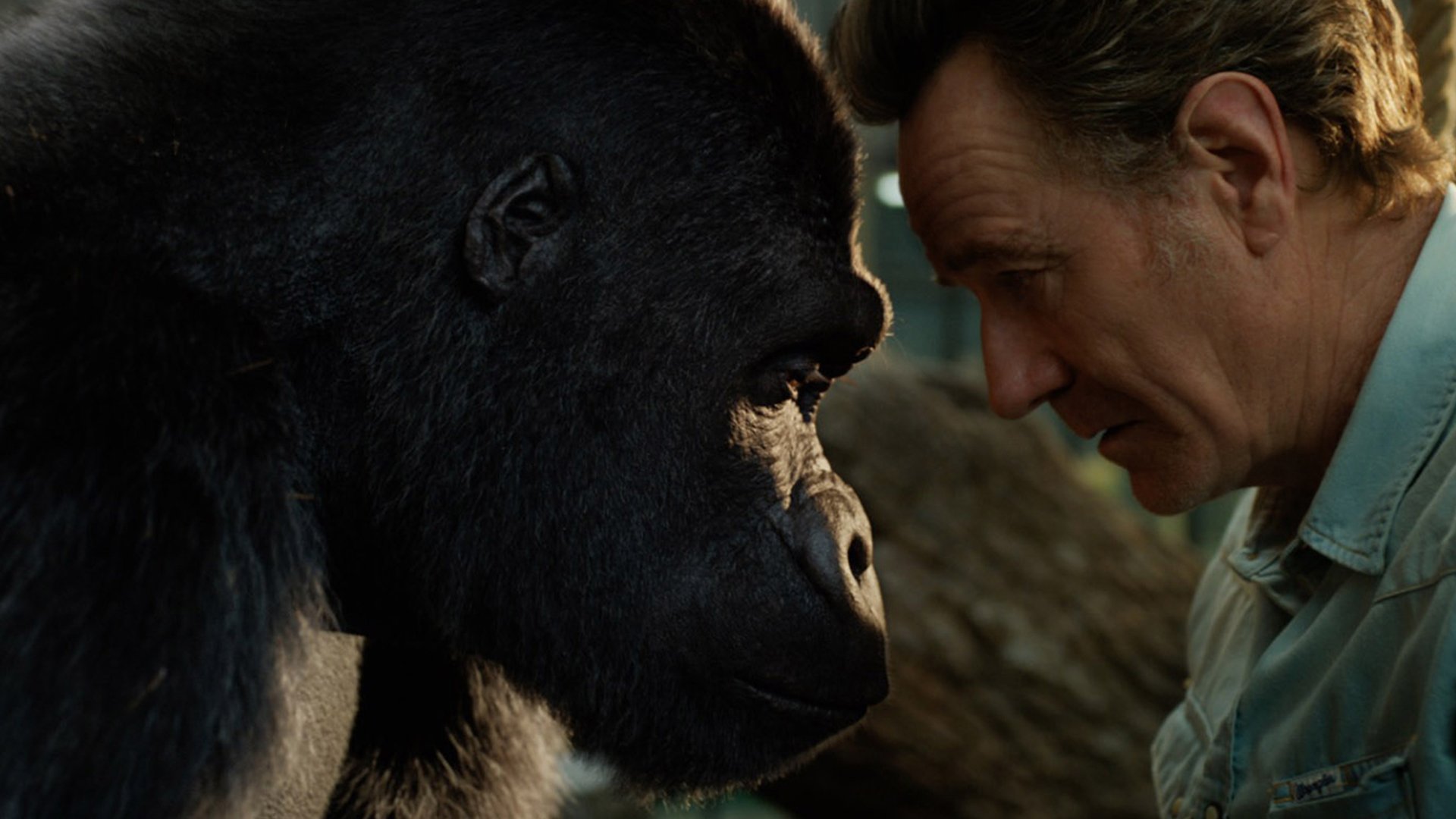
It’s about animals, and a silverback gorilla with the title role, living in a failing mall that’s been repurposed as a circus/zoo. There’s pathos built in via our natural response that wild animals would rather be free and in the wild. The meandering, maudlin and almost joyless story has the animals, Ivan in particular, slow to realize it themselves.
Big Top Mall used to be a hopping place, revitalized by the circus that struggling entrepreneur and Master of Ceremonies Mack (Bryan Cranston) opened up to lure in kids.
Ivan, a gorilla he raised from an orphaned cub, is his star attraction. Ivan (voiced by Sam Rockwell) and his pal, the elephant Stella (Angelina Jolie) can remember “when this place was packed with people.” The mellow, downbeat gorilla resolves to step up his scary gorilla act, even though he learned growing up in the jungle that “anger is precious. Only use it to restore order, or warn others of danger.”
His other confidante is a stray mutt hiding out in his enclosure, a dog voiced by Danny DeVito. Hearing Mack chase the dog with “The last thing we need is another MOUTH to feed,” is a further warning. This circus, like every circus depicted in the movies these days, is struggling.
Might a new baby elephant (Brooklynn Prince of “The Florida Project”) save the circus? Her arrival alters the reluctant to anger/reluctant to act Ivan’s focus. She wonders, “Will we ever be free?” Ivan can’t let her grow up in this sort of captivity.
Stella’s sage advice, “Not all humans are bad. They can surprise you” will be put to the test as Ivan tries to plot an escape.
“Ivan” plays like Disney taking another crack at “Dumbo,” hoping to shove a little more “Madagascar” in their sentimental critter-weeper efforts this time. But was Mike White, whose lightest script was “School of Rock,” the right person to turn this account of a menagerie in the Pacific Northwest that was protested and eventually “freed” from their mall into light entertainment for kids?
Love Mike White (he has a cameo, as a driver surprised by critters). But the answer to that rhetorical question is most certainly “No.”
There are plenty of red herrings, little bits of misdirection in it. Will they effect a “Madagascar” escape? Will Ivan’s cubhood love of “drawing” get their message across to humans, a la “Happy Feet?”
White is hemmed in by the parameters of the “true” story.
The movie steers clear of showing “Humans are bad.” Mack seems like a decent guy, caring but WAY out of step with the times. So there’s no villain to be overcome, no foil/obstacle for Ivan and the elephant, the fire-truck-driving rabbit, football-playing chicken (Chaka Khan) et al to overcome.
You wonder if there was fear of litigation from any of the real humans involved in this true story, or any of the other humans who ran or run such menageries. Florida, for instance, has had its share. And Disney runs a theme park with displaced African animals as a featured attraction.
Rendered toothless, with barely a hint of menace or humor, much less jokes or sight gags, “Ivan” plays as downbeat and dispirited.
It was going to be hard to tell this story, preserve its “Animals don’t belong in cages, children” message and bring entertainment value into that within the strictures of the “true story.”
But the writing, and Rockwell’s introverted, glum vocal performance sets the tone. Casting three Oscar winners as voices (Rockwell, Jolie and Helen Mirren, playing a trained poodle) didn’t do the picture any favors.
Yes, digitally recreating convincing animals is now a Disney Animation specialty. But without the warmth and wit of a good script for them to “act” in, “life like” isn’t enough.
Cast: Bryan Cranston, the voices of Sam Rockwell, Angelina Jolie, Chaka Khan, Danny DeVito
Credits: Directed by Thea Sharrock, script by Mike White, based on the non-fiction book by Katherine Applegate. A Disney+ release.
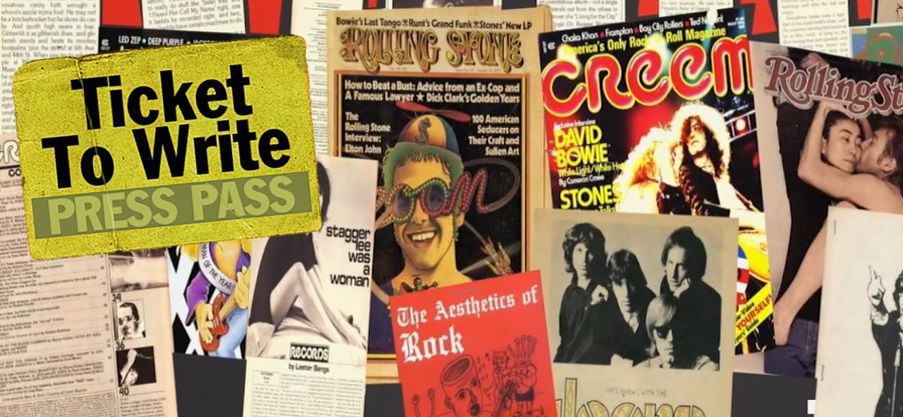
If you’ve caught “Creem: America’s Only Rock’n Roll Magazine,” you might want to check out “Ticket to Write,” which beat that documentary into festivals about four years ago and covers a lot of the same ground.
“Ticket to Write: The Golden Age of Rock Music Journalism” plays like a cheap video rough draft, a proof-of-concept for the more polished “Creem” documentary to come.
But filmmaker Raul Sandelin talked to a LOT of people, including big names from Creem’s “establishment” rival, Rolling Stone. Ben Fong-Torres and Ed Ward are Stone veterans who can speak to the other side of that rivalry. And Sandelin did the hard work of showing how the Creem survivors are the cream of interview crop on this “early rock criticism/journalism” story, the colorful ones with the chewiest anecdotes.
Sandelin, hearing more than a couple of the same stories that the later makers of “Creem” would also hear and include, proved that the more interesting movie would zero in on the zanies of Detroit’s own “alternative” rock rag.
An infamous Creem brawl is recalled by Ward, NPR’s resident “rock historian” and a man who worked at Rolling Stone until the great Jann Wenner “purge” of that early staff, sending Ward to work for Creem.
“Somebody said ‘Black Sabbath is just The Yardbirds, slowed down,” and it was Dave Marsh vs. Lester Bangs, rolling on the floor and throwing punches.
The film briefly sketches in the pre-history of the profession, Ralph Gleason and others writing about rock for newspapers in the very early ’60s. Then in 1966, Crawdaddy! opened in the East and Mojo Navigator in the West, and a new style of writing, reviewing and photographing the music of the day was born.
Rolling Stone “professionalized the whole profession,” Richard Meltzer asserts. He wrote the first serious book on the subject, “The Aesthetics of Rock,” just as the profession was coming to life.
Eyewitnesses, from Creem writers and others who wrote for assorted fanzines that went from mimeographed to offset printing and critics-turned-musicians Chris Stamey (The dbs) and Mike Skill (The Romantics) claim that in those earliest days, “the musicians felt that the writers were co-conspirators.”
This “golden age” predated image control, “publicists” and edicts that no concert photographs could be taken “after the third song.” One interviewee, a Creem photographer, remembers Pat Benatar, who “looked like a wet cat” three songs into a sweaty set, was the one who invented that rule.
Yes, the infamous Memphis rock journalist “convention” is remembered, and yes, the “Golden Age” lasted into punk and went away with disco.
Seeing the parade of aged white faces interviewed here, you can read what you want into that. Creem may have written about Motown, being a Detroit mag. It may have been more open to hiring women. But it wasn’t the most diverse age of journalism and the movie unintentionally hints at the myopia that set in amongst all the Lester Bang worship.
“Ticket to Write” is a valuable document, even if it lacks the polish and pizazz of the Creem documentary to come. Think of it as a mimeographed “history,” preserving voices that won’t be around forever remembering an age that was fleeting, freeing and freewheeling, and became legend in the process.
MPAA Rating: unrated, profanity, stories of drug abuse
Cast: Ben Fong-Torres, Robbie Cruger, Cindy Lee Berryhill, Robert Christgau, Richard Meltzter, Sandy Pearlman, Ed Ward, Mike Skill, Jaan Uhelski, Chris Stamey and the voice of Lester Bangs
Credits: Written and directed by Raul Sandelin. A TV4 Entertainment release, on Tubi, Amazon etc.
If this hasn’t happened to you, you must be taking the train or the bus to work.
A bit of discourteous driving, a honk on the horn in complaint, and the next thing you know, some raving my-life’s-not-my-fault rageaholic is screaming, gesturing, stopping short or trying to provoke some accident or reaction that will allow him to give full vent to the fury that is his beef with the big, wide world.
“Unhinged” taps into that, makes its home there. And thanks to the fact that this film by a start-up studio will be the first American movie to open wide in mid COVID 19 pandemic, it’s the best showcase Russell Crowe‘s had in forever.
Sure, it’s a B-picture, a straight-up rage-on-the-road genre movie in the “Duel,””Changing Lanes” or “Falling Down” mold. But Crowe, overweight and the very embodiment of “gone to seed,” gives this villain-we-all-know a face to fear and a hulking pick-up truck to match.
Because yeah, in much of the country, this “type” is sitting high, driving recklessly and tailgating as if all the risk is on you.
Caren Pistorius, of “Cargo” and “Light Between the Oceans,” is Rachel, the divorcing mom who picked today of all days to oversleep. She’s going to make her teen son (Gabriel Bateman) late for school. Again. She loses “my best client” because she’s late to the lady’s hair appointment. Again.
And matters aren’t made better by the distracted jerk in the pick-up who sits at the light and makes her even later. A blast on the horn doesn’t move him, so she has to peel around him. He glowers.
Of course he makes it his business to catch up, stop beside her and make his point.
“Don’t I get a courtesy tap?”
Maybe he’s got a point. But that’s the only one.
“I’ve been having a hard time lately.”
Oh yeah, bub? “Join the CLUB.”
It’s go-time — a mom in an aged Volvo trying to outrun or out-maneuver a raging psychotic in a giant Ford truck, just to get her kid to school.
After that? That’s when things turn deadly, the stakes are raised and the city streets (New Orleans, subbing for Any City) become a nightmare, not just of traffic snarl, but of being hunted by an aggrieved crazy person who had snapped long before he didn’t get his “courtesy tap.”
“Unhinged” isn’t quite undone by its endless instances of foreshadowing. But everything you see, from the household item Rachel’s houseguests (Juliene Joyner, Austin P. McKenzie) have misplaced to that thing she leaves in her car when she goes to gas up, is UNDERLINED so that we’ll be sure to “get it” when it plays a part in the coming mayhem.
Crowe is intense enough throughout, but his best moments might be the film’s opening, when we see that he’s already snapped and started his rampage in the wee hours of the morning.
The car chases are kinetic and wholly within the realm of believable. No “She must have had stunt-driver training to get out of that” moments. Suspense is heightened by keeping the cameras tight on the drivers as they’re taking these non-performance vehicles to their limits.
Conversely, every time the movie stops for scenes where the villain goes after those closest to Rachel, taunting her by phone as he has his “revenge,” “Unhinged” feels unmoored.
The bodies piles up, the cops are always a step or two behind and if they’d confined this thing to the cars and real-time carnage director Derrick Borte and screenwriter Carl Ellsworth (“Disturbia”) might have had another “Duel” on their hands.
Instead, the tension breaks, again and again.
Pistorius, looking too young to have a teen son, underplays the terror the way her character underplays her “concern” about being late all the time.
And the first movie to “reopen America’s cinemas” proves not worth the risk seeing it in a theater will entail.
MPAA Rating: R for strong violent content, and language throughout.
Cast: Russell Crowe, Caren Pistorius, Jimmi Simpson, Gabriel Bateman
Credits: Directed by Derrick Borte, script by Carl Ellsworth. A Solstice release.


















 Movie Nation