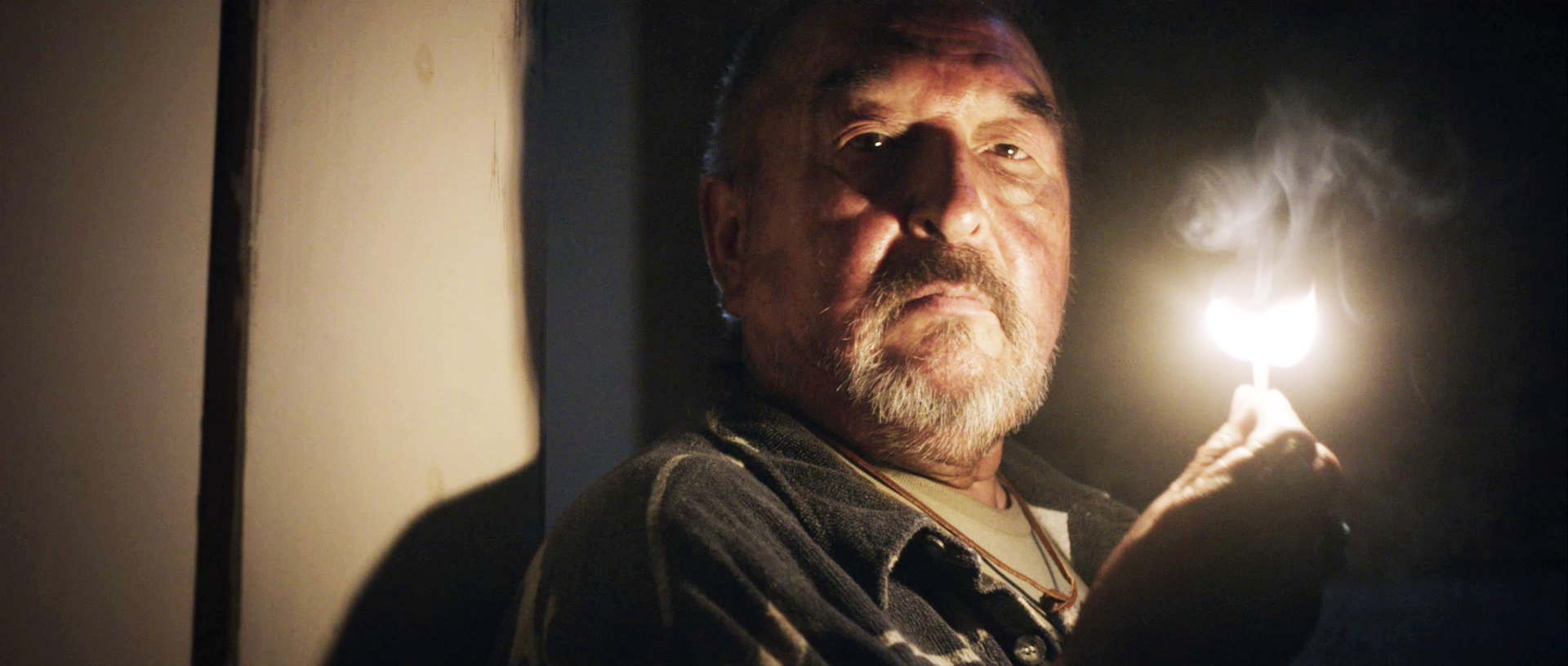
Graham Greene’s been a favorite of mine among character actors for years — going back to “Dances with Wolves,” “Northern Exposure,” on through “Transamerica” and “Wind River.”
He’s made a career of playing sages with a touch of whimsy, often Native American (First Nations, as he’s a Canadian member of the Oneida Tribe).
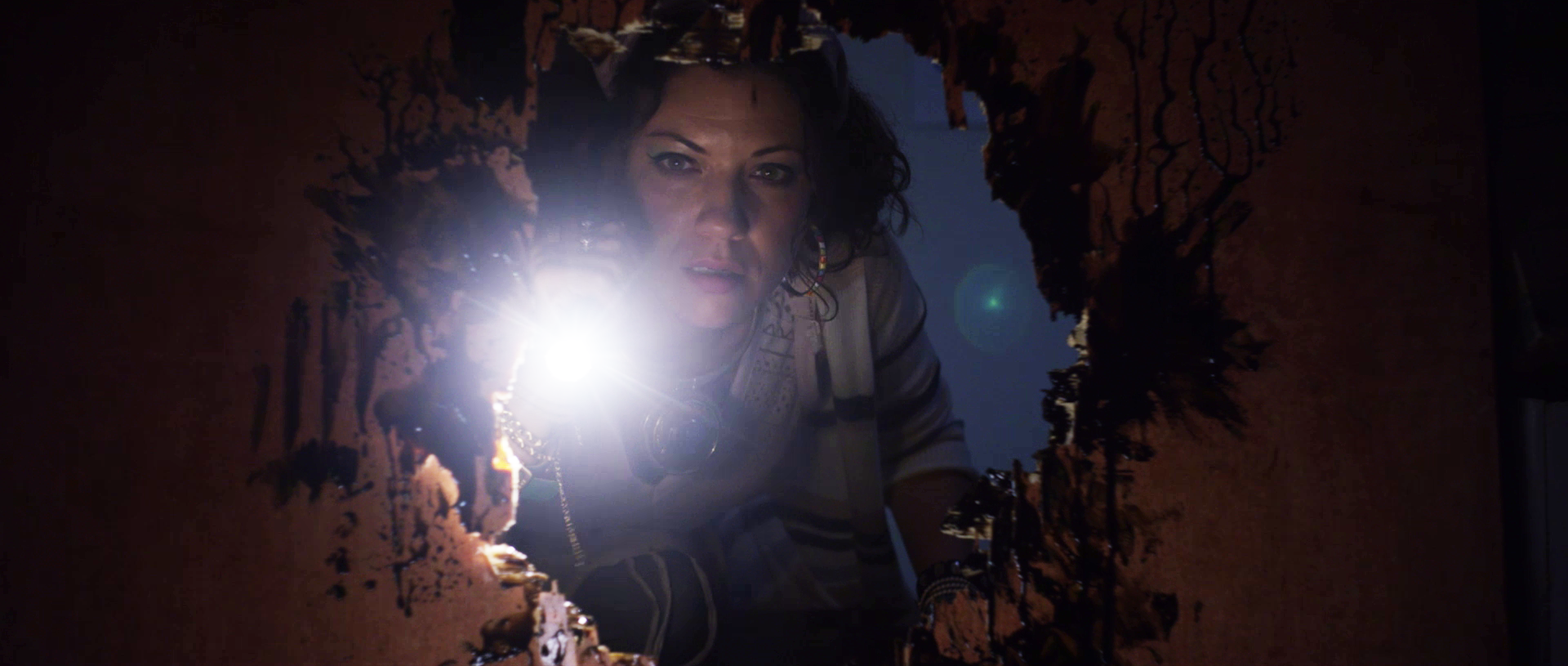
He’s pretty much the sole saving grace of “Tar,” clumsy horror comedy set around LA’s famed La Brea Tar Pits. It’s got maybe two laughs in it, and half as many frights.
The hook here is that there’s tar underneath wide swaths of Los Angeles, they’re always digging and stumbling into it, and that not everything that fell into this prehistoric ooze was killed, leaving only its bones behind.
Co-writer/director and star Aaron Wolf hasn’t directed or acted in anything that’s grabbed anybody’s attention. And his inability to project terror, or even keep a straight face the first time his character Zachary spies “The Man of the Tar” creature in “Tar” kind of explains why.
Zachary and his Dad (Timothy Bottoms, of “Last Picture Show” fame) and employee Marigold (Tiffany Shepis) and Zach’s pal Ben (Sandy Danto) are racing to pack up and vacate the family “repair” business (There’s zero evidence that there’s anything here that could “repair” anything.). They’ve been evicted.
Ben is the sort of lump that gets things rolling in a horror movie with a “Did you see THAT?”
You’re being paranoid.
“YOU’RE paranoid…It felt like the building burped!”
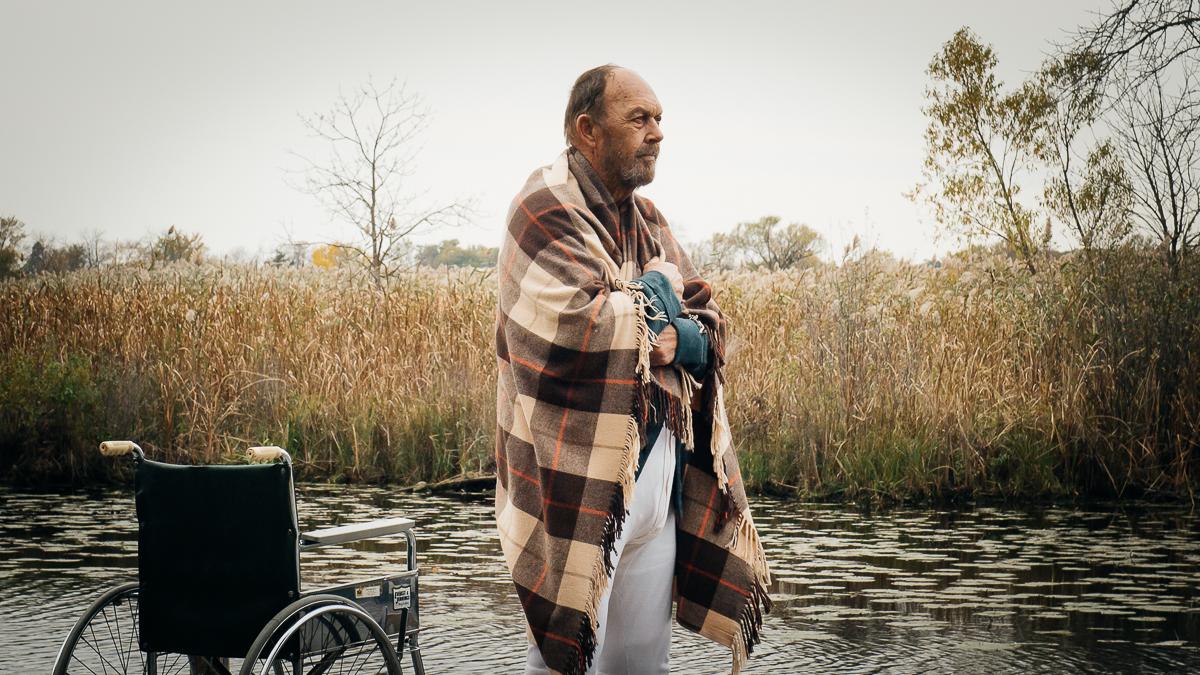
Something is out there, crawling out of the ooze, maybe the something that the homeless guy, Carl (Greene) tells tourists about at the entrance to the Tar Pits, right across the street from this soon-to-be-demolished office building.
“And then I saw things people don’t want to see,” yarn-spinner Carl intones.
Also among those imperiled this night — Zach’s girlfriend (Emily Peachey), the self-consciously busty accountant down the hall (Nicole Alexandra Shipley) and the accountant’s secretary (Dani Fernandez).
There’s some shrieking and some oozing and a little “I save your life, you make out with me” and “I’ve got this all under control.”
None of it’s funny, nothing here is the least bit frightening.
Wolf squandered production money on pointless pop songs (“Sedona”) for the soundtrack, and screen time on random shots of LA construction projects.
The picture is inert. And there are all these inserts, Wolf in close-up in pretty bad makeup telling “the story” of that night to unseen interrogators. Every film has a whiff of “vanity project” about it. Sometimes, that “vanity” makes you wince.
There’s a whole lot of going nowhere slowly going on here. You might be tempted to make a “stuck-in-the-titular-tar” crack about the pacing, but I’m above that.
Let’s just say this is seriously inept and leave it at that.
MPAA Rating: unrated, violence, near nudity, profanity
Cast: Aaron Wolf, Tiffany Shepis, Nicole Alexandra Shipley, Sandy Danto, Emily Peachey, Timothy Bottoms and Graham Greene.
Credits: Directed by Aaron Wolf, script by Timothy Nuttall and Aaron Wolf. A 1091 release.
Running time: 1:37
MPAA Rating: unrated, violence, near nudity, profanity
Cast: Aaron Wolf, Tiffany Shepis, Nicole Alexandra Shipley, Sandy Danto, Emily Peachey, Timothy Bottoms and Graham Greene.
Credits: Directed by Aaron Wolf, script by Timothy Nuttall and Aaron Wolf. A 1091 release.
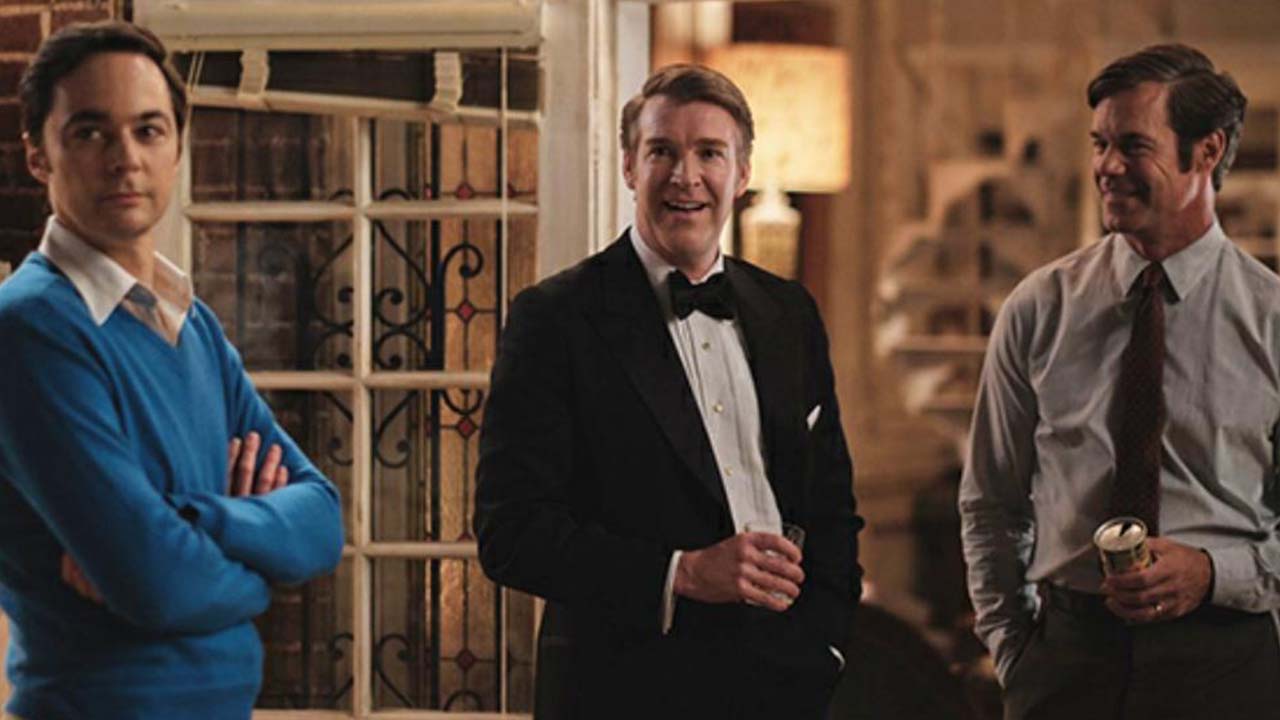
The last reaction I expected the new screen adaptation of “The Boys in the Band” to provoke was indifference. But Tony winner or not, 50th anniversary film remake be damned, there isn’t a whole lot that this stagebound opening of a time capsule brings to 2020.
The great stage director Joe Mantello treats it as the period piece it is, and there’s a refreshing blast of “Look how far we’ve come” as a culture and subculture about it.
Jim Parsons does a passable job of toning down his sing-songy sitcom line readings in the “Big Bang” past.
And Zachory Quinto is acrid and brilliant, and entirely too dashing to be a convincing “32 year old ugly, pock-marked Jew fairy.”
But this production never quite escapes the label of “relic of an utterly binary and bygone era.” A pre-Stonewall/pre-AIDS play and movie(s), its weary gay stereotypes feel positively quaint half a century on.
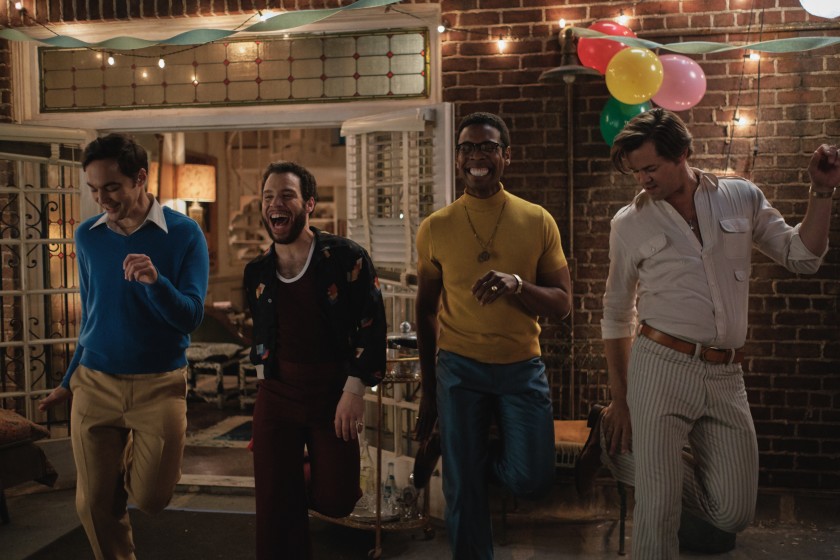
A 1969ish Greenwich village birthday party brings everyone in their circle to motor-mouthed Michael’s (Parsons) apartment.
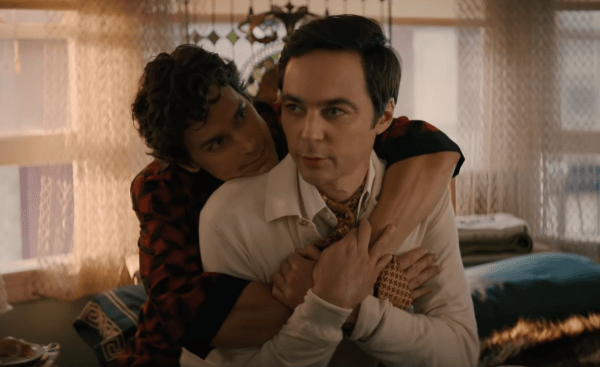
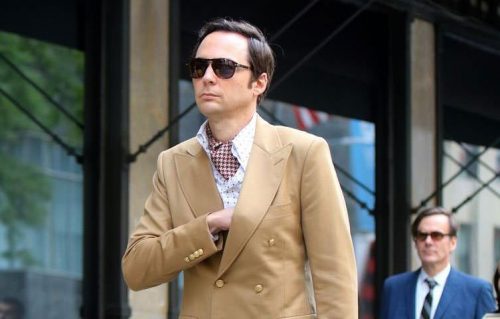
First to arrive is Donald (Matt Bomer), Michael’s sometime paramour, and “a model fairy,” whatever that means. He doesn’t live in the city, so he’s the one who has a ’68 MGB convertible.
Emory (Robin de Jesus, funny) is flamboyantly swishy and dishy and ulfiltered. He’s arranged a somewhat dimwitted “escort” dressed (badly) as “Midnight Cowboy” (Charlie Carver, amusing) gift for the guest of honor.
Bernard (Michael Benjamin Washington) and the bickering couple Larry (Andrew Rannells), who is always on the make, and his wounded older lover Hank (Tuc Watkins) and the rest have gathered to fete Harold (Quinto), fated to make a late arrival to his own party.
The inciting incident of the evening is a panicked, weepy call from Michael’s college roomie. Michael makes every effort to brush Alan (Brian Hutchinson) off, meet him for lunch, etc. Michael hadn’t come out in college. Alan “doesn’t know.” And the last thing Michael wants to do is subject the man to “screaming queens singing ‘Happy Birthday.'”
He thinks he’s succeeded, and then “straight” Alan shows up anyway, mid-party. His arrival is the film’s most chilling scene, Whatever this wife-and-children businessman was crying about on the phone, his entrance takes everybody, on screen and off, back to the closeted era, with embarrassed eye contact, awkward small talk and pained secret “shame.”
Well, everybody save for Emory.
“He’s about as straight as the Yellow Brick Road.”
I’ve seen “Boys” on the stage and the original William Friedkin film version (more stage-bound than this), and what sticks with you is the bitterness that the last third of the story serves up. The regret over lives lived as lies, love affairs that must kept secret, “happiness” denied still stings.
Harold and Michael’s melodramatic war of wills, bullying each other, the other guests, the “dumb” Cowboy and hapless Alan with demands that they all take unblinking looks in the mirror? That feels very “the kindness of strangers” arch and archaic.
“Beware the hostile fag,” Harold viperously purrs. “When he’s sober, he’s dangerous. When he drinks, he’s lethal.””
Except nobody comes off as drunk. Too many of the characters never stop feeling like “camp” characters, even Parsons and Quinto.
And all the Judy Garland, Maria Montez, TWA and Fire Island references circle us back around to that early impression, the one these “Boys” never shake — “quaint” and “relic.”
MPAA Rating: R for sexual content, language, some graphic nudity and drug use
Cast: Jim Parsons, Matt Bomer, Robin de Jesus, Andrew Rannells, Michael Benjamin Washington, Charlie Carver, Tuc Watkins, Brian Hutchinson and Zachory Quinto
Directed by Joe Mantello, script by Mart Crowley and Ned Martel, based on Crowley’s play and the 1970 screenplay. A Netflix release.
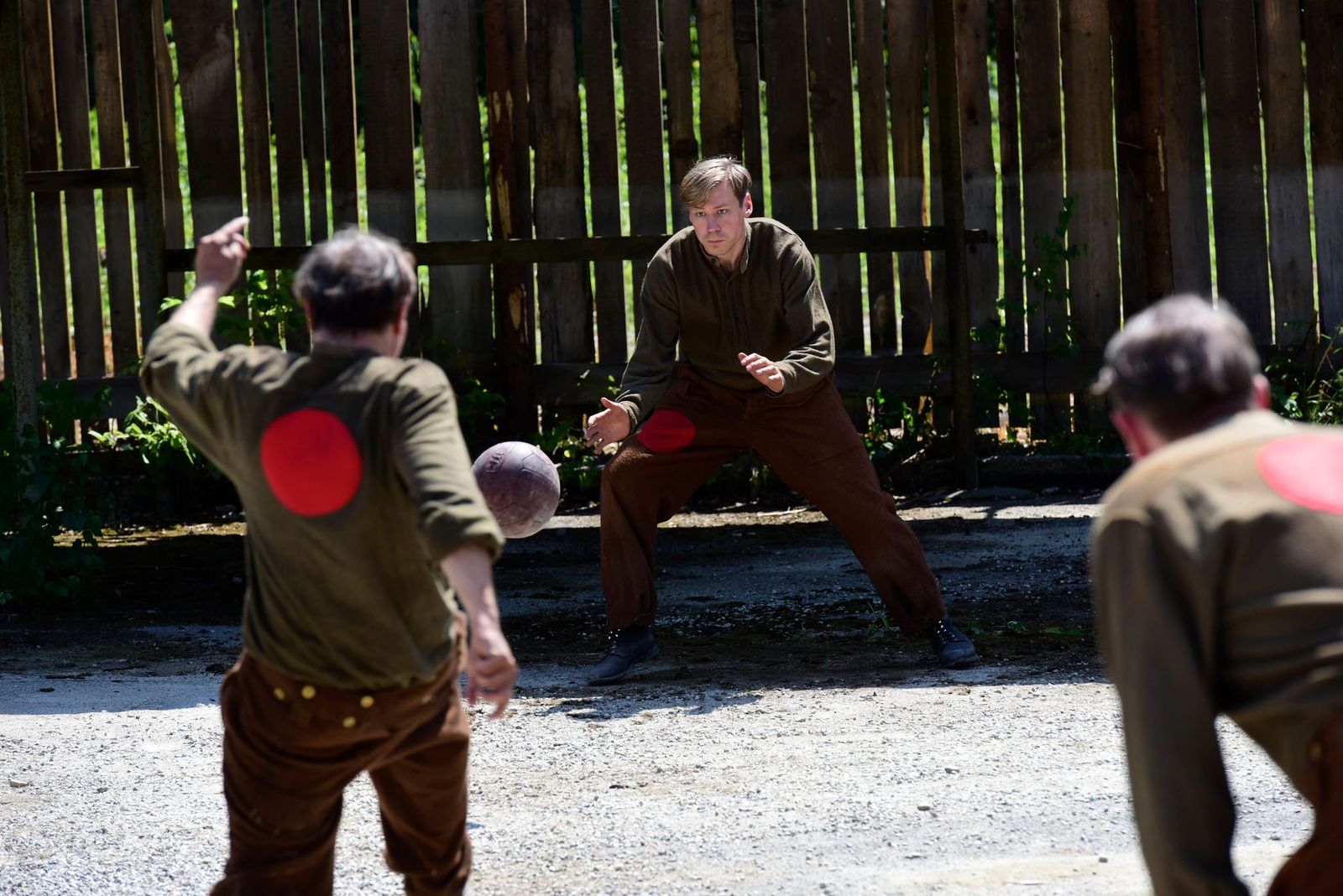
“The Keeper” is a stately, sturdy to the edge of stolid film biography of Bert Trautmann, legendary and beloved goalie for Manchester City soccer from the late ’40s into the 1960s.
It’s what he did before that career that makes his story different. Trautmann was a German paratrooper interned in Britain as a POW, recruited to put on the boots for a local British club before the war was over. And although the film goes to some pains to address the former Hitler Youth member and Iron Cross-awarded military volunteer past, showing attacks of conscience and regret, I can’t say the Nazi-washing feels complete.
You could certainly understand the mass protests when he came on to play goal for Man City in 1949, something director Marcus H. Rosenmüller’s film takes pains to show.
David Kross (“The Reader,” “War Horse”) is Trautmann, captured in early 1945 and sent to a camp in Lancashire. A comrade assures him “We have Nazi discipline in this camp,” a threat designed to keep the prisoners committed to the cause.
As Sgt. Smythe (Harry Melling) would just as soon dig “a mass grave for you bastards,” maintaining that hate for the enemy shouldn’t be difficult.
But gruff grocer Jack (John Henshaw) spies the Aryan blond in goal for a camp team, and thinks he could help St. Helen’s A.C. avoid the dreaded “relegation,” being kicked down to a lower level of British football.
“Play football. Keep your gob shut. Stumm (mute).”
And Jack’s got a daughter Trautmann’s noticed, the fiery redhead Margaret, played by Freya Mavor.
That looks like an offer “Bert” can’t turn down. But he won’t hide the fact that he’s a “Jerry” from his teammates, won’t let Jack bully him into thinking “I’m doing YOU a favor.” And he’s not likely to get anywhere with Margaret. If onl;y he could hear her tirade to her Dad at his little stunt.
“He’s a bloody NAZI. He raised his arm and yelled ‘Heil Hitler” like the rest.”
As Bert bargains his way into off-camp work at Jack’s grocery, Margaret makes the case for not forgiving and forgetting in no uncertain terms.
“You lot” she fumes, killed friends and family and “robbed us of our youth.”
She’ll come round. “Fraternizing with the enemy” or not, if you’ve ever seen a screen romance, you know the stations of the genre cross.
There are any number of points “The Keeper” could dropped the curtain, but this script takes Trautmann well into his professional career, diving into the controversy he stirred up, the firestorm he dealt with in the press.
It takes pains to show Trautmann’s attacks of conscience, the flashbacks that answer the ugly questions of “what you did (or didn’t do) in the war.”
The best scenes aren’t those flashbacks, but the Sgt’s determination to show a concentration camp made by the victorious allies to “re-educate” the “Good Germans” who survived the war, in Germany and in POW camps, and in the way the news the war had ended is broken to the defeated.
The soccer is the usual half-speed variety you see in the movies, and the love story, no matter how slowly the filmmakers think they’re taking it, feels abrupt — more pre-ordained than organic.
And frankly, setting up the Nazi in the camp dynamic and not doing more with Bert’s “fraternization with the English” is a cheat.
But the spot-on period detail and the performances carry this off. Henshaw gives the supporting cast — mostly British TV veterans — heft and heart, and Kross and Mavor have enough chemistry to let it work.
This isn’t an A-picture, either behind the camera or in front of it. It plays like a competent TV film, lacking the polish or “names” of a “Downton Abbey,” but good enough to work.
MPAA Rating: unrated, violence, profanity
Cast: David Kross, Freya Mavor, John Henshaw, Harry Melling, Dervla Kirwan, Chloe Harris and Gary Lewis.
Credits: Directed by Marcus H. Rosenmüller, script by Marcus H. Rosenmüller, Nicholas J. Schofield. A Menemsha release.
Loud, manic, cute and colorful, nobody’ll confuse the Spanish comedy “A Remarkable Tale (Lo nunca visto)” for high art.
But the acting’s fun. And this goofy riff on long-held prejudices, cultural decay and immigration fills the bill if you’re looking for an undemanding film of the “feel good” school of comedy.
High in the Pyrenees in the north of Spain sits the town of Fuentejuela. But our story isn’t set there. It takes place among the crumbling houses, “for sale” signs and decay of Upper Fuentejuela, a village up the mountain from the main town.
It’s “a dead-end town of old people with hideous sweaters,” one self-aware local laments. No doctor, no priest, no snowplow service on a regular basis.
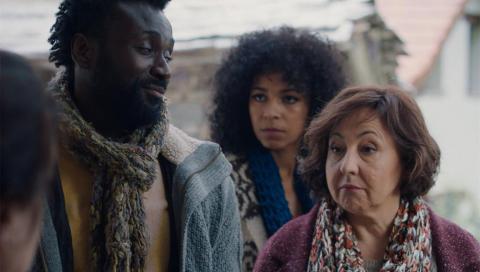
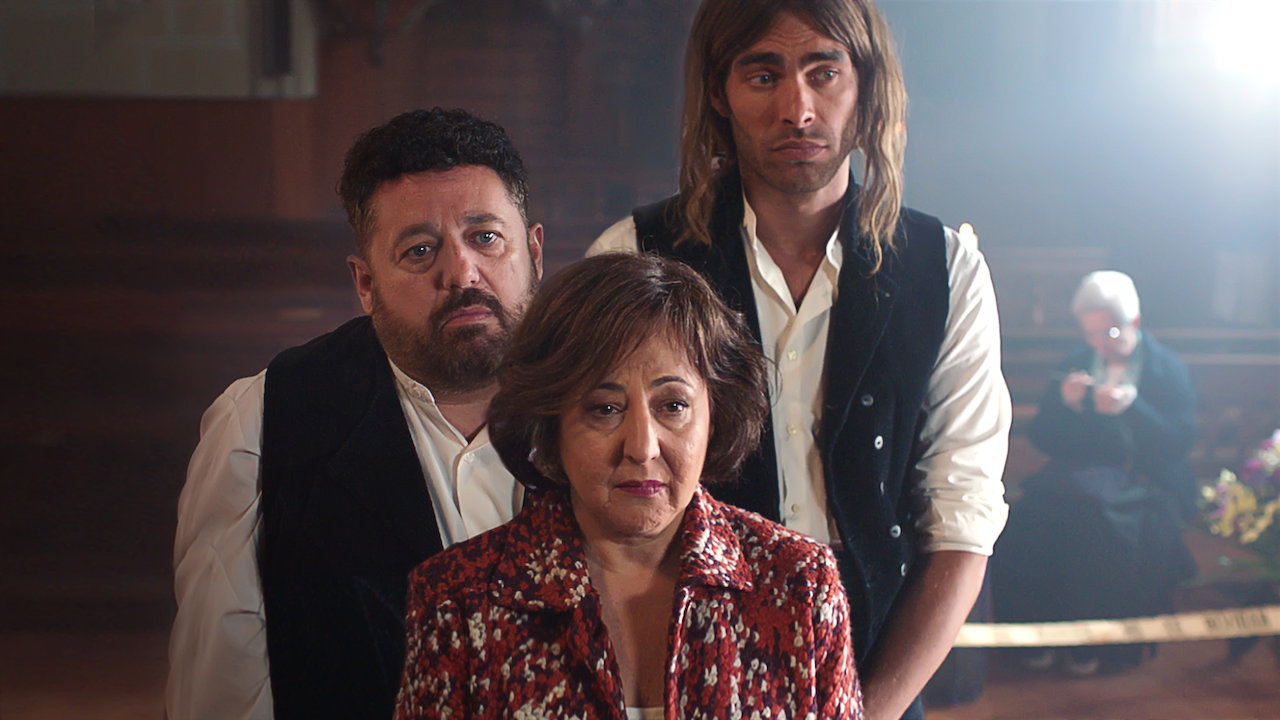
They’re down to 16 souls, and about to lose their “village” census status. “Annexation” is what the mayor “down below” (Paco Tous) harps on. But not if Teresa (veteran comic actress Carmen Machi) and her friend Jaime (Pepón Nieto) have any say in the matter.
Ditched and betrayed by her husband, who moved off the mountain, she’s planning to run for mayor. Jaime is a budding chef who created a signature tart for everybody in the village to make and sell to tourists.
But there are no tourists. And then, these four Africans in pre-colonization tribal wear show up. They’re on the run, dangerously under-dressed for the snowy weather. The Civil Guard is after “four colored individuals.”
The villagers are alarmed. Break out the shotguns! “They’re dangerous, ALL of them,” they bellow (in Spanish with English subtitles). “And UGLY!”
The Africans, whom Teresa and we, the viewer, are allowed to assume are a dance troupe hoping to emigrate, don’t alarm her. Jaime? Sure. But after some adorable language barrier moments, she sees Shukra and Latisha (Ricardo Nkosi, Montse Pla) and Calulu and Azquil (Jimmy Castro and Malcolm Treviño-Sitté) as less of a problem and more of a solution.
“They’re good. And tall. And handsome. Really handsome.
If only she can convince the intolerant and the insensitive around her to see it as she does. Sure, it’ll be “as easy as finding a black guy in the snow.”
OK.
The Africans are mistrusting, saying the same thing about “the whites” that many of the locals are saying about them. Well, not EXACTLY the same things.
“They’re here to take our chickens…our WOMEN!”
Old Paco may wave the shotgun, but Jaime’s mom just wants to know who’d want to emigrate to “this s—hole village?”
Can everybody learn to get along, and quickly enough for a funeral, a festival and the village’s clumsy medieval dance demonstration?
At least the hippy running a failing hippy “commune” (Jon Kortajarena) can’t be racist, right? Well not as racist?
“Hey, I have a tattoo of Bob Marley hugging Nelson Mandela! I CAN’T be racist.”
I laughed a few times at this, winced a few other times. There are two sharp observations about the nature and misguided origins of cultures clashing. Dying European villages like this that recognize the need to “Integrate or die” are popping up in Italy and elsewhere.
And ingrained cultural supremacy has been beaten into generations of Europeans and Americans from childhood. You’ll never use “Clean your plate. They are children starving in Africa” with a straight face and clear conscience again.
This isn’t all that “remarkable,” but “A Remarkable Tale” stays upbeat and positive, and manages to have a little fun with a subject that’s roiled the world for a decade. Cute or not, that’s saying something.
MPAA Rating: TV-MA, profanity, adult situations
Cast: Carmen Machi, Pepón Nieto, Kiti Mánver, Montse Pla, Ricardo Nkosi, Jimmy Castro, Jon Kortajarena and Malcolm Treviño-Sitté
Credits: Written and directed by Marina Seresesky. A Netflix release.
Running time: 1:33
Posted inReviews, previews, profiles and movie news|Comments Off on Netflixable? A dying Spanish village, four African dancers on the lam — “A Remarkable Tale (Lo nunca visto)”
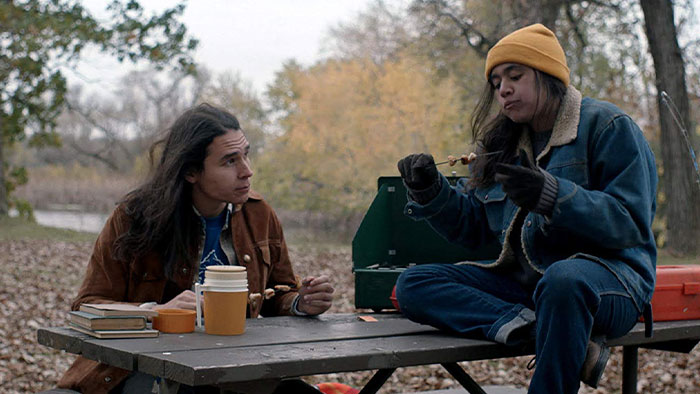
But Margo “Maggie” Crane (Kenadi DelaCerna) is 15, growing up without a mother in the pre-Internet 1970s of Northern Michigan. Her Native American Dad (Tatanka Means) taught her how to work the river, fish and hunt. He never warned her about the uncle next door.
And Margo, after taking the “Wanna go huntin’ with me?” bait, doesn’t recoil at Uncle Cal’s (Coburn Goss) sexual aggression. She leans into it. Curious? Flattered? Turned on?
The fury this act rains down on him — from her dad, Cal’s brother-in-law, and Cal’s enraged family doesn’t seem to register with the teenager. Until she breaks out her Winchester .22 and shoots Cal, escalating matters in ways she could never foresee.
“Once Upon a River” is a drab, downbeat indie period piece built on impulsive, stupid decisions and irrational and emotionally unmotivated reactions to their consequences.
The shooting that upends Margo’s life doesn’t tear her up in ways we can see. She’s got a gun and backwoods skills, access to a rowboat and a mother who ran out on her years before she can try to track down. She can take to the woods. The guilt, fear and anger we might see in a more interesting performance simply isn’t in DelaCerna’s tool kit.
The coming-of-age-on-the-lam story swims or sinks on her performance and every limp plot contrivance musician-turned-writer-director Harloua Rose throws in Margo’s path. And there’s a whole lot of sinking going on.
Rose keeps the look late-fall and wintry and the tone dour, with little moments of magical plot-engineering that promise to house and feed our heroine whenever the chips are down.
She lays low with “safe” friends of her father, meets a sensitive hunky Native writer/adventurer (Ajuawak Kapashesit) just when she needs to, a dying, kindly old coot (John Ashton) at the perfect moment, and even her mom (“True Blood’s” Lindsay Pulsipher, the stand-out in the cast) promises to solve every grim 15 year-old problem her daughter finds herself facing.
We see her dressing wildlife she’s going to eat. But this “camping” she’s doing? The survivalist/live-by-your-wits part of the tale is shortchanged.
DelaCerna’s take on Maggie is timid, as meek and passive as the “pip pip” of her .22, which she brings down deer with. Hey, it’s a movie.
And that rape scene is…seriously 1977 and problematic. Did I mention she’s 15?
The basic ingredients of something gripping, tense and heartfelt, and in an unusual setting and culture, are here. Our director/cook spoiled the stew, with a lot of help from her miscast-cast main ingredient.
“Kajillionaire,” Miranda July’s latest Tales from the Quirky Side, is an almost magically eccentric portrait of longing and lowlife grifting.
It’s as if the filmmaker who brought us “The Future” and “Me and You and Everyone We Know” took a long, hard look at the dark Japanese Oscar contender “Shoplifting” from a couple of years back, and saw the poignancy of lives spent stealing, the gaping hole living from con to con leaves in the heart, and sought to make something silly and romantic out of it.
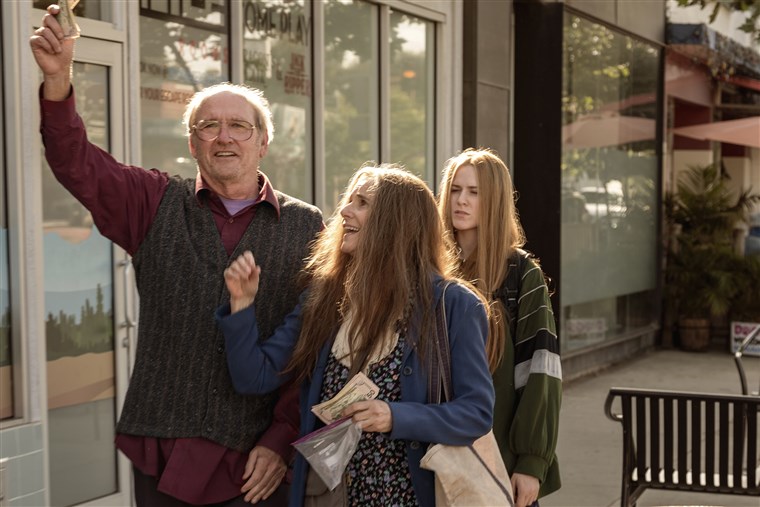
The three of them are old pros, accomplished at avoiding cameras, heartless in picking their marks and ruthless in their haggling when they’re trying to sell what they’ve obtained via illicit means.
But they’re damaged, “off” somehow. Robert (Richard Jenkins) has a head for timing and figures, but fills it with conspiracies and phobias. Theresa (Debra Winger) could pass for a bag lady, but is something of a sage screwball, passing on “Rich people can be very cheap” to their daughter.
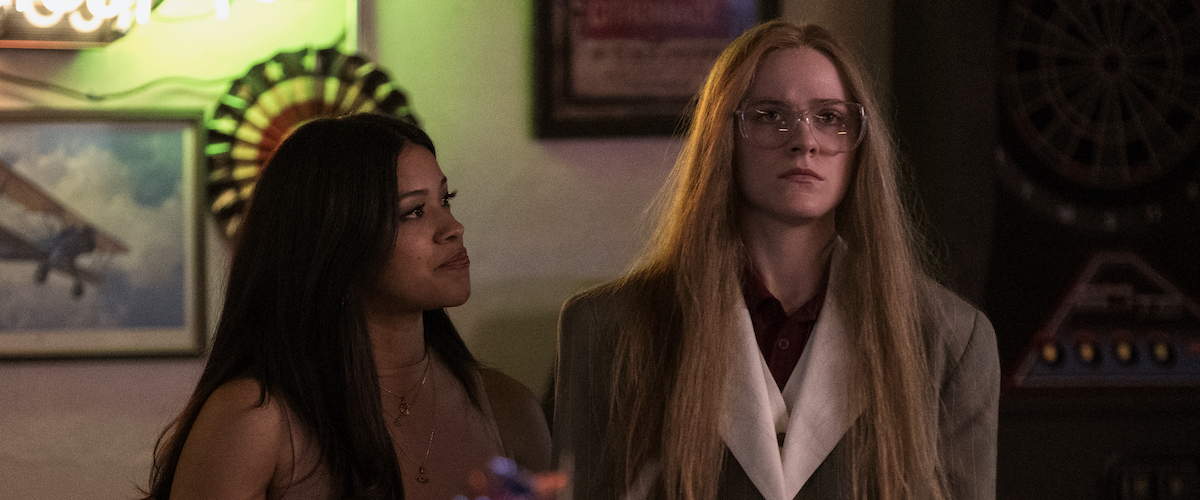
The young woman (Evan Rachel Wood) with the long, uncombed hair? That’s their daughter, Old Dolio, who “learned to forge before she learned to write.” But that name? They’ll explain that later.
Walking the LA streets, we see them in their element — scavengers and pilferers. And now that they’re older, the “parents” lean on the daughter to mastermind and execute their petty crimes and scams.
Her arms are thin enough to raid post office boxes next to the one they rent. She can still pull off “the Catholic schoolgirl uniform” needed to scam parents out of money for “a classmate.” She’s 26, and Wood lets us see guilt, regret and resentment in Old Dolio’s face every time they’re up against it and she needs to make a score.
They obsessively enter online contests to sell the prizes, rent a cheap, dumpy office space next to Bubbles, Inc., some sort of soapworks that leaks mountains of foam into their living space. And they’re behind on the rent. Constantly.
“C’mon, THINK” Robert bellows, plainly expecting Old Dolio to not just tumble into forward rolls to dodge security cameras, but take a “job” to attend the parenting classes some irresponsible pregnant woman they know has been ordered, by the court, to show up for.
That class is where Old Dolio gets confirmation of the love, devotion and nurturing her parents never gave her. To top it off, the jerks are constantly hitting her with putdowns about how emotionally-stunted she is.
“She has tender feelings,” Theresa says of a new acquaintance. “You wouldn’t know anything about that.”
But that new acquaintance, the bubbly, chatty and vivacious Melanie (“Jane the Virgin” alumna Gina Rodriguez) breaks up the “three way split,” throws the team out of balance and generally tips over the apple cart of their cons.
Old Dolio can’t help but see that her parents seem to prefer Melanie’s companionship and assistance to her own, especially when their new “apprentice” pitches a hustle — rob these “old aggros” she knows, irritable, elderly shut-in clients of an optometry practice where she worked. Steal their antiques and sell them.
July created some interesting, conflicted characters, and wrote some funny lines and one absolutely gut-punch of a scene for “Kajillioaire.” But her coup here was the casting.
Winger is all but unrecognizable as a “mother” without a hint of mothering about her, and Jenkins animates every tic and mania Robert keeps in his noggin, a man entirely too highly-strung to be living in an earthquake zone.
Wood, taking a break from “Westworld,” seems too old for the part, which is kind of the point. Old Dolio is trapped in an awful name, stuck in a life with no future in it thanks to those aging parents, and starting to become aware of just how emotionally-deprived she’s been.
Rodriguez delicately balances winsome, sexy and charming with Melanie’s cutthroat instincts, which she’s quick to show off but just as quick to realize aren’t nearly as pitiless as what she sees in this family of vipers.
The one great scene involves an old man, bedridden but grateful to have his home invaders make “family” like noises as he tries, desperately, to breathe his last. Naturally, Old Dolio is saddled with keeping an eye on him as the others figure out what to steal.
“It’s like trying to fall asleep...forever,” he wheezes on his respirator.
Most of the time, July is on the hunt for grins or giggles, getting them from the conflict within the growing “family” and from their weeping, put-upon and always-put-off landlord (Mark Ivanir).
With “Kajillionaire” she’s conjured up a humorously dark character study whose grimmest twists may or may not be real, and certainly aren’t revealed out loud. But an outright remake of “Shoplifters” wouldn’t have the charm and whimsy that are July’s stock in trade.
MPAA Rating: R for some sexual references/language.
Cast: Evan Rachel Wood, Richard Jenkins, Debra Winger and Gina Rodriguez.
Credits: Written and directed by Miranda July. A Focus Features release.
The girl is here, as a tween and later as a teen navigating a rootless childhood with a relentlessly-upbeat dad and a mother whose ambitious spirit was broken before her mind failed her.
The young woman takes a fellowship in India, hearing the stories of lower caste women — misused, abused and raped — bearing witness and becoming “the greatest listener on the planet.” We see her journey into journalism, not finding her place in “a man’s world” but literally creating one where gender is not a liability.
And we see Gloria Steinem in her glory, leading a movement by stressing teamwork, consensus-building and articulating — in writing and in speeches — the scope of the problem and new ways of looking at it.
“The Glorias,” Julie Taymor’s adoring portrait of the feminist icon, doesn’t see young Gloria’s (Alicia Vikander) two years in India in college as mere adventure or “life experience.” She’s drawing a parallel.
This admirer of Gandhi, traveling among native women to learn how he was taught “non violent” resistance by his “mother and aunties,” and discovering women’s issues on the Subcontinent, has been no less revolutionary a figure. Championing women’s rights all her life, ahead of the curve all the way, Gloria Steinem has changed the world. Just like the Mahatma.
Taymor (“Frida,” “Across the Universe”) latches onto an image common to most of America’s civil rights movements — a bus — to tell this story with four actresses. The various Glorias are on it, staring out of its windows, criss-crossing the country to catch up with their itinerant antiques dealer dad, riding to rallies and marchers as older women.
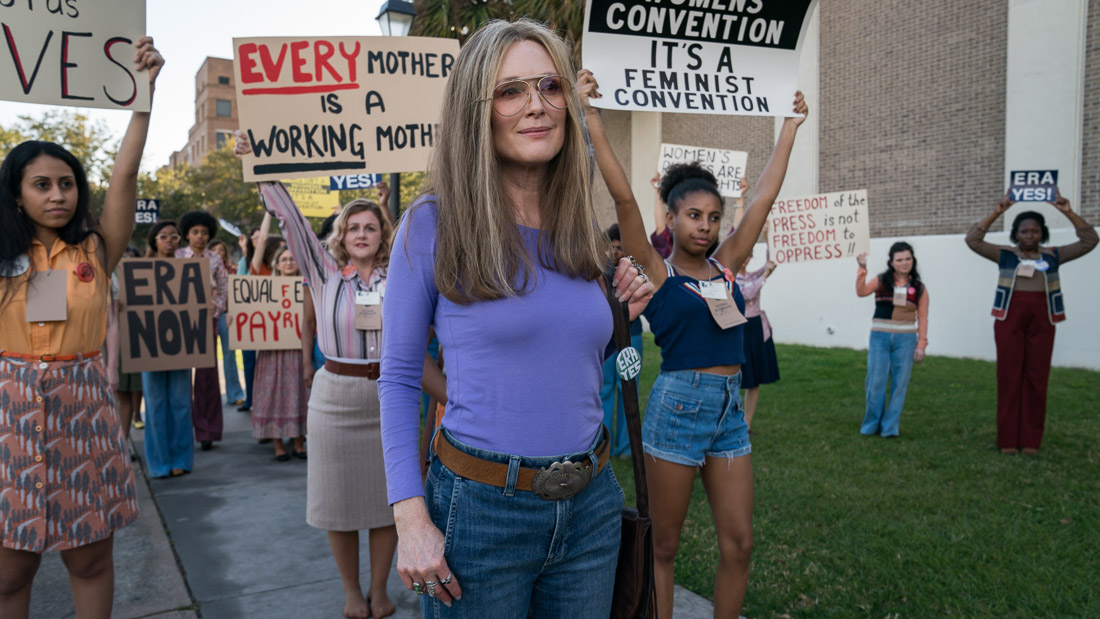
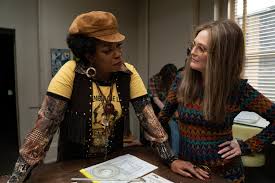
At times, all four Glorias, from the youngest (Ryan Kiera Armstrong) to the teen (Lulu Wilson), to Vikander’s 20something student-turned-journalist, to the older, wiser and battle-scarred Gloria (Julianne Moore) are on that bus together, challenging each other on this formative memory or that future setback or triumph.
“The Glorias” tells a linear narrative with a lot of non-linear touches, skipping backward and forward in time as the story of Steinem’s life moves forward — India to the breakout “undercover” magazine article that made her (“A Bunny’s Tale,” exposing Playboy’s exploitation of its Playboy Club waitresses), the emergent feminist who hears an editor warn her that “You can’t associate yourself with those crazy women” and realizes “I AM one of those crazy women!”
The kids show the trauma of an unsettled childhood, an unhappy mother (Enid Graham) who gave up her career for this life her hustling but always-broke husband (Timothy Hutton, delightful) saddles them with.
Vikander brilliantly gives us the first taste of the Steinem burned into the public consciousness — guarded, preferring “listening” to trotting out her blunt, softspoken Ohio purr for speeches, fending off sexism on her way to older Gloria’s Big Discovery.
“Inclusion” is a byword of Taymor’s film, as we see Vikander and Moore’s version of Steinem understand the link between racial equality and gender equality in the 1963 March on Washington.
Even today, we don’t think of that landmark event in terms of how sexist it was. Steinem, standing with generations of black women telling her stories of the genocidal origins of the sexism they still faced, did.
We see Steinem connect the struggle for women’s rights to Latino farm workers’ rights and the Native American rights movement via meeting and listening to women involved.
Taymor’s survey of Gloria’s Greatest Hits accounts for “The Glorias” running time. You can’t leave out “A Bunny’s Tale” or campaigning with Bella Abzug (Bette Midler, a hoot) or the mid-ERA fight 1977 National Women’s Conference. But you shouldn’t leave out activist Dorothy Pittman Hughes (Janelle Monáe) or brash civil rights activist lawyer Flo Kennedy (Lorraine Toussaint in fine spitfire mode), farm workers activist Dolores Huerta (Monica Sanchez, earthy and imposing) or Native Rights advocate Wilma Mankiller (Kimberly Guerrero) and how they shaped Steinem’s thinking, politics and activism.”
That inclusion, with lots of names that might not spring instantly to mind if you’re not old enough to remember them or haven’t immersed yourself in this history, isn’t so much a failing as a burden “The Glorias” carries willingly.
Steinem’s participation ensures a certain level of flattery in the portrait, as does an insistence on all those other figures being named or shown — Congresswoman Shirley Chisholm among them. Still, the film never feels as though attendance is being taken.
Was Steinem really this concerned that she, a former dancer beautiful enough to sneak into a job as a Playboy bunny, not be “the face” of the movement? Probably. There’s plenty of footage of her using “we” and “us” (something we see her “learn” to do) when speaking of the movement, with microphones constantly shoved in her “cover girl” face.
Taymor, the genius stage director who turned “The Lion King” into a Broadway sensation, reminds us she’s behind the camera in the film’s visual grace notes — older Gloria (Moore) dozing off on teen Gloria’s shoulder in black and white scenes on that bus — and in one surreal crimson hell free-association inspired by a particularly sexist TV interview showing how misogynistic men prefer their women in “uniform” gender roles — bunny or nun.
The performances range from impressive to stunning, with Oscar winners Moore (unflappable, reserved) and Vikander (inscrutable and cool) in top form. Toussaint and Hutton are terrific in large supporting parts, and Tom Nowicki (“The Blind Side”) gives heart to a single scene, playing the sympathetic British doctor young Gloria sees about an abortion.
I found two and a half hours skimming by, inspiring and touching, occasionally on the cusp of epic. Taymor wanted to give Steinem the “Gandhi” treatment, but there’s nothing stately or dull in this biography, even if it approaches its heroine with an eye for saintly self-sacrifice.
Pre-pandemic, there were harbingers of 2020 being a year of unprecedented female influence on American politics. That’s why pop culture is revisiting the history of the slow moving tsunami of feminism this year. “The Vote” was on PBS’s “American Experience,” the gloriously acrid “Mrs. America” on Hulu and the sweet Helen Reddy biopic “I Am Woman” came to theaters and streaming.
“The Glorias” rides the crest of that wave, the best project of the lot, and quite possibly the film of the year.
MPAA Rating: R for some language and brief lewd images
Cast: Julianne Moore, Alicia Vikander, Janelle Monae, Bette Midler, Lulu Wilson, Lorraine Toussaint, Monica Snachez, Ryan Kiera Armstrong, Tom Nowicki and Timothy Hutton.
Credits: Directed by Julie Taymor, script by Julie Taymor and Sarah Ruhl, based on the Gloria Steinem memoir. An LD/Roadside Attractions release.

















 Movie Nation