
An inspiring and gritty tale a put hope among the down and out, just in time for the holidays.
An inspiring and gritty tale a put hope among the down and out, just in time for the holidays.
This may get you a little choked up.
Needless to say, it’s from A24.
Sitting on this one seemed unlikely, given the cash flow issues of the distributors and production company. But no sense throwing a $billion away, is there? “No Bond until you get rid of Trump” seems a fair bargain.
https://variety.com/2020/film/news/james-bond-no-time-to-die-release-date-delay-2021-1234790944/
Roald Dahl again, with Chris Rock narrating and two Oscar winners going toe to toe. The original film’s 30 years old, so why not? Anne Hathaway for Angelica Huston? Oh yeah.

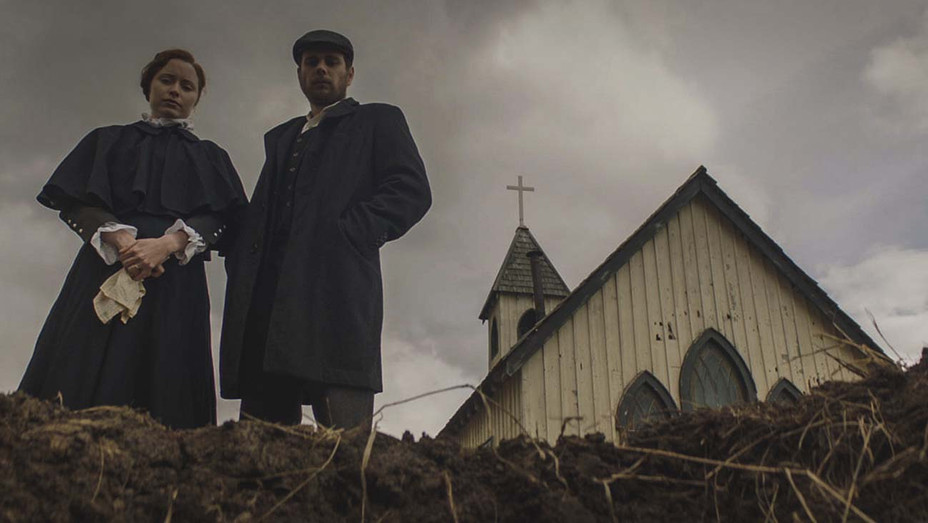
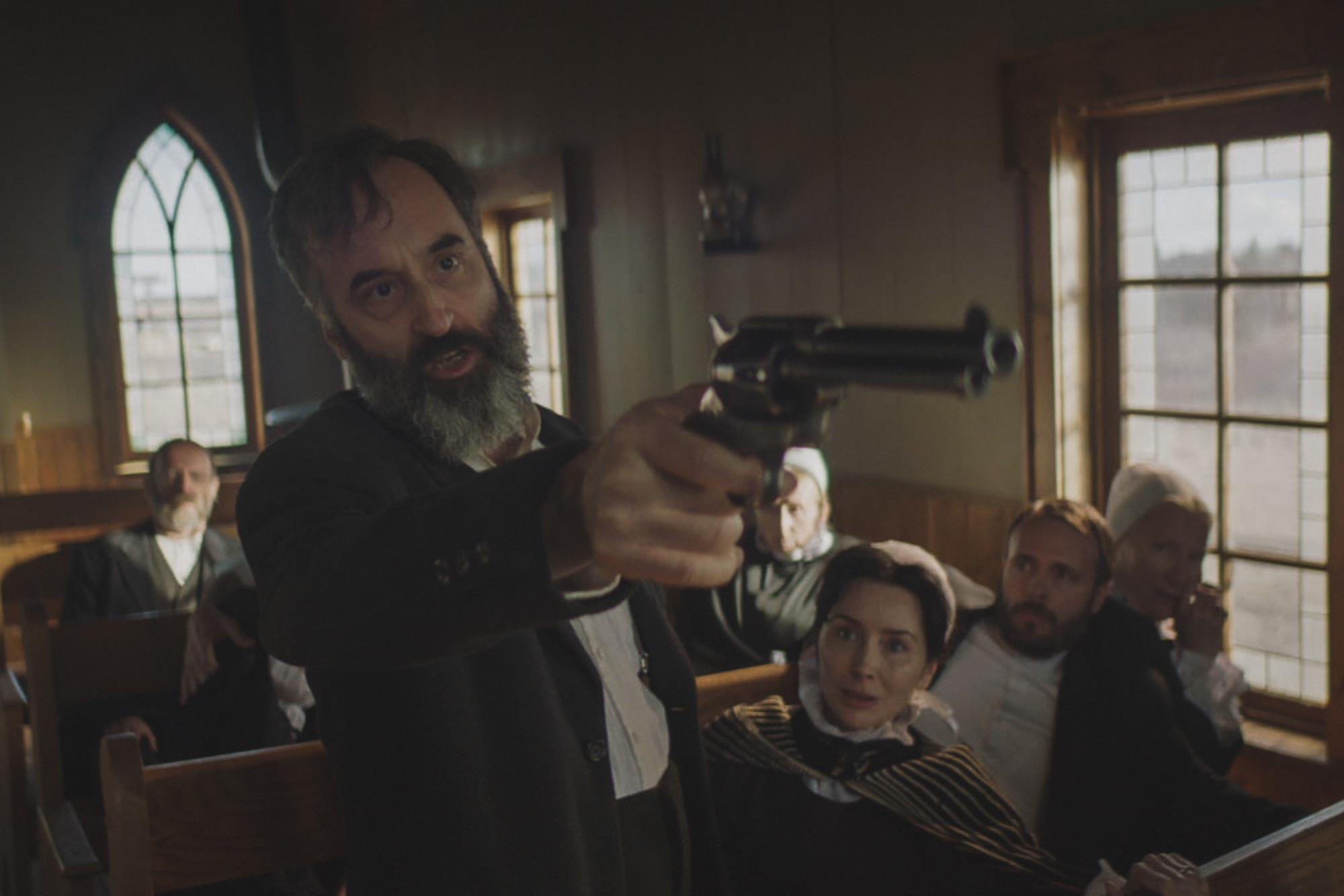
There was this colony of Church of Ireland folk, sort of Irish Amish, eschewing the modern world in dress and farming methods, who migrated to a remote corner of the Canadian northwest back in the 19th century.
They got along well enough until 1956, when an eclipse passed over them, their crops started failing and people started dying. “Cursed,” they thought. Agatha Earnshaw, a “heretic” among them, her crops continued to thrive. Agatha had also secretly given birth.
She is shunned, so keeping the child a secret isn’t a problem. But seventeen years later young Audrey has grown up to be the sort of teen that transfixes men who see her. And she is determined that men see her, just not for the reasons you might expect.
“The Curse of Audrey Earnshaw” is a dark and somewhat pointless Canadian witchcraft thriller. I use the identifier “thriller” more out of a need to categorize what we see in the movie than as an accurate description of what happens.
There’s violence and intimidation. But there’s no suspense, no one to root for. And no slow-withering or firearm-sudden death touches the heart with either compassion or fear.
Writer-director Thomas Robert Lee’s crafted a greyish period piece set in 1973, and a world where farming is primitive and Irish accents endure after a century of settlement.
Religious people curse like Samuel L. Jackson, and a the girl, Audrey (Jessica Reynolds) eagerly participates in the blood rituals of her separate community of women, hungry for the chance to avenge the wrongs the starving locals have done to mother Agatha (Catherine Walker).
“I want to help,” she tells mom after yet another confrontation with the men of the larger community. Her goal? “Make him regret it.”
But mother’s gone to great pains to keep Audrey out of their sight and knowledge, locking her in covered crates for wagon journeys, never letting her step out when strangers knock at their door.
“He’s a villain,” she hisses to her child. “He steals girls like you.”
Still, Audrey sets out for her revenge, “bedeviling” this man or that one, twisting the knife in the wounds in families that have suffered loss, taunting men who have been “spreading sweat over fields that’ll never sprout.”
Reynolds gives Audrey a mean girl leer to go with her ballerina pretty looks. But the havoc her character wreaks is pretty tame, or at least over-familiar — livestock atrocities, suicides, problem pregnancies.
The preacher (Sean McGinley) is more sturdy than stirring in the face of this existential threat that only the most manic in the congregation can identify. And the “manic” aren’t as worked up as you might expect, either.
Nobody takes action, decisive or otherwise, against the threat. Congregants just curl up into their family units and debate whether to reach “outside” the community (to the 20th century) and otherwise accept their fate as some sort of supernatural will.
Could it be maybe “Satan” you think? Sure. That word never turns up, nor does “witch” or “coven.”
Lee was aiming for something on the order of “The Witch” — understated, with unsophisticated people dealing with something extraordinary and evil in their midst.
But he wasted all this effort on a prologue (the Church of Ireland, 1873-1973 colony business), made everybody sling an Irish accent after 100 isolated and away from Ireland, and then didn’t make his people of faith being tested all that pious.
The performances are flat, drained of anything you’d call a spark.
So forgive me for going back to the beginning of the review and re-asking the obvious. Is there a point?

MPAA Rating: unrated, bloody violence, profanity
Cast: Jessica Reynolds, Catherine Walker, Jared Abrahamson, Sean McGinley, Hannah Emily Anderson.
Credits: Written and directed by Thomas Robert Lee. An Epic release.
Running time: 1:34
A cautionary eco-parable wrapped in a seriously dull and myopic time-travel thriller, “2067” bogs down early on in questions of “fate” and “determinism,” and never tears itself free of that bog.
This Australian tale has maybe the best traveling-through-time sequence the recent cinema has managed, and a tedious talky story on the other side of that jump.
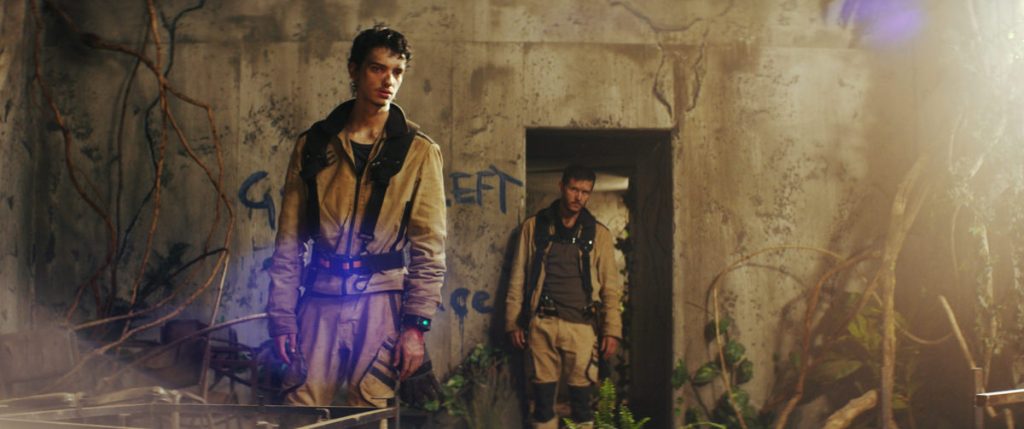
Or in this case, “throw.” That’s how the scientists describe what they want to do with tunnel electrician Ethan Whyte, played in a cadaverous, end-of-days daze by Kodi Smit-McPhee (“Let Me In”).
In 2067, the Earth is literally breathing its last. “The last tree has been logged in the Amazon,” news reports tell us. The planet is gasping, the lights have gone out and only a lone city in Australia flickers on.
Everybody is living off artificial oxygen, and spitting up blood as they get “the sickness,” a worrisome side effect for ChronicCorp.
Kudos to the stoner who got that name in there. Writer-director Seth Larney, was it you?
Ethan, who lost his scientist dad (Aaron Glenane) when he was little, is “humanity’s only chance.” They’ve got this time portal, and a message from the future. “Send Ethan Whyte,” even if the woman in charge of the project (Deborah Mailman of “The Sapphires”) admits, “We don’t know yet how to bring you back.”
As he’s got a dying wife (Sana’a Shaik) and humanity is nearing its bitter end, Ethan lets them “throw” him forward 400 or so years. His workmate Jude (Ryan Kwanten) follows shortly, which really does make that whole “humanity’s last hope” pitch a lie, doesn’t it?
Never mind. The verdant, overgrown world they must make their way through has a reactor that’s going to melt down and a “cure” they need time to find. If only there weren’t these troubling corpses, more troubling holographic messages from the past and a general confusion about what they should do, whether they’ve tried this before and failed, and whether there’s any point to any of it.

I liked the kudzu-covered production design, the glimpses of ruined cities returned to nature that’s been common in sci-fi since “The Time Machine” and “Planet of the Apes” and “Logan’s Run.”
But writer-director Larney’s limited budget didn’t do his “vision” any favors. The settings are few and the scenario is eaten up with Ethan and Jude arguments, time travel paradox discussions and the like.
Flashbacks, jumps in point of view back to the hellish Earth they left, don’t change the picture’s limited focus and narrow aims.
Smit-McPhee ratchets up the pathos here and there, but I found the film emotionally barren, repetitive and tedious after a while.
We get the message, that we’re wrecking the planet a lot faster than even the most pessimistic among us ever thought.
The idea that Australia will be the last place to succumb pre-dates “Mad Max.” Think “On the Beach.”
And dangling time travel as the “Hail Mary” that could save us seems as intellectually lazy as complete denial, even if it is slightly more cinematic.

MPAA Rating: unrated, violence, profanity
Cast: Kodi Smit-McPhee, Ryan Kwanten, Deborah Mailman, Sana’a Shaik, Aaron Glenane, Finn Little and Leeanna Walsman
Credits: Directed by Seth Larney, script by Seth Larney and Dave Paterson. An RLJE release.
Running time: 1:54

I can’t speak for everyone, but the next time I’m on a stakeout, I’m damn sure bringing Bill Murray.
Talk him into driving a 1960 Alfa Romeo Giuletta. Maybe he’ll show up with a gourmet picnic, caviar and a bottle of Gran Cru something-or-other, and a lot of cynical, witty wisdom about love and marriage.
“Women — you can’t live with’em, can’t live without’em. But that doesn’t mean you have to LIVE with them.”
Bill plays a version of the Murray of myth in Sofia Coppola’s best film in years, “On the Rocks.” His art dealer character’s charming and flip, knows every concierge and maitre d’, remembers every name he hears the first time he hears it, can talk has way into a table or out of a traffic ticket (see “Giuletta, Alfa Romeo”). And you never know where he”ll turn up.
That’s the image the Internet has made for Murray.
Seeing him as this touching, tetchy and very funny father trying to help allay daughter Laura’s (Rashida Jones) suspicions about her now always-working husband (Marlon Wayans) by convincing her to spy on him two simple facts become clear.
It’s a shame that he doesn’t get to make every movie with Sofia Coppola (“Lost in Translation”). And if she’s smart, she’ll never make a movie without him, as long as he’s up to it.
“On the Rocks” is a Manhattan movie that ambles along in Woody-Allen-Without-Many-Laughs fashion for a good half hour before Murray, as dapper, rich and semi-retired Felix Keane turns up and takes over.
That’s easy to do, because everybody seems to take Laura for granted. We see her giddy wedding day, but the married life routine a decade later is drab and and Laura herself is put upon. She’s a novelist with no time or motivation to write. She’s the sort every other mother at school (Jenny Slate, for instance) buttonholes to suck up precious minutes in long, narcissistic monologues.
“Why aren’t males more ornamental? I mean, they’re functional. We NEED them to put furniture together.”
Laura bears all this, and the ways hubby Dean keeps brushing off her plans to get a deposit down on a house and fret over their youngest getting into pre-school. But there are other clues that suggest maybe Dean’s “traveling for work” is a lot less work and a lot more getting around.
Enter Dad, eternal cynic, constant flirt and sage spokesman for The Way Men Are. Endless random observations about “when humans were all fours” and evolution decreed that they’d always “impregnate” every female they could, how “adolescent females” were more desirable because they were easier to catch and “dominate” pepper his half of their conversations about her marriage.
“At some point, we can make a decision about whether to tap his phone.”
Laura, the one daughter who still stays in contact with the father who cheated on their mother, is putty in Felix’s hands as he badgers her into whistling the theme song to the movie “Laura,” which is where he came up with her name. He pushes her to “check his phone,” and eventually, the Alfa Romeo comes out for that stakeout.
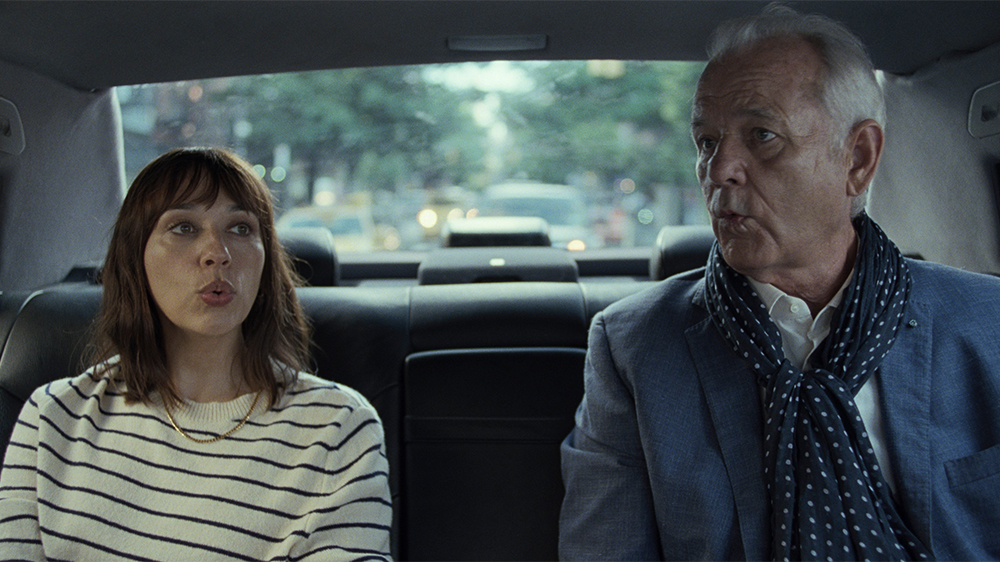
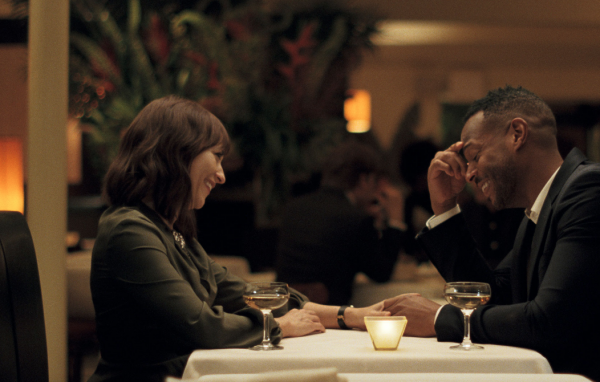
Jones, a winsome, vulnerable presence, doesn’t give us a whole long to hang onto here. She may be a woman wronged, but Laura is so buttoned down and unsure of what to do that she could not feel more real.
Yeah, this is the way most of us would react to that suspicion — deflated, confused, lost.
The fact that she and Wayans don’t have much chemistry –his character is thinly developed and blandly-played — leaves the movie in Murray’s hands. And he saves it.
Felix sings “Mexicali Rose,” confidently drops less-than-fluent phrases in Russian (for a ballet dancer waitress) and French, and takes over every room the way Murray dominates every scene.
“It must be great to be you!”
“I wouldn’t have it any other way.”
It’s a seductive, amusing and beguiling turn, with perhaps an Oscar nomination in it. And it’s message is clear, to our director and her muse.
When the persona becomes legend, play the legend.

MPAA Rating: R for some language/sexual references
Cast: Rashida Jones, Bill Murray, Marlon Wayans, Jessica Henwick and Jenny Slate,
Credits: Written and directed by Sofia Coppola. An A24 release, coming to Apple TV.
Running time: 1:37



You have your COVID quarantine coping mechanism, I have mine — which is watching old Youtube clips of Craig Ferguson’s dizzy, flirty, loosey goosey years hosting CBS’s “The Late Late Show.” Big fan.
Kathie Lee Gifford never moved the needle for me. But the singer/daytime chat-show hostess always seemed self-aware enough to make fun of herself, which is more credit than the arbiters of hip ever allowed her.
Pairing them up on “The Today Show” a few years back showed off his ability to make any situation, interview and conversation sillier or dirtier and her gift for bouncing off that, and knowing chemistry when she sees it.
So she scripted this Scottish rom-com for them to co-star in, and damned if she didn’t get “Then Came You” filmed on location in Inveraray, Ardkinglas House, Loch Fyne and Kilmorich Church, all in Argyll and Bute, Scotland. Gorgeous settings.
They lined up Elizabeth Hurley and Phyllida Law as co-stars.
And there are moments when Ferguson’s riffing and Gifford’s riffing back or starting a song that he interrupts that the chemistry she saw and wanted to exploit is obvious.
But good gawd, Kathie Lee. This is such a clumsy, cheesy, contrived script, with every contrivance obvious and abruptly introduced. And misshapen! What the hell is up with that third act?
I dare say she and Ferguson could have brainstormed something just as scenic, flirtier and funnier over a long lunch. Maybe with an actual screenwriter invited along to offer tips.
Gifford plays Annabelle Wilson, a plucky Nantucket widow who sold the family hardware store and is off on a bucket-list grand tour of Europe.
“I’ve gotta make new memories, or the old ones will kill me,” she vows.
Scotland is her first stop, the Awd House Inn, whose proprietor Howard (Ferguson) sadly isn’t quite as Awd as his name.
But he picks her up in a car that’s as old as he is (1962-63 Triumph Vitesse), so naturally she smells gas.
“We call it petrol, here,” he sniffs, putting on his overalls. “Flame retardant,” he jokes. “Can’t be too careful.”
He teases her about the riot of plaids that she packed.
“Didn’t know Mel Gibson was having a yard sale….You’re dressed like a SHORTBREAD tin!”
He’s heard of Nantucket.
“There’s a poem about it.” Yeah, we’ve all heard what rhymes with Nantucket.
And he’s curious about the box of chocolates she keeps close.
“That’s my late husband!”
The early “wee bit of Scottish humor” and banter lifts one’s hopes, as Howard pitches the limited menu and explains the ingredients of haggis to Annabelle, who just wants a civilized breakfast.
“Can I get the oat meal without the internal (sheep) organs?”
The place is falling down (not really), but the hardware store lady is handy with plumbing, leading to “big wrench, petcock and blowtorch” innuendo.
And then the first act ends and the picture peters out.
Every single scene after their “meet cute” and early introductions (Ford Kieran plays Howard’s lone friend and sometime helper) has its Function in the Script underlined, and is worked into the proceedings with a crowbar.
“Then Came You” makes nothing of the cute notion that Howard is a staff of one, and pretends to have other help that Annabelle never sees.
Liz Hurley was written into the picture, with nothing funny to say or do.
The innuendo flies out the window and “serious” comes in, the subtext of grief that Griffin works in for obvious reasons, but does so without a hint of subtlety. Just flashes of “sadness,” mostly out of the blue, and a “whoopie” scene so corny it wouldn’t have passed muster in the ’30s, much less today.
It’s a damned shame that Steve Coogan, Rob Brydon and Michael Winterbottom beat them to the punch with their “Trip” movies, because I’d pay to see these two flirting and insulting and flinging double entendres on every high and low road in and out of Scotland. Maybe even in a Triumph Vitesse.
“Then Came You” turns into a trip you take with somebody who isn’t as much fun as you’d hoped. And that’s a trip spoiled.
MPAA Rating: unrated, profanity, innuendo
Cast: Kathie Lee Gifford, Craig Ferguson, Elizabeth Hurley, Ford Kiernan, Phyllida Law
Credits: Directed by Adriana Trigliani, script by Kathie Lee Gifford. A Vertical release.
Running time: 1:38
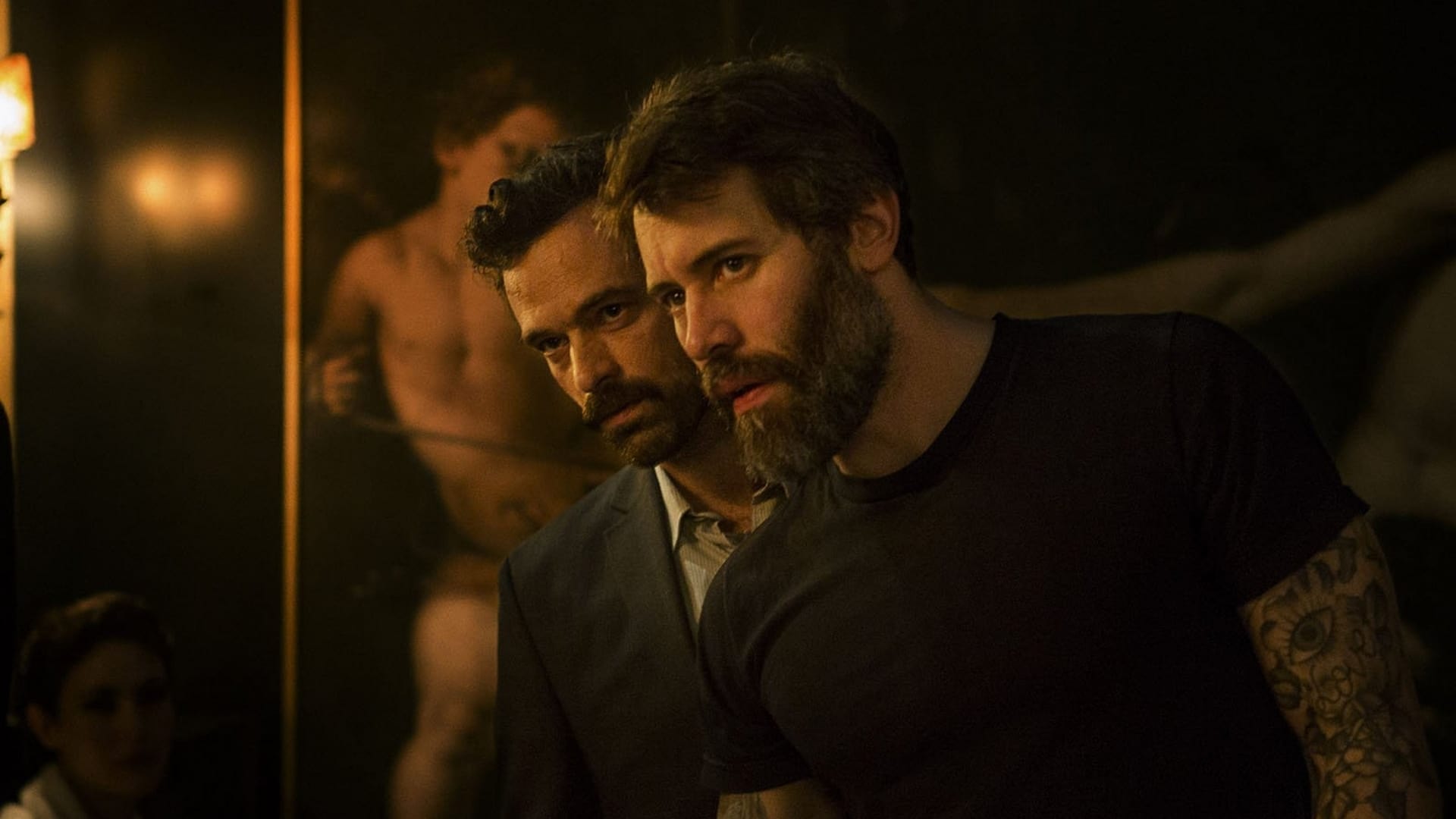

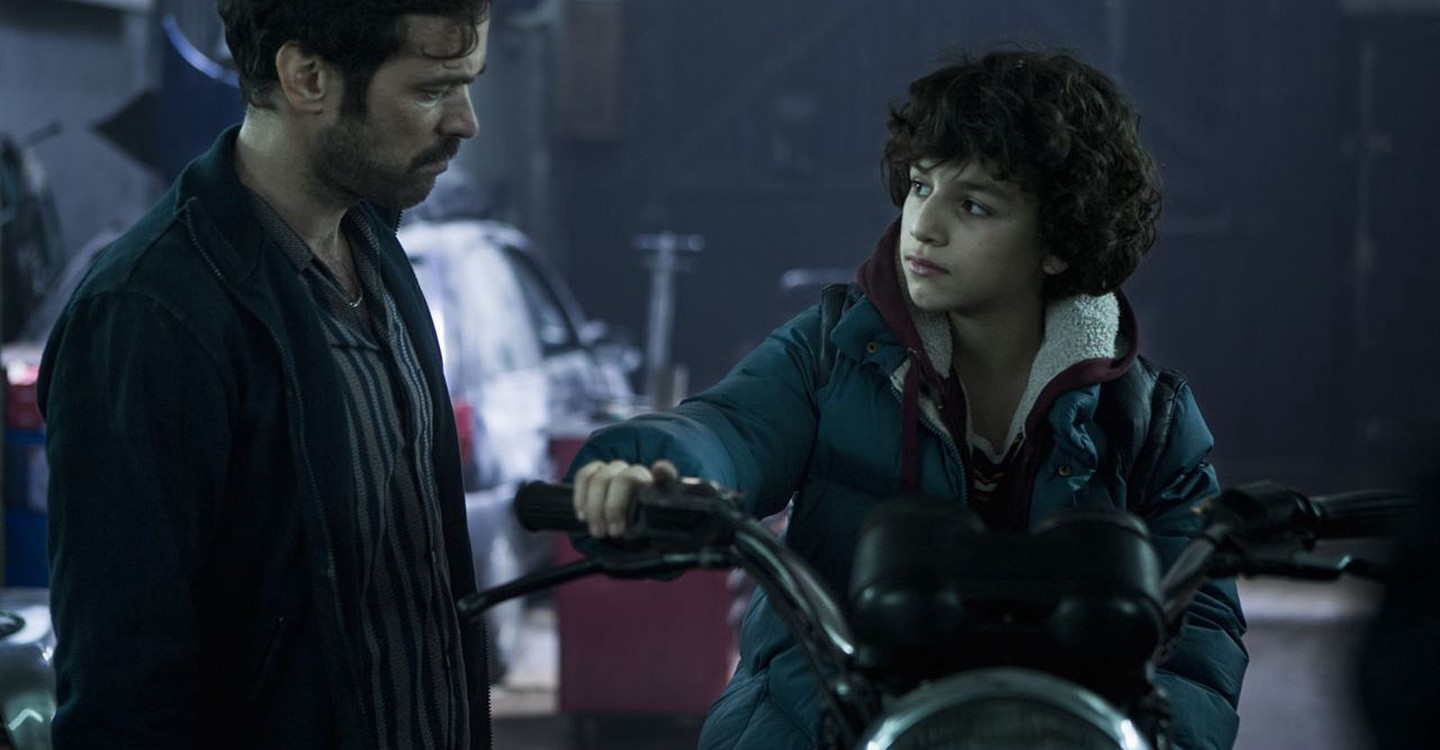
“In the Shadow of Iris” is a tight and twisty French thriller about a kidnapping gone wrong.
Sexy casting and a taste of kink dress up this tale that begins conventionally, throws its first sleight-of-hand trick at us, and saves a few more for the third act.
Iris has lunch at a fancy Paris restaurant with her older banker husband, Antoine. She steps out to have a smoke while he pays the bill. He comes out into the rain and she’s vanished.
As Antoine (Jalil Lespert, who also directed) frantically searches the place, calls her cell and starts to panic, she (Charlotte Le Bon) turns up — at a garage. Money changes hands. Max (Romain Duris) ties her up, and we start to see the scheme that’s afoot.
The ransom demand is what makes Antoine call the cops (Camille Cottin, Adel Bencherif). As they start to dig in, we start to puzzle this thing out with them. What’s really going on here?
“A woman can’t disappear in the middle of the day without someone seeing her,” the captain (Cottin) muses (in French with English subtitles), “unless she PLANNED it.”
The cops stake out the ransom payout, things go wrong and the circle of suspects widen. Max the mechanic grapples with why he’s been brought into all this, and the plot thickens.
Director Lespert (“Yves St. Laurent” was his) keeps the story compact, even as he and his co-writers muddy the waters and clutter the lives we look in on. Max is divorced, behind on child support and not the most reliable babysitter The cops have complicated sex lives, as does almost everybody else.
Flashbacks start to unravel the story, but not quickly. Oh no.
I like the battle of wits that sets in among the various protagonists, underestimating each other, under or over confident at every turn.
Duris (“All the Money in the World”) is rough-hewn enough to suggest a man who has struggled in menial jobs, and with life, leaning on native cunning that he may not possess.
Le Bon (“The Hundred Foot Journey”) is quite good at giving us a poker-faced enigma, and is a reminder that Paris is lousy with gorgeous, long-haired model-thin French brunettes.
Lespert the actor lets us see the schemer given to panic in Antoine, and matches up nicely with the other principals.
It doesn’t play entirely fair, and some of the “clutter” slows it down, here and there. But rare is the thriller that keeps tripping you up all the way to the closing credits. That makes this “Shadow” worth shining a little light on.

MPAA Rating: TV-MA, violence, nudity, sex, profanity, smoking
Cast: Romain Duris, Jalil Lespert, Charlotte Le Bon, Adel Bencherif, Camille Cottin and Hélène Barbry
Credits: Directed by Jalil Lespert, script by Andrew Bovell, Jérémie Guez and Jalil Lespert. A Netflix/Universal video release.
Running time: 1:39
We could use a little daft right about now.
But we have to wait, eh? Oct. 23? Amazon that.

 Movie Nation