Bill Nighy also stars in this account of Japan’s mercury pollution scandal that turned the city of Minamata into an international symbol of Big Polluters aided in their cover up by their government.
As Depp is staring at the end of his career, enjoy this 2021 release from Vertical while you can.
The five films of Steve McQueen’s “Small Axe” play like a series of sketches of what we can take to be his experiences growing up in the ’70s and early ’80s among the Caribbean islanders transplanted to the Big Island of Britain.
The series take its title from a Bob Marley song, which declares “So if you are the big tree, We are the small axe Ready to cut you down.” Visit Britain, sample its post-immigration cuisine, culture, music and dress and you get the metaphor.
The films share settings and some characters, but each is a stand-alone in style and theme. “Lovers Rock” is the impressionistic, free-flowing romance and music film of the series, McQueen’s camera tracking through a cover-charge house party circa 1980. It’s immersive, at times almost giddy — with more than a hint of the racial and sexual tensions of the day (and today) packed into its 70 minutes.
We see the prep for the party, the cooking (do NOT watch this hungry), the moving of furniture, the set-up of the sound system with the DJ practicing his rhymed proto-rap patter.
We see the neighborhood primping and dressing up, ready for the night, warily eyed by the white neighbors still living in this corner of what we assume is Brixton, then and now a Little Jamaica in South London.
As the cooks sing Janet Kay’s “Silly Games,” two young women getting dressed chime in with Blondie’s “Sunday Girl.”
“Hurry up, hurry up, hurry up and wait…”
And we meet friends Martha (Amarah Jae St. Aubyn) and Patty (Shaniqua Okwok) as they dress for this Saturday night do like it’s prom night, blending in with the vast crowd, dancing and drinking and sometimes eating.
One running thread through “Lovers Rock” is the incessant to the point of RELENTLESS come-ons from the menfolk there. Every young woman in the place has to fend off advances — most pretty aggressive by today’s standards — just to dance or have a conversation or get into the damned restroom.
At least they’re flirting in that lovely Jamaican patois, that is as entertaining and musical as any variation of spoken English on the planet.
“Wha’yo pappa CALL you, gorgeous? Me a GENTLEman–gentleMAN.”
That one doesn’t work on Martha. But Franklyn (Michael Ward) is intent on figuring out what does.
During the course of the night, nothing happens that we haven’t seen in a hundred other “House Party” movies. It’s the dreadlocked culture and setting that sets the various “Small Axe” films apart, that and McQueen’s polished, ultra-realistic handling of the material. The movies themselves are genre pieces and not the least bit surprising.
But “Lovers Rock” is the most charming — the enthusiastic sing-alongs that go on after the sound system has switched on, the energetic, near-frenzied dancing, men peacocking for the ladies, the women acting underwhelmed.
The message here is that this diaspora — many characters are second generation Brits, like Martha — has adapted, how they fused reggae and disco and soul and house parties into courtship rituals that might have been meat-market messy, but they sure were fun.
And if you want to see how McQueen (“Twelve Years a Slave”) does “giddy,” check out the camera that dances through a near-full-length dance to “Kung-Fu Fighting.”
MPA Rating: unrated, violence, drug abuse, profanity
Cast: Amarah Jae St. Aubyn, Michael Ward, Kedar Williams-Sterling and Shaniqua Okwok.
Credits: Created and directed by Steve McQueen, script by Courttia Newland and Steve McQueen. A BBC Films release on Amazon.
Oscar winner Steve McQueen’s terrific “Small Axe” series of five film-length inter-connected stories of life in London’s West Indian community opens on a high point with “Red, White and Blue.” It’s a generic “new to the force” cop story about a college educated Jamaican who decides his destiny is helping to integrate London’s racist police department in the late ’70s given weight and dramatic power by “Star Wars” veteran John Boyega.
When forensics scientist and college teacher Leroy Logan (Boyega) tells his musician brother (Tyrone Huntley) “I want to join the force,” the brother makes the late ’70s joke we’re all thinking.
“You wanna be a JEDI?”
But that’s the lone light moment in a gritty, by-the-book story of a smart man with a cause trying “to bring change to this organization from the inside out,” facing all the expected pitfalls from a rigid culture resistant to change.
Leroy learned to carry himself with dignity and not accept police harassment as a fact of life as a boy. His father, played with the dogged focus and seething resentment of an immigrant who “wanted us to be more British than the British” by veteran character Steve Toussaint, accepted nothing less than the highest aims from his son.
No wonder Leroy, married (Saffron Coomber is Grace) and with a baby on the way, keeps the news that he wants to “make a difference” for his community from his Dad.
That’s hard to do, as Dad has run afoul of the cops, and taken a beating for trying to debate a ticket. His father’s outrage is just the first time Leroy hears “traitor.” “Constable Judas” and “coconut” are two of the more creative insults he hears as he trains and takes on a beat in his new job.
What’s striking about “Red, White and Blue” is how everything we see — every situation encountered — is familiar and expected, and still stirring and somehow fresh. The indelible sense of place, the musical patois of the island people who left their former British colonies and migrated to Britain, and Boyega’s performance give this film-length episode its power.
Watch Boyega’s face betray real doubts the first time he dons the uniform and that towering bobby’s helmet. And feel his Sidney Poitier as “MISTER Tibbs” fury at confronting institutional racism, seeing the long road ahead he must travel, alone for now.
This is a script stripped down to types and situations as timeworn as The Cop Drama itself. But Boyega puts on the sort of acting clinic for McQueen that nothing else he’s done allowed him to do.
Marvelous.
MPA Rating: unrated, violence, some profanity
Cast: John Boyega, Saffron Coomber, Steve Toussaint
Credits: Created by and directed by Steve McQueen, script by Courttia Newland and Steve McQueen. A BBC/Amazon release on Amazon.
Let the record reflect that Alexandra Daddario does one helluva drunk act.
The “Baywatch” (the movie) babe isn’t the headliner of “1 Night in San Diego,” but she is one of the funnier highlights of this hit-or-miss “Romy and Michelle” ladies road trip romp from the writer-director of “Just Sing.”
Jenna Ushkowitz and Laura Ashley Samuels are Hannah and Brooklyn, two East Coast friends, new to the Hollywood Hills, looking to get something going in LA.
Hannah (Ushkowitz, of “Glee!”) had a reality series in Jersey, “Parsippany Hills” something or other, and longs to “get into production.” Rich girl Brooklyn (Samuels) has set herself up as “an influencer,” and as a “Conscious Cuddling” therapist, thanks to her study of Deepak Chopra.
“His online courses are the TITS!”
Hannah needs a break from her control-freak/anger management issues boyfriend (Tanner Sarff). And Brooklyn, left swiping her way through LA, finds an answer. That gym teacher they were hot for in high school? He’s now an actor, and he’s got a show in San Diego.
Let’s go to COMIC-CON!
It is one of the unfortunate failings of “1 Night in San Diego” that producers go no permission to get within a mile of footage of anything remotely resembling that Gathering of Nerds, even to use as background color. Because “1 Night” is a short road trip, followed by a long night of bar hopping, a Fringe musical spoof of “SVU,” jail and a lot of limp misadventures that could have used a LOT more San Diego flavor, with or without Comic-Con.
“Let’s get white girl wasted!”
The script owns up to the “Romy and Michelle’s High School Reunion” similarities, with our two heroines varying shades of shallow and out-of-their-depth. Brooklyn has gotten by on her looks all her life, and figures that even a gay doorman will let them in the club for free.
“I LOVE the gays. All my best friends are gays. I’m practically a gay man.”
Need to break free of a stranger coming on a little too strong?
“My herpes is starting to flare up.”
There’s an old friend turned into a Matthew McConaughey impersonating stoner-guru (Eric Nelsen). Gordo has a lot of trouble talking about his didgeridoo and where it came from.
“Austria-lia?“
The cast is game, but plainly not in a position to add laughs to a script that feels more workshop-ready than “locked.”
One barfight (Daddario’s moment), a random lame encounter with two Comic-Con cosplayers and a pedicab ride back to their sleazy Eastern Euro-trash budget hotel are kind of the high points.
“How long have you been a pedo?”
“That’s a very funny joke, you terrible bitch.”
You want to love it, you’re lucky if you find a few moments where “like” isn’t a stretch.
MPA Rating: unrated, alcohol abuse, sexual humor, profanity
Cast: Jenna Ushkowitz, Laura Ashley Samuels, Eric Nelsen, Kelsey Douglas and Alexandra Daddario.
Credits: Written and directed by Penelope Lawson. A 1091 release.
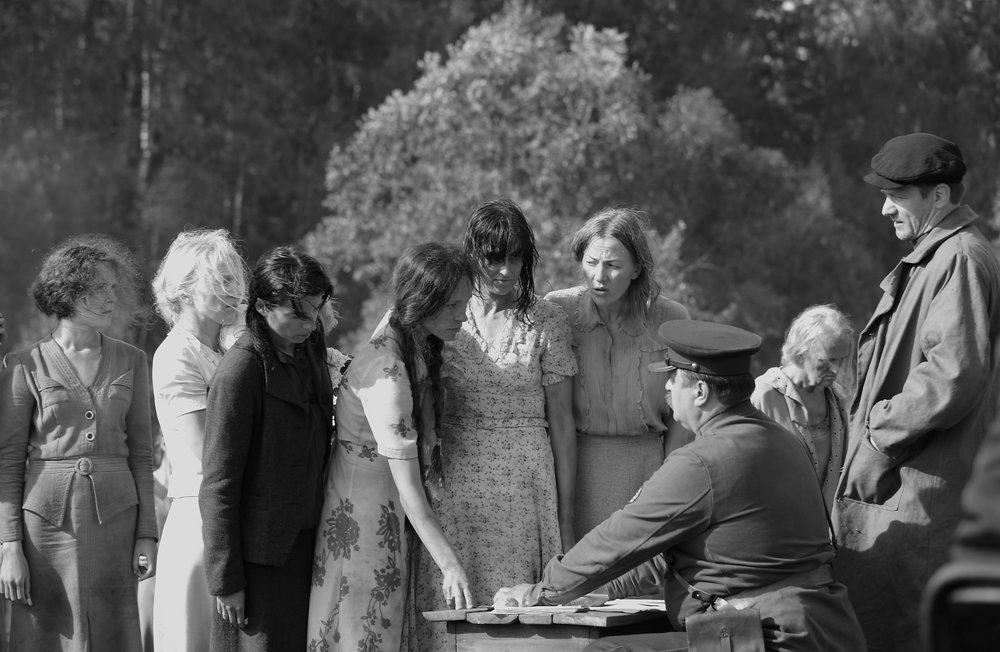
One night, the Latvian newspaper editor and his wife are enjoying Puccini’s “Madama Butterfly,” where Melanie Vanaga can lose herself in its most famous aria, “Un bel dì vedremo.”
The next day, Soviet security police pound on the door of their Riga flat, barge in arrest them all — husband Alexandrs (Ivars Krasts), Melanie (Sabine Timoteo) and their pre-teen son, Andrejs (Edvins Mekss).
Their crime? “Fascists” — the catch-all accusation that served every Soviet need when it came to purging the intellectual, the leaders and the educated from a sovereign state they would absorb. Latvia and the Baltic States were but a 1941 warm-up for the rest of Eastern Europe.
“The Chronicles of Melanie” tells this story through the displaced and imprisoned Melanie, separated from her husband, struggling to keep herself and her son alive in a Siberian gulag filled with women and the low-life Russian predators charged with working them to death.
Writer-director Viesturs Kairiss based this film on the memoir of Melanie Vanaga, which she was only able to publish after the Soviet Empire crumbled and Latvia regained its independence. It’s a moving if somewhat stately (slow) drama of tragedy, privation and perseverance, with hints of poetry poking through the permafrost.
Because Melanie, rendered in shades of resignation and stoic defiance by Timoteo (“180 Degrees”), will not let go of her language, no matter how many Russian brutes who demand that they all “learn a civilized language.” She may fight pigs for the potatoes their captors feed the hogs with, but not eat what her son finds in the Russians’ waste.
“We are NOT going to eat trash!”(in Latvian, with English subtitles).
And she won’t lose the memory of the world they left behind, family holiday feasts, culture and art and “Madama Butterfly,” which returns to her memory and the soundtrack at several poignant moments.
Kairiss filmed this in flat, somewhat featureless black and white, so there’s not a lot of visual lyricism to his treatment of a hard-edged story.
Told she has 15 minutes to ready for transport, Melanie makes her child join her in wolfing down food because “We have no idea when the next meal is coming.”
A mother of small children, taking in the shock that “our husbands were killed,” takes a razor to her children and then herself in the crowded cattle car that hauls them all thousands of miles to the East.
An older woman, casting her eyes on the tractless forests of Siberia where their rudimentary camp has been set up, wanders into the woods to die. And no one stops her. Bodies are scattered everywhere, and losing a toddler means haggling with a callous local carpenter over nails.
Being women, the propositions by the guards have an have-sex-and-eat-or-die bottom line.
Melanie won’t give up, and won’t let her son give up either — through years of hardship, sickness and despair and a diet consisting of whatever herbs and berries they can sneak out and pick, and “400 grams of bread a day,” which is instantly cut to 200 because she speaks out, a “smart ass” surrounded by uniformed thugs.
“If I die, leave me in the taiga,” she instructs one of the few friends she recognizes and clings through through the ordeal. “It’ll be easier on my son.”
“The Chronicles of Melanie” lacks much of the agency and action of many such memoirs. The chief villain (Viktor Nemets) is left under-developed, and there’s barely a hint of an “escape attempt,” and no sense of deliverance.
But it is a vividly detailed reminder that the Axis powers did not corner the market on genocidal cruelty in the years surrounding World War II. The Russians kept at it for years afterward, and only those who endured the unendurable would live long enough to see the truth come out.
Civil War movies have always been a rare thing, so I was surprised to run across “Men Go to Battle” a few years late.
It came out the same year as the far more conventional “Field of Lost Shoes,” and at the tale end of the short-lived “Mumblecore” film movement of chatty, character-driven meanderings that gave us The Duplass Brothers, “Hannah Takes the Stairs,” “Baghead” and Greta Gerwig.
So, why not a mumblecore Civil War movie?
This deadpan dramedy plays now as what it was destined to become — a one-off stab at doing something different by a director/co-writer trying and failing to make his big break. It works, after a fashion. But there’s an aimlessness to its 5-years-in-Kentucky plot, a sense that too much important action or incident has been left out, coupled with a vivid, offhand-feeling recreation of a time and place.
Brothers Francis (David Maloney) and Henry Mellon (Timothy Morton) are hapless farmers in 1861 Kentucky tobacco country when we meet them. And as fall rolls in, we wonder how perchance these two goofs ever got their hand on the farm.
Because it’s so overgrown they can’t even sell the part of it that used to be good hemp land. And the rest has “gotten away” from them to such a degree it’ll take an army or a lot of animal labor to make productive.
Self-assured Francis blows cash on two mules, and one runs away. He pranks Henry, who seems to have more common sense, by “shooting” him (with no lead) to wake him up. But neither one is to be trusted when they’re in their cups.
Shenanigans with axe or knife are a good way to get hurt, and to avoid doing actual farmwork. Not to lay too much reality on this, but when their chickens drown, neglected during a storm, a sentient viewer is apt to wonder how they haven’t starved or died of careless cooking, gunplay or drunken accidents.
One such accident is how they end up needing a doctor, interrupting a dance at the home of the wealthy Small family. Henry makes incompetent small talk, arguing about the weather, with one of the Small daughters. At least he can joke about his cut hand to impress Betsy (Rachel Korine).
“Doc’s gonna amputate it tomorrow.”
Francis? He’s sticking his foot in it somewhere else.
Henry eventually makes his getaway, joining the Union Army. It might’ve made sense for both of these lazy lummoxes to avoid farmwork for meals and soldier’s pay. But separating them means the two illiterates have to communicate by letter.
“This war might last longer than me.”
But it doesn’t.
Director Zachary Treitz and his team do an impressive job of immersing us in the candlelit world of the rural 1860s, the drudgery of the life (but not the work, which the brothers avoid), the class differences between hardscrabble farmers and the affluent planters like Mr. Small (Steve Coulter).
Politics, slavery and racism don’t enter the story. We see an integrated church service, with slave-servants in the background of a few scenes. There’s no debate about which side these border state folks should be on.
Treitz and co-writer Kate Lyn Sheil concentrate on the brothers, sketching them in, looking for light laughs in their over-their-heads-in-most-situations plight.
Mid-war, with their village occupied, Francis insults a shorter Union infantryman and gets quickly punched-out.
The most interesting theme touched on is the different choices the siblings make — one, staying behind and the other opting for something like an adventure. But even that’s thinly developed.
A camp scene here, a picket line (patrol duty) moment there, a battle barely sketched-in. And then a finale that gives the film the feel of a half-digested parable.
“Men Go to Battle” isn’t awful, but removed from its film festival “moment,” it’s not all that, either. And that’s a shame. Treitz could have gotten something richer out of this setting and these characters.
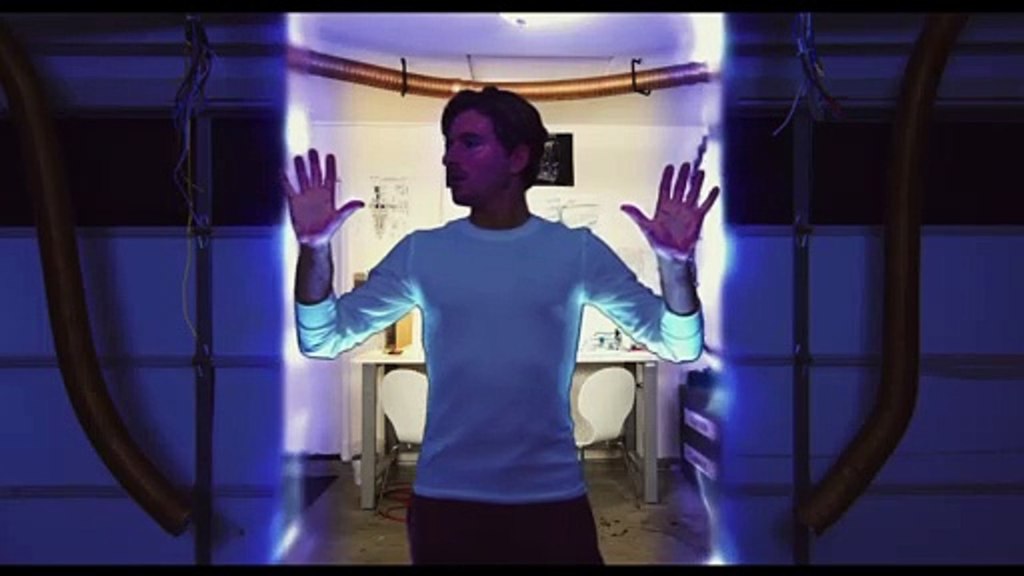
The idea of multiple universes, multiple realities, multiple “outcomes” to life and our existence gets a sleep-inducing workout in “Expulsion,” a no-budget thriller about scientists who DIY a teeny tiny Haldron Collider in a desert Southwest garage.
Indifferently-acted, with funereal pacing and (high school) student film action, the viewer has five minutes to catch up with its introductory premise, and spends the next 90 minutes two or three steps ahead of this clunky, obvious and dull screenplay.
Scott (Colton Trap) almost manages a convincing “WooHoo” after his “Eureka!” moment. His garage-built gadget has given him a portal, a first glimpse into another universe.
It doesn’t matter that his research partner Vince (Aaron Jackson, also the film’s co-writer/director) declared that “two people (have to be) present at all experiments.” As some discussed when the Large Hadron Collider at CERN first fired up, there is this risk of “destroying the planet” when you go around “smashing God Particles.”
It doesn’t matter that their “real” research, trying to develop safe cryonic storage of bodies that might be revived at a future date for the Cicero Corp, has taken a back seat. Cicero will provide them the power to properly give their portal a test.
And it really doesn’t matter that strange things start happening as they test it — cryptic warnings, a mysterious assassin, a colleague (Robert F. Glass) whom they see shot and killed, but who shows up for work the next day.
It isn’t until Scott breaks that “both of us have to be here” rule again that he gets a whiff of the “expulsion” theory, which posits that you and your doppelganger from a parallel universe can’t interact or you’ll go “poof.”
The fact is that the movie doesn’t pick up after that. It never properly gets on its feet, and the zero-heat performances just smother whatever ideas this comic book idea of a term paper script throws out there.
Stay in this universe. Watch a different movie. Ever seen “Primer?” Rent that instead.
MPA Rating: unrated, violence, sexuality
Cast: Colton Trapp, Aaron Jackson, Rosalie Fisher, Lar-Park Lincoln, Robert F. Glass.
Credits: Written and directed by Aaron Jackson, Sean C. Stephens. An American Pop release.
You never want to “grade on the curve” when it comes to film reviews. But “Love in Dangerous Times” comes as close to earning an exception as anything I’ve come across of late.
It’s a no-budget indie romance about loneliness and love in our current pandemic. They obviously filmed it with an eye toward “social distancing,” and characters react in what feels like real time as they respond to what they know or don’t know, what might be “blown out of proportion” or indeed “the end of the world.”
Much of the acting and inter-acting is done via Facetime, Skype or whatever video call chat app you prefer. Director and co-writer Jon Garcia and co-writer/star Ian Stout make that limitation work, if not exactly pay dividends.
It’s as current as a headline, and as it is set in Portland, has last summer’s protest marches and unrest served up in a montage in the finale.
So yeah, the acting is uneven and the script only occasionally amuses or tugs at the heartstrings. But there’s enough here to recommend this cute, quaint artifact of the Nightmare That Was 2020.
Stout plays Jason, a playwright/restaurant-delivery driver in Portlandia willing to question this “blown pt of proportion” lockdown, but not taking any chances, either.
He’s trying to finish a play that sounds like an intimate, epic downer, trying to talk his boss into keeping the restaurant open for deliveries only, coping with his annoyed Dad (Bruce Jennings), who isn’t taking to Jason not “coming home” to ride this out with him with, and trying to meet somebody via his favorite online dating app.
He’s needy, and it shows. He’s gently blunt, and faintly creepy, or comes off that way at a time when “we’re facing extinction.”
But all this might help him break through with his play, his belief that “love will save me.”
Right now, though, he’s like a lot of folks living alone, disappointed that “nobody’s reached out to see how I’m doing.
One “ghosting” later, after his Dad has bragged about getting a bidet for his “bunker,” after his singer/guitarist pal Ishmael (Jimmy Garcia) has hung out, air-hugged and noted “I could be the last dude you see in a very long time,” ItsaMatch.com comes through. Jason meets somebody.
There’s a wary, arm’s-length chill to Sorrell (Tiffany Groben) the first time they chat, live, screen-to-screen.
In chats and chapters that go on for months (“One Month Later, 2 Million Infected”) they have ups and downs. A deflating answer to the “Are you talking (online) with any other guys” question, a scare over a delivery customer’s cough, sickness reaching people they know, this movie covers a lot of emotional ground.
There’s just a hint of pathos, a touch of erotica and not nearly enough good humor to this screenplay. Attempted jokes don’t land, and when they don’t, the airlessness of this whole situation makes the silence overbearing.
That impacts the charm Jason is supposed to be laying on this out-of-his-league blonde, and their chemistry. This guy is supposed to be a wordsmith?
But there’s enough here to merit a look, to see “What kind of movie romance can you make in a pandemic?” and to feed 2020 nostalgia.
Where were YOU during the first lockdown?
MPA Rating: unrated, sexual situations, profanity
Cast: Ian Stout, Tiffany Groben, Jimmy Garcia, Bruce Jennings
Credits: Directed by Jon Garcia, script by Jon Garcia and Ian Stout. A Dark Star release.
A little celebration of Sean as Bond, at AMC and (I think) other cinemas with an eye toward using nostalgia and our affection for Sean Connery, who just died at 90, to lure in patrons.
C’mon out. Party like it’s the early 1960s! See the Aston Martin and Gert Frobe and Honor Blackman. And Connery.
“My Summer as a Goth” is a coming-of-age tale with too much black, too much makeup, and synth rock, it’s the “Strike a Pose” or “How I spent my summer vacation” romances.
A winning cast, novel “tribal” setting and some witty dialogue put this one over.
Natalie Shershaw is Joey, a high school sophomore we meet at the cemetery. She’s a tad morbid. She talks to a dead person there.
“I’m the girl whose Dad died, remember?”
That’s to her classmates. To her BFF Molly (Rachelle Henry), she’s a bit more flippant when playing for sympathy.
“My Dad’s body is still warm...too dark?”
Mom (Sarah Overman) is on a book tour, so there’s nothing for it but for standoffish/no-fun Joey to spend the summer with her grandparents. But as cool as these aged hippies (Fayra Reeters, Jonas Israel) might be, with their “So, who wants to do drugs?” and Grandpa’s nude breakfast cooking, it’d be nice if she could meet someone her own age.
That would be Victor of the vampire glam rocker makeup, grandson of the friendly seniors next door. Victor, played by Jack Levi, is forward, a tad femme and flirty. Oh, and “smug” — “If by ‘smug,” you mean ‘awesome.‘”
She spies him in a dress, faking a hanging in his bedroom in his grandparents’ house. She is smitten and he is all-in to be a tour guide to his “not just a scene, it’s a way of life.”
It begins with an “emergency makeover” — hair dye, fishnets, the works. A party in a cemetery — everybody dancing to a shared mix via ear buds — leads to spending the night in a tomb.
“You know, there’s no going back.”
And there isn’t. Not for a summer, anyway. Sixteen year-olds try stuff on and discard it by design. We call them “phases.”
A whirlwind summer of parties — her first joint, her first drink — bullying by rednecks and punks (Eduardo Reyes) making out and Goths on a camping trip give our shy Joey a tribe. Well, maybe she’s just a poseur, but the look suits her.
“I wear black on the outside to show how I feel inside.”
Director and co-writer Tara Johnson-Medinger doesn’t hide her cards well, but there are surprises here, largely in the picture’s tone.
Dark clothes, young couples wearing a vial of each other’s blood and making a death pact, New Romantics pop and lots and lots and lots of makeup — “Oh my God I think I’m TANNING.” “When are you EVER going to get the concept of re-appLYING?”
And it’s all so damned sweet, maybe not “strictly PG,” but as our heroine lives her season-long story arc, she comes out in a different place than where she started, bonds with her “a little too cool” grandparents, works out some Mommy/Daddy issues and grows.
Shershaw is a vulnerable, naive delight and former child actor Levi simply loses himself in the makeup, the pose, the effete snobbery and “the scene,” which may be the best thing about “My Summer as a Goth.”
The movie version of this culture may not be the most representative. But it certainly makes all that steampunk black look fun.
MPA Rating: unrated, drug use, sexual situations, smoking
Cast: Natalie Shershaw, Jack Levis, Eduardo Reyes, Fayra Reeters, Jonas Israel and Sarah Overman
Credits: Tara Johnson-Medinger, script by Tara Johnson-Medinger and Brandon Lee Roberts. A 123 Go Films release.





























 Movie Nation