Movie Review: Pull your punches, Tiny Dancer — “From the World of John Wick: Ballerina”

Lionsgate has spent a couple of years making damned sure we knew their “Ballerina” Ana de Armas action vehicle was a John Wick spinoff.

All those trailers and commercials, hyping this thing — that cumbersome to the point of desperate title — “From the World of John Wick: Ballerina.”

And after going to all that trouble to give Keanu Reeves a fitting sendoff to the company’s greatest franchise a couple of years back, they paid him a lot of money not to shave or get a haircut to come back to help prop it their “new” franchise.

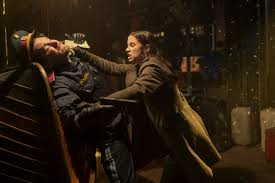
They splurged on epic brawls and bloodbaths that have petite de Armas punching, shooting, stabbing, choking and grenading her character’s way out of jams, cutting through legions of evil “x” scarred assassins in throw-downs, gun battles and a literal “fire” fight.

Stunt coordinators Kyle Gardiner, Jeremy Marinas and Domonkos Párdányi and their vast team earned their Eastern European hazardous duty pay on this one.

But “The World of John Wick” hotels, “tribes,” murder contract infrastucture, “rules” and codes and lots of punchouts don’t really add up to much of a movie. The story’s a mess, the cliches and conventions of this “world of assassins” collide as our heroine keeps tumbling into vast, conveniently unprotected weapons stashes and villains three times her throw-weight who never figure out “Just SIT on her.” Not once.

“Ballerina” rigidly follows the four “John Wick” films formula — a great wrong is committed, vengeance much be obtained because you bad guys messed with the wrong assassin. To get that revenge the hero/heroine must break the rules and conventions of the International and Ancient Order of Assassins of which John Wick is the most infamous member.

He’s the guy his fellow union members fear, the “Baba Yaga,” a “witch” with almost supernatural abilities to dodge bullets, absorb beatings, mow-down legions of bad guys and still stick a champagne glass stem through a foe’s eyesocket as a coup de grace.

“Knives Out” and “Ghosted” veteran de Armas plays a young woman who grew up in a ballet school for bodyguards and killers. Russka Roma is run by a heartless Russian (Anjelica Huston) who makes little Eva dance until her feet bleed.

Then, it’s off to martial arts class and the shooting range, because “one bullet well placed can change the world.”

Eva wound up there because her first killing — at about age 7 — couldn’t save her father when an assassination “cult” headed by The Chancellor (Gabriel Byrne) shows up to kill him.

She learns her profession, and twelve years later, she’s on the job — protecting some clients, killing to fulfill contracts on others.

“All these rules,” she mutters to The Director (Huston) and the hotelier Winston (Ian McShane). “Who do they serve?”

When she sets out to track down Dad’s killers, who have “X” branded on their wrists, she winds up in a Bavarian Alpine village full of killers, we might find out what that tattoo on her back means. Alas, that’s a little off message, when it comes to her bloody and shadowy profession.

“Lux In Tenebris.”

“Underworld” veteran Len Wise directs this, a picture whose stunts and fights are impressive enough but whose performances and plot aren’t.

The great thing about the original “John Wick” was the dark humor. You steal a guy’s vintage Mustang and kill his little beagle? You’ve brought the WRATH of SATAN down upon us all!

There’s virtually no humor to “Ballerina” — “You broke my f—ing JAW!” “You’re still USING IT!” — and absolutely no heart.

We’re meant to swallow de Armas as a fiendish fighter who survives a string of stabbings (cauterizing is the new action heroine/hero self-surgery cure-all) and never seems to lose blood or muscle use because of it. Watching her head-butt anything more substantial than a cantaloupe is to laugh.

The idea of making this an “ancient” world means lots of work for actors longer in the tooth like McShane, Huston and the late Lance Reddick, still the concierge at the Hotel Intercontinental over two years after his death.

It also, in this film, gives us a villain who’s a bit creaky and gassed (Byrne). At least that almost makes us forget how bad a child actor is early on, and how unnatural Reeves’ line-readings remain well into his fifth decade in the movies.

Duuuude.

There are fight scene variations in this film that we have never seen the likes of. But hell’s bells, if you’ve sent John Wick off into the sunset, have the guts to not shoehorn him back into this movie with no logic to back up his presence here outside of the check you wrote Reeves to try and prop up a middling movie from the guy whose last big screen feature was a bad remake of “Total Recall.”

Rating: R, graphic, bloody violence and lots of it

Cast: Ana de Armas, Gabriel Byrne, Ian McShane, Catalina Sandino Moreno, Norman Reedus, Lance Reddick, Anjelica Huston and Keanu Reeves

Credits: Directed by Len Wiseman, scripted by Shay Hatten, based on characters and a “world” created by Derek Holstad. Lionsgate release.

Running time: 2:05

Posted in Reviews, previews, profiles and movie news | Tagged , , , , , , , | Comments Off on Movie Review: Pull your punches, Tiny Dancer — “From the World of John Wick: Ballerina”

Movie Preview: Luc Besson’s “Dracula: A Love Tale”

I know what you’re thinking. Ok, maybe it’s just what I was thinking.

Msr. Luc is doing “Dracula?” Vampires and car chases?

But no no.

Caleb Landry Jones, Christoph Waltz (as a priest), Matilda de Angelis and
Zoë Bleu star in this July version of a story we saw (more or less) last Christmas.

Not exactly “Nosferatu,” but pretty danged close.

Besson wrote and directed this adaptation of the Bram Stoker urtext of vampire stories.

July 25, it’s unleashed upon the world.


Posted in Reviews, previews, profiles and movie news | Comments Off on Movie Preview: Luc Besson’s “Dracula: A Love Tale”

Series Review: Owen Wilson Saunters down the Back Nine as “Stick”

Golf is a middle-aged white man’s sport and “Stick” is a series tailor made for the TaylorMade set — and Owen Wilson.

It’s a sentimental, easygoing comedy about “a good walk spoiled,” a show that grabs the gimmes and leans into Wilson’s laid back charm.

He plays the title character, a one-time pro star who had a “Tin Cup” meltdown sixteen years before, now reduced to selling clubs and hustling barflies in BFE, Indiana.

Stick’s broke, dodging the ex-wife’s efforts to sell the house he’s cluttered up, still driving a Bondo’d Corvette from back when he was big, still pulling hustles with his smart-mouthed old caddy who’s not shy about cracking jokes about how he “triple bogeyed your whole life.”

And then Stick, in mid little-old-lady golf lesson, hears a swing and a ball strike. And he knows he’s found the next big thing before he turns around and spies the mop-topped teen who hit that ball.

“Stick” is about an aimless “burned-out never was” seeing his last chance to get noticed and get paid for golf via a hot-shot teen he takes on a summer warm-up tour, via RV, in prep for the U.S. Amateur Golf Championship at summer’s end.

Jason Keller, the series’ creator, scripted the crackling “Ford v. Ferrari.” He plays to his leading man’s strengths — Wilson’s gee-whiz, open-mouthed harmlessness, the crooked smile hiding “a deep sadness within.” And he fills this show with familiar characters, low-hanging fruit gags, set-ups and situations.

Those are dramedy versions of golfing’s “gimmes,” too easy to miss.

The kid, Santi (Peter Dager) “plays like a 17 year old,” retired caddy Mitts (Marc Maron, of course) grumbles, “go-for-broke, all risk, no reward.” Santi’s also moody, with golf “issues” dating back to childhood.

Cue the “Gen Z” jokes.

He’s Latino, and his mom (Mariana Treviño) drives a hard bargain and rolls the dice on her kid. So naturally she quits work to come on the trip with them.

Judy Greer brings her impish wit to the course as Stick’s moved-on ex-wife.

Lilli Kay is the disgruntled, Marxist-in-training bartender who connects with the kid just a year or two younger than her.

And Timothy Olyphant is the tour veteran/TV pitch man looming over this quest before making a late in the run appearance, a villain whom Stick has ugly history with.

Yes, Stick’s remembered on youtube thanks to “the worst day of my life.” Yes, he has secret pain. Yes, there’s parenting that comes with this resists coaching teen phenom.

Classic rock score? ZZ Top, The Who, The Knack, Thin Lizzy, Marc Bolan? Check.

Obvious needle drops are soundtrack gimmes. As I said, this series is aimed at middle aged white guys, and Keller ticks off as many boxes as he can think of that pander to that demo.

The golf is mostly unrealistic — holing out or water hazarding, falling down the leader board, racing back up it.

But Wilson and Maron click, the leading and supporting ladies get their backs up (barely) and the show saunters through its paces and its episodes like a par three course they’re laughing through, sipping beers from the cooler in the back of the cart between swings.

It’s not really “a good walk spoiled,” as a legend of the game once put it. Not when you’re riding instead of walking. It’s still a game worth a few laughs.

Rating: TV-14

Cast: Owen Wilson, Peter Dager, Marc Maron, Mariana Treviño, Lilli Kay, Judy Greer and Timothy Olyphant

Credits: Created by Jason Keller. An Apple TV+ release.

Running time: Ten episodes @:30-46 minutes each

Posted in Reviews, previews, profiles and movie news | Comments Off on Series Review: Owen Wilson Saunters down the Back Nine as “Stick”

Netflixable? “The Heart Knows,” a sentimental transplant romance from Argentina

“The Heart Knows” is a bland and sentimental serving of cinematic romance comfort food from Argentina.

No, that’s not much an endorsement until you remember that “comfort food” is comforting for a reason. It plays sweetly and goes down easily and Hallmark Channel fans will find things to like about it.

Juan Manuel (Benjamín Vicuña) is a rich, dashing commitment-phobic 40something CEO of a building firm — “Concretely.” He takes tennis lessons, has a mansion, a housekeeper, a steady, high-maintenance girlfriend (Annasofia Facello) and a group of bros he takes trips with, including his top lieutenant and oldest friend at work, Tony (Peto Menahem).

And a few minutes into the melodrama titled “Corazón delator” in Spanish, he has a heart attack on his way to the airport for a bro’s weekend.

That’s also the night of Vale’s (Julieta Diaz) birthday. She’s a waitress/activist for her working poor neighborhood, El Progreso, an area doomed by planned city redevolopment. And on this night, her motorcycling husband, Pedro (Facundo Espinosa), has an accident and winds up brain dead.

Newly-widowed and now single-mom Vale has to make the call. Yes, we’re donating his organs. And you know without me telling you where Pedro’s heart goes.

Juan Manuel recovers, thanks to that heart transplant. But his mania for work and passion for good times seem to have faded. Survivor’s guilt has him wondering who donated his heart. Being rich, he can find that out.

But showing up in El Progreso, where the locals are frantically trying to rebuild their local clinic with no money, and passing himself off as a “construction worker” doesn’t pass the smell test — even when he’s dressed-down.

“You worked in construction, with those hands,” Vale wants to know (in Spanish or dubbed into English)?

She is the most suspicious of the somewhat colorful neighborhood “types” who welcome Juan and his contributions to the labor, materials etc.

In his “real” life, Juan is facing a showdown with his family company and city hall over the planned demolition and new rec center Concretely has been backing for many months. It will be built in El Progreso in Buenos Aires. Vale and her friends are to be evicted to make room for it.

Writer-director Carlos Carnevale, a veteran of Argentine cinema (“Elsa y Fred”) and TV, populates the neighborhood with just a couple of colorful characters — the antic, foul-mouthed special needs adult Pollo (Bicho Gómez) and neighborhood cynic/thug Horacio (Yayo Guridi) stand out.

Carnevale has Juan take “lessons” on living — “See what it’s like to work for REAL?” — among the working poor from his housekeeper/cook Nancy (Julia Calvo). Here’s how you take the bus, boss.

“You don’t take an Audi into that neighborhood!”

The script is formulaic and almost criminally unsurprising. The roles are basically a collection of sketched-in “types.” Vale is barely developed as a character and mother to her not-really-mourning little boy (Manuel da Silva).

Juan’s transformation isn’t supernatural, but “existential crisis” doesn’t quite cover it, either.

Yes, “tennis lessons” and congenital heart failure go hand in hand. Have you ever eaten in an Argentine restuarant? Meat, meat and meat with a side of meat and meat for dessert.

And yes, “The Heart Knows” where it’s going and gets there in a reasonably short amount of time. A couple of sentimental moments hit the sweet spot even if the performances are pretty much colorless.

Rating: TV-14, violence, lots of profanity

Cast: Benjamín Vicuña,
Julieta Díaz, Facundo Espinosa, Julia Calvo, Manuel da Silva, Annasofia Facello, Yayo Guridi and Peto Menahem.

Credits: Scripted and directed by Carlos Carnevale. A Netflix release.

Running time: 1:29

Posted in Reviews, previews, profiles and movie news | Comments Off on Netflixable? “The Heart Knows,” a sentimental transplant romance from Argentina

Classic Film Review: A Merry Hitchcockian Chase, but that “Young and Innocent” Ending! (1937)

In the mind, at least, one can envision the three credited screenwriters of Hitchcock’s “Young and Innocent” pacing a smoke-filled room, belting back cups of tea like they were bourbon.

They were in a pickle. They’ve reached the climax of their loose adaptation of a Josephine Tey novel, but they can’t figure out how to suspensefully drag out the discovery of a murder suspect in a crowded dance hall.

The suspected killer has a physical tic. The hero, the heroine and the “tramp” who met this fellow and would recognize him on sight know about it.

“Can we disguise him,” writers Charles Bennett, Edwin Greenwood and/or Anthony Armstrong, working together or alone on “their” draft, wonder? Perhaps Alfred Hitchock himself, or Alma Reville, his writer/ continuity director wife, suggested it.

Let’s put the suspect in the dance band. It’s 1937! Let’s paint the musicians up in BLACKFACE!

That could very well have been the “thinking” that went into this bit of screenplay problem-solving, clever and “racist” only if you think anybody’d mind — anybody with a “voice” back then, anyway.

After all, it’s just a variation of what Billy Wilder & Co. would do with the 1930s period piece “Some Like It Hot” twenty years later — put Jack Lemmon and Tony Curtis in drag so they can escape The Mob,. But one disguise is recognized as a gross, demeaning, exaggerated and offensive parody of people unlike the writers. And the other’s well, let’s not go down the road that J. K. Rowling ran off of, shall we?

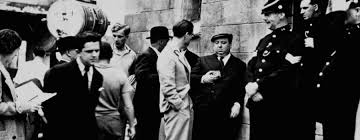
“Innocent” is Hitchcock on the verge of hitting his confident comic stride.  It’s a near romp of a chase picture about an accused killer on the lam, the Chief Constable’s daughter (and her Schnauzer) aiding him in the pursuit of evidence that will clear him and find the “real killer” for the quick-to judge inept coppers to pin the murder on.

Hitch would elevate his “Man Who knew Too Much” supporting player Nova Pilbeam to her most famous big-screen role for this lighthearted murder mystery, and promote”Things to Come” support Derrick De Marnay into a leading man.

He’d discover how funny eyebrow-raising Basil Radford could be, cast as a quizzical bystander in an amusing children’s birthday party scene, and bring him back for the role that would immortalize him — Caldicott in the comical cricket-loving big screen duo Charters and Caldicutt — in Hitchock’s even jauntier “The Lady Vanishes” filmed the next year.

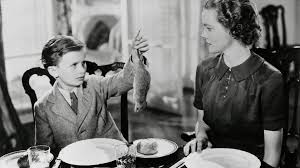
“Innocent” features police clumsily railroading the suspect in an actress’s murder, then losing him on the way into the courtroom. The Chief Constable’s (Percey Marmont) youngest son wants to know, “If you don’t find him, will you get the sack, father?”

There’s a wee boy of about seven called on to pump gas out in the provinces. He has to climb up the towering pump to even attempt to manage that, and call for help.

Two coppers “commandeer” a farmer and his tiny pig wagon for their pursuit. They gripe about the amount of room in it.

“Aye don’t reckon it’d hold more’n TEN pigs!”

It’s a lark, almost from start to finish, a film that opens with a jaunty bit of jazz and launches into a heated argument so theatrical and broadly played we wonder if it’s part of a filmed play within the movie.

An actress (Pamela Carme) from that argument turns up dead. A young writer (De Marnay) stumbles across her body on the beach, flees from the scene and is seen fleeing. For some reason, a screenwriter who sold the now-dead actress a single “story” has been mentioned in her will.

The cops figure they have their man and grill him. His missing raincoat? That had the belt she was strangled with, they’ll bet.

Writer/suspect Robert Tisdall passes out from the all-nighter interrogation, but the Chief Constable’s plucky oldest child Erica (Pilbeam) revives him. He resolves to get away shortly after he meets the dithering local dope — “Well, it doesn’t look too good for you, does it?” — assigned as his defense counsel.

“Are you representing the police, by any chance?”

Tisdall escapes, and the enterprising Erica finds herself off with him, not sure of his “innocence” and fighting the idea that she’s on the other “side” by birth and by logic.

There’s a brawl at a roadside diner, triggered by Erica’s questions about the MacGuffin coat, assorted narrow escapes from exhausted police, a “china mending” “tramp” (Edward Rigby) to track down, and that amusing kiddie birthday party that the leads get roped into by Erica’s aunt (Mary Clare) and comically suspicious uncle (Radford).

Hitchcock’s cameo has him playing a news photographer at the suddenly in a tizzy courthouse.

The sharply shot and designed picture pretty much trots by at a brisk 83 minutes, from murder to big band rendition of “No One Can Like the Drummer Man” in the finale. The comedy works, start to finish. But I have to say, that plot “problem solving” leaves a LOT to be desired.

Erica is a great creation, the most competent character in the lot. She’s the only one who can start and manage her clunky ’26 Morris Bullnose roadster. Are we meant to think that Tisdall was hiding in the rumble seat when she and the two cops with her run out of gas in hot pursuit of their escapee?

He turns up to help her push the car after the coppers commandeer that pig wagon. Where was he and how’d he GET there?

Logic takes a holiday more than once as Hitch takes his usual shots at police, whom his biographers say he feared and held in a measure of contempt.

As the opening scene is a heated argument between a recently-ditched husband (George Curzon) and his Hollywood actress wife who’s obtained “a silly Reno divorce” in the States, why would the cops never consider him a suspect in her death?

And why would the actress generously remember young writer-for-hire Tisdall in her will, of all things?

Of course, the deal-breaker with “Young and Innocent” is that “clever” bit of Blackface gag writing in the finale, something one can’t dismiss despite the American performing “tradition” that did nothing to sanitize it or excuse one and all of the era “because everybody (white) was racist back then.”

British films dropping the “n” word popped up in that era and on into the ’50s. A sailing magazine I subscribed to in the ’90s had some uproar over a limey who made a plea for a “boat n—er,” and damned if some British Empire celeb didn’t drop that noxious phrase just a couple of years ago on TV. 

I judged a University of Tennessee fraternity sketch show competition with one group of fake-Greeks performing in Blackface in the ’90s, and white politicians have had careers rattled by revelations that they took part in such transgressions in their college years.

It’s inexcusable, and knowing that the folks who concocted the gag in ’37 gave it less thought than they gave the assumed name — Beechtree Manningcroft — that they have the hero invent, is just disheartening.

But that’s the biggest reason this otherwise fun film isn’t remembered with Hitchcock’s other peak pre-Hollywood era work and the reason it is shown on TV with an “offensive” content disclaimer attached to the beginning.

And to think that all they had to do to dodge that bullet was to dress the band in drag.

Rating: TV-PG, “dated cultural practices (blackface)

Cast: Nova Pilbeam, Derrick De Marnay, Percey Marmont, Pamela Carme, Edward Rigby, Mary Clare and Basil Radford

Credits: Directed by Alfred Hitchcock, scripted by Charles Bennett, Edwin Greenwood and Anthony Armstrong, based on a novel by Josephine Tey. A J. Arthur Rank release on Tubi, other streamers

Running time: 1:23

Posted in Reviews, previews, profiles and movie news | Comments Off on Classic Film Review: A Merry Hitchcockian Chase, but that “Young and Innocent” Ending! (1937)

Movie Preview: Margot Robbie, Colin Farrell and Phoebe Waller Bridge, “A Big Bold Beautiful Journey”

Matchmaking by GPS?

This romantic fantasy takes characters back to the past, makes one remember the regrets, the paths not taken and getting back to “when I thought everything would work out for me.”

A big big-eyed Margot Robbie romance? Overdue. It’s from the writer-director of “Columbus.”

It opens Sept. 19, just in time for awards season?

Posted in Reviews, previews, profiles and movie news | Comments Off on Movie Preview: Margot Robbie, Colin Farrell and Phoebe Waller Bridge, “A Big Bold Beautiful Journey”

Movie Review: Teen Seeks Answers about the Murderer of his dreams — “Soul Reaper”

It’s not just ghost stories from the Indonesian cinema that make their to the West. But of all the genre thrillers, romances, histories and action pix bought for distribution, financed by Netflix or however they’re exported, it strikes me that horror movies showcase this world class cinema in the most flattering light.

“Soul Reaper” is a slick, gorgeous looking tale of demons hiding away in nightmares which one teenaged schoolboy reluctantly visits or experiences by touching others whose spirits are somehow entangled there.

The dreamscape is vividly realized. The effects are impressive, mostly non-digital, relying on actors, makeup, settings and practical on-set “magic” to achieve their jolts and frights.

The story, leaning on nightmares, visions, demonic folklore, “mysterious deaths” reported by the media and a kid who enlists schoolmates in trying to get to the bottom of things at a remote village that ties the victims together, is a lot to process.

But engaging and wholly engaged leads compensate for its shortcomings enough to say, “Not bad.”

Respati, played with a haunted, animated conviction by Devano Danendra, is a teen tortured by his dreams. His dead mother torments him and wherever her corpse is, sometimes stalking and chasing him (dragging one leg as she does), his dead dad is sure to be close by, maybe in the Volvo where they died together in an accident.

“Why didn’t you die WITH them?” is the otherworldly cry (in Indonesian, with subtitles) that sticks in Respi’s mind whenever he wakes up in a sweat.

His grandfather is concerned. His doctor is easily convinced to “up the dosage” of whatever anti-psychotic sleep aid the kid is on.

Only his classmate and bestie Titrta (Mikha Hernan) takes seriously Respati’s claims of visions, touching strangers on the tram and sampling their own dreams and the “coincidences” regarding these mysterious deaths that TV news is covering.

But that’s before the New Girl from Jakarta, Wulan (Keisya Levronka) shows up and instinctively gravitates towards Respi and Ta. She’s sophisticated, worldly and she knows things.

Folkloric “massage oils” and sleep paralysi and visions of a ghostly forest where a stranger he sat next to on a bus is strangled by tree roots are just the starting point for Respi’s journey, with Ta reluctant to come along but game-for-anything “weird girl” Wulan down for pretty much anything.

“Don’t worry. It’s totally safe,” she lies, intentionally or unintentionally.

What we’re watching could be a “Nightmare on Elm Street” with dead grannies and without a Freddy Krueger, a hero’s journey into “dream reality” where “souls reside while we’e asleep.”

The dreamscape encounters are derivative even as the effects that intrude on this trio’s reality remain first rate.

There’s a lot of ground covered but not a lot that’s novel or engrossing in this vision of a dream afterlife. But director and co-adaptor Sidharta Tata (“Ali Topan”) manages some decent shocks for this somewhat lumbering but distinctly Indonesian take on the Everyday Horror that faces dreamers who believe in demons.

Rating: TV-MA

Cast: Devano Danendra, Keisya Levronka and Mikha Hernan.

Credits: Directed by Sidharta Tata, scripted by Ambaridzki Ramadhantyo and Sidharta Tata, based on a novel by Ragiel JP. A Well Go USA release.

Running time: 1:52

Posted in Reviews, previews, profiles and movie news | Tagged , , , , | Comments Off on Movie Review: Teen Seeks Answers about the Murderer of his dreams — “Soul Reaper”

Netflixable? Spanish cops match wits with “La viuda negra” in “A Widow’s Game”

“A Widow’s Game” is a Spanish “true crime” thriller that’s as dry as your average episode of “Law & Order” or its many spin-offs, and as about as thrilling.

What makes it intriguing enough to stick with is a sexually voracious and manipulative villain and the slow, deliberate and by-the-book way cops take care of business in Valencia.

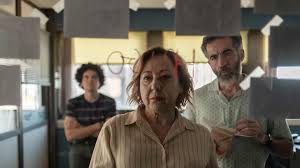
There’s not much mystery to “whodunit,” so Netflix changing the title from “La viuda negra,” “The Black Widow,” was pointless. Within a couple of days of the murder, veteran National Police Chief Inspector Eva Torres (Carmen Machi) and their team are pretty damned sure they’ve got their suspect.

So what six credited Spanish screenwriters came up with to maintain our interest is telling the story in three chapters. We follow “Eva” as and her team of two (Pablo Molinero and Pepe Ocio) as they methodically work the case, face off with a bullying, press-happy police commissioner and balance this one case against others and with single mom Eva’s family life (a special needs daughter who keeps getting kicked out of schools).

We hang out with the hard working/hard-living suspect Maria Jesus or “Maje” (Ivana Baquero), the widow who doesn’t act like a widow, but through whom we meet her late husband Arturo and her assorted lovers via flashbacks.

And one last chapter reveals who the play-acting, dramatizing and manipulating 20something Maje talked into doing the deed for her.

Baquero makes our Black Widow a fascinating, sexual creature in the Nurse Jackie mold. She’s a nurse working two jobs to help pay for renovating the couple’s Valencia apartment. She feels martryed, but even if she didn’t she’d still cheat. A lot. She enjoys sex and sexual conquests and juggling her many lovers with lies and the help of friends.

But this libidinous, constantly-clubbing 27 year-old never wholly shook her strict religious upbringing in provincial Novelda.

You don’t UNDERSTAND, she breathlessly tells Eva as evidence of her serial infidelities comes to light. “Cheating in Novelda will get you KILLED!” (in Spanish, or dubbed into English).

Maje gossips with pals and texts her assorted lovers, all of it by phone. That’s how the cops come for her, and once they have judicial permission for wiretaps. We’re treated to audio montages of Maje’s lying, cheating indiscretions. But is there “evidence” in all that?

“A Widow’s Game” delivers interesting glimpses of Spanish life — Maje’s Apostolic Church upbringing (she kisses the crucifix above her marriage bed before crashing to sleep after her multiple shifts and what came after), her mother in law’s advice to Maje after she’s caught cheating right before the marriage.

“Everyone has to choose the spoon they want to eat with the rest of their lives.”

But Baquero’s vamped, self-dramatizing sexy suspect aside, “A Widow’s Game” is too tame and predictable to tantalize. The “lives” are glimpsed and glossed, not deeply probed. The suspect “who did her dirty work” is a cliche in Spain, America, pretty much anywhere men fall for the charms of a femme fatale.

“Game” thus amounts to little more than a page-turner, a beach book of a movie for those sucked into How-she-done-it and how the police come to their conclusions and make their case.

Rating: TV-MA, sex, nudity

Cast: Carmen Machi, Ivana Baquero,
Tristán Ulloa, Pablo Molinero, Pepe Ocio and
Álex Gadea

Credits: Directed by Carlos Sedes, scripted by Ramón Campos, Gema de Neira, Jon de la Custa, Ricardo Jornet, David Orea and Javier Chacártegui. A Netflix release.

Running time: 2:02

Posted in Reviews, previews, profiles and movie news | Comments Off on Netflixable? Spanish cops match wits with “La viuda negra” in “A Widow’s Game”

Movie Preview: One Last Taste — “Downton Abbey: The Grand Finale”

A day at the races, a night at the Abbey?

I was hoping they’d take this saga to WWII, giving it a “Brideshead” send off.

But 1930 it is.

The gang’s all here, and Sept. 12, the soap’s all done.

Posted in Reviews, previews, profiles and movie news | Comments Off on Movie Preview: One Last Taste — “Downton Abbey: The Grand Finale”

Movie Review: A Civil War Suicide Squad does Battle with the Supernatural — “Resurrection Road”

“Resurrection Road” is a mediocre Civil War B-movie that lapses into a seriously bad supernatural C-picture for the third act.

That’s also when Michael Madsen, King of the C-movies, makes his mark.

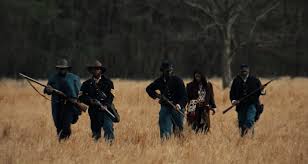
There’s a little promise in the premise — Black Union soldiers sent to disarm a Confederate fort in Arkansas, led by an escaped slave/soldier promised “40 acres” if he takes on this suicide mission, and a hangman’s rope if he doesn’t.

With Civil War movies on an indie film budget, one fun exercise when watching them is looking for anachronisms in the uniforms, firearms, settings and colloquialisms. Yes, there were Confederates who used lever-action repeating rifles. Yes there were truss bridges to cross, but no, “dynamite” wasn’t invented until 1867.

Hard to know if ex-slaves turned soldiers used “mother-f—er” as much as this fractious sextet does.

Malcolm Goodwin plays Barabas, the “convict” busted down to private and imprisoned until General Craven (Jeff Daniel Phillips) shows up with an offer he can’t refuse. Take five other soldiers to your old stomping grounds in Arkansas. Disable the fort’s big guns.

So forget the nightmares you still have about being enslaved by the sadist Quantrill (Madsen), what it cost you and your family. Get a move on “you filthy Black son of a…”

Yeah, there were racists on the Union side, too.

Barabas regains his sergeant’s stripes (we assume) to take command of a motley crew played by Okea Eme-Akwari, Furly Mac, Randall J. Bacon, Davonte Burse and Bryan Taronn Jones. It doesn’t take long for things in “this s— detail” to go wrong, and then more wrong.

A Cherokee survivor of a massacre (Triana Browne) joins their thinned ranks, a handy someone to have around when the detail runs across evidence of gruesome deaths and tales of supernatural “bad juju” goings on in that fort.

Writer-director Ashley Cahill probably needed that supernatural element to sell this screenplay pitch. But it didn’t sell for much. Look at the fort, when the stragglers from the unit finally come to it. It’s digitally painted silhouettes and big, non-functioning (digital) cannon.

Madsen’s Quantrill arrives and things go further South corresponding with that.

Goodwin isn’t bad even if Browne isn’t experienced enough to overcome the caricature her character is and Madsen’s just here for the hat and the ham.

It is what it is and is never more than that. But it’s a damned shame that nobody is satisfied with a simple “suicide mission” combat period piece any more. You’ve got to go “Overlord” or “Sinners” or whatever, because history, even fictionalized “Guns of Navarone” history, isn’t enough.

Rating: R, graphic, bloody violence, profanity

Cast: Malcolm Goodwin, Triana Browne, Okea Eme-Akwari, Furly Mac, Randall J. Bacon, Davonte Burse, Bryan Taronn Jones, Jeff Daniel Phillips and Michael Madsen.

Credits: Scripted and directed by Ashley Cahill. A Saban Films release.

Running time: 1:17

Posted in Reviews, previews, profiles and movie news | Comments Off on Movie Review: A Civil War Suicide Squad does Battle with the Supernatural — “Resurrection Road”