“Billie” is the far and away the most definitive Billie Holiday biography ever put on screen, a film that celebrates her magic and examines the demons that haunted her, chemical and human.
It’s a film built out of two tragedies, Holiday’s — she died at 44 in 1959, at the end of a long, drug-fueled decline — and that of a dogged reporter hellbent on telling her story in a book which she never got around to writing. Linda Lipnack Kuehl, a school teacher and widely published freelance writer, spent eight years interviewing Holiday’s friends, family and generations of colleagues before they were gone and their often-frank memories of this singular talent were lost forever. Kuehl recorded those interviews on cassette, but died in 1978, having struggled to wrestle all this material into a book she never finished.
Veteran sports documentary filmmaker James Erskine (“The Battle of the Sexes,” ” The Ice King”) builds his film around those tapes of Kuehl’s hours and hours of interviews — some friendly, some that turned testy as she dug into dark parts of Holiday’s saga. Legions of jazz legends who worked with her were still around in the ’70s and agreed to talk for the book. Count Basie, Billy Ekstine, Barney Kessel, Tony Bennett and music impresario John Hammond are here, with friends, one-time roommates, comics and sidemen who knew and played with her or appeared on the bill with her at The Apollo, Cafe Society, Club Hot-Cha and the like.
There’s even a snippet of singer Carmen McRae giving her compelling reason for not doing an interview.
Early champions talk of her instinctive use of her voice as a version of a horn or reed instrument. Paired up with trumpeter Louis Armstrong early on and sax player Lester Young later, they turned many of her solo vocal recordings into the most sophisticated duets in jazz history.
Kuehl’s interview recordings are a beautifully-preserved treasure trove of opinions, eyewitness accounts and frank adulation, and equally frank assessments of Holiday’s tastes in drugs and sexual partners (actress Tallulah Bankhead was linked with her for a while), all heard through a 1970s filter. Narcotics agents who pursued her and colleagues who acknowledge how much “she liked being high” sat down for chats.
Kuehl also found a psychotherapist who evaluated her at one point (she was arrested for drugs twice, served a year in prison) and refers to as a “psychopath” in a clinical sense. Interviewing an early pimp, from back when the Baltimore girl born Eleanora Fagan was just a child, puts that into perspective.
Raped, a sex worker at 13, with all manner of interview subjects talking about music business types using her by becoming sexual partners when they thought Kuehl’s recorder was off (Benny Goodman is among those named) paints a sad picture.
Hearing the many dated suggestions that “she liked it rough” and was beaten by more than one lover — publicly by her last husband — is chilling.
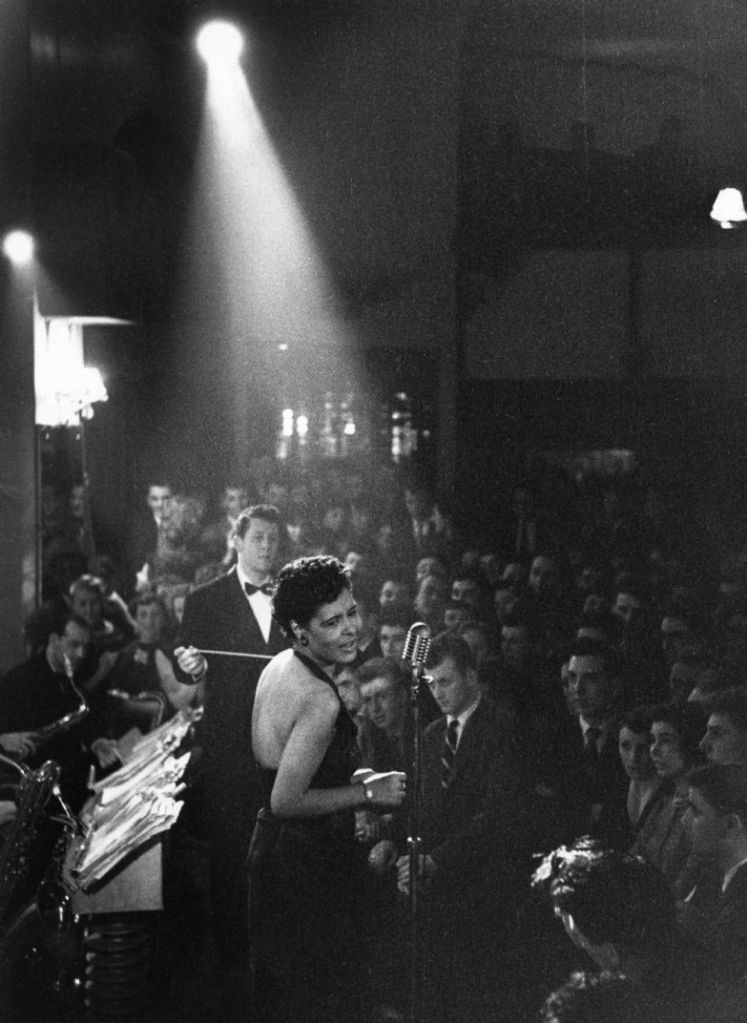
Erksine intercuts Kuehl’s intereviews with generous helpings of Holiday performances (live TV, and on film) and radio and TV interviews she gave during her short, storied career. You can make out the voice of Mike Wallace among those asking the questions.
But unlike those talking to Lady Day while she was alive, Kuehl didn’t need to dance around the hard questions. Her pugnacious challenging of music legend Hammond with the accusations that he tried to make her into a “colored mammy” stuck singing only blues and fired her from Basie’s band, bandmates’ stories of her being forced to wear dark makeup to appease Southern venues that booked that band, Artie Shaw’s failed efforts to integrate his ensemble with her, anecdotes about the drug dealer who’d attach heroin or coke packets to her dog’s collar for delivery to her New York apartment, it’s no wonder Kuehl got blocked when she tried to organize this treasure trove into a book.
Erskine’s film does that work for her, no doubt leaving much out, but painting a moving portrait of a tormented artist who made great art as she slowly and steadily self-destructed.
MPA Rating: unrated, drug content, profanity, off camera violence
Cast: Billie Holiday, Count Basie, Billy Eckstine, John Hammond, Sylvia Syms, Tony Bennett, Barney Kessel, Harry “Sweets” Edison, “Pigmeat” Markham, Linda Lipnack Kuehl, many others
Credits: Directed by James Erskine. A Greenwich Entertainment release.
Running time: 1:37




















 Movie Nation