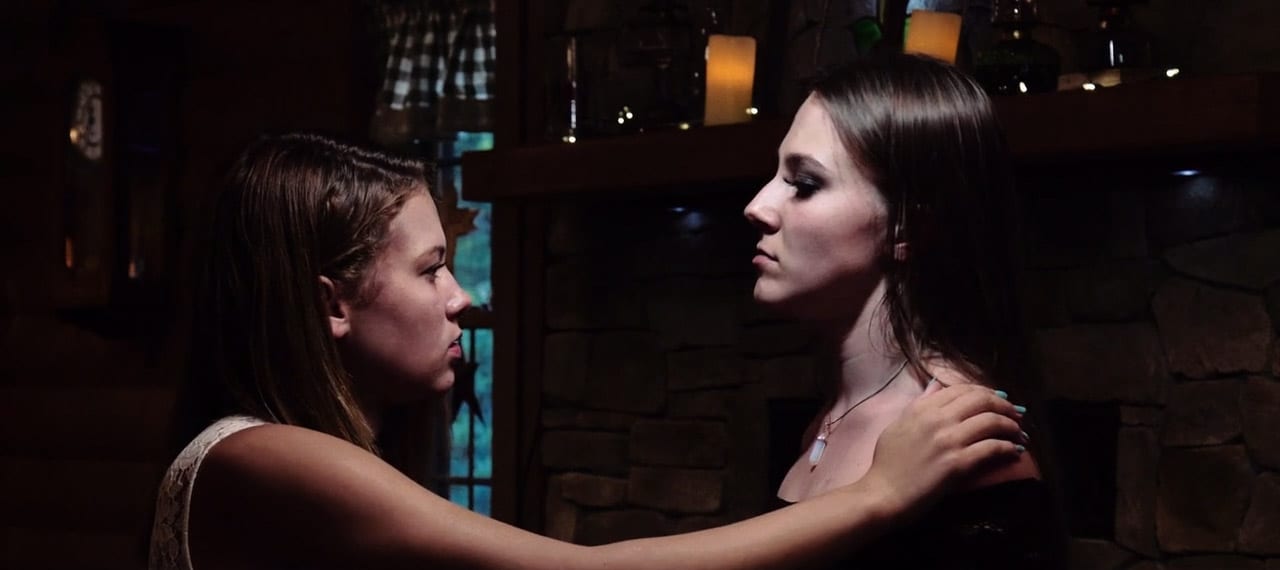
It’d be cruel to single out an actor for the performances, each worse than the next, in the amateurish horror outing “Occurrence at Mills Creek.”
A simple “haunted by causing my sister’s death” drama with a dose of “family curse” ladled on to give it the “horror” label, this a cringe-worthy, eye-rolling, drinking-game bad. Is it a student film? If so, I apologize for being mean.
The makeup is off, the music doesn’t fit the material, the pace is funereal and all of that comes to a head in a semi-intentionally hilarious “create a disturbance at a funeral” scene, non-professionals trying to act coy, furious, stricken or flirtatious and doing their best, but gosh darn it…
Our heroine, Clara (Ava Psoras) buries her mother (Betsy Lynn George), younger sister Cassandra (Alexa Mechling) and alcoholic, abusive father (Joe Fishel) in very short order. No wonder we see scars on her wrists.
She’s in therapy, which is a blessing. But as she caused Cassie’s death, Dr. Vicki (Dana Langshaw) is having a hard time assuaging her guilt. And in her guiltier moments, Clara sees and hears dueling Dr. Vickis (Grace Langshaw joining her twin sister) hissing “Maybe you’re just BAD” and “Maybe you should just GIVE IN.”
Seeing visions of dead family members (“How beautiful you are, how beautiful you’ll stay!”), finding a 100 year old diary, a house haunted by memories of a slaughter, the picture doesn’t turn supernatural slasher pic until late in the third act.
But the mere fact it does will attract the chosen few.
And through it all, the expressionless, unemotional and unempathetic acting, serving up heaping helpings of exposition when the “What’s real? What’s she dreaming?” story drifts off the coherent path into something even duller.
MPA rating: unrated, violence
Cast: Ava Psoras, Mary Sack, Betsy Lynn George, Alexa Mechling, Joe Fishel
Credits: Scripted and directed by Don Swanson. An Indie Rights release.
JT plays an ex con who takes a helpful interest in a troubled teen in this Jan. 29 drama. Juno Temple, June Squib and Mr. Mayhem from the car insurance commercials also star.
Today’s dose of Around the World with Netflix takes us to Christmas in Colombia, a manic, noisy farce that begins on the Day of the Little Candles and ends on Christmas Eve — “An Unremarkable Christmas (¡Qué chimba de Navidad!).”
Never heard of the Dia de las velitas? That’s why we watch international films, isn’t it? We learn about other cultures, their traditions and we wonder if they laugh at the same things we do.
This antic comedy, a stand-alone Christmas movie with characters from a Colombian TV series (“Chichipatosis”) is an exercise in excess — so many characters, so much…decor. That’s one of the reasons “noisy” suits it. It’s not just the characters who’re loud, it’s the over-decorated holiday-ready houses we’re treated to.
Yes, the gaucherie is a gag and yes, we’re allowed to laugh at that sight-gag in this broad goof on a family’s holiday blundering into a money laundering scheme. Other laughs, too few in number alas, concern a college kid’s crush on a novitiate nun, a daughter’s love for a mohawked punk, mother-in-law gags and gigolo jokes.
Nothing like a little cleavage for Christmas, eh? Viva la diferencia!
Juan (Antonio Sanint) is a hapless accountant with an insurance company whose boss (Luis Eduardo Arango) longs for the “family” Christmases he spent at home growing up.
Invite him to the Day of the Little Candles party, then! Maybe Juan can show off his magic act, if he can just get a rabbit who’ll cooperate.
Wife Margot (María Cecilia Sánchez) and daughter Monica (Mariana Gómez) take the news in stride, because son Sami (Julián Cerati) is home from music school in Argentina. Apparently, he picks up the accent of wherever he goes (a running gag from the TV series, I take it).
And that’s not all he picked up in Argentina. He’s in love. Rosalba (Majo Vargas) is quite the looker. But uh, son, that pink outfit? It says she’s a nun.
That’s OK. Sami has written her a song to convince her to give up the Mother Church.
“Let me see the treats you hide under your habit,” he calls it (in Spanish with English subtitles). That should cinch the deal, right?
Let’s ask Grandma (Aura Cristina Geithner), or better yet, her rich, younger model/chef boyfriend (Martin Karpan).
A couple of cops (Júlio César Herrera, Cristian Villamil) are on the trail of an infamous money launderer, but aren’t letting that interfere with their Day of the Little Candles celebration.
And the money launderer’s son (Biassini Segura) has been summoned from his marshmallow business to take part in the family’s bigger enterprise. And guess what? His Dad, the “infamous Orduz” mob boss/money launderer is actually…Juan the accountant’s boss.
There’s a lot of shouting, a bit of arguing, and every so often this character or that one stops to pray/make a wish to the Immaculate Conception.
Monica’s punk beau isn’t impressing Dad. Oh yeah?
“Destroyer (Fredy Morales) will be your grandchildren’s FATHER!”
“Unremarkable,” a silly story spun off a sitcom and narrated by the family cat, doesn’t include many translatable laughs. The speed and energy are there, but the Colombian TV movie budget was mostly spent on actors — there are many — and decorating the sets with Christmas crap.
No money for a good car or foot chase, no cash to hire a couple of comics to joke this thing up. The players have a moment here and there, a good line or broad over-reaction. But as farces go, this one is more promising than hilarious.
It’s not terrible, but it’s not nearly funny enough to sustain this much story, caper, family dynamics and the like.
MPA Rating: TV-14, threats of violence, sexual situations, rude language
Cast: Antonio Sanint, Luis Eduardo Arango, Mariana Gómez, Júlio César Herrera, Biassini Segura, María Cecilia Sánchez, Lina Tejeiro, Cristian Villamil, Julián Cerati, Majo Vargas, Fredy Morales and Aura Cristina Geithner
Credits: Directed by Juan Camilo Pinzon, script by Dago García. A Netflix release.
As I download the Warner Brothers app, required to preview “Wonder Woman ’84,” and watch the back and forth over the studio’s decision to move its entire lineup to HBO Max for the foreseeable future, and browse the menu of Netflix, Disney+ etc. titles available online, I am starting to wonder if there’ll ever be a day or indeed a need to go back into a movie theater at any point down the road.
Abandoned cinema on the Caribbean island of Curacao, the logo of MovieNation
It’s been obvious to me that studios regard theaters and the cinema experience as a bloody nuisance. Whatever they had to do to invest in digital projectors back in the early 2000s, covering the ShowEast cinema owners and operators convention that used to take place here in Orlando, you always got the feeling they were doing it grudgingly. It would save them money, in the long run. But they held out as long as possible to see if they could sucker the cinemas into spending the money by themselves.
Go to any film festival where “industry” folks congregate, and the people with the most contempt for sitting in the dark, undistracted, watching a film on the big screen stand out — cell phones out constantly, bouncing in and out, ruining the experience for others because they’re above that.
Filmmakers have always been the ones lobbying for prestige presentations, for their work to be seen on the big screen in a communal setting. Christopher Nolan is merely the newest and most vocal to state that case. Everyone from Spielberg and M. Night to Campion on down the line has made the case for the magic of the cinema.
But I can tell you where most viewers have migrated over recent years, and it’s no news flash. Much of my traffic in readership comes from reviews of Netflix titles — films, not series, BTW.
HBO Max getting on Roku is a big deal for PPV/VOD and “trial offer” subscriptions, and gives them a chance to compete with Disney, which pulled in millions of subscribers with “Hamilton” and “Mulan” and everything else they’ve pushed into streaming (“Soul” had a theatrical run weeks ago, and shows up on Disney+ in days).
Amazon is pouring money into production, not nearly as much as Netflix. Paramount has its own network, bundled into a Roku “free” (commercials included) channel, and others are following suit.
Meanwhile, the big theater chains — AMC, Regal, Cinemark — and their smaller rivals are struggling to stay in business long enough to “come back,” although mass bankruptcies, lease lapses and nationwide theater closings on the order of what we saw in the late 90s seems inevitable.
Since March, I’ve seen maybe four films on a big screen — “Tenet” being the big deal, a horror title here and there. I’ve missed more films that went theatrical only from smaller distributors this year than I’ve seen. I don’t need to see Jim Caviezel’s latest, distributors that make no effort to get their product reviewed (Bleecker Street, Roadside Attractions) are slow to pick up on how little anybody misses their product.
If I can get Amazon theatrical to be as diligent at promoting their fare as their series division (I have access to every series and doc they offer), I’ll be covered, accessing every movie that’s a part of the online film conversation. And as much as I’ll miss communal ritual of the Church of the Cinema, I won’t miss the drives to the theater, boorish fellow patrons and sheer inconvenience and inefficiency of me going to the movies rather than having the movies come to me.
In other words, I’m just like everybody else in that regard.
Will it mean an end to $300 million franchises, particularly the comic book ones? Possibly. Disney’s not going to let Marvel die, and we’re seeing a rise in the buzz about Marvel “series” in recent weeks, but tentpole movies seem to be receding into the horizon — pushed further and further back.
We won’t know how all this shakes out until next summer, when the Trumpdemic will be less of a worry and more people risk going out to do things we used to do in indoor group settings. But I can see a day when the cinema is like a concert hall, visited only on special occasions for pricey special events. It’s just a question of whether there’ll be cinemas open to upsell this new business model and make it work.
Posted inReviews, previews, profiles and movie news|Comments Off on Will Warners’ move to HBO Max, Disney+, Netflix and streaming leave any room for theatrical, once the pandemic is over?
I’m not a folklorist, so I’m not sure how common “The Blind Swordsman” story is across Asia. But the most famous films about such a character are about Zatoichi, the Blind Swordsman. Those go back decades, and even inspired a Denzel sci-fi version, “Book of Eli.”
This new Korean thriller is a younger “origin story” of sorts about a Korean warrior, blinded after siding with the losers in an attempted coup, using his other senses to wield his blade.
Looks good, if not remotely as bloody as the many Japanese films about such a character.
“Funny Boy” tells a compelling “growing up gay” story in a country few of us know about, set against the turmoil of Sri Lanka’s bitter, decades-long civil war.
In adapting a novel by Shyam Selvadurai, director Deepa Mehta (“Water”) has created a melodrama both intimate and sweeping, an “epic on a budget” with characters and dilemmas that speak to us all in a violent political situation that would test anyone any where and at any time in human history.
As if the violence of that ethnic conflict (the war didn’t end until 2009) wasn’t challenge enough, young Arjie (Arush Nand) grows up fascinated with his mother’s clothes, preferring the company of girls and bad at sports.
We see the blood drain out of the face of his father (Ali Kazmi) when he sees his seven year old in lipstick and a dress, playing the bride in a mock wedding he and his friends are staging.
“Looks like you’ve got a funny one here,” an elderly uncle chuckles.
Arjie’s mother (Nimmi Harasgama)? It’s time for her to stop letting him put on her jewelry for her, she decides.
But Arjie has a savior. It’s the 1970s and hip Aunt Radha (Agam Darshi) blows in from Canada, where she’s been attending college. She’s a free spirit in cut-off shorts and Westernized attitudes who figures this little boy out in a flash. Dressing up, “Does it make you happy?” That’s all she needs to know.
“You are different, precocious and wonderful!”
Together the kid and his cool aunt audition for “The King and I,” and Arjie has a co-conspirator. Radha’s facing an arranged marriage with a Tamil man from Canada, but this last summer in Colombo, she falls for the attentions of a Sinhalese co-star in the show.
Little Arjie becomes the go-between for this Tamil/Sinhalese Juliet and Romeo, the “beard” on their outings, but too little to understand the ancient hatreds that make that a doomed affair.
Arjie’s family is rich, as her many of his relatives. They are a largely-Christian minority in India and on Sri Lanka. The venom he overhears in the arguments with Sinhalese all but curdle his ears. An aunt explains their plight to him and to the non-Sri Lankan viewer.
“We’re the Jews of Asia!”
As Arjie grows up (Brandon Ingram plays him in his teens and older), he absorbs the fact that homosexuality is illegal that, endures a lifetime of judgement, abuse and betrayal from his sports-addict older brother Diggy (Hidaayath Hazeer), faces discrimination in his new school and discovers his gaydar. Shehan (Rehan Mudannayake) is his first clue that “people like us exist abroad, where’s it’s not illegal to be like we are.”
They bond over “the esteemed Mister Wilde,” Western music by Bowie and The Police and oh, by the way, Shehan’s Sinhalese.
The script is a tad too on-the-nose for its own good, with its parallel tales of “forbidden love” and unhappy “boring” conventionality. The background moves to the foreground so often and to such a degree that the love stories evaporate, minimized in a culture where chaste screen romances remain the rule, even as laws and mores change.
Darshi (“Dirk Gently’s Holistic Detective Agency”) is the life of this party, but Ingram, a writer making his screen debut in this Canadian production, holds his own with more experienced players.
But what’s fascinating here is the story that’s told, the place where it’s set and the point of view it gets across. The Western media reflected Indian (Sinhalese) coverage of this conflict and the endless terror campaign by the Tamil Tigers guerilla group. “Funny Boy” is eye-opening just for showing us the other side, with its own schisms — rich Tamils wishing their working class revolutionary Tigers would back off.
It’s not “Doctor Zhivago,” not the most original story or original treatment of love-in-a-time-of-war as a theme. But “Funny Boy” is valuable in letting us see this world and this history through different eyes.
MPA Rating: TV-MA, violence, profanity, slurs
Cast: Brandon Ingram, Arush Nand, Rehan Mudannayake, Hidaayath Hazeer, Nimmi Harasgama, Ali Kazmi and Agam Darshi
Credits: Directed by Deepa Mehta, script by Deepa Mehta and Shyam Selvadurai, based on the novel by Shyam Selvadurai. A Netflix release.
A young man visits a sick friend at home in his big, nearly empty family estate where the friend’s supposedly sick but reclusive sister also dwells.
They are the last in their line, isolated, with no prospects for or interest in extending it.
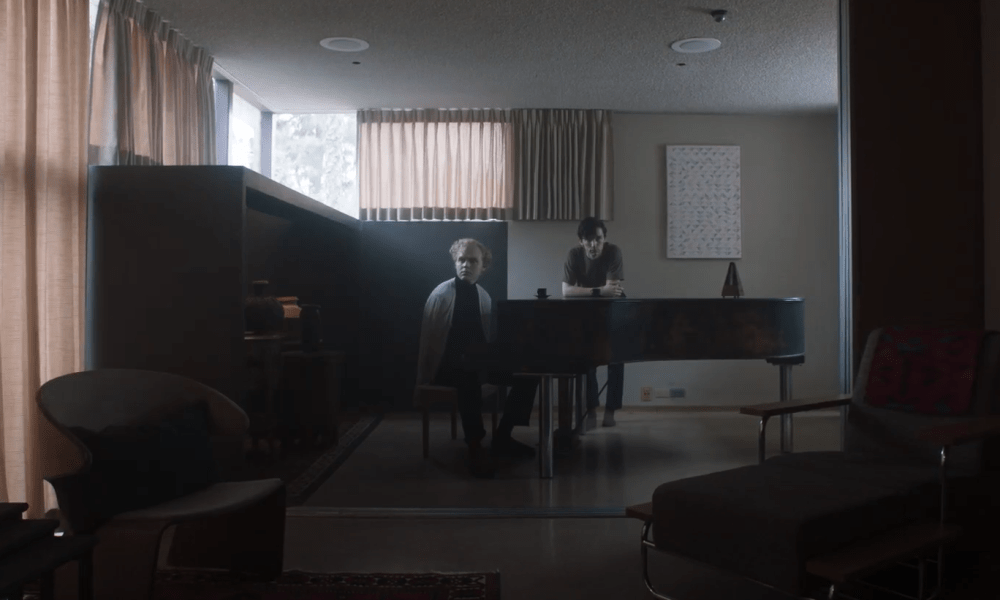
The bones of “The Bloodhound” are a straight borrowing of Edgar Allen Poe. It’s “The Fall of the House of Usher” only set in some Mid Century Modern house, a glass and steel multi-story affair perched on a hillside in Southern California.
But that classic tale is but the framework for the surreal creepiness first-time writer-director Patrick Picard serves up here.
That title suggests the nature of the threat to this declining family in their isolation, a creature out of the dreams of heir Jean Paul Luret (Joe Adler of “Grey’s Anatomy” and the recent “Twin Peaks” reboot). Some person, face obscured by a cloth hood, is seen crawling along a creek and then into this house, as if sniffing the floor, tracking a scent.
“JP” relates that dream among many others to his old friend Francis (Liam Aiken, who played the son in “Road to Perdition”). Francis takes them all in and tries to make sense of them all, the family predicament and his own in this seriously stylized spin through Poe Country. Not that he lets us in on his theories.
JP is rich, soft-spoken and understatedly eccentric. Please remove your shoes.
“I always get anxious when people wear their shoes in the house. It feels like they’re about to leave.”
He wonders if Francis is homeless, confesses to not having “set foot outside this place in two years.”
He weeps at sentimental black and white war movies, suggests they slip inside sleeping bags –upside down — and have a sort of worm wrestling match, gets in a fistfight with the pizza delivery guy and summons a singer and pianist for a command performance of art songs and operatic arias.
And JP steers Francis away from his sister, Vivian. Repeatedly.
“Don’t bother her.”
What’s the visitor to do when she visits him — in warning — late at night?
“Get out of here. You’ll die with the rest of us!”
Was Francis awake for this, or sleep-walking? Did he finish the night by wetting himself? JP not recalling any of that just heightens the paranoia.
Thumps from Vivian’s room, inside the closets and walls, almost go unnoticed. Perhaps it is “grandmother, who died here. Every now and then you can hear her sigh.”
And every so often, there’s a “visit” from whoever that is in the masked face, crawling, sniffing around, making a mess.
“The Bloodhound” is a cryptic story of sudden entrances and exits, of deadpan lines that have a random feel but sometimes comic effect.
“I don’t want to act like a crazy person” sounds that much crazier when the line is delivered with the flat calm we hear here.
Knowing the film’s Poe origins doesn’t unravel the mystery, but Picard’s deliberate pacing and chilly tone tend to obscure it.
A descent into madness, with a “bloodhound” sniffing out their secrets and their family decay? A “homeless” friend trapped amidst this wealth and weirdness in a house stuck in what looks like 1964?
“What was this, Francis? How did we get here?”
“You mean us, right here, or in general?”
Why not launch into a history of Evolution? Makes as much sense as anything else in “The Bloodhound.” Knowing Poe’s original story isn’t much help in gleaning the meaning of this willfully obscure “horror” tale.
Picard has woven an elaborate web, with every strand just so — story, design and performances, a film with visual coherence a soundscape that matches the tone of everything else.
But what was this, Francis?
MPA Rating: unrated, violence, profanity
Cast: Liam Aiken, Annalise Basso, Joe Adler
Credits: Scripted and directed by Patrick Picard. An Arrow release.