
Here it is. A first look. It’s a kids’ movie with ballers, and from the looks of this, can’t be any worse than the original.
Here it is. A first look. It’s a kids’ movie with ballers, and from the looks of this, can’t be any worse than the original.
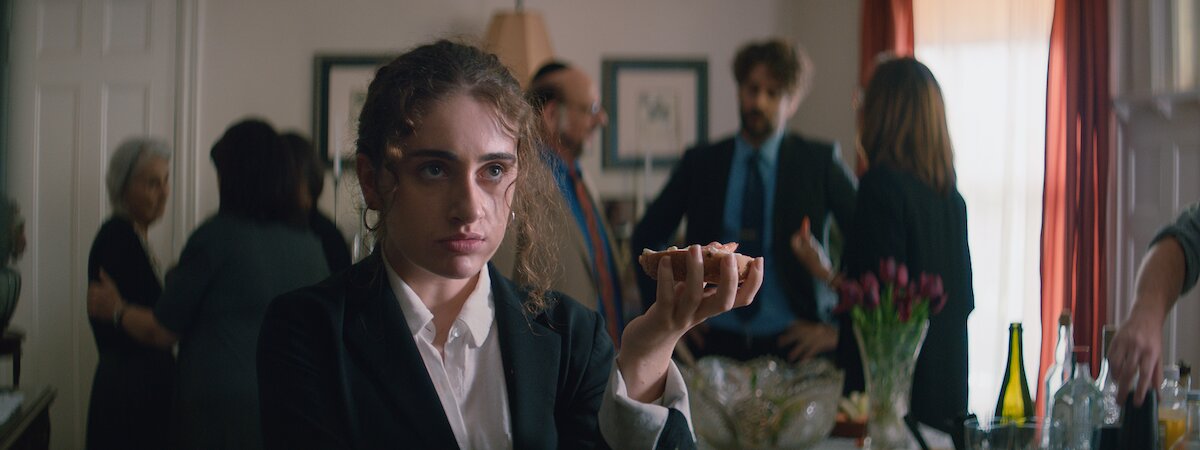
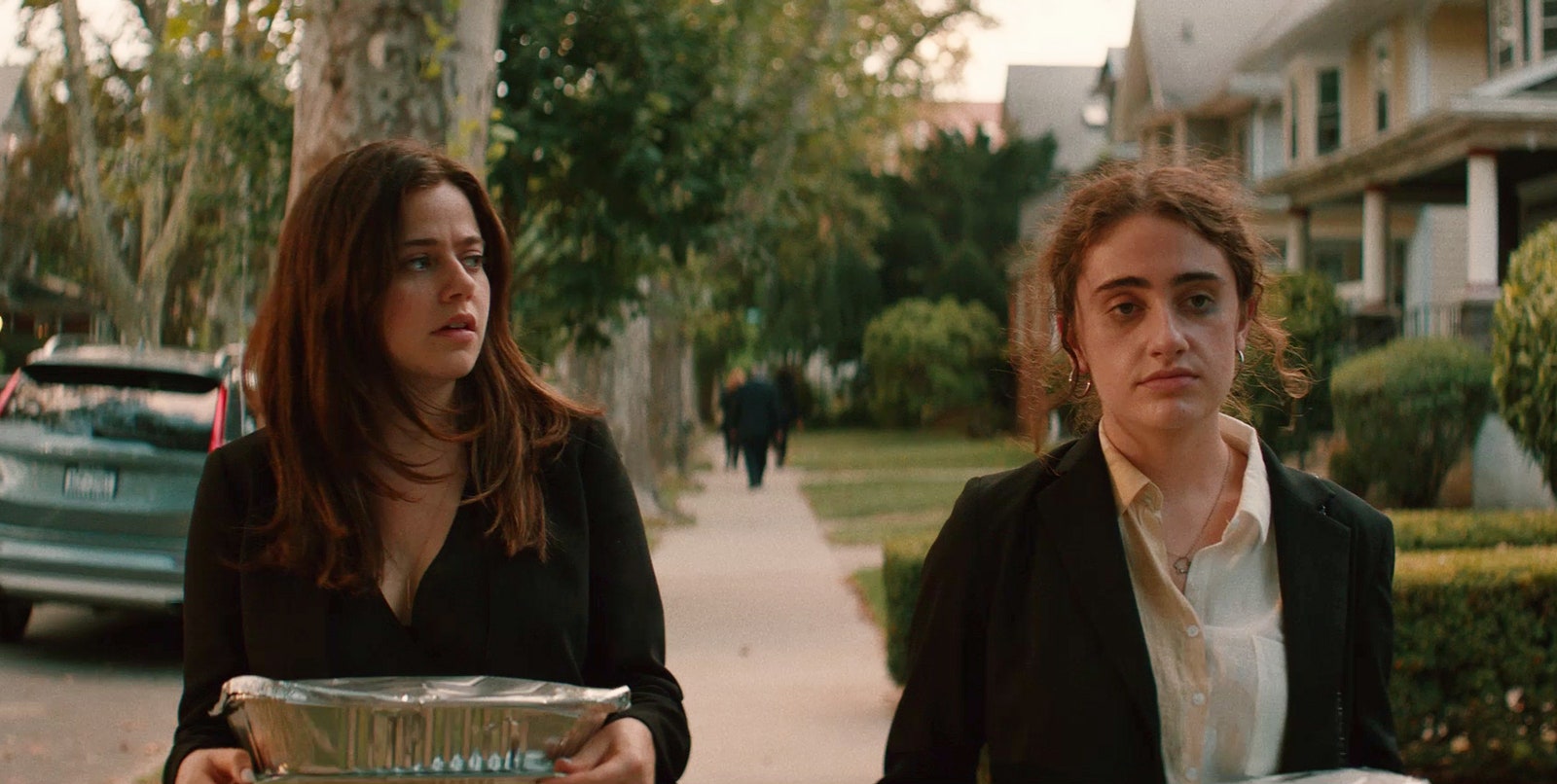
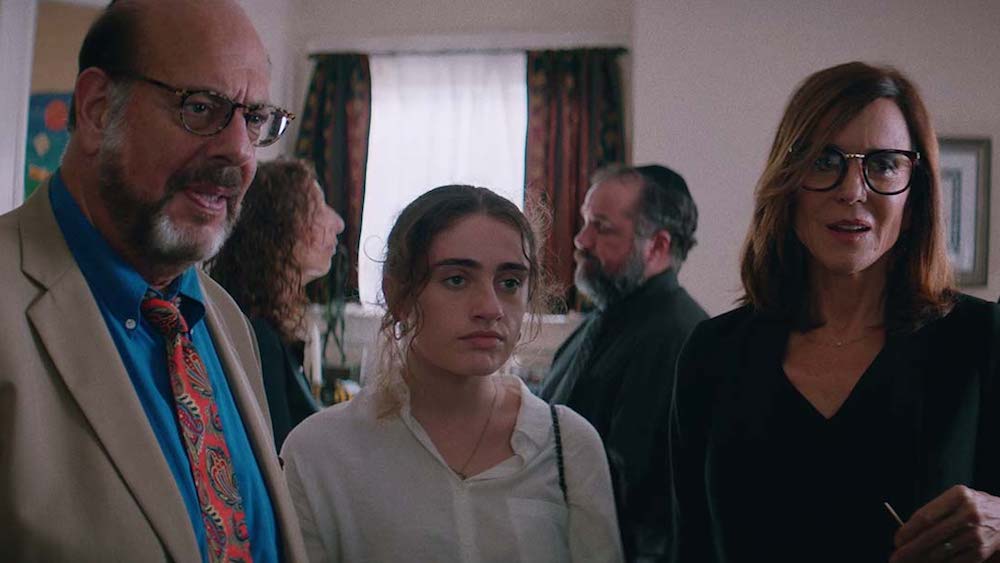
Rare is the comedy that seems to make time stand still. But for 77 cringeworthy and hilarious minutes, that’s what writer-director Emma Seligman pulls off with “Shiva Baby.”
It’s about a college coed’s afternoon of living Hell — the post-funeral meal of a family friend. Filmed like a nightmare with one-liners and edited like a thriller with promiscuity the “crime” worth covering up, “Shiva” makes everybody a tummler and mourning an utter afterthought.
This chatty, bitchy and stereotype-embracing Seudat Havra’ah is a minefield for poor, overwhelmed Danielle, played by Rachel Sennott in a break-out turn.
Because Danielle is a “sugar baby,” a semi-pro prostitute who turns tricks for cash. Because she’s just come from her latest afternoon assignation. Because her unknowing parents, played to interrogating, pushy and profane perfection by Polly Draper and Fred Melamed, never let up.
“Just try to BEHAVE yourself today!”
Because Danielle has “history” with Maya (Molly Gordon). Because Danielle needs “sound bite” talking points to explain away what she’s done with her education (some sort of unmarketable gender studies self-designed degree).
And because what her parents don’t know could kill them dead. Danielle’s last “client” (Danny Deferrari) also happens to show up. With his WIFE (Dianna Agron).
Seligman fills a Flatbush house with kvetching, back-biting and always QUESTIONING “types” and the air with insults, backhanded compliments and wisecracks. And she has Sennott maintain the same appalled, overwhelmed stare throughout.
A vacation photo? “Oh, you guys went to the Holocaust Museum! You look so…happy.“
She piles up food on her plate, and then empties it guiltily. Everything this girl does she does “guiltily.”
“She had a kind of ‘extended awkward phase,‘” her dad overshares. Mom will let no compliment go uncorrected.
I’ll bet Danielle’s “swatting boys away, left and right,” one mourner gushes.
“I wish she would swat them a little HARDER,” Mom complains.
And one by one, gauche grownups by the score — unfiltered and foul-mouthed — button-hole Danielle and grill her. Every answer leads to five more questions.
Seligman stuffs the script with a “Seinfeld/Goldbergs” season’s worth of shtick. Danielle has many mishaps as she dodges the parade of side-eyes she draws from all corners. But after a while she gives up any effort at politesse and joins in the general vulgarity.
This is a funeral? Is there a cover charge?
Melamed, of “Wanda Vision” and “In a World,” has perfected this tactless blowhard thing that never fails to crack me up. “thirtysomething” alumna Draper grabs her best comic role in ages and tears into it like she’s breaking a fast, “like Gwyneth Paltrow on FOOD stamps!”
And Sennott, poker-faced through this riff on “my generation’s unconventional” view of sex, love, dating and “side hustles,” generates everything from pity to contempt in playing an impulsive, amoral, definitely “confused” and possibly vindictive young woman.
Because nobody puts “Shiva Baby” in a corner.

MPA Rating: unrated, sex, profanity
Cast: Rachel Sennott, Molly Gordon, Danny Deferrari, Polly Draper, Fred Melamed and Dianna Agron
Credits: Scripted and directed by Emma Seligman. A Utopia release.
Running time: 1:17
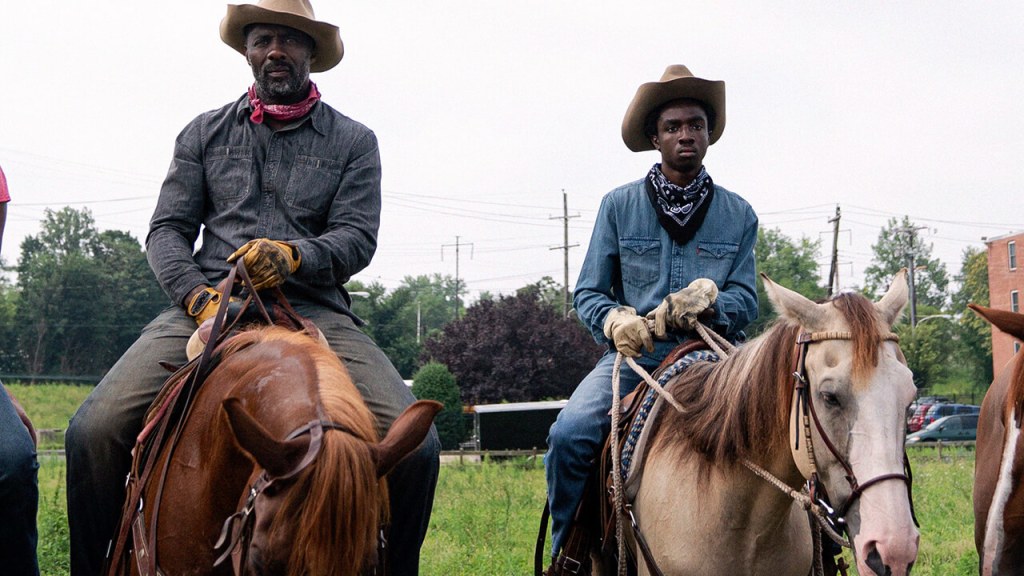

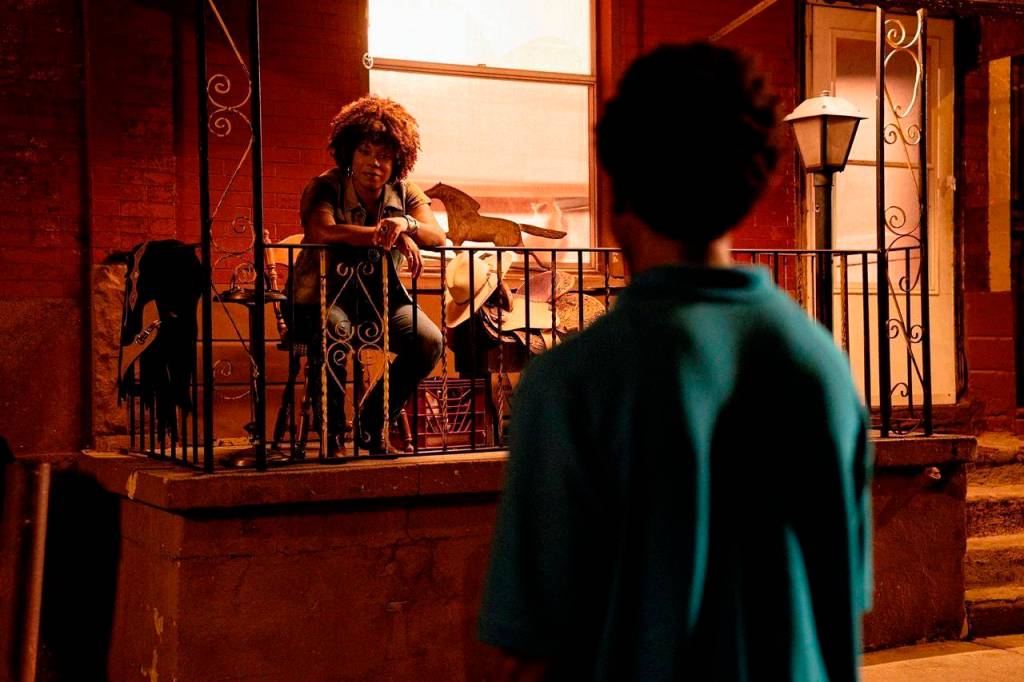

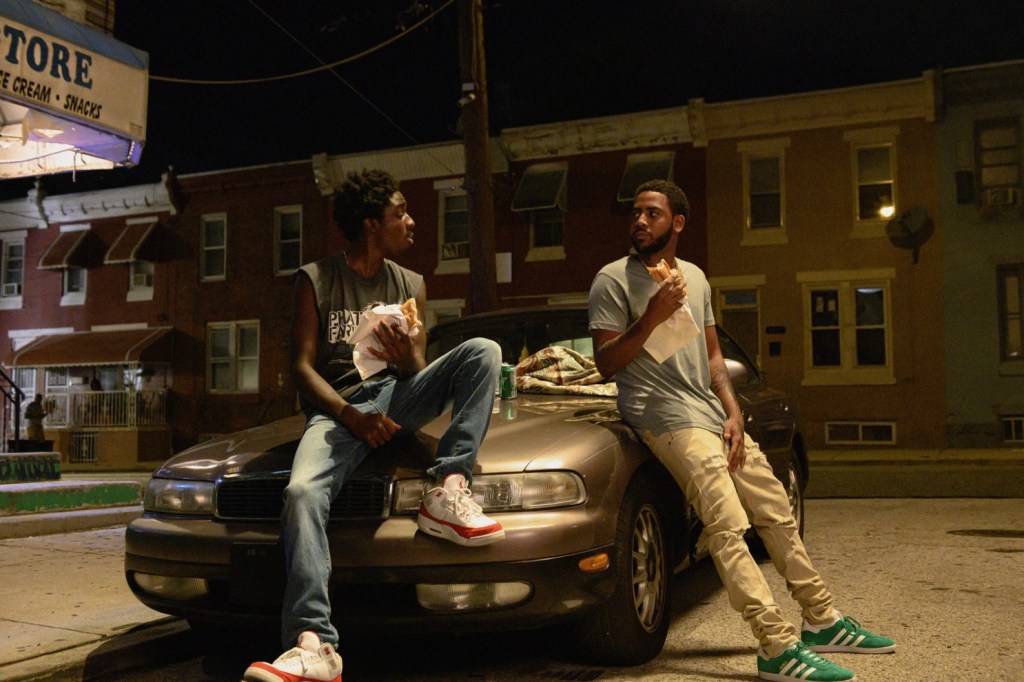
Coarse and corny, preachy and profane, “Concrete Cowboy” makes for an unusual twist on the “troubled teen needs tough love” tale.
It’s predictable but warm and comforting, R-rated and rough around the edges. “Cowboy” covers very familiar ground — punk learns to be a better man by taking care of horses. And it just pokes along. But with Idris Elba riding tall in the saddle in the lead, as a laid-back but streetwise “Dad he never knew” parenting his son for the first time in his life, nobody should mind coming along for the ride.
“Cowboy,” based on the tween-friendly novel “Ghetto Cowboy,” is set in the oddest piece of “horse country” in these United States, the ramshackle stables and working poor African American row houses of North Philly. That unique milieu means everything to a worn out “Will the kid choose the streets or the stables?” tale.
“Stranger Things” alumnus Caleb McLaughlin plays Cole, expelled (with cops showing up) from his Detroit high school one time too many. Mom (Liz Priestly) has had enough. Stuff this bad attitude, back-talking bad boy into the car and drive his sullen butt down to Philly, to “your father.”
Dumped in front of an empty, ancient townhouse, just him and his clothes stuffed in garbage bags, he meets the neighbor — sage Nessie (Lorraine Toussaint). She’s folksy, a walking homily.
“Hard things come before good things.”
And Dad, Harp (Ebla)? He’s all about the horses he keeps down at the Fletcher St. Stables, horses he rescues and rides, gives riding lessons with and what not. Hell, there’s even one in his living room.
“That’s Chuck!”
Young Cole gets off to a rough start with the father he resents and barely remembers, but falls right in with a childhood pal Smush (Jharrel Jerome) looking for a new running mate. Smush is Mr. “Business Opportunities” and the very picture of “The Wrong Crowd.” Those new “Js” he hooks his “boul” (Philly slang for “boy”) up with? Must’ve fallen off a truck or something.
As Cole learns hard lessons by day — an absurdly-detailed depiction of mucking out the stalls in the stables — and runs with Smush at night. The confrontation over this flouting of Dad’s “rules” begins in an instant.
It may “take a village” to raise a child. It takes a savvy neighborhood slamming doors in Cole’s face to limit his options and make that kid straighten up.
“Concrete Cowboy” takes a shallow dive into this fascinating world, poor people who somehow scrape together the cash to keep horses on the cheap and off the tax rolls. How those horses got there makes for fascinating campfire (or “can fire”) storytelling. It’s a place where even the neighborhood cop (Method Man), who grew up here, rocks a cowboy hat.
The inside “stress” is the old story of street violence. The outside “stress” on this rebirth story is just as predictable as everything else. Developers want this land. The “big dream” of how to get out, get ahead or what have you, is patently absurd.
The film could use more scenes with Elba, and more with him and horses. And considering its source material and teens interacting with horses, you’d think they’d have gone for a more kid-friendly rating.
But slow pacing and cornball “I’m on my knees at 4 am every day praying for every boy in this neighborhood” dialogue aside, “Concrete Cowboy” is never less than a middling movie you want to spend time with. Every ensemble scene — the neighborhood “peanut gallery” razzing the kid who doesn’t know how to shovel you-know-what, every inner-city kid falls for horses moment, pays dividends.
Staub finds magic in the image of folks on horseback galloping through the sea of grassy vacant lots in a neighborhood barely hanging on.
Every eye-rolling dash of wish-fulfillment fantasy frees this genre picture from the concrete and touches or tickles. Middling movie or not, this one’s well worth a look.

MPA Rating: R for language throughout, drug use and some violence
Cast: Idris Elba, Lorraine Toussaint, Caleb McLaughlin, Jharrel Jerome, Method Man and Liz Priestley
Credits: Directed by Ricky Staub, script by Ricky Staub, Dan Walser, based on the novel “Ghetto Cowboy” by G. Neri. A Neflix release.
Running time: 1:52

There’s no ennui like French ennui, a message given another big screen treatment in “The Salt of Tears,” a tale of a young cabinet-maker apprentice who cannot find love to fill the void in his empty soul.
The latest from French baby boomer filmmaker Philippe Garrel (“In the Shadow of Women,” “Wild Innocence”) is a somber story of a provincial rake’s progress, a genuine old school “skirt-chaser” with the attention span of a salmon. It’s about his “does not believe in love” drift through existential angst, a brooding film that feels strangely out of its era, perhaps on purpose.
Maybe we’re meant to loathe this fellow, wandering from woman to woman, his narcissistic story filmed in black and white because of course it is.
Luc (Logann Antuofermo) may seem like the awkward hick, new to Paris and trailing after the first pretty face (Oulaya Amamra) he sees at a bus stop. Djemila is wary, letting him tag along on the bus, then follow her afterwards. He is there to take an exam. He wants to get into cabinetry (joinery) school. He is leaving soon, but “Can I see you later (in French with English subtitles)?”
Their courtship is tentative and abrupt, and when he finally gets her alone, he doesn’t take her “Not that” well. But not to worry, no hard feelings. Yet for some reason, she’s smitten.
“I’ll never forget you” is how he leaves it.
Luc goes home and promptly takes up with an old flame (Louise Chevillotte), lures Djemila back for a visit, stands her up, gets accepted in joinery school and is back in Paris, flirting, coming on to and stalking every lovely lady he meets.
Periodically, voice-over narration reassures us the Luc has a soul, that he is “preoccupied with the idea that love may not exist.”
Elderly Dad (André Wilms) points out stars and constellations, something he must have done 20 years earlier (Luc is 25 or so), instructs the kid on how to build a coffin and shakes his head at the furniture-free future he sees.
Kids these days — “We’ll all be nomads soon.”
Does that drive Luc’s philandering? We don’t see lust in his eyes, only emptiness.

Garrel, who co-wrote the script, follows Luc into class and into clubs, exposing his true self when one of his lovers gets pregnant. “You can’t DO this to me. You TRAPPED me!” Brothel to to bedroom, meet-ups through friends and literally stalking one stranger down the street, Luc is a satyr seen as “lost,” without core values or kindness.
There’s a casual cruelty to most of the men here, save for Luc’s father, who is appalled at what he sees in his boy. And when we note the nude scenes only women are subjected to, here, we wonder what the fellow behind the camera sees in this jerk.
As a film, only the women register as having emotions, save for Luc’s moment pregnancy panic. Antuofermo plays this rogue at arm’s length, not charming or pitiable — blank-faced pretty much from the first to the last.
The pointless, pretentious narration and overcast black and white cinematography make “The Salt of Tears” play like a parody of French cinema of the ’60s, the films of Garrel’s teens and 20s. That’s the most charitable view of this film, that he’s sending up attitudes that nobody should be nostalgic for, except for maybe Woody Allen.
Let’s hope that’s the intent, because the alternative is too creepy to consider.

Cast: Logann Antuofermo, Oulaya Amamra, André Wilms, Louise Chevillotte, Souheila Yacoub
Credits: Directed by Philippe Garrel, scripted by Jean-Claude Carriere and Philippe Garrel. A Wild Bunch production on Mubi.
Running time: 1:40
Knoxville adds a little Southern cred to this law and criminals thriller, opening May 14.
Huston brings on Clarke as an FBI informant in a case that led to a historic first. Philip Noyce directed, but it opened in some parts of the world a while back to weak reviews.
I caught the second half of this Monday night and realized that is missed the best part, so I tracked it down on PBS.org. I recommend you do the same.
It’s about an awful crime and an American tragedy, a Black South Carolina WWII veteran, in uniform, m yanked off a bus and blinded by a goon sheriff named Lynwood Shull in Batesburg, SC.
It became a landmark case in the unraveling of the Jim Crow South, one worth recalling as Southern Republicans race to revive it with restrictions to voting rights all across the region.
But film buffs, like me, will also be fascinated by the role Orson Welles, a titan of radio in the mid 1940s, played in stirring the national conscience against this Southern evil.
The radio broadcasts he did, generously sampled on this doc, are electrifying. Go to PBS.org and watch this if you missed it.

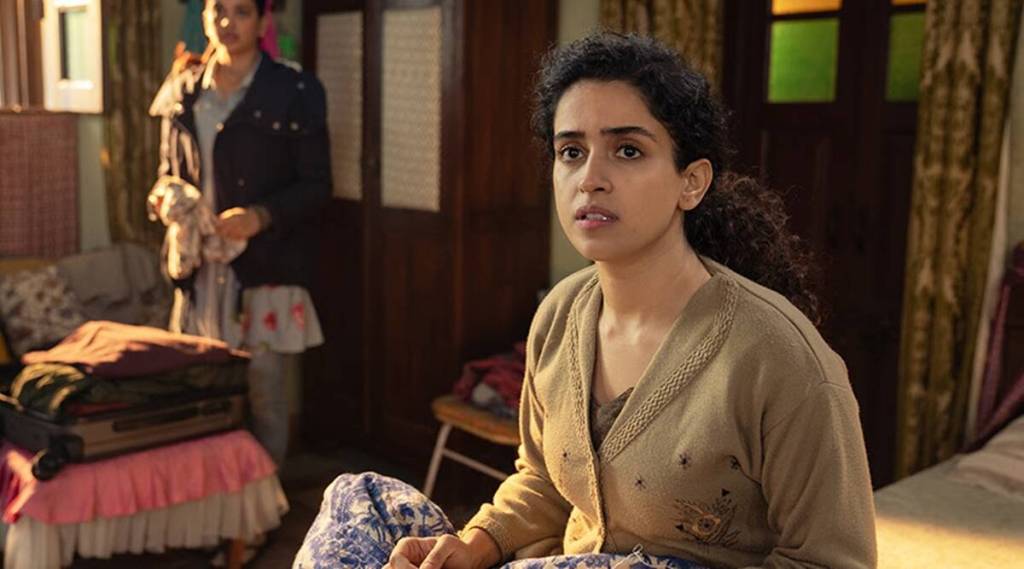
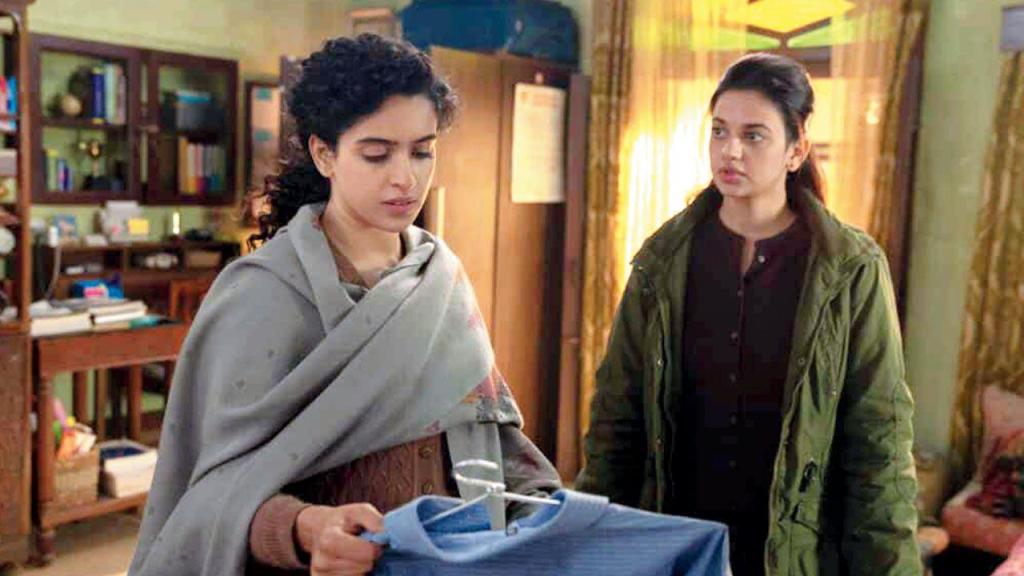
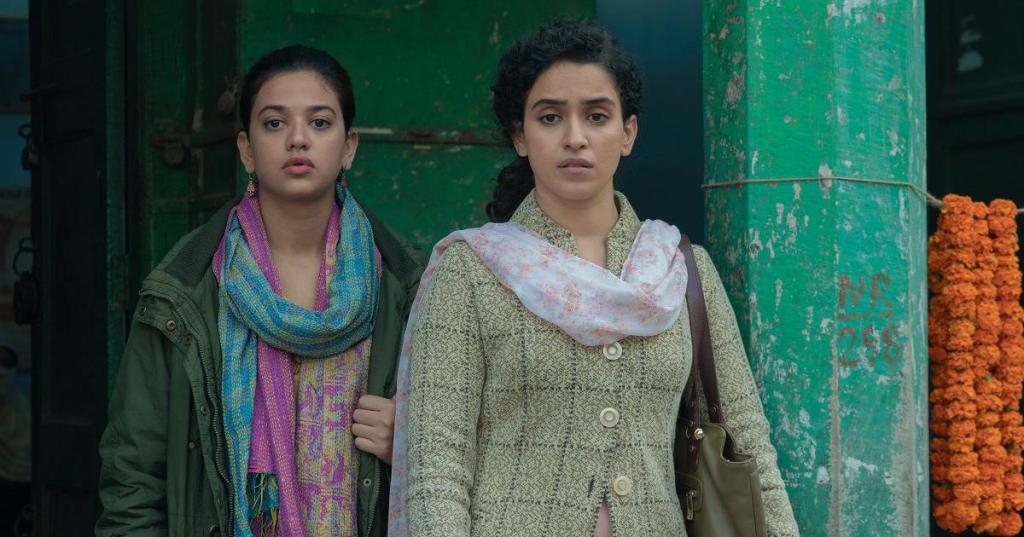
“Pagglait” is a somewhat cheerful Indian dramedy about female empowerment set against the backdrop of a traditional Hindu funeral.
With its many characters, intrigues and generous servings of rituals and traditions, it could have been a “Monsoon Wedding” for funerals, offering the rest of the world insights into the culture and psyche of the people it is about.
But “Pagglait,” whose title translates as “follow your heart,” almost certainly will seem more “empowering” to Indian audiences. It’s tame and retrograde by Western standards, a meandering soap opera with most of its rough edges worn off. And it finishes with a sell-out that robs it of much of what its overt messaging purports to be.
An opening disclaimer chases off any hope that this will be a rude “Loved One,” or even “Darjeeling Limited” styled romp. “We respect all faiths, religions, communities and races,” the filmmaker (Umesh Bish) and producers want us to know. As if that excuses all that’s soft and mushy that follows.
A young Lucknow professional has died mere months into his marriage. His family throws together a funeral in haste, not bothering to invite or even inform everyone. That doesn’t keep others from showing up. When you have 13 days between cremation and that moment, by the River Ganges, when “the spirit sets off on its journey,” good luck keeping this “private.” Lots of opportunity for mischief.
Just getting anyone to focus on the deceased and on mourning proves to be a trial.
Younger brother Alok (Chetan Sharma) has his head shaved for the very specific duties he has over these two weeks, and he’s a bit put out.
The late Astik “is a nuisance, even after his death (in English, or in Hindi with English subtitles).”
His father (Ashutosh Rana) seems distraught, flipping out at their goofy doorbell chime, which is totally inappropriate for a somber occasion like this. But he’s not too upset to haggle over the price of rented mattresses for all the guests pouring into their house.
And the widow, Shandya (Sanya Malhotra)? Everybody can see there’s something not right with her. Is she in shock, in a deeper grief than anybody else?
Is THAT why she keeps asking for “Pepsi” and “snacks” when that simply isn’t done in a time like this?
Nope. It was an arranged marriage. She’s from a bigger city and never even got used to the old fashioned “Indian toilets” here. Thank heavens her Muslim pal Nazia (Shruti Sharma) shows up, someone she can complain to, an excuse for her to sneak out and get some real food and not this funerary “traditional” tasteless fare.
Over the course of those 13 days, family grudges will erupt, a tug of war over the widow sets up and hard feelings over an insurance policy beneficiary come to light as Sandhya struggles to get a handle on what she’s not feeling and what she wants to do next.
The chief complication for her? A photo that suggests that her loveless marriage had something to do with her husband’s true “sweetheart” (Sayani Gupta).
However Indian audiences take all this, what I’ve listed above are the classic ingredients of a funeral farce in Britain or the US. Being Indian, events are dragged out over two weeks when “Death at a Funeral,” either version, condensed them into a single over-the-top day.
A couple of emotional scenes add pathos. But much of what we’re shown — a mob of officiants, shouting and haggling, bazaar style, for the chance to run the family’s riverside ceremony and boat ride to spread ashes — is plainly meant to be funny, and doesn’t quite get there.
The acting is pretty good, even if there are too many characters for the script to adequately service. Malhotra, a top tier actress (“Photograph”), is solid as the lead. But much of what the script has her doing dilutes the performance and robs her character of impact. Shandhya’s outrage is muted, her hurt never quite makes it to the surface, her cunning — hiding her cards as she makes her decisions — underwhelming.
The third act twists and turns never throw us off the path that we know this story will take. Eventually.
So while the detail is utterly fascinating to an outsider and the tone is light, “Pagglait” not only feels like its cheated and shortchanged us, it’s also left out much of the heart we expect its “marry for love/not family finance” messaging to deliver.

MPA Rating: TV-14, adult themes
Cast: Sanya Malhotra, Sayani Gupta, Sheeba Chaddha, Ashutosh Rana, Chetan Sharma, Shruti Sharma
Credits: Scripted and directed by Umesh Bist. A Netflix release.
Running time: 1:54

That big opening would be impressive even without the pandemic depressing turnout.
By Friday, “Kongzilla” will be on hundreds more screens and ready to accept big Easter weekend crowds. Still limited capacity, still wear your mask inside. But this is within striking distance of what we used to call a blockbuster.

Producer Sam Raimi helped lure some big names to “The Unholy,” a Catholic “Our Lady’s no ‘lady'” thriller timed to hit theaters for Easter. Biggest and best of all is the lead, Jeffrey Dean Morgan, cast as a cinematic cliche but delivering the goods as the latest take on the jaded, liquor-loving journalist trope, this time a disgraced reporter who specializes in the paranormal who stumbles across “real miracles.”
But the handsomely-mounted movie– writer-director Evan Spiliotopoulos’ adaptation of a 1983 novel — rather lets Morgan down as his character drifts from cynicism to True Believer. The effects are top notch and there are some chills in it. It’s just that the picture loses itself and any momentum it has in “explaining” these wonders and healings as the work of a Mary who isn’t the “Virgin Mary” all involved assume it is.
Morgan plays Jerry Finn, once a star reporter for a major Boston newspaper, now scraping by on scraps from a website, a freelancer who lost his career in a scandal a decade before. He haggles over pay, tops off his take-out coffee from his flask and heads out to cover a rural New England “cattle mutilation.”
The best scenes in the film are Finn’s jokey, eye-rolling reaction to a farmer’s claims about his cattle.
“Got a son? Sixteen, maybe?”
He’s “fifteen, actually.” And you can finish that joke yourself.
But Finn stumbles across something that might replace the story-that-wasn’t, a “kern doll” buried beneath a gnarled, long-dead tree next to the small town’s Catholic church. It’s wrapped in chains, with a nonsense date attached — “Feb. 31, 1845.”
What Finn doesn’t know is that “Unholy” opens with a grisly 1845 priest-sanctioned execution, seen from the victim’s point of view. When Finn smashes the doll, cooks up some supernatural reason for it, gets a photo and mutters “NOW we have a story,” we know he’s got more of a “story” than he bargained for. And almost running over a barefoot local teen, running down the road in her nightgown, doesn’t wise him up, either. At least “blood alcohol level” threats from the town doctor (Katie Aselton) sober him up.
But that girl? Alice (Cricket Brown) has been deaf and mute since birth. Finn hears her talking to the dead tree. Nobody believes him until she starts talking to everybody — the doctor, her uncle, the priest (William Sadler) and then the masses.
“Mary” has a message. “Mary” can heal. “Mary commands you to walk!”
The church has itself a controversy, and quite possibly a genuine miracle on its hands. Next thing you know, the Archbishop (Cary Elwes) is giving the media slide shows about miracles at Lourdes and Fatima, a Jesuit “inquisitor” (Diogo Morgado) is brought in to “disprove” (or prove) the miracles, according to Vatican doctrine, and Finn has “exclusive” access to the now-talkative young lady whom the locals insist “will be bigger than Taylor Swift” once word gets out.
Finn makes damned sure that word does get out.
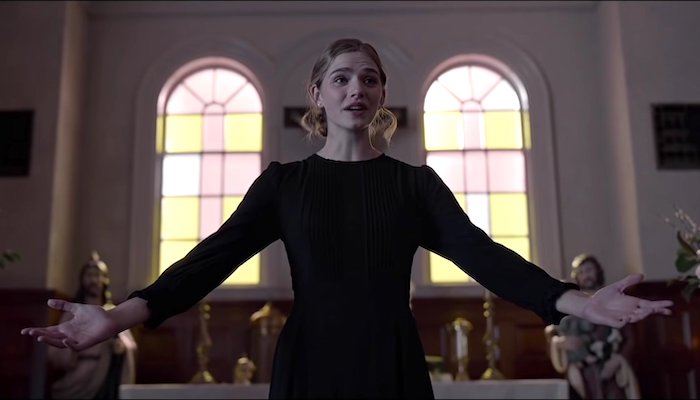
Morgan is terrific in showing Finn’s cynicism, the “sell your soul for a story” shortcuts he’s willing to take to get back to where he was a decade ago, and his sarcastic take on faith and “miracles.”
“Does EVERYone quote the Bible around here?”
Finn fends off questions about his reputation with aplomb.
“Isn’t there something in the Bible about ‘forgiving the sinner his sins? Kind of a major plot point?”
But the air goes out of this horror balloon when Finn sobers up and the picture turns all serious, trying to “explain” all that’s going on like the worst parts of most horror movies, losing itself in Catholic Church exploitation of the new “shrine” planned for the village of Banfield.
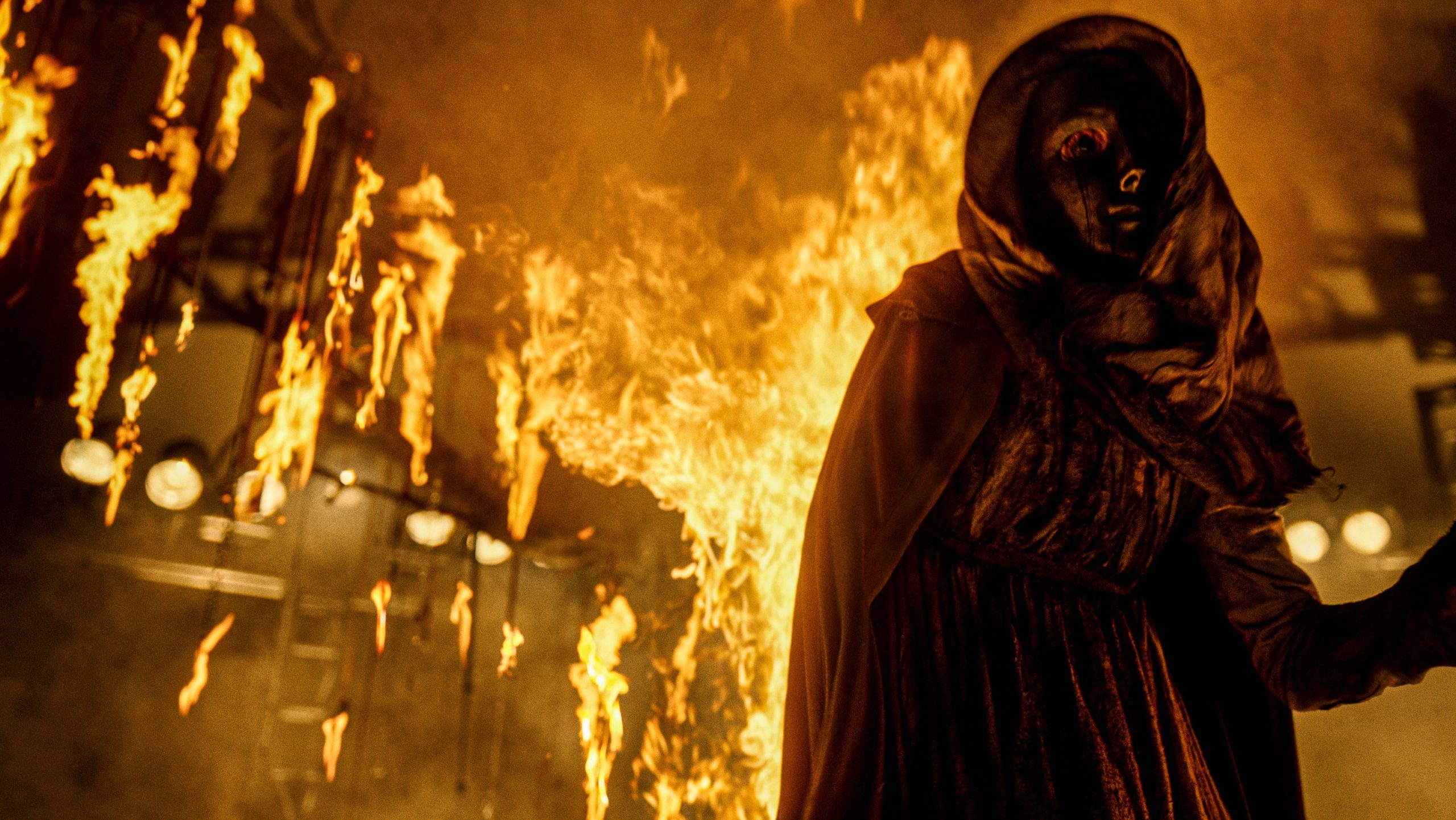
The rising terror of the wraith that is responsible for all this — a VERY good and creepy effect, BTW — doesn’t “rise” at all. The script fritters away frights and suspense as if that isn’t the whole point of it all.
And Finn needs to hang onto that nasty edge. It’s the “Ace in the Hole” that makes such characters a reliable “type” in any movie where faith, hope and naivete have to confront the cold, hard truth.
The converted “believer” is always more dramatically dull than that the cynic who holds out to the bitter end. That’s an edge Morgan should have fought to keep.
MPA Rating: PG-13 for violent content, terror and some strong language
Cast: Jeffrey Dean Morgan, Cricket Brown, Katie Aselton, Diogo Morgado,William Sadler and Cary Elwes
Credits: Scripted and directed by Evan Spiliotopoulos, based on the novel “Shrine” by James Herbert. A Screen Gems release.
Running time: 1:39

 Movie Nation