
Movie Review: A grim satire of Europe gone to the “Undergods”

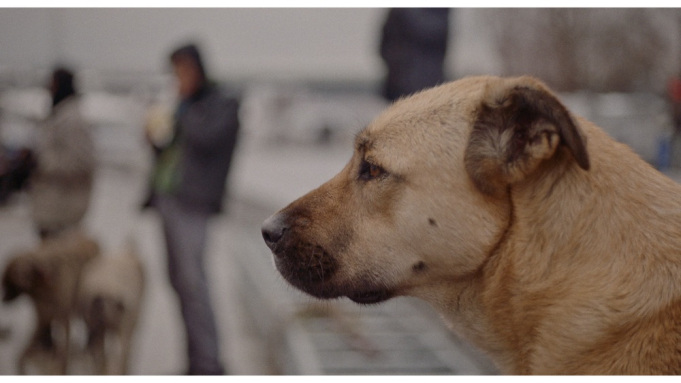
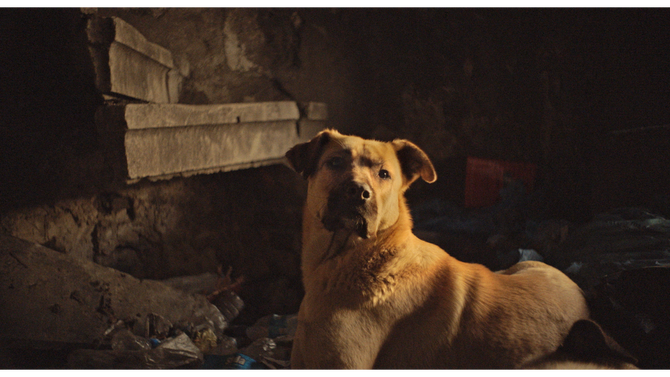
“Undergods” is a sci-fi fantasy of a dark and dystopian Europe, where “family” and feeling have broken down and the Putinesque rule of an uncaring State and its predatory oligarchs have numbed the people and normalized the awful.

Chino Moya’s film is designed to summon up the Good Ol’Days of Dystopia. It “feels” like “Delicatessen” without the laughs or “Blade Runner” without a plot.

The film has a buy-in reminiscent of what Andre Malraux said about Marxism, a willingness to “feel” proletarian. Dystopian sci-fi sometimes puts “feeling” the darkness — literal, and in tone — above other considerations, and plenty of fans go for that.

“Undergods” has a gloomy post-lapsarian Soviet look, downtrodden players cast for their ability to dress down and look homely — Eastern European sci-fi as envisioned by Mike Leigh.

All well and good, as far as that goes. But this is right on the edge of incoherent.

The madrileño Moya, making his feature film directing debut, uses something like the “Tales of (E.T.A.) Hoffmann” as his organizing principle. The German Poe’s horror/fantasy stories are referenced — a character is reading him — for a reason. The interlocking episodes of the film are grim and related in Hoffman/Brothers Grimm story-telling form.

A father tells his little girl about a rich, unscrupulous “merchant” (Eric Godon) who screws over the wrong inventor (Jan Bijvoet), who then kidnaps the merchant’s daughter (Tanya Reynolds).

A couple of “bring out your dead” body-haulers (veteran British character actor Johann Myers of “The Lost City of Z,” “Bank Job,” and Géza Röhrig of “Resistance” and “Son of Saul”) tell each other stories that tie into the bodies they pick up off the street. Not everyone in their “load” is “dead.”

“Sell the big one for meat!”

Down the rabbit hole we go into a grey alternative reality where industrial wasteland bleeds into urban ruin, where a new neighbor (Ned Dennehy) gets locked out of his apartment, feeds paranoia as he threatens to break up the marriage of the couple (Hayley Carmichael, Michael Gould) who took him in.

Human “meat” marketing shows up, hard against a visit to a suspiciously efficient “Star Sugarless Gum” factory.

Is Star Sugarless made from “PEE-pul?”

The stories are “entropy” writ large, with subtexts about the breakup of the family, the collapse of institutions with only their imposing and impersonal architecture and a scattered, demoralized populace left behind, carrying on in this New Normal.

That’s an arresting backdrop. And I like the Kafkaesque vibe of it all.

But there’s “cryptic” and “vague” and then “incoherent to everyone else” and unfortunately, Moya sets up shop at that end of the spectrum.

MPA Rating: unrated

Cast: Johann Myers, Géza Röhrig, Michael Gould, Hayley Carmichael, Eric Godon, Tanya Reynolds, Jan Bijvoet, Kate Dickie and Burn Gormley.

Credits: Scripted and directed by Chino Moya. A Gravitas Venture release.

Running time: 1:32

Posted in Reviews, previews, profiles and movie news | Comments Off on Movie Review: A grim satire of Europe gone to the “Undergods”

Classic Film Review: “That Uncertain Feeling” (1941) has That Lubitsch Touch

Berliner Ernst Lubitsch was a one-man-argument against the idea “Germans have no sense of humor” in the troubled 1930s and war-torn 1940s.

As an expat in Hollywood, he directed some of the enduring comedies of his day, sophisticated farces with barely a hint of “screwball” — the dominant style of those years — about them. Comedies generally don’t age well, but “Ninotchka,””The Shop Around the Corner,” “Design for Living” and “To Be or Not to Be” play so well today that if more of Hollywood was versed in its history, more of them would be remade today.

“That Uncertain Feeling,” based on a 19th century French play (“Divorçons”) first filmed by Lubitsch nearly 20 years before in Berlin, isn’t regarded as one of his or screenwriter Charles Ogden Stewart’s (“Kitty Foyle,” “The Philadelphia Story”) very best.

It’s posh, witty and bolts out of the gate only to sag in its middle acts before rallying for a fine finish. The settings are lush, luxe and limited, with just enough doors for slamming — only they never are. Because everyone’s too cultured for that. The dialogue is droll in the extreme.

“She certainly had a couple of interesting angles.”

“I didn’t notice them.”

And the cast? Merle Oberon was better known for dramas (“The Dark Angel”), costume epics (“The Scarlet Pimpernel”) and the like. Melvyn Douglas (“Ninotchka”) did the best work of his youth with Lubitsch. And stage-turned-screen actor Burgess Meredith had done some comedy, but was famous for “Of Mice and Men” by the time this UA production came along.

Oberon plays a Park Avenue sophisticate whose six year marriage to a wealthy insurer (Douglas) has turned brittle. Her dissatisfaction manifests itself in hiccup attacks. Or so it would seem. There’s nothing for it, her prattling pals insist, but to see a shrink — Dr. Vengard (Alan Mowbray).

“Most people know nothing about themselves. Nothing. Their own real personality is a complete stranger to them. Now, what I’m trying to do is to introduce you to your inner-self. I want you to get acquainted with yourself. Wouldn’t you like to meet you? Don’t you want to get to know yourself?”

“No. You see, I’m a little shy.”

The good doctor is the first to suggest that she’s not happy, that her boorish other half, who supports her in style but works too much and rarely takes in what she tells him, is to blame.

And the doctor’s office is where she might meet a solution to her problem. Sebastian (Meredith) is a pianist in what they used to call “long haired music” — the classics. He’s a misanthrope, a snob who knows art and knows, more than anything else, what he doesn’t like — which is most anything and anyone.

“Fooey,” he says to this decor, that delicacy and most people.

 “I’m against Communism, Capitalism, Fascism, Nazism. I’m against everything and everybody. I hate my fellow man and he hates me.”

Naturally, she ends up chatting with him, hanging out as a sort of pity and eventually inviting him to a dinner party gauche striver Larry is throwing for Hungarian businessfolk planning a merger and shopping for insurance.

The party, featuring comic character actor Sig Ruman, who worked with the Marx Brothers and Jack Benny (in Lubitsch’s “To Be or Not to Be”) and was comic relief in “Stalag 17,” is fun, and derailed by the egotistical Sebastian.

Larry starts to realize that he’s losing his wife to this lout, and despairs/schemes to turn things around in a game of brinkmanship with the cad and unhappy wife that gets his lawyer (Harry Davenport) and the lawyer’s secretary (Eve Arden) involved with punches to be thrown and papers to be served.

The picture still plays, almost despite itself. The post-dinner party scheming is nonsensical and cavalier and — audiences of the day must have surmised — ridiculously expensive. That is one rich insurance salesman.

Grimly-dated groaners range from “That’s mighty white of you” to an argument over a seemingly necessary slap Larry must deliver to his faithless wife for this divorce thing to pass muster in the New York courts.

Oberon holds her own, Douglas does most of the heavy-lifting and Meredith opened up a career of comic possibilities with this turn. Arden, playing an early version of the eye-rolling snarky speaker of common sense roles that she’d play all the way through “Grease,” just kills.

It’s always a delight to stumble into a comedy this dated that still delivers laughs, a tribute to a screenwriter who was Hollywood’s on-call “Noel Coward” for much of the ’30s and ’40s, to a cast that can rattle off clever banter with aplomb and a director whose “touch” was in the banter, the timing, the performances and the European sophistication and cosmopolitan milieu and supporting casts which lifted even thinner fare such as this.

Lesser Lubitsch still has “The Lubitsch Touch.”

Perhaps the biggest laugh of his career was the fact that Hollywood never nominated him for the Best Director Oscar for his very best films, and only honored him with a lifetime achievement award the year of his death.

MPA Rating: Approved, smoking, comic violence, drinking, innuendo

Cast: Merle Oberon, Melvyn Douglas, Burgess Meredith, Eve Arden, Sig Ruman, Alan Mowbray and Harry Davenport.

Credits: Directed by Ernst Lubitsch, script by Donald Ogden Stewart and Walter Reisch, based on a play by Victorien Sardou and Emile DeNajac and earlier German film by Lubitsch. Originally a United Artists release, restored and on Tubi, Google, Amazon and other streaming platforms.

Running time: 1:24

Posted in Reviews, previews, profiles and movie news | Comments Off on Classic Film Review: “That Uncertain Feeling” (1941) has That Lubitsch Touch

Movie Review: Ritchie and Statham take on a vengeance thriller — “Wrath of Man”

For their fourth collaboration, Jason Statham and director Guy Ritchie adapt a French thriller into a straight-up Hollywood-style blood-and-bullets vengeance tale.

“Wrath of Man” thus becomes Ritchie’s most American film, totally free of the Cockney sass and mordant, morbid wit of the movies that launched both director and star back in Blighty — “Lock, Stock and Two Smoking Barrels” and “Snatch.”

He embraces the harsh light of Los Angeles, the open spaces and hair trigger gunplay of America for a brutal and blood-spattered remake of “Le Convoyeur,” a 2004 French thriller (sometimes found on Netflix) about “cash trucks” and the men who rob them.

Statham plays a guy whose assorted aliases often include the name “Hill.” But as he undergoes a day of testing for his new job — guarding cash trucks for Fortico armored car delivery company.

“The limey” may rub new colleagues (Josh Hartnett among them) the wrong way. They see him as a “dark horse,” hard to read but someone to be wary of. But he impresses his trainer/partner (Holt McCallany) and his boss (Eddie Marsan). And as the company just lost a couple of drivers in a meticulously-planned robbery that turned bloody, they’re just grateful to have him around.

The first time he’s tested is a very bad day for the bad guys (singer Post Malone among them). The “dark horse” starts to smell like a “psychopath.” Who IS this guy?

We flash back to see H’s previous life on the other side of this “predator/prey” equation. He had a son. Emphasis on “had.” There’s a mysterious military-grade gang (Jeffrey Donovan and Scott Eastwood, et al) that aren’t be to be trifled with.

And of course there’s a Fed (Andy Garcia, almost stealing the movie) who knows things, who says “Let the painter paint” of his bald, British quarry. He’s the sort who might look the other way is one man’s revenge serves his higher purposes.

“Do your worst. Just be mindful, I can look ‘confused’ only so long.”

Ritchie eschews most of the jokiness his gangster movies are famous for in search of a more American look and feel here. This is Howard Hawks meets William Friedkin (“To Live and Die in LA”), a man’s world of manly men “built for combat, not daytime TV.”

Yes, there’s entirely too much of that macho blather. And Ritchie’s search for an epic climax kind of denies us of the vintage Statham coup de grace that have become the Olympian turned husky-voiced action star’s trademark.

But the casting sparkles, with Marsan, McCallany, Donovan and Irish actress Niamh Algar (of TV’s “The Virtues” and “The Last Right” making strong impressions.

Garcia and Statham are “on the nose” casting at its finest.

“Wrath of Man” passes muster for its mayhem and mise en scene, a good-looking but unfussy film that may not work its flashbacks in as gracefully as you’d like, breaks into “chapters” that do nothing for its flow, yet makes its violence and vengeance as grimly gripping and visceral as any Ritchie had put on the screen.

MPA Rating: R for strong violence throughout, pervasive language, and some sexual references

Cast: Jason Statham, Scott Eastwood, Josh Hartnett, Jeffrey Donovan, Holt McCallany, Niamh Algar, Babs Olusanmokun, Post Malone and Andy Garcia

Credits: Directed by Guy Ritchie, script by Guy Ritchie, Marn Davies and Ivan Atkinson, based on the French film “Le Convoyeur (Cash Truck).” An MGM/Miramax release.

Running time: 1:58

Posted in Reviews, previews, profiles and movie news | Comments Off on Movie Review: Ritchie and Statham take on a vengeance thriller — “Wrath of Man”

Movie Preview: One last preview for “A Quiet Place Part II”

Let’s give Coach K — my nickname for Krasinski, you can ask him — a little screen time in the “How we got here” part of this sequel with prequel elements.

Posted in Reviews, previews, profiles and movie news | Comments Off on Movie Preview: One last preview for “A Quiet Place Part II”

Movie Preview: What character do aspiring screenwriters know best? Aspiring screenwriters in TROUBLE — “Open Your Eyes”

A horror thriller coming your way, and mine, June 1. Doesn’t look like much, but you never know.

Posted in Reviews, previews, profiles and movie news | Comments Off on Movie Preview: What character do aspiring screenwriters know best? Aspiring screenwriters in TROUBLE — “Open Your Eyes”

Movie Review: Serio-comic “Dead Pigs” upend this corner of China’s appetite for Greed

Writer-director Cathy Yan’s playfully cynical “Dead Pigs” is bucket of cold water dumped on Chinese avarice at the start of The Chinese Century.

Before “Birds of Prey,” Yan cooked up this week Chinese satire painted in broad strokes with a tiny brush, cute but with jagged edges that nick and draw blood from both East and West. The film views “acquisitiveness” as a Western export, and casts a jaded eye on China’s runaway development and the cultural corruption that come from the One Party State’s “version” of “Greed is Good” capitalism.

Old Wang (Haoyu Yang) is a jocular, happy-go-lucky pig farmer in the provinces whom we meet as he tries out, and buys, a VR gaming set-up in the Big City. Back home, he impresses the neighbors and extended family, who all wonder, “How can you afford this?” (in Mandarin with English subtitles).

Maybe he can’t. When one of his pigs sickens and dies, his house-of-cards collapses on him, and the dominoes of his family, neighbors and region tumble out in all directions.

It’s not just that “Nobody wants a dead pig.” It’s that all the pigs are dying. And the Chinese love their pork.

Mason Lee is Wang Zhen, a downcast waiter in a swank restaurant in the Big City. Bourgeois bros and bling-loving ladies alike abuse him. He just has to take it and serve the House Specialty — roast suckling pig — to every party that asks for it.

Beautiful, rich and bratty Xia Xia (Meng Li) is another jerk-in-a-skirt who gets so drunk that she forgets her bedazzled cell phone in the restaurant, and then runs over a fruit stand on the way home, ending up in the hospital.

Wang Zhen tracks her down and returns her phone. “Where’s my charger?” as if he found that, too, and “I’m hungry — get me some dumplings” is how she thanks him.

When Old Wang talks about “Just more bad luck,” he’s not just talking about his pigs and his fly-by-night investment losses. He might be talking about Zhen, his son. Only he doesn’t know the kid is broke because Zhen lies about his “house” and his big shot job and never says “No” when Dad asks for money.

Then there’s Boss Lady Candy Wang (Vivian Wu, our star). She leads her crew through morning cheerleading exercises before unleashing them on customers in her beauty salon.

“There are no UGLY women,” is her company motto. “Only LAZY ones.”

Candy pep talks and glad-hands the ladies, then she’s back to her old two story house, the family home for generations but the last near-ruin standing in a vast, recently-cleared urban wasteland. She is Old Wang’s sister and will not move, even if Golden Happy Corp is ready to build this replica of Barcelona’s Sagrada Familia cathedral, surrounding it with high-rise condo towers.

That’s how architect Sean (David Rysdahl) comes into the story. He’s moved to China to take advantage of the runaway construction there, and of the fact that many a Chinese enterprise seeks out a Western face to march out for investors to inspire confidence in the project.

The money for such efforts may be backed by oligarchs and the Chinese military. But put some random (typically) white guy on your board or stand him up at a press conference, and all looks legit.

Candy Yang’s obstinance threatens Sean’s project. But maybe he’s not all-in on that, either. Maybe he’s not exactly what he passes himself off as. That’s why he’s open to the pushy, gorgeous recruiter (Zazie Beetz of “Atlanta,” “Joker” And “Deadpool 2”) who offers him “modeling” work doing basically what he’s doing as an “architect” — showing up as a Western face at ribbon cuttings and the like.

Everybody’s tangled up in everybody else’s business before the pigs start dying. And then they do, and as the rivers fill with carcasses and the news media gets wind of it and the web of affluence and artifice starts to unravel — at least for the Wangs and those who know them.

The laughs come from the confrontation between “types” — gullible get-rich-quick Old Wang, “Dragon Lady” stubborn Candy and hapless Zhen, who figures the only way to raise cash for Dad this time is extorting money out of motorists he lets run over him.

The corruption that runs through the picture is right there, out in the open. So many fake accidents that no motorist questions the act of extortion, because no one wants to run afoul of the police. Wang dumps his drove of dead pigs into the river, but he’s just the first to do that. Let the Westerner deal with the intransigent, TV-protesting Candy. It’ll play better and push responsibility for whatever happens on him and her.

And the over-riding joke is that no one is who they seem to be in this “The future is Chinese” tale. Old Wang isn’t the success he tries to come off as, nor is his son. Candy is as go-go-modern as any of them, but by God she’s not giving up the home where she keeps pigeons and reminders of the entire family’s past.

Xia Xia may be bougie, but she tries to show a conscience.

Sean? He’s just here for the hustle, ensuring “It’s a MALL world after all,” a “success” in China where he’d likely be unemployable in his chosen field back home.

Aside from the formidable Wu (“Snow Flower and the Secret Fan”), “Dead Pigs” isn’t laugh-out-loud funny. And the objects of the satire are just subtle enough to pass muster with potential censors.

But as it wends its way towards a very Mira-Nair-in-Bollywood sing-along finale, Cathy Yan gives us a picture of a culture on the cusp of a bulldozer-and-bankruptcy reckoning, a nation hitting that wall all developing countries do when they first ask, “Is this all there is?”

She’s made a droll Chinese satire that stings rather than scalds.

MPA Rating: unrated, some violence, profanity

Cast: Vivian Wu, Mason Lee, Meng Li, Haoyu Yang, David Rysdahl and Zazie Beetz

Credits: Scripted and directed by Cathy Yan. A Film Movement release.

Running time: 2:02

Posted in Reviews, previews, profiles and movie news | Comments Off on Movie Review: Serio-comic “Dead Pigs” upend this corner of China’s appetite for Greed

Movie Preview: Rebecca Hall is haunted by her late husband in “The Night House”

An upscale ghost story slated for late August release, this looks damned creepy.

A good actress can make you believe in ghosts.

Posted in Reviews, previews, profiles and movie news | Comments Off on Movie Preview: Rebecca Hall is haunted by her late husband in “The Night House”

Movie Review: Emilia Clarke goes Hillbilly Femme Fatale in “Above Suspicion”

Southern drawls lure English actors like soccer hooligans hunting for that next warm beer.

And truth be told, when “Game of Thrones” siren Emilia Clarke trots out her Kentucky/Appalachian accent out in “Above Suspicion,” I have to say, I was intrigued.

“The worst thang about bein’ dead, you got too much t’ahm t’thank.

OK, that’s a mild exaggeration. Granted, she hits words like “et” entirely too hard when she’s barking out “The kids ain’t et,” and either her or her screenwriter figure “whilst” was never abandoned by the single-wide/dirt-poor Scots-Irish of Appalachia whilst I would beg to differ.

But otherwise, Clarke seems right at home in this Hillbilly Heroin Gothic tale of criminals, spreading despair, an over-eager FBI agent and the local vamp who figures she can snitch and sex her way out of a the holler she’s trapped in.

Clarke plays Susan Smith, a Pikeville, Kentucky local who narrates her story from the grave. She was there — in 1988 — when mining finally coughed up its last coal dust and the town turned to pot — and oxy and coke and bank robbing.

It’s the bank robbing that perplexes the Feds. Pikeville has an FBI office largely because a lot of unemployed good ol’boys are taking their chances on robbing the teeny, tiny penny-ante banks scattered through the mountains and hills.

“I guess even the banks around here are broke,” Susan quips. She’s divorced, with two kids she gives barely a thought to, living in the same house with her ex, Cash (Johnny Knoxville) and “perpetuating fraud,” collecting welfare checks from two states — West Virginia and Kentucky.

She splits the money with Cash, who makes his real “living” selling drugs. But their dump of a home is big enough to harbor a fugitive or two, such as her younger brother — who ends a bar fight by shooting the other fellow in the parking lot.

But Susan has her eye on bigger things and better days. “All I ever wanted to do was get out of Pikeville,” where there are just two ways to make money — “the funeral business, and sellin’ drugs.” Her escape route appears in the handsome new FBI agent Mark Putnam, who looks “like he stepped out of a magazine,” aka like hunky Jack Huston.

Forget that he’s married with a new baby. Hell, she’s forgotten her own kids, more or less. She sets herself up to be “useful” to him. And that includes snitching on people under her own roof.

There’s a myopia about Susan that fits her MO to a T. She’s an addict, not a wasting-away, pale and gaunt meth-mouthed mess, but she loves her cocaine. Her focus is on herself — her wants, her needs and her rewards. And Clarke, treated to every flattering close-up in director Philip Noyce’s (“Salt,” “Catch a Fire,” “The Giver”) arsenal, devours the poor family man, and any other man she needs something from, with just a look.

As she gets in deeper and the double-crosses start to add up, we start to wonder how she winds up the way she narrates in that opening scene — dead.

I never got into “Game of Thrones,” but it was obvious in the romantic comedies people have tried to put her into (“Me Before You,” “Last Christmas”) that cute, bittersweet romances weren’t Clarke’s forte. “Above Suspicion,” whatever its problems, gives her a role to sink her teeth into, and she’s damned credible in it.

Being a “true story,” there’s a clumsiness to its “fact-based” obsession with, for instance, locales. The narrative is often interrupted by pointless graphics denoting where this robbery or that arrest or “safe house” is located. The story doesn’t have a rhythm to it.

But the under-filmed milieu is riveting, a dead-end world or shuttering stores, decaying houses and lives that turn into traps so slowly you don’t see it happening.

One day, you’re blithely helping the coal companies cut the tops off your mountains (an abandoned mine is one place Susan has her “meetings” with Jack). The next, the company’s gone, the town’s dead and they didn’t even leave you with clean water, gorgeous scenery or educated kids when they skedaddled.

Thanks, Mitch.

Huston — the most recent “Ben-Hur” — gives Putnam the furtive eyes of a late-starter FBI field agent out to do whatever it takes to get promoted out of this dump. He recognizes a fellow striver in local deputy McCoy (Austin Hébert, quite good), who “got that family habit of holding a grudge” and who takes bank robbing personally.

Putnam sees man-eater Susan coming, but “crosses that line” for a shopping list of reasons, every one of them believable.

Knoxville, as he often proves in films set in his native habitat, brings a hardened-by-life authenticity to Cash.

Sophie Lowe, playing the “she HAS to know” wife that Putnam is cheating on, gives her character an earthy “Please don’t steal my man” mystery.

And the presence of Thora Birch, Omar Benson Miller, Chris Mulkey, Kevin Dunn and Karl Glusman hint at an ambition and allure (to actors) that the finished film doesn’t quite measure up to.

Unless you’re Billy Wilder making “Sunset Boulevard,” that “narrating from the grave” thing spoils the mystery and saddles your picture with more voice-over than “suspending disbelief” and losing yourself in the movie will allow.

Screenwriter Chris Gerolmo wrote “Mississippi Burning,” and co-created the combat series “Over There.” “Above Suspicion” has a similar choppy, violent vignettes quality. But Noyce isn’t able to turn this into a seamless, immersive film that makes you forget we’re watching a pieced-together story.

This halfway-there thriller still makes an excellent showcase for Emilia Clarke, shedding whatever “Game of Thrones” baggage she has left and hinting at the dangerous places she might yet take us.

MPA Rating: R for sexual content and drug use throughout, language and some strong violence 

Cast: Emilia Clarke, Jack Huston, Sophie Lowe, Thora Birch, Karl Glusman, Kevin Dunn and Johnny Knoxville

Credits: Directed by Philip Noyce, script Chris Gerolmo, based on a non-fiction book by Joe Sharkey. A Lionsgate release.

Running time: 1:46

Posted in Reviews, previews, profiles and movie news | Comments Off on Movie Review: Emilia Clarke goes Hillbilly Femme Fatale in “Above Suspicion”

Movie Review: A Supernatural thriller always on the “Threshold” of being good

The finale to “Threshold,” a supernatural thriller about a junkie who figures she’s possessed, is a doozy — alarming, rattling and with a neat little twist that underlines its point.

And it’d have to be, considering the general snooze this siblings/bonding road picture has been pretty much in its entirety leading up to that. This may be the slowest-moving “road picture” or “thriller” on record.

It’s a classic “two hander” with Leo (Joey Millin), the older brother, driving cross-country with recovering addict Virginia (Madison West) chatting and reminiscing and every so often, seeing “evidence” that whoever it was that got Virginia “clean,” this “blood” ritual they put her through “bound” her to some random other guy.

She doesn’t use the word, but Leo figures “cult.” And her “evidence” for this supernatural “connection” is flimsy, and so flatly-played and subtle that maybe you’d have to be her brother to see anything remotely crazed, out-of-character and masculine in her mood swings.

He’s been sent West to fetch her, one more time, by her mother. He’s got his own issues, evidenced by the “just sign the papers” text message he gets from, we can assume, his wife.

Yeah, the parking garage of her apartment building is creepy. They all are. That random dude in a red cape who bolted past him in the hall? Nothing to see here.

And Virginia, writhing on the bed, convulsing badly enough for him to call the paramedics?

“Withdrawal,” he figures. Her abrupt recovery from that demanding food throws him a little. What’s the deal? Where are the needle marks?

“Honestly? I’m possessed.”

She’s in bad shape, or so she says. This guy “bonded” to her in that ceremony, “I can feel what HE feels.” And it’s alarming.

Leo promises to “find this guy” with her, going back to Cult Central to do it. What he tells their mom on the phone is that he’s “driving her to rehab.”

So a seventh-grade music teacher in his somehow mothballed, sticker-covered college Toyota and his pretty, rattled and mercurial-moods sister drive off into the sun…rise? All the locations are kind of vague, although we see snow-capped mountains and she buys pumpkins because “Halloween” and all that.

Because lots of us stop on road trips to carve jack-o-lanterns in roadside motels.

Virginia’s worried about having my head spin around, and crab-walking and s—.” Leo’s constantly trying to get across the idea that it’s “all in your head.”

Every now and then something a little out of the ordinary happens. But truthfully, it doesn’t happen often enough.

The “evidence” is scanty, the acting — with the characters abruptly returning to “normal” as if nothing has happened, as indeed little has, after each “incident” — is rather drab.

A funny “tell” of indie cinema of the past twenty years is how badly inexperienced actors are at smoking. Well, at least we’ve raised a generation that isn’t lighting up.

The picture is Toyota-paced and Toyota dull. An intriguing premise fritters away with each, long discourse about his college metal band and her shock that A) he’s married, B), he’s got a little girl, C) he’s divorcing and D), wait, “You married ‘Zamboni girl?”

And no, a mid-trip karaoke bar break is never a way to liven things up.

MPA Rating: unrated, violence, profanity

Cast: Joey Millin, Madison West

Credits: Directed by Powell Robinson, Patrick Robert Young, scripted by Patrick Robert Young

Running time: 1:18

Posted in Reviews, previews, profiles and movie news | Comments Off on Movie Review: A Supernatural thriller always on the “Threshold” of being good

Movie Review: A simple “babysitting” job, with one “Caveat” after another

SCENE: Generic “horror movie” sitting room — rough-hewn Irish doorjambs, stained, peeling and faded wallpaper with “shadows” of items formerly hung on it, a withered wreath and a sinister painting illuminated by a single, battered table lamp on a battered table.

ENTER: A young woman, a dead-eyed teen in a nightgown, holding an even more sinister rabbit drummer toy in front of her.

As it approaches this corner or that doorway, the nightmarish rabbit bangs its drum and the girl’s nose bleeds.

It the toy possessed? Is it a boogeyman detector, clicking like a Geiger counter at the presence of danger?

“Caveat” takes that promising set-up and doesn’t manage much more than that for frights. A psychological thriller with supernatural touches, Damian McCarthy’s Irish production is about darkness and memories, grudges and guilt. And much of it — far too much — takes place in the basement or behind the walls of this remote old house on an Irish island.

It’s so static that it’s frustrating, more spooky than actually scary.

Isaac (Jonathan French) is just “getting out” of a hospital, we assume. He’s had…issues. Is Barret (Ben Caplan) his only friend, or a friend at all?

He’s got a job,” baby-sitting” he calls it. His brother’s daughter needs looking after. She’s a teenager, and Barret confesses that “She’s got some psychological problems,” when half-pressed. But as he’s offering “200 a day,” even an Isaac fresh out of a hospital smells a rat.

“There’s got to be more to it than that.”

No no. Well, her Dad killed himself.

Then they meet for the drop off. Olga, it turns out, lives in a remote house on an island.

“You never said anything about an island!

Did too!

“I can’t SWIM.”

And after Barret rows him across, he hands over this leather straight-jacket looking thing. A “uniform, like” Barret coos.

“That’s not a uniform. It’s a LEASH. And I’m not wearing it!”

But wear it Isaac does, complete with a chain that reaches all the way into the basement where catatonic Olga (Leila Sykes) lives. Barret offers just a final word or two of explanation.

Nothing else lives here, save for foxes. When they cry, they sound like teenage girls.

“Ever heard a fox cry? Or a teenage girl?”

Isaac has a hard time processing that question as he settles in to his “five day” babysitting gig, strapped into a leather straightjacket, easily creeped-out by the noises, the odd peep holes in the walls, and Olga, who isn’t as catatonic as Uncle Barret maintains.

Much of “Caveat” — entirely too much — is set in darkness — light piercing through holed walls, a basement which may offer “answers,” a crackling old intercom that allows the two to communicate, once they establish Olga can speak. Figuring out she has a crossbow, that this “Dad’s suicide” story has more to it, and how her mother and others fit into it might add up to a compact, compelling thriller.

It never does. There are long, slow-moving explorations and encounters, attempted escapes and acts of violence, a mystery that has several possibilities as to who is “guilty” of putting Olga in this spot and in this fix, and by extension, who wants Isaac there.

It’s all rather less than the sum of its horrific parts. But damn, that fox “crying” sound effect is chilling. And that rabbit toy? Bring that into the “Annabelle/Insidious/Amityville” universe and we’ll talk.

MPA Rating:

Cast: Jonathan French, Leila Sykes, Ben Caplan

Credits: Scripted and directed by Damian McCArthy A Shudder release.

Running time:

Posted in Reviews, previews, profiles and movie news | Comments Off on Movie Review: A simple “babysitting” job, with one “Caveat” after another