
Corey Fogelmanis, Lena Dunham, Cole Sprouse and Alexandra Daddario star in this adaptation of Mason Deaver’s novel.
This is slated for Nov. 7 release.
Corey Fogelmanis, Lena Dunham, Cole Sprouse and Alexandra Daddario star in this adaptation of Mason Deaver’s novel.
This is slated for Nov. 7 release.
A November serving of Oscar bait from Neon, Joachim Trier, his “The Worst Person in the World” muse Reinate Reinvse, Inga Ibsdotter Lilleaas, Stellan Skarsgård and Elle Fanning, as an actress who will work for the cranky “genius” filmmaker (Stellan S.) because his semi-estranged daughters don’t want to.
Neon says it’s holding this until November on the trailer, IMDb says it’ll sneak out at the end of August.




A script that leans into melodrama and wildly uneven performances are the undoing of “The Ghost Trap,” an immersive peek into Maine lobstering life and the people who live it.
Zak Steiner and others in the cast doing the baiting, dropping, hauling and emptying the traps from their weathered lobster boats give the picture credibility. But we can’t help but notice dashes of inexperience, amateurism and players who never learned to manage much more than affectation when “acting” was called for.
You’d have to spend time judging student films to see more people on one set who plainly don’t know how to fake smoking a cigarette.
Steiner plays Jamie Eugley, the latest and perhaps the last of a long line of lobstermen on Great Pound Island, Maine. His last name created his nickname among his mates — “Ugly.” But Jamie’s the Marlboro man of lobsterman.
The hunk works his boat with his longtime “sternman” and lady love, Anja (Greer Grammer), who is over the moon for him. He doesn’t really fend off questions about “When’re you gonna put a ring on it?” from the grizzled ships’ store owner (Heather Thomas). It’ll happen.
But of course that’s foreshadowing for the woman-overboard accident that leaves Anja with a brain injury. Three years of rehabilitation later and she’s still childlike, stuttering, struggling to regain what she might remember from their old life but sounding and seeming like a finger-painting six-year-old.
Jamie got her into this, so there’s nothing for it but to bear the guilt and spend them into the hole with rehab as he tries to support them in an embattled fishery where outsiders are elbowing their way in even as over-fishing, regulation and rising business costs turn the locals cutthroat.
Jamie’s got a lobstering pal (Taylor Takahashi) who drags him out fishing for summer season coeds at the local pub, a dad (Steven Ogg) who disapproves of his work ethic, a generations-old feud with the rival Fogerty family and a town that notices his every move, including his response to the cute coed turned charter sailing gypsy (Sarah Catherine Hook) who comes on hard with the “Forget your troubles. Let’s sail off to Key West!” pitch.
The “trap” of the title is a lobster trap dropped overboard without its float attached, or one left on the bottom because the line to that float has been cut. As a metaphor, it suits Jamie’s life — stuck in a business that’s going going under, tied to romantic obligations, buried in debt and lashed to a town where he feuds with the Fogertys because it’s the family way.
The assorted plot elements are introduced somewhat hamfistedly, which bends the drama towards melodrama. And just enough of the cast is “off” to stop too many scenes in their tracks with thoughts of “You couldn’t get somebody better?”
Not going to name nepo baby names, but somebody’s got no idea how to make “brain trauma” come off with believable symptoms.
And again, try not to notice the cigarettes as props.

Rating: unrated, fisticuffs, profanity, smoking, alcohol
Cast: Zak Steiner, Greer Grammer, Sarah Catherine Hook, Taylor Takahashi, Steven Ogg, Heather Thomas, Billy Wirth, Xander Berkeley and Whip Hubley
Credits: Directed by James Khanlarian, scripted by James Khanlarian and K. Stephens, based on a novel by Stevens. A Freestyle release on Amazon Prime.
Running time: 1:46
Generations of Australian cinema collide and connect in this dramedy starring Luke Bracey and Susie Porter as the adult children of a curmudgeon (Bryan Brown of “Cocktail” and “FX”) coming to grips with his slipping grip on reality.
Bracey was in “Elvis” and “Little Fires Everywhere” and Porter was in “The Artful Dodger.”
Writer director Beresford directed “Driving Miss Daisy” at his peak,. He was one of those who surfed the Australian New Wave of the ’70s. He directed Brown and Edward Woodward in their breakout film “Breaker Morant.”
Oct. 9.
There’s no release date set for this film by stunt man turned director J.J.Perry.
What’s with Jackson’s voice? An acting choice?
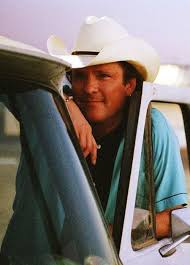
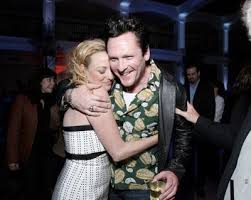
Legendary character actor, Tarantino darling and Oscar nominee Virginia Madsen’s brother, Michael Madsen has died at 67.
The cause, at this juncture, is listed as “cardiac arrest.” Everything he’s been through over his 67 years — substance abuse, the loss of a child to suicide, etc. — may pile up. He’s not looked good on screen in a while, now.
But the man was a terrific actor who found himself in a lot of movies that called for that. “The Natural” and “Thelma & Louise” to “Reservoir Dogs” and “Kill Bill,” with “Sin City” and “WarGames” and two “Free Willy” pictures to boot, lest you think he was all tough guys in tough guy roles.
He made a soulful heavy and a sensitive dad when the script called for it.
Even in B-pictures at the very end, he gave fair value, always giving us the notion that here was a man who has done things, seen things and been places, a lot of which he’d like to forget and can’t.
RIP.


The responsibilities of a movie star, to her career, her “brand,” her projects and how they get made stand front and center in “The Old Guard 2.” Oscar winning star Charlize Theron carries a heavy weight on this one.
A lot of people got work based on her saying “Yes” to more Netflix money. Players without her clout surround her, a supporting cast largely brought back from the 2020 film “The Old Guard,” with Uma Thurman and Henry Golding added to the ensemble for this Italian working vacation.
Without her, this second action film would probably have not employed a female director, something Theron ensured in the first “Old Guard” as well.
So without Theron, the movie would not have been made. And perhaps that would have been for the best.
Scene after scene lands like a cold-in-the-ground corpse, lines delivered at an enervated whisper, fight choreography that reveals itself as “choreography” as we can practically see cast members silently counting off steps as they make each move.
In a way, that befits a low-stakes action enterprise like this. In case you’d forgotten — I know I had — the “Old Guard” is about “immortals,” fighting and getting injured, with cuts healing and fingers magically re-attaching, our heroes hurling themselves into certain injury or death only to get up, crack their necks. re-set their nearly-severed-feet and shake it off.
The only thing to up the ante in such an actioner is the threat of losing that immortality.
“Time means nothing, until it means everything,” as our villainess (Thurman) reminds us, mid-“Kill Bill” swordfight.
With so little truly at stake, it’s no wonder the actors don’t bring a moment’s urgency to any of this.
The ancient immortal Discord (Thurman) is out reviving Quynh (Veronica Ngo of “Furie” and “The Creator”), pulling her coffin from the wine dark sea and putting her to work setting evil deeds in motion.
Andromache or Andy (Theron) lost her immortality in the first tale. Like someone between insurance policies, she’s got to be a tad more circumspect about putting herself out there.
“Do I need to remind you you’re not mortal,” she tells ex-CIA agent and sidekick Copley (Chiwetel ?Ejiofor) at the end of an opening raid/brawl at an arms smuggler’s Croation coastal mansion? That sets up Copley to “need I remind you” back to Andy in the next fight. These days when she’s cut, she bleeds.
As a sinister plot comes to light, Andy must consult the historian/librarian of this class of people, Tuah (Golding) for guidance.
“So, how old ARE you?”
“Let’s just say 2300. It’s a nice round number.”
But Tuah is “afraid” for the first time in milennia. Discord is coming for them all. Yawn.
“Old Guard 2” is 20 minutes shorter than the original film, but if you think that means it’s more brisk you’re mistaken. The script staggers right from the start, with a nearly pointless save for the “reintroduce-the-team” requirements assault on that arms merchant’s compound, a sequence that ends with an anti-climax so loud you can almost hear Theron going “That’s IT?” in the first read-through.
And if she didn’t, she was misreading the script and her responsibilities. This star vehicle — which never recovers from that funereal start as it bounces through locations (James Bond “industrial facility” sets) and struggles through creaking flashbacks that give us Andy and Quynh’s “history” and the like — isn’t diverting or interesting or even time-killing enough to merit ever going into production.
We rarely can blame actors when a picture goes wrong. But in this case, that’s on Theron. Because without her, this mess would never have been made.

Rating: R, violence
Cast: Charlize Theron, Kiki Layne, Chiwetel Ejiofor, Veronica Ngo, Matthias Schoenaerts, Luca Marinelli, Marwan Kenzari, Henry Golding and Uma Thurman
Credits: Directed bu Victoria Mahoney, scripted by Greg Rucka and Sarah L. Walker, based on the graphic novel series by Greg Rucka and Leandro Fernandez. A Netflix release.
Running time: 1:47
Otherwise, they’re going to ruin his latest masterpiece.
Four strong players, Stradivarius instruments and a new work.
Can they get it together? A couple of famous faces play opposite four real love working musicians on this French hit.
This dry dramedy rolls out August 8 and August 15.
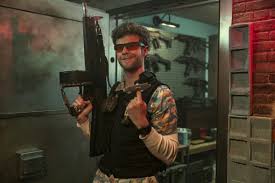
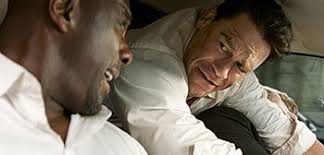
If puns are “the lowest and most groveling form of wit,” where does the jokey/dopey action comedy “Heads of State” sit on that scale?
It’s got puns. Groaners. Lots of them. And action film cliches and buddy comedy bickering and a ludicrous/obvious plot that calls attention to itself and mocks itself, as if that’ll stop us from doing the same.
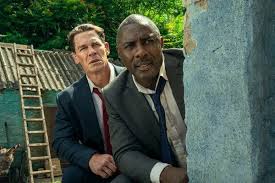
A film starting out from “Let’s reunite those two supporting players from ‘Suicide Squad‘” as its big idea sets the bar pretty low. But Idris Elba and John Cena, as an “embattled” British Prime Minister (Yes, we know the PM’s not “Head of State.” Shaddup.) and movie-star/pop icon U.S. president thrown together to fight for their lives, NATO and the future handle the banter and the tough-guys-trash-talking-each-other business with ease.
“Drop warheads on foreheads?”
“Where’s your back-up?” “There IS no back-up!”
A kicker — “It’ll be great for our memoirs.”
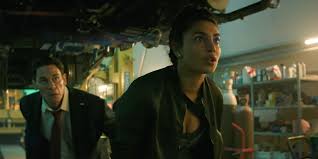
Priyanka Chopra Jonas handles fight choreography with aplomb, and Paddy Considine tries to give us something — anything — interesting in his shade of villain.
“Hardcore Henry” and “Nobody” director Ilya Naishuller pulls out more of his Guy Ritchie editing tricks — boiling down entire harrowing escapes to short and silly “How’d you FIND us?” montages.
But damn, the been-there/needle-dropped that feeling is strong with this one. The “dumb” just won’t quit.
A trio of screenwriters, including a “Mission: Impossibl” duo do-over pile on the travel, the epic set pieces and the mayhem and try to find the fun in all of that.
When you’re putting Air Force One in a dogfight and staging a bloody ambush in Buñol, Spain’s over-the-top tomato-tossing food fight (La Tomatina), who cares about helicopter crashes, presidential limo chases and Jack Quaid as a gun-slinging not-really-amusing nerd of a CIA agent?
The story — a wildly popular president stops in London to meet an unpopular prime minister who all but endorsed his opponent in a recent election. One is great at working the press. The other? More statesmanlike.
“He still hasn’t figured out the difference between a press junket (promoting a movie) and a press conference!”
Maybe PM Sam Clarke is just jealous of Will M. Derringer’s cool name, and initials — “WMD” — and his box office take.
“The universe keeps telling me I look good with a gun in my hand!” the cinema’s once-and-future “Water Cobra” jokes.
But when the two try to mend fences on the way to a NATO summit on Air Force One, they’re shot down. They’ve got to get along, work together and fight and trick their way from Belarus to Warsaw and on to Trieste. Because somebody’s hijacked the CIA’s super surveillance ECHELON system and is plotting their demise, and NATO’s.
Jonas plays an ace MI-6 agent who used to have a thing with our PM. Quaid’s a Warsaw Station agent just tickled that his favorite action hero turned president is dropped into his care, if only briefly.
Agent Comer has just enough time to arm up in the cliched “Look at my ARSENAL” scene and load up The Beastie Boys (“Sabotage”) on the CD player.
A little Mötley Crüe here, some “Total Eclipse of the Heart” Bonnie Tyler there, and you’ve got your soundtrack to your formulaic action comedy.
Comedy mainstay Stephen Root is here to tip us about the tone they were going for, and plays maybe the least funny role in “Heads of State.” Wade Briggs, Katrina Durden and Alexander Kuznetsov are costumed, hair-dyed and shaved to look like everybody’s idea of a villain.
Look for Sharlto Copley in a single scene and “Mission: Impossible” vet Ingeborga Dapkunaite as a Belorusian sheep farmer.
But all those players are but pawns in the big, fat empty-headed action beats involving brawls, shoot-outs, chases and a hysterically high body count in a movie you don’t so much watch as “consume.”
It turns out that reuniting Bloodsport and Peacemaker from “Suicide Squad” wasn’t the can’t-miss that nobody predicted.
Rating: PG-13, lots and lots of violence, some of it bloody.
Cast: John Cena, Idris Elba, Priyanka Chopra Jonas, Jack Quaid, Carla Gugino, Stephen Root, Sharlto Copley and Paddy Considine.
Credits: Directed by Ilya Naishuller, scripted by Josh Appelbaum, André Nemec and Harrison Query. An MGM/Amazon Prime release.
Running time: 1:54
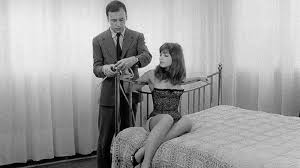
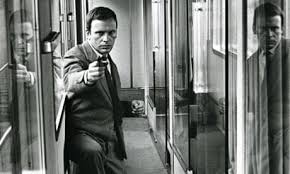
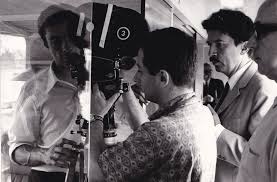

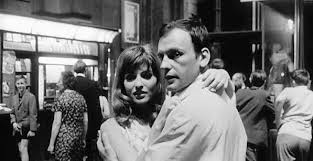
“How to brainstorm a genre screenplay” is trotted out and exposed for the amusing and mundane process it is in Alain Robbe-Grillet’s goof of a thriller, “Trans-Europ-Express.”
Every trope, all the cliches and archetypal characters, the “How do we get from Paris to Antwerp?” problem solving of the plot, where to introduce “the gun,” the obligatory nudity and sex — including 1960s bondage — it’s all laid bare in this spoof from the screenwriter of the obscurant “Last Year at Marienbad” and director of “Successive Slidings of Pleasure.”
Robbe-Grillet was a “cult” director, “cult” screenwriter and plainly a man with a sense of humor about the mental or erotic titillations that were his specialty. Because ’60s-dated or not, “Trans-Europ Express” still plays, still amuses and still “applies” when it comes to formula films like the one it sends up.
Three filmmakers — a director, producer and script supervisor — board a train in the Gare du Nord station in Paris. The moment they settle into a compartment, “We should set a film on a train like this” (in French with English subtitles) occurs to them.
The director (Robbe-Grillet) gets his script supervisor (Catherine Robbe-Grillet, his wife) to break out a tape recorder to take notes. It’s a suitcase-sized portable reel-to-reel, a ’60s tech joke “Austin Powers” missed. With the producer (Jérôme Lindon) pitching in, they conjure up a plot.
How does one get cocaine from Paris to Antwerp? Where can you buy a “false bottom suitcase?” Wouldn’t our “trafficker” be more likely to smuggle diamonds in and out of Antwerp?
An actor crosses their field of view. “Isn’t that (Jean-Louis) Trintignant? He’d be PERFECT” for this!
We see the trenchcoated Trintignant — of “And God Created Woman,” “Z,” “Under Fire” and in 2012’s “Amour” — side-eye everyone and everything, doing his best version of “sketchy.” He shops for a suitcase. “The trafficker model. Just kidding.”
He is eyed by the sexy stranger (Marie-France Pisier of “Cousin, Cousine” and Truffaut’s “Love on the Run”). Who is she? “An agent for a rival gang!” “An amateur detective?”
Over the course of the train ride, the trio dreams up an absurdly convoluted plot that involves multiple suitcases and multiple handoffs, legions of middle-men and women and an ever-evolving code-phrase about when one last saw “Father Pettijohn.”
Leaky bags of sugar are loaded into the suitcase for a dry run. A small semi-automatic pistol of the era is hidden in a hollowed out paperback novel (about trains). Cops and “fake police,” an inspector, a fake blind man (Ivo Pauwels) and others aid, pursue or work with Jean, our trafficker.
Eva (Pisier)? She’s a sex worker, or a spy who asks questions.
“What do you do for a living?”
“I’m an assassin.”
“Oh, a professional?”
“No, an amateur. Semi-professional, actually.
All these interruptions, arrests and interrogations?
“Tests.”
Our brainstormers send Jean from hotel to hotel, into a nightclub or two, one with a bondage show, train stations to drawbridges to dry docks.
Yes, he picks up a bondage magazine for the train ride. Yes, he buys rope. Will that play into “the whore subplot?”
What turns him on?
“Rape. Any rape.”
“All right. But it’s more expensive!”
It’s all weird and witty, and yes, one could totally imagine a film coming to life in just this way — plot, characters, complications, “Chekhov’s gun,” sex and violence, titillation and tension trotted out, debated and worked-out and shoved into the script on a train ride.
No, it never adds up to much or much that makes a lot of sense.
“Trans-Europ-Express” is like that ’60s train ride, mainly interested in simply getting from point A to point B, with requisite plot complications, a black and white tour of Antwerp and the Gare du Nord, hand-held tracking shots (camera work is glimpsed) on foot and in rail cars, vigorously obvious editing and kinky jokes that were daring for their time and can still push several politically incorrect buttons along the way.
If you want to take a 100 minute course in thriller cliches and how to apply them (right down to the obligatory “strip club” scene), Robbe-Grillet summons you aboard and announces “Class is in session” the moment he says “We should set a film on a train like this.”

Rating: unrated, violence, nudity, bondage, sex work jokes
Cast: Jean-Louis Trintignant, Marie-France Pisier, Christian Barbier,
Ivo Pauwels, Jérôme Lindon,
Catherine Robbe-Grillet and Alain Robbe-Grillet.
Credits: Scripted and directed by Alain Robbe-Grillet. A Lux/Kino Lorber release on Tubi, Amazon, et al.
Running time: 1:45

 Movie Nation