
Lot of money on the screen in this trailer.
Lot of money on the screen in this trailer.


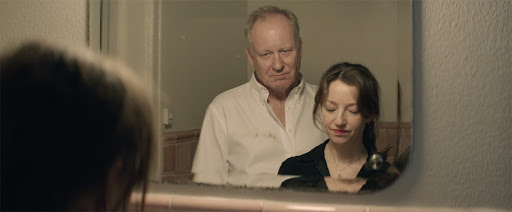
Anja looks pained, stricken. And Tomas picks up on that as they take their coats off at a Christmas party.
“If it gets tough, we’ll stick together,” he offers. It’s already gotten “tough.” And he isn’t just talking about this dinner party. She has cancer. Her prognosis is awful.
But as we’ve seen the state of their relationship, we wonder — as she must — if he’s as good as his word or if he’s just expressing platitudes of “Hope.”
Norway’s short-list contender for the Best International Feature Oscar is an intimate drama in which two stars, Andrea Bræin Hovig and Stellan Skarsgård, put on a clinic of how to play people used to deadlines, pressures from all sides, facing the worst thing any of us face — the end.
Anja is a famous choreographer, Tomas is a playwright. They’ve been together for years, have three children together with three others from his first marriage. But work has dominated their lives and thoughts, especially with him. He wasn’t there for her latest opening night. He even skipped out on his assignment for the evening, child care, “letting the older ones look after the younger.”
And now she’s gotten a callback on the MRI she went in for about her persistent, unshakeable headache. For once, Tomas has to drop everything and show up. He is the one who weeps at the news.
Christmas is two days off. Then New Year’s. Getting medical treatments in the works, even medical advice, is tricky. How will they tell the kids? Her elderly father, who lives with them? They want counseling for that.
There are parties planned, New Year’s is coming, and giving everyone “a nice Christmas” passes back and forth between them.
As they maintain their best poker faces and scramble to hit their medical marks, start medication and “jump the line” for possible surgery, there’s barely a moment to consider the blunt “I’m sorry” they get from the few on-duy medical professionals who cannot help them, much less wholly absorb that unblinking diagnosis from her oncologist.
“It’s incurable.”
Screenwriter-director Maria Sødahl paints a picture a big family in the dark and two parents who don’t communicate well in the best of times rushing into action, between consultations, scrambling to find a way and a moment to tell their family and friends this awful news. When they finally find someone who can guide them, his advice resonates with sound psychology and empathetic common sense.
“I often say you should give your children 10% more hope than you give yourself,” he advises (in Norwegian, with English subtitles).
The estimable Skarsgård shows us a man who has to shed some of his self-absorbed tendencies, just this once. The looks on his face tell us he’s not sure he’s up to it. For a moment here and there, we see Tomas wounded and deflated by everything he’s ever done to let Anya down, a string of petty inconsiderations that pile up as this logjam of half-a-dozen days unfolds, with more and more “events” packed into them as they go.
Veteran Norwegian actress Bræin Hovig rushes through the Stages of Death and Dying, giving up and regaining “Hope,” losing her temper at Tomas and callous medicos who aren’t as polished at showing concern over her situation as she needs them to be. The film isn’t a full-bore “weeper,” but she has a couple of absolutely gut-punching scenes dealing with her personal crisis and trying to leave something with meaning to their fragile, impressionable 16-year-old daughter (Elli Rhiannon).
As their lives, their relationship and their family closes in around them, will they “stick together,” with or without “hope?”
Bræin Hovig and Skarsgård take us into their confidence as they make these choices, decisions, promises and compromises. The wonder of “Hope” is how much of that they do without dialogue, just with a look, a gesture, a silent scream of despair or teeth grinding in resignation.

MPA Rating: unrated, adult situations, nudity, smoking
Cast: Andrea Bræin Hovig, Stellan Skarsgård, Elli Rhiannon and Gjertrud L. Jynge,
Credits: Directed and scripted by Maria Sødahl, A KimStim/Picturehouse release opening April 11.
Running time: 2:008

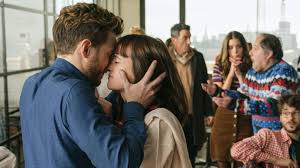
There’s a Hippocratic Oath that anybody tackling the romantic comedy about the mentally ill genre.
You can be moon-eyed, optimistic, maybe a tad unrealistic. But “first, do no harm.”
What, you didn’t realize this was a thing, a whole genre of itself? “Benny & Joon,” “Silver Linings Playbook,” “Crazy/Beautiful,” “Mad Love” — a lot of screenwriters have taken a swipe at it.
The Spanish rom-com “Loco por ella,” aka “Crazy About Her,” is a generally harmless addition to the genre, a movie that sticks to the formula that’s developed around such screen romances.
You can be silly, so long as you remember to include the sad, which means these are by definition “dramedies.” You can’t imply that “All she/he really needs is someone whose love is empathetic and true.” And you can’t sell out with a conventional ending. “Happily ever after” always comes with a fiat, and I’m not talking about the diminutive Italian car.
First, we get a “meet cute.” He’s at a bar with friends, bloviating an how his work at a “clickbait” magazine website has made him an expert on picking up women. She blows in on a motorcycle, a leather-jacketed bad decision if ever there was one.
She takes the initiative, the fake “Oh, I spilled your drink! (in Spanish with English subtitles).” She ups the cynicism ante by asking “What always ruins a perfect (one) night (stand)? The next day.”
No names. No numbers. No small talk. Let’s just…GO. But the guy we later learn is named Adri (Álvaro Cervantes) needs to “RUN.” Because Carla (Susan Abaitua), as we figure she’s called, just stole a helmet for him to wear on her next motorcycle Ride of the Valkyries.
Let’s crash a wedding reception. Let’s pretend we’re relatives. Let’s double down when we stomp in and realize we’ve crashed an Afro-Spanish wedding by offering a toast to the two strangers, dancing and drinking their champagne and stealing their honeymoon suite for a vigorous romp.
“Memorable?” Sure. And then Carla-no-last-name races off into the night, never to be seen again.
Except cynical, never-been-in-love Adri is smitten. Once he figures out who she is, he figures out where she is. But when he visits Los Sauces, he realizes it’s a mental hospital. She’s beyond his reach. That must have been some one-night-stand, because to Adri, those locked doors are “Challenge ACCEPTED” material.
If he wants to get close again, he’ll have to fake his way into a voluntary admission. Maybe pitch it as an undercover story for the mag, after the fact. It’s just that Adri never considers the possibility that sometime escapee Carla might not want to see him again.
Catolonian director Dani de la Orden (“Barcelona Summer Night,” “Barcelona Christmas Night,” “The Best Summer of My Life”) and the screenwriters put a lot of effort into not stepping on anything explosive in this minefield romance they’re navigating through.
That they mostly manage. But the supporting cast of “inmates” is a seriously generic collection of the manic (like Carla), Tourette’s, amnesia and delusional “types.” Only Adri’s new roommate, the paranoid Saúl (Luis Zahera) makes any impact, and even he is rather blandly-written.
Adri’s journey, from self-absorbed to in-love and self-sacrificing, isn’t presented as any great dramatic transformation.
Abaitua, of “Compulsión” and the cute (ish) “4L” has the most interesting role to play, as these stories are inevitably about “the troubled girl.” But the film loses track of her too often after the antics of their “meet cute.” We appreciate the mental issues Carla is having, but there’s too little between that first hot night together and her warming to Adri’s charms. And nothing in the second or third act has the spark and sparkle of those first scenes.
Adri’s interest is driven by…the fact that he’s locked in and can’t get out and has nothing better to do?
“Crazy About Her” isn’t terrible or irresponsible, and the filmmakers do their darnedest to make the unoriginal, medicated rom-com take on “life inside a mental hospital” easy to sit through.
But the “fun” grows thin and the romance never really clicks.

MPA Rating: TV-MA, sex, profanity
Cast: Álvaro Cervantes, Susana Abaitua, Luis Zahera, Aixa Villagrán, Txell Aixendri and Paula Malia
Credits: Directed by Dani de la Orden script by Natalia Durán, Eric Navarro. A Netflix release.
Running time: 1:42
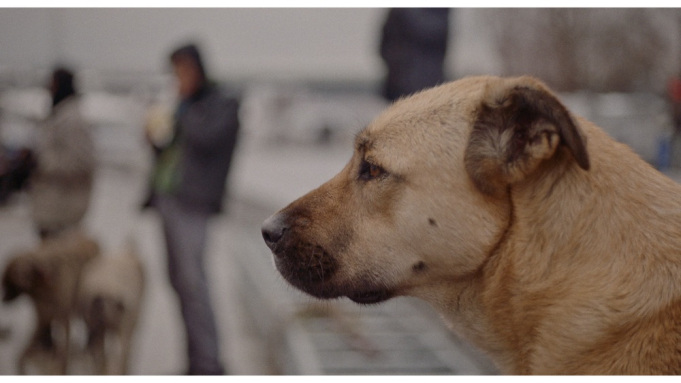
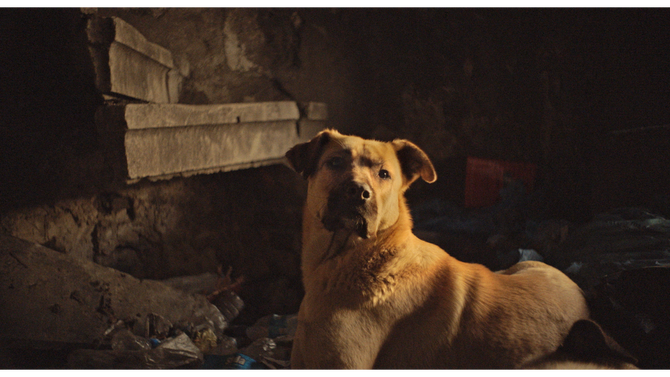
Whatever else you can say about the charming and intimate documentary that follows a “Stray” dog through the streets of Istanbul, it’s a rare piece of positive PR for a Middle Eastern country that never makes the news for something good.
Elizabeth Lo‘s narration-free film points out that Turkey and the city tried to “eradicate” its stray dog population all through the 20th century. International outcry is credited with halting the roundups and mass killings. But the evidence presented by “Stray” shows Turks, and Turkmens and Chechens and anybody else among the masses of locals and immigrants passing through being rarely anything but kind to the 100,000 or so dogs who wander the city, its streets, alleys, squares and parks.
Zeytin is the dog we follow here, a tall, beautiful and self-sufficient mutt who makes her rounds, checking trash bins behind restaurants, sipping from fountains, meeting other dogs and occasionally engaging in the one game in the global pooch-on-pooch pentathlon — “CHASE me!”
By day construction workers and shopkeepers call her by name, scratch her ears and give her a pat or a bone. Sure, every now and then a hose is aimed in her direction. And sitting next to strangers in a park can get a spirited cussing-out by foul-mouthed Chinese tourists. But she is tolerated, has the luxury of standing up and stretching before she leaves a parking space a delivery truck driver needs.
The shots are so tight we can wonder if Lo’s camera isn’t a deterrent from the kicks and yelling much of the world greets strays with.
By night, she curls up with street urchins from Turkmenistan, “glue-sniffers” who love dogs and argue with the construction workers at the site where they sleep. The workers are always chasing them off, yelling for them not to be around during work hours. The dogs? The dogs can stay.
Zeytin’s wanderings, catching up with doppelganger mutt Nazar, checking in on beautiful puppy Kartal and her street dog family, confirm a lot of what Elizabeth Marshall Thomas’s book of some years back, “The Hidden Life of Dogs” pointed out. Dogs love to be around other dogs.
Zeytin only is growled at by dogs who figure “These humans are here to care for me, not you. Keep moving, sister.” Pack mentality and violence shows up in one scene, but the only serious fight is over a huge sheep bone she’s just procured. A strange stray with a bone of his own attacks her to get it until a garbage man intervenes.
“A–h–e! Why won’t you share?”
There’s little conflict here, a little fear that something awful may happen to Zeytin or her fellow street animals. Istanbul’s change in laws made it a crime to “hold,” injure or euthanize a stray. They’re protected by mandate, cuddlier versions of the street cattle of Mumbai or the chickens of Key West.
But “Stray” pulls us into their world, filmed from a dog’s eye level (Human faces are rare, human conversations merely overheard.). These dogs haven’t gone feral, and the humans who interact with them meet them on their terms.
Perhaps the Turks have read the ancient Greeks whose thoughts on dogs Lo inserts as intertitles throughout “Stray” to underscore her larger point.
“Human beings live artificially and hypocritically and would do well to study the dog,” Diogenes said thousands of years ago. If he saw a kindred spirit in canines, strays or pampered purebreds, who are we to disagree?
“Dogs and philosophers do the greatest good and get the fewest rewards.”

MPA rating: Unrated, profanity, smoking, canine se
Credits: Directed by Elizabeth Lo. A Magnolia release.
Running time: 1:12
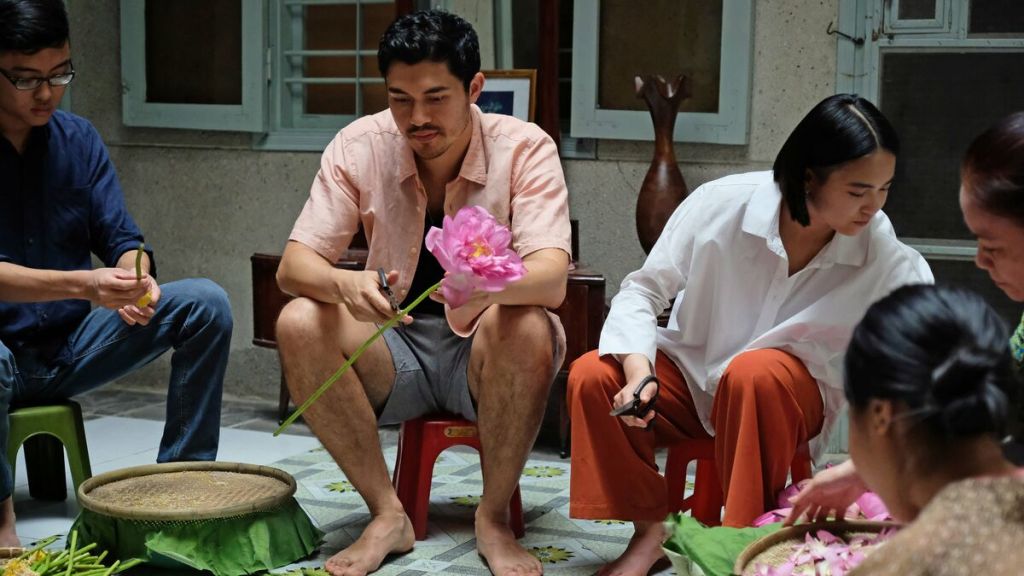
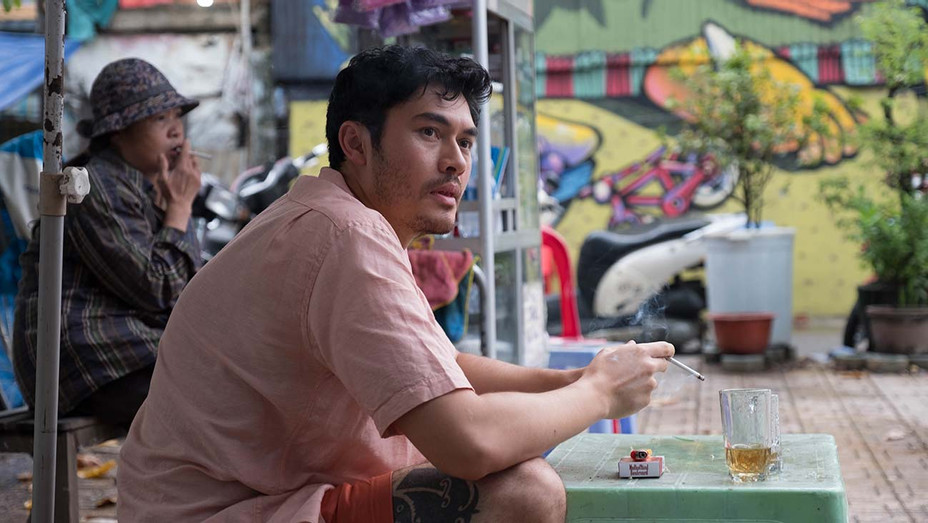
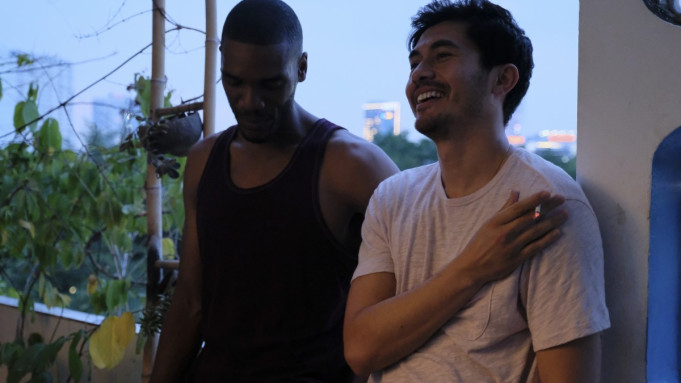
Henry Golding gives his most laid-back, natural screen performance in “Monsoon,” a melancholy Vietnamese travelogue and romance.
The “Crazy Rich Asians” and “The Gentleman” star plays Kit, a Vietnamese expat raised in Britain who has returned to the homeland he barely remembers to scatter some ashes.
While there, Kit reconnects with a childhood family friend Lee (David Tran) who tries to jar his memories of a country and city — Saigon — which has been almost wholly remade in the decades since it became Ho Chi Minh City.
Much of Hong Khaou’s film is just Kit walking the streets, reflecting, riding on the back of motorscooters, taking the train north to the city of his parents’ birth, Hanoi. He’s looking for a place to leave the ashes in the wooden urn he’s brought with him, “somewhere momentous,” and he doesn’t look as if he’s having much luck, or that he’s in a hurry. He takes it all in and tries to remember a past his parents pretty much erased.
This is not a “memory play,” not a reflective story with flashbacks. Simple, spare conversations give away tiny pieces of his story to Lee, and eventually to Lewis (Parker Sawyers). They’re two Westerners who set off each other’s gaydar, and begin an affair.
I can’t remember a Vietnamese travel program that’s shown as much of the city life there as “Monsoon.” The opening image, the mesmerizing flow of traffic at a busy roundabout as viewed from on high, sets the tone. We see what Kit sees. Sometimes it’s a striking bridge, a timeworn neighborhood, a gallery, restaurant or hotel bedroom.
Golding gets across a sense of a man both at home here and adrift, letting the last of the grief that the loss of Kit’s “formidable” mother wash away from him. An online anime artist, he’s a lot more social than the stereotype of that job implies. Lewis isn’t the only friend he makes, or lover that he takes.
If there’s a knock on “Monsoon” it’s that not a lot happens. The drama is light, the unpleasant memories summoned up are watered-down by Kit and Lee, whose family failed to escape the way Kit’s was able to.
But Golding, losing the debonair dash he wore uneasily in “Crazy Rich Asians” and the menace he half pulled-off in “The Gentlemen,” pleasantly drifts through this like someone not willing to look the part of a tourist, confident in his charm and never out of his depth so long as he has it.

MPA Rating: unrated, sex, smoking
Cast: Henry Golding, David Tran, Parker Sawyers, Molly Harris
Credits: Scripted and directed by Hong Khaou. A Strand/BBC film on Netflix.
Running time: 1:25
This March 26 comedy stars William Shatner as a leadfooted senior citizen who loses his license and may find love…if he can keep Jean Smart from taking up with “the artist” (Esai Morales).
Shatner’s sidekick? Christopher Lloyd.
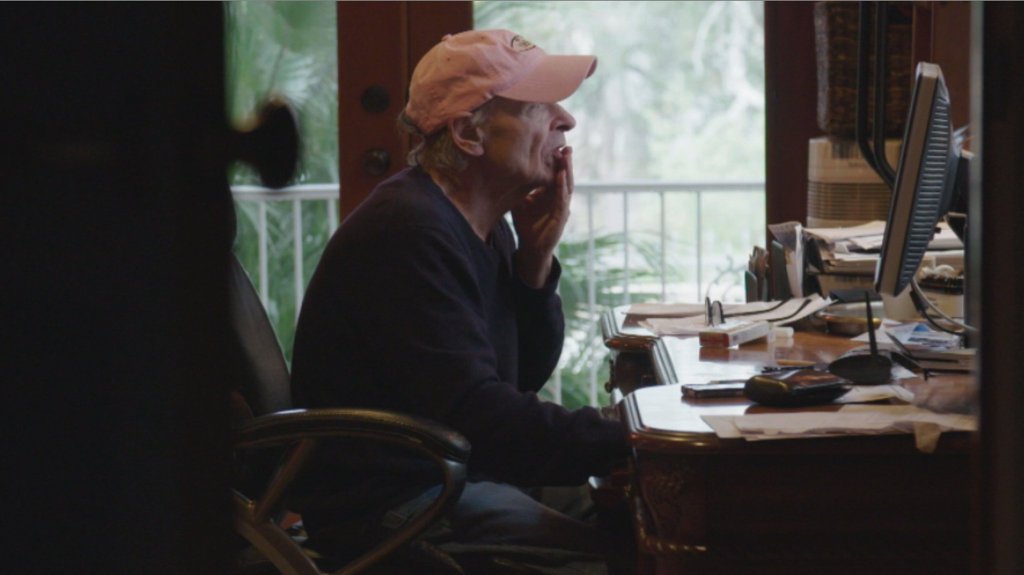
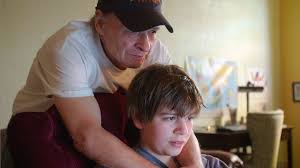
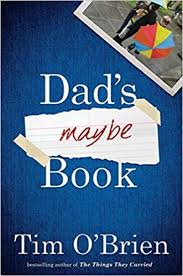
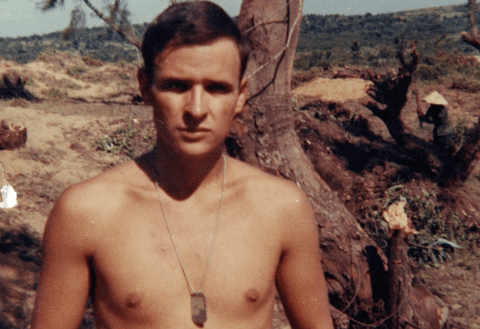
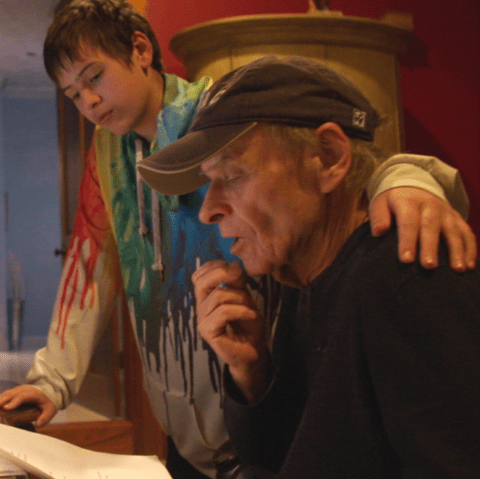
One of America’s greatest writers, Tim O’Brien was well over a decade past his last published book when filmmaker Aaron Matthews started following him around, filming a documentary.
O’Brien was into his ’70s, and stopped writing basically when his sons were born in the early 2000s. But as the Vietnam War vet and lifelong smoker started pondering his mortality and “did the math,” he knew there was at least one more book he needed to write, one to the sons he probably won’t see into adulthood.
“The War and Peace of Tim O’Brien” captures a lion of American letters in winter. The American Book Award-winning author of “The Things They Carried,” “If I Die in a Combat Zone” and my pick as the best Vietnam War novel never to be made into a movie, “Going After Cacciato,” the de facto poet laureate of that war, gives speeches and lectures, gets interviewed — a lot — and watches his kids play basketball.
And in the middle of the night, he tries to write. The book became “Dad’s Maybe Book,” and “War and Peace” shows us the heavy lifting it takes to write what his wife Meredith calls “his last book. He’s going to say everything that he wants to say in it.”
But he relates to an audience at one of his readings, “With every syllable I try to talk myself out of writing the next syllable.” When you’ve become “a war novelist,” when you’re mining your own experiences “in country” (1969-70), writing is painful.
Matthews, sometimes chatting from behind the camera, once even pitching in as the exasperated writer loses his new credit card in a gas pump, keeps this informal. He is filmmaker as “company” to O’Brien, a sounding board the novelist can pontificate to, saltily grouse with and — perhaps performatively — grind out the work for. That gives “War and Peace” a casual intimacy that many “fly on the wall” documentaries lack.
We can practically see the camera crew adding pressure to a writer with demons he still wrestles with, a war he never really got over and a deadline that is his own mortality.
Writer’s block sends O’Brien onto the kitchen floor, hand-cleaning the grout with paper towels, a wee hours of the morning pursuit.
O’Brien frets over that “war writer” label, “the entire content of my obituary.” His speeches see him as an anti war “Evangelist,” urging listeners to consider “the rectitude” of war.
And he sleeps in a “trench” he makes on a sofa or a bed, piled up pillows and blankets as if he’s hunkering down in a combat zone. He guiltily ponders the times young men have come up to him after hearing him read, telling them he’s convinced them to enlist.
Some of the best scenes in “War and Peace” have him sitting down with other vets, contradicting their politics, but finding common ground simply because he’s shared their experience and even the most stridently conservative among them respect that.
And he writes, hoping that some day his boys will “find my ghost in these pages…My kids, when I’m dead, will hear their father’s voice.” Damn, he’s quotable.
Those kids? They aren’t curious or gutsy enough to ask him about that war, a war none of their classmates’ parents can relate to. They acknowledge Dad’s bad days and rough nights, the trauma that they can see lingering in his moods.
He describes a firefight in a reading, “the bee-sting sensation in my left hand, the zipping sounds of eternity passing by,” he recalls a day and an event few people can fathom — “The Man I Killed.”
And as he types away, constantly interrupted, taking too little care of his health, exasperated by a dying Lexus or his sons’ addiction to “screens,” we marvel at the compulsion of the artist to make art, to leave a legacy not just to all of us, but to those living under his roof.
This struggle through O’Brien’s “War and Peace” make the viewer appreciate that it’s not just his time in combat that deserves our gratitude. As he pours a little more of himself onto every hard-won page, all I could think to say is “Thank you for your service.”
MPA Rating: unrated, profanity, smoking
Cast: Tim O’Brien, Meredith O’Brien, Ben Fountain, Tad O’Brien, Timmy O’Brien and Dan Rather
Credits: Directed by Aaron Matthews. A Gravitas Ventures release.
Running time: 1:23


This production makes an almost instant hash of “The Girl on the Train,” a novel turned into a Hollywood thriller starring Emily Blunt a few years back.
Heavy-handed, with hammy acting, silly and soap operatic, struggling to keep the plot plausible and sensible, it’s a good-looking film, which is pretty much all one can say for it.
Parineeti Chopra of “Namaste England” stars as Mira, the pregnant London barrister (attorney) who loses her baby in a car accident caused by mobsters out for revenge. She comes out of that trauma with partial amnesia and a husband (Avinash Tiwary) who cheats on her and leaves her.
A year later and she’s still disturbed, as you might expect. But Mira is stalking her ex, lashing out when she does. She’s drinking constantly, even taking a flask with her on her travels.
And she’s riding the commuter train back to and by her old life, narrating her tale of woe and her grievances as she does. She spies a pretty, younger woman (Aditi Rao Hydari) who seems to have it all, judging from the peek inside her house, passing glimpses of her and her husband happy in the yard.
“Will my life ever be as perfect as hers is? She’s everything I lost!”
Mira interrupts her ongoing meltdown for a little envy. But as we’ve seen that young woman stalked in the forests in the film’s opening scene, we wonder if that envy is called for. When Nusrat (Hydari) goes missing, there are plenty of suspects, plenty of motives floating around her “perfect” life. Might amnesiac Mira have enough motive to be one of those suspects?
Director Ribhu Dasgupta (“Three”) clumsily incorporates the police investigation into this supposedly deepening mystery. Kirti Kulhari plays the Scotland Yard detective in charge, a Sikh woman who is one of those who has taken up the turban, and who comes off like a 1950s bull-in-a-china-shop cop.
She visits crime scenes and slaps suspects. She swaggers.
“Officer,” the missing woman’s psychotherapist (Hiten Patel) begs, “find her…please.”
“I will,” she assures him.
The mystery at the heart of Paula Hawkins’ novel is still solid, but all the false-leads seem obvious, and Chopra tends to seriously overdo it playing a drunk and hysteric.
The British setting, with almost all Hindi-speaking characters is kind of novel. The film opens with an Indian wedding, basically staged as a production number. And it’s not like the Hollywood version of “The Girl” is any sort of classic, though I liked it more than most.
This four-screenwriter take on it misses in almost every regard.

MPA Rating: TV-MA, violence, alcohol abuse, profanity
Cast: Parineeti Chopra, Aditi Rao Hydari, Kirti Kulhari, Avinash Tiwary
Credits: Directed by Ribhu Dasgupta, script Gaurav Shukla, Ribhu Dasgupta, Abhijeet Khuman and Viddesh Malandkar by based on a novel by Paula Hawkins. A Reliance release on Netflix.
Running time: 1:58
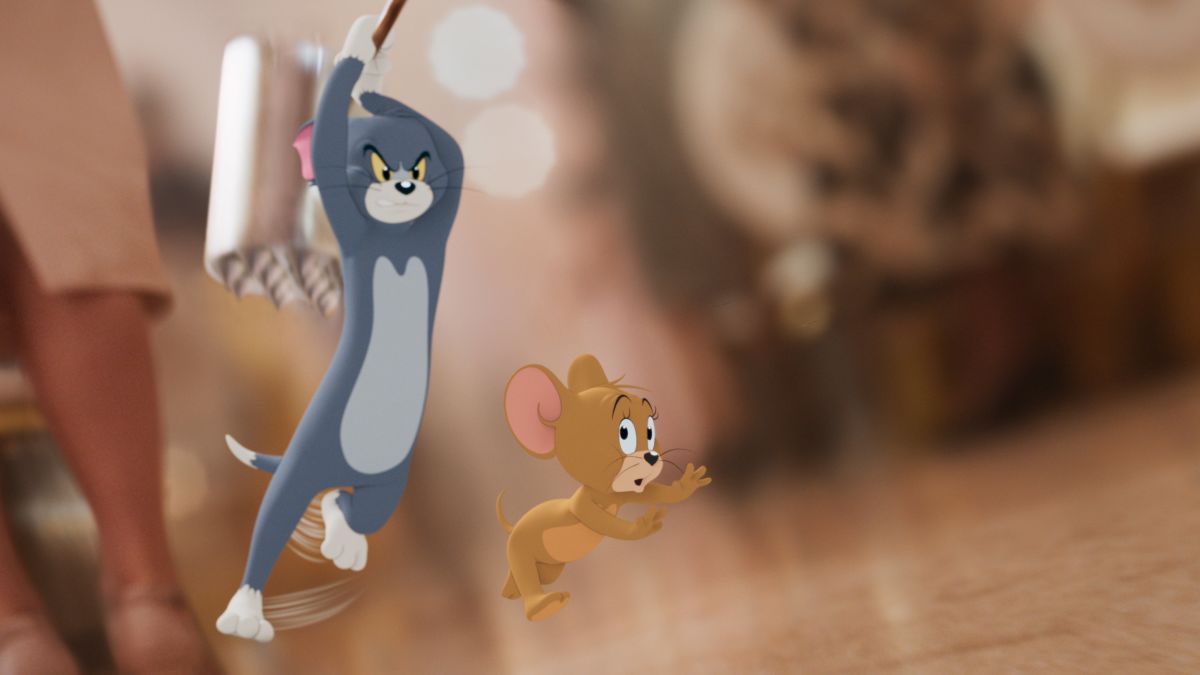
It’s a Tom & Jerry cartoon, so we’re not splitting the atom here.
Besides, I’m pretty sure Jerry split that sucker over Tom’s noggin back in the ’50s, when they were at MGM.
The “Tom & Jerry” movie is, first and foremost, cute. Animated animals — cats, a mouse, a rat, a dog, a goldfish, singing pigeons, peacocks and elephants — in live-action with real people New York city cute.
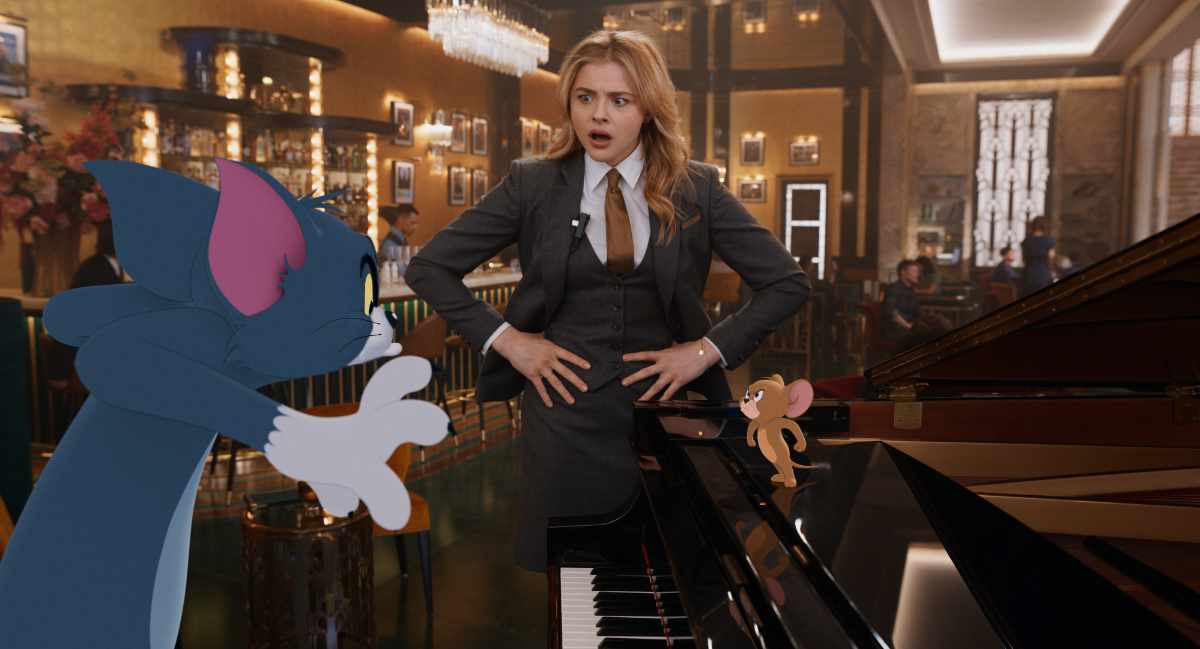
Co-starring them with Chloë Grace Moretz? Cute. And Michael Peña? Cute too. Colin Jost, playing an over-the-top groom in an extravagant Indian wedding? Kind of cute.
Ken Jeong as a chef? Dr. Ken’s act has worn kind of thin, but you can’t win ’em all.
This farce, scripted by Kevin Costello and directed by Tim Story (“Shaft,” the “Ride Along” movies) has a little flavor of the city, a hint of funk and the classic Tom & Jerry conflict.
Tom scratches out a living busking on his portable keyboard as a blind, piano-playing cat who dreams of opening for John Legend. Opportunist Jerry horns in on his act.
Let the violent mayhem begin, with baseball bats and meat tenderizers, scissors and hammers, pratfalls and splats, TZOLTS of electric shock and plenty of “Ooogah OOOgah” sound effects.
The setting is a swank hotel about to host the wedding of a couple of social media darlings (Jost and Pallavi Sharda). Naturally, that’s the place Jerry figures is his new home. Naturally, the vengeful Tom pursues him there.
Kayla is the hustler who fakes her way into a job at the Royal Gate. Peña is her boss, Jeong the harassed head chef.
With a big wedding getting bigger every second because of the groom’s egocentric elephantiasis, what could go wrong?
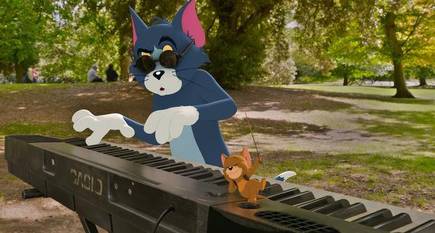
The gags include mute Tom’s way of communicating with Kayla — more and more elaborate games of “charades,” even though, when the spirit moves him, he can warble a fair auto-tuned Ray Charles imitation from the keyboard.
The script takes swings at “The Warriors” and “Dueling Banjoes,” Steve Bartman and PETA and “millennials.” Jerry still likes olives in his martinis. Tom is more of an oenophile.
Kayla on a mouse hunt? “I’ll CATCH him…or her. I’m not gender biased!”
The groom’s bulldog Spike? “I’m sorry,” Jost cracks. “He’s a little animated.”
The target demo here is the same as it ever was — 8-and-under. There’s plenty of slapstick and critter gags for them, crashing furniture, trashed hotel rooms and wedding party mishaps.
The rest of us? “Cute” it is and cute these two forever will be.
MPA Rating: PG for cartoon violence, rude humor and brief language
Cast: Chloe Grace Moretz, Michael Peña, Colin Jost, Pallavi Sharda, Jordan Bolger, Patsy Ferran and Ken Jeong
Credits: Directed by Tim Story, script by Kevin Costello, based on characters created by William Hanna and Joseph Barbera. A Warner Bros. release (HBO Max).
Running time: 1:41

 Movie Nation