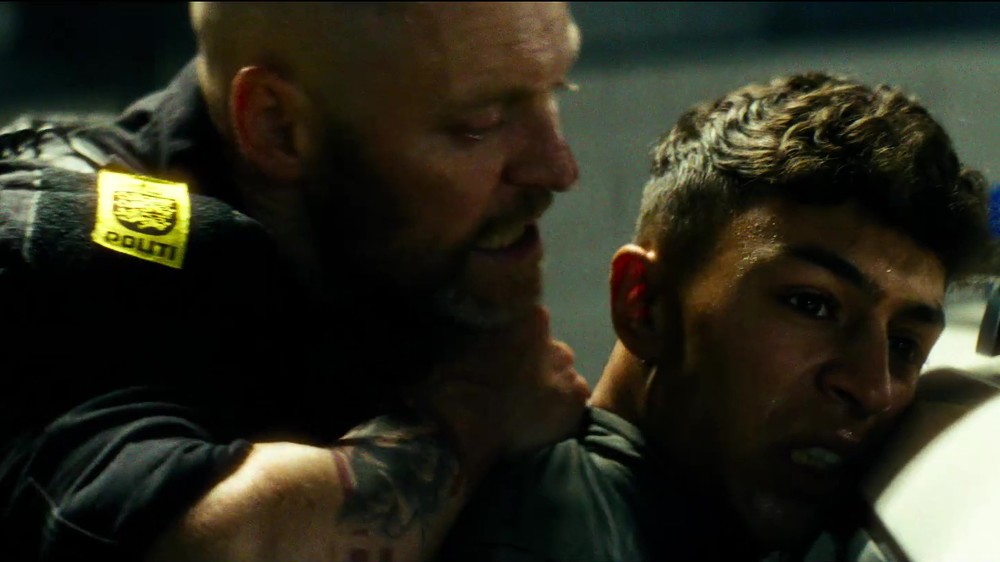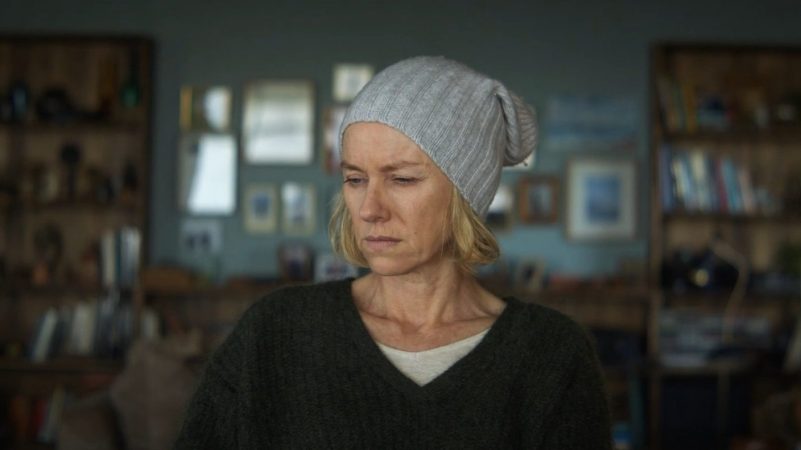
Classic Film Review: Brando, Woodward, Magnani and Stapleton and Tennessee Williams — “The Fugitive Kind”

A problematic play became a troubled film shoot and then a box office bomb when Tennessee Williams, Sidney Lumet, Brando and United Artists took a shot at “Orpheus Descending,” the play that became “The Fugitive Kind” back in 1960.

It’s slow, a low-simmer Southern Gothic slice of suffocating small town prejudices, sublimated desires and the trap of the “way its always been” hierarchy.

It features Marlon Brando with all his sex appeal and little of his heat or dramatic fire, Joanne Woodward at her spunkiest, a somewhat miscast Anna Magnani, with the actress who played her role on stage (Maureen Stapleton) on the set with her most days.

A happy shoot? An infamously unhappy one, according to legend. You can see it in Brando’s lack of interest, actresses insecurely over-emoting to compensate, in the leaden pacing that sets in after crackling introductory scenes.

Even the famed Williams monologues, soulful reveries of the past and dreams and genteel possibility have the life squeezed out of them by the weight of the film surrounding them.

“You might think that there’s. . .there’s many. . .many kinds of people in this world. But there’s only two kinds: The buyers and the ones that get bought. No, there’s another kind…

“It’s a kind that don’t belong no place at all. There’s a kind of bird that don’t have any legs so it can’t alight on nothing. So it has to spend its whole life on its wings in the air. I seen one, once. It died and fell to earth. And its body was light blue colored. And it was just as tiny as your little finger. And it was so light in the palm of your hand that it didn’t weigh more than a feather. And its wings spread out that wide. And you could see right through them. That’s why the hawks don’t catch them. . .because they don’t see ’em. They don’t see ’em way up in that high blue sky near the sun.”

Poetic as that is, it stops the picture cold when it’s already lurched to a crawl.

But Lumet, with his third feature film after a sterling career in Golden Age television, immerses us in a seedy, sordid and unsafe South that only Williams could dream up and only Milton, New York could recreate without the threat of cross-burnings of disapproval interrupting filming.

Brando’s a New Orleans musician, “an entertainer” with more implied in that than merely playing an autographed guitar that bluesman Leadbelly gave him. His jacket gives Val Xavier his nickname — “Snakeskin.”

We meet him in an edgy but interminable court scene, talking his way out of a long jail sentence, but also out of town. On a rainy night, he makes his exit only to break down in BFE Mississippi. A hunk like Val depends on the kindness of strangers — one in particular, the sheriff’s wife (Stapleton). She takes him in out of the rain, feeds him and hearing his mumbled wish for a fresh start, takes a stab at placing him in a job.

The owner of the town’s only store (Victor Jory) has just gotten out of a Memphis hospital. He’s unlikely to ever get back to running the place, and maybe his (unexplained Italian) wife (Magnani) could use some help.

Val first has to fend off the attention of the local hellion. Woodward’s wild, loud, liquor-swilling juke-joint-banned Carol Cutrere is as unwashed as her Jaguar XK, which she tears around two counties in, top down, pedal to the metal. The places she’s not allowed in compete with the places where she’s not allowed to drive on her rap sheet. But she’s from money, so there’s no controlling her.

And there’s no saving her, Val seems to gather. But maybe he can get her out of this or that fix just by taking the wheel, even if all she ever wants to do is go “juking.”

“That’s when you get in a car, which is preferably open in any kind of weather. And then you drink a little bit and you drive a little bit, and then you stop and you dance a little bit with a jukebox. And then you drink a little bit more and you drive a little bit more, you stop and you dance a little bit more to another juke box! And then you stop dancing and you just drink and you drive. And then, you stop driving.”

The tug of war over Val’s attentions and his very soul is him wanting to impress the mother figure, the sheriff’s wife, to rescue the unhappy-to-the-point-of-stricken Lady Torrance (Magnani), whose traumatic past includes family horrors and a frustrated affair with Carol’s ne’er do well brother (John Baragrey), and escaping his own sordid past, thrown in his face by the presence of party gal Carol.

It’ll all end in tragedy, I do declare.

Racism is introduced by the sheriff, and there has never been a better big screen bigot than character heavy R.G. Armstrong. Threats and seductions and rain and even the tiniest hopes of bringing a little refinement to this corner of muddy, redneck hell are just there to be thwarted in Tennessee Williamsland.

The stagebound film reminded me of the one time I can recall seeing it on the stage. Leave out the rain, fire and Jaguar they could have taken this version on the road, where audiences might have reveled in the star power, but not in the story, which grinds to a halt once the lights come on in that general store turned “department” store.

Brando completists still make pilgrimages to “Fugitive,” and Williams fans looking for the “first play that didn’t work” in his canon might be drawn in. This counts as a rare stumble after a decade of triumphs and Oscar-lauded screen adaptations.

Magnani’s presence is interesting to ponder in a back story Williams doesn’t provide the character. As she’s playing Lady Torrance, she must have been a war bride, the cruelty her husband visited upon her family a product of that war.

Lumet’s direction crackles in the opening act, and then the man who directed “12 Angry Men” on basically a single set finds himself at a loss in how to animate this busier set, motivate his players and keep the peace. The lighting and production design are immersive, but “The Fugitive Kind” can feel like a still life, sordid dead-end lives preserved in a muddy, beer-stained glass menagerie.

The thing that gave me the biggest kick out of belatedly getting around to this tainted “classic” is seeing, on the screen, what Paul Newman saw when he looked at Joanne Woodward. Not just the talent, but the spark and fire — sexy and funny and up for anything.

But he can’t have approved of what she and her character did to that Jaguar. That’s beyond the pale.

MPA Rating: unrated, violence, adult themes, profanity

Cast: Marlon Brando, Joanne Woodward, Anna Magnani, Victor Jory, Maureen Stapleton, R.G. Armstrong, John Baragrey and Emory Richardson

Credits: Directed by Sidney Lumet, script by Tennessee Williams and Meade Roberts, based on a play by Tennessee Williams. A United Artists release on assorted streaming platforms.

Running time: 2:01

Posted in Reviews, previews, profiles and movie news | Comments Off on Classic Film Review: Brando, Woodward, Magnani and Stapleton and Tennessee Williams — “The Fugitive Kind”

NBC bails out of Golden Globes — Streaming, or House cleaning?

Reforming the fast, loose, pocket stuffing elders of the Hollywood Foreign Press Association has proven to be nigh on impossible over the decades.

The terrible ratings of the 2021 pandemic Gloves should have made this a no brainer. They have all the leverage, why didn’t they do better than they did with Trump, Matt Lauer and other network scandals over the years?

But renewed pressure on slow to act NBC has turned the tide. The Peacock is not broadcasting a ceremony in 2022.

This came on the same day that Tom Cruise sent his Globe trophies back to the racist, sexist and corrupt old boys’ club.

Will the HFPA, which has gotten fat on broadcast bucks and exaggerated clout based on the awards, stand down clean house and put on something with a more professional presence behind the screen?

Stay tuned.

Posted in Reviews, previews, profiles and movie news | Comments Off on NBC bails out of Golden Globes — Streaming, or House cleaning?

Movie Preview:. “Venom: Let There be Carnage”

Tom Hardy’s back in what has proven to be an unlikely franchise seeing as how the original wasn’t much fun, not in the same darkly comical league with “Deadpool,” wasn’t deep enough to be as dark as it turned out.

Hardy was good and the effects first rate. Why should Disney keep all the money?

He’s back. Harry Nilsson cover in the trailer.

Sept 26. We are…curious.

Posted in Reviews, previews, profiles and movie news | Comments Off on Movie Preview:. “Venom: Let There be Carnage”

Documentary Preview: A chilling first look at “Rise Again: Tulsa and the Red Summer”

This doc, about the Tulsa Race Riot/Massacre, comes out this June — 100 years after scores of people were killed, hundreds were injured and thousands detained — on National Geographic and Hulu, right around Juneteenth.

A compelling subject, and this clip makes you hope they did it justice.

Posted in Reviews, previews, profiles and movie news | Comments Off on Documentary Preview: A chilling first look at “Rise Again: Tulsa and the Red Summer”

Movie Review: Divorce, as personal as it gets — “The Killing of Two Lovers”

“The Killing of Two Lovers” is a break-up story as stark as its Utah-in-winter setting, as brutal as its title.

The debut feature of writer-director Robert Machoian throws us into the seemingly quiet aftermath of a split, the calm after what appears to have been a just-as-calm “we need to work through some things” parting.

But there isn’t any “working through” whatever is going on here. That “calm” is an illusion, “no fault divorce” a myth. A family has been torn in two, and here’s a movie about the psychic violence that all-too-often dissolves into physical violence.

We meet David, given a simmering-before-the-boil energy by Clayne Crawford of TV’s version of “Lethal Weapon,” as he’s standing over a couple in bed, a revolver in his hand and wondering what to do with it.

We come to learn it’s his bed. Or it used to be. That’s his wife sleeping in it with another man. Those noises in the rest of the house are their four kids, getting restless just before dawn.

David gets as far as cocking the trigger before slipping out a window and sprinting down the street.

In a small town (This was filmed in Kanosh, Utah.), there’s no such thing as a “quiet” break-up. Everybody knows. David’s sprint ends at his pickup. And he only has to drive it another block or two to wind up at his dad’s house, where he’s staying. That’s how big this town is.

As David tries to get a handle on walking the kids to school and entertaining them on weekends, we meet soft-spoken wife Nikki (Sepideh Moafi of “The ‘L’ Word” and “The Deuce”). She sounds reasonable. But we also figure out how recent all this is, how quickly she worked the “see other people” into the equation, where she met the guy in her bed now and just how she and David ended up together, how young they were.

Nikki has late-awakening dreams, only some of which she’s articulated.

“So what did you have planned before Jess ruined it?”

That’s how she puts the question on “date night,” describing their oldest — their daughter — as a mistake, a trap they fell into.

She wants to know if David’s looking at places to rent. No wonder he’s confused. This isn’t “date night” banter. It’s tidying up and moving on.

But David? His dream is to get everything he had back. That is literally “all I think about.”

Machoian paints this portrait in pain in sound. We hear metal-on-metal, clinking and thunking noises as David drives around, grasping at what he should do. Confront? Kill? That’s his mind grinding its gears.

It’s a film of perfectly-observed moments — their three boys abandoning their still-rolling bikes as they dash for the school bus, Dad trying entirely-too-hard to make a snowy Saturday in the park, trying out model rockets, engaging, losing more ground with the oldest child, their daughter Jess (Avery Pizzuto, terrific).

And it’s a story of blunt counseling, some of it coming from that rebelling teen.

“You know, Dad, you need to FIGHT for us.”

That’s what we’re worried about. Amid these fully-rounded characters and vividly-recognizable lives, the threat of violence, of David’s frazzled state and the fact that he has a gun hangs over everything. What form will this “fight” take? Will he and “Mom’s new boyfriend (Chris Coy)” have a conversation, or have it out?

The situations are documentary-real, the acting barely feels like “acting” at all as we invest in the story, feel its pain and fear its outcome.

Machoian never lets this lapse into melodrama, never allows the reality of it all to lapse. The fact that he can take such an intimate, over-familiar situation and discover surprises and twists in it may be his most impressive feat of all.

MPA Rating: R for language (the MPA doesn’t care about “violence,” apparently)

Cast: Clayne Crawford, Sepideh Moafi, Avery Pizzuto and Chris Coy

Credits: Scripted and directed by Robert Machoian. A Neon release.

Running time: 1:24

Posted in Reviews, previews, profiles and movie news | Comments Off on Movie Review: Divorce, as personal as it gets — “The Killing of Two Lovers”

Movie Review: You don’t need a lamp to rub “The Djinn” the wrong way

When you’re mute, nobody can hear you scream.

That’s the horror hook for “The Djinn,” a generic but well-executed tale of a little boy who makes the right wish of the wrong genie.

The standard ingredients of such a tale are almost laughably over-familiar. A tweenage kid left alone in an apartment by his “double shift” all-night DJ dad. Mom “left” because of the child’s mutism. The previous tenant “died here.”

And what did the deceased leave behind, other than a framed photo of himself? A version of a “Book of Shadows.” Because of course he did.

That’s what young Dylan (Ezra Dewey, quite good) stumbles across when older-than-average Dad (Rob Brownstein) isn’t around. Dad may reassure the kid that “You’re perfect the way you are,” but Dylan has his doubts.

Once he’s opened the burlap wrapping sealed with prayer beads, you know what he’s looking for in the Book’s index — “Wish of Desire.” And we all know what he’ll be wishing for.

Not that he isn’t warned — “Beware the djinn’s toll, for the gifts that you seek may cost your soul.” But kids, am I right?

The spooky stuff that starts happening, after Dylan’s ASL’d the incantation into a mirror, includes bumps and thumps, a boombox radio that tunes itself (the setting is 1989, for no real reason), a TV that goes to static and demonic reflections Dylan sees on the screen when the set turns itself off.

Inky smoke invades the apartment, the light turns crimson and suddenly the kid is being chased-stalked (by the camera). He’s locked-in, the cordless phone is dead and Dylan is scared out of his wits.

All this is going on, chased by a “presence” which one moment might be a dead murderer killed after an escape attempt, another the dead previous tenant of the apartment or even Dylan’s sad, disturbed mother (Tevy Poe), terrifying the child when he should be pissed.

Because Dylan’s getting the djinn’s threatened “side effects,” but doesn’t get the promised voice.

Dewey, who looks a little like the young Joseph Gordon Levitt, conveys plenty of alarm and terror at what’s confronting him. Dylan fights back on a very basic level, and he has a chance because, as any movie hellbent on hauling out a hoary “Book of Shadows” suggests, there are “rules,” things that allow him to compete, “until midnight” escape clauses.

This isn’t anybody’s idea of a new horror classic. But “The Djinn” takes a basic story and delivers the basic jolts and frights we expect from it. No more, no less.

MPA Rating: R for some disturbing violence

Cast: Ezra Dewey, Rob Brownstein, Tevy Poe

Credits: Scripted and directed by David Charbonier, Justin Powell. An IFC Midnight release.

Running time: 1:21

Posted in Reviews, previews, profiles and movie news | Comments Off on Movie Review: You don’t need a lamp to rub “The Djinn” the wrong way

Movie Review: Monsieur Hinds’ Holiday, aka “The Man in the Hat”

If a mere Madeleine could send Proust “In Search of Lost Time,” surely a bon bon of a movie can inspire a reverie of films and times past, trips taken and those that lie on every traveler’s elusive “Bucket List.”

“The Man in the Hat” is a gloriously simple unalloyed delight. Put an actor in a tiny, vintage car, plop him in the South of France, surround him with quirky recurring characters and stunning spring scenery, and take away his gift of dialogue.

Let the sight gags and oddball set-ups commence.

The great Irish actor Ciarán Hinds, who first gained notice on this continent in “Circle of Friends” and “Persuasion,” a star of “Road to Perdition” and more lately of “Red Sparrow,” the Harry Potter movies and “Tinker, Tailor, Soldier, Spy,” would seem an unlikely candidate to try his hand at material more suited to Mr. Bean. But here he is, vamping a little Jacques Tati, lightly mugging and reacting in a film that can only be summed up as “Monsieur Hinds’ Holiday.”

He has a couple of lines — sentence fragments. But that’s it.

He’s just a traveler in the the small towns of the South of France (mostly Saint-André-de-Majencoules and Le Vigan and environs), a silent man who samples the cuisine and motors between auberges (inns), cafes, food trucks and pubs in a 1960s sun-roofed Fiat 500.

He wears a plain blue shirt and jeans, which match the Fiat. And he wears a hat. So that’s what he’s attired in when he finishes off his anchovies, asparagus and wine at a picture postcard harborside Cafe in the opening scene.

That’s where he spies five mugs piling out of ancient Citroën  2CV — an unlikely sight to start with — pulling out what looks like a body and dropping it into the bay.

They spy him, too. As he makes his getaway, little can they know that he will spend the movie eluding this clown car and its inhabitants all through France.

Every town is prettier and more quaint than the last, every narrow back road half as scenic as the next.

But that’s the way things work in this world. He’s forever stumbling into such locales, into two government employees (Amit Shah, Zoé Bruneau) in yellow traffic vests simply measuring things, into the striking woman (Maïwenn, of the horror classic “High Tension”) on a bicycle in a red dress, the very essence of “France” every time we see her.

There’s a chef (Muna Otaru of the brilliant but little-seen “The Keeping Room”). And then there’s the helpful, downcast and equally silent bearded stranger, played by the sturdy British character actor Stephen Dillane (“Game of Thrones,””Darkest Hour,” “The Greatest Game Ever Played”).

The bearded stranger helps The Man retrieve his hat, which he’s dropped into a river under a tiny, Romanesque bridge.

That’s the level of “action” this charming film serves up — a lost hat, stepping in dog doo and losing a shoe, an attempt to return a forgotten purse to the woman on the bike (she keeps running into him, and wanting nothing to do with him), a Fiat surrounded by Alpine goats on the edge of the Pyrenees, car trouble as he makes the Fiat climb those mountains, a shared meal with two screwball brothers whose cuisine and home brew make The Man wince.

The Man overhears conversations, a woman gossiping with a girlfriend about cheating on her man, an innkeeper telling her tale of lost love to a visitor who’s attempted suicide in her establishment.

The Man in the Hat keeps the framed photo of a woman in the car, even as he offers the occasional lift to strangers.

Every so often, he stumbles back into the Bearded Man and The Chef. He’s stopped by the measuring team. And he’s got to escape another “trap” when he runs into those five thugs in the 2CV.

There’s not a lot to this, but what’s here can feel like carefully curated comic perfection. Hinds is downright adorable as the lead, taking us on the dream French vacation foreigners hope for. Even car trouble drops him into a garage run by women who sing “The Song of Forgotten Cars” (car models make up the lyrics, in French) and “The Song of Forgotten Cigarettes” as they work.

“Gitane...Looooooky STRIKE!”

A tenor breaks into a romantic Italian lament at dinner, joined by a guitarist — a female vocal trio joins the Man in the Hat in the Fiat for an acapella dream sequence.

I don’t want to oversell a film so slight in its charms, one that relies on the most basic of sight gags. But something about “The Man in the Hat” and its timing, at the tail end of a travel-banned pandemic, makes this petite picture a postcard-shot delight.

The co-directors are a fellow (John-Paul Davidson) known for filming British celebrity travelogues with Stephen Fry and Michael Palin, and a composer (Stephen Warbeck), which explains the film’s musical quality, and its buy-this-soundtrack score of ballads, classics and pop.

I’m already pining for a sequel. Round up everybody, put Monsieur Hinds in a Triumph Vitesse, and follow him through his native Ireland. What say, kids?

MPA Rating: unrated, threat of violence

Cast: Ciarán Hinds Stephen Dillane, Maïwenn, Muna Otaru, Brigitte Roüan, Amit Shah, Zoé Bruneau

Credits: Scripted and directed by John-Paul Davidson, Stephen Warbeck. A Gravitas Ventures release.

Running time: 1:35

Posted in Reviews, previews, profiles and movie news | Comments Off on Movie Review: Monsieur Hinds’ Holiday, aka “The Man in the Hat”

Movie Review: “Iceman” — More “Conan” than “Quest for Fire”

“Iceman” is an attempt to create a back story for the frozen, mummified caveman found in the Ötztal Alps, on the Italian-Austrian border, in 1991.

He was nicknamed “Ötzi the Iceman” by researchers, and was found with a full complement of kit — all the gear one needed to survive as a Neolithic European — furs and flints, bow and a copper axe blade. He was 45 when he died.

We know what he ate for his last meals — Ibex and chamois, grains and beans.

What we don’t know is who killed him.  An arrowhead was embedded in his shoulder and he bled out in the alpine cold.

Felix Randau’s version of how he met that end is mostly plausible, and movie-genre conventional. “Ötzi,” named Kelab (Jürgen Vogel ) here, was a hunter from a mountainside hamlet who came off to see that barbarians have slaughtered his family and everyone he knows, and torched the place.

The raiding party (André Hennicke, Axel Stein et al) hear his howls of grief, but don’t go back to kill him, too.

This feels odd, as their raid left pelts and livestock, and seemed mostly aimed at rape, murder and destruction. There is one object they got their hands on, which when it is revealed, later, is the second instance worth a “Come on, that’s preposterous.”

Kelab — no, we don’t actually hear his name and everybody here speaks an untranslated Rhaetic dialect, remnants of which survived into later history — finds the baby that his little boy was able to spirit from their lodge before the boy caught an arrow himself. Kelab grabs a goat, and with mewling infant in hand, sets out to stalk the murderers and have his revenge.

There are encounters on his quest, his first tastes of revenge. A little convenient “let’s hand the child off so I can continue my hunt” business aids the relentless pursuit.

I like the untranslated period-correct dialect choice by writer-director Felix Randau (“Northern Star”). But while there’s lots of stunning scenery, there’s too little detail added to the life science has reconstructed out of the forensic evidence.

We see a little hunting, a little eating. Still, you’ll be relieved to know that sex hadn’t yet gone out of fashion.

But much of what happens from the pitiless and under-motivated murder-raid onward is too conventional to be of much interest.

Think of the “characters” that developed in “Quest for Fire,” the far more tactile sense of that world, the far more interesting encounters and struggles of the principals. Granted, the phrase “story arc” hadn’t been invented, but come on.

For a moment — and just a moment — I thought maybe there’ll be something truly clever done with all this. If we’re making a point about the eternal violence of man with this story, maybe it’ll turn out that the guy stuffed into a museum in the Italian Tyrol is...the bad guy!

Think of it. We’ve followed this victim’s quest, seen him dispatch murderers and get distracted by others via tracking that is taken for granted, not even implied much less displayed. And then he kills the last guy and…it’s ÖTZI!

Yes, the first critic was Neolithic, and she also declared “This is how I would have done it!”

Still, that struck as a more interesting way to go than the drab Barbarian pre-Conan saga we’re treated to here.


MPA Rating: unrated, graphic violence, sex

Cast: Jürgen Vogel, André Hennicke, Susanne Wuest, Sabin Tambrea, Axel Stein and Violetta Schurawlow

Credits: Scripted and directed by Felix Randau. A Film Movement release on Tubi, Amazon and other streaming platforms.

Running time: 1:36

Posted in Reviews, previews, profiles and movie news | Comments Off on Movie Review: “Iceman” — More “Conan” than “Quest for Fire”

BOX OFFICE: “Wrath of Man” underwhelms, Billy Crystal bombs — big time

Guy Ritchie’s reunion for a not-quite-humorless/entirely-too-American and violent and “serious” heist picture with Jason Statham didn’t stir the box office much — $8.1 million was all “Wrath of Man” could manage. Decent reviews could have helped, but weren’t allowed to.

Billy Crystal’s sentimental comic-in-winter “Here Today” proved he’s over, and Tiffany Haddish is about 14 minutes into her 15. Well over a thousand streets, well under $1 million at the box office.

Another $3 million went to the anime “Demon Slayer,” another $2.4 or so to “Mortal Kombat” one-mo-time.

With the ongoing pandemic, movies without the fanatical fanbase that horror, comic book franchises or anime mainstays, etc (“Godzilla vs. Kong”) remain a very hard sell.

I don’t know what Sony could have done with Crystal’s comedy. His “crowd” has aged out of the habit and won’t be dragged into theaters for anything less than the comic second coming, which “Here Today” most definitely is not. Can’t have cost much, low risk and all, and I still wouldn’t have written him a check. Not for starring, co-writing and directing. Nobody to rein in that ego? Sure, NOBODY saw this coming.

Miramax releasing the MGM co-production “Wrath of Man” and imposing an after-the-last-minute embargo on reviews seems a dated, arrogant and in this case, wildly misguided effort to hide a movie that didn’t need hiding.

Welcome back to the game, Miramax. Embargoes are for losers. Not a great picture, not that bad, either. You had a winner, and labeled it a loser. Live and learn.

Posted in Reviews, previews, profiles and movie news | 2 Comments

“SNL” “Martian” spoof — the highlight?

Elon and Miley and…Chad.

Posted in Reviews, previews, profiles and movie news | Comments Off on “SNL” “Martian” spoof — the highlight?