The Greek island of Andros became so self-sufficient, so connected with shipping and commerce, that the locals took to calling it “Little England.”
But with so many of its men at sea — captains, mates and crews for the many vessels registered there — that left a lot of “sea widows” behind to carry on the business of life. That’s where novelist and screenwriter Ioanna Karystiani and director Pantelis Voulgaris find drama and tragedy, a world of hurt and shattered dreams all under the roof of the tyrannical matriarch Mina.
Mina (Aneza Papadopoulo) and Stavvas (Vasilis Vasilakis) have two lovely daughters. Orsa (Penelope Tsilika), the oldest, has secretly fallen for the sailor Spyros (Andreas Konstantinou).
They have a great love and grand plans. He will ship out as a mate, and come home a captain, and when he returns in that cap, “We’ll get married that same day,” he assures her (in Greek, with English subtitles).
But Mina, the wife of an ever-absent captain herself, has status and money and the time to do her research. She has found Orsa a match so that they will “not lose face.” Orsa is inconsolable, but her mother insists she has marriage all figured out.
“It’s much better for women not to marry men they love,” she reasons. That way, when they stray, cheat or disappear at sea “it won’t hurt as much.”
Orsa will marry handsome captain Nikos (Maximos Moumouris). It’ll be a loveless marriage, but that’s that. Poor Spyros will have to learn about it in a letter at sea, and not one from Orsa.
But Mina’s not done with him. Once he makes captain, she has a younger daughter, Moscha (Sofia Kokkali). Bubbly and impulsive, she’s already fallen for a young teacher from England. Mina has that hapless man shipped home, and makes her match.
We have to decide, which is nastier — Spyros going along with this “revenge” marriage, or Mina keeping Moscha in the dark about him being Orsa’s great love?
Voulgaris, an elder statesman of Greek cinema (“Happy Day,” “It’s a Long Road”), gives this sad saga enough period detail to make it a romantic tragedy with just a hint of the sweep of history around it. The story begins in 1930 and climaxes after World War II.
We hear of Greece’s invasion on the wireless and through gossip, see the way Greek shipping pitched in with the Allies and faced the perils of the U-Boat perils of the Battle of the Atlantic.
The sisters have children, their men come home just often enough to ensure that. Eventually even the patriarch returns.
Will the wounds Mina opens ever heal?
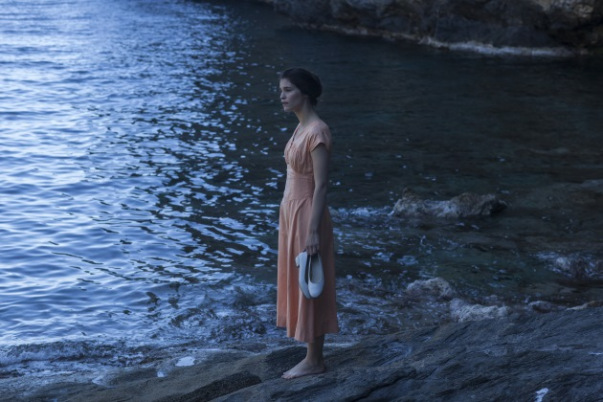
The narrative is straight-up melodrama, and has just enough forward momentum to hold our interest. I was more struck by the vivid sense of a place and a time Voulgaris conjures up — beaches and ruins, old houses, traditions and marriages to near strangers which may or may not grow warmer over the decades and long separations.
“Little England” is better at conjuring up this world than resolving its issues, but the actresses, like the women of Andros, earn our sympathy (“The shrew,” the sisters call their mother.) and hold our interest as the island itself makes us long for a “bucket list” visit.
MPA Rating: unrated, violence, smoking, profanity
Cast: Penelope Tsilika, Sofia Kokkali, Aneza Papadopoulo, Andreas Konstantinou, Maximos Moumouris and Vasilis Vasilakis
Credits: Directed by Pantelis Voulgaris, script by Ioanna Karystiani, adapted from her novel. A Corinth Films release on Film Movement.
That minx Kristin Davis. Just when you think she’s settling into being the Hallmark Channel and Netflix’s middle-aged Christmas Movie Queen (“A Heavenly Christmas,” “Holiday in the Wild,” “A Knight Before Christmas”) she goes all SHOWtime on us.
Ok, maybe not the full Showtime. But certainly more “Sex and the City” than “A Lifetime Original Movie” — racy, sexual, violent.
“Deadly Illusions” is an overwrought, over-sexed potboiler about a novelist with writer’s block whose new nanny seems to be the answer to her childcare dilemma, and her fervid, possibly fictional over-the-top dreams.
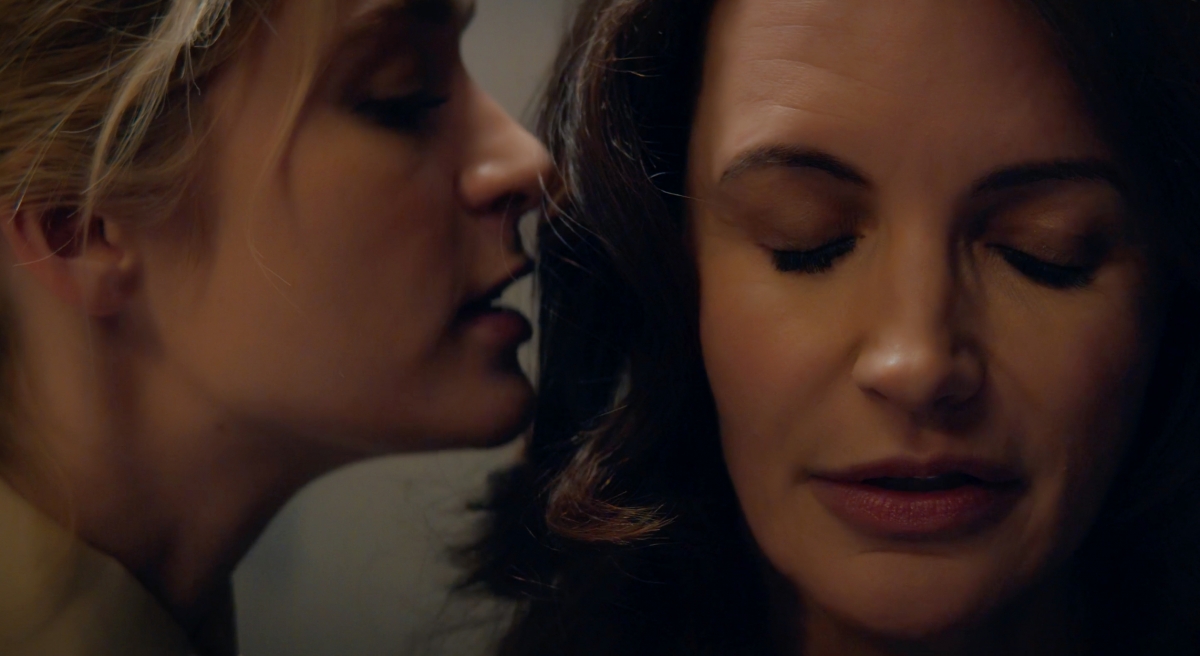
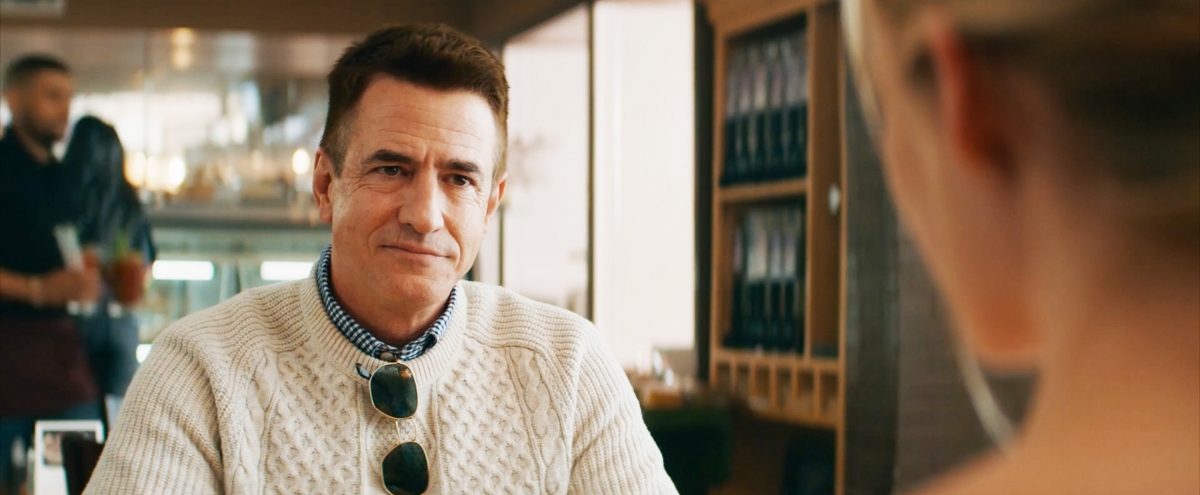
For Mary (Davis), Grace (Greer Grammer, you-know-who’s daughter) goes from “exactly what you need to get you through” this last book, all “I have nothing to worry about with her,” to someone who ingratiates herself with her two kids and may be seducing her husband (Dermot Mulroney) and Mary as well.
Or is it all in her book-planning/novel-writing, lost-in-her-paranoid imagination head?
Shanola Hampton plays the best friend who urges Mary to hire a nanny, and the one who sounds the alarm of what might be going on with the pushy, eager-to-please blonde Mary puts on the payroll.
Writer-director Anna Elizabeth James lurches between hokey predictability and just plain bizarre scenes as she staggers towards a finale that never looks anything but “inevitable.”
The instant bonding between harried writer who needs “me time” to knock off a novel in a popular series is just nuts.
First day on the job, and Mary is taking 20ish Grace bra shopping? I mean, isn’t that a second week on the job ritual? So confused.
Moments like that aren’t passed off as research, or even clumsily-handled “fantasy.” Sex and seduction scenes, showers and swimsuits by the pool? They’re uhhh PLOT points, right?
Screenwriting isn’t as easy as some make it look, and this script, which dives into an over-explained third act and a hilariously over-the-top finale, is just awful.
A careful reading of our writer-director’s resume reveals that she usually gets “story” credits, not “Deadly Illusions” needed help that James did not get.
Anything that rescues Kristin Davis from Christmas romance movie hell can’t be all bad. But “Deadly Illusions” comes too darned close.
MPA Rating: R for sexual content/nudity, some bloody violence and language
Cast: Kristin Davis, Greer Grammer, Dermot Mulroney and Shanola Hampton
Credits: Scripted and directed by Anna Elizabeth James. A Voltage film on Netflix.
I’m not usually a fan of horror anthologies. Getting a consistent style, tone and general quality can be tricky when you’re dealing with egos and nobody is truly “in charge” to enforce standards.
Lucky for me that my aversion to the genre has never sunk to the level of a “fear.” Because nobody’s come up with a name for such a phobia yet.
“Phobias” is an anthology of five tales, tied together by a linking story, written and directed by former child (and “When a Stranger Calls”) star Camilla Belle, actress/director Jess Varley, Joe Sill (“Stray”), Chris von Hoffmann and Maritte Lee Go. And although uneven in chills, it’s a cohesive, consistent in tone and generally interesting collection of tales built around obscure “phobias.”
There’s “Robophobia,” starring Leonardo Nam as a bullied programmer contacted — online — by some AI entity which longs “to be a part of your world,” and use its access to data and “the grid” to “help” our hero deal with abusive neighbors, street thugs and the like. Sill directed this opening story, which has a couple of hair-raising moments.
An unidentified online presence that knows your name, what you’re wearing, what your neighbors are like, that you take care of your invalid father, and your BANK balance?
Maritte Lee Go’s “Vehophobia” shows us a young woman (Hannah Mae Lee) whose boyfriend just dumped her, and the murderous reason why, and why her car is suddenly acting up on her.
Belle’s “Hoplophobia” explores the PTSD of a single-mom cop who accidentally killed a kid, von Hoffman’s intriguing story “Ephebiphobia” puts a middle school teacher at the mercy of children who figure she’s wronged them and Varley’s gory “Atelophobia” gives us singer/actress Macy Gray as a perfectionist architect interested in giving herself a few structural and cosmetic “renovations.”
The connecting story is generic in the extreme. And none of the individual segments is developed deeply enough to show us the full feature on that one chapter that might have been. Well, maybe “Robophobia” and “Ephebiphobia” do.
Some of the script “problem solving” is effects-driven and lazy. We don’t need a psychotronic manifestation of an entity for the world wide web to feel threatening. We see the segment titles, but your average viewer isn’t going to know what this or that “phobia” is, and the segments are more vaguely connected to that fear than is readily apparent.
Did they mean for viewers to watch this on TV, pulling out their phones to look up “definitions?”
On the whole, though, this segmented movie isn’t bad. Still not a big fan of the genre, but “Phobias” works as often as not, and that’s saying something.
MPA Rating: R for violence including some disturbing material, language throughout and some sexual references
Cast: Leonardo Nam, Hannah Mae Lee, Martina García, Ross Patridge and Macy Gray
Credits: Scripted and directed by Camilla Belle, Maritte Lee Go, Chris von Hoffmann, Joe Sill, Jess Varley. A Vertical release.
“Food Club” is a Danish tale of downcast ladies of a certain age who leave staid Denmark for a foodie holiday in sunny Italy for a taste of “la dolce vita.”
Thin on laughs and light on life lessons, it is as edgy and “out there” as its title. Even the setting lacks the “exotic” of “The Best Exotic Marigold Hotel,” with Italy too long the place of escape for hidebound northern Europeans looking for a taste of “Enchanted April.”
Marie, Vajna and Berling have been friends since their “seize the day” teens. Now pushing 70, they’re having trouble tearing off the time for their annual get togethers.
Vajna (Kirsten Lehfeldt) is a matronly retired school teacher, still sipping wine by her late husband’s grave years after his death.
Berling (Stina Ekblad) doesn’t “dress her age,” or act it. That puts a strain in her relationship with her daughter, who’d just once like a “traditional Christmas” meal at the house of the woman who refuses to let her kid call her “Mom” or her grandkids call her “Nana.”
But Marie (Karoline Hamm) is the impetus for our story. She’s always “too busy” for their get-togethers, having given over her life to her family, her husband and the accounting firm they run together. When Henrik (Peter Hesse Overgaard) rolls his eyes at the holiday trip their children give them for Christmas, we can see it coming.
“Marie, we need to talk,” (in Danish with English subtitles).
He’s taken up with a younger woman and she is humiliated. Maybe Mrs. “Too Busy” will take that food, wine and sun vacation. Maybe she can talk Vajna and Berling into joining her.
They soon find themselves in a vintage Italian convertible in Puglia, the less expensive, less-filmed (no Clooney lakeside villas here) region on the “boot” of the country. Alessandro (Michele Venitucci) will be their host and guide through the traditional foods, wines and olive oils that will change their cooking and maybe their lives.
Veteran Danish TV director Barbara Topsøe-Rothenborg and screenwriter Anne-Marie Olesen surround our trio with “types” — the annoying, over-traveled, gluten-averse younger “foodies” who drop the line “at your age” at every opportunity, and the relatively younger single man (Troels Lyby) that the ladies “compete” for.
Each is due her own epiphany about what’s keeping her from living her “best life.” Those insights are as novel as “moving on” or finally mastering the ability to taste the difference in Italian olive oils.
The laughs are supposed to come from the idea that one likes a little pot, here and there, and never leaves home without her vibrator, and the others get into her salty, f-bomb dropping “DTF” frame of mind as they try to win over a man. No, there’s no need to identify who partakes in what, as the script is that predictable.
The best advice, no doubt ignored as this film was being conceived, is “air for the tone and message of ‘Italian for Beginners,'” Lone Scherfig’s minor classic of this “Danes stop being melancholy” genre of 2000. They didn’t have to remake it, copy it or pay homage to it. They just needed to watch it, see how it works and set their bar higher in tailoring this picture for an older audience.
“Food Club” isn’t offensive, cumbersome or bad, exactly. It just lacks the novelty and spark of life it needs to be “exotic” and romantic. There’s nothing new or even charming, at this point, in rounding up older actors and putting them in a pretty place, showing them a lot of delectable dishes and showing us how much they enjoy them.
Ready to head down the rabbit hole of the unsolved murders of Notorious B.I.G. and Tupac Shakur? Well, so am I.
Let the author of a book that investigated the crime,”LAbyrinth,” and the director of “The Lincoln Lawyer” take us into a “J.F.K./Kill the Messenger” deep dive into these cases and “theories” on what happened, and who caused it.
They were wildly famous people murdered in front of witnesses in two jurisdictions with a big LAPD connection to them both, especially the killing of Christopher “Biggie” Wallace in downtown Los Angeles in 1997.
“City of Lies” is another lone-investigator-pursues-a-truth-others-don’t-want-to-see narrative, this one built around an LAPD detective, Randall Poole (Johnny Depp) and a reporter, Jack Jackson (Forest Whitaker) digging into this “cold case” decades after the killings went down. Jackson is based on investigative reporter Randall Sullivan, who collaborated with Poole in writing “LAbyrinthe.”
Director Brad Furman starts with a peripheral crime set-up to make us believe one thing, but which unravels the larger tale as we see it from another angle. That’s kind of how the entire film plays as well, a lot of info, some of it misdirecting our attention.
He lets his film debunk the “Biggie put out a hit on Tupac” myth — again — and concentrates on the killing of Christopher Wallace.
We see the crime scene modeled in Matchbox cars and meet the faces of the the byzantine world of off-duty cops aligned with Death Row Records or entangled in the Rampart corruption (and worse) scandal.
Here it is, 24 years later, and we don’t know why this case/these cases were never solved, don’t know whether Los Angeles police officers are implicated and hear only “I can’t comment on an open investigation” from that circle-the-wagons department, a dodge even Joseph Heller (“Catch-22”) would admire.
But as the film carries out a public service, renewing interest in shamefully unsolved crimes, as we hear the mantra “A detective says ‘I don’t know until I can prove it,'” and as the cast of characters grows even as interest in the case wanes, “City of Lies” loses its way as only a story without a satisfactory ending can.
An opening road rage incident seems to point to an armed, undercover cop (Shea Whigham in full redneck mode) gunning down a fellow officer (Amin Joseph), also undercover, and uses his “team” to cover up the crime.
But Officer Gaines (Joseph) was notorious in his own right, and driving a vehicle connected to Suge Knight’s record-label-as-street-gang, Death Row.
And that’s how Det. Poole gets sucked into “the labyrinth,” asking questions, collating stories, stumbling into this or that “undercover” law enforcement officer doing this, or that “off-duty” cop up to no good in some other regard.
Whitaker’s reporter shows up 18 years after the crime to badger the now-retired and reluctant Poole into downloading everything he learned in the case, which points us away from the “record label beef” that was quickly attached to the murders, and towards renegade police, Fruit of Islam “security” folk, Suge Knight and the uncomfortable post-OJ/post-Rodney King LAPD facing the spectacle of “white cops accusing Black cops” in two high profile murders.
The performances are solid, and the early scenes — recreating the crimes, etc. — are fascinating at a documentary level. Setting up the context is useful, a PD under a cloud and determined to avoid race riots that might return if dirty cops were in on all this.
But the rabbit hole closed in for me about an hour in. One too many “informants,” two or three too many police (Michael Pare and Toby Huss are cast as a couple of them), the bizarre media entity that this Jack Jackson is allegedly reporting for make the movie a spider’s web of competing, confusing threads.
And Depp’s “I’m obsessed with the truth” crusading detective, disillusioned with the idea of righteous “brother officers,” takes on a whiff of prosecutor Jim Garrison’s deluded, self-righteous crusade at finding the “conspiracy” that murdered Kennedy in “J.F.K.”
Yes, we can believe Poole’s “The only cases like this (high profile) that aren’t solved is because the police don’t want” to look, or have others look, at that solution. You don’t have to be downwind to think this whole affair smells to high heaven.
But you can’t just throw a lot of characters and facts and suspicious connections and theories at the viewer and have us made sense of it for you.
MPA Rating: R for language throughout, some violence and drug use
Cast: Johnny Deppy, Forest Whitaker, Shea Whigham, Xander Berkeley, Michael Pare, Toby Huss
Credits: Directed by Brad Furman, script by Christian Contreras, based on a book by Randall Sullivan. A Saban Films release.
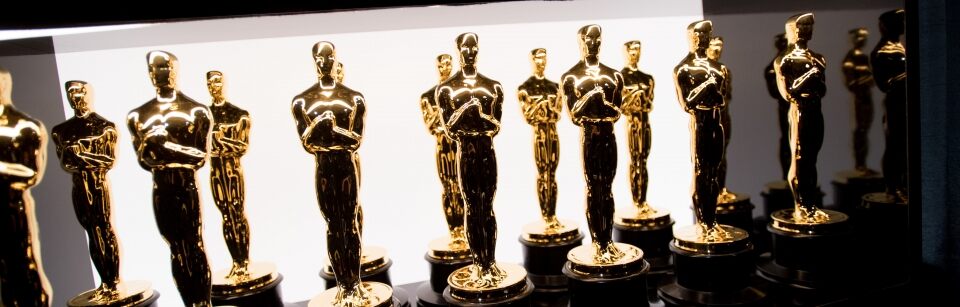
“Mank” made a splash, “News of the World” not so much.
“One Night in Miami” barely made a stir, Spike Lee’s popular buzzed bust “Da Five Bloods” was a no-show, almost completely a no-show.
“Mank,” which barely merited a mention earlier this awards season, came up with a whopping 10 nominations. Meh.
Nothing much for “emma.” nothing at all for “The Personal History of David Copperfield,” as stodgy old Brit lit is now officially “out.” I guess. Pity.
“The United States v. Billie Holiday” scored an acting nomination for Audra Day. And that’s pretty much it.
A whopping 35 nominations went to Netflix, 12 more to Amazon. Apple got it’s first ever, for the animated “Wolfwalkers” and “Greyhound” (sound).
Not a terrible field, considering some of the international contenders were from 2019, release slates were wrecked and nobody went out to the movies last year.
Weakest film to do well? “One Night in Miami.” Best film nearly shut out? “News of the World,” along with “emma.” and Mr. Copperfield.
Asian actors, women directors, African American (and Afro-British) actors and actresses? A VERY diverse Oscar night is in store.
Your best supporting actress contenders…
Maria Bakalova – “Borat Subsequent Moviefilm” Glenn Close – “Hillbilly Elegy” Olivia Colman – “The Father Amanda Seyfried – “Mank” Yuh-Hung Youn – “Minari”
If Hollywood is EVER going to honor Glenn Close, this is her shot. Crappy memoir, annoying Netflix movie, but damn she’s good in it. Colman, Seyfried should be contenders, Yuh-Hung Youn has a good shot, VERY good. Bakalova could easily happen and would be a crying shame, but everybody loves what she did to Rudy.
Best supporting actor contenders?
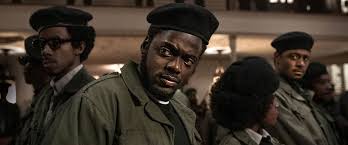
Sacha Baron Cohen – “The Trial of the Chicago 7” Daniel Kaluuya – “Judas and the Black Messiah” Leslie Odom Jr. – “One Night In Miami” Paul Raci – “Sound of Metal” LaKeith Stanfield – “Judas and the Black Messiah”
I barely recall Paul Raci’s work in “Sound of Metal,” Kaluuya should be the favorite, but he has to compete with LaKeith Stanfield in the same category. Unfortunate. Cohen could win this. Odom made little impression working with a preachy, starchy script.
Best actors?
Riz Ahmed – “Sound of Metal” Chadwick Boseman – “Ma Rainey’s Black Bottom” Anthony Hopkins – “The Father” Gary Oldman – “Mank” Steven Yeun – “Minari”
So they made Boseman the favorite in this field, when they could have nominated him as a supporting player and put Kaluuya here and made DK of “Black Messiah” the favorite.
Does Riz have a shot? Hopkins dazzled, Oldman underwhelmed and Yeun was OK in a movie that’s got a lot of cultural currency, but seems a tad over-hyped at this point.
No Mads Mikkelson for “Another Round?” Peasants. No Hanks for “News of the World” either. Oh well.
Best Actress
Viola Davis – “Ma Rainey’s Black Bottom” Andra Day – “The United States Vs. Billie Holiday” Vanessa Kirby – “Pieces of a Woman” Frances McDormand – “Nomadland” Carey Mulligan – “Promising Young Woman”
If this doesn’t go to McDormand, it’s anybody’s call. Day, a standout in a middling film, is the longest shot. Kirby was good, Mulligan much better. Viola has made “dazzling” and “real” trademarks. She gave the best performance in this field, I say.
Your Best Picture field is…
“Judas and the Black Messiah” — “The Father” — “The Trial of the Chicago Seven” — “Mank” — “The Sound of Metal” — “Minari” — “Promising Young Woman” — and the favorite “Nomadland.”
No “Ma Rainey’s Black Bottom?” No “News of the World?” Do “best directors direct best pictures?” Why not put “Another Round” in this field? Come on, now.
At least it’s up for Best International feature.
“Soul” got some “best picture” buzz, which was…misguided.
Best International Feature?
“Another Round” “Better Days” “Collective” “The Man Who Sold His Skin” “Quo Vadis, Aida?”
It’s good that they nominated “Collective” here and for best documentary. Because “Crip Camp” seems like the best doc favorite.
Best Documentary
“Collective” “Crip Camp” “The Mole Agent” “My Octopus Teacher” “Time”
Best directors?
Thomas Vinterberg for “Another Round,” Lee Isaac Chung for “Minari,” David Fincher for “Mank,” Chloe Chao for “Nomadland,” Emerald Fennell for “Promising Young Woman.”
No George Wolfe for “Ma Rainey’s Black Bottom?” Two women in that field make this a landmark year for inclusion. With the buzz she was getting, I thought Regina King was in.
Aaron Sorkin didn’t get a “Chicago 7” nomination either.
.
The Best Animated Feature field this year is a tad bloated. I love “Sean the Sheep” as much as anybody not from New Zealand or “Montaaaaaaaaaahhhhna.” But come on.
“Sean the Sheep: Farmageddon.” “Onward,” (UGH) “Over the Moon,” “Soul,” “Wolfwalkers”
If it was up to me, “Wolfwalkers” would get it. “Soul” will, as it’s not up to me.
Best Adapted Screenplay
“Borat Subsequent Moviefilm” “The Father” “Nomadland” “One Night In Miami” “The White Tiger”
“The White Tiger” Netflix movie was an interesting choice. I think the stagey (mediocre theater) script for “One Night in Miami” was an obstacle Regina King and her cast never quite overcame, but OK.
“Ma Rainey” was FAR better source material, and a fine adaptation. This isn’t just an Oscar “snub.” It’s a blunder.
Best Original Screenplay
Judas and the Black Messiah “Minari” “Promising Young Woman” “Sound of Metal” “The Trial of the Chicago 7”
A very good field in this category, “Mank” is conspicuously missing only in the sense that Fincher was directing his Dad’s long unfilmed screenplay. Which wasn’t one of the year’s best, TBH.
Best Cinematography
Judas and the Black Messiah Mank News of the World Nomadland The Trial of the Chicago 7
A top flight field. I found the digital B&W of “Mank” washed out. “Nomadland” should win, but “Judas” and “News” were striking tooling, too.
Best Costume Design
Emma. Ma Rainey’s Black Bottom Mank Mulan Pinocchio
Best Film Editing
The Father Nomadland Promising Young Woman Sound of Metal The Trial of the Chicago 7
Best Makeup and Hairstyling
“Emma.” Hillbilly Elegy Ma Rainey’s Black Bottom Mank Pinocchio
Best Original Score
“Da 5 Bloods” Mank Minari News of the World Soul
Best Original Song
“Fight for You” – Judas and the Black Messiah “Hear My Voice – The Trial of the Chicago 7 “Husavik” – Eurovision “Io si (Seen)” – The Life I Had “Speak Now” – One Night In Miami
Best Production Design
The Father Ma Rainey’s Black Bottom Mank News of the World Tenet
Best Sound
Greyhound Mank News of the World Soul Sound of Metal
Best Visual Effects
Love and Monsters The Midnight Sky Mulan The One and Only Ivan Tenet
Best Documentary (Short Subject)
“Colette” “A Concerto Is A Conversation” “Do Not Split” “Hunger Ward” “A Love Song for Latasha”
Best Short Film (Animated)
“Burrow” “Genius Loci” “If Anything Happens I Love You “Opera” “Yes-People”
Best Short Film (Live Action)
“Feeling Through” “The Letter Room” The Present” “Two Distant Strangers” “White Eye”
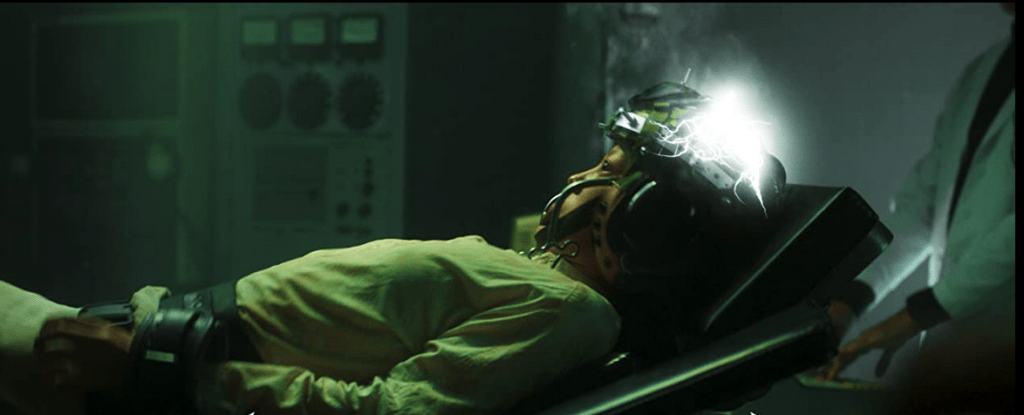
It begins with mercenaries massacring a village in the Republic of Georgia, because they won’t accept a gas pipeline scheduled to pass through it. It prematurely climaxes with an attack on a Eurostar Chunnel train, passengers popped without pity by smirking “contractor” villains.
And at every turn, mercs and the military folk commissioned via “Red Notice” to bring them down — by the same British government that hired the Black Swan “contractors” in the first place — make wisecracks and “switch off” to get on with their lives.
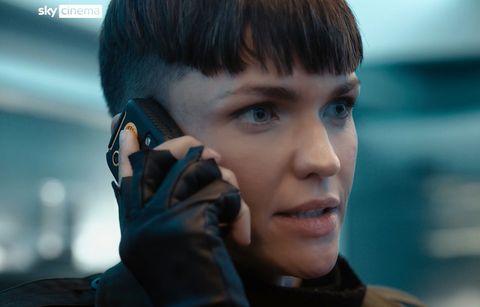
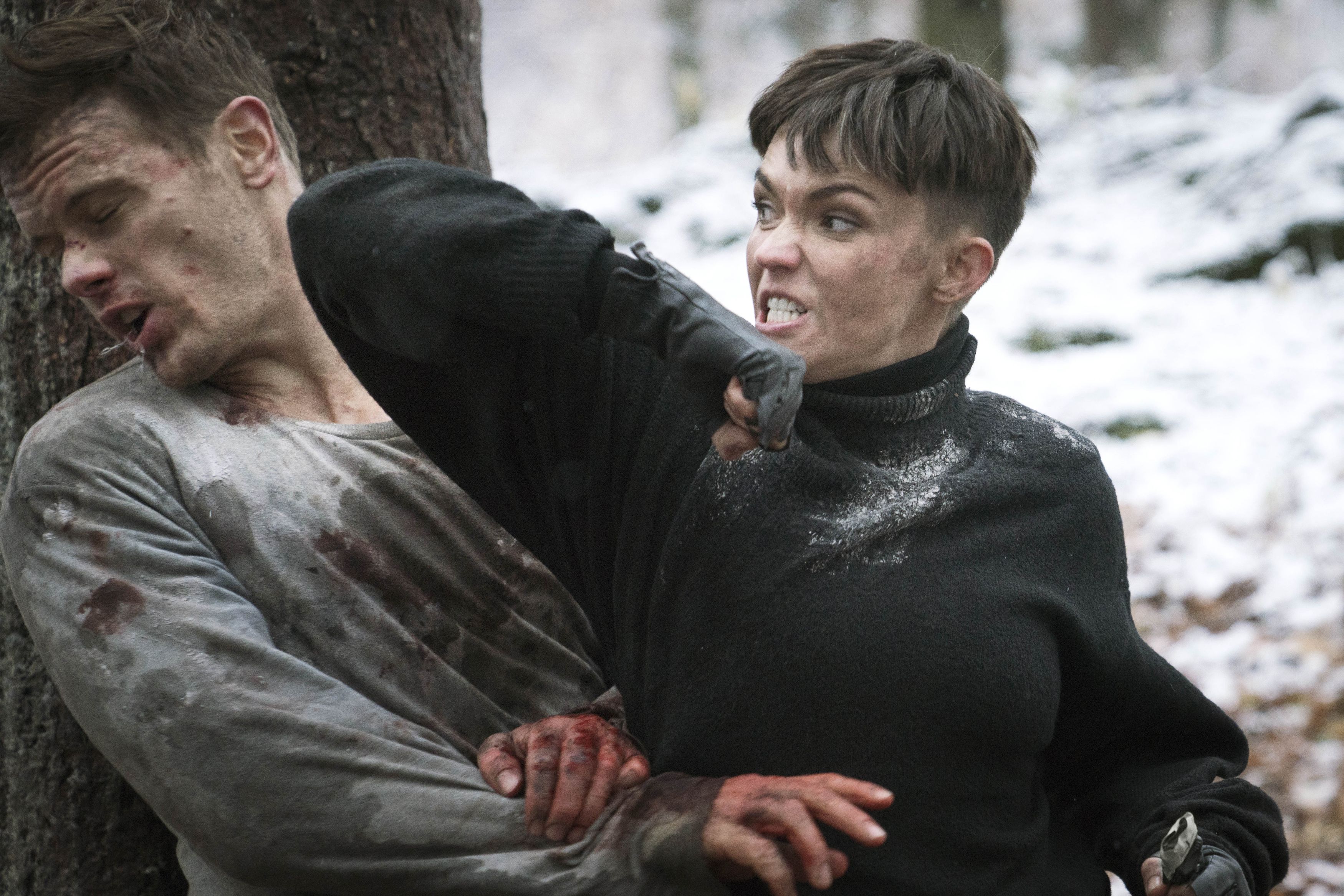
“SAS: Red Notice” is bad by design, stupid in execution and soulless in every important and unimportant way. A terrible script renders respectable actors (Tom Wilkinson, Andy Serkis) terrible, and limited “action” stars (Ruby Rose) unwatchably awful.
It’s no wonder Netflix changed the title to “Rise of the Black Swan” when they got it. The “brand” was tarnished.
The pithy “Die Hard Lite” punchlines don’t help.
“Was it something I said?”
Wilkinson runs the Black Swans as a family business. Ironically named daughter Grace (Rose) is his heir apparent, chosen over his more lunkish son (Owain Yeoman).
A cellphone video of the massacre gets out, the news that they’ll all be arrested (fat chance, “silenced”) is announced on TV long before the raid on their suburban London estate is planned.
Naturally, villains get away. Not to worry. “Posh” Tom Buckingham (Sam Heughan), a commando with an estate of his own, got in his share of kills. He’ll sweep reluctant doctor-girlfriend Sophia (Hannah John-Kamen) off to Paris, let the police and border control folks round the rest up.
How’ll the mismatched couple travel? Train, of course. Before Grace, who sheds the clever disguise that got her on board, can say “There’s a player in the battle space. He’s armed and trained,” the slaughter begins, with passengers murdered left and right as if all on board realize this is a suicide mission.
The train attack details are interesting enough, if you’ve ever wondered how somebody might attempt something like that (surely some groups have given it a lot of thought).
But the action beats are half-hearted, the plot “twists” unworthy of that label and situations and dialogue ludicrous on an English-as-Second-Language level.
“We’re a lot alike,” is a given, something the villainess is sure to say to Tom. As is, “How many people have you killed?”
A favorite moment? Sophie instantly over-shares with a stranger the next seat over, pre-attack.
“He takes lives for a living,” she cracks. “I save them.”
Andy Serkis plays a ruthless SAS leader who knows “politicians come and go,” that he’s the only constant.
“I’m still going,” he purrs to a captive. “You’re about to stop.”
It’s a messy blood-bath with a “Die Hard” sequel death-count, no real heroes and no one to root for. The best one can say for the cast is I hope their checks cleared.
Veteran TV (“Twelve Monkeys,” some “Walking Dead” spinoff) director Magnus Martens, and screenwriter (“Soul Assassin”) Laurence Malkin?
I hope your checks bounced.
MPA Rating: R for strong/bloody violence and language throughout
Cast: Ruby Rose, Sam Heughan, Hannah John-Kamen, Tom Hopper, Andy Serkis and Tom Wilkinson.
Credits: Directed by Magnus Martens, script by Laurence Malkin, based on a novel by Andy McNab. A Vertical release.
“Happily” is a dark fantasy parable about marriage with a good cast, a little edge but not nearly enough wit or clever twists to come off.
It’s about that “perfect” couple that drives all their friends nuts and the idea that “these people are (secretly) as miserable as everybody else.”
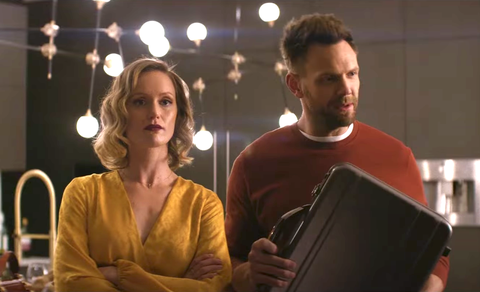
Joel McHale and Kerry Bishé are that couple, the folks given to exchanging randy looks and secret gropes during dinner as restaurants, and locking themselves in their hosts’ bathroom for a little hook-up during dinner parties.
And that’s just in public. The fact that Janet and Tom have been married for 14 years, that they never let an inconsiderate moment pass between them without apologizing, and that their romance has lost none of its bloom drives friends like Karen (Natalie Zea) and Val (Paul Scheer) nuts.
“Everyone hates you!” “You’re f—–g MARTIANS!”
It’s why they’re uninvited to a couples weekend with their “group.” But even though it gives Tom and Janet pause, that’s all it does. They’re back to roses on the bed and candlelit coitus in a flash, convinced them that they’re not the “freaks” here.
When the strange man (Stephen Root, born to be strange) shows up at their door, assures them that they’re outliers, the product of a design flaw in the whole “law of diminishing returns” married sex life thing. They need to take these injections to become like everyone else, and they have no choice. But they do, and ends with them Googling “How to dispose of a dead body.”
They figure that has come back to haunt them when they’re re-invited to the couples weekend, that somebody coming to that weekend is behind all this and that maybe a “prank” got murderously out of hand.
Is it Janet and Val, their gay “friends” (Kirby Howell-Baptiste, Shannon Woodward), testy Patricia (Natalie Morales) and Donald (Jon Daly), or the chillingly engaged Richard (Breckin Meyer) and Gretel (Charlyne Yi)?
Writer-director BenDavid Grabinski sets us up for a darkly comic Agatha Christie mystery weekend, with intrigues and resentments, betrayals and peril, all packed into an AirBnB mansion with ten couples packed into it. He fails to deliver in almost every regard.
The cutting remarks rarely leave a mark, the mystery is unraveled with little care, and takes on the “Twilight Zone” air of “The Box,” which didn’t work either.
And nobody’s funny. Veteran TV funnyman McHale is given little funny to play or say, and that goes for everybody else. Only a query of the withdrawn, deadpan Gretel offers so much as a chuckle.
“What’s your deal?”
“Extremely high.”
The always-deadpan Root may set the tone, but aside from “tone,” there’s nothing to “Happily.”
MPA Rating: R for sexual content, language throughout and brief violence
Cast: Kerry Bishé, Joel McHale, Natalie Zea, Natalie Morales, Breckin Meyer, Paul Scheer, Kirby Howell-Baptiste, Shannon Woodward, Jon Daly, Charlyne Yi and Stephen Root
Credits: Scripted and directed by BenDavid Grabinski. A Saban Films release.