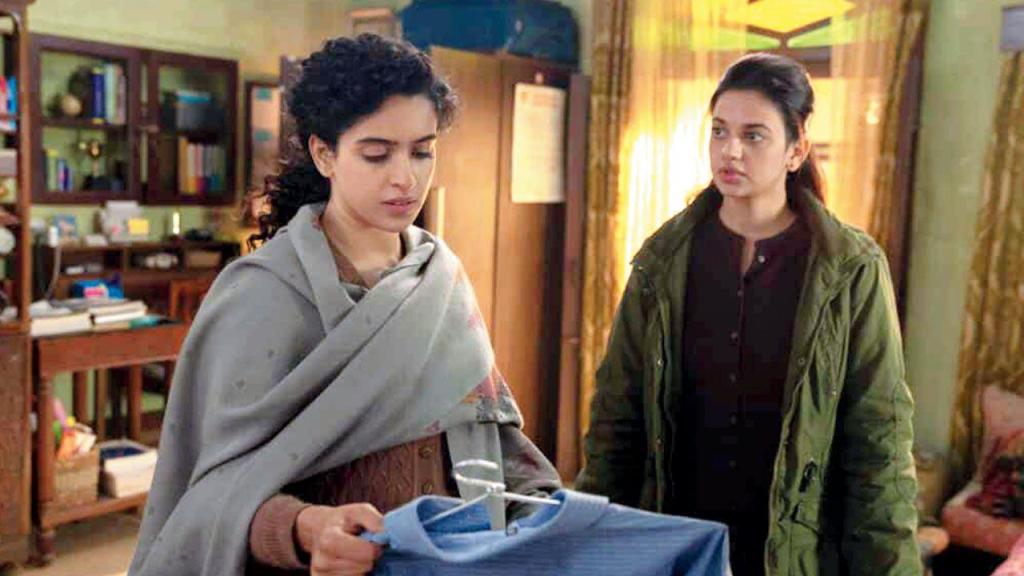
Movie Preview: A mockumentary about a screwball “Marathon” in the desert

This one has a little promise, and opens July 6.

Posted in Reviews, previews, profiles and movie news | Comments Off on Movie Preview: A mockumentary about a screwball “Marathon” in the desert

Netflixable? Another thriller titled “Awake,” another snooze

A thriller with “realistic” zombies is the smart premise behind “Awake.” If you want to see human beings turn into the walking dead, take away their sleep.

Exhaustion heaped on top of panic, the shakes, impaired judgment teetering into psychosis, accidents, the works — Who needs “BRAINS! Must have BRAINS?”

That promising premise turns into a sluggish, sleepwalk of a thriller with a little pathos but entirely too little urgency to pull us in.


Gina Rodriguez stars as an already sleep-deprived ex-junkie, a widow and military vet working night security at a hospital where she steals drugs — sleeping pills, etc. — for re-sale. Jill has lost custody of her kids to her disapproving mother-in-law (Frances Fisher) when “the event” happens.

In a flash, electronic devices fail, the grid collapses and everything “with chips in it” quits — jetliners to Jeeps.

Jill grabs ten-year-old Matilda (Ariana Greenblatt) and teen Noah (Lucius Hoyos) and takes off, but not before noticing that Matilda — unlike everybody else — is able to grab a little shut-eye. And not before figuring out that the “military” she used to work for, including the sleep-deprivation torture expert psychotherapist Dr. Murphy (Jennifer Jason Leigh), want Matilda to “study” so that they can find a cure.

The family’s odyssey takes them through a zombieland of murderous but “old car expert” (the only ones that’ll run) rednecks and marauding bands of goons, of mass prison escapes and elderly nudists staggering towards the sun.

But like zombies in every other movie about the dead-on-their-feet, “Awake” lurches along, an intense moment here, a long, dull and static pause that drains the narrative of urgency and kills the quest’s momentum there.

Barry Pepper impresses as a preacher whose flock goes “SACRIFICE her!” entirely too-quickly, weeping “This is not who we are!” after a more-trigger-happy-than-usual cop shoots somebody. Maybe this is “who we are?”

Finn Jones plays a scientist who hastily explains the pathology of sleep deprivation, what the body and mind go through before lack of sleep kills you.

And Shamier Anderson makes an empathetic ex-con one of the more interesting characters they stumble into on their journey.

Rodriguez has to carry the picture, but hamstrung by the “reality” of the role, she only plays two notes — exhausted and manic.

The cleverest thing here is the initial conceit, that mass sleeplessness is the REAL “Night of the Living Dead.” And the dumbest has to be Jill’s sudden, poor-decision-making driven efforts to teach her ten year-old everything she needs to survive for the rest of her life, as the rest of humanity may very well go extinct — how to use a library without computers, shooting, driving, siphoning gas, etc.

Rodriguez shows us little in those scenes or this role, because no one involved realized that sleepwalking through a performance is the worst way to win over your audience.

MPA Rating: TV-MA, violence, animal medical experiments, profanity

Cast: Gina Rodriguez, Ariana Greenblatt, Lucius Hoyos, Jennifer Jason Leigh, Frances Fisher, Finn Jones, Gil Bellows and Barry Pepper.

Credits: Directed by MarckRasso, script by Joseph Rasso and Mark Rosso. A Netflix release.

Running time: 1:37

Posted in Reviews, previews, profiles and movie news | Comments Off on Netflixable? Another thriller titled “Awake,” another snooze

Movie Preview: A Red Band Trailer for a Megan Fox Movie? “Midnight in the Sawgrass”

This comes out on late July and co-stars Bruce Willis and Emile Hirsch.

Posted in Reviews, previews, profiles and movie news | Comments Off on Movie Preview: A Red Band Trailer for a Megan Fox Movie? “Midnight in the Sawgrass”

Movie Review: Saudi Woman takes on the system as “The Perfect Candidate”

Maryam has decided to run for office, a position on the municipal council in her suburban town. But her widowed father isn’t having it. And he’s trotting out his catch-phrase for everything to do with her campaigning for this office.

“Think of my BLOOD pressure!”

“I’ve checked your blood pressure hundreds of times,” she snaps back. “It’s FINE.”

When you’re arguing with a daughter with “MD” after her name, you’d better bring something stronger than that. Especially if you’re taking on “The Perfect Candidate.” Even if you’re the patriarch in one of the most patriarchal societies in the world — Saudi Arabia.

This understated dramedy is about an ambitious young woman who finds herself running and seriously rocking the boat, almost entirely by accident. Avoiding melodrama and the well-worn tropes of “woman taking on a man’s world” stories, director Haifaa Al-Mansour and co-writer Brad Niemann immerse us in a culture that might be evolving from a Kafkaesque nightmare into a milder Kafkaesque bad dream. But it isn’t happening fast enough for people like our young heroine.

We commute with Maryam, played with a dash of fire by Mila Al Zahrani, as she copes with the endless work-arounds a woman faces in hidebound Islamic fundamentalist Saudi culture. A modern state with the theocratic bureaucracy of a Medieval one, she must comply with all these restrictions on her dress and her movements — a hijab, with the full-face covering of a single-woman’s niqab — changing into sneakers and lab coat at the only clinic in her town.

At least she’s allowed to drive now, we think. But once at work, she has to deal with elderly men furious at being treated by a woman, and Maryam isn’t above snapping back at the old sexists.

The road to that clinic is a rutted quagmire which interferes with getting patients in the door quickly, annoying her to no end. Maryam would like to get that fixed, but is easily dismissed by the men in charge. She’d like to escape to a real hospital in Riyadh. And it’s the string of appalling roadblocks The Kingdom throws up in front of her as she tries to do just that which puts her on the ballot.

A flight to a conference where she can network her way into Riyadh won’t let her board as her single woman’s travel papers are not in order. She’s a grown woman with a medical degree who needs her father’s permission to renew them and fly, and he (Khalid Abdulraheem) is off with his traditional Saudi wedding band, on tour and not big on answering his phone.

The portrait of Saudi inefficiency, dogmatic “the system won’t let me” bureaucrats and official/religious/cultural control of women is more infuriating than chilling here. The deadlines she is fighting include the multiple daily interruptions for state-sanctioned prayers. How does anything get done?

Maryam’s sister Selma (Dae Al Hilali) is a wedding photographer, and through Maryam’s frantic visit to her about the travel papers we see the gender segregation of weddings, with the women entertained by singer Khadeeja (Khadeeja Mua’th), able to laugh and sing along and be themselves, until the men enter the room.

Thus, the mistaken “filing” for council, a mistake that Maryam runs with as she, with the reluctant help of videographer/sister Selma and the pouty opposition of teen sister Sara (Nora Al Awad) and a lot of internet tutorials on “how to run for office” (an unpolished rural Tennessean who wants to be governor is her exemplar), joins the political fray.

“The Perfect Candidate” crosses every expected bridge and hits a lot of the anticipated potholes such movies have always traversed. Sexist TV interviewer? Check. “Traditional” women bashing a female candidate for her “impudent” online ads, “showing herself off to men” after she’s gone to the extra trouble of hiding her eyes, too? Got it.

The film’s novelty is built into it. We have a most photogenic candidate unable to show her face to the public, a woman campaigning on a single issue that impacts men as much as women, but she is unable to address them directly “by law.”

The blowback, when it comes, is online-predictable and “powers that be” subtle.” And even the “I’ve had about enough of this” blasts of temper and the lump-in-the-throat moments that hints at “change” are preordained, if pleasantly so.

But Al Zahrani, making her screen debut, holds our interest by not holding her temper. Maryam is young enough to be impatient, traditional enough to play by the rules and realistic enough to see the futility of it all.

And yet, she persists. The Kingdom has no idea what’s coming.

MPA Rating: unrated

Cast: Mila Al Zahrani, Dae Al Hilali, Nora Al Awad, Tareq Al Khaldi and Khalid Abdulraheem

Credits: Directed by Haifaa Al-Mansour, script by Haifaa Al-Mansour, Brad Niemann. A Music Box release.

Running time: 1:44

Posted in Reviews, previews, profiles and movie news | Comments Off on Movie Review: Saudi Woman takes on the system as “The Perfect Candidate”

Movie Review: Mark Wahlberg’s fighting and recalling past lives in “Infinite”

So what sort of gonzo nonsense have Antoine Fuqua and Mark Wahlberg cooked up now?

Infinite” is about humans who wander the Earth, “gifted with a memory of all their past lives.” Wahlberg plays an “Infinite” who has forgotten his. Because of course he has.

It squares him up against Chiwetel Ejiofor, who shaves his head and grew a James Harden beard because that’s what all the best villains are wearing. He says things like “Impossible, impossible,” when staring at his foe, hanging onto the tsuka (“handle”) of a samurai sword we’ve seen him forge himself.

He’s hanging on to that tsuka because he’s jabbed the sword through the wing of a military transport jet and it’s all that’s keeping him from being blown off.

“Infinite” has all sorts of absurd “Bugs Bunny physics” like that, and big fights and epic car chases in vintage Ferraris, Aston Martins and the like. Because it you remember all your past lives, you’re going to remember the coolest car you ever drove, right?

Here’s the money scene for me, one I’m assuming screenwriter Ian Shorr adapted from the novel, “The Reincarnationist Papers,” by D. Eric Mainkranz. The heavy, Bathhurst (Ejiofor) is about to interrogate this Evan fellow (Wahlberg) to determine if he’s his ancient foe, Treadway.

Bathurst vs. Treadway. Sounds like a British courtroom comedy, right?

Bathurst pulls out this collection of objects, a wine cork, a bullet casing, etc. “Which of these belongs to you?” If you’ve ever or read about the process of “identifying” a new Dali Lama, that’ll seem familiar. The reincarnated Lama will be the one who recognizes something he used to own. That’s a fact an author writing about reincarnation games would know.

Only here, Bathurst ups the ante. He adds a threat to the questioning. He loads a revolver with a single bullet, spins the cylinder, and pulls the trigger at Evan with every wrong answer. Maybe the next Dali Lama will face a similar game of Russian roulette.

“Infinite” is about a missing doomsday bomb called “The Egg,” which is “designed to kill every living thing on Earth.” As if anyone would want to use it. But apparently Bathurst does.

Before all this business about “Infinites” and their warring factions — “Believers vs. Nihilists,” a play of “The Big Lebowski’s” bowling league? — Evan thought he was just a “diagnosed schizophrenic with a history of violence.”

But he remembers things, things he just knew “how to do,” like turning iron into steel and forging it — “folding it 27 times” — into a sword.

Now he’s teamed with this tough, British “believer” (Sophie Cookson) who drags him hither and yon to try and figure out where “he” hid “the egg.” In a previous life.

Jason Mantzoukas of “The House” and “John Wick 3” and TV’s “Brooklyn-99” and “The Good Place” is “The Artisan,” a tech whiz/guru sort whom Mantzoukas turns into the guy having the most fun in this story.

He does that in every movie, and in a lot of animated TV shows as well. A LOT of them. Funny guy.

Wallis Day is here to give us that action pic moment when the tall, supermodel-thin blonde dons a black leotard and turtleneck and shows off her assassin skills. Before you can say “CAT FIGHT,” she and Cookson are mixing it up. It’s their destiny.

Evan? “Destiny has even more in store for you.”

Walhberg serves up some voice-over narration here which doesn’t sounds like him, an acting challenge he decided to trot out for a picture he had no idea would go streaming without a theatrical release.

It’s still an impressive looking movie, with grand stunts and some decent effects. And if Fuqua & Co. had taken a more askance view of this quintessentially goofy concept, they might have gotten an “Edge of Tomorrow” out of it, with Wahlberg and Ejiofor in on the joke.

They didn’t, opting for “gonzo nonsense” that’s as watchable as it is forgettable.

MPA Rating:  PG-13 for sequences of strong violence, some bloody images, strong language and brief drug use

Cast: Mark Wahlberg, Chiwetel Ejiofor, Sophie Cookson, Jason Mantzoukas, Rupert Friend, Toby Jones, Kae Alexander, Wallis Day

Credits: Directed by Antoine Fuqua, script by Ian Shorr, based on the novel “The Reincarnationist Papers” by D. Eric Mainkranz. A Paramount+ release.

Running time: 1:46

Posted in Reviews, previews, profiles and movie news | Comments Off on Movie Review: Mark Wahlberg’s fighting and recalling past lives in “Infinite”

Documentary Review: “Upheaval” lauds the life and career of Israel’s Menachem Begin

Upheaval: The Life and Journey of Menachem Begin” is an adoring profile of the combative right wing Israeli prime minister who shared the Nobel Peace Prize with Egyptian President Anwar Sadat for courageously negotiating the Camp David Accords, ending decades of Egyptian-Israeli conflict.

An army of Begin’s fans — Knesset members and colleagues from his cabinet to assorted sympathetic authors, journalists, conservative Israelis on the street old enough to remember his seven year rule, two Israeli ambassadors to the U.S., a couple of American diplomats, Begin’s personal secretary and U.S. Senator Joseph Lieberman all sing his praises and color in his personal story, showing us the Zionist struggle, which he began in Belarus in his youth, that shaped his life.

The film is straight-up hagiography. The closest “Upheaval” gets to a contrarian view of Begin’s militant, combative and eventually-scandalized career is the presence of Jordanian-born think-tank member Ghaith Al-Omari. Where are the critics, at home and abroad, who might lend balance and thus authority to this film?

It’s worth stating upfront that this is a film from the director of “The Yoni Netanyahu Story,” a 2012 film about the Entebbe Raid commando timed to fluff the image of Israel and its controversial and then-embattled, now-ex prime minister, Netanyahu’s brother Bibi.

Right Wing Israeli hagiographies are pretty much filmmaker Jonathan Gruber’s brand, and this echo-chamber portrait is much in keeping with that. Take it’s conclusions with a sack full of grains of salt.

Begin’s early life has been widely discussed, but it remains fascinating to take in. He was radicalized early, and his years of Zionist activism led the Soviets to throw him into a Gulag, only to release him to fight the Nazis in the Middle East during World War II. Begin emigrated to Palestine and fought the British instead, which probably didn’t bother the Russians that much.

He led the Jewish militant group Irgun, labeled a “terrorist organization,” which blew up British trains in Palestine and later the British headquarters of the protectorate, the King David Hotel, in an effort to force the British out so that the Jewish immigrants could declare an independent Israel. That’s his picture on a British wanted poster.

“Upheaval” paints an interesting picture of the “Jewish civil war” that nearly broke out as Begin set himself in opposition to other founding fathers of Israel like David Ben-Gurion in the late 1940s. It makes him come off as statesmanlike for not letting something he was about to cause happen.

After decades as leader of the opposition far right Likud Party, Begin became prime minister in 1977, and “Upheaval” shows the ways his seven year rule changed Israel’s shape and security and planted the seeds for strife that continues to this day.

Begin pushed the peace process with Egypt at a time when most Israelis were opposed to that. He spoke publicly about making one state where Jews and Arabs could co-exist. Then he ramped up Israeli settlement building in lands won in the 1967 Six Day War. Labeled as “honest” and “a mensch” by everybody testifying here, the viewer hears him playing semantics games — “We don’t use the word ‘annexation.’” And we see him and hear him start the ongoing Likud “settlements” talking point, citing the Bible as proof of “ownership” of the lands of historic Israel, Judea and Samaria. Begin was the Likud prime minister who normalized the party’s embrace of conservative religious sects and their far right politicians.

The de-facto result of this process of taking Palestinian land for Jewish settlers has another name in other parts of the world — “ethnic cleansing” — with the Israeli Defense Forces backing the settlers up. “Apartheid” has come up in international criticism of post-Begin Israeli governing.

Begin’s tolerance and acceptance of the Palestinian Arabs within the state is played-up in “Upheaval,” as is his championing of civil rights for such people when Likud was a minority party.

But more important to Begin was welcoming in Jews from Africa and the Middle East and mending fences between those populations. When he and his apologists here remark on his embrace of “multi-culturalism,” they’re too tone deaf to acknowledge that he always punctuated such declarations with “of the Jewish people.” Jewish ethnicity and Jewish culture were his obsessions.

I noted the film’s one contrary voice, mentioned above, in this chorus of adoration and endless rationalizations of everything controversial Begin said or did, the one expert who noted Begin’s “fascist” reputation, his fame built on “a lot of violence against Arabs.” I wanted to know who this was giving a more measured account of the man. Unlike every other of the scores of expert witnesses on camera in “Upheaval,” Ghaith Al-Omari isn’t identified until very late in the film.

Gruber starts the movie with a montage of news accounts of anti-Semitic attacks worldwide justified by their attackers as anti-Israeli, and that sets the film’s tone. He sentimentalizes a bellicose man famous for perfecting the “any means necessary” pre-emptive military/foreign policy by divorcing a violent world today from the violent “upheaval” that began the moment the word “Zionism” was coined, and the blowback today that still seems like shockwaves from the “upheaval” this “mensch” created.

There is interesting historical material and some cogent analysis of the man, his psychological makeup and career in “Upheaval.” But like Begin himself, any time something unsavory starts to emerge about himself, he would gush and gush about his wife. Gruber’s film plays that sentimentalizing trick, too, by slipping in such gushing here and there.

One thing Gruber either doesn’t realize or is loathe to embrace is that his films, focusing almost exclusively on people who share a view and an agenda he is pushing, have no authority.

Movies like “Upheaval” are more propaganda than history

MPA Rating: unrated, scenes of violence

Cast: Menachem Begin, Dr. Avi Shilon, Stuart Eizenstat, Joseph Lieberman, Ghaith Al-Omari, Yona Klimovitsky

Credits: Scripted and directed by Jonathan Gruber. An Abramorama release.

Running time: 1:27

Posted in Reviews, previews, profiles and movie news | Comments Off on Documentary Review: “Upheaval” lauds the life and career of Israel’s Menachem Begin

Movie Preview: Jessica Chastain has “The Eyes of Tammy Faye” — coming in Sept.

And who plays her sexually ambiguous preacher-husband, Jim Bakker? Andrew Garfield. On the nose casting!

Posted in Reviews, previews, profiles and movie news | Comments Off on Movie Preview: Jessica Chastain has “The Eyes of Tammy Faye” — coming in Sept.

Movie Review: Stuck in place “In the Heights”

Embracing, immersive and inclusive, the Tony winning “In the Heights,” the musical that launched Lin-Manuel Miranda as a phenomenon, comes to the screen with its Broadway charms more or less intact.

Jon M. Chu’s film has a little pathos and moments of rambunctious fun with big dance numbers staged on the streets and in the gigantic public swimming pool in the north Manhattan neighborhood, Washington Heights, that gives the story its name.

Chu, a veteran of the “Step Up” dance movie franchise before “Crazy Rich Asians” made him famous, emphasizes the tiny world the story encompasses, a tightknit Latin neighborhood where the Cubans, Dominicans and Puerto Ricans get along, sing along and fret over the simmering threats any such Manhattan community faces — power outages in the summer heat, gentrification and monied yuppies.

Usnavy (Anthony Ramos, terrific) is our storyteller and star, relating the tale of his old barrio to kids on a beach in what we take to be his native Dominican Republic. He ran a bodega “in the heights,” “stuck to this corner like a street light,” serving cafe con leche to his customers and keeping his teen cousin Sonny (Gregory Diaz IV) busy and in line.

He pines for salon star Vanessa (Melissa Barrera, impressive), which earns him a lot of teasing from Sonny and his car service driver/dispatcher pal Benny (Corey Hawkins, fun). Maybe if he picked up on her dream, to become a fashion designer, he’d have a shot.

That’s the subtext of “In the Heights,” dreams, “sueños.” “Little dreams” (“sueñitos”) are what everyone in The Heights has, of moving back home (Usnavy’s dad had a beachside pub named El Sueñito in the DR), “getting out” or of getting a daughter through Stanford.

That’s what car service owner Kevin Rosario (Jimmy Smits, superb) hopes for. But daughter Nina (Leslie Grace), “the smart one who made it out,” has come home with plans to leave school, which is draining Dad’s bank account and crushing her spirit. Benny was sweet on her, back in the day.

There’s a graffiti artist who gets on everybody’s nerves, a piragua vendor (Lin-Manuel Miranda, perfect), peddling shaved ice snowcones, a full service beauty salon presided over by the brassy Daniela (Daphne Rubin-Vega, a scene stealer) and the old Cuban woman everybody calls Abuela (grandmother) Claudia (Olga Merediz, who originated the role on Broadway and wears it like a glove). She sort of holds it all together with calls for “paciencia y fe,” “patience and faith.”

They’ll need that to get through what our storyteller, Usnavy warns, will be the big test of the place — an upcoming power outage.

The songs mashup a few genres — Salsa, Merengue, Samba, and hip hop — and are mostly aspirational anthems, not entirely forgettable. But there’s nothing here that sticks that landing the way the show stoppers in “Hamilton” do.

Everybody gets a tune or a part of a song (Jimmy Smits Sings! Well!) as we hear character songs, descriptive numbers about the people and the place and Caribbean-flavored expressions of “longing” — a mainstay of the musical theater, whether on stage or in a Disney cartoon — “It Won’t be Long Now” until Vanessa gets that apartment in another neighborhood, “96,000” where everyone wonders who bought the winning LOTTO ticket at the bodega.

“No Me Diga,” a playful tune about the gossip such communities live on, is a stand-out. And Miranda’s character-song about his work selling shaved ice cones is entertaining and illustrative of his songwriting style here.

“Piragua, Piragua
New block of ice, Piragua
Piragua, Piragua
So sweet and nice, Piragua
It’s hotter than the islands are tonight
And Mr. Softee’s trying to shut me down
But I keep scraping by the fading light…”

The film, which makes a few changes to the stage play to add drama and sentiment, comes off as a “Do the Right Thing with Dancing,” with all of the friction and most of the conflict rubbed off. There is no “villain,” and barely a hint of anybody showing so much as a dark side. The characters struggle mostly against perceptions of themselves within larger American culture and the tug of the “paradise” they or their parents or their parents’ parents moved away from.

The casting underscores the “reality” of the place — decent singers and excellent dancers, good looking people of all ages, with lived-in faces and bodies, perfectly at home in the Heights, save for the two female leads, who have a whiff of willowy, runway-ready “Disney Princess” about them.

It’s all pleasant enough, decently-acted and sung and beautifully-shot. But I thought it lacked lump-in-the-throat moments and found the romances too tame to generate heat or much of a reason to root for the couples. There’s a lot of stumbling and fumbling about for “an ending,” the main reason this drags and drags towards the 2:24 mark.

If you want to know the best reason to stick around through the credits, look for this name, the real “star” of this version, in my opinion. “Step Up” vet Christopher Scott’s joyful, sassy choreography has some jaw-dropping moments. “In the Heights” doesn’t truly reach the heights, except when everybody’s on their feet.

MPA Rating: PG-13 for some language and suggestive references

Cast: Anthony Ramos, Melissa Barrera, Leslie Grace, Corey Hawkins, Olga Merediz, Daphne Rubin-Vega, Gregory Diaz IV, Jimmy Smits and Lin-Manuel Miranda.

Credits: Directed by Jon M. Chu, script by Quiara Alegría Hudes, based on the musical by Lin Manuel Miranda and Quiara Alegría Hudes. A Warner Brothers release.

Running time: 2:23

Posted in Reviews, previews, profiles and movie news | 1 Comment

Netflixable? Filipino Woman fights back when she becomes “The Girl with a Gun (Babae at Baril)”

Netflix is calling the film “The Girl and the Gun.” But the Filipino title is “Babae at Baril,” which my translator says is “Women and Guns.”

Either way, you get the idea. Writer-director Rae Red (“Neomanila” was hers) sets us up for a female revenge fantasy. Not delivering what she promised is a pretty serious breach of cinematic trust.

A downtrodden, working-poor department store clerk (Janine Gutierrez), bullied by her boss, harassed by the Boys on the Corner on her way home every night, threatened by her slumlord, rudely dismissed by the convenience kiosk owner closest to her flat, overhears a shooting down the street. She finds the offending revolver.

So when she’s raped by a creep at work, she’s not just ready to snap. She’s got the means of revenge.

But Red then spends the entire second half of the film showing us how the gun got to our unnamed heroine. “Babae at Baril” comes to an utter halt as we see the pistol assembled in a back-alley armory, a wheelman at a shootout take possession of the pistol, and take a bullet in that shootout, and so on.

Everything that works in this brief, gritty and lurid little parable of a thriller is in those opening acts.

We see the seemingly-routine abuse women are subjected to — on the street, on the job. Every command to “SMILE,” every creepy colleague whose unwanted attention includes hosiery (“Try them on! Here!”), every time the roommate’s boyfriend demands sex, is an affront and an outrage.

A pistol can seem like a quick fix to that, and often is in glib American films where consequences are ignored or at least conveniently delayed. Red depicts a nearly lawless culture where cops are nowhere to be found, unless there’s corruption afoot. But to her credit, she doesn’t look for an easy out.

The percussive score weaves ambulance sirens and natural sound into a rhythmic scene-setter as our provincial heroine navigates the luridly-lit mean streets back to her home.

“Babae at Baril” has all that going for it, only to stop in its tracks. The transition to “How she got that gun” is clumsy, and at least one hand-off, owner-to-owner, has a “Wait a minute, how’d HE get it?” that makes you wonder if the director missed a step.

It’s got a feminist subtext, and as parables go, at least its short. But it was nervous, edgy and punchy for 40 minutes, something we can’t forget as the picture limps through its second half.

MPA Rating: TV-MA, violence, sex and sexual assault, profanity, smoking

Cast: Janine Gutierrez, Felix Roco, JC Santos

Credits: Scripted and directed by Rae Red. A Netflix release.

Running time: 1:19

Posted in Reviews, previews, profiles and movie news | Comments Off on Netflixable? Filipino Woman fights back when she becomes “The Girl with a Gun (Babae at Baril)”

Documentary Review — A grand dialogue continues after death, “Truman and Tennessee: An Intimate Conversation”

It isn’t the exact quote that gave birth to the old Wilma Askinas aphorism, but I’ve always remembered it as “A friend is someone who sees through you and still enjoys the show.” Truman Capote and Tennessee Williams were contemporaries so superficially similar that you can’t imagine that they were ever friends.

But they were. Apparently, they could see through each other yet still enjoyed “the show.”

Through ups and downs, jealousies and blasts of “bitchery,” Williams and Capote were connected for nearly 40 years, two titans of American letters who saw themselves as rivals but who pleasantly coexisted in the rarified air of art. They corresponded, complimented or (lightly) insulted each other in televised interviews, met up at parties or in restaurants and even took joint vacations with their respective partners during their vacationing days.

Drawling, florid Southern homosexuals who were “out” long before that was done, or safe to do, they make a fascinating, intensely quotable pair of wits in “Truman and Tennessee: An Intimate Conversation,” a documentary built on their relationship with each other, their art, their respective psyches, fame and the world they lived in.

To-the-manner-born filmmaker Lisa Immordino Vreeland, who has made documentaries about her mother, fashion editor Diana Vreeland, as well as arts patron Peggy Guggenheim and photographer and set designer Cecil Beaton, rounded up the many interviews Williams and Capote had with David Frost, Dick Cavett and others and juxtaposed them in near-conversation form. Here is how each answered questions about fame, reputation, writing, fear, “superstition,” love and happiness. Frost in particular hit each with the same sorts of questions which makes for a marvelous compare-and-contrast exercise.

We see generous snippets of screen adaptations of their work — movies such as “The Rose Tattoo” or “In Cold Blood,” “Breakfast at Tiffanies” and “The Glass Menagerie.”

And Vreeland cast actors Jim Parsons (as Capote) and Zachory Quinto (as the darker-voiced Williams) to read from their letters, memoirs, plays and books — sometimes droll, occasionally playful, cutting or confessional — to create a fascinating portrait of two giants who had a lot more in common than we ever could have guessed.

Williams was a dozen years older, and always presented a kind of weary, boozy and fey gentility. The much-imitated nasal whine of Capote could be grating or amusing. But the man never could keep a lid on his ambition, ego and vanity, even when trying to feign modesty.

“I invented myself,” the New Orleans native born Truman Streckfus Persons noted. “And then I invented a world to fit me.”

Capote was first moved to write after discovering the artistry in Melville’s “Moby Dick.” Thomas Lanier Williams III was “obsessed” with the playwright Anton Chekhov, which might be, he admits to one interviewer, because “the South (could be) so much like Czarist Russia.”

Capote (he took his stepfather’s surname) takes pains to deny his constant self-promotion, even as it related to his grand “society” statement, his lavish all-star/all-upper class 1966 “Black and White (Costume) Ball” in Manhattan’s Plaza Hotel. Please, Williams wrote, when relating the reasons why he turned down the invitation.

“People are never so unattractive as when they think you are worth impressing.”

Capote could be gloriously cruel to those he might be feuding with — their mutual friend, the also-ran novelist Gore Vidal, for instance. But the meanest on-camera remark he dropped about America’s most decorated playwright was “Tennessee’s not intelligent,” in trying to make a point that artistic achievement doesn’t always correlate with native or educated intelligence.

But the obvious point of comparison here is quotability, and Williams wins that contest, hands down. His anecdotes and his ability to see, analyze and succinctly sum up human foibles are what made “Truman and Tennessee” for me.

“Life was a wonderful basket of gifts that (Capote) loved digging through,” he said of his friend. “He took, and he shared.” But above all else, “Truman wanted to be famous and loved and envied.” That’s the tidiest description of the “famous for being famous” celebrity ever written.

Capote talks of wanting to “rescue from anonymity…the ‘girls’ (like Holly Golightly of “Breakfast at Tiffany’s”) who come to New York,” and of what researching and writing “In Cold Blood” cost him psychologically.

Williams breaks down “The Glass Menagerie” (which is about “the necessity to break tender bonds”) and “A Streetcar Named Desire,” and the rapid fall his career experienced after 1960.

And Parsons and Quinto sound just enough like the real writers to make this an almost seamless, often revealing and always entertaining look at the two writers, letting us see them as they were each other, two men of letters cut from very similar cloth.

MPA Rating: unrated, drug and sexual content

Cast: Tennessee Williams, Truman Capote, David Frost, Dick Cavett, with Jim Parsons and Zachory Quinto

Credits: Directed by Lisa Immordino Vreeland. A Kino Lorber release.

Running time: 1:25

Posted in Reviews, previews, profiles and movie news | Comments Off on Documentary Review — A grand dialogue continues after death, “Truman and Tennessee: An Intimate Conversation”