Documentary Preview: “The Revolution will not be televised” until now — “Summer of Soul”

This July release from Searchlight and Hulu is the Questlove-produced edit of footage gathered at the “Soul Woodstock,” the 1969 Harlem Cultural Festival.

Sly and Nina Simone, Gil Scott-Heron and the Staples, B.B. King and Moms Mabley — an epic lineup filmed and never edited into a movie.

Now we get to see it. Looks glorious. July 2.

Posted in Reviews, previews, profiles and movie news | Comments Off on Documentary Preview: “The Revolution will not be televised” until now — “Summer of Soul”

Oscars’ Blunders? Just one, really.

We all take our favorites into Oscar night, all have hopes that “THIS” will be the year that the Academy Awards become a true meritocracy, that the worthiest will win in every category.

I have lost interest in watching the telecast, and with the pandemic basically creating “asterisk years” for my favorite sports, I figured this year’s Oscars would be the same.

I was pleased to see Anthony Hopkins take the upset win for best actor. That’s not proof that “Oscars so white” is worth repeating. It’s more proof that “Oscars aren’t sentimental.” We’ve been seeing that, year in and year out. Chadwick Boseman was brilliant in “Ma Rainey’s Black Bottom,” probably his best performance. His early death made him the “sentimental” favorite.

But nobody who saw “The Father” could say that Hopkins wasn’t giving the performance of a lifetime, in a lifetime of such performances. Stunning.

The Academy electorate is younger than it used to be. There’s no “sentimental” Oscar winning these days. Glenn Close, now 0-8 in wins/nominations, never stood a chance in a weak movie, in a weak field of Best Supporting Actress contenders.

I liked “Minari,” but having seen versions of this story before, I didn’t find it the stupor mundi/novelty that others did. Yuh-Jung Yuon was talked-up all awards’ season. Never saw that as the stand-out performance by an actress in a supporting role, still don’t see it, but fine. Whatever.

You want to find another Meryl Streep to root against, year in and year out? Frances McDormand is the nominee to beat from here on out. Another terrific turn, but hey, she’s had enough, OK?

My pick as the best film of last year was honored as Best International Feature, “Another Round.” Mads Mikkelson should have garnered a best actor nomination, but no crying over snubbed milk.

Best Doc was always going to Netflix — “My Octopus Teacher” beat “Crip Camp” — both emotional roller-coaster non-fiction features and both very good. Loved both, but I’m tickled for the filmmakers who made the winner. We’re in a golden age for nature docs.

Daniel Kaluuya was a worthy winner, but he sealed the deal with a show-stopping turn on “Saturday Night Live” as voting was underway.

My favorite animated film, “Wolfwalkers,” was always going to lose to “Soul,” which picked up music honors as well. Never bet against Disney.

“Sound of Metal” won what it was supposed to, “Nomadland” made best director history, Cary Mulligan got her Indie Spirit Award consolation prize, which suits “Promising Young Woman” to a T.

If the Oscars had been handed out in two weeks, I dare say Mulligan could have taken the top prize. Momentum. Then again, she got her pert little English nose in a twist over a critic inelegantly expressing what a lot of us said — she’s a little dainty and prim to be believable in that part. Great performance. But no. She wouldn’t scare anybody.

It won Best Original Screenplay, with “Father” winning one it shouldn’t have — Best Adapted Screenplay. I’d have pitched that to “Ma Rainey,” which got costume and makeup honors.

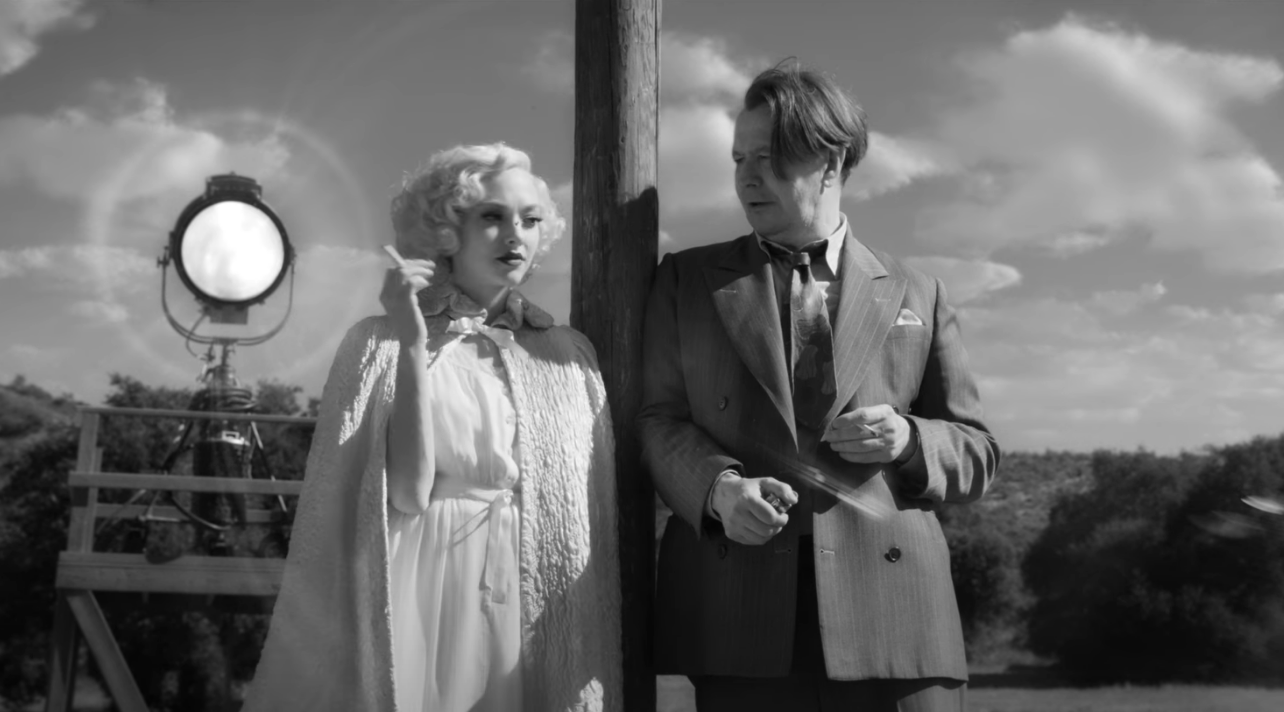
My bigger gripe is with cinematography. In what universe is the washed-out, video-taped TV of the ’60s looking “Mank” the best shot, best looking film of 2020?

I watch 20-30 vintage monochromatic films a month and review more than a few of them. “Mank” reminded me of the lesser efforts of the great DPs of the era. I just reviewed “Ice Cold Alex” which, being a desert picture, was similarly washed-out, but at least didn’t look like “Twilight Zone” VTR episodes.

Generations removed from a Hollywood that knew what great B & W cinematography looks like, it was honored over “Nomadland,” which was just as digital but far more striking and contrast-filled. You people…

Posted in Reviews, previews, profiles and movie news | 1 Comment

Classic Film Review: WWII “Desert Rats” dream of beer, “Ice Cold in Alex”

French critics had to invent the auteur theory, a way of re-examining filmmaking artists who “pounded the same nail, over and over again” revealing themes, tropes and concepts that their cinema could reliably be counted on to deliver, for the label “action auteur” to take hold. These were and are directors whose lightly regarded films of violent combat, crime or what have you who might be passed over in discussions of “serious cinema.”

That’s how Howard Hawks was elevated to the same status as John Ford in the Western world, and how the prolific J. Lee Thompson came to merit a second look.

The British Thompson enjoyed a four decade long career that produced “The Guns of Navarone,” “Kings of the Sun” and the original “Cape Fear.” He may have made Gregory Peck’s least-favorite movie (“Mackenna’s Gold”) and become the go-to guy for Charles Bronson during his run in B-movie “Death Wish” sequels and imitations, but the consistent themes, and always well-handled action beats of his films stood him in good stead, even if they never lifted him into the “pantheon” of auteur critic Andrew Sarris’s famed “pantheon” of directors.

One of Thompson’s earliest triumphs is the newly-restored World War II North African thriller “Ice Cold in Alex,” released by Film Movement streaming or BluRay.

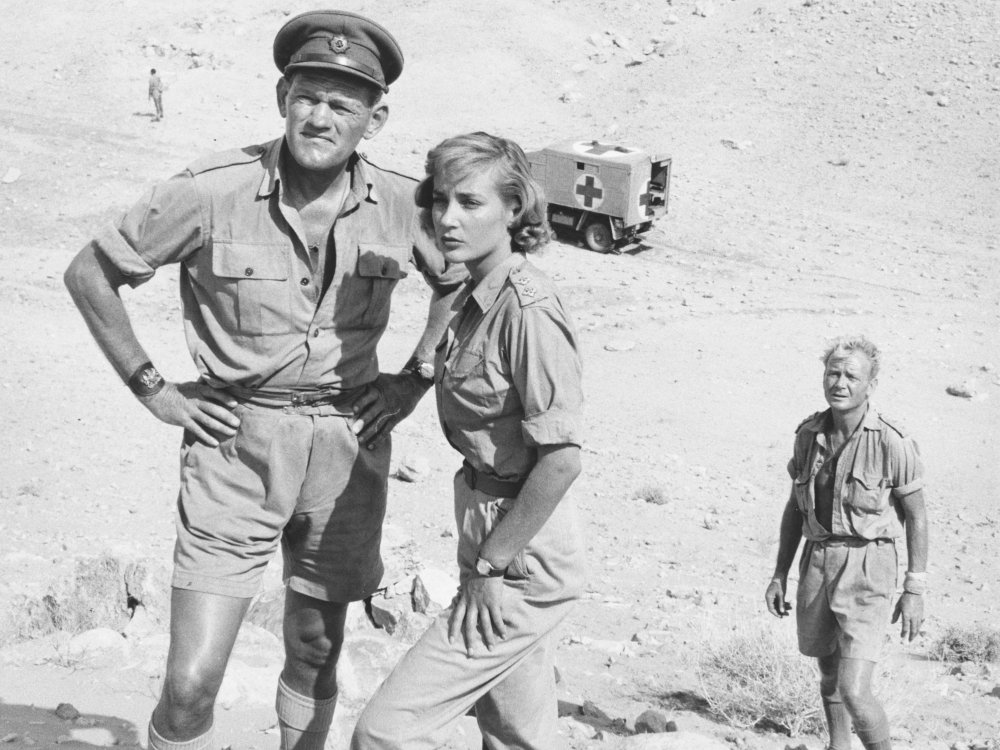
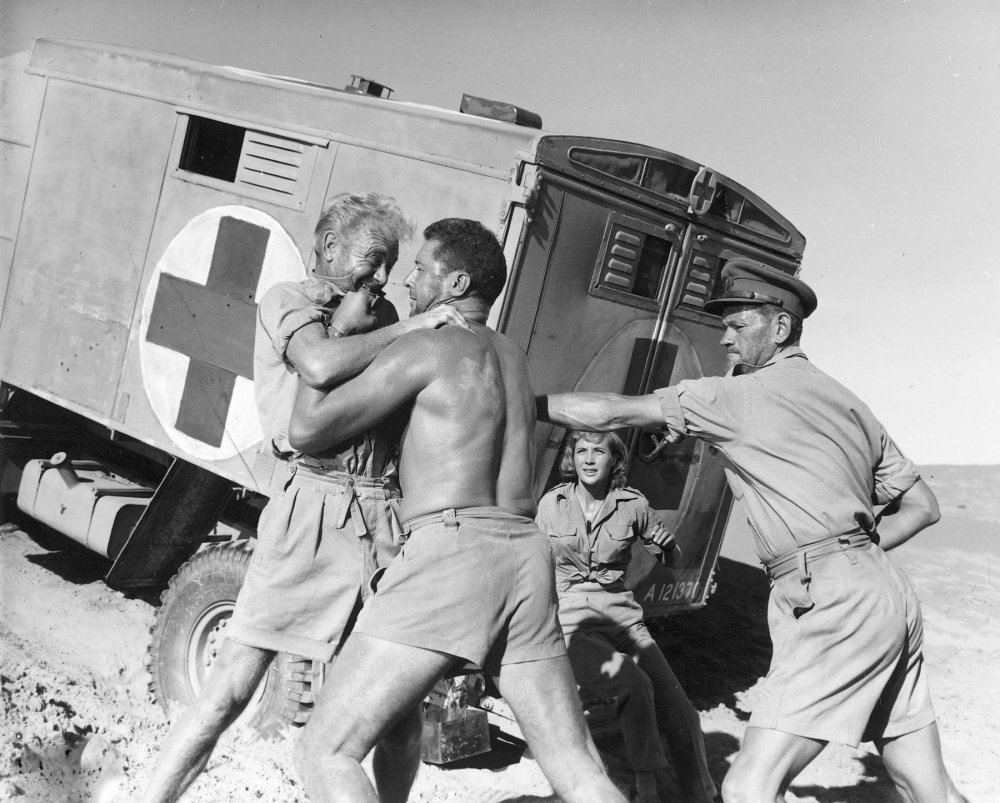
The stark, sunbaked desert setting makes a great crucible for a story of men (and women) tested by the elements, the enemy, each other and their sometimes flawed selves as they scramble to get an ambulance, and two nurses, through German lines, a minefield, sand dunes and the Qattara Depression salt marsh as they escape from encircled Libya to “Alex,” Alexandria in British-held Egypt.

It’s a film with melodrama, tragedy, treachery and romance, an old fashioned combat actioner with little combat, something of a new wrinkle in Britain’s decades of wallowing in “their finest hour.”

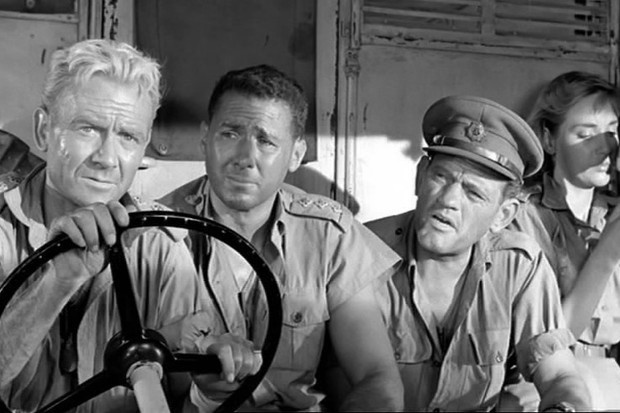
John Mills had become a big star in the decade since his David Lean “Great Expectations” breakout, and plays grizzled and soused Captain Anson, an alcoholic officer ordered to take two nurses in the battered ambulance called “Katy” out of the repeatedly-besieged Tobruk and back to Alexandria. Sylvia Syms and Diane Crane plays the nurses.

The reliable character actor Harry Andrews is Pugh, the venerable sergeant assigned to join him, with both men reluctant to leave the garrison there behind, with hints of hard feelings or outright bad blood between Anson and at least one man trapped there.

“You right bastard!”

Just a couple of blokes in British battle shorts, sharing a bottle and a little drive across hundreds of miles of contested desert. Well, Sgt. Pugh figures he needs to keep the old man off the sauce.

“You’ve had just about enough, sir,” is never what Anson wants to hear. But Pugh enlists Sister Murdoch (Syms) in a “keep the old man sober” scheme, something which becomes trickier as they face tragedy and face unforeseen obstacles and detours, hunting for petrol and water in a moonscape where both are scarce.

They reluctantly pick up a passenger, a thick-accented South African (Anthony Quayle, in one of his finest action performances), start having run-ins with the Germans.

As the journey progresses, Anson faces and shrinks in the presence of his demons (he was briefly a POW, and isn’t having any more of that, come what way), blood is spilled and suspicions about their passenger arise as Katy breaks down and threatens to leave them stranded more than once.

But Thompson, whose best films were often ensemble pieces just like this, reliably finds room for humor, camaraderie and even romance amid the sand, sweat and string of severe tests the crew faces in their quest to get Anson to his favorite bar, where the beer is “Ice Cold in Alex.”

It’s a good looking film (Gilbert Taylor was DP, he did “Flash Gordon” and British TV’s “Avengers”) that sets up nicely, integrates actual combat photography without undue clumsiness and immerses us in a baking Hell where there was no sunscreen and only the Sgt. had the good sense to bring a hat.

The melodramatic touches remind us to ignore the opening voice over, which notes that this story “happens to be true.” It’s based on a novel by Christopher Landon, who co-wrote the script.

Mills lived to be a grand old man of the cinema, appearing in the Branagh “Hamlet” and the Rowan Atkinson “Bean” before dying at 97.

Andrews spent decades making World War II movies in WWII-obsessed Britain, and was even in Christopher Reeve’s “Superman.”

Quayle would go on to “Guns of Navarone” and “Lawrence of Arabia,” Syms is still living and still working, turning up as royalty in Amanda Bynes’ “What a Girl Wants” and as the Queen Mum in the Helen Mirren Oscar-winner, “The Queen.”

And alert viewers will spot, in Walter Gotell, playing a German officer our intrepid crew encounters, a future Bond “Russian,” a semi-villain in several later Roger Moore 007 pictures.

Thompson? He picked up one Oscar nomination, for his most famous film (“Navarone”), got to make a serviceable “Huckleberry Finn” with Paul Winfield, a lightly-amusing “King Solomon’s Mines” with Richard Chamberlain and a very young Sharon Stone, and too many damned Bronson films (and a Chuck Norris one) before hanging it up and retiring. He died at 88 in 2002, and with the seeming collapse of the “star director” as a studio-accepted concept, probably came along at the perfect time to earn the plaudits he did, even as his reputation recedes into the salons of BluRay aficionados.

MPA Rating: “Approved,” violence

Cast: John Mills, Harry Andrews, Sylvia Syms, Anthony Quayle and Diane Clare

Credits: Directed by J. Lee Thompson, script by T.J. Morrison and Christopher Landon, based on Landon’s novel. A Film Movement release.

Running time: 2:10

Posted in Reviews, previews, profiles and movie news | Comments Off on Classic Film Review: WWII “Desert Rats” dream of beer, “Ice Cold in Alex”

Movie Preview: The Teaser to Spielberg’s take on “West Side Story”

This Dec. 10 awards-bait, blockbuster-in-the-making features Ansel Elgort, Rachel Zegler, and bless Spielberg’s film buff heart, EGOT triple threat Rita Moreno from the Robert Wise version of the film from the ’60s.

Looks promising, but remaking a classic is always an iffy proposition. And Spielberg is no uh Robert Wise, let’s face it.

Posted in Reviews, previews, profiles and movie news | Comments Off on Movie Preview: The Teaser to Spielberg’s take on “West Side Story”

Movie Review: Brawny Broads bear down for laughs in “Golden Arm”

Well, here’s an unexpected pleasure of the beer and sweat-drenched variety.

“Golden Arm” is a brassy, scruffy comedy set in the truck-stops, honky-tonks and BFE “civic centers of arm wrestling. The hook? They’re all women, and they’re all funny. The details about the sport and punch-out bar fights that come with it are more entertaining than anything in Stallone’s last-millennium mess “Over the Top,” because “Golden Arm” is a lot more over-the-top.

The catch? You’ve got to buy into skinny-mini Mary Holland (“Veep,” and “Between Two Ferns: The Movie”) as a “contender.”

Holland, just a simple dye-job away from passing for Kristen Wiig’s sister, plays Mel, a newly-divorced baker and small-business pushover recruited by Danny “the Dominator” (Betsy Sodaro of “Disjointed”) to take her place in the Big Tournament.

Sure, Mel’s mild-mannered today. But back before Danny was a long-haul trucker and Mel was just dreaming of donuts without selling-out-to-Dunkin, they were college roomies. And Mel could throw down with the best of them.

Danny’s been injured by her nemesis. She needs a “golden arm” to get in there and take down Brenda the Bonecrusher, played by the amusingly-intimidating Olivia Stambouliah.

Mel has to hit something like bottom to even consider this. New divorce papers and red ink in her business aren’t enough. She’s got to be tricked into not “hiding behind that apron like a depressed, underweight Bobby Flay.”

Director Maureen Bharoocha, who films comic bits for Jimmy Kimmel’s late night show, makes this script by the team that gave us TV’s “Love Under the Olive True” (Ann Marie Allison, Jenna Milly) jump out of the gate. That’s because the early scenes are dominated by Sodaro, a beery bulldog in a china shop.

Danny is all impulse and rage and appetites, and she’s tour guide to this underworld of trucking, flashing truck-stops “for good luck,” grimy sex, arm wrestling and brawls. She schools Mel — and us — hilariously in the do’s and don’ts of her tribe.

“Three ways to get into a bar fight…the classic ‘Just trip’em. BOOM. You’re in a bar fight. Two, steal someone’s beer or their DUDE. And three, the mean and simple ‘flick’em in the head!”

Mel was good at arm wrestling in her younger days. We’re mean to buy into kneading dough has kept her in fighting trim. Because she’s an arm wrestling savant.

The ladies get chased out of rowdy Randy’s bar, played by “Office” man-killer/man-eater Kate Flannery, and get Mel trained by Big Sexy. Dot-Marie Jones matches Sodaro, excess for comic excess in that role. Big Sexy she doesn’t want to train this “jellyfish.”

“Her whole aura is piss yellow!”

Big Sexy teaches Mel and the audience the rules and the pitfalls of this sport, the mere “eight pounds of pressure” that it takes to “break the radial humerus bone” if you put your arm in the wrong position.

Truth be told, “Golden Arm” loses a lot of steam when the ladies get to Oklahoma City for the Big Tournament. This movie’s laughs are on the road, with Randy sassing her old rival Danny for the company she keeps.

“You gonna let Kate Middleton over here tell you what to do?”

Mel is put down every which way by everybody she meets. “American Girl Doll” and “I’ve seen bigger biceps on balloon animals” are two favorites.

Sodaro and Holland have good chemistry in the trucking scenes, which mainly feature meek Mel deferring to Danny’s blue collar brio. Sleeping arrangements in the truck?

“The rule is, ‘Guests have to be the Big spoon.'”

All you want out of a comedy like this is that it begins and ends well, and doesn’t waste a lot of time during the inevitably deflating (romantic interest, tournament) middle acts.

“Golden Arm” and its winning cast are just over-the-top enough to come off

MPA Rating: unrated, violence, profanity, sexual situations

Cast: Mary Holland, Betsy Sodaro, Olivia Stambouliah, Dot-Marie Jones and Kate Flannery

Credits: Directed by Maureen Bharoocha, script by Ann Marie Allison, Jenna Milly. A Utopia release.

Running time: 1:31

Posted in Reviews, previews, profiles and movie news | Comments Off on Movie Review: Brawny Broads bear down for laughs in “Golden Arm”

Movie Review: Japanese cinema and militarism history, a fanciful “Labyrinth of Cinema”

The final film of Japanese director Nobuhiko Ôbayashi is meant to be a sweeping, playful three hour survey of Japanese culture, history and militarism as seen through its movies — a “Labyrinth of Cinema.”

He cast actors as local film fans in the last picture show at the Setouchi Kinema in Onomichi, the director’s hometown. He then pulls them into recreations of genre pictures of various eras, silents and musicals to war films, Samurai movies and the like.

He’s teaching a lesson, through music, dance, history, poetry and constant green-screen “action,” about conflict and how it has scarred his country and the rest of the world.

The obvious, modest-budget green screen effects lend a certain whimsy to his film, the last one he completed before dying in April of 2020. His movies were rarely exported, but cineastes might have run across the rock’n roll centered “The Rocking Horseman” or “The Last Snow,” “House” or “Turning Point.”

The locus of his “Labyrinth” is the poetry of Chūya Nakahara, a fatalistic Dadaist who died just before the world war that Ôbayashi says he saw coming.

“They call it modernization, Nakahara wrote and various actors recite in “Labyrinth.” “I call it barbarization.”

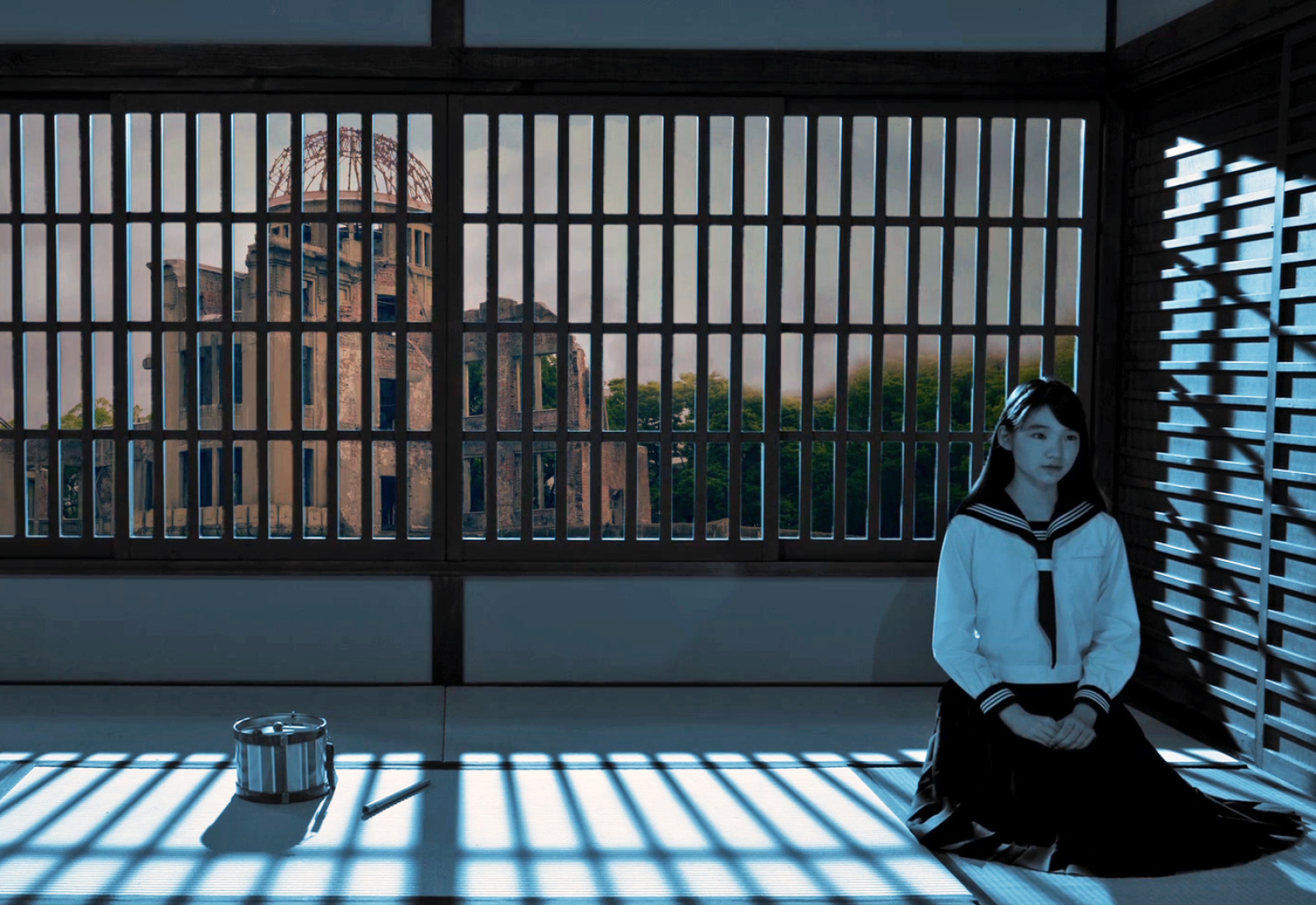
A teenage girl (Rei Yoshida) sings folk ballads, tap dances with a chorus line and guides us through the country’s history, with the help of the jaded sage Fanta G (Yukihiro Takahashi). Sucked up onto the screen before this “last night” war movie marathon at a Japanese cinema, she is joined on screen by a film nerd, a history buff, the smitten Mario (Takuro Atsuki, and dude, she’s 13) and a Yakuza-wannabe (Yoshihiko Hosoda).

They reenact famous battles from the centuries of Samurai wars that led to the 19th century Japanese civil war, when the day of the Samurai ended. The metaphor Ôbayashi hammers home, in not-very-subtle-ways, is that humans love wars, but the time for that should be passing, too.

It may seem cloying for a teen to ask “Why do people kill each other in war?” But when was the last time you considered that simple question?

The film wanders into theater and cinema history in an effort to show how Japan was indoctrinated with “self sacrifice” and “militarism” propaganda, and how that militarism led to Japan’s ultimate destruction.

We see ways the people were “lied to,” enslaved by a system which committed atrocities with impunity once the war Japan started unfolded. Ôbayashi studiously avoids dwelling on Japan’s crimes against “foreign” humanity. No sense rattling the country that banned films on The Rape of Nanking, POW abuse, Korean enslavement and depredations visited on China in “The Last Emperor.” Instead, we see the military raping and murdering Okinawans “to save food,” and the brainwashing it took for people to consider that a willing “sacrifice.”

But Ôbayashi committed cardinal sins of indulgence and unapproachability in getting his magnum opus on the screen.

Three hours of green-screen “play” lends the whole affair the air of a lark, and make it wearying and tedious to watch. He’s reaching for serious social commentary and satire, peppering his script with references to the Boshin War and how the country might have been different if this figure or that one had survived and had more influence.

A poem Nakahara wrote about the Mukden Incident, the Japanese provocation that in essence started World War II, is quoted.

“Dark clouds gather behind humanity,” he wrote. “Hardly anyone notices it. If you saw it you’d feel as sick as I do.”

But that’s as deep as the filmmaker gets into Japan’s responsibility and moral failure. Instead, he focuses on the acting company that wound up, by the worst stroke of luck, at Hiroshima in August of 1945, a doomed troupe of artists, featuring Keiko Sonoi, killed within view of what came to be known as “The Atomic Bomb Dome.”

That provides a poignant climax to a movie that frankly would have been better showing these actors dropping into the actual movies about earlier moments in history, cinematic art such as “The Rickshaw Man,” discussed but not sampled.

His purpose isn’t literal film history or Japanese history. But if you’re making the opening argument “cinema is the greatest time machine,” seeing a bunch of players dancing in a fake musical on a fake silver screen isn’t making your case for you.

Ôbayashi has a character make the claim that international cinema turned provincial Japan covetous of its neighbors’ land and resources, which would have been a great thing to illustrate with clips from such films. even if that’s classic Japanese WWII denialism.

The exteriors, hapless modern film fans trapped in this Boshin War battle or that Samurai slice-up, are more impressive and hint at a better movie that more money might have provided. Bodyless arms grasping through walls at prisoners of the state and similarly surreal moments are few and far between, despite the film’s air of video unreality.

“Labyrinth of Cinema” thus becomes an ambitious, over-reaching film without the budget, polish or will to achieve its aims, three hours of “nice try” for a filmmaker who won’t get a chance to try again.

MPA Rating: unrated, stylized violence, sex, stylized nudity,

Cast: Rei Yoshida, Yukihiro Takahashi, Takako Tokiwa, Yoshihiko Hosada, Takuro Atsuki

Credits: Scripted and directed by Nobuhiko Ôbayashi. A Mubi release.

Running time: 2:59

Posted in Reviews, previews, profiles and movie news | Comments Off on Movie Review: Japanese cinema and militarism history, a fanciful “Labyrinth of Cinema”

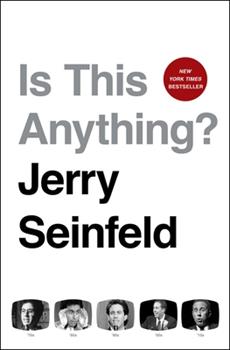
Book Review: Jerry Seinfeld lays out his greatest hits — “Is This Anything?”

At his hit TV-show peak and just after, the most interesting things attached to Jerry Seinfeld were products of his wealth — how rich he was, how he could afford that vast and growing car collection, the romantic predicaments he could get himself into such as dating a teenager when he was in his Woody Allen 40s, succumbing to the charms of a married gold-digger who set her cap for him, and got him, her way of turning that notoriety into her own “brand.”

Before and after that, there was little about him that could pass for “fascinating,” and he’d be the first to say so. A stand-offish only child, middle class with middle class tastes, a little prickly, an ambitious workaholic and craftsman, then-and-now.

He may be married and comedy royalty in his 60s, but he still wears his formative years like a uniform, not unlike the one he sports on stage most nights — bespoke sports jacket, comfy shoes, jeans, black sweater or T-shirt at clubs, a designer suit in the big venues. Nothing changed him. As they used to joke in creating “Seinfeld,” there’s “no GROWING here.”

But what’s fascinating to longtime Seinfeld watchers is the way he’s set out to “give something back” to stand-up, which made him, going out of his way to break down “How I got here.”

Sure, he told his story in his autobiography. But he’s also demystified the work, broken down his style, toured with his “greatest hits,” which he then retired, and showed us just how hard it is, doing what he and others do in the stand-up documentary “Comedian.”

If you remember his TV series, and “Comedian,” you remember the phrase he trotted out backstage to friends and colleagues whenever he thought he was onto something potentially funny.

“Is this anything?”

That’s the title of his new book, basically a collection of his “accordion folder” file of bits, polished, memorized and trotted out for audiences in clubs and then in performing arts centers and big theaters as he became the most successful stand-up of his era, Bob Hope rich and similarly regarded as King of the Comedy in his time.

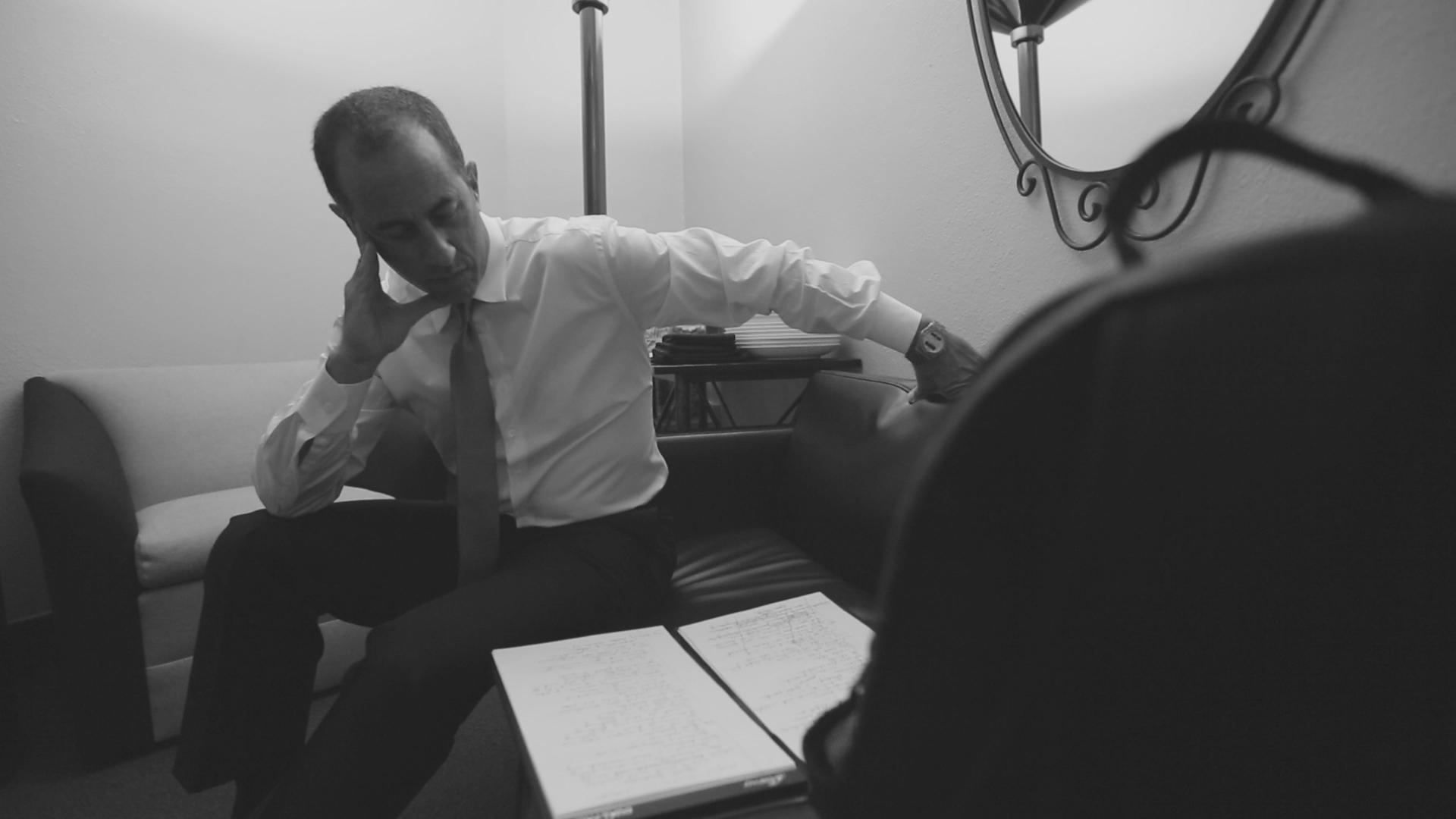
It would be a LOT more interesting to see the rough drafts, false starts and then what authors and publishers call “the copy text” — the jokes in their finished form, ready for our consumption. But he already kind of did that in “Comedian,” letting us see him re-start his stand-up career post-“Seinfeld” — bad jokes, forgotten lines, note cards or yellow notepad consulted as he tried to get this new “act” down.

His material, broken down by decade here, is formatted on the page like a “large print” book for an aged readership — lines separated by lots of space. I can’t recall, did he ever take TV news reporting and writing in college? That’s what this looks like, broadcast news copy — airy so that you can read it easily on the page. It’s broken down — one thought per line — with room for the timing he is famous for in between each line. He gives the listener/viewer time to let it sink it.

A sample from “the teens,” the chapter devoted to his more recent material.

“The drive of the male is to simplify.

“All men put things into one of two categories.

“It’s either ‘That’s my problem,’

or “That is not my problem.”

It’s short, punchy rhythmic speech and lays bare his style for all to see and attempt to mimic, if you dare. The “bit” is both in his style, and totally about his mindset and way of approaching life and comedy. “Simplify.”

One thing I’ve picked up from him over the decades (interviewed him three times, that I can recall) is his patience. It’s not just letting the joke breathe, leaving room for “anticipation” or “recognition of the obvious” laughs. There may be video of him from a more high-voiced, manic early days guise still floating around Youtube. But the hallmark of Peak Seinfeld was his very deliberate, lean-in, lean-back way with a comic riff.

Creating material, mastering the bits like an actor prepping for a role is part of it. But his real mastery is having the confidence to not rush, not stumble past potential laughs. It’s Cosby-like, almost a zen state of delivering a 20-30 line “bit.”

That’s one of the reasons the stand-up samples of “Seinfeld” that opened and closed many episodes were rarely funny, no matter what the laugh track insisted. The samples were too short. The episode was often about how he’d get to that point in his comic thinking, so it wasn’t a loss. But chopping the bit down to a couple of lines almost never worked. There’s too little of the massaging, waiting, anticipation and in some cases, milking the laugh.

The most personal pages in “Is This Anything?” are in the forward, and in the page or two he uses to introduce each decade/chapter. He remembers changing tastes, changes in his life and in the times we live in as he sets up where his comedy took him during that decade.

That makes the book more for Seinfeld completists and students of stand-up than for the general public. We can hear his voice and his timing in the bits, but as they’re all pretty familiar by this time that he’s not giving us much in the way of new insights. If he’d shown us the scratch-outs, earlier versions that didn’t work and how he realized that and fixed them, it would be more instructive.

Perhaps Simon & Schuster wants him to save that for another book.

“Is This Anything?” by Jerry Seinfeld. Simon & Schuster. 470 pages including index. $35.

Posted in Reviews, previews, profiles and movie news | Comments Off on Book Review: Jerry Seinfeld lays out his greatest hits — “Is This Anything?”

Movie Preview: “Dementia Part II”

Gaslighting or Alzheimer’s? Possessed or worse? A title speaks volumes in this May 21 release.

Posted in Reviews, previews, profiles and movie news | Comments Off on Movie Preview: “Dementia Part II”

Classic Film Review: An Essential French Farce — “The Mad Adventures of Rabbi Jacob” (1973)

You may think you’ve seen every pull-out-all-the-stops, spend all the money, make-a-laugh-a-minute romps the cinema had to offer in the “Mad Mad Mad World,” “Italian Job” ’60s and “Silent Movie” to “1941” ’70s.

But if you’ve missed the French farce “The Mad Adventures of Rabbi Jacob,” hang your head in shame, or at least mild embarrassment. This riotous, sight-gag/punchline-packed comedy has slapstick and satire, lampooned bigotry and packed enough political bite that someone hijacked a jet demanding that it be withheld from release back in 1973.

Pre-“Blazing Saddles” and “Airplane!,” “Rabbi Jacob” could make a claim to having more “gags per minute” than any film anybody had ever seen. And a lot of them, I’m happy to report, still land. It’s still one of the funniest films of the ’70s.

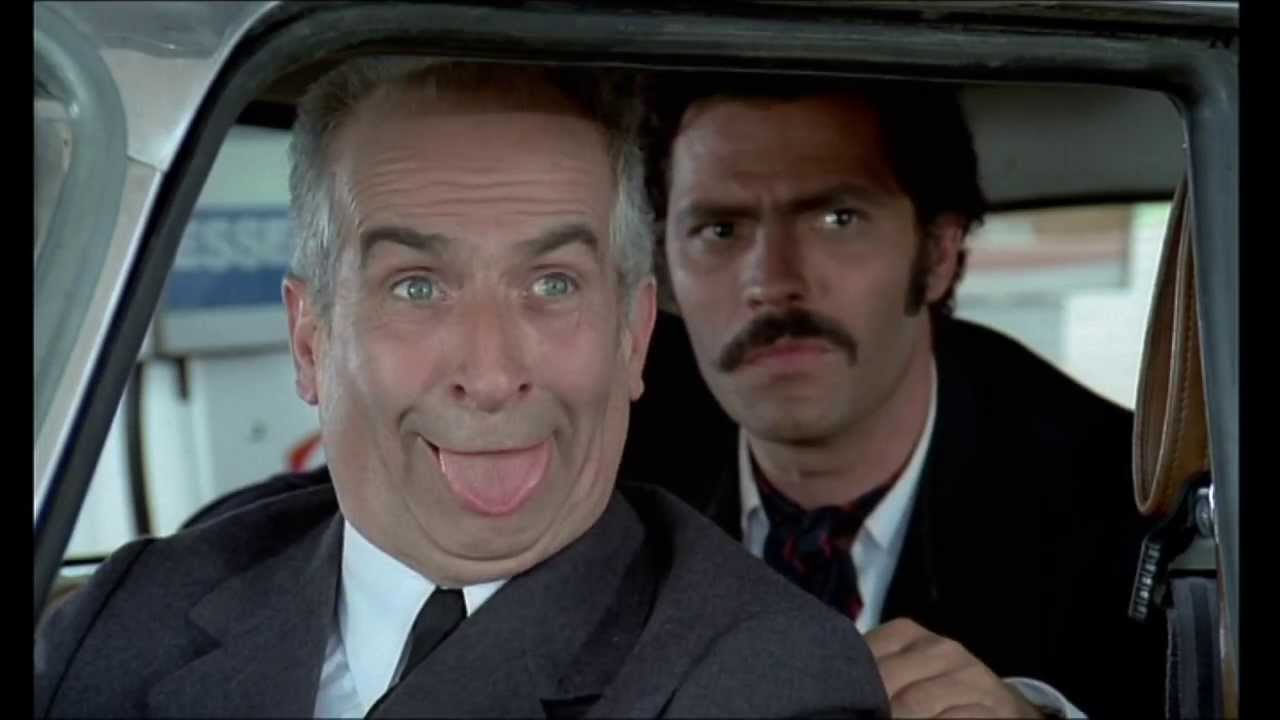
It stars famed French clown Louis de Funès, a Gallic Red Skelton, Jim Carrey or Marlon Wayans, as at home with a punchline as he was making a funny face. The journey his character takes here is one from racism, anti-Semitism and xenophobia to some sort of “enlightenment,” played out through 95 slapshticky minutes.

But he isn’t the title character. Rabbi Jacob is a New Yorker whose noisy send-off for his first return to France since before World War II opens the film. Rabbi Jacob is going to Paris to preside over a grand nephew’s bar mitzvah. The Hasidic rabbi is played by the great Marcel Dalio, a Jewish star of pre-war French cinema (“The Rules of the Game”) who fled to Hollywood when the Germans invaded and became a Hollywood character actor and bit player. He was the croupier in “Casablanca,” “Frenchy” in “To Have and Have Not.”

But the esteemed rabbi, whose congregation picks up his Yellow Cab and lifts it over a traffic jam to get him to the plane, is absent for much of the picture. The movie’s about a manic, mean and motor-mouthed factory owner, Pivert (de Funès) who gets mixed up in an assassination attempt on the eve of his daughter’s wedding and winds up impersonating the Rebbe before the long night and day that follows is done.

First, crazed Pivert has to jam his Citroen DS, with a motorboat lashed to its roof (motor included), through a traffic jam, scaring his poor chauffeur Salomon (Henri Guybet) to death. Of course they end up in the water, but not before Pivert has insulted every nationality (“I HATE the English…Belgians…Swiss…Germans.”) he almost runs into, and not before he’s gone full-on racist when they pass an inter-racial wedding.

“Darkies” in a “Rolls Royce,” he fumes. What is France coming to?

Imagine his shock when he takes so long on their drive that Salomon gets out of the car and refuses to operate anything mechanical or electrical as they’ve passed over into Shabbat. He’s devout, and his boss never knew he was Jewish any more than he knows his schtickle from his shtreimal, or kosher from pisher.

That’s how the loony tune winds up on his own, stumbling into the Yankee chewing gum works where he interrupts Col Farès (Renzo Montagnani) and his Middle Eastern minions who are about to execute Third World revolutionary Mohamed Slimane (Claude Giraud), who has been stirring things up back home.

As Pivert gums up the gumworks, Slimane takes Pivert hostage and they’re stuck together (ahem) trying to make their getaway, with Pivert in more and more trouble with the law as they do.

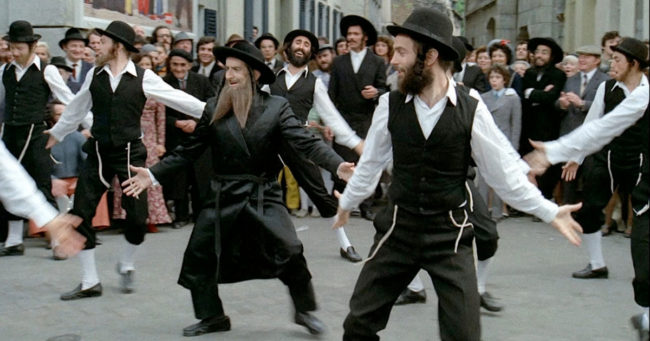
And then they disguise themselves as Hasidic Jews and darned if they aren’t mistaken for Rabbi You-Know-Who.

Sight gags are literally everywhere in this Gérard Oury (“The Brain,” “The Sucker”) comedy. Pivert calls his dentist wife, and all the dentures in her office chatter in unison. Pivert makes his getaway on a luggage conveyor belt, only to be gawked at by Japanese tourists wearing ’70s double-breasted jackets and Olympus cameras.

Mistaken identities wreak havoc, Hasidic beards and Payos (side curls) are yanked, guns shoot bubblegum bubbles and redheads are hit on — constantly — by the revolutionary Slimane, who has…a thing. Apparently.

The bigot has a car backfire in his face at the inter-racial wedding he’s so put out by. Sooted-up, he’s mistaken for a member of the wedding party. Ok, SOME of this stuff isn’t aging well. “Moi? RACIST?”

But the dialogue? Ever tried to fake your way through prayers, kvelling and kvetching in Hebrew, with a bar mitzvah as your encore? Pivert’s best argument for not being shot by the assassins today is “my daughter’s wedding.” His counter offer (in French with English subtitles)? “Tomorrow you can send me a letter bomb!”

And on and on it goes, building towards a mid-Paris finale at the Hôtel des Invalides with everybody on the film’s payroll, the Paris Republican Guard on horseback and a helicopter hovering into the mayhem.

That chopper in the courtyard and a spirited dash through the city on a smoky, noisy moped, with the stars doing their own high-speed helmetless driving, reminds you “They don’t make’em like this anymore.” Because no insurance company would indemnify half of it.

But for us, looking at the wide lapels, ugly hats, the sea of now-classic Austin Healeys and Citroens, Triumphs, Minis and Mercedes filling the sky with yellow exhaust, the casually-lit cigarettes in the casually-unguarded De Gaulle Airport as a French snob shakes some of his prejudices and makes faces as he does, is a real blast from the past.

Best of all, “The Mad Adventures of Rabbi Jacob” is now streaming on Film Movement. Have at it, and have a laugh as you do.

MPA Rating: G, slapstick gunplay

Cast: Louis de Funès, Claude Giraud, Suzy Delair, Henri Guybet, Renzo Montagnani and Marcel Dalio

Credits: Directed by Gérard Oury, script by Gérard Oury, Danièle Thompson, Josy Eisenberg and Roberto De Leonardis.  A Film Movement release.

Running time: 1:35

Posted in Reviews, previews, profiles and movie news | Comments Off on Classic Film Review: An Essential French Farce — “The Mad Adventures of Rabbi Jacob” (1973)

Movie Review: A Period Piece Spy Thriller from Zhang Yimou — “Cliff Walkers”

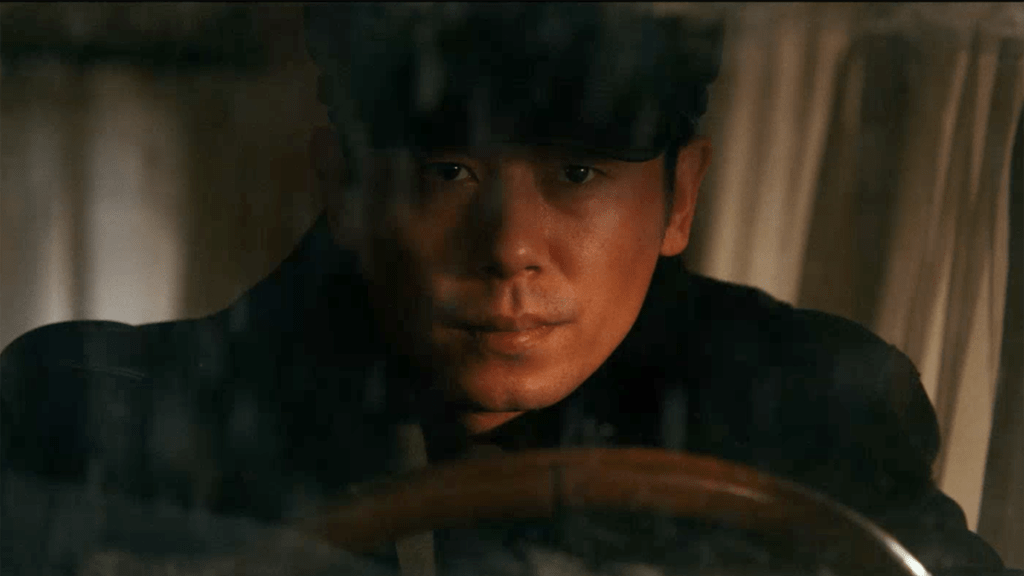
Almost everything the great Chinese director Zhang Yimou touches takes on the feel of an “epic.” So if the director of “House of Flying Daggers,” “The Great Wall,” “Hero” and “Flowers of War” turns his camera towards the Spy Game, you can bet that whatever he does with the tropes, traditions and “tradecraft” of the genre, it’s going to look like few espionage thrillers that came before it.

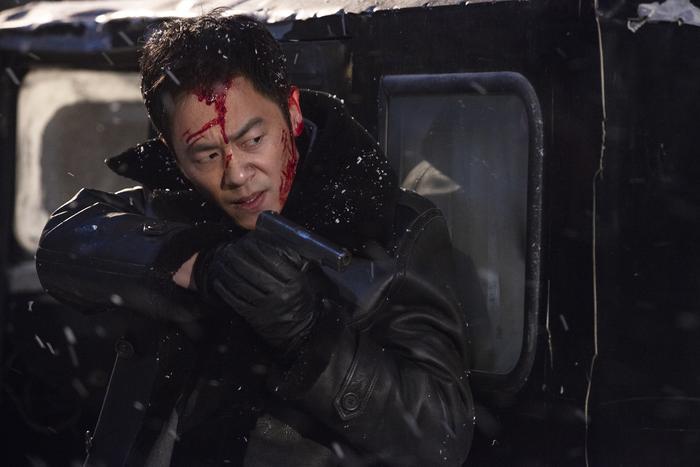
“Cliff Walkers” is a blend of Hitchcockian intrigues and John Woo shootouts, all set in a “Zhivago” winter wonderland that would give David Lean a smile. It’s filled with Reds and red herrings, a Chinese thriller that celebrates “heroes of the Revolution” and wears its Bolshevism with pride.

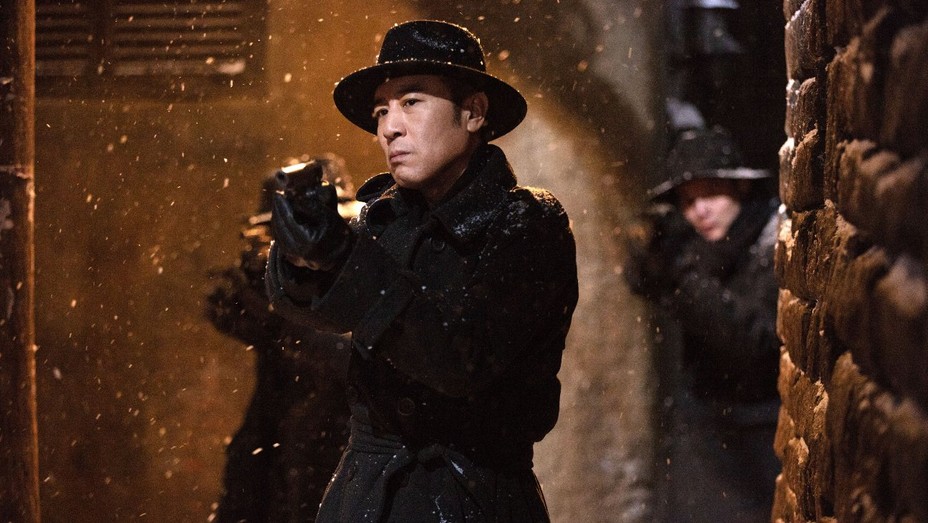
The setting is wintry 1930s Manchuria, which the Japanese invaded and occupied in 1931. Four agents (Zhang Yi, Haocun Liu, Qin Hailu, Zhu Yawen) parachute into a remote forest as snow falls on the evergreens. It’s starkly beautiful, right up to the moment when the camera gives us the jumpers’ point of view — tumbling and crashing through tree limbs, momentarily buried under snow.

Our two “couples” have been training in Russia for months for their special operation, but their first decision is to “split up” and re-meet in Harbin, the city where their quarry, a witness to a Japanese massacre, is hiding out.

And right off the bat, they’re double-crossed. One “team” learns it and fights its way out of a jam. The other continues on its way, oblivious that they’re traveling with “traitors” as their guides. Much of “Cliff Walkers” is about Team One trying to warn Team Two, the ways they try to get that message across and the intrigues of their pursuers, the secret police force staffed by Chinese/Manchurian collaborators hellbent on foiling this “mission.”

While the story is rather pointlessly broken into “chapters” (“The Operation,” “The Edge,” “The Danger,” etc.), the complexities pile on top of “traps” in ways that make for a splendidly knotty yarn.

It’s fascinating to see Zhang work in the hoariest of spy conventions such as the paper clip that’ll get you out of handcuffs every time, the “Are you ready to talk?” (in Mandarin, with English subtitles) torture, “moles,” the spiked coffee, shootouts with guns that never need reloading until that moment of truth, and the brawl in the confines of compact train sleeping compartment.

He uses these elements in creating problems for his characters, and in concocting genre-proven solutions to the various dilemmas of these spies who don’t come in from the cold.

The characters have inner resources that have them putting mission above everything. Yu (Qin Hailu) is teamed up with an agent not her husband, but she and her spouse Zhang (Zhang Yi) have a pact — “Whoever survives, find our children.” The kids were left behind when they slipped into the USSR for training. That’s a bit of “communist fanaticism” straight out of early Cold War Hollywood.

Lan (Haocun Liu) is the youngest, a slip of a thing. You have to wonder how she’ll be tested and if it’ll be plausible. Partnered with the older, tougher Zhang, don’t bet against her in a fight, though.

There’s suspense around every corner — the threat of discovery, exposure or capture at every turn. And sometimes, when trickery fails and you can’t outrun the mobs of black-hatted trenchcoat-clad secret police on foot or in vintage cars (on icy, snowy streets), there’s nothing for it but to shoot it out and hope for the best.

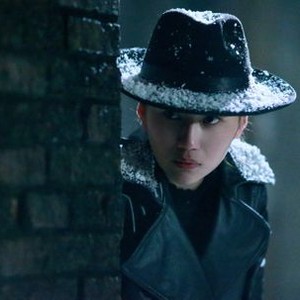
Through it all, we sense the cold and see the snow — showering down, sticking to the omnipresent hats, mountains of it (not the best backdrop for “white” subtitles, kids) to dash through on foot or in cars in the rabbit warren streets of 1930s Harbin.

Zhang’s first films to travel abroad were “Red Sorghum,” “Ju Dou” and “Raise the Red Lantern,” sumptuously-detailed period melodramas that we remember for how they Technicolor looks, but live or die on good casting and solid performances.

There’s nothing in “Cliff Walkers” that we haven’t seen in many a prior spy tale, and it’s not a picture you’d single out for great acting moments. Clean up the blood, and you could call it almost old-fashioned. It’s still a corker of a thriller that keeps you guessing which Hero of the Revolution will sacrifice him or herself next.

MPA Rating: unrated, graphic violence

Cast: Zhang Yi, Haocun Liu, Yu Hewei, Qin Hailu, and Zhu Yawen

Credits: Directed by Zhang Yimou, script by Quan Yongxian and Zhang Yimou. A CMC release.

Running time: 2:00

Posted in Reviews, previews, profiles and movie news | Comments Off on Movie Review: A Period Piece Spy Thriller from Zhang Yimou — “Cliff Walkers”