Movie Review: “The Killing of Kenneth Chamberlain” plays out in real time

Some movies don’t need to tell you they’re “based on a true story.” You don’t have to recall the dates and details. You don’t question what unfolds on the screen. Based on everything we’ve seen and heard over the past decade, you just know.

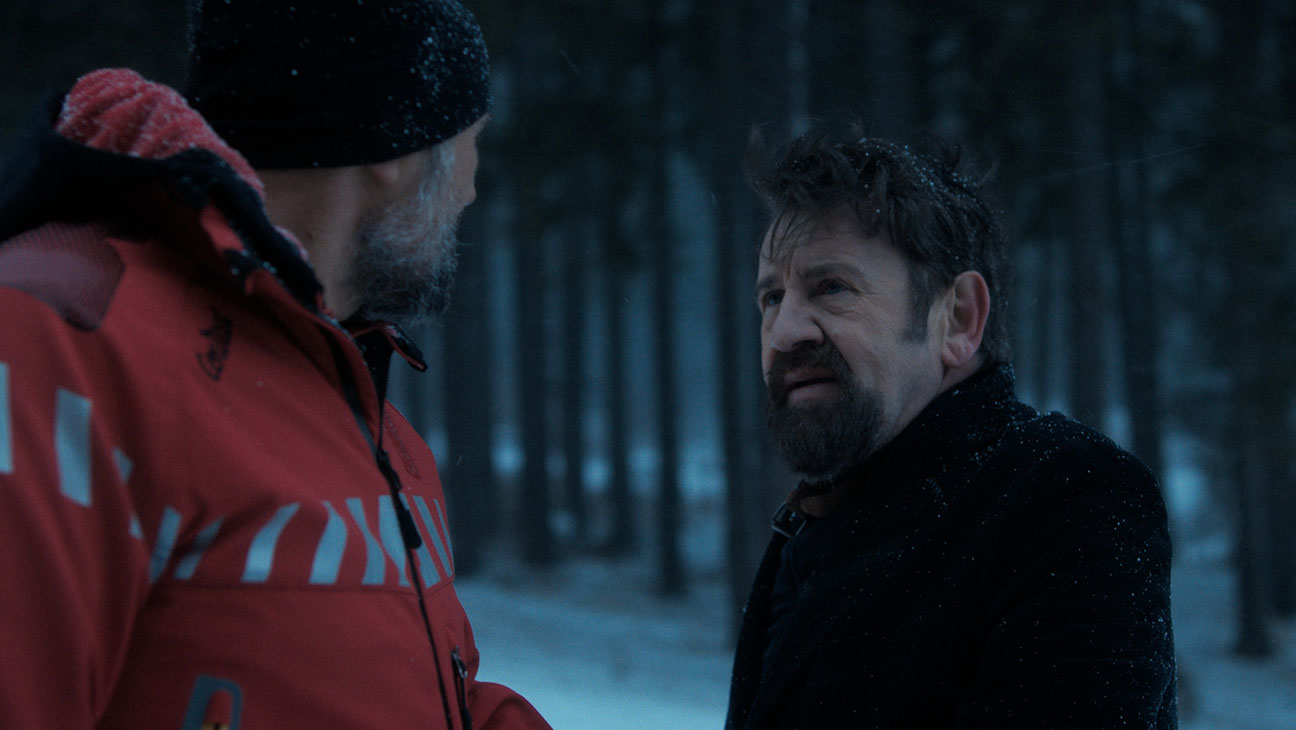
“The Killing of Kenneth Chamberlain” is a gripping, heart-breaking real-time account of a White Plains, New York police call that took just over an hour to go totally, irrevocably and inexcusably wrong. A Black man, a Marine Corps veteran with medical issues, was dead.

And since it was 2011, no charges were brought against the police, no jury would give legal satisfaction to his heirs. Because such stories didn’t fit into an unfolding national tragedy and nationwide policing scandal.

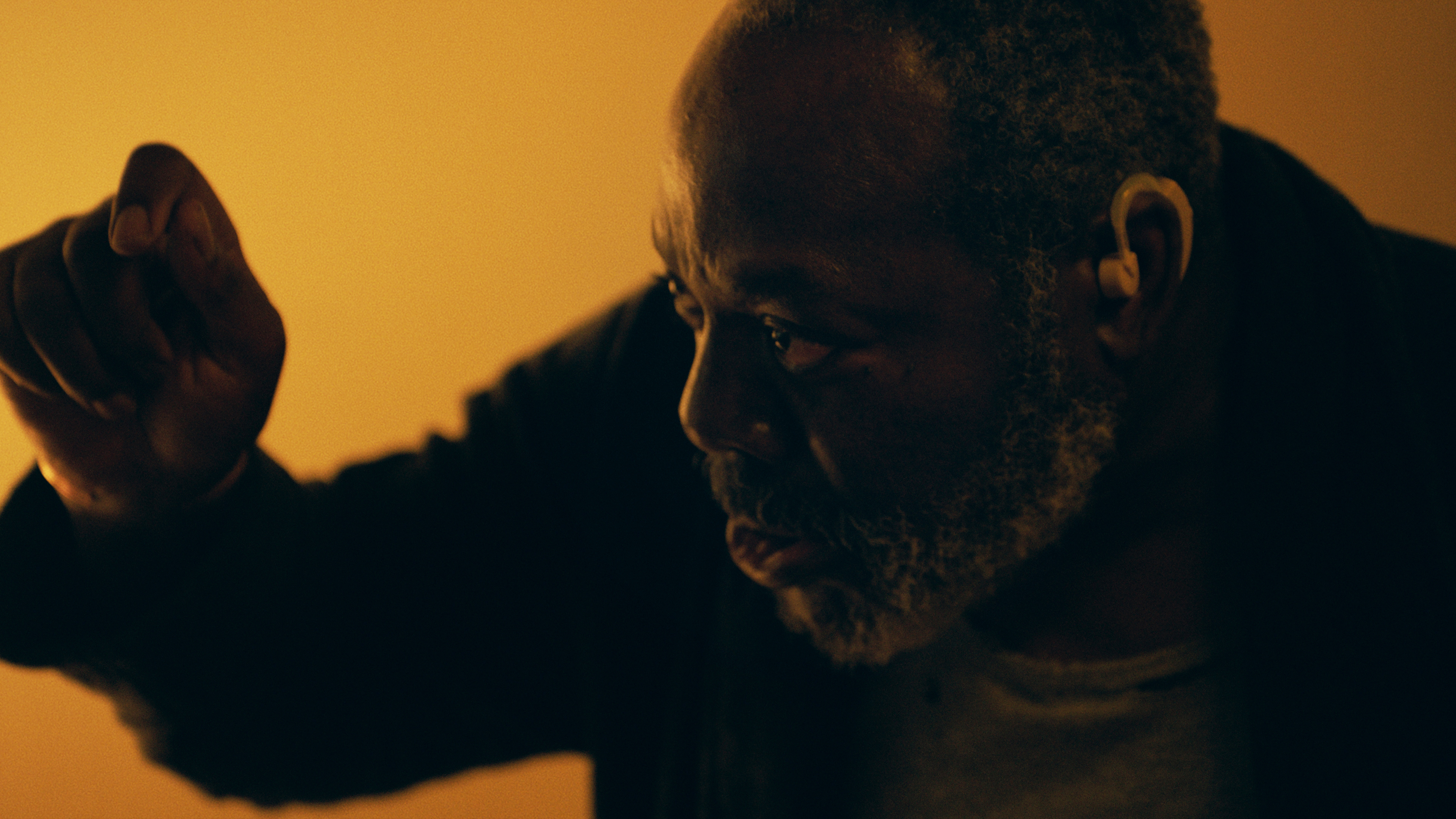
Veteran character actor Frankie Faison, an established screen presence long before the original “Coming to America,” before Spike Lee’s “Do the Right Thing” or Alan Parker’s “Mississippi Burning,” gets a rare leading role and acts the hell out of this spare, compact tragedy with just a handful of characters and a single setting.

He has the title role, a Marine Corps veteran with limited hearing, a bad heart and mental health issues. He takes his medic alert monitor off to get through a restless night. And that sets off a chain of events, a slow-motion disaster that plays out with a depressing inevitability that no amount of shouting at the screen can halt.

The medical monitoring company calls, and can’t wake him to answer the phone. It’s five AM. They call the police for a “welfare check” visit.

Three White Plains PD officers show up — a rookie (Enrico Natale) who used to be a middle school teacher, a hardcase Sgt. (Steve O’Connell) and a short-tempered veteran of the force (Ben Marten). They pound at the door, waking the groggy, hearing-impaired old man.

We fret for him as he slowly shuffles to the door, worry about his confusion at presence, and expect the worst from the guys in uniform. Because “I do not have an emergency…It was an accident. Thank you for your trouble” is not moving them from his apartment door.

As the pounding goes on, we see the impatience of the two older cops. And we’ve already heard the telltale signs that give away how this evening will end.

The neighborhood is “the third world.” The phrase “learn who’s boss” comes up. Racial slurs slip out. The nicest is “cocoa puff.”

And no “What’s going on here?” neighbors, no pleas from the alert company operator, who calls the police to call them off, no begging by the sick old man’s niece (Angela Peel) will get these officers to move on.

We hear the “Check his ID, run’em.” We see the escalations, sense the tension that rises with every “You are not coming into my house” and “You have no warrant, no probable cause.”

The die is cast long with the “We’re handling this” brush-offs of neighbors and family, before reinforcements arrive, before a fresh sergeant shows up with “irons” (battering rams) and a brusque order to “Have your guys tac up!”

Faison’s layered performance staggers from confused to paranoid, rational and outraged to rational and terrified. He doesn’t have to tell his son or sister by phone “You know how the police are around here.” They do.

Natale gets to play the reasonable, “Let’s just leave” rookie, the rational, educated man among hardened authority junkies. Their racism is almost immaterial. Their big beef is being told “no” and “you have no right.”

The rookie? He’s a “cry baby,” and “emotionally sensitive” and therefor must be ignored.

Writer-director David Midell cast this well, turned in a script with a bitter, metallic aftertase and never wastes a second of screen time, giving us two points of view — outside and inside that door — letting us stay one step ahead of this slow tumble off a cliff.

We experience the assault the way Kenneth did — his hearing aids roaring the noise, the rational fear that any time the police enter your home “they want to hurt me” irrationally amplified.

And in the closing credits, we hear the original medical alert calls and phone conversations and see snippets of the “raid” on old video.

Because sometimes “based on a true story” isn’t damning enough.

Rating: unrated, violence, profanity, racial slurs

Cast: Frankie Faison, Steve O’Connell, Enrico Natale, Ben Marten, Angela Peel and Tom McElroy.

Credits: Scripted and directed by David Midell. A Voltage film, a Gravitas Ventures release.

Running time: 1:21

Posted in Reviews, previews, profiles and movie news | Comments Off on Movie Review: “The Killing of Kenneth Chamberlain” plays out in real time

Classic Film Review: Life under slavery laid bare in the Indie drama, “Sankofa,” coming to Netflix

Ethiopian-American filmmaker Haile Gerima’s 1993 gem “Sankofa” is both a landmark of indie cinema and a benchmark on the storytelling road between TV’s “Roots” and the Oscar winning drama, “12 Years a Slave.”

It’s a poetic, mystical and meandering immersion in the life-as-a-slave experience, both for the viewer and for our on-screen surrogate, the callow fashion model Mona (Oyafunmike Ogunlano), who has come with a white photographer for a photo shoot on the grim, hallowed ground of an old slaver’s fortress on the coast of Ghana.

She is smiling, showcasing swimsuits and flashing skin in a place where untold thousands of Africans were held before being loaded into ships for the horrors of the Middle Passage to the Americas, a place now treated as a tourist attraction for the well-heeled and the curious.

An old shaman (Kofi Ghanaba) who calls himself “Sankofa” paints his body and pounds his drums each day at the entrance of the place, remembering the tragedy there, perhaps chanting to exorcise its evil. He gets right in Mona’s face about her cavalier attitude towards this landmark.

She may not understand his torrent of angry words, but she and we get the picture. Respect this place, and respect yourself and where you came from, while you’re at it.

Taking a tour into the dungeons, Mona watches the lights dim, and woodfires alight. She sees the faces of the shackled and enslaved, waiting to board a ship. She tries to flee, but finds the entrance guarded by slavers. She is stripped, screaming, and branded.

“Sankofa” has her awaken in a new life with no apparent memory of her modern one. She is a house slave in the Lafayette sugar cane plantation in Louisiana, struggling to love a West Indian field hand (Mutubaruka) and like others, pondering her fate and her future in this system where human beings are abused, raped, bought and sold with no control over their lives.

Some who run have the courage to rage at the beatings they face upon capture — “You can’t do nothing to my soul, only to my FLESH!”

The head field hand Joe (Nick Medley) is nicknamed “Bible Boy” by his fellow slaves. He is slow to recognize the truth of his fair-skinned bi-racial heritage. His mother was raped on the Middle Passage. He wants answers from the white Catholic priest (Reggie Carter).

“Whose son am I?”

At some point, you just know the “keep them in line” Christian padre will use the same word the overseer does to describe Joe.

Gerima (“Teza,””Bush Mama”) folds in varied pieces of the enslaved experience, including the runaway-backed underground, which helps the Lafayette slaves plot an insurrection.

Its easy-to-follow if somewhat disjointed narrative has a stream of consciousness feel and Gospel solos and plaintive jazz horns underscore the shifting points of view, with Mona — now called Shala — tying it all together and commenting on slave life in voice-over narration. Her journey is from complacent acceptance to radicalization, both as a slave and in her modern life as a model who has her consciousness awakened.

What’s striking all these years later is how Gerima was able to get good performances and create realistic settings with almost no money. He doesn’t have the cash to rent a wooden ship, so he skips that part of the story. He only shows the plantation house from afar and stages most of the action and interactions in cane fields, in the woods or the vast Cape Coast Castle in Ghana.

Gerima, whom I interviewed back in the ’90s when he was showing the film at North Carolina’s state film school, never got proper distribution for “Sankofa,” so he took it around the US, booking theaters and showing it to paying audiences.

Although it’s been available on other streamers, the new Array 4K restoration, added to Netflix on Friday, is its best chance to reach a wide audience, an indie classic ready to be “discovered” by a new generation.

Rating: unrated, violence, rape, nudity

Cast: Oyafunmike Ogunlano, Nick Medley, Mutubaruka, Alexandra Duah,
Kofi Ghanaba and Reggie Carter

Credits: Scripted and directed by Haile Gerima. An Array 4K restoration on Netflix Sept. 24

Running time: 2:04

Posted in Reviews, previews, profiles and movie news | Comments Off on Classic Film Review: Life under slavery laid bare in the Indie drama, “Sankofa,” coming to Netflix

Netflixable? French cops bend the rules and pay the price getting their bust in “The Stronghold (BAC Nord)”

Whatever sway the police may have on the streets of Marseilles, in the high rise projects on its northern edges, the gangs run the show. The cops, even the elite “BAC” special squads, avoid them. Merely driving up earns a warning whistle, the international cry of “POPO,” and mobs descend on them — challenging, baiting and threatening the officers with badges.

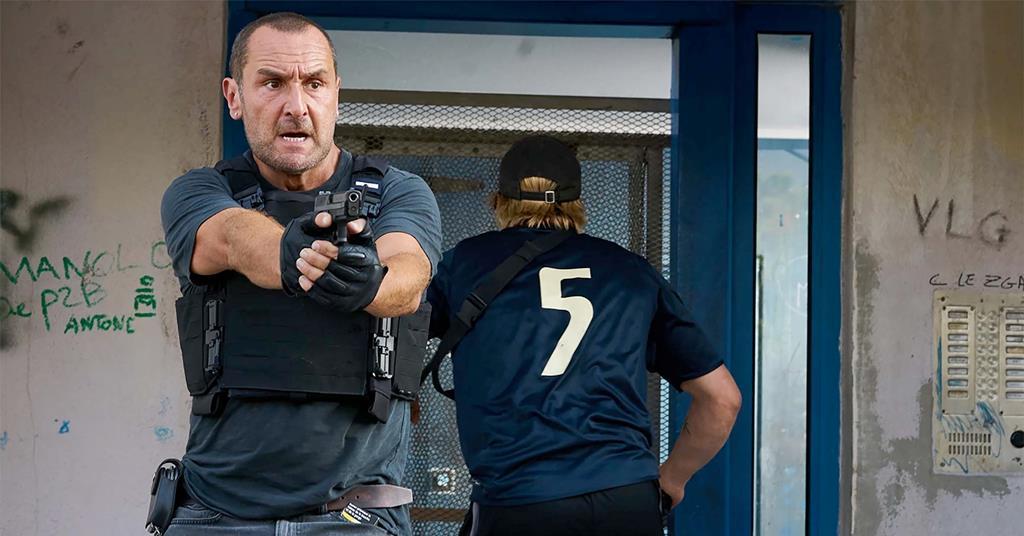
That’s the setting of “The Stronghold,” titled “BAC Nord” when it played in France. This “inspired by a true story” is a “French Connection” that isn’t about the connection, a “District B-19” or “The Raid” without over-the-top mayhem, martial arts brawls or trigger-happy shootouts.

The anarchy and immigrant-led gang rule? That’s such a common refrain in French cinema, these days. A recent reimagining of “Les Miserables” and other films underscore that, or at least the perception of it.

“Stronghold” is a somewhat misshapen film, climaxing early, dragging out the anti-climax, playing out more predictably than you’d like or expect. As it begins with Gregory Cerva (Gilles Lellouche) getting out of prison, we know where this is headed.

Sgt. Cerva is a 20 year veteran of the force, leading his BAC 26 team — athletic Antoine (François Civil) and tough and hotheaded Yass (Karim Leklou) — into action, mixing it up with petty criminals, banging up the department’s Citroen station wagon as he does, which always gets him into hot water with the boss.

“We’re useless now,” Cerva grumbles (in French with subtitles, or dubbed into English). “The more we do, the less we achieve.”

A frantic car and motor scooter chase, filmed largely with hand-held cameras, opens the action and ends with the prospect of every movie cop’s worst nightmare — “paperwork.”

So they just go out and bust a street corner dealer they’ve been tipped about instead. We see them round up back alley sellers of endangered turtles, cadge free “Gypsy cigarettes” from informants and chase down their favorite pickpocket.

These guys have a casual corruption about them, and a need to “fill our quota” of arrests. So they prey on small fry.

But Antoine, a casual cannabis user, has this informant (Kenza Fortas) whom he’s a little sweet on. He bribes her with a cut from the hashish busts and can basically hit any number of low level dealers at will, just on her latest tip.

When a viral video of gangsters meting out rough justice to hapless residents of the various projects gets too much attention, word comes down from on high (Cyril Lecomte). “Take down the network!”

Might this informant give them the tip that helps them placate the boss, his boss the Prefect and the Mayor who wants “progress against crime” headlines? Maybe. But the price is sure to be high, and off the books.

“True story” or not, “The Stronghold” traffics in police procedural cliches. Yass is married to a dispatcher (Adèle Exarchopoulos) and they’re expecting a baby. Cerva is the grizzled, embittered loner and Antoine the youthful legs, the man-bunned hunk who leads the foot chases through the alleys, markets and projects of the city.

Husband and wife director/writer team Cédric Jimenez and Audrey Diwan (“The Man with the Iron Heart,” “La French” (aka “The Connection”) deliver decent chases, a “zoo” of a police station and a chaotic day-of-the-big-sting assault, mostly-filmed hand-held. The “preparations for the big raid” is mostly edited into a montage, a series of shakedowns of street dealers and hash users — cops just robbing people of drugs they just bought.

The film’s sole light moment comes when they nab a street dealing kid who spews abuse and spits and rages until that moment that Yass changes the station on the car radio and the punk gets lost in his jam as Cerva turns on the blue flashing lights for a joyride, dangerously weaving in and out of traffic just for kicks.

This Around the World with Netflix offering will be most striking to North American audiences for the contrast it paints between French police — reluctant to pull the trigger despite dire situations and roaring, provocative mobs yelling “Yo, come GET some, or get lost, pig!” — and their American counterparts. The French sure get pushed around a lot.

But the similarities are plentiful enough that you might be shouting at the screen at the lapses in the Internal Affairs investigation, with interrogations that turn table-tossing furious at the drop of a hat.

What did “Deep Throat” teach us? “Follow the MONEY.”

Sticking close to “the facts” ensures that “The Stronghold” turns into a bit of a grind. The over-the-top moments are restrained by that reality, and some pursuits, arrests and brawls seem so low-stakes as to undercut the whole enterprise.

We never see the faces of the top dogs in the drug trade, the “network” that the film’s climax wants to show broken up. The real villains aren’t there, but still. For a cops-and-drug-dealers thriller, it can be frustrating.

As William Friedkin (“The French Connection”) could tell our French filmmaking duo, it’s OK to end your movie with a somewhat deflating twist. But stretching it into a long anti-climax is a no-no.

Rating: TV-MA, violence, drug abuse, smoking, profanity

Cast: Gilles Lellouche, François Civil, Karim Leklou, Adèle Exarchopoulos, Kenza Fortas and
Cyril Lecomte.

Credits: Directed by Cédric Jimenez, scripted by Audrey Diwan. A Canal+ film on Netflix.

Running time: 1:45

Posted in Reviews, previews, profiles and movie news | Comments Off on Netflixable? French cops bend the rules and pay the price getting their bust in “The Stronghold (BAC Nord)”

Documentary Review: A Pulitzer-winning small town newspaper hangs on in “Storm Lake”

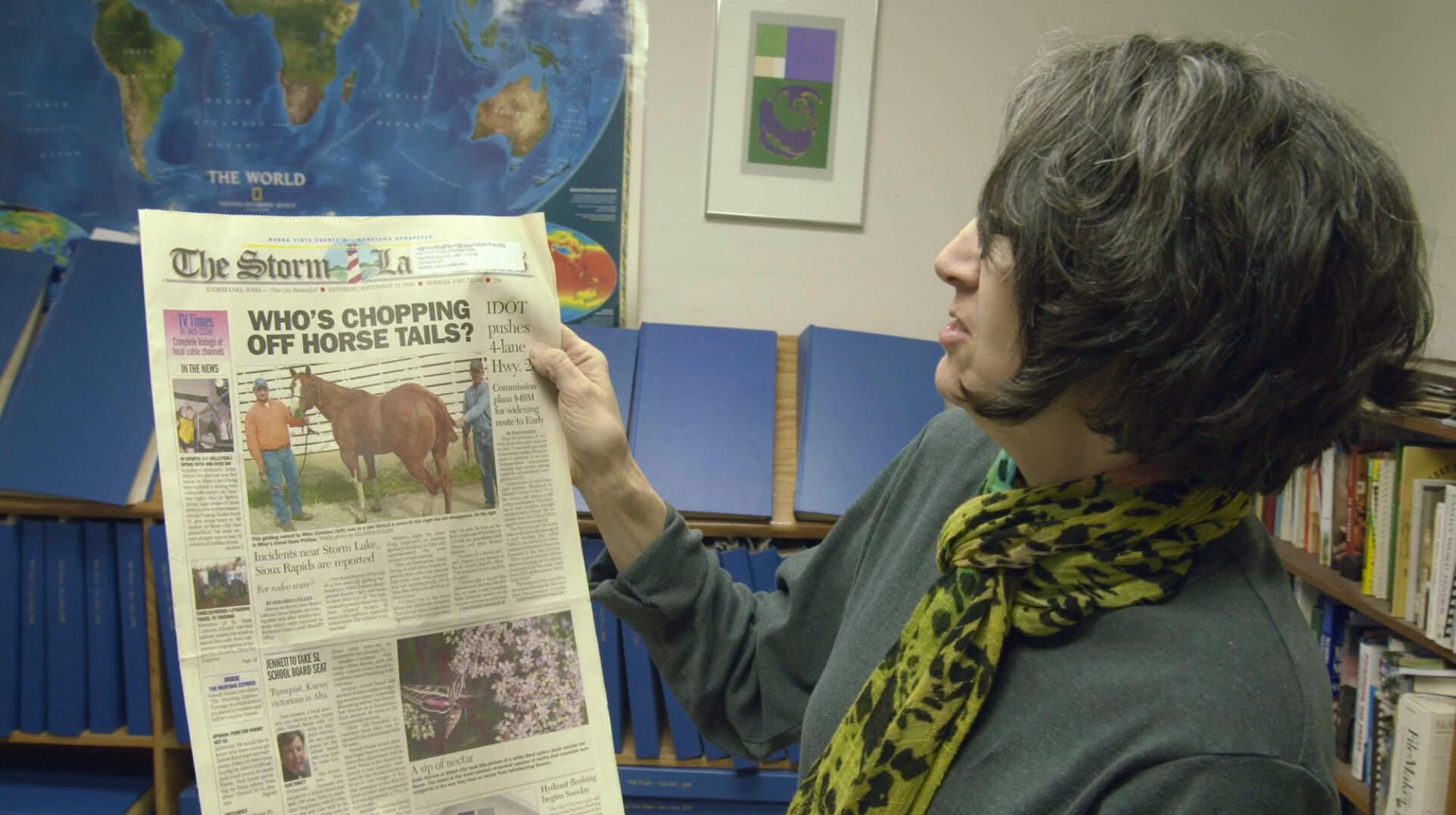
Bathed in small town and newspaper life nostalgia, “Storm Lake” preserves, under glass, a moment in time. We see what might be the last burst of glory for a Pulitzer Prize-winning small town Iowa newspaper as it doggedly carries on, fighting the good fight, covering everything about its shrinking and changing community and playing its part in Iowa’s quaint, dated political caucuses.

As we see the newspapering Cullen family, which founded the Storm Lake Times 30 or so years ago, and its staff nickel-and-diming their way through another year, we can’t help but feel Beth Levison/Jerry Risius film is capturing a lot of things that are going away, sooner rather than later.

“Storm Lake,” now in theaters and coming to the PBS series “Independent Lens” Nov. 15, documents a year in the life of the paper, starting with the politicking, small town parades and picnics of 2019 and into the caucus and pandemic year of 2020.

Mark Twain-mopped and mustachioed editor Art Cullen runs the newsroom, which is basically his son Tom as reporter and photographer, covering city hall, the county board of supervisors, the courts and politics, and Art’s wife Dolores as photographer and features writer, writing “happy stories about all kinds of people” in and around Storm Lake. Art’s brother John is the publisher, who has gone on Social Security so that he won’t draw a salary, keeping their bottom line in the black a while longer.

The family setter, Peaches, naps in the newsroom. There’s deadline pressure, even in a newspaper that publishes twice a week where the reporters and editor are family. An office manager/saleswoman walks door to door in the shrinking downtown, selling ads to the ever-declining number of “mom and pop” businesses in a community that used to service independent farmers, all of whom Big Ag and Tyson Foods have steadily swallowed up.

The Times won the coveted public service Pulitzer Prize for covering and editorializing about this change, the forces that were killing the town, emptying out Buena Vista County and dooming its newspaper.

Art preaches the “local, local local” ethos that is the difference between papers like this that hang on, and the hundreds that have ceased publishing, creating “newspaper deserts” all over America. “A pretty good rule is that a small town will be as strong as its newspaper and its banks,” and wax poetic that “the fabric of the place becomes frayed” if its newspaper fails or fails in its civic duty.

But a reader notes that “Art’s the voice of the Democrats, here,” a Jeremiah serving a leadership role in embracing immigration as the salvation of dying towns like this all over the Midwest. Thanks to food processing immigrant labor, Storm Lake has become more diverse, overnight. The county, slowly emptying out, is white, older and more conservative by the day thanks to the steady diet of Fox News and Sinclair Broadcasting TV and radio stations.

And those folks “didn’t like” the fact that The Times won a Pulitzer for covering the big businesses and Republican policies that are wiping them out.

Levison and Risius show us a newspaper with a circulation of 3,000 cover climate change, because Iowa “is getting warmer and wetter” every year, hitting agriculture hard. It covers immigration, schools that have to embrace dual language learning, and a Hispanic local Tyson worker who makes a mark in a Spanish language TV network’s national talent show.

And Art Cullen, fresh in the blush of their Pulitzer win, is interviewed by NPR and international reporters traveling in to cover Iowa’s increasingly out-of-step political caucuses, an entitlement that the state clings to, like overwhelmingly white and old New Hampshire, even though it no longer looks or votes like the majority of America, and looks nothing like the Democratic Party.

“Storm Lake” celebrates the professionalism of a newspaper family — the elders worked at newspapers elsewhere before starting this one — who put out a clean, polished news product week after week, embracing some changes and dodging others (Tom pitches the idea of a podcast. Art says “If I’d wanted to do radio…”). It’s an interesting companion piece to the 2011 film, “Page One: Inside The New York Times,” showing America’s starvation diet in local news from ground zero.

Small town civility is heralded. The people who disagree with the paper, from neighbors to teachers Tom remembers him complaining to him when he was in school, always do so with a neighborly respect, at least in the documentary.

But they aren’t subscribing. News sharing and co-publishing deals with a Spanish language statewide paper won’t save The Times, and the people who aren’t subscribing have become low information voters, blaming the wrong people for their woes because they’re told to, embracing the prejudices and agenda of conservative media that comes in via Facebook, cable TV or the omnipresent Sinclair.

And someday, all we’ll have to document this decline and fall will be a documentary about a plucky newspaper that printed fact-based news, sounded alarms, and paid the price for telling people what they don’t want to believe.

Rating: unrated, smoking, some profanity

Cast: Art Cullen, Dolores Cullen, Tom Cullen, Dr. Jill Biden, John Cullen, Elizabeth Warren, Pete Buttigieg, Julian Castro

Credits: Directed by Beth Levison and Jerry Risius. A Park Pictures/Good Gravy Films release

Running time: 1:25

Posted in Reviews, previews, profiles and movie news | Comments Off on Documentary Review: A Pulitzer-winning small town newspaper hangs on in “Storm Lake”

Movie Preview: Jenkins, Schumer, Yuen, Feldstein and Squibb bring an acclaimed play to the screen, “The Humans”

A24 has this one, a Nov. 24 release.

Posted in Reviews, previews, profiles and movie news | Comments Off on Movie Preview: Jenkins, Schumer, Yuen, Feldstein and Squibb bring an acclaimed play to the screen, “The Humans”

Movie Review: Aubrey Plaza rides herd on Michael Caine in pursuit of “Best Sellers”

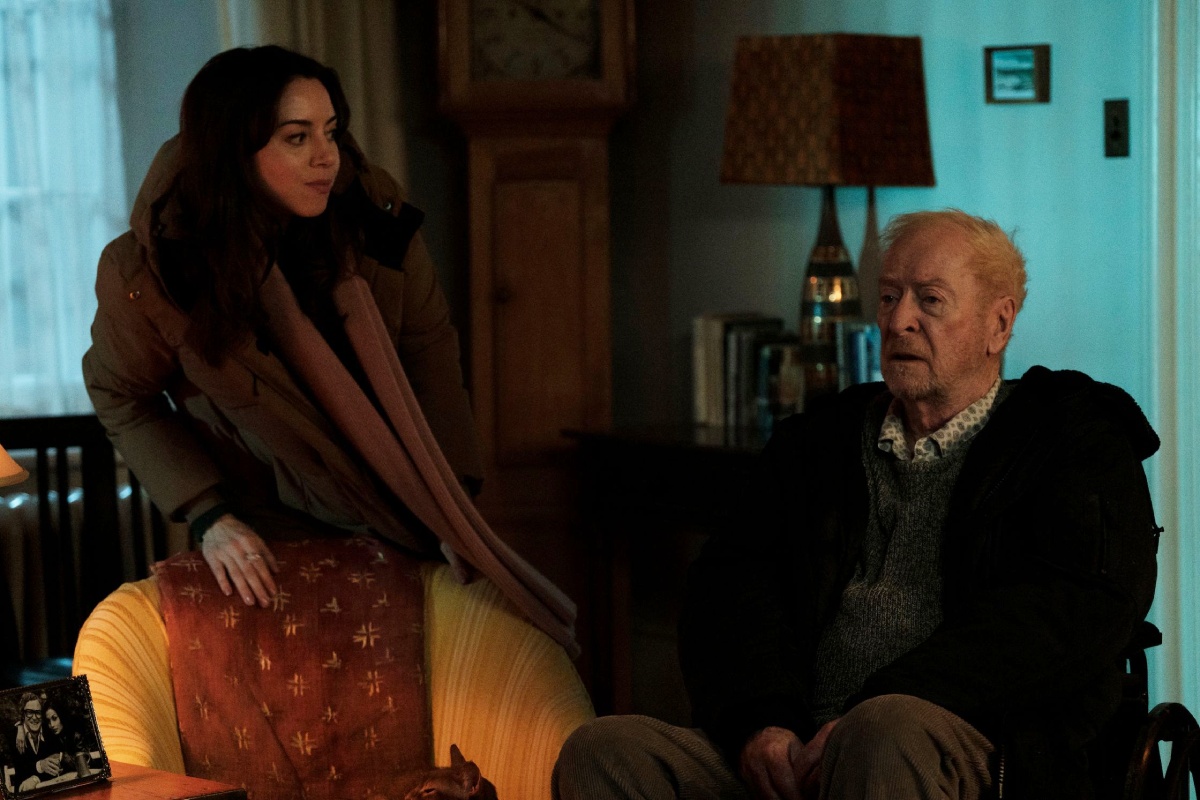
The pitch? Twinkly Michael Caine‘s a boozy crank of a writer, with sulky Aubrey Plaza the hapless, put-out “silver spoon” publisher trapped escorting the old drunk on a wintry book tour through, not bookstores, but accommodating bars.

Yes, “Best Sellers” could have been a hoot, leaving no drunk gag unrepeated and no Plaza dead-eyed double-take undelivered.

It isn’t. But that was never the goal of this uneven but sometimes warm, sometimes cute riff on publishing, writers, the book-flogging racket and an old man’s raging at the dying of the light. Neither great nor “awful” to any fan of reading, Johnny Walker Black Label, Caine or Plaza, think of “Best Sellers” as a light, sentimental page turner, more a low-hanging-fruit summer read than highbrow literary fiction.

Plaza is Lucy Stanbridge, who’s taken over her father’s tony New York imprint and is making rather a hash of things. Her YA authors are earning scathing reviews, and nothing else.

She and her aide Rachel (Ellen Wong, funny) brainstorm ideas to save the publishing house, and hit on the idea of reviving Lucy’s dad’s most important discovery. Sure, Harris Shaw hasn’t published anything since his breakthrough novel half a century before. And they’re not certain he’s still alive. But there’s this contract. And once upon a time he got an advance.

He’s “a drunk,” “a recluse” and “a madman” who “shot his last assistant.” He fled Britain as a tax evader and was “kicked out of Ireland for ‘poor behavior.’ IRELAND!”

“The world doesn’t need anything new from me,” he growls.

But he “owes me a book.” And after she’s confronted the souse with this news and gotten past the shotgun he points at the unwelcome outside world, after he’s chased her away and just as she’s about to finally sell-out to an old rival and ex-lover (Scott Speedman), Shaw hands over a manuscript.

All she’s got to do is raid her trust fund, publish “The Future is X-Rated,” publicize the hell out of it and save her company. All he’s got to do is do a “bloody tour” promoting it.

That tour begins with a disastrous but attention-grabbing meltdown in New York. As the cancellations pour in, a better idea supplants the first. They’ll tour bars instead, with the Great Writer doing his tipsy Dylan Thomas meets Norman Mailer shtick and Lucy selling books and pushing the title towards “critical mass,” that moment when a novel enters not just buzz, but the best seller lists.

This is the sunny, silly opening half of “Best Sellers,” Caine doing a foggy, self-destructive, anything-to-NOT-read-from-his-book performance art turn, Plaza’s Lucy driving him around in his ’80s vintage right-hand-drive Jaguar, trying to turn lemons into lemonade. She videos his nightly “BullSHYTE” tirades, the hip young barflies egging him on as his “readings” go viral.

No, the books still don’t sell. But he’s a Youtube star, for what that’s worth.

“I don’t GET it. Hipsters are supposed to love old things! Thrift stores and vinyl and communism.”

He just drinks his Johnny Walker, smokes his White Wolf cigars and hiccups through insults.

“You’re not very good at your job, are you ‘Silver Spoons?'”

The second half of “Best Sellers” slows down, almost to a halt, as assorted personal issues, “secrets” and the physical and psychological damage catches up with one and all.

But Cary Elwes makes the most of two scenes playing an effete New York Times book critic with a Capote complex. He’s the source of that first busted reading. Then we hear him on an NPR interview that manages to be even snootier than the real thing.

And there’s this lovely little touch, a grace note in actress turned director Lina Roessler’s somewhat ungainly debut feature film. Lucy hits on a clever way of getting “readings” of the new novel, its actual words, out before the public — just fans, reading a select passage here and there, video recorded and posted online.

It gets at the special relationship between writer and reader and at that increasingly rare corner of the public that loves words strung together in poetic, evocative sentences and thoughts. Lovely.

You’d have to go pretty far wrong to get me to pan anything pairing up Plaza with Caine, and “Best Sellers” tries its best, at times. But Caine does a grand grump, and Plaza reaches beyond her repertoire of eviscerating, man-eating side-eyes. They make this page-turner worth sticking with until the bittersweet end, and that’s enough.

Rating: unrated, smoking, profanity

Cast: Aubrey Plaza, Michael Caine, Scott Speedman, Cary Elwes and Ellen Wong

Credits: Directed by Lina Roessler, scripted by Anthony Grieco. A Screen Media release.

Running time: 1:42

Posted in Reviews, previews, profiles and movie news | Comments Off on Movie Review: Aubrey Plaza rides herd on Michael Caine in pursuit of “Best Sellers”

Netflixable? Romania is home to “The Father Who Moves Mountains (Tata mută munții)”

Today’s trek on Around the World with Netflix is a Romanian drama about power, obsession, guilt and regret.

“The Father Who Moves Mountains (Tata mută munții)” takes us into the Romanian winter where a politically-connected father (Adrian Titieni) frantically tries to organize the rescue of his son, lost-in-the-snowy Bucegi Mountains.

Mircea could be a villainous hero or a heroic villain in this tale. His obsession, the bullying and bribing, reason-ignoring and rule-bending he does in pursuit of his single-minded goal summons up memories of Romania’s bad old days, the Ceausescu police state where having power meant the rules were different for you.

He’s older, retired, a man who cheated on his first wife (Elena Purea) and is about to be a father again with his younger second bride (Judith Slate). He’s dyed his hair and his beard to match his new wife and new life.

When we meet him, he’s clumsily decorating a Christmas tree. We instantly gather that he’s important enough to ignore his phone, which is blowing up, to pay little heed of the TV, which is reporting two missing college kids in the mountains.

Then he answers the call. He rushes to the ski resort where this happened. The rescue team’s leader (Valeriu Andriuta) assures him that everything that can be done is being done. He won’t let Mircea go up to look for himself because “we’d have to rescue you” (in Romanian with English subtitles).

Mircea pleads “We can’t wait until morning,” and that “I have to do SOMETHING,” to the searchers and to his trusted aide (Virgil Aioanei).

He doesn’t want to hear “It’s in God’s hands now,” is even willing to pay the searchers to redouble their efforts. He’s not used to hearing “No.” He won’t stand for “nothing more can be done.” The family of the coed his son was hiking with are here, and relating “clairvoyant” relatives’ intuition to him, but he holds his temper.

And then his ex-wife arrives, and we pick up on their unresolved issues and the grief and rage which her Orthodox faith cannot lessen. His current wife shows up, too, pregnant and increasingly concerned.

When the once-powerful man takes matters into his own hands, her concern seems justified.

I like the way writer-director Daniel Sandu (“One Step Behind the Seraphim”) doles out the layers of Mircea’s entitlement, the help he summons that would not be available to the average citizen in today’s Romania, his “not my problem” attitude toward the family of others missing on that mountain.

The film never crosses from drama into thriller. There’s little suspense, and like Mircea, the viewer can wonder where the sense of urgency is.

The tech and military efficiency deployed in the story’s third act doesn’t change that, or fundamentally alter Mircea’s mental state or sense of lost power and the lack of control.

Titieni’s performance takes the character from brusque to what can feel like a performative level of compassion and concern, into guilt for the son he wasn’t there for and the wife he abandoned.

Mortality works its way in here as well. He can’t keep up with the search teams, can’t bull his way through this predicament toward any satisfactory conclusion.

The rocky terrain and snowy fog make a striking setting for this intimate morality tale, and Titieni’s compelling turn as a figure whose bull-in-a-china-shop present suggests a sinister past make this story of power, influence and their limits when life and death are on the line well worth watching.

Rating: TV-MA, smoking, profanity

Cast: Adrian Titieni, Judith State, Elena Purea, Virgil Aioanei,
Tudor Smoleanu and Valeriu Andriuta

Credits: Scripted and directed by Daniel Sandu. A Netflix release.

Running time:

Posted in Reviews, previews, profiles and movie news | 11 Comments

Documentary Review: Fish and New England fishermen stare down extinction — “Fish & Men”

The perilous state of our fisheries and endangered status of American commercial fisherman are explored, in depth, in “Fish & Men,” a new documentary centered on the dying commercial fishing industry of Gloucester, Massachusetts.

Filmmakers Darby Duffin and Adam J. Jones dip their toes in decades of fishing practices, destructive innovations, global economics and often day late and sand-dollar short government regulation to give us another dire warning about the state of the oceans and our ability to consume their bounty.

Overfishing, vast “factory trawlers” from China, Vietnam and elsewhere, are devouring seafood stocks outside the reach of U.S. government regulation, which has restrained smaller operators and sought to protect fish populations through “the most heavily regulated fishery in the world,” our own.

Scientists from the National Oceanic and Atmospheric Administration have been caught flatfooted, time and again, regulating here, closing fishing windows there, to no avail.

U.S. fish consumers don’t know where their fish is from. It’s sometimes caught here by a factory trawler, shipped to China, processed and dosed with chemicals, then shipped back and served “fresh” in markets and restaurants where unsuspecting consumers don’t know tuna isn’t supposed to look that pink, that it’s “tailpipe tuna.” It’s been gassed to give it that color.

And climate change to raising sea temperatures and stressing and moving cod and other fish to the few cooler waters left for them to thrive in.

One fisherman from Gloucester, whose fishery is “the oldest independent industry in the United States (400 years old),” pulls out his required logbook, noting prime catch and “bycatch” (fish caught inadvertently, but still sellable), ticking off the cod, haddock, etc.

“Gross revenue for the day?” he says, tallying it up. “$350.”

It’s no wonder American commercial fishermen are going under, faced with those sorts of takes and the economics of fuel, ice, crew payments and boat maintenance and payments.

We’re shown Canada’s contentious efforts to bring back fisheries by closing them altogether (it didn’t work) and the Norwegian model, where quotas, controls and all-important price supports ensure a decent living and grant fishing boat skippers and crews both a decent living and a modicum of respect.

Try to forget they also hunt whales and dolphins.

The filmmakers’ fresh angle to all this is talking to not just fishermen, fisheries managers and scientists, but to food writers, chefs, fishermen’s wives and activists, and ending their film with optimistic looks at things like shellfish aquaculture, where mussels, oysters et al are farmed in shallow salt water, improving the water quality of whatever lagoon or bay this takes place and providing seafood jobs. We hear how chefs and the seafood version of “farm to table,” “same day sourced” fish, where you know where the fish came from and who caught it, could be a boon to “buy local/eat local” movements to save fisheries.

But as we hear from food writers who dismiss American tastes and mass produced/processed seafood as “a dough delivery system,” catch the disdain for our narrow idea of what’s edible and our craving of cheap Filet o’Fish sandwiches, Long John Silver’s and Gorton’s fish sticks, the giant hole at the heart of “Fish & Men” comes to light.

This doc, finished in 2019, snobbishly leaves the consumer out of the picture altogether. We’re just proles who need to be “taught” that dogfish and monkfish are delish, that “fishing artisanal” for our “storied seafood” is something we’ll get behind once we know about it.

Price doesn’t figure into the conversation at all. Missing the notion that this was a big deal before the huge pandemic-spike in food prices, ridiculing “tasteless” tilapia and other farmed fish from the unregulated far east without giving a second’s thought to how tight money drove that “trash fish” onto the marketplace, was tone deaf in 2019, and stone cold deaf now.

Americans eat far less fish than most other industrialized countries, and it’s not just because we’ve been “scared away from fish” by news that many species seem fished-out, that “our oceans are empty.” The far more subsidized beef, pork and poultry industries give consumers a cheaper, albeit even more problematic, choice for meat protein.

The dire state of the fisheries isn’t being corrected, climate change isn’t being addressed and small business owner fisherman are aging, retiring and disappearing, with or without another documentary detailing this calamity. But “Fish & Men” still has messages in it we all need to hear, about the need for more shellfish farming, tighter controls and inspections of imported fish and a rethinking of the supply chain that allows fish caught here to be shipped to Asia for cheaper processing, then shipped back and marketed as “fresh” when it’s anything but.

Boat to table “storied seafood” may not save many fishermen. But it could save enough of these “watchdogs of the ocean” to make a difference.

Rating: unrated, profanity

Cast: John Tierney, John Bullard, Sefatia Romeo Theken, Jeffrey Bolster, Jackie O’Dell, Josh Wiersma, Eric Ripert, many others

Credits: Directed by Darby Duffin and Adam R. Jones. A Virgil Films release.

Running time: 1:25

Posted in Reviews, previews, profiles and movie news | Comments Off on Documentary Review: Fish and New England fishermen stare down extinction — “Fish & Men”

Movie preview: Guillermo del Toro’s all star period fantasy/thriller “Nightmare Alley”

This is something to see.

A circus sideshow tale of “Man or beast?” starring Bradley Cooper, Cate Blanchette, Rooney Mara, Willem Dafoe, Richard Jenkins…I

It’s based on the William Lindsay Gresham novel that was the basis for a Tyrone Power/Joan Blondell classic of 1947, directed by Edmund Goulding.

An early Christmas present, “Nightmare Alley.”

Posted in Reviews, previews, profiles and movie news | Comments Off on Movie preview: Guillermo del Toro’s all star period fantasy/thriller “Nightmare Alley”

Netflixable? Horror with training wheels on, “Nightbooks”

Excellent effects and production values and casting Krysten Ritter as a witch (Why knew?) pays off in “Nightbooks,” a Goosebumped take on Hansel & Gretel.

It’s a kid-friendly horror tale — terror with training wheels on — about children lured with sweets, trapped and forced to entertain the witch each night with new stories designed to chill, thrill and creep out.

But there’s a gaping hole in the heart of it that you can almost guess from that plot description. The stories, invented by a little horror buff named Alex (Winslow Fegley), may be somewhat fancifully illustrated — children act them out in stage fog and in front of dark, expressionistic cyclorama paintings — but are seriously lame and not remotely scary.

They sound, in point of fact, like what they are supposed to be, a child’s idea of what a scary story might be — underwritten, plot-and-setting heavy, obvious.

Alex is in mid-meltdown when we meet him, a kid whose parents are heard discussing his troubling “obsession with horror.” He’s yelling about how bad this, that or the other story he’s written is when he storms into the elevator with an idea of burning them in the basement boiler room of their apartment complex.

But that elevator never arrives. Not there, anyway. He finds himself on a darkened floor, tempted into a darkened apartment where “The Lost Boys” is playing on TV. He can’t resist taking a bite of the pumpkin pie next to the television.

And when he wakes up, there’s no getting out of this strange, many-roomed, Hogwarts maze of an apartment. A bleached blonde witch (Ritter) demands, “Is there ANYthing special about you at all?” You know, something that would cause her to “let you live?”

“I write scary stories.”

Thus begins his Sisyphean task, coming up with something out of his backpack filled with his tales that will move his sharpest critic. The witch corrects, criticizes and insults the “The Playground,” “The Cuckoo Clock” and other short stories.

Let’s just say Alex is not exactly the second coming of Edgar Allan Poe. By rights, the witch should lose patience, lose her temper and bake him into a pie or something for these seriously-lacking scribblings.

There have been other kids lured there, trapped in this apartment. He learns that from Yasmin (Lidya Jewett), another survivor. There’s also a vast repository of horror tales in this never-ending library. Some are in published books, others in notebooks, stories written by hand by other, earlier children.

In those stories, in what long-term prisoner Yasmin has picked up and in Alex’s racing mind their might be clues to a way of getting out of this perilous purgatory.

There’s a lot of goo and slime to be endured. A (digital) hairless cat who can turn invisible is prone to pooping on the kids’ PB&J sandwiches). If you’re nine, you were probably sold on the story with just that plot element.

But there are troubling other rooms and gardens and creatures — crawling, buglike story-eaters called “shredders” — to be faced and bested. And every night, the witch returns, digs into a big meal and demands to be entertained with a story. Talk about pressure.

The act of writing is hard to render cinematic, and director David Yarovetsky (“Brightburn”) doesn’t succeed where others have failed. A little boy stomping back and firth, spitballing plots and ideas? Very “writer’s room.”

Despite moments of kiddie torture, the ongoing threat posed by our witch, who “won’t just kill you” if you fail, doesn’t raise the stakes or hackles. And while the finale works up a fine level of sound and fury, it’s something even a ten year-old — or at least one who’s been read “Hansel & Gretel” — could see coming.

The idea behind this Sam Raimi-produced movie is that the next generation of horror fans have got to start somewhere. “Goosebumps” or The Brothers Grimm or J.A. White (the author of the source novel here) are just gateway drugs to “Insidious/Annabelle/Amityville/Halloween,” right?

This may very well accomplish that, and one gets the sense they signed Ritter up for a franchise. But throwing a lot of production design at the limp stories within this recycled tale doesn’t make it look or play scary. It just makes it loud and expensive looking. Cute.

Rating: TV-PG, mild frights

Cast: Winslow Fegley, Lidya Jewett and Krysten Ritter.

Credits: Directed by David Yarovetsky, scripted by Mikki Daughtry and Tobias Iaconis, based on a novel by J.A. White. A Netflix release.

Running time: 1:43

Posted in Reviews, previews, profiles and movie news | Comments Off on Netflixable? Horror with training wheels on, “Nightbooks”