Twee? Check. “Vintage? Retro? Sure. Animated? And adorable? Check and check again.
“The French Dispatch” comes out Oct. 22. At last.
Twee? Check. “Vintage? Retro? Sure. Animated? And adorable? Check and check again.
“The French Dispatch” comes out Oct. 22. At last.


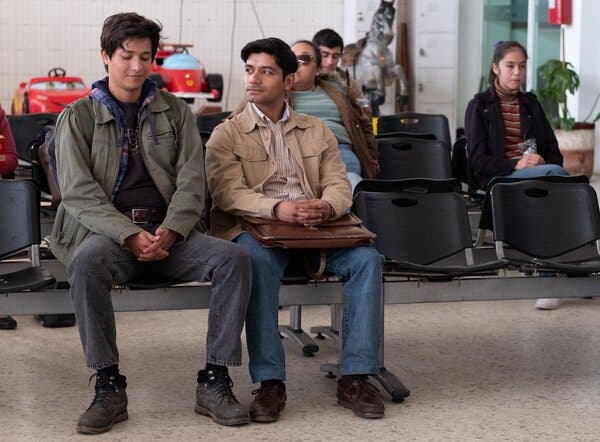
Justin Chon‘s “Blue Bayou” could be a companion piece to Lee Isaac Chung’s Oscar-winning “Minari.” It’s a grittier and far more downbeat look at a bleak version of the Korean-American immigration experience.
Writer, director and star Chon, who gave us “Gook” and “Ms. Purple,” tells the story of a drawling, motorcycling 30something New Orleans tattoo artist who first came to America via adoption 30 years before. And judging from his present, growing up wasn’t the sunniest of experiences for Antonio LeBlanc.
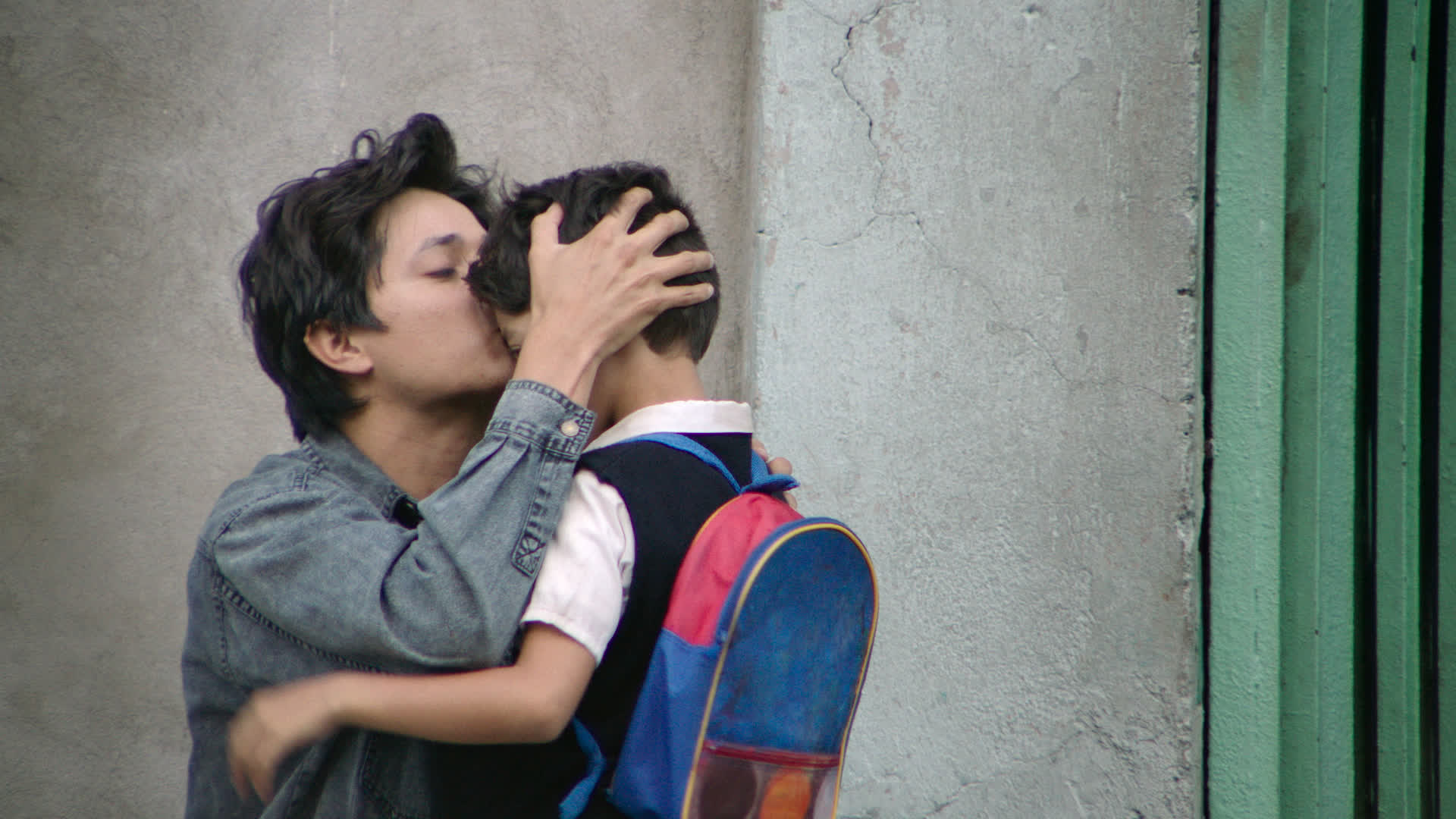
We meet Antonio, who naturally has to explain “Where’re you from?” twice, in a job interview. He needs extra work and loves working on motorcycles. He’s got his adorable, kindergarten-age stepdaughter Jessie (Sydney Kowalske) with him.
He grew up in St. Francisville, and he came from Korea as a toddler. But all that matters to the unseen interviewer is the two felony convictions on his record.
Antonio’s a bit desperate as he and his wife have another baby on the way. Kathy, played by Oscar winner Alicia Vikander, is a very pregnant physical therapist who says what good wives do, that “things will work out.” But even as a walking ad for his tattoo skills, Antonio won’t be able to drum up enough business to support them.
And the thing that landed him in jail, twice, might be tempting again if cash gets tight.
He’s a doting step-dad, but new enough to it to irk his wife over his constant indulgences of Jessie. She’s always grabbing her favorite foods and sweets at the supermarket, and left on her own, dresses for school like a costume shop is having a fire sale.
“You need to be her parent, not her friend!”
Then there’s Kathy’s ex. Ace is a cop (Mark O’Brien) who walked out on her and little Jessie, and is making noise as only a cop can about his “rights” regarding visitation with a little girl who is both afraid of him and unforgiving. What’s worse, Kathy’s ex has a partner (Emory Cohen) who is even less shy at throwing around his uniformed weight in an effort to intimidate Kathy and Antonio and “help” Ace out.
Antonio may be pals with an ICE agent (Toby Vitrano). But when cops decide to make your immigrant life hell, you can bet “deportation” is included in their bag of threats. They’re going to need a lawyer (Vondie Curtis-Hall). They’re going to need money for that lawyer.
Chon tells this story in documentary-harsh colors and natural lighting, with the loveliest images dreamy flashbacks to a woman we figure out was Antonio’s mother, in a key moment in his childhood.
He peels away layer’s of Antonio’s past as he adds complications to his present. His mother-in-law (Geraldine Singer) wants nothing to do with him, and when the chips are down, she’s quick to remind Kathy “He’s not American. You’re not responsible for him!”
And then there’s stranger he meets at the hospital where Kathy gets her ultrasound. Parker (Linh Dan Pham) is older and takes an instant interest in Antonio and his little family. She drifts into the story as a woman of mystery, clinging to Antonio for reasons that aren’t all that clear even after they’re supposedly “explained.”
The big contrast is that Antonio has wholly assimilated. We have no notion that he remembers much about Korea or so much as a word or two of Korean. Parker has family, and they embrace Louisiana life even as they cling to vestiges of the country they left.
Chon has wonderful scenes with little Miss Kowalske, answering Jessie’s heartbreaking questions as she’s too little to understand much of what’s going on. She only has her own limited experience of the world to draw on, and to her, Daddies leave or are taken away. Is Mommy next?
Chon shines as the lead, bringing working poor reality to this guy who is facing not just a crisis, but has to re-engineer his limited life to plan for a future.
Vikander is in Oscar winning form, as usual, bringing this earthy, pragmatic and protective mother to life. She doesn’t put much into Kathy’s Big Easy drawl, but navigates the waters between nurturing and fierce protectiveness with such ease she takes your breath away.
And damned if she doesn’t sing the title Roy Orbison song (famously covered by Linda Ronstadt) with conviction, emotion and range that just knocks you out.
“Blue Bayou” sells its subtext with subtle skill for two acts, but Chon shifts to send-a-message mode in an overdrawn third act and downright manipulative finale. There’s a righteous outrage at the heart of the story, but all I have to say is “airport scene” to give away that he overdoes it.
It’s still a winning and quite moving look at the immigrant experience, and how fragile and fraught this past decade’s politics have revealed it to be.
Rating: R for language (profanity) throughout, violence, smoking
Cast: Justin Chon, Alicia Vikander, Sydney Kowalske, Mark O’Brien,
Linh Dan Pham, Emory Cohen and Vondie-Curtis Hall.
Credits: Scripted and directed by Justin Chon. An eOne movie released by Focus.
Running time: 1:57


Let’s put all the “Dear Evan Hansen” bashing into context, shall we?
Here’s what 2021, what was supposed to be our post-pandemic year at the movies, has given us in musical form. “Everybody’s Talking About Jamie,” felt dated and quaint, but wasn’t bad. “In the Heights” wasn’t remotely in the same league with Lin-Manuel Miranda’s follow-up, “Hamilton,” and lacks the charm of his Netflix cartoon musical “Vivo.” “Come from Away” was captured, on stage, where its small-town-does-big-things conceit works. There was also the Sparks Brothers’ quasi-daring, generally unsatisfying “Annette,” and another “Cinderella” (Amazon streaming only).
“Hansen,” a winner of half a dozen Tony Awards four years ago, was always going to be the weakest of that lot, pretty much by default. And let’s hope it remains that way as “Tick Tick…Boom!” and a remake of “West Side Story” are yet to come.
Why list the other adaptations or composed for the screen musicals surrounding it? Every Broadway era is filled with forgettable and forgotten musicals, some of them with a bookshelf covered with Tonys to show for it. A Broadway Twitter take that I read worried “that people will think everything Broadway produces” is as middling as this dramatically-limp take on the squishy social media-age “bullied/anxious/you’re not alone” obsession, one built on over-performed and instantly-forgettable songs that sound like ’90s Christian Pop radio anthems.
Maybe Broadway’s long obsession with the tourist trade has rubbed some of the edges off musical theater. Because this isn’t “The Book of Mormon” or “Hamilton.” Lump “Evan” in with “Jamie,” in with the legions of film adaptations (“Waitress,” “Billy Elliot”) or even “High School Musical.” The emotions reached for are as generic and blandly predictable as the music.
“Dear Evan Hansen” is a tale of grief and a serio-comic mistake in the middle of that mourning that turns into a sort of life-affirming prank.
A show that grapples with the fragility of today’s middle-class-and-up adolescents — anxious, isolated, medicated and bullied, in person and online — it becomes a film that takes a long time to find that “grief,” one whose lighter moments are few and generally trite. And it’s a movie that needed to recast its plummy-voiced lead with a younger, lesser singer better able to convey high school angst.
Director Stephen Chbosky did “Perks of Being a Wallflower,” a wonderful film set in a similar high school angsty and upper-classish milieu. But as the film was produced by the father of Ben Platt, the Tony winner in the title role, that “let’s make it more real” move was never going to happen.
Platt plays Hansen as the classic wallflower, almost friendless, anonymous, and singing about it.
“Step out, step outta the sun, if you keep getting burned.”
He crushes on rich girl Zoe (Kaitlyn Dever), guitarist with the Westview High pep band, and can’t express that to her. He confides in his “only friend,” the droll, bitchy and gay Jared (Nick Dodani of TV’s “Atypical”), who corrects him with the put-down, “we’re FAMILY friends,” as in their parents know each other and thus, they’re not close.
Evan, fragile and in therapy and on three different anti-anxiety medications, has a couple of rough encounters with the troubled Connor Murphy (Colton Ryan), Zoe’s older brother, given to threatening outbursts but plainly going through things himself.
That’s how Evan’s “write a self-affirming letter to yourself every day” assignment from his unseen therapist blows up in his face. All his worries, anxieties, his crush on Zoe, laid out in a couple of paragraphs that he prints out, and that Connor finds and takes from him.
Evan’s worst fear is that the jerk will post it online. He never considers that the jerk will go home, kill himself, and his “Dear Evan Hansen” letter found on Connor’s body will read like a compassionate reaching out to a friend, and a sad suicide note addressed to that friend seemingly composed by a raging, medicated, in-and-out-of-mental-hospitals ticking bomb that no one in their high school will miss.
“Dear Evan Hansen” is about Connor’s family reaching out and questioning the kid about her dead son’s “secret” life and secret friend, about the Evan’s lie-on-the-fly inventions, words of comfort about that dead son and their non-existent friendship. And it’s about how that misguided but understandable string of lies, just to make Connor’s mom (Amy Adams) feel better, build and spread and reinvent Connor’s image, and in the end, blows up in everybody’s faces.
Evan’s ulterior motives concern getting closer to Zoe, who hated her brother, who could be cruel and self-absorbed and sucked up all her parents’ (Danny Pino plays the stepdad) energy and attention.
Evan’s “comforting” efforts include inventing email exchanges with the help of Jared. “Sincerely Me,” a trio number about composing these fanciful notes in a way that won’t make the “friends” look like same-sex lovers, is the lone light moment in “Dear Evan Hansen,” and is inventively staged and filmed as Evan and Jared try drafts and ideas out that the dead Connor, wandering the halls of their high school as if he never died, sings and corrects and sings again.
“Cause all it takes is a little reinvention, it’s easy to change if you give it your attention.”
A “new” Connor emerges, post-mortem. And the school’s popular, hyper-active activist student body and every-other-club president Alana (Amandla Stenberg of “The Hate You Give,” “Everything Everything” and TV’s “The Eddy”) grabs onto paying tribute to their dead classmate as her latest cause.
Things mushroom from there.
What took me aback about the film was how nobody in Connor’s family is riven with grief. Amy Adams can make us cry at the drop of tear, but the film makes Mother and Stepdad and can’t-process-her-mixed-feelings daughter work and work and work towards anything resembling a realistic response to a child’s suicide.
The whole Connor as their “substitute son” business left me cold. Julianne Moore, cast as Evan’s always-working nurse-mother, may have a solo and a couple of decent scenes, but seems wasted in a part that’s thinly-developed.
The pall that hangs over the story never lets the tumbling dominoes of lies develop the kind of comic momentum that would have energized the picture. “Meet John Doe” and other plays and films have a similar premise — a letter mistaken for something it isn’t, layers of comical lies cover that up, etc. It just doesn’t come to life here.
On the plus side, Adams and Moore have a confrontation that is brittle and bitter, but even that falls just short of what it might have been.
The radiant Stenberg almost steals the picture as the classic “always moving” “popular” girl who lets Evan know they have more in common than he realizes. Prescriptions, for starters. She has a nice, reflective and somber solo that she co-wrote for the film, “The Anonymous Ones.”
“The parts we can’t tell, we carry them well, but that doesn’t mean they’re not heavy.”
Ryan is properly volcanic as Connor, a kid people would stay away from and no one truly understands. Dever (“Booksmart”) gives us a taste of how a grittier, more realistic “Dear Evan” might have played. She’s not a bad singer, either.
And Dondani is kind of amusing playing the gay-not-quite-best-friend cliche.
But Platt’s been playing the guy so wrong he embellishes every lyrical line with distracting musical flourishes. The show-off. It’s a mannered performance that never lets us forget it’s a “performance.”
The social media aspect of the story is tired, even if it wasn’t when this show hit Broadway. There’s a squishy, undefined quality about the “problem” this musical is addressing, and that goes for the feel-good cultural myth that being told “you’re not alone” is a comfort or even part of a “solution” to what’s gone wrong with Evan’s, Connor’s, Zoe’s and Alana’s lives.
I dare say every review of this adaptation has the words “well-intentioned” in it. “Sweet,” too. So it is. But if that’s the best thing you can say about it, well…
Rating: Rated PG-13 for thematic material involving suicide, brief strong language and some suggestive reference
Cast: Ben Platt, Kaitlyn Dever, Colton Ryan, Amy Adams, Amandla Stenberg, Danny Pino, Nik Dondani, and Julianne Moore
Credits: Directed by Stephen Chbosky, scripted by Steven Levenson, based on his stage musical, music and lyrics by Benj Pasek and Justin Paul. A Universal release.
Running time:
Never caught it on the stage, but one certainly hears all about it on Broadway websites and such.
Another uplifting musical about self confidence, acceptance, tolerance, self worth, how mean everybody is in high school.
Frank Grillo and William Forsyth co star in this Nov. 5 thriller. Could be a solid B picture. Love the genre.


We call films that try telling a story in a different way “innovative” or “experimental” when they work, “gimmicky” when they don’t.
“Lone Wolf” is an Australian thriller about police infiltration and documentation of an anarchist protestor group, what goes wrong and who covers up what. It’s told through accumulated closed circuit TV, police surveillance mini-cam and cell phone video footage.
That creates a mildly-chilling “found footage” vibe, emphasis on “mildly.” But despite a reasonably consistent visual strategy — most scenes have a “Here’s where the camera is, and this is why it’s there” logic — it manages no suspense, and zero “thrills.”
It’s gimmicky. The revolution may still be televised, but it still needs violent action to come off.
Much of the story is related through a large video file that a police investigator (Diana Glenn) makes her two superiors (Hugo Weaving and Stephen Curry) sit through. It’s related to a crime that they’ve all been investigating, an “incident” from when Australia hosted a G20 summit.
We see traffic control camera footage of Melbourne street scenes, and hacked CCTV security footage from inside a book store and “marital aids” shop, Night Watchman Books. Winnie (Tilda Cobham-Hervey of “Hotel Mumbai”) runs the register and keeps an eye on her slightly younger brother.
Stevie (Chris Bunton of “Relic”) is “on the spectrum,” high-functioning but labeled “diminished capacity.” He’s sensitive to loud noises and shouting and is fond of recording cell phone video of the people in his life and strangers on the street, narrating his observations about these strange animals called the human race in imitation of his favorite TV presenter, Sir David Attenborough.
“Do they even know they’re being watched?” Stevie wonders. Indeed.
Winnie’s an animal rights activist living with musician and anarchist Conrad (Josh McConville of “Fantasy Island”). Conrad may wear the T-shirts with the anarchist “A” symbol on them, and work in a shop that sells “The Anarchist Cookbook.” But he prefers the label “minarchist.” That explains the name of the shop. They’re minimal government liberatarians advocating a mere “night watchman state.”
They muddle along, not selling enough books or what have you to make rent, with Conrad meeting up with his co-conspirators Hippy Karl (Tyler Coppin), Father Michaelis (Lawrence Mooney) and the shallow, rich gigolo Alex Ossipon (Marlon Williams) to pointlessly debate this or that, and do nothing about it.
They aren’t a “cell,” no matter what they might be capable of. Stevie, who collects “collective nouns,” provides the right word to describe them. They’re a “whoop” of gorillas.
Then a mysterious man of money and motivation named Vladimir throws money at Conrad to stage something during the G20.
“To truly influence public opinion, you need to commit an outrage.” He has in mind a “victimless atrocity.” Conrad won’t bite, but Vladimir (Karlis Zaid) knows that Conrad’s a police informant, and now so do we. “If word of that got out” is great blackmail.
We get the dynamic of this “family,” go an hour between the opening and again seeing the police watching all this captured footage in the office of the corrupt, cynical minister of public safety (Weaving). In essence, writer-director Jonathan Ogilvie (“Emulsion”) misses most of what would have made this “thriller” thrilling.
The limited camera point of view narrows down what we get to see. Ossipon hitting on Winnie, Stevie joining them for a trip to the beach, our “minister” captured on video call having sex with his “rent boy,” etc.
The most interesting CCTV moment is an earlier animal rights stunt, activists disguised in wolfshead masks, free baby chicks, herding them out of frame and into the camera’s field of vision. That’s the movie “Lone Wolf” could have been.
Little of the planning and none of the prep for the “atrocity” is seen. The script has reasons for that, “twists” at the tail end of the picture. By then, the quiet, action-starved and static shots of actors mostly under-acting for CCTV or surveillance cameras (some black-and-white) has robbed “Lone Wolf” of any suspense or urgency.
The film manages to be intriguing but seriously dull.
The earliest antecedent for this sort of picture might be Sidney Lumet’s “The Anderson Tapes,” a 1971 heist picture reconstructed through secret police recordings of those involved. Lumet knew that you can’t cheat the viewer of action, violence, suspense about what will happen and to whom, just to serve your stylistic approach.
Otherwise, all you’re left with is just a gimmick.
Rating: unrated, violence, sex, profanity
Cast: Tilda Cobham-Hervey, Josh McConville, Diana Glenn, Chris Bunton, Marlon Williams and Hugo Weaving.
Credits: Scripted and directed by Jonathan Olgilve. A Gravitas Ventures release.
Running time: 1:44
Black and white, foggy and soundstagy, this looks a bit like the Orson Welles “Macbeth” of the ’40s.
This holiday treat (Dec. 25 in theaters, Jan. on Apple TV+) comes from A24 and Apple.


“Baggage” some call it. “Complications” is what it is. The longer you live, the more experiences you’ve had, bad and good, and the more your pile of memories, traumas, triumphs and tragedies dictates how you respond to the world and to the people you encounter in it.
Here’s a delicate British melodrama that resides on the melancholy side of the tracks. Two seniors, “OAPs” (old age pensioners) meet, warily circle each other and eventually reveal their baggage during “23 Walks” with their dogs.
Dave (Dave Johns of “I, Daniel Blake” and “Fisherman’s Friends”) is the outgoing one, chatting with a friend he sees on his daily walks, doting on his aged Alsatian Tilly.
Calling Fern — played by Alison Steadman of Mike Leigh’s “Life is Sweet,” Mrs. Bennett of the classic TV “Pride & Prejudice” — “wary” is an understatement. Her first greeting, in a narrow path hemmed in by fences, is “Put your DOG on a LEAD!”
Making peace is going to be a chore with the lady walking the yappie Yorkie Henry.
“Can I give him a treat?”
“I don’t THINK so.”
Each chance encounter in the park is a tad on the fraught side.
“Ok if we walk with you?”
“It’s a free country!”
This Paul Morrison (“Little Ashes”) film takes its time letting us know character’s names, takes its time setting up the budding relationship “23 Walks” is about and takes its time piling on complications, the “secrets” and “baggage” these two bring, along with their dogs on these “chance” encounters.
For starters, the bump-intos aren’t chance at all. Dave is interested, patient and persistent. Fern is so testy and tetchy, he has to be.
Over the course of those 23 walks, they will grow closer and tear apart, reach a rapprochement and abruptly shut-down once again. Hard won experience and hard-moments of hurt come back to the surface for each of them.
Both Steadman, who not only worked with but was married to the great chronicler of British working class realism Mike Leigh, and Johns, a comic actor on TV who had a later-life breakthrough in film working with Ken Loach on “I, Daniel Blake,” are throwbacks to the “kitchen sink realism” of British theater, which endures in British film thanks to filmmakers they’ve worked with.
The “issues” with this possible relationship range from a messy divorce and eviction to adult children and an aged dog. And those are just for starters. At times it seems Morrison is tossing everything but the kitchen sink at these two.
These get to be a bit much for us, and for Fern, the divorced one who does most of the breaking up.
“It’s all got too complicated.”
But the grace notes carry these “23 Walks,” which range from parks to the countryside surrounding London and include impromptu Spanish lessons — he learned it from a cleaning lady, she needs to understand it for a daughter’s wedding in the Canary Islands — and a sing-along to fondly-remembered comic ditty about wallowing in the mud from their youth.
And there’s a grand rapport between our stars, something warmer than mere “chemistry” — a shared history, despite the fact that the characters have only just met. The retired nurse and former showgirl’s banter has an easy familiarity.
“Sing me a song.”
“Oh Dave, you don’t know what you’re asking!”
“Pretend you’re in the bath!”
“I was never a STRIPPER!”
The sadness that courses through this uneasy and deliberate courtship won’t be to every taste. But for the brave, for those experienced enough to know about “baggage” and that no one gets out of here alive, this tale of finding a surprise connection in the twilight years, overcoming shrinking horizons and the burden of grief, disappointment and melancholy will resonate.
Rating: unrated, sex, profanity
Cast: Alison Steadman, Dave Johns
Credits: Scripted and directed by Paul Morrison. A Gravitas Ventures release.
Running time: 1:42
Yeah, just what we need. More “proof” for the wackjobs.
But but but, I saw it on a MOVIE.
“Implanted” enters release Oct.1.


Today’s Around the World with Netflix presentation lets us know that rich, womanizing douche-bros in Brazil are every bit as contemptible as anywhere else.
But with the title “Rich in Love (Ricos de Amor),” you have to know that the heel, the scion of a tomato empire, is redeemable.
That’s the story here, a born-rich party boy from Paty de Alferes dabbles in switching identities with the son of a servant and takes his stab at winning a job he’d be handed on a silver platter under his own name. And maybe he’ll win a love who won’t be after him for his money if she thinks he’s charming and poor.
Deep. And here and there, almost cute.
Danilo Mesquita plays Teto, heir to the Trancoso Tomato products empire run by his widowed dad (veteran character actor Ernani Moraes). The kid’s lazy, selfish and spoiled, and he’s pretty much bedded every young woman in town.
If it wasn’t for Igor (Jaffar Bambirra) he wouldn’t have any real friends. But Igor’s the housekeeper’s son, one hoping to get to college so that he can make something of himself. Fat chance with Teto taking up all his time, making Igor drive home any woman who wakes up in his bed and winning all these “bets” that somehow one suspects Igor has to let the rich kid win.
“You need to grow up, Teto,” (in Portuguese, with English subtitles, or dubbed) is the general consensus.
A bet is how Igor is forced to tag along as rich boy picks out the Land Rover convertible he wants for his birthday. Igor isn’t even on “the list” for Teto’s lavish Tomato Festival birthday party, which shames rich dude enough to switch IDs with “my brother” Igor for the night.
That “tomato prince” ID does a little for Igor. But passing himself off as Igor gets complicated for the real “prince” Teto when he meets the lovely med school student Paula (Giovanna Lancellotti) from Rio, in town for a bachelorette weekend.
Gosh, our two “small town party guys” have to go to Rio, under their switched identities, so that Teto can continue his pursuit. Igor? He can enroll, with Teto, in the company’s new young executive recruiting program, where nobody knows what the boss’s son looks like, save for the smart and sharp young exec Monique (Lellê) who was laid off to create the upcoming opening Teto has been groomed for.
The comedy’s candy-colored/tomato-pasted facade covers a half-hearted effort to jam some social commentary in here. Monique lives in the favela, the “dangerous” poor neighborhoods high on the hillside. Teto will need her help “winning” the job since he’s posing as Igor, “a regular guy” with no special name and privilege.
It makes little sense that Monique would help, but she is “moved by your rich boy problems” and does.
Another slice of searing social commentary is Paula’s struggle to land the only residency at the hospital where she’s been studying. She is the sharpest intern in the class, but damned if her supervising physician (Caio Paduan) isn’t all over her. Her good looks are her ticket to harassment.
Igor also finds himself targeted by his fetching internship supervisor, Alana (Fernanda Paes Leme), who kisses up to the boss’s son, and who doesn’t want to stop at kissing.
“Rich in Love” is just a series of limp mistaken identity mixups and even lamer protect-that-mistaken-identity gags. There’s barely a laugh in this, and even the “sweet” moments play as patronizing, boons granted by the rich to the lesser folk.
The script shortchanges Igor’s agenda so much that I couldn’t figure out, at times, why he was going along with any of them.
Frankly, I think they could a lot more with the whole tomatoes thing.
The cast is uniformly sexy, but the romances presented don’t spark, mostly owing to how unnatural and artificial they feel. At the end of any rom-com, you like to think “she belongs with him/he belongs with her,” and here that just isn’t true.
Plot complications are painted over to such a degree
Rating: TV-14, drinking and drugging and hooking up
Cast: Danilo Mesquita, Giovanna Lancellotti, Jaffar Bambirra, Ernani Moraes, Fernanda Paes Leme, Caio Paduan and Lellê
Credits: Directed by Bruno Garotti, scripted by Júlio Uchoa. A Netflix release.
Running time: 1:46