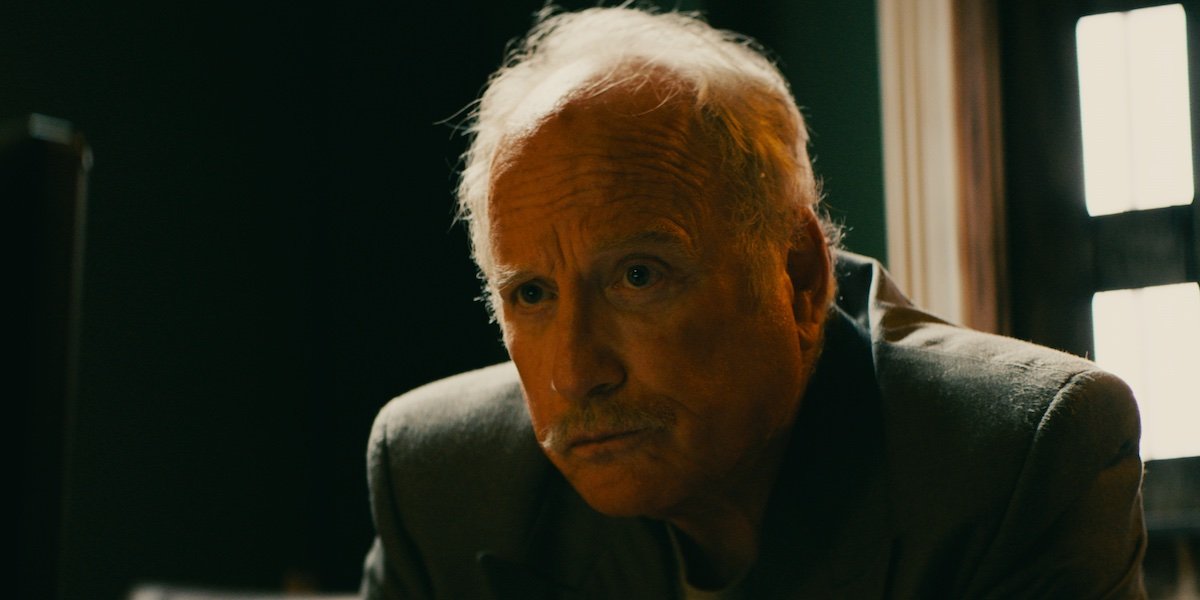
BOX OFFICE: Is “Eternals,” the “Worst Reviewed MCU movie ever,” headed for a Box Office bust?

Chloe Zhao’s “Eternals” isn’t headed down the box office toilet, by any means.

It did a brisk just-under-$10 million Thursday night — below the pandemic era peaks for Marvel movies — and was over $30 million by Friday night.

But as Deadline.com points out, the reviews have been indifferent to bad and Cinemascore polling from folks leaving the theater is telling Marvel and our “Nomadland” Oscar winning filmmaker that they weren’t a good match.

So a $70 million weekend may be what we see, or something in the $60s if Saturday doesn’t pan out. Those are “Ant Man” numbers, nowhere near “Black Widow” or “Venom/Carnage.”

Netflix isn’t reporting the box office take of its soon-to-be-streamed Red Notice.” I will be reviewing that in a few minutes, and the fact that it cost $200 million should make them hope for at least a little cash from the brick and mortar cinemas before it has to pay the rent with the streaming service.

They haven’t had the best of luck with big budget action films, so fingers crossed.

“Dune” is sliding down the charts, and won’t clear $7 million this weekend.

The Kristen Stewart “Spencer” movie about Princess Diana is bombing. I will see that Sunday. Neon’s marketing department is out to lunch (no pitch, no response to queries), which may explain why this Oscar bait with good reviews isn’t doing diddly.

Posted in Reviews, previews, profiles and movie news | Comments Off on BOX OFFICE: Is “Eternals,” the “Worst Reviewed MCU movie ever,” headed for a Box Office bust?

Netflixable? Gender-switch comedy from Colombia — “Lokillo (Mi Otra Yo)”

“Lokillo,” aka “Lokillo en: Mi Otra Yo” is a Colombian comedy about a sexist TV chat show host forced to dress as a woman and hide out in prison after he crosses a Colombian drug lord.

This “Around the World with Netflix” offering is seriously malnourished as comedy. There’s barely a chuckle in it, at least for anyone who’s been enjoying cross-dressing comedies since “Some Like It Hot.”

What it has going for it is its messaging. An unrepentant misogynist bonds with the other inmates in a women’s prison, hears their stories and wonders if maybe his “punching down” at women isn’t satire, but just bullying.

Does Dave Chapelle watch movies with subtitles?

Yedison Flores is a Colombian comic whose name seems to be a goof on a famous Peruvian soccer star, Edison Flores. The comic nicknamed “Lokillo” (a little loco/crazy) also got a Netflix standup special that the streamer just added to its lineup.

Here he plays Jimmy Barón, host of the popular “L Hora Menos Pensada” (The Least Expected Hour) where he danced with the band, interviews guest and jokes around about women. Constantly.

“Jesus Christ should have been a woman,” he riffs (in Spanish with English subtitles). “‘Rise up Lazarus! Make your bed!'” Stuff like that.

His fans eat that up, but not professional women. A female presidential candidate doesn’t take his whole “Women should be in every high office…sweeping up” joke well. Neither does a woman in his studio audience (Jessica Cediel) who’d love to get him to visit her little sister, a big fan dying of cancer in a hospital.

But there’s this drug dealer, “The Boss,” who would love for him to come and give a command performance. Jimmy shrugs these entreaties off until the moment he’s kidnapped by two-fisted Sizu (Shirley Gómez) and her minions, who pile out of their Dodge Ram, knock Jimmy out and present him to the kingpin.

For some reason boss Agustin (Javier Gardeazábal) wants one of the most famous comics in the country to perform in drag. But just as Jimmy’s about to launch into his traumatized act, there’s shooting, Agustin flees and Jimmy is the only outside witness to his crime.

Guess who the prosecutor is who has to keep him alive to testify? That would be Lili, the woman with the sick sister, brushed off by Jimmy just the day before.

Her idea? Summon some Hollywood makeover experts, doll Jimmy up as a gender he hates and “hide” him in a women’s prison. While he’s in there, maybe he can let them know about an attempted jailbreak that’s coming soon.

Jimmy finds himself getting slapped around by the “Naranja es las nueva Negra” crowd, and bonding with them. He hears their “stories,” why they’re incarcerated. To a one, they’ve been victimized or even abused by men.

Four credited screenwriters couldn’t find a laugh in that odd set up, not a giggle in the simple logistics of shaving, showering etc and keeping Paola’s — as the female Jimmy is named — secret from the prison population.

The sentimental stuff here kind of plays, and there’s a cute Paolo-leads-dancercise class in “The Yard” bit.

But the script meanders through the lamest set-ups, from the guard (John Jairo Rodriguez) who develops a crush on ultra-feminine Paola to the snazzy, hand-held-camera prison break.The makeover and “act like a woman” lessons are handled in an unfunny montage.

And Jimmy’s act, his stage bits, aren’t the least bit funny. That’s not political correctness talking, that’s comedy savvy weighing in. Surely our star could come up with wittier bits than these.

If you want to see Flores funny, the stand-up special might be your better bet. The only characters to register as amusing here are a couple of brawling inmates, and Gomez’s punchy mob “fixer,” a tough broad in a murderously male milieu.

There’s nothing else loco or “Lokillo” about it.

Rating: TV-MA, profanity

Cast: Yedison Flores, Jessica Cediel, Javier Gardeazábal, Carla Giraldo, Shirley Gómez and John Jairo Rodríguez

Credits: Directed by Julian Gaviria, scripted by César Betancur, Yedison Flores, Dago García and Juan Pablo Martínez. A Netflix release.

Running time: 1:29

Posted in Reviews, previews, profiles and movie news | Comments Off on Netflixable? Gender-switch comedy from Colombia — “Lokillo (Mi Otra Yo)”

Movie Preview: A24’s “The Beach (Infinite)” trailer

This is pitched as a “continuous streaming event,” streaming Thanksgiving week.

Looks alternative-lifestyle intriguing, I must say.

Check it out.

Posted in Reviews, previews, profiles and movie news | Comments Off on Movie Preview: A24’s “The Beach (Infinite)” trailer

Movie Review: Horror’s the main course in the Welsh thriller “The Feast”

“Tone” is the triumph of the Welsh thriller “The Feast.” Tone — in its lonely, remote setting, its chilly, unsettling characters and the deeply unpleasant things that transpire — is everything.

The Welsh language (with subtitles) tale may take some getting used to, and the finale go absurdly overboard in “explaining” it all. Mystery is far spookier, after all. “Motives” don’t have to be underlined or punched out in bold type.

But veteran British TV director Lee Haven Jones does a swell job of knocking us off balance, and keeping us there in this disturbing story of dinner party horror in an Architectural Digest showplace home in the Welsh countryside.

Cadi, a poker-faced and largely silent pub waitress brought in as replacement kitchen/serving help by the lady of the house (Nia Roberts), stands out in an instant, even in this house full of characters on the creeper spectrum. Cadi is given a gawky, ungainly and faintly sinister air by Annes Elwy, and long before we see proof, we know something about that girl isn’t right.

Nervous, highly-strung and put-out wife and mother Glenda (Roberts) is almost normal by the standards of the family surrounding her.

Businessman/hunter Gwyn (Julian Lewis Jones) likes to keep up the illusion that he’s a man’s man, providing hares for the evening’s repast. But he didn’t shoot them. He found them strung up like an offering. Not that he tells anybody this.

Wrapped-too-tight son Guto (Steffan Cennydd) is an almost antic fidget, given to practicing his electric guitar on the lawn, plainly stir crazy about his surroundings. Whatever he uses to take the edge off is not available to him here.

“You can return to London when you’ve shown us you’ve grown up.”

And it’s too-apt that sometime med-student taking a break to be a triathlete Gweirydd (Sion Alun Davies) has a name that sounds like a Welsh version of “weirdo.” He loves his unitard and his body so much he can’t look away from the mirror or keep his hands off himself. He has one look, and it’s a leer.

Cadi? She freaks out at the sound of the hunter’s shotgun, is revolted by the sight of bloody carcasses and starts spit-cleaning the glassware for the night’s “make a good impression” dinner.

Something — many things — tell us she’s not up to the job. But the guests — business manager Euros (Rhodri Meilir) and neighboring farmer Mair (Lisa Palfrey) soon show up. Let the frazzled festivities begin.

Let’s just say nobody wants to take too hard a look at what’s going down in the kitchen.

Screenwriter Roger Williams, who has many Welsh and English-speaking TV credits, serves up sibling rivalry and accidents, ancient lore in collision with modern, money-grubbing short-sightedness — all stirred into a sometimes revolting stew of conflict cooked up by the off-center and off-putting Cadi.

We can see, in a larger sense, where this is going. But the waypoints and jolts in the many titled chapters (“I Want to Make a Good Impression,” “There’s a feast awaiting us,” etc.) that play out here are largely unexpected.

The gore of the third act has been mysteriously foreshadowed in the opening image. And yet Williams and director Jones feel the need to lay it all out there in subtitled explanation, dispelling what mystery there is about the film.

The “surprise twist” is a little surprising, but it tends to break the “What the hell is she on about?” mood of the piece.

And as mood encompasses tone, the behind-the-camera folks thus almost let down the confused, endangered and overmatched characters and the actors who play them in front of it. Almost.

Rating: unrated, graphic violence, sex

Cast: Annes Elwy, Nia Roberts, Julian Lewis Jones, Steffan Cennydd, Sion Alun Davies, Lisa Palfrey and Rhodri Meilir

Credits: Directed by Lee Haven Jones, scripted by Roger Williams. An IFC Midnight release.

Running time: 1:33

Posted in Reviews, previews, profiles and movie news | Comments Off on Movie Review: Horror’s the main course in the Welsh thriller “The Feast”

Netflixable? Two old friends collide, Black and “Passing” in 1920s New York

“Passing” is something of an understated tease.

Actress Rebecca Hall, just seen in “The Night House,” makes her writing/directing debut a melodrama about race that hints that it might be about something more than fair-skinned Black women — one “passing” for white, the other appalled by it. It isn’t.

Filmed in the washed-out monotone of digital black and white (over-lit, with limited contrasts compared with celluloid black and white), this staid, not-quite-still-life adaptation of Nella Larsen’s novel is an unflashy recreation of “Renaissance” era Harlem that comes to life thanks to its leads, who bury the spark of their connection beneath the Middle Class manners of the aspirational New York of the 1920s.

The best scene in the film is the first. An upper middle class woman (Tessa Thompson) shops and copes with a city heat wave on her own. She confers with sales clerks, hails a taxi and settles into a seat in the cool (pre-air conditioning) tea room of a swank hotel. But her stylish hat is pulled down low, covering her eyes and hair. She makes little eye contact. That’s something furtive and tentative about her demeanor.

Irene is Black, but so fair skinned she might “pass,” and we get the notion she might be doing it right now.

That’s when she makes eye contact across the tea room. The blonde looking her up and down? That’s an old friend. That’s Clare, who knew Irene as “Reenie” back when they were in school together, back before Clare (Ruth Negga of “Loving”) changed her hair, moved away and married a white man in Chicago.

And even though Irene thinks better of it, Clare insists she join her in her hotel room to catch up, have a little (illegal) nip of liquor.

Reenie has…questions. “Does he…know?”

Oh no. The businessman Clare married has no idea. And when Reenie and we meet John (Alexander Skarsgård) we can see he doesn’t have a clue. He’s even given his wife a clueless nickname, noting how she’s “grown darker and darker” over time.

“Nig,” he calls her.

Guarded but repelled, Reenie tries to avoid deeper reconnection with Clare when she and her husband move back to New York. But there’s no resisting her, and soon she’s “passing” in Reenie’s social circles, at the jazz clubs whites like to frequent in Harlem, joining the liberal writer Hugh Wentworth (Bill Camp) for high balls and bon mots, spending lots of time with Reenie and her overworked physician husband Brian (André Holland).

Reenie may smile and accept this, but Thompson (“Creed,” “Selma,” “Sylvie’s Love”) never lets go of the character’s unease, the “risks” she sees her old friend taking and what those risks say about Clare and her intrusion into Reenie’s life.

There’s a high-mindedness here that elevates a movie that on closer inspection isn’t particularly daring or revelatory.

Thompson keeps Reenie’s middle class reserve and sense of place in our minds as she avoids confrontations with Clare over her behavior and her husband over Brian’s eagerness to leave the United States.

She may protest his reading accounts of a lynching to their little boys. But Brian is blunt about why such things happen and why he thinks they should leave.

“Because they hate us, son.”

The Oscar nominated Negga makes Clare cagey enough to keep the viewer in the dark about what’s really going on — guilt because she’s denying her race, some other “history” with Reenie or a danger-loving personality that could hint at other transgressions she might consider.

Camp makes his fictional author larger than life, but the film left me confused about his presence in Reenie’s Negro League (NAACPish) functions and true connection to this world.

Hall directs with a light hand, focusing on characters and performances, and that serves her leads well. But the film lacks much in the way of heat, drama and “danger.” The “life” this movie looks in on — Harlem in its most glorious epoch — feels pristine, preserved under glass, not “lived” by flash and blood characters.

Casting Skarsgård, best known for his villainous turn in “Big Little Lies,” seems a tad on the nose.

“Passing” almost passes muster by virtue of its two winning leads. If only Hall had given them fireworks to play and a world that feels more vibrant than a faded black and white photograph.

Rating: PG-13 for thematic material, some racial slurs and smoking

Cast: Tessa Thompson, Ruth Negga, André Holland, Alexander Skarsgård and Bill Camp.

Credits: Scripted and directed by Rebecca Hall, based on the novel by Nella Larsen. A Netflix release.

Running time: 1:39

Posted in Reviews, previews, profiles and movie news | Comments Off on Netflixable? Two old friends collide, Black and “Passing” in 1920s New York

Movie Review: Nazi Gold, French Resistance and Greedy GIs realize “Hell Hath No Fury”

“Hell Hath No Fury” is a WWII B-movie of the type Quentin Tarantino might have worshipped during his days as a video store clerk. It could have been Italian, filmed in the ’60s and made by people who didn’t care a whit for “historical accuracy.” They were just trying to make a quick-and-dirty shoot-em up for a quick lira, or Yankee dollar.

“Hell” is C-list actors shooting it out on some Belarus-Kazakhstan location, meant to pass for 1944 France in a story cooked up by people who learned their World War II history from other B-movies.

“Fromage,” as the French would say. And not the good cheese, either.

The dialogue flips willy nilly from English to French to German, sometimes subtitled, sometimes not. There are attempts at Southern accents, gallons of fake blood spilled and Nazi gold at the end of the rainbow. Again.

The director of “The Mercenary” serves up Danish-of-Russian-descent model Nina Bergman as Marie, a French beauty who chances a life of luxury and leisure as an SS officer’s (Daniel Bernhardt) concubine within months of the Fall of France. She survives a Resistance ambush, as does her Nazi beau.

But three years later, Paris is being liberated and we see that she didn’t come out of all that smelling like roses. She’d been imprisoned, and on getting out had her head shaved and a swastika painted on it for consorting with the enemy.

Now she’s battered, dirty and humiliated, in her underwear and bargaining for her life with four American GIs (Louis Mandylor, Timothy V. Murphy, Josef Cannon and Luke LaFontaine). She knows where Nazi gold is!

But as the Major (Mandylor of “Debt Collector” and “Rambo: Last Blood”) and his charges dig up an entire French graveyard because Marie “forgot” where she hit the gold bars, they run afoul of French Resisters who covet the ingots for themselves. And then they hear the SS is on its way, too.

Only a lot of fast-talking and/or shooting will get anyone out of this. As the script is warmed over piffle, shooting it is.

“Ah dawn’t speak no f—–g FRAWG,” Mandylor Foghorn Leghorns. “But Ah unnerstan’ THAT.”

The acting ranges from adequate to pretty bad. The picture hangs on Bergman’s performance, and we should sense fear, cunning and manic efforts to fast-talk herself out of her jam. She just can’t manage it.

Some of the ordnance doesn’t look right for this theater of the war. The Americans are an integrated unit before the U.S. Army integrated.

One of the Resisters (Andrew Bering) keeps seeing and arguing with a smart aleck dead comrade in the middle of the firefights. Characters make blood curdling threats and commit betrayals, only to have a change of heart one scene later.

None of which would matter all that much if the third act twists weren’t expected, the motivations so flimsy and the firefights so hilariously drawn out.

Bernhardt’s Major Von Bruckner shows up with scores of troops, and as explosions roar and bullets rip men to shreds all around him, he dramatically rises up, pulls off his mask and then doffs his hat — glowering before unholstering his Luger to join the fray.

I could go on, as the movie does, but I won’t. “Saving Private Ryan” this isn’t. “Kelly’s Heroes” either. “Hell Hath No Fury” hath no fury, and rarely even rises to the level of “fitfully entertaining.”

Rating: R for strong/bloody violence, language throughout, and some sexual content.

Cast: Nina Bergman, Louis Mandylor, Daniel Bernhardt, Timothy V. Murphy, Andrew Bering, Josef Cannon and Charles Fathy

Credits: Directed by Jesse V. Johnson, scripted by Katharine Lee McEwan and Romain Serir. A Well Go Entertainment release.

Running time: 1:36

Posted in Reviews, previews, profiles and movie news | Comments Off on Movie Review: Nazi Gold, French Resistance and Greedy GIs realize “Hell Hath No Fury”

Movie Review: Oklahoma gangsters are all beholden to “Ida Red”

A bloody-minded B-movie of drug heists, prison, “cleaning up” and revenge, “Ida Red” is a straight-up B-movie with the some good performances and the odd good scene interrupted its funereal pacing and over-the-top violence.

There’s an outlandish lawlessness in play that makes you wonder how far down breakdown of the rule of law hole this country — or Oklahoma — has gone for any of this to be plausible.

It’s another “Variation on a Theme Introduced in ‘Animal Kingdom'” thriller with Oscar winner Melissa Leo, in a supporting role, as a criminal matriarch her kin are angling on getting their dying mother/aunt out of prison before she kicks the bucket.

The movie strides confidently out of the gate, stumbles to a halt and never quite gets up to speed as Feds and local law enforcement, “family” and loose ends mix it up and “clean up” after a tractor trailer drug hijacking goes wrong in the opening scene.

Josh Hartnett and Frank Grillo play son nephew Wyatt and Dallas, masterminds of a late night Interstate heist of a Federal pill shipment in which people are killed, and members of their gang aren’t reliable enough to leave alive to keep it all under wraps.

Ida Red (Leo) is able to track what they’re up to from prison, offer her “clean this up” advice and sit back, sickly and perhaps not all that mentally capable of weighing what she’s just suggested.

Because whatever pangs Dallas (Grillo) may have about snuffing out a surviving truck driver who has a Marine Corps Veteran cap, he’s a sadistic piece of work. He’ll cover this face with a pillow, shoot bystanders without compunction or regret.

With a Fed (William Forsythe) and Wyatt’s cop brother-in-law (George Carroll) breathing down their necks, how is this crime family going to tidy up, cash in and free Ida Red from prison before she breathes her last behind bars?

There’s a 15 year-old niece (Sofia Hublitz from “Ozark”) who’s starting to go wrong. Wyatt’s sister Jeannie (Deborah Ann Woll of “True Blood” and “Escape Room”) may be freaking out. She’s the one married to the cop. Wyatt? He just shrugs it off.

“It’s in the blood.”

As the bodies pile up, interrupted by this or that misstep by the teen, kidnapping a parole board member and shrugging off law enforcement’s timid inquiries, “Ida Red” teeters to and fro, never quite finding its footing and going completely off the rails in the finale.

That comes after the homage to the epic shootout in “Heat,” and some choice acting by Woll, Hartnett, Leo and Grillo — who each have one well-written scene to chew up and play with gusto.

Writer-director John Swab (“Run With the Hunted”) finds a pithy line here, a scene Grillo can chew up and spit out there. But he has no sense of pace. Genre pictures, thin on surprises and big on grit, sink or swim on their forward momentum. This Tulsa-filmed B-movie gangland thriller never has that.

“Ida Red” is good enough that we can see what the cast saw in it, and bad enough to wish another writer had taken a swipe at a rewrite (the ending is awful) and maybe producer-Swab had hunted up a flashier director — even one fresh out of film school — to helm it.

Rating: R, graphic violence, profanity

Cast: Josh Hartnett, Sofia Hublitz, Deborah Ann Woll, William Forsythe, George Carroll, Melissa Leo and Frank Grillo

Credits: Scripted and directed by John Swab. A Saban Films release.

Running time: 1:51

Posted in Reviews, previews, profiles and movie news | Comments Off on Movie Review: Oklahoma gangsters are all beholden to “Ida Red”

Movie Review: Another Cumberbatch eccentric — “The Electrical Life of Louis Wain”

Whatever the “Diagnostic and Statistical Manual of Mental Disorders (DSM)” has to say on the subject, the movies have long maintained that there’s a thin line between “loveable eccentric” and “mentally ill.” While we’ve (mostly) progressed beyond the “all the mentally broken really need is love” cure in screenplays, the original trope and that always “thin line” is ever with us.

“The Electrical Life of Louis Wain” skips back and forth across that line. It’s a giddy then sad and somewhat forlorn biography of a great English illustrator and a man the film maintains was Britain’s original “cat fancier.”

Before Louis Wain, cats were “useful” as “mousers” and little else. But when Wain and his wife took one in as a pet, and he then started painting them, illustrating them in either cuddly and adorable poses, or silly settings (cats playing cards, golf), dog-mad Britannia went feline fur baby crazy.

And when he and his work came to America, we followed the Mother Country off that cliff.

Wain makes another grand eccentric in the repertoire of Benedict Cumberbatch. Working from a script by Simon Stephenson and the film’s director, Will Sharpe, Cumberbatch creates a somewhat manic polymath — or “poly-hobbyist,” as our droll narrator (Oscar winner Olivia Colman) describes him. Antic, full of “patents” and theories and ideas for art, he’s “on the spectrum,” we’d say today. The Victorians didn’t know what to make of him.

He pitches an opera to a famous composer without knowing how to write music, sees “electricity” everywhere, as the driving force of life and death, jumps into a bullring to get a better view of an animal he wants to draw and is scolded for his “imbecility” in big and small ways by the publisher (Toby Jones) of “The Illustrated London News.” That’s the publication that wants to hire him “at poverty wages” to be their pre-newspaper photographer illustrator of people, street scenes, fairs, sporting events, etc.

As he paints with both hands at once, Wain is unnaturally fast at this. He confesses he doesn’t “find this sort of work particularly taxing.” What convinces him to take the job are the fact that his widowed mother and his five unmarried sisters live under a home he’s supposed to provide them with.

And bossy, practical oldest sister Caroline (Andrea Riseborough, who makes a grand harridan) has hired a governess for the three youngest sisters. The governess, our narrator wryly informs us, makes Louis “tingly” inside. As he doesn’t “really know what the hell is going on,” he’ll take the job to employ the governess and try to sort out this “tingly” business in the company of Miss Emily Richardson.

She’s played by Claire Foy of “The Crown” and “The Girl in the Spider’s Web.” So we get the attrraction.

Actor-turned-co-writer/director Will Sharpe’s tale is told in three acts, with the first a sort of “Miss Potter/Personal History of David Copperfield” romance between two smart, quirky oddballs from “different stations in life.” The second is where fame, success and tragedy weigh in. And the third act tells us of Wain’s greatest fame and most debilitating tragedy.

Sharpe (“The Darkest Universe”) employs color-blind casting, peopling Victorian Britain and Edwardian America (look for a Taika Waititi newspaper editor cameo) with faces with India and Africa in their heritage as fellow train travelers, friends (Richard Ayoade), boxers and business associates.

Wain liked to pay prize fighters to let him get in the ring with them, with gloves not brushes. Add that to his early obsession with and wild theories about electricity, and his later certainty that taking cats in as pets would cause them to rapidly evolve into big blue-eyed, hind-legs walking companions who converse with their hosts, and you can see how the Victorians, Edwardians and others would have regarded this fellow as something of a nut.

Cumberbatch brings a twitchy, bird-like quality to Wain, who uses constant motion to keep his demons at bay because, our narrator tells us, “His mind was a dark, screaming hurricane of crippling anxiety and recurring nightmares.”

His childhood fears are related in old-fashioned, black-and-white “iris-in” flashbacks. His way of seeing the world pops up in scenery that morphs from photography to colorful illustration.

The leads have splendid chemistry, with Foye matching Cumberbatch in studied, intense oddness — antic line-readings, wide eyes darting at the sparks each recognizes that they’re setting off with the other.

And Jones is well-cast as the kindly, Dickensian employer who gives Wain a break, a light kick and a safety net, when need be.

The first act is so upbeat and charming that when things turn sour, it can feel like a sucker punch. But the “decline and fall” isn’t precipitous, the adoration by the now-cat-worshipping masses and the richly-detailed settings make our tumble to the ground, like Wain’s, slower. That softens the blows to come.

Although the later acts slacken the pace and earn this “Electrical Life” something of a downer vibe at times, I found it fascinating even when the thrilling first 45 minutes recede into the sunset.

This won’t be the eccentric character that wins Cumberbatch an Oscar. But fans of his, of lovely recreations of Victorian Britain (skimming past its “bizarre social prejudices”) and cat lovers will find much to embrace and enjoy here. Especially the cat lovers.

Rating: PG-13 for some thematic material and strong language.

Cast: Benedict Cumberbatch, Claire Foye, Andrea Riseborough, Toby Jones, Richard Ayoade, Dorothy Atkinson, Crystal Clarke, narrated by Olivia Colman

Credits: Directed by Will Sharpe, script by Simon Stephenson and Will Sharpe. An Amazon Studios release.’

Running time: 1:52

Posted in Reviews, previews, profiles and movie news | Comments Off on Movie Review: Another Cumberbatch eccentric — “The Electrical Life of Louis Wain”

Netflixable? Italy discovers American-style DNA-CSI with “Yara”

Today’s “Around the World with Netflix” outing is a “true crime” police procedural about the hunt for a missing Italian teen, and the precedent-setting steps a dogged prosecutor took to find her, and then arrest her killer and bring him to justice.

A decade after American TV debuted “CSI: Crime Scene Investigation,” and years after the U.S began collecting and keeping a DNA database to help track down criminals, the Yara Gambirasio case riveted Italy and eventually forced an embattled investigator/prosecutor to bring her country into this millennium, and rely on this corner of advanced police forensics.

“Yara” won’t feel dazzling and new to anyone who remembers David Caruso yanking off his sunglasses or the darkened, production-designed labs of the many “CSI” spinoffs. But it’s intriguing as a peek into a different style of criminal justice, the back door way Italy joined this world of modern policing, and a better appreciation of this theoretical (not often employed, as any prosecutor will tell you) newest tool in the murder investigator’s tool bag.

Isabella Ragonese of “Somewhere Amazing (In un posto bellissimo)” stars as Letizia, a motorcycle-riding single mom and veteran of mafia prosecutions who takes on the case of the missing teen Yara.

We meet the prosecutor, a job that puts her in charge of police investigations of capital crimes, the day a model plane hobbyist finds 13 year-old Yara’s body, months after she disappeared on her way home from gymnastics class. A positive ID means that the winter-long hope that the missing girl might still be alive — kidnapped somewhere — gone.

Flashbacks take us to the snowy November 2010 night in which Yara brought her dance/gymnastics school a replacement boom box for its classes, and introduces us to her (Chiara Bono) voice. Yara kept a diary.

Director Marco Tullio Giordana and screenwriter Grazniano Diana tell this story through two timelines — one beginning the night of the disappearance, her parents’ prompt and tearful report that she’s overdue within hours of her not coming home — the other timeline in the film’s “present,” the investigation that finally gets some traction once the police have a body and a crime scene to investigate.

The diary, read in voice-over, produces red herrings — false trails that are pursued. The family is considered, a “crush” at school, a native-Arabic speaking “foreigner” working at the construction site where the body becomes a person of interest. This police procedural emphasizes the process of elimination involved in good police work.

Letizia is attacked in the press, politicians weigh in and her Ministry of Justice boss gives away his prejudices as he lectures her, “as a father would” (in Italian with English subtitles). He needs “results. Time is running out!” Maybe a man should pitch in.

And yet years pass until the decision is made that voluntary DNA testing of everyone who might have had some connection to Yara is proposed, financed and launched, a game-changer in Italian justice, or so it’s implied.

The trial, when we see and hear it, has drama in it, and also confirms non-Italians’ bias fears, as prosecutorial innuendo battles the defense counsel’s implied suspicion of “new” science, and the judicial panel hearing the case seems intent on cutting off any chance of second-guessing their decision.

An American can’t help but think of the Amanda Knox case at the odd eye-rolling assertion, implication or conclusion is leapt to.

Ragonese lets us see the strain the case put on the prosecutor, the resignation that sets in after years of work and little progress. It’s a performance and a film with few histrionics, more dry “Law & Order” than sexy “CSI” in tone and pitch.

But like any true crime story boiled down to a feature film, it’s got a certain built-in appeal. It’s solidly built, with a couple of emotional moments tossed in with the slowly building suspense.

And again, the measures taken “over there” can look a little extreme — civil rights and privacy limits tested — to outside eyes.

If you’re into this sort of thing “Yara” might be just the sort of thing you’re into. If you’ve watched enough “CSI,” this will seem quaint, slow and dramatically thin.

Rating: TV-14, implied violence, descriptive material

Cast: Isabella Ragonese, Chiara Bono, Thomas Trabacchi, Sandra Toffolatti and Alessio Boni

Credits: Directed by Marco Tullio Giordana, scripted by Graziano Diana. A Netflix release.

Running time: 1:36

Posted in Reviews, previews, profiles and movie news | Comments Off on Netflixable? Italy discovers American-style DNA-CSI with “Yara”

Classic Film Review — Eisenstein’s “October (Ten Days That Shook the World),” Montage of a Revolution (1927)

Coming back to Serge Eisenstein‘s textbook on screen editing and second best masterpiece of Soviet propaganda makes me recall when I first saw it, the MTV-80s.

Back then, filmmakers moving from TV commercials and music videos were taking over the cinema, and “MTV editing” became shorthand for any movie build out of a blur of edits.

But Eisenstein, the master of montage, had perfected the quick impression — image/cut/image action/cut style in the silent era, running with the technique D.W. Griffith popularized (some say invented) with “Potemkin” (his greatest silent film) and taking it to its absolute extreme with “October, 10 Days that Shook the World,” his Soviet docu-drama about the Bolshevik Revolution of 1917.

“October,” co-directed and edited by Grigoriy Aleksandrov and based on American journalist and Soviet champion John Reed’s (the subject of “Reds”) book “Ten Days that Shook the World,” may have its primitive moments, simplistic and manipulative messaging. It was made for bucking up the proles — many of them still illiterate — all over the then-new U.S.S.R. to celebrate the 10th anniversary of that revolution, in 1927.

It’s not hard to imagine it flickering to life on a simple screen in a remote school, a factory wall or “workers” meeting in the far reaches of the former Russian Empire, its juxtaposition of heroic, windswept and backlit Bolsheviks with fat, sneering nobles and bourgeoisie reinforcing the talking points of The One Party dictatorship, the Fox News/OAN of its day.

A sea of scythes here, a forest of firearms there — the flurry and fury of “the people” breaking into The Winter Palace and smashing the Tsar’s wine cellar, a tidal wave of armed workers storming into government councils and seizing the members of the provisional government, climbing a statue of Tsar Alexander III and pulling it down.

This movie has been “re-staged” for the camera in revolutions, real and imaginary (the Saddam statue toppling set up by Bush II in Iraq), for 100 years.

But set aside the storytelling — with images and intertitles (some of the ones on the newish Corinth re-rerelease have misspellings) doing all the work that modern screenwriters insist on voice-over narrating or expositioning to death.

What stands out are the iconic images — “The Traitors” slipping out to sabotage train switches and trains, disappearing into a pool of black behind them, the iconic Lenin (played by Vasili Nikandrov) taking over the uprising, rousing the Central Committee and bestriding that armored car like a colossus, cheering on the masses.

And then there’s the movie’s money shots — montage, Eisenstein’s metier. A cut , an edit every 3-5 seconds that makes Paul Greengrass’s “Bourne” blur look like the digital updating of a very old and polished technique. “Proletarians, learn to use your rifle” shows us weapons, bullets, hands chambering a round and that round going into an open-sided (partially disassembled) firearm in a sequence that’s been digitally copied scores of times in the “Bullet Time” “Matrix” era.

I’ve seen “October” a few times over the years, most memorably at a college film society where one can appreciate it among fellow cognoscenti and debate its power — fading with time, but still glimpsed. It’s not as dazzling as “Potemkin,” as visually striking as “Ivan the Terrible” or “Alexander Nevsky,” which Corinth Films is packaging it with for a new (let’s unload our overstock) two DVD release.

But it’s still essential viewing for any student of the cinema, like “Birth of a Nation” or “The Big Parade” or “The General” or “Modern Times,” the silents that made the modern cinema, the movies that made motion pictures the dominant storytelling medium of the past 100 years, from nickelodeons to the Golden Age of the Podcast.

Rating: Unrated

Cast: With Vasili Nikandrov as Lenin, Nikolay Popov as Kerensky

Credits: Scripted and directed by Grigoriy Aleksandrov and Sergei M. Eisenstein, based on the John Reed book. A Corinth Films release.

Running time: 1:43

Posted in Reviews, previews, profiles and movie news | Comments Off on Classic Film Review — Eisenstein’s “October (Ten Days That Shook the World),” Montage of a Revolution (1927)