
Looks formulaic and sweet.
Aug. 29, this breaks out of New Zealand and plays the rest of the Pacific and some North American locations.
Looks formulaic and sweet.
Aug. 29, this breaks out of New Zealand and plays the rest of the Pacific and some North American locations.
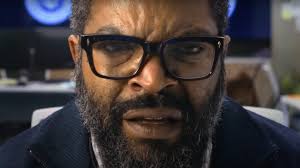

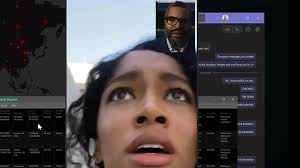
The effects are, well, OK. And “casting against type” is usually a great way to grab our attention by parking an actor in a role we’d never picture them in.
So, Ice Cube as a cyber-security mastermind and highly-placed government threat assessment expert? OK. Let’s see that full repertoire of slack-jawed scowls, this time wearing glasses.
A remake of H.G. Wells’ “War of the Worlds” for the social media/”data is king” age, one without invaders from Mars? Fine.
But “War of the Worlds” is bad, almost laugh-out-loud bad, and that “almost” is the killer here.
It’s a Universal product, a screen-centric “screenlife” thriller (“Searching,” “Unfriended”) mashup of “War of the Worlds” with “Independence Day” that plays out in a series of online searches, Zoom calls, Facetimes, security hacks and “drone commandeerings” as ordinary folks and the president and assorted higher ups try to foil an alien invasion.
Ice Cube plays William Radford, the multi-tasking cyber-expert with direct ties to the NSA chief (Clark Gregg), the Secretary of Defense (Michael O’Neill) and even, when the chips are down, the president (Jim Meskimen) himself.
Will’s workday features renewed efforts to help the FBI track down a hacker with the handle “Disturber,” who is warning one and all about Big Data and government’s efforts to mine it all with a new program called Goliath.
But Will’s also got time to micromanage biologist daughter Faith’s (Iman Benson) diet. She’s pregnant with Amazon delivery-doofus Mark’s (Devon Bostick) baby. Yeah, he can monitor what’s in her fridge, her heartrate, the works, via her phones and “devices.”
“You need more PROTEIN.”
He’s riding herd on his gamer son Dave (Henry Hunter Hall), who dislikes having a dad who makes his living “spying on what’s in people’s Amazon Carts.”
Who has time for NASA pal Sandra (Eva Longoria) whining about out of the ordinary, out of control weather events and satellites that are “down?” That “I GOT yo’ass now” raid to catch Disturber goes wrong, and Ms. FBI agent (Andrea Savage) is um, perplexed.
And then meteors rain from the sky endangering the (adult) kids, the public and human civilization itself.
Guess who gets to use the phrase “I GOT this?”
The effects, as I mentioned, aren’t bad.
But the plot is “ID4” derivative and stupid about it.
The performances, crammed into frames within frames on the screens, are rarely shy of over-the-top. One marvels at how special effects tech turned music video director Rich Lee (Lana Del Rey, Eminem, Black-eyed Peas ) squeezed so much awful into 91 minutes.
And at some point, with all the overt Fox News updates and endless Amazon, Joe Rogan and Tesla plugs, we wonder if the script’s warnings of “authoritarian control” of our data isn’t misdirecting us about aliens or even DOGE, which could have financed this “Let’s unite behind our leaders and SAVE the planet” propaganda.
Because if anybody thinks this movie exists just to give Ice Cube a comeback thriller, have I got a Prime Membership offer for you!

Rating: R, violence, profanity
Cast: Ice Cube, Evan Longoria, Iman Benson, Clark Gregg, Henry Hunter Hall and Devon Bostick
Credits: Directed by Rich Lee, scripted by Kenny Golde and Harm Hyman, based on the novel by H.G. Wells. A Universal Picture premiering on Amazon Prime.
Running time: 1:31
A sinister British tale about a flashy, sexy underclass suitor and Ms. Posh who isn’t sure she’ll do for her high-born son.
“Do we like her?”
“Jury’s out.“
Amazon has this series set for Sept. 10..
I can’t remember what project Martin Sheen was promoting when he got into the habit of asking journalists/interviewers to “pray” for his careening, trainwreck of a son, Charlie.
Martin’s the one face we don’t see among those testifying in this “Charlie Sheen, what I did and where I am now” doc.
As we don’t see much in the way of remorse from the “Two and a Half Men/Platoon/Major League/Hot Shots!” star, we understand it. Emilio Estevez is also MIA.
But everybody else that was there in the moment, from Chris Tucker to Denise Richards to Heidi Fleiss, Penn and Cryer, is here for it.
Sept. 10.
Brassy Eleanor makes the move, Erin Kellyman’s the journalism student who meets her, Chiwetel Ejiofor is the widowed TV anchor/dad of the journalism student and Scarlett Johansson is the director with clout who gets this New York story in front of the cameras and into theaters.
Same sex romance twists in the trailer? Yes.
Awards bait? You betcha.
Coming out in the middle of an anti-Semitism spike driven by another genocide? Sure as “Gaza” is.


There are Filipino dramas and thrillers with some edge to them, and a few of those titles make it to Netflix.
But romances, especially high school romances? Those come in one Filipino flavor — insipid.
“The Last Goodbye” is a sentimental pairing of the pretty, popular valedictorian with a lonely dork who might tactfully be described as waiting for his baby fat to wear off.
Heart (Daniela Stanner) is Heart, our heroine, soldiering on but still grieving after the death of her mother. Xavier (Matt Lozano) is the shy, unpopular photography nerd who crushes on her from afar, until events conspire let their hands touch and their eyes lock.
He swoons. She gives him reactions that range from “whatever” to “keep your distance.”
Which he does, like an obedient puppy dog following his first crush from three steps behind.
As Heart voice-over narrates the story from some point in the future (the setting is the 2002-2003 school year), we’re meant to see her falling for this lump whom everybody else judges by his appearance, and explaining the reasons she does.
She doesn’t.
These films can be a real culture shock to Western viewers raised on the more sophisticated, rude, raunchy and “adult” high school cinema of Italy, France and Hollywood.
Lines like Heart “wondering why I haven’t run into my into my new friend today” wouldn’t get you a second meeting on your teen rom-com at Netflix. “Eye-rolling” doesn’t begin to describe how quaint and “cute” in the most unflattering way this “relationship” develops
But the “high school” part of this Filipino high school romance — in Filipino and English — is goofy, giddy and properly childish. Many of the kids are broad caricatures of high school “types,” especially Heart’s besties — the vamping, theatrical Elsa (Karina Bautista) and the flamboyantly funny bakla born Fernando Po III but who identies as Fiona (Esnyr Ranollo).
Watching and listening to Ranolla is like hearing Nathan Lane “Birdcage” wisecracks coming out of D.J. Qualls’ body.
The Heart, Elsa and Fiona — with Xavier as their flunky — efforts to play the high school popularity game (“elections”) and run the annual “Mr. Awesome” boy’s beauty content are a hoot, but criminally under-developed and too tiny a contribution to the film to overwhelm the diabetic sweetness of it all.
Boys competing to be the class playa? That’s pretty edgy. The “talent” competition is mostly street corner Romeos trying out their best pick-up lines.
“Are you poop?” “NO. Why?” “Because I’m falling for you!”
“Last Goodbye’s” value as an “Around the World with Netflix” taste of another culture is limited. It’s scenic, here and there, but slow-feeling, slow-moving and slow-looking. Watch the static conversation scenes where two characters are rigidly glued to their camera position and can’t animate or “act” their way out of their conversation because of how stiff they have to play it.
Director and co-writer Noah Tonga, is that your doing?
And the movie doesn’t really answer the question — to outsiders, at least — of who Joe D’Mango is and why his “participation” in this romance was deemed worth pursuing. He turns up in one of the film’s FOUR anti-climaxes to try and explain life and eternal love and whatnot and show off a slogan-bearing baseball cap he’s probably hawking online.
Dude, we get it.

Rating: TV-14
Cast: Daniela Stranner, Matt Lozano, Arlene Muhlach, Bodjie Pascua, Karina Bautista, Troy Regis and
Esnyr Ranollo
Credits: Directed by Noah Tonga, scripted by Christine Badillo Novicio and Noah Tonga. A Netflix release.
Running time: 1:47
A little girl with a deathly supernatural touch, Wise (of “Jurassic World: Dominion”) is her protector, Pearce is the “Doc” who has no clue about what to make of her and Pullman’s the wicked preacher in a wheelchair who aims to do away with the “wickedness” and “evil” in her.
Is that Joanna Cassidy in a supporting part as a lady of uncertain…connections? Why yes it is!
Shout! Studios has this one.
Oct 3, they’ll push this out into the ether and hope it finds an audience.
Sept. 19, this “true story” feature film drops on Hulu.
Provocative? A flash point in the “war on women?” You bet.
Let’s hope Hulu finally hired publicists who get the word out to critics who then get the word out to the public. Seeing as how this trailer wasn’t mail-bombed to me and my comrades, that’s probably an LOL.



At this late date, it’s difficult to find something new or fresh to say about “What we did during Covid lockdown,” as so many other filmmakers chose to use that time planning and even filming such stories.
But the French filmmaker Olivier Assayas (“Non-Fiction,”“Personal Shopper,” Wasp Network”) insisted on making a distinctly French, decidedly his own statement on that “Suspended Time,” so here we are.
Assayas has made a few attempts to broaden his palette from the chatty, dry, “French Woody Allen romances” without the laughs that has been his brand. Not here, mind you. He’s made a scenic, talkative and thinly (VERY thinly) charming parody of French Films Made for Export, taking care to not miss a trope or cliche of such films.
Four people hunker down in the family country house in the Chevreuse Valley outside of Paris, adjacent to an even bigger abandoned country estate. A couple are divorced, and a third is going through a divorce.
Two brothers inherited this place, and one narrates the story of growing up here in long, floral-illustrated passages that open the film. Paul (Vincent Magaigne) is a filmmaker. Etienne (Mischa Lescot) is a popular rock historian for French radio.
Paul is a germophobic writer-director frustrated by his lack of progress in realizing his dream — “a period piece starring Kristen Stewart” starring as “a Portuguese nun.” He makes mention of having made the film “Irma Vep.” Assayas made that movie about making movies back in the ’90s, which he remade as a streaming series in 2022 with Alicia Vikander and…Vincent Magaigne.
Covid has pushed Paul into a living-together situation with taller, younger and prettier filmmaker Morgane (Nine d’Urso), who has a “Madame Bovary” documentary she’s been offered.
Etienne is the sibling going through a divorce, an avid cook who is increasingly testy about Paul’s phobia about Covid, masks, and lack of concern about cooking. He’s taken up with divorced mom Carole (Nora Hamzawi) who is the only character here who doesn’t seem to do anything for a living, or anything interesting.
They’re “trapped” in this idyllic piece of French countryside, dining al fresco in the perpetual spring, doing Zoom meetings with filmmakers and production people and interviews with journalists or setting up a remote radio studio to host tribute shows to famous musicians Covid has killed (John Prine, etc.).
This may be “life interrupted,” but it’s not as if “time” is “Suspended.” The working folk maintain their status and careers, virus be damned.
Etienne is stressed, so his constant crepe-making is “therapeutic.” Paul’s “career” isn’t really missing a beat as his autobiographical narration about returning to his childhood home with his brother seems cinematic — with black and white flashbacks picking up on his college days, early loves.
The brothers serve up just a flash or two of sibling rivalry. And Paul mentions their “privilege,” as if that excuses them — between trips to the not-wholly-abandoned tennis court next door — of living large, their lives not missing a beat as they complain about the unmasked and fret over “exposure” to grocers.
The film may be commenting on the cushy way the rich and famous coped with Covid. But it’s insufferable at depicting insufferability.
Naturally the house is buried under the family’s books — especially the father’s hundreds of art history texts. Naturally the conversation veers towards appreciations of art, Paul’s fanboy obsession with David Hockney, as well as landmarks of French literature (“Abelard & Heloise”).
Naturally Morgane listens to a French radio rebroadcast of an interview with the famed filmmaker and son of a more famous painter Jean Renoir from 1958.
Because God forbid anybody there be so “common” as to sit down and say, watch and discuss what’s on television.
It’s a running gag in French cinema for export. Nobody watches TV in French films. Because by and large, the publishers, writers, filmmakers, designers and even TV chat show host characters of French cinema are too sophisticated to watch the tube. There are no TV sets to be seen. People talk and talk and talk, and naturally that talk drifts from pretentious to inane.
Paul even admits to referencing books he hasn’t read and films he hasn’t seen in an interview because of how sophisticated that makes him seem. What, he’s never heard the names “Mahler” and “Bergman” dropped in 34 Woody Allen movies?
So yes, the label “a Woody Allen dramedy without the laughs” works here and more firmly affixes itself to Assayas.
Because decades of Allen’s films were recreations of the sorts of French film characters, careers and conversations seen and heard in an airless, sexless and mostly romance-free bore of a movie that is, in this case at least, accurately titled — “Suspended Time.”
Rating: unrated, some subtitled profanity
Cast: Vincent Magaigne, Nine d’Urso, Mischa Lescot, Dominique Reymond, Maud Wyler and Nora Hamzawi
Credits: Scripted and directed by Olivier Assayas. A Music Box release.
Running time: 1:45
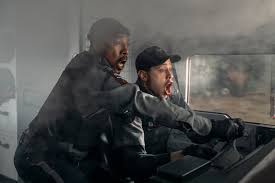
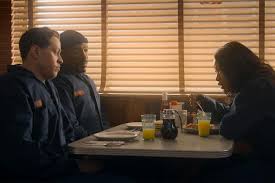
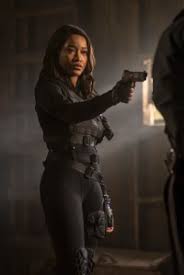
Teaming Eddie Murphy with Pete Davidson for the armored car heist comedy “The Pickup” pays off pretty much exactly as you’d suspect. All that pairing-up two generations of “Saturday Night Live” comics guarantees are, well, “generation” jokes.
“Your generation can’t PIVOT” is about the best the millenial can manage.
And Eddie finds himself pulling faces and attempting funny voices as he struggles to make a laugh-starved script better.
But here’s what Tim Story, director of “The Blackening,” the “Shaft” remake and the “Ride Along” and “Think Like a Man” comedies brings to the table.
Fun with dye packs. A string of sight gags involved an armored car, mid-chase, loose cash and those devices that colorfully explode in robbers’ faces, etc. are deployed to absolutely hilarious effect in a farce where other giggles are hard to come by.
Davidson is the dorky, math-nerd “new guy,” Travis. He’s the sort who gets passed a note in a bank and immediately flips out and draws his weapon.
As the note’s a phone number from a fetching bank customer played by Keke Palmer, maybe he’s overreacted. Maybe Mr. Trigger Happy would be a better fit for ICE.
Murphy is “the legend around here,” “here” being the Guardian armored car service. Russ and his wife (Eva Longoria) dream of a B&B retirement venture. All he’s got to do is make it another six months on the job.
But that hottie passing Travis the note? She was coming on to him for information — about his route, the cameras on the truck, etc. Turns out, she’s the mastermind of a gang (Ismael Cruz Cordova, Jack Kesy) who come for the truck when Russ and wheelman Travis hit a stupidly-long “dead zone” in cell service on their route.
In New Jersey? OK.
What ensues are chases, which Travis clumsily gets them out of.
“Calm DOWN! Remember your TRAINING!”
“Training? I took a 15 hour correspondance course online! WHAT training?”
The simple plot exhausts its possibililities pretty quickly. Naturally, there’s a more complex one that involves a guy who nickname describes his business — “Chop Shop” (played by Marshawn Lynch, who skipped “make eye contact” day in acting school). No, this plot extension isn’t any funnier or more believable.
Little else about this lands and scans or even makes sense. Casting Andrew Dice Clay as the foul-mouthed armored truck dispatcher screams “Dan Aykyod wasn’t available?”
It’s refreshing to see Palmer dial down the manic patter that’s become her on-screen persona. But then, she’s not expected to provide the big laughs here. Davidson can’t find anything funny to bring to the set to give his character some edge. And improv hasn’t been in Murphy’s tool kit since the ’80s.
That’s why “The Pickup” never amounts to much more than a take-it-or-leave-it action comedy.
But those dye pack gags? They deserve to be in a better movie.

Rating: R, violence, profanity, sexual innuendo
Cast: Eddie Murphy, Pete Davidson, Eva Longoria,
Ismael Cruz Cordova, Jack Kesy, Andrew Dice Clay and Keke Palmer.
Credits: Directed by Tim Story, scripted by Kevin Burrows and Matt Mider. An MGM release on Amazon Prime.
Running time: 1:36


