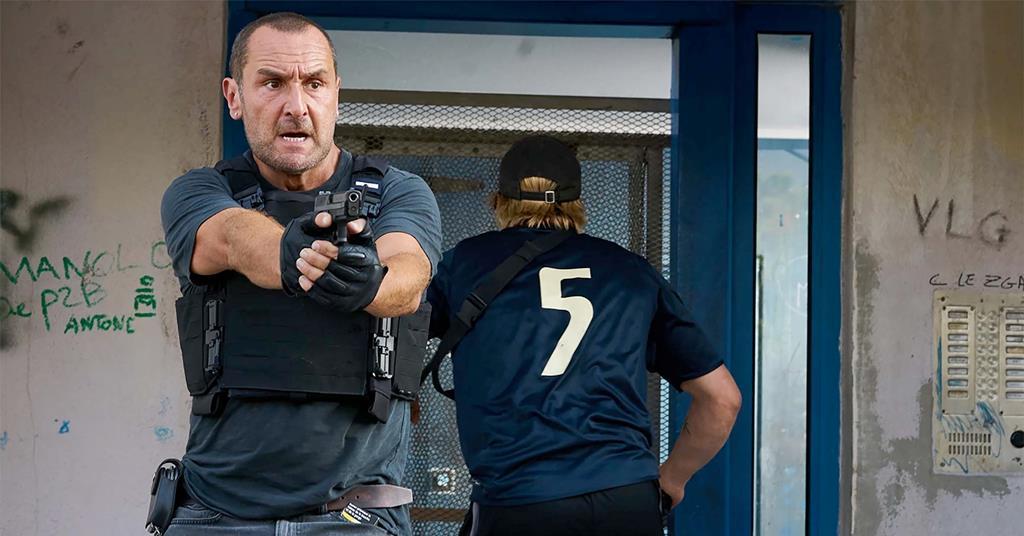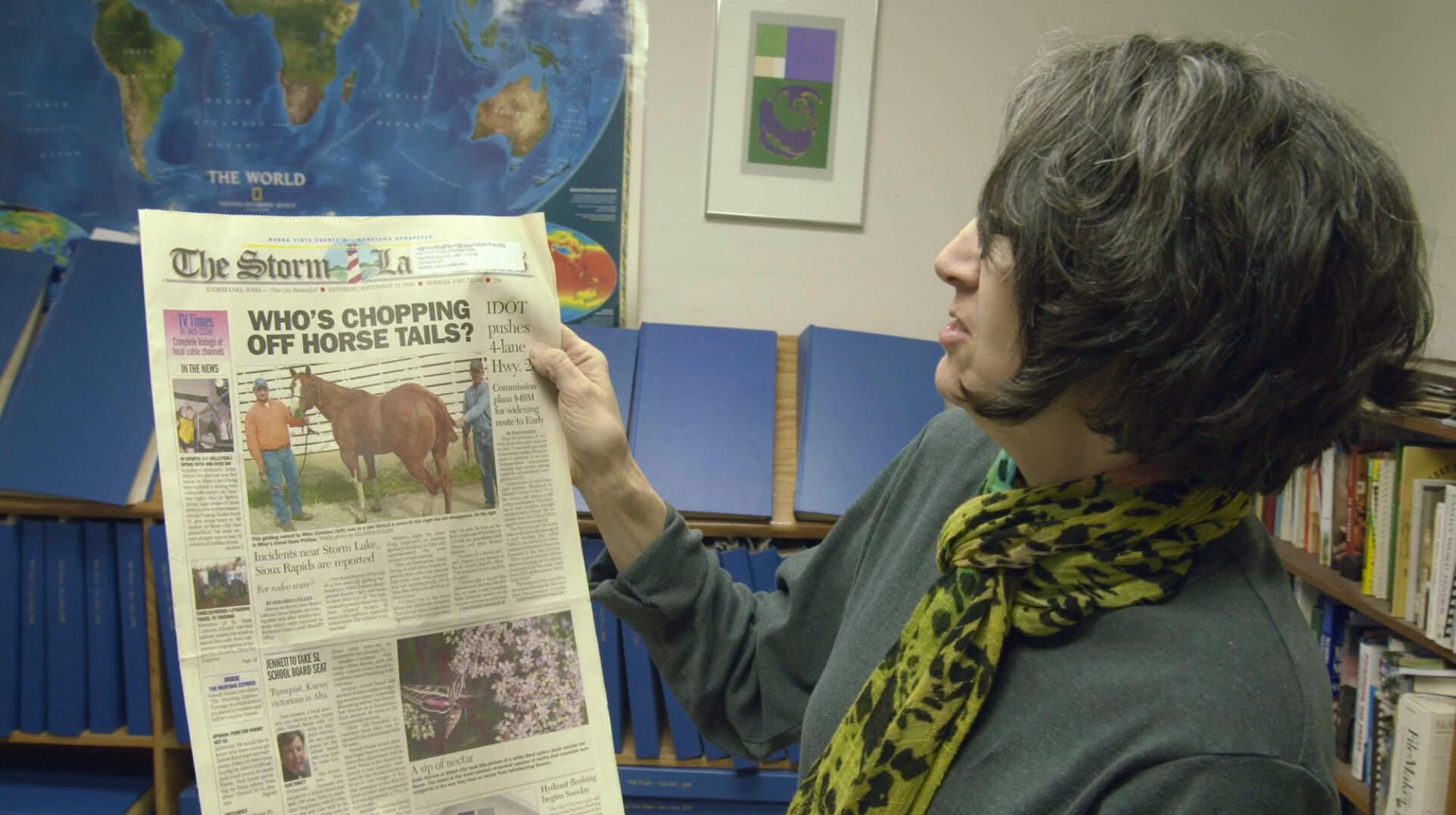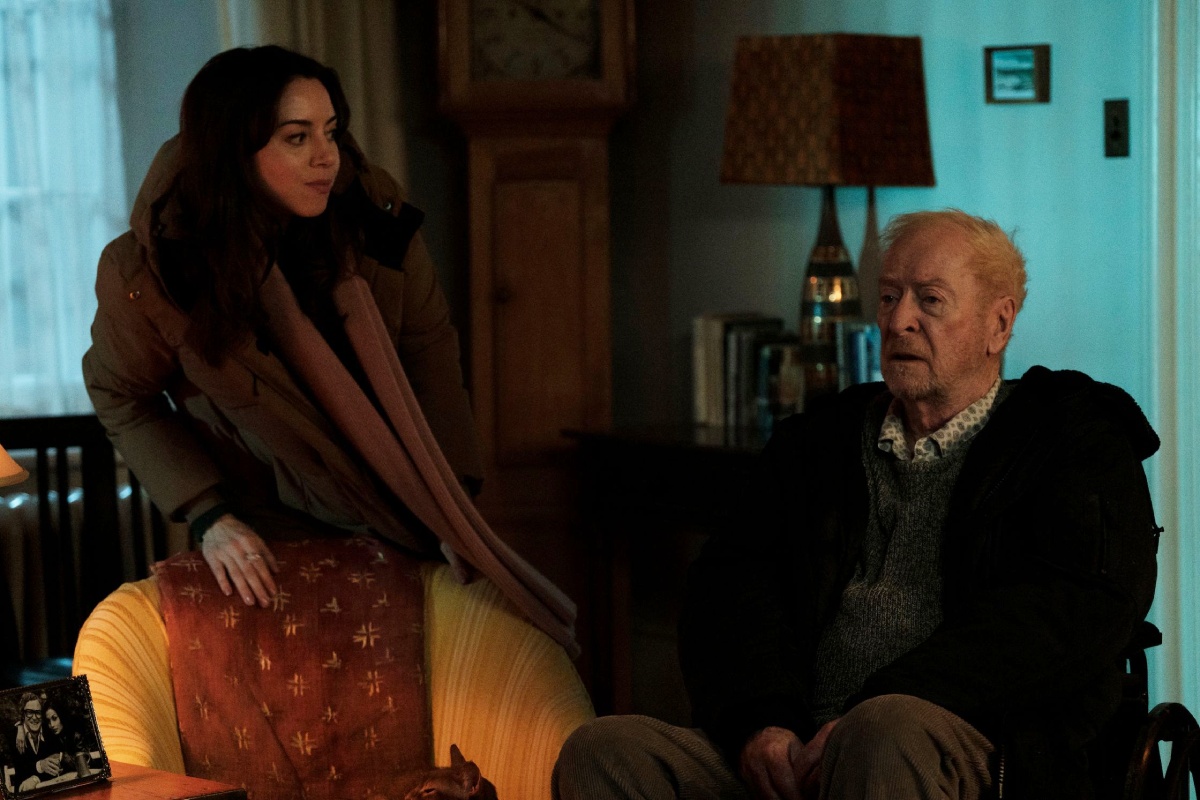

Movie Review: Footballers stage a strike before “National Champions” can be crowned

Events surrounding college athletics and the idea of compensating “student athletes” have shifted so quickly that it’s a little surprising that a motion picture — which takes a few years to gestate, finance, cast and produce — could keep up and have anything relevant to say about the subject.

But the twisty gridiron drama “National Champions” manages that in a tale of idealism, ulterior motives, big money and a soap opera-sized cast of many moving parts. Well-cast, occasionally surprising and moderately suspenseful, as they say in sports, it “goes out a winner.”

It’s about a top-draft-choice-to-be quarterback (Stephan James of “If Beale Street Could Talk” and TV’s “Homecoming”) and his far-less celebrated roommate/teammate from the trenches (Alexander Ludwig of “Vikings”) staging a believable but well-planned escape from the team/media bubble of a Superdome-adjacent hotel, going online and announcing a strike.

As QB LaMarcus James tells his Missouri Wolves teammates, and stars among their scheduled foes for the Big Game a couple of days away, “I ain’t playing until they pay me.”

But wait, doesn’t a media darling like LJ get “name, image and likeness” money? Isn’t he about to land a fat NFL contract? Sure. He says he’s doing this for all of the players who take the risk, without even health insurance, with slim-to-none prospects of every getting that NFL signing bonus — guys like his roommate.

Lobbying other players with an evangelical fervor, he uses “collective action” and asks “You ever read ‘The Jungle?'” Somebody went to class if they’re taking inspiration from labor agitator Upton Sinclair’s early 20th century novel.

Everybody is blindsided by this. Other players are hard to convince, sniffing around for some other motive in LJ’s actions. “You can’t square-off with the entire system!” This little stunt “don’t make you Malcom X, bro.”

But in an impromptu press conference, the Wolves’ well-compensated, accomplished but “never won the Big One” coach (J.K. Simmons) looks personally hurt, sputtering “These kids don’t fully understand what they’re doing.” Privately, in war-room meetings with conference and NCAA officials, they get it. “He’s out to destroy the ‘student athlete’ designation,” “This could get out of hand” and “Where in hell IS he?”

If you follow college football at all, everyone in this is a recognizable “type” — the well-paid-but-not-quite-clued-in conference commissioner (David Koechner), the icy NCAA administrator protecting the status quo (Jeffrey Donovan), the assistant coach eyeing the chance to step up (Lil Rel Howery), the “helpful,” corrupt and in-the-loop booster (Tim Blake Nelson), the lawyer-fixer with all her arguments at the ready (Uzo Aduba).

Even the coach’s wife (Kristen Chenoweth), the one character flirting with caricature, has a hint of “sure” about her — once a trophy bride, now a monomaniacal workaholic’s afterthought.

There’s a tendency in Adam Mervis’s script, based on his play, for characters to launch into speeches, for players and coaches to quote the Bible, and for the complications to cross over into a season’s worth of soap opera.

Things get not just “out of hand,” but damned far-fetched at times.

But the lawyer, a Black woman, absolutely should be making the argument that football props up tens of thousands of kids in other sports who would never get a college education otherwise. A couple of pros (Super Bowl-winning QB Russell Wilson among them) almost certainly would speak up for the college kids. And even in-bed-with-the-NCAA ESPN would have to take LaMarcus’s call, putting him on Mike Greenberg’s show to make his case, point out how many houses his multi-millionaire coach has and demand that they “fix the system.”

“National Champions” isn’t set on the field, and that makes it something of a sermon at times — a LOT of times. But hiring stuntman-turned-director Ric Roman Waugh (“Shot Caller,” “Greenland,” “Angel Has Fallen”) insures that there’s a lot of movement and pop to even the hotel-room debates, even as those debates and “other” complications slow the movie down.

And Oscar -winner Simmons and James bring a crackling intensity that lets us feel what each has at risk, a quarterback who could be “Colin Kaepernicked” by the league he is hoping makes him rich, a coach who could lose his job, and maybe a house or two if he can’t inspire his players to play — for free.

It’s a sports movie that’ll make you think, and its release — cleverly-timed for the weekend when the only college tilt is the rare one with real “student athletes,” the Army/Navy game — invites fans to put down the beer, get off those Internet sports gambling sites, and think about what’s going on.

Fat chance? Sure. But hey, sometimes “only a movie” is a movie that has something worth hearing.

Rating: R for language throughout and sexual references

Cast: J.K. Simmons, Stephan James, Uzo Aduba, Alexander Ludwig, Lil Rel Howery, Jeffrey Donovan, David Koechner, Tim Blake Nelson, Timothy Olyphant and Kristen Chenoweth

Credits:Directed by Ric Roman Waugh, scripted by Adam Mervis, based on his play. An STX release.

Running time: 1:57

Posted in Reviews, previews, profiles and movie news | Comments Off on Movie Review: Footballers stage a strike before “National Champions” can be crowned

Netflixable? Gay, back home in New Hampshire and “Single all the Way”

So I guess this year’s gay Christmas rom-com doesn’t have Kristen Stewart in it?

“Single All the Way” is a “Home for the Holidays” rom-com that’s “rom” enough, but entirely too safe to be anything other than Hallmark Channel fodder in the rom or com department.

A gay romance that pulls a TV-PG rating? Jerry Falwell must be fuming…in Hell.

Aside from “How far this country’s strolled down that Road to Tolerance” feeling, there isn’t much to this. But it has its moments and is perfectly PG in all the usual rom-com ways.

By that, I mean there’s a Britney dance and lip-sync scene, and Jennifer Coolidge shows up.

Michael Urie stars as Peter, an LA casting director/producer of ad campaigns for razors and such, summoned home for the holidays, to East Bridge or Bridgeport, New Hampshire, where his family lives, runs a very PG-rated bar and celebrates the Dickens out of Christmas every December.

Mom (Kathy Najimy of “Sister Act”) goes by “Christmas Carol” all season long.

Dad (Barry Bostwick) is such a tuned-out senior he’s never even heard of HGTV.

“Homosexual Gay TV Network?”

“Basically.”

“It’s not porn, is it?”

“Kinda.”

Peter was planning on bringing a beau home, but SOMEone turned out to be married and to have never told his wife who his sidepiece was. To save face, Peter talks his best-friend/roommate, children’s book-author and “Task Rabbit” on-call handyman Nick (Philemon Chambers) into traveling with him. His family adores Nick. He’s”a 10. And Peter’s a New HAMPSHIRE 10.”

Yes, they love and accept their “out” son, but the fact he can’t make a match that takes means “I’m this problem they have to solve.” And again, they adore Nick.

“Christmas Carol?” She’s arranged a blind date with the exercise coach/ski instructor hunk James (Luke Macfarlane), aka The Only Gay (Mom knows) in the Village.

“They” means EVERYbody — Dad, who gives Nick advice on who he should be with (Peter), siblings, nephews and nieces, all of whom conspire to make this Nick thing happen.

Aunt Sandy, played by the brassy Coolidge, is a theater type coming home to direct the local Christmas pageant, which she’s given the happy title “Jesus H. Christ.” She might need some help.

“All the world’s a stage, and most of us are desperately under-rehearsed!”

So Peter’s family is match-making, Peter is clicking with James on a date or two, there’s Christmas decorating and a show to rehearse. And Peter and Nick need to be thrown together to help Aunt Sandy save the show. Because, you know, they’re gay and it’s theater.

Yes, there are jokes about that and how nobody should leap to that conclusion. But come on, if the stereotype fits…

There’s a funny line here and there. Peter, for instance, keeps getting mid-date messages about all the stuff he’s missing by not being at home with the family. And Nick.

“You have FOMO,” James diagnoses.

“I DO. I’m a FOMOsexual!”

But this is pretty thin entertainment, just gay and funny enough for the heartland, a bit of an eye-roller for anyone not stuck in 2005. Even Coolidge can’t save it, and that’s saying something.

Rating: TV-PG

Cast. Michael Urie, Philemon Chambers, Luke Macfarlane, Barry Bostwick, Kathy Najimy and Jennifer Coolidge.

Credits: Directed by Michael Mayer, scripted by Chad Hodge. A Netflix release.

Running time: 1:42

Posted in Reviews, previews, profiles and movie news | Comments Off on Netflixable? Gay, back home in New Hampshire and “Single all the Way”

Movie Review: A Mexican-Punjabi crime alliance entangles “The Scrapper”

Here’s a peek into a world few Americans knew existed, a thriller built out of the cultural connection between two immigrant communities bonded by the racism each faced because “we were all brown.”

Writer/director/star Bari Kang‘s “The Scrapper” envisions a crime connection between Punjabi (often Sikh) human traffickers and Mexican drug cartels as an outgrowth of relationship dates back to the America of the early 1900s.

But despite having that novelty as a hook, the film he got out of all that is a formulaic slog, almost undistinguishable from any other indie thriller saddled with weak performances.

Kang stars as Jake, a metal scrapper who does salvage work as a job fresh out of prison. He and wife Kitt (Ava Paloma) have a baby on the way, and his hulking, mentally-challenged older brother JB (Gugun Deep Singh) lives with them, meaning money’s tight.

But Jake won’t relent and go back to work in the New York family scrapyard and trucking business his sister Linda (Allison Thomas Lee) now runs, because he’s all about going clean and they’re not. Like every “pull me back in” mob thriller ever made, events conspire to change Jake’s mind.

A new cartel heavy (Andhy Méndez) is throwing his weight around, and calling old debts in. Linda, who has been money laundering and the like for the cartel, has days to come up with an impossible sum.

So when a Sikh underling spies a big cash handoff between the Mexican mob and the Punjabi mob (Samrat Chakrabarti, Anil Kumar), Linda sees a chance to get out of their hole and lures safecracking ex-con Jake back in.

That burglary goes just wrong enough to start the bloodshed and upend every life wrapped up in this world.

The early scenes in Kang’s second indie crime feature — “Lucky” was the first — are static and dull, with the charisma-starved performances to match. Chakrabarti, whose son of a Punjabi mob boss is also passed off as a cop, has some real menace about him. Kang comes off as credibly blue collar, but “soft” in a crime film sense. And Mendez is saddled with an empty caricature of a character who smacks his lips and unloads long patches of exposition.

“You Punjabis fascinate me,” his Frankie pontificates. “You bring our drugs across the border, but you don’t sell them. You offer your own people a ‘new life’ in this country, only to enslave and abuse them.”

Yeah. And your point is?

The story’s too-predictable arc plays as a slower-than-slow set-up for a finale that’s bloody and at least a bit more exciting, if no more interesting, than what’s preceded it.

Kang’s unique gift to the cinema is in providing an entre to this Indo-Mexican-American world. We see the Sikh Khanda tattoo on Jake’s wrist, and watch his accomplice leave his kirpan behind lest their burglary turn into “armed robbery.” “Scrapper” gives us glimpses of Sikh culture and “code” — which somehow allows wriggle room for the Sikhs mixed in with the Punjabi mob’s wrongdoing. We duck into a New York Punjabi nightclub and later into a Sikh temple.

This could have been a B-movie of the “Eastern Promises” variety, America crime given a new twist via an under-represented (on film) immigrant class, with details that leave the viewer fascinated and appalled.

But the details here are confined to those “glimpses.” There are potential “our cuisine” meal scenes that never happen. The pace is mimicked by the unhurried lack of urgency in almost every scene. When a movie’s this slow, every moment of foreshadowing is underlined and notarized. Yes, we noticed the nail gun, thanks.

And the performances lack that pop that makes even an over-familiar plot play. Kang might have “hard ex-con” in him. But the director — him — doesn’t give him the closeups where he grits his teeth to do what a hard man’s gotta do. The script leaves out any interior life.

Instead, Jake tells us a little family history and Punjabi/Mexican history in voice-over and in married life “explainer” scenes at home.

That’s “The Scrapper” in a nutshell, a movie that tells us instead of showing us, that checks off waypoints on its played-out crime story journey, with almost everybody in it blank-faced and perfunctory as they recite all those explanations along the way.

Rating: unrated, graphic violence, profanity

Cast: Bari Kang, Ava Paloma, Allison Thomas Lee, Gugun Deep Singh, Samrat Chakrabarti, Anil Kumar and Andhy Méndez.

Credits: Scripted and directed by Bari Kang. A 1091 release.

Running time: 1:26

Posted in Reviews, previews, profiles and movie news | Comments Off on Movie Review: A Mexican-Punjabi crime alliance entangles “The Scrapper”

Movie Review: Sexy Seydoux plays the news anchor who transfixes “France”

“France” is an eye-popping star turn by Léa Seydoux in search of a more coherent and pointed satire than the movie surrounding her.

Seydoux, one-time “Bond Girl,” much-honored co-star of “Midnight in Paris,” “”Blue Is the Warmest Color,” “The French Dispatch” and “The Grand Budapest Hotel,” is well-cast as a glib telegenic beauty who holds the country she shares her name with transfixed, thanks to her provocative questioning of public figures, her canny pursuit of “attention” and her stunning blonde looks.

But writer-director Bruno Dumont’s meandering, not-entirely-aimless drama can’t zero in on a target and mostly fails to get to its point. It’s as if the director of a couple of recent French “Joan of Arc” epics sought a modern equivalent, a media martyr, a woman trapped in an existential crisis over fame. But his movie can’t settle on a tone as he goes places that Hollywood’s “Sullivan’s Travels,” “A Face in the Crowd,” “Broadcast News” and “Up Close and Personal” went before.

Seydoux is better than the movie. But her character’s uncertain values, ethics and frame of mind — as scripted — do her no favors.

France de Meurs is the fashion plate star of i-news, a French TV channel that everyone seems to watch. She is recognized everywhere, a catwalk-ready advert for herself and her programs, but an open-season invitation to a tsunami of personal-space invasions. Start to finish, “France” shows the French are no more immune to this mania for taking a selfie with, or simply cell-snapping away at the famous.

We meet her at a news conference where her dazzling wardrobe and front-row placement assure one and all that she is the first the president will call on. But when he makes his entrance, she’s chatting up a colleague, not standing up out of the same respect most other reporters do.

And when he makes an opening statement, she is exchanging looks, giggles and obscene gestures with her flippant-to-the-point-of-unprofessional producer Lou (Blanche Gardin). Her question is a classic “gotcha” provocation.

Regarding the “insurrectionist state” of the country, she asks (in French with English subtitles), and what he’s not doing about it, “are you heedless or powerless?”

Lou coached her on what to ask, and how to ask it. When the president responds, star anchor her back-row producer keep exchanging looks and gestures and giggling.

She defends herself later by suggesting that the public values her point of view, that “through my gaze” they get “A View of the World,” the name of her chat show, that they can identify with.

“But what about your need for the spotlight?” her interviewer wants to know. She has no answer for that.

We see her in action and realize she’s not the cartoonish caricature such figures often turn into in the movies. She is sharp, repeatedly correcting the spin a conservative anti-EU politician recites on her show.

We get a notion of how TV-news camera savvy she is when she starts filing reports from an unnamed West African country, a former French colony that’s fighting a civil war and choking the Mediterranean with refugees. She “directs” her camera operator, coaches and “stages” loyalist fighter poses, calls for “reverse angles” where she “acts” out the question she just asked.

And then she improvises, in a few takes, her stand-up closing statement for the package. She’s good at what she does.

At her spacious, art gallery chic home, she has a rebelling nine year old son and an older, sullen, semi-has-been novelist husband, Fred (Benjamin Biolay). She’s the one bringing home the bacon.

But a dinner party scene where “Fred” is mocked for a “retouched” photo on a book cover, where he’s subjected to impudent questions from the guests, or asked of France right in front of him, plays somewhat like the almost-comical press conference that opened the film. It’s not quite funny, not tart enough to sting. What is this movie trying to say, and where is it going?

France’s existential crisis comes when she distractedly knocks over a working immigrant on his motorbike in traffic. She starts weeping more often as she goes out of her way to atone for her sins, and tamp down a scandal that comes from it.

Lou may be better versed in such mishaps, reminding France at one point that “these things last 24 hours now.” As France has more chances to test that theory out — infidelity, blunders on air, etc. — she can’t stop taking it all to heart, as if she’s clinging to that “crime and punishment” media narrative of an earlier era.

The blunders/exposure that took down the anti-hero of “A Face in the Crowd” and got Dan Rather and Brian Williams yanked off the air might earn no more than a Jeffrey Toobin slap on the wrist, a Tucker Carlson “vacation” today.

Dumont puts France/Seydoux in plenty of situations that merit her “I can’t bear it any more” dismay. She tries to volunteer at a soup kitchen, and takes abuse not just from other volunteers, but from the homeless. Her constant mingling with the rich ruling class doesn’t immunize her from their disdain.

When France meets a guy at an exclusive German Swiss alpine spa, his seeming confusion at her “You don’t recognize me?” should put her on her guard. She knows how famous she is, and suffers for it.

Seydoux gives us gorgeous and perfectly-put-together “suffering” in ways that make the film never-less than watchable.

But Dumont’s film doesn’t provide a neat come-uppance/repentance for France’s “crimes” or a denouement that gives us any more idea of what we’ve just seen than the tale as it unfolded. This is just some stuff that somebody who craved fame had happen to her.

It takes a lot of nerve to title your French media satire “France.” What we see over the two hours of this film is Dumont losing that nerve, time and again.

Rating: unrated, profanity

Cast: Léa Seydoux, Blanche Gardin, Benjamin Biolay

Credits: Scripted and directed by Bruno Dumont. A Kino Lorber release.

Running time: 2:12

Posted in Reviews, previews, profiles and movie news | Comments Off on Movie Review: Sexy Seydoux plays the news anchor who transfixes “France”

Movie Preview: “Margrete: Queen of the North” struggles to keep Norway, Denmark and Sweden United

This glossy 15th century period piece is about the intrigues surrounding the Kalmar Union, and the woman trying to hold it together.

“Margrete” opens Dec. 17.

Posted in Reviews, previews, profiles and movie news | Comments Off on Movie Preview: “Margrete: Queen of the North” struggles to keep Norway, Denmark and Sweden United

Movie Preview: “Death to Metal”

This lowdown and dirty thriller opens Dec. 7.

Posted in Reviews, previews, profiles and movie news | Comments Off on Movie Preview: “Death to Metal”

Netflixable? Adorable “Mixtape” lets tweens discover ’80s pop and punk

There are several moments when “Mixtape,” a sentimental learn-about-my-parents-through-their-music dramedy, teeters on the edge of tumbling into maudlin.

Every movie with “so cute you want to pinch its cheeks” in its DNA runs that risk.

But then a song comes on, becomes a topic of dissection and discussion, because that’s what the movie’s about, finding a mixtape made by our heroine’s parents. And if you’re of a certain age, or any one of many certain ages, you’re transported back to your memories of that song, or of the songs that meant the same thing to you that it must have meant to those in-love-but-long-dead teens who made it.

It can be Roxy Music’s “More That This,” or The Kinks’ “Better Things,” a snippet of Third Eye Blind.

Because “nostalgia” isn’t just for Baby Boomers. It can transcend age and race and nation of origin.

Gemma Brooke Allen, who played “Young Kate” in the Mary Elizabeth Winstead actioner “Kate,” stars as Bev, a little girl growing up with her hard-working grandma (Julie Bowen) because her mom and dad died over a decade ago.

She’s a largely friendless tween who is barely worth the trouble to pick on at James K. Polk Middle School. That’s how anonymous she is.

She’d love to learn more about her parents, but that’s a touchy subject with grandma. Because her mother had her at 16, and her dad wasn’t much older. Because grandma had her mother in her teens. And the reason she’s taking on extra shifts delivering mail and that they’re eating cheap is because she’s saving up the cash to get Bev into college to break that cycle.

The last thing that kid needs to stumble across in the attic is a mixtape of her parents’ music. It’s the end of 1999, and SOME folks are hoarding food and freaking out over what Y2K might bring. Bev looking for clues in the songs one parent gave to the other when they were falling in love might not be a distraction Bev needs right now.

But when she plays the tape on her mom’s battered Walkman, it hangs, as cassettes used to do. She’s barely dipped into Girls at Our Best performing “Getting Nowhere Fast” when she gets nowhere at all.

Luckily, there’s a hip record store of yore downtown, run by the surly ex-punk Anti (indie comedy mainstay Nick Thune of “Mr. Roosevelt” and “Dave Made a Maze”). He’ll  take “Punky Brewster’s”
lunch money. Reluctantly, because Britney boppers are the last thing he needs in his aficionado-oriented shop. And her parents’ playlist?

Not bad…The Stooges. Otis Spunkmeyer…The Quick.”

Some songs are rare, some might be impossible to source. And she can only afford to buy one at a time. But he shames her to do it right.

A mixtape “is a message from the maker to the listener.” If she wants to figure anything out about said “maker” and “listener,” she’s got to hear the songs — all of them, in order. And Anti’s little retail piece of punkdom is just a starting point.

That’s a very clever conceit to hang your movie on, and I dare say it would play if the kid in question were of any other race and her lost parents into any other genre of music.

Bev hears “Linda Linda” by The Blue Hearts and can’t make out the Japanese lyrics. Maybe the classmate she doesn’t know across the street (Audrey Hseih) can help, if her Tiger Mom will let her out the door.

Too bad Audrey’s Taiwanese. But she’s hip to the tech, and “there’s this new thing…Napster…all the songs are free!” She joins the quest.

At some point, the scowling tween punk Nicky (Olga Petsa) will need to be approached (scary) and consulted. A visit to a punk club is in order.

And along the way, the new friends conspire to convince classmates that the new school mascot should be “The Mullet” — no, not the fish — the wheelchair-bound school bully (Diego Mercado) must be confronted and grandma will relent and let out details like the fact that Kim, Bev’s late mother, “wanted to be a ‘Solid Gold Dancer’ when she grew up.”

Some promising paths are introduced and abandoned. The jokes are of the low-hanging-fruit “What are you looking for?” “Your DeLorean! You can’t just pop back to the ’80s and pick up a tape there!” variety.

But screenwriter Stacey Menear peppers the script with bit players who score points, from Taiwanese friend Ellen’s feral and funny five-year-old brother who can be “dared” into doing most anything to Nicky’s punk-musician sibling, whom she can beat up if he starts something (she’s egged on by their dad) to the one local musician on the tape, still around and still playing, the guy who is the reason the tweens sneak into a punk club. He’s played by Jackson Rathbone to great effect.

The pre-pubescent ages of our heroines — they even banter about the mysteries of “the tampon” — gives the film a refreshing innocence.

Movies like this always represent some sort of validation of the filmmakers’ musical taste, which makes them almost too specific. Will parents who grew up with hip hop enjoy sharing it with their tweens?

But the warmth wins you over, and the players seal the deal with little blasts of sweet mixed with sassy.

If you’ve ever made a “Mixtape,” or ever wondered what they were and why your parents or grandparents obsessed about them, this little low-key gem is a winner.

Rating: TV-PG

Cast: Gemma Brooke Allen, Audrey Hseih, Nick Thune, Olga Petsa, Diego Mercado, Jackson Rathbone and Julie Bowen

Credits: Directed by Valerie Weiss, scripted by Stacey Menear. A Netflix release.

Running time: 1:33

Posted in Reviews, previews, profiles and movie news | Comments Off on Netflixable? Adorable “Mixtape” lets tweens discover ’80s pop and punk

Movie Review: Christmas comes to Britannia, one last “Silent Night”

Here’s a warm, cuddly comedy about family and Christmas, fellowship and food and presents and oh — a planetary apocalypse.

There are no spoiler alerts in play with “Silent Night,” a darker-than-dark romp pitched as “apocalyptic” and which starts out sassy and fun, but turns grim and thought-provoking, pretty much at its midway point.

I had to take a walk to process this one, have a glass of wine to mull it over. Because while there’s no denying its quality, I’m not sure whether I’ll recommend it 360 words from now.

Writer-director Camille Griffin makes her feature film debut with this morbid farce, one of whose stars is that “Jo Jo Rabbit” sensation, Roman Griffin Davis, aka her son with cinematographer-husband Ben Davis.

This “Silent Night” is set in Britain, in a big old country house where friends and family are gathering for a Christmas celebration with food and drink, centering on “truth and love,” hostess Nell (Keira Knightley) insists. Or “love and forgiveness.” She can’t decide.

“Who do we forgive?”

“OurSELVES.”

Art (young Davis) is the only one of her three boys helping with the prep, and he cuts his finger, bleeding all over the carrots. Husband Simon (Matthew Goode) is extremely over-dressed as he chases the chickens out of their coop out back.

The guests include lovers Bella (Lucy Punch) and Alex (Kirby Howell-Baptiste), the posh married couple Sandra (Annabelle Wallis) and Tony (Rupert Jones) and his (not hers) teenish daughter (Davida McKenzie, younger sister of Thomasin) and college pal and physician James (Sope Dirisu), rolling in with his American girlfriend, Sophie (Lily-Rose Depp), who is young enough to earn endless “How old IS she?” cracks from her fellow dinner guests.

“She CAN’T be 15!”

There’s a lot of indulging going on, fretting over who might have not been invited, over this or that dish that was hard to procure. Nell and Simon are hellbent on pleasing everyone.

But while the adults go overboard on the whole English “reserve” and “don’t talk about things” in the dinner conversation, the foul-mouthed kids are more frank. They watch the news. They bicker about the queen and the party in power.

They know what’s coming, just not whether it’s “The Russians” or “the (catastrophically-stressed) planet” that’s the cause. Simon interrupts, struggling to salvage the evening. Nell is more interested in CYA.

“We just want you to understand — as your parents, we are NOT to blame!”

A movie about whether or not Nell’s unruly boys are allowed to drop the c-word — “It’s CHRISTmas! What would the baby Jesus say?” — turns into something more terminal, if just as profanely debated.

Is this really the End? “You believe the Government?”

“God NOoooooo! They killed Diana!”

Is writer-director Griffin making a statement on environmental catastrophe, on Do Nothing Tories and the clueless Brexiting masses who empowered them? Or is she taking a shot at indulgent, you’re all special, every-thought-you-have-is-a-pearl-of-wisdom parenting?

Maybe a bit of both. I had a hard time plumbing her intent here as she has a hard time declaring it and moving it to the fore.

What’s much easier is relying on the actors to guide us. The leads, Knightley and Goode, carry their share of the comedy but really earn their keep in the tragic undertones that bubble up between the thinning supply of laughs in the last act of “Silent Night.” Each comes damned close to heartbreaking.

Dirisu (“Sand Castle”) delivers “dispassionate medical professional” with aplomb, Wallis nails “vain and catty,” Howell-Baptiste plays put-upon and taken-for-granted well, Depp has no trouble voicing American contrarianism and the criminally under-employed Punch dons a deep, faux butch voice to deliver her share of the punchlines.

All that said, this “Silent Night” doesn’t land its satiric punches cleanly. And in abandoning the “comedy” part of “dark comedy,” it isn’t exactly a place to get happy during a global pandemic.

But I’m curious to see what the writer-director who assembled this stellar cast, including her young-and-angsty son, and talked them into telling this story, will come up with next.

Rating: unrated, death, profanity, smoking and drinking

Cast: Keira Knightley, Matthew Goode, Kirby Howell-Baptiste, Roman Griffin Davis, Sope Dirisu, Lily-Rose Depp, Annabelle Wallis, Rufus Jones and Lucy Punch

Credits: Scripted and directed by Camille Griffin. An RLJE release.

Running time: 1:32

Posted in Reviews, previews, profiles and movie news | Comments Off on Movie Review: Christmas comes to Britannia, one last “Silent Night”

Movie Review: Artist Mahersala Ali considers cloning as he takes his “Swan Song

“Swan Song,” a reunion project for “Moonlight” alumni Mahersala Ali and Naomie Harris, is quiet, introspective science fiction about a dying man’s struggle with the notion of cloning himself and letting that clone take over his life shortly before his death.

“Introspective” is becoming something like the two-time Oscar winning Ali’s brand, as he often plays brooding, thoughtful and soft-spoken characters capable of the occasional burst of fury (“Green Book”).

But writer-director Benjamin Cleary’s debut feature does neither Ali nor himself any favors. The movie’s so low-key and low-heat that it’s slow. And with that lack of pace we’re forced to confront, often, how over-familiar this story, this version of “the future” and this film are.

Start with the idea of second-guessing a second chance at life via cloning.” It wasn’t the freshest notion when “Seconds” crossed that threshold in the 1960s. There’ve been whole TV series about cloning and other films in which characters wrestle with the ethics of extending life — often their own — this way.

The very first scene of the movie is borrowed from another movie as well. It’s a “meet cute,” with graphic artist/designer Cameron (Ali) ordering a chocolate bar (from a robot) on a commuter train of the near future.

A bubbly, distracted stranger (Harris) sits down, chattering away on her phone. She distractedly opens the candy bar and starts eating.

Cameron is a little surprised, and intrigued enough to be bold and do the over-familiar thing. He breaks off a piece of the bar as well. This goes on, with a few exchanges of coy, flirtatious looks. We can’t tell if she’s put-out or pleased, as he seems to be.

He generously gives her the rest of the bar as she leaves. She smiles. And when his stop arrives, he stands up and discovers…the candy bar he bought earlier. The whole shared-food thing was a mistake, and he laughs and laughs.

So do we. Even if we remember the classic short film that invented that bit. Don’t tell me Cleary, who won an Oscar for a short he made a few years back, hasn’t seen 1989’s “The Lunch Date,” one of the cinema’s greatest short films, now preserved in the National Film Registry.

“Swan Song” picks up its story some time later, as Cameron keeps a big secret from the “lunch date” Poppy who is now his wife and the mother of their little boy. He is having seizures. He has cancer. He’s dying.

And there’s a second big secret. There’s a new firm offering him an option. He’s off for a weekend to seal the deal, one of the first-ever customers of Arra House, run by Dr. Scott (Glenn Close) and her trusted assistant (Adam Beach). They, and their vast AI tech lab offer “molecular regeneration,” a replacement Cameron, “right down to the molecule.” His clone is his actual twin, and meeting it unnerves him. He flees.

But there’s still time. Dr. Scott is persistent. And Cameron is still keeping all this secret from Poppy. Once she sees him sick, or heaven forbid, he dies in front of her and their child, the “option” Arra
House affords him will be gone.

“Swan Song” is about his internal debate over the ethics, morality and surrender that doing this will entail. Cameron will be surrendering his life, before death, so that his family can go on as if nothing happened. Can he do it? Would you?

Cleary gives us routine “this is what the future will look like” peeks. The future tech includes cameras in our contact lenses, holographic displays everywhere — in 3D monster boxing match games Cameron plays with his child.

Sleek, self-driving taxis, austere, curved, minimalist architecture, a world that isn’t overpopulated, over-polluted, over-heated and fascistic –you’d have thought this naive, idealized future would be something the cinema had grown out of. We can’t even ban machine guns for teenagers in this country. How in hell are we going to solve even bigger problems?

There are pop-up partitions Dr. Scott can switch on from her phone to give Cameron privacy as he “tests” this clone in phone interaction with his wife. Which he does. He meets another “client” of Harrah House, a funny downtown realtor (the ever-adorable Awkwafina), also dying, but perhaps more accepting of this transition.

As he checks the “memories” transplanted to his clone, Cameron remembers the life he is losing, the troubled stretches in the marriage, the “future” he won’t be around to see.

Ali’s showiest scenes are when he debates his “molecular regenerated” self, the flashes of temper he drops on the doctor and the clone’s troubling adjustment to “his” home.

But even those heated moments lack much of a punch. There’s not much meat to the performances, which is understandable as “Swan Song” is redigesting subject matter that’s been covered before, and often. It’s as if the cast and director figure we’ve seen straight-forward treatments of this subject. Now is the time for an understated, impressionistic riff on cloning ethics and human choices — too understated.

The light moments are so rare and the emotional outbursts likewise that the autumnal (overcast) lighting, somber music and quiet conversations of “Swan Song” are in danger of putting the viewer to sleep.

Not a ringing endorsement, but it’s hard to think of this as anything but the first misstep in Ali’s formidable post-Oscar career.

Rating: language (profanity)

Cast: Mahersala Ali, Naomie Harris, Glenn Close, Adam Beach and Awkwafina

Credits: Scripted and directed by Benjamin Cleary. An Apple TV+ release.

Running time: 1:52

Posted in Reviews, previews, profiles and movie news | Comments Off on Movie Review: Artist Mahersala Ali considers cloning as he takes his “Swan Song

Movie Preview: Elemental horror — “The Darkness of the Road”

“She broke down on the road. She’s got a little girl. She’s missing.” And it’s not just a lone woman on a car trip terrors that face her. Something supernatural is involved.

This Eduardo Rodriguez film comes out Dec. 14.

Posted in Reviews, previews, profiles and movie news | Comments Off on Movie Preview: Elemental horror — “The Darkness of the Road”