
The story is another derivation of “The Most Dangerous Game,” people hunting people.
Who is the Apex predator and who is the prey? Watch the trailer to this November release to find out.
The story is another derivation of “The Most Dangerous Game,” people hunting people.
Who is the Apex predator and who is the prey? Watch the trailer to this November release to find out.
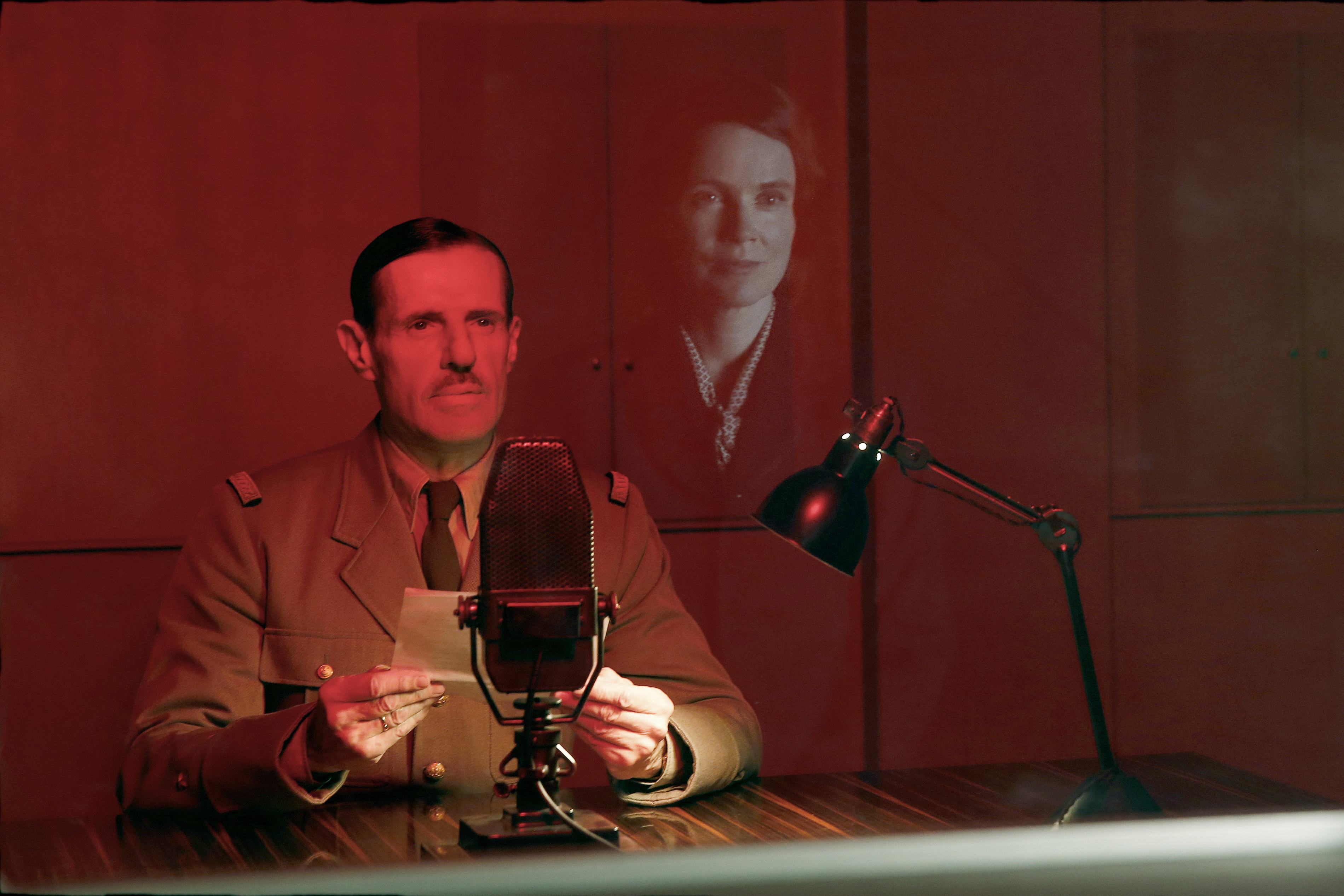
Lambert Wilson, a veteran French character actor with “Sahara” and “The Matrix” franchise credits, looks and sounds enough like the World War II leader and later French president Charles de Gaulle that no strain shows as he acts out the man’s pride, hauteur and zealous patriotism in “De Gaulle,” a workmanlike and flattering bio-pic of the French leader’s rise to moment in 1940, during the fall of France.
Writer-director Gabriel Bomin (“Our Patriots”) may get bogged down in dates, de Gaulle’s family’s struggle to escape a collapsing France, in endless cabinet meetings and the military and political decisions and intrigues that let “the largest army in the world” surrender within a month of Germany’s May 1940 invasion. But there’s French WWII history and de Gaulle biography that few outside France know well. Bomin cast a great de Gaulle and a pretty good Winston Churchill (Tim Hudson) for this French “Darkest Hour” film biography.
Bomin saves the most poignant moments for the finale, as he should. And as somber and grim as this picture can be — and any movie about this debacle is too bloody and too infuriating for farce, he drops a lone joke in here that might play as tragedy in France, but not beyond the Bay of Biscay.
De Gaulle, given modest rooms in London as he tries to make the case (in French with English subtitles) to the British and his countrymen left behind back home that “this is a world war” and thus, isn’t over just because Paris has capitulated, searches the cupboard and finds only a particularly English “delicacy.”
So he sits and types out his first speech, via the BBC to now “occupied” France, a Frenchman eating Libby’s corned beef from a can.
It’s a film of high rhetoric and resigned defeatism, of sad silences in scenes where characters pass over a road covered with corpses that once were refugees fleeing the German advance, and their cars and horses. They were strafed and massacred by German aircraft, which dominated the air over France.
And for all the rough edges it rubs off a Biblically-prideful, disdainfully-arrogant man, we get plenty of glimpses of the de Gaulle that the rest of the world remembers — tetchy, egocentric, tall, lean and with a birdlike stiffness in public.
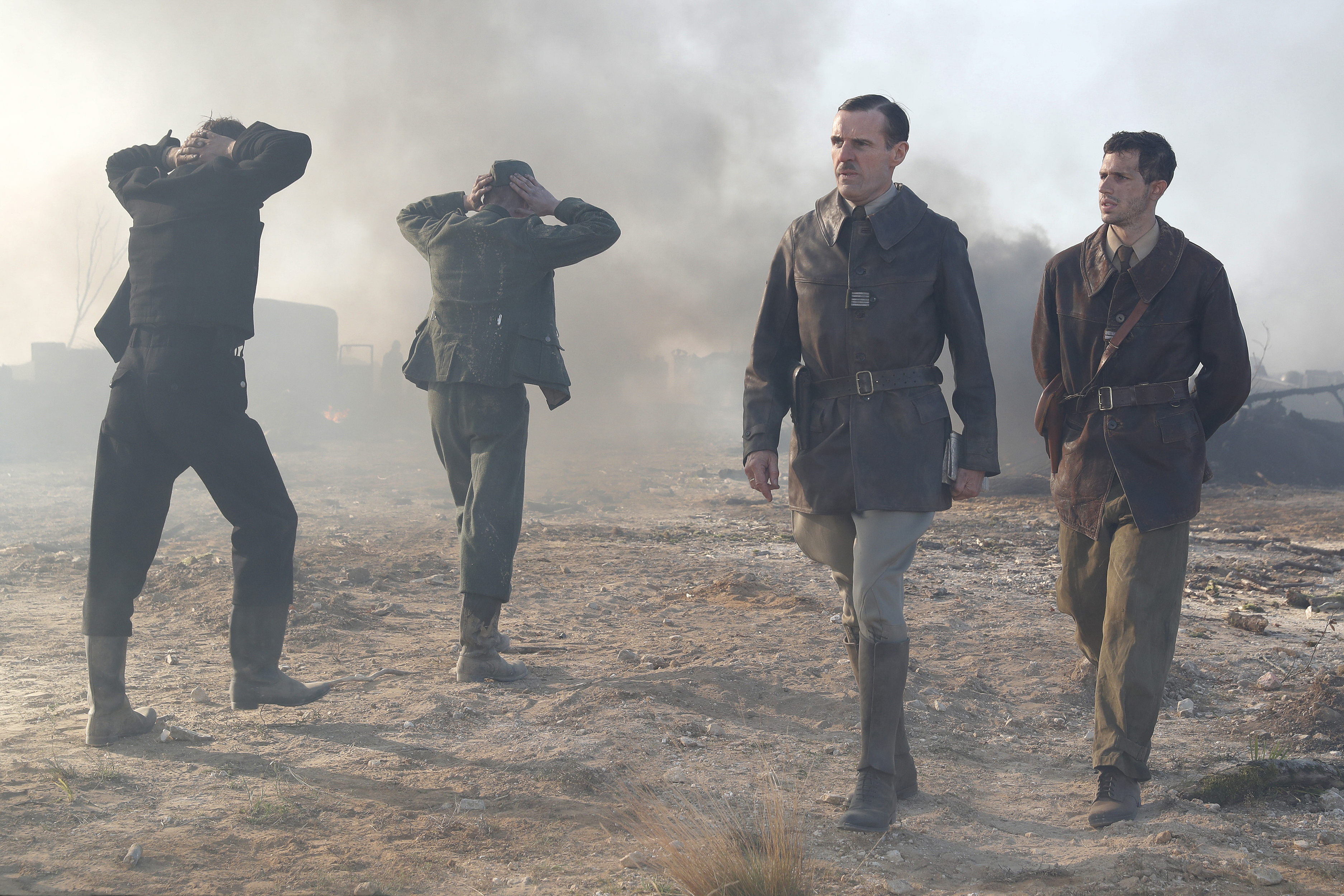
We meet Col. de Gaulle in battle, at Montcornet where his forces have turned back the German onslaught and he is calling in for the air and artillery support that would allow him to capitalize and roll back this section of the advance and stymie the Germans on their encircling drive on Paris.
He lectures subordinates about his tactics, the “mechanical” new way of war, and every chance he gets from that day until the fall of France, he brings up the fact that “I told you so” to higher ups when it came to how “the next war” would be fought. He knew.
Bomin’s film skips freely back and forth in time and setting, from his family’s last big gathering before the collapse to earlier years when he and beloved wife Yvonne (Isabelle Carré) first learned their youngest daughter Anne (Clémence Hittin) was “vulnerable (handicapped) and unfit for the world.”
Montcornet earned De Gaulle a swift promotion to Brigadier General to “give you the authority to influence events,” French president Reynaud (Olivier Gourmet) reassures him.
Because aged, cynical and ultra-conservative Marshal Philippe Pétain (Philippe Laudenbach) hero of World War I, the man who lobbied for the construction of the folly that was the Maginot Line, has been invited into the cabinet to preach surrender and call this “a political defeat,” blaming others for the hidebound “re-fight the last war” thinking he’d saddled the country with post WWI.
Laudenbach’s Pétain makes the man’s case for him — “appeasement” was the practice of French governments (and Neville Chamberlain’s British conservatives) and did as much to bring about the French collapse as anything else. But he’s also a hissable villain, which is the way history truly remembers the “marechal.”
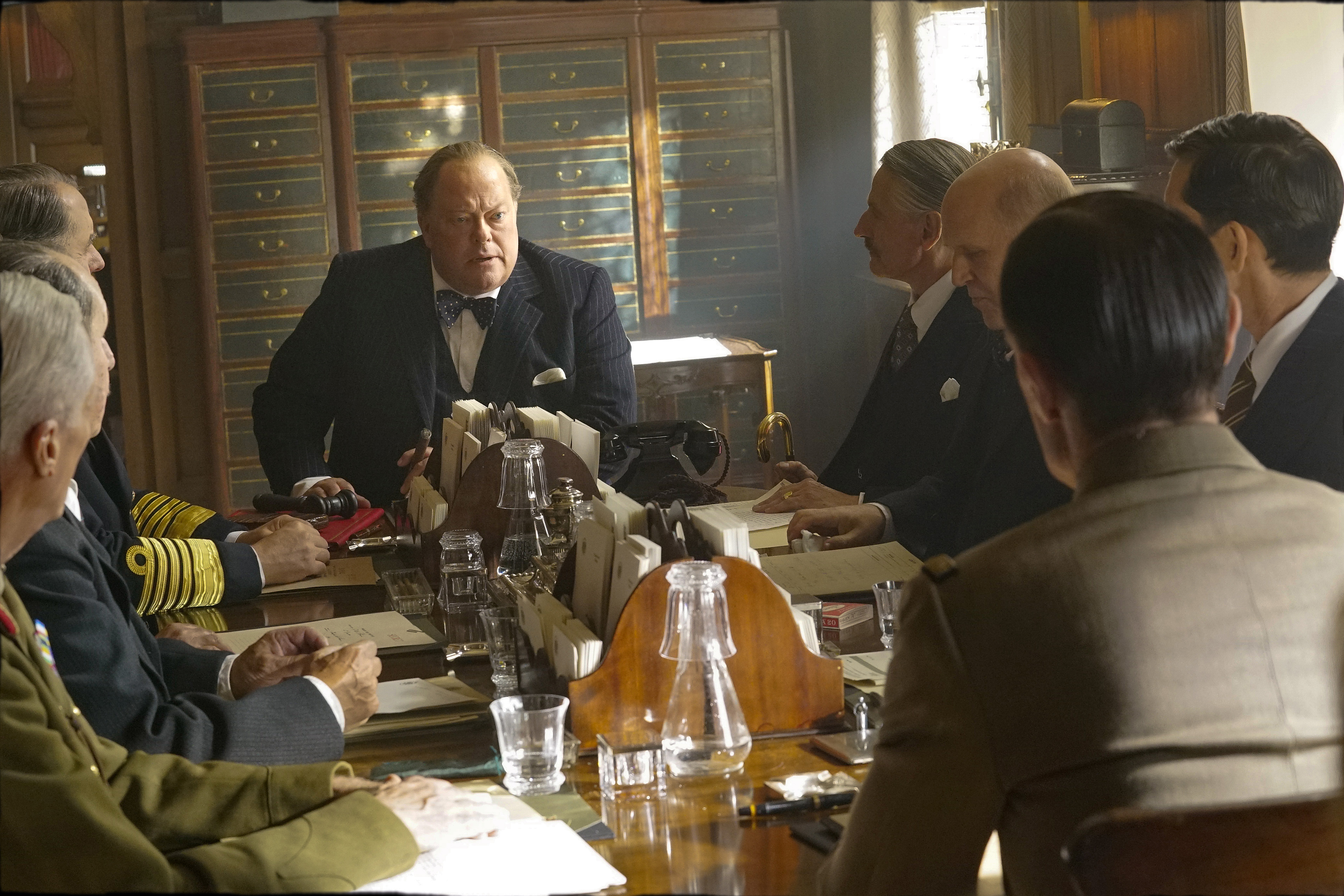
De Gaulle has both a seat at the table and a voice in these meetings, but even he sees the “call for talks” and “give up” tide turning. Sent to beg for more British help, he riles Churchill before the new prime minister, speaking French, waxes lyrical about the blood and history the two countries share that makes them “inseparable.”
Churchill would be the one to sign off on giving the new general, once de Gaulle flees a collapsed France, airtime on the BBC.
“The French must hear another voice,” De Gaulle argues.
“Yours?” Churchill smirks.
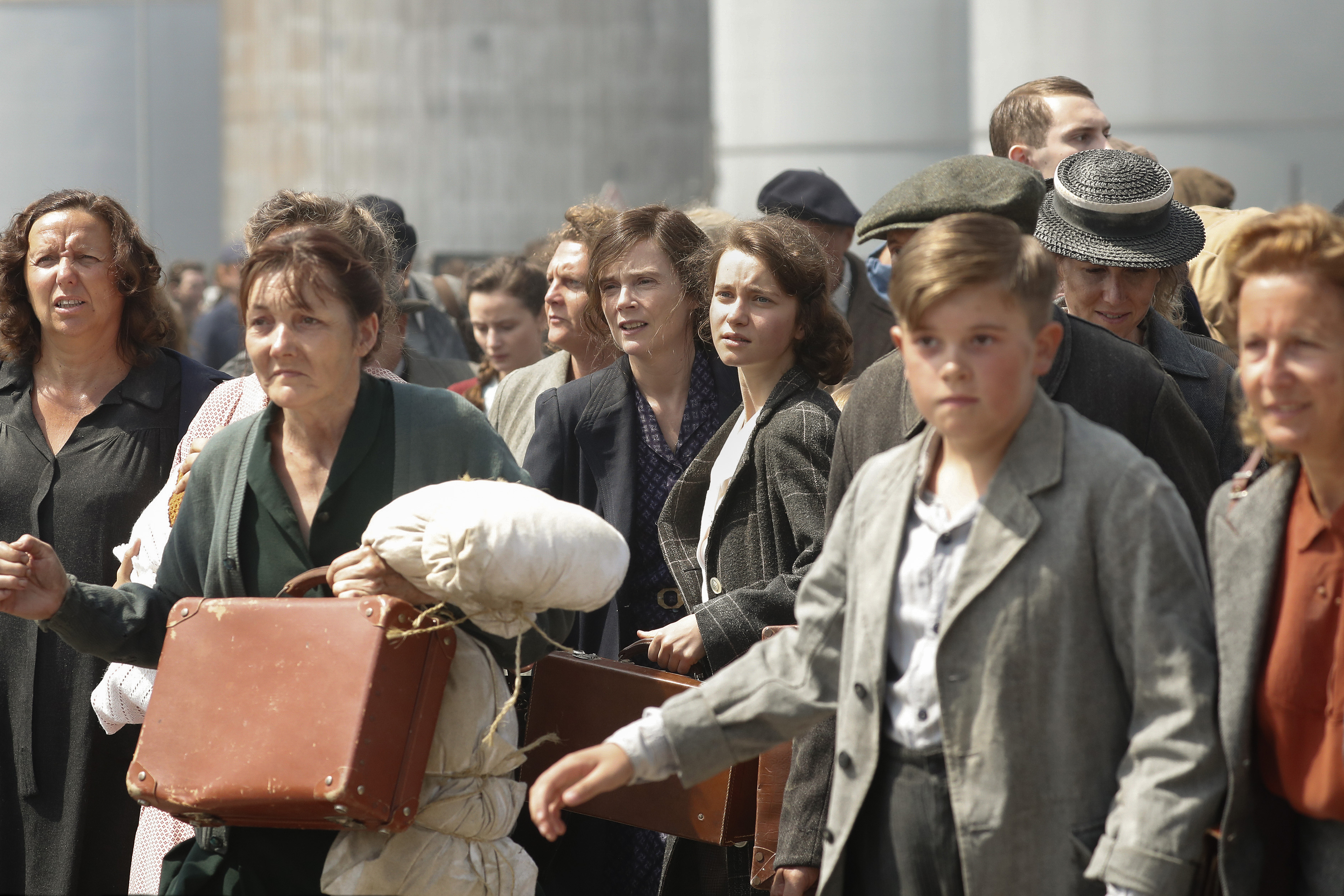
The script’s choppy structure works against it up until the third act, when De Gaulle must sneak out of the country and his family is left on their own, told to flee but not having any idea where the paterfamilias has landed and de Gaulle frantically lobbying Britain to allow him to continue the fight as he’s worried sick about the wife and children he left behind.
But Wilson shines, strolling confidently through the first scenes, insistent in positioning himself as “He who won’t accept defeat” in the eyes of the British, and later his own people.
It’s a terrific performance and it makes this overdue film depiction of the most important French figure since Napoleon worth watching, even if it burnishes his image more than a non-French production ever would.

Rating: unrated, scenes of combat violence
Cast: Lambert Wilson, Isabelle Carré, Tim Hudson, Olivier Gourmet and
Philippe Laudenbach
Credits: Scripted and directed by Gabriel Le Bomin. A Samuel Goldwyn release.
Running time: 1:49

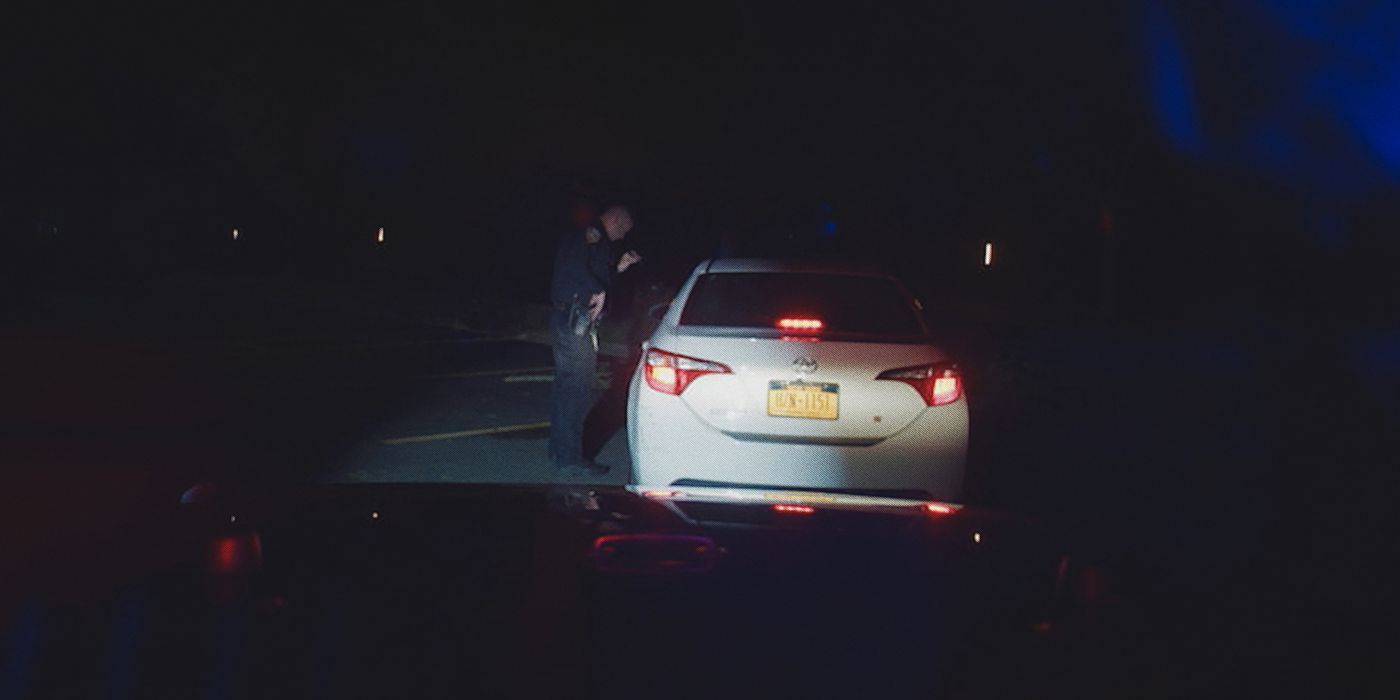
Actor-turned-director Christian Nilsson had a great idea when he set out to do an homage to Brian DePalma’s classic political thriller “Blow Out,” itself a riff on Michelangelo Antonioni’s “Blow Up,” also a classic.
The hook — that something deadly happened and film, audio and/or video reveals causes that aren’t in the “official” explanation — is all but bullet proof.
But while Nilsson’s instincts for making “Dashcam” an updated, new-tech “Blow Up” were good, his execution isn’t. “Dashcam” is a dry, slow and dull 80 minutes of a loner TV news editor stumbling into evidence that proves a Big Conspiracy behind the death of a famous politician.
It’s a film mostly set in editor Jake’s (Eric Tabach) apartment, predominantly him sitting at a screen as we see what he’s doing on that screen — enhancing audio, opening files, fielding emails and piecing together a story — with occasional breaks of him getting up to do a fake stand-up report in his bathroom mirror. Because Jake’s an at-home editor for a New York TV station, and what he really wants to do is be an on-air reporter.
The story? A disgraced former New York Attorney General (B-horror mainstay Larry Fessenden) was killed in a drunk driving traffic stop that ended in a shootout, with the police officer also killed.
Reporter Tim (Zachary Booth) is anxious to get an account that is the first to show the officer’s dashcam footage onto the morning news. Lots of phone calls, facetime and email nagging.
Jake gives Tim the finger, out of Facetime frame, and mutters “I swear, I could do the job so much better than him.”
It’s Halloween and Jake is skipping a party with pretty linguist girlfriend Mara (Giorgia Whigham) to finish this story.
But the email from the governor’s press office (Why would it come from them?) has not just that :43 seconds of dashcam, but a “confidential” file. Which curious Jake opens. He’s barely perused the autopsy photos and glimpsed the supposedly “corrupted” and unavailable policeman’s body-cam footage in it when his phone rings, and this interrogatory and officially threatening conversation ensues.
Jake sees a scandal. He sees everybody’s worst assumptions of a “conspiracy” proven true. Jake sees his “big break” if he can be the one to turn this into a story that HE reports. That’s why he keeps this information to himself. For a bit, anyway.
“Uh-oh,” we think.
The plot may be fraught with possibilities, but it’s easy to see the potential pitfalls of making a low-budget film out of this.
The limited sets and tight timeframe should create myopia, paranoia and rising suspense. Nilsson has no clue how to make any of those happen.
The shot selection and camera angles are pedestrian, the limited music we hear faintly in the background contributes nothing and veteran bit player Tabach isn’t showcased in a way that suggests there’s any spark to him. He blandly under-reacts to every damned thing that happens.
Some of what goes wrong here strikes me as inherent shortcomings in telling this story in this way. A guy sitting at a keyboard with distracting screen-in-screen messages, files, audio editing and snippets of video is about as fascinating as pointing two cameras at a critic tap-tap-tapping away at a review on a laptop.
Not at all, in other words.
DePalma, filming “Blow Out” in 1980, had John Travolta’s editor character circled in 360 camera pans as the film’s hero cut film and analog audio and rearranged it to tell the “true” story of a car accident that was no “accident.”
The crime scene footage in “Dashcam” is interesting enough, although the different angles make one wonder how this was ever just a single event. They don’t seem to match.
We don’t see enough of Jake’s editing to show us where he’s going with all this, and even the thriller moments — a black SUV parked outside, the “new” footage that changes the narrative of the “news” story — land with the soft thud of an egg dropped on velvet.
There’s no fear for our hero, no thrill of the chase, no “A HA” moments, even though he’s got a linguist girlfriend who can decipher what words might be heard on the faint but amplified tapes of phone taps, police radio chatter and dashcam and bodycam footage.
“Dashcam” is an idea that should have worked, and sadly it’s not even good enough for proof of concept so that Nilsson could remake it with a bigger budget and more compelling actors.

Rating: unrated, violence, profanity
Cast: Eric Tabach, Giorgia Whigham, Larry Fessenden and Zachary Booth
Credits: Scripted and directed by Christian Nilsson. A Hood River release.
Running time: 1:22
A lad’s new walking talking digital assistant has a few glitches in this cartoon, animated by start up Locksmith Animation
Zach Galafianakis, Olivia Colman and Ed Helms are among the voices we hear in this 20th Century Studios release, which opens Oct 22.

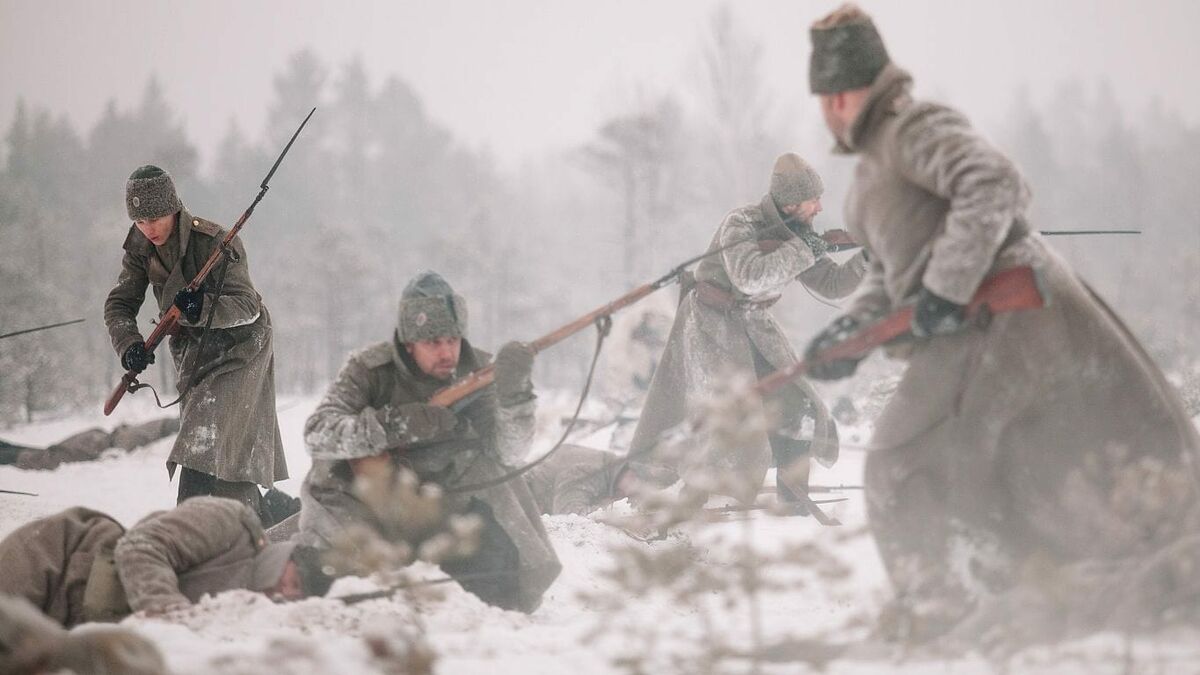

The slaughter of World War I is seen from the Eastern Front point of view in “The Rifleman,” a Latvian saga about that conflict and the Russian Civil War and Latvian fight for independence that followed.
Documentary filmmaker Dzintars Dreibergs makes a sturdy. engrossing and moving fictional feature directing debut in this adaptation (scripted by Boris Frumin) of a celebrated Latvian novel by Aleksandrs Grins novel.
The story begins in a visually striking nighttime firefight in a snowy forest where a fresh-faced soldier (Oto Brantevics) displays the combat prowess and survival instincts of a veteran.
“Two years earlier” we see how he came to be there. The war begins, the Germans invade Latvia and his mother hides him under the bed. She and the family dog are killed, and young Arturs (Brantevics) then helps his much older father (Martins Vilsons) bury the family possessions, kill the livestock so that it won’t fall into enemy hands, and ridse off to enlist.
His dad was a famed marksmen in earlier conflicts. Now, after Father uses his reputation to pull some strings, he and both his sons (Raimonds Celms plays older brother Edgars) will be fighting for the Tsar under Latvian command, a concession granted by the teetering monarchy.
Dad is pressed into service, adding more notches to his bolt-action sniper’s rifle, and brother Edgars moves up the chain of command. But Arturs — just 16 when he enlisted — shows little aptitude for combat, despite the eagerness for revenge he’d professed in enlisting, and his constant volunteering for dangerous scout duty and pathfinder patrols.
He’s reluctant to use the bayonet. He can’t pull the trigger when Dad gives him a shot from his sniper’s position.
“If your mother could see you now,” Dad starts in, and then thinks better of criticizing his youngest. And Arturs, faced with his first true kill-or-be-killed challenges, soon gets the hang of this soldiering business, acquitting himself with honor on the Island of Death battles that many Latvians died in.
Arturs is gassed, blown up and shot more than once in the conflict, which is how he meets and falls in love with the young nurse Marta (Greta Trusina), staying in touch with visits and letters as the war goes badly for Russia, the Russian Revolution breaks out and Arturs’ services are employed in the Red Army, then in Lenin’s Guard, and finally in a Latvian corps hellbent on obtaining independence from Russia and everybody else when the smoke clears.
If the movies have taught us nothing about this period and place, it’s that the Germans had no compunction about killing civilians long before the Austrian corporal took over, and they were quick to introduce chemical weapons — the original “weapon of mass destruction” — to give themselves the edge.
The Russians? They were an army run by trigger happy autocrats, quick to threaten any soldier who didn’t follow orders with a firing squad, something true of both the Imperial Army and Red Army.
We’re treated to “The bloody shirt” motivation for Arturs’ enlistment, see basic training and the nightmare of the trenches, slip into the Hemingway cliche of falling for a nurse, Red Army “purges” of the disloyal that are terminal in nature.
Brantevics is pretty effective in the lead role…for someone who’d never acted before. And as you can discern from the plot description, there’s not a lot that’s truly novel in this version of The Great War.
“Doctor Zhivago” this isn’t, something that is never clearer than in the under-developed love story.
“Rifleman” has a choppy, episodic nature with some glorious set-piece battles and “tests” in The Hero’s Journey to amnhood and Latvian patriotism. That may be a result of “Blizzard of Souls (Dveselu putenis in Latvian)” being retitled for its North American release, cut by nearly 20 minutes and dubbed into English by Film Movement. Each of those decisions robs the film of something.
But grimly realistic and chaotic combat scenes and a hero whose “journey” we become invested in ensure that this Latvian film deserves a place in the canon of movies of the Great War, one that doesn’t leave out the chaos that followed that upheaval, even if it shortchanges the particulars.
Rating: unrated, combat violence
Cast: Oto Brantevics, Greta Trusina, Martins Vilsons, Raimonds Celms and Jekabs Reinis
Credits: Directed by Dzintars Dreibergs, scripted by Boris Frumin, based on a novel by Aleksandrs Grins. A Film Movement release.
Running time: 1:46
Hawke plays brother roles in this Nov. 19 thriller set in Rome as it faces a terrorist bombing.
Ferrara hasn’t decamped from Italy, but he’s not working with his muse, Willem Dafoe, and he’s not making another indulgent navel gazing drama. Remember he did “King of New York” and “Bad Lieutenant.” Let’s hope he does.
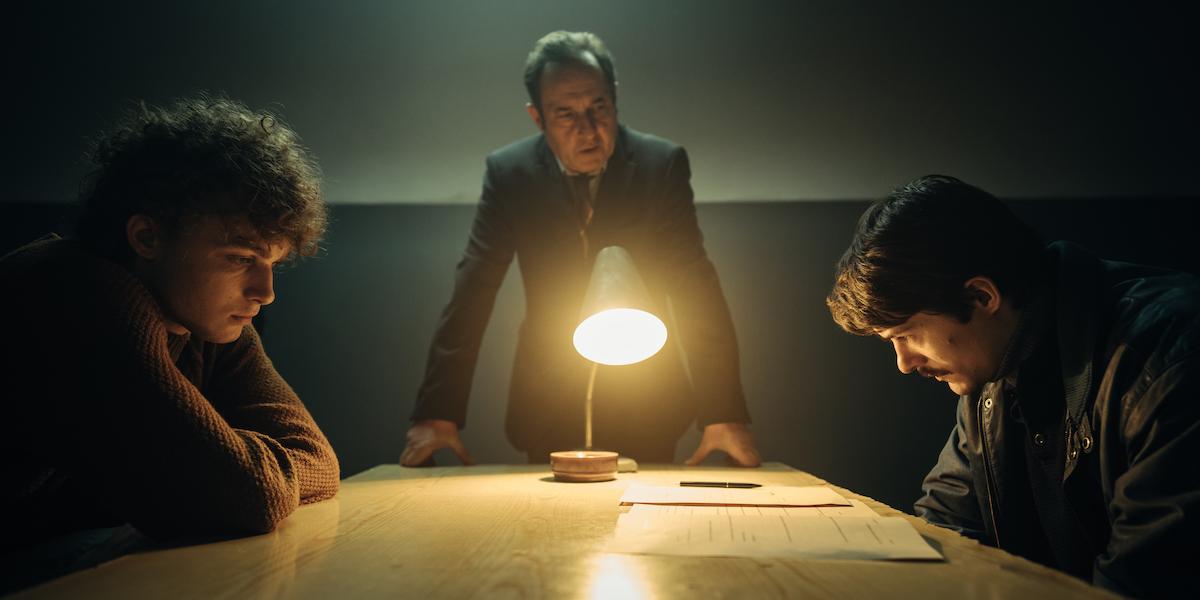
The Polish thriller “Operation Hyacinth” (“Hiacynt”) is based on an infamous piece of Communist history, Poland’s systemic police harassment, arrest, documentation and blackmail of the country’s homosexual population in the mid-1980s.
If it was meant to create a database of Every Gay in Poland, it was a Polish joke. Some 11,000 names are all they came up with. But as a monstrous, violent violation of civil rights, it’s hard not to wonder if Nazi sympathizers were never rooted out of the “militia” — Poland’s national police.
The movie director Piotr Domalewski (“Silent Night”) and first-feature screenwriter Marcin Ciaston conjured out of that is an undercover cop chases a conspiracy tale, a somewhat “inevitable” story that invites application of that reviewing cliche, “solid.”
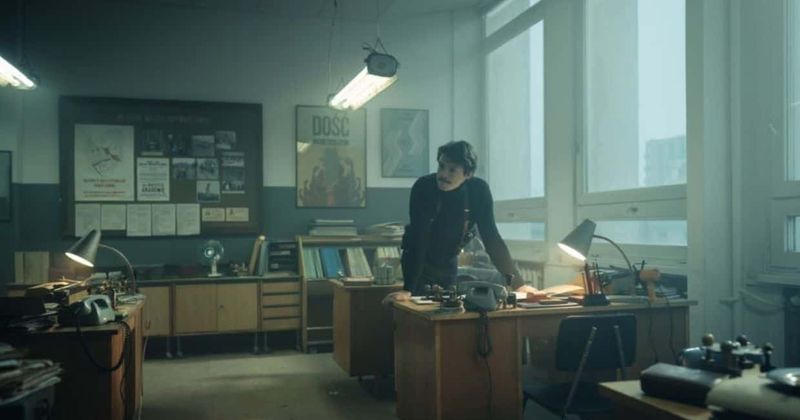
As in, the execution, acting and chilling Soviet Bloc production design are more impressive than any surprise “Hyacinth” struggles to come up with.
It’s just reminiscent enough of William Friedkin’s controversial undercover-in-the-gay-community 1980 film “Cruising” for the comparison to pop to mind in anybody watching “Hyacinth.”
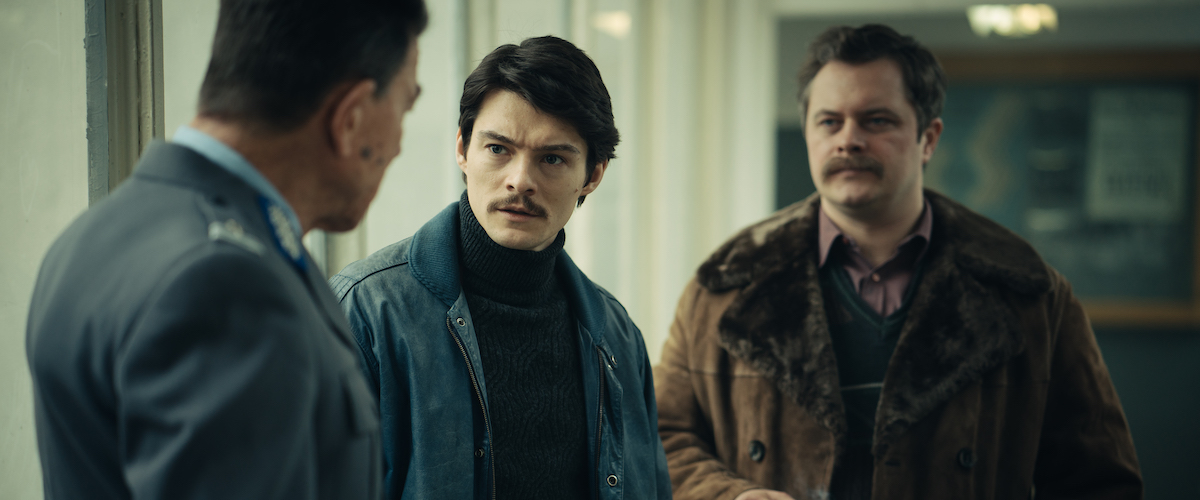
Militia sergeants Robert (Tomasz Zietek) and Nogas (Jakub Wieczorek) are a crack team, with younger Robert the brains and Nogas the bulk. Robert, son of a government security minister (Marek Kalita), is nobody’s idea of a tough guy. But thanks to his connections, they’re the gruff boss’s (Miroslaw Zbrojewicz) favorites.
That’s how they’re handed a murder case, a “well to do” victim found in a Warsaw park close to “The Mushroom,” the men’s room, a favorite cruising ground for the city’s gay men.
To “make this go away, quickly (in Polish with subtitles, or dubbed into English), they’ll need the help of the “Operation Hiacynt” team, which has files, a record of gay haunts and a squad to help them round up suspects to blackmail or torture for “information.”
As they wade into this world, Robert is put off by the systemic injustice, and by his partner’s casual cruelty, brutality that leads to one arrested informant’s suicide.
When Robert goes his own way with the investigation, undercover, developing college lad Arek (Hubert Milkowski) as a source, other “suicides” come to light, connections are made and the higher ups announce that “The case is closed.”
As his Dad passes on warnings and his partner moves on, Robert digs into the case with a little help from his file clerk fiance (Adrianna Chlebicka) and we’re left to wonder how far Robert will go to maintain his cover, what makes this case so important to him and where this tangled web will lead him and us.
We’re “meant” to wonder that, anyway. That’s what I’m talking about when I say “inevitable.”
Zietek, seen in the Polish drama “Corpus Christi,” gives Robert a subtle intensity that masks some of what the character sees as his reasons for doggedly pursuing this case. He’s a lone seeker of justice and protector of a vulnerable population. But even this “protected” insider can’t see a payoff in taking on a corrupt and murderously homophobic system.
The script doesn’t adequately develop any of the other characters, although much-credited TV actress Chlebicka nicely suggests a woman whose seemingly narrow horizons and limited ambitions aren’t her whole story.
Kalita’s father figure lets a little sensitivity show, but not much. This is a commissar who knows what’s what and just what he’ll have to do if his son crosses one line too many.
“Operation Hyacinth” isn’t particularly progressive or surprising by Hollywood standards. But the mere fact newly nationalist Poland is opening this historical homophobic can of worms and putting it on Netflix counts for something. They probably never showed “Cruising” on that side of the Iron Curtain.

Rating: TV-MA, violence, sex, nudity
Cast: Tomasz Zietek, Hubert Milkowski, Marek Kalita, Adrianna Chlebicka and Jakub Wieczorek.
Credits: Directed by Piotr Domalewski, scripted by Marcin Ciaston. A Netflix release.
Running time: 1:46
Peter Jackson finally finished his deep dive into Beatles vault footage from their mad rush to finish “Let It Be,” the album and a TV special meant to accompany it.
“Get Back” was the album’s ethos, getting the quarrelsome band back to their way of working under a deadline, a unifying “pressure” guiding them, according to Beatles historians, mostly quoting Paul McCartney. They even had roughed out a different LP with that as the title tune, and scrapped some of that as “Let It Be” shaped up in the sessions, filmed for a TV special.
Candid composition footage, rehearsal footage, arguments, jokes, and evey now and then a hint that they’re making their swan song. They broke up when the album came out.
This series was, as originally pitched by Jackson, a single film to be released theatrically.
Now it’s a three part series “event” meaning he’ll get to use more footage. Probably cut down on his editing it into a theatrical cut, too.
Nov. 25, Beatlemania streams on Disney +.
A missing person, suggestions of crime and down-and-out working poor trailer-park Angelinos struggling to get by — let’s label “The Cleaner” an indie film noir and see if I can make that stick.
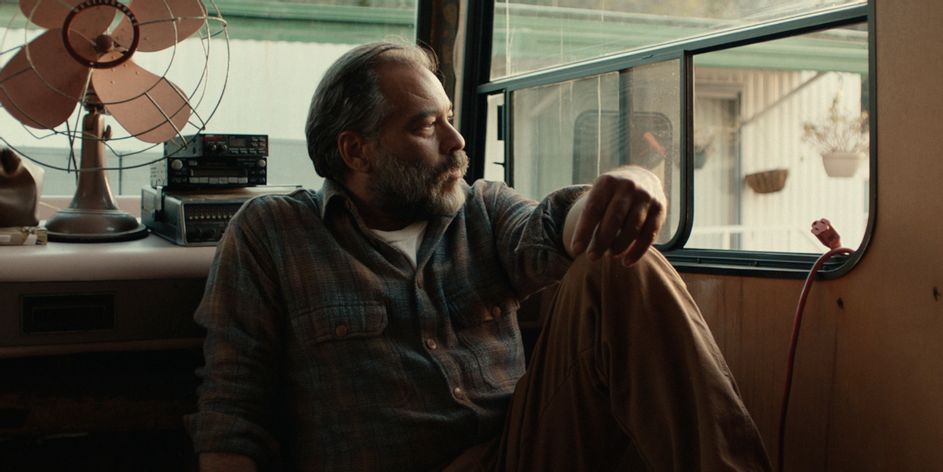
This quirky, laid-back and downbeat drama is a star vehicle for King Orba, whose credits cover a wide range of jobs, positions, “additional crew” and the occasional acting job (“The Mighty Orphans,” TV’s “Stargirl”). He co-wrote it with first-time feature director Erin Elder and plays Buck, a broke 50ish house cleaner who lives in an RV next to the trailer housing his retired “piss and vinegar” house cleaner mother (Shelley Long).
Buck’s barely getting by on a good day, pedaling an old beach bike to cleaning jobs from a client list he inherited from his mother Sharon..
It wasn’t always like this, though we get the impression it was never much better. Buck used to sell RVs, like the one he lives in. But something happened.
At least his make-ends-meet struggle leaves him just enough cash to score a little weed from his younger friend, James (James Paxton of TV’s “Agents of S.H.I.E.L.D.”). James is all about making his own marijuana blends and giving them cute names — “marketing.”
Buck juggles work and keeping an eye on his medicated, beer-loving Mom, and not very successfully. Their new neighbor Becky (Eden Brolin of TV’s “Yellowstone”) might help out. It’s the least she can do after she gets Mom drunk at her trailer-warming party.
Then this new client, Carlene (Lynda Carter, TV’s “Wonder Woman”), an elderly retired singer, springs this on Buck.
“I don’t want you to clean my house, Buck. I want you to find my son.”
Buck, a guy without a car, without a computer, without a cell-phone, is supposed to locate an estranged adult son with “problems,” somebody who doesn’t want to be found in one of the largest cities in the Americas.
Even with a little help from James, who at least knows how to use social media, and Buck’s cop-brother Craig (Faust Checho), Buck is plainly “not qualified” to do this and is out of his depth.
But the singer favors him with a song, and shoves cash in his hand. It’d be rude not to try.
“The Cleaner” is so laid back it’s on the Matthew McConaughey “J.K. Livin'” spectrum.
The dialogue is spare, the “clues” Buck picks up on simple and obvious as he pedals his bike around East L.A., following up, masking his innocuous requests (“You seen this guy?”) behind unnecessary mystery because he’s probably seen the way the gumshoes do it in old movies or “The Rockford Files.”
The screenplay has just enough peripheral complications to keep things interesting. Cop brother Craig is almost estranged from his mother. He tries to bring his fiance (Soleil Moon Frye) to meet her, and that dinner goes from awkward to “trailer trash” ugly in a flash. Neighbor Becky is in an abusive relationship.
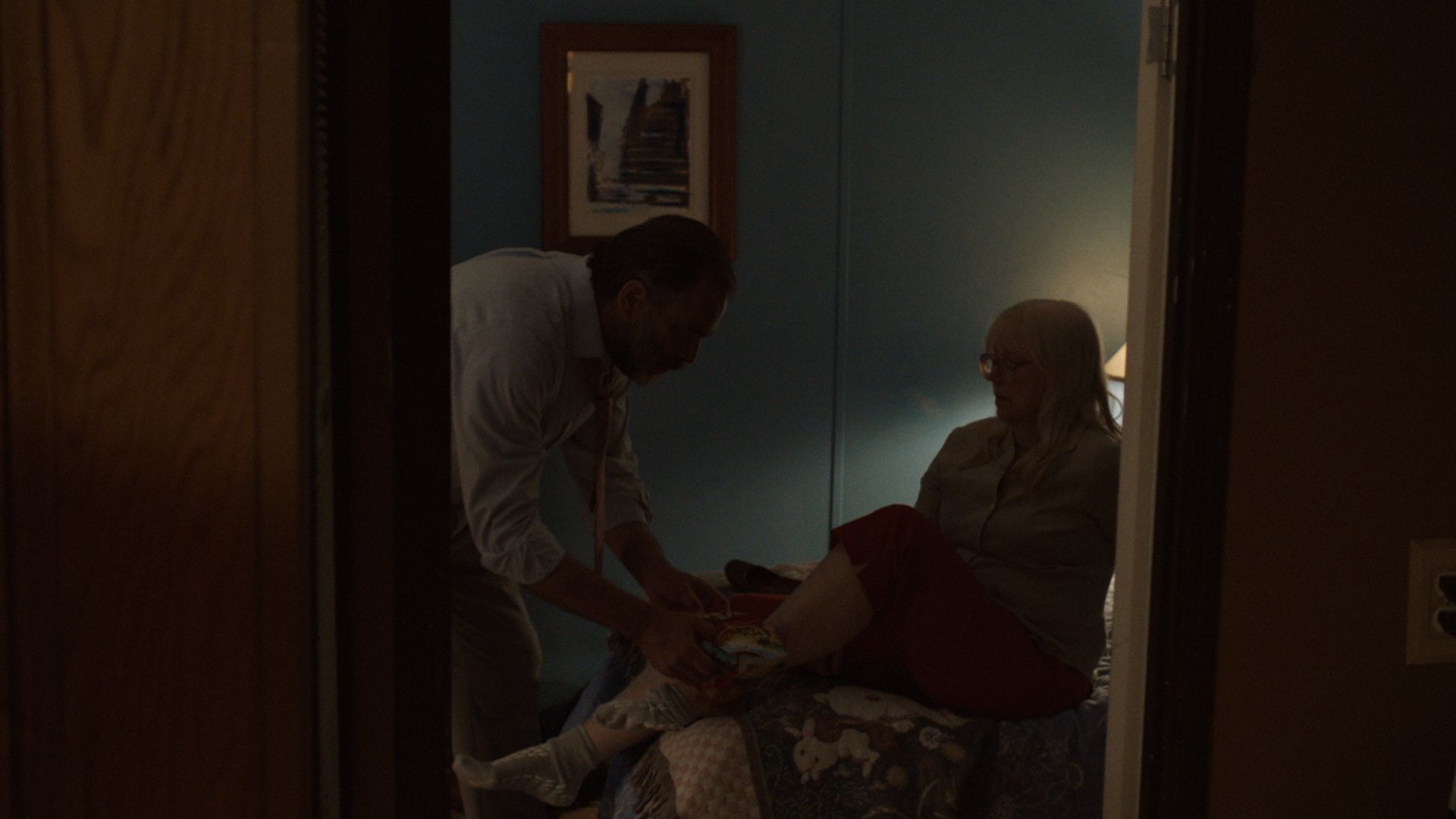
The script’s grace notes include a clever way of introducing Craig. Buck comes home to find his mother’s turned her ankle at Becky’s beer bust. He goes to get her pain med prescription filled, learns the medicine isn’t covered by Medicaid and winds up shoplifting batteries for her TV remote. He’s caught.
The cop who picks him up starts in with “Aren’t you ashamed?” Then we find out he’s his brother.
“The Cleaner” is the sort of movie you can make if you spend a lot of time on film sets and are personable enough to start conversations with the stars. Luke Wilson starred in “The Mighty Orphans” with Orb in a supporting role. Hey Luke, wouldya do me a solid?
Wilson, long a champion of indie cinema, signs on for a couple of scenes as a house cleaning client.
Veteran character players M.C. Gainey and Mike Starr join Long and Carter and Moon Frye and Shiloh Fernandez (of “Evil Dead,” playing the missing son here) and Sean Penn and Robin Wright’s son Hopper Penn in a cast whose assembly would be a fun tale to tell, and who ensured “The Cleaner” got financed.
And all that pays off with a quietly-compelling mystery set in a milieu that’s grittier than most of the characters living in it are willing to admit, struggling people who are colorful, believable and (mostly) relatable.
It’s not a polished jewel, but even in the rough “The Cleaner” shines, more proof that you don’t need to limit yourself to horror to get your first film made.
Rating: unrated, violence, drug abuse
Cast: King Orba, Shelley Long, Eden Brolin, Lynda Carter, Soleil Moon Frye, Mike Starr, M.C. Gainey and Luke Wilson.
Credits: Directed by Erin Elders, scripted by Erin Elders and King Obra. A 1091 release.
Running time: 1:33
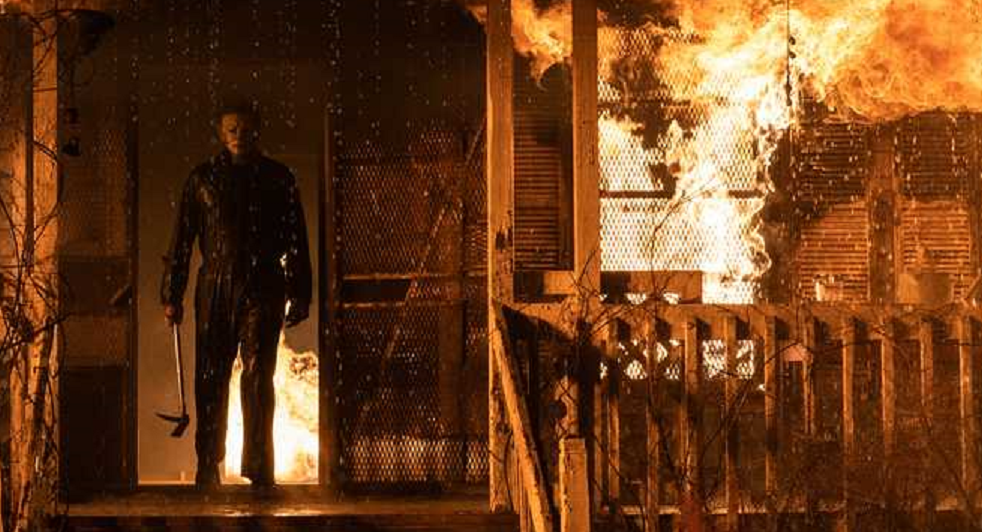
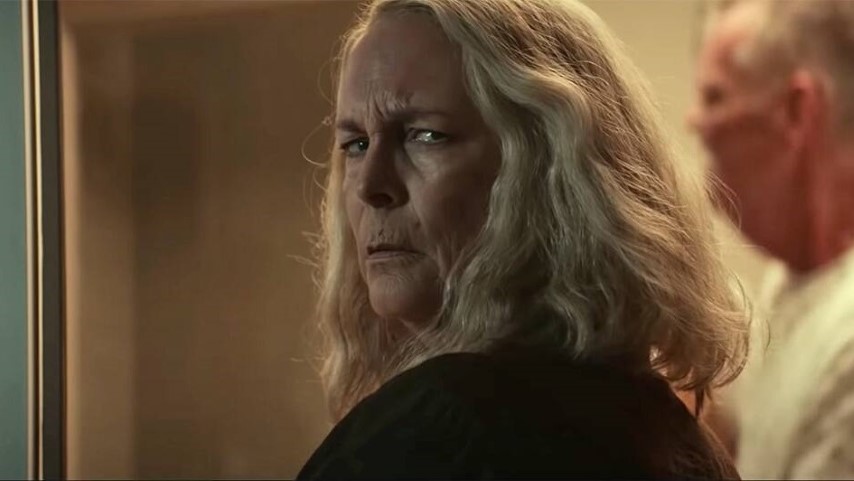
Well-crafted but not particularly well thought-out, “Halloween Kills” is a hot mess of a horror homage.
David Gordon Green’s take on venerable slasher franchise has ambition, an attempt at intellectual heft and one of the most empathetic performances of the great Judy Greer’s career. What it lacks is frights. What it traffics in is nostalgia, a warm feeling for John Carpenter’s 1978 horror classic. And it all but murders that.
The Scott Teems (“That Evening Sun”) script travels along two timelines –1978 and 2018 — and weighs in on our troubled era as Haddenfield, Illinois descends into mob rule and sloganeering mob violence.
No, Michael Myers hasn’t changed masks as he enters his AARP years. But the Trumpism analogy is right there in the open, with no less than Anthony Michael Hall (“Sixteen Candles” to “The Dead Zone” to “The Goldbergs”) playing a child survivor of that “Halloween” night long ago, leading the enraged citizenry in “Evil Dies Tonight!” chants as he sends vigilantes far and wide, hunting for the masked mass murderer who is literally changing the town’s demographics in a single night.
This is a “Frankenstein” village, assembling to meet a threat, but ranting and raving and following their worst instincts. All that’s missing are the Tiki torches.
The story begins as Laurie Strode (Jamie Lee Curtis), that babysitter of yore for kids like Tommy (Hall), now “that crazy lady that almost got killed,” is wheeled into a hospital, gut-stabbed and still screaming “We GOT him. Shot him in the FACE. BURNED him alive!” She’s sure they finally shot, clubbed, stabbed and burned Michael Myers to death.
Her daughter (Greer) isn’t relieved. And when others start showing up — a bleeding-out Officer Hawkins (Will Patton) and corpses — daughter Karen starts shouting what we already know from the film’s dull “first kills,” what the TV news is in the process of confirming. Myers isn’t dead. He’s staggered out of that burning house, wiped out a fire brigade, impaled and gutted a teen or two and shown us he’s just getting warmed up.
Nobody listens as Karen pleads and demands police protection for her mother in the hospital, or that her daughter (Andi Matichak) at least stick around, help keep watch over her grandma.
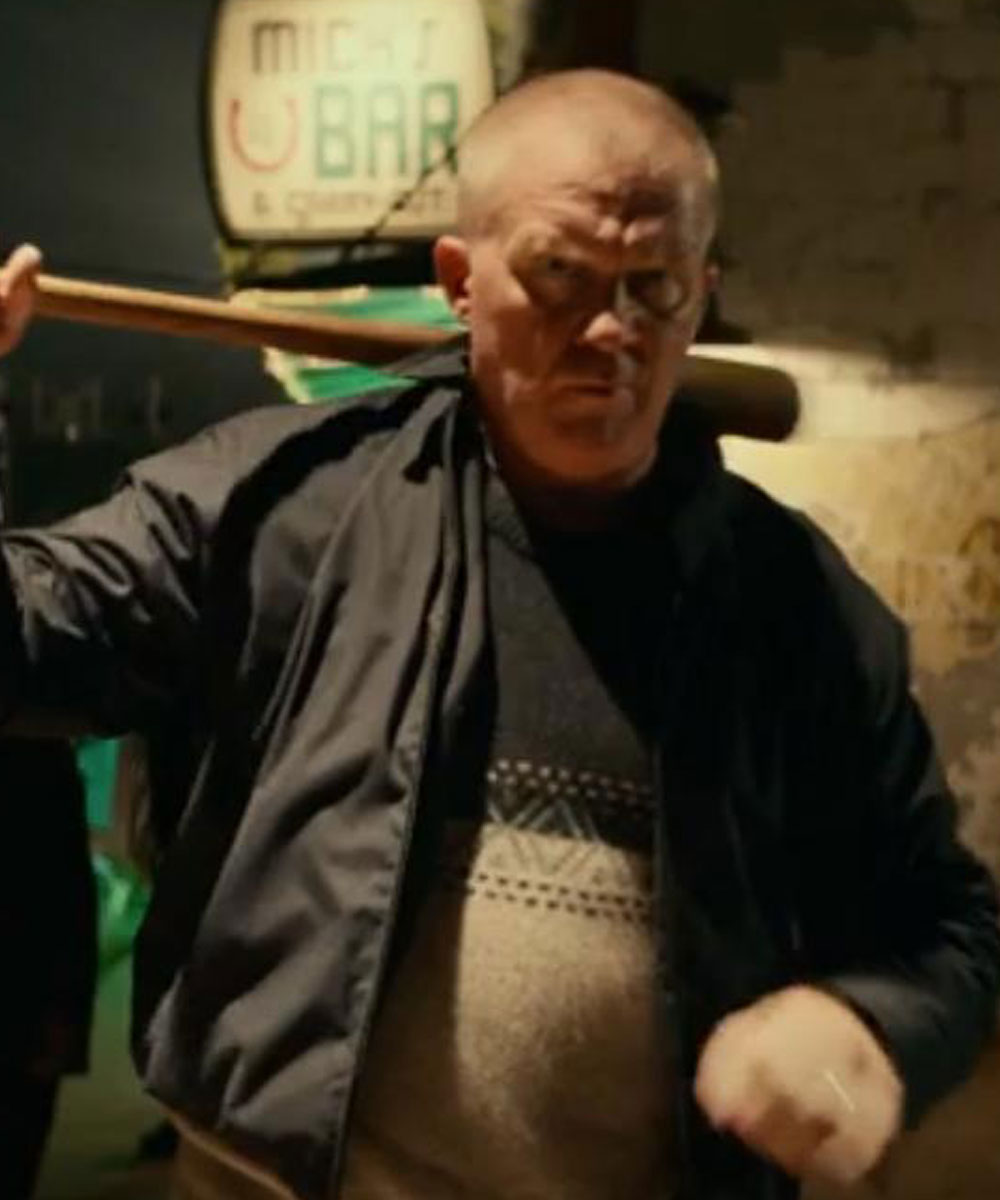
But Tommy, who we see tell “The Haddenfield Boogeyman” story as part of a bar talent show this All Hallow’s Eve, has other ideas. Hall takes on the “Dead Zone” scowl of a man scarred by trauma, enraged into fanaticism by this latest twist in that murderer’s story. He picks up a baseball bat and rallies the citizenry.
Flashbacks take us back to Tommy, Laurie and others 50ish adults’ (Kyle Richards, Richard Longstreet) childhood memories of that awful Halloween of 1978. We see the worst night of Officer Hawkins’ life (Thomas Mann plays Patton’s character as a rookie).
New characters are introduced, set up to become someone the audience might root for, and pitilessly ventilated with knives of every description, without suspense or frights. As we hear the random giggles of slasher film fans feigning appreciation of this fireman’s saw slaughter or that pithy punchline — “This is for Doctor LOOMIS, Michael!” — punctuated by Michael killing the speaker, “Halloween Kills” pretty much goes to hell.
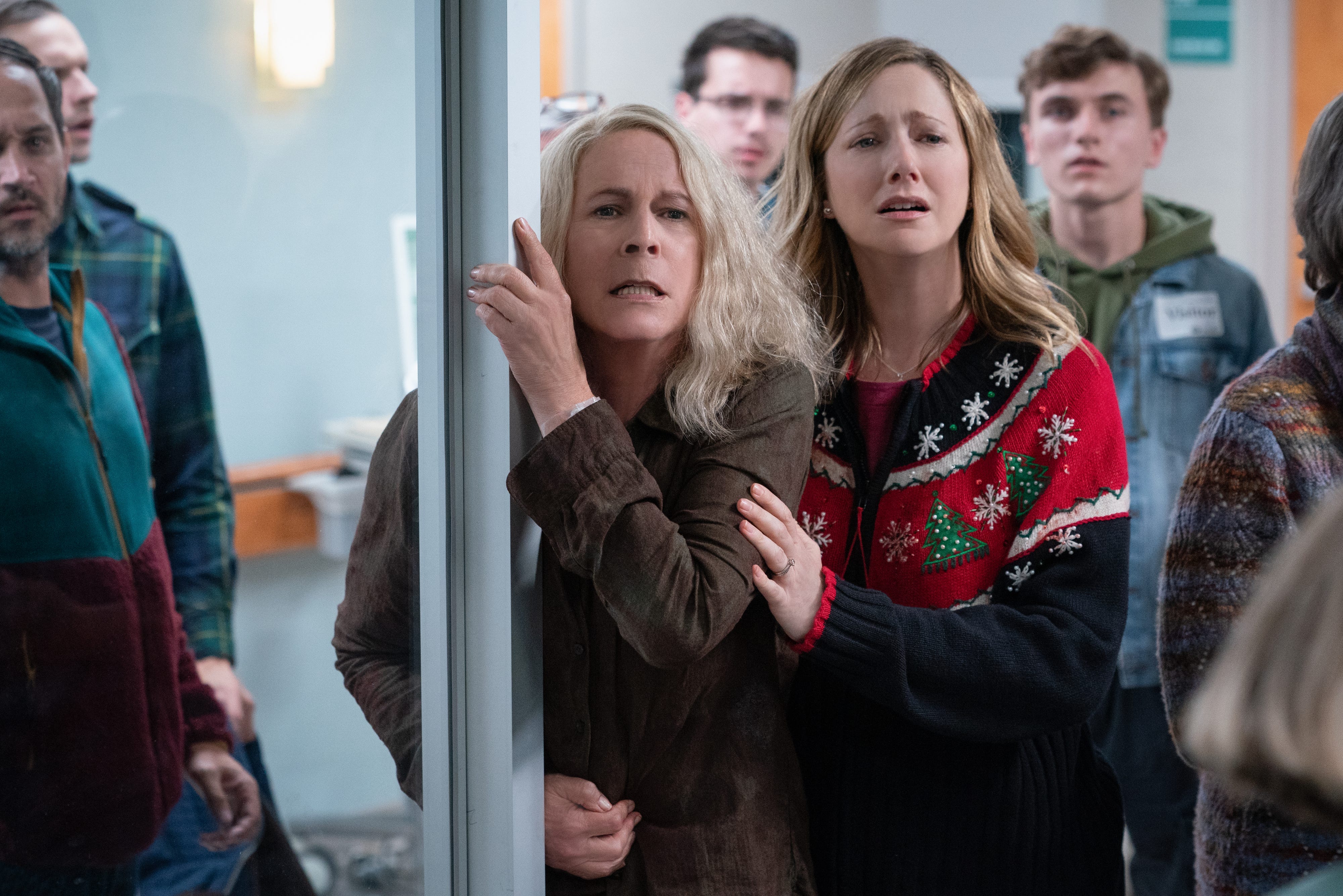
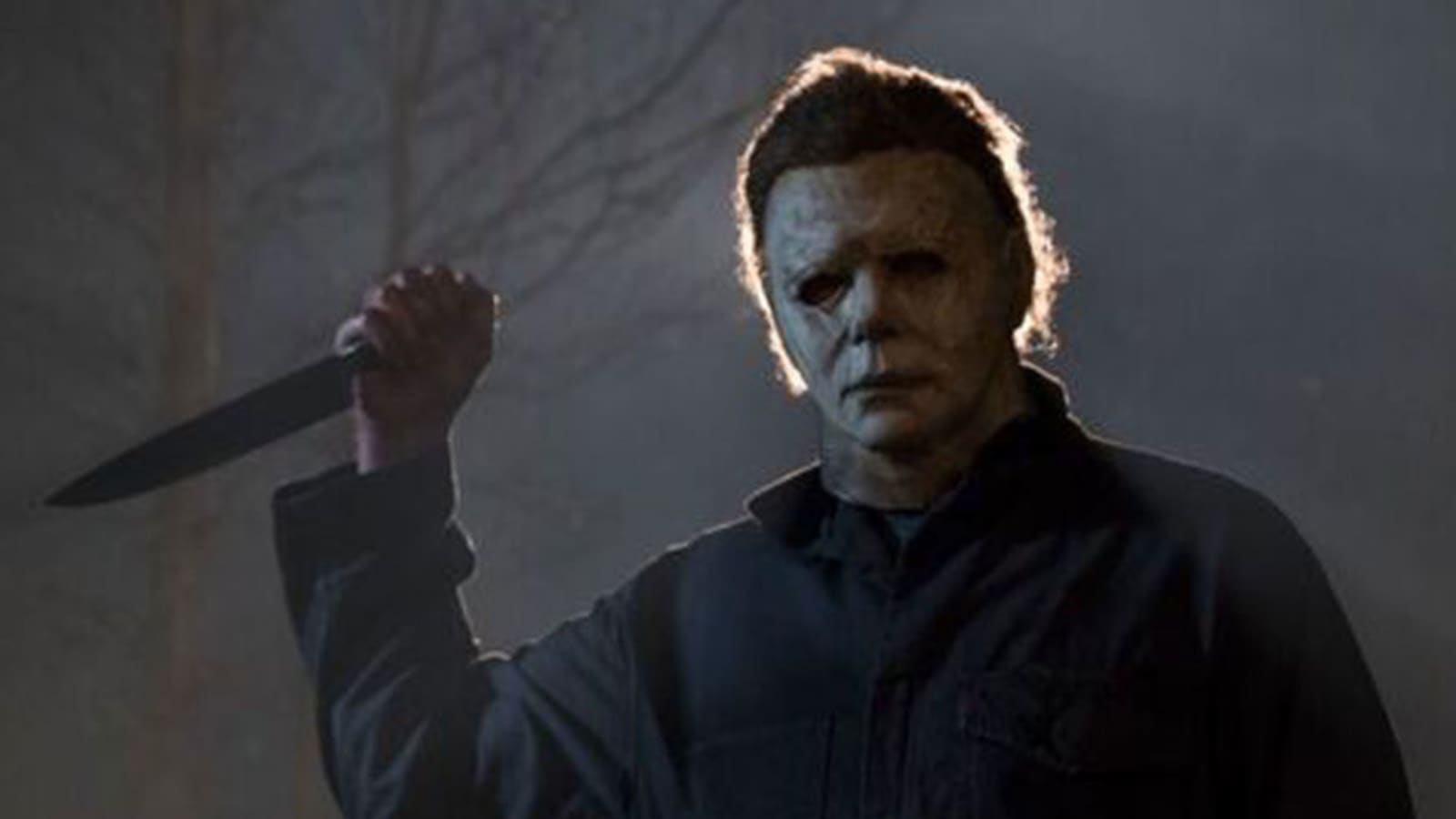
The idea here, aside from giving this renewed franchise some topical/socio-political relevance, it to make an “Empire Strikes Back” chapter in this planned trilogy. There’s a hopelessness and sadness that permeates every scene that doesn’t have mouthy tweens playing pranks on the gay couple (Scott MacArthur and Michael McDonald) now living in Michael Myers’ old house. Greer’s now-ironically named “Karen” embodies this.
Karen weeps for her murdered husband, fears for her hunted, wounded mother and her vengeance-seeking teen daughter and despairs at “what Michael Myers has done to us” — fomented an unthinking, chanting mob, misled by fear and ignorance.
Much respect for the director of “Pineapple Express” and the franchise-renewing “Halloween” of 2018 and the screenwriter for trying, but this misshapen, unfocused blunder is never more than a space-filler franchise installment, killing time and a whole lot of Haddenfield until the third film comes along.
The flashback references but doesn’t use Carpenter’s iconic film or even get a firm handle on its style in recreating the slaughter way back when. Finding a Donald Pleasance impersonator is just one of the crimes against cinema of those scenes.
Curtis isn’t the only actor from the original seen in this sequel, but not all of those cast as “surviving kids who grew up and hit middle age in Haddenfield” are very interesting actors. And Curtis, burdened with heavy-handed sermonizing speeches at the film’s conclusion, wipes away some of the goodwill the 2018 “Halloween” won her.
The film’s flurry of close-ups, a view of a fireman facing death by fireaxe from inside his glass-covered helmet, can be arresting.
But you can’t help but sense Green, who used to make self-conscious, sensitive and geography-specific indie films like “All the Real Girls,” “Undertow” and “Snow Angels” until the New York Times profiled him and noted that he’d never made a movie that made money, isn’t wholly invested in this genre or this subject. The director of “Joe” and “Prince Avalanche” and TV series like the hilarious “Vice Principals” seems to more interested in commenting on horror than actually delivering frights.
Even die-hard horror fans can’t help but notice “Halloween Kills” stumbles through the nostalgia that made Green’s “Halloween” reboot work, and that “Kills” isn’t scary in the least. Is he laughing with you as you giggle as the many ways Michael Myers kills (not that inventive), or is he saying “Dear Dr. Fauci, here’s what happened to American empathy for others” with his latest?
The fact that Green is in pre-production on “Halloween Ends,” the “finale,” and “Hellraiser” and “The Exorcist” should give Green fans, horror fans and Green himself pause.
But at least the New York Times will be happy.

Rating: R for strong bloody violence throughout, grisly images, language and some drug use
Cast: Jamie Lee Curtis, Anthony Michael Hall, Judy Greer, Andi Matichak, Thomas Mann, Kyle Richards, Dylan Arnold and Will Patton
Credits: Directed by David Gordon Green, scripted by Scott Teems, based on the John Carpenter/Debra Hill films and characters. A Universal release.
Running time: 1:46

 Movie Nation