
Maybe.
I’ve reviewed five films on the day before Veteran’s Day. So far (“Eternals” i finally get around to watching tonight.).
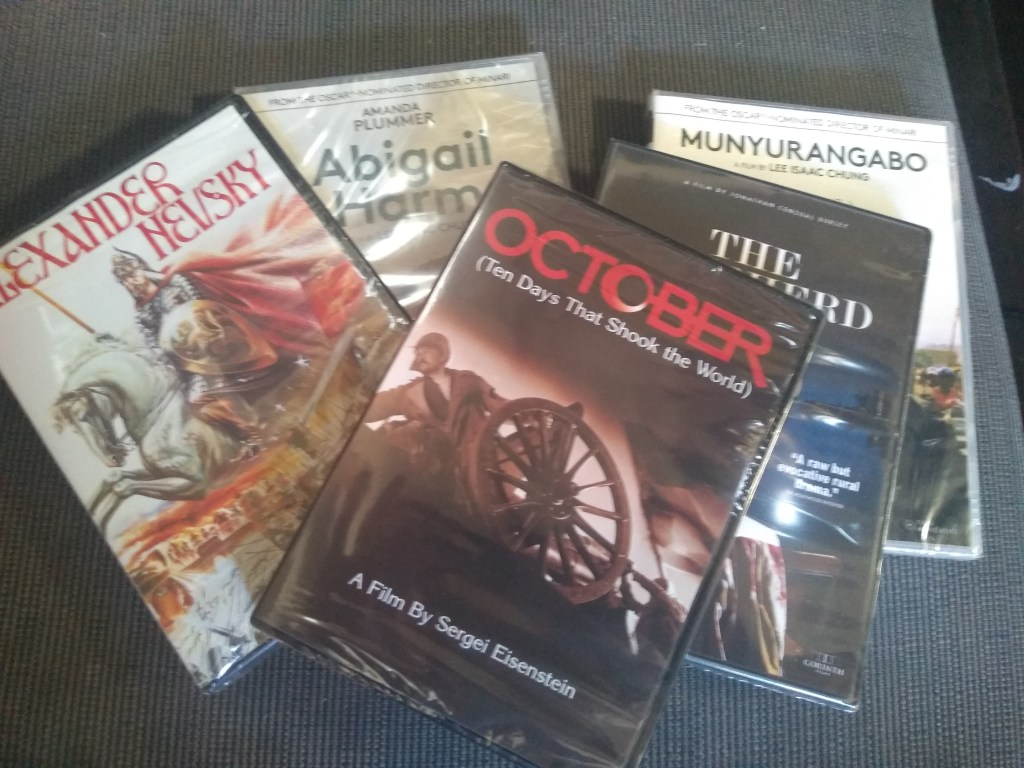
Another five tomorrow? Maybe not. But “Nevsky” and “October?” You bet I’m getting to those.
Maybe.
I’ve reviewed five films on the day before Veteran’s Day. So far (“Eternals” i finally get around to watching tonight.).
Another five tomorrow? Maybe not. But “Nevsky” and “October?” You bet I’m getting to those.
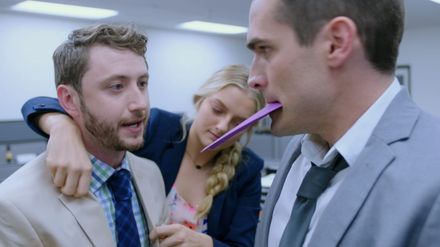
Jim Cummings isn’t subtle in “The Beta Test.”
He mugs, he twitches. His expressions are broad. His banter hurtles, almost out of his mouth’s control. He hits his punchlines a little too hard.
But damn, he’s funny in it.
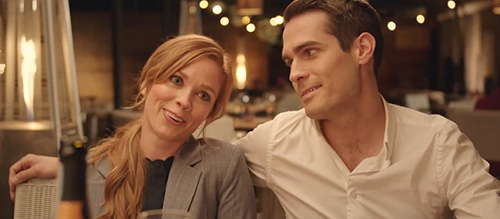
As a foul-mouthed, increasingly manic Hollywood talent agent, about-to-marry and yet tempted by this mysterious (printed) invitation to a blindfolded, anonymous “no strings attached” afternoon assignation at a swank Hollywood hotel, Cummings is in his element. And he should be. He co-wrote and co-directed it.
The deal is that once this sexual encounter has happened, Jordan needs to cover it up. He needs to know who did the inviting, who he was there with. And hunting for this information turns a wrapped-too-tight hustler into a breathless, sometimes hilarious paranoid.
Wait until he figures out that, as we’ve seen in the movie’s dark and shocking opening scene, that the significant others who learn about this betrayal by their wives/husbands/lovers have a habit of snapping and murdering them — with a knife, a gun, poison. Whatever works.
Cummings (“Thunder Road,””The Wolf of Snow Hollow”) and his co-writing/co-directing co-star PJ McCabe, play fast-talkers in a hyper-competitive agency in an era where clever agents might see the writing on the walls. They’re hyper, motor-mouthed dinosaurs in a collapsing house of cards. Maybe.
That’s why they talk so fast all the time. That’s why they’re at war with the WGA (Writer’s Guild, union). That’s why every agent we ever see depicted on screen — in movies, in “Entourage” — seems about to blow a fuse at any moment. That’s why we’re treated to montages of Jordan blurting “We’re so excited” to every potential client, about every possible “package” and every backend “streaming” deal.
But this purple envelope, this invitation, upended his world. He’s locking eyes with every beautiful woman he sees, dazed and embarrassed all the while. And that’s before he actually goes through with it. That’s before the follow-up uh, notes. That’s before he hears about the murders.
Whatever’s going on, Jordan and his colleague PJ — yes, he’s got the same initials as his character — think it must have something to do with their corrupt business, our corruptible times, “this climate,” post #MeToo, after “Harvey,” beyond social media, something to do with the algorithms in play with whatever the hell or whoever the hell is behind those damned purple envelope invitations.

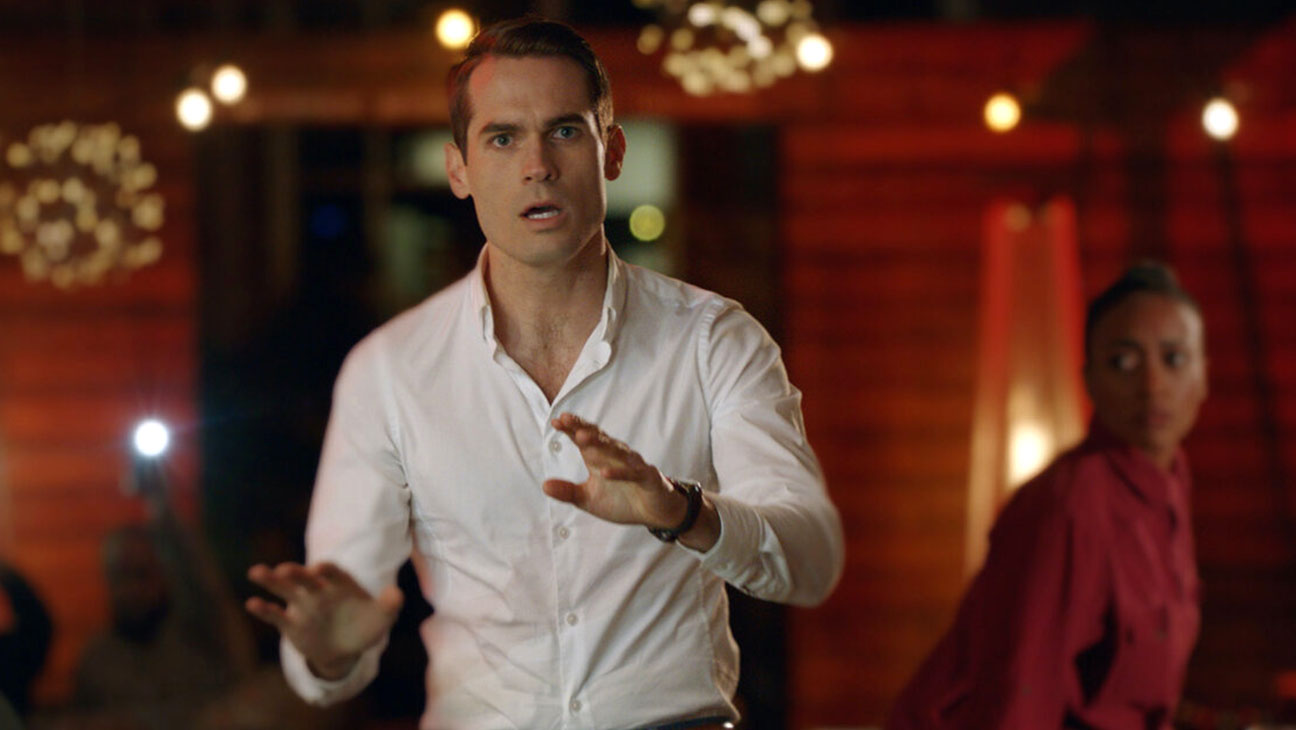
“The Beta Test” is a wired, wound-up and instantly-hip/instantly-dated Hollywood riff on relationships — romantic, business and otherwise.
There’s overreach here, a Big Message that feels a little Western Union in a Grindr/Instagram age.
The technique — rapid fire patter of the “Ni Hao...the hell are you?” to a Chinese mogul (Wilky Lau) variety, 360 degree camera pans to illustrate Jordan’s increasingly unmoored state after wondering just what he’s gotten himself into, more and more frantic-antic encounters with people who might be that one-afternoon-stand — can be wearing. And the technique doesn’t whizzbang over the simple plot all this “story” is lathered onto.
But our invitation is to just go with it, go with Jordan as he plunges does that rabbit hole. Sure, as his increasingly leery fiance (Virginia Newcomb) notes, “It must be exhausting, pretending to be you.” Because it kind of is, as is “The Beta Test.”
Cummings? Whatever message they go for here, he and McCabe have polished off a pretty good/pretty exhausting 93 minute audition for that “Entourage” reboot.

Rating: unrated, violent, sexually explicit
Cast: Jim Cummings, Virginia Newcomb, PJ McCabe, Wilky Lau
Credits: Scripted and directed by Jim Cummings and PJ McCabe. An IFC release.
Running time: 1:33
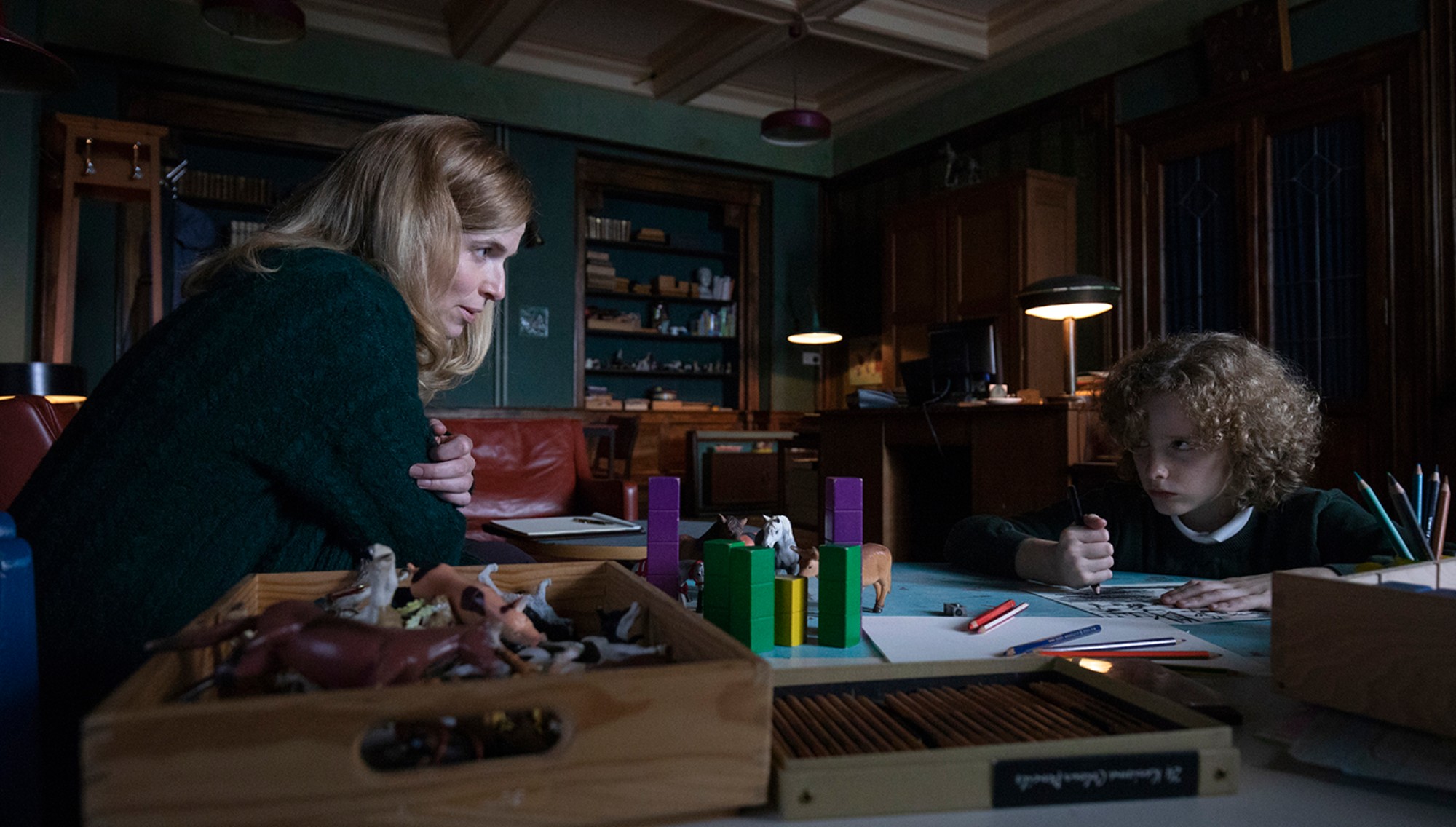
“Marionette” is a perfectly-gloomy but overly-subdued Scottish thriller pretty much wholly undone by a contorted “twist” that derails its third act.
Dutch director Elbert van Strien, remaking and expanding on a short film he made, rounded up a decent cast and shot in Blairs, Aberdeen in late fall for atmosphere. But in turning this evil-child-controls-his-shrinks’-life thriller into an exploration of religious determinism, he over-reaches and turns a low-heat drama into something approaching nonsense.
It’s a mystery about “what happens next,” and a disturbed, curly-mopped child (Elijah Wolf) who seems to control it, or at least has advanced knowledge of what his new psychotherapist (Thekla Reuten) is about to experience.
And Dr. Winter, judging from the ranting therapist (Peter Mullan) we’ve seen immolate himself in the film’s opening scene, is sure to “go through some things.”
Winter’s left her work in upstate New York for a job at Victoria Clinic in the overcast gloom of Scotland for reasons she doesn’t want to share.
“I like rain.”
The serious-minded 40ish Winter tackles her predecessor’s patients. And one of them quickly and thoroughly gets under her skin. Manny (Wolf) is a dead-eyed child of 10 or so who frantically, angrily draws dark scenes of death and destruction — floods, drownings, car wrecks.
“No one likes what I say,” he deadpans, “because of what I can do.”
What can he do?
“Make things happen.”
What can you make happen?
“You!” That’s right, Doc. “If it wasn’t for me, you wouldn’t be here.”
When Winter rolls up on a car wreck in the damp Aberdeen night, she gets a clue that this little creep either foresaw it or caused it.
As she digs inter her predecessor’s notes, Winter starts to fret over her flashbacks to the married life she used to have in New York and ponder how much control she has in this new relationship (Emun Elliott) she’s slowly slipping into at the Scots book club she’s joined.
That’s where the great theological discussion that van Strein aims for is suggested — a heated debate over free will or if “we’re marionettes in some sadist’s fantasy — the existence or non-existence of God and the like.
Any movie with Scotland, Peter Mullan, pubs, a swarthy romantic lead with a wooden sailboat and a Great Mystery of Life book-club subtext has my attention. But “Marionette” is too obvious, too convoluted, too tame and entirely too slow to get going.
Reuten (“Red Sparrow”) makes an interesting lead, but not a particularly compelling one.
Still, you’ve got a great candidate for the lead in a “Children of the Damned” remake, man. DO something with him. There’s little here that thrills, frightens or alarms.
Every move on this film’s chessboard isn’t pre-ordained, but is given away well before its payoff.
We know who we’ll hear a warning from, who will be put in jeopardy and who among the clinic’s staff (the great Scots actor Bill Paterson) either “knows” something or “knows” nothing will be the skeptical stick in the mud.
And as the finale talks and talks its way into “explaining” all this, tying is up in a “neat” if seriously half-arsed bow, we figure out just who the real marionettes are — sitting through all this, puppets without the chance of a proper payoff on offer from our puppet master.

Rating: unrated, violence
Cast: Thekla Reuten, Elijah Wolf, Emun Elliot, Rebecca Front, Peter Mullan and Bill Paterson
Credits: Directed by Elbert van Strien, scripted by Ben Hopkins and Elbert van Strien, based on a short film by Elbert van Strien. A Rock Salt release.
Running time: 1:52
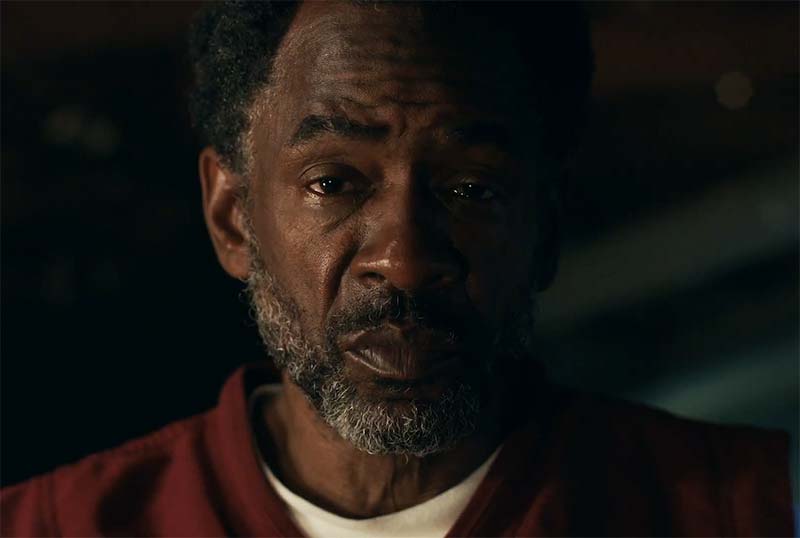

A wonderfully lived-in but melancholy lead performance is the best reason to check out “Curtis,” a simple yet affecting portrait of mental illness starring the Bayou dad of “Beasts of the Southern Wild.”
Dwight Henry has the title role, a Detroit man suffering from schizophrenia, trapped in his one great moment of past basketball glory.
“Were y’all there when I hit the shot that won the city championship? The whole CITY was there!”
Curtis is greying, well into his ’50s and living with his mom (Kalena Knox), whose one wish for him is that he take his pills to keep his madness at bay.
He mutters to an imaginary friend. He likes his beers in a brown bag, and prefers skipping his pills.
He rants that “I should be making MILLIONS,” that “Kobe stole” this and “Larry Bird stole” that, because “I was the best EVER.”
But he’s known and tolerated in the neighborhood. Almost everybody’s heard the “It was FIVE SECONDS LEFT” story about that Big Game, long ago. Curtis is lost in it. And when he meet him, he’s just lost his favorite memento of that night, the ring given to the players on the winning team.
That’s when he meets the one kid in the neighborhood who can’t ball, the last one picked because “Your game is trash,” Dre (Alex Henderson of “Creed” and “Tyler Perry’s Assisted Living”). The kid indulges the old man, listens to him complain about the ring and how it contains “my powers,” and helps him search for it even though he saw the guy who took it from Curtis.
Maybe “the best ever” can teach him how to improve his game?
Writer-director Chris Bailey, a Detroit native, has made an indie drama of modest means and ambitions, the best kind of debut feature — a well-acted and affecting story “about something.”
This isn’t a deep dive into mental illness. But the poignant sketch offered up here rings true. Sometimes, his “I ain’t got TIME for this” mother knows that the only thing that will bring her boy back to himself and the present is a plea.
“Look in the mirror!”
Bailey avoids the traps this story sets up for him, his characters and the viewer. No glib “And that’s the (mad) man who put me in the NBA” story unfolds here. There’s not a lot of “learning,” just a blossoming of empathy from a bullied kid who needs a few physical skills, but more mental ones to get through life and basketball. Can Curtis provide either?
“I done died and come back MANY a time…Basically, on the tree of life, my plum fell off and rotted.”
“Curtis” is just a broken, lost man with a problem and an underage kid who tries to help him get that ring and “my powers” back. That’s drama at its most basic, and with just a couple of incidents of heightened melodrama, Bailey tells this simple story about that simple quest without a wasted moment or a lot of fuss.
Rating: unrated, some violence, profanity
Cast: Dwight Henry, Alex Henderson and Kalena Knox.
Credits: Scripted and directed by Chris Bailey. A 1091 release.
Running time: 1:19

A warning appears on the screen before “A Mouthful of Air” begins, suggesting it might be “upsetting for for people with depression and anxiety.”
And it’s not uncalled for. There’s a disquiet to the film and Amanda Seyfried‘s unsettling performance as the lead, a woman suffering from dangerously destructive anxiety and postpartum depression after the birth of her little boy, Teddy.
Seyfried filmed the movie in between the births of her two children, and looks gaunt and drawn for much of “A Mouthful.” Her character, Julie “Jules” Davis may have a work-at-home career, writing and illustrating children’s books (animated at times in the film). She may dote on her unfussy, smiling baby — over-decorating his room, reading and talking to him incessantly, bathing and walking and playing with him and taking him all in with those big adoring eyes.
But the eyes give away Jules’ unease. She’s weeping. Is it over gratitude and joy at having a perfect child in a loving marriage (Finn Wittrock plays her husband)? She constantly leans on and snuggles with husband Ethan. Is she being unduly clingy? He’s guarded around her. What does he know? What does he suspect? She sees it.
“I just don’t know what you’re trying to find.”
“You!”
Writer-director Amy Kopelman, adapting her novel (as she did on “I Smile Back”) uses the sad but hopeful stories of Jules’ “Pinky” character — either read by Jules or animated — flashbacks and cinematic flash-forwards (hinting at what’s to come) in telling this story.
We meet Jules’ earthy, sympathetic and nurturing Mom (a luminous Amy Irving). We hear about the “mentally ill” father who’s no longer in the picture.
And we meet Jules’ psychotherapist (Paul Giamatti).
Because we’ve seen her creating art for the books, Teddy’s room and the elaborate decorations she plans for a bookstore reading. But that precision knife she’s picked up isn’t just for cutting out paper shapes. We’ve seen flashes of an ambulance, her sister-in-law’s (Jennifer Carpenter) bloodstained sweater and the way even their building’s maintenance man (John Herrera) looks at Jules with concern.
She tried to kill herself.

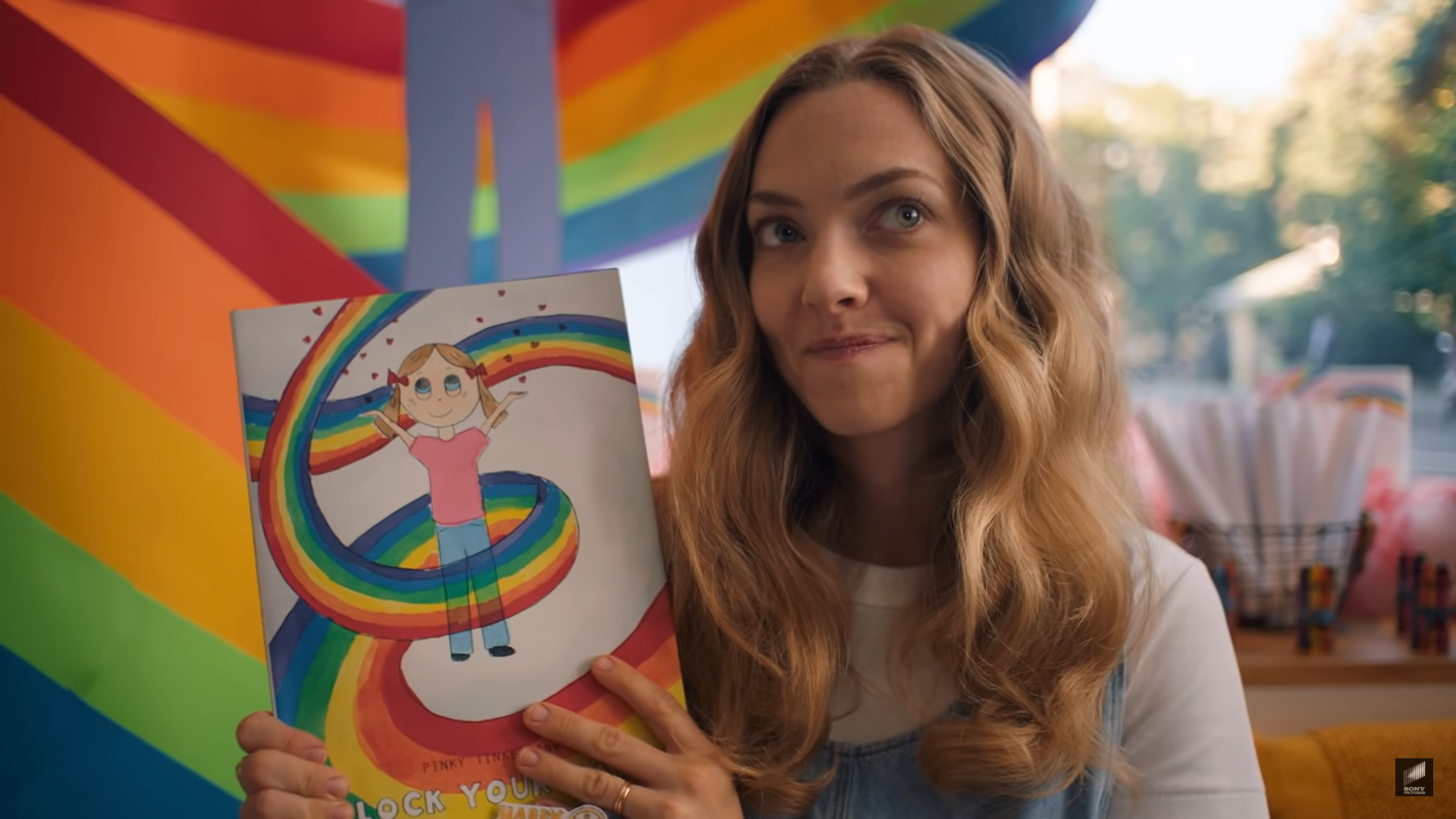
Kopelman never over-explains Jules or her illness, although she does make a modest attempt at “cause and effect.” Characters like Ethan are sketched in, fleshed out gradually, their personas shaped by concern for Jules and fears of her mothering/smothering instincts.
When she over-decorates for a one-year-old’s birthday party and reassures her spouse with “We made it to ‘one!'” that’s kind of a cause for concern.
Her OB-GYN (Josh Hamilton) confesses to now “asking (new) mothers how they’re doing…because of you.”
Her blunt but soft-spoken shrink is all words of warning — “If you fall into a pool and you don’t know how to swim, you drown.”
Her husband quietly fumes “I’m not ALLOWED to get mad at you.”
And her sister-in-law cannot control her “not helpful” fury and judgement over what Jules is going through, because there’s a baby in jeopardy every day Mommy doesn’t take her meds.
“A Mouthful of Air” is a film of disquieting nervousness, our concern about what’s to come — either for Jules or her baby or both.
Seyfried is better at overdoing the “loving mother/loving wife” bit, giving us a sense of the facade Jules knows she must maintain. The thousand-yard-stare of a woman who feels inadequate, lost and damaged is meant to carry the picture, and it doesn’t. Not really.
But it does a good enough job of giving us a helpless outsider-looking-in view of this foundering form of postpartum depression, making us sympathize if never quite helping us understand how this happened to Jules and what those who love her can do — beyond chemicals — to save her.

Rating: R for some language (suicide subject matter)
Cast: Amanda Seyfried, Finn Wittrock, Amy Irving, Jennifer Carpenter and Paul Giamatti
Credits: Scripted and directed by Amy Koppelman, based on her novel. A Sony Pictures Classic release.
Running time:

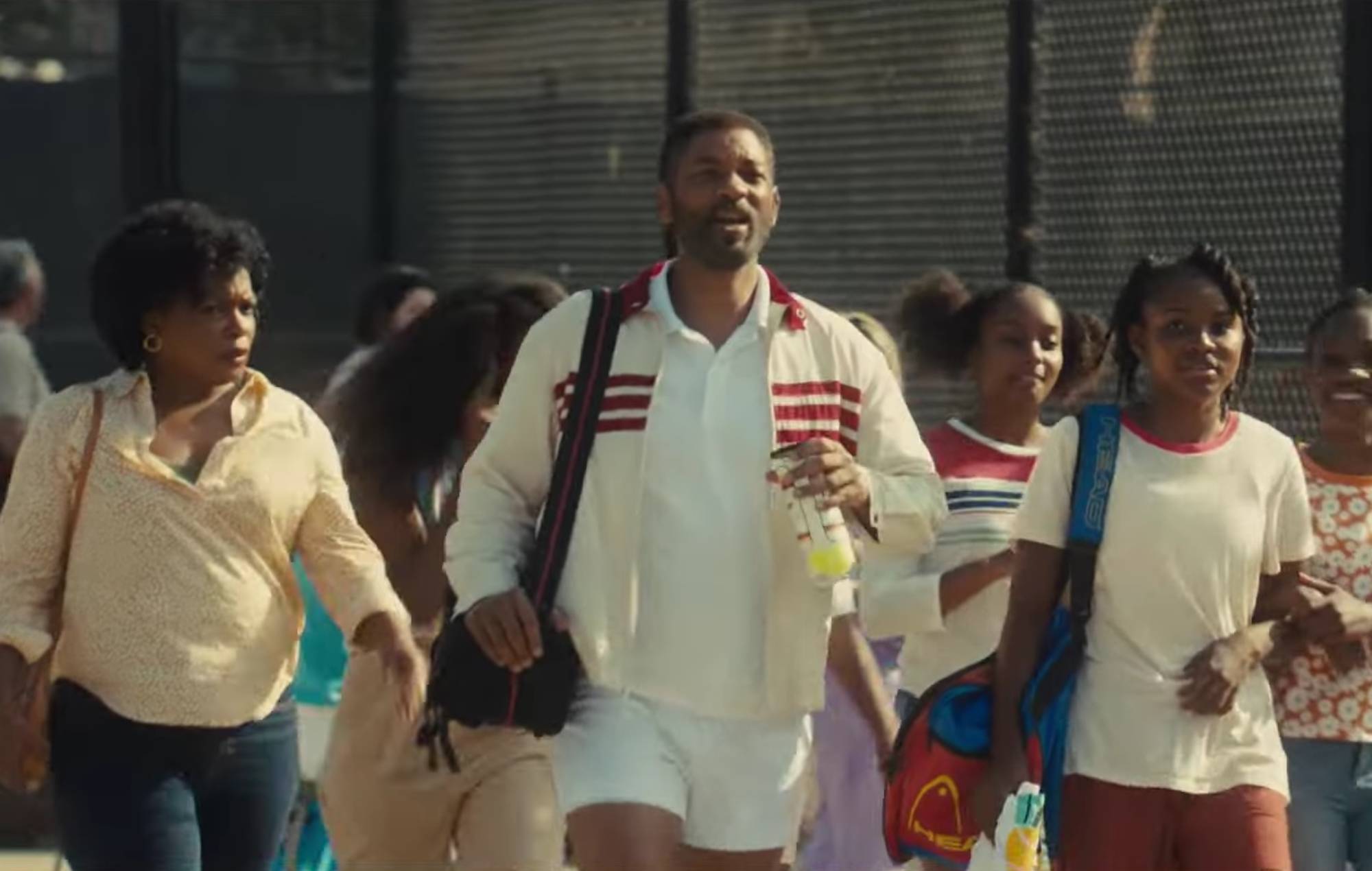
If this isn’t the way it was, it’s certainly the way it should have been.
“King Richard,” the story of the working class Black man who raised and “created” the greatest players in the history of women’s tennis — Serena and Venus Williams — depicts their controversial, “controlling” dad as a doting father whose research and “eyes on the prize” instincts were unerring as he nurtured them to stardom.
And if nothing else, that flies in the face of the way the (white) sports media vilified the man, a “hustler,” “egotistical” self-promoter whose gauche insistence on his “plan” to make them stars and the family rich seemed more and more unsavory the longer he kept his girls on that “plan.”
Will Smith brings his immense likability to the role in perhaps his best performance ever, emphasizing Richard Williams’ humor, the amusing, grammatically-challenged show-boater/philosophizer and prophet who dominated press coverage of the girls from the day they burst onto the scene and took it over, to well into their ’20s.
It’s a fun performance packed with a Daily Affirmation Calendar’s worth of Richard-isms.
“Fail to plan, you plan to fail.”
“I’m in the CHAMPIONS raising business.”
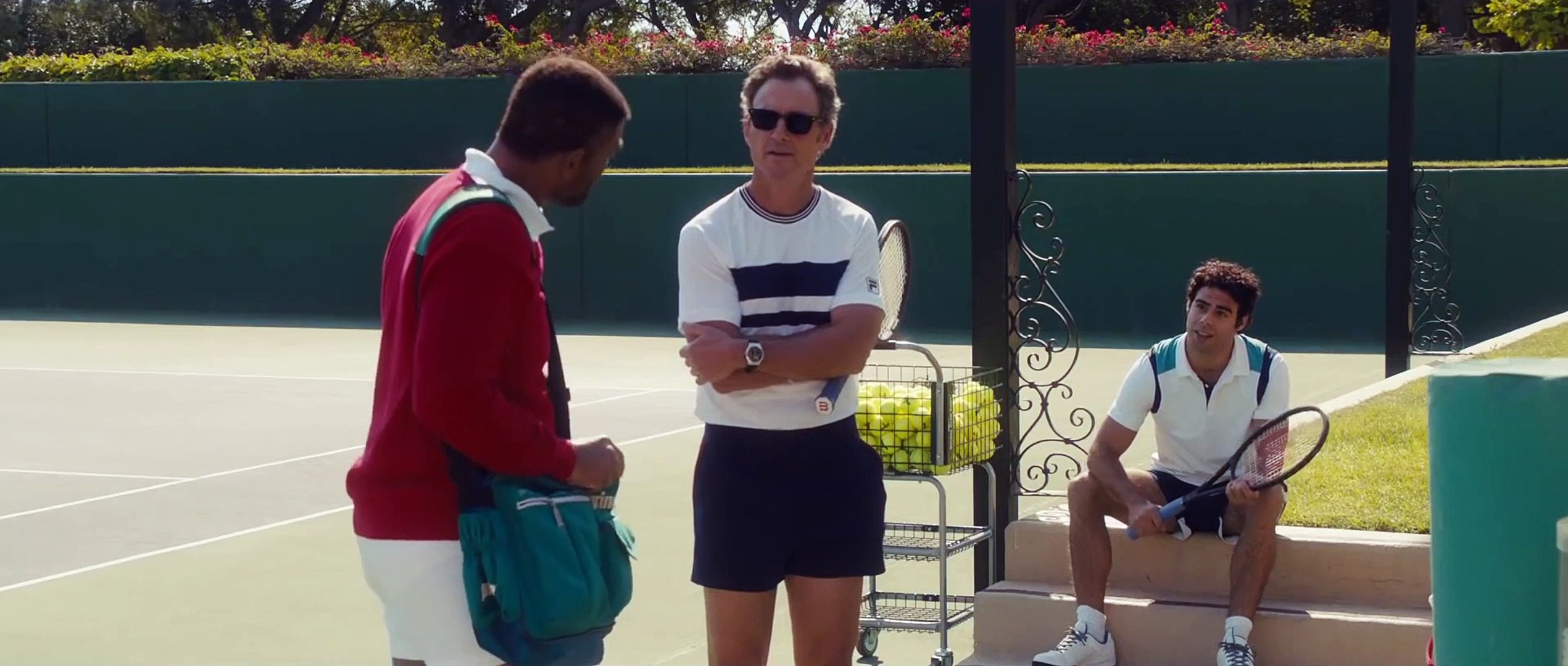
And, to men’s champions John McEnroe and Pete Sampras, whose coach (Tony Goldwyn) Williams barged in on and arm-twisted into taking on the sisters as a proteges, “One day you’re gon’be braggin’ about the day you met them!”
Zach Baylin’s script takes us through the early teens of the sisters, with Richard handing out biographical “BRO-chures” to tennis club teachers and famous coaches around Southern California, trying to wrangle free or at least affordable tutelage (for a share of future earnings) for the kids the self-taught father and mother had brought up in the game.
Kevin Dunn plays Vic Braden, who compares Williams’ “nobody will take this bet” quest to “trying to create two Mozarts.” Can’t be done.
Richard makes cheesy promotional videos of the girls, then in their tweens, to back up his pitch. And we see him brushed off and laughed off. A lot.
Then Paul Cohen (Goldwyn), coaching the fading McEnroe and current king of men’s tennis, Pete Sampras, takes the bait. We see him clash with King Richard as he tries to remake Venus’s game (she hit from an open stance when the going thought was that “power” in your groundstrokes came from turning your body to the side you were hitting from) and preach the time-tested path — “juniors” circuit, sponsorship, stardom in your teens.
The film shows Williams’ savvy instincts for “keeping them in school,” avoiding the “burn out” juniors tourney grind and being proven right when then star Jennifer Capriati rose to the top in her early teens, and was doing drugs and getting arrested before she was 20.
We see Richard stick to this, battling his wife Brandi (Aunjanue Ellis, solid and fiery) over his controlling high-handedness. And we meet the often-exasperated coaching entrepreneur (these guys run their own “tennis academies”), Rick Macci, given a whimsical and adorable, “You’re KILLING me here” turn by Jon Bernthal.
Macci comes off as willing to endure Williams’ conniving, finagling and bull-sh—–g just to get to the very expensive (to him) finish line with these goldmines in skirts.
Saniyya Sidney and Demi Singleton play the older Venus and younger sister Serena, two daughters out of five (the others, sidelined in the film, are being pushed to academic excellence Dad insists), tighter-than-tight siblings who endure Dad’s “management” because of the confidence he’s built into them and the trust they have for his instincts.
The kids are so bubbly and upbeat they even spin their father’s efforts to protect all his daughters from hoodlums in “the ‘hood” (Compton) into a running gag.
“Dad got beat up again.”
We see Richard, a night security guard at a down-market flea-market “mall,” take that pummeling, and others, relate anecdotes about his rough, racially-disadvantaged upbringing in Louisiana, and persevere.
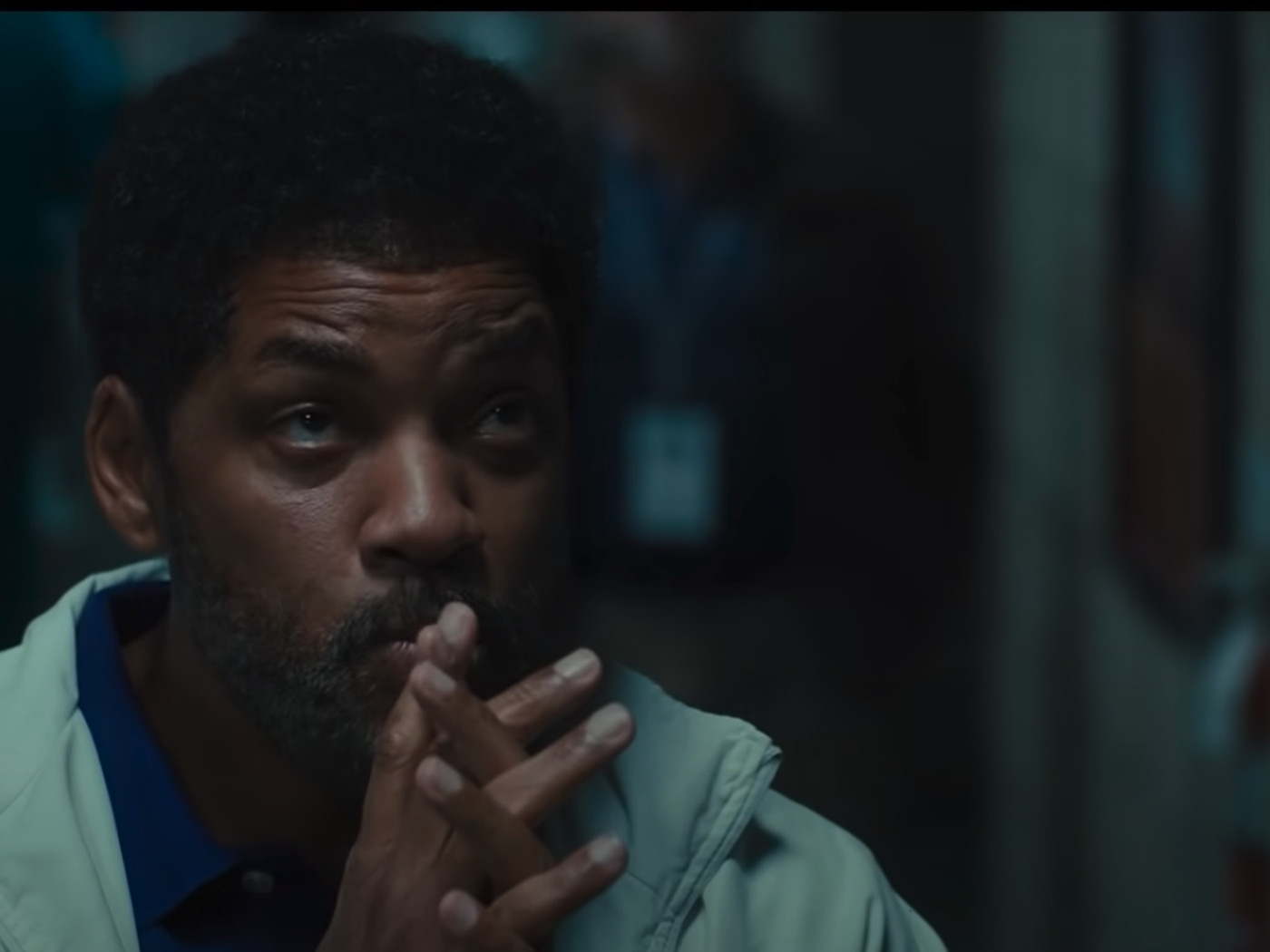
I love the lightness Smith brings to the part, making even Williams’ infamous boorishness — partly a pose, the film suggests — funny. Breaking wind to bust up a meeting with potential agents (Dylan McDermott, among them)? Again, if it didn’t happen, it should have.
Director Reinaldo Marcus Green’s (“Monster and Men”) film boils down much of the backlash Richard Williams inspired into the occasional outburst by the two coaches played by Goldwyn and Bernthal, or sometimes articulated by his in the background but just as important wife.
From the way the girls and their dad are depicted, there’s a feeling that the sisters somehow controlled this narrative, or got assurances from Smith to their advantage. The story plays down any racism they faced in clubs and later on the tour. Yes, they had sportsmanship shortcomings later on, but “King Richard” is seen working overtime to “keep them humble,” tamp down the boorish bragging, even his own — well-publicized and not really seen here.
Producer/star Smith’s having a director with little clout and few credits and a screenwriter with almost none also points to “control.”
But that doesn’t hamstring the film. It only ensures the near-hagiography nature of the treatment of its subject. The story arc is pleasantly uplifting, and climaxes at Venus’s well-known and factually solid professional debut, in her mid-teens. And the characters are all likable, with even the villains only lightly villainous.
From watching and reading their saga as it played out, one could only imagine the worst of this “tennis parent” from hell and what he put his kids through. “King Richard” and Will Smith good-naturedly and affectionately upend that.
And as I say, if the story didn’t truly unfold this way, a folksy showboating sage pointing all along to great results and a happy ending, it certainly should have.

Rating: PG-13 for some violence, strong language, a sexual reference and brief drug references
Cast: Will Smith, Aunjanue Ellis, Saniyya Sidney, Demi Singleton, Tony Goldwyn, Dylan McDermott and Jon Bernthal
Credits: Directed by Reinaldo Marcus Green, scripted by Zach Baylin. A Warner Brothers release.
Running time: 2:18
Humanizing a demonized “coach” and father and mentor is a novel approach.
This story of the obsessive stage dad who raised Venus and Serena to be world beaters at tennis comes to theaters Nov. 19.

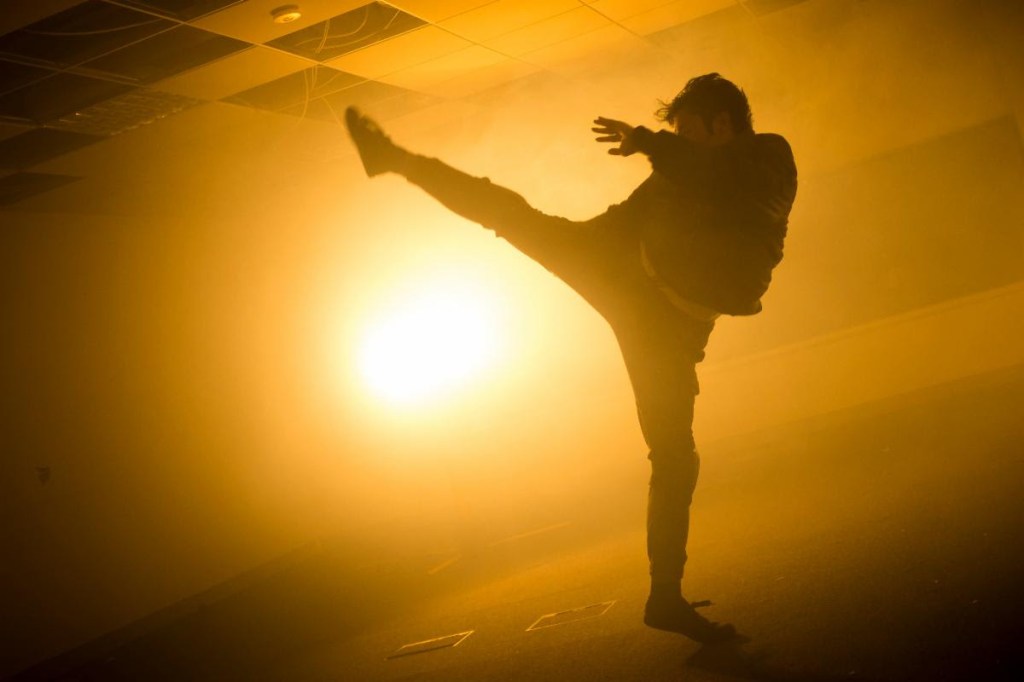


Ok, maybe now’s not the best time to release a three-years-in-the-can action comedy about an indie film crew trapped in a fight to the death with murderous mobsters in a condemned and about-to-be-imploded building that the crew has no permission to film in, that the mobsters want to use to cover up a murder or three.
“Nightshooters” is violent, spattered in blood, riddled with bullets fired from many a prop gun and is all about a film crew with no money cutting corners and running safety risks in a high rise that’s wired for detonation the next day.
Yes, that sounds like every rushed/tight-budget on-set filmmaking accident you’ve ever read about — from “The Crow” and “Midnight Rider” to “Rust,” which just cost a director of photography her life.
But writer-director Marc Price, who made “Colin” and “Magpie” for a song, knows indie film sets. “Colin” was an indie zombie movie, one of the cheapest genres to dive into. “Dawn of the Deadly,” the zombie film frazzled director Marshall (Adam McNab) is scrambling with a skeleton crew of six to finish up. Price knows this world.
So consider this bloody British romp — laden with F-bombs, covered in C-words — on its own terms, take it for the dark lark it is, and try not to think about “dying for your ‘art.'”
Here’s what you get. One of the stars of “Dawn of the Deadly” is Donnie, played by Jean-Paul Ly. He’s a stuntman, fight choreographer and actor. Ly and Price ensure that whatever else that goes on here, “Nightshooters” will have some of the coolest one-on-one or three-on-one martial arts brawls in recent memory.
How do they come about? Because when our seven film folks, filming “pick-ups,” accidentally witness the bearish Tarker (Richard Sandling, funny and fierce), his brutish lieutenant O’Hara (Nicholas Aaron, even fiercer) and his many mob minions murder a couple of people who have crossed them, the filmmakers are going to need “somebody who can throw a punch.”
Their aging, tipsy and difficult “star” (Doug Allen) isn’t up to that.
“Did you know that I did a film with Scott Adkins? Punched me in the face. It was an accident!”
Director of Photography Jen (Kaitlyn Riordan) is more concerned about “grain” in the images.
“You said you wanted it to look like ‘”John Wick.’ There’s no ‘grain’ in ‘John Wick.'”
Soundguy Oddbod (Nicky Evans) is only good for bitching about cell phone interference. Hapless production assistant Kim (Mica Proctor) is, well, hapless.
That leaves effects whiz Ellie (Rosanna Hoult). And she’s too busy DIYing gadgets, squibs, acids and makeshift bombs to try and save them from summary slaughter by the bad guys whose motto always is “leave no witnesses.”
So it’s down to Donnie, and in a string of set-pieces that would hold their own in any half-decent martial arts actioner, Ly high-kicks ass and takes names.
Actually, the mob is the one that takes names. They grab a call sheet, try to avoid firing their many, many guns in a building loaded with explosives, and hunt down our Microbudget Movie Seven.
The truly “fun” bit is in the opening sequence, loaded with cheesy zombie mayhem from the rough cut of “Dawn of the Deadly.” Exploding heads, C-movie one-liners, it looks like a student film with professional action choreography.
But that’s the movie within the movie. “Nightshooters” proper is darker and deadlier. The disconnect isn’t as pronounced as more heads explode — or melt — and booby-traps and makeshift guns kill with a certain amusing brio.
“Real” guns, which the legions of the lawless tote? They just mean that the film crew isn’t being paid enough to face death on the job, because not all of them make it to “That’s a wrap.”
In a year’s time, when the “Rust” accident has faded from even our long-term memory, “Nightshooters” will play as more fun than it does now.
But its afterlife should include screenings to every incoming class at every film school the world over. Kids, if you’re ever on a set where you see or hear ANYthing that feels like this set, clock out. Totally NOT worth it.
Rating: unrated, graphic violence, profanity aplenty
Cast: Jean-Paul Ly, Kaitlyn Riordan, Rosanna Hoult, Doug Allen, Nicholas Aaron, Adam McNab, Mica Proctor, Richard Sandling and Nicky Evans
Credits: Scripted and directed by Marc Price. An IndieCan release.
Running time: 1:45

An armed standoff, men at barricades shout and point semi-automatic weapons. Mohawk Indians scream profanities at Quebecoise, who scream back, spit and hurl rocks, all while smirking Canadian police stand by and do nothing.
What in the name of Ryan Reynolds and Celine, Shatner, Alannis and Drake is going on here?
“Beans” is a jaw-dropping re-evaluation of “nice Canadians,” a docudrama set against the 1990 Oka Crisis, which erupted when a Quebec town decided to build a golf course on Mohawk land, which would entail bulldozing a Mohawk “First Nation” cemetery. The Mohawk occupied the land, and a bloody “siege” ensued, tearing at the fragile “harmony” of Chateauguay, Oka and the Mohawk reserves of Akwesasne, Kanesatake and Kahnawake.
Director and co-writer Tracey Deer shifts from documentaries (“Mohawk Girls”) to features with this unblinking, fictionalized account — complete with inflamed news footage of the crisis — of an event she lived through. A tweenage girl sees the ugliness of not just her racist neighbors, but of her own people in this crisis as it escalates into violence.
Screen newcomer Kiawentiio dazzles as the title character. Her Mohawk name is Tekehentahkhwa, but when we meet her she’s doing what she’s always done. She tells the admissions lady at Queen Heights Academy that “Everybody just calls me ‘Beans.'”
Her executive-assistant mother (Rainbow Dickerson) is raising Beans and little sister Ruby (Violah Beauvais) to aim high, and Beans is determined to get into a good school so she can become a doctor or lawyer.
Her Dad (Joel Montgrand) isn’t keen on the private school idea. But they’re middle class and aspirational. If only Beans would “toughen up,” this decision wouldn’t be so hard.
Her crash course in doing just that begins the moment they see Dad taking his rifle to the barricades at Mercier Bridge. A land dispute going back generations comes to a head with callous plans to build a golf course. The Mohawk rally, take over the bridge and occupy the land in question.
Pregnant Mom is unsettled to hear profane tirades of the other armed Mohawk men as they disrupt a lot of people’s morning commute. The TV news captures bulldozers plowing police cars out of the way as more First Nation protestors push their way in.
“You make sure this doesn’t turn into cowboys and Indians,” Mom warns her husband.
Beans, isolated and camping out in a site that’s cut-off from outside help or food, finds herself growing up fast, and toughening up faster. She falls in with foul-mouthed April (Paulina Alexis) and gets sweet on her militant teen brother (D’Pharaoh Woon-a-Tai). They start out bullies, but become Beans’ role models.
“I wanna be tough, like you.”
April punches and whips Beans, because “If you can’t feel pain, no one can hurt you.” She challenges her — “You Mohawk or what?”
And before Beans knows it, the “little girl” is dropping F-bombs with the best of them, engaging in dangerous pranks against the “frogs” (French speakers) in uniform. The pranks turn serious, and the town — which they try to sneak into for supplies — turns on them in a flash, refusing to “serve your kind.”
Deer doesn’t flinch from showing the ugliness, the trigger-happy machismo that infects rednecks of every race. The intercut news footage doesn’t subtitle the tirades uttered in French. We and Beans and her family get the idea. Mock racist war whoops require no translation.
And violent words lead to violent actions, which we see play out in a horrific ride “home” through a rain of rocks thrown by their “neighbors.”


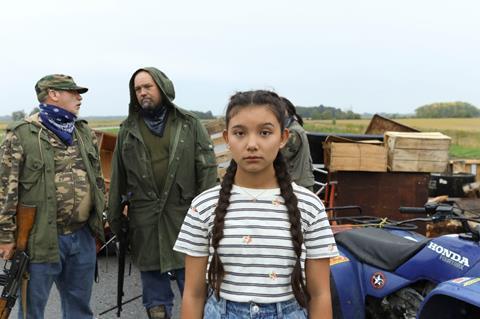
Deer skillfully weaves in news footage to underscore the “crisis” that they’re all living through, and the tropes of tween/teen “coming of age” stories to show another side of Beans’ “education.” Drunken parties, “two minutes in heaven,” sexual dares and rage all pile onto a kid who lashes out and gives us a taste of “You’ve become as bad as they are” in her confusion and turmoil.
Deer has made a richly-detailed debut feature about an ugly piece of Canadian history, and it’s to her credit that she lets young heroine see the escalation from both sides, and lets the viewer see what this does to her.
For non-Canadians, the explosions and riots, when they come, are all the more shocking. Maybe we don’t remember, and this certainly doesn’t fit “our” stereotype of a culture many of us idealize in thinking of how divided our own is.
Yeah, this happened, it happened in Canada. And no, it wasn’t that long ago.

Rating: unrated, violence, slurs, profanity
Cast: Kiawentiio, Rainbow Dickerson, Violah Beauvais, Joel Montgrand, Paulina Alexis and D’Pharaoh Woon-a-Tai.
Credits: scripted by Tracey Deer and Meredith Vuchnich. A Sphere Media release.
Running time: 1:31
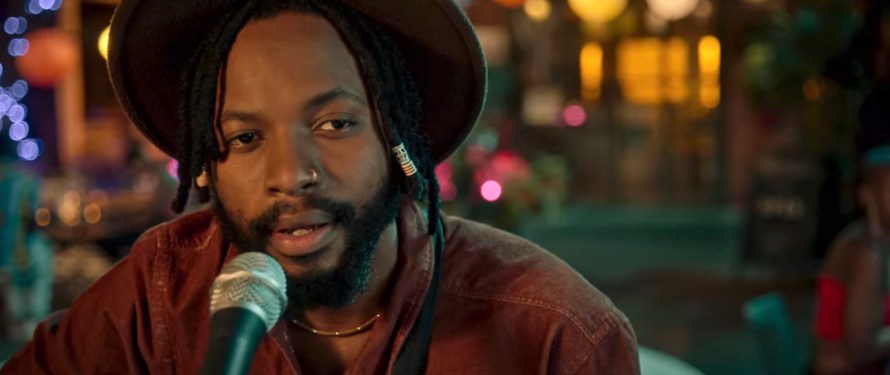


“Little Big Mouth” is a fizzy little romantic comedy — aimed at kids — about a problem-drinker guitarist falling for an ex-model single mom, and the efforts of her little boy and his problem-gambler grandad to put a stop to it.
The subject matter sounds edgier than it is, which is a relief — considering the movie’s slapstick quality. So yes, there’s a “funny drunk” moment or three that would give some parents pause. But mainly this is about a child pranking mom’s new suitor with bottled mosquitoes, glue in the shampoo and a scorpion down his shorts.
Well, OK. Sure. “Don’t try ANY of this at home” is kind of a given.
Naymaps Maphalal is Ziya, a guitarist with a wedding band when we meet him. He has to assure his bandmates that he’s “not gonna get drunk again,” because that’s happened before. Insisting “that’s a thing of the past” doesn’t mean he won’t ruin another gig for them.
But this little boy (Brady Hofmeyr) is REALLY into Ziya’s drunken shredding guitar solo, “ninja dancing” to it while his mother is distracted. The kids yells out “AXL!” Because he doesn’t realize SLASH was the guitarist for Guns’n Roses.
And the kid’s mom Mel (Amanda Du-Pont of “Shadow”) is f-i-n-e. He’s just too drunk and too busy stage-diving to make a decent impression.
Stumbling into them later, after he’s been kicked out of the band, his flat (which he shared with the band), is fortuitous. Because Siya hasn’t been able to book a gig or even find a place to sleep.
He makes a lousy first impression on adults — especially Mel’s grouchy Dad (James Borthwick), who calls him a “piece of rubbish” and even a “skolly.” Dad’s old enough, white enough and old fashioned enough to have a slur at the ready to describe this aimless musical vagabond.
Dad’s overreaction to Siya’s attentions include pulling a gun. Mel’s counter-reaction is to invite the guy to dinner, be a little charmed, and later to allow the homeless guy to move into a guest apartment out back.
She’s no sooner said “Don’t let me down” than we start to wonder how quickly Siya will. With Luke reacting badly to “Axl” getting Mom’s attention, and with grandpa’s encouragement, let the pranks begin.
The sight gags here include the drunk scenes, squatting in the kid’s “Wendy House” (playhouse), dropping a gun which goes off, the scorpion down the pants and the like.
None of them pay off with big laughs.
The musical scenes, which suggest that’s the path towards allegorical harmony, work. And the leads are pleasant enough, if not a barrel of laughs.
A bit of business with the not-quite-racist grandpa and Siya swapping fanboy references to American blues guitarists, and then swapping licks on guitars, is a nice way to go. The film’s racial politics are not quite post-racial, but Mel is the product of a “mixed” marriage, even if “my Dad is socially crippled.”
Not much comes from all this that anybody over the age of 6 wouldn’t see from a mile off. “Little Big Mouth” isn’t sassy or silly enough to appeal to kids, or adults either for that matter. But this “Around the World With Netflix” rom-com shows the post-Apartheid/post-Mandela state in a flattering light, if a not particularly funny one.
Rating: TV-14, alcohol abuse, adult situations, mild profanity
Cast: NayMaps Maphalala, Amanda du-Pont, James Borthwick, Brady Hofmeyr and Charlie Bouguenon
Credits: Directed by Gray Hofmeyr and Ziggy Hofmeyr, scripted by Gray Hofmeyr, Ziggy Hofmeyr and Louw Ventor. A Netflix release.
Running time: 1:35


