Movie Review: Mel Gibson barely shows up in “Panama”

Four and a half minutes into “Panama,” a spy games/Contra War thriller set just before the U.S. invasion of Noriegaland in 1989, I’m thinking “JAYZUS, that’s a lot of producer credits.”

It seems like a hundred (only 30something) of these folks, and not just the actors and their relatives, are packed into this drawn-out introduction. And then one remembers, “Ah, it’s a Mel Gibson movie.” He may not be “canceled,” but you’ve got to spread the risk around, I guess.

Because “Panama” is the worst of the B and C movies Gibson’s made during his years in the Anti Semite Wilderness. About the best thing you can say on the Oscar winner’s behalf is that he’s barely in it — an introductory scene or two, a couple of scenes at the end, and lots of grizzled tough-guy voice-over narration by Our Man Mel.

“Nothing’s more rock’n roll than takin’ out the bad guys for the ol” Red, White and Blue!”

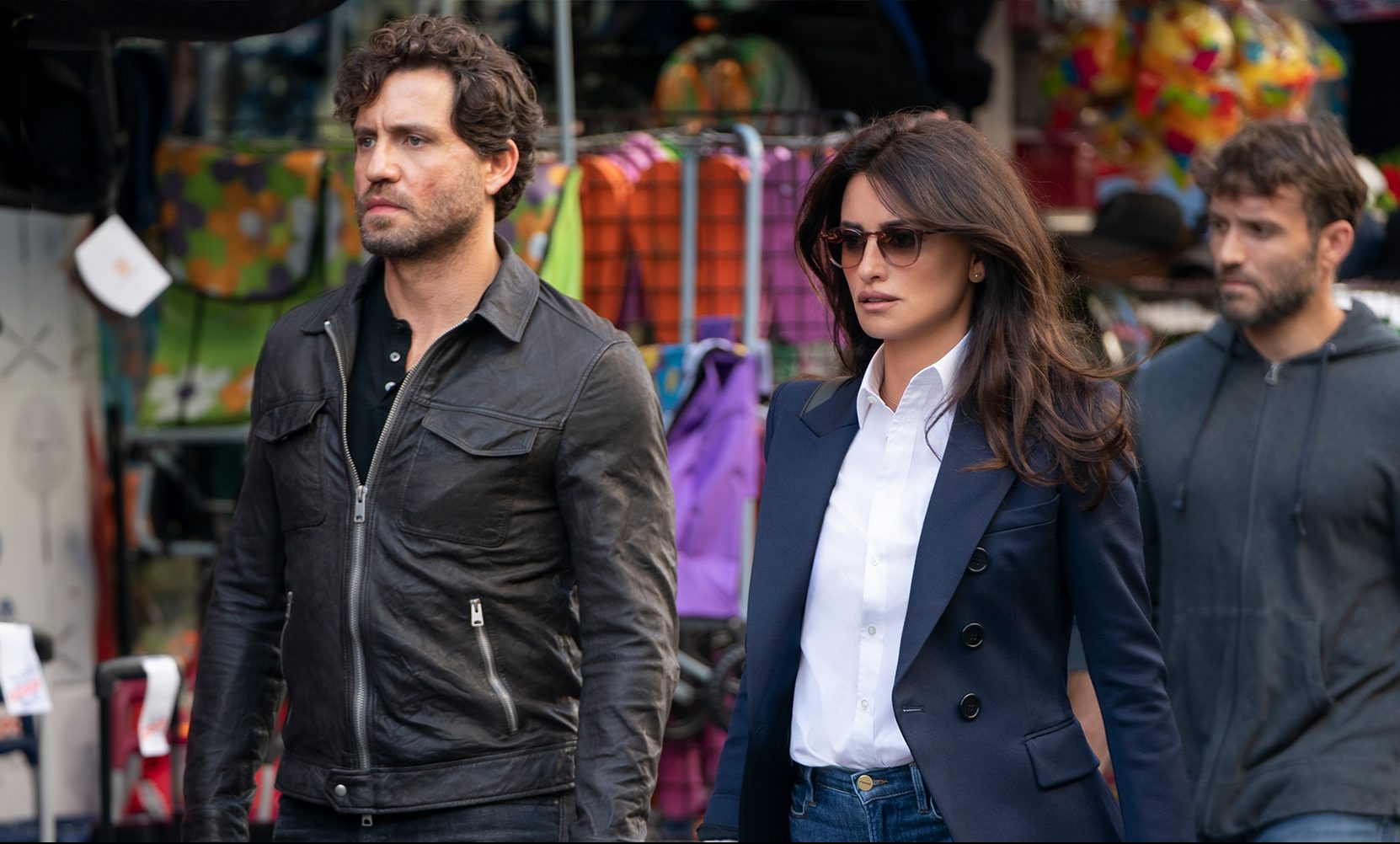
Gibson’s a U.S. operative who lures grieving widower Becker (Cole Hauser) back to work with orders to go to Panama, interact with the assorted drug runners, arms dealers, Panamanian hustlers and suppliers for the Nicaraguan “Contra” revolutionaries in an effort to secure a Russian helicopter for…somebody.

“You need a purpose, I got one for you.”

“Mission creep” on this assignment involves hanging out with the high-placed, drug-snorting womanizing low-life (Mauricio Hénao) who has access to the chopper, and cocaine, a pal with a casino and scores of swimsuits models.

That one who looks like a former Miss Universe contestant? That’s Camila (Miss Universe Puerto Rico, Kiara Liz Ortega). “She’s dangerous.”

So is accompanying some commando commander named Steadman Fagoth Müller (Julio Ramos Velez) into the jungle, wiping out Sandanistas, “no prisoners” style.

“I thought you Americans hated Bolsheviks?”

But that chopper, to be swapped for a million dollar bag of cash, that has everybody Becker meets in between sex scenes with the former Miss Universe-Puerto Rico, shoot-out (not often) or chase scenes saying “later” or “mañana.”

Hauser, a handsome second lead for his entire career who has now found a home on TV’s “Yellowstone,” doesn’t give us much to hang onto here except a growing appreciation of his dye job.

Gibson shows up just to add a splash of color and swagger to what seems like an endless wait between action beats. A pointless dirt bike race through the muddy jungle impresses no one and barely advances the plot.

But director Mark Nevldine (“Crank” was his high water mark) stages a bracing foot chase through Puerto Rico’s imitation Panama City.

Aside from that? “Gibson’s worst movie” about covers it, until the next contender comes along.

Rating: R for violence, sexual content, nudity, drug use and language

Cast: Cole Hauser, Kiara Liz, Mauricio Hénao, Julio Ramos Velez Kate Katzman, Hank Weber and Mel Gibson

Credits: Directed by Mark Neveldine, scripted by Daniel Adams and William Barber. A Saban Films release.

Running time: 1:35

Posted in Reviews, previews, profiles and movie news | Comments Off on Movie Review: Mel Gibson barely shows up in “Panama”

Movie Review: “The Hater” makes Texas Politics even more twisted

“The Hater” is a light political satire struggling to escape from a somewhat cumbersome big screen comedy, a classic 85 minute movie not-quite-smothered inside a 108 minute one.

It has too many characters to do justice to, even at that length.

But get past a shrill and exhausting opening act overstuffed with manic patter from our idealist/environmentalist “yellow dog Democrat” speechwriter, played by Joey Ally, who wrote and directed this. Let this just-burned-a-flag-in-protest speech writer go “home” to Alabaster, Texas and move in with the guy she refuses to call “Grandpa.”

And darned if this wry, sideways look at “the way things are today” doesn’t find its heart and its spark. Grandpa is a Fox News-addicted old coot played by America’s Coot, Bruce Dern. These two aren’t going to see eye to eye about much. But they’re family. So, your move, old man.

“What else are you doin'” these days, he wants to know, “besides criticizing America?”

Dorothy has come home to a place she hated, a place where being the daughter of a beloved drama teacher didn’t spare her from bullying as we’ve seen in an opening scene set in her childhood. Her chief tormentor back then was rich boy-quarterback Brent Hart. Decades later, smug, handsome Brent (Ian Harding), the son of a state senator, is running for the legislature.

Dorothy, who breathlessly-arrived with a notion of “flipping Texas blue” has a new idea. She’ll run against this smirking Summer’s Eve in the primary, beat him for the first time in her life, and then drop out, guaranteeing the seat will flip to a Democrat in the general election.

She doesn’t know how to dress for the campaign trail, how to tone down her rhetoric, how to hide her ardent passion for environmental causes. She can only hope to not choke on her own bile when the Women’s Chamber of Commerce chair (Nora Dunn), a gun-shop owner, dismisses climate change with a “God’ll take care of that” and wishes, fervently, that people would “just support our president.”

Did I mention “The Hater” is set in 2020? No? Kind of an important thing to leave out.

Smiling, perky and popular ex-classmate Greta (Meredith Hagner) is here to introduce Dorothy to some folks, and then add “campaign manager” to her Army wife lifestyle. No, they don’t have a prayer in this race. But in the movies, fate intervenes the way Russians intervene in actual elections. Dorothy catches a break.

She accidentally disrupts a robbery in a convenience store. And by the time ditzy ex-classmate Vicki (Ali Larter) has blundered through a breathless “hero” story about this “attempt to burgle” (Armed robbery, honey.), Dorothy is a “gun hero,” celebrated all over town. If she can make a dent in the Jesus vote, corrupt Brent may be in trouble.

Ally, an actress turned first-time feature writer-director, straddles a lot of political fences, or tries to, in this role and with this film.

“Abortion” is a “third rail” in the red corners of Texas, unless somebody personalizes the decision and reminds Republicans of their anti-government “personal freedom/responsibilities” credo. Guns are as convenient a prop as cowboy boots (there’s a joke they missed), but a conservative mom with kids in school whispers her plea for “some sort of regulation” of AR-15 Nation after Ally speaks.

Ally’s Dorothy can’t avoid the right wing TV, right wing talk radio, conservative pulpit preaching, bumpers sticks and what not. But that doesn’t mean she won’t grit her teeth at Grandpa’s Tucker Carlson fixation. “How can you WATCH that racist gnome?”

The cleverest thing about “The Hater” is the way it upends expectations just enough to keep things interesting and make you wonder “How will Ally write her way out of this?” And then Ally manages just that.

Movies oversimplify politics, and the film’s message that you vote for people, not ideologies, seems dated and quaint in the bloc-vote Susan Collins/Joe Manchin/#MoscowMitch rubber stamp era.

But Ally’s still managed a movie that reminds us of when almost all of us listened to science, when “compassionate conservative” was a label worth selling and why idealists get into politics, to change something most of us want fixed, no matter what the NRA or Big Oil want.

Rating: unrated, some profanity, violence

Cast: Joey Ally, Meredith Hagner, Ian Harding, D’Angelo Lacy, Ali Larter, Bruce Dern and Nora Dunn

Credits: Scripted and directed by Joely Ally. A Vertical release.

Running time: 1:48

Posted in Reviews, previews, profiles and movie news | Comments Off on Movie Review: “The Hater” makes Texas Politics even more twisted

Movie Review: Falun Gong fight against Chinese Oppression in “Unsilenced”

As subtle as a cudgel, and almost as artful, “Unsilenced” is a Chinese polemic against Chinese one-party-state suppression of the Falun Gong religious and spiritual exercise movement.

Sorry if I’m not characterizing this “religion” as accurately as I might, or if I’m putting “religion” in quotation marks. Falun Gong is awfully new and there’s been a shocking amount of openly evil Chinese government pushback against it, much of it echoed in the Western media.

Truth be told, nothing about the way the Chinese government is depicted here — a surveillance, arrest, torture and “secretly” execute one-party dictatorship — is worth questioning. That’s who they are. And if the movie goes overboard in putting halos on the once fast-growing “movement” that the (One Party) People’s Republic has been suppressing for over 20 years, that’s almost forgivable. Almost.

This “inspired by true events” story is centered around idealistic college kids caught up in the government smearing, defaming and crackdown of 1999. Yes, this happened ten years after Tiananmen Square, something every character is hasty to draw a comparison to, especially those in the exploding population of Falun Gong practitioners. They see what’s coming. Eventually.

The movie says that in just ten years, some 100 million Chinese had joined this movement, with its tai chi-like exercises and its “truth, compassion and tolerance” message. Others put the figure at 70 million.

Two college couples are the focus of one storyline. Wang (Tim Wu) and Li (He Tao) are idealistic kids finding new purpose in this new religion. But the State, in the person of ever-scowling Director Zu (James Yi), is seething over their popularity. He’s a watch-obsessed autocrat who sees the fast-growing religion as a direct threat. If all these people follow Falun Gong, “who will have time for The Party?”

Director Zu is wearing this Leon Lee picture’s Big Metaphor right on his wrist. Time is “running out” on the latest authoritarian regime to run China, is that naive hope. As if there’s ever been any other type of government in the world’s most populous state.

The college kids are presented as champions of “truth,” refusing to fake lab results, as data-cooking is another part of the Chinese Communist Party’s brand. And when the summer of 1999 crackdown begins, the kids idealistically figure that their protests to the Party Appeal office will be heard.

Fat chance.

Meanwhile, a long-banned American journalist (Sam Trammell) has finally been allowed back in, ten years after Tiananmen. He’s writing a “book about the history of Chinese culture,” has an eager local assistant (Anastasia Lin), another crackdown unfolding in front of him and editors back home in Chicago who know what he is remembering — that “the world forgets, and forgets quickly” when it comes to international crimes against humanity. Is it worth jeopardizing his status there, taking photos of protests, student pamphlets, banners and balloons expressing outrage?

At a time when “truth” is under assault by authoritarians at home and abroad, anybody who says “I can’t abandon truth for convenience” is worth heralding and celebrating. But this film, which plays as a recruiting film for Falun Gong and ends with a direct lecture about its struggles, wraps that message in some seriously heavy-handed proselytizing by some seriously uninteresting actors working a comically predictable script.

Rating: R for some violence

Cast: Tim Wu, He Tao James Yi, Anastasia Lin and Sam Trammell.

Credits: Directed by Leon Lee, scripted by Leon Lee, Jocelyn Tennant and Ty Chan. A Zehn Pictures release.

Running time: 1:45

Posted in Reviews, previews, profiles and movie news | Comments Off on Movie Review: Falun Gong fight against Chinese Oppression in “Unsilenced”

Movie Preview: Antonio and Salma return to the roles they were BORN to play — “Puss in Boots: The Last Wish”

I crack up every time Antonio Banderas lays on the jamon-laced purr in this role. Great voice casting, hilarious movies.

Puss in Boots: The Last Wish,” comes to a cinema near your Sept. 23.

Posted in Reviews, previews, profiles and movie news | Comments Off on Movie Preview: Antonio and Salma return to the roles they were BORN to play — “Puss in Boots: The Last Wish”

Movie Review: Rylance Cuts, Sews and Schemes “The Outfit” to Life

His gestures are economical and spare. Oscar winner Mark Rylance has his own particular interpretation of “underplaying,” turning a role into a life being lived in the moment on the screen.

His melodious line readings, taking care with every syllable, underscoring the idea that he’s pulling the words out of the situation and real life experiences, build on the reality his posture and physical presence are creating.

In “The Outfit,” playing a tailor that dresses the Chicago mob, his internalized, buttoned-down approach has a fine showcase. He is modest, meek, even as he’s correcting any “made man” who refers to the profession of the guy they all call “English” as “tailor.”

“I’m a cutter,” he gently explains. He measures men, draws patterns on paper and cuts the “four different fabrics” that make up a man’s suit. “I used to cut on ‘The Row,'” as if the savvier gangsters haven’t figured out what we did in the first moments of his voice-over narration about his work. He got his start on London’s famed Saville Row.

The directing debut of “Imitation Game” screenwriter Graham Moore has its hero share a profession with “The Tailor of Panama.” And like that film’s star, Geoffrey Rush, Rylance’s attention to the littlest details and measured, considered way with every word summons up memories of the actor both of these Oscar winners pay tribute to with their most careful work.

Like Rush, Rylance is a new Alec Guinness, letting characters put their imprint on him rather than the other way around.

Moore’s film. which he co-wrote, parks our “cutter” in a single location — his Chicago shop — on a single night. It’s December, 1956. And those many visits by overdressed guys with bespoke jackets cut to help conceal the shoulder holster they wear underneath, backroom “drops” left in a deposit slot, have been noticed by English’s young clerk, Mabel (Zoey Deutch).

In turn, Richie (Dylan O’Brien), the young heir to an established gang, has noticed Mabel. English takes the time to pass on an oblique warning — “These men may be customers, but they’re not gentlemen.” Is she hearing it?

Because this snowy night, Richie and his lieutenant, Francis (Johnny Flynn) visit twice. The second time, “the kid” has been shot, with “a marble” in his stomach, Francis says. And their laying low in this unassuming, dignified business presents the English cutter with a multi-layered dilemma.

There’s the matter of the man bleeding out in his shop. The gangsters hold one of the first audio cassettes ever manufactured, taped vidence of a “rat” in the ranks of their mob. The wounded man doesn’t trust his “trusted lieutenant,” and maybe Francis resents “the kid,” just a little.

Events conspire to murderously implicate and entrap our patient, mild-mannered “cutter” with the gang that’s been using his shop as a drop, forcing him to reason with, trick and manipulate his way out of a fix — at gunpoint.

The pun of the film’s isn’t the only “cute” touch in this screenplay, co-written by actor-turned-screenwriter Johnathan McLain. The mob threats have a “Guys and Dolls” gangland quality.

“Back up, English. This ain’t your purview.

The dimly-lit shop closes in around characters as twists are introduced, nerve-wracking confrontations ensue and our tailor/cutter tries out approaches to wriggle out of this even as he’s forced to “sew” the injured man’s wounds.

But the third act’s over-the-top turns somewhat undercut the spell Rylance and this myopic, not-quite-paranoid story cast. We learn too much about English, when merely implying the pieces of his mysterious past would have been more effective.

English’s narration, the way he “measures” his customers, should be the filmmakers’ guiding ethos.

“Who is he underneath? Does he pine for grander things? You cannot make something good until you understand who you’re making it for.”

Rather than letting Rylance let us “see” how he sees these men, the script opts to overexplain and spoon-feed us logical “reasons” for this or that.

We notice things, like if Richie’s got “a marble” in him, why is the tailor sewing up an entry and an exit wound? Why is Richie able to get on his feet right after the last stitch is tied off?

And didn’t RCA introduce that original oversized-version of the cassette in 1958?

The former child-star Deutch holds her own with Rylance, no mean feat. And there’s solid if not crackling, stand-out work from the generally less-known supporting players.

But it’s the mesmerizing Rylance and the film’s theatrical single-set stage “mystery” that sell “The Outfit,” a “cutter” in his element, showing not just what he makes, but what he’s made of in this minimalist mob tale built around a mild-mannered man who takes the measure of everyone he meets.

Rating: R for some bloody violence, and language throughout

Cast: Mark Rylance, Zoey Deutch, Dylan O’Brien, Johnny Flynn, Niki Amuka-Byrd and Simon Russell Beale.

Credits: Directed by Graham Moore, scripted by Johnathan McClain and Graham Moore A Focus Features release.

Running time: 1:45

Posted in Reviews, previews, profiles and movie news | Comments Off on Movie Review: Rylance Cuts, Sews and Schemes “The Outfit” to Life

Movie Review: Melissa Leo is a Great Stage Tragedian seeking a “Measure of Revenge”

What a tepid treatment of an intriguing piece of murderous plotting “Measure of Revenge” turns out to be.

It’s a star vehicle for Oscar winner Melissa Leo in which she plays a grande dame of the theater, a woman famous for witches and murderesses and divas, whose past roles come to advise her on how to avenge the death of her musician son. The twist, once “legendary” Lillian figures out who caused her lad’s death, she uses her nightly “on the stage” alibi as a way of covering up the killings.

One by one, down they go, with our heroine stop-watching herself between her character’s appearances in a show of her own devising.

Yes, it’s plotted like a “Columbo” episode, or two or three. In this case, it’s a clever idea utterly botched in the production.

Lillian has just gotten her star singer-son Curtis (Jake Weary) out of rehab, he’s just shown her the ring he plans to give his pregnant girlfriend (Jasmine Carmichael) when he turns up dead on a night Lillian wasn’t following orders to “never let him out of your sight” from the rehab team.

Both her son and his fiance-to-be overdose, “accidentally” the detective (Michael Potts) on the case declares. But he’s a theater fan who hears the stage legend out when she claims her kid was clean, that no way would he and his pregnant wife-to-be have been using some dangerous new drug flooding the city. And he’s also understanding, paying a courtesy “warning” call when she starts sniffing around, finds out who used to be her boy’s dealer and confronts Taz (Bella Thorne) in her car.

Lillian has met her son’s oily record producer (Kevin Corrigan, on-the-nose casting), who’s tactlessly said “You know Curtis is gonna be a bigger star than ever before,” now that he’s OD’d.

She’s used Taz — a photographer who moonlights as a drug dealer, or vice versa — to ID other people in her son’s orbit who might have caused him harm, accidentally or on purpose. She’s staked out those folks, found ways to size them up.

And she’s seeing all the murderous figures from her theatrical past, hearing voices of Shakespearean characters and Poe killers. They’re egging her on, and once they’ve got her convinced, there’s no turning back.

The sound design in the film tries to simulate Lillian’s frazzled state of mind with an aural blur of mostly-unidentified characters badgering her, giving her advice with lines from plays or short stories. Visually, she sees badly-rendered “ghosts” of characters past (Leo in different costumes) in bathroom or dressing room mirrors, even physically in the room with her.

Leo does her best, but the film has little pace and the production seems malnourished in ways that call attention to why this or that big murder moment lands flatly. The camera isn’t in a position for maximum dramatic impact, the music is off and the editing so static as to render even the murderess’s performance flat.

There’s no suspense to the cop’s curiosity about these “connected” murders.

The directing credit here goes to someone named “Peyra,” apparently the “directing” name of producer Peter Wong. “Alan Smithee” is a little too white bread for him, I guess. And there is no writing credit. If you see “Measure of Revenge,” you’ll understand why one wanted to use an assumed name and the other wasn’t clever enough to come up with one.

Rating: unrated, violence, drug content

Cast: Melissa Leo, Bella Thorne, Jake Weary, Michael Potts, Adrian Martinez, Jasmine Carmichael and Kevin Corrigan.

Credits: Directed by Peyfa, scripted by ? A Vertical release.

Running time:

Posted in Reviews, previews, profiles and movie news | Comments Off on Movie Review: Melissa Leo is a Great Stage Tragedian seeking a “Measure of Revenge”

Movie Review: A Soulful Folk Parable from Kashmir — “The Shepherdess and the Seven Songs”

Writer-director Pushpendra Singh’s “The Shepherdess and the Seven Songs” has a lyrical, folk parable simplicity that instantly summons up memories of India’s greatest filmmaker, Satyajit Ray.

Singh’s poetic film tells us the story of a Kashmiri woman’s marriage into “another camp,” and the tests she faces as she and others sing us through the “seven songs” of her early married life.

We meet Laila (Navjot Randhawa) as she’s about to be “abducted” by a suitor, an ancient tradition among her nomadic sheep, buffalo and goat-herding people. A “lift this rock, win my daughter” contest has proven Tanvir’s (Sadakkit Bijran) worthiness, at least to the old men who make these decisions in such tribes. But Laila is a great beauty and we sense she’s not too keen on these naive shepherd’s interest.

Still, “fulfilling our custom” is paramount, and we hear the women sing the “Song of Marriage” as they braid Laila’s hair and dress her for the ceremony. This is in the summer pastures where Tanvir’s camp/family grazes, on a high Kashmiri plateau. “Song of Migration” is what Laila and we hear as they all, newlyweds included, lead their herds down from the mountains and into the valley below.

It’s not until this moment, some minutes into the film, that we see road signs as they cross a highway, hear radio reports of changes in rules and regulations and protests in this disputed corner of the Subcontinent and figure out that this seemingly-timeless life and tale is set in the present day.

If Tanvir and the others want to finish their animal drive, they need permits. They earn a pass from the guard they encounter. But we notice that he (Shahnawaz Bhat) has noticed Laila. If we don’t sense trouble, she soon does. And as Mushtaq takes an interest in her, stalks her and talks her up to his boss (Ranjit Khajuria) one can’t help but wonder if the feigned “abduction” earlier, quaint as it seems, hints that something more sinister, perhaps related to “rape culture,” is on the horizon.

Singh, an actor turned director, quickly shows us that Laila’s somewhat submissive acceptance of her fate when it came to marriage is nothing like the more defiant Muslim woman she is after the move. When her two harassers have the effrontery to show up as she’s trying to get her cows to mate, cracking wise with livestock inuendo, she gives them the slaps and kicks they so richly deserve.

Mushtaq proceeds to try and woo her, allegedly on his boss’s behalf. But Laila takes up the “Song of Playfulness” as she hears out his “I want you to roam like a tigress, absolutely free” proposal. As we say in the West, it’s “game on” — with Mushtaq popping by all the time and her coy replies suggesting either her reciprocated interest or some eagerness to trick him and perhaps punish him.

Each night’s “come to the banana field,” “the old mill” or “the sheep enclosure” has the whiff of a trap about it. What’s she up to?

Singh lets us see officialdom’s view of these Gujjar Bakawals people, with uniformed men debating how much trouble they’ll take from the folks so slow to accept “new ways” of doing things. Mushtaq speaks with disdain of the “cow protectors” (Indian Hindus) that these Muslim migrants must pass through.

The writer-director shows us Laila’s life — chores, livestock management, sex — as well as the interior life of a woman trapped in a patriarchy and either bored enough to tease the guard, or furious enough to want him harmed.

“Why am I playing this dangerous game?” she muses, as songs and seasons pass and the stakes seem to rise.

Singh relies on metaphors — a burning tree, the goat Laila sees in Tanvir’s place when she’s considering his offer of marriage — the details of everyday life, and the striking scenery of what is widely regarded as one of the most beautiful places on Earth to lift Laila’s story from melodramatic parable into something of higher ambition.

And for the most part, he succeeds. “The Shepherdess and the Seven Songs” becomes a rare look into lives we never see on film and their struggles in a place we never see on film — sunny, scenic and hotly contested Kashmir.

Rating: Unrated, with sexual situations, nudity

Cast: Navjot Randhawa, Sadakkit Bijran, Shahnawaz Bhat and Ranjit Khajuria.

Credits: Scripted and directed by Pushpendra Singh. A Deaf Crocodile release.

Running time: 1:36

Posted in Reviews, previews, profiles and movie news | Comments Off on Movie Review: A Soulful Folk Parable from Kashmir — “The Shepherdess and the Seven Songs”

Movie Preview: Jim Carrey serves up the Easter Ham early — “Sonic 2”

April 8, it’s Sonic the Hedgehog vs. Knuckles the Hedgehog, and Jim Carrey vs. a very big mustache.

Posted in Reviews, previews, profiles and movie news | Comments Off on Movie Preview: Jim Carrey serves up the Easter Ham early — “Sonic 2”

Netflixable? An inane Polish rom-com of Models, Product Placement and Disguises that Should Fool no one — “Squared Love”

“Squared Love” is a vapid little “Around the World with Netflix” bauble from Poland, a romance about a teacher whose side hustle is modeling.

By day, Monika is a doting Polish elementary school teacher, an innovator beloved by her kids and envied by her colleagues. But early every morning, Miss Monika (Adrianna Chlebicka) becomes curled, blue contact-lensed Klaudia, a mysterious model who can only work before 9. She’s gorgeous enough that her manager and client put up with her peculiar work demands.

The reason for the secret is that no school would tolerate a teacher “showing my ass” on billboards and magazine ads, according to the movie, anyway. And Monika’s got an even bigger secret. Her recently-widowed mechanic dad (Miroslaw Baka) is in hock to loan sharks. She needs this side hustle to save him, and he has no idea. He just laments the fact that she isn’t married, in love or even dating.

“Real love is always squared,” he tells her, as if she has any time for that.

Enter Enzo (Mateusz Banasiuk), a handsome, extremely shallow engineer whose real name is Stefan, who started modeling because he’s so pretty and he adores the client cars (Audis, Porsches, Camaros) he gets to borrow to pick up chicks.

Not that his boss/live-in lover (Agnieszka Zulewska) approves.

His “Being a heartbreaker isn’t a full time job for me,” (in Polish with subtitles, or dubbed into into English) doesn’t let him off the hook.

One day Enzo picks up Monika dolled up for a shoot, mistaking her for a streetwalker. She mistakes him for a “whoremonger.” Once they get past that misunderstanding, can “Squared Love” be far behind?

This Polish comedy piles up seriously weird complications as obstacles to true love, starting with the whole loan shark business, edging into a teacher afraid of losing her much more lucrative gig as a model if anybody finds out, topped by the way the “childish” engineer/womanizer/model is taught to grow up.

The moment his jealous girlfriend/meal-ticket kicks him out, Enzo’s brother’s wife flees her family, for no reason the movie can actually explain. Enzo finds himself moving in with that brother and forced to be a nanny to young Ania (Helena Mazur), who — you guessed it — is Miss Monika’s star pupil.

As illogical as these many complications are, in the film — tilted “Milosc do kwadratu” in Polish — none of them are cute or remotely amusing either.

Yes, models are largely creations of the right clothes, hair, nails, eyelashes and makeup. But come on. Putting on glasses and pulling one’s hair into a ponytail, even the schoolroom shift in setting, should fool no one who meets both Monika and the bombshell Klaudia.

Chlebicka and Banasiuk generate barely enough chemistry to make the whole journey from loathing to love believable. And a moment of “cute,” here and there, is all any of the actors can wring out of this insipid script.

The most interesting element to the film is the offbeat (mostly) American pop song soundtrack — Leah Nobel, The Majority Stays, Duncan Townsend, etc.

Rating: TV-14

Cast: Adrianna Chlebicka, Mateusz Banasiuk, Helena Mazur and Agnieszka Zulewska

Credits: Directed by Filip Zylber, scripted by Wiktor Piatkowski and Marzanna Polit. A Netflix release.

Running time: 1:42

Posted in Reviews, previews, profiles and movie news | Comments Off on Netflixable? An inane Polish rom-com of Models, Product Placement and Disguises that Should Fool no one — “Squared Love”

William Hurt: 1950-2022

Oscar winner William Hurt has died, four years after letting us know that he’d been diagnosed with terminal prostate cancer. He was 71.

His stand-out performances were legion — “Kiss of the Spider Woman,” “Broadcast News,” “A History of Violence,” lots of quality TV, Marvel movies and indies, a real “actor’s actor.” The last thing I saw him in was “The King’s Daughter,” but when I heard the news of his passing, I thought of “Altered States” and “Jane Eyre,” the warm and wonderful “Accidental Tourist,” indie films like “The Yellow Handkerchief” and the way he seemed out of place in those Marvel movie authority figure/villain turns.

A sex symbol during his “Body Heat,” “Big Chill,” “Eyewitness” and “Children of a Lesser God” years, he evolved into a great character actor, seething menace in “A History of Violence,” inscrutable in “The Good Shepherd,” earthy and empathetic in “Into the Wild.”

I interviewed him a few times over the years — for “Michael,” “A History of Violence,” an indie film here and there. Studio publicists would pitch him, I’d remember how much like his “Broadcast News” and “Michael” characters he always came off in person, and start to beg off Then I’d say “Oh hell, it’s William Hurt — sure.”

Talking to him was a bit like chatting up the more charming and amusing but just as chaotic and verbally-disorganized Jeff Goldblum. Endless Henry James-length parenthetical digressions, a real stream of consciousness conversationalist, which can be maddening if you’re looking for pithy quotes for a newspaper profile or — you know — a straight answer.

When he found himself in a palimony suit some years back, TV viewers of the trial got a lot of that rambling, disconnected way of thinking and talking in live coverage. But his line readings on screen were just the opposite — considered, soulful, intense and every bit as distinct as Goldblum or even Christopher Walken.

His ability to touch the viewer in profound ways in films such as “Children of a Lesser God” and “Accidental Tourist” wasn’t just a product of his quirky, heartfelt and off-tempo way of delivering a line. Check out this finale, for instance, an “accidental” tourist travel-writer admits the time for mourning a lost child and the marriage it broke is over. And he does it with a gesture, and a look.

 Hearing from old friends how much his work spoke to them is his best eulogy. A quintessentially soulful actor, even if as his character in “Broadcast News” suggested, it was all just the tricks of the trade.

Fascinating guy, big “process” actor and one of the greats of his generation. Rest in peace.

Posted in Reviews, previews, profiles and movie news | Comments Off on William Hurt: 1950-2022