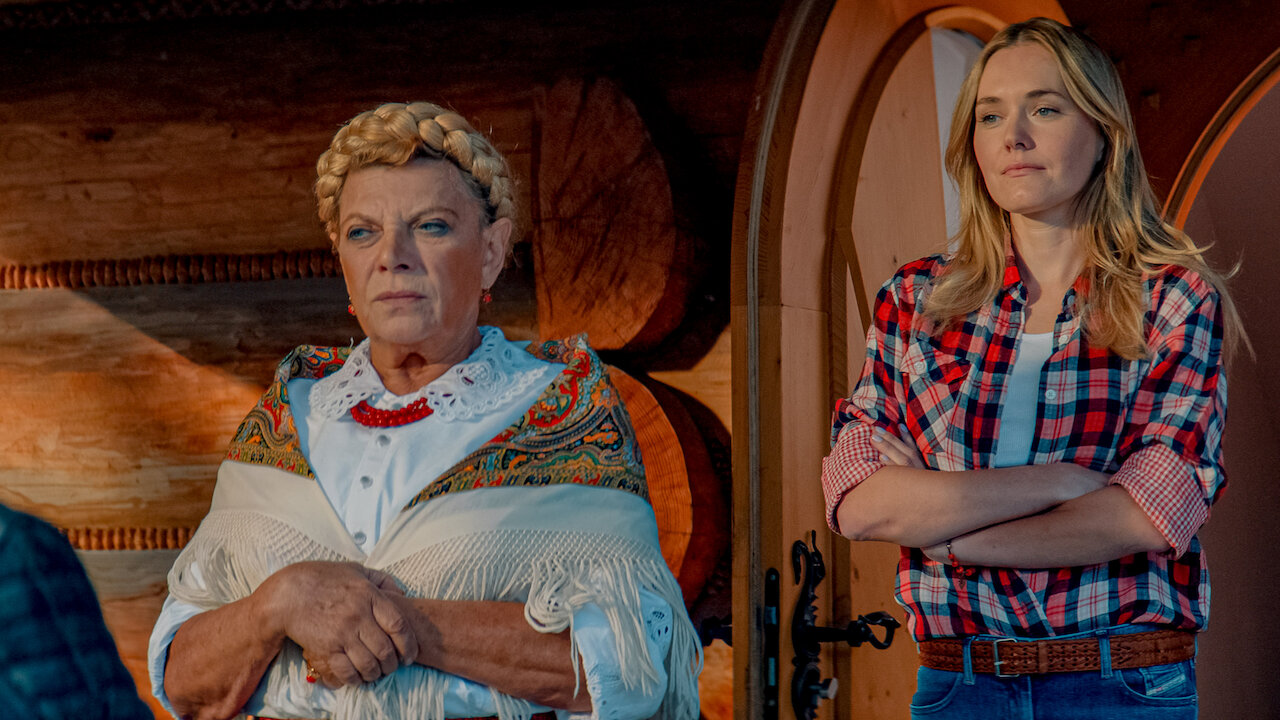
Netflixable? Poles reset and re-title Shakespeare — “The Taming of the Shrewd”

How do you screw up Shakespeare’s hilariously malleable feuding couple farce “Taming of the Shrew?”

If you’re the Polish team behind their cleverly-retitled modern setting of the tale, you put all your efforts into a stupidly complicated story and a lot less in shrewishness.

“The Taming of the Shrewd” is about a not-nearly-irritable-enough just-cheated-on bee scientist from Chicago who comes home in a not-quite-fury to throw a monkey wrench into a dying furniture firm’s plans to buy the valley where she grew up, set up her “smart” beehives and renounce men in general and the one hunk in particular that two factions want to seduce and distract her into changing her mind.

Shakespeare’s play was complicated, with competing interests hiring an unflappable and unsuitable suitor to marry an old sister so that one of them could win the hand of her beautiful, sweet and companiable younger sister. This is needlessly complex on a whole other level.

“Kiss me, Kate” becomes Kaska (Magdalena Lamparska), the loutish seducer Petruchio is “Patryk” (Mikolaj Roznerski) and the sweeter younger sister and assorted other bits of business are switched around, but you can glimpse the Bard of Avon here and there around the edges of this sex farce that’s more sexy than farcical.

The schemers begin with Patryk’s older sister Agata (Dorata Landowska), who needs a loan to save the family company so that they can sell the Persian Gulf States furnishings made from the rare buried “bog wood” of Zakopane. That’s a tourist village whose biggest landowners are the frenemy blowhards Jedrus (Tomasz Sapryk) and Wacus (Piotr Cyrwus). They’re ready to sell and Agata has the loan to buy.

Damned if Kaska’s letting that happen. She, like the locals, doesn’t know the real reason Agata covets their valley. Nor does Agata’s ne’er do well brother Patryk, whom we meet getting shaken down by a loan shark’s enforcer.

Agata arm-twists Patryk into taking one for the team and “persuading” Kaska to change her mind. The local louts audition a number of other eligible bachelors to do the same thing, but Patryk persuades them to hire him as well.

Nobody knows anybody else’s hand in this poker game. And only Kaska’s scientific brain, her common sense and her temper can stop them.

Alas, there’s not enough “temper” here, just Kaska sizing up Patryk and enjoying humiliating his efforts to get to her. He gets locals to do all the manly things he wants to use to impress her — firewood chopping for her cabin, etc. And he just stands there, shirtless, waiting for her to succumb.

You can see possibilities here and there, but for the most part, this “Shrew(d)” bogs down in the details. All these people, all those agendas and there’s no “door slamming farce” staging or pacing to make this adaptation of an admittedly Neanderthal comedy by Shakespeare come to life.

Mountain goat attacks, bee shenanigans, squabbling conspirators and boorish local tourism appeals from a town that isn’t quite popular, isn’t really quaint and is not the least bit funny in itself hobble this already-too-tame “Taming” from start to finish.

Rating: TV-MA, sex, nudity and profanity

Cast: Magdalena Lamparska, Mikołaj Roznerski, Piotr Cyrwus, Tomasz Sapryk, Dorota Landowska and Dorota Stalińska

Credits: Directed by Anna Wieczur-Bluszcz, scripted by Hanna Węsierska, Wojciech Saramonowicz, ever-so-loosely-based on Shakespeare’s “The Taming of the Shrew.” A Netflix release.

Running time: 1:52
Posted in Reviews, previews, profiles and movie news | Comments Off on Netflixable? Poles reset and re-title Shakespeare — “The Taming of the Shrewd”

Movie Review: Wahlberg seeks redemption as “Father Stu”

A couple of things you might guess about a redeemed-by-faith story co-starring Mark Wahlberg and Mel Gibson.

It’s going to have edge, because Wahlberg’s voice is best-suited for swearing. And it’ll be Catholic, because Gibson’s love-hate affair with what was once his mother church is as well-documented as his other personal struggles.

You can’t say “Father Stu” isn’t that unicorn of faith-based film, a movie that sounds and feels like a slice of real life. People — especially Wahlberg in the title role — curse like the disgraced former president and drink like…Mel Gibson. This goes on, first scene to last.

There’s blue collar poverty, frustration and impulse control. Violence takes many forms — lashing-out fistfights, “boxing as a way out” and drunk driving accidents. Sex is a goal, love almost a byproduct.

Yes, this R-rated drama feels real and lived-in. And Wahlberg goes all-in bringing this mug who found faith to life. If only that was enough.

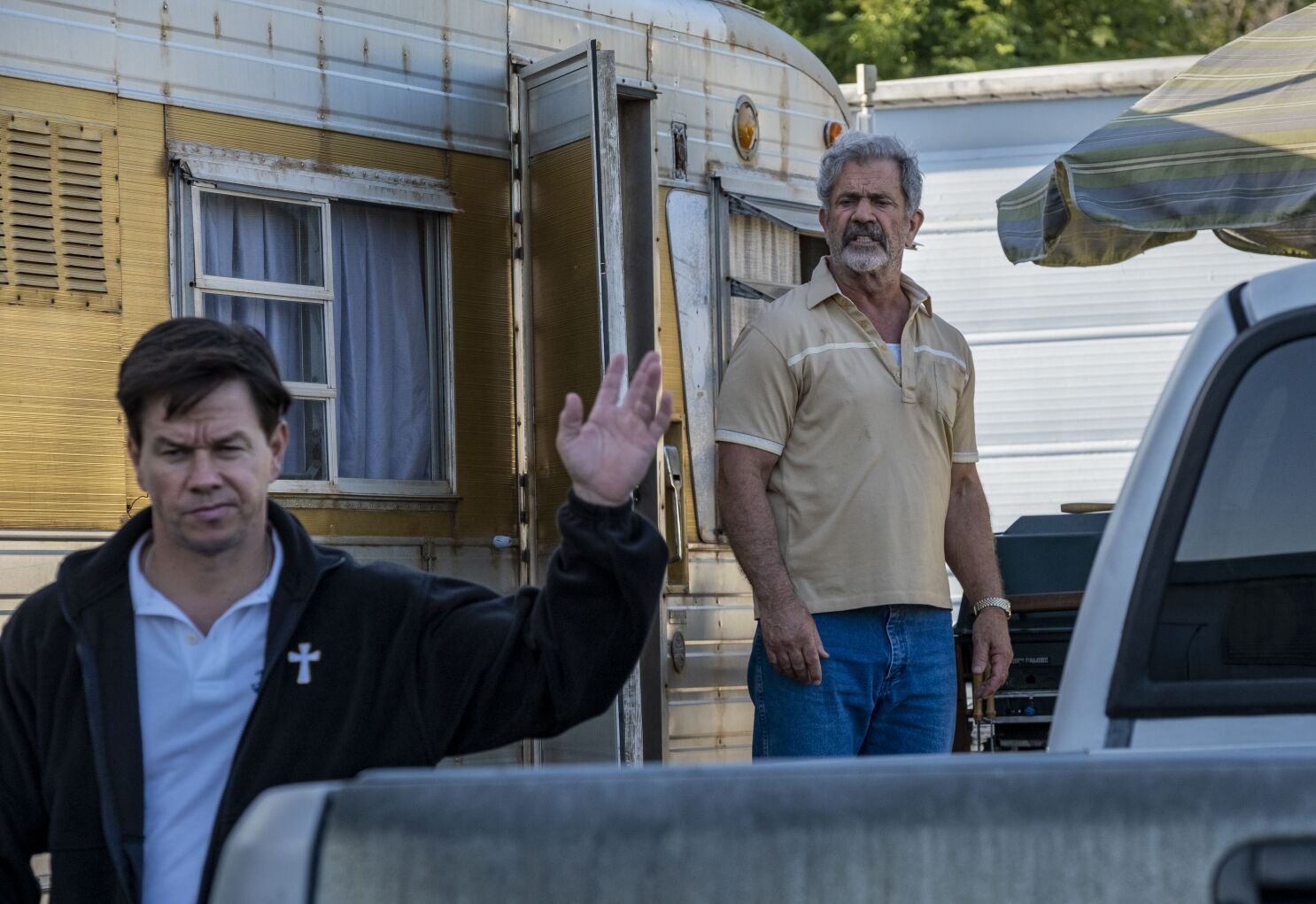
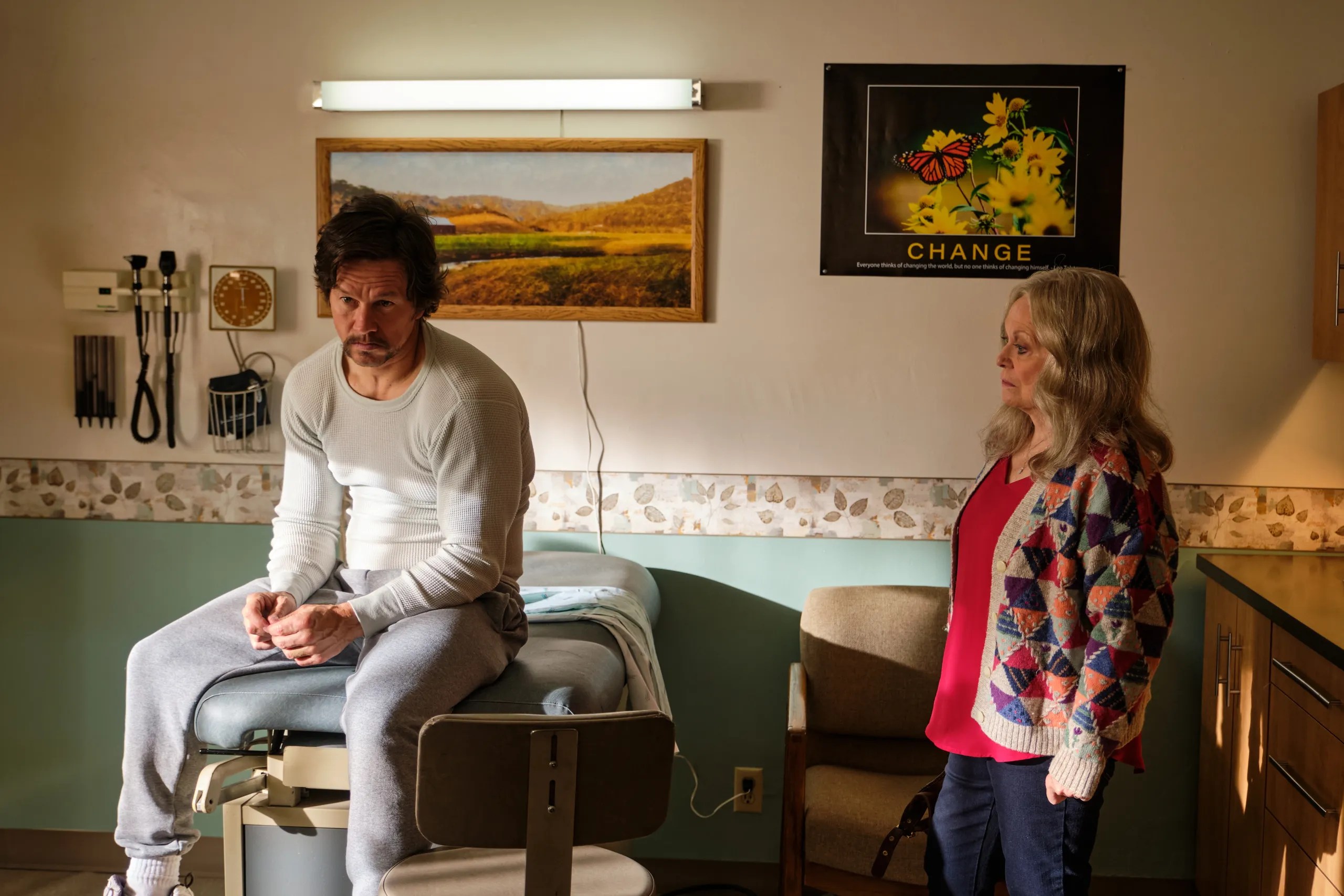
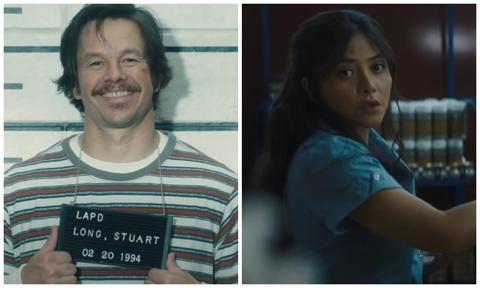
Stuart Long is a Fu Manchu’d boxer when we meet him, a Montanan getting the straight dope from his doctor that “Your body is telling you not to fight.” His mother (Jacki Weaver) is glad to hear it, but Mr. “No regular job for me” isn’t having it. Then he is.

He was “all-in” on the boxing thing, seen in a long opening montage of fights. He now decides the time is right to go to Hollywood, “cash in my face instead of my fists.” He doesn’t require much money to travel.

“I don’t need a month to ‘make it!'” And he doesn’t need to get in touch with his estranged Dad (Gibson) already out there among the “communist…fascist hippies,” an alcoholic construction worker who — like Stu and his mom — never got over the death of Stu’s kid brother at five.

That may be the most heartfelt element of “Father Stu,” its depiction of a wound that never heals. Whatever dreams of singing fame Stu harbored as a kid, boxing became more his speed — an outlet for violence. However much his Dad enjoyed his PBR back in the day, it and whisky morphed into his medication afterwards. And the entire family’s rank contempt of religion was born when that kid died.

In LA, Stu gets a job at the meat counter of a market, hitting up every single customer with “You work in movies? You in show business?”

His auditions include “casting couch” come-ons and outright rejections.

But his head is turned by that one customer, soulful and sexy Carmen (Teresa Ruiz), whom he stalks to her Catholic Church. A manic “all-in” guy with a pseudo-charming patter — “How’d you find me?” “I asked God to help!” — Stu gives Carmen the full-court press.

“I’d wait 40 years in the desert for you.”

Standing out like a sore thumb at church doesn’t change Stu. He’s still a brawling barfly, still a foul-mouthed lout. And Carmen? She’s “a good Catholic.” She insists she’s not sleeping with him before marriage.

Modern redemption stories — on screen and in life — often hang on that one “big mistake” a character makes that turns a Chuck Colson or whoever towards religion. Stu’s is a tipsy motorcycle wreck that has the Virgin Mary visit him, lying on the pavement.

Next thing you know, he’s baring his coarse soul in confession, admitting he messed up in bedding Carmen, and deciding to join the priesthood.

Just. Like. That.

The movie, which gives us an hour of backstory to get to the point, is about how nobody takes Stu seriously, everybody questions his motives. There’s the shattered Carmen, who hoped to marry him, his foul-mouthed faith-hating mother and cynical, hard-drinking father, and eventually, his “You can’t fool God” fellow seminarians who rain on his Easter Parade.

Malcolm McDowell makes a fine impression as the aged monsignor reluctant to admit an older, problematic candidate with a lot of language and impulse control issues, and a police record. But with a common man’s grasp of faith and ability to cut through the flowery language to get at Biblical truths, Stu will not be denied.

It’s good to see Wahlberg showing some real ambition in a role, escaping the B-movie action pictures that seemed to be his career path of late. Weaver and Gibson are nicely paired-up and help give “Father Stu” that edge that I’ve long missed and complained about in this genre.

But Wahlberg’s patter performance highlights what a glib enterprise “Father Stu” is.

First-time writer-director Rosalind Ross leaps into features with a shallow, overlong picture on a colorful character who doesn’t lose much of that color as he is taught and severely tested en route to the priesthood.

“Father Stu” has funny, flippant dialogue and a smart, coherent visual strategy — lots of close-ups and extreme close-ups of one and all.

But there’s plenty of dead space, scenes that don’t advance the plot or just reinforce what we’ve already seen expressed and explained in many scenes before them.

The film has its best moments in the long run-up to the Big Conversion, and struggles afterward to justify “Why is this fellow worth a movie?” It climaxes with an agonizingly drawn-out finale that is neither touching nor definitive proof of why Father Stu got a pass to the priesthood or why this intimate, small world/smaller impact “personal” journey is worth over two hours of our time.

Wahlberg and the movie are likable enough, but overstay their welcome like a priest or pastor who never mastered the art of wrapping things up.

Rating: R for language (profanity) throughout.

Cast: Mark Wahlberg, Mel Gibson, Teresa Ruiz, Jacki Weaver, Carlos Leal and Malcolm McDowell.

Credits: Scripted and directed by Rosalind Ross. A Sony/Columbia release.

Running time: 2:04

Posted in Reviews, previews, profiles and movie news | Comments Off on Movie Review: Wahlberg seeks redemption as “Father Stu”

Movie Review: “Fantastic Beasts: The Secrets of Dumbledore”

Return with us now, to the Wizarding World and the latest wagonload in the content caravan of “Fantastic Beasts,” another prequel that serves as a place-holder film more at home on Warner Brothers’ accounting books than in J.K. Rowling’s.

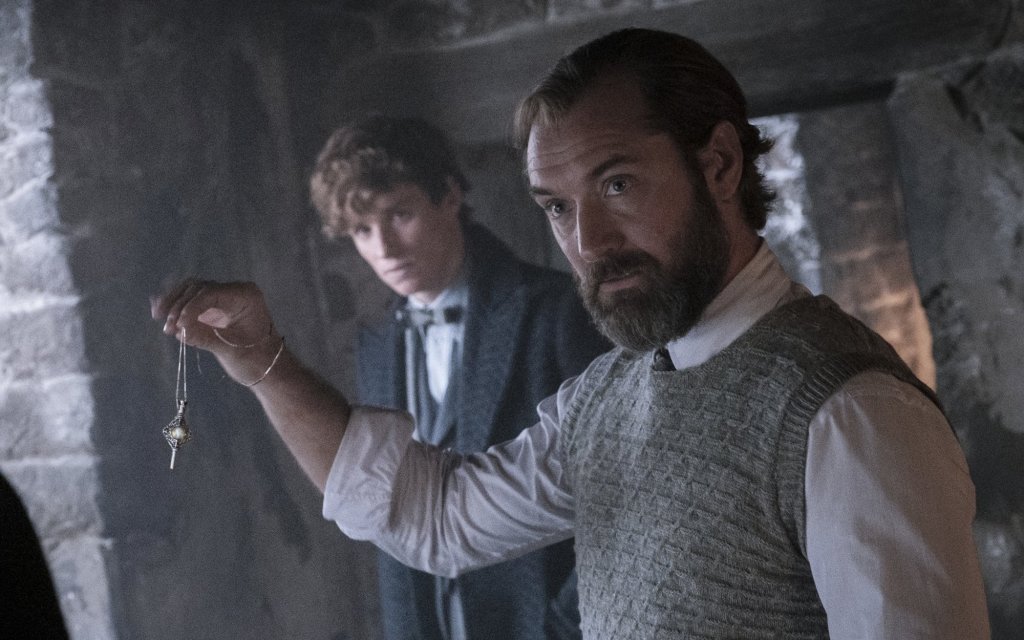
“Fantastic Beasts: The Secrets of Dumbledore” lets Jude Law bring a fine gravitas to the Wizard Who Would Run Hogwarts and casts Mads Mikkelsen as an upgrade from canceled Johnny Depp as Grindelwald, the villain of this latest never-ending “trilogy.”

The final showdown may be anticlimactic enough to make even the cosplayers who show up for this wonder “What the hell was the point of all that?” But these pictures have settled into a gorgeous digitally-augmented alternate reality, recognizably period piece but distinctly alien. Here that’s a reality where wizards work through their differences as we know that in their world the Muggles (mostly unseen) are wrestling with the rise of Hitler and Mussolini, or their modern counterparts.

“The Secrets of Dumbledore” has the ambition to be “about something,” where “peaceful transition of power” is lamented with nostalgia, in which the characters and those of us watching them wish for justice and not open-criminals “absolved of” their “alleged crimes,” for leaders who “Do what is right, not what is easy.” We’re repeatedly reminded “Dangerous times favor dangerous men.”

But damn, this thing is a mess. A “story” that barely deserves that label takes forEVER to get going, a vast clutter of forgettable characters are played not by the legends of British cinema, television and theatre who populated the Harry Potter films, but by not-yet-wholly-established “stars” like Callum Turner, Jessica Williams, Alison Sudol and Poppy Corby-Tuech.

You need a scorecard, or have the books memorized, to keep track of who’s who.

All of Warner Brothers’ cost-economies in this cash cow come home to roost in this two hour and twenty-two minute bore, none more telling than sticking with British TV director David Yates, whose “trains-run-on-time” helming of the last “Potter” pictures and the entire “Beasts” franchise has reduced the films to efficient, colorless style-starved fan-servicing “content,” a time-killing anchor to a Warner Brothers or Pluto TV “Wizarding World” streaming channel of the future.

Even shedding one of the outsider-looking-in irritants of the series, the many actual-named “Fantastic Beasts” — a maddening “Let’s look up what claptrap J.K. dreamed-up to call this or that hybrid of mythic critters, and how to spell it” — points to this ponderous picture’s failings.

This outing, only the magical all-seeing deer-goat “Qilin,” pronounced “Chillan,” as in “All God’s Chillan want the Qilin to pick a new leader of the Confederation of Wizards,” is identified by name. Praise be. Other crablike beasts, tentacled prison Kraken, skittering this and wandering-through-the-background that aren’t labeled. That’s the only thing that keeps “Secrets of Dumbledore” from edging towards the four hour mark as a movie.

At least we all know what a phoenix is and why it’s symbolically in the background of many a scene.

The plot — the murderous Grindelwald, now played by Mads and not Captain Jack, is on the lam and plotting away. It’s a winter in the Muggles’ late 1920s, and veteran wizard Albus Dumbledore (Law) and academic wizard Lally Hicks (Williams, of “The Incredible Jessica James”) are assembling a “team” to foil him.

That team consists of biologist and “Fantastic Beasts” author Newt (Eddie Redmayne), his brother Theseus Scamander (Turner, of “Assassin’s Creed”), Newt’s plucky assistant Broadacre (Victoria Yeates) and the comical Brooklyn baker-Muggle Kowalski (Dan Fogler).

They’re to “save the world” from Grindelwald, who is still bound by “Blood Troth” to his long-ago lover Dumbledore. They’ll need magic, Newt’s bottomless suitcase and a little Brooklyn “three card Monte” trickery to manage that.

There are, of course, other Dumbledores, a fresh LeStrange and younger versions of others played in the Potter pictures (Fiona Glascott is a younger Minerva “Maggie Smith” McGonagall). Casting relative unknowns in so many roles makes for a movie that’s puzzling to parse out for non-fans of the Rowling novels.

That character clutter is joined by scenes that serve no dramatic purpose and dialogue that rarely transcends the “I’ll have to ensure that my wand registration is up to date.”

I like the fact that Rowling & Co. sought to make the connection between the roiled world we live in, with power-mad and openly cruel Grindelwald elites seeking to “remake the world” as “our birthright.” The fascist-cultist-populist rallies of the political candidates for leader of the wizarding conspiracy are blunt and leave no doubt of their message.

Destroy everything, enslave everyone without a wand, and some with them.

A comic bit that involves a bit of scorpion/crab dancing by Redmayne and Turner, playing his bureaucratic brother tickles, as does some of the shuffling suitcase business.

But an “assassination attempt” is filmed as if all involved knew fans would be more interested in the banquet meal of floating plates leading around wizard food service staff, and lands flat. The digital “beasts” are impressive and forgettable, like far too many of the players in this piece.

That goes for this movie, delayed perhaps too long to maintain its thin memory connection to the long story thread Rowling & Warners were conjuring up. The passage of time makes this piffle passe.

Too many characters means there’s somebody for everybody to potentially identify with, but none of them have enough to do, with only Law and to a lesser degree Mikkelsen, who brings real contempt and menace to Grindelwald, making much of an impression.

Redmayne in particular must be desperate for a way out of this endless “EastEnders for Wizards” obligation. Playing one note has to be as tiring as watching it.

Rating: PG-13 for some fantasy action/violence.

Cast: Eddie Redmayne, Jude Law, Dan Fogler, Jessica Williams, Ezra Miller, Callum Turner, Alison Sudol, William Nadylam, Poppy Corby-Tuech and Mads Mikkelsen.

Credits: Directed by David Yates, script by Steve Kloves and J.K. Rowling, based on her books. A Warner Brothers release.

Running time: 2:22

Posted in Reviews, previews, profiles and movie news | Comments Off on Movie Review: “Fantastic Beasts: The Secrets of Dumbledore”

Netflixable? “Vengeance is Mine, All Others Pay Cash”

Today’s “Around the World with Netflix” entre is a violent, leering farce about sex, sexual dysfunction, sexual abuse and revenge for such abuse in 1980s Indonesia.

The title — “Vengeance is Mine, All Others Pay Cash” — may hint at something gonzo and madcap, but that would be over-selling it. The dark subject matter is discussed in a dramedy as flippant, odd and just-plain-off as its nonsensical title, which probably loses something in translation from “Seperti Dendam, Rindu Harus Dibayar Tuntas.”

Our hero, Ajo (Marthino Lio) has reached adulthood as a motorbike daredevil and an any-excuse-to-fight 20something with more pluck than skill or throw weight. We meet him after another victory in this “chicken”-styled stunt in which he faces off with another rider, racing their mopeds headlong at each other to pluck a cigarette-stuffed beer bottle off the pavement in between them. We then see him goaded into a fight at the local pool hall, where eventually he gets his ass kicked.

It’s an open secret in Ajo’s wide circle of acquaintances. He has no sexual um, get up and go.

He’s tried everything the local hookers have to offer — from sexual come-ons to “cures” that include applying chili powder, syrup and toothpaste to his groin. He takes out his frustration fighting.

“Ajo will fight anybody.” Friends and family mutter “What did the idiot do this time?” after every beating.

That’s how he winds up at a construction site, sent to beat up the boss. First, he has to get past the boss’s badass bodyguard. He can say “I don’t deal with women,” but Iteung (Ladya Cheryl) is not to be taken lightly. Which of course, is exactly what Ajo does.

Whatever goes down there, we can be sure there’s a lot of Pencak silat in all the punches, flips, slaps and kicks. It’s almost a shock when Ajo finally lands a punch or two, and we’re all surprised when he manages to drop Iteung.

Could this be a love match?

“Will you be my boyfriend?” (in Indonesian with English subtitles) doesn’t get her the response she wants. His hemming and hawing that “I don’t want to love anyone, I just want to kick ass” convinces no one.

But if it’s meant to be, it will be. They decide to marry. If only he can fulfill this lucrative but unwanted “assignment” from a retired general who insists he be addressed as “Uncle Gembul (Piet Pagau).” The old man has a score he wants settled, and that turns out to be the first of many.

Iteung and Ajo marry and try to start off life together on Java, running a garage. But they’re burdened with this sexual problem, its horrific “origins” and the violence each gets mixed up in trying to help, placate or “cure” the other.

Writer-director Edwin, who did “Blind Pig Who Wants to Fly,” mixes sentiment with the silly in a time and a corner of Indonesian culture where settling scores personally was commonplace because the rule of law worked for some far better than others.

Characters cheat and threaten and kill, and go to jail for it, but never for that long.

There’s no such thing as “friendly rivalries” in life, love and business. The colorfully-decorated delivery trucks — whose painted images come to animated laugh here and there — are just another venue for blood feuds when one driver undercuts another’s prices.

“Vengeance” has a polish that belies the haphazard structure of the script, with revenge from characters we know and others we only meet in the third act dominating the story.

But Edwin keeps the tone machismo-deflating and goofy, and the film on its feet between fights. Our leads have enough chemistry when they’re throwing down that their characters’ problematic love life together seems immaterial.

The fights are that good. And the visual puns — a fish tank full of phallic looking clams — and dysfunction gags are such a startling contrast to the violence that nothing here can be taken all that seriously, starting with that title.

Revenge is a dish best served…with laughs?

Rating: TV-MA, violence, rape, sex, smoking, profanity and crude sexual humor

Cast: Marthino Lio, Ladya Cheryl, Reza Rahadian, Ratu Felisha and Piet Pagau.

Credits: Scripted and directed by Edwin, based on a work by Eka Kurniawan. A Netflix release.

Running time: 1:54

Posted in Reviews, previews, profiles and movie news | Comments Off on Netflixable? “Vengeance is Mine, All Others Pay Cash”

Movie Review: “We’re All Going to the World’s Fair,” and the result could be horrific

“We All Went to the World’s Fair” is a self-consciously moody horror film that’s more interesting as an essay on loneliness than as a source of frights. And even the “interesting” label has its limits.

Writer-director Jane Schoenbrun created a quasi-found footage story that breaks “found footage” rules, a “Candyman/Bloody Mary/Slender Man” riff about an online game where you say the magic phrase three times and your life goes to pieces. Only there’s no manifestation of a demonic Candyman or anybody else, really.

But she’s written and cast a fascinating heroine, a solitary suburban teen named Casey and convincgly-played by screen newcomer Anna Cobb as a mopey, downbeat Juno-next-door pixie who loses herself in horror movies and plays this “game” because “I thought it’d be cool to live in one.”

She keeps a vlog to document her solitary and exceptionally dull life — no suggestion of school (looks like this takes place over winter break), no job, no shots of “Dad,” who is raising her by himself, apparently. She just takes walks in the melting snow and interacts with her screen in her attic dormer bedroom, which she decorated with glow-in-the-dark stickers — probably when she was ten.

“I don’t know what to expect” she tells her possibly-imaginary audience as she downloads a video, says “I want to go to the World’s Fair” three times and pricks her finger to smear the screen with blood.

Don’t expect much.

The changes are subtle at first, so subtle she turns on a sleep cam to see if weird things are happening in her sleep. Just a little, and nothing remotely like the “Paranormal Activity” her creepy biggest online fan describes it as.

The threat — glimpsed in her peek at online videos of others taking the “World’s Fair Challenge,” is that something or someone takes over and weird stuff happens to a player’s psyche and even body. One guy documents the string of fair-ride admission tickets that peel out from under scabs that covered his arms after entering the game. Another is seen via his webcam jogging on his treadmill, repeatedly slapping himself as he does.

That “biggest fan” is a helper/”expert” on the game (Michael J Rogers) who gets her attention, gets her on the phone and gives her both encouragement for her videos and concern for her mental and physical health. We don’t have to see “JLB” to think “Internet stalker/Incel.”

I got the feeling that I was watching a not-wholly-digested parable on a connected but isolated population, here the online horror community, and what they’re looking for in such Internet connections, tests and frights.

Schoenbrun opens the film with a long sequence of Anna’s preps to take the “challenge” and her rehearsals for doing that, all seen from the POV of her staring at her screen. We see the challenge’s introductory video as just flashes on her face, and hear its pitch. There’s an attempt to maintain that webcam/cell-phone eye-view, but Schoenbrun loses track of it here and there, and eventually abandons it.

In the montages of “I Want to Go to the World’s Fair” players we see both single-shot webcam clips, and what could pass for a C-movie of somebody’s horrific experiences playing it. We also glimpse the alleged video game (Hangman-ish) that unleashed it on the world. It’s dated 1994, while that is perhaps when it was uploaded to the net, the graphics are “Pong” era 1976 or so.

The lack of frights and jolts and general mesmerizing tone of “We’re All Going to the World’s Fair” make it “horror” only in terms of the mood. It feels more like a stab at social commentary and satire. Hannah Arendt’s “The Banality of Evil” becomes “The Banality of Online Lives,” teen and otherwise.

Casey’s changes are a slow spiral, but more of a “parental alarm bells” variety than “something evil has taken over” the kid. The movie’s highlight is an impressive dance/rhyme “performance” for her online audience that goes into “possessed” meltdown.

As for Schoenbrun, I think I get what she was going for, but I don’t think she got there. She was concerned enough to release a “director’s statement” on her film — always a bit late and a tad pretentious — and some lightweights are endorsing it based on that. But the evidence on the screen –which is all that matters — is the very picture of inconsistency, clumsily using a drifting POV strategy for telling a fairly dull tale of “possession” by online game.

Rating: unrated

Cast: Anna Cobb, Michael J. Rogers

Credits: Scripted and directed by Jane Schoenbrun. A Utopia release.

Running time: 1:26

Posted in Reviews, previews, profiles and movie news | Comments Off on Movie Review: “We’re All Going to the World’s Fair,” and the result could be horrific

Movie Review: Viking Bloodlust is Personal for “The Northman”

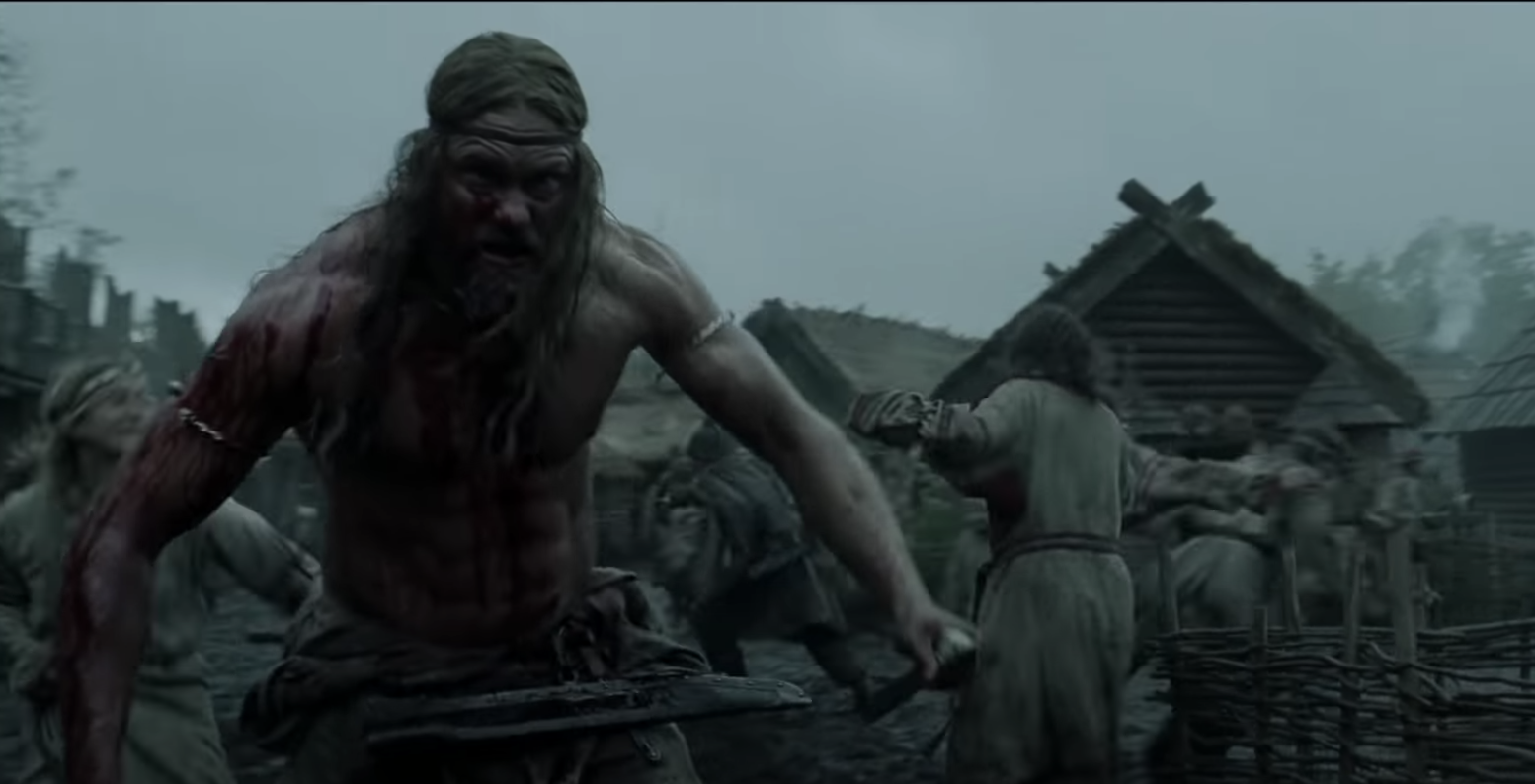
Brawny and bloody, mythic and mystic, “The Northman” is a revenge quest as Viking saga, an epic that wears that label lightly.

Robert Eggers’ grim, gory and gorgeous tale lets us sentimentalize “the hero’s journey,” and then disembowels that sentiment to make us question revenge as a dramatic driving force.

The savagery here is searing and personal and borderline genocidal when deployed about whole clans and villages.

Alexander Skarsgård has the title role, the son of a wounded and aging king (Ethan Hawke) who dreads “the long life of a shameful grey beard.” His treacherous half-brother (Claes Bang) will see to that. But before he dies, the king has his boy (Oscar Novak) initiated by a shaman, a hallucinatory temple sauna ceremony that allows the child “the last tear you shed in weakness.”

The boy has just enough time to absorb the responsibilities and expectations laid on him before his father is murdered and he is chased into exile, rowing away with sea chanty vows of “I will avenge you, Father, I will save you Mother, I will kill you Fjölnir,” the “brotherless” usurper who took his mother and became king.

The boy’s name is Amleth, and as there’s a murdered father, a remarried mother (Nicole Kidman) and a jester (Willem Dafoe) in this palace court, the similarities to Shakespeare’s Hamlet are certainly intentional. But the adult Amleth is no “melancholy Dane,” dithering about “To be, or not to be.” Fleeing to the East, growing up among a clan that makes upriver slaving raids among the Rus (Russians) its chief business, Amleth never takes his eyes off the prize.

Revenge.

He passes himself off as a slave and joins the feisty, mystical Slav Olga (Anya Taylor-Joy) on the long boat bound to Iceland, where Fjölnir and his mother have fled, running a big farm because the kingdom he stole has been stolen from him. Amleth will get close, “torment” his tormentor and fulfill his “revenge at the Gates of Hel” destiny.

And he’ll have that seriously sexy blonde Slav temptress as a further motivation.

A century of Viking films and a couple of solid but soapy TV series are cast aside in “Northman’s” attention to anthropological detail. Eggers and his co-writer (Sjón, of “Lamb”) give us a wholly-conceived world of sturdy woodwork, leather, steel, mud and blood. There are historically-sound realizations of Viking religion and Viking rituals — throat singing as it is still practiced in Tibet, a score of drums, pipes and animal horns, displays of menacing, bellowing pre-battle brawn made famous the Maori of New Zealand , frenzied dances and “berserking,” pitiless murder and pillaging. There are mystical succession ceremonies and visions of a Valkyrie escort to Valhalla.

Skarsgård, in fearsome-enough-to-be-shirtless shape, gives Amleth just enough brooding contemplation to make the character’s story arc credible. He is as limited in his choice of actions as that Prince of Denmark. He must do what he must do, even when he starts to question it.

Tayloy-Joy, the “It Girl” who first gained fame in Eggers’ breakout film “The Witch,” makes Olga of the Birch Forest fearsome and positively possessed when the occasion calls for it, beguiling when that’s her play.

“Your strength breaks men’s bones,” she teases her lover-to-be. “I have the cunning to break their minds.”

The Icelandic singer Björk pops up as a seeress, and a few familiar non-Nordic faces pepper the cast, which explains the odd but effective Scots-Nordic accent that passes for lingua franca in this Viking world.

Eggers blends in plenty of lighter moments in this swords and savagery tale, with Dafoe sparkling as the king’s fool and gags about the new king’s oldest son, the slightly-built Thórir the Proud (Gustav Lindh), playing “Quien es mas macho?” with the hulking, 12-packed new slave.

But some laughs — over-the-top touches here and there — seem unintentional. And as the picture makes its turn for the finish line, it meanders and dips into the mystic a tad more than I cared for.

Yet “Northman” never stops feeling like a saga, a tale passed down orally, a Viking “Odyssey.” It’s never less than epic, never less than the new benchmark in Viking stories put on film.

And Skarsgård, given a rare lead, and the filmmakers make us invest in this “hero’s journey” even if we think we’ve guessed how it ends. Because with those bloody-minded Vikings, you just never know.

Rating:  R for strong bloody violence, some sexual content and nudity

Cast: Alexander Skarsgård, Anya Taylor-Joy, Nicole Kidman, Claes Bang, Ethan Hawke, Bjork and Willem Dafoe.

Credits: Directed by Robert Eggers, scripted by Sjón and Robert Eggers. A Focus Features release.

Running time: 2:16

Posted in Reviews, previews, profiles and movie news | 2 Comments

Movie Preview: A clip from “Escape the Field” verifies the truth in titling

It’s about people trapped…in a cornfield.

It’s like they’re maze runners who can’t figure out a way out, “Six characters in Search of a Twilight Zone Exit,” or Steven King has another even less original son than the one that cut and pasted “In the Field” into existence.

“Escape the Field” comes out May 6.

L

Posted in Reviews, previews, profiles and movie news | Comments Off on Movie Preview: A clip from “Escape the Field” verifies the truth in titling

Movie Review: Karen Gillan has a clone problem — “Dual”

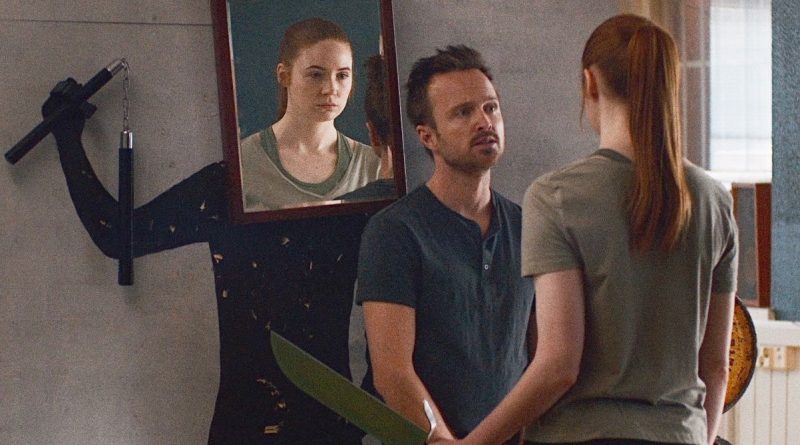
Writer-director Riley Stearns picked up on something that he was able to cash in on in casting Karen Gillan in “Dual,” his dark sci-fi thriller about a future when cloned “replacements” take over for the dying. Although he had to — no doubt — be delicate in bringing it up, the Scottish Gillan’s deadpan-to-the-point-of-flat turns when she’s voicing “American” roles in Hollywood films (“Jumanji,” “Guardians of the Galaxy”) made her perfect for the dual roles in this film.

Sounding like an automata seems to come naturally to her.

That’s the way almost everyone comes off in “Dual,” whose title is both literal — a company is creating duplicates, who spend “imprinting” time with their dying”originals” — and a pun. When both versions of the same person want to carry on living, the duplicates have rights, among them the right to trial by combat. The winner gets to live the original’s life. The loser dies by the other’s hand.

Filmed in Finland, with a number of British accents in support, almost every character comes off as the way movies and TV depict “on the spectrum.” To a one, they’re blank-faced, with emotionless voices, even when given the worst possible news by the flat-British-accented doctor (June Hyde) who confirms what Sarah’s already heard from her unemotional husband (Beaulah Koale).

“You’re dying.”

Even Sarah’s controlling, martinet of a mother (Maija Paunio) seems like a clone that hasn’t learned to raise or even modulate her voice as she’s criticizing her almost-estranged daughter’s eating and everything else.

Sarah’s own social-signals awkwardness extends to “reading” her chilly husband, who keeps finding reasons to be away from home for work, his distracted, deflecting video calls home making the viewer and Sarah suspicious. Has he checked out of the marriage?

Sarah’s bizarre choice to spend all she has and much of her future earnings based on a sales pitch that ends with “You may be dying, but don’t let that affect those you love most” says more about her lack of sales resistance than her empathy. Who’d want to spare pain to those two?

Her husband taking to her clone during the “imprinting” break-in period isn’t comforting, either.

How will she, her replacement and her “loved ones” take the news that she has gone into remission, that she wants to “decommission” her clone and go back to the way things were? Not well.

And for the first almost only time in the movie, Sarah shows something like emotion herself.

“I’m gonna f—–g ABORT you!”

A few things here point to the black comedy intentions of “Dual.” One is that punned title. Another is the uniformly flat way everybody washes the emotions out of their performances. A third might be the way Aaron Paul, playing the personal combat trainer Sarah hires to get her through her mortal combat with her physical twin, pronounces “cache,” as in “cache of weapons,” as “cachet.”

Granted, personal trainers are rarely English majors with minors in French. But come on.

A running gag — if you can call it that — is the sneaking feeling that this is all some sort of bank-account emptying scam. Sarah is not just payinf a clone to carry on her life in her stead, at no benefit to herself. She’s got to hire a lawyer familiar with “duplicate” law when she “goes into remission,” and pay to support the duplicate up until the day of their televised combat. And she’s got to shell out for a trainer to teach her how to kill her replacement.

That’s some next level legal extortion.

But a couple of one-liners and a single jokey scene aside, “Dual” doesn’t play as dark comedy. Having too many characters vocalize in the same monotone may imply that the duplicates win a lot more of these duels than you think. It also makes for a film dominated by intentionally dull, emotionless and unfunny performances.

An opening “duel” starring single-scene actor Theo James has higher B-movie stakes, more emotion and more suspense than any of what follows.

It’s not the trickiest plot to decipher long before the finale. But the big hang-up for me was the chilly disconnect of it all. There is nobody to relate to. That makes the movie’s muddled message a chore to plow through and its payoff more of a shrug that the sharp slap it could have been.

Rating: R for violent content, some sexual content, language and graphic nudity

Cast: Karen Gillan, Beaulah Koale, Maija Paunio, Theo James and Aaron Paul.

Credits: Scripted and directed by Riley Stearns. An RLJE release.

Running time: 1:35

Posted in Reviews, previews, profiles and movie news | Comments Off on Movie Review: Karen Gillan has a clone problem — “Dual”

Movie Preview: “The Internet’s scariest horror game?” “We’re All Going to the World’s Fair”

Newcomer Anna Cobb stars in his Jane Schoenbrun tale, a vlogged experience, a shared terror opening April 22.

Posted in Reviews, previews, profiles and movie news | Comments Off on Movie Preview: “The Internet’s scariest horror game?” “We’re All Going to the World’s Fair”

Movie Review: An Iranian Family and their Dog “Hit the Road” in this Darkly Comic Odyssey

Any road trip with a small child might turn out to be a trial. But if the kid is as manic as the little Iranian boy in “Hit the Road,” there’s no doubt about it.

He is wound-up, loud, blurting a dozen thoughts and a hundred questions an hour, crawling over the seats, hiding the family cell phone, playing with the dog in the back, distracting the driver and driving his 50ish father out of his mind.

“Punk,” “little fart” and “little s–t” he calls this hyperactive four year old fruit of his loins. He’s only half-kidding. The kid’s doting mother just pleads, “Can you just shut up?

But the boy is only four, with the vocabulary of a poet, or a wit.

“BLISS!” he shouts into the wind, standing up with the sunroof open as they cross one arid vista after another.

He won’t give back the phone without a fight. “If I don’t answer my calls, people will worry!”

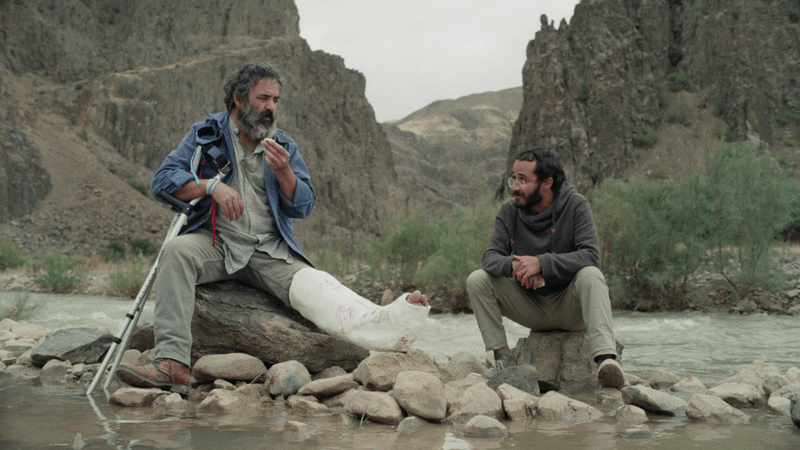
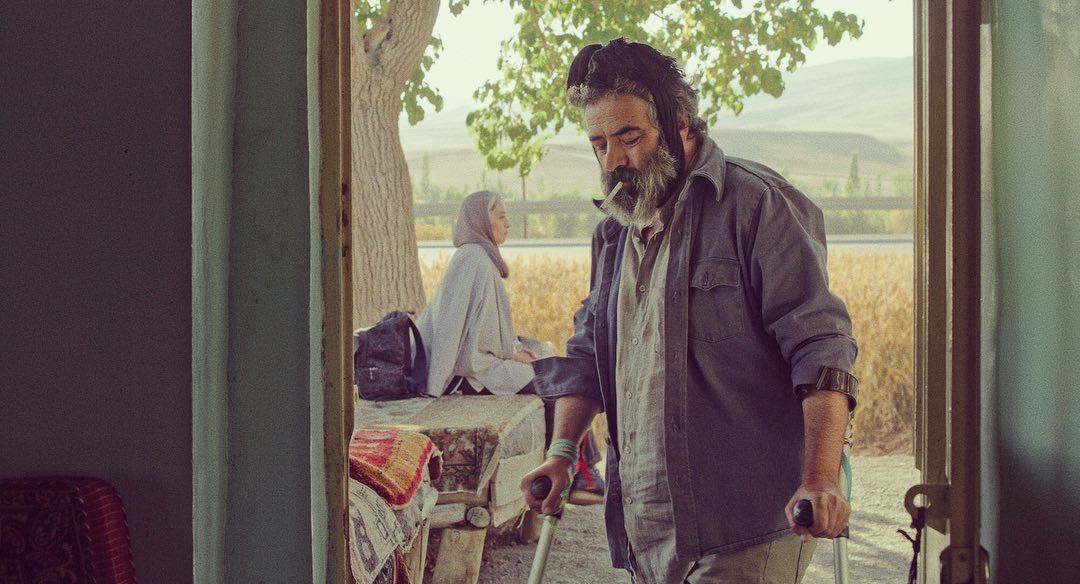
Dad, in a cast and denied any hope of taking a nap, even when they park to take a nap, makes threats that are to be taken seriously. Sort of.

“Before I die, here is my last will and testament!” the little imp announces.

As amusing as he is, if everybody’s a little frazzled, a bit on edge and occasionally morose in the debut feature of Panan Panahi, we think we see the cause. But of course we don’t know the half of it. This isn’t a straightforward “road comedy.”

Mom (Pantea Panahiha) is worried that “We’re being followed,” (in Farsi with English subtitles). Every time the subject of “leaving” or leave-taking comes up, the older son/driver (Amin Simiar) pouts, snaps or storms off.

Dad (Hasan Majuni) is the one doing most of the wrangling and question answering duties with their irrepressible youngest, played by Rayan Sarlak as if every take begins just after a fresh belt of Red Bull. That’s because Dad is the one clinging to a sense of humor, for the annoying kid’s sake.

They’ve sold their house, we gather, and their car. This one is borrowed. The oldest son is in a jam and heading for the border. And little Jessy, their adorable dog in the back, is sick.

Every single one of those facts must be kept from the kid, who is so easily distracted — every toilet break or roadside stop becomes a frenetic, got-to-see-everything adventure — maybe they can pull it off.

They pass a peloton of bicycle racers, and the child so distracts one of the riders and his brother the driver, that they knock the poor fellow down. Giving him a lift means Dad’s going to poke at the guy’s “role model, on the bike and in life,” Lance Armstrong.

“Dishonest prick…”

A random woman comes up and snips a lock of older brother’s hair. A sheepskin most be bartered for, directions must be botched, getting them lost. And the kid drives most everybody they meet to some level of distraction.

He’s our distraction, too. Panahi makes this kid — an adorable moppet…when he’s sleeping (probably) — not so much the center of attention, but someone the characters and the viewer can focus on when things get heavy and sad. Which they do.

Perhaps the father is in denial about what this trip represents. His wife may be on the verge of tears, grasping at moments stolen with her oldest son. But Dad is looking to pass on advice, just to lighten the mood.

“Whenever you kill a cockroach, don’t throw him down the toilet,” he tells his oldest. “Remember, his parents sent him into the world with lots of hope!”

All along the way, we see stunning Iranian vistas and hear Iranian pop — bubbly or sad — as characters lip-sync to the radio.

Panahi spins all this into a road comedy with a bittersweet aftertaste, letting us laugh out loud at the travel companion from Hell — or at least “The Ransom of Red Chief” — while wistfully reminding us of loss and leave-takings, the helpless desperation of running afoul of an authoritarian state, the very foundations of heartbreak.

Rating: unrated, smoking, profanity

Cast: Pantea Panahiha, Hasan Majuni, Rayan Sarlak and Amin Simiar

Credits: Scripted and directed by Panah Panahi. A Kino Lorber release.

Running time: 1:34

Posted in Reviews, previews, profiles and movie news | Comments Off on Movie Review: An Iranian Family and their Dog “Hit the Road” in this Darkly Comic Odyssey