
This American indie film hits theaters May 27.
I’ll have to poke around a bit and figure out who is behind it, as it has a whiff of prostheltyzing about it.
This American indie film hits theaters May 27.
I’ll have to poke around a bit and figure out who is behind it, as it has a whiff of prostheltyzing about it.
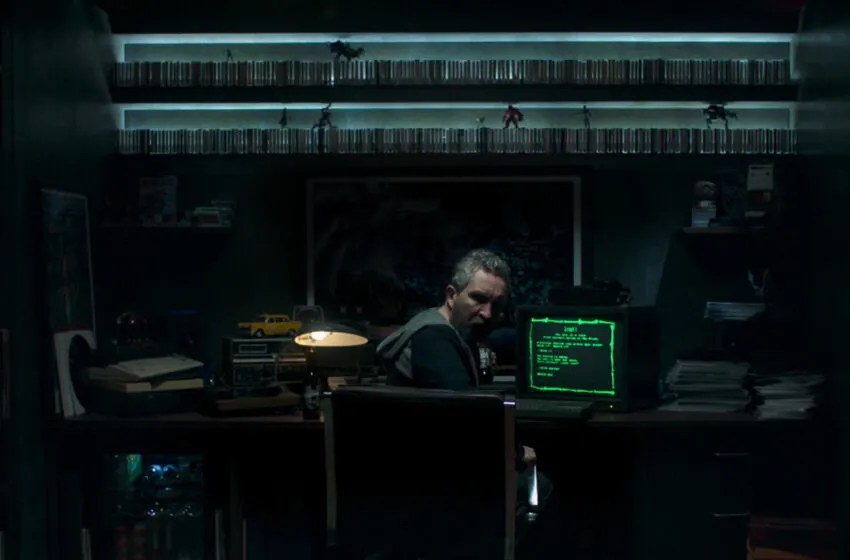
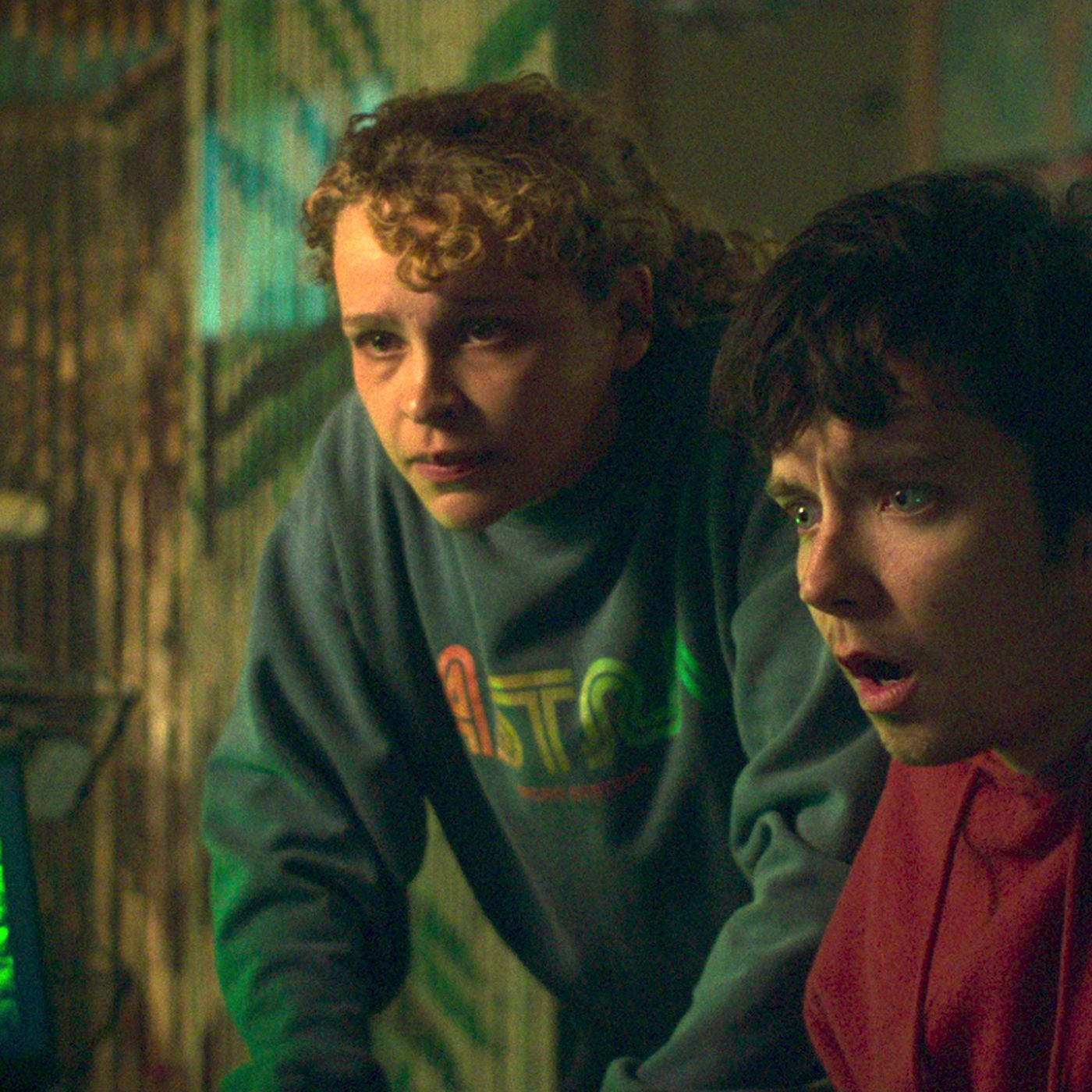
Although I can’t go all-in on “Choose or Die,” I will say that there’s a lot to be said for a horror movie with clever twists, a top flight cast and a witty consistency to its conceit.
A vintage game from the “dial up” era of the pre-Internet is picked up, in bootleg form, by a “collector.” Once the tape-source code is downloaded and those unforgettable yellow luminous graphics of MacIntosh/Compac era computing boot up, the game — which promises a huge cash prize to the winner — proceeds to take over the player’s reality.
The lights, the decor, the labels on your beer bottles (“Look Behind You!”) become a part of the “Curs>r” game’s universe, and its puzzle.
And innocent bystanders? They’re just fodder for the game’s choices. Say the collector (Eddie Marsan) has an out of control son (Peter MacHale) and game-hating wife (Kate Fleetwood) who are engaged in one long, never-ending screaming match.
“His tongue, or her ears? Choose or Die!“
And that’s just the opening scene.
The bulk of the story takes place some time after that, after game-designer Isaac (Asa Butterfield) and his working poor ex-classmate Kayla (Iola Evans) stumble into “Curs>r” and Kayla becomes its next player, facing one “Sophie’s Choice” after another.
The not-really-a-couple survive long enough to break down the game, investigate its origins and seek the usual absurd horror movie “explanations” for what’s going on as they face their fate — one horrific dilemma after another.
It’s a tale largely dictated by formula, and while the ugly choices themselves are grim and gruesomely novel, this isn’t a horror film you dig into for its surprises.
But that “consistency of concept” hook is a hoot. The ’80s vintage game is voiced by none other than Robert Englund himself, Mr. Freddy Krueger reminding players that “Reality…is CURSED.”
Collector Hal is obsessed with all things ’80s, to the irritation of his family. But young Isaac drives a butt-ugly ’80s vintage Fox Body Mustang. And then when and Kayla set off on their quest, their journey is tracked, early ’80s driving video game graphic style.
One character is trapped inside an apartment, pleading for help from another via phone as the would-be helper sees the victim being stalked through a PacMan graphic maze.
The Liam Howlett score isn’t just shrieking strings and horror jolts, but electronic beeps and bleeps and blurts.
“Choose or Die” is too perfunctory and too short to get into the meat of ’80s manias, and spends entirely too much time explaining how “Curs>r” came to life.
The frights here lean more toward excruciating bits of torture — this victim eating glass, that one facing a face full of syringes — than suspense, though there are a couple of decent dollops of that, too.
If one was looking for formulaic horror destined to turn into a Netflix film franchise, this might be it. And shortcomings aside, that wouldn’t be the worst thing.

Rating: TV-MA, graphic violence, profanity, suggestions of drug abuse
Cast: Iola Evans, Asa Butterfield, Kate Fleetwood, Ryan Gage, Joe Bolland and Eddie Marsan, featuring the voice of Robert Englund.
Credits: Directed by Toby Meakins, scripted by Simon Allen. A Netflix release.
Running time: 1:25
A satire of interconnected vignettes — sketches — tied together in a loopy, bloody-minded State of France farce of a story, “Bloody Oranges” won’t be to most tastes.
Discerning its meaning and what the filmmaker and his uninhibited, Comedie Francaise-spangled cast had it mind for their “targets” isn’t always obvious.
But if you’re down for a dark comedy with gynecology, sex, kidnapping and rape, humiliations, suicide, French politics and subtitles, do read on.
There are four basic interconnected stories here commenting, in a broad sense, on French tradition, liberties and comforts at odds with conservative austerity, “advertised” values and hypocrisy.
A provincial rock dance contest is judged by a quarrelsome sextet of judges, trying to be inclusive, “diverse” and politically correct, and failing miserably. I mean, do you give extra credit to the “disabled” dancer, who “walks with a limp?” Is she actually “disabled?” Can they even agree on that?
No. One judge’s screeching condemnation assures them that “no,” they cannot. They are “still that backward in 2020.”
The favored couple, cutely named Laurence (Lorella Cravotta) and Olivier (Olivier Saladin) are old school “Rock Around the Clock” dancers, retirees. It turns out they’re in financial trouble — outspending their pensions — and really do need to win the contest’s top prize to have anything to pass on to their children.
The lawyer Alexandre (Alexandre Steiger) has to keep his naked paramour from messing up his legal robes in a bit of post-coital teasing. “Nooner” or not, he’s determined to come off as respectable.
Because Alexandre would love to impress the finance minister Stephane (Christophe Paou) and his “team.” Stephane and his handlers are batting away press questions about “offshore money” and the nature of his marriage, while bandying ideas like ending school lunch programs for the children of the unemployed as they try to decide what’s “unpopular” enough to tax.
“What if we tax abortions (in French with English subtitles)?”
Young Louise (Lilith Grasmug) is getting a checkup from her amusingly blunt gynecologist (Blanche Gardin) who is more than happy to answer the 16 year-old’s queries about sex — “Very disappointing,” the first time — birth control and her genitalia.
The good doctor is helpful enough to whip out a mirror for Louise as she sits in the stirrups.
“Isn’t it pretty?“
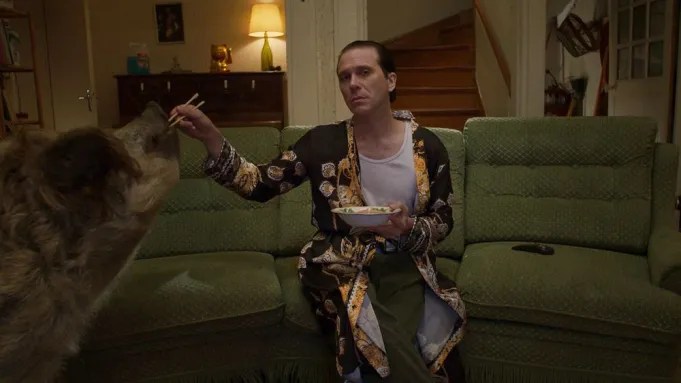
Louise is destined to lose her virginity at a teen beer bust. Stephane the Finance Minister wants to finish a day of puffy TV interviewer questions, posed photos and image management with his wife with what sounds like a Cawthorne/Lady G orgy. But car trouble puts him in the company of a nut (Fred Blin) who keeps a pet pig he feeds via chopsticks. Alexandre will join his family for his mother Laurence’s birthday and not notice credit card problems that get in the way of Father Olivier picking up the check.
And that dance-off that’s on the horizon’s stakes grow even higher.

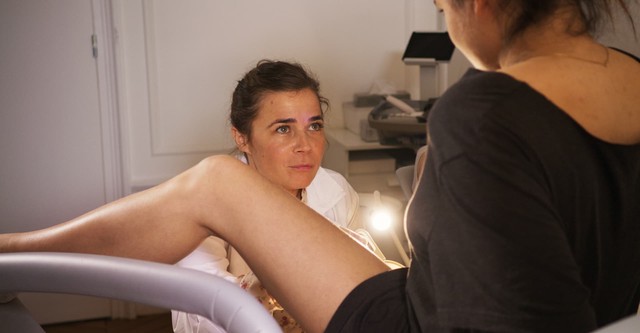
Director and co-writer Jean-Christophe Meurisse “Apnée”) is probably something of an acquired taste, even in France. His broad swipes at provincialism, suggesting that the French will bring politics into and argue about just everything, the phony moralizing of the allegedly “conservative” and the state of justice in a country roiled by many of the divisions common throughout “The West” don’t always land.
“Bloody Oranges” begins by talking us to death in the manner of any given French drama, melodrama or comedy, only to get past the preliminaries and get down to the dirty, bloody business of the third act.
One character — a hateful, sexist, foul-mouthed cabbie — has a couple of scenes seemingly to illustrate the point that the working classes can be boorish louts. Others have a single scene, and the ever-bickering dance judges may blurt out political and politically-incorrect political correctness, but none of them truly register as characters or as comic conceits.
The big shots hoisted by their own petard messaging feels very Comedie Francaise, as does the absurdist kinky shtick of that silk robe/Angora sweater wearing pig lover (sans banjo). The actor who plays that character is in the legendary French acting ensemble.
Abrupt turns towards revenge for slights and assaults real or simply invented are the film’s only dramatic saving graces, as little in the first two acts would be worth more than a black-out scene at an improv show.
And the dark stuff is seriously dark, as in hard to watch and straight up vengeance fantasy visceral.
Taken as a whole, the film is the quintessence of “mixed bag,” with some sketch situations, characters and performances commanding our attention, and others just sort of drifting by, “connecting” the disparate stories but accomplishing little else.
Let’s just say it edits down into a gonzo, seriously transgressive 90 second trailer that doesn’t represent the movie, not all of its “Bloody Oranges” being equally bloody, offensive or pointed.
Rating: unrated, graphic violence, sex, nudity, drug abuse, profanity
Cast: Alexandre Steiger, Christophe Paou, Lilith Grasmug, Fred Blin, Lorella Cravotta, Olivier Saladin and Blanche Gardin.
Credits: Directed by Jean-Christophe Meurisse, scripted by Yohann Gloaguen, Amélie Philippe and Jean-Christophe Meurisse. A Dark Star release.
Running time: 1:45
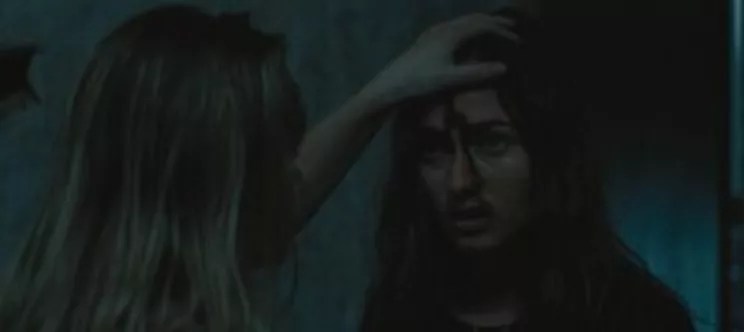
“Room 203” is not the first “haunted room” thriller.
This Japanese game company-produced adaptation of a Nanami Kamon novel isn’t set in a hotel as in “Room 237” in “The Shining,” or “1408” in the adaptation of a Stephen King story that starred John Cusack. In North America, we refer to rooms in apartment buildings as “Apartment 203,” but no matter.
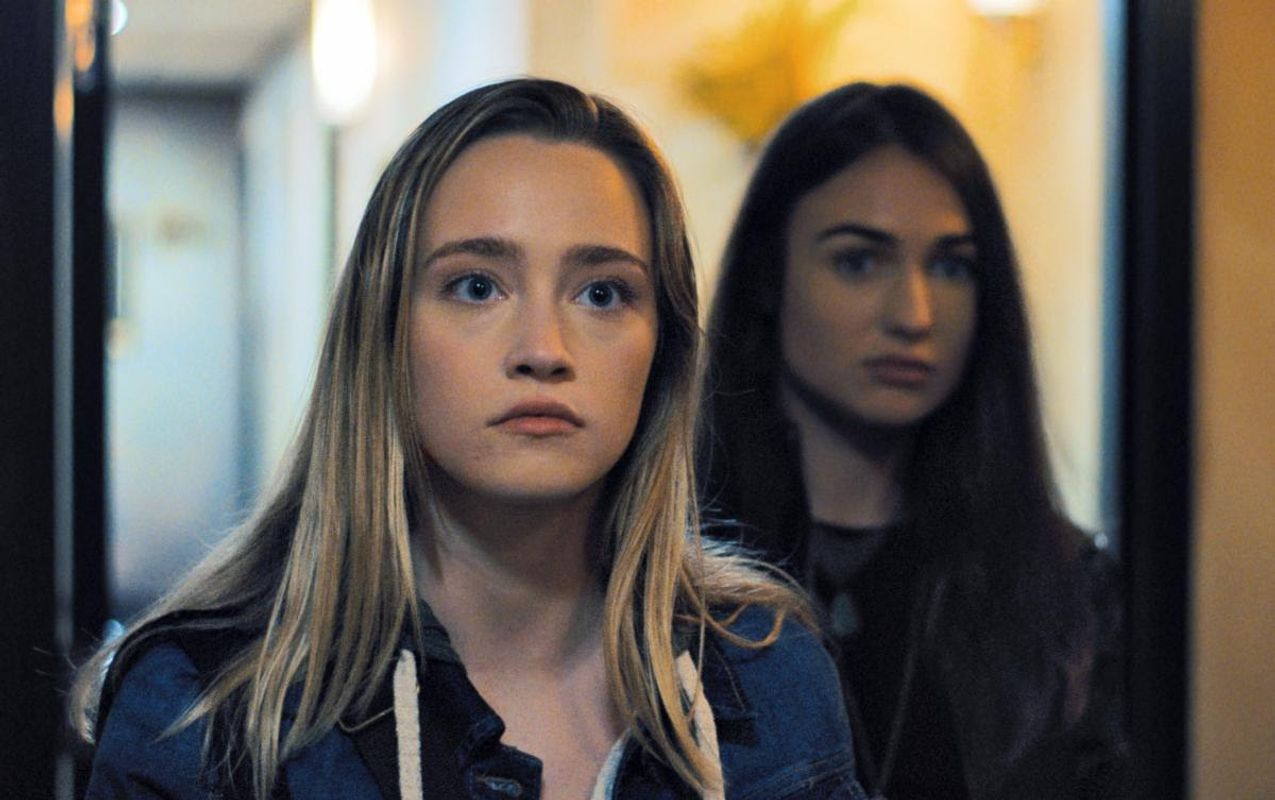
A couple of college-age friends move into this historic mid-rise with one particular room that has a bloody history to it. Not that coed journalism student Kimmy (Francesca Xuereb) or the “bad influence” (her annoyed parents’ words) aspiring actress and big-time partier Izzy (Viktoria Vinkyarska) are told that.
No, the creepy landlord Ronan (Scott Gremillion) leaves that out. As we’ve already seen blood spilled from the never-mendable gaping hole in the wall in the film’s opening, that seems like a deal breaker.
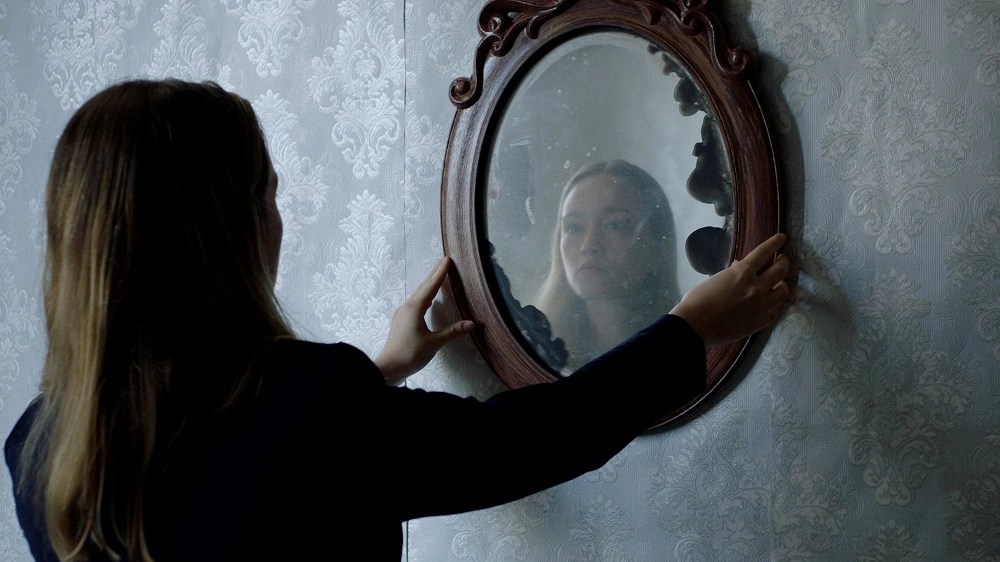
New tenants move in, try to hang a picture, the hole reopens and the most curious reach in to see what’s inside. The fools! Horror follows.
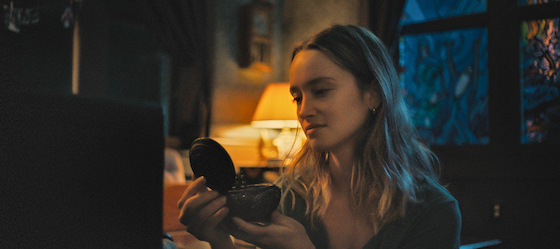
There’s this strange necklace tucked into the wall and a haunting music box in the “pre war” furnished apartment. Once those totems are out in the open, weird things start to happen — nightmares, noises, and in Izzy’s case, a bar pick-up who dies and disappears while she’s sleeping a buzz off.
Being a journalist-to-be, Izzy is encouraged by a classmate (Eric Weigand) to “dig” and “investigate” the building and room 203 in it. But we’ve already seen the hole, the oddly-menacing stained-glass window, and met the landlord and heard “the basement is OFF limits to the residents.” Something bad happened here, something fated to be repeated over and over again until…rezoning?
Director Ben Jagger (“Corbin Nash”) starts this story off slowly and never really picks things up. The plot isn’t particularly original, inviting or logical. The threats are lethal to those in the roomies’ orbit, but let’s keep the two repeatedly-threatened cute coeds — OK, one isn’t enrolled — alive for the third act.
The “investigation” points straight to a crime and some supernatural mumbo jumbo of the J-horror variety.
The acting isn’t bad, but the characters are “types” and the dramatic/traumatic back story is as generic as everything else here.
There are thrillers that build toward a climax and thrillers that blow the ending after succeeding in creating suspense. “Room 203” never really gets up a head of steam and just sort of peters out in a predictable, anti-climactic finale.
If you don’t check in you won’t have to check out of “Room 203.”

Rating: unrated, bloody violence, sexual situations, alcohol abuse
Cast: Francesca Xuereb, Viktoria Vinyarska, Eric Wiegand and Scott Gremillion
Credits: Directed by Ben Jagger, scripted by Ben Jagger, Nick Richey and John Poliquin, based on a novel by Nanami Kamon. A Vertical release.
Running time: 1:44
Cruz is a famous “critic’s darling” filmmaker readying a new project, Banderas and Oscar Martinez as actors willing to go through some things to be in it.
This looks pretty funny and is coming our way in June, from IFC.
Viggo, Seydoux and K-Stew. June.
A real grabber tease of a trailer, I must say.
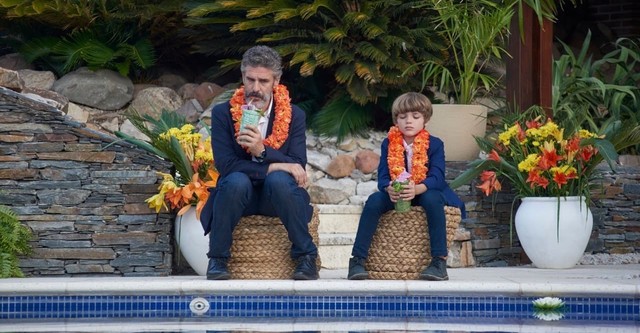
Griego is a Buenos Aires TV producer running his legs off the keep his long-running confrontational reality show, “Hoy se arregla el mundo” on the air.
He’s forever putting out fires, jetting abroad to sell his shows to other South American countries and fending off his station’s boss, the impertinent son of the late owner of the place.
So he’s barely got time for this kid whose custody he shares with the boy’s mother, Silvana. When she asks him to watch Benito for a few days, he can’t recall which school to pick him up from, or even what grade he is.
Griego (Leonardo Sbaraglia) is entirely too self-absorbed and distracted to be a good dad. Silvana (Natalia Oreiro) plans to move with the boy to Madrid for work, and Griego can’t be bothered to look up from checking his phone messages to respond.
“What’s in your chest, Griego?” It’s a fair question, because “a heart” isn’t the obvious answer. Doesn’t he care?
“He’s my son!” “Are you SURE?”
That’s a helluva note to end a dinner conversation with, seeing as how they never married and the guy never really bonded with the kid. But in melodramatic terms, that’s the perfect spot for her to storm out of the restaurant and get run over by a car.
Griego, the producer of a show that stages fights between neighbors over wi-fi and father-and-daughter over her vegetarianism, has a kid he’s neglected on his hands, one he’s indifferent to and so unsure about he takes a DNA test. It’s negative.
“Today We Fix the World,” taking its name from the daffy “faked” show Griego produces, is about not-really-your-father heartlessly breaking that news to a fourth grader, and then teaming up with that kid to try and figure out who his real dad is.
Sentimental and cute, a tad slow and not nearly as amusing as its premise sets us up for, it still plays, a downbeat little comedy with some slapstick, a smattering of showbiz and a lot of heart.
Take the way Griego breaks the news to to Beni (Benjamín Otero). He’s so clueless he says “Would you like to go get a cup of coffee (in Spanish, or dubbed into English)?” Griego warns the kid this is “going to hurt,” like “getting vaccinated.”
“I’m not your father,” he says. “It didn’t hurt,” the kid snaps back.
The child just lost his mother, and his not-my-dad is unloading “You have no idea how many problems I’m dealing with right now” on him.
“Fix the World” follows their quest, picking up clues from Silvana’s cell phones, interrogating her guidance-counselor pal (Charo López) without revealing their secret to her, avoiding the subject with Beni’s well-heeled, high-finance player grandma.
They start visiting suspects “from nine years ago” — the choreographer, the painter, the sleazy psychotherapist, a clown at the famous Republic of Children Argentine amusement park.
That last one is the film’s funniest bit, a peek into the horrific excesses of a gang of clowns, who protect their own from outsiders, be they tourists or guys trying to figure out if one of them fathered a child.
The TV show’s tribulations are a big distraction for Griego and an almost amusing one for the film. He keeps a lawyer, a doctor (who feeds him pills) and even a hypnotist on staff for the various stunts they stage daily on a series that is dying the ratings even as Griego is traveling the country, looking for a man who looks like “his” kid.
Even though we know where this is going to end up, Mariano Vera’s script gives that finale a final poignant twist or two, and director Ariel Winograd (“The Heist of the Century,” “Ten Days Without Mom”) keeps the tone light and sentimental.
Sbaraglia (“Pain and Glory”) walks a deft line between contemptible and worth saving from himself. We buy his character’s emotional journey, from an unwanted burden to a child he wants the best for.
It doesn’t all come together as neatly as it might have, and there are potential laughs and screwball moments left dangling. But Winograd sticks with what he knows, sentiment, and makes this “Fix” stick.

Rating: TV-14, drug abuse jokes, adult situations
Cast: Leonardo Sbaraglia, Benjamín Otero, Charo López, Martín Piroyansky and Natalia Oreiro
Credits: Directed by Ariel Winograd, scripted by Mariano Vera. A Netflix release.
Running time: 1:53

You can’t blame his fans for praying for a new film, premiering secretly at Cannes.
Nobody wants him to bow out with “Inland Empire” as his last big screen credit.

Perhaps America’s greatest annual music festival celebrated its 50th installment a couple of years back, and promptly went on hiatus for two years, thanks to COVID.
The New Orleans Jazz & Heritage Festival came back this year, and hot on its heels comes “Jazz Fest: A New Orleans Story,” a documentary about how the festival came to be, an essay on a city and its musical history built on musical highlights of that 50th anniversary event, and a film that finishes with a bit of its triumphant return in 2022.
Co-directors Ryan Suffern (the recent “How Can You Mend a Broken Heart” Bee Gees doc) and celebrated producer/director Frank Marshall take us onstage with the performers and catch up with scores of the folks who made and continue to make this epic gathering of hundreds of thousands happen, and backstage for this thorough overview of what makes the Jazz & Heritage Festival a singular event.
It’s “the world’s greatest backyard party” set in “the only unique city in America,” featuring a multi-national/multi-cultural musical gumbo on stage, and the culinary delights of a legendary food town — gumbo included — everywhere else at the city’s Fairground Race Course every spring.
It was first proposed during the “Jim Crow” 1960s, founder George Wein recalls, but didn’t come to life until “that changed.” The idea? Feature the music of the city, the people of the city and its food, “and the world will come.”
Damned if the world didn’t.
As one enthusiast declares, “Everybody eats and everybody dances,” and Jazz Fest — featuring jazz, pop, zydeco, World Music, funk, blues, rock, gospel and pop (check out Katy Perry in her winged spacesuit bustier joining a huge Gospel choir for “Oh Happy Day”) hurls them all together for a week of thousands of singers and musicals and tens of thousands of fans.
Exhibit A in the show’s cross-cultural appeal might be Caribbean-influenced country-pop star Jimmy Buffett, “consistently, our biggest draw” longtime director Quint Davis enthuses, bringing huge crowds of older white “yacht rock” Parrotheads into an environment where “passing from stage to stage, you can’t help but be exposed” to unknowns, local legends, African acts and African American Gospel choirs.
Pitbull marvels at the food and audience blend and its connection to his Cuban heritage — “I think all our arteries will get clogged (Jazz Fest) day!” The Marsalis family and other members of New Orleans music royalty take to the stage to pay tribute to their father, Ellis, playing with him one last time, Boyfriend brings her loopy stage show in and Trombone Shorty brings down the house, year after year.

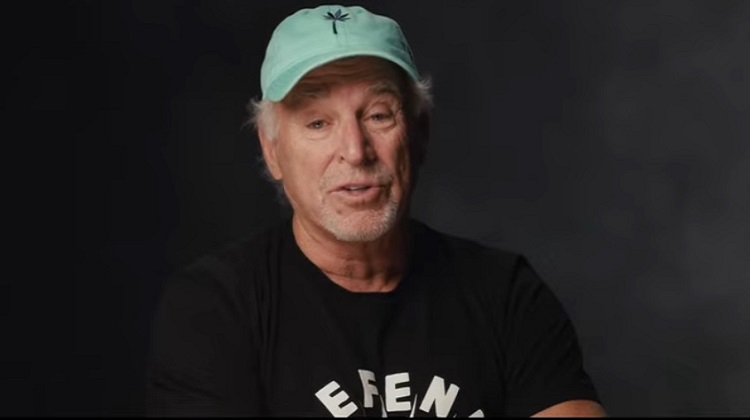

Everything about the event “is still handmade” Davis insists, something that became obvious after Hurricane Katrina almost washed the city away, and again after COVID shut the festival down for two years.
The film captures the essence of an event that “ties the city together,” with Bruce Springsteen showing up among many others after Katrina to re-launch the festival, Rev. Al Green choosing Jazz Fest to return to public (secular) performance and Mr. “Margaritaville” welcoming the world back to New Orleans as the pandemic subsides.
A real music lover’s treat, this film.

Rating: PG-13 for brief language and some suggestive material
Cast: Interviews and performances with Pitbull, Jimmy Buffett, Samantha Fish, Brnaford Marsalis, Trombone Shorty, Al Green, George Wein, Big Freedia, Tarriona “Tank” Ball, The Revivalists, Quint Davis and many others.
Credits: Directed by Frank Marshall and Ryan Suffern. A Sony Pictures Classics release.
Running time: 1:35
Caught this trailer before a showing of something the other night, the latest from the writer-director of “Portrait of a Lady on Fire.”
Lovely. Neon has it, of course.

 Movie Nation