Classic Film Review: Godard, Bardot, Palance and “The Odyssey” — “Contempt” (1963)

Jean-Luc Godard, the most-analyzed, dissected and critiqued auteur of his generation makes his grand statement on the compromises and sell-outs required by salope déesse cinema with “Contempt,” his biggest-ever hit, a movie about making movies.

The critic turned cinematic revolutionary pretty much says it all with his film’s title (“Le mépris) in French). “Contempt” positively swims in Godard’s disdain for artistic compromise in “the movie business,” as well as theoretical maxims about the “reality” of cinema and of film reflecting or perverting life.

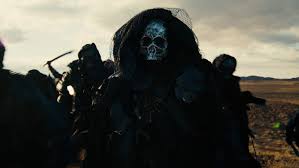
The film boasts the novelty of featuring Fritz Lang as himself, a great German director making an American production of “The Odyssey” in Italy with an Italian crew and a French crime novelist/playwright and screenwriter all in service of an obnoxious, oversexed and hammy Hollywood producer, played by future Oscar winner Jack Palance.

But the reasons for “Contempt’s” success remain as obvious as the film’s bare-bottomed opening.

The scene, a writer (Michel Piccoli) and his wife (Brigitte Bardot) discuss their relationship, post coitus, in their marriage bed. Bardot is nude throughout it. It’s not her only nude scene in the film. Once, we drop in on her sunbathing on the Isle of Capri with a copy of a book on Fritz Lang’s cinema draped across her butt.

Cute.

So that was the film’s obvious “appeal” back then. How does it play, now? More than a little dated and a tad ponderously, I have to say.

“Do you see my behind in the mirror,” Camille coyly teases (in French with English subtitles)? “Do you think I have a pretty bottom?”

What, is he blind?

Writer Paul is besotted to an “I love you completely, tenderly and tragically” degree. Camille is out of his league, out of most every man’s league. “Contempt” is about that rewrite offer on “The Odyssey” and what Paul will do to keep his gorgeous wife happy.

Or at least, that’s how braying, posing producer Jeremy Prokosch (Palance) sees it. Paul, who can’t be that much of an idealist, seeing how he got his start writing pulp crime novels, will take that $10,000 offer.

“You have a very beautiful wife,” Prokosch oozes. “You need the money.”

They watch the pretentious dailies legendary director Lang has filmed, with the producer, Lang, Paul, Camille and the Italian personal assistant/translator (Giorgia Moll) who communicates between the American, the German, the French folk and the Italian crew. Who will Paul listen to as he sets out to rethink this screenplay that Lang is turning into montages of Greek statues, art and “culture?”

It’s the LA hustler who just sold the troubled Italian studio backlot, the one who snaps “Whenever I hear the word ‘culture’ I break out my checkbook.”

Prokosh wants more sex, more Odysseus/Ulyssees temptations, more sexual heat in the wandering soldier and sailor’s return to his beloved Penelope. But is that the point of “The Odyssey,” that homecoming? Maybe generations of readers have got it wrong, Prokosch suggests in his most gauche moment. Maybe the guy was in no hurry to “hurry” home from the Trojan War.

Lang is dismayed. Paul hesitates, and then runs with it as the oily producer throws other ideas out there.

“I found a book of Roman paintings that I think would help with ‘The Odyssey.'”

“‘The Odyssey’ is Greek,” Paul protests.

When he opens the book later, Paul realizes it’s of ancient Roman porn. And when he tries to praise Lang’s already-filmed footage, shot in Cinemascope, the old man draws his line in the sand.

“It wasn’t made for man,” the director of “M,” “Metropolis,” “The Big Heat” and “Rancho Notorious” mutters of the popular widescreen filming process. “It was made for snakes and funerals!”

Camille isn’t just a bystander in all this. We see her growing “contempt” for the man she married, even if this sell-out means they’ll be able to pay off their posh, sleek mid-century-modern apartment.

As Paul tries to please and appease her — she spies him swatting the bottom of Francesca the personal assistant — and Camille fends off the advances of the predatory producer, can this marriage be saved? Even by a long, tortured afternoon-long debate back in their apartment about whether they should leave for Capri with the producer to watch the filming, and rewrite that script to his tastes, or bail?

Continue reading
Posted in Reviews, previews, profiles and movie news | Tagged , , , , , , , | Comments Off on Classic Film Review: Godard, Bardot, Palance and “The Odyssey” — “Contempt” (1963)

Movie Review: Lost in Dementia and Memory Care, seeking that “Familiar Touch”

“Familiar Touch” is a simple, documdrama-real film of frank honesty and sensitivity about dementia and adjusting to life in Memory Care.

If you’re fortunate enough to not know that label, describing the wing or floor of any nursing home or assisted living facility dedicated to those with Alzheimer’s or suffering from other forms of dementia, Sarah Friedland’s quiet drama about one patient, the son who checks her in and the staff and fellow patients this grandmother must adjust to in her more sentient moments is a 90 minute crash course.

Speaking from experience, it’s idealized, with a wonderfully indulgent, competent and caring staff set in what employees label a “geriatric country club” in Pasadena, California. Our patient rarely seems to test their patience as she demands a menu from a dining room that isn’t a restuarant, huffs about unpacking herself and even clocks in at the kitchen, lost in memories of her own line-cook-in-a-diner days.

The screamers, the tantrum-tossers, the walking, dead-eyed catatonics who wander into others’ rooms and crawl into their beds and those who simply doze away their last years away in front of a TV don’t make an appearance in Bella Vista.

But Friedland and her star, Kathleen Chalfat (from “Old,” and TV’s “The Affair”) create an otherwise realistic and touching portrait of what one woman’s arrival in life’s pentultimate destination can be like.

Ruth is a creature of habit and routine, living alone in the home she’s had for many years, caring for herself, puttering around her kitchen prepping meals.

But we see, in a dialogue-free eight minute prologue, the signs. She waits for her toast, and when it pops out, she stores the slice into a drying dishrack beside the sink. She slides clothes back and forth in her closet, either looking for a dress that’s no longer there, or forgetting what she was looking for in the first place, and why.

That man (veteran cartoon voice H. Jon Benjamin of “Bob’s Burgers”) who shows up for lunch? She acts as if he’s a gentleman caller, coyly smiling, serving him lunch, asking him what he does for a living.

Steve is an architect.

Oh! “My father builds houses. He’s a carpenter. Maybe you’ll meet him someday.”

“Are you seeing anybody special?”

Yes. He has a wife and child. But that’s OK, she says.

“I’m married, too.”

But no, he can’t be her son. “I never wanted children.”

Ruth is able to carry on a conversation. Steve is patient but sad, barely bothering to correct her mistakes any more.

There’s no point in that, or explaining that today is moving day. He just escorts her into the car, fetches a packed bag (she acts as if she assumes they’re going away for a weekend together). When they arrive, he checks her in, reassures her that “We took the tour” and “This was the place you chose.” And then he leaves.

Ruth’s reaction to this new “Memory Lane” living situation can be snappish, profane and imperious, confused or even resigned. Chalfant’s performance is a virtuoso piece of screen understatement.

“I’m not one of those elderly people you need to watch constantly.

Some try to befriend her. Others confuse her for old friends. She lapses into childhood reveries in the pool, or workplace routine in a kitchen where the staff lets her prep the day’s fruit salad as they wait for a caregiver to come fetch her.

Visits from family are few and far between. That paliative “Familiar Touch” is hard to come by.

Some of what happens as Ruth connects the ever-patient nurse Vanessa (Carolyn Michelle) and Dr. Brian (Andy McQueen) can seem contrived and melodramatic. Sure, memory care patients “escape” every now and then. Most don’t do it in the middle of a “speed dating night” at the home.

Say what now? Oh. California.

If you’re old enough to have some experience with loved ones facing this sort of caregiving, you’ll recognize and empathize with Ruth’s plight, the staff’s and even Steve’s. Although it may be hard to suppress the urge to snap, “Sonny, get your daughter and go visit your mother.”

And if this is an alien world to you, just thank your lucky stars. Chances are, you’ll get your initiation soon enough.

Rating: unrated, profanity

Cast: Kathleen Chalfat, Carolynn Michelle, Andy McQueen and H. Jon Benjamin

Credits: Scripted and directed by Sarah Friedland. A Music Box Films release.

Running time: 1:30

Posted in Reviews, previews, profiles and movie news | Tagged , , , , , | Comments Off on Movie Review: Lost in Dementia and Memory Care, seeking that “Familiar Touch”

Netflixable? Swedish Law Student attempts “An Honest Life” among Anarchists

Young Simon learns the Latin phrase “Ex Liga Libertas,” “from the law comes freedom,” on his first day at law school in Lund, Sweden.

But hanging out with anarchists, listening to their “always be drunk” Baudelaire rules for living and immersed in their love for Iggy Pop’s “The Passenger” changes his attitude.

Maybe the law isn’t about “freedom,” after all.

And “Nine semesters to learn the rules, a lifetime to apply them” doesn’t sound like much of a future.

“An Honest Life” is a Swedish dip into the extreme politics some sample when they’re young. For most, it’s a passing fad like Ayn Rand, libertarianism, manga and heavy metal. But to some, living by your wits, your “opinion and actio must be the same” idealism and your ability to rationalize every crime you commit as against “the system” has a lasting appeal.

Just so long as you don’t mind a life on the lam.

“Honest” is a slow-footed thriller about anarchic crime, anarchist “honey trap” recruiting, finding a “story worth telling” and maybe standing up for yourself and growing up in the process.

Simon (Simon Lööf), an aspiring writer who “settled” for law school, voice-over narrates his anti-heroic journey. He voice-over narrates his interior life. And as is the case with many a novel-turned-film voice-over narrated to death, he voice-over narrates the obvious.

“I’ve always been the best in my class,” he muses. “But here, everyone is the best.”

His life changes when he stumbles into a student nation protest that turns into a riot. He warns that masked, hooded anarchist spray painting “They have ships, we have waves” on a wall that a cop is charging up on her. He and the cop end up injured. But even masked and hooded, he can recognize the anarchist Max when he spies her in the library.

Simon is courted and perfunctorily recruited and added to Max’s anarchist cell. We know this because the film’s opening scene has him lured into a jewelry store and tricked into participating in a robbery.

“This is your test,” Max’s voice on the cell phone she left behind on the watch counter tells him.

The movie that precedes that robbery and the one that follows it are two halves of a fairly pedestrian affair — a naive kid lured by a confident, sexy woman into a world his circumstances dictate that he might be interested in, even if skinny dipping, cliff-diving and sex with an alluring older woman wasn’t part of the deal.

Simon rents a room in a townhouse of the super rich, rooming with insufferable privileged posh boys who treat him like a servant. “I want what they have.”

His disillusionment with the law begins with “boredom,” and grows when he sees how into it his myopic classmates are about it. His recruitment seems complete when he meets and hears out the old academic (Peter Andersson of “The Girl with the Dragon Tattoo” films) who is a sort of godfather to these anarchists — propped up by the sales of their stolen property, tolerated for his aged idealistic agitprop.

“They’re predators,” he warns Simon. To little avail.

Simon is destined to find out how true that warning is as he is pulled in over his head by ruthless idealogues who have curdled into hardened criminals.

Rios makes a generically beguiling temptress, and Lööf adds little new to the law student somewhat undone by all he’s exposed to narrative in this “Paper Chase” meets “The East” mashup.

Mikael Marcimain’s direction of the action beats is never more than passably exciting. And an honest take on “An Honest Life” might be that everything between those robberies, riots and burglaries just reminds you that there aren’t enough robberies, riots and burglaries to keep one awake through all that tedious voice-over narration.

Rating: TV-MA, violence, drug abuse, alcohol abuse, sex, profanity

Cast: Simon Lööf, Nora Rios, Peter Andersson and Nathalie Merchant.

Credits: Directed by Mikael Marcimain, scripted by Linn Gottfridsson, based on a novel by Joakim Zander. A Netflix release.

Running time: 2:02

Posted in Reviews, previews, profiles and movie news | Comments Off on Netflixable? Swedish Law Student attempts “An Honest Life” among Anarchists

Movie Preview: Jamie Lee and Woody and Emma Mackey in James L. Brooks’ “Ella McCay

Brit Emma Mackey of “Barbie” and “Death on the Nile” has the title role, a 34 year old governor with family issues. Kumail Nanjiani, Albert Brooks, Jamie Lee Curtis and Woody Harrelson flesh out an all-star cast. Julie Kavner narrates, completing the Brooks/Fleetwood Mac/early “Simpsons” nostalgia link (his salad days were the ’80s and ’90s).

Let’s be blunt. “As Good As It Gets” was a long time ago, and Brooks hasn’t produced a winner since — 28 years.

Dec. 12, maybe his luck will change.

Posted in Reviews, previews, profiles and movie news | Comments Off on Movie Preview: Jamie Lee and Woody and Emma Mackey in James L. Brooks’ “Ella McCay

Movie Preview: Denzel and Spike do Kurosawa –“Highest 2 Lowest”

Jeffrey Wright, Aubrey Joseph, Ilfenesh Hadera, A$AP Rocky, Wendell Pierce, Rick Fox and Ice Spice also star in Spike Lee’s version of Akira Kurosawa’s “High and Low,” the third take on that 1963 ransom script, this one set in the down and dirty music biz.

A24 is sending this out into theaters in the dog days (low BO expectations) of mid to late August (Aug. 15).

Posted in Reviews, previews, profiles and movie news | Comments Off on Movie Preview: Denzel and Spike do Kurosawa –“Highest 2 Lowest”

Movie Review: A Father seeks Justice and Answers about his Murdered Child — “Barron’s Cove”

Screenwriter Evan Ari Kelman wrote a script — “Barron’s Cove” — that made “The Black List,” a survey of studio folks who vote on the “most liked” unproduced scripts they’ve read in a given year. In eventually making the sale of that script, Kelman angled to get himself a directing credit with this bleak tale of murder, corruption and a flawed and dangerous man’s hunt for justice for his murdered ten year old.

But that old maxim about lawyers who represent themselves in court springs to mind in this overwrought, cliched and melodramatic thriller that, if nothing else, makes you question the purpose of The Black List, when these are often scripts the surveyed execs’ studios took a pass on. For a reason.

“Bleak” is this picture’s byword, a tale that starts with three little boys, one tied to railroad tracks with a train coming. “Bleak” are the hopes for justice, when a political dynasty, utterly compromised police, construction racketeers and a raging/grieving father are involved.

But any promise the premise has, with its “Never trust the motives of politicians who ‘adopt’ boys” messaging and “Wow, they went there?” violence — against children, no less — is undercut by melodramatics, over-the-top performances, cliched characters and a script that maybe needed a fresh set of eyes directing it, not the fellow who was married to his words.

Garrett Hedlund hits spittle-spewing rage and rarely lets up as Caleb, a father who works as an “inspector” and enforcer for a construction supplies racket run by his mobster Uncle Benjy, naturally played with the usual Fu Manchu’d gusto by veteran B-movie heavy Stephen Lang.

Benjy makes Caleb late for a pickup for his weekend with his son. And that’s how young Barron ended up on those railroad tracks, in pieces.

Naturally, Caleb’s ex (Brittany Snow) blames him when they have to ID what’s left of the body. Naturally, she came out as a lesbian after they split.

The cops rush to call the death a suicide. Because one of the boys with Barron was the sinister blond moppet Ethan (Christian Convery), the adopted son of an unmarried local politico (Hamish Linklater) with eyes on continuing the family dynasty at the state level.

Caleb’s two-fisted, crowbar-assisted personal “investigation” ruffles many a feather. He won’t wait for his “connections inside” uncle to give him answers. Before we know it, he’s stormed into a school and run across tables in a crowded cafeteria to grab his suspect and make off with him.

Naturally, Caleb’s got Black friends who help him out. No, the first doesn’t know why he’s borrowing all these tools — blowtorch, ax — up at Barron’s Cove, where Caleb has the kid stashed. Naturally, the second helper can do field surgery on gunshot wounds when necessary.

Whatever the qualities of the script, a fresh set of eyes might have spared us all the “naturally” unsurprising and unlikely coincidences and cliches this narrative is built on.

Naturally, the kid is a self-assured punk — at 10 — with the wherewithal to bark “You think you’re scaring me?” when a blowtorch is lit to get answers out of him. The first time Caleb confronts him, the “monster” stuck out his tongue at him. Sure.

Naturally, the feigning-concern, self-absorbed politician hisses to the new detective on the force (Raúl Castillo), “Swear to me on your baby boy’s life” that he’ll “save” kidnapped Ethan. Naturally, the unconvincing adoptive father storms off before getting that promise.

Hedlund hits a few touching notes, in between the rages and the fights he must endure as cops and mobsters come for him and the boy.

“Anything I had to lose, I already lost,” is his explanation for his actions.

And there’s topicality in all this — the institutions we’ve lost faith in, the despicable things we’ve learned politicians are capable of, and get away with thanks to protect-the-powerful policing. If the cops are dirty enough, you can plant bombs in a cabin and they won’t even look for surviving components or evidence of that. Apparently.

But Kelman’s direction of his script highlights its more arch or even ludicrous/risible elements. The pacing is too sedate to give the narrative urgency and race past the clunkier moments. And the performances aren’t any more subtle than the sometimes absurd action beats.

Not every script that makes The Black List gets produced, and not every one produced shows the same promise those execs might have seen in the movie on the printed page.

Put “Barron’s Cove” in the column of a Black List miss, a script most passed on for reasons all-too-evident in the finished film, just not to the screenwriter who directed it.

Rating: R, graphic violence

Cast: Garrett Hedlund, Hamish Linklater, Christian Convery, Stephen Lang and Brittany Snow.

Credits: Scripted and directed by Evan Ari Kelman. A Well Go USA release.

Running time: 1:56

Posted in Reviews, previews, profiles and movie news | Tagged , , , , , , | Comments Off on Movie Review: A Father seeks Justice and Answers about his Murdered Child — “Barron’s Cove”

Documentary Review: “Sunday Best: The Untold Story of Ed Sullivan” and how a TV host Changed America

He wasn’t a natural “performer.”

Ed Sullivan had a face made for radio and voice best appreciated in print, where he’d gained fame as a Broadway columnist and sportswriter. Stiff, later somewhat stooped, with odd vocal cadences and a fear of the camera even a child could spot, he couldn’t have been on anybody’s short list of “Let’s put him on this brand new medium, TV, and make him a star.”

But CBS did, back when CBS had guts.

And giving one of the shrewdest judges of talent and entertainment value of his day a Sunday night showcase proved to be historic. Because with 1948’s “Toast of the Town,” which soon morphed into the cultural institution known as “The Ed Sullivan Show,” Sullivan introduced America to itself through entertainers — filling his stage and our tiny screens at home with Broadway’s best, vaudeville greats, jazz legends and pop and rock’n roll legends in the making.

And as the new documentary “Sunday Best: The Untold Story of Ed Sullivan” makes crystal clear, Sullivan didn’t care what race these performers were. At a time when segregation ruled the South and racial tolerance wasn’t widespread in the rest of America, Sullivan booked, flattered, chatted-up and introduced white America to the wellspring of talent it was missing out on. He lauded Black sports figures, praised Black singers, patted his congratulations on backs that much of America knew nothing about or would ever consider listening to, much less touching. He held hands with Black child performers and hugged and joked around with Black singing stars and longtime Black friends in jazz and s

Threats came in, sponsors got nervous and CBS — already shivering in its boots over Edward R. Murrow’s war against McCarthyism — was given gutcheck after gutcheck by the pugnacious, principled, Harlem-raised Irishman that generations of impersonators would mock and history would largely pass over.

Sullivan’s show — broadcast on Sunday nights continuously from 1948-71 — has long been syndicated in clip show packages. Those half-hour doses of a one hour program that ran for 1068 episodes can still give viewers whiplash.

Jugglers and acrobats, singers and dancers, Broadway actors performing soliloquies, magicians and puppets “for the little ones,” comics and comic duos, Mahalia Jackson to The Rolling Stones, The Doors to Dionne Warwick would pass by in a blur, all of them, as “Sunday Best” reminds us, scouted, booked and showcased by the producer-star-impresario who was our host for the evening.

The eye-opening final film of the late documentarian Sacha Jenkins (“Louis Armstrong: Black and Blue”) focuses on the man behind that TV presence, “The Great Stone Face of 1949,” an underdog and outsider whose idea of “Americanism” included African Americans.

Continue reading
Posted in Reviews, previews, profiles and movie news | Tagged , , , , , , | 2 Comments

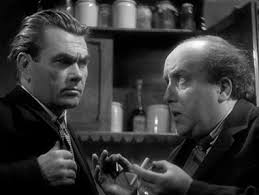
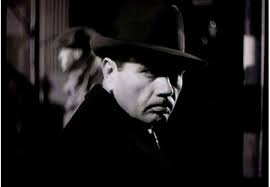
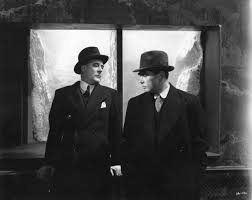
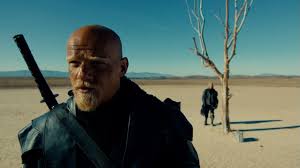
Movie Review: Hedge your bets, “Kill the Jockey”

The Argentine actor Nahuel Pérez Biscayart gives off strong Roberto Benigni energy in the surreal, or at least wildly eccentric “Kill the Jockey.”

His haircut and slight jockey’s build makes the physical resemblance land, even if the character has relatively few words and “Life is Beautiful” star Benigni wears manic Italian chatterbox as his brand. In sunglass goggles on the track or plunging into a sleek but hyperactive dance duet with Abril (Úrsula Corberó), his fellow jockey and the woman carrying his baby, Biscayart makes his character Remo mysterious and cracked and self-destructive for reasons (somewhat) easily guessed in this new film from Luis Ortega, best-known for “El Angel.”

Remo and Abril both ride for “The King,” the rich, horse-obsessed mobster Sirena (Daniel Giménez Cacho). But when we meet them, the mercurial Remo is spiraling towards rock bottom. He drinks. He barely sobers up for races. And that sobering-up lasts just long enough to snort some horse tranquilizer in the track vet’s office before mounting up.

He takes an ass-over-head tumble straight out of the gate the first time we see him ride. Abril is the rising star, a winner. Remo still gets the best rides, such as that new Japanese stallion Sirena just bought. But we wonder if the seething mobster is just hanging onto the jacked-up jockey for old time’s sake.

“You have to ride sober,” Remo is told (in Spanish with English subtitles). “Behave...”

“Ride them yourself, King,” is dazed, sunglassed Remo’s first line.

He’s in love, and maybe he wants to see his son’s birth. But Abril isn’t sure of this pregnancy. Her career is taking off. And another fetching female jockey (Mariana Di Girólamo) is making eyes at her and swatting her bottom.

How can Remo get them back to where they were when they fell in love?

“Die and be born again.”

For those keeping notes, or reading my review because I take the notes for you, that’s the tell, the key to the screwball odyssey that follows.

Because Remo hears “If you don’t win, they’ll kill you,” and still rides the new Japanese horse — apltly named “Mishima” — right off the track and into traffic, because some Japanese races are run counterclockwise. It’s a good thing Remo steals a woman’s clothes and escapes from the hospital where his prognosis was “not compatible with life,” and in a fur coat with his head in a Joan Crawford-high bouffant bandage, he passes.

Hitmen (Luis Ziembrowski, Daniel Fanego) hunt for him. Children repeatedly mistake him for their mother, as does their drunken father. Old trainer pal Enrique (Osmar Núñez) can only give him so much help. But that help consists of procuring a “not very good” pistol.

Director and co-writer Ortega follows Remo’s odyssey and Abril’s temptation with a tale of drag jokes, shootouts, pregnancy and abortion and off-the-books horse races against dogs, motorbikes and, of course, a vintage Chevy Nova.

Random scenes see Abril comforted (not really) by a pregnant young woman with Down Syndrome at the OB-GYN she may be visiting for a baby health update, or an abortion.

Sirena has a baby of his own, a sumo-sized boy who is seven years old, and who evolves into a black baby later.

“They all get like that with age.”

It’s not wholly coherent. But anyone in the mood for a quirky, absurdist farce with full frontal nudity, gunplay and a lost hero trying to fulfill his pregnant girlfriend’s deal-breaker request should check out “Kill the Jockey” (simply “El Jockey” in Argentina). Because surreal and screwy film fare like this is rare, with or without subtitles.

Rating: unrated, violence, graphic nudity, scatological humor

Cast: Nahuel Pérez Biscayart, Úrsula Corberó, Luis Ziembrowski, Daniel Fanego, Osmar Núñez, Mariana Di Girólamo and Daniel Giménez Cacho

Credits: Directed by Luis Ortega, scripted by Luis Ortega, Rodolfo Palacias and Fabian Casas. A Music Box Films release.

Running time: 1:36

Posted in Reviews, previews, profiles and movie news | Tagged , , , , , | Comments Off on Movie Review: Hedge your bets, “Kill the Jockey”

Movie Preview: Rami Malek, Michael Shannon and John Slattery judge Russell Crowe at “Nuremburg”

Landing the now-burly Russell Crowe to play Nazi leader, art plunderer and Luftwaffe blunderer Hermann Goering s quite a coup.

He’s joined by fellow Oscar winner Rami Malek, Michael Shannon, “Mad Men” co-star John Slattery and Lotte Verbeek, Richard E. Grant, Leo Woodall, Colin Hanks and Wrenn Schmidt are also in the cast in this movie about Nazis getting what’s coming to them.

Awards bait coming out November 7, “awards season.”

Producer and writer turned director James Vanderbilt did the underwhelming Dan Rather vs. Bush drama “Truth.” So keep your fingers crossed, but lower your expectations.

Posted in Reviews, previews, profiles and movie news | Comments Off on Movie Preview: Rami Malek, Michael Shannon and John Slattery judge Russell Crowe at “Nuremburg”

Movie Preview: An immigrant’s unlikely romance with a yokel new to New York — “Preparation for the Next Life”

Romance with a dash of “You’ll be deported” thrown in.

Sebiye Behtiyar stars, with Fred Hechinger as the purehearted hick-from-the-sticks with his own secrets in a film from the director of the Oscar-nominated doc “Minding the Gap,” Bing Liu.

Sept 5, this MGM/Orion pic goes into limited release.

Posted in Reviews, previews, profiles and movie news | Comments Off on Movie Preview: An immigrant’s unlikely romance with a yokel new to New York — “Preparation for the Next Life”