Movie Preview: Sydney Park, Hero Fiennes Tiffin, Teen love, “First Love”

Diane Kruger and Jeffrey Donovan play sympathetic parents, but people with their own problems, in this June 17 release. Love the tone. Serious. Romantic. Teenage longing confronted by harsh leaving-for-college reality.

Posted in Reviews, previews, profiles and movie news | Comments Off on Movie Preview: Sydney Park, Hero Fiennes Tiffin, Teen love, “First Love”

Next screening? “Chip’n Dale’s Rescue Rangers Movie”

Full disclosure, when I think of Chip and Dale I usually wish they were as funny as the Looney Goofy Gophers Mac and Tosh over at Warner Brothers.

I don’t know when this “Roger Rabbit ish” (live action and all sorts of different forms of animation and famous animated characters) mashup toon is due out. Next week I think. The trailer doesn’t say. But Disney pitched it, so let’s see if they’re as funny as the two Brit accented “confirmed bachelors” (maybe gay) Looney Tunes.

Posted in Reviews, previews, profiles and movie news | Comments Off on Next screening? “Chip’n Dale’s Rescue Rangers Movie”

Movie Preview: Gloria Estefan’s a mother, but Andy Garcia is this “Father of the Bride”

Perfectly good comedy to update every generation. This is a Miami set version with a lot of modern touches — the parents of the Bride are in couples counseling — and there’s a laugh or two on the trailer.

Probably wouldn’t have done much in theaters.

HBO Max has it. June 16.

Posted in Reviews, previews, profiles and movie news | Comments Off on Movie Preview: Gloria Estefan’s a mother, but Andy Garcia is this “Father of the Bride”

Netflixable? Laughs are hard to find in this Spanish “Perfect Family (La familia perfecta)”

The set-up has “can’t miss” built into it.

A “posh,” educated and upper class family’s son falls for a brassy, sexy and gauche exercise instructor. His buttoned-down, everything-just-so Mom finds herself forced to deal with unsophisticated and less-than-hygienic potential in-laws as the foul-mouthed bride-to-be palms off planning the wedding, in her family’s backward home village, onto uptight Lucia.

But dios mio, how “The Perfect Family” manages to barely wring a single laugh out of this would fill a “How NOT to Make a Screen Comedy” textbook.

Let’s start with the most obvious. Lucia, played by Belén Rueda (“The Orphanage,” “Sara’s Notebook”), is scripted into making the least interesting journey over the blandest character arc you can imagine.

The film’s first scene has her son (Gonzalo Ramos) nervously rehearsing how he’s going to break the news to a demanding “perfectionist” woman who will never approve of the slovenly, tattooed tart he’s taken up with.

And what does Lucia do when she gets this news? Nothing. She holds her tongue as Sara (Carolina Yuste) gives her half a dozen clues that this isn’t an appropriate match, and lets Sara steamroll her into doing all the wedding planning for them.

She maintains good manners in the face of Sara’s bus driver Mom’s (Pepa Aniorte), crude and coarse manners and Sara’s dad’s Miguel (Jose Coronado) increasingly inappropriate attentions, something her older, distracted-astronomer husband Ernesto (Gonzalo de Castro) wouldn’t notice, even if he went along on the scouting trip to wintry Soria, the ancestral home of Sara’s family.

You think, “Well, she’s figuring out a way to sabotage this wedding” encouraging opinionated free spirit Sara to announce her disinterest in the Catholic church to the priest (Jesús Vidal), whom Lucia hopes would see that as a deal breaker.

Nope. That whole train of comedy never leaves the station.

All sorts of possibilities pop up for pulling the seemingly mismatched but under-scripted couple apart. But director Arantxa Echevarría and screenwriter Olatz Arroyo aren’t interested in the youngsters, either in the classic rom-com “obstacle” of mom who wants to break them up or in the least. We don’t see or feel what “connects” them, save for a “she’s so free” endorsement from son Pablo, and hearing their noisy sex in the next room.

What the filmmakers pursue instead are Miguel’s lecherous, boundaries-ignoring come-ons to the mother of the man his daughter expects to marry. He’s in love!

I guess that’s funny in principle, sort of the ultimate transgression. But the execution of that twist, for laughs, is as funny as a funeral. Rueda is supposed to journey from prissy and resistant to intrigued and tempted, and nothing in her performance makes that click. As played by Coronado and written by Arroyo, Miguel is more relentless than charming.

How an educated, refined woman sees anything to succumb to about this creep is beyond me. He’s leaning in, touching hands in front of the priest in the middle of the wedding ceremony.

Note to director Echevarria — a SLAP would get a laugh and be wholly logical in that moment. The audience, at least the one on this side of the Atlantic, is almost begging for it. The possibilities following a public slap in the middle of a couple exchanging vows are chaotic and rich. The repercussions of what happens instead are like everything else about “The Perfect Family” — dull, disastrously imperfect.

Whatever comic possibilities the picture had with its initial set-up, it devolves into an even LESS funny “It’s My Turn” tale of Lucia’s personal growth. So this woman her son was afraid of disappointing is such a lifelong pushover that her “everything must be perfect” life was achieved, how exactly?

Making your leading lady passive when she’s supposedly “My way or the highway” and giving your leading character so little agency undercuts the entire premise of the movie and what’s supposed to be comic about it. Lucia’s so controlling she runs everything about Ernesto’s life, even tying the absent-minded professor’s ties for him. And she’s just letting all this stuff go wrong around her without saying a word?

The dialogue (in Spanish or dubbed into English) is tortilla flat, with only Sara’s unfiltered sweat-suited dolt of a brother (Lalo Tenorio) having anything funny to say or to play.

We treated to a few noisy big family argument moments, a bus driver snaps in traffic gag and sad “get everyone back together and headed towards normal” Christmas dinner, all of which land with a thud.

“The Perfect Family” is so tone-deaf and wrong-footed that you’d feel annoyed at the filmmakers, if you weren’t already busy pitying them.

Rating: TV-MA, sexual situations, profanity

Cast: Belén Rueda, Jose Coronado, Gonzalo de Castro, Pepa Aniorte, Carolina Yuste, Gonzalo Ramos, Lalo Tenorio and Jesús Vidal

Credits: Directed by Arantxa Echevarría, scripted by Olatz Arroyo. A Netflix release.

Running time: 1:46

Posted in Reviews, previews, profiles and movie news | 3 Comments

Movie Review: Shouting at the screen won’t help “The Last Victim,” or the hack who made it

In the early going of “The Last Victim,” I figured my review was going to focus on the one thing every thriller that doesn’t work has in common — the lack of urgency.

But dawdling when it should be quick-marching through its murderous pursuit tale is going to have to take a back seat to other complaints — the idiocy of the characters, the utter hackwork of the obstacles/solutions in the clumsy screenplay, the pretentious voice-over narration, the absurd post-climax anti ANTI climax.

It’s a terrible movie with some pretty good actors, an arresting opening and a few striking images lost in what is otherwise 111 minutes of shouting-at-the-screen crap.

Thinking of putting money into “Ruthless,” the announced “next film” of director (he also gets a “story” credit) Naveen A. Chathapuram? Here’s a suggestion. Invite him over to show you this film. Make him sit through its excruciating storytelling stumbles and slow-walk-off-a-cliff pacing with you before asking the question that every film financier should pose when they’ve seen the answer to their pitch in the filmmaker’s previous work.

“You’re kidding, right?”

One can almost see why Ali Larter, in the title role, and B-movie badasses Ron Perlman and Ralph Ineson might have thought this was worth their trouble. It’s a murderous Southwestern thriller with a “No Country for Old Men” set-up.

A cold-blooded hoodlum (Ineson, who also growls the “Progress marches through things…sometimes, it just rolls over you” narration) settles a score at a remote, New Mexico barbecue joint. Tidying up the bodies and the getaway vehicle in the middle of a nature preserve, they’re spotted by a vacationing couple (Larter and Tahmoh Penikett).

Looks like there’re two new witnesses to add to that “tidying up.”

Perlman plays a narcoleptic sheriff who sits, parked at this or that scenic piece of roadside, drawling into his phone or police radio or insulting his subordinate (Camille Legg) when they’ve got evidence that something pretty horrid has happened on his watch and that there’s a killer or killers on the loose.

The way law enforcement is depicted here is almost a comical commentary on lazy, inept small town policing. Everybody’s barely awake, barely able to summon up the urge to just show up.

A lopped-off finger isn’t the only clue left behind in that barbecue joint. With the owner and his wife missing, blood smears on the floor and others we’ve seen shot, surely Sheriff Lobo and Deputy DoNothing know they have a mass killing on their plates.

The whole movie’s kind of slap-your-forehead stupid like that. Larter’s character, an anthropologist on the run in the mountains of New Mexico in the dead of winter, gets the drop on a guy, takes him out and fails to take anything from his body that might keep her alive — including his guns.

Time and again, we question why this character responds that way to all the mayhem they’ve witnessed, been the victim of, are investigating or are perpetrating.

The sleepy to sluggish to no-big-hurry responses suggest that there are whole sections of New Mexico where Red Bull just isn’t available.

And from the results on the screen, it doesn’t look like the film crew packed their own, either.

Rating: unrated

Cast: Ali Larter, Ralph Ineson, Kyle Schmid, Camille Legg, Tahmoh Penikett and Ron Perlman

Credits: Directed by Naveen A. Chathapuram, scripted by Ashley James Louis. A Decal release.

Running time: 1:51

Posted in Reviews, previews, profiles and movie news | Comments Off on Movie Review: Shouting at the screen won’t help “The Last Victim,” or the hack who made it

Movie Review — “Downton Abbey: A New Era,” a fond farewell?

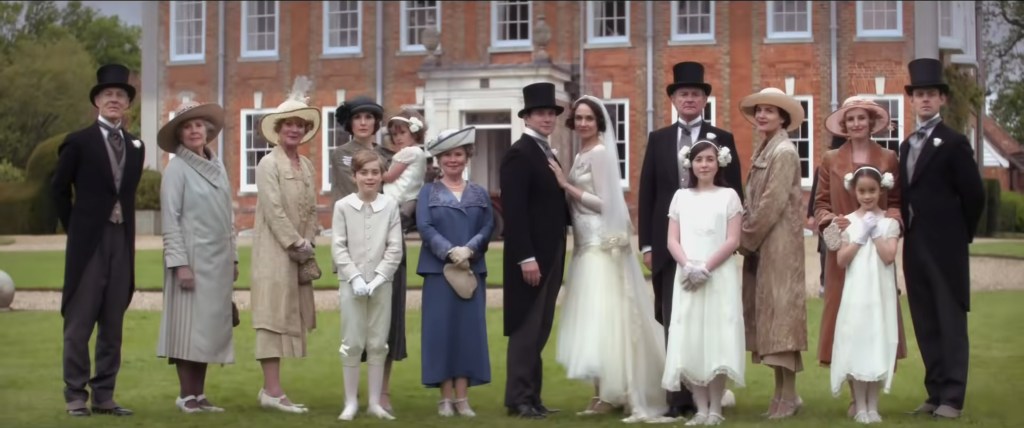
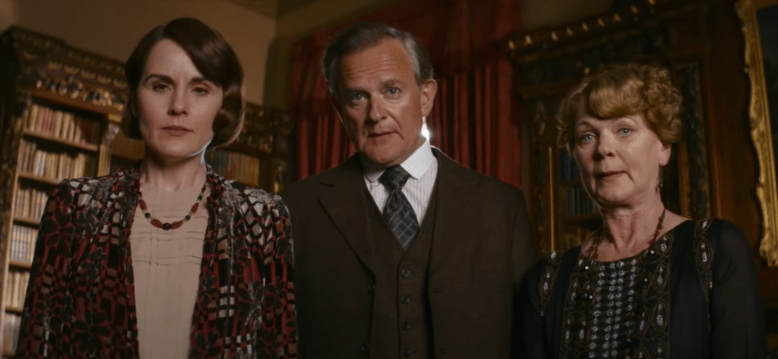
“Downton Abbey: A New Era” has the feeling of a grand curtain call for Britain’s most beloved PBS export. Sunnier and funnier than the previous “Downton” film, it bestows amusing moments and lines on every loyal cast member, enough screen time for each to take a graceful curtsy or bow.

The One Wedding and a Funeral tale does what used to be a sign, in American sitcoms, that they’d run out of ideas. It sends half the cast on a vacation and leaves the other half behind because “They’re making a MOVIE at Downton!”

But the light, jokey tone of series creator Julian Fellowes’ script makes everything seem frothy, even if the title is a tease. Set in the summer of 1928, tastefully avoiding the looming Great Depression, class strife and Britain’s first flirtation with fascism, to say nothing of the Second World War to follow, it doggedly refuses to get to anything truly “new” save for that film production, which comes just as talkies are taking over the moving pictures.

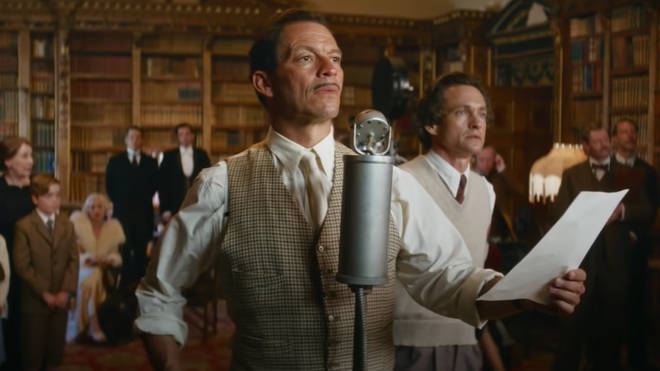
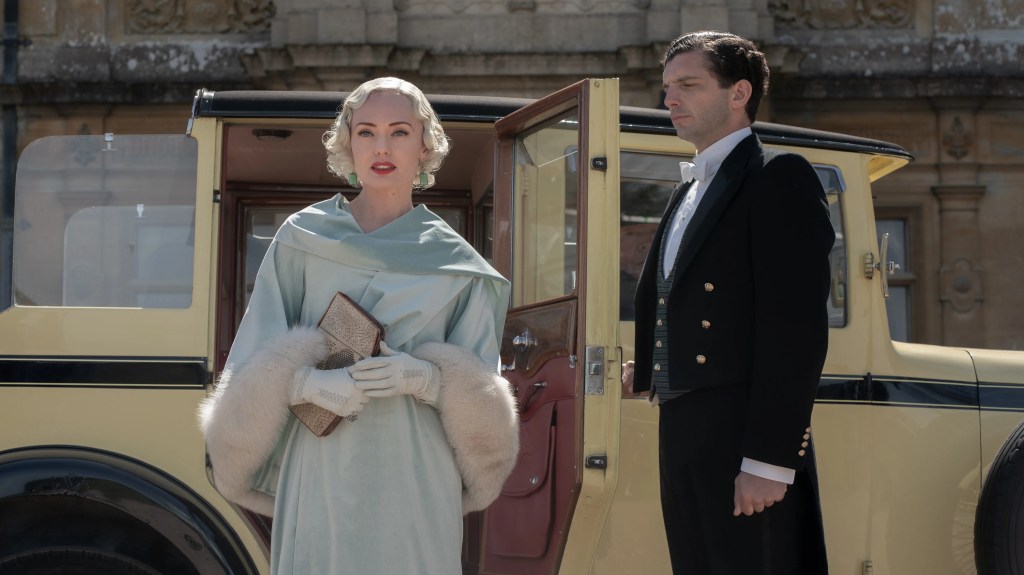
Newcomers Hugh Dancy, as a filmmaker and fresh man-candy for Lady Mary to flirt with, the great Dominic West as a British ex-pat film star who’s made it in Hollywood, and Laura Haddock (“Guardians of the Galaxy,” “Transformers: The Last Night”) playing a silent screen beauty who’s benefited greatly from the fact that audiences haven’t heard her Cockney screech, all class up the place and provide sources of conflict.

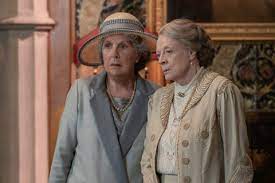
Fellowes’ little homage to “Singing in the Rain” feels absolutely essential here, as he’s rubbed all the edges off every character from the series. It’s hard to remember what catty cat-fighters Maggie Smith and Penelope Wilton once were, what a stuffed-shirt upper class popinjay Hugh Bonneville’s Lord Grantham was, the headstrong, cutthroat maneater Michelle Dockery let us see under Lady Mary’s flapper bob and the back-stabbers, vipers and poseurs who inhabited the upstairs and downstairs of this updating of “Upstairs/Downstairs.”

Only the poseurs remain — smiling, dressing for dinner, addressing each other as “mu-MAH” and “pu-PAH,” and inheriting “a villa in the South of France.”

That would be Lady Grantham’s (Smith) news, that some Frenchman who was smitten by her as the American Civil War was winding down left her a seaside vacation home on the Riviera. As the Frenchman’s family (Nathalie Baye, Jonathan Zaccaï) is understandably put out, there’s nothing for it but for a delegation to go over and stay with them as they hash out, like gentlefolk, whether or not this hand-off will happen.

Lady Grantham’s family is in a tizzy over just what “Grand-muh-MAH” did to so tickle that Marquis’ fancy during the reign of Queen Victoria.

A lot of the clan is eager to leave, as this producer/director (Dancy) wants to rent their “Escape to the Country” pile for his cinematograph, zoetrope or whatchamacallit. None of the snooty swells can seem to summon up the right word for “movie.”

“Actresses plastered in makeup, parading around. Actors…just plastered.” Lord Grantham won’t stand for it. So he and a vast entourage that includes the American wife he married for her money (Elizabeth McGovern) and the cinema-disapproving old butler Carson (Jim Carter, the rock upon which this series and these movies are built) pack up and flee.

“I’ve found when dealing with foreigners,” Carson intones, “if you speak LOUDLY and slowly, they’ll bend to your will!”

Those left behind make their rude remarks about acting — “I’d rather eat pebbles!” — and the actors, once they show up. The stunning Myrna Dalgleish (Haddock) has adoring fans among the staff, but shatters the illusion when she opens her mouth. Only old Lady Grantham is delighted.

“Oh how MUSICAL you make it sound!”

Scandals will be hinted at, flirtations opened — Guess who quips “I DO like them handsome!” — and the pluckier and more adaptable among the upstairs swells and downstairs staff will find ways to make it all work and to shine in this brave new world of talking pictures.

Fellowes serves up a little profundity — “Marriage is a novel, not a short story.” — and a lot of one-liners, giving Dame Maggie plenty of fresh zingers, and the estimable Mr. Carter one or two xenophobic shots as well.

“They’re very French, the French, aren’t they?”

Only the barest hint of the class consciousness that the Irish chauffeur Tom (Allen Leech) married into the family with remains.

“Because of your blood, lovely things happen.”

Fellowes gives the characters’ moments that sing, and director Simon Curtis (“My Week with Marilyn,” “Goodbye Christopher Robin”) makes the entire frothy affair skip along, start to finish.

That gives “A New Era” the edge over the other “Downton” film and most episodes of the series. In this condensed form, there’s a glorious taste of sentiment, plenty of widescreen grandeur and a pace that pleases and serves the snippy banter. None of this over-dressed soap opera droning on and cliffhanging about, just winks and merry moments and laughs, sure to tickle the faithful and let us take our leave of Downton — if indeed this is its last hurrah — with warm regards for one and all.

Rating: PG, suggestive references, language

Cast: Michelle Dockery, Hugh Bonneville, Elizabeth McGovern, Penelope Wilton, Laura Carmichael, Laura Haddock, Jim Carter, Imelda Staunton, Dominic West, Joanne Froggatt, Brendan Coyle, Sophie McShera, Lesley Nicol, Robert James Collier, Tuppence Middleton, Allen Leach, Kevin Doyle, Nathalie Baye, Jonathan Phyllis Logan, Hugh Dancy, Jonathan Zaccaï, and Maggie Smith.

Credits: Directed by Simon Curtis, scripted by Julian Fellowes. A Focus Features release.

Running time: 2:05

Posted in Reviews, previews, profiles and movie news | Comments Off on Movie Review — “Downton Abbey: A New Era,” a fond farewell?

Movie Review: A harrowing tale of trauma, crime and the pursuit of “justice” in Romania — “Miracle”

Bogdan George Apetri’s “Miracle” is a thriller of deceptive simplicity and paralyzing jolts.

The director of “Unidentified” and “Outbound” mesmerizes us with a tale in two acts, each a sort of day-in-the-life of two different modern Romanians. The first act ends with a brutal crime, the second concerns the tenacious and alarmingly extra-legal efforts of a cop to solve it, or pin the blame on his favored suspect.

It’s a movie of competing religious and rationalist dogmas in which nuns lie and a cynical “prayer won’t help” cop breaks the law. Apetri hides his cards, trips up expectations and manages genuine surprises, something all the more difficult considering the film’s spare story and limited collection of characters.

And its violence, when it comes, is as pitiless as it is discrete.

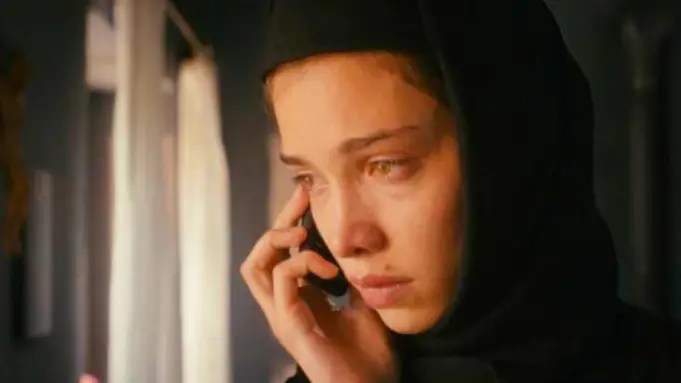
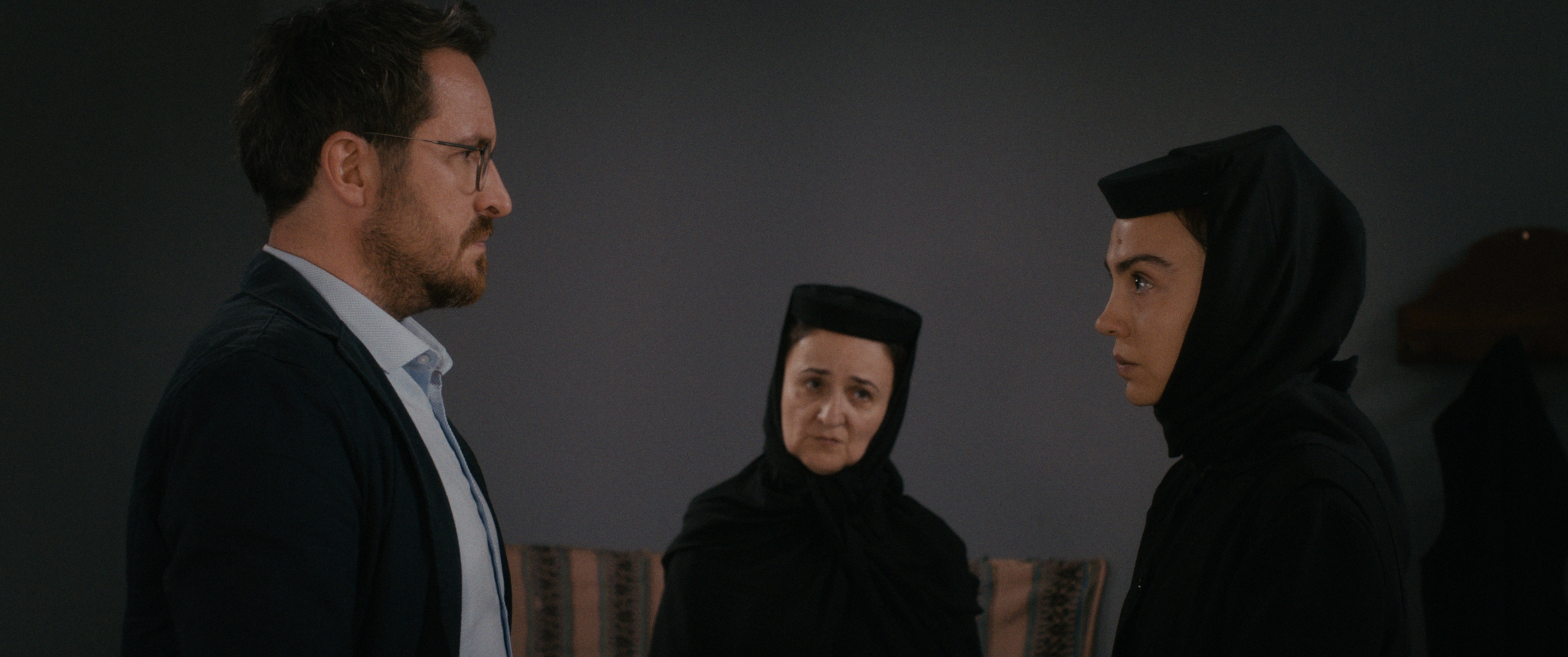
The young woman (Ioana Bugarin) doesn’t say much. She’s in a novice nun’s habit, and a fellow nun (Nora Covali) lends her a phone and helps her with arrangements. The novice is leaving the convent for the day.

The taxi driver (Valeriu Andriuta) is brusque with her, and turns out to be the helpful nun’s brother. But they talk about music, and in his more frank moments, he lets on how he doesn’t approve of his sister’s choice of vocation. When he adds a second passenger, a doctor (Valentin Popescu), we figure out they’re both going to the hospital, and that unlike the well-heeled doctor, for the novice Cristina the meter isn’t running.

“It wouldn’t be right,” the driver shrugs (in Romanian with English subtitles).

Apetri has our nun-to-be change into street clothes and turn evasive when the doctor grills her about what ails her. Little is said out loud but much is easily inferred and readily understood about her situation, no matter which doctor sees her.

The crime that happens is an assault only glimpsed from afar, sounds of screams half-muffled and lost in the howl of the wind and the bleating of sheep in a nearby pasture.

The movie then shifts to a day with Det. Preda (Emanuel Pardu), a blunt atheist who doesn’t like prevaricating nuns or superior Mother Superiors.

“I don’t need God or prayers or lectures. I need help.”

We hear that he has a suspect, that there’s a time-limit on holding him, and we quickly figure out that Preda is hellbent on not giving up this guy or his certainty that he committed the horrific crime we just witnessed. And he’s sure as hell not “going easy” on the suspect, witnesses or his older, more religious/superstitious subordinate (Ovidiu Crisan).

If the first act of “Miracle” is a tense study in understatement and words left unspoken, the second is a fraught, headlong pursuit of “justice,” with all the shortcuts cops the world use to ensure their version of it is met.

Bugarin plays furtive, guilt-ridden innocence while Parvu is an officious, educated, non-nonsense detective in a china shop — bullying one and all on either side of the law with equal ferocity.

Despite creating these polar opposite characters to anchor the two halves of his movie, Apetri maintains a quiet, consistently probing tone, inviting the viewer to figure things out without spoon-feeding, to ponder fate and justice, guilt and self-righteousness run amok no matter how much or how little action is going on at the time.

The leads are documentary real, and the supporting players, bantering about Romanian decline via the music people listen to or listened to in the past and what it means for their future that the common folk have spearheaded the secular state’s return to Eastern Orthodoxy.

“Miracle” is a sometimes piercing mystery that demands your attention and your engagement, if nothing else than to get one close to figuring out where a “Miracle” fits into all this. I was thrown by directions the story takes and the nature of the crime, which as I mentioned, is mostly seen in snippets from a distance.

But it all makes a sort of twisted sense, and better yet, the stuff that doesn’t fit neatly together gets under your skin in ways your average thriller doesn’t.

Rating: unrated, violence, profanity, smoking

Cast: Ioana Bugarin, Emanuael Parvu, Ovidiu Crisan, Cezar Antal and Nora Covali.

Credits: Scripted and directed by Bogdan George Apetri. A Film Movement release.

Running time: 1:58

Posted in Reviews, previews, profiles and movie news | Comments Off on Movie Review: A harrowing tale of trauma, crime and the pursuit of “justice” in Romania — “Miracle”

Movie Preview: FX master Phil Tippett’s “magnum opus,” the stop-motion nightmare — “Mad God”

This is a real eye-popper. Literally.

June 17.

Posted in Reviews, previews, profiles and movie news | Comments Off on Movie Preview: FX master Phil Tippett’s “magnum opus,” the stop-motion nightmare — “Mad God”

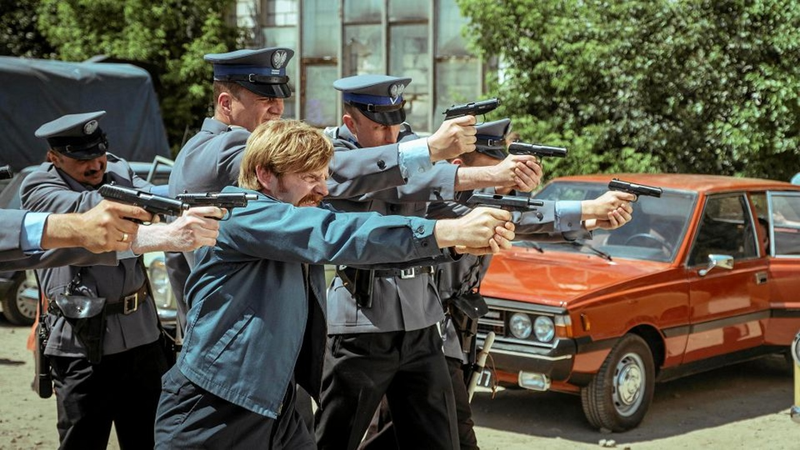
Netflixable? Poland’s “The Getaway King (Najmro)” has style, wit and panache

Whatever Netflix’s other troubles at the moment, the fact that the might-have-peaked streamer gave Polish director Mateusz Rakowicz his first feature film credit, and that it’s “The Getaway King,” stands them in good stead in my book.

A bracing, laugh-out-loud cap

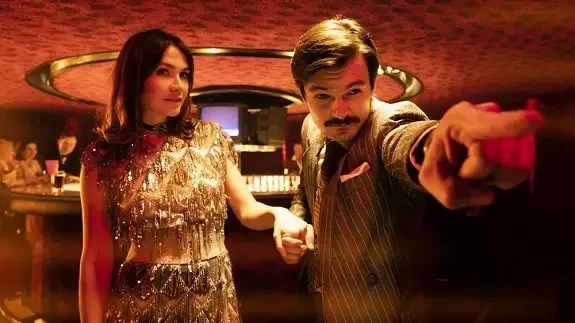
er comedy/biography, it practically bounces off the screen, no matter what screen you’re watching it on. When you’re dropped into the middle of a nightclub for a Polish chanteuse’s enthusiastic cover of Kiki Dee’s “I’ve Got the Music in Me,” in Polish, “jaunty” is the only word that covers it.

“Getaway” is a fanciful “inspired by” account of the late career of a Warsaw Pact era Polish folk hero, thief and escape-from-police-custody wizard Zdzisław “Najmro” Najmrodzki.

Given a charismatic dash by a mustachioed Dawid Ogrodnik (“Ida,” “Oleg”) and sympathetically portrayed in a picture with slo-mo style and comic flair, we’re treated to the way the guy probably saw himself, as a swinging, beloved and hip “Robin Hood,” providing goods for “the people” when the Russian-dominated “state” failed them.

Najmro likes his double-breasted suits, fancy watches and sunglasses, and he likes to flash cash in Warsaw’s discos. Yes, it’s 1988, but the Eastern Bloc abandoned disco and double-breasted a bit later than the rest of us.

He’s famous for breaking into Pemex import stores and selling on their pricey wares to the locals. Everybody knows who he is. With his face plastered all over TV (a version of “Poland’s Most Wanted” is seen on the tube) who couldn’t? But they let him slide, even the ticket seller (Marta Wagrocka) he tries to sweet talk out of posters at the local cinema.

He needs the posters to cover the holes in the walls he and his crew (Jokobn Gierzal, Sandra Drzymalska, Andrzej Andrzejewski) create and crawl through for the heists. Terezka’s way of playing hard to get is to force Najmro to buy ten tickets to a movie nobody wants to see just to get his posters.

Could love be in the air?

“The Getaway King” doesn’t spend much time on robberies, although Najmro is credited as the guy who figured out the Achilles heel of stealable Euro-cars of the era. It’s more concerned with the capers Najmro deploys to bust out of jail. Because even though no one wants to turn him in, he gets caught — a lot. But give him his say in court and the speech will end with a tumble out an open window. Let him exercise in the prison yard and one moment he’s there, the next he’s vanished.

Twenty eight escapes says a lot about the state of communist Poland’s militia/state police. But this gruff cagey lieutenant (Robert Wieckiewicz) they’ve brought in from the provinces could change that, if his hapless assistant (Rafał Zawierucha) can stop screwing up long enough.

The film sets up a game of “tag” between crook and cop, with each “You’re IT” polished off with a punch, kick or head-butt.

Our chivalrous crook even lends a hand when their life-threatening Fiat-vs-Lada chase ends the way all such chases ended back then — in flames.

By not dwelling on the crimes, the movie shortchanges us on the wit and wisdom of our master thief, who instructs his crew that there are “four types of clients,” the sort of greedy folks who buy stolen sunglasses, watches or cars — “The professor (a knowitall),” “the pushover (pretends he’s a professor),” “the negotiator…just wants to put on a show” and “the looker,” who may not buy without coercion.

But that doesn’t deprive us of the fun of the time travel (Poland’s pre-Soviet collapse 1980s looked a lot like the mid-’70s here) the good natured hustling by the crooks, and the dogged police work by that one militiaman who may have this guy’s number.

Whatever other cutbacks you make, Netflix, keep a little mad money around to make sure Rakowicz and his crew are still on the payroll. In Polish with subtitles, or dubbed into English, “The Getaway King” is a thoroughly charming rogue packed into a perfectly entertaining caper comedy.

Rating: TV-MA, violence, gunplay, sex, nudity, smoking

Cast: Dawid Ogrodnik, Robert Wieckiewicz, Marta Wagrocka, Rafał Zawierucha, Jokobn Gierzal, Sandra Drzymalska, Andrzej Andrzejewski and Dorata Kolak.

Credits: Directed by Mateusz Rakowicz, scripted by Łukasz M. Maciejewski and Mateusz Rakowicz. A Netflix release.

Running time: 1:40

Posted in Reviews, previews, profiles and movie news | Comments Off on Netflixable? Poland’s “The Getaway King (Najmro)” has style, wit and panache

Next screening? “Downton Abbey: A New Era”

What’s the trailer tell us?

“I’ve inherited a villa in the South of France.”

“Someone’s making a movie…at DOWNTON?”

When a sitcom produced either of those plot twists, we’d use the phrase “jumped the shark” back in days of yore.

But with Maggie Smith leading us into a Victorian Era flashback (if she’s supposed to be young, and “Downton” began with WWI) and a great estate coping with the challenges of The Great Depression or right around there, this could be delicious.

“A New Era” comes to theaters May 20.

Posted in Reviews, previews, profiles and movie news | Comments Off on Next screening? “Downton Abbey: A New Era”