The morning after watching Andrea Arnold’s wordless, moving and sometimes unsettling documentary “Cow,” I found myself crossing the vast Deseret Ranches, the Mormon church’s beef cattle country that dominates the flat plains between the coasts of south central Florida.
And as I saw the free-roaming herds of Brahman/”Cracker” hybrids, hunting for shade, caring for their calves and grazing on the wide open and buggy spaces, I couldn’t help but think “You lucky bastards.”
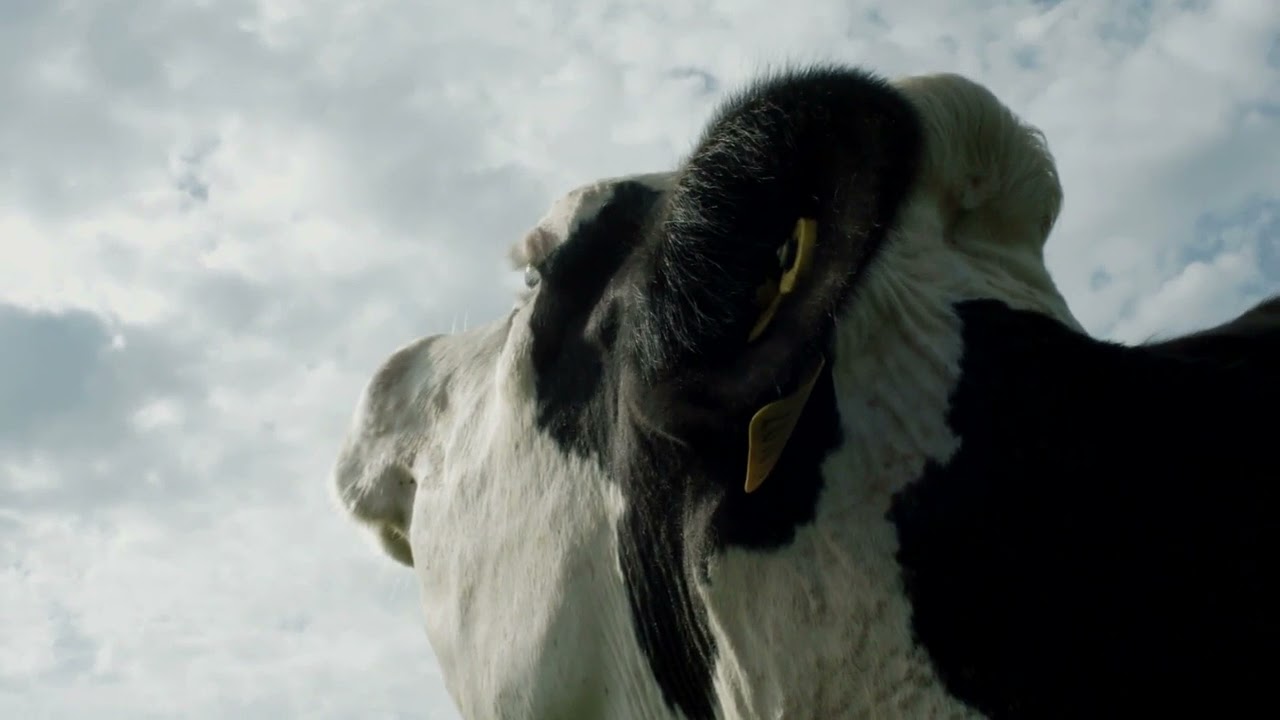
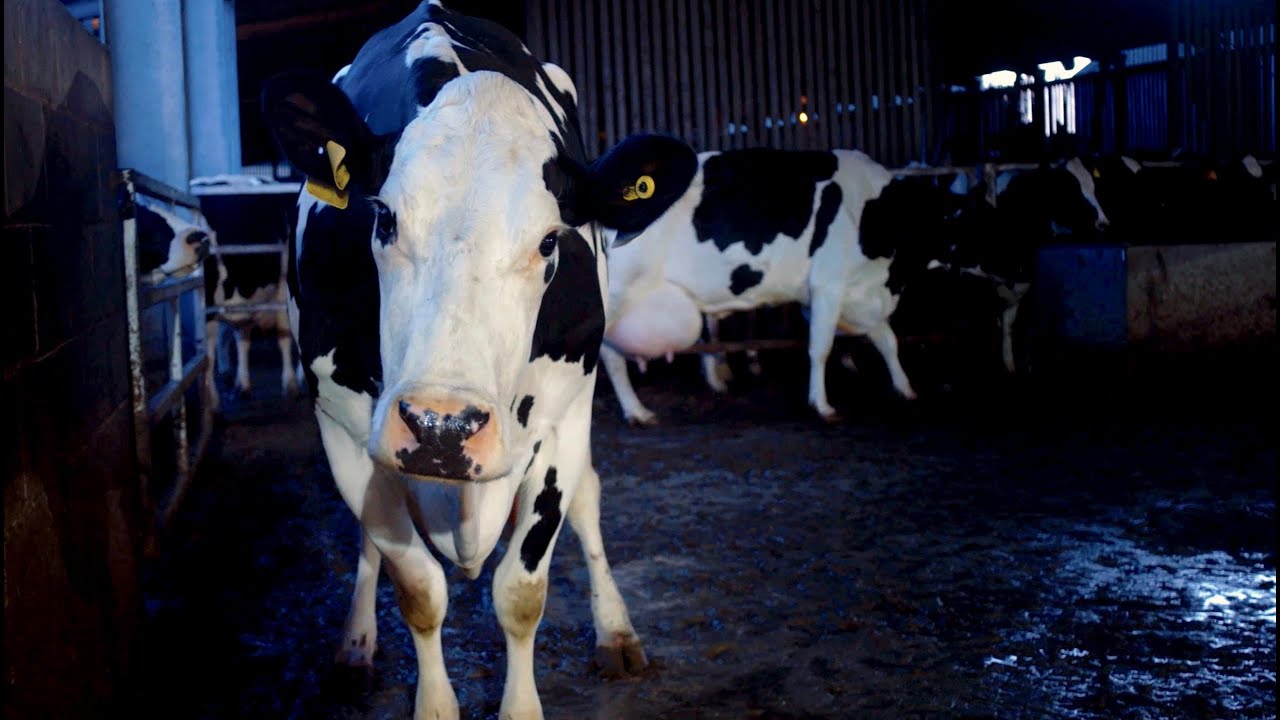
Arnold’s film, which follows a mother and one of her calves through their short, sheltered lives on a British dairy farm, paints the portrait of a much glummer and limited existence. Looking the mother and calf in the eyes and seeing their circumscribed world through those eyes, we get a glimpse of what could pass for a soul in animals that most of us merely consider unthinking beasts raised for our nourishment, aka “what’s for dinner.”
There is no abuse of these Holsteins, raised and milked on a modest but industrialized dairy farm in Kent, England. From the human assistance with the mother’s calving to the attention paid to diet, the calm vocalizations that move them to corrals, pens and milking stations and the care given to trimming their hooves and ensuring the calves are well-fed and their pens mucked out, Park Farm passes Humane Society muster.
There’s no coddling, no “naming” of the animals that we hear. We know, of course, that they aren’t pets but “livestock,” an investment to be protected, used and even harvested.
But the unmistakable message of Arnold’s film — she did the downbeat hustler’s romance “American Honey” — is that this is no life, that any living thing, no matter how we “use it,” deserves better than this.
We see the calf separated from its mother quite early. They need most of her milk for their own purposes. She complains, and in extreme closeup, you sense the heartbreak, how shattering this must be for the animal. That it happens repeatedly over the course of the years shortens their lives, and not just in a physical sense.
The calf is kept penned-up inside for some stretch of time before ever glimpsing daylight and green fields. And then it’s penned-up again, in a tiny hut with a fenced-in space that would have the neighbors calling the cops if it was all that a medium-sized dog experienced of the world.
She’s seen her mother for the last time.
The calves kick up and try out the idea of play and cavorting, but there’s no room. It’s months before they’re allowed in a pasture, gorging themselves on real grass, glimpsing seasonal fireworks over the confining roof of a barn.
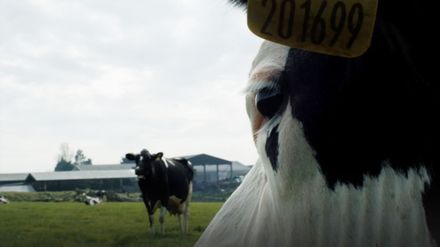
Arnold keeps her camera tight — on the cows’ shoulders or following them, always giving us a dose of the world as they’re seeing it. It’s a butt’s-eye-view take on “Escape to the Country.”
You have to take the filmmaker at her word on a movie like this. The editing, which conveys the sense that the cattle spend little time out of doors and are warehoused in soulless, rusty sheet-metal prisons for too much of their lives, has got to be honest for this message to be trusted.
I do trust Arnold, and can only shudder at the thought of conditions she might have captured on a larger American industrial dairy farm.
As mother or calf glances up and gazes at a passing jet, or into the night sky seemingly pondering the stars that form Ursa Minor, we absorb a “Charlotte’s Web/Babe” epiphany. Maybe artificial meat and plant-based milk is the future, and we’ll look back on our age and values with a sort of cannibalistic horror. Think of our evolving view of what goes on at zoos or Sea World and “parks” of that ilk.
And if we don’t, we’ll half to admit it’s only because we just don’t want to think about it.
Rating: violence, graphic calving scenes
Credits: Directed by Andrea Arnold. A BBC Films/IFC release.
Here’s a cinematic resume you don’t run across every day.
Levan Tediashvili is an Olympic and world champion wrestler from Georgia — the one that used to be in the Soviet Union — turned actor and now film director.
So it’s no wonder that he’s instantly credible in his first big screen star vehicle, playing an aged Georgian wrestler trying to tidy up an untidy family in “Brighton 4th,” a most engaging tale set in Tbilsi, Georgia, and amongst the (mostly illegal) ex-pats struggling to get by in Brighton Beach, Brooklyn.
Latvian screenwriter Boris Frumin (“Viva Castro!,” “Black and White”) conjures up a meandering 90 minute journey through the life of Kakhi, a working class guy still well-known in wrestling circles in Tblisi, a man whose late life quest is helping his struggling family with the little money and skill-set he possesses.
The difficulties in this are set up in a beautifully roundabout way. We don’t meet Kakhi (Koguashvili) straight off. Let’s begin in a Tbilisi sports pub where the locals sit and smoke, utterly absorbed in a soccer match between Liverpool and Manchester United.
Why they’re so caught up becomes obvious when one viewer starts raging around the place, spilling drinks and carrying on until quietly confronted by another punter who also bet on the game, a gambler who happens to be Kakhi’s brother (Temur Gvalia).
It’s only after that dust-up that Kakhi learns that brother has blown the cash he was supposed to use to pay bills and fix up his apartment, money earned by his sister-in-law, working and sending cash home from America. Plainly, this isn’t the first time it’s happened. And this time he’s lost the family apartment.
Kakhi knows a lost cause when he sees one. He takes the brother to his old gym, gets them to take him on as live-in custodian, and moves on. He’s going to America.
Kakhi and his bedbound wife (Laura Rekhviashvili) worry about their son, Soso (Giorgi Tabidze) in Brooklyn. That’s why he’s flying to to New York.
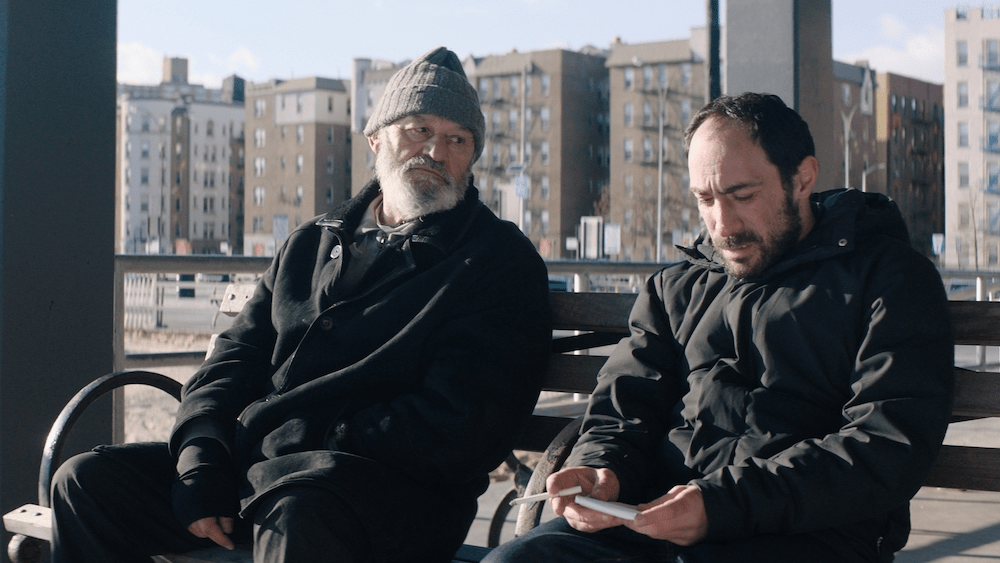
He finds himself picked up by Soso in a hearse and taken home to the crowded brownstone hostel his sister-in-law Natela (Tsutsa Kapanadze) runs, a boarding house bubble stuffed with Georgians where English is never spoken and everybody — young and old — is struggling, working multiple jobs and trying to get by, get a green card and live the American dream.
Soso would love to marry Lena (Nadezhda Mikhalkova), even if he considers it a “fake marriage.” It’ll solve his green card problem and allow him to take the tests to work in medicine, which was his training at home. But that costs a lot of money and his primary work is manual labor, moving. And then there’s the $14,000 gambling debt he owes to the hulking local poker room entrepreneur Amir (Yuri Zur).
Kahki lies to his wife back home, lies to Natela about her husband and their apartment, sighs to his son about “straightening out” and tries to find work through Natela so that he can tidy up this other mess on the other side of the world.
As a director, Koguashvili slides us into “Brighton 4th” like an old man slipping into a slightly-too-hot bathtub. We visit the Tblisi pub and the fresh market, with its open air butchers and cheese merchants (the son wants him to smuggle local cheese into America). We hang out in the off-the-books hostel, where colorful men from different ex-Soviet cultures mix and mingle, bond and drink. Kakhi’s attempt to take on one of Natela’s jobs, caring for an elderly couple, becomes a bizarre sidebar. We duck into the poker room where Amir and his Georgian and Russian patrons gamble, and we see Kakhi enlisted in the problems of other Georgian “illegals,” cleaning hotel rooms for a Kazakh owner who is refusing to pay them.
Eveybody’s broke. Everybody’s got problems. And nobody wants to involve the police, authorities or whoever in solving them. A little muscle, a little talk, a little wine, doled out in equal measure, and maybe we can come to an agreement.
The linchpin of it all is 70something Kakhi, still fit, still running his 40ish son through calisthenics in their hostel bunks or wrestling him in good-natured greeting.
“Brighton 4th” is the kind of ambling, immersive movie that you check out for the chance to visit a different culture and see the world through others’ eyes, but that you remember for its warmth, the connection that binds people who never let themselves be simply resigned to their family obligations.
It begins with fascinating curiosity and finishes with a flourish so touching — so distinctly Georgian — that it brings tears.
And Koguashvili, an unhurried filmmaker and passive, aged yet still muscular presence on camera, becomes a movie star in a role only he could play.
Cast: Levan Koguashvili, Giorgi Tabidze, Nadezhda Mikhalkova, Tsutsa Kapanadze, Laura Rekhviashvili, Yuri Zur and Kakhi Kavsadze
Credits: Directed by Levan Koguashvili, scripted by Boris Frumin. A Kino Lorber release.
Running time: 1:30
Posted inReviews, previews, profiles and movie news|Comments Off on Movie Review: Tblisi to “Brighton 4th,” an aged Father Tries to Settle Family Affairs the Only Ways he Knows How
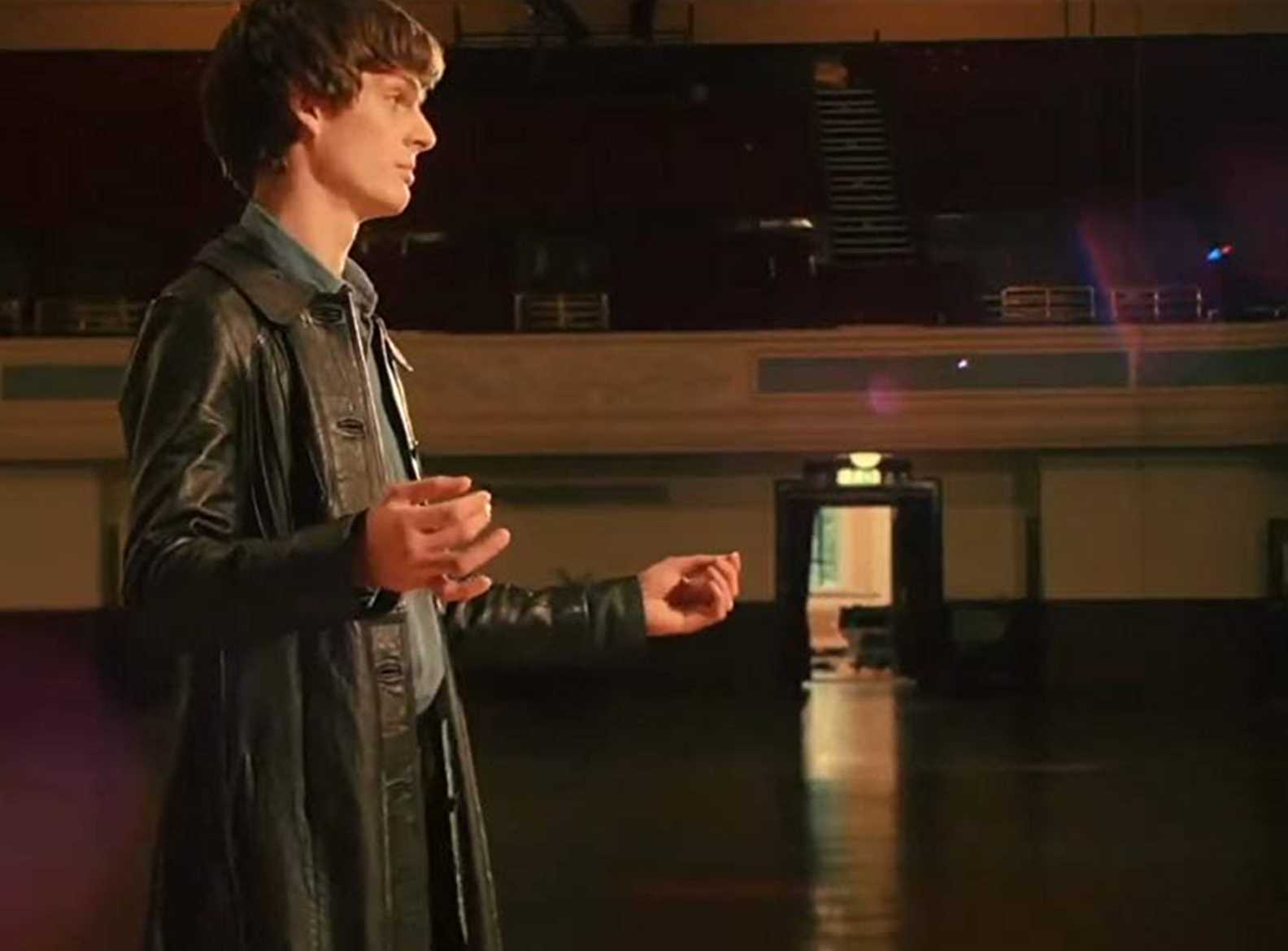
“Schemers” is an autobiographical slice of Scottish whimsy about a 20ish lad who becomes a concert promoter just to impress a college girl in the Dundee, Scotland of the 1980s.
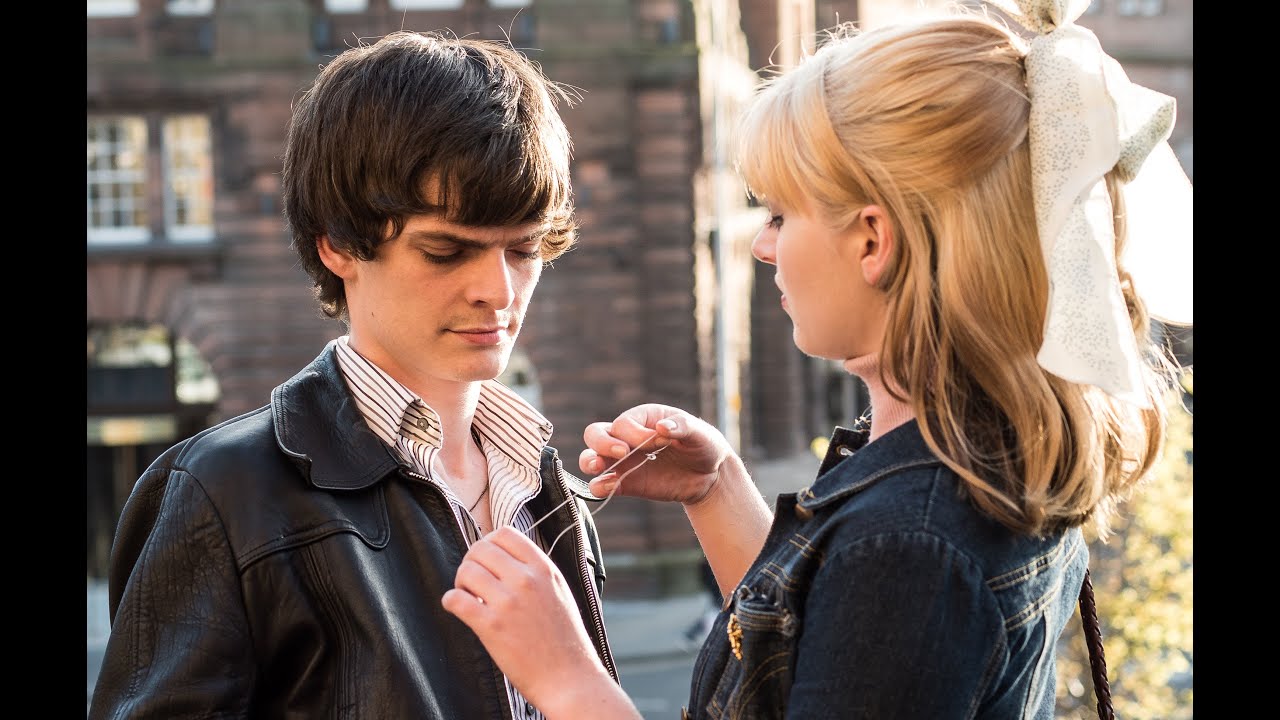
As Davie McLean (Conor Berry) tells his tale — with ample examples from “real life” and a heavy dose of voice-over narration — he was always a seat-of-the-pants hustler, a hard-drinking, hard-living “degenerate gambler” with a “bit of a love affair with th’horses” long before he met the fair bottle-blonde Shona (Tara Lee) with the Brooke Shields/Lily Collins eyebrows.
How’d he meet her? He got caught crawling into bed with some goon’s fiance. Whatever dreams of soccer glory he held (we never see him play), that ends with the busted ankle that puts him in the hospital, where his morphine-addled vision of a nurse’s aid (Shona) fires his attempts to get her attention once he’s out and on crutches.
As she’s stunning, looking a lot like the future film star Imogen Poots, he invites her and her guardian-friends to “a disco at the uni (versity) I’m organizing.” That’s thinking on your feet.
“She called my bluff. Cheeky that.”
That sets a whole life path in motion for Davie. He doesn’t ditch his dream of studying under the writer-producer of the documentary, “Year Zero: The Silent Death of Cambodia.” Not entirely. The real Dave McLean co-wrote and directed “Schemers,” after all. But it did send him on the steep learning curve of concert promoting, an unsavory corner of the performing arts that set him up for another — filmmaking.
Davie, still on crutches, must entice a married soccer player/dance DJ (Grant Robert Keelan) to do the show and partner with him on it. He enlists his drug-dealing mate Scot (Sean Conner) as well. And they literally leap from a sell-out dance to putting on live shows. This new band, Simple Minds, recommended by Shone and “getting some airplay on (radio host) John Peel?” Try them. XTC, Thin Lizzy, Ultravox and others follow.
This new band. “outta Dublin, they’re gonna be HUGE” is offered. “Never HAIRD of’em.”
The “12 Bridges (of Dundee) Promotions” team finances shows with gambling winnings or drug money, and fakes a death to get out of another.
Much of this meteoric rise happens before Davie even gets his cast off, before he’s convinced Shona that he’s not just a “chancer” but a lad on the move. But when most of the clubs and concert venues he needs to make these shows come off are owned by Fergie (Alastair Thomson Mills), “the chief potato of Dundee’s McMafia,” there’s trouble on the horizon.
And that “next big thing” metal band that Davie wants to score? That’s where the serious money, the serious gamble and most serious threats come in.
“When you begin to swim deeper, don’t be surprised when you meet the sharks.”
Seat-of-the-pants music business tales like this all owe a debt to “24 Hour Party People,” or even “Hear My Song.” Earlier this year, we were treated to the saga of the guy who “discovered Oasis” (“Creation Stories”). I find it a fun genre.
“Schemers,” with real Dundee locations (Caird Hall, where they wanted to book Iron Maiden, is featured) but zero star power, isn’t on a par with any of its predecessors. The story’s throughline is jumbled and the lack of music rights limits the concert scenes and takes away an important feature of the nostalgia being sold here — its soundtrack.
Another big problem. The film’s in untranslated Scottish, the English tongue at its slangyest and least decipherable. You can hope your ear-brain connection gets you into the -playful-musical rhythms of the dialect. But truth be told, I’d bet anybody who hannae lived in Dundee for a wee spell is going to spend a lot of time wondering “What’re they on about, then?”
This isn’t your typical “Trainspotting” Scots-you-can-decipher, albeit a few moments after the phrase has invaded your ear. This is full-on haggis and Highland Park whisky Scots. Oy.
Young Berry makes an agreeable lead, and Lee — perhaps playing a fictional character, considering her “function” in the film — adds sex appeal and nicely humanizes chancer Davie as her character makes him explain himself and face himself when things go wrong because his biggest lie to one and all is “I know what I’m doing.”
Thanks to them, and no thanks to the film’s delusions of Guy Ritchie “underworld” wit, “Schemers” manages to be a tolerable mess of a movie, but little more.
Rating: unrated, violence, drug abuse, profanity
Cast: Conor Berry, Sean Conner, Tara Lee, Grant Robert Keelan, Carolyn Bonnyman, Kit Clark, David Izzat and Alastair Thomson Mills
Credits: Directed by Dave McLean, scripted by Dave McLean, Khaled Spiewak and Kyle Titterton. A Gravitas Ventures release.
Hand it to Paramount. They keep making hay out of their most popular intellectual properties, “Star Trek,” and now “The Godfather.”
Miles Teller plays producer/hustler Albert Ruddy, Matthew Goode is handsome slick and vain studio honcho Robert Evans, with Giovanni Ribisi as mobster Joe Colombo, Dan Fogler as Coppola…
April 28 film buffs will be gathered on Paramount+ for “The Offer.”
The gold, or at least silver standard for teen heist movies was filmed way back in 2004. “The Perfect Score” was about breaking in and stealing the answers to that year’s SAT at the Princeton Testing Center, where such data was kept out of the reach of those willing to cheat the system.
The film put future stars Scarlett Johansson, Chris Evans and Erika Christensen together, managed a tight, suspenseful and sometimes “Breakfast Club” amusing caper, and opened to middling reviews. But being topical, this little slice of middle class teen rebellion is aging well.
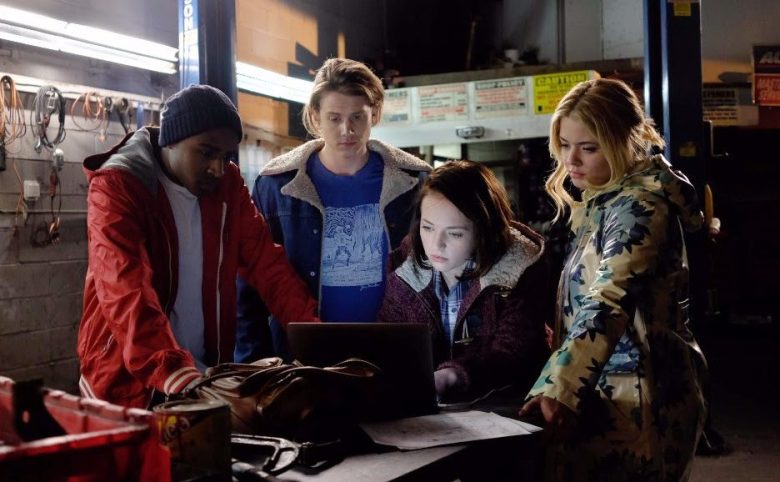
“Coin Heist” dips that formula in even more privilege as it concerns prep school kids trying to break into the U.S. Mint in Philadelphia for a caper they hope will “refill the school’s endowment.” It earned a limited release in 2017, to no fanfare, and as of yet, its stars — Alex Saxon, Alexis G. Zall, Sasha Pieterse, Jay Walker — haven’t emerged as among the major names of their generation.
But what Emily Hagins’ film, based on an Elisa Ludwig novel, gets right is that all-important hook — the caper. It takes us into unfamiliar territory — a Federal factory where coins are made — and shows how ingenious kids might figure out a way to “cheat the system, for a change,” it being a given that even as teens in an exclusive prep school, “the system” is giving them the business.
All those provisos aside, I liked it. I love the genre, and the idea that somebody could bone up on how to do this by “watching 12 heist pictures back to back” is an easy one for any movie buff to endorse.
We see Jason (Saxon), the flighty, “never finishes anything” headmaster’s son, dive into “Gambit.” He might have also watched “The Hot Rock” and “Going in Style,” “Tower Heist” and “Topkapi,” and probably some version or all versions of “Ocean’s Eleven.” One thing he knows they’re going to need to pull this off is “a team.”
Even the grungy clever hacker-chick (Zall) who first broaches the idea to him hasn’t wholly come to that conclusion. She’s trying to impress him, we figure, because he’s hot.
But they’re going to need footballer/part-time mechanic Benny (Walker), who might or might not join up, even though the white kids assume he’ll be down with this because he’s streetwise, aka Black.
And they don’t know it, but Miss Hyper-Organized Class President, Dakota (Pieterse), would be perfect at logistics, “coming up with alibis” and play-acting her way into the Mint to get a security pass they can copy.
They’re driven to this because Jason’s dad is arrested during the art class’s Mint tour for embezzling school funds and putting Dennington Prep in jeopardy. Everybody’s concerned about being able to finish school there. Jason feels spillover guilt for this. And Dakota’s motivated because all extra-curricular activities are the first things to go, “and we’ll have to have the Winter Formal in the cafeteria, unfortunately.”
There’s friction from the start, with Jason’s reliable unreliability clashing with hacker Alice’s risk tolerance and snobby Dakota’s recruiting of jock/engineering whiz Benny taking on a teasing flirtation that might not be the smartest move.
Their art teacher (Michael Cyril Creighton) is a little suspicious, and board of trustees chair Mr. Smerconish (Mark Blum) might have to be tricked, kept in the dark and outwitted.
Because there’s no way these kids can pull this burglary-based-scheme off, right?
Hagins, of “My Sucky Teen Romance,” doesn’t deliver much in the way of humor or witty banter here. There are a few sparks set off among our leads, but the director keeps her eyes on the heist and it plays.
The finale is seriously undigested, but that’s consistent with the film as a whole. It’s a workable, salvageable caper comedy that needed more comedy and a heist picture that needed a bit more interesting content and character development outside of the heist.
The actual heist she got right. It’s what leads up to it and follows it that she botches.
Rating: TV-14
Cast: Alex Saxon, Alexis G. Zall, Sasha Pieterse, Jay Walker, Michael Cyril Creighton and Mark Blum
Credits: Scripted and directed by Emily Hagins, based on a novel by Elisa Ludwig. A Netflix release.
You know what this original trailer reinforces? The iconic characters, the legends playing them, the instantly recognizable music?
It’s the idea that “The Godfather” was a “Star Wars” or “Harry Potter” for grownup film lovers. An alien universe obsessively detailed, life and death stakes, villains, a young hero to be tempted and corrupted, all summoned up by a few perfect notes on a score, a line, a shadow, a gesture.
Film fans have obsessed over this film, this trilogy, for decades. Granted, they and we arent cosplayers. But geeking out over a movie can happen to great films, too.
Most of us associate these movies with the holidays, as the third and I believe the second “Godfather” movies opened on Christmas.
But the original came out on today’s date in March of 1972.
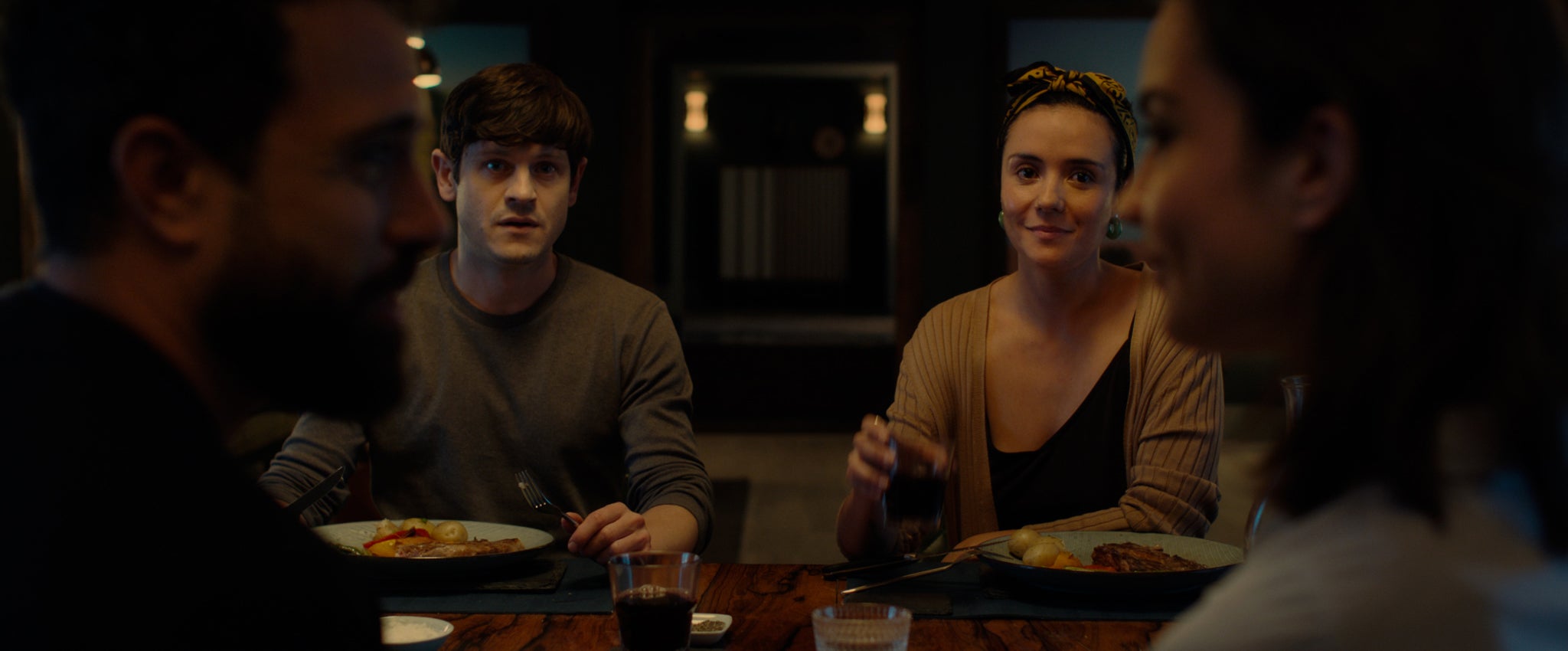
A high end housing development is going up on a big British farm that changed hands under unsavory circumstances, a development resented by locals, including the family that lost that farm, and all on ancient land with Druid legends attached to it.
There’s a star sculptress whose work is so prized the fact that she’s creating Druid monoliths to decorate each McMansion’s entrance is a huge selling point. She and her unemployed filmmaker husband are thus presented with the first finished home.
And on this night, the hustler-developer, his lady fair and the latest designer drug are guests for a dinner celebration.
Things are sure to get interesting as “alpha male” posturing, old resentments, broken promises and a toxic personalities are thrown together. And all that’s before masked intruders, the “real” “Barbarians,” show up.
The writing-directing debut of producer Charles Dorfman (“The Lost Daughter,” “The Honest Thief”) lurches from tetchy to tense to downright harrowing as two couples/four people spend the first and much of second act showing us how they really think of each other, only to be brutally tested by the goons who crash their party.
They’re mostly Brits. Can they learn the concept of “United we stand, divided we might not survive the night?”
Catalina Sandino Moreno (“Maria Full of Grace” and TV’s “The Affair”) is Eva, the confident sculptress who figures this new house and and between-projects filmmaker Adam (Iwan Rheon of “Game of Thrones””) is a “fresh start”for them. Bitter, jealous Adam may not agree.
Because tall, swaggering, showboating developer Lucas (Tom Cullen of “Knightfall”) is a bully and a blowhard and isn’t likely to let them — or Adam — forget what he figures they owe him. Whatever else Tom’s wife Chloe (Inès Spiridonov) might be, “enabler” seems to top her list of obligations.
Their evening is already on tipsy tenterhooks when Lucas trots out an eyedrop that promises to be “like ten years of therapy in one night.” And then comes that knock on the door and you-know-what gets real.
Dorfman and his players handle the long, nerve-fraying build-up with skill. And the payoff, with its twists, escalating violence and pointed causes-and-effects, doesn’t disappoint even if it’s a tad thin on surprises.
There are scores of home invasion thrillers that “Barbarians” borrows from — “The Strangers” and the French film “Them” seem most directly related to it. Wrapped in the trappings of horror, this formula action picture doesn’t get by so much on frights as on visceral trapped-and-trying-to-escape situations, which pay off nicely.
And as the violence escalates and whatever was getting out of hand gets seriously out of hand, “Barbarians” can turn downright riveting.
Rating: unrated, violence, drug abuse, profanity
Cast: Catalina Sandino Moreno, Iwan Rheon, Tom Cullen, Inès Spiridonov
Credits: Scripted and directed by Charles Dorfman. An IFC release.