
Not Well Go’s usual Asian-released-in-America fare, but a straight up supernatural North American horror movie.
“The Long Night” comes to Shudder April 5.
Not Well Go’s usual Asian-released-in-America fare, but a straight up supernatural North American horror movie.
“The Long Night” comes to Shudder April 5.
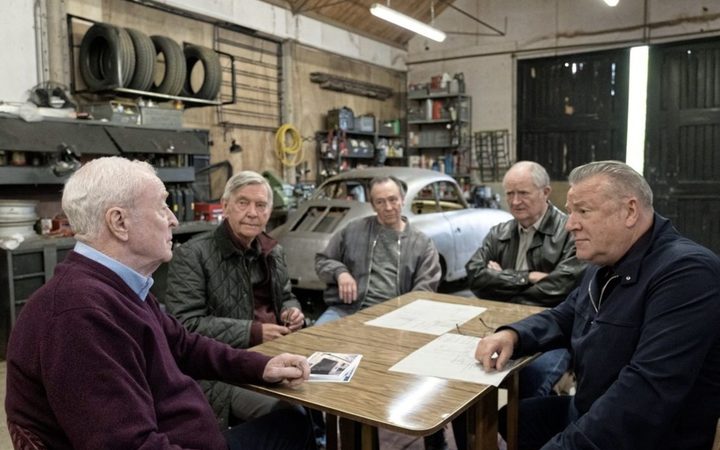
“In this game, there’s what you know, an’ what you DON’T know,” grizzled ex-con and OAP (Old Age Pensioner) Terry fumes in “King of Thieves.” And in a line that can be applied to all those too young to appreciate or “get” this old school heist picture, aka the callow critics who panned it, he ads “And if you don’t even know what you don’t know, you know f— all!“
If the very idea of Oscar winner Jim Broadbent, playing a rare late-career tough guy, chewing through those lines in the presence of still-a-little-scary Oscar-winner Michael Caine, doesn’t thrill or at least tickle you, well this isn’t the film for you.
Maybe you have to be older to appreciate the diabetes/UTI/deaf/napping and insulin-injecting with a slap-on-the-bum afterward charms of “Thieves,” which stars those two, and Oscar-nominee Tom Courtenay, Charlie Cox (“Daredevil”), Paul Whitehouse (British TV and “Death of Stalin” veteran) and hell’s bells DUMBLEDORE himself, Michael Gambon.
But I dare say even those who panned this perfectly engaging, reasonably suspenseful, nostalgic and even whimsical geriatric burglar’s tale when it had its limited theatrical release would agree with me on one salient point.
It’s the very definition of “Netflixable.”
“Thieves” is based on the true story of Britain’s Hatton Garden Safe Deposit heist of 2015.
Caine plays Brian, a bored, comfortably-retired and just-widowed ringleader (of course) who promised his wife (Francesca Annis) he’d “stay out of mischief” just before she died. That changes basically at her funeral.
There’s Terry (Broadbent) and nervous, “stone-deaf” Kenny (Courtenay). And putting on a show by doing a handstand in the middle of the solemn occasion is “the young one,” Danny (Ray Winstone).
The first thing we notice about this informal “mob” is that they’re elderly, inclined to be a bit loud because of hearing issues, and indiscrete. They start chatting up possible “jobs” just to make small talk into shop talk.
A former protege of Brian’s, the on-the-spectrum shy “Basil” (Cox) overhears this, and mentions to Brian that he has a friend who has a key into one of the most-challenging-“jobs” the lads were discussing. Basil may not like to be in crowds or be touched, but he has access to that diamond distrct key, and he just might be “the best ‘sparks’ man (electronics/security systems) in London.”
All they need to do is get in, pry open this or that, use a disused elevator shaft, drift a hole big enough for “the most undernourished thief we can find” — so they recruit Carl (Whitehouse) — to get through and ransack a safe deposit-box filled vault with diamonds, cash and gold, all while avoiding London’s omnipresent CCTV cameras.
Before the Cockney heir to Caine’s perfect Cockney Winstone can say, “‘ello me old son,” that’s just what they do.
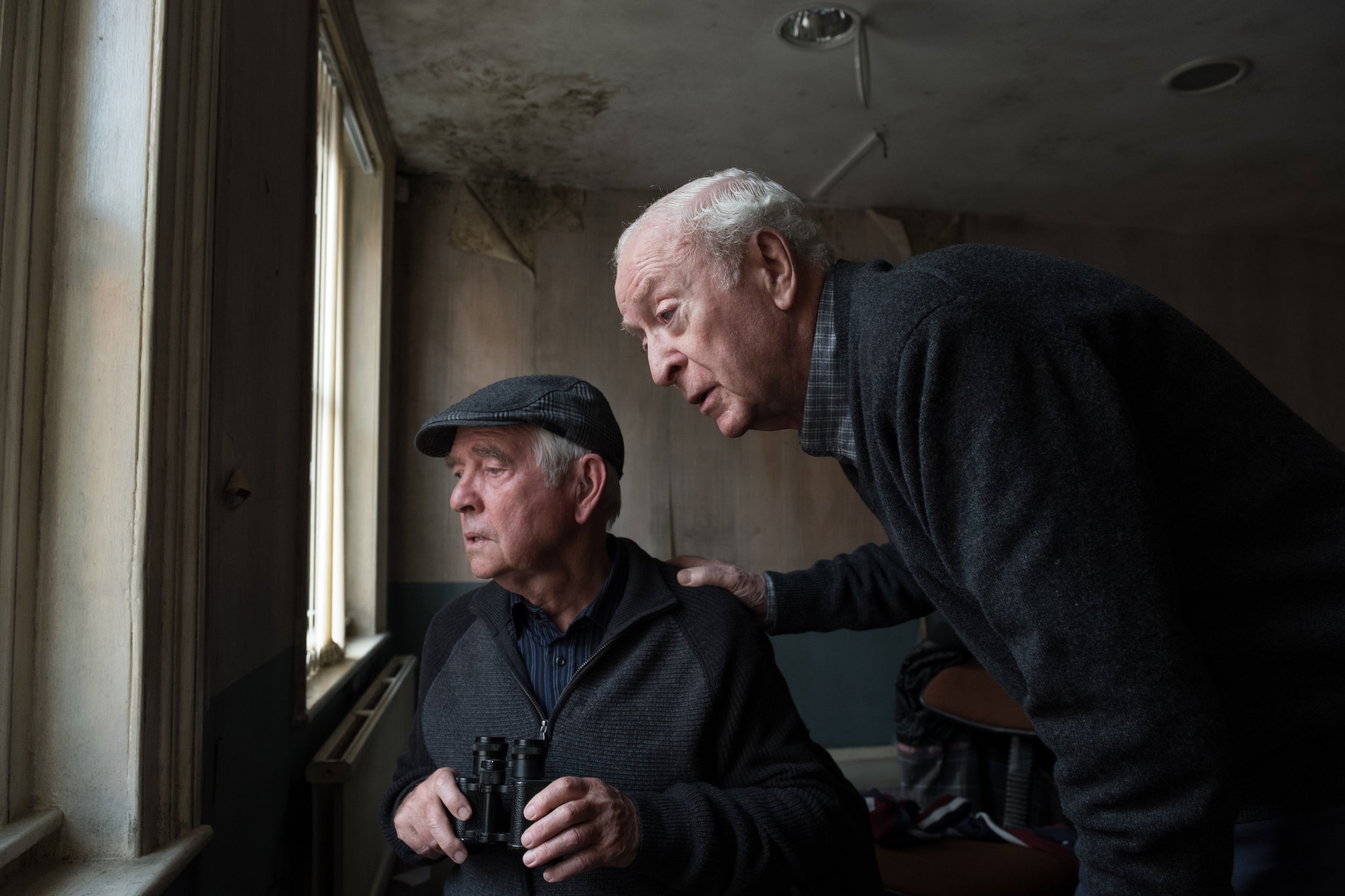
For a movie that’s basically a true-to-life “Going in Style,” “King of Thieves” never crosses the line from “cute” to “cutesy.” Caine gives us a taste of his still-hard-as-nails edge, Broadbent and Winstone match him and the picture’s inevitable “no honor among thieves” story arc clings to credibility, first to last.
The casing-the-joint/assembling-the-team/planning the heist scenes are handled with brisk montages set to period pop by Tom Jones or Shirley Bassey, or a crackling jazz score by Benjamin Wallfisch. He sets the actual break-in sequence — it doesn’t go easily or go off like clockwork, BTW — to an energetic jazz version of “Dance of the Sugar Plum Fairies.”
The cute stuff has to do with this guy’s “incontinence,” that one’s need for naps, mid-heist and bonding over “Type 2? Diabetes?”
Gambon shows up as an out-of-his depth fishmonger/fence, Billy the Fish. Gambon dresses in worn, oversized pants and sportscoat with the belt cinched up entirely too far…just like grandpa.
Sure, we can figure out the weak links, guess the “alliances” and schisms within the gang before they show up. That’s what a “formulaic” genre picture is. We can figure out where this is going without being native Brits who remember the news stories.
But Oscar-winning director James Marsh (“Man on Wire,” “The Theory of Everything”), working from a Joe Penhall script, wisely limits the police point of view to nameless coppers doggedly burrowing through CCTV footage, hunting for clues.
This high-mileage/hard-mileage cast crackles and sells the conceit, that aged Brits — whom no one would suspect because Britain’s native-born criminal element long ago lost its initiative and its edge to “Albanians” and foreign imports — could pull this off.
And if only Winstone could Cockney his way through a proper mocking of somebody’s disguise — “That’s a proper ‘Uncle Fester, Send-in-the-Clowns’ whoopsie-daisy ‘ave an AWAY day, that is!” — only Caine could serve up the immensely quotable dialogue’s best summation.
“Crooks are like boxers. They lose their legs, first. Then they lose their reflexes. Then they lose their friends.”

Rating: R, for language (profanity)
Cast: Michael Caine, Jim Broadbent, Tom Courtenay, Charlie Cox, Francesca Annis, Paul Whitehouse, Michael Gambon and Ray Winstone.
Credits: Directed by James Marsh, scripted by Joe Penhall. A Lionsgate/Saban films release on Netflix.
Running time: 1:48
Tom Cruise & Co., buffing up for their Memorial Day debut.
Lotta sizzle in here.
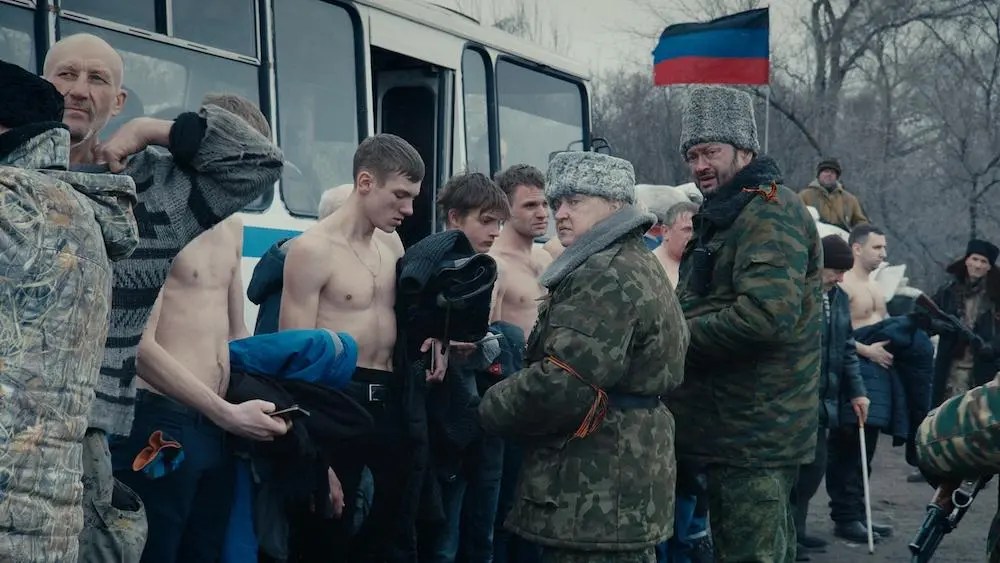
“Donbass,” writer-director Sergey Loznitsa’s send up of the farcical Russian-backed “separatists” civil war of Eastern Ukraine, is framed by having its first and last scenes in a film production makeup trailer.
“Actors” or “crisis actors,” we wonder as we ponder the theatricality of it all. This is “civil war” as performance, a big, broad lie pushed by Putin, pushed-back-against by the legitimate Ukrainian government, where it’s not so much ground taken and public support implied as how everything “appears.”
You want a Sudetenland/Cyprus excuse to arm, aid and eventually invade to “support” the ethnic Russian minority, part of the “Russification” of the region begun by Stalin? Trot out the word that conjures up ancient hatreds of the sworn enemy of the People — “fascists.” Everybody you think you oppose, everyone you eyeball as you check their “papers” is “Look, we’ve caught a fascist!”
You’re determined to continue the “cleansing” begun in World War II? Prop a captured Ukrainian soldier up against a city lamppost with the label “extermination squad” on a placard around his neck. Because if you’re running extermination squads, you’d best accuse the other side of doing it.
“Projection” we call it over here, with a former projector-in-chief still waddling around calling other people traitors and crooks even though we know he’s talking about himself.
Want to show how “corrupt” the “failed government” was at running a local maternity hospital? Stuff it with food and supplies, bring in a bluff, bragging party boss (Boris Kamorzin) to parade the staff through kitchens and offices of the “doctor who is stealing from you” to show off cases of bottled water and fridge after fridge stuffed with sausages.
“What a great actor you are, Mikhalyich” the doctor (Evgeny Chepurnyak) compliments him after the tour is over and they’re chumming around in (what one guesses) is the accused “thief” doctor’s office.
Loznitsa, a Ukrainian filmmaker mostly-known for documentaries (“Babi Yar. Context”), gives us a skewering “Slacker” style satire in which the “story” is told in a sort of relay race. We follow this character from that hospital into his Mercedes where he goes through that checkpoint, only to follow another character onto a bus that is then stopped at the next checkpoint where the men on board are berated and shamed by a female separatist commander, strip-searched before she’ll let these men — every one with an excuse for not joining her Russian-backed (or native Ukrainian) cause — move on.
A city hall meeting is interrupted by a protester who dumps “dirt” (not “dirt”) all over the mayor and declares, “If the police and the courts have failed, I will defend my honor myself!”
We duck into a city bomb shelter where a furious cultural non-profit executive chews out her mother for taking shelter with hundreds of others — “Nobody’s bombing it!” — only to then visit this or that break-off region’s leader, “People’s Republic of” of whatever, with its own flag — to explain this charity show she and others have conceived to bring the people together in “this awful event,” a nice euphemism for the years-long invasion that preceded the invasion the world is finally focused on now.
The premier carelessly punches his intercom to his secretary, and for the entire charity event committee to hear as they leave and demands to know “What was THAT circus all about?”
People burst into this or that anthem about the proud “Cossack nation” or the virtues of buying into Putin’s “Novorossiya,” a new “Russian Empire” remade before the botoxed runt dies the early death that Russians in general, and Russian leaders in particular, are fated for.
Through it all, hulking, bear-sized soldiers in Russian Ushanka fur hats guard this check point, harass that foreign journalist (Thorsten Merten) and run a simple extortion scheme in which they “expropriate” (steal) expensive cars, summon the owners to “return” them only to shove a piece of paper on that owner demanding that he sign it over to “them,” and then demand huge sums of money to release their new hostage, all based on how much they know this SUV or that person (access to tax records) is worth.
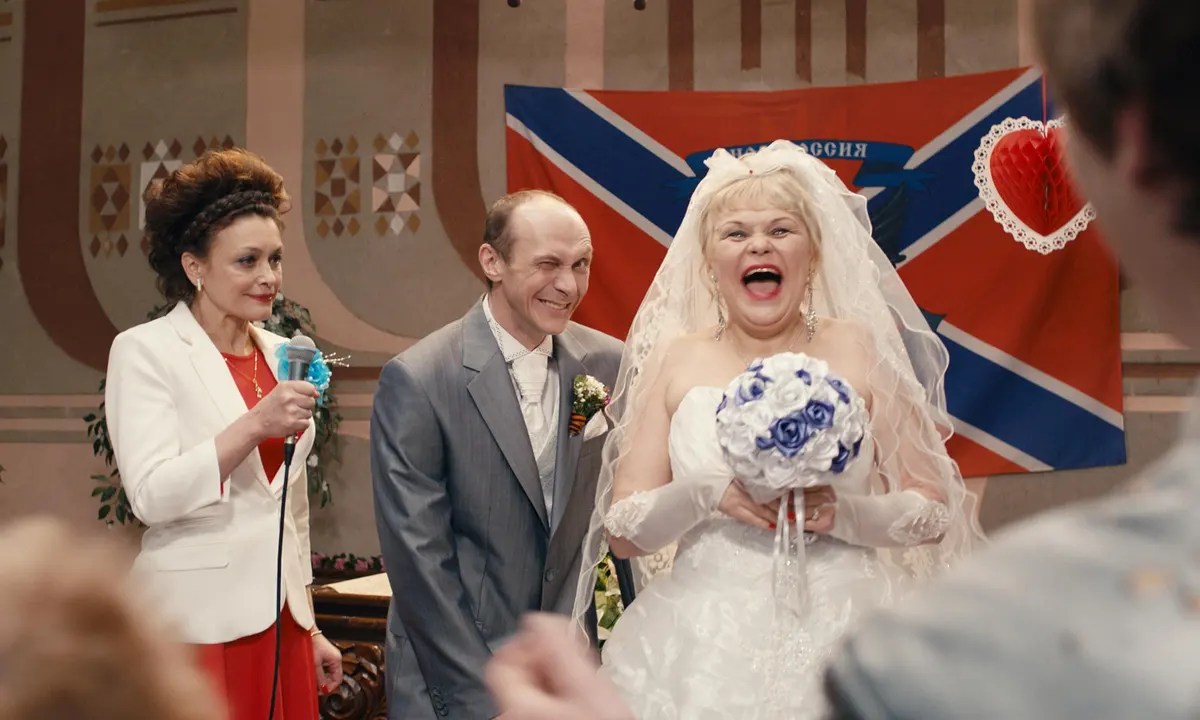
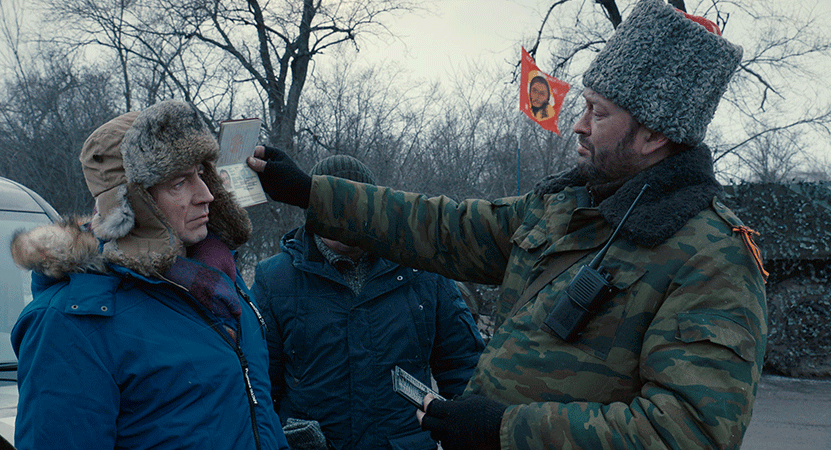
It takes a while to settle into Loznitsa’s storytelling style and get a handle on the points he’s making. Non-natives aren’t going to pick up on every allusion, the nuances of accent or even the differences between the Russian and Ukrainian being spoken (with subtitles).
But as we watch the brutish way media brainwashed and sometimes vodka-tipsy “Make Russian Great Again” types abuse a battered 50something man labeled “extermination squad” by men with guns, the way other soldiers cane AWOL conscripts in gauntlet that almost kills them, the random rocket-artillery barrages that slaughter civilians at a checkpoint and the work-arounds every civilian faces in an artificially-militarized authoritarian mess that Vladimir Putin has wrought, we get the point.
There is no real “us vs them,” only an outsider’s theatrical production of that. And unfortunately all involved are trapped in that teleplay, mere extras to be abused, enslaved, robbed and shot by the uniformed Men With Guns, no matter which colorful flag they claim to represent.
Rating: unrated, violence
Cast: Tamara Yatsenko, Boris Kamorzin, Thorsten Merten, Svetlana Kolesova, Sergey Kolesov
Credits: Scripted and directed by Sergey Loznitsa. A Film Movement release.
Running time: 2:02
I made a joke over on Facebook about not watching the Oscars at all. Well, half joke.
I don’t care about the awards or the show, and only tune in to get a feel for the evening. I caught the open, then watched a movie.
When “Top Gun” ended, I turned the telecast back on, and within three minutes was asking friends via Twitter and Facebook, “Wait, did that just happen?”
OK.
“But aside from that, Mrs. Lincoln, how’d you like the play?
“CODA” won best picture, “Dune” won the most Oscars, Kenneth Branagh and Jessica Chastain and Will Smith finally won Oscars. Jane Campion won her second, after 1994’s “The Piano.”
Will Smith didn’t manage a full apology.
Lovely sign language acceptance speech from Troy, moving speeches from Ariana, Jessica and Ken.
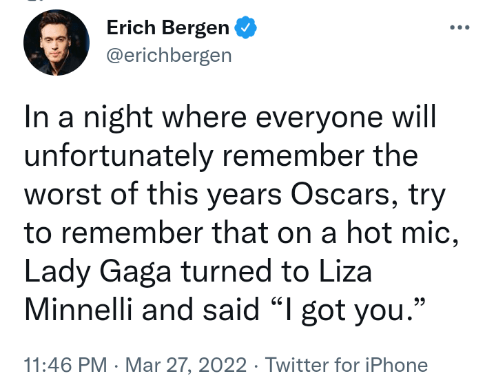
And this…
A man of violence who throws in his lot to protect the defenseless was a movie trope long before Brandon de Wilde yelled “SHANE! Come back!”
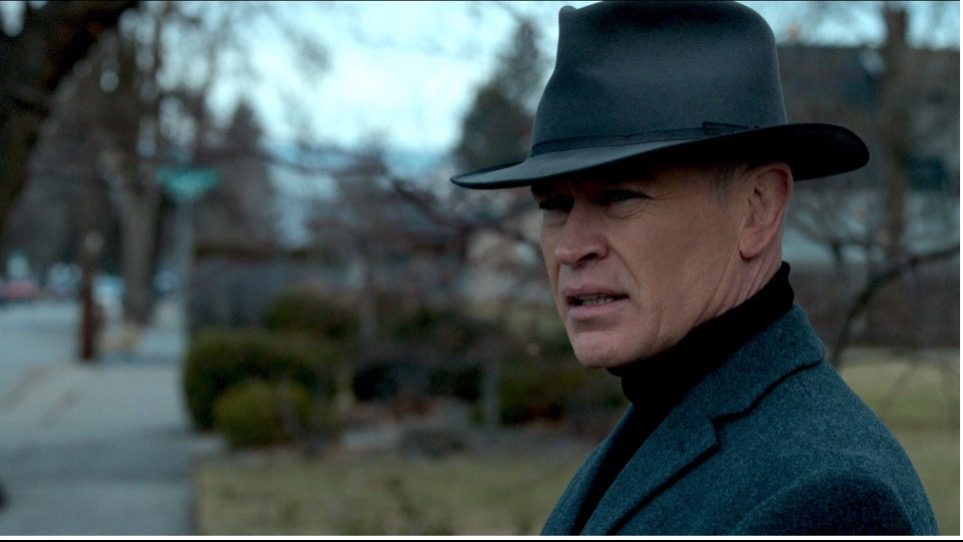
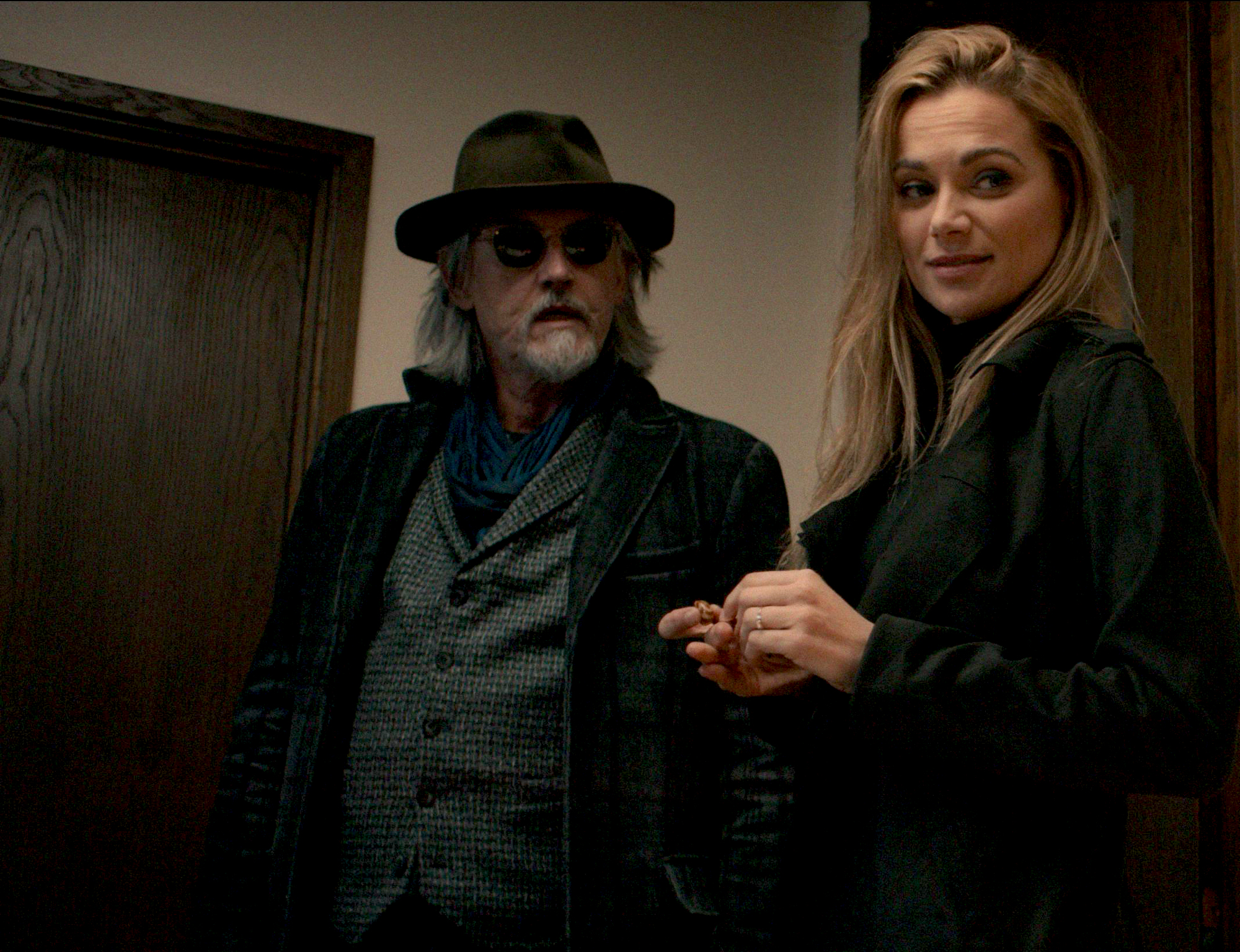
So let’s see how it fares in “Boon,” with veteran heavy Neal McDonough (“Walking Tall,” TV’s “Van Helsing”) playing Mr. “A History of Violence,” a hit-man on the lam who helps those once who helped him.
McDonough co-scripted this contrived star vehicle, a thriller that lets you see all the wheels arbitrarily set in motion and hear every gear that grinds along the way.
“Nick” is a wanted man, making his way to the border between Washington state and Canada. A Fed named Redd (Demetrius Grosse) is on his tail. But he’s playing catchup. There’s already somebody trying to silence this hired killer. But this guy (“Dragon” star Jason Scott Lee in a single scene) doesn’t even have time to fit his silencer on his pistol before Nick has the drop on him.
Wounded in the shootout, Nick stumbles through the woods and wakes up in the care of a widowed preacher (Christiane Seidel of TV’s “The Queen’s Gambit” and “Godless”) and her teen son (Jake Melrose).
She shares a bit of her story, but Nick is cagey and silent, which won’t fly with her.
“I think it’s only right that you tell me how you were shot” and ended up on her land.
Nick gets well enough to head off to a rental and extract the bullet himself (sure), but Catherine the pastor has other issues, which Nick figures out soon enough. She’s obligated to some seriously lethal scumbags who are “doing some work on our land.” Nick figures out what that might be, the “blind eye” she’s turning, and what her and her son’s fate will be once Fitzgerald (Tommy Flanagan) and his crew have no more use for them.
“Boon” does a terrible job of saying why the Baptist preacher is going along with these goons’ plans. It introduces her as a Good Samaritan owed a favor and mentions Nick’s Catholicism, as if any Catholic not “In Bruges” would be confessing his sins in BFE, Washington.
But all this script is concerned with is facilitating the characters moving from one violent encounter to another. Nick is handy with any firearm you can name, and when the chips are down and the odds are at their highest, he might just improvise.
Hey Nick, whatcha gonna do with that SPOON you just plucked out the kid’s cereal?
There are goonish henchmen and Fitzgerald’s vengeful Olivia Wilde-look-alike daughter-in-law (Spanish actress Christina Ochoa) also to contend with. And let’s not forget our lone Fed, on the clock and inexplicably by himself.
There’s more care put into bodies being yanked backward by a shotgun blast, and in McDonough’s fedora and turtle-neck hitman attire, than in any scene or exchange of dialogue in the script, co-written by director Derek Presley, McDonough’s co-conspirator for the little-seen 2021 Neal-as-hitman thriller “Red Stone.”
The big shootout is big enough, but is there enough leading up to it to make us suspend disbelief, invest in characters and care? I think not.

Rating: unrated, graphic violence, drug abuse, profanity
Cast: Neal McDonough, Christiane Seidel, Demetrius Grosse, Christina Ochoa, Jake Melrose, Jason Scott Lee and Tommy Flanagan.
Credits: Directed by Derek Presley, scripted by Neal McDonough and Derek Presley. A Cinedigm release.
Running time: 1:35


It’s been jarring to see the Walt Disney Company’s tepid, tone-deaf under-reaction to Florida’s “Don’t say ‘gay’ bill in light of everything that America’s greatest entertainment entertainment company has done that sends just the opposite message.
Many have been shocked at that in light of the corporate culture that seemed inspired by gay lyricist and eventual AIDS victim Howard Ashman’s reinvention of the screen musical, in animated form (“The Little Mermaid” and “Beauty and the Beast), which led to a more openly gay-friendly company. Disney, after all, not only tolerated but embraced the gay community’s creating “Gay Days” at Disney World.
And with all that, Disney has been reluctant to take a stand against hate-mongering legislation not designed to “protect kids/spare parents,” but to single out a minority group for increasingly authoritarian Republicans to attack and “erase.”
Disney has bought influence in the Florida legislature for decades, giving them free rein to develop Disney World, Celebration and everything about that happened “on property” from the start. Now, those same “Let Disney and its Reedy Creek Improvement District do whatever they want” legislators and their reactionary governor have passed a flagrant assault on free speech, gay rights and academic freedoms, one which carries “gay isn’t OK” messaging that many parents and students feel is dangerous and downright threatening.
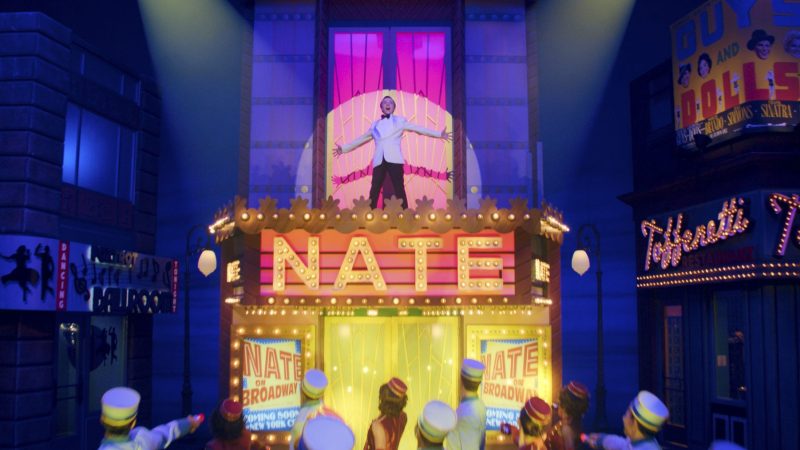
What a time for “Better Nate Than Ever” to come to Disney+. But here it is, Tim Federle’s screen musical adaptation of his best-selling book about a 13 year-old Broadway baby and his “matter of life and death” dreams of singing and dancing on The Great White Way.
Our hero, Nate (Rueby Wood) has a classmate/confidante (Aria Brooks) who crushes on him — hard. But Nate, who is “just trying to survive the seventh grade,” struggles to find the words to let her down easily.
We know what he knows, and that “gotta dance” gotta sing call-to-the-stage, which comes with a fondness for glitter lip gloss, may “embarrass” his jock brother (Joshua Bassett). But Nate’s got a dream, got a purpose and has a tribe, and “theater kids” can isn’t just a euphemism for kids like him.
Because nobody in this movie says “gay” either. So maybe this corporate temerity is a bit more prevalent in the culture than we figured.
The film itself is an innocuous but pleasant “Junior High School Musical” from the writer/creator of that Disney blockbuster — Federle — with Gabriel Mann (“A Million Little Things”) serving up pleasantly forgettable songs.
Nate is short and earnest and tries his best, but he never gets cast in school plays. Yes, he’s only 13, but like gymnasts, ballerinas and mayflies, Broadway babies figure their window for “making it” closes a little bit every day.
Then he hears of a chance to jump past the drama teacher (Underdeveloped and underexplained –WHY won’t she cast him?) and straight onto Broadway. What is Disney’s next big movie-to-musical Broadway project? Only “the greatest animated film ever,” “Lilo & Stitch.”
Nate has the pluck to scheme his way, behind his struggling, working-class parents’ and his “babysitting” older brother’s’ back,s to get to New York. Can he pull that off, avoid getting mugged or just New York cheated out of his ready cash, ace the audition and realize his dream? Just guess.
The cute stuff Federle crams into this story include under-age fish-out-of-water gags about the kids — BFF Lily has to pitch in — bussing their way to New York, which Nate has “Guys and Dolls” era delusions about, “Billy Elliot” references, busking for bucks to survive the city, insufferable stage parents and their Broadway brats at auditions, and the movie’s ace in the hole.
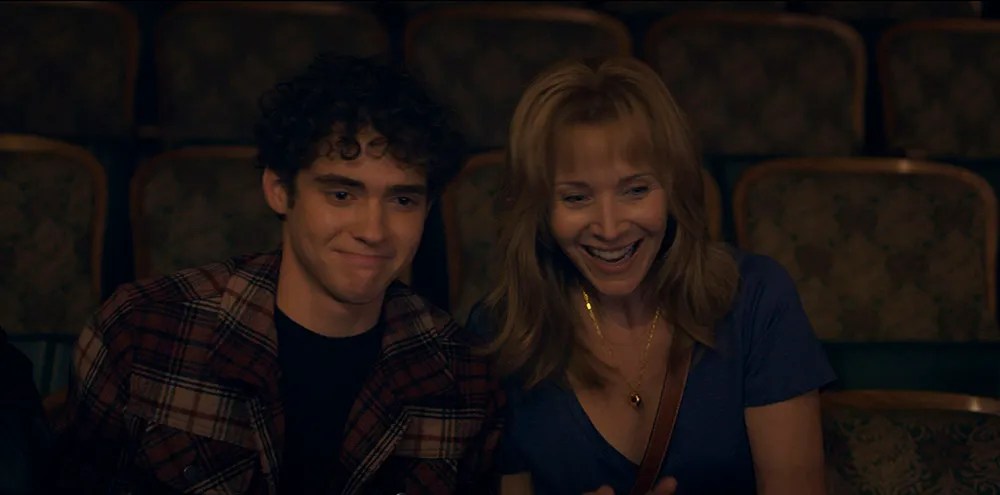
That would be Lisa Kudrow as Nate’s semi-estranged aunt, a Broadway actress still acting and hoofing and hustling for a living decades after her “matter of life and death” dream came true. Sort of. Kudrow’s off-tempo way with a one-liner, her deadpan double-takes at this kid about to storm Broadway, who can use more than just her advice right now, kicks the comedy up a notch.
Nate’s irrepressible “THIS is where I’m supposed to be” renews Aunt Heidi’s enthusiasm for the cattle calls, the smell of the greasepaint and the roar of the crowd. She lives a vicariously — just a little — through Nate’s sudden stroke of luck (a “callback”).
The premise is so adorable as to give you a toothache. The production numbers have a “Guys and Dolls” era artifice that’s just as cute. And the dialogue has its share of zingers.
“Where in the name of Stephen Joshua Sondheim ARE you?”
Our lead, a veteran of the stage tour of “Charlie and the Chocolate Factory,” has enough charm and musical theater chops to hold our interest even if the movie is aimed at more of a tween or young teen audience.
But even though you’d expect a movie looking for that demographic to not have much in the way of edge, you have to wonder if Federle lost an argument with corporate about mentioning the word “gay.” Is he kicking himself for not pushing back harder on that as “Nate” makes its way to TVs all over America, including the Banana Republic of Florida? I’ll bet he is.

Rating: PG for thematic elements, a suggestive reference and mild language
Cast: Rueby Wood, Aria Brooks, Joshua Bassett and Lisa Kudrow
Credits: Scripted and directed by Tim Federle, based on his novel. A Disney+ release.
Running time: 1:31
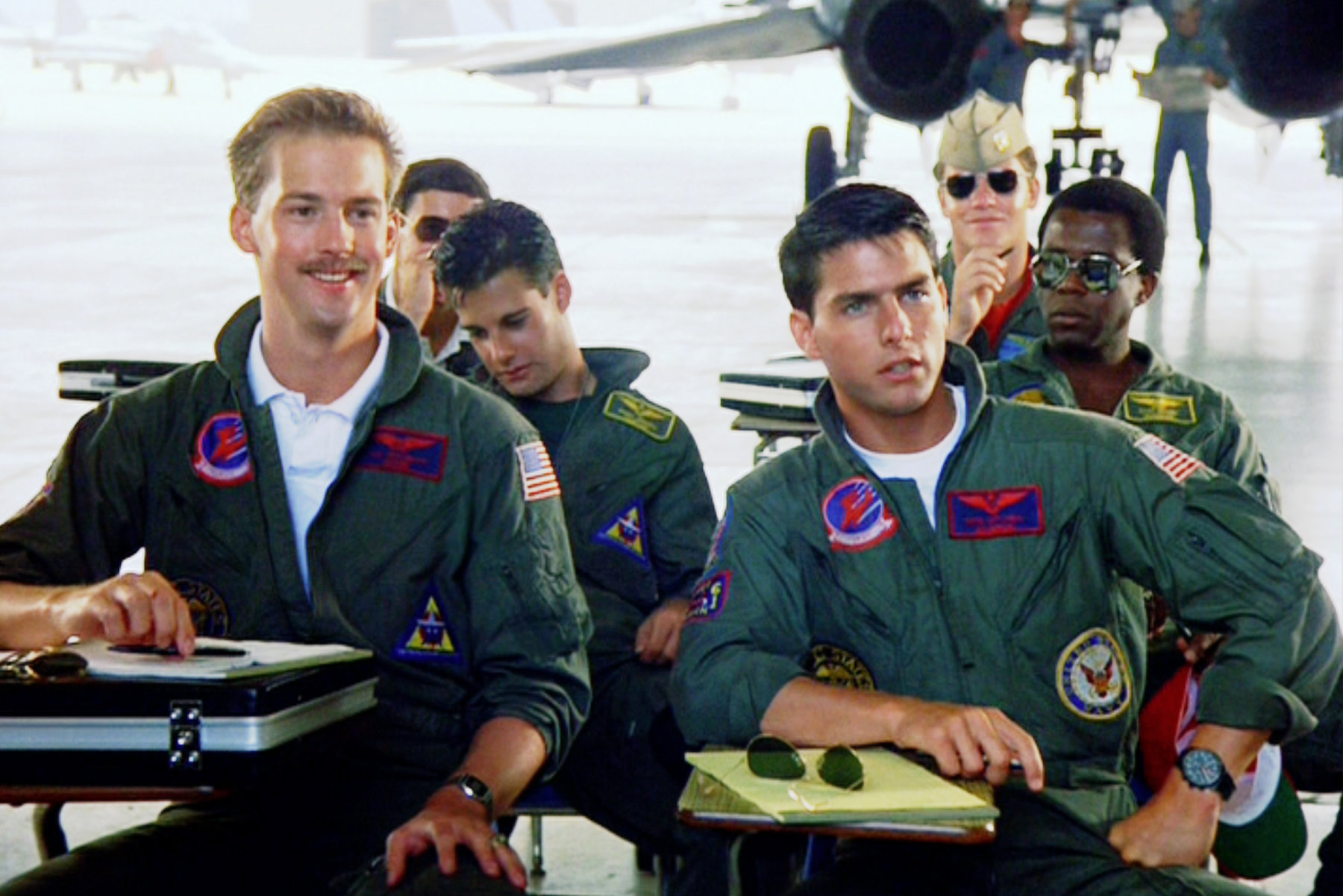
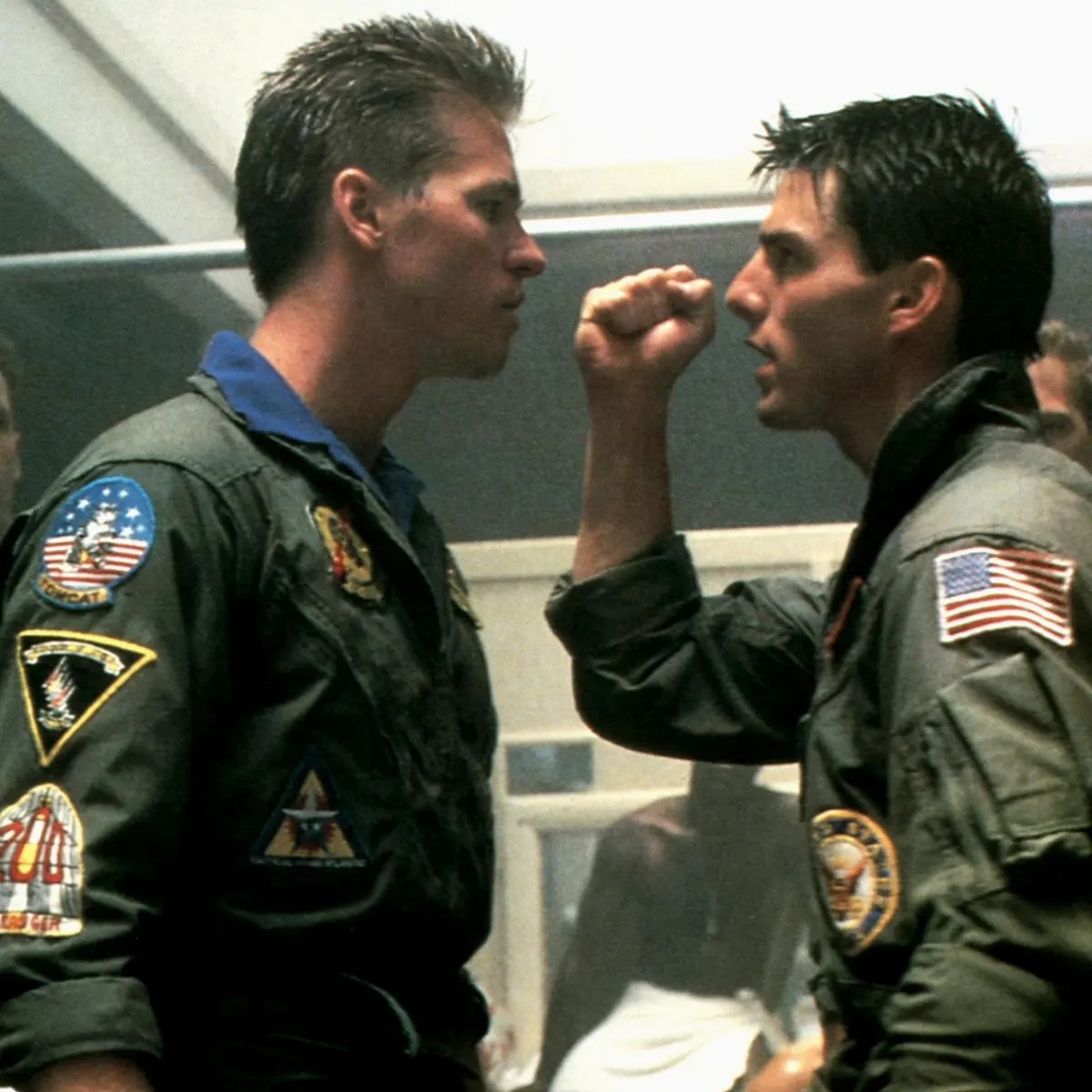
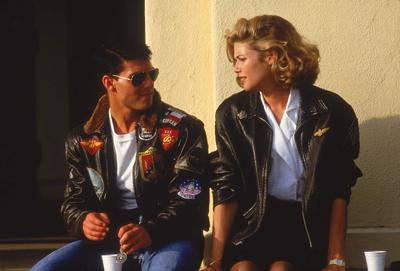
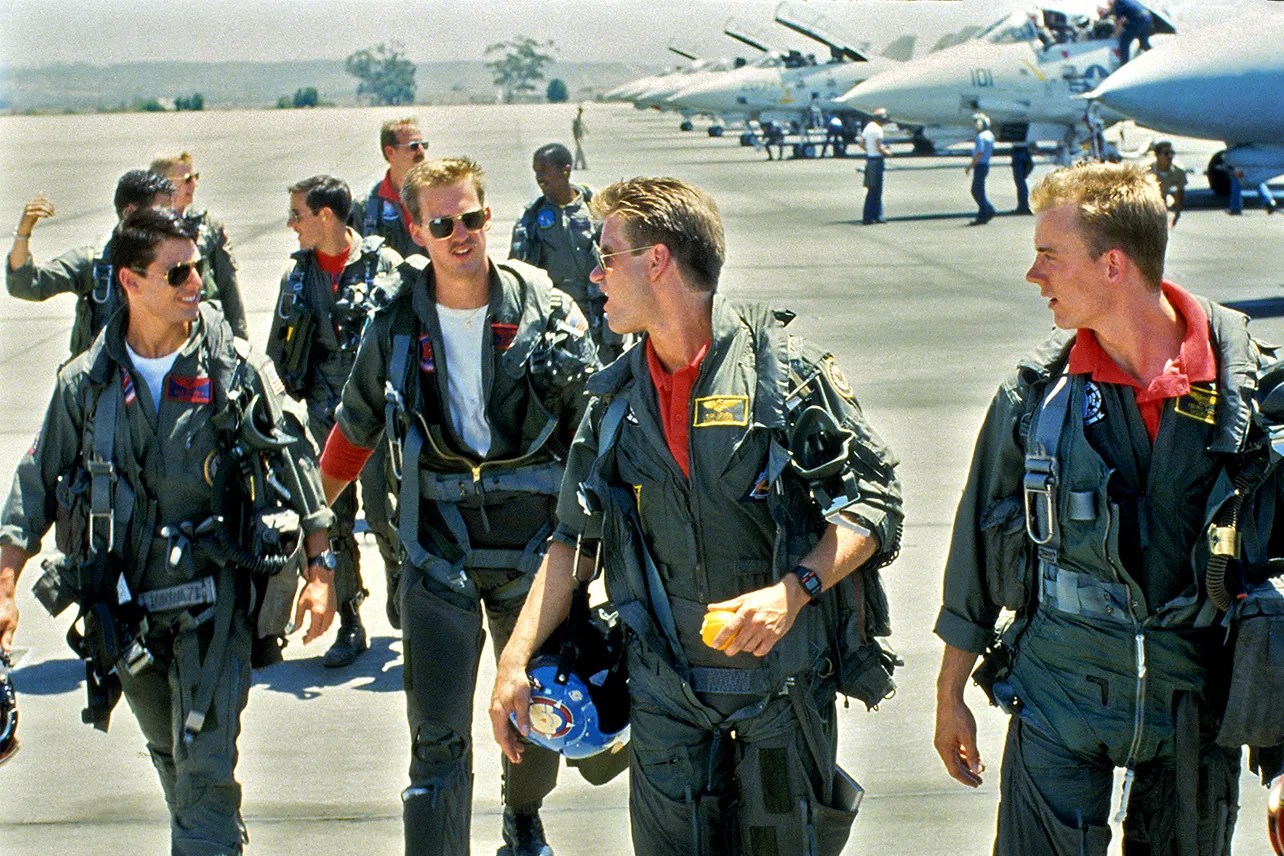
With the “Top Gun” sequel firmly (Hah!) set for release on May 27, it occurred to me that I should at least re-familiarize myself with this icon of ’80s “High Concept” cinema. And then it occurred to me that I’ve never actually seen it, start to finish.
I was reviewing films for a newspaper when it came out, and I’m guessing the fellow I shared those duties with drew this assignment. It’s not like I didn’t try to watch it, once or thrice. I’d get 5-20 minutes in while channel surfing, mutter “Why people ever liked this is beyond me” and move on.
“Top Gun” is Reagan Era American jingoism at its glossiest, something worth remembering when watching it. A common criticism of this film of-its-time/at-that-time was that it was a “recruiting film.”
Reagan’s gone, the Navy moved on from the ruinously expensive to maintain,/Achilles Heeled F-14 Tomcat, and Hollywood moved on from high concept.
In the ensuing years, I developed a fondness for Tony Scott’s films and interviewed him a couple of times, even chatted-up producers Jerry Bruckheimer and the late Don Simpson, the Kings of High Concept (a movie or TV show you can adequately describe in a seriously-short sentence fragment — “MTV-Cops” (“Miami Vice”), “MTV dogfights” (“Top Gun”).
I interviewed Val Kilmer, later read his autobiography and reviewed his documentary, which touched on the experience of making “Top Gun,” and even tried to dine at a Key West eatery Kelly McGillis opened with her husband some years back. I’d still be waiting for service if we hadn’t walked out after an hour and a half.
The Tom Cruise movie they all made is beloved, one of those pictures that at decades of public appearances, fans have asked, “When are you making a sequel?” of cast and crew. Why is that?
This film was the first “Tom Cruise” movie that shaped his big screen action persona — a swagger built on a determination to do as many of his own stunts as possible (motorcycles, jet fly-alongs). You can tell he’s in the thick of things, even if you can also tell they’re doing things to make him look tall enough to fly jets for the U.S. Navy and not look short next to his leading lady.
He even sings in this picture, not something we’ve heard him often attempt. With cause.
The aerial sequences, stunningly-shot by Jeffrey Kimball in sunbaked tones and breathlessly edited into fighter-bomber porn by Chris Lebenzon and Billy Weber, are still impressive — XCUs of jet exhaust ports, carrier landing crew protocols, wing-mounted/cockpit-mounted camera shots galore, and long before GoPro-sized gear made that easy.
The training simulations are adorably quaint, stick-outline aircraft graphics like the old “Battle Zone” video game.
The cast is packed with great character players, a future Oscar winner (Tim Robbins), and icons-to-be like Kilmer, Meg Ryan, McGillis and “E.R.” mainstay Anthony Edwards.
But. This. Story. It isn’t just the militaria that the military-minded have torn to shreds for its inaccuracy in the days, weeks and decades since the film’s release. The film’s repeated use of “bogeys” for hostile aircraft, which are “bandits” if you know they’re hostile, the strict rules that Maverick flouts with his “$30 million airplane,” which would have washed him out in an instant, etc. are eyeroll friendly.
There’s little attempt to wholly identify the “enemy” here, just an America against the World ethos
The stars have zero chemistry. There is no logical reason McGillis’s smart, connected civilian contractor would have been attracted to this callow pilot who seems younger and dumber, if exciting. As she’s been around a lot of these guys, his close-encounter with a Russian-made MiG would hardly justify her willingness to flirt and accept his childish come-ons. A “You’ve lost that Loving Feeling” duet with Edwards & Ensemble as a pick-up attempt?
“Listen,” Charlie (McGillis) says, “can I ask you a personal question?”
“That depends.”
“Are you a good pilot?”
“I can hold my own.”
“Great, then I won’t have to worry about you making your living as a singer.“
Scott went on to greater glory, and even made a fine comeback picture (“Unstoppable”) before taking his own life in 2012. But here’s a reason these screenwriters graduated from “Top Gun” to write “Dick Tracy” and “Anaconda” and “Turner & Hooch.” Contrived situations, contorted insertions of drama, inane dialogue was kind of their thing.
Which is not to say that when this pre-digital celluloid film came out, it didn’t practically pop off the screen. But there’s very little to this PG-rated war-and-sex picture, and even less that suggests “sequel,” especially over 30 years later.

Rating: PG
Cast: Tom Cruise, Anthony Edwards, Kelly McGillis, Val Kilmer, Tom Skerritt, Michael Ironside, Meg Ryan, Tim Robbins and James Tolkan.
Credits: Directed by Tony Scott, scripted by Jim Cash, Jack Epps Jr., Ehud Yonay. A Paramount release.
Running time: 1:50

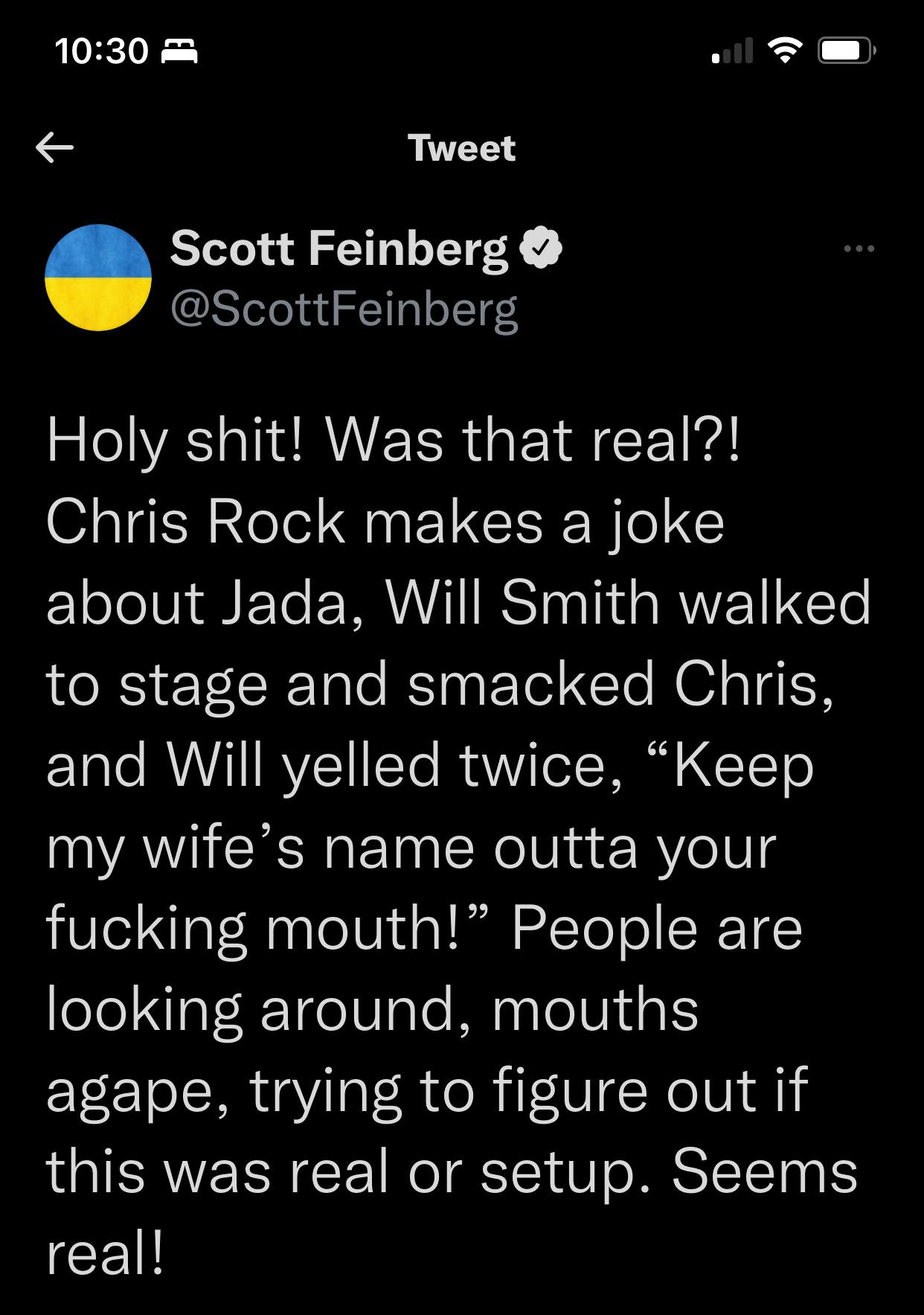
Yeah, that happened. A “GI Jane: II” joke from Chris Rock earns a mutter and eyeroll from Jada Pinkett Smith, and a HARD smack from Will Smith, storming the stage, and some pretty serious cussing from his seat, too. Not a good look on his part.
What the hell? Not the “nice guy” after all? Lots of people have taken direct hits from Chris Rock and grinned it off. I guess that Friar’s Club Roast is off the table?
The Oscars just got a blast of MTV Music Awards Kanye Krazy. The joke was TAME, whatever its inuendo. Jada has shared far worse about herself and them as a couple than anything Chris Rock said. Did Smith feel he had license for payback because of her condition?
What is the source of this bad blood? Maybe this?
Got to say, it casts a pall over the night that may last a bit longer than two commercial breaks. Only one presenter mentions it afterward, so far. But we’ll see.
Back in the ’70s, Vanessa Redgrave made a pro PLO acceptance speech that the Jewish screenwriter Paddy Chayevsky felt compelled to respond to later. Somebody will almost certainly bring it up.
Wanda Sykes? Paging Wanda Sykes? Will everybody shy away from it because Smith is expected to win best actor? Will WILL address it?
Amy Schumer, “Did I MISS anything? There’s like a different VIBE in here?”
Muted applause when Smith’s name as Best Actor winner comes up. Actors acting…
“In character” is his defense/explanation? Tears and lashing out at “people disrespecting you.” “Denzel just told me, ‘At your highest moment, that’s when the Devil comes for you.'” The show’s director is at a loss.
“I want to apologize to the Academy, I want to apologize to my fellow nominees.” Good. But uh, no apology to Chris Rock?
Wandering around, groping, finding a reconnection with the audience. “Art imitates life. I look like the ‘crazy father.'” Yeah, you did.
They don’t “play him off,” which is fine. Humility. “I’m hoping the Academy invites me back.” Invokes God a few times for good measure.
The director cuts away — because one Williams sister’s breast was hanging out of her dress (allegedly). Jesus, what a Smithshow.
Cannot WAIT for the psychoanalysis and columnizing on this. Joe Rogan/Faux are going to have a field day.
Aside from that, this was a very sweet, touching, representational awards show. Lovely speeches, deserving winners, “CODA” as best picture.
But all we’ll remember is Will Smith acting out.
An eyewitness/EARwitness account below. And below that, the Japanese feed of the event, uncensored.
You hear his name in films and on TV as a sort of inside British joke about pedophilia, but if you didn’t grow up with him on British radio and TV, you can’t really appreciate the scale of this public betrayal.
But it turns out he was a pedophile without peer, a platinum-white blond haired monster right under everyone’s noses.
Jimmy Savile was a Star personality of the ’60s and ’70s who became a lionized public figure thanks to great success as a charity fundraiser.
Here’s the film to tell us how on Earth that happened.
April 6, only Netflix.


