
Sigfried Sassoon, WWI “shellshock” survivor, closeted gay man, great poet. “Benediction” was scripted and directed by Terence Davies (“The House of Mirth,” “A Quiet Passion,””The Deep Blue Sea”).
Coming soon.
Sigfried Sassoon, WWI “shellshock” survivor, closeted gay man, great poet. “Benediction” was scripted and directed by Terence Davies (“The House of Mirth,” “A Quiet Passion,””The Deep Blue Sea”).
Coming soon.
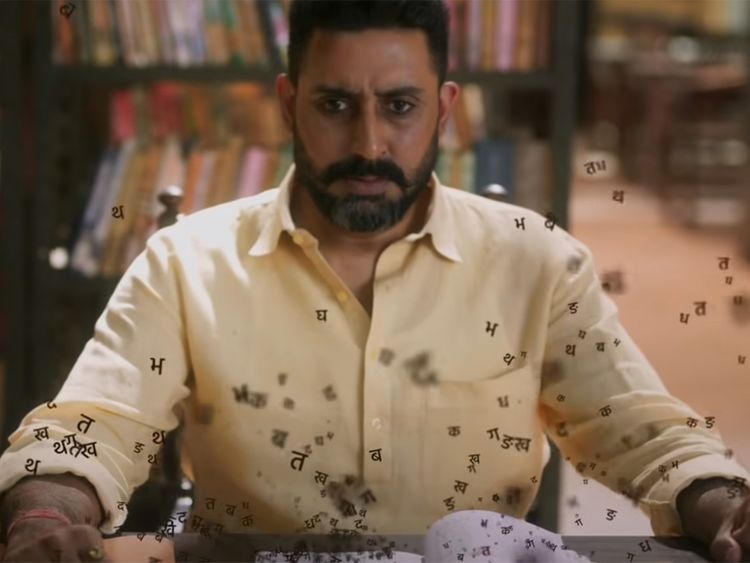

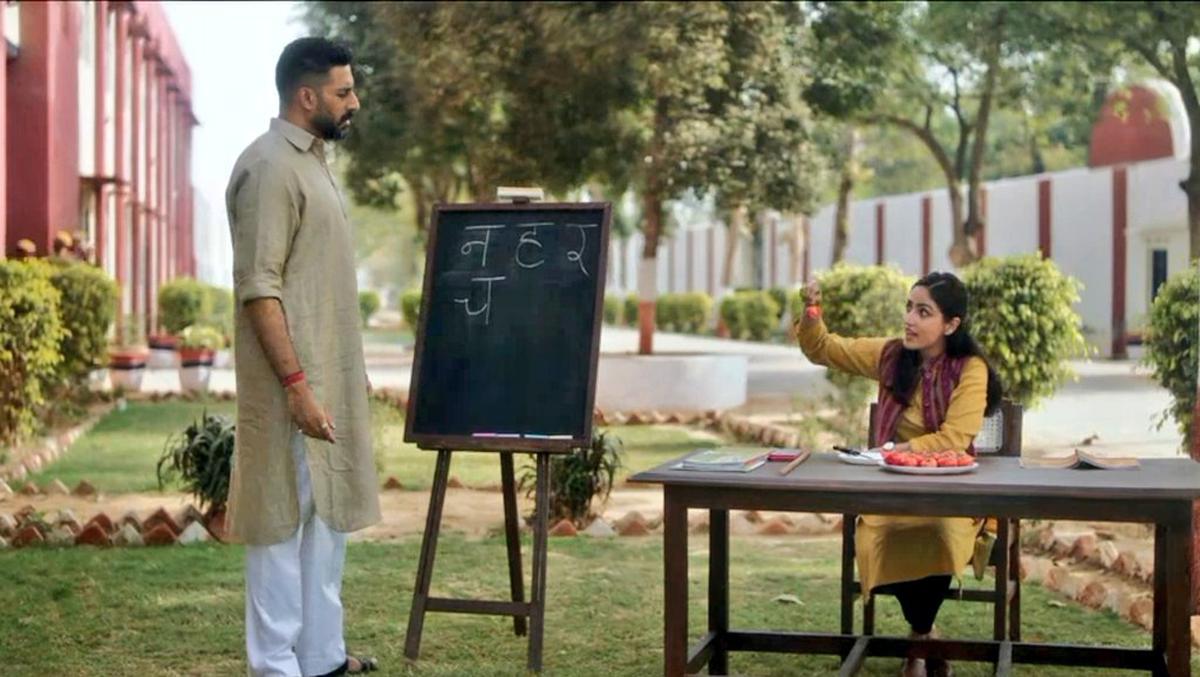



You’ve got to get yourself into a Bollywood headspace when settling in for “Dasvi,” an Abhishek Bachchan star vehicle about an ignorant Indian politician who goes to prison and sees the light — and gets his GED.
Be prepared for how handsome the lead is and how beautiful his co-stars are.
Brace yourself for subtitles. Whatever India’s relationship with English, much of the movie, like most of everyday discourse, is in Hindi.
Expect a couple of song and dance numbers, and a LOT of musical montages as our under-educated hero, a disgraced chief minister of his state, learns about the Hindi and English languages, math and chemistry and Indian history on his journey to enlightenment.
And count your blessings when considering that the typical Bollywood (style) musical never tells a simple story in the 75 minutes necessary when two to three hours, sometimes more, will do.
“Dasvi” is only two hours and five minutes long. Lightweight.
But even as it drags, as is inevitable in something so light that’s stretched out beyond reason, it manages clever touches, funny characters and witty exchanges as it imparts its lesson about the importance of education to a thoughtful, considered and compassionate life.
And Bachchan (“The Big Bull,””Husband Material”) is dashing, first scene to last in this journey from arrogant, caste-favored mustache-twirling villain-for-life to humbled man who learns from “gurus” — his fellow prison inmates — what an educated, cultured and qualified person needs to know to govern a gigantic, complex country like India.
Kickbacks, political favors, adoring crowds organized by his staff and travel in Mercedes SUV convoys are the life of Ganga Ram Chaudhary, the latest in a family of politicians to serve as chief minister in Harit Pradesh.
He’s never learned anything but how to grift the system and exercise his privilege, because that’s what “the chair,” his job, requires. “The Chair rules” is all he’s needed to know.
But a teacher recruitment/kickback scandal brings him down so abruptly you’d swear this movie would be over in an hour. Sure, he’s able to appoint his meek, known-nothing wife (Nimrat Kaur) to his job before he’s hauled off. No, he won’t bow to enter the tiny door to the prison where he’s to serve his sentence.
“I never bow! I would rather lose my head than bow” to enter prison.
But once inside, his special treatment includes delivered meals and a private room with an office, computer and phone. He just might be able to run his political empire from there.
Only meek little Bimla develops a taste for power herself. Once she stops sleeping through legislative sessions, that is.
And the new prison superintendent (Yami Gautam) is all over Chaudhary, and the sycophantic warden (Manu Rishi Chadha) whom the disgraced politico appointed to that job. His privileges end, and it takes a good while — and a song and dance or two — for him to figure out a way out that doesn’t involve feigning illness or bribes.
“Dasvi” — the title translates to “tenth,” which might be Chaudhary’s place in the family succession, or any number of others things as it is not explained — is most impressive in the long sequence of study sessions where our anti-hero learns about his country’s history, literally dreaming he’s intervening in this incident or that one involving Gandhi or other major figures on India’s 20th century history.
His gurus — the dwarf inmate named Ghanti (“Bell,” played by Arun Kushwah) and the prison librarian, nicknamed (say it aloud) Rai Bareli (Danish Husain) among them — are engaging characters who could have used a few more scenes.
Instead, the film sets up the wife’s political treachery (sabotaging his education for political gain) and the superintendent’s obvious chemistry with this “problem” inmate, who may be doing this GED thing as just a stunt to get out of prison labor.
Given the sort of upbeat, frothy and chaste samosa Tushar Jalota’s debut feature is, that “chemistry” plays as a non-starter.
Bachchan is good enough in the lead — charismatic, blustery, aloof and when need be, funny — that many of those shortcomings don’t matter.
It’s not classic “Bollywood” and never more than simply on a par with much of the comic film fare coming out of India these days — pleasant, but kind of bland, jaunty but meandering, lacking the pace and the edge to set itself apart from the rest.
But it’s just like Netflix to finance something India would formerly have had to travel to a cinema to see, a light but socially conscious comedy with songs and dances to break up the civics lesson.

Rating: TV-14
Cast: Abhishek Bachchan, Nimrat Kaur, Yami Gautam, Manu Rishi Chadha,
Danish Husain and Arun Kushwah
Credits: Directed by Tushar Jalota, scripted by Suresh Nair and Ritesh Shah. A Netflix release.
Running time: 2:05
Touchy feeling for an”Thor” trailer, but it pushes some buttons. Funny ones.
That “Guardians” Pratt guy and Natalie Portman are on board. July.


“Marvelous and the Black Hole” is an endearing, sometimes amusing coming-of-age tale of teen angst, grief and prestidigitation.
It was conjured up by first-time feature director Kate Tsang, a writer of children’s TV (“Adventure Time,” “Steven Universe”) who transfers some of that absurdist whimsy to a story of an angry, motherless child finding an outlet when she meets a kids’ party magician.
This makes a fine vehicle for Nickelodeon starlet Miya Cech (“The Astronauts,” “Are You Afraid of the Dark”). Her Sammy has a biting, foul-mouthed bitterness, a child still mourning her lost mother and quick to lash out and use everything at her disposal, including her psychotherapy sessions, against her father, for instance.
“Dr. Klein says you’re mostly damaged from Grandma,” she sneers, when he lays out her choices of summer — a summer camp that she describes as “prison” and archival Army films footage depicts as a boot camp, or “community college classes.”
Dad (Leonardo Nam of the “Fast and Furious” franchise) seems distracted and depressed, perhaps not paying his older game-addicted daughter Patricia (Kannon) or Sammy enough attention, grasping at a new lady love (Pauline Lule) to fill the void in his own life.
The sisters are quarrelsome in the most vicious way, with Patricia turned into a “narc” as far as Sammy is concerned. But there’s nothing for it. “Prison” is out. “Intro to Small Business” it is.
Sammy is unfiltered and rude to pretty much everybody, a sullen, reject-the-world smoker at 14, unpleasant almost 24/7. After standing out as a brat in class, she stumbles into an overly-helpful older woman (Rhea Perlman of “Cheers,” “Matilda” and “Sunset Park”). Next thing the brat knows, she’s being dragged into a daycare as “assistant” to “Marvelous Margot” as she puts on her magic act for little kids.
Can the cynical teen find an “outlet” through the magic of the little old lady and her “Gathering of Scoundrels,” her little club of small-time local magicians?
Tsang finds lots of ways to insert playful fantasy into this fairly straightforward story.
The magician’s act has storytelling in it, a little nature parable with a bunny, flowers blooming out of her jacket and the like. Sammy’s nighttime ritual is listening to an old tape of her mother’s fanciful Princess of the Moon bedtime story, recreated in Sammy’s mind as a black and white silent film in the style of the vintage Asian sword and sorcery fantasies she likes to watch.
Perlman brings an easygoing charm to Margot, a character who feels both screen-written and real, a pragmatic working woman with a hint of “genuine” magic about her. She isn’t some “solve all of Sammy’s problems” lifeline, just a mother figure with a little to pass on — and receive — about “family” and “direction” and “making an audience feel something.”
There’s not a whole lot to this, but Tsang injects a lot of visual variety, and a few laughs, into “The Black Hole” that Sammy must magically extract herself from.

Rating: unrated, profanity, teen smoking
Cast: Miya Cech, Rhea Perlman, Leonardo Nam, Keith Powell, Kannon, Paulina Lule and Jonathan Slavin.
Kate Tsang. A FilmRise release.
Running time: 1:22
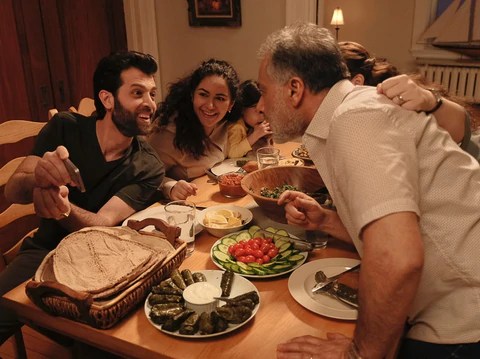
“Peace by Chocolate” is a charming, almost achingly-sweet fish-out-of-water comedy about Syrian Civil War refugees adjusting to life in small town Canada. Considering the family business they try to establish — chocolate making– “sweet” is pretty much a given.
We meet the Hahdad family just as things reach their nadir. Syria has descended into chaos, and after the bombing of his chocolate factory, patriarch Issam (Hatem Ali) has to listen to med school son Tareq (Ayham Abou Ammar) and agree that it’s time to flee.
Three years later, Tareq lands in grinning, friendly Nova Scotia, the first member of the clan relocated to wintry Antigonish, a remote town where the people are warm and even if the weather rarely is.
There’s a hang-up with his sister’s visa which keeps his father and mother (Yara Sabri) back in Lebanon, waiting. But Tareq isn’t going to let them get discouraged or all his efforts to get them out be in vain. He fibs.
“No mommy, there is no cold in Canada,” he assures them (in Arabic with English subtitles).
Metaphorically speaking, he’s absolutely correct. The grinning 50something locals who greet him tell him “Welcome home,” the resettlement terms include government stipends to help them stay afloat until they get on their feet. All Tareq has to do is find a med school that will take his credits and master the local lingo.
“How’s she gon’ by, eh?”
When his parents arrive, Issam is at a loss. He speaks no English, has only one real skill and his efforts to make suggestions to the local chocolatier (Alika Autran) are misunderstood, at best. It’s all he can do just to exercise control over his family — stepping on Tareq’s hopes, putting all the responsibility for their lives on his English-speaking son, who can’t get into medical school even if his father would let him chase that dream.
Helpful local sponsor Frank (Mark Camacho) tastes Issam’s homemade sweets, which used to be “The finest chocolate in Syria,” and hits on a plan. Issam will make and sell his chocolate in the church market. But that leads to more complications and seems to push Tareq’s medical hopes further into the background.


Director and co-writer Jonathan Keisjer’s debut feature skips over the serious conflicts and struggles of this story — fleeing a war zone, three years in a Lebanese refugee camp — and lowers the stakes in this “based on a true story.”
There’s a hint of strife as the brand they label “Peace by Chocolate” both promises to bring fame and money to the family and the town, and put the hapless local shop owner out of business. Even that “drama” is kept on simmer.
The film is more about the son’s struggle to follow his passion, given guidance and encouragement by the first fellow Arab he meets, a surgeon (Mark Hachem). Issam’s dependence on Tareq, made more burdensome by the father’s “secret,” weighs on his son’s conscience, even as Tareq adopts Western values and sees self-fulfillment in a path that breaks him free of his “traditional” father’s stubborn demands.
Western viewers can experience the dissonance of seeing obvious solutions — Mom and sister Alaa (Najlaa Al Khamri) can learn English and help with the business so that Tareq can ease Canada’s acute doctor shortage. But in an Islamic patriarchy, that will never do. And widowed sister Alaa isn’t willing to Westernize, even if it means it lets her pull her and her little girl’s own weight.
What we’re left with is a conflict that’s somewhat contrived and watered down in that adorably Canadian way. There’s no overt racism or hostility to immigrants shown. Everybody’s just too darned polite for that.
It’s still a sweet, feel good film, hitting the broad strokes of the family’s story, which include a wildly popular candy that complements the Canadian donut addiction, and Tareq’s status as a poster-boy for the immigrant experience, engagingly put on display with every public speech and TV appearance.
“Hello, Canada! Thanks for having us!”

Rating: unrated, mild profanity
Cast: Ayham Abou Ammar, Hatem Ali, Yara Sabri, Mark Camacho,
Mark Hachem, Najlaa Al Khamri and Alika Autran
Credits: Directed by Jonathan Keijser, scripted by Jonathan Keifser and Abdul Malik. A Level 33 release.
Running time: 1:36

The opening moments of “Navalny,” the biographical documentary of Russian dissident, muckraker and opposition political candidate Alexei Navalny establish just how gutsy the guy is.
A photogenic 40something lawyer who became a big thorn in president-pretty-much-for-life Vladimir Putin’s side, important enough to merit assassination attempts and lifetime bans from so much as a mention from the Russian state media, we see him lead a crowd of protesters in a chant.
“What is Vladimir Putin?”
“A THIEF!”
“Well,” he says (in Russian, with English subtitles), “YOU said it, not me.”
We’ve already seen filmmaker Daniel Roher hit this slick, media-savvy politico with a whopper of an opening question — “If you are killed, what message will you leave behind for the Russian people?”
We remember “the poisoning,” the attempted murder that almost worked, even if we don’t recall exactly where this anti-dictator gadfly is in the middle of Putin’s disastrous and murderous assault on Ukraine.
So it’s no shock when we see him lead an entourage of reporters on board a passenger flight to return to the Russian Federation after his long convalescence after the most infamous and nearly-successful assassination attempt. What is shocking is that anybody else would be brave enough to get on that plane with him. All Navalny’s cracks about how “stupid” the would-be “Czar” was in using the same method and poison to attack him that Putin’s minions had used on others aside, if the untouchable Vlad wants him dead that bad, it takes nerve to even be in his sworn enemy’s presence.
Roher, who did the fine Robbie Robertson-centric documentary about The Band (“Once Were Brothers”), followed Navalny, talked to his wife and daughter and associates and asks enough tough questions that we feel we’re getting a reasonably balanced portrait of the man.
Navalny dodges some questions (like that first one) and finesses his own early flirtation with far right Russian parties in the hopes of creating an anti-Putin “coalition.” The portrait that emerges is that of a dogged, principled (by Russian standards) muckraker who exposes corruption in the Russian oligarchy, an accomplished TikTok/Youtube warrior who uses such platforms to broadcast his exposes and organize his movement since most Russian media are afraid to cover him.

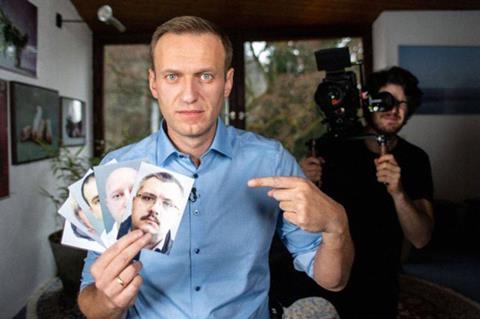
The money sequence in “Navalny” comes when the dissident finds himself in league with Bellingcat Media chief Christo Grozev, a Bulgarian journalist of means who funds data-based investigations into corruption worldwide, but especially in Eastern Europe. Gozev is the guy willing to pay for copies of flight manifests, lab directories, driver’s licenses and the like to track down the “assassination team” that went after Navalny.
This is the film’s centerpiece, a mid-movie moment where the data have identified who had the access to the rare poison, their employment history and the plane tickets them put them in remote Siberia with Navalny where his latest expose led to him almost dying on the flight home.
We see Navalny, a lawyer by training, eyeball the photos and resumes of the trio, trying to find “the dumb one,” the one he can trick into giving away the plot in just a phone call.
It’s riveting cinema, a roller coaster of emotions among those involved as they’re at first elated at hearing a damning confession by a tricked conspirator, to the sober realization of what this unemotional creep was capable of, and what fate awaits him when this tape-recorded phone chat (Navalny pretends to be someone else–expertly so) becomes public.
Some find this documentary “hopeful,” despite the protest candidate’s ongoing “legal” problems in Mother Russia, despite Putin’s apparent firm grip on power in the face of international condemnation. With Putin’s age and hints from his appearance, and from the not-that-cunning-after-all blunders exposing him as as “stupid” as Navalny suggests, maybe there is cause for optimism that Russia can be changed via internal politics or “the traditional way” Russian leaders leave office — death.
Then you remember the history, recent and ancient, that made the place what it was and pretty much has been forever after and you wonder if Navalny should have dodged that “after you die” question after all.

Rating: R for some language
Cast: Alexei Navalny, Yulia Navalnaay, Dasha Navalnaya, Christo Grozev, Mariya Pevchikh, Clarissa Ward
Credits: Directed by Daniel Roher, A CNN Films/HBO Max/Warner Brothers release coming to CNN April 24.
Running time: 1:38
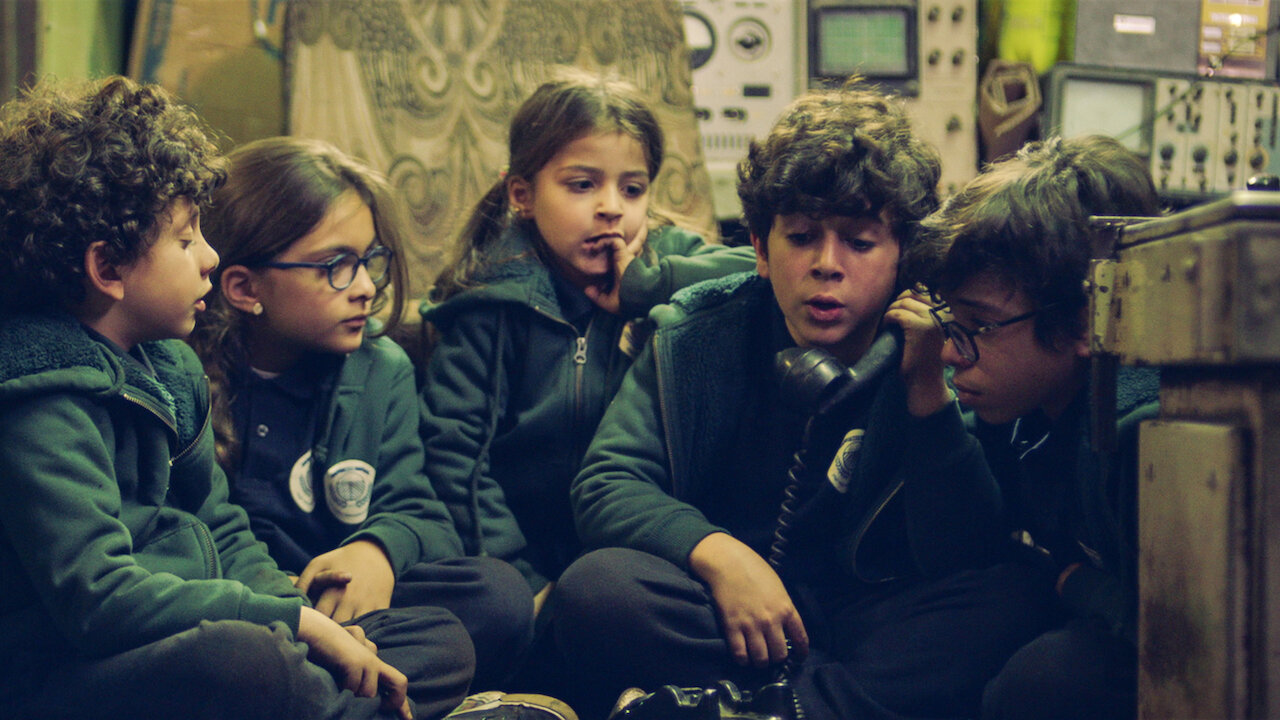
You can search high and low, making your “Around the World With Netflix” journey, and never have much luck disproving the premise of Albert Brooks’ political farce, “Looking for Comedy in the Muslim World.”
The odd not-that-amusing rom-com from Indonesia, attempts at sentimental humor from Turkey, this search goes on and on simply because comedies in Turkish, Persian, Arabic or what have you are rare. But every now and then, just as you’re ready to give up this unicorn hunt, a surprise pops up.
“Apple of My Eyes” is a goofy Egyptian kidnapping kids comedy with a hint of “Ransom of Red Chief” about it, until the grandmothers take over and something like “Going in Style” sets in.
The laughs come from the arch, loud, nagging and incessantly babbling characters — grandmothers, incompetent kidnappers, outraged parents and hapless police — and from what they say as they babble.
Other jokes come from cultural mores. Even “lowlife” kidnappers “respect the age” of their elders, even when those elders are obnoxious, noisy, self-righteous grannies demanding the release of their kids, and willing to haggle over the ransom “like this is a street market.”
The opening establishes the routines of a few characters — braying, bossy Aabla (Dalal Abdulaziz) bullies the son she talked into getting a divorce, but dotes on little Hassan, her grandson. She can’t bear to see him catch the bus to the exclusive Manchester International School the six year-old attends.
Hassan can’t bear the thought of being packed off to visit his other granny just as the classmate he crushes on, Farida, has her birthday party.
Kiki (Mervat Amin) is another grandmother, somewhat less interested in her daughter and grandchild. We catch her, dolled-up at the tail end of her latest all-night party with friends and menfolk. No, she’s not that interested in babysitting today.
The point becomes moot as the school’s bus is hijacked by an armed gang that apparently is aiming to branch out the family business. It’s the patriarch’s idea. And as they carelessly use their real names around the five privileged children, let them see their faces and take in their abandoned factory lair and even allow the kids to outfox them and escape long enough to describe where they are and the landmarks they passed getting there by phone, that patriarch is the last to figure out that he and his lads are in over their heads.
“Maybe we should’ve stuck with stealing cars,” old Radwan gripes, in Arabic with English subtitles.
The movie is cute enough when it’s just the enterprising moppets vs. clumsy but just scary enough kidnappers. It’s only when grandmothers Aalba, Kiki, Aida and others take over, and when they consult their elder, Mrs. Suhier (Enaam Salousa), “the Colonel’s widow,” that “Apple of My Eyes” takes off.
They’re skipping past the cops, figuring out the clues and riding around with very old, very deaf and very careless-driving Mrs. Suhier in “The Colonel’s” ancient Jeep they track down the children…and are promptly taken hostage themselves.
This Sarah Noah comedy is at its best when it’s most manic — entitled, well-heeled parents shouting at administrators, cops and each other, grandmothers nagging their kids and their grandkids’ kidnappers, and each other.
When the grandmothers take over the movie, and the kidnapping (their “negotiations” are a stitch) and the cooking during the kidnapping, “Apples” hits its stride and more or less maintains it, even though the energy in the picture flags quite a before the finale. Jokey James Bond and “Mission: Impossible: music underscores some moments of the caper.
And of all the ransom exchanges the movies have cooked up over the century of cinema, the one screenwriter George Azmy delivers here is the cleverest, or would be if they’d developed and milked that sequence of all the laughs it promises.
Still, blown chances aside and paced fast or stumbling into slow, “Apples” is never less than cute and often pretty funny.
If Netflix keeps this up as a streaming option, perhaps they’ll provide English language credits so I can identify more characters and the actors playing them by name.
Rating: TV-PG, mild peril, gunplay
Cast: Dalal Abdulaziz, Mervat Amin, Riham Abdel Ghafour, Ragaa Al-Gidawy, Enaam Salousa
Credits: Directed by Sarah Noah, scripted by George Azmy. A Netflix release.
Running time: 1:31




Not every animated biography of a painter will have the ambition and artistry of “Loving Vincent,” but if you’re going to the trouble of telling the story with painting — even digital painting — it seems as if you should at least try.
And if you’re pitching your tale as the life of someone whose 769 “Life? Or Theatre?” paintings tell the tortured story of her family, and taken together have been described as “the first graphic novel,” you at least owe it to the subject to mimic her style more than the drab and downbeat “Charlotte,” a new film about the young German painter and Jewish Holocaust victim Charlotte Salomon.
Animators Tahir Rana (TV’s “Welcome to the Wayne”) and Éric Warin (“Leap!”) give us a cursory overview of Salomon’s life from the mid-1930s to 1943, showing her as a witness to the horrific rise of Naziism, affluent enough to escape it and talented enough to show the world glimpses of it as a backdrop to her family’s own tortured history.
Here are Brown shirt thugs busting up an operatic recital and a growing tide of anti-Semitism that invades even academia. Charlotte visits the Nazis’ infamous “Degenerate (Jewish) Art” exhibition, endures Kristallnacht and rides out the beginning to of the war, sent to live with a wealthy friend in the South of France.
An A-list voice cast tells her story, with Keira Knightley in the title role, Eddie Marsan as her Berlin doctor/father and Helen McCrory as her singer/stepmother. Jim Broadbent and Brenda Blethyn voice her grandparents, the first family members to flee to exile, first in Italy, then after an abrupt invitation from an American expat (Sophie Okonedo), to Nice and southern France.
Knightley has to use her voice make Charlotte an interesting character when the understated animation fails to bring her to life. Saddled with banal dialogue pointlessly laden with “Großmutter” and “Großvater,” the only German words her character uses, Charlotte comes off as colorless, and given the notoriety Salomon’s life story has taken on, we feel we’re seeing a very adult tale watered down for the medium.
Her stepmother had designs on Charlotte becoming a “cutter,” a seamstress and tailor. But Charlotte turns her fashion school skills towards fine art, even gaining admission to art school.
As the nightmarish rise of the Nazis puts greater and greater restraints of her ambitions and her family (Dad is hauled off and beaten), she begins a torrid affair with an older man (Mark Strong), her mother’s voice coach and a World War I veteran.
Taking refuge on the Cote d’Azur, she takes another lover and copes with her increasingly embittered and unpleasant grandfather — “You’re not in this world just to PAINT, Charlotte!” and learns of her family’s darkest secrets, although some of those are left out of the film.
Most animated films give us a reason they’re animated, although Richard Linklater’s fanciful “Apollo 10 1/2,” like his similarly rotoscoped “Waking Life,” pushed the boundaries of that. “Charlotte,” despite the occasional simulated watercolored interstitial, never makes that case on artistic grounds.
And while not all Holocaust sagas are created equal, an uncensored, grim realities and all treatment of Salomon’s life would certainly be novel enough to warrant the telling. That’s a case “Charlotte” never makes.
Rating: unrated, violence, nudity, adult situations
Cast: The voices of Keira Knightley, Jim Broadbent, Mark Strong, Sophie Okonedo, Brenda Blethyn, Sam Claflin, Henry Czerny and Eddie Marsan.
Credits: Directed by Tahir Rana and Éric Warin, scripted by Erik Rutherford and David Bezmozgis. A Good Deeds release.
Running time: 1:32



Animation has long been used to teach the concepts of religion to new followers, so it’s not absurd, in principal, that Ryuho Okawa would minister to the masses via anime in “The Laws of the Universe: The Age of Elohim.”
But the prophet and founder of “Happy Science” must be counting on a lot of uncritical eyeballs and ears greeting his pan-theistic messaging with minds untainted by say, exposure to the Many Myths and Faiths and more importantly, the many movies this religious anime goulash was concocted from.
“Age of Elohim,” set hundreds of millions of years ago in Earth’s past, features a universe of competing, space faring races of species ranging from human or elvish to simian, feline and reptilian, all engaged in a struggle of good “vulnerable” races vs. bad “aggressive” ones.
It’s stereotypical at best, Japanese-style racism at its worst.
Film fans will note the imagery and ideas cribbed from everything from “Battlefield Earth” to “The Chronicles of Narnia,” with crab-soldiers from “Starship Troopers” tossed into the salad at one point.
That’s pretty much the theology our Japanese guru is selling, too. “The primordial Buddha of the Universe” assigns gods to rule planets and star systems, with Lord Elohim the ruler of Earth. Characters speak of “the Supreme Truth of God.”
An Amazonian warrior Yaizael is sent from Vega in Wonder Woman gear with a magical samurai sword to help defend the many diverse immigrant (from elsewhere in space) and reincarnated races of Earth from the simian/reptilian minions of the evil blonde mastermind Dahar, Mr. “I won’t go EASY on you, just because you’re a girl.”
Just when things look their bleakest, the bearded Amor shows up looking suspiciously like the guy on every crucifix the world over, with his winged warrior (archangel) Michael.
So Jesus (as one of the many insipid “Ooooo oooo ooo, ahhhh ahhhh ahhhh, uhhh, uhhhh, uhhh” choral ballad/hymns says) saves the day? Preaching “diversity” and “love for all races?”
C.S. Lewis was a Buddhist?
Is Okawa a John Travolta fan? Because you know he didn’t stop with “Battlefield Earth.” He must’ve watched “Michael” as well. And “Narnia.”
The animated vistas, depicting an Olympus-mythic Earth that looks like EPCOT built in the age of the Pharaohs, are impressive. The action is TV anime generic and underwhelming. And the story is cut and paste rubbish, with dialogue that…loses something in translation.
“Of all the different types of people, I despise YOUR kind the most!”
The mix-and-match theology I’ll let you make your own mind up about. One tip though. Having a lot of movies under your belt really pulls the curtain on this Japanese “Oz the Great and Powerful,” a prophet who plainly plumbs the outer reaches of Netflix for his version of the wisdom of the ancients.

Rating: PG
Cast: English language voice cast not credited
Credits: Directed by Isamu Imakake, scripted by Sayaka Okawa, Ryuho Okawa. A Freestyle release.
Running time: 1:59

 Movie Nation