Sony adds content to its “content” — “Spider-Man: No Way Home — The More Fun Stuff Version”

This will help struggling multiplexes in the cinema’s late summer graveyard weeks, so it’s not all bad.

But the cynicism of Sony releasing a longer cut of this just-left-theaters release so soon underscores what some movies — the comic book ones — actually are. They’re just content to be tinkered with to add a little to the bottom line.

Ever since the “Close Encounters,” “Star Wars” and “Blade Runner” “director’s cut” tinkering, the cinema has drifted further and further away from the literary concept of a “copy text,” the artist and her or his editor/publisher/releasing studio’s definitive version of this piece of art, the one that goes to the printers or shows up in theaters or video.

What makes a work of art great isn’t a focus group’s input or endless waffling over what “little darlings,” as Hemingway called his bitterest but necessary edits, one had to kill.

Your movie, based on your best instincts, didn’t play or underperformed? No worries, Zach Snyder. Have another go. The fans will eat that up. Again.

Yeah, you’re devalued as an “artist,” your reputation takes another hit, even if the picture is “improved ”

But this? This is just Sony not wanting to waste effort and risk cash on original “content.” Let’s just give fans Blu-ray features inserted into the movie for another $11-16 ticket.

It’s hard to take comic book movies as anything other than “content” when Sony agrees with me, and not the ComicCon crowd.

Posted in Reviews, previews, profiles and movie news | Comments Off on Sony adds content to its “content” — “Spider-Man: No Way Home — The More Fun Stuff Version”

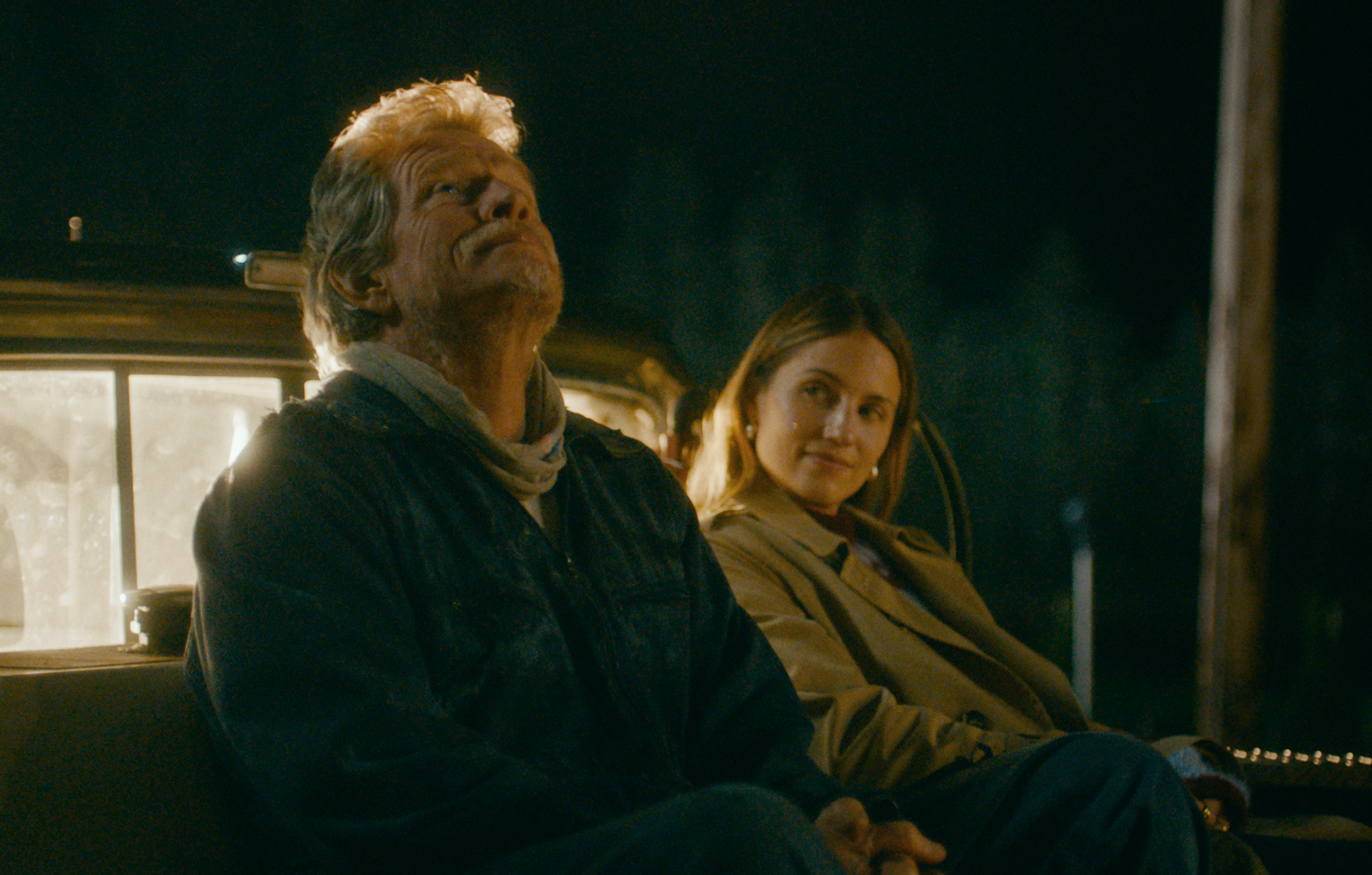
Movie Review: Dianna Agron and Thomas Haden Church work out Father-Daughter issues in “Acidman”

Thomas Haden Church most often finds his laughs via characters with a laid back, deadpan view of the world, characters that drive the highly strung folks around him nuts. And there’s comedy gold in the laid back guy finally losing his cool and blowing his fuse, a slow burn turning into a meltdown.

Dianna Agron is similarly low key, thanks to her intimate, close-up-oriented underplaying, a subtlety often seen in folks who mastered their craft on TV.

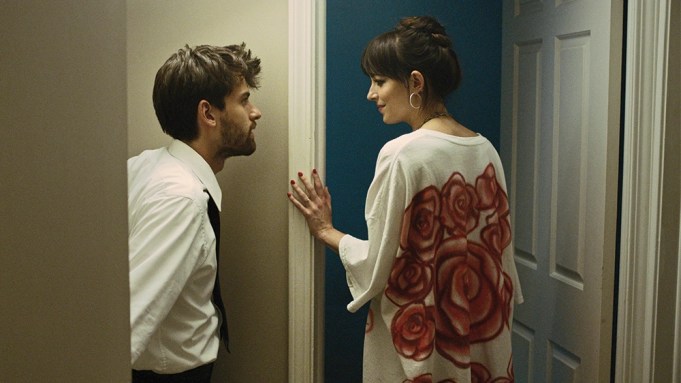
So it’s easy to believe them as an estranged father and daughter in the dramedy “Acidman,” which just premiered at the Tribeca Film Festival. There’s an “apple/tree” vibe to their underplaying, waiting for the laughs or emotional fireworks to come rather than committing to generate them themselves.

That’s probably why they’re miscast together here. He needs someone more antic to set off sparks with. So does she. Pairing them up makes for an intimate, reflective and generally dull two-hander that only rarely comes to life.

Maggie has fly and drive across the country to “check up on” her father. With good cause. He’s living in a battered, cluttered double-wide in the middle of the woods somewhere in the Pacific Northwest. She drives up and the first thing she notices is that someone has spray-painted “Acidman,” in orange on the side of the house. And not because they’re fans of Japanese indie rock, we guess.

He wasn’t warned she was coming, although his “might’ve tidied up a bit” seems like sarcasm. Her suggestion that she might do the same seems just as sarcastic.

He tinkers with stuff, makes industrial-machinery metal machine synthesizer music, and walks his German short-haired pointer, ‘Migo.

Whatever he used to be, he’s now a not-quite-recluse, settling in “a good place to be left along.” At least the waitress at the village diner (Sameerah Luqmaan-Harris) knows him. Other locals, especially the younger ones, see him as a town character, thus the graffiti on his house.

And when she invites herself along for a dad-and-his-dog late night wander, she starts to figure him out.

“It’s a good night to go searching,” is all he’ll say. But when they reach a high bluff and he points out “red orbs” of light in the distance,” his obsession, his “brain smash” becomes clear. Those lights?

“Think interplanetary…You can say it.”

He’s certain he’s seeing and communicating with UFOs, who he figures are just doing some sort of “interplanetary drive-by.”

So now we know his secret and can mull over what she might do in response to it. But what about hers? She’s got to be her for some other reason, because, you know, it’s a movie. That’s the way such scripts play out.

Agron and Church have some moments, played in a father-daughter shorthand that works.

“I think fathers are supposed to give a daughter advice” is quietly but abruptly cut off at the knees. Her announced reasons for the visit are dismissed just as curtly.

But as likable as these two are as players, their interactions pretty much flatline. The possibilities between the characters are too limited and the surprises mostly unsurprising. There’s just too little going on and very little to invest in as a viewer.

Director and co-writer Alex Lehmann, part of that Duplass Brothers talking-talking mumblecore movie industrial complex, has made a couple of features (“Paddleton,” “Blue Jay”) for Netflix that few have seen. Here’s another.

Rating: unrated, violence, profanity

Cast: Thomas Haden Church, Dianna Agron and Sameerah Luqmaan-Harris.

Credits: Directed by Alex Lehmann, scripted by Chris Dowling and Alex Lehmann. A Signal A release seen for The Tribeca Film Festival

Running time: 1:26

Posted in Reviews, previews, profiles and movie news | Comments Off on Movie Review: Dianna Agron and Thomas Haden Church work out Father-Daughter issues in “Acidman”

Movie Preview: Feel free to get worked up over “Black Adam”

Well, he’s no Jason Momoa.

DJ should try a few more bad guys on for size, not that we expect “Black Adam” (Oct.) to be all “dark side.”

Posted in Reviews, previews, profiles and movie news | Comments Off on Movie Preview: Feel free to get worked up over “Black Adam”

Movie Preview: Post Apocalyptic Korea, “The Witch 2: The Other One”

This sequel to “The Witch: Subversion,” about a lab, a massacre, a real mess, opens Friday.

Well Go Entertainment had it, and you know we never go far wrong with them.

Posted in Reviews, previews, profiles and movie news | Comments Off on Movie Preview: Post Apocalyptic Korea, “The Witch 2: The Other One”

Kate Bush has another moment? Here’s her first…in America.

Riding high on the download and play charts, thanks to “Stranger Things.”

Some of us remember her first American appearance, which was…astonishing. Beguiling. Enthralling.

Songs with drama performed dramatically by a beautiful mop topped Brit.

She was absurdly young when she broke out, and she was on “Saturday Night Live” when it was a lot more avante garde or at least quirky in its musical guests. A

And yes, if you were good you got to sing with a great house band.

Check out the hairy Canadian playing piano for her.

Posted in Reviews, previews, profiles and movie news | Comments Off on Kate Bush has another moment? Here’s her first…in America.

Documentary Preview: Making Wine the Old Way, and the Green Way — “Living Wine”

In California wine country, they have to take climate change seriously, and competition just as seriously.

Want to set yourself apart from from the pack? Brand yourself as having a greener footprint and even more “organic” approach to wine-making.

Want to make an agriculture industry more sustainable? Start doing things the more environmentally friendly way.

“Living Wine” might make you thirsty when it comes out July 15.

Posted in Reviews, previews, profiles and movie news | Comments Off on Documentary Preview: Making Wine the Old Way, and the Green Way — “Living Wine”

Documentary Review: Mississippi ghost hunting continues at “The House in Between Part 2”

There’s something to be said for quitting while you’re ahead.

I’m not talking about the filmmakers/paranormalists who returned to the “haunted” house in Florence, Mississippi after making “The House in Between” about their investigations into a striking, modernish A-frame where lights come on by themselves, bumps and “disembodied voices” fill the night and pretty much anything they leave on the stairs rolls or falls off.

The need for “The House in Between Part 2” had to be a matter of pride. Because as I said in my review, they do not make their case or seal the deal with the first film.

“Part 2” is a slicker, higher-budget effort, with what looks like better quality cameras and a spooky, composed chamber music score.

As to “proving” ghosts exist and that something or someone is haunting this stylish Mississippi Amityville home via their “Paranormal Activity” cameras, night-vision and motion detectors, I’d say they came closest to winning skeptical viewers in the first act. Early scenes showing what appear to be call-and-response efforts to get the ghost(s) to roll one of a collection of balls off the staircase do indeed produce balls that seem to roll off their perch on command.

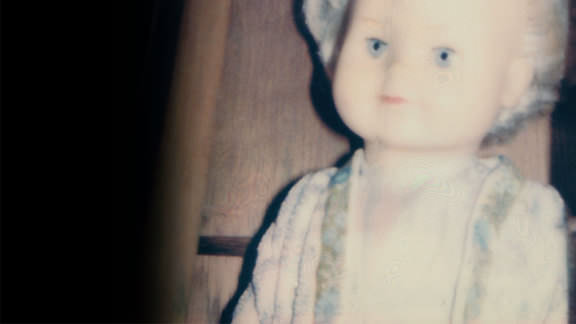
Sure, the doll they set up, facing/teetering backwards on the lip of a stair, seems about to tumble before the investigator takes his hand off it.

But early on, the film is convincing enough that most viewers are going to narrow the possibilities of all this to two outcomes. Either “something odd” is going on in that house at 322 Whatever Street in Florence, or these eager-to-find-proof beavers are faking it.

Short of visiting that house, I’m not sure even co-director/hype-man Steve Gonsalves‘ self-declared “most thorough and in-depth paranormal investigation that has ever been documented” should convince anybody. He makes a few statements like that, and everybody here pretty much talks in the weasel language of “I’m not saying that I think” when that’s exactly what they’re saying.

Still, giving the film crew the benefit of the doubt, that what they’re hearing (not clear and not convincing) or seeing (something more curious) is legit, that first act does make one wonder.

Alas, they don’t quit there.

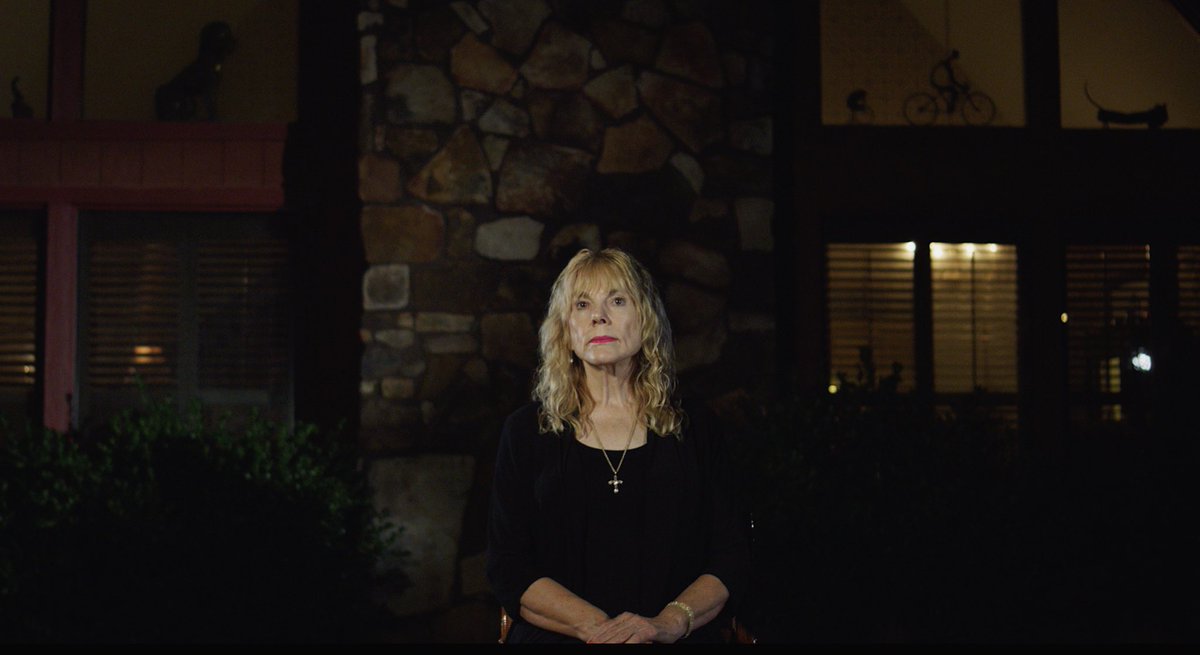
To their credit, the makers of the 2020 film go out and find more folks who might deliver a natural (as opposed to supernatural) explanation for the noises, movement and lights that owner Alice Jackson and others claim to have seen/experienced in her house.

A guy sweeps the property with ground-penetrating radar. An actual geophysicist named Carolyn Streiff electronically pokes around, looking for elemental explanations for phenomena. And there’s digging. They throw some money at this sequel, in front of and behind the camera, above and below the ground.

But that, for me, is where “In Between 2” drifts off course. Metal detecting is one thing. Getting into the history of town from a local historian is interesting, digging into Alice’s life story and a recent tragedy and surveying what might be beneath the ground may seem “logical,” but only to ghost story buffs and horror film fanatics.

This is how this haunting or that grisly series of encounters with the supernatural is “explained” — in movies like “Paranormal Activity,” “The Blair Witch Project,” etc. The “experts” summoned in the later acts are more true believers and “ghost hunters,” with a California hypnotherapist thrown in for good measure.

None of this builds on the case made in the opening act. It just pads the film out to a longer length and waters down its impact.

Gonsalves even moves the goalposts in the third act. All of a sudden, this “looking for proof” story becomes “get Alice back into her house” to live, via their investigations, since she’s too jumpy to spend the night here.

Well, at least they spared us a “spiritual cleansing” or exorcism.

When paranormal gadget guru Elizabeth Saint whines that “I would love to get to a place where the field is taken more seriously” by legitimate science, we’re simply reminded of how under-credentialed and unconvincing this social circle (some of them met at “conventions”) of self-anointed experts is.

If what they’re seeing and experiencing is as real as it seems to them, you’d think they could show their evidence and talk somebody with heavy duty credentials to fly in and verify some of what they claim.

Short of that, “House in Between Part 2” is just like part one, a circle-jerk of the credulous fluffing the credulous, none of them credible enough on her or his own to make the case.

Rating: unrated, profanity

Cast: Alice Jackson, Steven Gonsalves, Brad Cooney, Elizabeth Saint, Carolyn Streiff, John Bullard, Dustin Pari, Laurie McDonald and Morgan Gates

Directed by Steve Gonsalves and Kendall Whelpton, A Gravitas Ventures release.

Running time: 1:42

Posted in Reviews, previews, profiles and movie news | Comments Off on Documentary Review: Mississippi ghost hunting continues at “The House in Between Part 2”

Movie Review: Navigating life and love right after college requires that you “Cha Cha Real Good”

For “Cha Cha Real Smooth,” writer, director and star Cooper Raiff conjures up an idealized version of “the perfect big brother,” his character’s best possible self. Andrew is romantic, smart, witty, at home in his own skin and damned mature for his age — 22.

I mean, come on. Nobody is this sweet.

Raiff’s follow-up to “Sh**house” also overstays its welcome, drifts onward for too long after its climax. A fella’s got to learn when to drop the mike.

But there’s something special about a “feel good” movie that earns those warm fuzzies.

It’s a post-grad dramedy built on two premises — “Memories aren’t going anywhere.” And growing up is hard, and can hurt.

Andrew is an aimless Tulane grad who lives with his mother (Leslie Mann), adoring little brother (Evan Assante) and Mom’s new beau, Greg (Brad Garrett), almost the only guy in the movie Andrew openly despises.

He had a dream, of going to Barcelona with his Fulbright Scholar girlfriend, taking a job with a non-profit. But she went without him and he’s stuck minding the store at Meat Stick, a food court monstrosity that could only exist in New Jersey.

That changes the night he’s charged with taking brother David to a bat mitzvah. Something in Andrew’s genes, personality or upbringing drives him to “rescue” this party. A “swarm of Jewish mothers” see him coaching the DJ, cajoling the boys, then the girls and the mothers onto the dance floor, a life-of-the-party leading the party into the light.

A new profession is thrust upon him — “party starter.”

That’s not what “Cha Cha Real Smooth” is about, even though it takes its title from the “Cha Cha Slide,” even though there are birthday parties and bar and bat mitzvahs enough to keep Andrew busy in this frustrating, drifting summer after college. The film’s about what Andrew does in that guise.

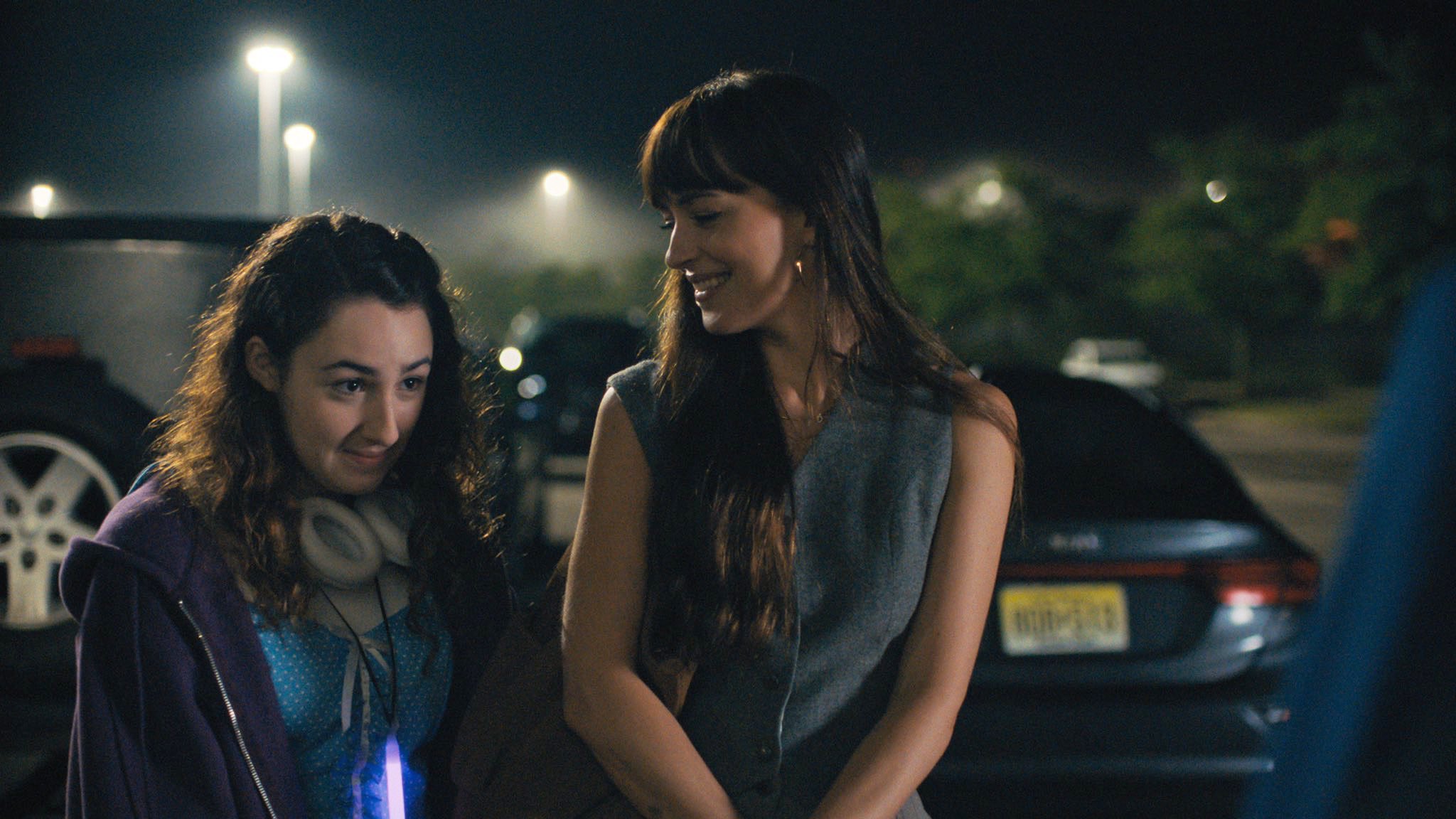
He takes an interest in autistic teen Lola (Vanessa Burghardt), and even convinces her social-outcast mom (Dakota Johnson) that he can talk the on-the-spectrum Lola onto the dance in an instant. Everybody is charmed by Andrew, nobody more than Domino, that quiet, beautiful sad-eyed mother.

Over the course of that summer, he adds this relationship to all the others in his life. We see Andrew drink too much, have a fling with a high school classmate (Odeya Rush), hear him coaching his kid brother through a “first kiss,” and learn everybody’s secrets, and secret hurt.

What’s most impressive about “Cha Cha Raal Smooth” isn’t Raiff’s riffing, his character’s offhanded charm and his semi-“smooth” cha cha moves. It’s the deft way he lets the viewer figure things out.

His mom has a back-story, and Mann is wondrously touching in just a few scenes. Domino also has a story, and Johnson’s quiet, kittenish shtick takes on a sensitivity that she’s rarely played on screen.

Andrew’s relationship with one mother connects him to the other, with or without the “feelings” we know will get in the way.

He makes mistakes, and can even be flippant and cruel. But he never gives us a moment to question his values. Hating “bullies” is a given.

Any gripes I have with this Apple TV+ gem (June 17) are wiped down and wiped off in a third act is upbeat and as emotionally satisfying as any dramedy-emphasis-on-comedy this year.

Whatever he gets wrong — “Memories” do fade with age and are taken away from you, that extended ending is a bust and who names their daughter “Domino?” — “Cha Cha Real Smooth” delivers its core message with a deft touch.

Growing up is hard. And we should all be so lucky as to have a brother, friend or lover as compassionate and interested in helping us through it as Mr. Smooth — Andrew.

Rating: R, profanity, some sexual content, alcohol abuse

Cast: Cooper Raiff, Dakota Johnson, Vanessa Burghardt, Evan Assante, Odeya Rush, Brad Garrett and Leslie Mann

Credits: Scripted and directed by Cooper Raiff. An Apple TV+ release (June 17)

Running time: 1:49

Posted in Reviews, previews, profiles and movie news | Comments Off on Movie Review: Navigating life and love right after college requires that you “Cha Cha Real Good”

Netflixable? “Trees of Peace” remembers enduring the unendurable amidst the Rwandan Genocide

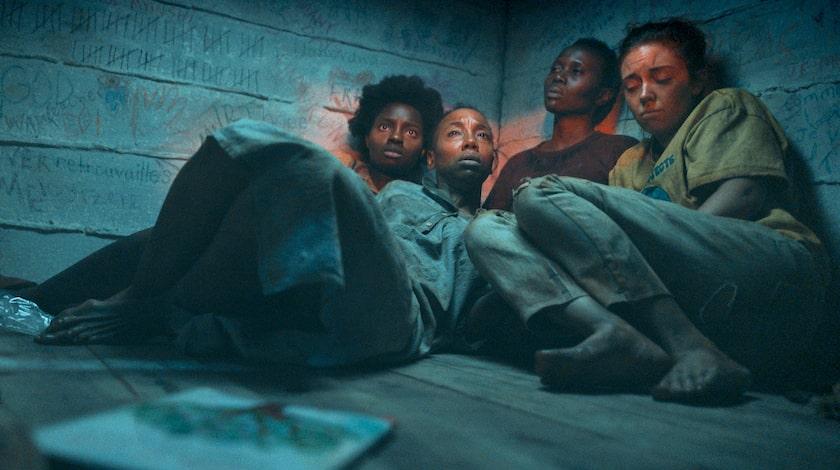
“Trees of Peace” is about four women, holed up in a basement, trying to survive the Rwandan Genocide of 1994, four strangers trapped in a single room, with little light, food or water for days that stretch to weeks and months.

Screenwriter Alanna Brown makes her writer-director debut a compact, tense, well-acted and quietly gripping “inspired by true events” story of endurance, even if it traffics in the conventions of such dramas.

In cinematic shorthand, it is “Hotel Rwanda,” with its story and characters packed into Hitchcock’s “Lifeboat.”

Rwandan actress Eliane Umuhire narrates the story as pages from a journal her character, Annick, keeps while hiding from the Hutu violence against the minority Tutsis, and against “moderate” Hutus like her and her teacher-husband Francois.

“I can feel my spirit eager for the long sleep,” she wrote, just to document how these four women came to be there in case the seemingly-inevitable happens.

Sister Jeannette (Charmaine Bingwa) and a coed, Peyton (Ella Cannon), a volunteer from an American non-governmental organization, are teachers at a nearby school. Mutesi (Bola Koleosho) is a traumatized woman who saw her family slaughtered, rescued by the others as they locked the hidden cellar door behind them to wait out the mayhem.

Brown cannot avoid working within the conventions of the broader genre that this sort of tale operates under. The first pronouncements from Annick to the others — they are in the basement of her house, with her husband upstairs, trying to keep his loyalties and their presence hidden — are spoken with an irony the viewer appreciates.

“We are safe.” ” They’ll be in hiding in this basement “just until tomorrow.” And “Francois will give us everything we need.”

Nope. Not likely. And sure, that’ll happen.

They will be tested by their ordeal, each revealing “secrets” eventually and personality flaws almost instantly. Brown and her actresses succeed in making these characters more than “types,” but you can see the archetype each plays, just beneath the surface.

Brown layers the soundtrack with the constant noise of life and death going on just outside of the lone ground-level window that connects them with the world. Gunshots and shouting, trucks and the barked orders to “find the cockroaches” are heard, and every so often, the “thk thk thk” of machetes hacking the flesh of a screaming victim.

Among the women, shared paranoia gives way to testy confrontations, hallucinations and dreams heightening their plight, with mutual mistrust all they have to wake up to.

Brown never comes close to transcending the formula this film is made under. But the players, the myopic setting and narrowly-focused screenplay ensure that “Trees of Peace” is a good example of how and why this formula is still around. It endures because it works.

Rating: TV-MA, violence

Cast: Eliane Umuhire, Charmaine Bingwa, Ella Cannon and Bola Koleosho

Credits: Scripted and directed by Alanna Brown. A Netflix release.

Running time: 1:38

Posted in Reviews, previews, profiles and movie news | Comments Off on Netflixable? “Trees of Peace” remembers enduring the unendurable amidst the Rwandan Genocide

Documentary Review: Lady Riders on the Range cope with cattle in “Bitterbrush”

A hundred years of poetry, art and pop culture have painted over the hard and lonesome work of the cowboy. The reality, we’re often reminded, isn’t John Wayne/Marlboro Man romantic. It’s just another dirty. solitary job that most people wouldn’t want to do.

Michael Burton’s song, “Night Rider’s Lament,” made famous by Jerry Jeff Walker, is the rare country/western ballad that gets at something closer to the truth about this long-celebrated, long-dying vocation.

“Why do you ride for your money
Tell me why do you rope for short pay
You ain’t a’gettin’ nowhere
And you’re losin’ your share
Boy, you must have gone crazy out there.”

The new documentary “Bitterbrush” reminds us of the grinding, isolating nature of the work — poorly-paid and increasingly rare in the bargain — and that the innate poetry poetry in the image of those who do it. A cowboy, stooped by the days and years in the saddle, surveying the hilly, sagebrush-covered open range, is as iconic an image of America as there is.

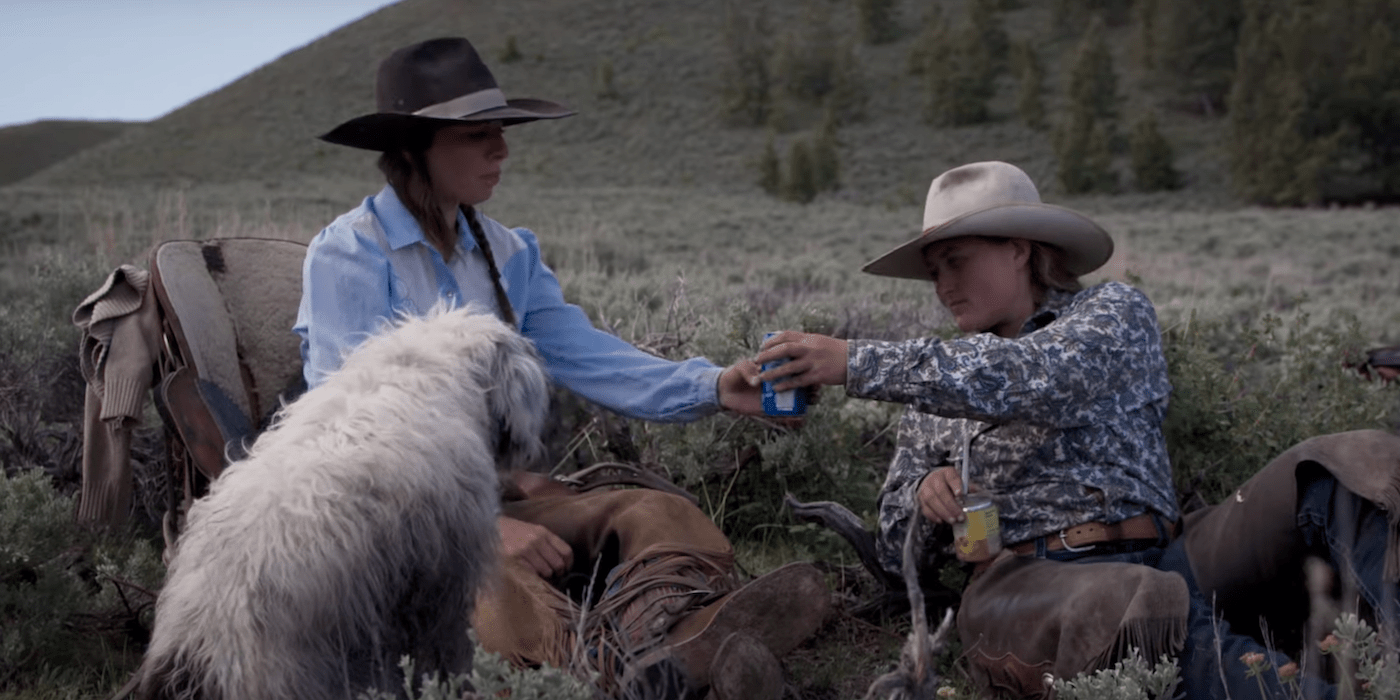
Even when the cowboys are cowgirls. Not that the two-woman team of range-riders in Emelie Mahdavian’s intimate film ever call themselves that. Young Colie and Hollyn talk of “cowboying,” loving the idea of telling their children about their cowboying days, sometime down the road. We have no doubt they’ll romanticize these years, just like everyone else.

Mahdavian and her small crew are never seen in this cinema verite/fly-on-the-wall documentary. They don’t interview their subjects. They just follow the women’s routine, from loading up the truck with dogs and the trailer with (less willing) horses, move into a Spartan mountain cabin and spend their seemingly media-free months getting up at dawn, riding the range, rounding up strays and tending to livestock on the high ground summer-into-winter grazing in the foothills of the northern Rockies.

There are no special effects, there’s little drama — just a sick cow here, a new horse to be “broken” there. What we hear them talk about is mundane, cussing the cows, noting this new ride “isn’t the best” horse, but he goes where I point him.”

They’re never sentimental or even particularly gentle with the livestock, or the seven dogs they keep and who work with them, and in the one time we sense they’re talking to the filmmaker, they describe as “not pets, except in a few cases. But they earned it.”

But there’s something primal about how gorgeous Aspen trees are after the first dusting of snow in the fall, about the unhurried nature of long days in the saddle, time measured in weeks and months with little thought about the next freelance job that they’ll need to replace this one.

“I don’t want to be working for just a house my whole life,” Colie says, summing it all up for Hollyn, who ponders the trailer life she and her beau, Elijah, will be starting their family in.

The only back-story we hear is how both came from cattle families, how they were treated differently than their parents’ sons, that Hollyn has that fellow cowboy boyfriend and Colie is a pretty serious Christian.

Scoring her picture with classical piano sonatas emphasizes the uncluttered beauty of the setting, in contrast with the work. Like a lot of “cowboying” documentarians, Mahdavian is content to sketch in these lives and simply observe two women at their jobs. She leaves the uncertain economics and ever-shortening future facing those who do it, even the way they do it (a single off-road four-wheeler, how many ranchers manage cattle these days, is see), to the imagination.

That’s where “Bitterbrush” resides, in the cowboying of memory and legend, a grueling gig of man-or-woman-handling beasts in glorious, simple solitude and some of the last unspoiled scenery in America.

Rating: unrated

Cast: Hollyn Patterson, Colie Moline

Credits: Directed by Emelie Mahdavian. A Magnolia release.

Running time: 1:30

Posted in Reviews, previews, profiles and movie news | Comments Off on Documentary Review: Lady Riders on the Range cope with cattle in “Bitterbrush”